
Osaka Food Guide: What to Eat in Japan’s Kitchen
Osaka has a reputation, and it’s earned. The city is called “Japan’s Kitchen” — 天下の台所, tenka no daidokoro — a title that dates back centuries to when it served as the nation’s rice trading hub. But the name stuck because Osakans never stopped caring about food with an intensity that borders on religious devotion. There’s a local word for it: kuidaore. Eat until you drop. It’s not a warning. It’s a lifestyle.
If you’ve been to Tokyo and think you understand Japanese food culture, Osaka will correct you. Tokyo is precision. Omakase counters. Quiet reverence. Osaka is louder, messier, and more democratic. The best things you’ll eat here cost less than ¥1,000 and come in paper trays from street stalls or cramped counter shops where the cook is shouting over the sizzle of a griddle. That’s not to say Osaka lacks refinement — it doesn’t — but the city’s beating heart is street food, and it always has been.
I’ve eaten through Osaka across multiple trips and I still haven’t scratched the surface. But I’ve learned enough to have strong opinions about where to go, what to order, and what to skip entirely. This guide covers the essential categories, with specific places and prices, plus the mistakes I made so you don’t have to. Some recommendations are famous. Some aren’t. All of them are places I’d go back to with my own money.
- Takoyaki: Osaka’s Soul Food
- Okonomiyaki: The Pancake That Isn’t a Pancake
- Kushikatsu: Deep-Fried Everything on a Stick
- Kobe Beef in Osaka: Skip the Trip to Kobe
- Ramen: Thick, Rich, and Unapologetic
- Gyoza: The Queue at Horai 551 Is Real
- Kuromon Market: Eat Early or Regret It
- Street Food in Dotonbori: The Good, the Bad, and the Overpriced
- Udon: Thick, Soft, and Slippery
- Cheap Eats: How to Eat Well in Osaka for Under ¥1,000
- Dotonbori Food Mistakes (and How to Avoid Them)
- Planning the Rest of Your Trip
Takoyaki: Osaka’s Soul Food
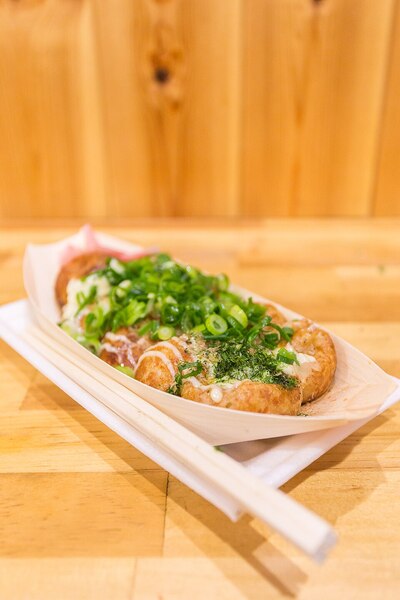
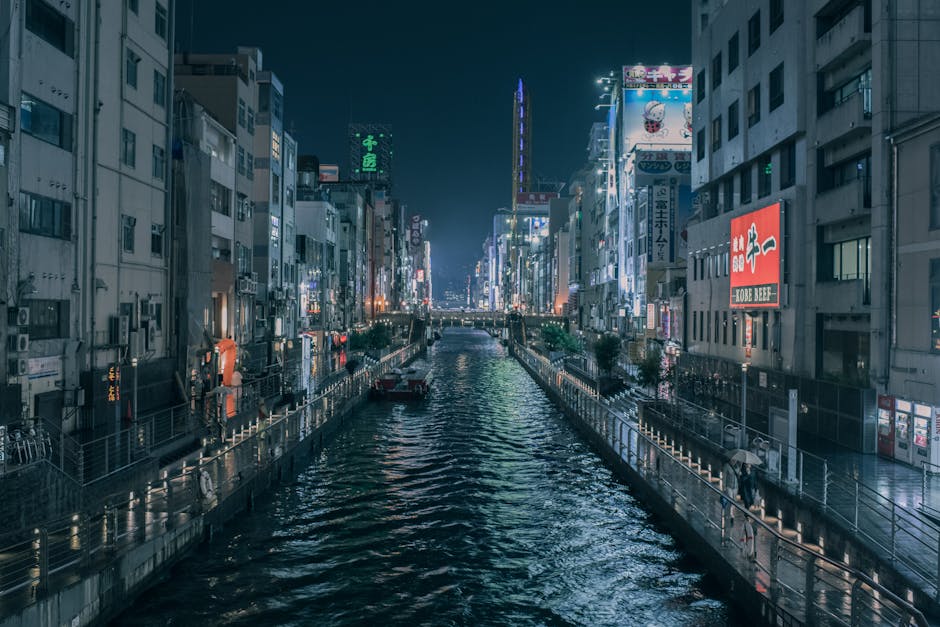
You can’t talk about Osaka without talking about takoyaki. These golf ball-sized octopus dumplings are the city’s defining food — not its fanciest or its best, necessarily, but the one that Osakans claim with the most pride. Every neighbourhood has a takoyaki stall. Most families own a takoyaki pan. Kids grow up learning to flip them. It’s that embedded in the culture.
The ideal takoyaki has a thin, lightly crisp shell that gives way to a molten, almost creamy interior. The octopus piece inside should be tender, not rubbery. The whole thing gets topped with a sweet-savoury sauce, mayonnaise, bonito flakes (which dance in the heat like they’re alive), and green onion. When it’s done right, it’s one of the most satisfying single bites in Japanese food. When it’s done wrong — and tourist areas are full of wrong versions — you get a dense, doughy ball that’s either lukewarm or so hot it removes the roof of your mouth in one go.
Wanaka is where I’d send anyone who wants the definitive Osaka takoyaki experience. They have a few locations, including one in Namba near the Dotonbori area, and their technique is spot-on. The exterior has a genuine crispness to it rather than just being slightly less soft than the interior, and the batter-to-filling ratio is exactly right. A serving of eight runs about ¥500-600. That’s your benchmark. If you eat takoyaki elsewhere in Osaka and it isn’t at least this good, you went to the wrong place.
Kukuru in Dotonbori is another solid option, recognizable by the giant octopus sculpture on the front of the building. Their version uses a decent-sized chunk of octopus — bigger than average — and the batter is slightly richer. Expect to pay around ¥600-700 for eight pieces. The queue moves quickly. They’re efficient.
Gindaco is a chain, and I’ll be upfront about that. You’ll find them in train stations and shopping malls across Japan. But here’s the thing: they’re genuinely good. Their style is crispier than traditional Osaka takoyaki — almost fried on the outside — which purists will argue isn’t “real” takoyaki. They’re right. It isn’t. But I like it anyway. About ¥600 for eight. If you’re in a hurry and there’s one nearby, you won’t be disappointed.
A word on tourist trap takoyaki: if the stall is selling eight pieces for ¥800 or more, has only English signage, and the queue is entirely foreign travelers — be suspicious. Price alone isn’t the indicator (good takoyaki can be ¥700), but the combination of those factors usually means you’re paying a premium for a mediocre product in a prime location. Walk two blocks in any direction and you’ll find something better for less.
Okonomiyaki: The Pancake That Isn’t a Pancake
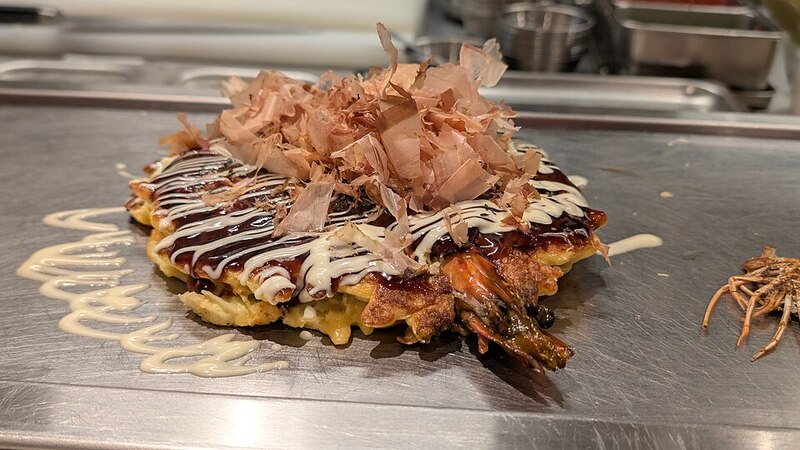
Calling okonomiyaki a “Japanese pancake” is technically accurate and deeply misleading. It’s a thick, savoury disc of shredded cabbage, batter, and whatever fillings you choose — pork belly, squid, shrimp, cheese, mochi, kimchi — griddled on a flat iron plate until the outside is golden and the inside is soft and steaming. The name literally means “grilled as you like it,” and that spirit of customization is half the fun.
Now, there’s a distinction that matters. Osaka-style okonomiyaki mixes all the ingredients together into the batter before cooking. Everything gets combined in a bowl, poured onto the griddle as one mass, and cooked as a unit. Hiroshima-style layers the ingredients separately — a thin crepe of batter, a mountain of cabbage, pork, noodles, egg — stacked on top of each other and cooked from the bottom up. Both are excellent. They’re different dishes that happen to share a name. In Osaka, you’re mostly getting Osaka-style, which is what the city does best. Don’t argue with the locals about which is better unless you have an hour to spare.
Mizuno in Dotonbori is the name everyone knows, and for once, the fame is justified. They’ve been open since 1945 and the quality hasn’t slipped. The yamaimoyaki — made with grated yam in the batter, which gives it a lighter, fluffier texture — is their signature. A standard okonomiyaki here runs ¥1,000-1,500 depending on toppings. The catch: there’s always a queue, and it can stretch past 45 minutes during peak lunch and dinner hours. Get there at 11am or after 8pm to minimize the wait. It’s worth it, but only if you’re strategic about timing.
Kiji, near Umeda in the Shin-Umeda Shokudogai underground food street, is the local’s counter-recommendation. Where Mizuno is polished and tourist-aware, Kiji is a cramped counter shop where the cook works right in front of you and the menu is handwritten. Their suji (beef tendon) okonomiyaki is rich and deeply flavoured, the kind of thing you think about on the flight home. Prices are reasonable — ¥800-1,200 for most items. There’s a queue here too, but it moves faster because the place is small and people eat and leave.
At many okonomiyaki restaurants, you’ll be given the option to cook it yourself on a griddle built into your table. My honest advice: let the staff do it unless you genuinely know what you’re doing. Undercooking the middle is the classic tourist mistake, and a soggy okonomiyaki is a sad thing. There’s no shame in letting the experts handle it. That’s what they’re there for.
Kushikatsu: Deep-Fried Everything on a Stick
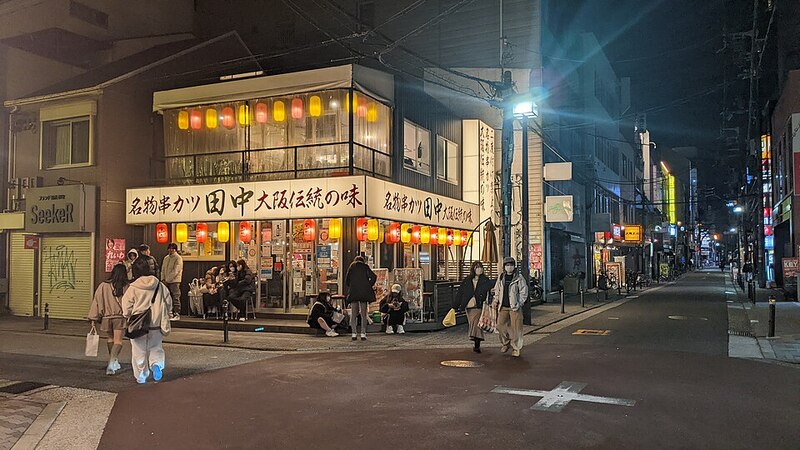
Kushikatsu is the simple, brilliant concept of taking things — meat, vegetables, seafood, cheese, sometimes entire boiled eggs — coating them in a light panko batter, and deep-frying them on skewers. The batter should be thin and shatteringly crispy, not thick and bready. Each skewer is a few bites at most. You eat them one after another, cycling through different flavours and textures, pairing everything with cold beer and a communal pot of Worcestershire-style dipping sauce.
And about that sauce: never double-dip. This is the one unbreakable rule of kushikatsu. You dip your skewer once into the shared sauce pot, and that’s it. If you need more sauce, use the cabbage leaves provided to scoop extra sauce onto your skewer. Double-dipping is considered genuinely rude. Signs in every kushikatsu restaurant will remind you. In Japanese. In English. Sometimes with aggressive illustrations. Take them seriously.
Shinsekai is the neighbourhood most associated with kushikatsu. It’s a retro-looking district near Tsutenkaku Tower with a slightly rough-around-the-edges charm. The streets are lined with kushikatsu joints, many of them sporting giant, angry-looking statues of the chef mascot from Daruma chain.
Speaking of Daruma — it’s the most famous kushikatsu chain in Shinsekai. The name recognition means it attracts a heavy tourist crowd, and the experience can feel a bit like a processing line during peak hours. That said, the food itself is perfectly fine. Their batter is lighter than some competitors, and the range of skewers is wide. Individual skewers run ¥100-300 each, so even if you eat ten (which is easy to do), you’re looking at ¥1,500-2,500 for a full meal. It’s a reasonable introduction to kushikatsu, even if it’s not the most authentic experience available.
For something less tourist-oriented, wander deeper into Shinsekai and look for smaller shops without English menus. The ones with salarymen eating alone at the counter at 6pm on a Tuesday are usually the right call. Prices are similar — ¥100-300 per skewer — but the turnover is faster, the oil is fresher, and the atmosphere is more genuine. Order the lotus root, the asparagus wrapped in pork, and whatever fish they have that day. Trust the house recommendations if you can communicate them.
Kobe Beef in Osaka: Skip the Trip to Kobe
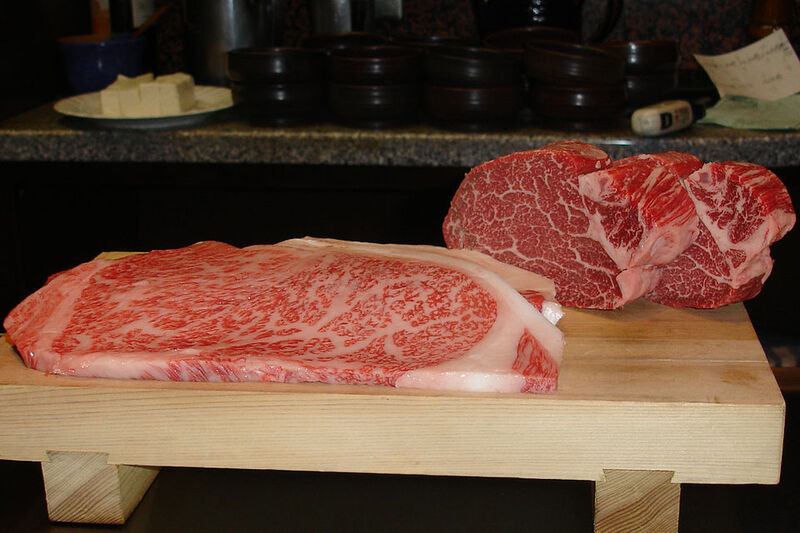
Here’s something not enough people realize: you don’t need to go to Kobe to eat Kobe beef. Osaka is forty minutes away by train, and the city is full of teppanyaki restaurants serving certified Kobe beef at prices significantly lower than what you’d pay in Kobe itself, where the “Kobe beef in Kobe” tourism markup is real and steep.
The Namba and Shinsaibashi areas have the highest concentration of quality teppanyaki spots. For a genuine Kobe beef steak experience — sitting at a counter watching the chef cook your meat on the flat iron in front of you — budget ¥5,000-8,000 for a lunch course and ¥10,000-15,000 for dinner. That’s still a lot of money, but it’s a fraction of what the top-rated places in Kobe charge for the same grade of beef. Lunch courses are the smartest move financially. Many restaurants use the same A5-grade beef for lunch and dinner; you’re just getting a slightly smaller portion with fewer side dishes.
Be wary of places advertising “Wagyu steak” for ¥2,000-3,000. Wagyu is a broad category — it just means Japanese cattle. It doesn’t mean Kobe beef, and it doesn’t mean A5 grade. Some of these cheaper spots serve perfectly decent beef, but others trade on the confusion between wagyu-in-general and the premium stuff. If you’re going to spend money on a steak, ask to see the certificate (legitimate Kobe beef restaurants will have one) and go to a place with a reputation. This isn’t the meal to gamble on.
One more thing: teppanyaki in Japan bears almost no resemblance to the Benihana-style performance cooking you might know from overseas. There are no flaming onion volcanoes. The chef isn’t tossing shrimp into their hat. It’s quiet, focused, and precise. The theatrics come from watching someone with decades of experience handle a beautiful piece of beef with absolute control. It’s a completely different kind of impressive.
Ramen: Thick, Rich, and Unapologetic
Osaka’s ramen scene leans heavily toward tonkotsu — the cloudy, creamy pork bone broth that originated in Kyushu. This makes sense geographically; Osaka is closer to Fukuoka (tonkotsu’s birthplace) than Tokyo is, and the preference for rich, heavy flavours is baked into the city’s food DNA. You’ll find shoyu and miso shops too, but tonkotsu is the default, and the local versions tend to be thick and punchy rather than refined.
Kamukura is a chain with locations across Osaka, and their signature is a lighter-than-average tonkotsu broth that doesn’t leave you feeling like you need a nap. It’s a good entry point if you’re not sure how deep into richness you want to go. A bowl runs ¥800-1,000. The Dotonbori branch is convenient but predictably crowded. The Umeda location is better for actually getting a seat.
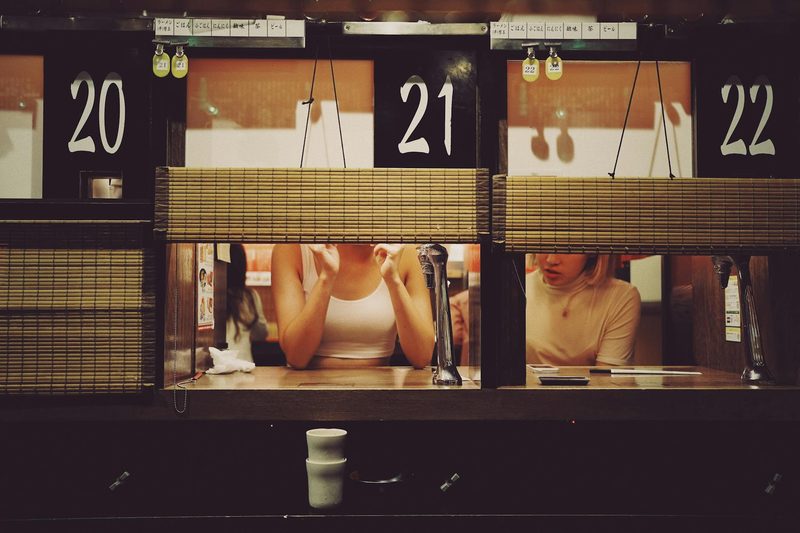
Ichiran has outposts in Osaka too, and the same caveats apply as everywhere: it’s a franchise experience wrapped in a solo-dining booth system, the ramen is legitimately good tonkotsu, and it’s overpriced at around ¥1,000-1,200 for a basic bowl. Go once if you haven’t experienced the customization sheet and booth setup before. Don’t go twice. Plenty of non-chain shops do it better for less. For a deeper look at ramen culture and how Osaka compares to the capital, see our Tokyo food guide.
The best ramen in Osaka, honestly, comes from the small shops you stumble into. The ones with eight seats, a ticket machine, and a line of locals at noon. If you see a ramen shop near any train station with a queue of Japanese salarymen during lunch, get in that line. I can’t give you a specific name because these places change, close, and evolve. But the pattern is reliable. ¥800-1,000 will get you a bowl that puts any chain to shame.
Don’t leave without trying kae-dama (替え玉), the extra noodle order. At most tonkotsu shops, when you finish your noodles but still have broth left, you can order an extra portion of noodles for ¥100-200. They drop the fresh noodles into your remaining soup. It’s the best ¥150 you’ll ever spend.
Gyoza: The Queue at Horai 551 Is Real
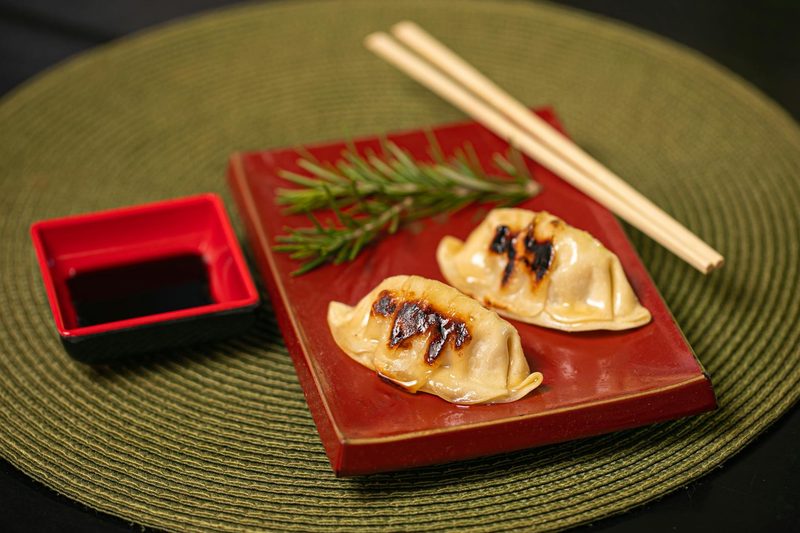
Gyoza — pan-fried dumplings — exist everywhere in Japan. But Osaka has a specific claim to fame in this category, and it lives in a red-and-white storefront in Namba.
Horai 551 (technically “551 Horai”) is an institution. They’ve been making Chinese-influenced pork buns and gyoza since 1945, and the queues at their Namba main store are a permanent fixture of the neighbourhood. You’ll often see two lines: one for takeaway and one for their sit-down restaurant. The takeaway line is faster and, frankly, the better option. A box of gyoza — juicy, well-seasoned pork filling in a thin wrapper with a properly crispy bottom — costs around ¥500-600 for a portion. Their butaman (pork buns) are equally famous and run about ¥400-500 for two.
Here’s the thing about Horai: the quality genuinely justifies the wait. I was sceptical on my first visit — anything with a forty-minute queue invites scepticism — but the gyoza are legitimately excellent. The meat filling is juicier and more flavourful than the vast majority of gyoza you’ll find elsewhere, and the skin has a delicacy to it that takes skill to achieve. They’re nothing like the thick-skinned, underseasoned versions you get at cheap izakayas.
If the queue at the main store is outrageous, they have smaller branches in department stores and train stations across Osaka. The product is identical. The Shin-Osaka station branch is especially useful if you’re catching a shinkansen and want to bring gyoza on the train. Yes, you can eat on the bullet train. Yes, the entire car will smell like gyoza. No, nobody will judge you — this is a beloved Osaka tradition.
Beyond Horai, Osaka has plenty of gyoza worth seeking out. Look for places advertising hitokuchi gyoza — bite-sized dumplings that are smaller and crispier than standard gyoza, designed to eat in one go. They pair brilliantly with beer and usually cost ¥400-600 for a plate.
Kuromon Market: Eat Early or Regret It
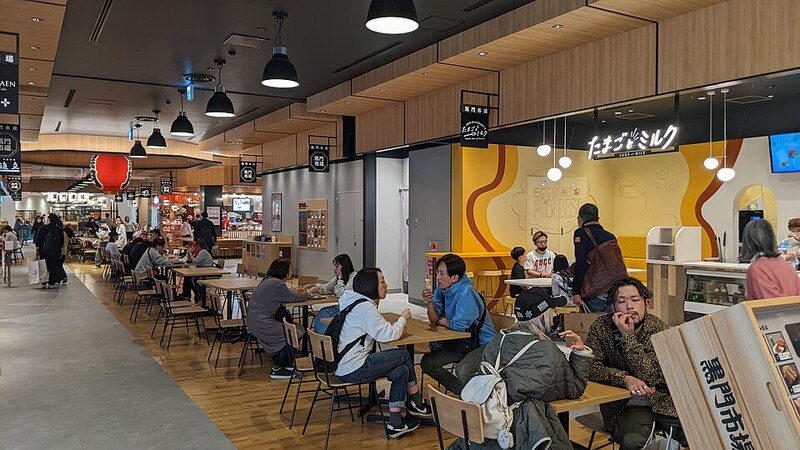
Kuromon Market is a covered shopping street in Nipponbashi that stretches about 600 metres and holds roughly 170 stalls and shops. It’s been called “Osaka’s Kitchen” (not to be confused with Osaka being Japan’s Kitchen — the naming conventions are recursive here). For decades it was where restaurant chefs came to buy seafood in the early morning. Now it’s at least as much a tourist destination as a working market, and your experience will vary wildly depending on when you show up.
Go before noon. I cannot stress this enough. By 1pm on any busy day, the market is shoulder-to-shoulder with tour groups, prices at the front stalls are inflated, and the overall experience tilts from “atmospheric food market” to “crowded tourist attraction.” Before 10am, it’s a different place. The vendors are calmer, the fish is at its freshest, and you can actually stop and look at things without being pushed along by the crowd.
What to eat here, starting with the top priority: fresh uni (sea urchin). Several stalls sell small trays of uni for ¥500-1,500 depending on size and quality. The cheap stuff is perfectly fine for a taste. The pricier trays use better-grade uni that melts on your tongue with a sweetness that’s genuinely different from lower grades. If you’ve never had good uni, this is a low-risk way to find out if you love it or hate it. There’s no middle ground with sea urchin.
Wagyu skewers are everywhere, typically ¥1,000-2,000 for a single skewer. They’re good, though the price-to-portion ratio is obviously designed for travelers. I’d have one as part of the crawl, but I wouldn’t make it the main event. The beef is seared in front of you on a small grill, seasoned with salt and pepper, and served on a stick. Simple and effective.
Crab legs — king crab and snow crab — are a big draw, usually ¥1,000-2,500 per portion. These are touristy, yes, but the quality at the better stalls is legitimately high. Look for the stalls where the crab legs are being grilled or steamed to order rather than sitting pre-cooked under heat lamps.
Tamagoyaki (rolled omelette) stalls sell these for ¥300-500, and they’re a perfect light bite between the heavier seafood items. Slightly sweet, fluffy, and cooked in front of you in a rectangular pan. It’s simple food done well.
My recommended strategy: arrive at 9-9:30am, walk the entire market once without buying anything, identify what looks best, then double back and eat your way through on the return trip. Budget ¥3,000-5,000 for a proper crawl. Bring cash — many stalls don’t take cards.
Street Food in Dotonbori: The Good, the Bad, and the Overpriced
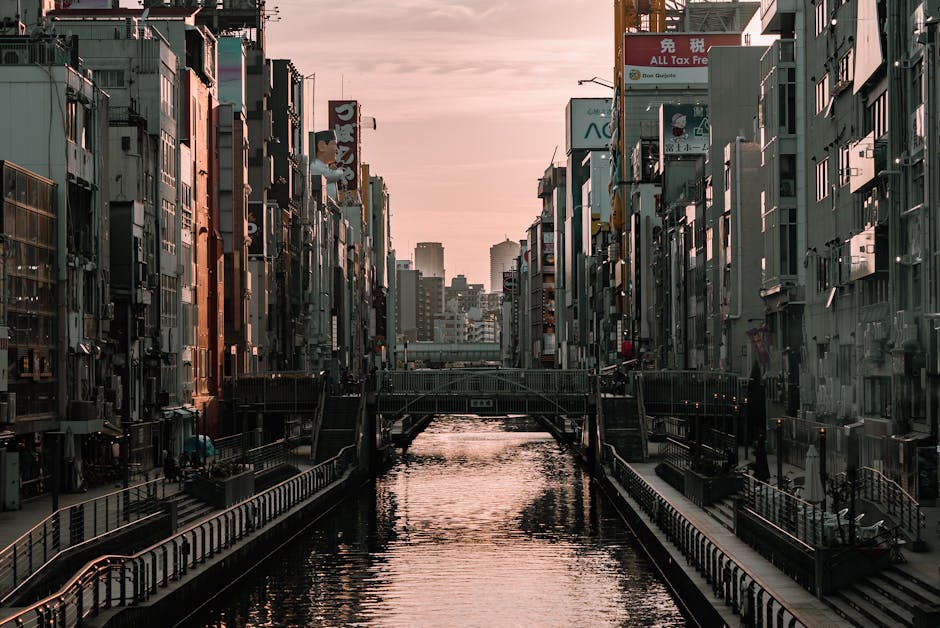
Dotonbori is the neon-lit canal street that defines Osaka’s image. The running Glico man sign. The giant crab. The enormous gyoza. It’s loud, it’s packed, and it’s where every first-time visitor ends up, usually on their first night. And there is genuinely excellent food here — but there’s also a lot of overpriced rubbish designed to extract maximum yen from people who don’t know better.
What’s worth eating: takoyaki from any of the stalls I mentioned earlier (Wanaka, Kukuru). Gyoza from stalls along the canal — look for the ones with fast turnover and Japanese customers. Cheesecake from Rikuro Ojisan — their signature jiggly cheesecake is about ¥965 for a whole cake, and it’s ridiculously good. Light, airy, barely sweet. They bake them in batches and ring a bell when a fresh one comes out of the oven. Get one straight from the bell. It’s best warm.
Crêpes and matcha soft-serve are everywhere and generally decent, if not remarkable. ¥400-600 for either. Fine as a walking snack, not worth a specific detour.
Now for what to avoid. The oversized food stalls — the ones selling comically large takoyaki, enormous rainbow-coloured cotton candy, or novelty skewers designed for Instagram — are almost universally mediocre. The food is a prop. You’re paying for the photo opportunity, not the flavour. A ¥1,500 giant takoyaki tastes worse than a ¥500 normal-sized order from Wanaka. Every time.
The stalls selling mystery meat skewers with aggressive English signage and staff who physically try to usher you in should be walked past without eye contact. This is a general rule for food anywhere in the world, but it applies with particular force in Dotonbori.
Street food in Dotonbori is best treated as a supplementary experience, not your main meal. Graze on a few items, enjoy the atmosphere, but save your appetite and your budget for a proper sit-down meal at one of the restaurants in the surrounding streets. Two blocks off the main drag, quality goes up and prices come down. That pattern holds true every single time.
Udon: Thick, Soft, and Slippery
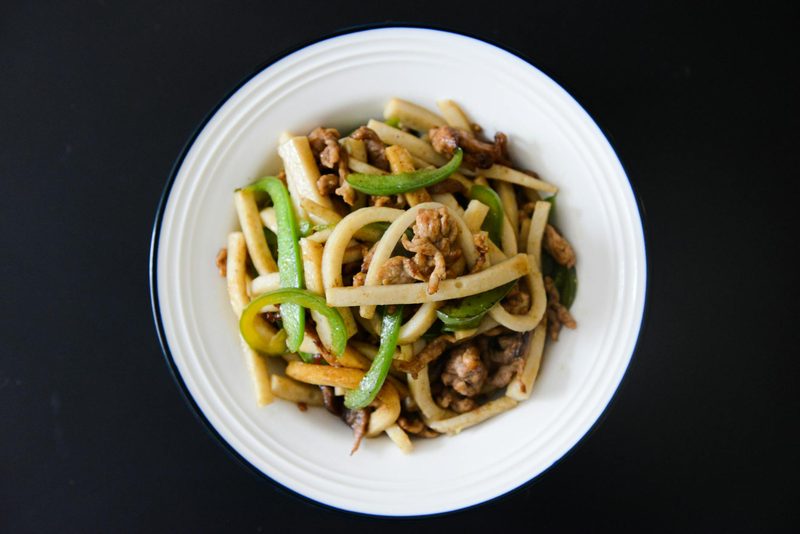
Osaka is thick udon territory. The noodles here are fat, chewy, and served in a dashi broth that’s lighter and sweeter than what you’ll find in eastern Japan. If you’ve only had udon at chain restaurants outside of Japan, the texture will surprise you — proper Osaka udon has a springy softness that’s completely different from the stodgy, overcooked stuff that passes for udon elsewhere.
The local specialty is kitsune udon — “fox udon,” named after the folk belief that foxes love fried tofu. It’s a bowl of udon in clear dashi broth topped with a large piece of aburaage (sweet, simmered fried tofu). That’s it. Nothing else. The simplicity is the whole point. The tofu absorbs the broth and becomes this sweet, savoury, slightly oily pillow that contrasts perfectly with the clean noodles underneath. It costs ¥400-700 at most places and it’s one of the most comforting things you can eat in Japan.
For udon in general, Osaka doesn’t have the same hyper-specific cult shops that characterize Tokyo’s ramen scene. Udon here is more of an everyday food. You eat it at lunch, at train station shops, at no-name places in shopping arcades. And that’s part of its charm — it’s not precious about itself. Look for shops with the word うどん (udon) on the curtain, especially around Namba and Shinsaibashi. If there’s a line, join it. If there isn’t, go in anyway. The floor is high.
One variation worth seeking out: niku udon (meat udon), which tops the noodles with sweet soy-braised beef. It’s richer than kitsune udon and makes a more substantial lunch. Usually ¥600-800. The combination of the sweet beef and the subtle dashi is the kind of flavour that makes you eat in concentrated silence.
Cheap Eats: How to Eat Well in Osaka for Under ¥1,000
One of the best things about Osaka is that eating cheaply doesn’t mean eating badly. The floor for food quality here is remarkably high, and some of the best meals I’ve had in the city cost less than the service charge at a mid-range restaurant in most Western cities.
Konbini (convenience stores) are the starting point. 7-Eleven, Lawson, and FamilyMart in Japan bear no resemblance to their counterparts in other countries. The onigiri (rice balls) are ¥120-180 and genuinely good. The egg salad sandwiches are famous for a reason. Bento boxes at ¥400-600 are proper meals — rice, protein, pickled vegetables, sometimes a piece of fish. For breakfast or a late-night snack, konbini food is reliable, cheap, and available on literally every block. I eat at konbini at least once a day in Japan and I’m not remotely embarrassed about it.
Gyudon chains — Yoshinoya, Matsuya, Sukiya — serve beef bowls for ¥400-600 that are filling, fast, and surprisingly satisfying. Matsuya is my pick of the three; their sauce has slightly more depth and they include miso soup for free. Walk in, use the ticket machine, sit down, eat. The whole process takes fifteen minutes. It’s not going to change your life, but it’ll fuel your day for less than the price of a coffee back home.
Standing soba shops in train stations serve hot or cold buckwheat noodles for ¥300-500. These are the ultimate efficiency meal — you walk up to the counter, order, eat standing at a narrow shelf, and leave. The tempura soba (with a piece of fried shrimp or vegetable on top) is the classic order. It’s simple, it’s warm, and it hits exactly right when you’re between trains and don’t want to spend an hour on lunch.
Department store basements — called depachika — are the secret weapon that most travelers walk right past. The basement floors of major department stores (Takashimaya in Namba, Hankyu in Umeda, Daimaru near Osaka Station) are massive food halls selling everything from fresh sushi to wagyu croquettes to French pastries. In the last hour before closing (usually around 7-8pm), many items get discounted by 20-50%. A ¥1,000 sushi platter becomes ¥600. Gourmet bento boxes drop to ¥500-700. The quality is excellent — these are department stores with reputations to maintain — and the discounted evening sweep is one of Japan’s greatest unspoken dining hacks.
Between konbini breakfasts, a gyudon lunch, and a depachika dinner, you could eat three proper meals in Osaka for under ¥1,500. You won’t need to. But it’s good to know the option exists for the days when your budget needs a rest after a Kobe beef splurge.
Dotonbori Food Mistakes (and How to Avoid Them)
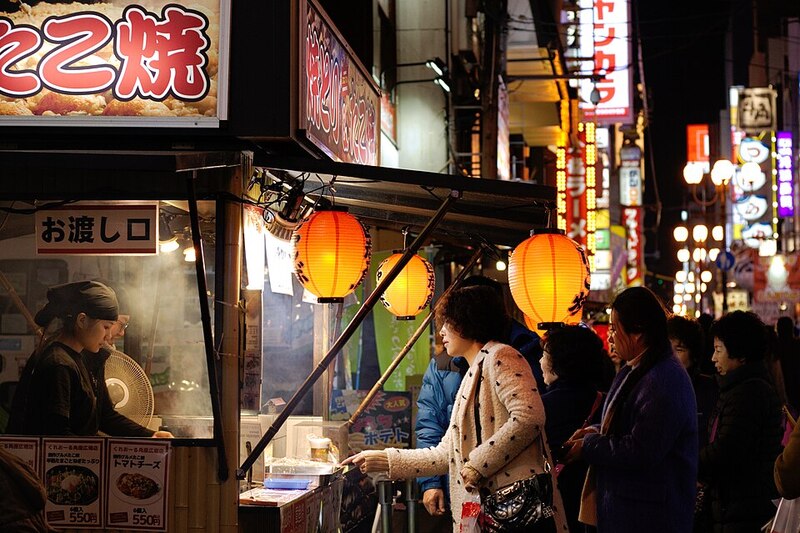
Dotonbori and the surrounding Namba area will be your first stop for food. It’s everyone’s first stop. That’s the problem. The concentration of travelers creates an environment where bad restaurants can survive on volume alone, cycling through a fresh batch of visitors every night who won’t be back to complain. Here’s what I’ve learned the hard way.
Don’t eat at the first place you see. The restaurants directly on the Dotonbori canal walk — the ones with the biggest signs and the most aggressive touts — are almost never the best options. They pay the highest rents, which means they charge the highest prices and cut the most corners. Walk one or two streets back from the canal. The quality-to-price ratio improves immediately and dramatically.
Be suspicious of English-only menus. A restaurant with an English menu alongside the Japanese one is normal and helpful. A restaurant where the menu is only in English, or where the English menu has different (higher) prices than the Japanese one, is targeting travelers specifically. That’s not always a disaster, but it’s a red flag. The best restaurants in the area have Japanese menus with some English, or picture menus. They don’t need to stand outside shouting at foreigners to fill seats.
The giant crab restaurants are overpriced. I’ll name them: Kani Doraku and its relatives. The enormous mechanical crab on the building is an Osaka icon and absolutely worth photographing. The food inside is a different story. A crab course dinner can run ¥8,000-15,000 per person, and while the crab itself is decent, you’re paying heavily for the spectacle and the location. You can get comparable or better crab at Kuromon Market for a fraction of the cost, or at less famous restaurants a few streets away. Take the photo. Eat elsewhere.
Timing matters more than you think. The sweet spot for eating in the Dotonbori area is before 6pm or after 9pm. Between 6-9pm, the streets are at maximum capacity and every restaurant has a queue. Early dinner (Osaka restaurants often open at 5 or 5:30pm) means shorter waits, fresher oil in the fryers, and staff who aren’t yet exhausted from the rush. Late dinner means the crowds have thinned and you can often walk into places that had forty-minute waits two hours earlier.
Don’t fill up on one thing. This is a strategic error, not a quality one. Osaka’s magic is in the variety — a few takoyaki here, some kushikatsu there, a bowl of udon to finish. If you sit down and eat a full okonomiyaki dinner as your only meal of the evening, you’ve used your stomach capacity on a single category. Graze. That’s what kuidaore actually means in practice. Eat a lot of different things, not a lot of one thing.
Cash is still king in many places. The tourist-oriented restaurants take cards. The street stalls, the tiny ramen shops, the old-school kushikatsu joints in Shinsekai — many of these are cash only. Carry at least ¥5,000-10,000 in cash at all times. 7-Eleven ATMs accept international cards and are everywhere. There’s no excuse for being caught without cash in Japan, and there’s no faster way to miss out on the best food than not having bills in your pocket.
Planning the Rest of Your Trip
If you’re building an Osaka itinerary around food — and honestly, you should be — the practical question is where to sleep. Location matters a lot in a city where the best meals happen at street level and often involve late-night eating. We’ve put together a guide to where to stay in Osaka that covers the best areas for food access, including why Namba is usually the smartest base for first-time visitors.
For anyone combining Osaka with a stop in the capital, the food cultures are genuinely different enough to make both cities worth eating through separately. Our Tokyo food guide covers the details, but the short version: Tokyo is precision and specialization, Osaka is casual and generous. You need both.
For broader trip planning across Japan, the Japan National Tourism Organization maintains updated practical information on transport passes, seasonal events, and regional travel.
Osaka will try to overfeed you. Let it. The only real mistake you can make in this city is holding back.