
This article contains affiliate links. If you book through these links, I earn a small commission at no extra cost to you.
Croatia has 1,800 kilometres of coastline and over a thousand islands. The maths alone suggests there are more beaches here than any reasonable person could visit in a lifetime, and that is roughly correct. But not all of them are equal, and the ones that show up on every Instagram feed are not always the ones worth your time.
I have spent weeks hopping between beaches along the Dalmatian coast and through the islands, and the honest truth is this: the famous beaches are famous for a reason, but timing is everything. Visit Zlatni Rat in August and you will share it with ten thousand other people. Visit in September and you will wonder what all the fuss about crowds was about.
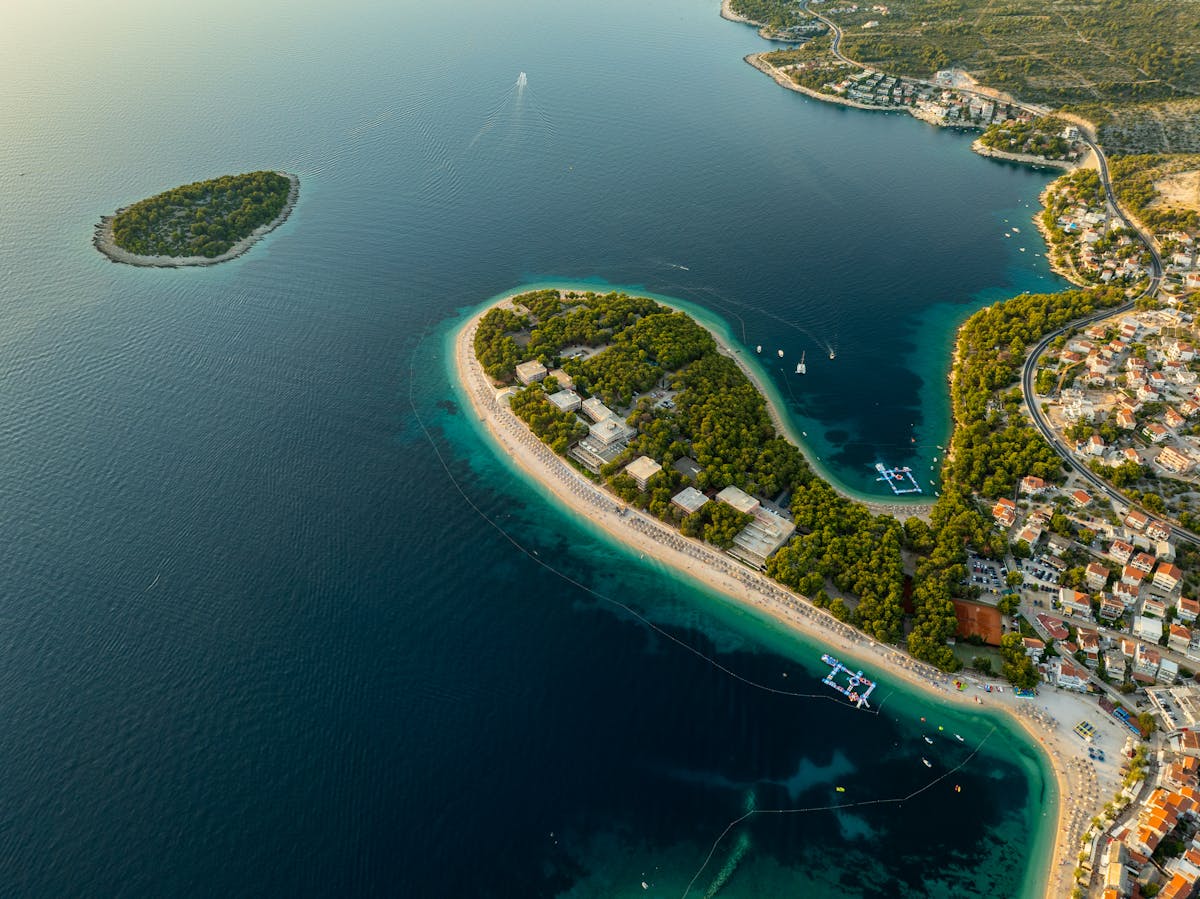
One thing you should know before you start planning: most Croatian beaches are pebble, not sand. A few have very fine pebbles that feel sandy, and there are genuine sand beaches, but they are the exception. If sand is non-negotiable for you, check before you go. If you are flexible on that point, you will be rewarded with some of the clearest water in the Mediterranean.
Zlatni Rat, Brac Island
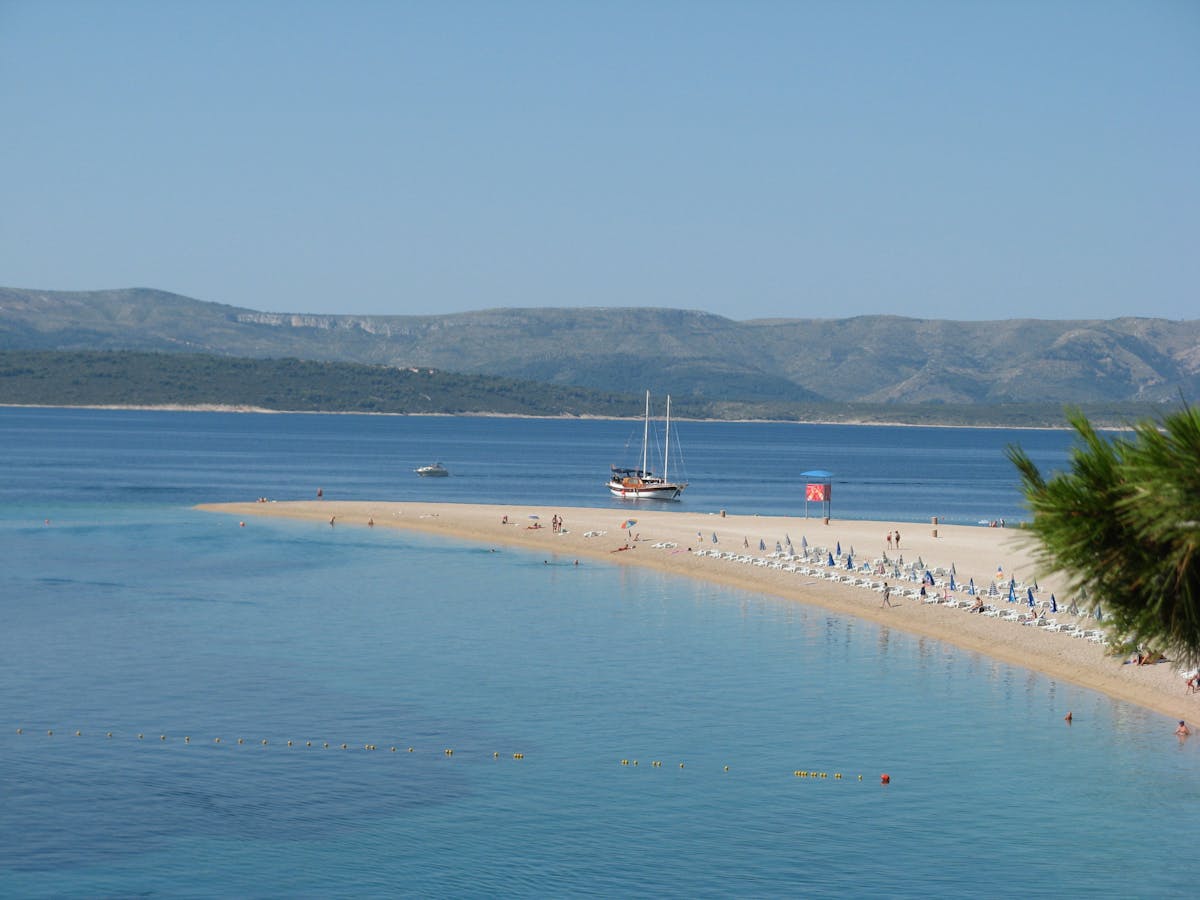
Zlatni Rat (Golden Horn) is probably the most photographed beach in Croatia. It is a narrow spit of fine white pebbles that extends about 500 metres into the Adriatic, and its tip shifts direction with the wind and currents. The drone shots look unreal, and in person it really does look like that.
The beach is on the south coast of Brac island, near the town of Bol. You reach Brac by ferry from Split — about an hour — and then it is a short drive or bus ride to Bol. There is also a catamaran that goes directly from Split to Bol in the summer months.
The water on both sides of the spit is incredibly clear and shallow enough to wade out a good distance. Pine trees provide shade along the back of the beach, which you will appreciate in summer. The left side tends to be calmer; the right side gets more wind and is popular with windsurfers and kitesurfers.
The downsides: it gets overwhelmingly crowded in July and August, parking near the beach is limited and expensive, and the pebbles can be uncomfortable without water shoes. But visit in late May, June, or September and it is a completely different experience. The water is still warm, the crowds thin out, and you can actually find space.
Getting there: Ferry from Split to Supetar (1hr), then drive/bus to Bol (40 min). Or catamaran Split to Bol directly in summer (50 min).
Punta Rata, Brela
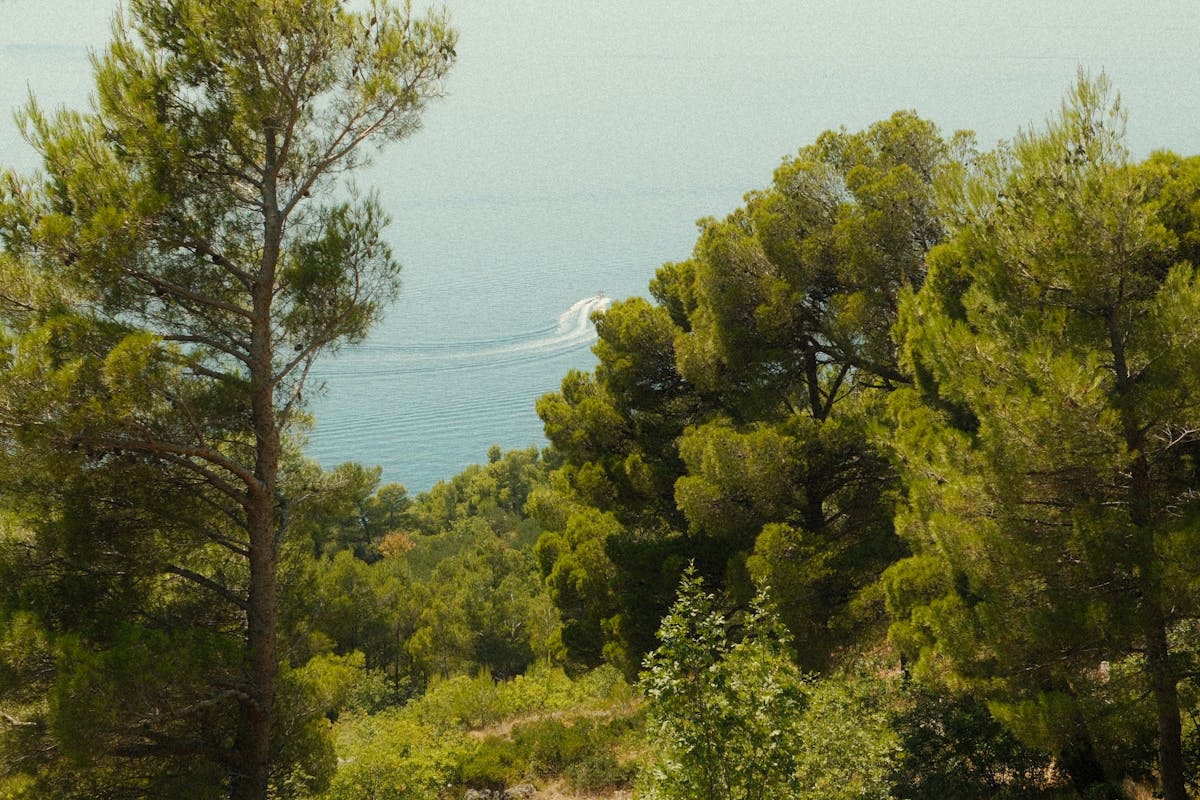
Punta Rata sits at the top of the Makarska Riviera, in the tiny town of Brela, and it regularly appears on “best beaches in Europe” lists. The draw is a combination of crystal-clear water, fine pebbles (not sand, despite what some articles claim), and thick pine forests that grow right to the water’s edge.
The iconic image is the Brela Stone — a small rock island with a pine tree growing on top, just offshore. Everyone photographs it at sunset. You will too. It is genuinely beautiful and not in a way that requires generous editing.
Behind the beach, the Biokovo Mountains rise sharply to over 1,700 metres. Swimming in turquoise water while looking up at those cliffs is surreal. It does not feel like it should be real, but it is.
The main downside is parking. Daily parking rates in Brela during summer are among the highest on the Croatian coast. If you are staying nearby, walk or take a bus. If you are driving through, arrive early in the morning.
The food scene along this coast is surprisingly good — fresh grilled fish from the day’s catch, served at small restaurants tucked under the pines.
Makarska Riviera Beaches
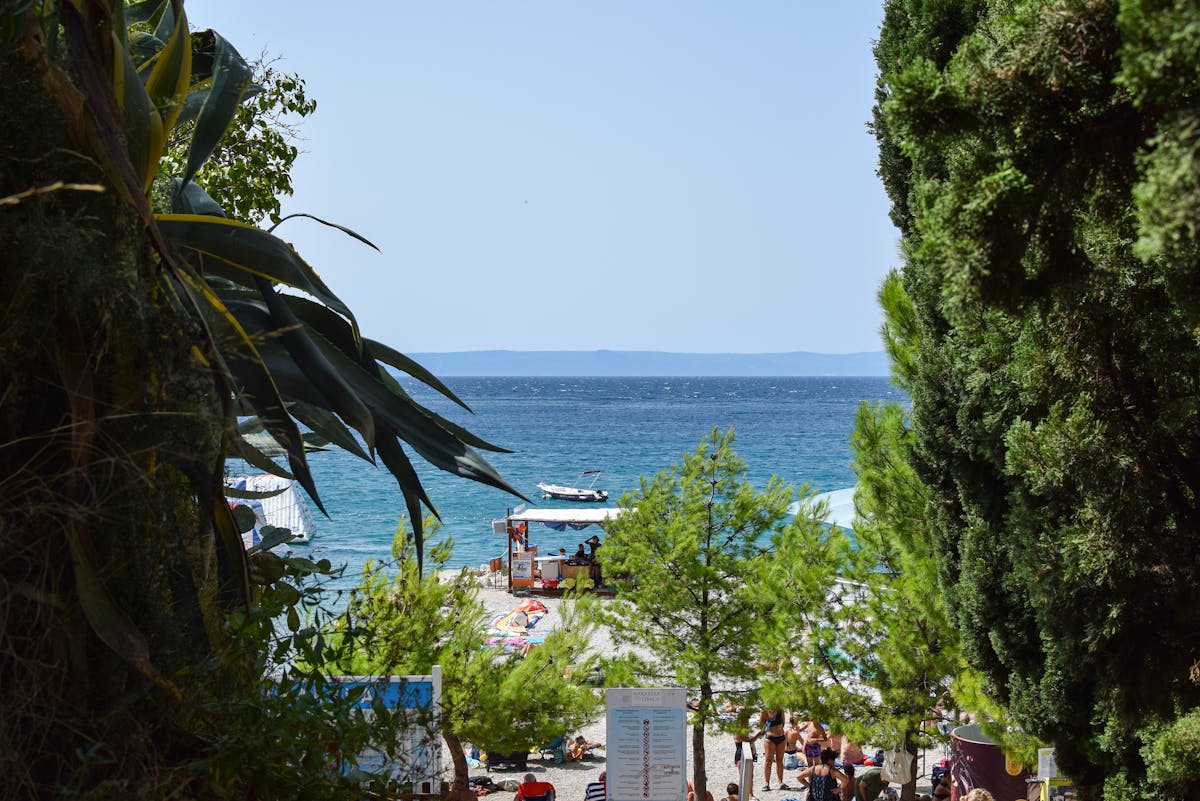
The Makarska Riviera is not one beach but a 60-kilometre stretch of coastline between Brela and Gradac. The entire stretch is lined with pebble beaches, pine forests, and the ever-present Biokovo Mountains behind.
Makarska town itself has a beautiful main beach — urban, but surprisingly clean and backed by a lively promenade. Walk in either direction along the coast and you hit smaller bays: Cvitacka, Buba, Ratac. Some are tiny — room for maybe two families — and even in late September they tend to be occupied.
Two beaches worth seeking out specifically:
- Nugal Beach — a 20-minute walk through pine forest from Makarska, hemmed in by cliffs on both sides. Partly nudist. Wild, dramatic, and uncrowded compared to the town beaches. No facilities, bring water.
- Tucep Beach (Kamena) — nearly 4 km of pebbles stretching along the coast. Less dramatic than Nugal but great for long walks with mountain views. Good beach bars and restaurants along the promenade behind it.
The Riviera is the kind of place where you could base yourself for a week and hit a different beach every day without running out. Accommodation is cheaper than Dubrovnik or Split and the beaches are arguably better.
Banje Beach, Dubrovnik
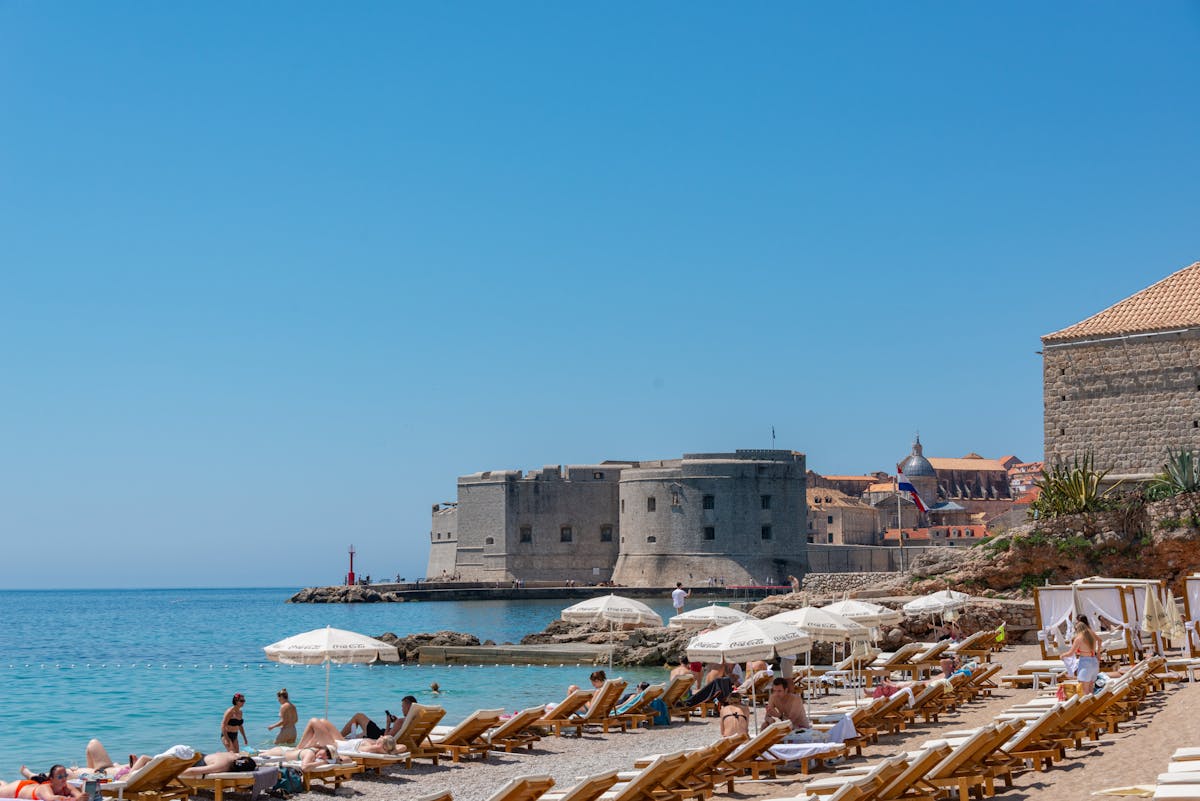
Banje is the most accessible beach in Dubrovnik — a short walk from the Ploce Gate entrance to the Old Town, with direct views of the city walls and Lokrum Island. The setting is spectacular. You swim in the Adriatic looking at medieval fortifications. That never gets old.
The beach itself is half public (free), half managed by a beach club that rents sunbeds and umbrellas. The managed side charges around €40-50 per set of two sunbeds in peak season, which is steep but not unusual for Dubrovnik. The free side is fine — just bring a towel and arrive early.
If Banje is too crowded (and it often is), walk 15 minutes east along the coast to Sveti Jakov, a smaller beach reached by a long staircase. The views back toward the Old Town are even better, and it is significantly less crowded. The stairs on the way back up are a workout, but you earned it.
For a day trip alternative, take the 15-minute ferry to Lokrum Island. The rocky swimming spots there are beautiful, the crowds are manageable, and there are peacocks wandering around which is exactly as strange as it sounds.
Stiniva Beach, Vis Island
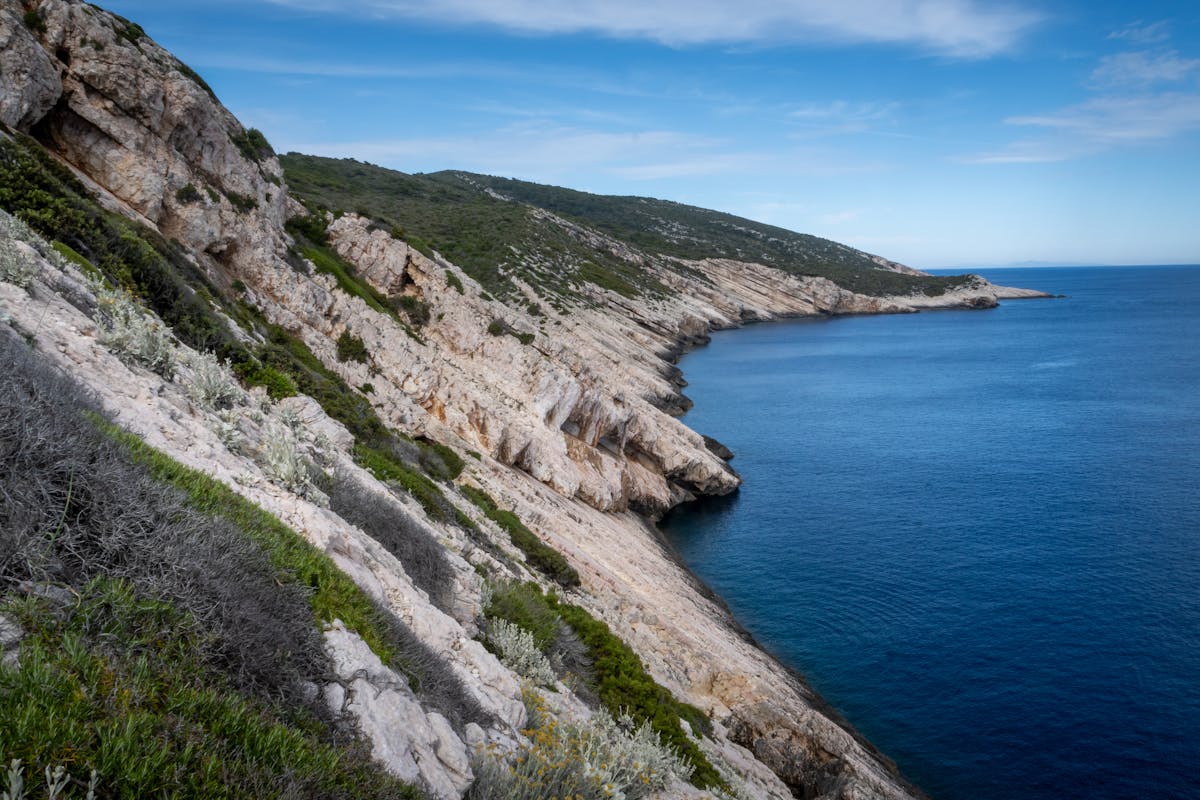
Stiniva won the European Best Beach award in 2016 and it is easy to see why. It is a tiny cove on the south coast of Vis island, reached by a steep path down a cliffside, with towering rock walls on either side creating a natural entrance barely ten metres wide. Inside, a small pebble beach and absurdly clear water.
Getting there is part of the experience. You can hike down from the village of Zuzec (about 30 minutes, steep and slippery in places, proper shoes recommended) or arrive by boat. Several operators in Vis town and Komiza run trips to Stiniva and the nearby Blue Cave on Bisevo island.
Vis itself is special. It was a Yugoslav military base until 1989, closed to foreign visitors entirely. Tourism arrived late, which means the island still feels less developed than Hvar or Brac. The beaches are wilder, the restaurants less polished, and that is exactly the appeal.
If you have time, rent a scooter and explore the island’s coastline. Srebrna beach on the north side is another excellent option — a long pebble beach backed by trees with good snorkelling.
Sakarun, Dugi Otok
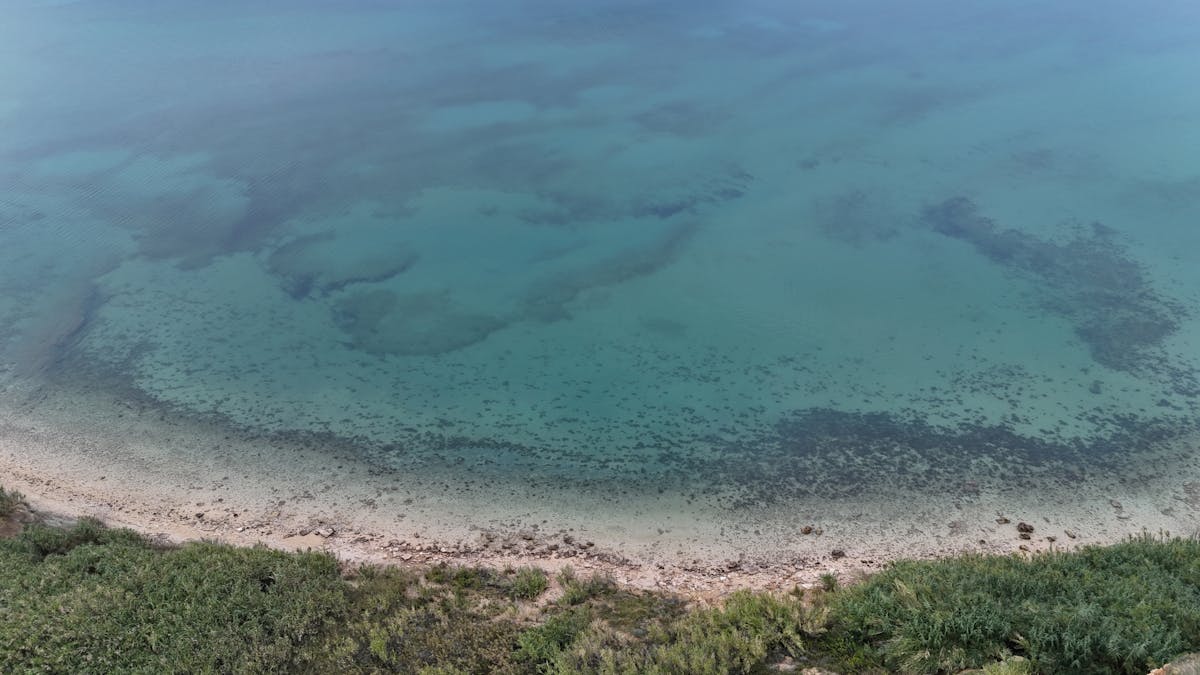
If you want actual sand — real, honest-to-god sand that you can dig your toes into — Sakarun on Dugi Otok island is your best bet. It is a gently curving bay with shallow turquoise water that stays warm well into October, backed by pine forest. It looks Caribbean. People say that a lot about various beaches and it is usually an exaggeration, but Sakarun genuinely earns the comparison.
Dugi Otok is accessible by ferry from Zadar (about 1.5 hours). The island is long and narrow — hence the name, which literally means “long island” — and Sakarun is on the northwest tip. You will need a car or scooter on the island, or arrange a boat trip from Zadar that includes Sakarun as a stop.
Facilities are minimal. A couple of beach bars appear in summer but do not count on them. Bring water, snacks, and shade if you burn easily. The pine trees help, but the beach faces west and gets full afternoon sun.
Korcula’s Hidden Coves
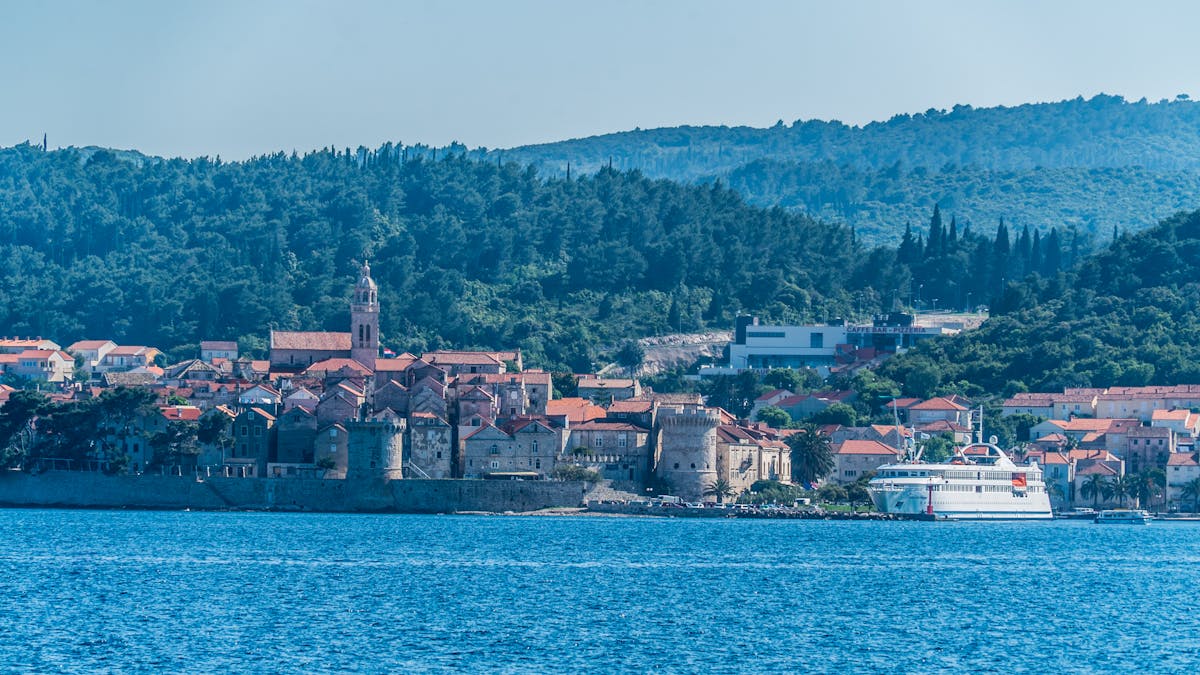
Korcula does not have one famous beach. It has dozens of small coves and rocky swimming spots scattered around its coastline, many of them reachable only by boat or dirt path. That is the charm — you are not fighting for sunbed space; you are scrambling down a goat track to find your own patch of rocks and clear water.
The best-known beach is Pupnatska Luka on the south coast, a sheltered pebble bay with a beach bar and transparent water. It is a 15-minute drive from Korcula town followed by a downhill walk. Vela Przina near Lumbarda is the island’s closest thing to a sandy beach — fine sand, shallow water, popular with families and windsurfers.
Lumbarda itself is worth visiting for the wine. The village produces Grk, a white grape that grows only here, in sandy soil within sight of the sea. You can taste it at several small wineries and then walk to the beach.
Korcula is reachable by ferry from Split (about 2.5 hours), catamaran from Dubrovnik, or car ferry from the Peljesac Peninsula (15 minutes from Orebic). If you are doing a food-focused trip, the seafood restaurants in Korcula town are excellent and noticeably cheaper than Dubrovnik or Hvar.
When to Visit Croatia’s Beaches
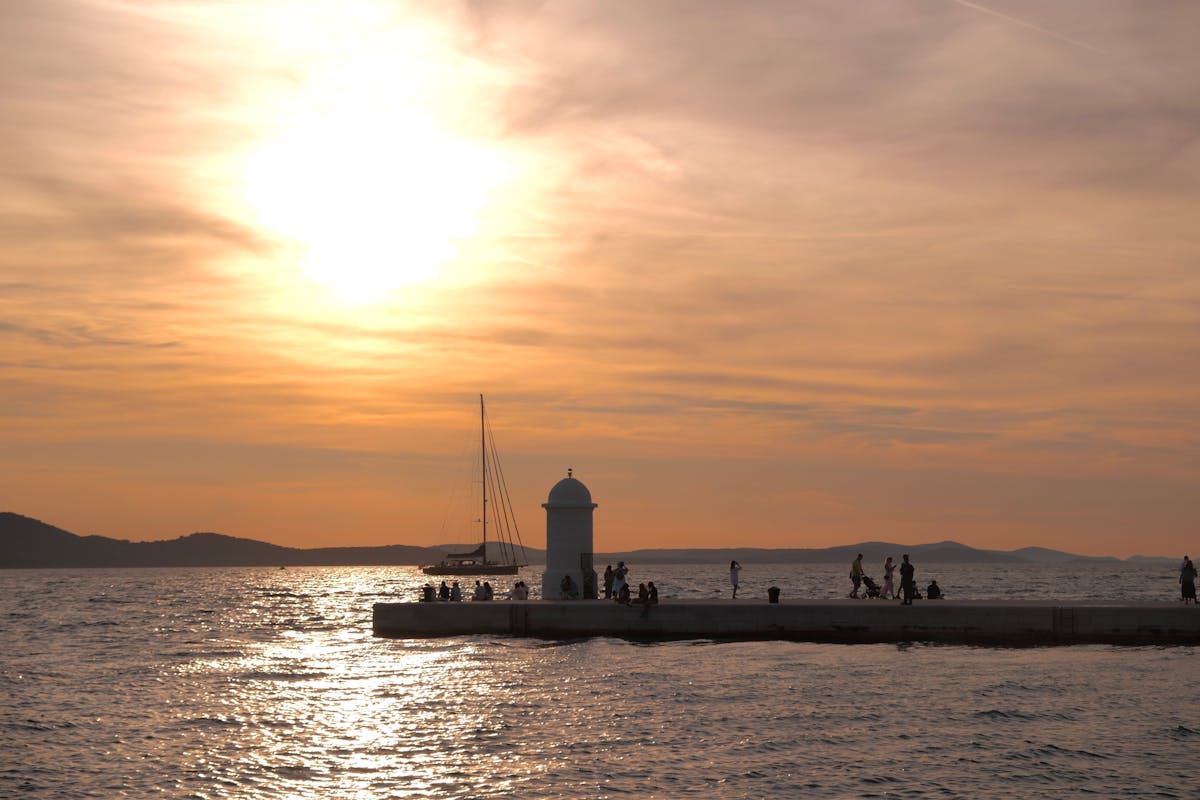
Timing matters more than anything else. The same beach can feel like paradise in June and like a cattle pen in August. Here is the breakdown:
- May and early June: Water is cool (around 20°C) but swimmable. Beaches are quiet. Prices are low. Wildflowers are everywhere. Best for people who prefer emptiness over warm water.
- Late June and September: The sweet spot. Water is warm (23-25°C), crowds are manageable, prices are reasonable. September is particularly good — summer warmth without summer chaos.
- July and August: Peak season. Everything is expensive, everywhere is crowded, parking is a nightmare. (See our guide to money in Croatia for budgeting tips.) The water is at its warmest (25-27°C). If this is your only option, go to the islands — they are less packed than the mainland coast.
- October: Water is still warm enough to swim (21-23°C) in the south. Many beach bars and restaurants start closing. Perfect if you just want to swim and do not need facilities.
Pebble vs Sand: What to Expect
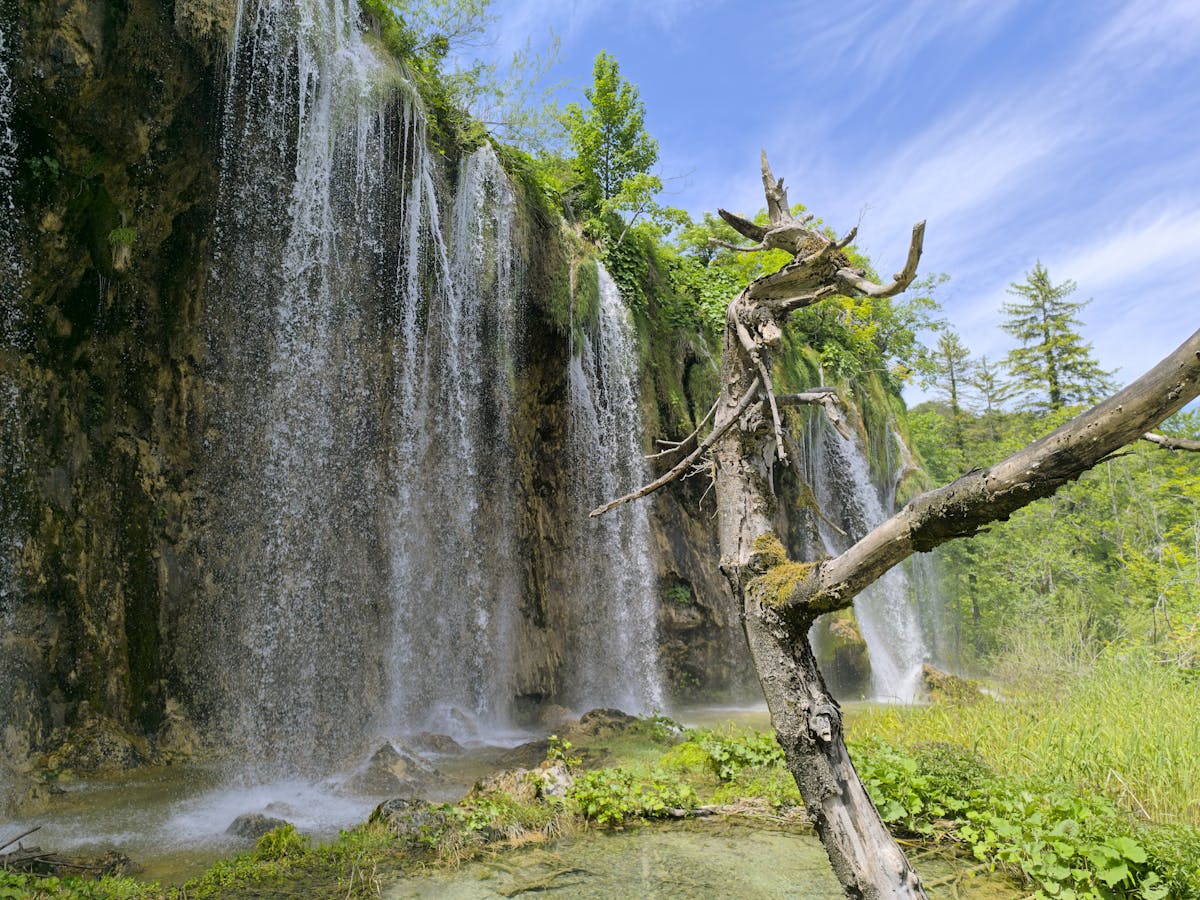
If you are coming from Thailand, Australia, or the Caribbean and expecting powder-white sand, adjust your expectations. Croatia is a pebble beach country. Some pebbles are fine and smooth (Makarska Riviera), some are large enough to be uncomfortable (parts of Dubrovnik). Water shoes are not mandatory but they make life easier.
The upside of pebble beaches: the water is unbelievably clear. Sand churns up and clouds the water; pebbles do not. You can see the bottom at five metres depth in most places. For snorkelling and swimming, this is a huge advantage.
Genuine sand beaches exist but they are rare: Sakarun (Dugi Otok), Vela Przina (Korcula), Bijeca (Medulin near Pula), Paradiso (Lopar on Rab island). If sand is essential, plan around these specifically.
Whatever kind of beach you prefer, give Croatia more than just Dubrovnik. The coast is long, the islands are many, and the best swimming is often in places you have never heard of. Rent a car, take a ferry, and just keep driving south until you find a cove that feels like yours.