
This article contains affiliate links. If you book through these links, I earn a small commission at no extra cost to you.
Croatia has over 1,200 islands, 1,800 kilometres of coastline, and some of the clearest water in the Mediterranean. It was essentially designed for sailing. The Adriatic coast is sheltered enough that the conditions are forgiving, the distances between islands are short enough that you can hop from one to the next in a few hours, and every island has at least one harbour where you can tie up and find a restaurant serving grilled fish and local wine.
Whether you are an experienced sailor who wants to charter a bareboat or a complete novice who just wants to sit on the deck and drink rosé while someone else handles the sails, Croatia has options for you. The sailing season runs from April to October, with June and September being the sweet months for weather, crowds, and pricing.
Why Sail in Croatia
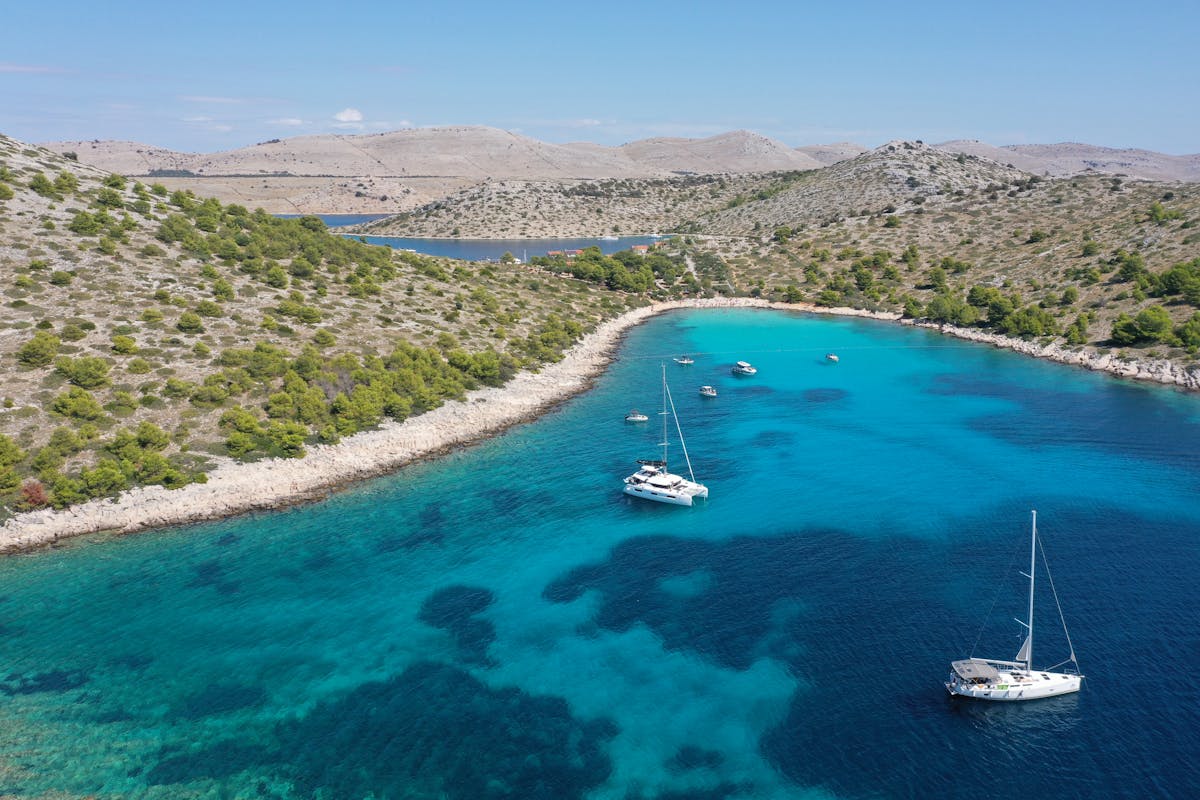
You could drive down the Croatian coast and see plenty, but you would miss the best parts. The most beautiful beaches, the quietest coves, and the most remote restaurants are only accessible by boat. Entire islands — like parts of the Kornati archipelago — have no roads at all. The only way to see them is from the water.
The sailing conditions are also excellent for the Mediterranean. The Adriatic is relatively sheltered compared to the open Mediterranean or the Aegean, with predictable wind patterns and short distances between harbours. If the weather turns (it rarely does in summer), you are never more than an hour or two from a safe port.
And then there is the infrastructure. Croatia has invested heavily in marinas over the past two decades. The ACI marina chain alone has 22 locations along the coast, and there are dozens of private marinas and municipal harbours. You are never far from fuel, water, shore power, and hot showers.
Types of Sailing Holidays
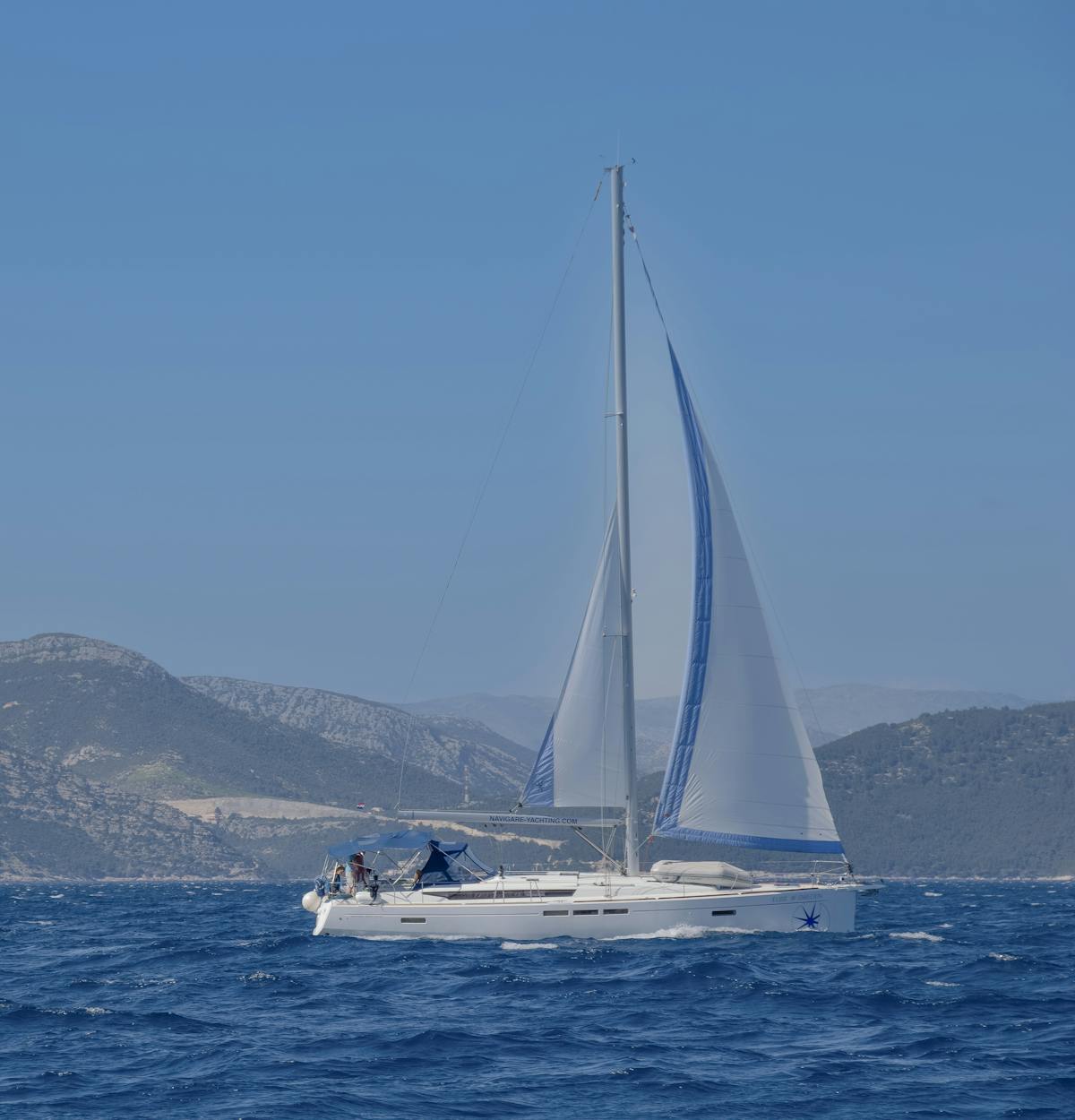
There are several ways to experience Croatia by boat, depending on your experience level, budget, and what kind of trip you want:
Bareboat charter: You rent the boat and sail it yourself. You need a valid sailing licence (ICC or equivalent) and ideally some offshore experience. This is the most flexible and usually the cheapest option per person if you have a group of 4-8. You choose your own itinerary, pace, and anchorages. Prices range from €1,500-4,000 per week for a monohull in June, depending on size and age.
Skippered charter: Same as bareboat but with a professional skipper who handles the sailing. You get the freedom of a private boat without needing experience. The skipper knows the coast, the best anchorages, and where to eat. Skipper costs run €150-200 per day on top of the boat rental. This is the best option for groups who want privacy and flexibility without the responsibility.
Cabin charter / flotilla: You book a cabin on a shared boat (usually a catamaran or gulet) with other travellers. A crew handles the sailing, cooking, and logistics. These are social trips — good for solo travellers or couples who want to meet people. Prices range from €700-2,000 per person per week depending on the level of luxury. Companies like Sail Croatia, MedSailors, and Busabout run these.
Gulet cruise: Traditional wooden sailing vessels with a full crew, chef, and fixed itinerary. These are the most luxurious option — you eat, drink, swim, and explore while the crew does everything else. Gulets typically carry 8-16 passengers and run €1,000-3,000 per person per week. Popular routes include Split to Dubrovnik and the Kornati islands.
The Best Sailing Routes
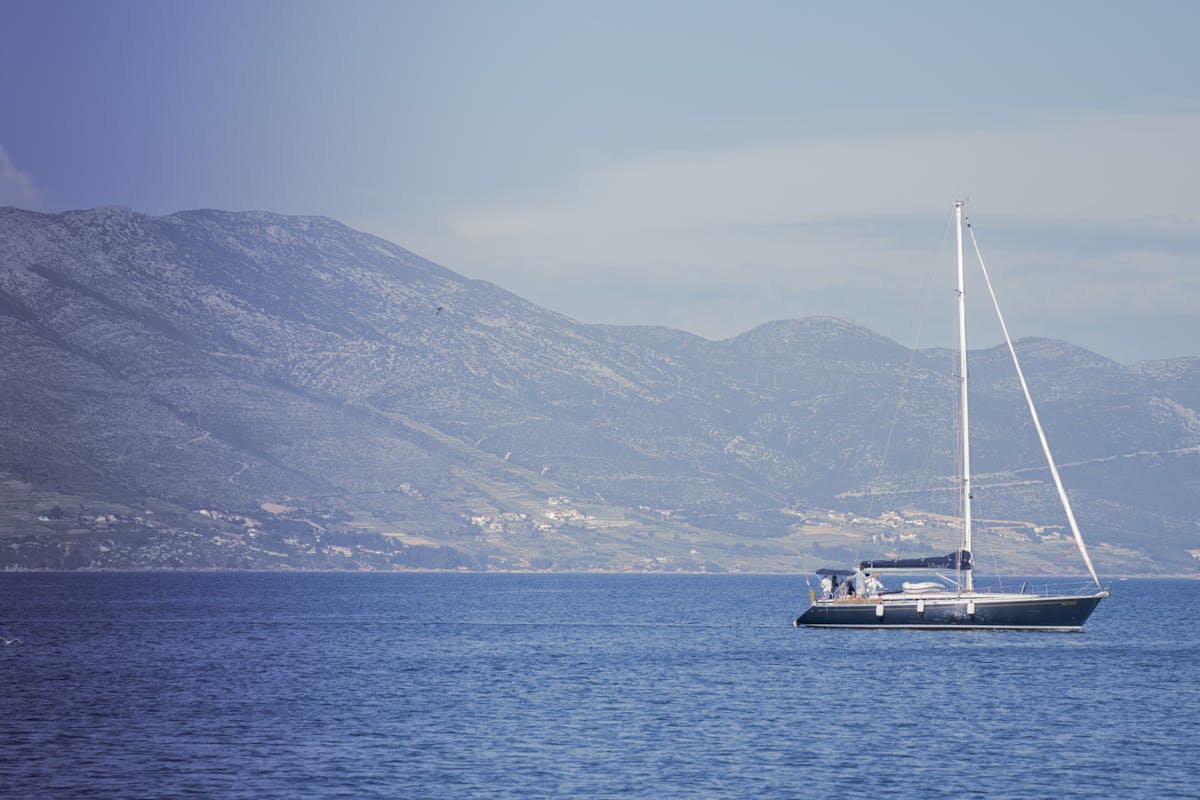
Croatia has four main sailing areas, each with its own character:
Split and the Central Dalmatian Islands: This is the most popular route and the best for first-time visitors. From Split or Trogir, you sail to Brač, Hvar, Vis, Šolta, and Korčula. The islands are close together (2-4 hours sailing between each), the harbours are well-equipped, and the towns offer the best mix of nightlife, restaurants, and culture. Hvar town is the social hub; Vis is the quiet escape. A week is enough to see the highlights.
Dubrovnik and the South: From Dubrovnik, you can sail north to the Elafiti Islands (Lopud, Šipan, Koločep), Mljet National Park, Korčula, and Lastovo. This is a less crowded route with wilder scenery. Mljet’s saltwater lakes are spectacular from the water. Lastovo is remote, undeveloped, and has some of the best seafood restaurants on the coast. The downside: Dubrovnik marina berths are expensive and limited.
Zadar and the Kornati Islands: The Kornati archipelago is a national park with nearly 150 islands, most of them uninhabited. Sailing here feels like exploring a different planet — barren limestone islands, crystal-clear water, and virtually no other people. Navigation can be tricky with shallow reefs, so a skipper is recommended if you do not know the area. From Zadar or Šibenik, you can combine the Kornati with the Krka River and its waterfalls.
Istria and the Kvarner Gulf: The northern Adriatic has a different feel — Italian influences, truffle country, and Venetian-style harbour towns like Rovinj, Poreč, and Vrsar. Less sailing traffic than Dalmatia. The Brijuni Islands are worth a stop. This route is good for sailors who want culture, food, and wine over beaches and parties.
When to Sail
The sailing season runs from April to October, but conditions vary significantly:
- April and May: Quiet, affordable, good wind. Water is cold (16-20°C) — fine for sailing, less fun for swimming. Some island facilities may not be open yet. Great for experienced sailors who prioritise sailing over swimming.
- June: The sweet spot. Warm water (22-24°C), reliable maestral winds in the afternoon, uncrowded marinas, reasonable prices. Book early — June fills up fast.
- July and August: Peak season. The warmest water (25-27°C) but the most crowded marinas, highest prices, and competition for berths. Pre-book marina slots or plan to anchor out. The maestral wind is strongest in July, which is great for sailing but can make afternoons choppy.
- September: Similar to June but with warmer water and lower prices. The crowds thin dramatically after the first week. The best month for a balanced sailing trip.
- October: Temperatures drop, weather becomes less predictable, and some facilities close. Can be excellent if the weather cooperates. Risk of bora wind (cold northeasterly) increases.
For the best overall experience, aim for the first two weeks of June or the second half of September.
Winds and Weather
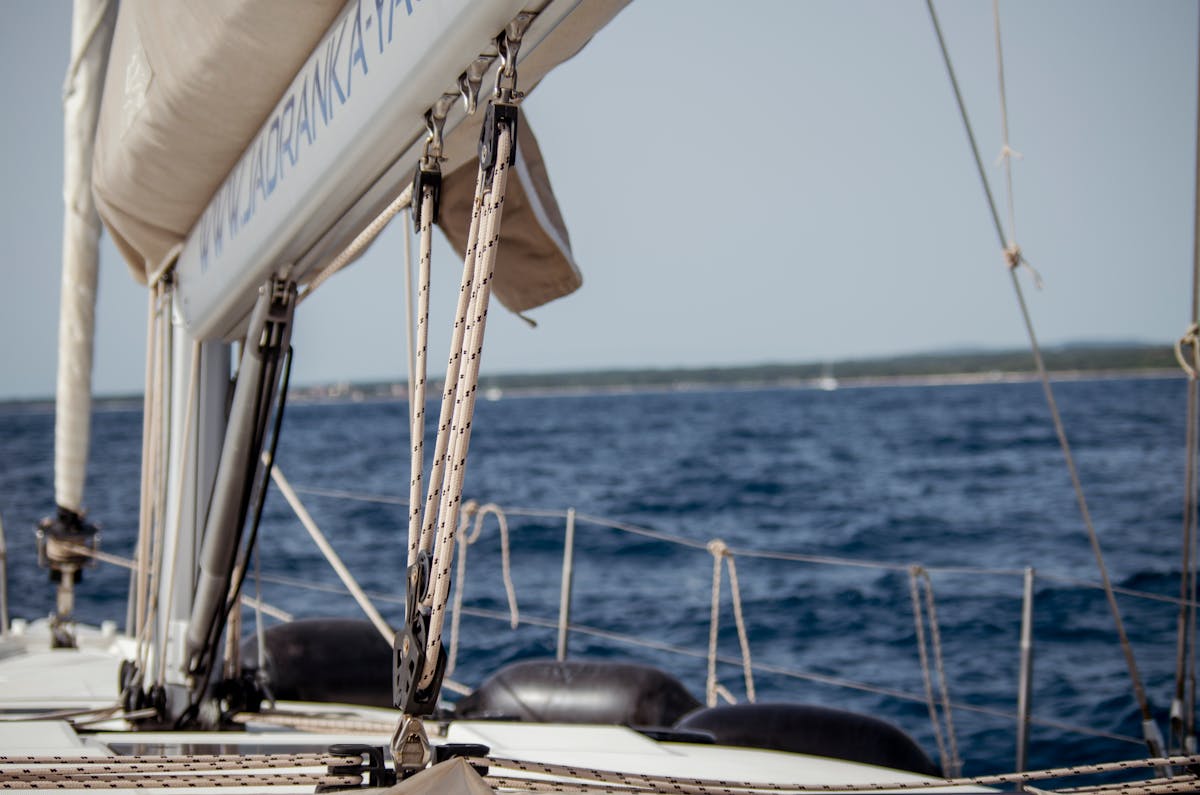
The Adriatic has two main winds that every sailor should know:
The Maestral: A northwesterly sea breeze that builds in the morning and peaks in the afternoon (typically 10-20 knots). This is the summer wind — reliable, predictable, and excellent for sailing. It usually dies down by sunset, leaving calm evenings for anchoring. The maestral is your friend.
The Bora (Bura): A cold, strong northeasterly wind that can hit suddenly and violently, especially in autumn and winter. Gusts can exceed 50 knots, and the bora funnels through mountain passes, creating localised strong winds even when surrounding areas are calm. In summer, bora events are rare and usually forecast well in advance. If a bora is predicted, stay in a well-protected harbour — it is not a wind you want to be caught in.
The Jugo (Sirocco): A warm, moist southeasterly wind that brings rain and swell. Slower to build than the bora and usually forecast several days ahead. Less dangerous but uncomfortable — it makes the sea rough and the sky grey. Typically a winter/spring wind.
In practice, summer sailing in Croatia is mostly about the maestral. Morning calm, afternoon breeze, evening calm. Plan your sailing for the afternoon when you have wind, and use the mornings for swimming and exploring.
What It Costs
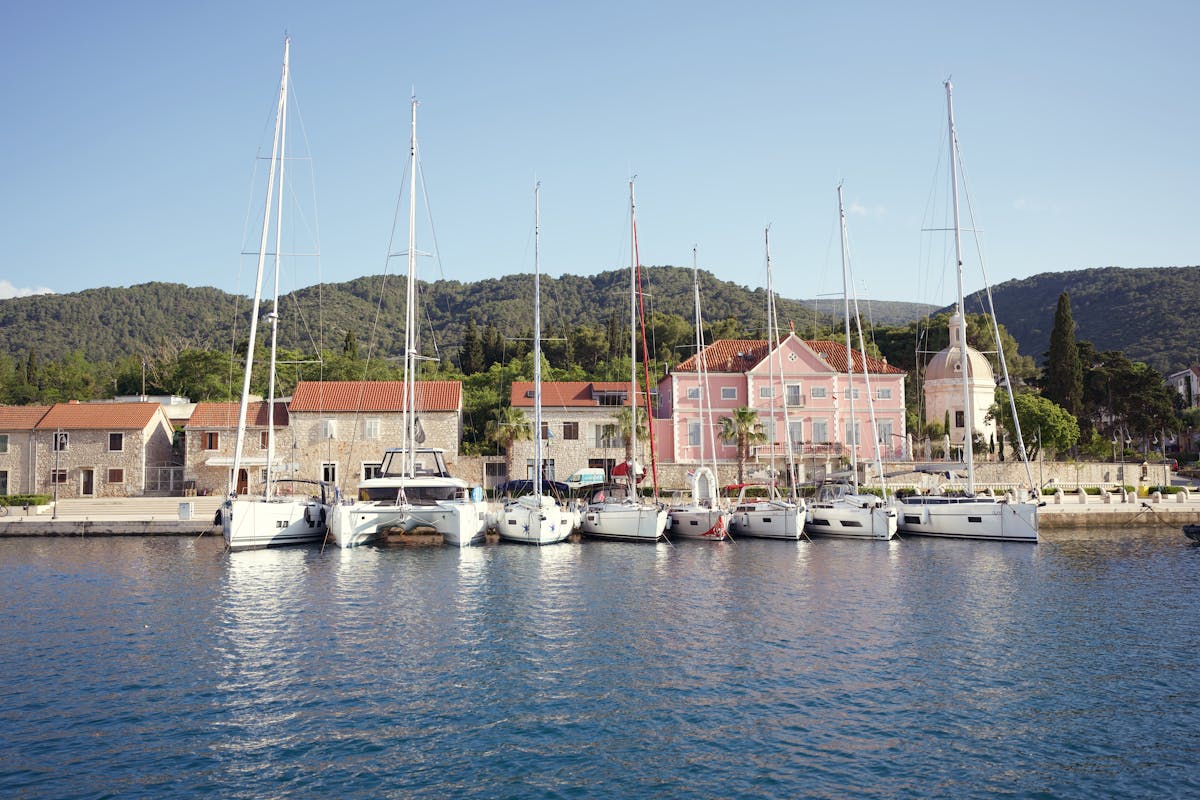
Sailing in Croatia is not cheap, but it can be surprisingly good value when you split costs with a group. Here is a rough breakdown for a one-week charter in June or September:
Bareboat monohull (36-40ft, 3 cabins):
- Boat rental: €1,800-3,000 per week
- Skipper (if needed): €1,050-1,400 (€150-200/day)
- Fuel: €150-250
- Marina fees: €300-500 (varies hugely; anchoring is free)
- Provisioning (food and drink): €400-700 for the group
- Total for 6 people: roughly €600-850 per person per week
Bareboat catamaran (40-45ft, 4 cabins):
- Boat rental: €3,500-6,000 per week
- Everything else similar to monohull
- Total for 8 people: roughly €700-1,000 per person per week
Cabin charter (shared boat): €700-2,000 per person per week, meals included on most trips.
July and August prices are 30-50% higher across the board. October prices drop to near-April levels.
Add restaurant meals (which you will want — the food at harbourside restaurants is too good to skip), drinks, and entrance fees to national parks, and a realistic all-in budget is €1,000-1,500 per person for a week of sailing in shoulder season.
Practical Tips for First-Time Sailors in Croatia
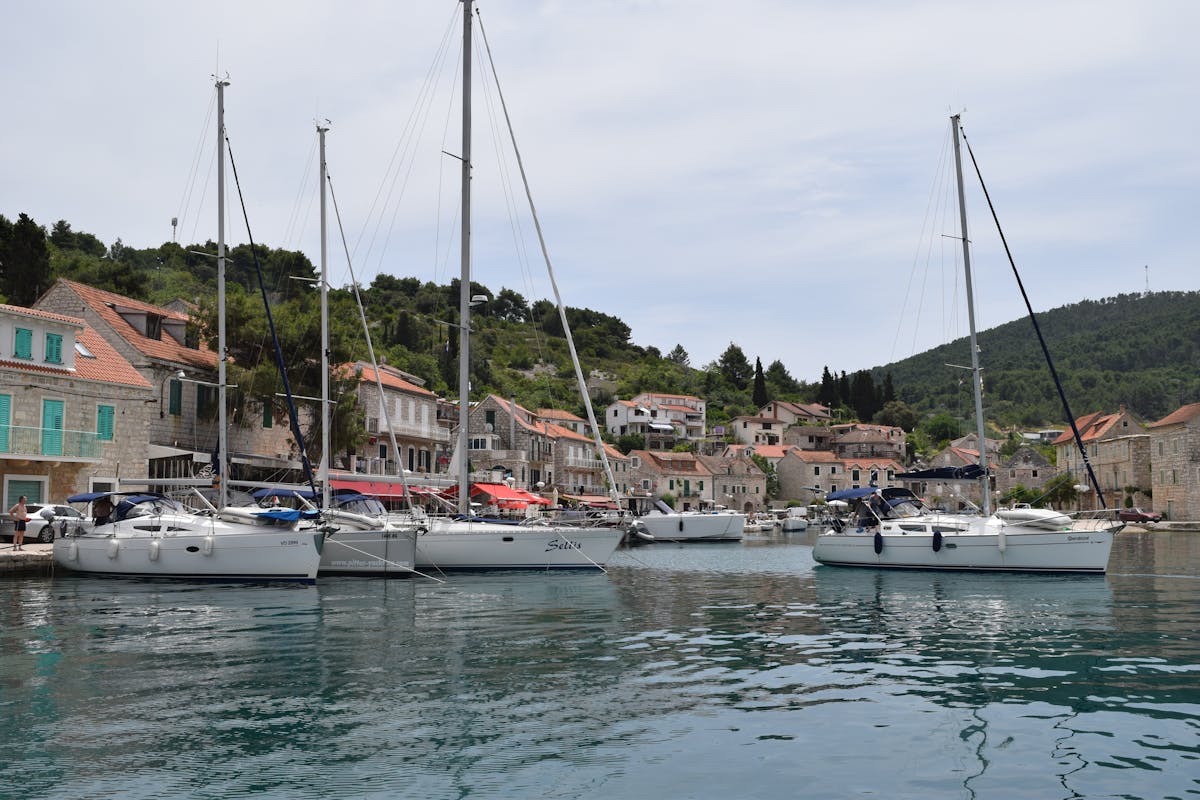
- Book early. Popular weeks (late June, early July, late August) sell out months in advance, especially for catamarans. January-February booking for summer is normal.
- Use the ACI marina network. 22 marinas along the coast with consistent standards, online booking, and reasonable prices. Their loyalty card gives discounts.
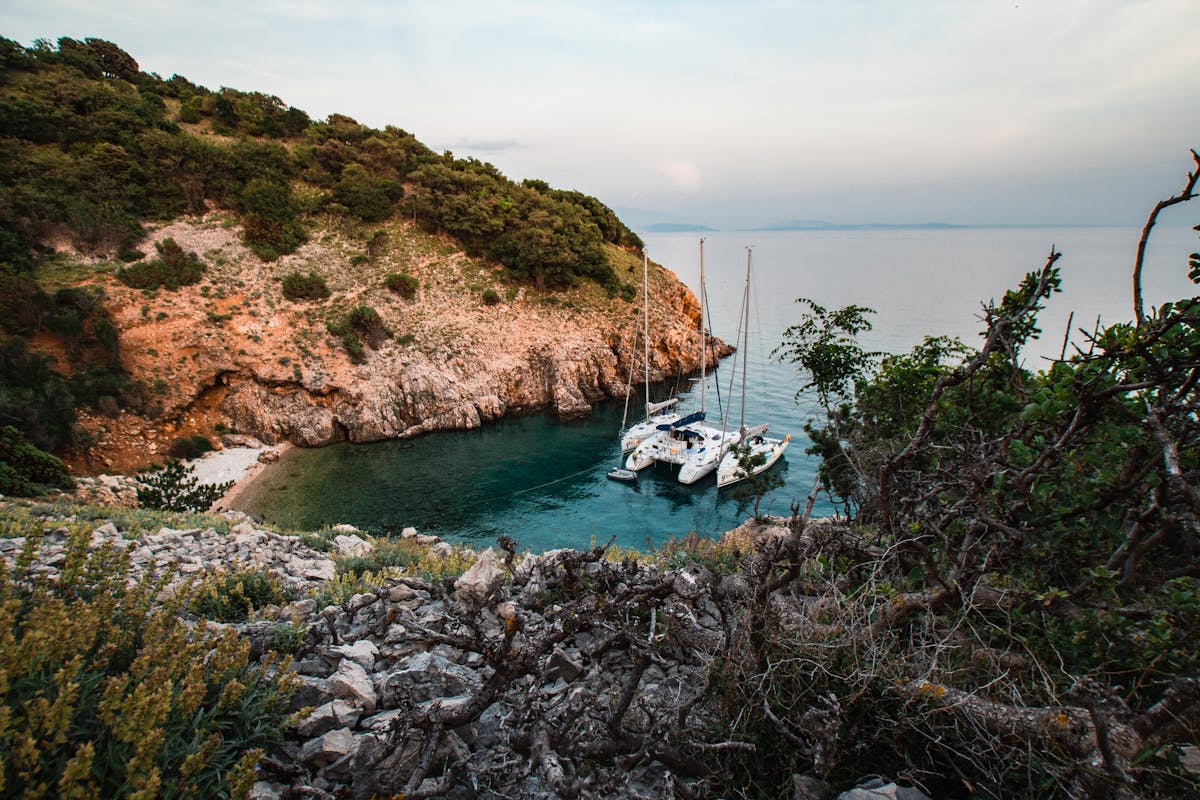
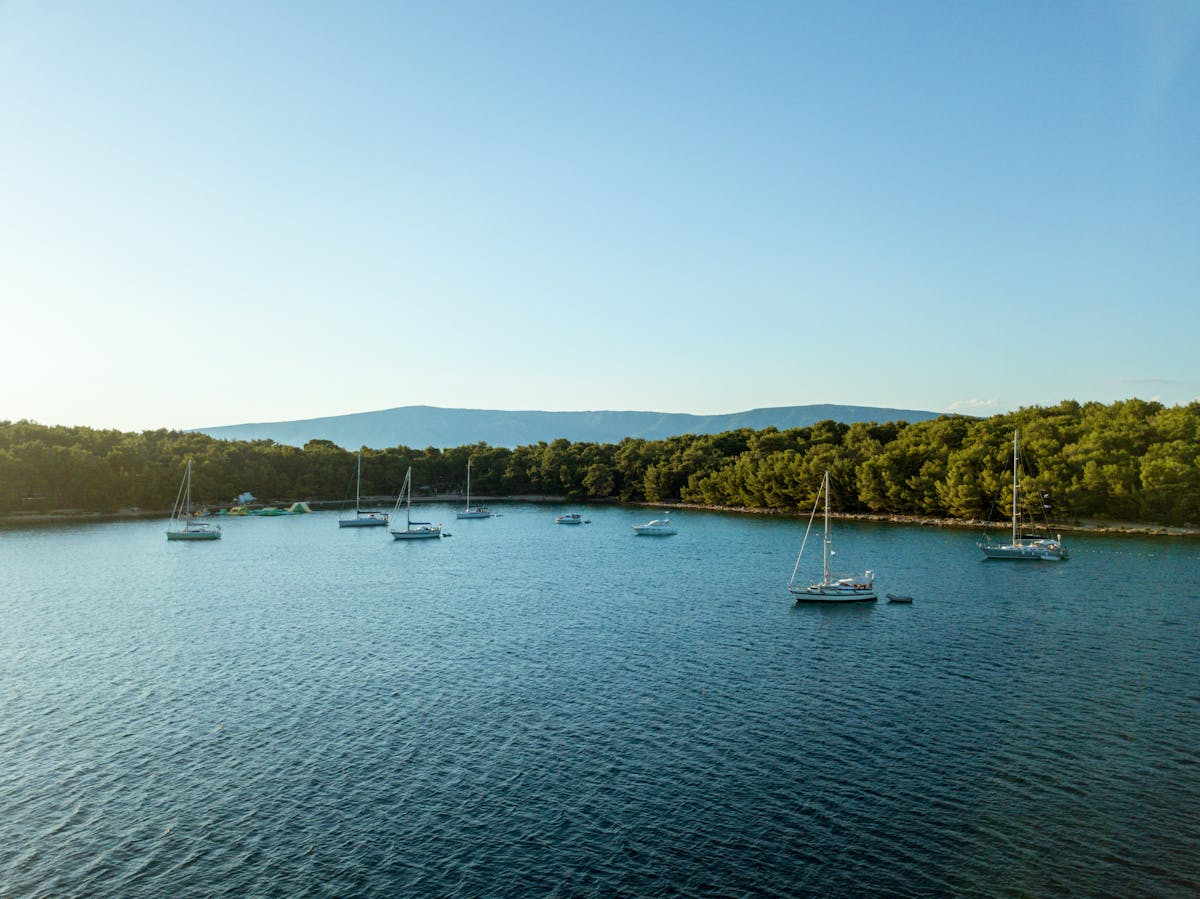
- Anchor out when you can. Marina berths are expensive (€50-150 per night depending on size and location). Anchoring in sheltered bays is free and often more scenic. Just make sure your anchor is well-set — the afternoon maestral can make things choppy.
- Download the Navionics app. Essential for navigation, anchor spots, marina availability, and depth information.
- Carry cash. Some smaller harbour offices and konobas on remote islands only accept cash. Bring €200-300 in small denominations.
- Respect marine protected areas. Kornati, Mljet, and Brijuni national parks charge entrance fees for boats. Anchoring restrictions apply in sensitive areas.
- Try konoba hopping. The best restaurants on the islands are often tiny family-run konobas in remote coves, accessible only by boat. Ask your skipper or other sailors for recommendations — they know the good ones.
- Check the weather twice daily. Croatian meteorological stations broadcast marine forecasts on VHF channel 67 and 73. Most skippers also use the Windy app.
Do You Need Experience
For a bareboat charter, yes. Most charter companies require an ICC (International Certificate of Competence) or equivalent national licence, plus proof of sailing experience. Some companies are stricter than others — larger, more modern boats often require a higher licence level.
For everything else — skippered charters, cabin cruises, gulet trips — you need zero experience. Show up, bring sunscreen, and the crew handles the rest. Many first-time sailors in Croatia start with a cabin charter and come back the next year to charter their own boat. The Adriatic has a way of turning people into sailors.
If you want to learn, several RYA-accredited sailing schools operate in Croatia (Split and Šibenik are popular locations). A week-long competent crew course costs around €800-1,000 and gets you on the water immediately. It is one of the more enjoyable ways to spend a week, and you leave with a qualification that lets you charter boats worldwide.
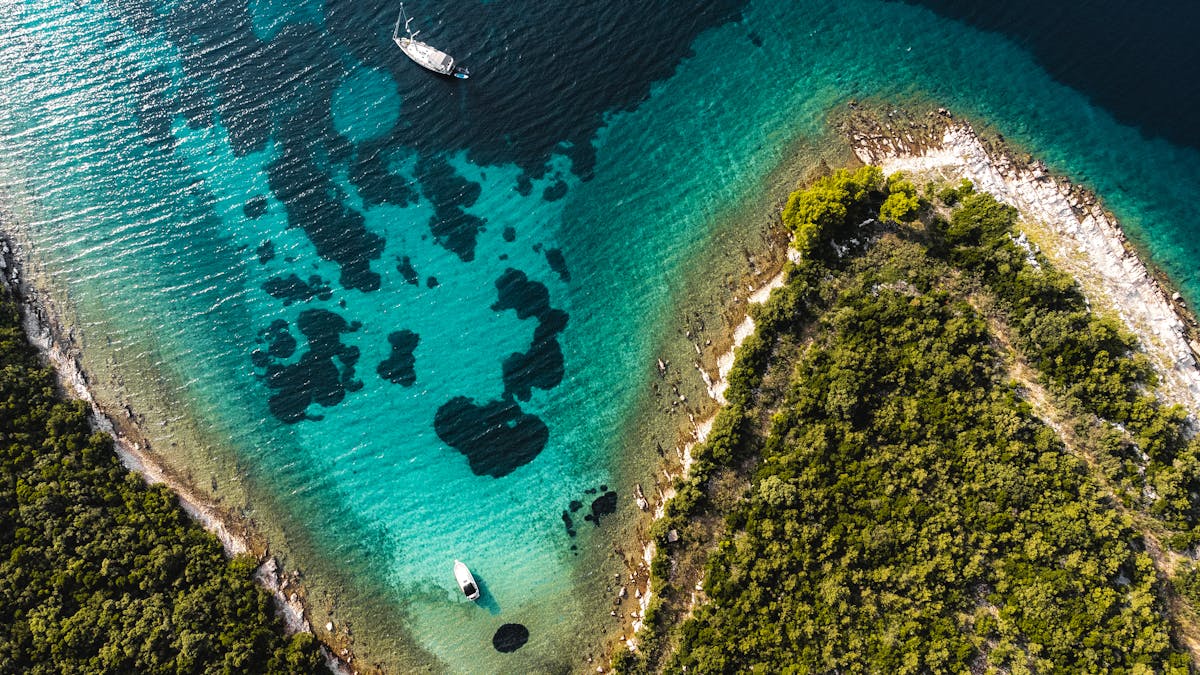
Croatia is one of the best sailing destinations in the world, and that is not an exaggeration. The combination of sheltered waters, short distances, excellent infrastructure, warm weather, clear water, and stunning scenery is hard to match anywhere. Greece comes close, Turkey is excellent, but Croatia has a polish and reliability that makes it particularly good for first-timers. Give it a week. You will be planning next year’s trip before the first one is over.