The ruts did it for me.
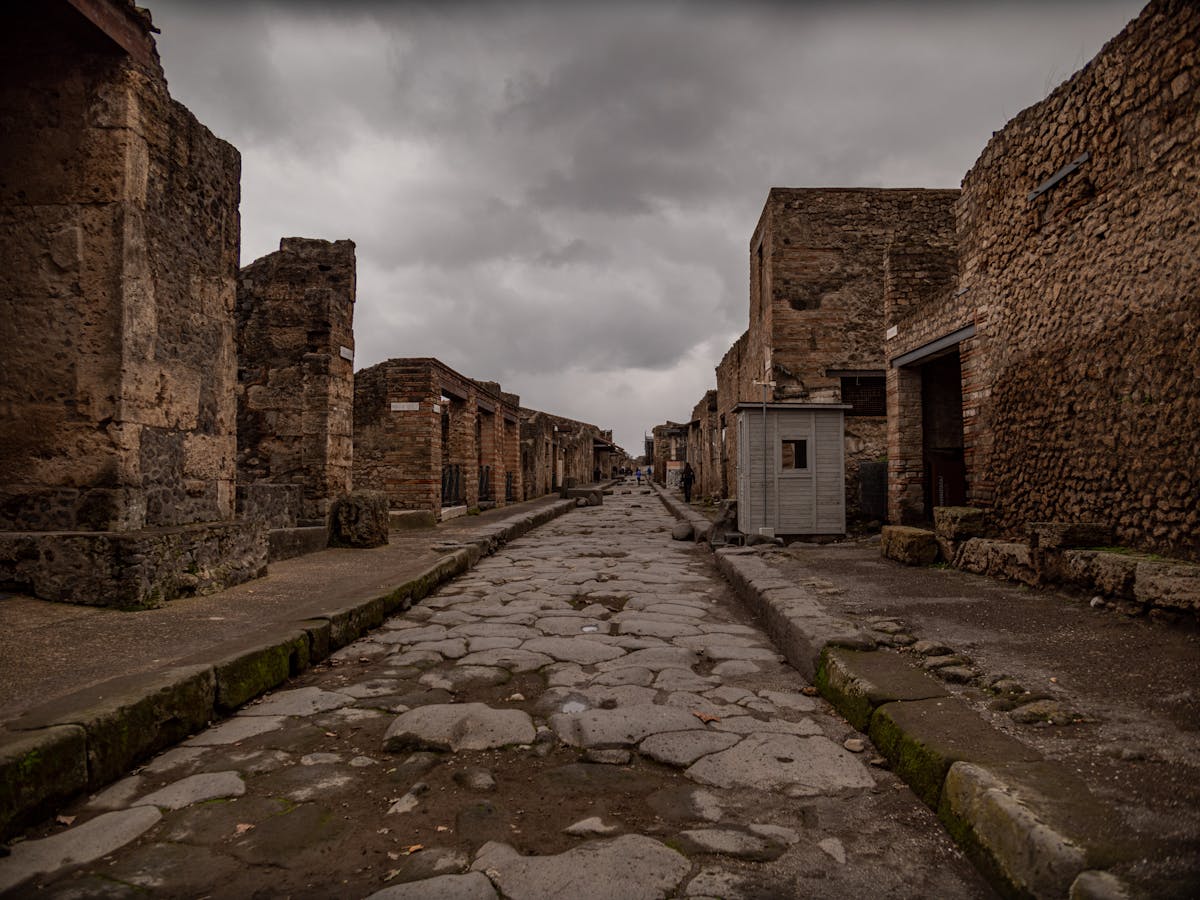
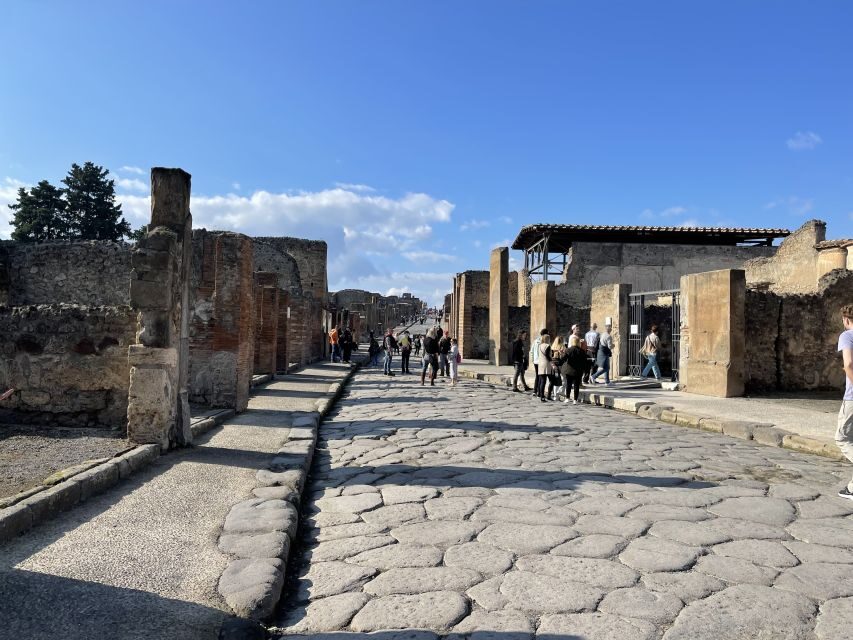
I was standing on Via dell’Abbondanza — Pompeii’s main commercial street — when I looked down and noticed deep grooves worn into the stone paving. Cart wheels. Roman cart wheels, from people going about their daily shopping, hauling goods, living ordinary lives. Nearly two thousand years ago.
Here’s everything I know about making the most of your visit.
- If You’re in a Hurry
- How to Get Pompeii Tickets (The Official System)
- Self-Guided vs. Guided Tour: My Honest Take
- The Best Pompeii Tours to Book
- 1. Entry Ticket and Guided Tour with an Archaeologist
- 2. Small Group Tour with an Archaeologist
- 3. Entry Ticket with Audio Guide
- 4. Pompeii and Vesuvius Day Trip from Naples with Lunch
- 5. From Naples: Guided Tour with Skip-the-Line Tickets
- 6. Pompeii and Herculaneum Small Group Tour
- 7. Skip-the-Line Entry Ticket with App Audio Guide (Budget Pick)
- When to Visit Pompeii
- How to Get There from Naples (and Other Cities)
- From Naples (the easy way)
- From Sorrento
- From Rome
- By car
- Tips That Will Save You Time
- What You’ll Actually See Inside
- More Italy Tours Worth Checking Out
- More Naples Day Trip Guides
If You’re in a Hurry
Don’t have time to read the whole guide? Here are my top three picks:
- Best guided tour: Entry Ticket and Guided Tour with an Archaeologist — $35/person, 2 hours. The most popular Pompeii tour by a wide margin. An actual archaeologist walks you through the highlights and makes the ruins come alive with context you’d never get on your own.
- Best combo day trip: Pompeii and Vesuvius Day Trip from Naples with Italian Light Lunch — $131.57/person, 8 hours. Covers Pompeii, a hike up Vesuvius, and lunch. The full experience in a single day.
- Best budget option: Skip-the-Line Entry Ticket with App Audio Guide — $22/person, self-paced. Skip the ticket line, get an audio guide on your phone, explore at your own speed.
How to Get Pompeii Tickets (The Official System)
Here’s what you need to know right now:
The official site is pompeiisites.org. Standard adult admission is around 18 euros (roughly $19-20 USD). You can buy tickets directly on this site, and I’d recommend doing so at least a few days in advance during peak season (April through October).
But here’s the thing — the official site can be frustrating to navigate, and tickets for popular time slots sell out. If you’re visiting between June and September, or during Easter week, don’t gamble on same-day availability.
Your options:
- Official website: Cheapest route, but the booking system can be clunky. Tickets are timed-entry, so pick your slot carefully.
- Skip-the-line tickets via a booking platform: Slightly more expensive (usually $22-40), but you skip the ticket queue entirely. On a busy summer morning, that queue can eat 30-45 minutes of your day.
- Guided tour with tickets included: This is what I’d recommend for first-timers. Your guide handles the tickets, you skip the line, and you actually understand what you’re looking at. From around $35.
- At the gate: Yes, you can still buy tickets at the entrance. But you’ll wait in line twice — once for the ticket window, once for the entrance gate. In summer, this is a bad idea.
Pro tip: There are two main entrances — Porta Marina (the main one, usually more crowded) and Piazza Anfiteatro (the back entrance, often much quieter). If you’re buying at the gate, try Piazza Anfiteatro first.
Self-Guided vs. Guided Tour: My Honest Take
I’ve done Pompeii both ways. And I’ll be blunt: go guided, at least your first time.
Here’s why. Pompeii is enormous. 170 acres. Without a guide, you’ll walk in, see some ruined walls, take photos, walk past dozens of locked buildings you can’t enter, and leave thinking “that was… neat, I guess?” You’ll miss what makes the place extraordinary because most of the context is invisible to the untrained eye.
Self-guided works if:
- You’ve already visited once and want to explore freely
- You’re a history buff who’s already read extensively about Pompeii
- You want to combine it with Herculaneum in the same day (tight schedule)
- Budget is very tight (you can get in for around $22 with an audio guide app)
Go guided if:
- This is your first visit
- You want to actually understand what you’re seeing (not just photograph it)
- You have 2-3 hours and want to hit the highlights efficiently
- You don’t want to deal with navigation (it’s easy to get turned around in there)
The audio guide apps are a decent middle ground, but they’re not the same as a live person who can answer your questions and adjust the route based on which areas are open that day (closures happen often).
The Best Pompeii Tours to Book
I’ve gone through the options and picked seven that cover every type of visitor — from budget solo travelers to families wanting the full-day experience. All have strong review counts and ratings.
1. Entry Ticket and Guided Tour with an Archaeologist

- Price: $35 per person
- Duration: 2 hours
- Provider: GetYourGuide
This is the one I recommend to most people. This is consistently the top-rated Pompeii experience for good reason. You get a working archaeologist as your guide, which means you’re not just hearing rehearsed scripts. These guides know the site at a research level and can explain things like how the fresco pigments were made or why certain houses had specific room layouts.
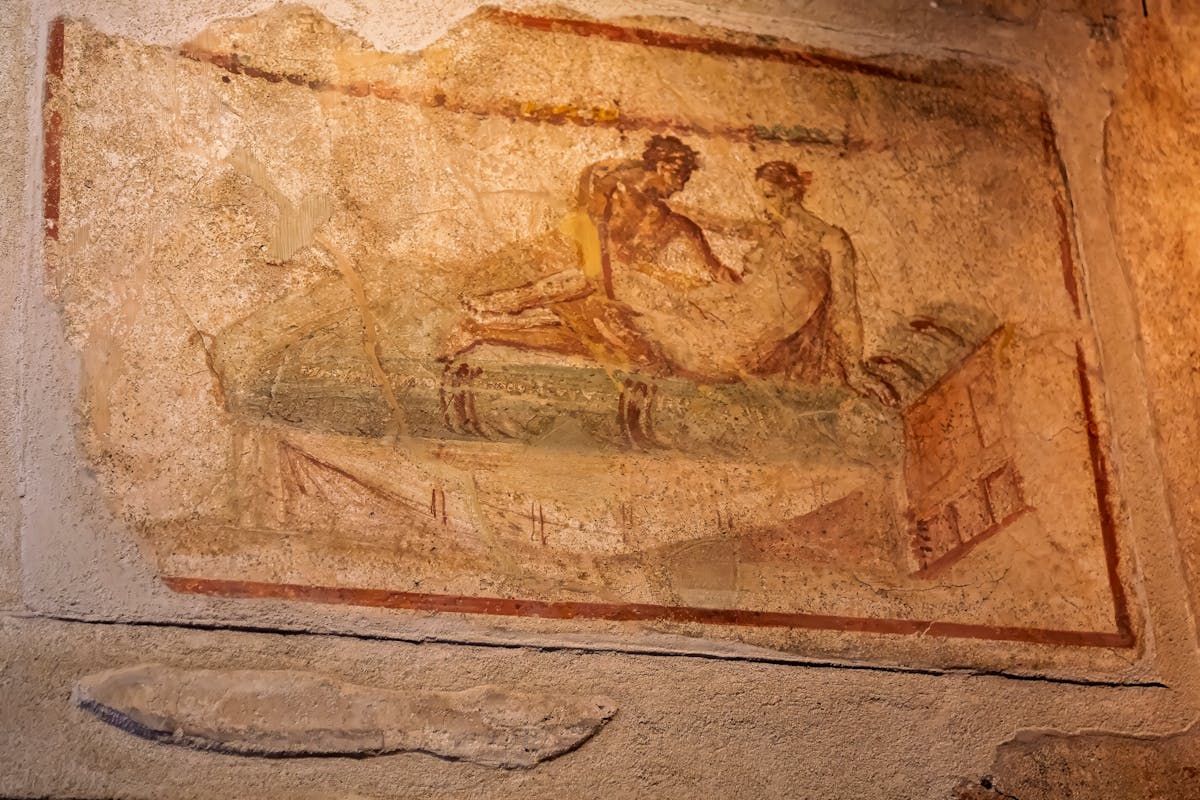
Two hours is enough to hit the major sites — the Forum, the Baths, the House of the Faun, the brothel (Lupanar), and usually a few of the plaster casts. Ticket included, line skipped.
Best for: First-time visitors who want the best balance of quality, price, and time.
2. Small Group Tour with an Archaeologist
- Price: $40 per person
- Duration: 2-3 hours
- Provider: GetYourGuide
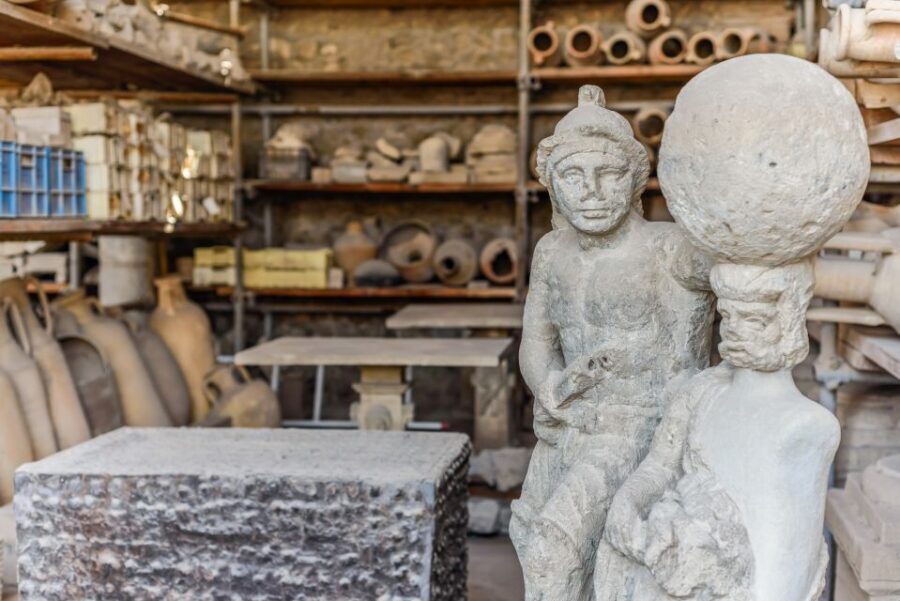
Similar concept to the first option, but capped at a smaller group size. That extra $5 buys you a more intimate experience — easier to hear the guide, ask questions, and not feel like you’re part of a herd being shuffled through. The slightly longer duration (up to 3 hours) means you might see one or two extra sites.
Best for: People who dislike large tour groups and want a more personal experience.
3. Entry Ticket with Audio Guide
- Price: $40 per person
- Duration: Self-paced (full day access)
- Provider: GetYourGuide
If you want to explore at your own pace but still have context, this combines your entry ticket with an audio guide you access through your phone. It is not quite as well-regarded as the live guided tours — and that is expected. Audio guides are informative but can’t match a live person. Still, this is a solid choice if you want flexibility to linger where you want and rush past what doesn’t interest you.
Best for: Independent travelers who want some guidance but hate following a group.
4. Pompeii and Vesuvius Day Trip from Naples with Lunch
- Price: $131.57 per person
- Duration: 8 hours
- Provider: Viator
The “do everything in one day” option. You get picked up from central Naples, driven to Pompeii for a guided tour, then head up to Vesuvius to hike to the crater rim (where you can peer inside and see the thing that killed Pompeii), and lunch is included somewhere in between.
It’s a full day and you’ll be tired by the end. But there’s something powerful about standing in the ruins, then an hour later standing at the top of the volcano that destroyed them. That connection hits different when you experience both in the same day.
Best for: Visitors with one day who want to see everything. Families and couples especially.

5. From Naples: Guided Tour with Skip-the-Line Tickets
- Price: $69 per person
- Duration: 3.5 hours
- Provider: GetYourGuide
This one includes transport from Naples, which solves the “how do I actually get there” problem entirely. You meet at a central Naples location, the tour handles the train or bus, and you get a guided walk through Pompeii with skip-the-line entry. The 3.5-hour duration gives you decent coverage without eating your entire day.
The logistics and guide quality are both solid based on everything I have seen.
Best for: Anyone staying in Naples who doesn’t want to figure out the train system.
6. Pompeii and Herculaneum Small Group Tour

- Price: $77.09 per person
- Duration: 6-11 hours
- Provider: Viator
This tour is one of the most consistently praised options available. It combines both famous archaeological sites, and honestly, Herculaneum deserves to be seen too. It’s smaller than Pompeii but better preserved — the volcanic mud that buried it actually protected wooden structures, second floors, and organic materials that were destroyed at Pompeii.
The time range is wide (6-11 hours) because it depends on which option you choose and how much free time you take. But if you’re a genuine history lover, doing both sites in one day with an expert is hard to beat.
Best for: History enthusiasts who want the full picture of the 79 AD eruption.
7. Skip-the-Line Entry Ticket with App Audio Guide (Budget Pick)
- Price: $22 per person
- Duration: Self-paced (full day access)
- Provider: GetYourGuide
The cheapest way to get in with some level of guidance. Twenty-two dollars gets you skip-the-line entry and a downloadable audio guide app. You won’t get the depth of a human guide, but you’ll have enough context to understand the major sites. Bring headphones and a fully charged phone.
Best for: Budget travelers and repeat visitors who just want easy entry.
When to Visit Pompeii

Best months: April, May, early June, September, October. Warm enough to enjoy, cool enough to walk for hours. Crowds are manageable on weekdays.
Worst months: July and August. Temperatures regularly hit 35-38 degrees Celsius (95-100 degrees Fahrenheit) with zero shade. The site fills with cruise ship groups. If you must visit in summer, arrive when the gates open (usually 9 AM, sometimes 8:30 AM April through October) and plan to be done by noon.
Winter visits: November through March is quiet and cheap. Some days you’ll have entire streets to yourself. The downside: shorter hours (last entry at 3:30 PM, site closes at 5 PM) and some sections may be closed. But the light is gorgeous for photos and the experience feels much more personal.
Day of the week: Weekdays are always better than weekends. Tuesday through Thursday tends to be the quietest. Avoid Sundays — the site is free on the first Sunday of each month, which sounds great until you realize half of southern Italy had the same idea.
How to Get There from Naples (and Other Cities)

From Naples (the easy way)
Circumvesuviana train — this is the standard option. Trains run from Napoli Piazza Garibaldi station (below the main Napoli Centrale station) to Pompei Scavi – Villa dei Misteri station. Journey takes about 35 minutes, trains run every 20-30 minutes, and a one-way ticket costs around 3 euros.
The Circumvesuviana is… functional. Don’t expect comfort. The trains are old, often packed, occasionally delayed, and petty theft happens. Keep your valuables secure, stand near the doors if it’s crowded, and don’t leave bags unattended. It’s not dangerous — just not fancy.
When you get off at Pompei Scavi, the Porta Marina entrance is a 2-minute walk from the station. You literally can’t miss it.
Alternative: Trenitalia regional train to Pompei station (no “Scavi” in the name). Slightly more comfortable and often faster, but the station is a 10-minute walk from the Piazza Anfiteatro entrance. Fine if you don’t mind the walk.
From Sorrento
Same Circumvesuviana line, just the other direction. Sorrento to Pompei Scavi takes about 30 minutes. Trains are often less crowded coming from this direction.
From Rome
Take a high-speed train from Roma Termini to Napoli Centrale (about 1 hour 10 minutes on the Frecciarossa), then switch to the Circumvesuviana as described above. Total journey: around 2 hours. Very doable as a day trip, but it makes for a long day.
Alternatively, consider a guided day trip from Rome (from $90.70, 12 hours) if you’d rather have someone else handle all the logistics.
By car
Take the A3 motorway from Naples toward Salerno. Exit at Pompei Ovest for the western entrances. Parking is available near both main entrances (around 5 euros for the day). Driving in Naples itself is chaotic, but once you’re on the motorway, it’s straightforward.
Tips That Will Save You Time
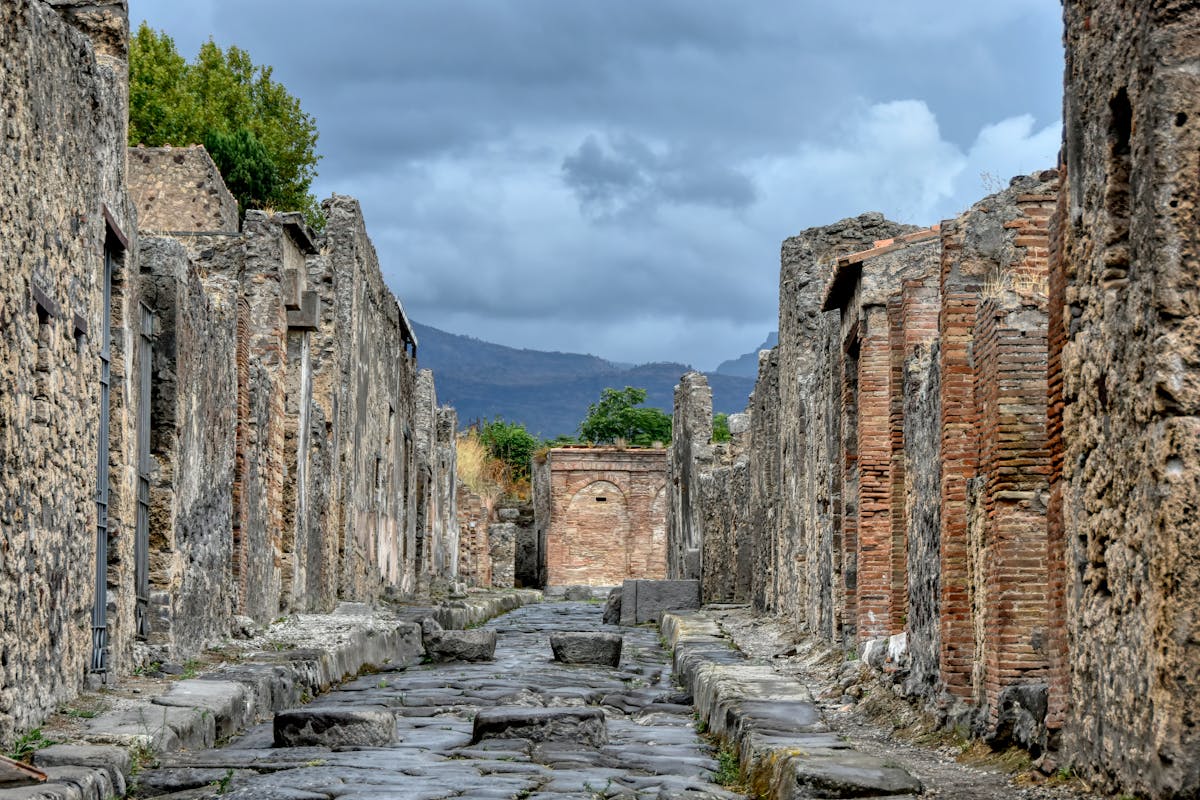
Wear proper shoes. This sounds obvious, but I’ve watched people in flip-flops hobbling over ancient cobblestones. The streets are uneven, the stones are slippery when wet, and you’ll walk 3-5 miles during even a short visit. Closed-toe shoes with good grip. Non-negotiable.
Bring water. There are a few water fountains inside the site (the Romans built good aqueducts), but not enough. Bring at least a liter per person in summer. There’s a small cafe inside, but prices are tourist-level.
Download the official map beforehand. The site is enormous and signs are minimal. The official Pompeii app has a map, or grab a paper one at the entrance. Without it, you’ll spend half your time lost.
Budget at least 2 hours. Three is better. The people who rush through in 60 minutes leave frustrated. If you’re self-guiding, give yourself 3-4 hours minimum to see the highlights without feeling rushed.
Check what’s open. Buildings rotate on a closure schedule. The House of the Vettii might be open one week and closed the next. The Lupanar (brothel) is tiny and often has a queue. Check the official Pompeii website for current closures before you go.
Luggage storage exists. If you’re doing a day trip and carrying bags, there’s a left-luggage service near the Porta Marina entrance. Don’t drag a rolling suitcase through Roman streets.
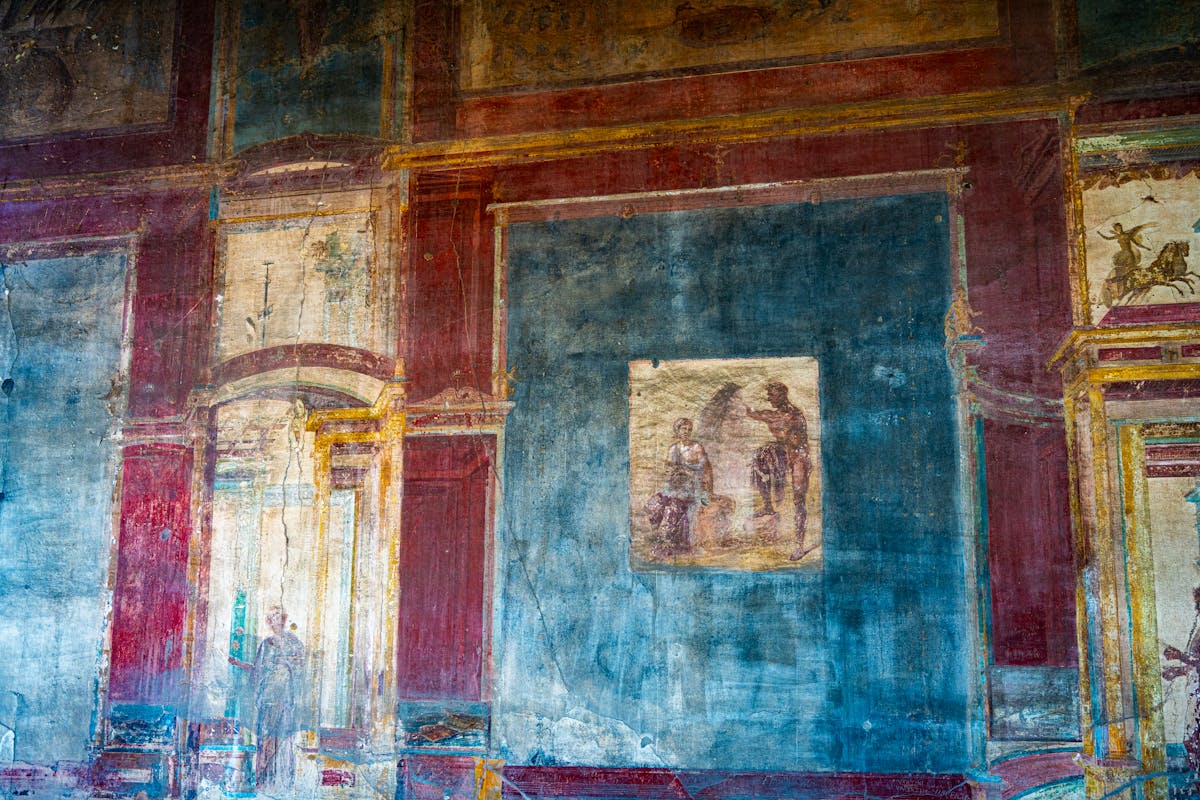
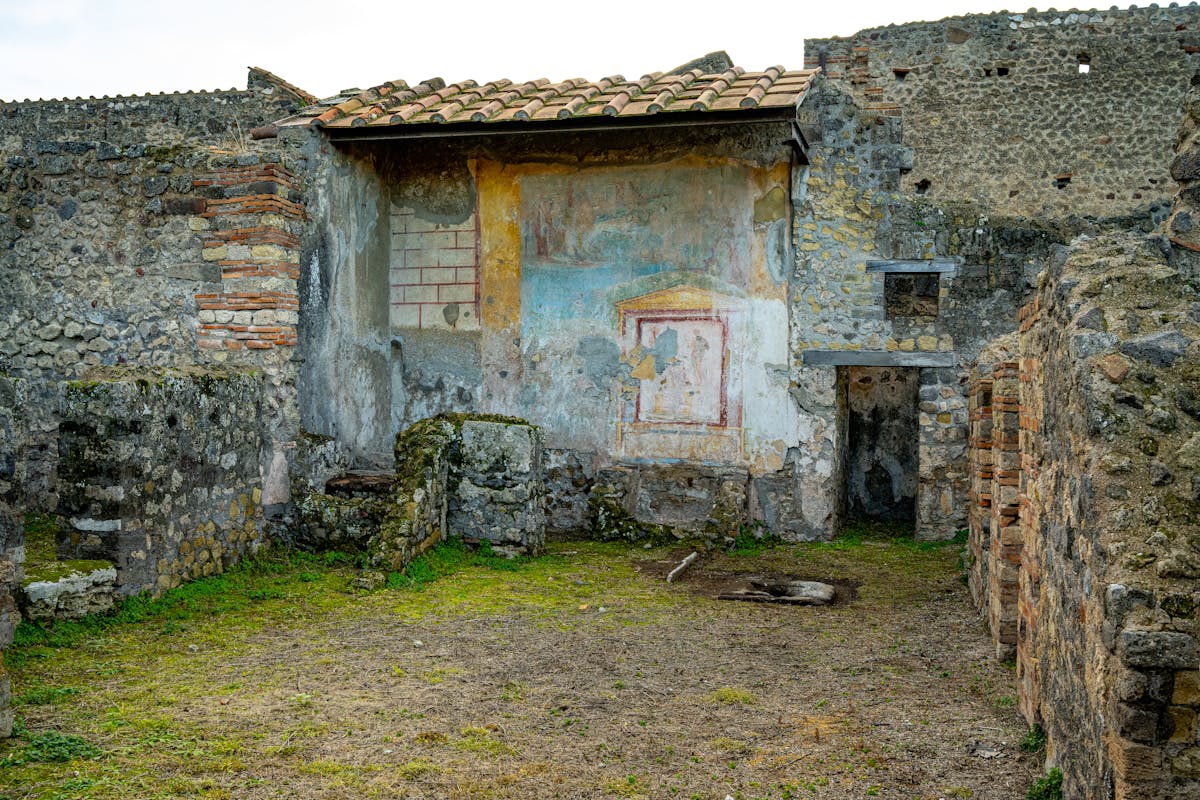
Don’t skip the Suburban Baths. Most visitors beeline for the Forum and the Lupanar. The Suburban Baths are near the Porta Marina entrance and most people walk right past them. They contain some of the best-preserved frescoes in the entire site.
What You’ll Actually See Inside
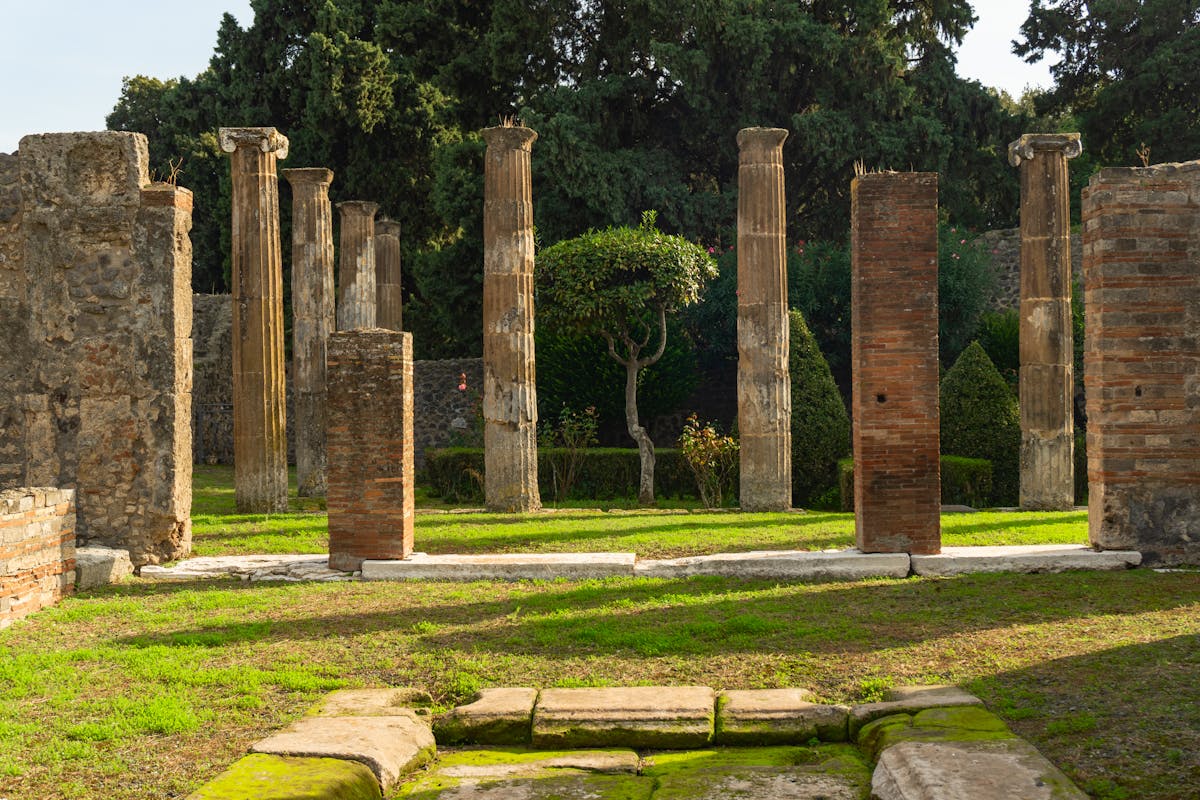
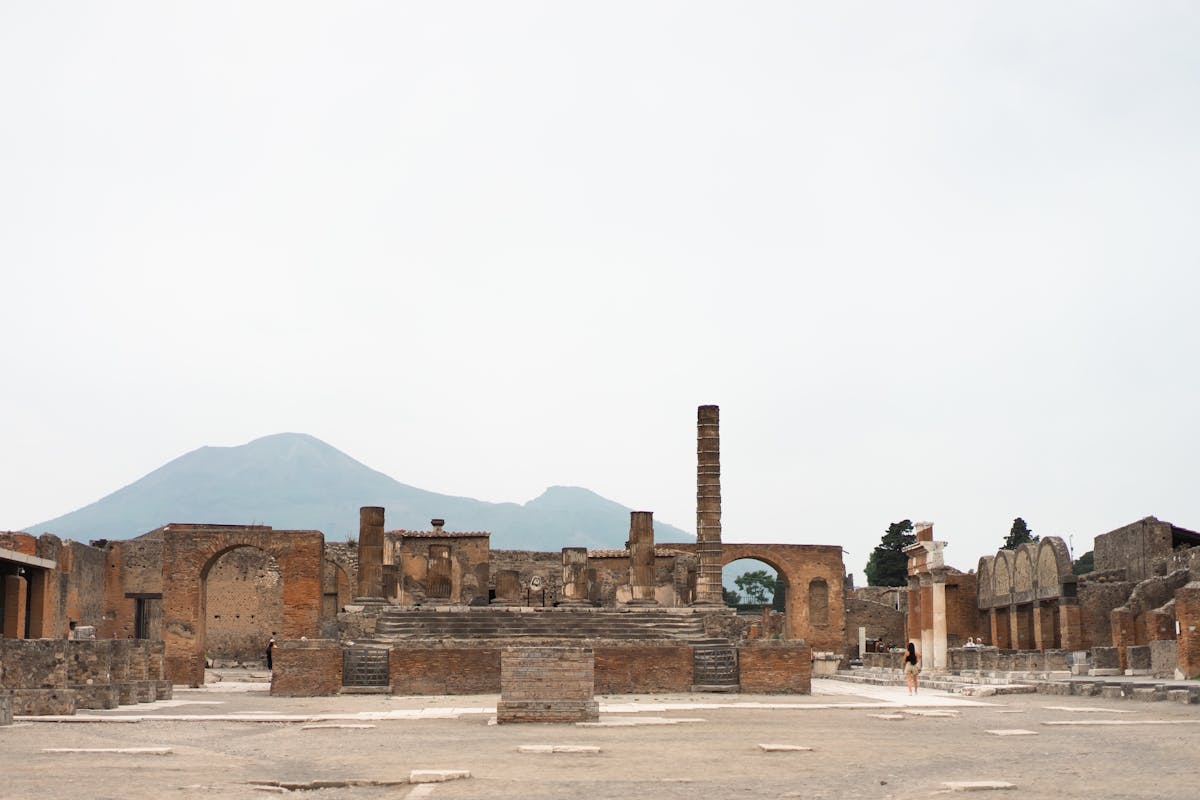
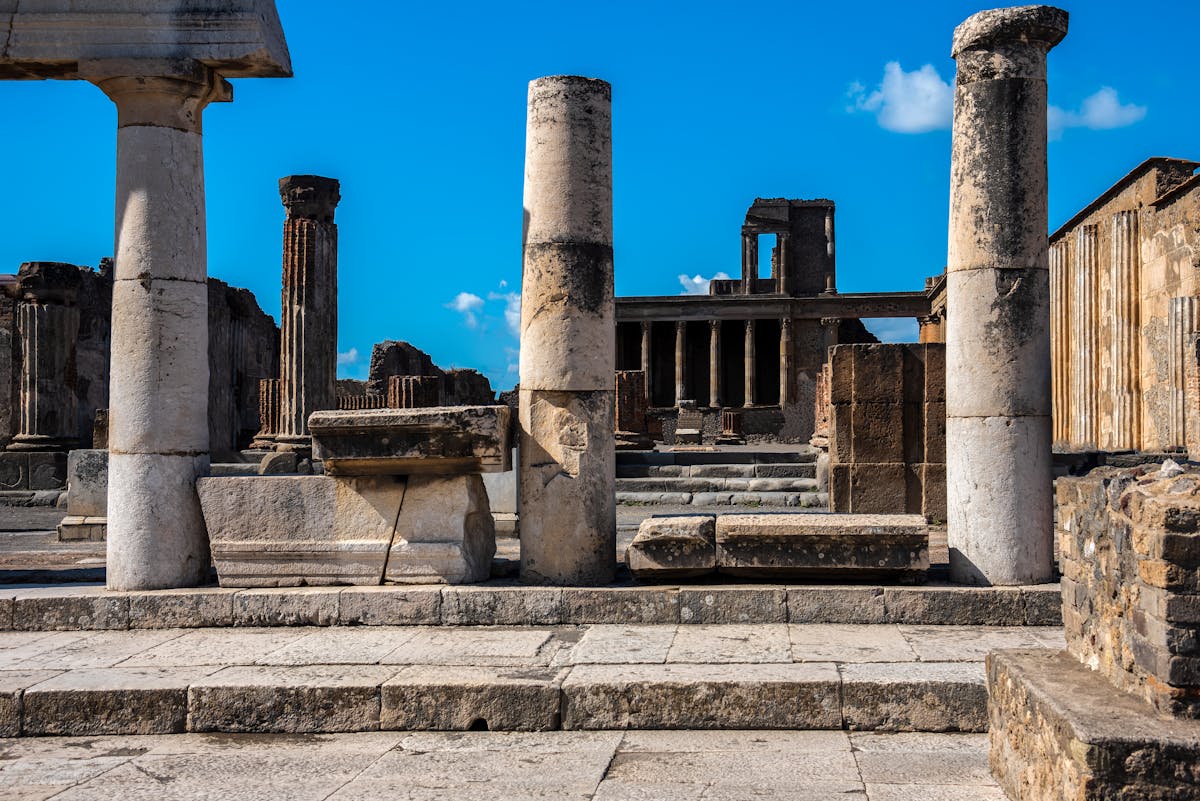
The Forum — the heart of the city. This was the main public square where politics, religion, and commerce happened. The Temple of Jupiter anchors one end with Vesuvius framed perfectly behind it (the Romans didn’t know it was dangerous). You’ll see the remains of markets, law courts, and public buildings surrounding the open plaza.
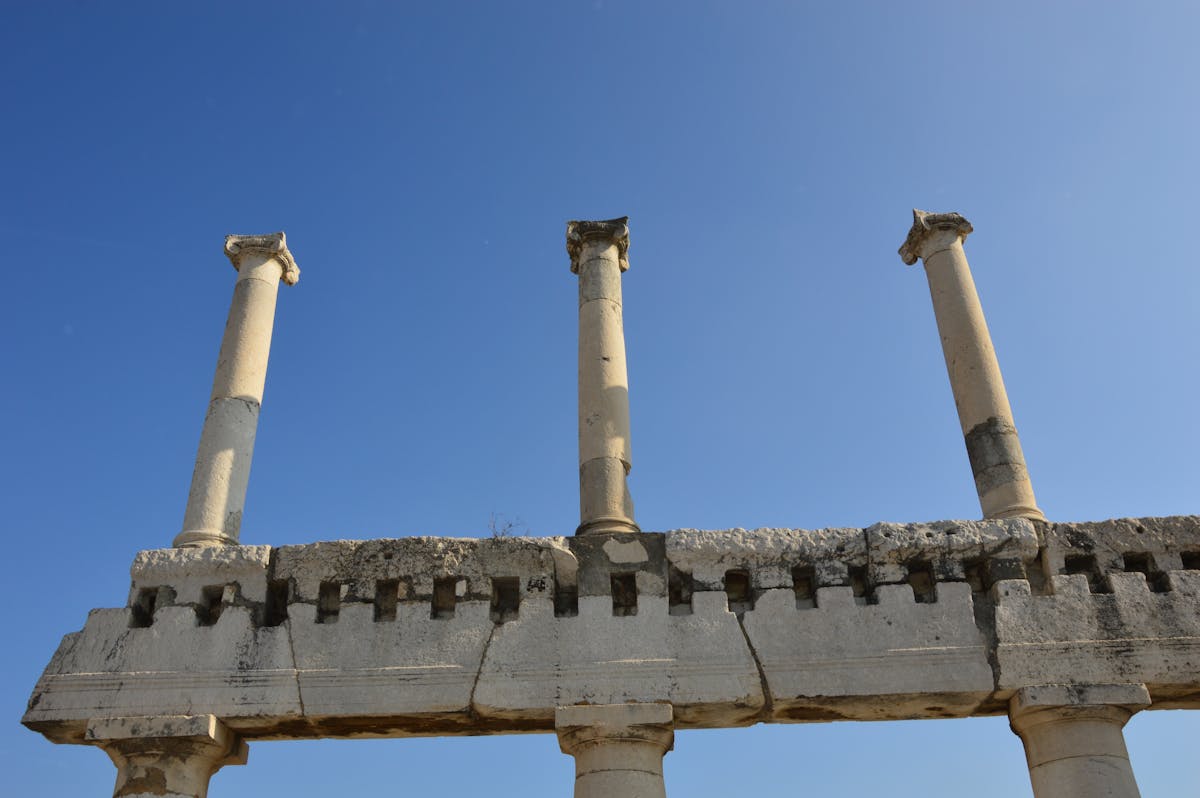
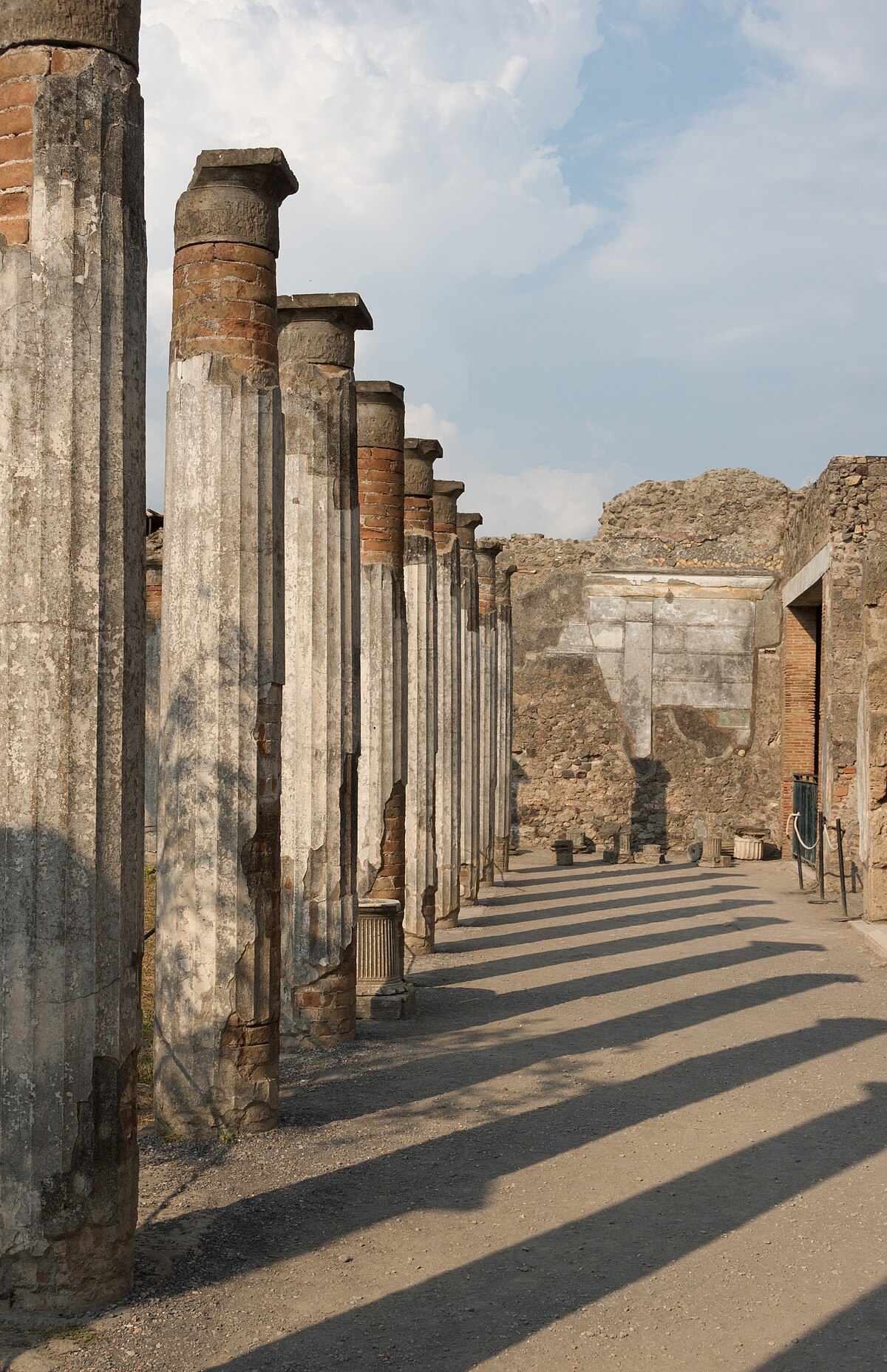
The Baths — several bathhouses have been excavated, including the Stabian Baths and the Forum Baths. The heating systems are remarkably sophisticated — hollow walls that circulated hot air, heated pools, cold plunge pools. A Roman engineer would feel right at home in a modern spa.
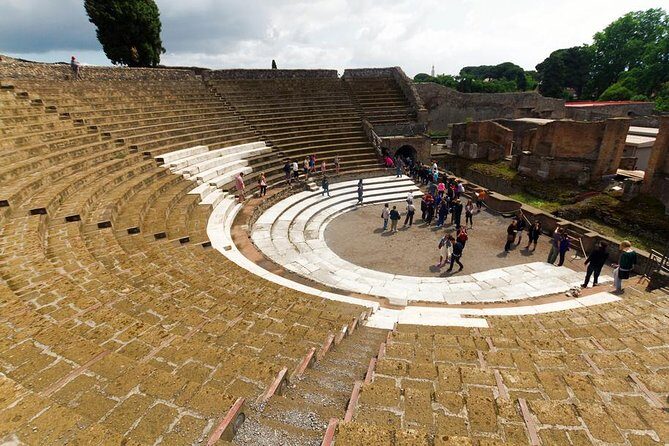
The Amphitheatre — at the far eastern end of the site, this is the oldest known Roman amphitheatre (80 BC). It could seat 20,000 people. Walk to the top for a panoramic view of the entire site with Vesuvius behind it.
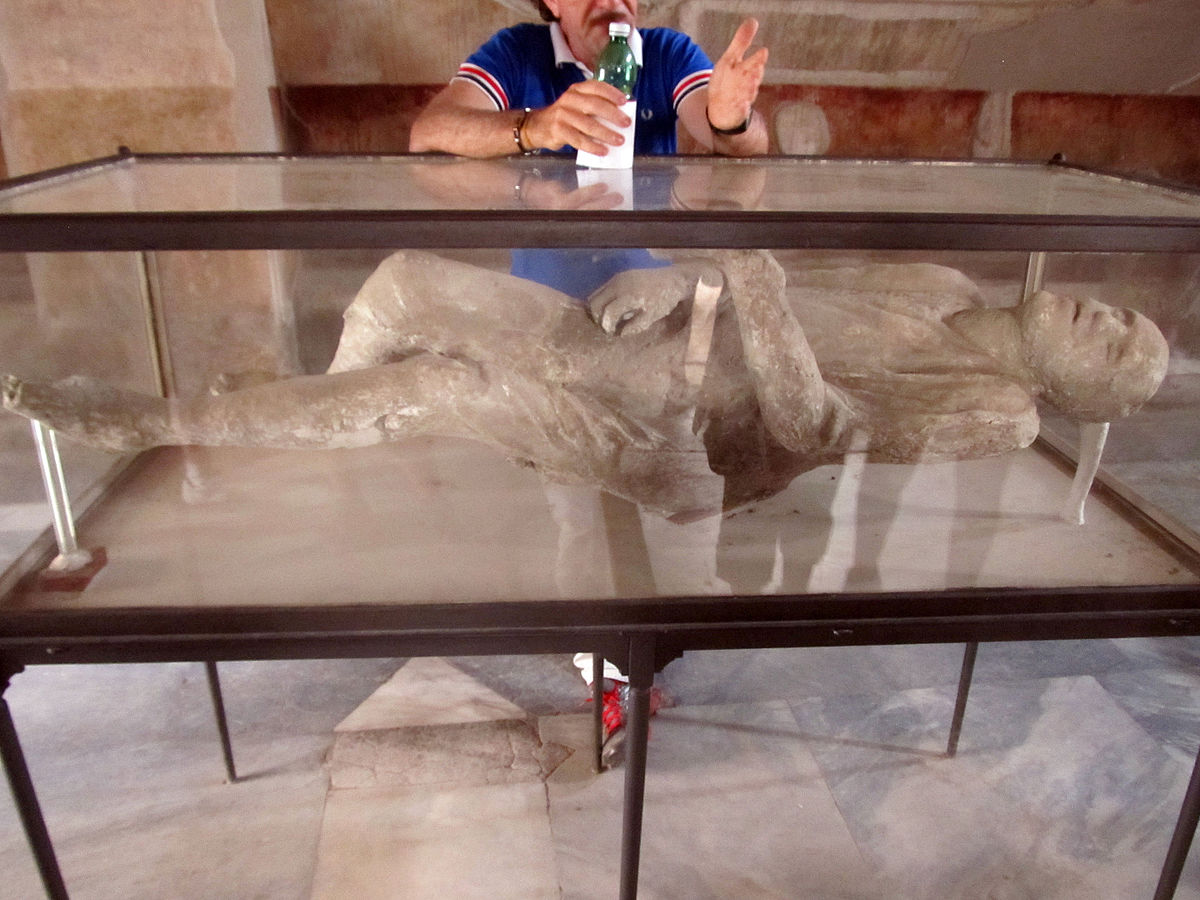
The Plaster Casts — scattered throughout the site, these are perhaps the most emotionally affecting thing at Pompeii. When the ash hardened around the victims’ bodies, the bodies eventually decomposed, leaving hollow cavities. Archaeologists poured plaster into these cavities to create casts showing the victims’ final positions. Some are shielding their faces. Some are huddled together. One is a dog, still on its chain.
More Italy Tours Worth Checking Out
If you’re spending time in this part of Italy, a few other experiences worth looking into:
- Rome: Colosseum, Roman Forum and Palatine Hill Guided Tour — another must-see if you’re in Rome
- Vatican Museums, Sistine Chapel and St Peters Basilica Guided Tour — the other essential Rome experience
- Day Trip from Naples: Amalfi Coast Tour with Ravello — while you’re based in Naples
- Authentic Naples Street Food Tour — Naples does food better than almost anywhere in Italy
- Sorrento, Positano, and Amalfi Day Trip from Naples — combine with Pompeii for the ultimate southern Italy week
- Authentic Pizza Making Class in Naples — because you’re in the birthplace of pizza
- Naples Underground: Spanish Quarters with Guide — a completely different perspective on Naples
- Pompeii and Mount Vesuvius Day Trip from Rome — if you’re Rome-based and can’t get to Naples
- The 15 Best Wine Tours in Italy — for when you need a day off from ruins
- Best Historical Tours in Italy — more great options beyond Pompeii