
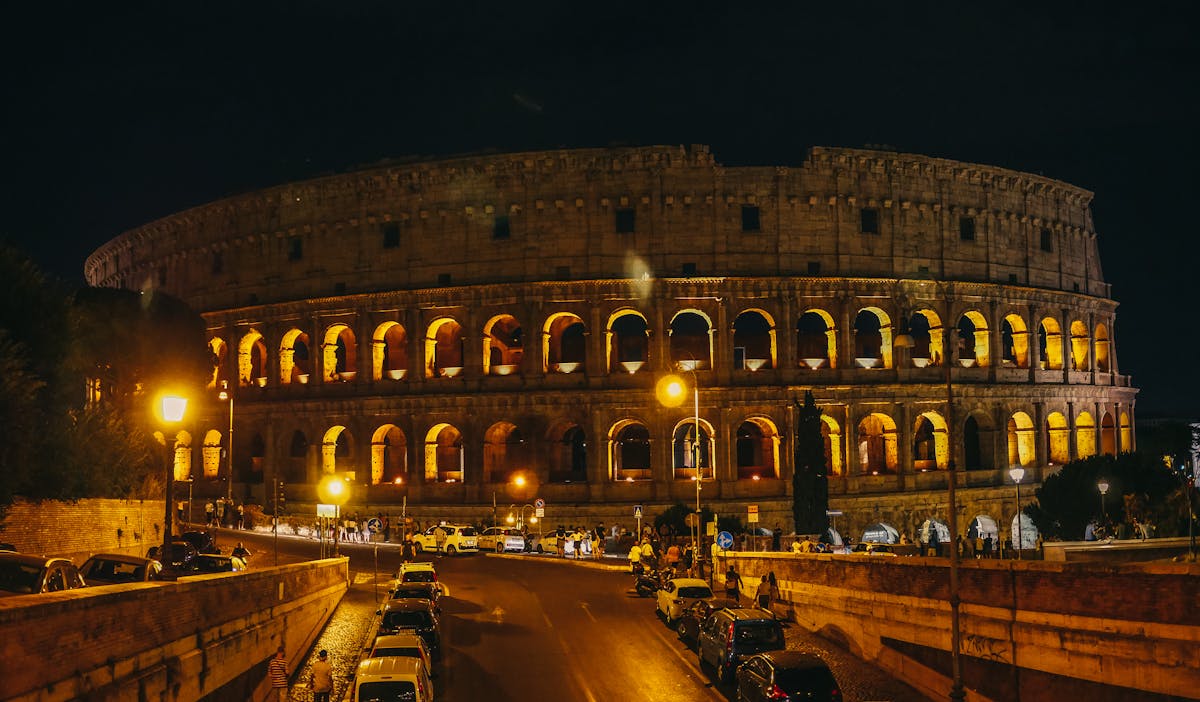
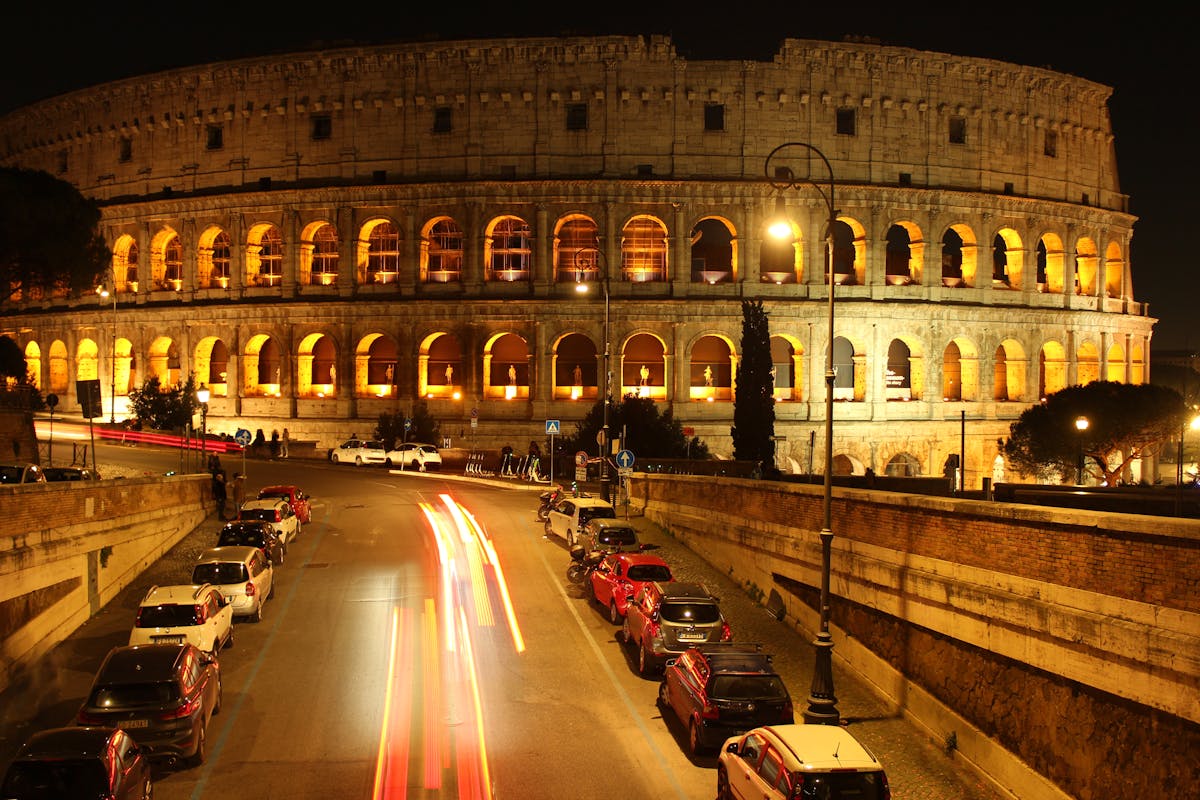
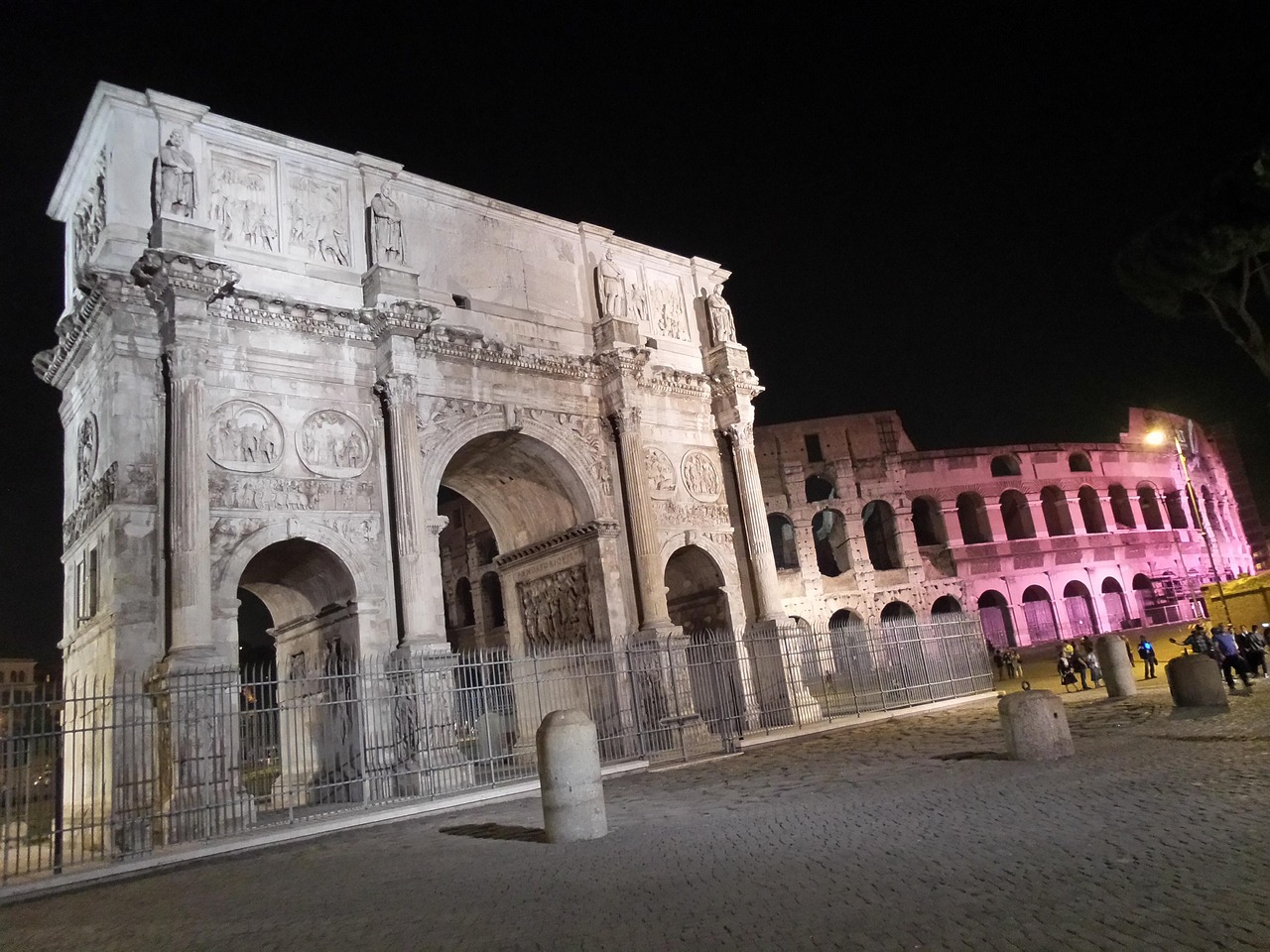
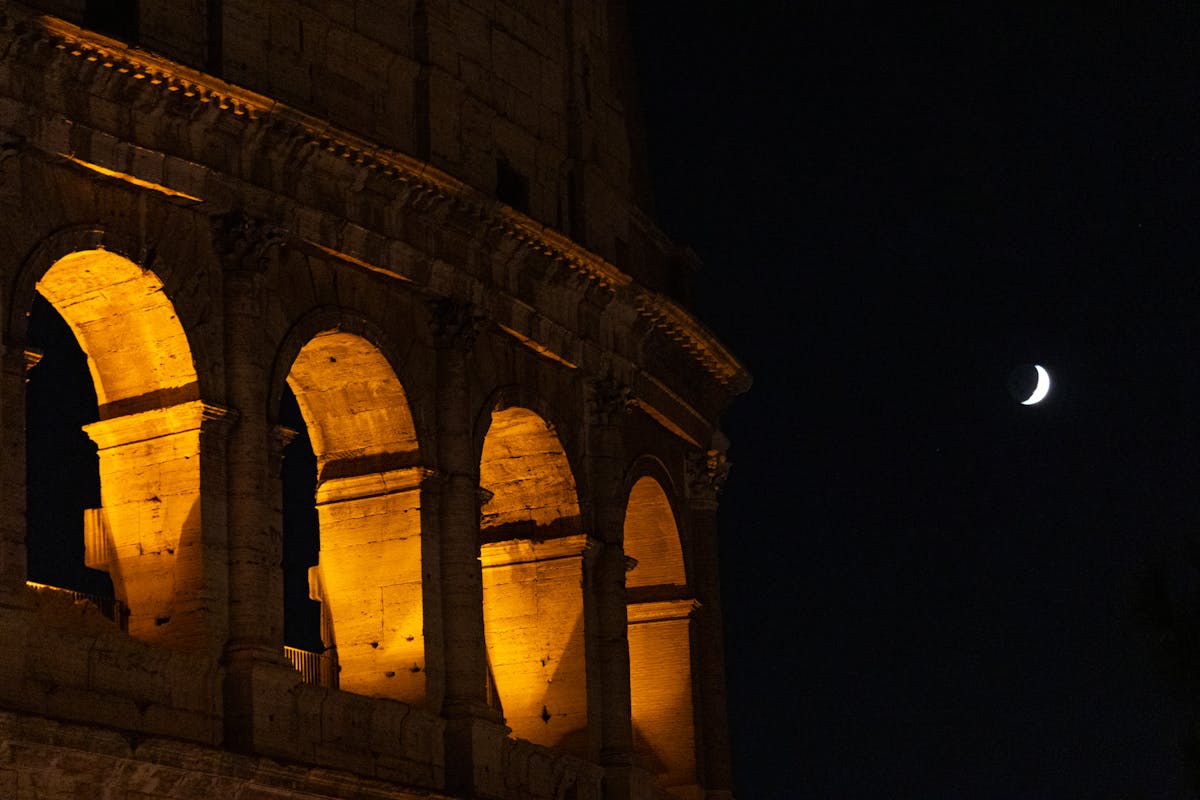
The Colosseum does something at night that no photograph has ever managed to capture. The floodlights hit the travertine and the whole structure turns the color of warm honey, and the shadows fill in the arches so deeply that the building looks hollow, like a skull. Stand on Via dei Fori Imperiali around 9 PM and you can see it from a distance with almost nobody around. During the day this same street is a wall of selfie sticks and tour buses. At night, it belongs to the city again.
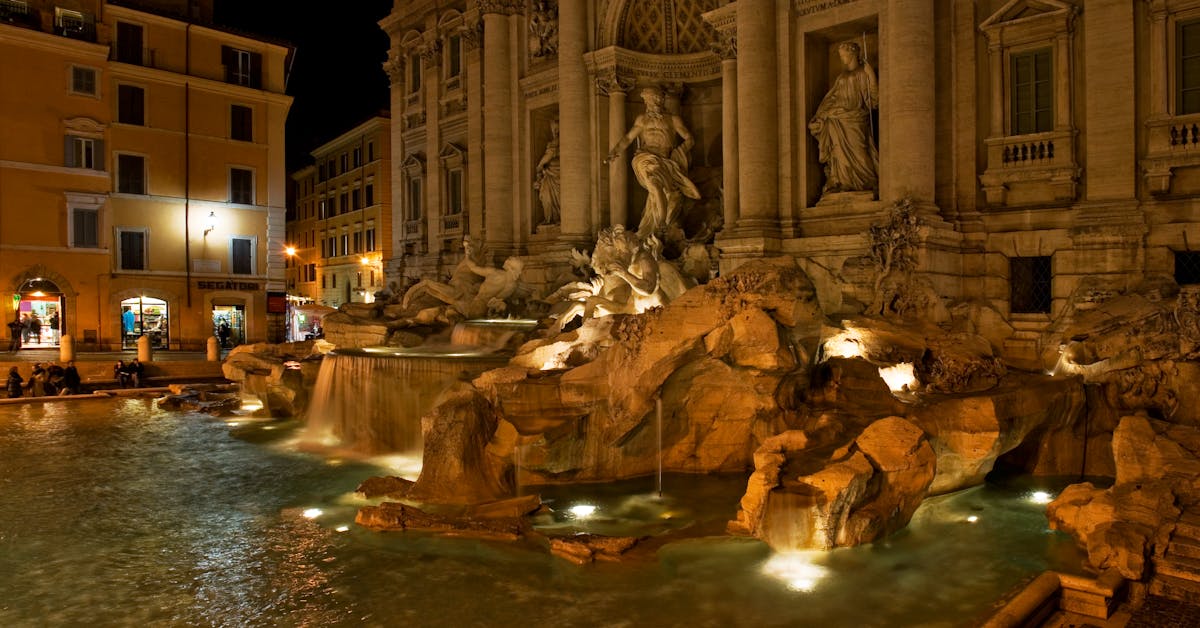
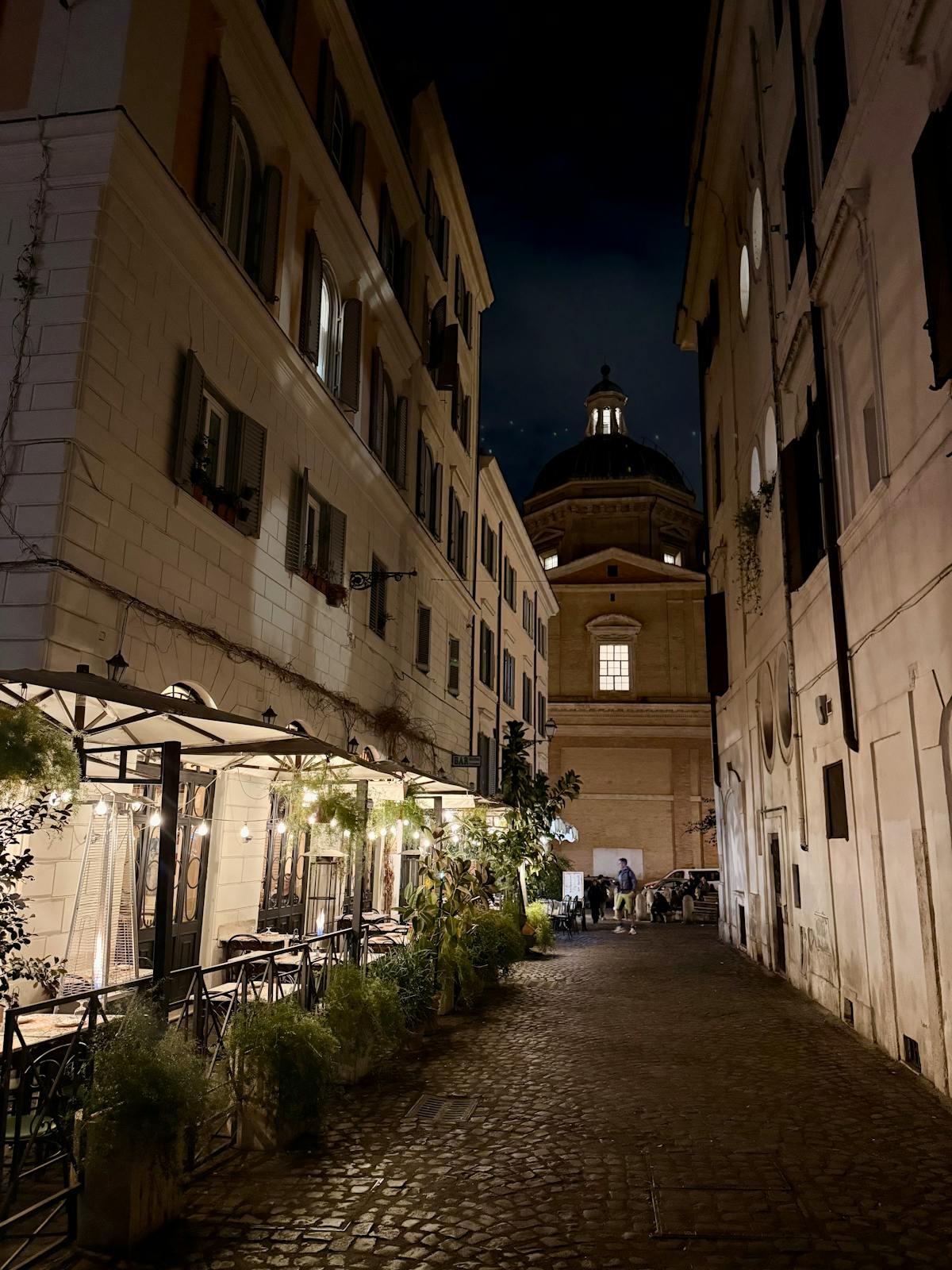
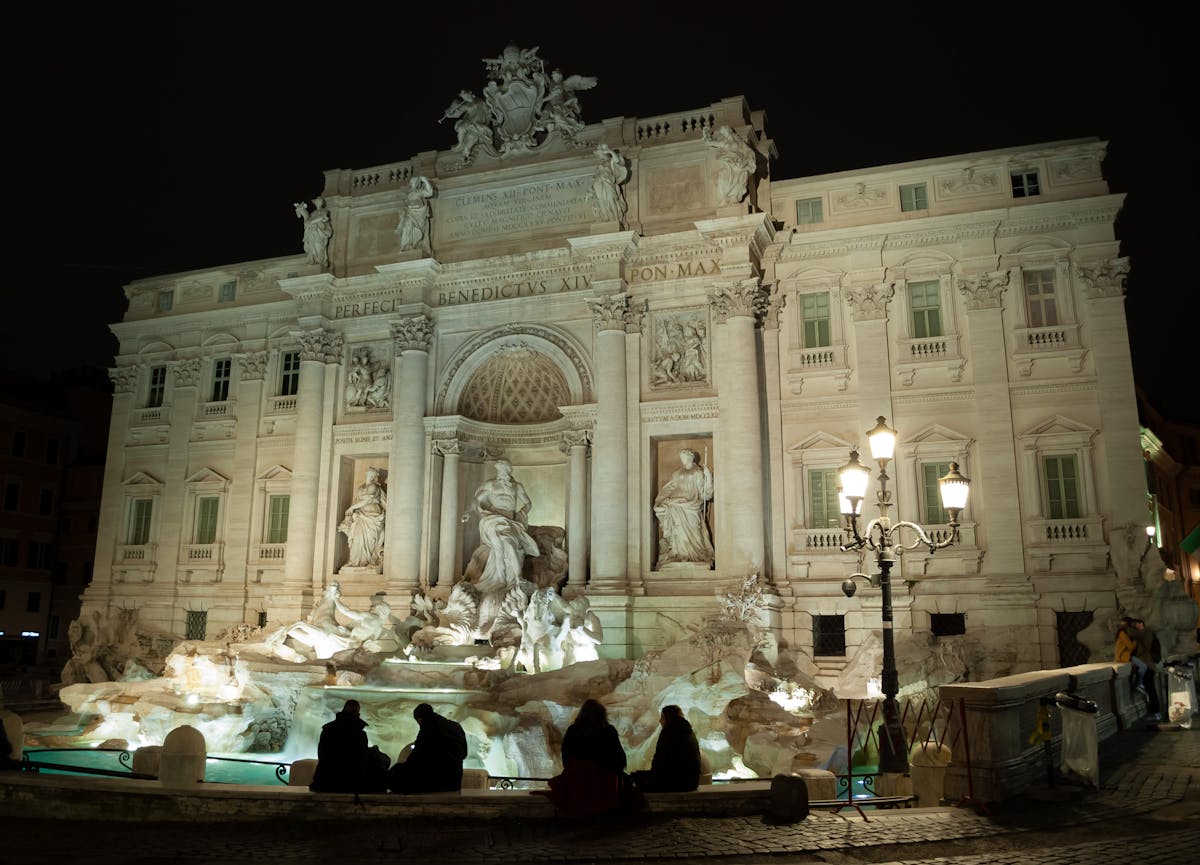
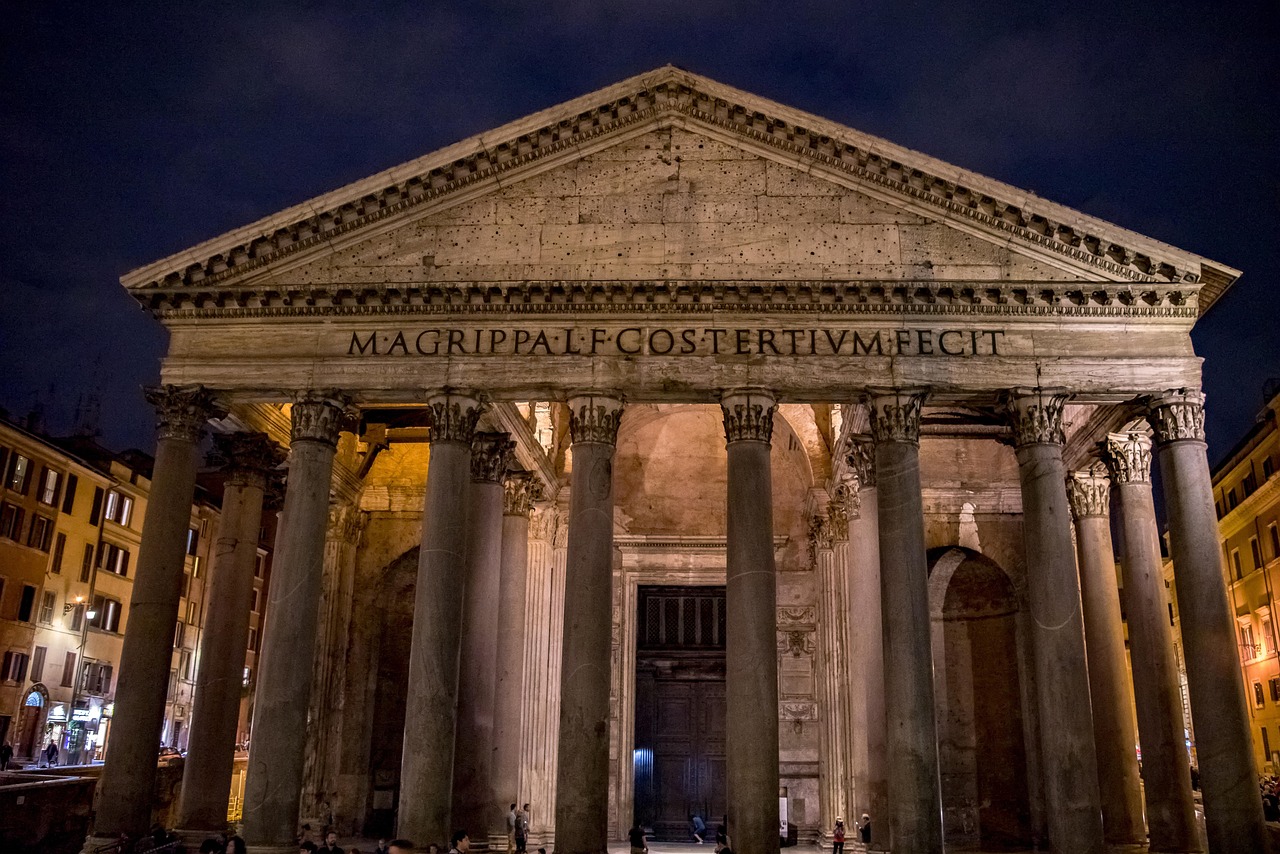
That is the thing about Rome at night. The city does not wind down — it changes character entirely. The tourist crowds thin out, the trattorias push their tables further into the piazzas, and the monuments that felt like museum exhibits during the day become part of a living city again. The Trevi Fountain still draws a crowd at midnight, but it is a different crowd — couples sharing gelato, street musicians working for tips, locals cutting through on their way home. The Pantheon‘s portico is even more dramatic when the piazza empties and you can actually stand underneath those columns without being asked to take someone’s photo.
A night tour takes this version of Rome and gives it structure. Instead of wandering aimlessly (which is fine, honestly — Rome rewards aimlessness), you get someone who knows which streets to take, which viewpoints are worth the detour, and which stories come alive after dark. Ghost tours, walking tours, e-bike rides, food crawls — the options are varied enough that you can match one to whatever kind of evening you want.
In a Hurry? My Top Picks
- Best overall night tour: City Center Evening Sightseeing Walking Tour — $46, 3 hours, all the major landmarks
- Best budget pick: Legends & Criminal Stories Walking Tour — $14.48, 1.5 hours, surprisingly good content
- Most fun evening out: E-Bike Night Tour with Food & Wine — $71.35, 4 hours, cover the whole city with food stops
- Best for spooky stories: Paranormal Night Walking Tour — $34, 2 hours, off-the-beaten-path ghost route
- In a Hurry? My Top Picks
- Why Rome Is a Completely Different City After Dark
- Types of Night Tours (And Which One Fits Your Trip)
- Walking Tours
- Ghost and Mystery Tours
- E-Bike and Golf Cart Tours
- Food and Wine Evening Tours
- The 5 Best Night Tours in Rome
- 1. Rome: Guided City Center Evening Sightseeing Walking Tour —
- 2. Rome by Night: E-Bike Tour with Food and Wine Tasting — .35
- 3. Rome: Paranormal Night Walking Tour & Secret Backstreets —
- 4. Rome by Night Walking Tour: Legends & Criminal Stories — .48
- 5. Rome: Ghostly Nighttime Walking Tour —
- When to Book and What to Know
- Tips for Getting the Most Out of Your Night Tour
Why Rome Is a Completely Different City After Dark
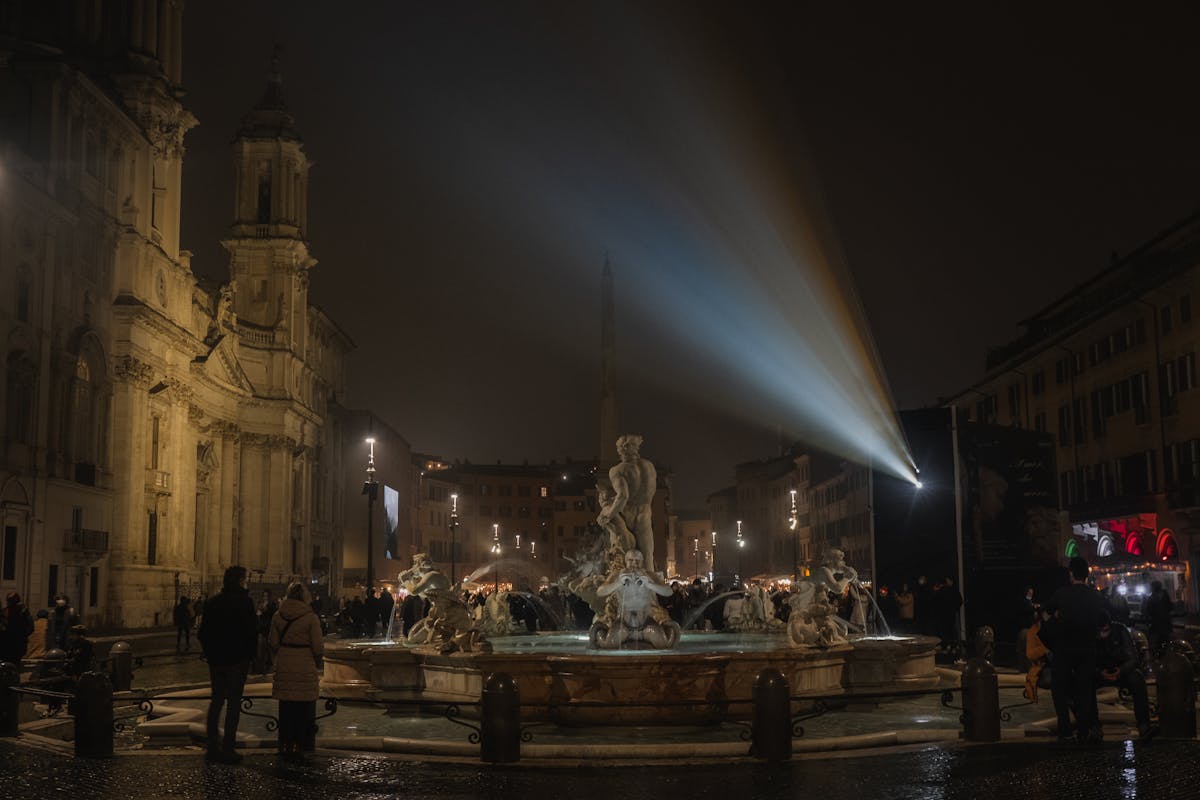
I have been to Rome in every season and at every hour, and I will say this without hesitation: the city is at its best between about 8 PM and midnight. The light is better. The temperature is better (especially from May through October, when daytime heat makes walking the Forum genuinely unpleasant). The crowds are maybe a third of what they are during the day. And the atmosphere — the sound of fountains without the white noise of tour groups, the smell of restaurants that have been cooking all afternoon, the warm glow on the ancient stone — is something you cannot get from a daytime visit.
This is not a secret, exactly. Romans have always known that their city is an evening city. Dinner starts at 9 PM at the earliest. The passeggiata — the evening walk that every Italian city does, but Rome does better than anywhere — fills the streets around 7 or 8 PM. The piazzas that feel like open-air museums during the day feel like living rooms at night.
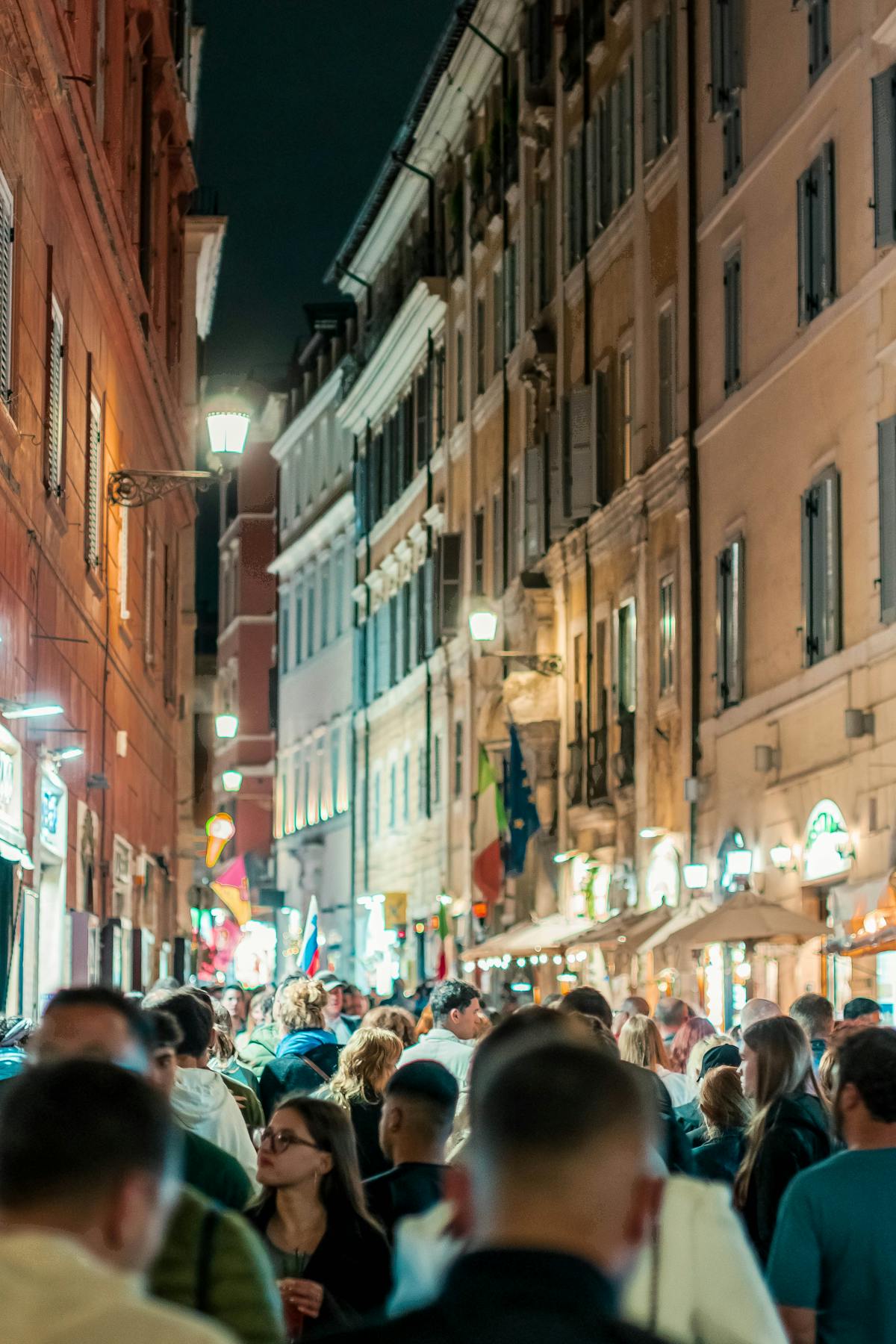
What a night tour gives you that solo wandering does not is context. Your guide will point out things you would walk right past — the bullet holes in a palazzo from the 1849 siege, the medieval tower that a noble family used to pour boiling oil on their rivals, the tiny shrine to a saint that has had a fresh candle burning every night for 400 years. Rome layers its history in a way that makes it invisible to the untrained eye, and at night, when the streets are quieter and you can actually look up, a good guide can unpack those layers for you.
Types of Night Tours (And Which One Fits Your Trip)
Not all night tours cover the same ground. Here is how they break down so you can pick the right one.
Walking Tours
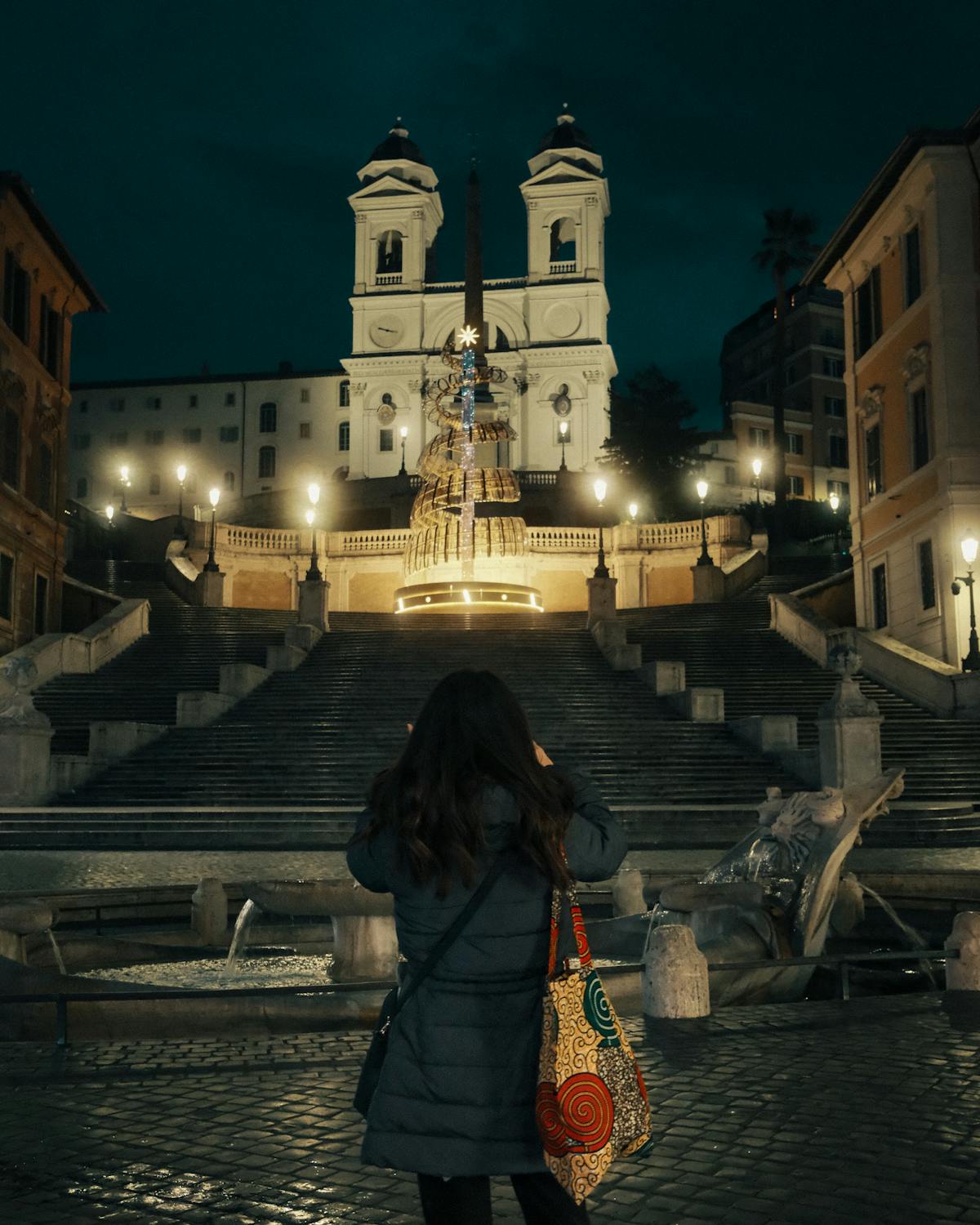
The classic format. A guide walks you through the historic center, hitting the big monuments — Colosseum, Trevi Fountain, Pantheon, Piazza Navona, Spanish Steps — and telling you the stories behind them. These run 1.5 to 3 hours, cost anywhere from $14 to $46, and vary mostly in group size, guide quality, and how many stops they include. The good ones are genuinely educational. The mediocre ones are Wikipedia on legs. The tours I recommend below are the good ones.
Ghost and Mystery Tours
Rome has 2,000+ years of murders, betrayals, executions, plagues, and general mayhem to draw from, so the ghost tour genre works better here than almost anywhere. The good ones take you off the main tourist routes and into the backstreets — narrow alleys in Rione Parione, the streets behind Castel Sant’Angelo where the Borgia family did their worst, the old execution sites in Piazza del Popolo. The best guides are part historian, part storyteller, and they know how to use the dark streets and empty piazzas to set a mood.
These are not cheesy haunted house tours. They are history tours with a darker focus. If you have already done a standard Rome walking tour during the day, a ghost tour gives you a completely different Rome.
E-Bike and Golf Cart Tours
These cover way more ground than walking tours. In 3-4 hours on an e-bike, you can see the Colosseum, the Forum, Circus Maximus, Castel Sant’Angelo, St. Peter’s from across the river, Trastevere, and still stop for pizza and wine. The riding is easy — Rome is flatter than you think in the center — and at night the streets have far less traffic than during the day. The food-and-wine versions add 2-3 stops for tastings, which turns it into a combination sightseeing/food tour.
Golf cart tours are the lazier version. Same concept, less effort, more expensive. Good for people who do not want to pedal but still want to cover distance.
Food and Wine Evening Tours
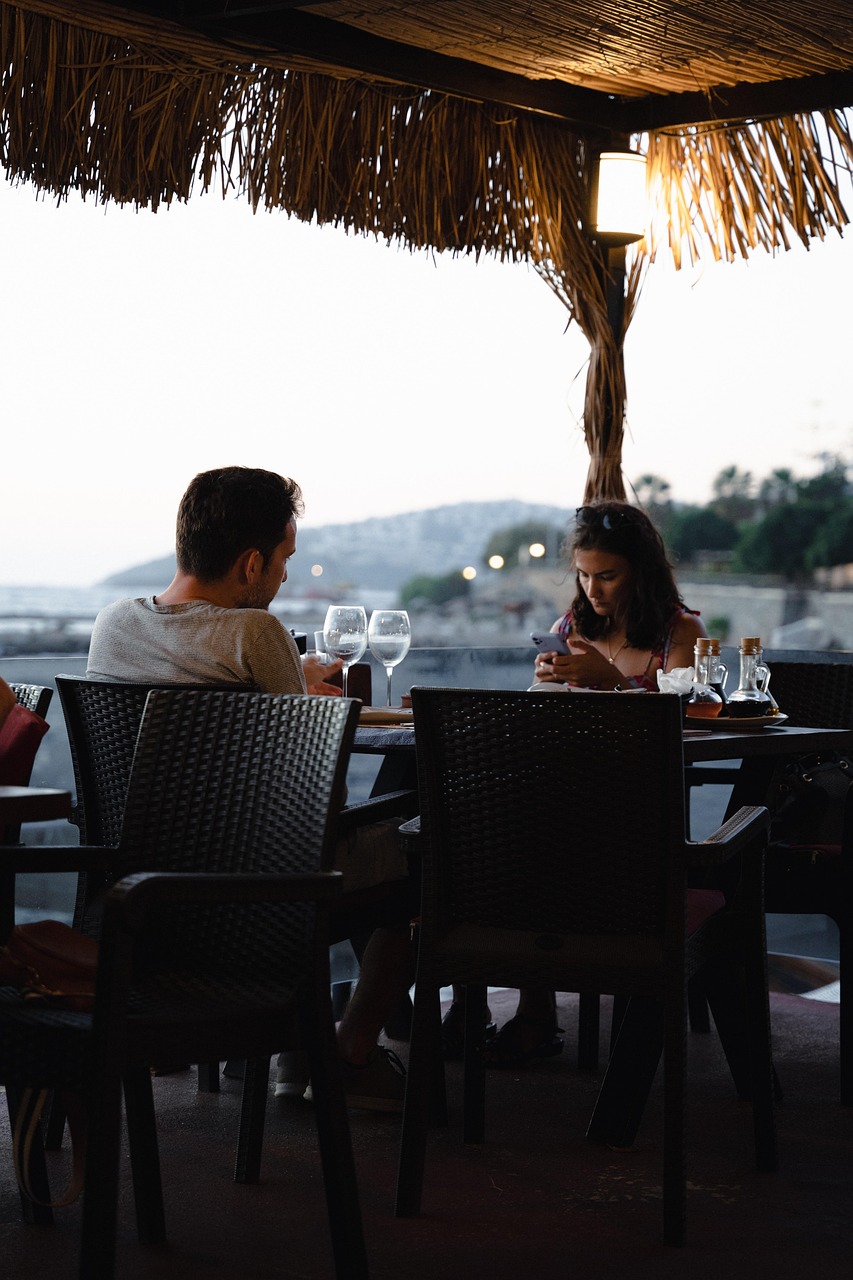
Some night tours lean heavily into the food angle, especially the ones that include Trastevere in the route. You get the sightseeing plus multiple food and wine stops. These tend to be the longest (3-4 hours) and the most expensive, but they replace both your dinner plans and your evening entertainment. If you are only doing one night tour in Rome, the food-included versions give you the most value for your time.
The 5 Best Night Tours in Rome
I went through the major night tours available in Rome and picked five that cover different styles, budgets, and interests. All of them have strong track records and are worth booking.
1. Rome: Guided City Center Evening Sightseeing Walking Tour — $46
Duration: 3 hours | Type: Walking Tour
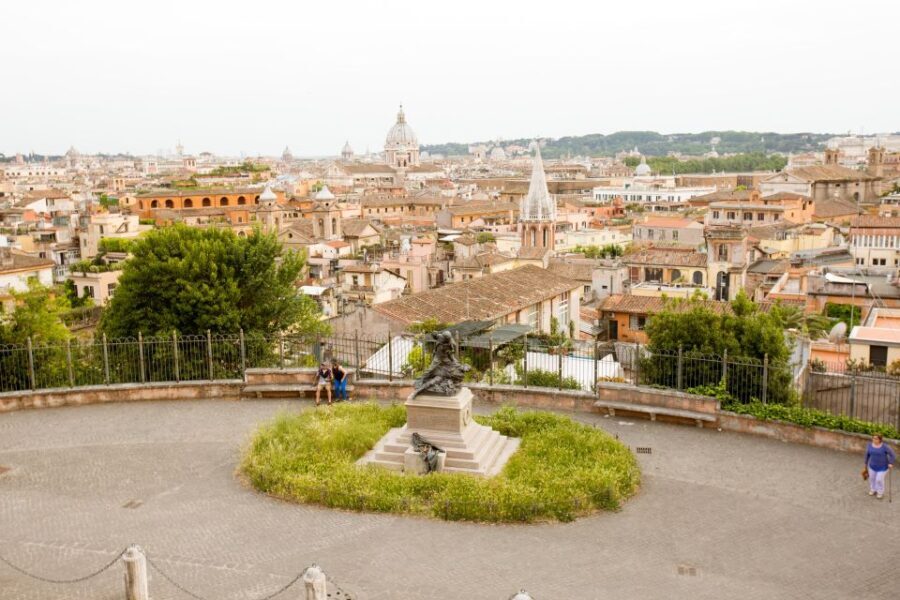
This is the one I recommend if you only do a single night tour. Three hours, all the major landmarks, and the route is intelligently designed so you hit each monument at the right time — the Colosseum early when it is still fully lit, the Trevi Fountain mid-tour, and the Pantheon last when the piazza is at its quietest and you can really appreciate the scale of the building.
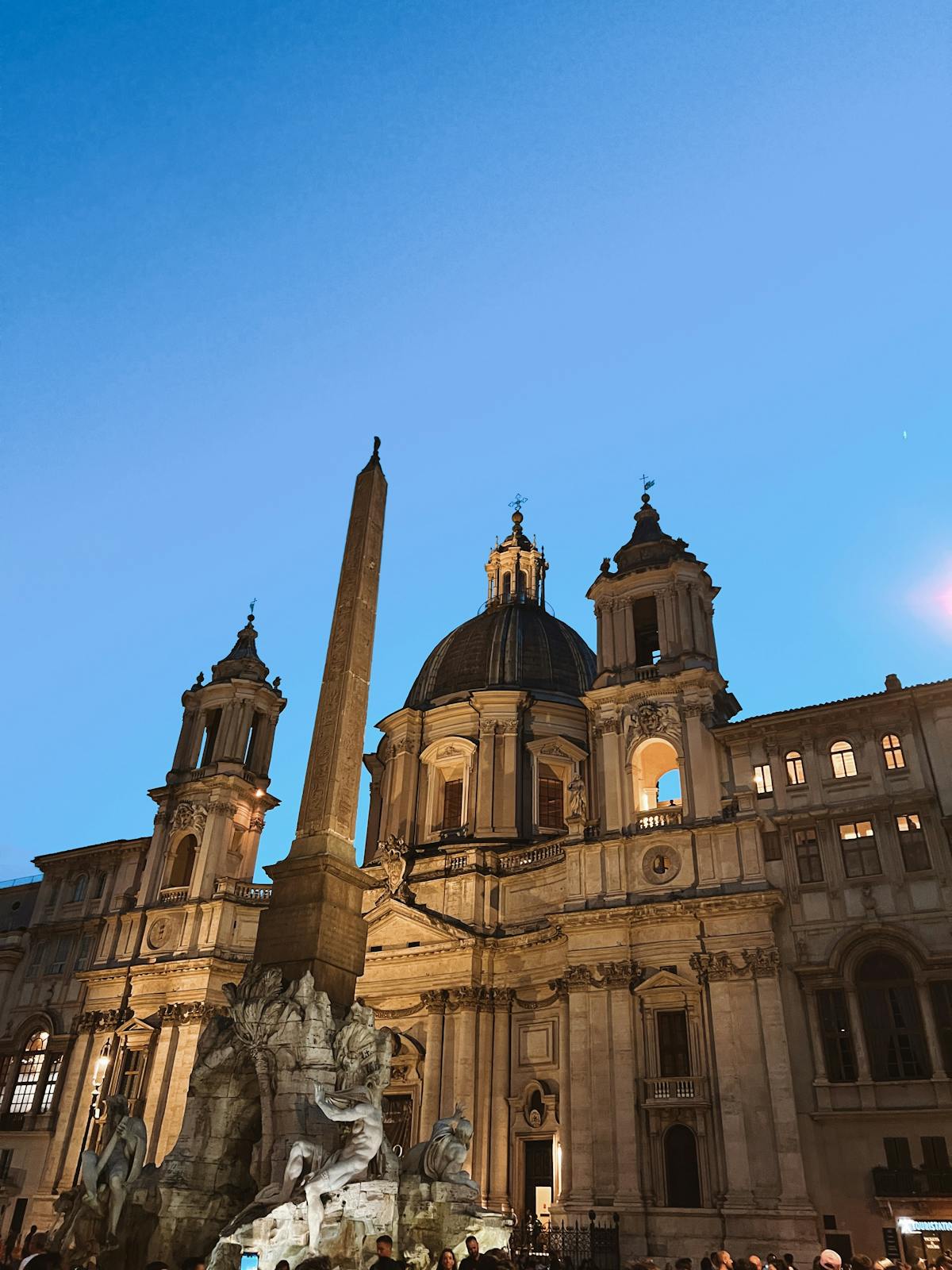
The guides on this tour are licensed and know their material beyond the surface level. You get the standard history, sure, but also the kind of details that make you look at things differently — how the Colosseum’s ticket system worked (they had numbered entrances, exactly like a modern stadium), why the Trevi Fountain faces the way it does, what the obelisk in Piazza Navona was actually for. Three hours sounds long, but the pace is comfortable with plenty of photo stops, and the time flies.
The group size caps at 15, which is small enough to hear the guide without straining. I would book the 8 PM departure in summer, 7 PM in winter — you want it fully dark for at least the second half of the tour.
2. Rome by Night: E-Bike Tour with Food and Wine Tasting — $71.35
Duration: 4 hours | Type: E-Bike + Food Tour
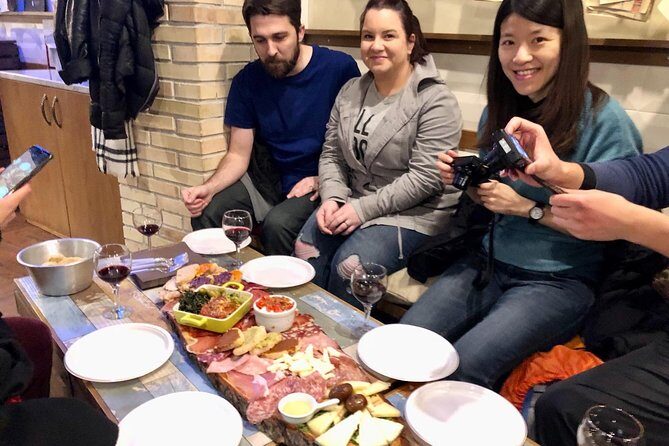
If the walking tour covers the greatest hits, this one covers the whole album. Four hours on electric bikes through central Rome, with stops for pizza, gelato, and wine along the way. You cover territory that would take six hours on foot — Colosseum, Circus Maximus, Aventine Hill (the famous keyhole viewpoint of St. Peter’s), Trastevere, Castel Sant’Angelo, Piazza Navona — and the e-bikes make it effortless even on the few hills.
The food stops are genuine sit-down moments, not rushed tastings. The pizza stop in particular is at a proper pizzeria, not a grab-and-go tourist slice. The wine comes from the Castelli Romani region south of the city, and the guide explains what you are drinking rather than just handing you a glass.
Two things to know: you need to be comfortable on a bicycle (the bikes are electric, but you still need to steer through Roman traffic, which even at night requires some confidence), and the group is small — usually 6-8 people, which makes the food stops feel like eating out with friends rather than a tour. This is my pick for people who want to combine sightseeing with an actual evening out.
3. Rome: Paranormal Night Walking Tour & Secret Backstreets — $34
Duration: 2 hours | Type: Ghost/Mystery Tour
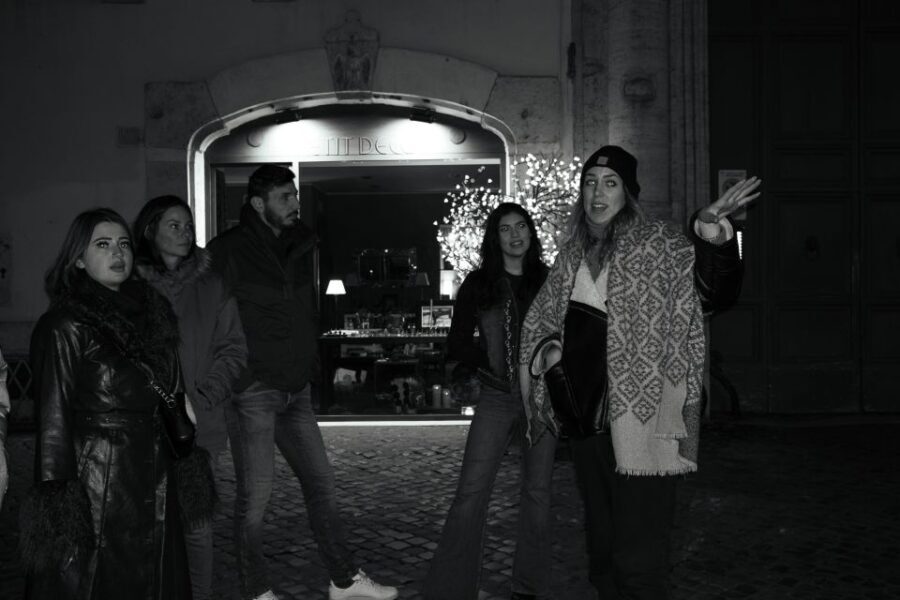
This is the tour for people who have already seen the Colosseum and the Trevi Fountain and want something different. The route avoids the main tourist sights entirely and takes you into the narrow backstreets of the oldest neighborhoods — the kind of streets that do not appear on tourist maps and feel genuinely eerie after dark. You hear about medieval executions, Renaissance-era poisonings, and the parts of Roman history that the daytime tours skip because they do not want to upset the families with children.
The guide is a storyteller, not just a historian. The dark streets and empty alleys do half the work for them, and the two hours move fast. I will not spoil the specific stops because part of the experience is not knowing where you are going — but one location in particular, a small piazza with a very dark history, gave me actual chills, and I am not someone who gets chills easily.
At $34 for two hours, the price is fair. Groups run about 15-20 people, which is manageable for a walking tour. Book the latest time slot available — the darker it is, the better this tour works.
4. Rome by Night Walking Tour: Legends & Criminal Stories — $14.48
Duration: 1.5 hours | Type: Walking/Ghost Tour
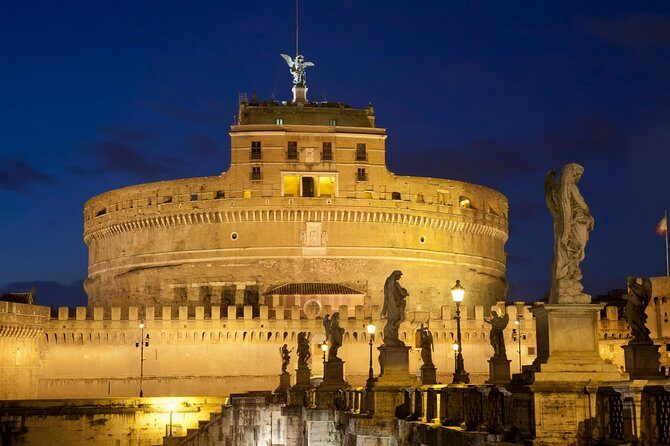
Under $15 for a 90-minute guided night tour of Rome. That is not a typo. This is a tip-based tour with a small upfront fee, and it is legitimately one of the best-value activities in the city. The focus is on Rome’s criminal underworld through the ages — the Borgias, the public executions in Campo de’ Fiori, the prison at Castel Sant’Angelo, and more recent organized crime history. The guides are animated and clearly love the material.
The trade-off for the low price is group size. These tours can draw 25-30 people, which makes it harder to hear and harder to ask questions. But the guides are experienced enough to project and keep the group moving efficiently. At 90 minutes, it does not overstay its welcome — you get a solid introduction to nighttime Rome without losing your entire evening.
This is the tour I would recommend for budget travelers or for anyone who has already done a longer night tour on a previous trip and just wants a quick evening activity. Pair it with dinner in Trastevere afterward and you have a full evening for under 30 euros.
5. Rome: Ghostly Nighttime Walking Tour — $28
Type: Ghost/Mystery Tour
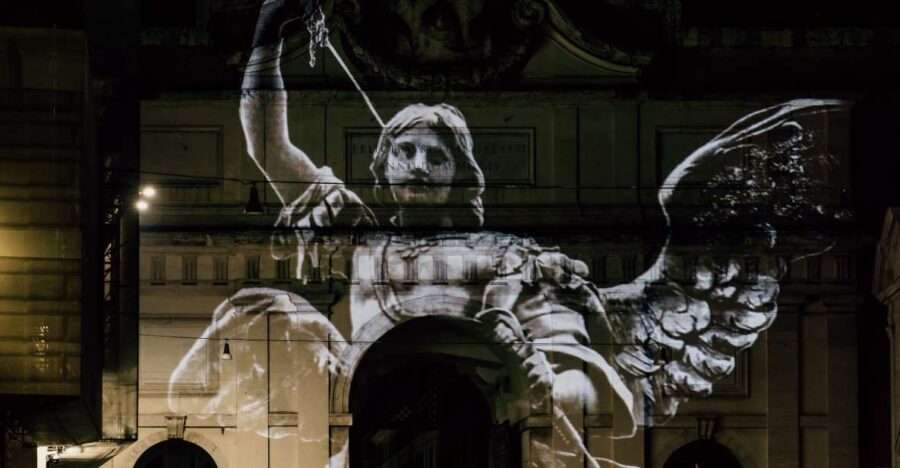
This sits right between the Paranormal tour (more off-the-beaten-path) and the Legends tour (cheaper, shorter). It covers a mix of mainstream landmarks and lesser-known spots, with the ghost stories woven into the broader history of each location. You will visit haunted piazzas, medieval murder sites, and a few spots where, according to the guide, unexplained events have been documented as recently as the last decade.
The strength of this tour is the balance. You still see the Pantheon area, Piazza Navona, and other central landmarks — so it works as a first-timer’s orientation walk — but the narrative framing is dark history and ghost stories rather than standard art-and-architecture commentary. It is the tour I would pick for someone who wants both the major sights and the creepy stories without booking two separate tours.
Groups are mid-sized, usually 12-18 people. The price is reasonable for what you get, and the guides know how to read a room — or in this case, a dark alley.
When to Book and What to Know
Book 2-3 days ahead in peak season. The best night tours (especially the e-bike one and the smaller walking tours) fill up during April through October. In winter, you can often book same-day without issues.
Start time matters. Most tours offer multiple departure times. For a night tour, pick the latest slot available. Starting at 6 PM in summer means you will walk the first hour in full daylight, which defeats the purpose. An 8:30 or 9 PM start gets you the full after-dark experience.
Wear comfortable shoes. This sounds obvious but you will be walking on cobblestones for 1.5 to 4 hours. Flimsy sandals or new shoes will ruin the experience faster than a bad guide. Broken-in sneakers or flat walking shoes are the move.
Bring a light layer. Even in July, the temperature drops noticeably after sunset. A light jacket or scarf is enough — you will not need anything heavy, but standing still at viewpoints while the guide talks can get cool.
Tips for Getting the Most Out of Your Night Tour
Do not eat a huge dinner beforehand. If your tour includes food stops (the e-bike tour, or if you are heading to Trastevere after), you want to be hungry. Even the non-food tours often end near good restaurant areas, so keep your options open.
Charge your phone. You are going to want photos. The monuments at night photograph well, and the narrow streets with warm lighting are the most Instagram-worthy version of Rome. Bring a portable charger if yours drains fast.
Combine with a daytime visit. See the Colosseum and St. Peter’s Basilica during the day when you can go inside, then do a night tour to see the exteriors lit up. The contrast between daytime and nighttime Rome is part of what makes both experiences worthwhile.
Skip the open-top bus tours. I know they are tempting — you get to sit down, you cover a lot of ground. But honestly, the views from a bus do not compare to being on foot at street level. You miss the sounds, the smells, the ability to stop and look up at something unexpected. The bus tours also tend to have the most generic commentary. Save your money and walk.
Ghost tours work best on weeknights. The backstreet locations that make these tours special are quieter on Tuesday through Thursday. On weekends, the bars and restaurants in those same streets are lively enough that the atmosphere shifts from eerie to festive. Both are fun, but if you want the full spooky experience, go midweek.
Check what else is open late. The Catacombs close well before dark, but the Castel Sant’Angelo and Borghese Gallery sometimes have extended evening hours in summer. Build your night tour around what is open and what is not.
Disclosure: This article contains affiliate links. If you book a tour through one of our links, we may earn a small commission at no extra cost to you. We only recommend tours that meet our editorial standards. See our full disclosure policy.