
The first time I walked through the centro storico of Naples, a scooter nearly clipped my elbow, a woman was yelling at someone three balconies up, and I could smell pizza from at least four directions simultaneously. I hadn’t even crossed my first street yet.
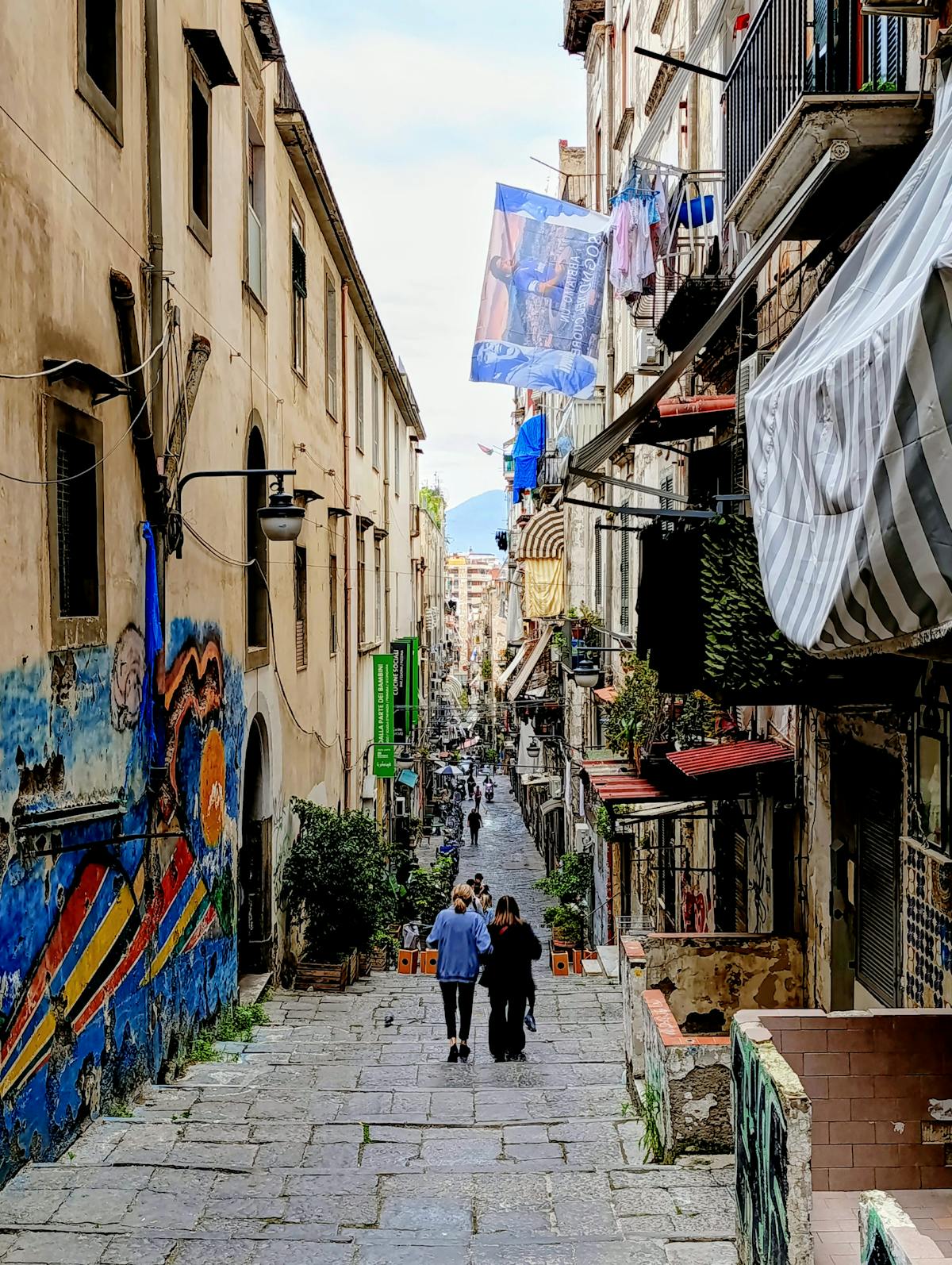
Naples is not a city that eases you in. It hits at full volume from the moment you step outside Napoli Centrale, and it never really lets up. The alleys are narrow enough that laundry dripping from opposite buildings can meet in the middle. The traffic follows rules that exist only in the collective Neapolitan subconscious. And every twenty meters there’s a pizza fritta stand, a shrine to a local saint, or both.
This is exactly why you want a guide. Not because Naples is dangerous — it’s not, despite its reputation — but because the city is so layered, so packed with history stacked on top of history, that walking through it alone means missing about 90% of what you’re looking at. That crumbling wall? Greek foundations from the 4th century BC. That church you almost walked past? It has a Caravaggio inside. That side street? It drops into a network of tunnels that the Romans carved out of volcanic rock.



A good walking tour in Naples does more than show you landmarks. It translates the city. It explains why the pizza here tastes different (the water, the ovens, and about 400 years of competitive obsession). It takes you through neighborhoods that would intimidate most solo travelers but are actually perfectly safe and wildly interesting. And it connects the dots between Greek Naples, Roman Naples, medieval Naples, Spanish Naples, and the Naples that exists right now — all of which are visible on the same street if you know where to look.
Best overall: Street Food Walking Tour with Local Guide — $50. 2.5 hours of eating your way through the centro storico with a local who knows every back-alley pizzeria and fried snack window in the city. Book this tour
Best for history: Old Town and Spaccanapoli Walking Tour — $30. Two hours along the ancient Greek street that splits Naples in half, with context that makes every church and palazzo actually mean something. Book this tour
Best combo: City Walking Tour with Underground Roman Ruins — $35. Walking tour above ground plus a ticket to the underground tunnels beneath. Two layers of Naples in one booking. Book this tour
Best views: Panoramic Walking Tour with Funicular — $24. Takes the funicular up to the Vomero hill for sweeping views of the bay and Vesuvius, then walks you back down through quieter neighborhoods. Book this tour
Best creative angle: Street Art, Wine and Food Tasting Walking Tour — $32. Street art plus wine plus Neapolitan snacks — a good pick if you’ve already done a standard history walk and want something with a different energy. Book this tour
- Why Naples Actually Needs a Guide
- Types of Walking Tours in Naples
- The Best Naples Walking Tours to Book
- 1. Naples: Street Food Walking Tour with Local Guide —
- 2. Naples: Old Town and Spaccanapoli Walking Tour —
- 3. Naples: City Walking Tour with Underground Roman Ruins —
- 4. Naples: Panoramic Walking Tour with Funicular —
- 5. Naples: Street Art, Wine and Food Tasting Walking Tour —
- When to Walk: Timing Your Naples Tour
- Practical Tips for Walking Naples
- More Naples Guides
Why Naples Actually Needs a Guide
Some cities you can figure out with a guidebook and a decent map. Naples is not one of them. There are a few specific reasons why a walking tour here pays for itself almost immediately.
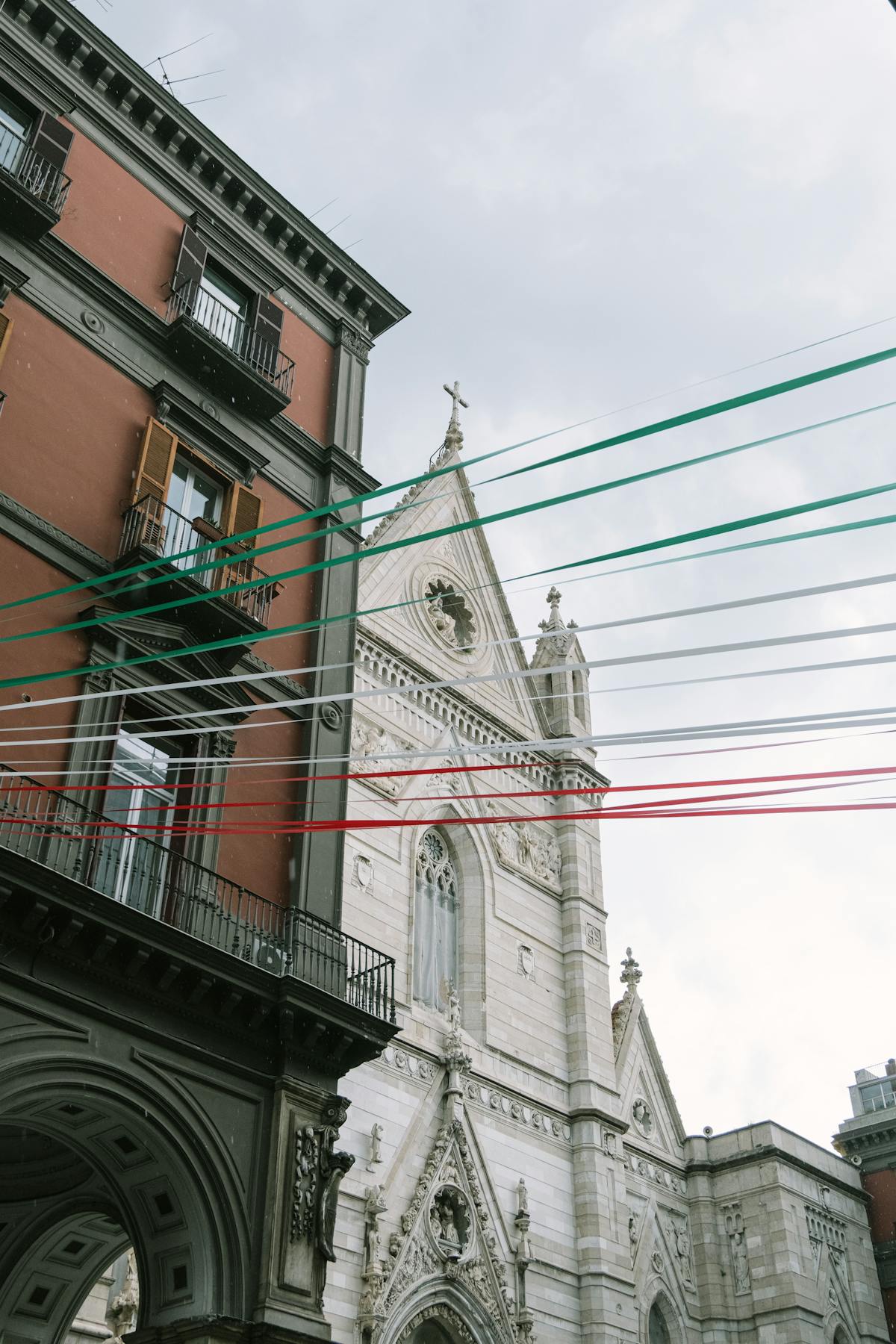
The city is old in a way that’s hard to wrap your head around. The street grid of the centro storico is literally the original Greek city plan from around 470 BC — Spaccanapoli, the famous street that cuts through the old town, follows the path of an ancient Greek road called a decumanus. When you’re walking through those alleys, you’re walking on a layout that’s about 2,500 years old. A guide connects those layers for you. Without one, it’s just old buildings. With one, suddenly you can see the Greek foundations, the Roman additions, the medieval churches, and the Baroque facades all stacked on top of each other like geological strata.
Then there’s the issue of what’s hidden. Naples has more churches than any city in Europe — over 400 at last count — and many of the best ones look like nothing from the outside. Plain wooden doors in crumbling walls that open into rooms covered floor to ceiling in marble and gold leaf. The Cappella Sansevero, which houses the Veiled Christ sculpture that’s considered one of the most extraordinary pieces of art ever made, is tucked down an alley that most travelers wouldn’t look twice at.
And practically speaking, the traffic. Naples traffic is legendary for a reason. Scooters go the wrong way down one-way streets. Cars park on sidewalks. Pedestrian crossings are more of a suggestion than a rule. Having a guide means you’re following someone who knows exactly which streets are calm, which intersections to avoid, and where the pedestrian-only zones begin and end. It’s not about safety — it’s about not spending half your walk pressed against a wall while a delivery van squeezes past.

Types of Walking Tours in Naples
Not all Naples walking tours cover the same ground, and knowing what type you want before you book saves you from ending up on a food tour when you wanted a history deep-dive (or the other way around).
Historical and Old Town Tours
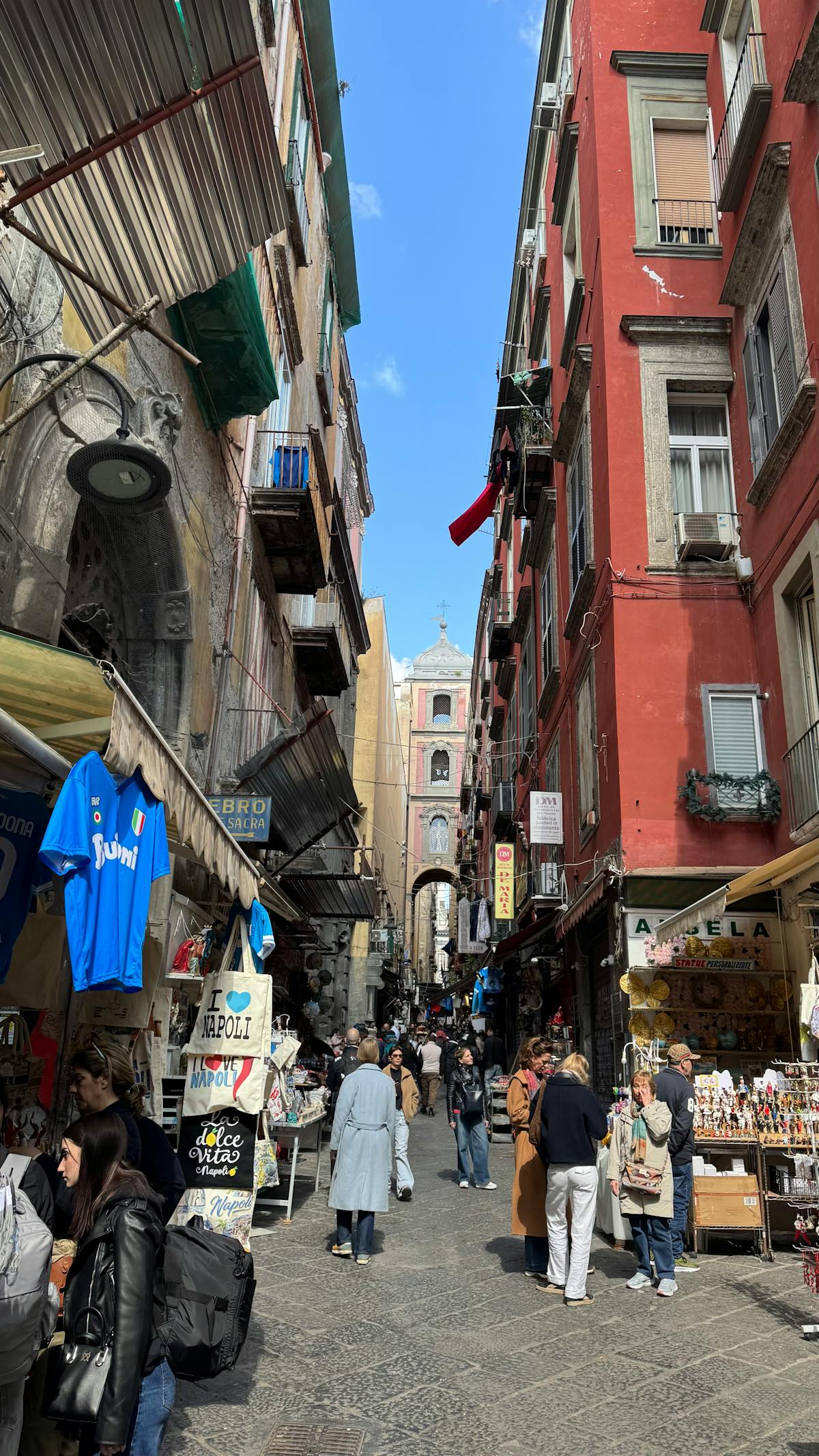
These cover the centro storico’s main corridor: Spaccanapoli, the Duomo, Piazza del Gesu Nuovo, San Gregorio Armeno (the famous Christmas crib street), and sometimes the old city gates. The focus is on Naples’ layered history — Greek, Roman, Norman, Spanish, Bourbon — and how all of it is visible in the architecture and street layout. These run about two hours, usually stay pedestrian-only, and work best for first-time visitors who want to understand what they’re looking at. If you only do one tour in Naples, a historical walk is the right call.
Street Food Tours
Naples invented pizza. It also perfected fried food, pastry, and about a dozen snacks you’ve never heard of but will immediately become obsessed with. Food tours take you through the centro storico and sometimes into the Quartieri Spagnoli, stopping at bakeries, pizzerias, friggitorie (fried food shops), and pastry counters. You’ll eat pizza fritta, sfogliatella, cuoppo (a paper cone of fried seafood and vegetables), and usually three or four other things. These tours run 2-3 hours and you won’t need dinner afterward. If you’ve already read our guide on booking a pizza-making class in Naples, a food walking tour is the perfect complement — the class teaches you the craft, the tour shows you the city’s food culture in action.
Underground and Combo Tours
Naples sits on top of a massive network of tunnels, cisterns, and chambers carved into the soft volcanic tuff rock. The Greeks quarried it for building material. The Romans expanded it into an aqueduct system. In World War II, Neapolitans used it as air raid shelters. Several walking tours combine an above-ground walk of the old town with a visit to these underground spaces, which is an efficient way to get two experiences in one booking. If you’re interested in the underground on its own, check our separate guide on visiting Naples Underground.

Panoramic and Hilltop Tours
Naples isn’t just flat streets and alleys. The city climbs steeply up several hills, and the views from the top are spectacular — the entire Bay of Naples spread out below you, with Vesuvius rising behind the city and Capri visible on clear days. Panoramic tours usually involve a funicular ride up to Vomero or Posillipo, some walking along viewpoints, and then a descent through quieter residential neighborhoods. They’re a nice change of pace from the density of the centro storico, and the funicular ride itself is fun.
Street Art and Alternative Tours
Naples has a serious street art scene that most travelers never notice. Murals by international and local artists cover walls throughout the Quartieri Spagnoli, Sanita district, and parts of the centro storico. Some of the best pieces are in alleys and courtyards you’d never wander into on your own. Street art tours combine the murals with food and wine tastings, which is a smart format — you walk, you look at art, you eat something, you walk some more. It’s less intense than a pure history walk and works well for people who’ve already done the classic sights.
The Best Naples Walking Tours to Book
I went through the tour databases and picked five that cover different styles, budgets, and neighborhoods. Each one earned its place by doing something specific well.
1. Naples: Street Food Walking Tour with Local Guide — $50

This is my top pick, and it’s not even close. At $50 per person for 2.5 hours, the Street Food Walking Tour takes you through the heart of the old city with a local guide who treats Neapolitan food like the serious cultural heritage it is. You’re not just eating pizza (though obviously there’s pizza). You’re getting the whole spectrum — sfogliatella from a bakery that’s been making them for generations, pizza fritta from a street window, cuoppo from a friggitoria that locals actually use, espresso standing at a bar the way Neapolitans do it.
What makes this specific tour stand out is the guide quality. This isn’t someone reading from a script. The guides on this tour are locals who grew up eating at these places, and they explain not just what you’re tasting but why it matters. Why Neapolitan pizza dough is different (the water, the flour, the fermentation time). Why the sfogliatella has that specific layered texture. How street food in Naples isn’t cheap filler — it’s a culinary tradition that goes back centuries.
The route winds through the centro storico, hitting spots you’d never find on your own. Some of them don’t even have signs. You’ll be full by the end, so plan accordingly — skip lunch if you’re doing an afternoon tour, or skip dinner if it’s an evening one.
Read our full review | Book this tour
2. Naples: Old Town and Spaccanapoli Walking Tour — $30
If you want to understand Naples rather than just eat through it, this is your tour. At $30 per person for two hours, the Old Town and Spaccanapoli tour follows the ancient decumanus that cuts through the centro storico, stopping at churches, piazzas, and historical sites along the way.
The route hits the major spots — Piazza del Gesu Nuovo with its diamond-pointed church facade, the Duomo and the San Gennaro blood miracle, San Gregorio Armeno with its Christmas nativity workshops — but the guide keeps things moving and fills in the gaps between stops. You’ll learn why the street pattern hasn’t changed since Greek colonists laid it out, how the Spanish transformed the city in the 16th century, and what all those little shrines on street corners actually mean.
At $30, it’s well-priced for two hours with a knowledgeable guide. The groups are small enough that you can actually ask questions, and the pace is comfortable — no rushing between sites. This pairs well with a visit to Naples Underground afterward, since the entrance to Napoli Sotterranea is right along the route.
Read our full review | Book this tour
3. Naples: City Walking Tour with Underground Roman Ruins — $35
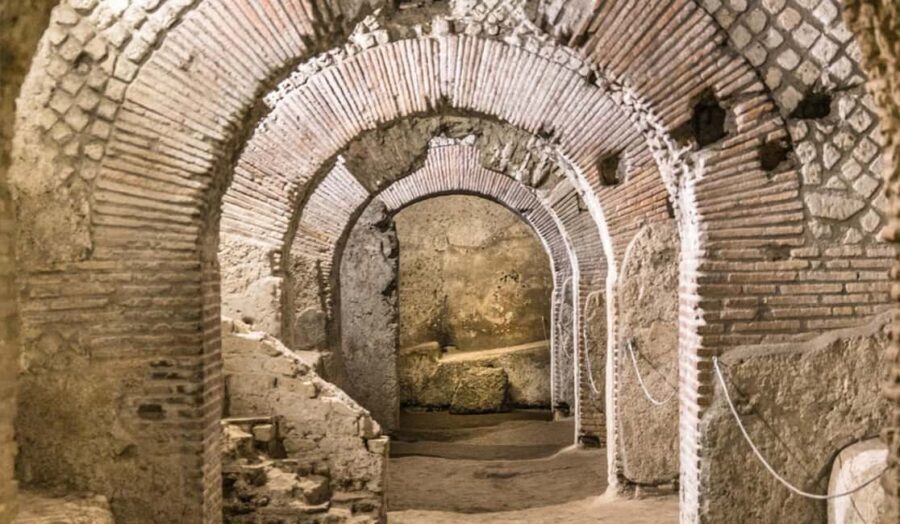
This is the efficiency pick. At $35 per person for 3-5 hours, the City Walking Tour with Underground Roman Ruins combines a walking tour of the old town with admission to the underground archaeological site. Two experiences in one booking, handled by someone else — no need to figure out tickets or logistics yourself.
The above-ground portion covers the main centro storico highlights: Spaccanapoli, the major churches, the key piazzas. Then you descend into the underground, where you’ll walk through tunnels and chambers that have been used continuously for over 2,000 years. The Roman aqueduct system, the Greek quarries, the WWII air raid shelters — it’s all connected, and seeing it after the street-level walk gives you context that makes both halves more interesting.
The time range (3-5 hours) is wide because it depends on how long you spend underground and whether the guide does an extended above-ground route. Budget at least four hours. If you’ve been thinking about doing both a walking tour and the underground separately, this combo saves you money and time.
Read our full review | Book this tour
4. Naples: Panoramic Walking Tour with Funicular — $24

At $24 per person for two hours, this is the cheapest tour on the list and one of the most underrated. The Panoramic Walking Tour starts with a ride on one of Naples’ historic funiculars — cable cars that climb the steep hills surrounding the old center — and then walks you through the Vomero neighborhood with its panoramic viewpoints.
The views are genuinely jaw-dropping. From the hilltop, you can see the entire Bay of Naples laid out: the city’s rooftops spreading in every direction, Vesuvius looming to the east, the islands of Capri and Ischia floating in the distance. On a clear day, it’s one of the best urban panoramas in Europe. The guide explains what you’re looking at and fills in the historical context — how the hills shaped Naples’ development, why the wealthy built their palaces up here while the working classes stayed below, and what the funicular system meant for the city when it was built.
After the viewpoints, you walk downhill through quieter residential streets that most travelers never see. It’s a nice contrast to the intensity of the centro storico, and at $24, it barely costs more than the funicular ride itself would. Good add-on if you’re spending a couple of days in Naples and have already done the centro storico walk. If you’re planning a day trip to Capri or the Amalfi Coast, this tour is short enough to do the morning before you head to the port.
Read our full review | Book this tour

5. Naples: Street Art, Wine and Food Tasting Walking Tour — $32

At $32 per person for 2.5 hours, the Street Art, Wine and Food Tasting tour takes a different angle on the city. Instead of the standard historical route, you walk through neighborhoods known for their street art scene — the Quartieri Spagnoli and parts of the Sanita district — stopping to look at murals by local and international artists while your guide explains the stories behind them.
Between the art stops, there are food and wine tastings. Local Campanian wine, Neapolitan street snacks, sometimes a stop at a small family-run shop that makes something specific and does it better than anywhere else in the city. The combination works because it keeps the energy varied — you’re never just standing and looking at murals for two hours straight, and you’re never just eating without context.
This is a second-tour kind of experience. Don’t book it as your first or only walking tour in Naples — you’d miss the historical foundation that makes the city make sense. But if you’ve already done a history walk or a food tour and want something with a creative edge, this hits the sweet spot. The street art scene in Naples is genuinely impressive and almost completely unknown to most travelers.
Read our full review | Book this tour
When to Walk: Timing Your Naples Tour
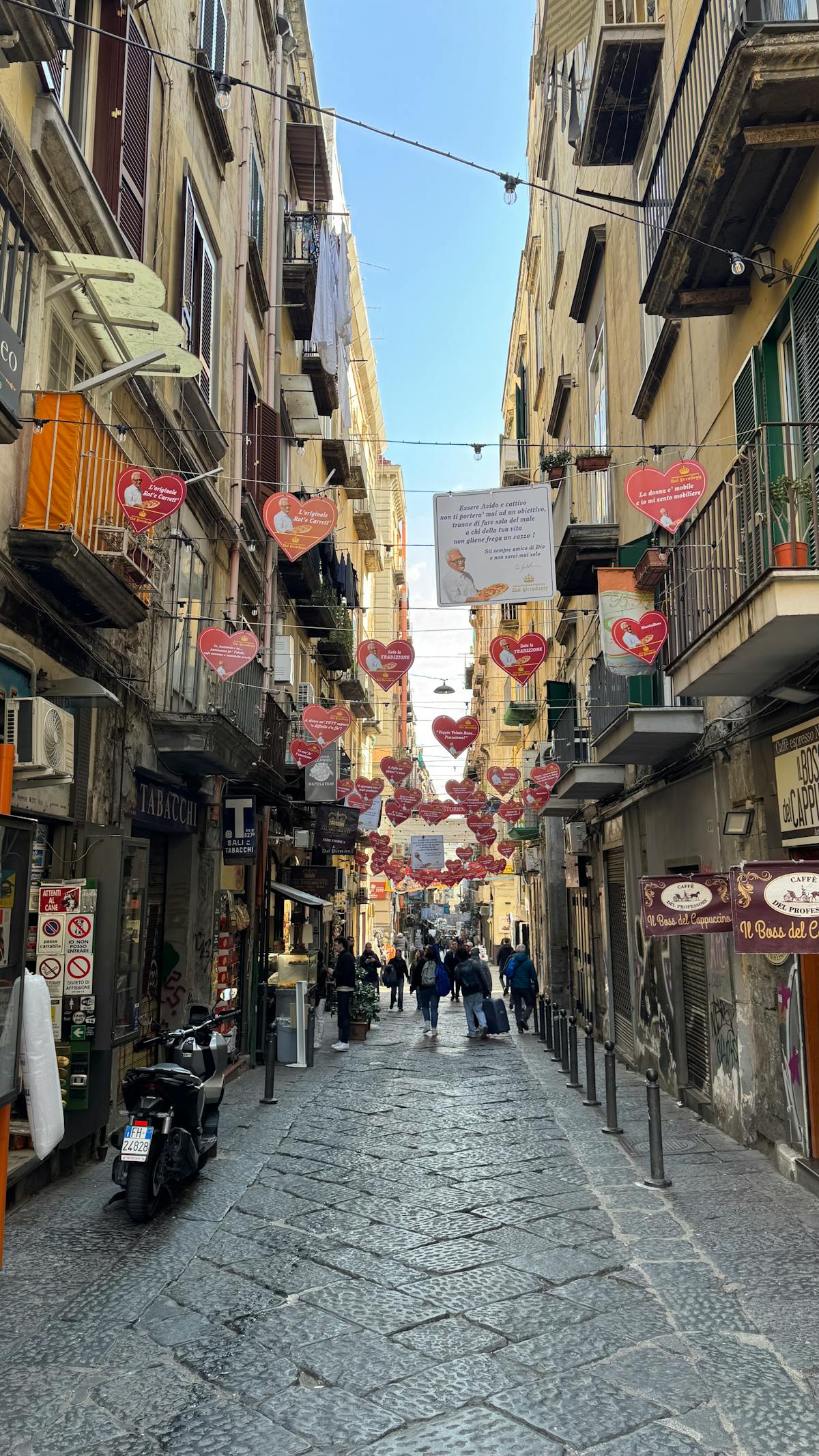
Naples weather makes a bigger difference to your walking tour experience than you might expect. The city sits on the bay, so humidity is always a factor, and summer heat combined with narrow streets that trap hot air can make a midday walk genuinely uncomfortable.
Best months: April through June and September through October. Temperatures sit in the low 20s Celsius, it rarely rains for long, and the city hasn’t yet reached peak tourist density. March is fine too but can be unpredictable — one day is sunny and mild, the next is grey and windy.
Summer (July-August): It gets hot. Really hot. Temperatures regularly push into the mid-30s, and in the narrow streets of the centro storico, it feels hotter because the buildings block any breeze. If you must walk in summer, book a morning tour (before 10am) or an evening one (after 5pm). Midday walks in August are miserable and the guides know it.
Winter (December-February): Mild by northern European standards — around 8-12 degrees Celsius — but the rain can be persistent, and the wind off the bay cuts through you. Walking tours still run, and the advantage is almost zero crowds. The Christmas season (late November through early January) transforms the city, especially San Gregorio Armeno where the nativity craftsmen are in full production mode. If you can handle the cold, it’s arguably the most atmospheric time to walk Naples.
Time of day: Morning tours (9-10am start) catch the city waking up — shopkeepers opening, espresso bars in full swing, market stalls being set up. Late afternoon tours (4-5pm) get the golden light that makes the old buildings glow. Avoid the 12-2pm slot when everything shuts for lunch and the streets feel dead.

Practical Tips for Walking Naples

Shoes matter more than you think. The centro storico is cobblestoned, uneven, and occasionally has steps that appear from nowhere. If your tour includes the underground, you’ll also be on wet stone stairs. Wear proper walking shoes with grip. Sandals and white sneakers are a mistake you’ll regret within twenty minutes.
Keep your phone close but not obsessively guarded. Naples’ reputation for pickpocketing is somewhat outdated but not entirely wrong. The tourist areas of the centro storico are fine. Use normal city precautions: phone in a front pocket, bag across your body, don’t wave expensive electronics around. Your guide will tell you if a specific street needs extra attention. Don’t let the reputation scare you — Naples is as safe as any other major Italian city if you use common sense.
Bring water. Especially in warmer months. Some tours provide water or stops where you can buy it, but not all. There are also public drinking fountains (nasoni) scattered around the old town — the water is safe and cold.
Eat before or after, not instead of. If you’re on a food tour, that is your meal — come hungry. If you’re on a non-food walking tour, have a light breakfast beforehand and plan a proper Neapolitan meal afterward. There’s nothing worse than being hangry while someone explains Renaissance architecture.
Cash is still useful. Most tour payments are online, but if the tour involves stops at small food stalls, some of them are cash-only. Having 20-30 euros in small bills covers you.

Combine smart. A walking tour is the best first thing to do in Naples because it orients you. Book one for your first morning, then use the rest of your time for deeper dives — the underground tunnels, a pizza-making class, or a day trip to Pompeii or Herculaneum. The walking tour gives you the context that makes everything else better.


We use affiliate links in this article. If you book a tour through one of our links, we earn a small commission at no extra cost to you. This helps us keep producing free, detailed guides like this one.