
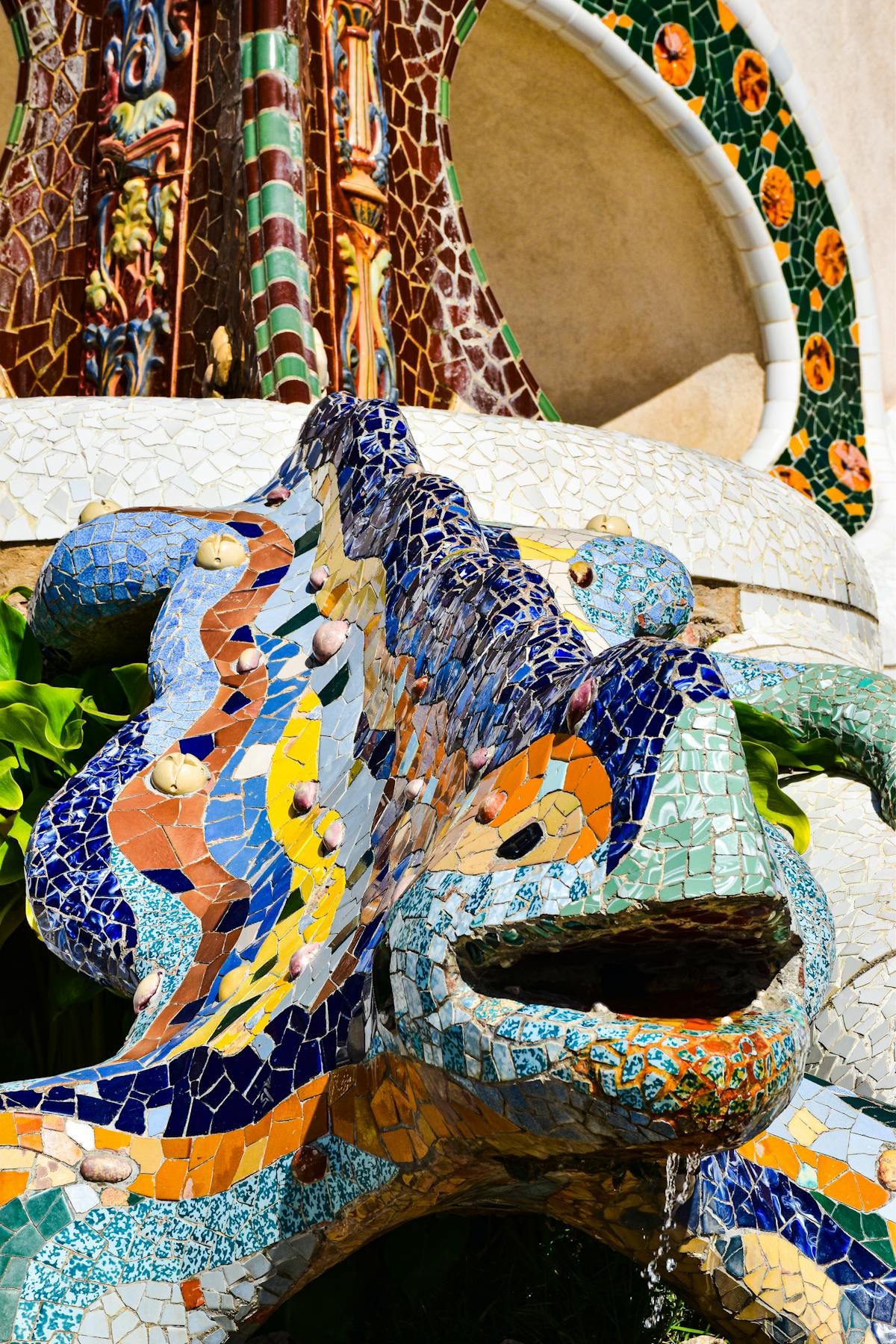
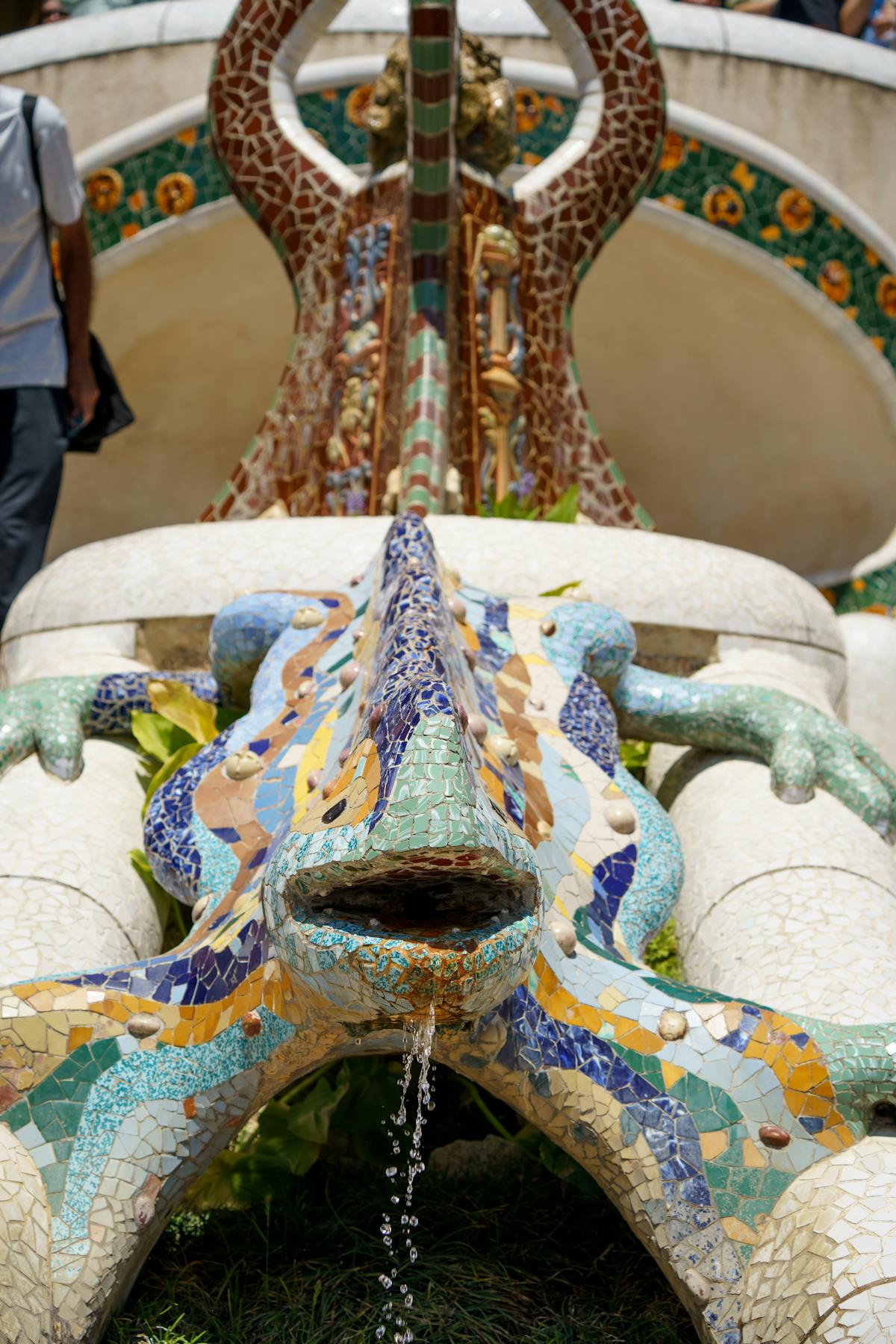
The mosaic salamander at the entrance of Park Guell is smaller than you expect. About two feet long, crouched on a staircase between two pavilion buildings that look like they belong in a Grimm fairy tale. Tourists crowd around it, phones out, jostling for position. But here is the thing about that salamander — officially called El Drac — it was never meant to be the star of the show. The whole park was.
Antoni Gaudi designed Park Guell as a luxury housing estate. Sixty plots on a hillside above Barcelona, with gardens, paths, and a market hall. Nobody bought in. The project flopped spectacularly. Only two houses were ever built on the entire site, and Gaudi himself ended up living in one of them. A failed real estate development became one of the most visited parks on Earth. There is a certain poetry in that.
Getting tickets requires a bit of planning. The park’s Monumental Zone — the part with the famous mosaic bench, the Hypostyle Room, and El Drac — has timed entry, limited capacity, and sells out regularly. Walk up without a ticket and you will be turned away. But it is not complicated once you understand how it works.
I will walk you through exactly how tickets work, whether a guided tour is worth the extra cost, and what you will actually see once you are inside.
If You’re in a Hurry: My Top 3 Picks
- Park Guell Admission Ticket — The standard entry. Gets you into the Monumental Zone with timed access, no guide required. Straightforward and the cheapest way in. From $25 per person.
- Park Guell Guided Tour with Skip-the-Line — A 75-minute walking tour with a licensed guide who explains the symbolism behind every mosaic and column. Worth the $6 premium over the basic ticket. From $31 per person.
- Park Guell & Sagrada Familia Combo Tour — If you are doing both, this half-day tour covers the two biggest Gaudi sites with skip-the-line entry and transport between them. Saves money compared to booking separately. From $119.72 per person.
- If You’re in a Hurry: My Top 3 Picks
- How Park Guell Tickets Work
- Self-Guided vs. Guided Tour: Is a Guide Worth It?
- Best Park Guell Tours to Book
- Park Guell Admission Ticket
- Park Guell Guided Tour with Skip-the-Line Entry
- Park Guell + Gaudi House Museum Entry
- Park Guell & Sagrada Familia Combo Tour
- When to Visit Park Guell
- Tips for Visiting Park Guell
- What You’ll See Inside the Monumental Zone
- More Barcelona Guides
How Park Guell Tickets Work
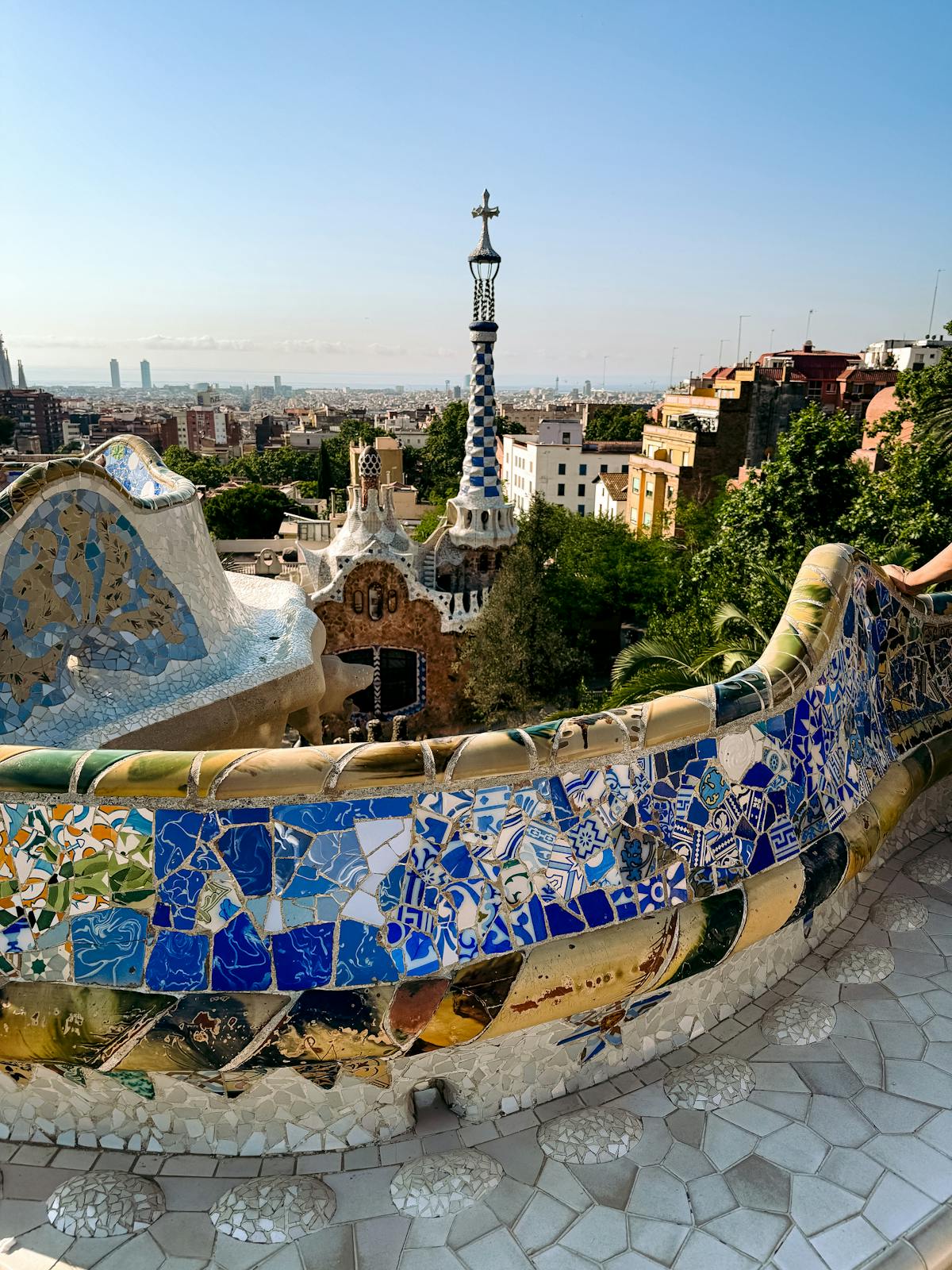
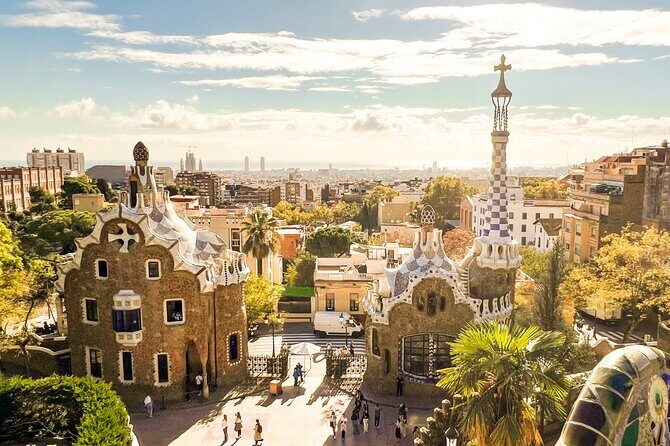
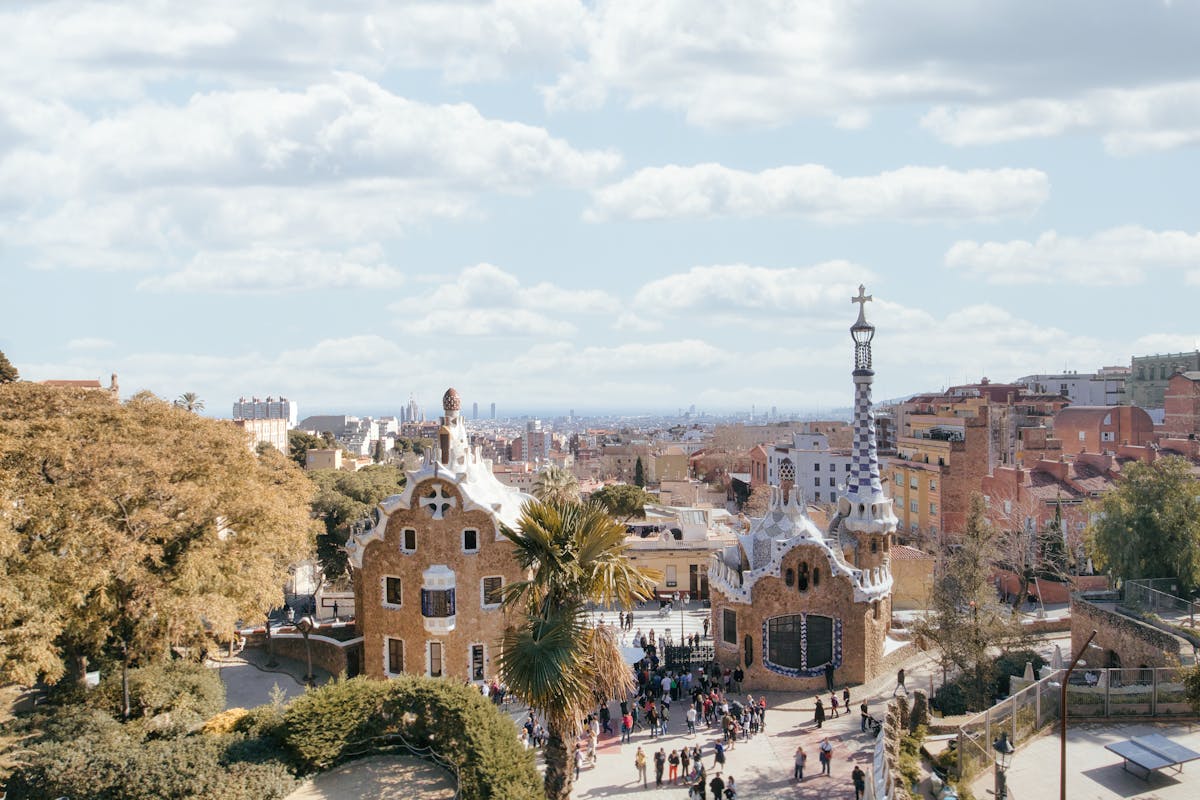
Park Guell is split into two areas. The free zone covers the wooded hillside, gardens, and walking paths — it is a public park and you can enter anytime. The paid Monumental Zone is the part you came for: the serpentine mosaic bench on the terrace, the Hypostyle Room with its 86 columns, El Drac on the staircase, and the two gingerbread pavilion houses at the entrance.
Timed entry is mandatory. You buy a ticket for a specific 30-minute arrival window. Show up at 10:00 AM if your slot is 10:00-10:30. Once inside, there is no time limit — you can stay as long as you want. Most people spend between 60 and 90 minutes.
Tickets release well in advance. The official website (parkguell.barcelona) sells tickets up to three months ahead. Unlike the Sagrada Familia, which sells out weeks ahead, Park Guell tickets are usually available until a few days before. Peak summer dates in July and August are the exception — those can sell out a week or more in advance.
Prices in 2026:
- Adults: 10 euros (~$11) for the official ticket on the park website
- Children 7-12 and seniors 65+: 7 euros
- Children under 7: Free
- Barcelona residents: Free with registration
So why are tours more expensive? Tour operators buy ticket allocations and bundle them with a guide, skip-the-line access, and sometimes transport. The convenience premium is real, but the guide adds genuine value here — Park Guell’s architecture is full of hidden symbolism that you will walk right past on your own.
Self-Guided vs. Guided Tour: Is a Guide Worth It?
This depends entirely on what kind of visitor you are. I have done Park Guell both ways, and they are meaningfully different experiences.
Self-guided works if: You are mainly here for the photos and the atmosphere. You want to wander at your own pace, sit on the bench, snap pictures of El Drac, and soak it in without someone talking at you. The Monumental Zone is compact enough that you can see everything in an hour without any guidance. You will miss the stories, but you will get the beauty.
A guided tour is better if: You actually want to understand what you are looking at. The symbolism in Park Guell runs deep. Those columns in the Hypostyle Room? They are not just holding up the terrace — they are a water collection system that channels rainwater to an underground cistern. The serpentine bench? Its shape follows the curves of the human body because Gaudi made a workman sit in wet plaster to get the ergonomics right. The dragon? It might represent the Python from Greek mythology, or the alchemical salamander, or both. A good guide connects all of this.
For most first-time visitors, I recommend the guided tour. The $6 price difference between a basic ticket and a guided tour is insignificant compared to what you gain. If you have already been once and just want to revisit for the views, the basic ticket makes more sense.
Best Park Guell Tours to Book
I picked these four based on what they cover, how long they run, and what kind of visit you are planning. Every one of them includes skip-the-line entry to the Monumental Zone.
Park Guell Admission Ticket
Duration: Full day (visit at your own pace) | From: $25 per person
The no-frills option. You get timed entry to the Monumental Zone with a digital ticket delivered to your phone. No guide, no audioguide unless you add one. This is for people who want to explore independently and already know a bit about Gaudi’s work, or who simply do not care about the historical context and just want to see the mosaics, sit on the bench, and get their photos.
The ticket is flexible — you choose your 30-minute entry window but can stay as long as you want inside. Most visitors spend 60-90 minutes. If you are budget-conscious and visiting multiple Gaudi sites, saving on the guide here and splurging on a guided tour at the Sagrada Familia makes strategic sense.
Park Guell Guided Tour with Skip-the-Line Entry
Duration: 75 minutes | From: $31 per person
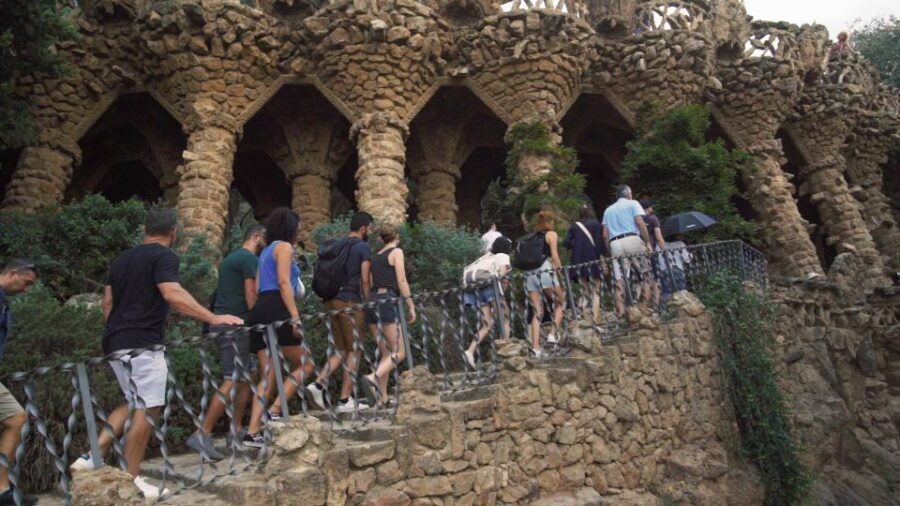
This is the one I recommend for most first-time visitors. A licensed local guide walks you through the entire Monumental Zone in about 75 minutes, covering the Hypostyle Room, the Nature Square terrace with its serpentine bench, the main staircase with El Drac, and the porter’s lodge pavilions.
What makes it worth the extra $6 over the basic ticket: the stories. Your guide will point out details you would never notice on your own — the way the columns in the Hypostyle Room lean slightly inward to mimic tree trunks, or how the mosaic patterns on the bench encode astrological symbols. Groups are kept small, and tours run in multiple languages. The skip-the-line access means you walk straight past the entry queue, which on summer mornings can stretch 20-30 minutes long.
Park Guell + Gaudi House Museum Entry
Duration: Full day | From: $33 per person
A bundle that adds the Casa Museu Gaudi to your Park Guell visit. The museum sits inside the park grounds — it is the pink house where Gaudi actually lived for the last 20 years of his life, from 1906 until he moved into his workshop at the Sagrada Familia in 1925.
Inside, you will find original furniture designed by Gaudi (the man could not design a normal chair to save his life — everything curves and bends in unexpected ways), personal belongings, and drawings from his projects. It is a small museum, maybe 30 minutes to walk through, but it adds a human dimension to the genius. You see where he slept, where he worked, the garden he tended. For an extra $8 over the basic ticket, it is a solid addition if you are interested in Gaudi as a person rather than just his buildings.
Park Guell & Sagrada Familia Combo Tour
Duration: 4 hours | From: $119.72 per person
If your Barcelona itinerary includes both Park Guell and the Sagrada Familia — and honestly, it should — this half-day combo tour is the most efficient way to see them. A guide takes you through Park Guell first, then drives you to the Sagrada Familia for a full interior tour. Both sites get skip-the-line entry.
The price looks steep at first, but do the math. A Park Guell guided tour ($31) plus a Sagrada Familia guided tour ($50-70) plus a taxi between them ($15-20) would cost roughly the same. With the combo, someone else handles the logistics and transit, and the guide builds a narrative thread connecting both sites — how Gaudi’s ideas evolved from the naturalistic forms of Park Guell to the mathematical geometry of the Sagrada Familia. The 4-hour format means you get thorough coverage without rushing.
This is my pick if you are seeing both sites and only have half a day.
When to Visit Park Guell
The first entry slot of the day is the best. Full stop. Park Guell opens at 9:30 AM from mid-February to late October and at 10:00 AM in winter. Booking the earliest available slot gets you two things: cooler temperatures (this is a hillside with limited shade) and thinner crowds. By 11:00 AM in summer, the Monumental Zone is packed.
Best months: April, May, September, and October. The weather is warm but not punishing, and tourist density drops compared to the July-August peak. March and November are fine too — slightly cooler, but you will practically have the place to yourself on a weekday morning.
Worst time: July and August between 11:00 AM and 3:00 PM. The hillside bakes in the heat, the bench is too hot to sit on comfortably, and you will spend half your visit navigating around other people’s selfie sticks. If summer is your only option, book the 9:30 AM slot and be done by 11:00.
Sunset slots are underrated. If available, the last entry window of the day gives you golden light on the mosaics and a gorgeous view of Barcelona as the sun drops toward the sea. The downside is that you cannot stay past closing time, so you need to plan your visit accordingly.
Tips for Visiting Park Guell
Wear proper shoes. I cannot stress this enough. Park Guell sits on the Carmel Hill, and getting there involves a serious uphill walk no matter which direction you approach from. Inside the park, the paths are uneven stone and there are staircases everywhere. Sandals and heeled shoes are a bad idea.
Getting there. The park has no metro station directly at the entrance. The closest stops are Lesseps and Vallcarca (both on the green L3 line), and from either one, you are looking at a 15-20 minute uphill walk. Bus 24 drops you closer to the top entrance. Some visitors take a taxi to the main entrance and walk downhill to the metro afterward — that is probably the most comfortable approach.
Bring water. There are a couple of kiosks inside the park, but they charge tourist prices and the lines can be long. Fill a bottle before you arrive.
Go beyond the Monumental Zone. After your ticketed visit, walk the free areas of the park. The Calvary viewpoint at the top of the hill has arguably the best panorama in the entire park — three stone crosses marking the highest point, with 360-degree views of Barcelona. Most visitors skip it because it requires a short climb, which means you will have it mostly to yourself.
The side entrance is less chaotic. If you arrive from the Carretera del Carmel side (the upper entrance), you avoid the main gate crowds entirely. The approach is less dramatic but much calmer.
Allow 2 hours total. About 60-90 minutes for the Monumental Zone, plus 30 minutes for the free areas and the viewpoints. If you are adding the Gaudi House Museum, budget another 30 minutes on top.
What You’ll See Inside the Monumental Zone
The Monumental Zone is the heart of Park Guell, and everything is packed into a surprisingly compact area. You can walk through the whole thing in 30 minutes if you rush, but rushing would miss the point.
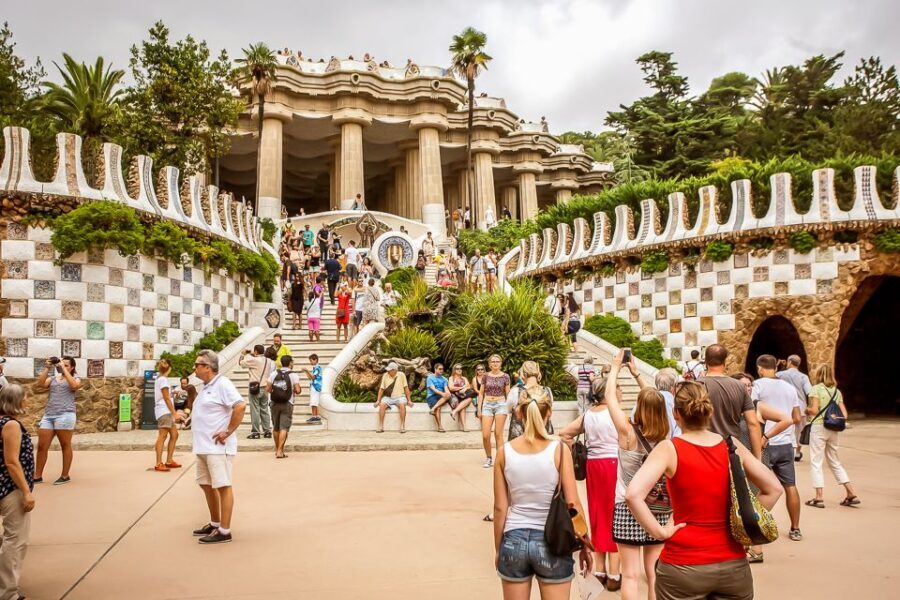
The Main Staircase and El Drac. This is the first thing you see after entering from the main gate. A divided staircase flanked by two walls covered in trencadis mosaics, with the famous dragon-lizard guarding the center landing. Above El Drac, a tripod with a Catalan shield and a snake’s head marks the transition to the Hypostyle Room. The staircase functions as both an entrance and a water feature — rainwater flows down hidden channels underneath.
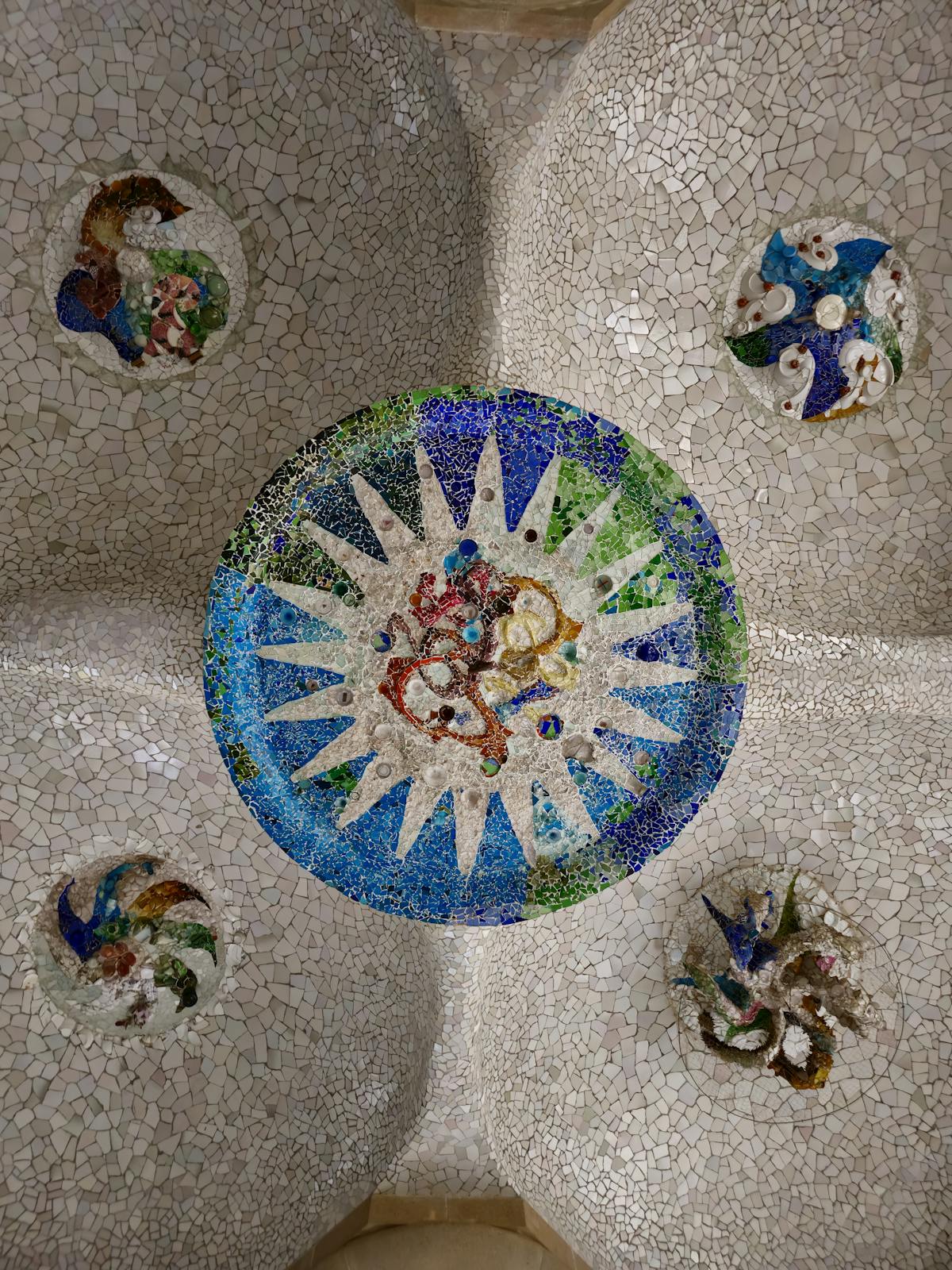
The Hypostyle Room. Eighty-six Doric columns holding up the terrace above. Originally designed as the market hall for the housing estate that never materialized. The ceiling is decorated with mosaic medallions made from broken plates, glass, and porcelain, created by Gaudi’s collaborator Josep Jujol. Stand in the center and look up — the acoustics are strange, and the columns create a forest-like atmosphere that feels ancient despite being only about 120 years old.
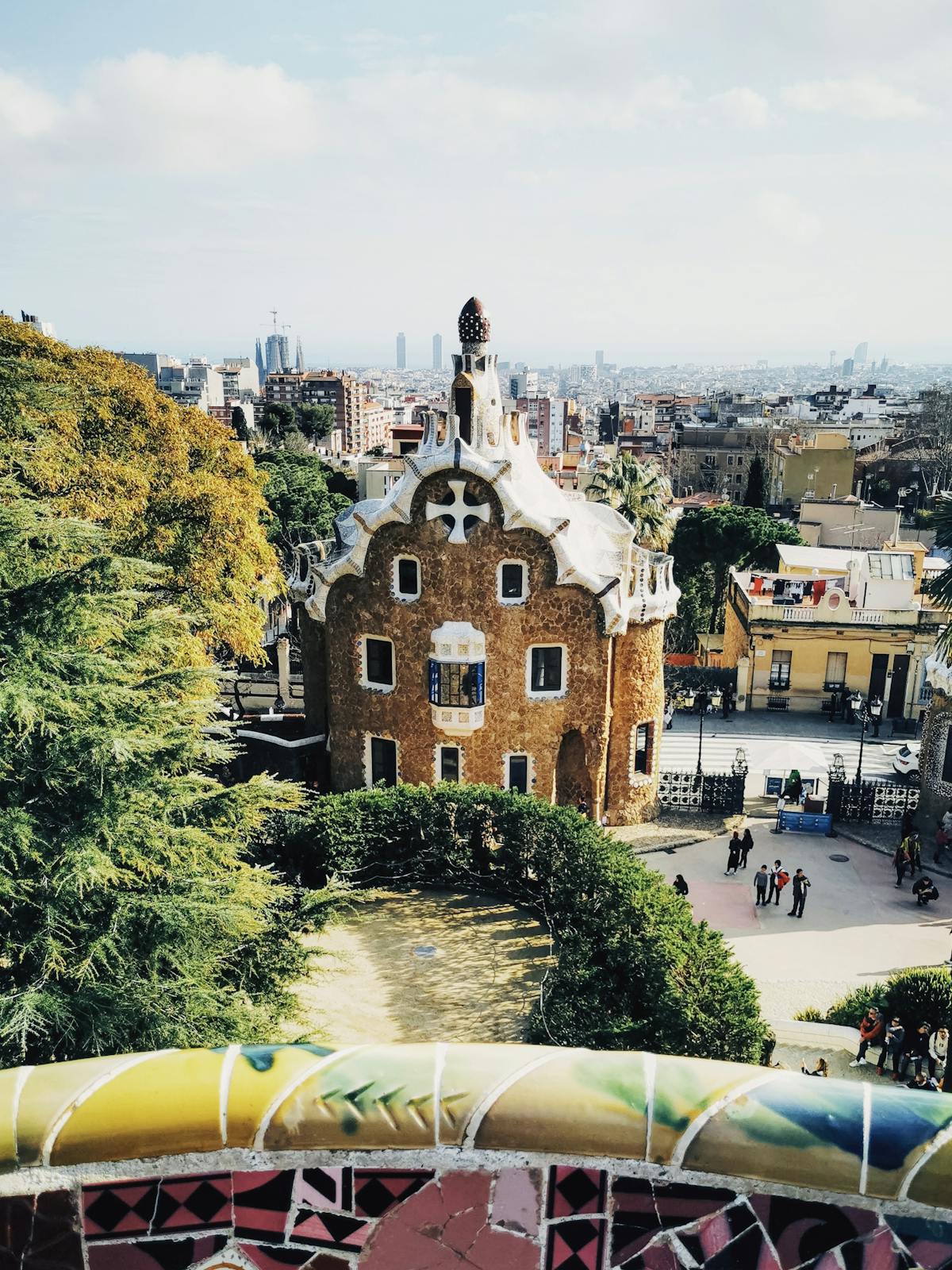
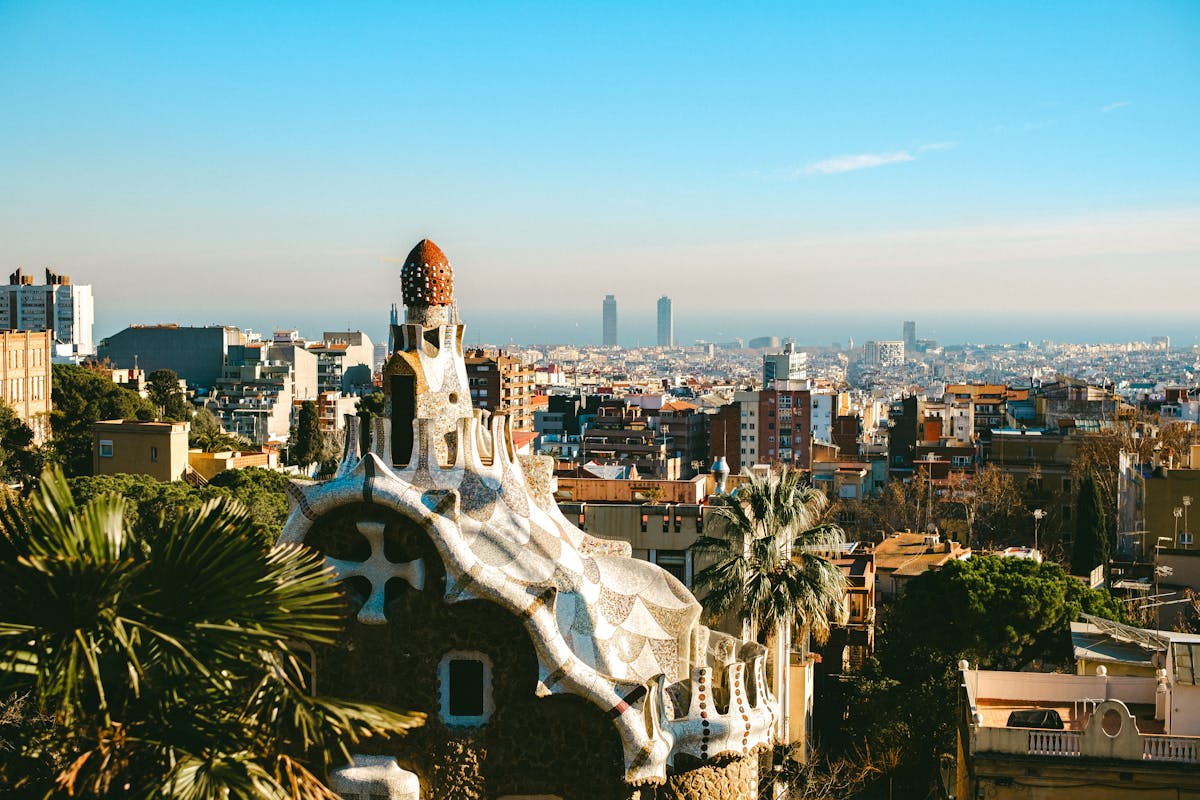
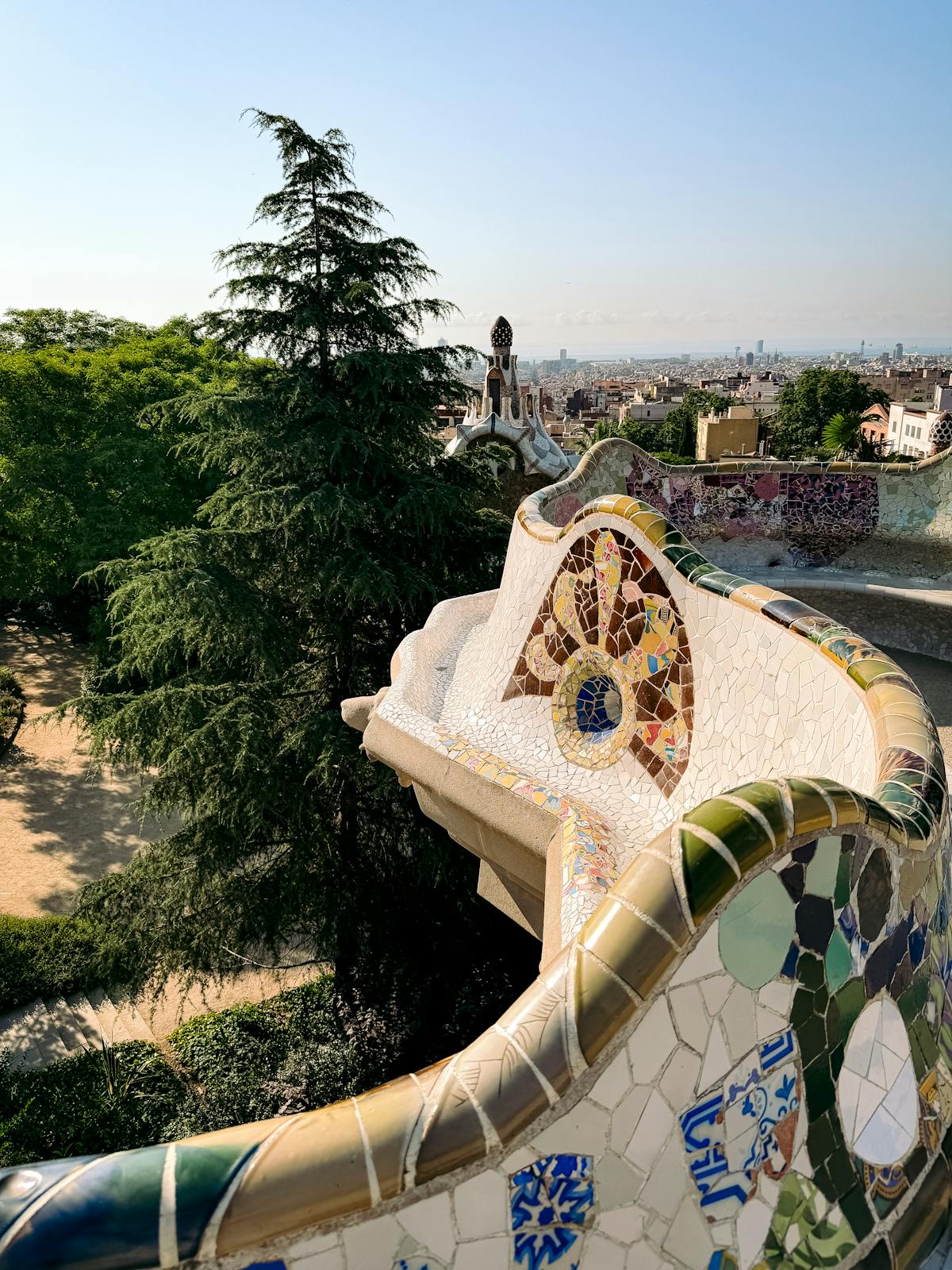
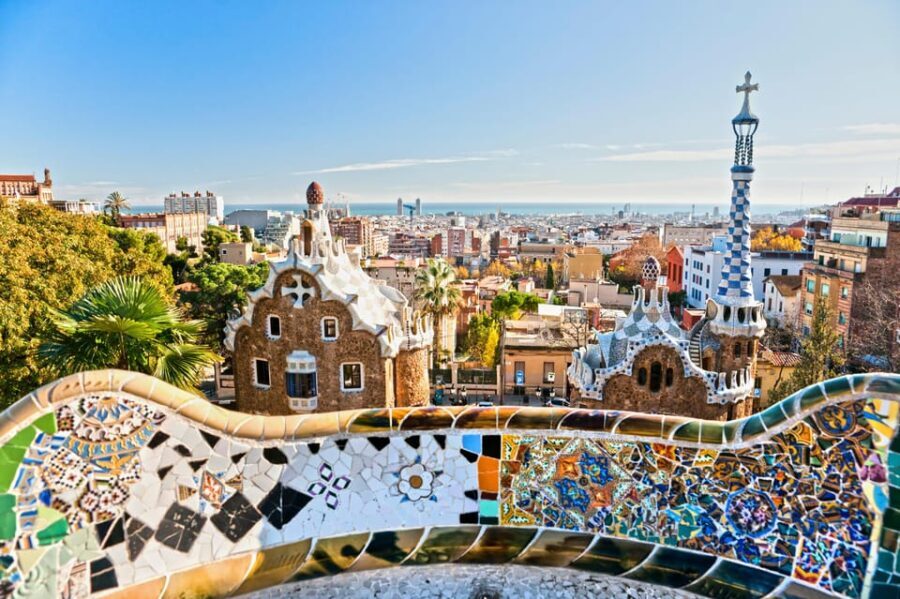
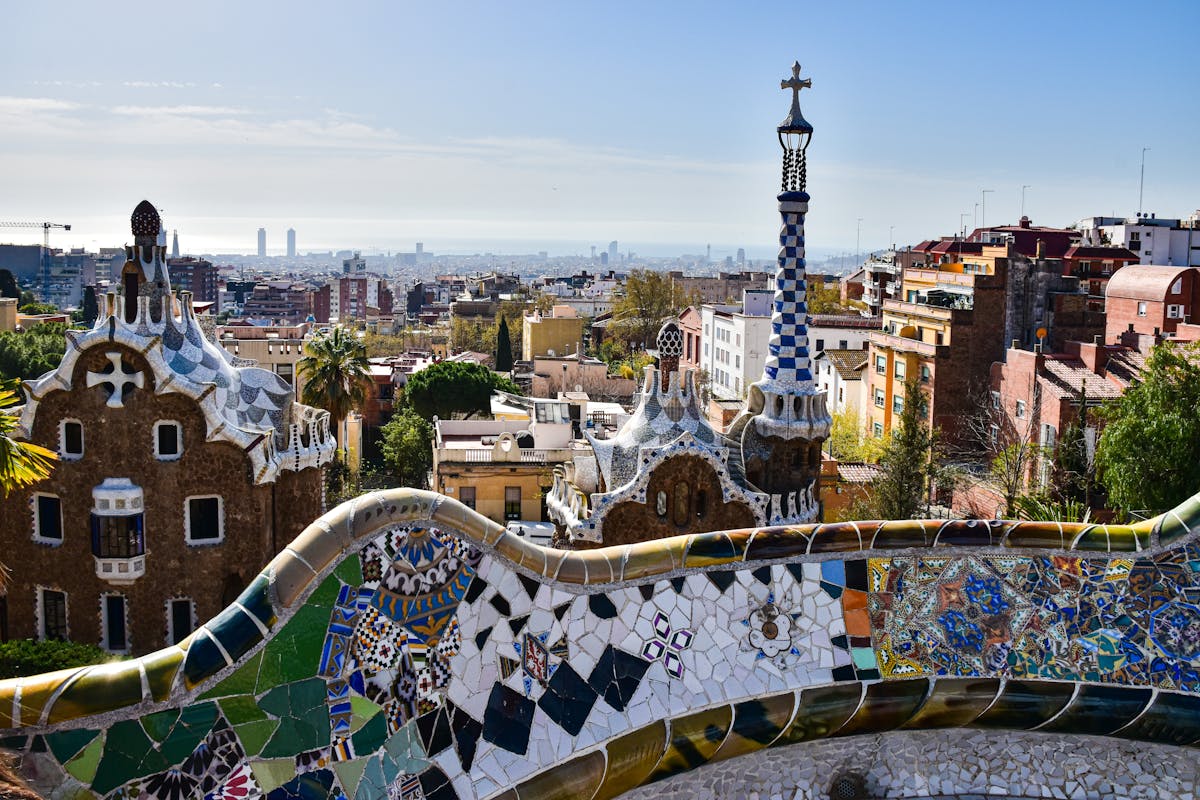
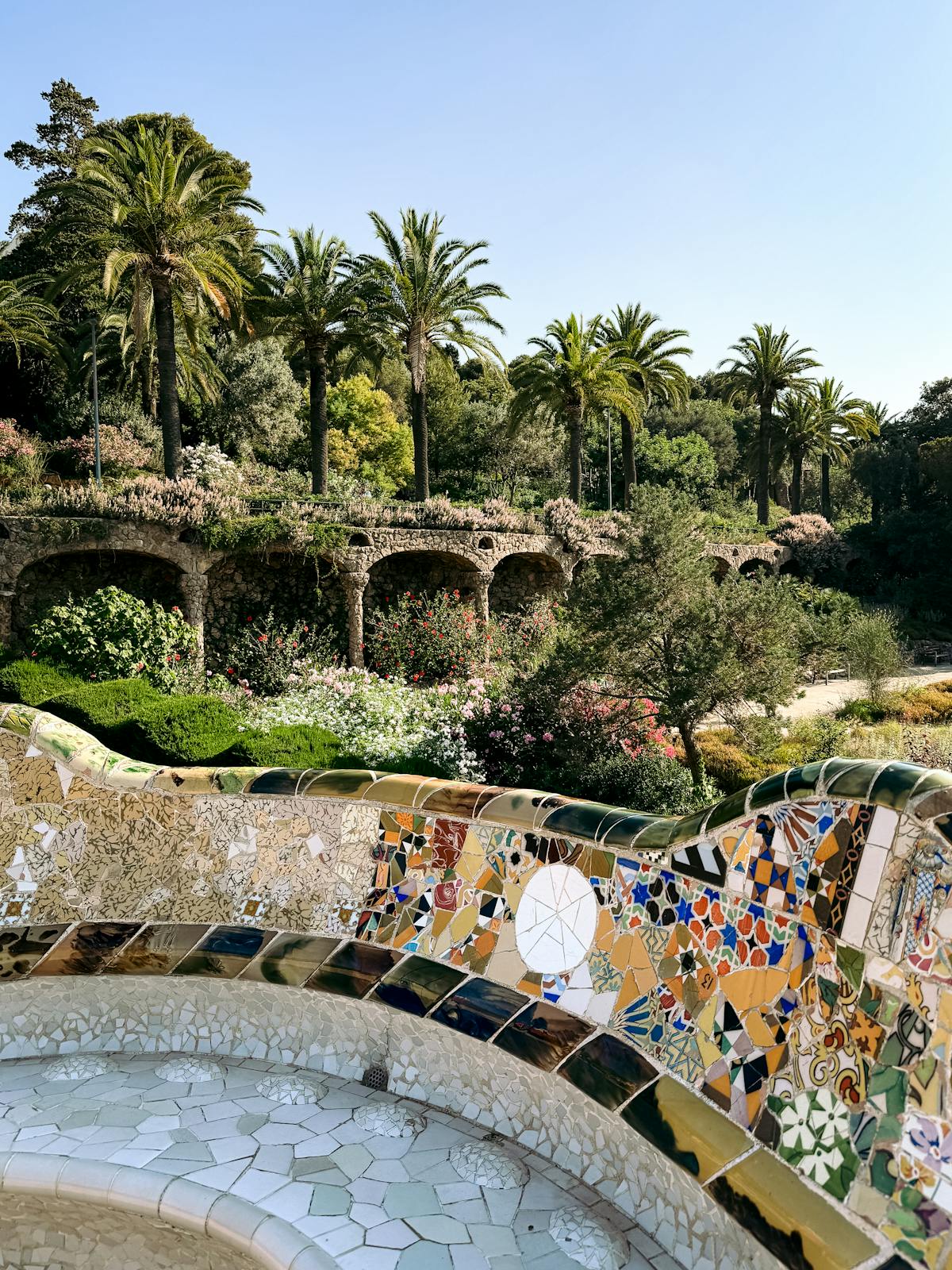
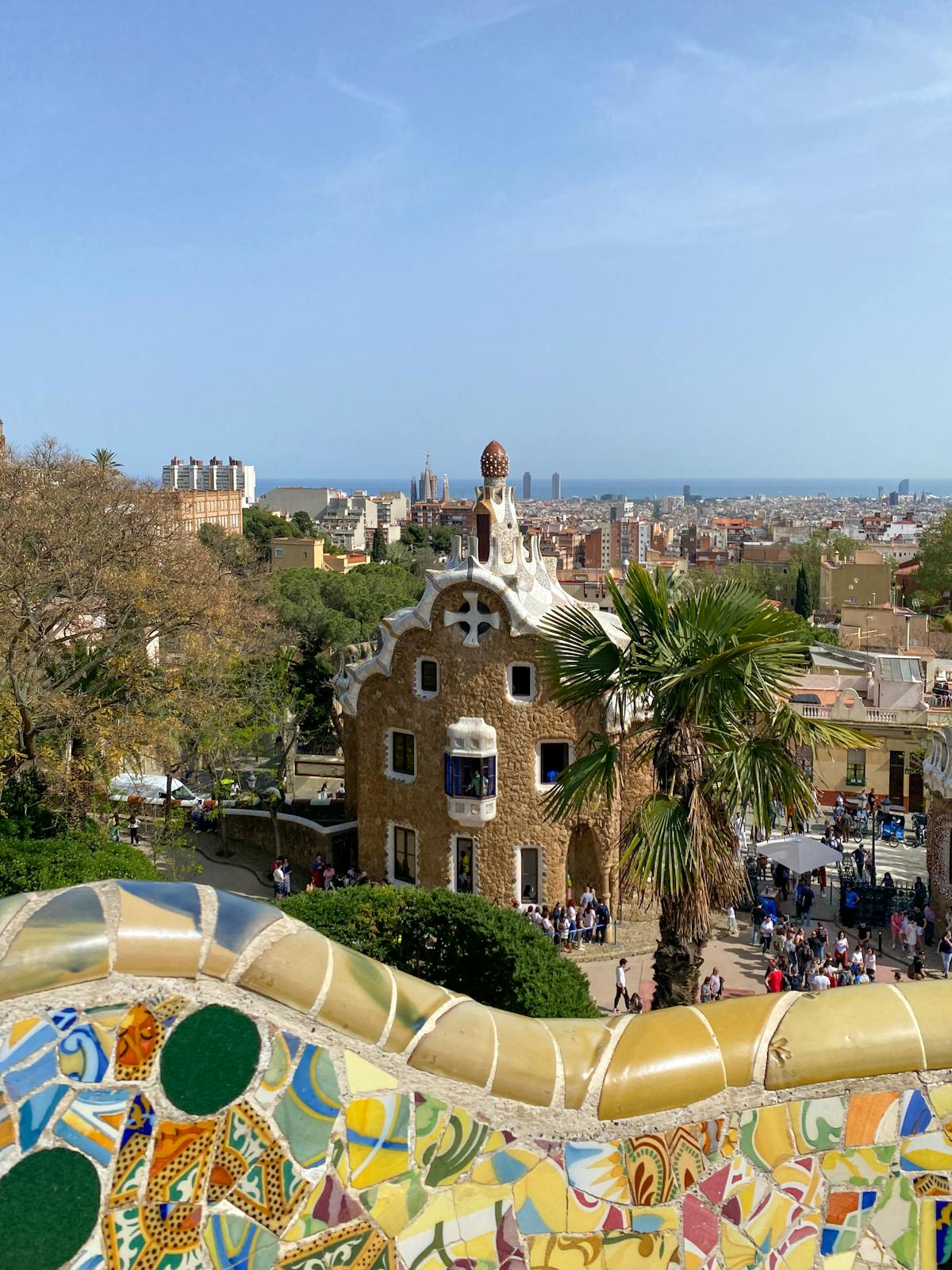
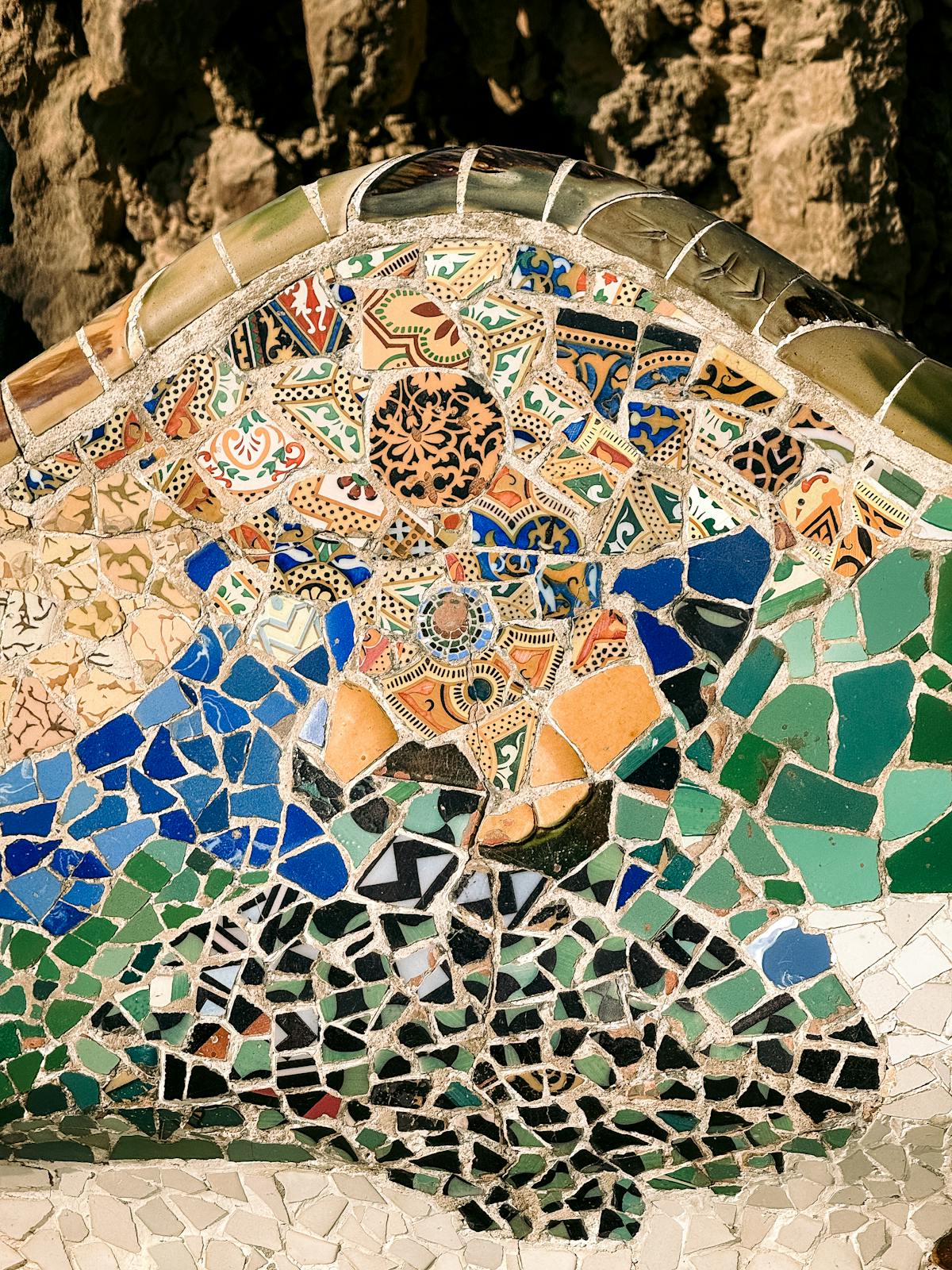
The Nature Square (Greek Theatre). This is the big terrace sitting on top of the Hypostyle Room. The serpentine bench runs along its entire edge, covered in the most intricate trencadis mosaics in the whole park. From here, you get the panoramic view of Barcelona that appears on every postcard — the city grid, the Sagrada Familia’s spires, and the Mediterranean beyond. Gaudi called this the “Greek Theatre” because he envisioned it as a community gathering space. Sit on the bench for a while. It was designed to fit the shape of a seated human body, and it is genuinely comfortable.
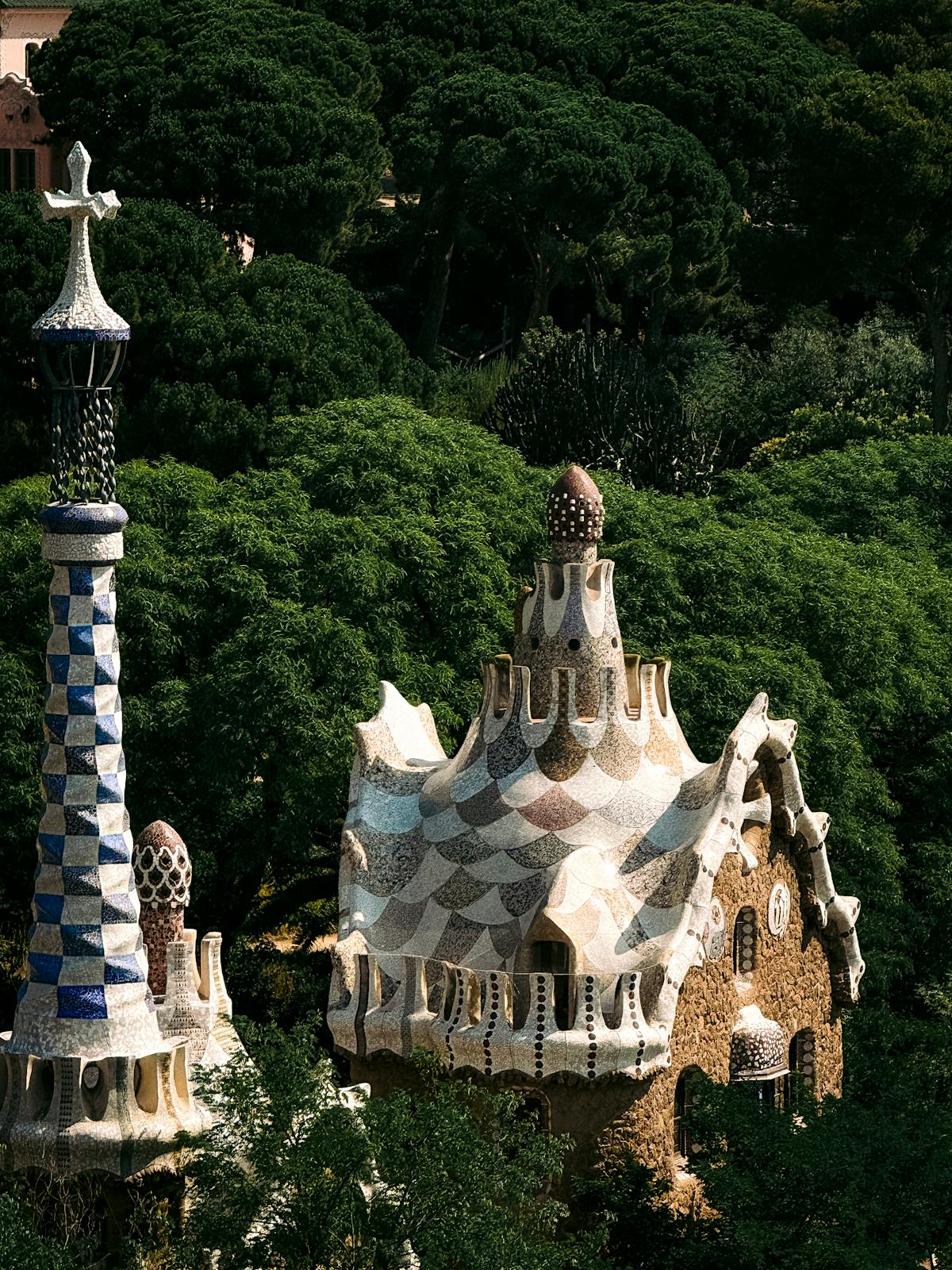
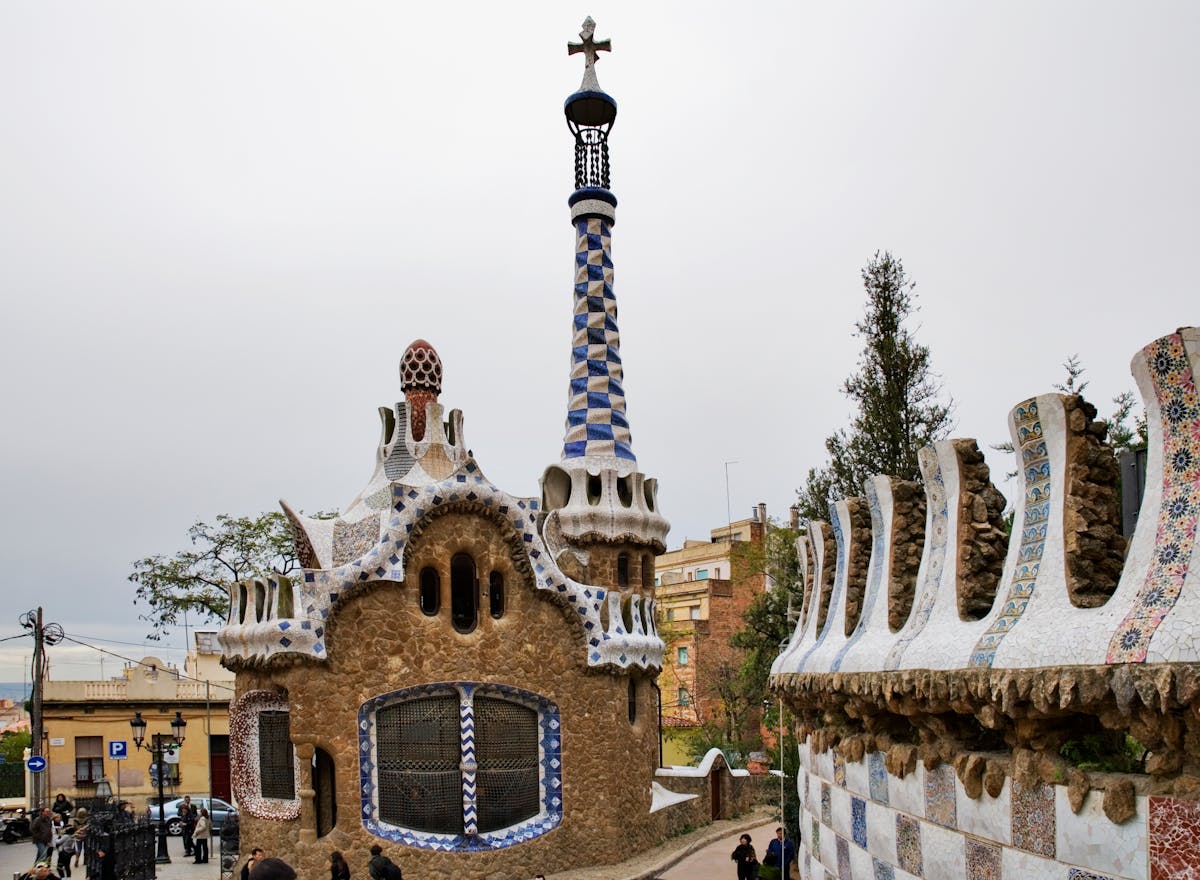
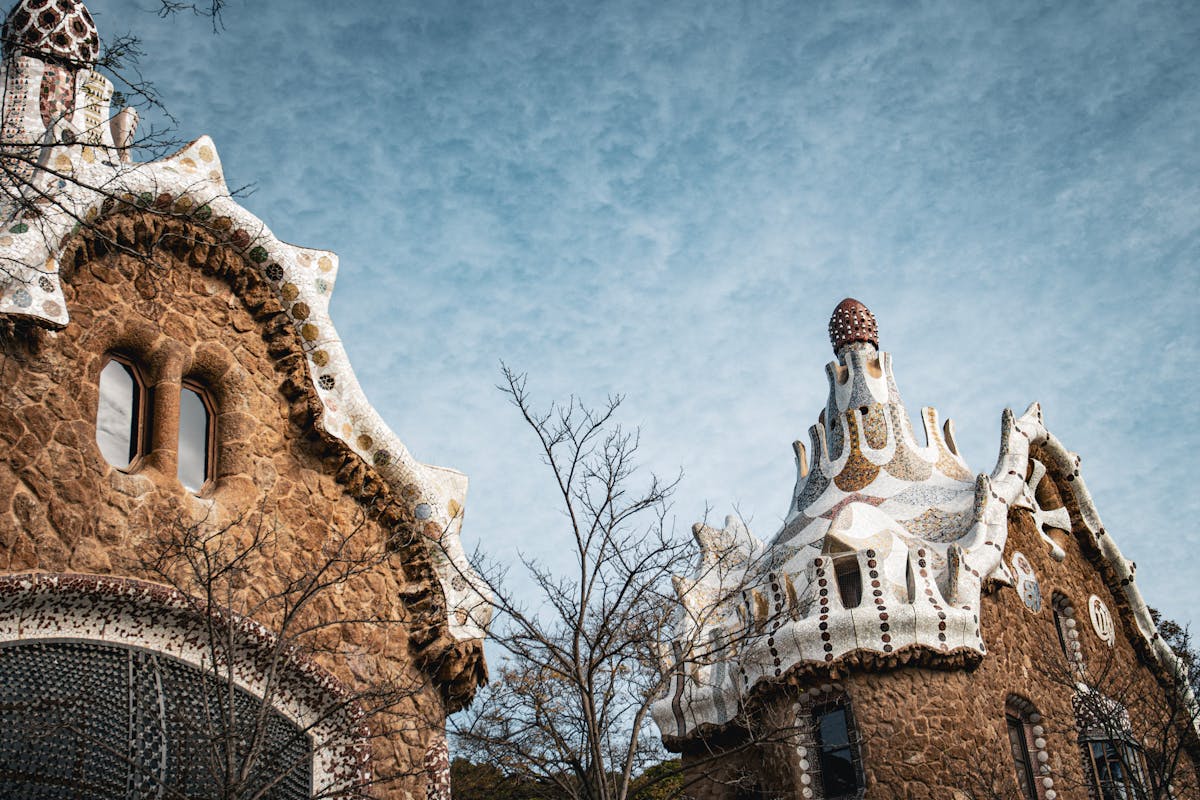
The Porter’s Lodge and Casa del Guarda. The two gingerbread-style buildings at the main entrance. One now houses a small museum about the park’s history and the Gracia district. They look like something out of Hansel and Gretel, and that is intentional — Gaudi drew inspiration from Catalan fairy tales and local folk architecture.
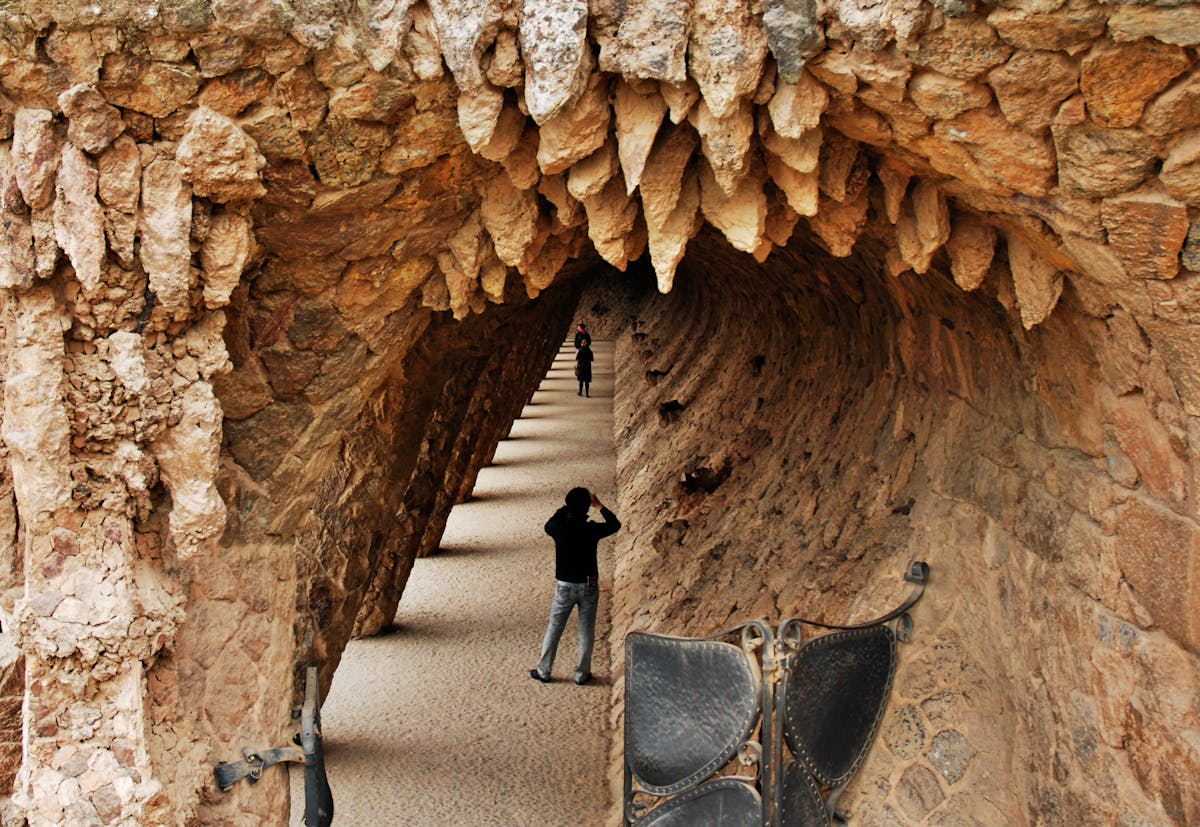
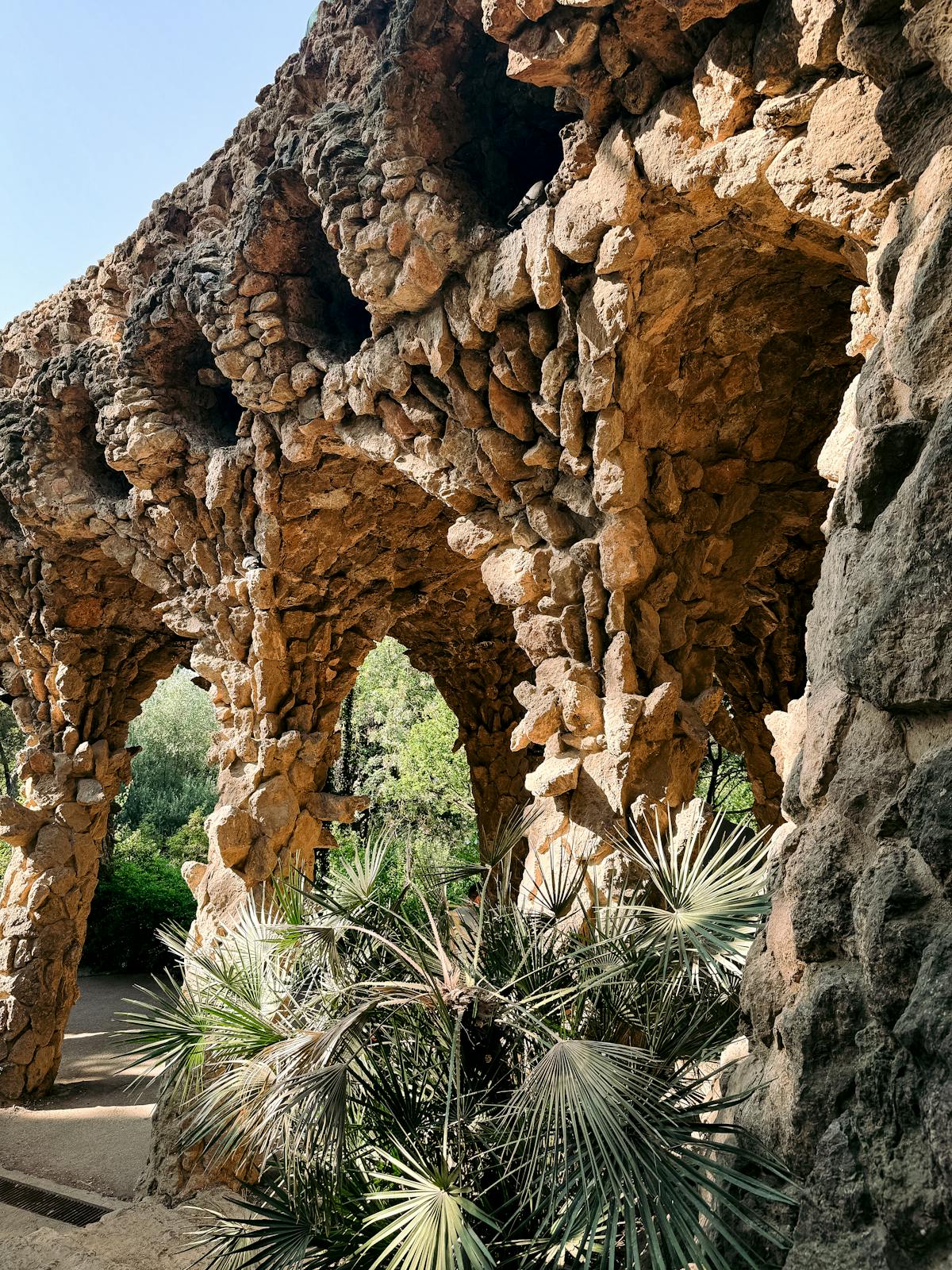
The Stone Viaducts. These are the colonnaded walkways built into the hillside. Gaudi designed them to follow the natural contour of the land, which is why they twist and lean at odd angles. The columns are rough stone, made to look like tree trunks, and the walking surfaces are uneven by design. They connect different levels of the park and are some of the most photogenic spots — especially the Portico de la Lavandera, where the columns lean dramatically inward.
More Barcelona Guides
This article contains affiliate links. If you book a tour through our links, we earn a small commission at no extra cost to you. This helps us keep creating free travel guides.