Somewhere inside the Prado, in a room that smells faintly of old varnish and floor polish, there’s a painting where everyone is looking at you. Velazquez’s Las Meninas hangs at eye level in its own gallery, and the trick — the one that’s kept art historians arguing for 350 years — is that the painter placed you exactly where the king and queen would have stood. You’re inside the painting. It’s the kind of thing that sounds like art-school nonsense until you stand in front of it and feel genuinely unsettled.
The Prado holds around 8,000 paintings. You’ll see maybe 200 in a visit, 300 if you’re determined and skip lunch. Goya’s Black Paintings sit in the basement — fourteen works he painted directly onto the walls of his house while going deaf and losing his mind, then transferred to canvas after his death. They’re disturbing in a way that no reproduction captures. Upstairs, Bosch’s Garden of Earthly Delights unfolds across three panels of medieval fever dreams that make modern surrealism look tame.
But here’s what catches people off guard: the Prado offers free entry every day during the last two hours before closing. Monday through Saturday that’s 6:00 to 8:00 PM, Sundays and holidays 5:00 to 7:00 PM. Free. Completely free. The catch is that half of Madrid knows this, and the line during free hours can stretch down the block. So the real question isn’t whether to visit the Prado — that’s obvious — it’s whether to pay for a ticket, pay for a guided tour, or brave the free-entry chaos.
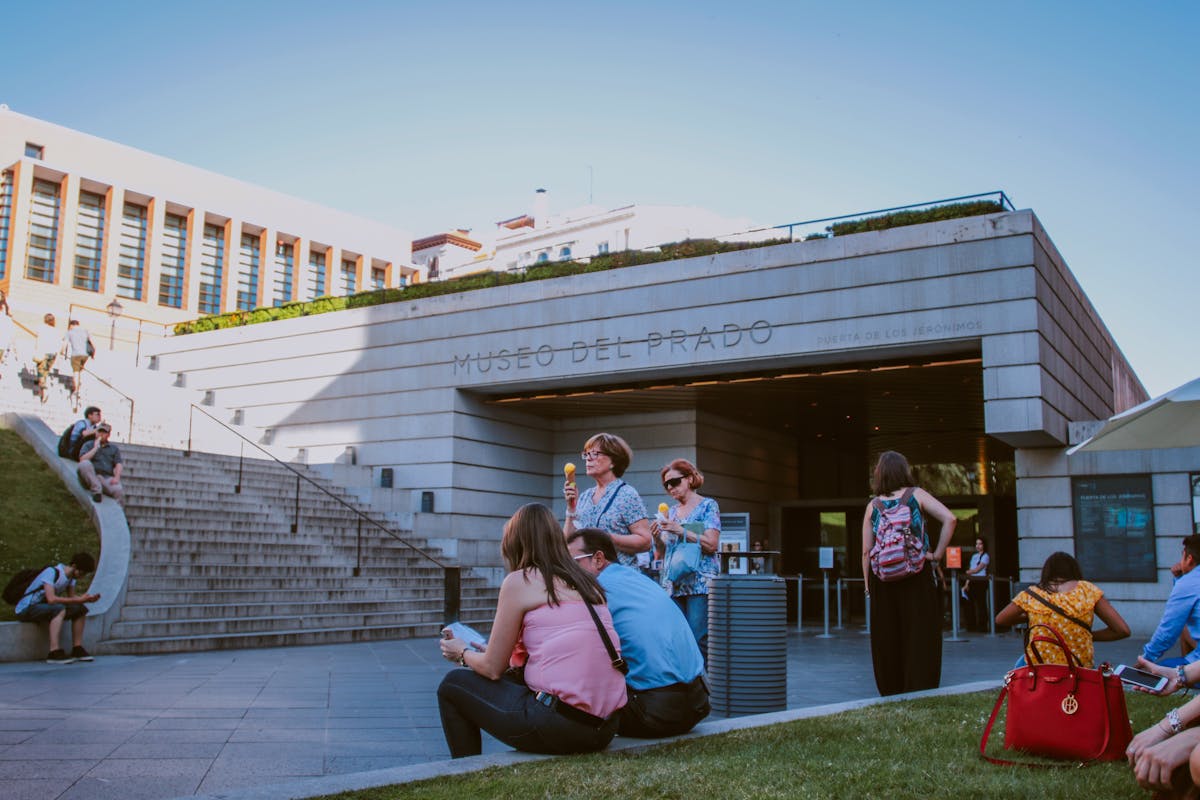
I’ve gone through every ticket option, tour format, and timing strategy for the Prado. Below is how the system actually works, which tours justify their price, and how to see the paintings that matter without wasting two hours on the Spanish royal portrait backlog.
In a Hurry? My Top Picks
- Best value guided tour: Prado Museum Guided Tour with Fast Access — $28 per person. Ninety minutes with skip-the-line entry and a guide who steers you to the paintings worth your time. Book this tour
- Best entry-only ticket: Prado Museum Entry Ticket — $21 per person. Skip the box office queue, walk straight in, explore at your own speed. Book this ticket
- Best small group experience: Prado Museum Small Group Tour — $54 per person. Maximum six people, a guide who adapts to your interests, and enough time to actually absorb what you’re seeing. Book this tour
- Best combo deal: Prado Museum and Royal Palace Guided Tour — $80 per person. Five hours covering Madrid’s two biggest attractions in one shot. Book this tour
- In a Hurry? My Top Picks
- How Prado Museum Tickets Work
- Self-Guided vs. Guided: Which Makes Sense
- Best Tours for Visiting the Prado Museum
- 1. Prado Museum Entry Ticket —
- 2. Prado Museum Guided Tour with Fast Access —
- 3. Skip-the-Line Prado Museum Tour with Optional Tapas —
- 4. Prado Museum Small Group Tour —
- 5. Prado Museum and Royal Palace Guided Tour —
- When to Visit the Prado
- What to Prioritize (Because You Can’t See Everything)
- What the Prado Is Actually Like Inside
- Getting There
- More Madrid Guides
How Prado Museum Tickets Work
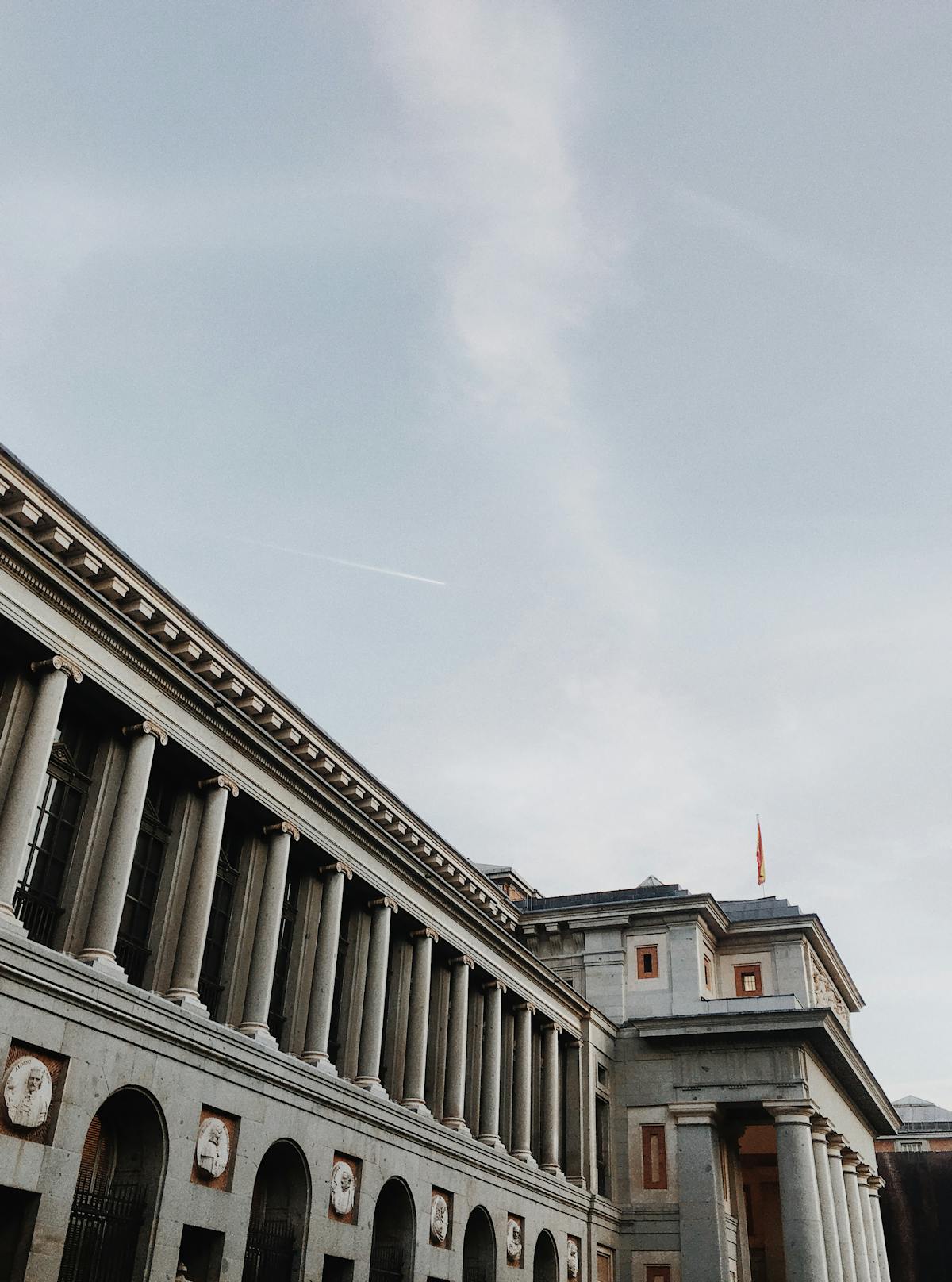
The Prado’s ticket system is simpler than most major European museums, but the website doesn’t make it feel that way. Here’s the breakdown.
General admission: 15 euros at the door, or you can book online at museodelprado.es. The online ticket gives you a timed entry slot, which means you skip the box office line but still enter through the same doors as everyone else. During peak season (April through October), the morning slots between 10:00 and 11:30 AM sell out days in advance. Afternoon slots are easier to get.
Free entry hours: Monday through Saturday from 6:00 to 8:00 PM, and Sundays and public holidays from 5:00 to 7:00 PM. No ticket needed — just show up and queue. The line typically starts forming around 5:30 PM on weekdays and 4:30 PM on weekends. Once inside, you have until closing, which gives you about two hours. That’s enough for a focused visit if you know what you want to see, but it’s tight for first-timers trying to cover everything.
Reduced tickets: 7.50 euros for over-65s and students aged 18 to 25 with valid ID. Free for under-18s at all times, and free for everyone on November 19 (Prado’s anniversary) and October 12 (Spain’s national day).
The Paseo del Arte card: 32 euros gets you into the Prado, Reina Sofia, and Thyssen-Bornemisza — Madrid’s three major art museums — with a single ticket valid for one year. If you plan to visit all three (and you should, they’re within walking distance of each other), this saves roughly 15 euros over buying separately.
The big decision isn’t really about ticket types. It’s about whether to go self-guided or with a tour. The Prado doesn’t have an official audio guide system like the Louvre — there’s a mediocre app that costs a few euros, and the room signage is minimal. Without context, you’re essentially walking through rooms of Spanish royalty portraits wondering why this particular painting of a guy on a horse matters. A guide fixes that problem.
Self-Guided vs. Guided: Which Makes Sense
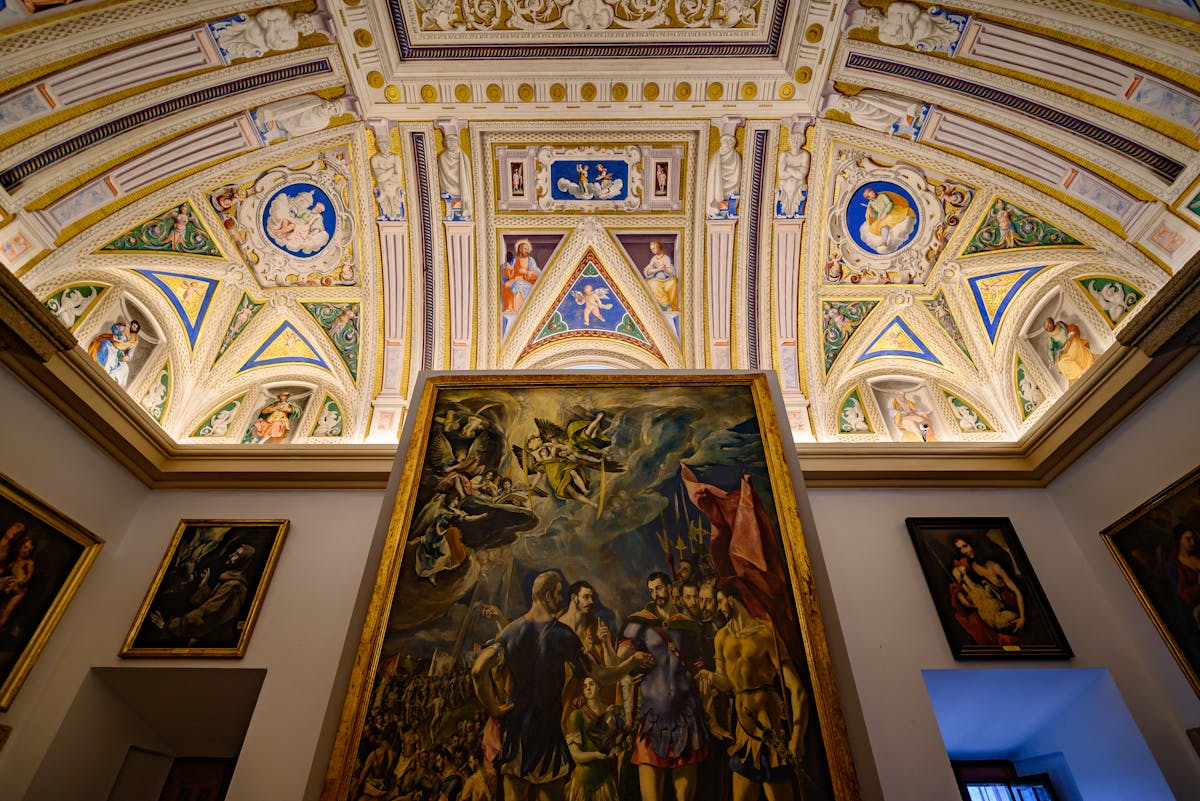
Go self-guided if you already know something about Spanish art. If you can walk up to a Goya and understand why his later work looks like it was painted by a different person, or if you know the political context behind Velazquez’s royal commissions, you don’t need someone narrating. Grab the 15-euro ticket, download a free walking route from the museum’s website, and spend three hours going at your own pace.
Go guided if this is your first serious art museum. The Prado’s collection is overwhelming without a framework. A good guide doesn’t just tell you what you’re looking at — they tell you what to skip. That matters in a museum with 200 rooms. The best Prado guides build a narrative through the collection: how Spanish art evolved from the rigid formality of El Greco through Velazquez’s psychological realism into Goya’s unhinged late period. That arc makes the whole visit click in a way that wandering room to room never does.
The guided tours from third-party operators (GetYourGuide, Viator) typically run 90 minutes and cover 15 to 20 key works. That might sound limited, but 90 minutes of focused attention on the masterpieces beats three hours of aimless wandering through rooms of minor paintings. You can always go back on your own afterward — most guided tour tickets include all-day access.
Best Tours for Visiting the Prado Museum
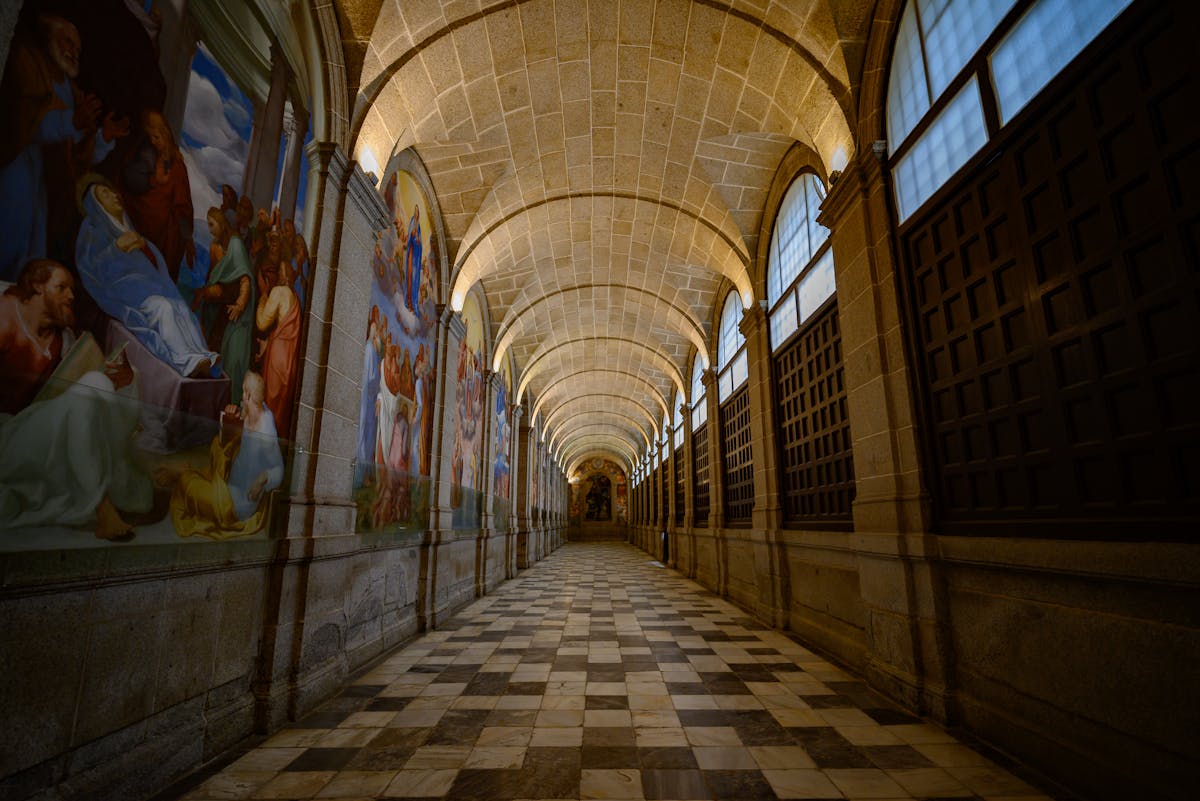
Five options from the database, covering everything from a basic entry ticket to a full-day combo with the Royal Palace. I’ve picked these based on what they actually offer versus what they cost — not all Prado tours are worth the markup.
1. Prado Museum Entry Ticket — $21
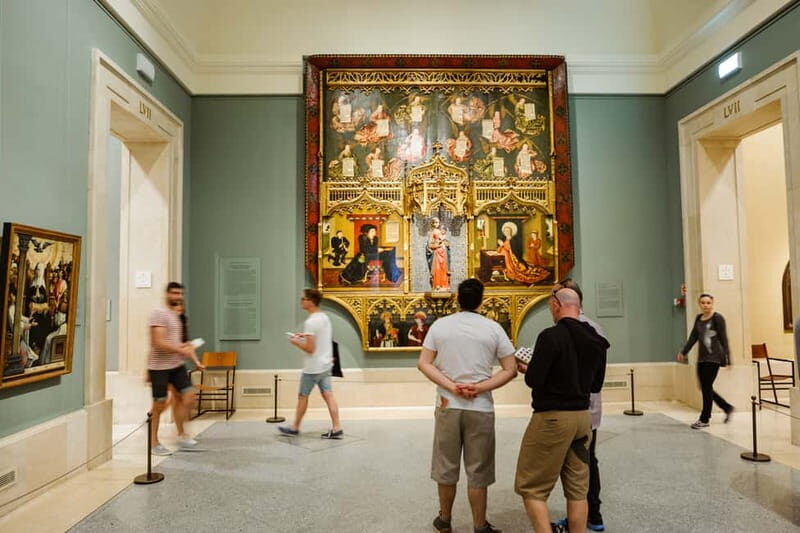
Duration: Full day access | Price: $21 per person | Type: Skip-the-line entry ticket
This is the no-frills option and it’s the one most repeat visitors choose. You get a mobile ticket that lets you bypass the box office queue — which on weekends can mean saving 30 to 45 minutes of standing in the sun on the Paseo del Prado. Once inside, you have the full day. No time pressure, no guide setting the pace, no group to keep up with.
At $21, you’re paying about 6 dollars more than the museum’s official 15-euro price. That premium buys you the convenience of an English-language booking platform, instant mobile delivery, and the flexibility to cancel. Whether that’s worth six dollars depends on how much you value not fighting the museum’s clunky Spanish-language booking system.
The lack of a guide is the obvious trade-off. The Prado’s collection demands context more than most museums — the political dynamics of the Spanish court explain half of what Velazquez painted, and Goya’s Black Paintings make zero sense without knowing what was happening in Spain at the time. If you’re going this route, spend 20 minutes reading about the key works beforehand. The museum’s own website has a solid “Masterpieces” section that covers the essentials.
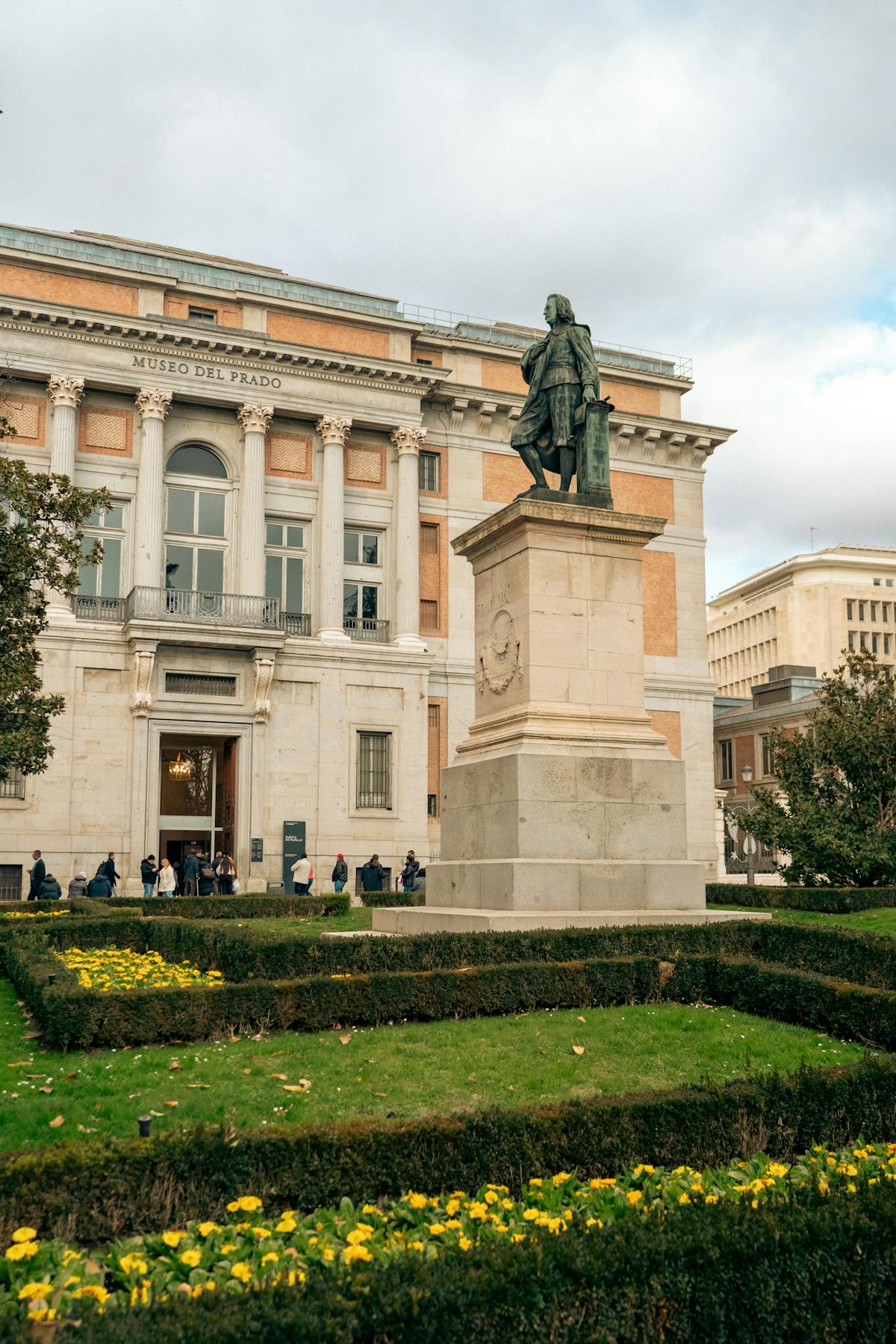
2. Prado Museum Guided Tour with Fast Access — $28
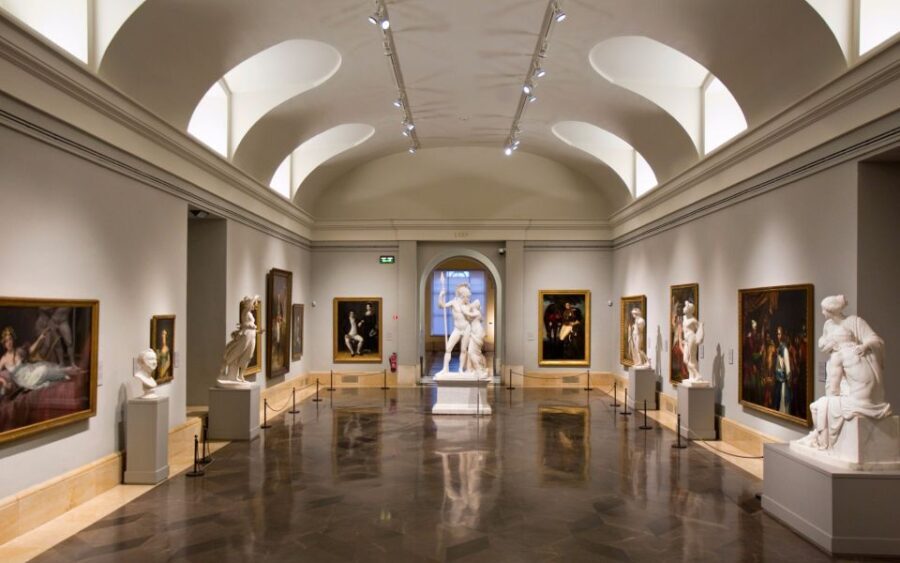
Duration: 1.5 hours | Price: $28 per person | Type: Guided tour with skip-the-line
This is the one I’d push most first-time visitors toward. At $28, it’s only seven dollars more than the bare entry ticket, but you get a 90-minute guided walkthrough of the Prado’s greatest hits plus fast-track entry that avoids both the box office and the general admission line.
The guides on this tour focus on the big three — Velazquez, Goya, and El Greco — with stops at the essential works: Las Meninas, The Third of May, The Garden of Earthly Delights (Bosch, technically Flemish, but the Prado owns it), and a selection from Goya’s Black Paintings. Ninety minutes sounds short for a museum this size, but the guides are efficient. They skip the rooms of minor works and take you straight to the paintings that justify the trip.
After the guided portion ends, your ticket stays valid for the rest of the day. So you get the structure of a tour for the highlights, then freedom to wander back to anything that caught your eye or explore the rooms the tour skipped. Best of both worlds. At $28, the price-to-value ratio here is hard to beat for any Prado tour.
3. Skip-the-Line Prado Museum Tour with Optional Tapas — $53
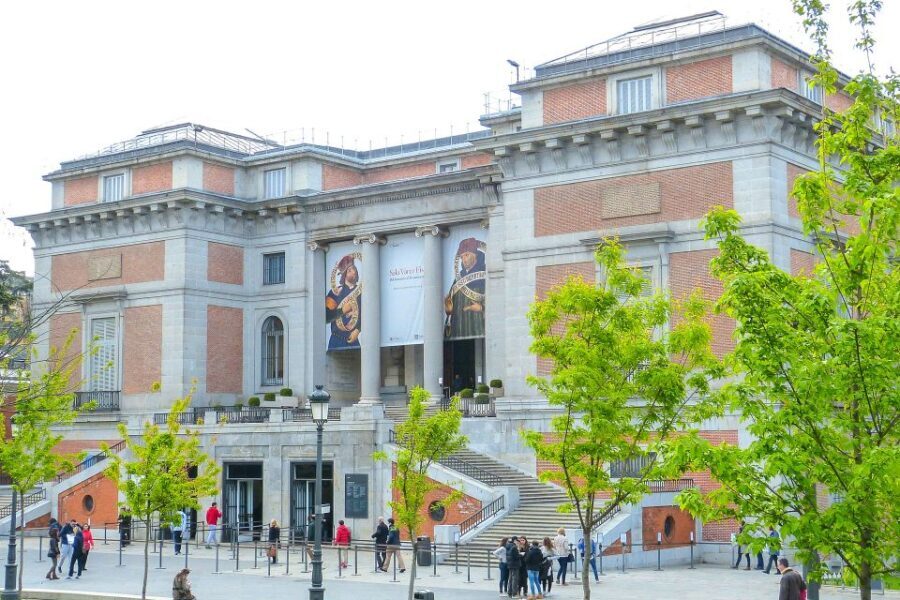
Duration: 1.5 – 2 hours | Price: $53 per person | Type: Guided tour with skip-the-line, optional tapas
This tour takes the standard Prado guided experience and bolts on a tapas session in the Barrio de las Letras — the literary quarter a few blocks from the museum. The art portion covers the same ground as the cheaper tours: Velazquez, Goya, Bosch, El Greco, and the major masterpieces. The difference is the pacing. With two hours instead of ninety minutes, the guide spends more time on fewer paintings, which means you actually absorb the details instead of speed-walking between rooms.
The tapas option is where this gets interesting. The Barrio de las Letras is packed with old-school tapas bars that most travelers walk past on their way to the Prado. The guide picks one or two and walks you through what to order — and more importantly, what the locals actually eat versus what the tourist menus push. It’s not a sit-down meal; it’s standing at the bar with a glass of vermouth and a plate of croquetas the way Madrid locals do it at 2 PM on a Saturday.
At $53, you’re paying a premium over the $28 tour. The art-only portion is comparable. You’re really paying for the tapas experience and the longer, more relaxed pace. Worth it if you want the museum visit to feel like part of a day in Madrid rather than an isolated cultural obligation.
4. Prado Museum Small Group Tour — $54
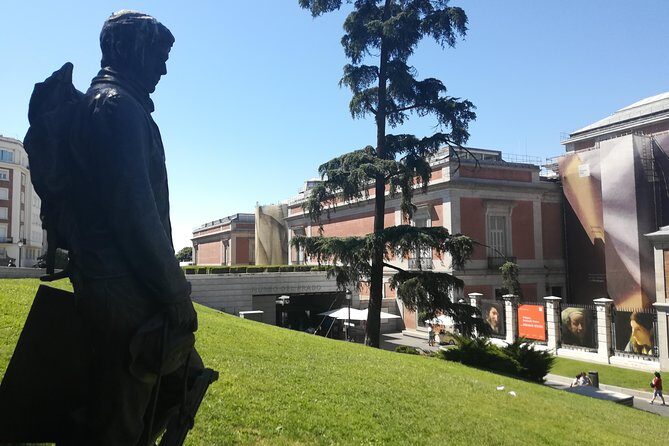
Duration: 1.5 hours | Price: $54 per person | Type: Small group tour (max 6), skip-the-line
The small group cap changes the Prado experience fundamentally. In a group of twenty, you’re standing three rows back trying to hear the guide explain Las Meninas over the noise of the gallery. In a group of six, you’re standing next to them, asking questions, getting answers tailored to what you’re curious about. If someone in the group is a painter, the guide pivots to technique. If someone asks about the political context, the conversation goes there. That flexibility doesn’t exist in large tours.
The ninety-minute runtime covers the same highlight reel as the budget tours — Velazquez, Goya, Bosch, the court portraits — but the small group means the guide can linger at works that resonate and move quickly past ones that don’t. I’ve heard from travelers who ended up spending twenty minutes on Las Meninas alone because the group got into a conversation about perspective and illusion. That doesn’t happen when forty people are waiting behind you.
At $54, you’re paying roughly double the budget guided tour. The content is similar; what you’re buying is intimacy, flexibility, and the ability to actually interact with an expert. Couples and solo travelers get the most out of this format. Families with kids under 12 should probably save the money — most children don’t have the attention span for deep-dive art commentary, no matter how good the guide is.
5. Prado Museum and Royal Palace Guided Tour — $80
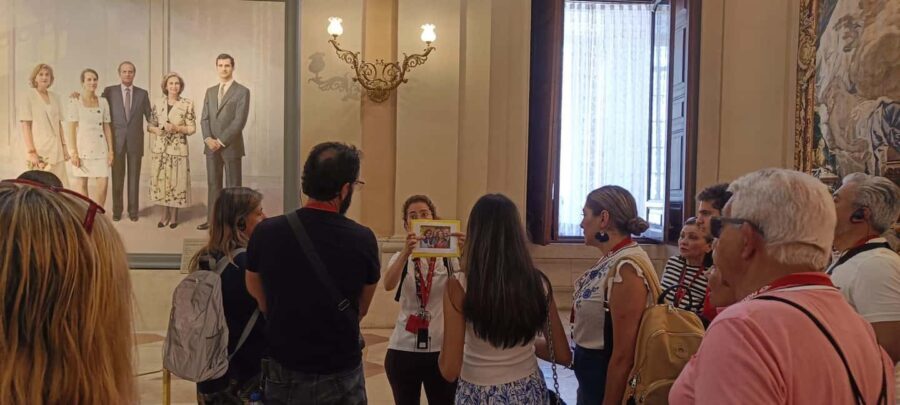
Duration: 5 hours | Price: $80 per person | Type: Guided combo tour with skip-the-line for both venues
If the Prado and the Royal Palace are both on your list — and they should be if you’re spending more than a day in Madrid — this combo saves time and money. Booking them separately with guided tours would run you around $60 to $70 for the Prado alone plus another $40 to $50 for the Palace. At $80 total, you’re getting both for less than either would cost individually at premium rates.
The five-hour format splits roughly 60/40 between the two venues, with the Prado getting the larger share. The walk between them (about 15 minutes through the old center) acts as a natural break and the guides typically point out landmarks along the way — the Plaza Mayor, the old Habsburg quarter, and whatever else catches their eye along the route.
The Royal Palace portion covers the throne room, the Gasparini Room with its absurd rococo excess, and the Royal Armoury — which has one of the best medieval weapons collections in Europe. The Palace complements the Prado nicely: the Prado shows you what Spanish kings commissioned for their walls, the Palace shows you what those walls actually looked like.
At $80 for five hours, this is the most efficient way to cover Madrid’s two marquee attractions. The downside is that five hours of guided touring is genuinely tiring, especially in summer. Wear comfortable shoes and eat a real lunch before you start.
When to Visit the Prado
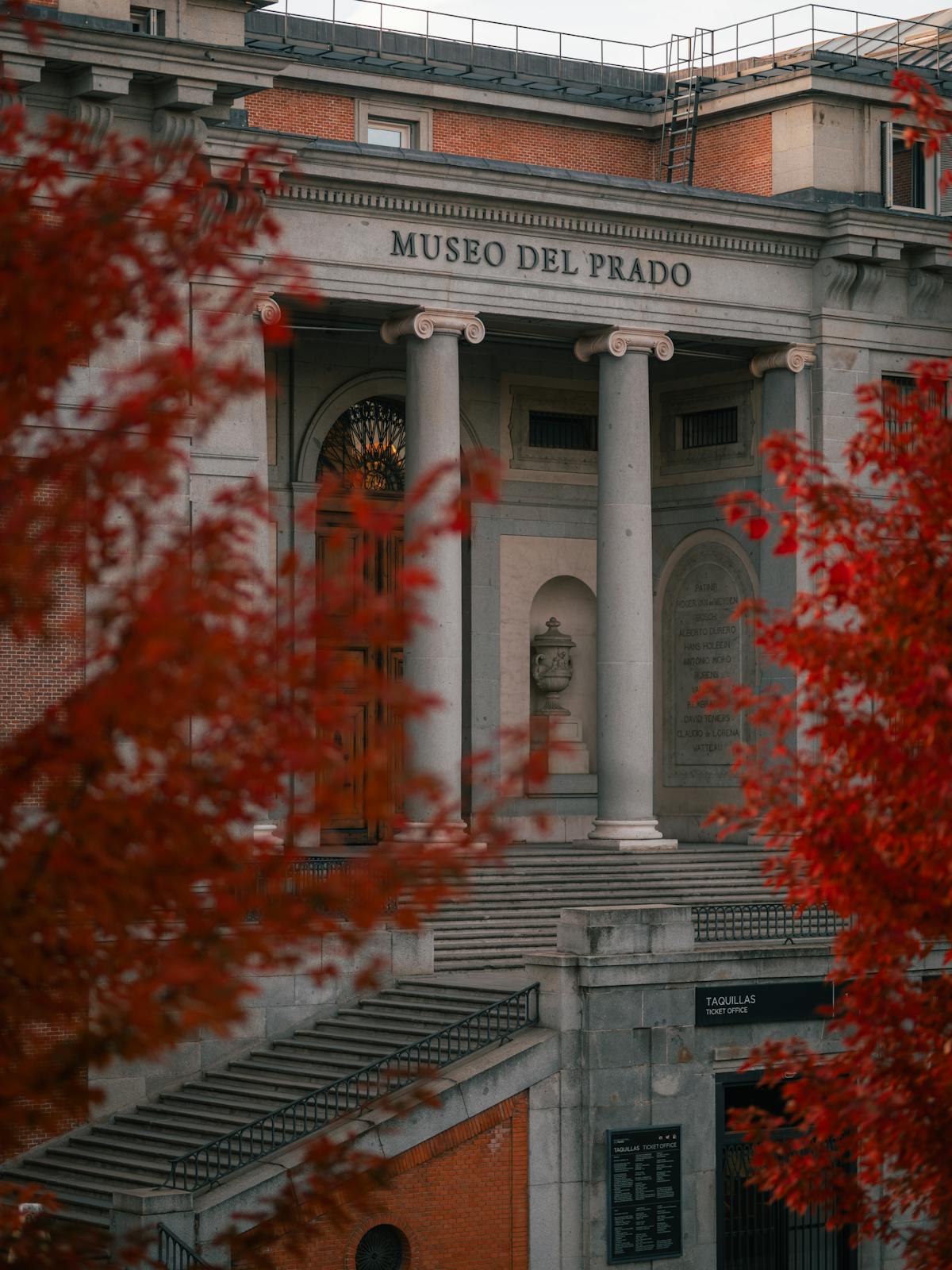
The Prado is open year-round, and unlike the Alhambra or Sagrada Familia, it rarely sells out completely. But timing still matters for crowd levels and your own comfort.
Best months: October, November, February, March. Madrid’s shoulder season brings manageable crowds and pleasant walking weather. The museum is busy but not packed. You can get morning entry tickets the same week, sometimes the same day.
Summer (June through August): Madrid gets hot — 35 to 40 degrees regularly in July and August. The Prado itself is air-conditioned, so it’s actually a great escape from the heat. But the walk from your hotel and the queue outside are brutal in midday sun. If you’re visiting in summer, book a morning slot (10:00 AM opening) or wait for the free evening hours when the temperature drops.
Winter (December through January): Fewest crowds of the year. You can walk into any room without competing for space in front of the paintings. The museum closes early on December 24, 25, 31, and January 1, so check the holiday schedule. Madrid winters are cold but sunny — pack a jacket for the walk to the museum, but you won’t need it inside.
Day of the week: Tuesdays through Thursdays are quietest. Saturdays are the worst. Sundays are busy in the morning but empty out after 3 PM as people drift toward free-entry time. Monday mornings are surprisingly calm because most travelers assume (incorrectly) that European museums close on Mondays. The Prado doesn’t.
Time of day: First hour after opening (10:00 to 11:00 AM) or last hour before the free-entry rush (4:00 to 5:00 PM). The dead zone between 2:00 and 4:00 PM is also quiet — most Spaniards are eating lunch, and most travelers haven’t figured out that Madrid operates on a late schedule.
What to Prioritize (Because You Can’t See Everything)
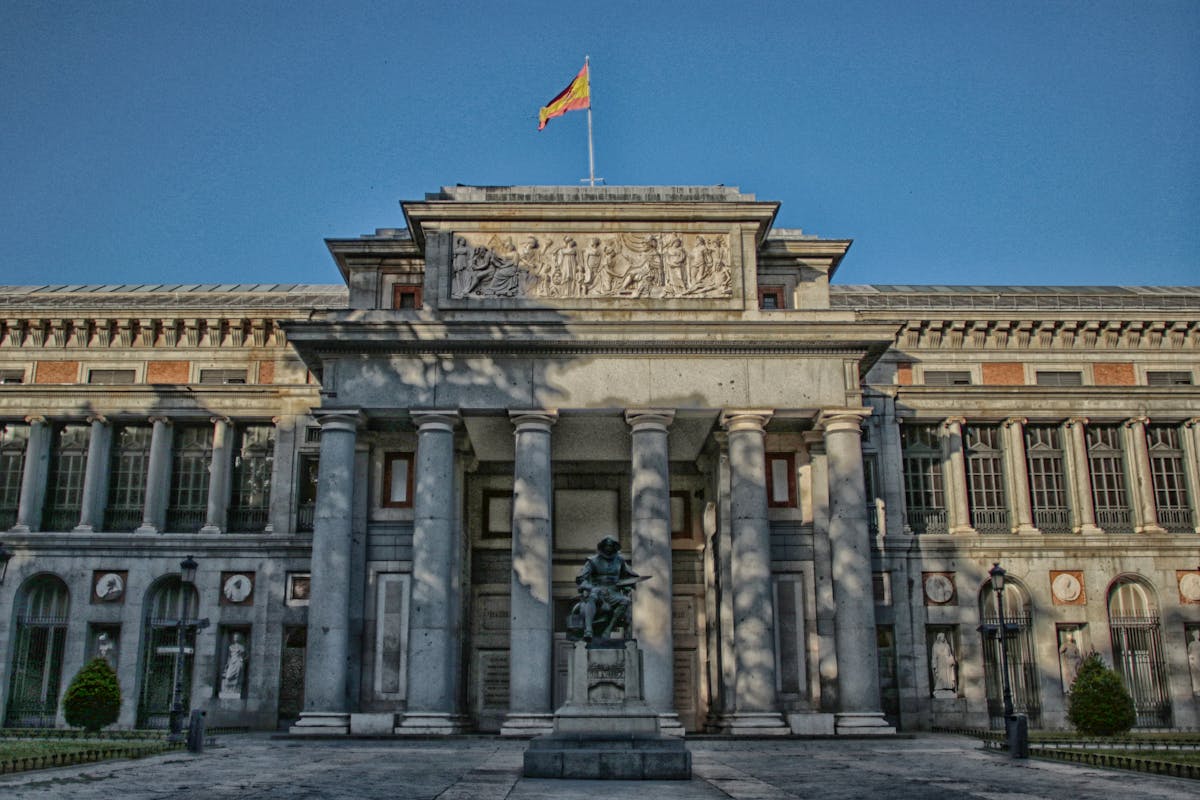
The Prado’s floor plan is confusing — three floors connected by staircases that don’t always go where you expect. Here’s a priority list that works whether you have 90 minutes or four hours.
Must-see (allow 60 to 90 minutes for all of these):
Las Meninas by Velazquez, Room 12. The painting that breaks the fourth wall 350 years before anyone coined the term. Stand in the center of the room and notice how Velazquez painted himself looking directly at you. Don’t rush this one.
The Garden of Earthly Delights by Bosch, Room 56A. Three panels of paradise, earthly pleasure, and hell. The left panel looks peaceful until you notice the weirdness creeping in. The right panel is pure nightmare fuel. Give yourself ten minutes at minimum — new details emerge the longer you look.
Goya’s Black Paintings, Rooms 67 and 68. Fourteen paintings from the walls of Goya’s house, created when he was old, deaf, and probably losing his grip. Saturn Devouring His Son is the famous one, but The Dog — a tiny animal head peeking above a vast empty space — is the one that haunts you afterward.
The Third of May 1808 by Goya, Room 64. The painting that invented modern war art. Napoleon’s soldiers executing Spanish civilians in a scene so raw it influenced Picasso’s Guernica 130 years later.
Worth seeing if you have time (add 30 to 60 minutes):
The Annunciation by Fra Angelico — an early Renaissance masterpiece that glows in a way that photographs can’t capture. The gold leaf does something in real life that screens don’t reproduce.
The Descent from the Cross by Rogier van der Weyden — the emotional weight of this painting is almost physical. The way the figures’ bodies echo each other across the composition is the kind of detail a guide will point out and a solo visitor might miss.
Velazquez’s court portraits (various rooms) — individually they’re formal, but seen together they tell the story of the Spanish Habsburg dynasty’s decline through increasingly inbred royal faces. Morbid, but fascinating.
Skip if short on time: The Italian Renaissance rooms (Rooms 2 through 8) have solid work but nothing that matches the Prado’s Spanish holdings. The 18th and 19th century galleries (ground floor) are skippable unless you have a specific interest in Spanish Romanticism.
What the Prado Is Actually Like Inside
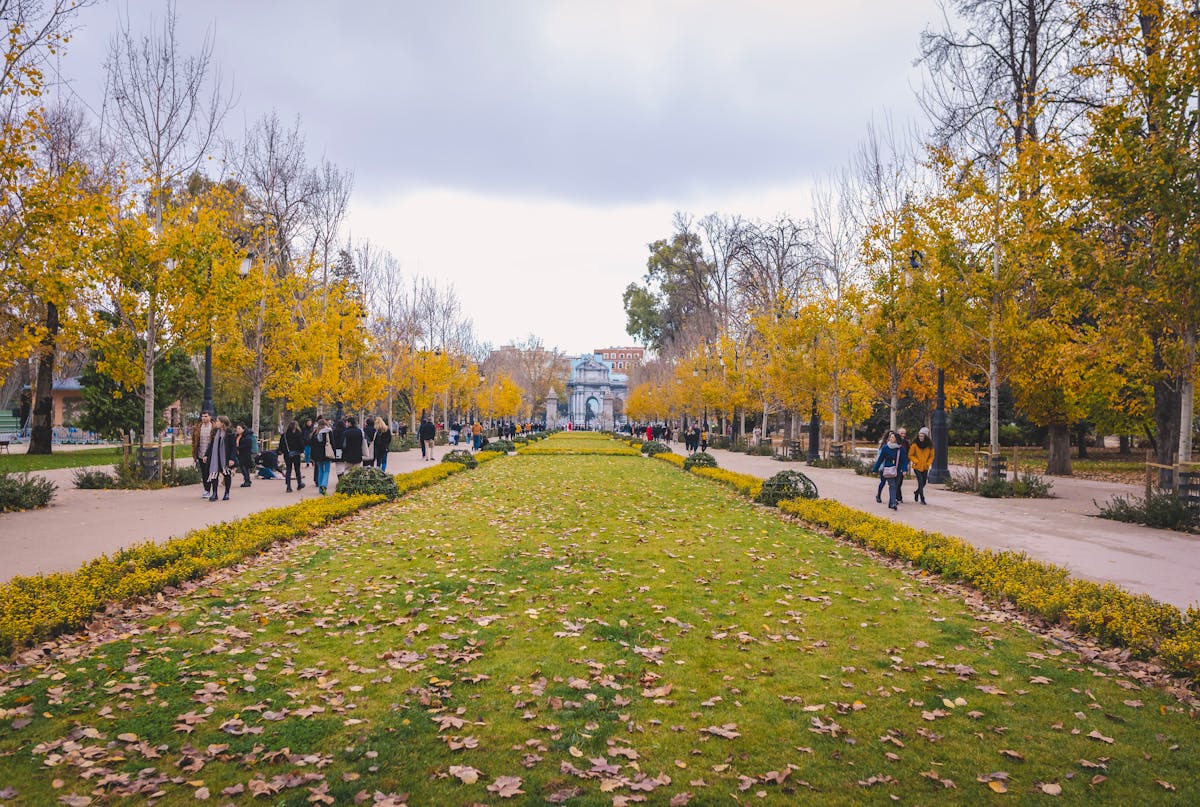
The building itself dates to 1819 and has that old European museum feel — high ceilings, creaky parquet floors, and natural light that changes throughout the day. The Jeronimos extension added in 2007 by Rafael Moneo connects to the original building through a brick-and-glass cloister that feels like walking from the 19th century into the 21st.
Photography is not allowed in the permanent collection. At all. Security guards enforce this actively. Put your phone away and actually look at the art — it’s a better experience for it, even if it feels strange at first.
There’s a cafeteria on the ground floor that serves decent coffee and overpriced sandwiches. If you’re spending more than two hours, step outside instead — the Retiro Park is literally next door, and the streets around the museum are full of tapas bars that charge half what the museum cafe does. The neighborhood of Barrio de las Letras, just west of the Prado, has some of the best old-school bars in Madrid.
Coat check is free and mandatory for bags larger than a standard backpack. Lockers are available. The museum gets cold inside even when Madrid is boiling outside, so bring a light layer regardless of season.
Getting There
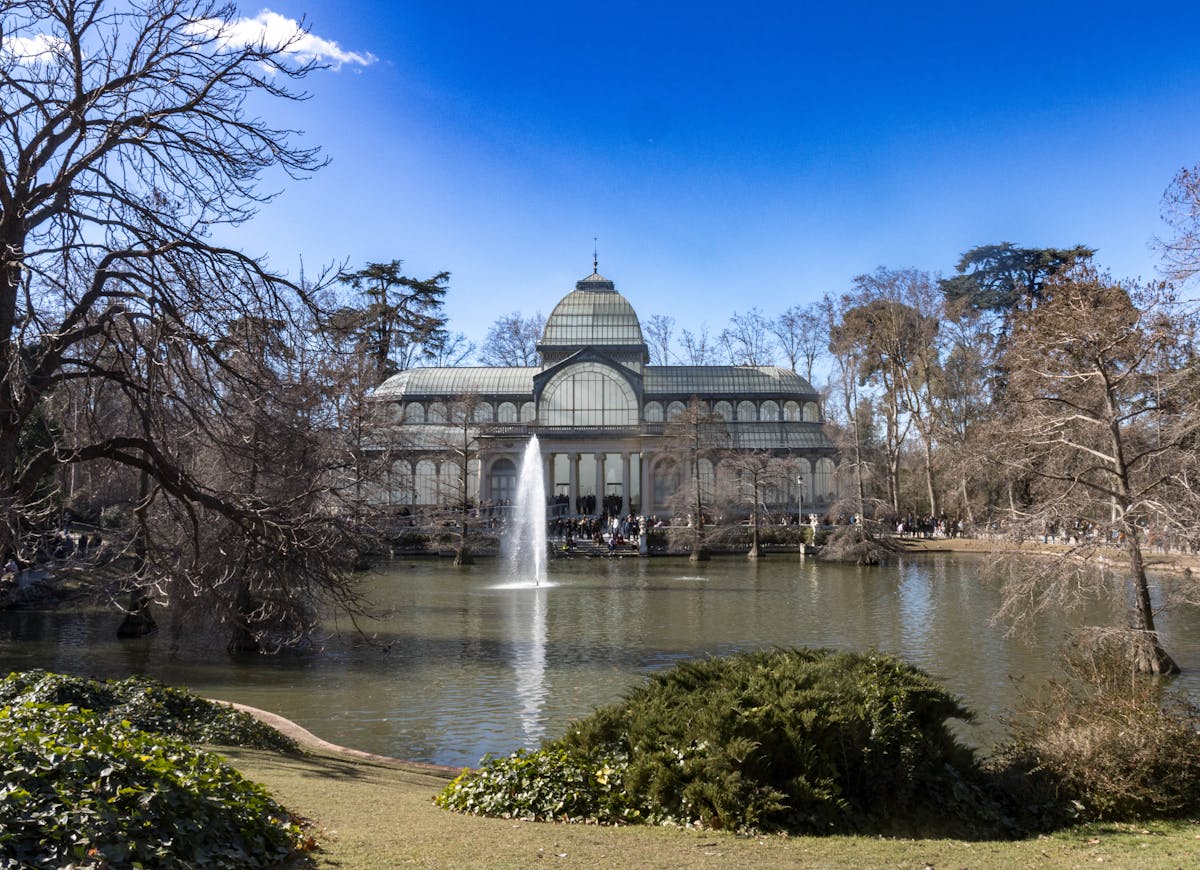
The Prado sits on the Paseo del Prado, Madrid’s grand boulevard that runs through the city center. Metro station Banco de Espana (Line 2) puts you a two-minute walk from the main entrance. Atocha station (Lines 1 and 10, plus regional rail) is a five-minute walk and more convenient if you’re coming from the airport or arriving by train.
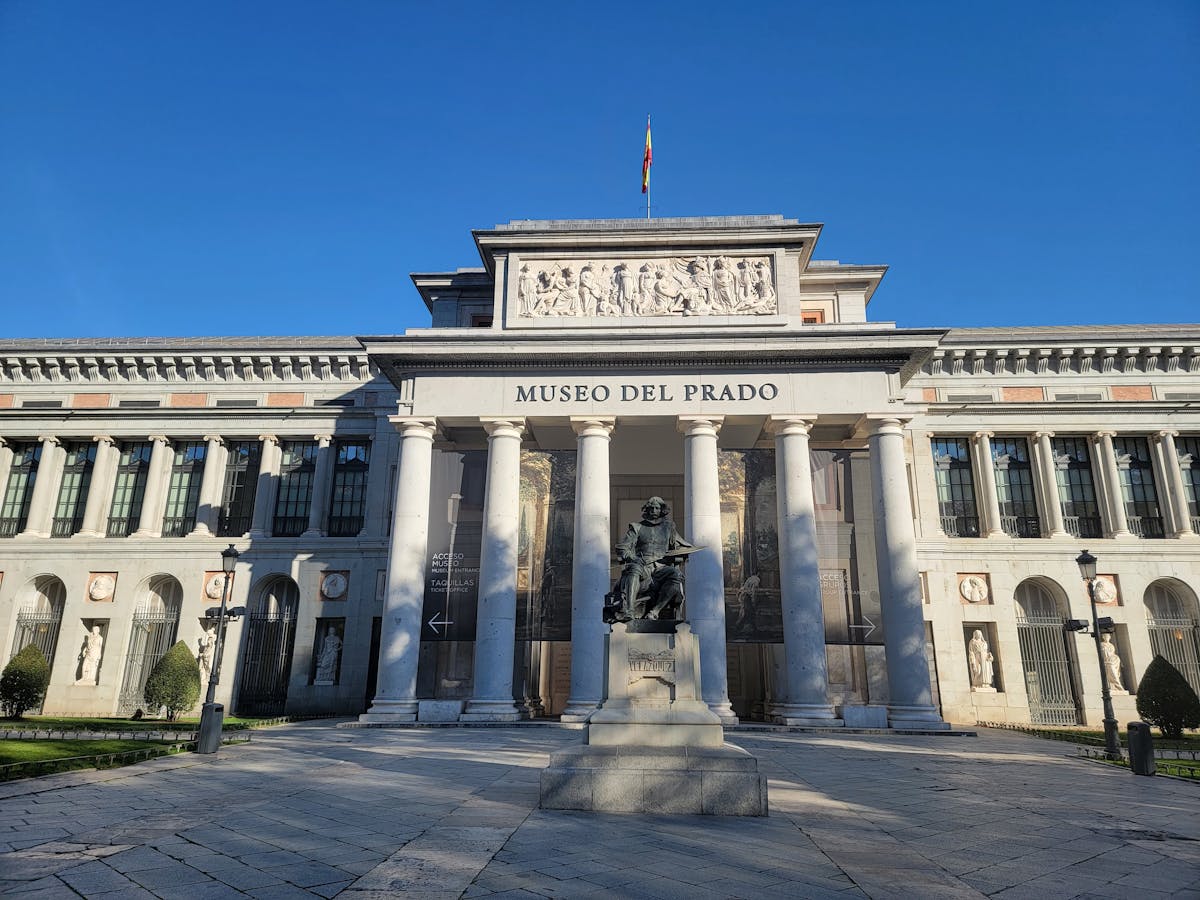
The museum has three entrances: Puerta de Velazquez (main, usually busiest), Puerta de Goya (north, less crowded), and Puerta de los Jeronimos (south, modern extension). If you have a pre-booked ticket or tour, the Goya entrance typically has the shortest line. For free-entry hours, every entrance gets the same crush.