Most people come to Barcelona for Gaudi. Fair enough — the man left his fingerprints all over the city. But there was another architect working at the same time, building something just as extraordinary a few streets away, and almost nobody talks about him. Lluis Domenech i Montaner designed the Palau de la Musica Catalana in 1905, and it remains the only concert hall in Europe with UNESCO World Heritage status. Not one of several. The only one.
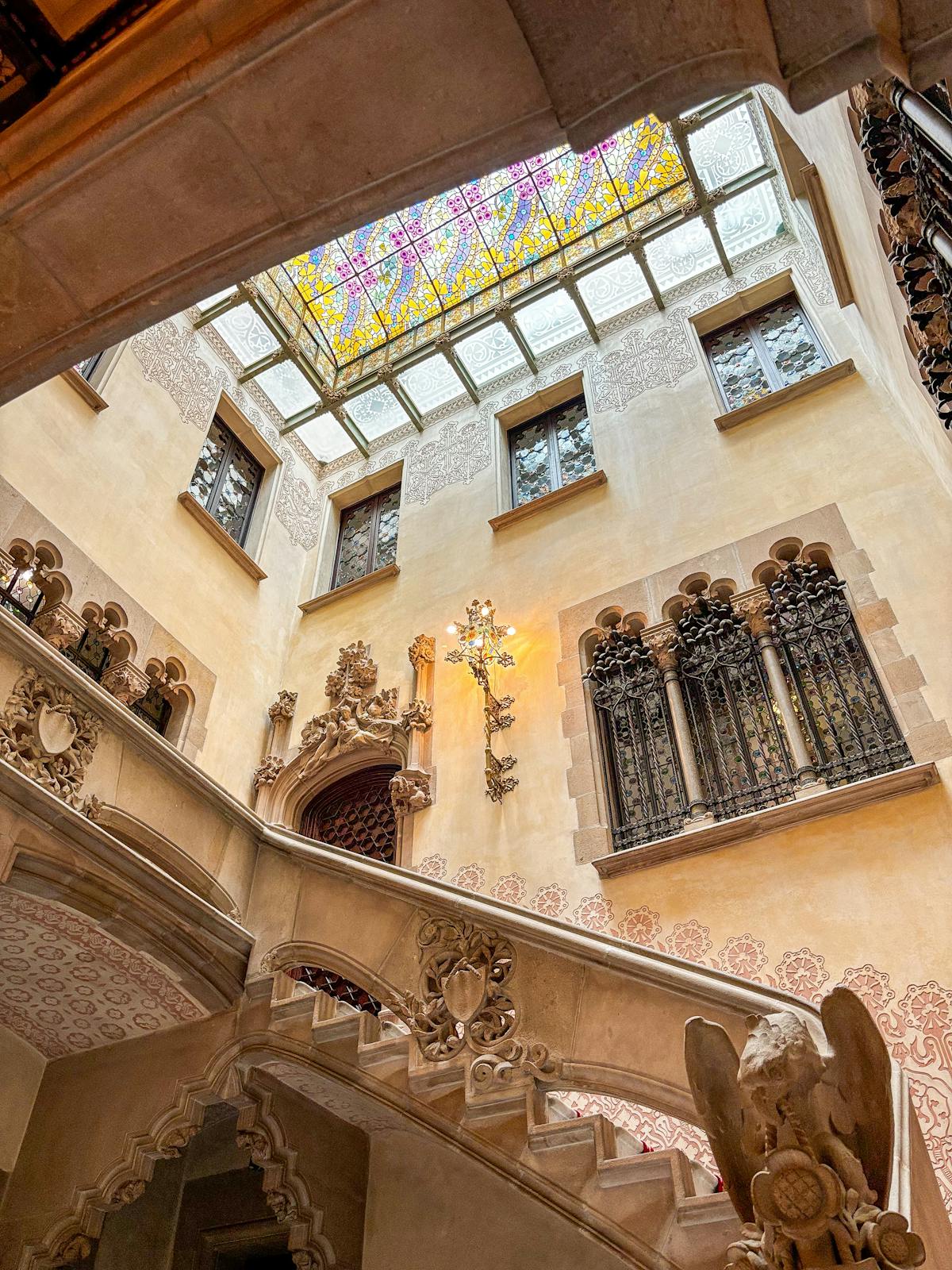
The building is tucked into a tight block in the Sant Pere neighbourhood, about ten minutes on foot from the cathedral. From outside it looks impressive but contained. Step through the doors and something shifts. The foyer has mosaic columns. The staircases curve upward behind floral balusters. And then you walk into the concert hall itself and the scale of what Domenech pulled off becomes clear.
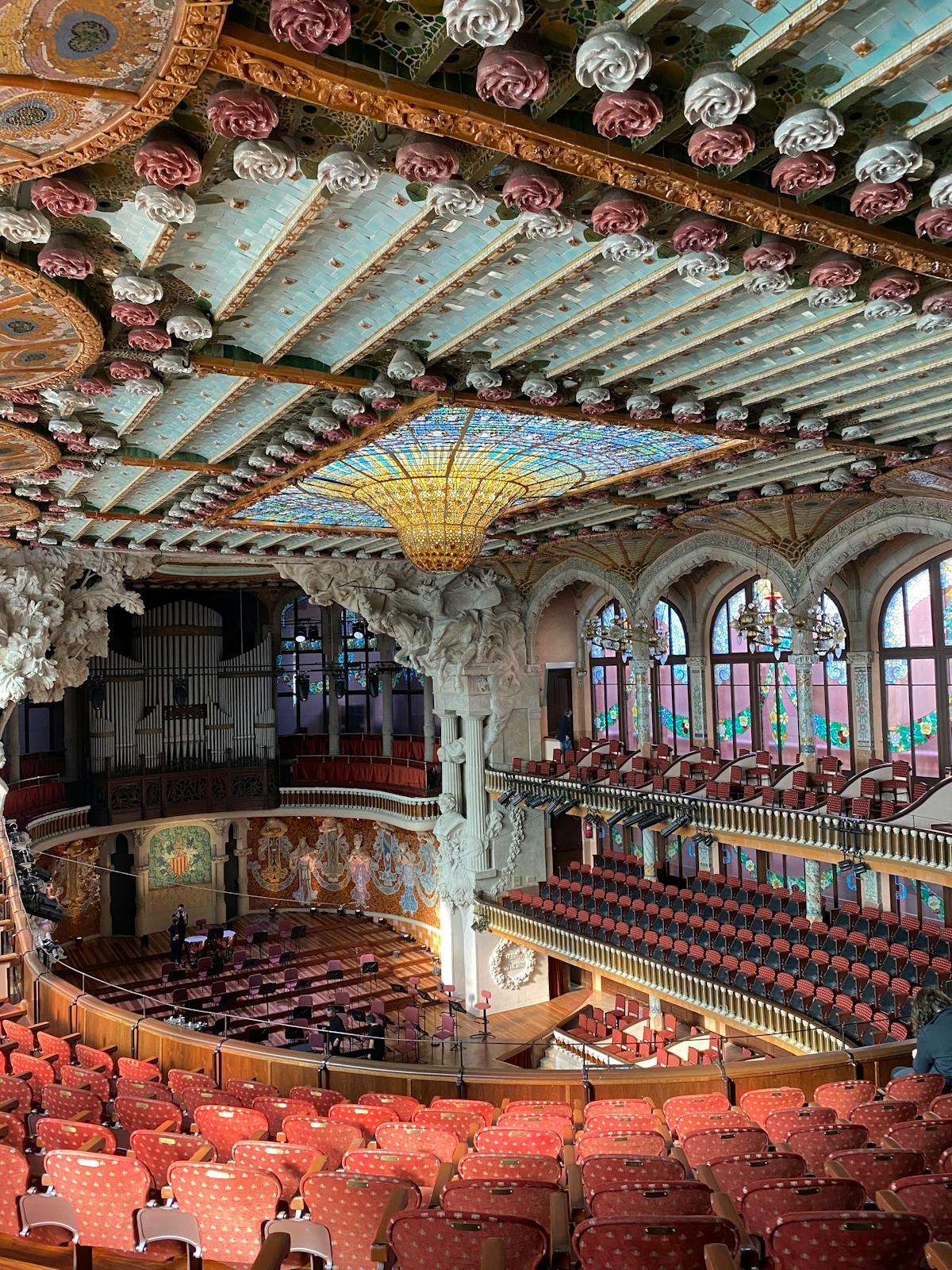
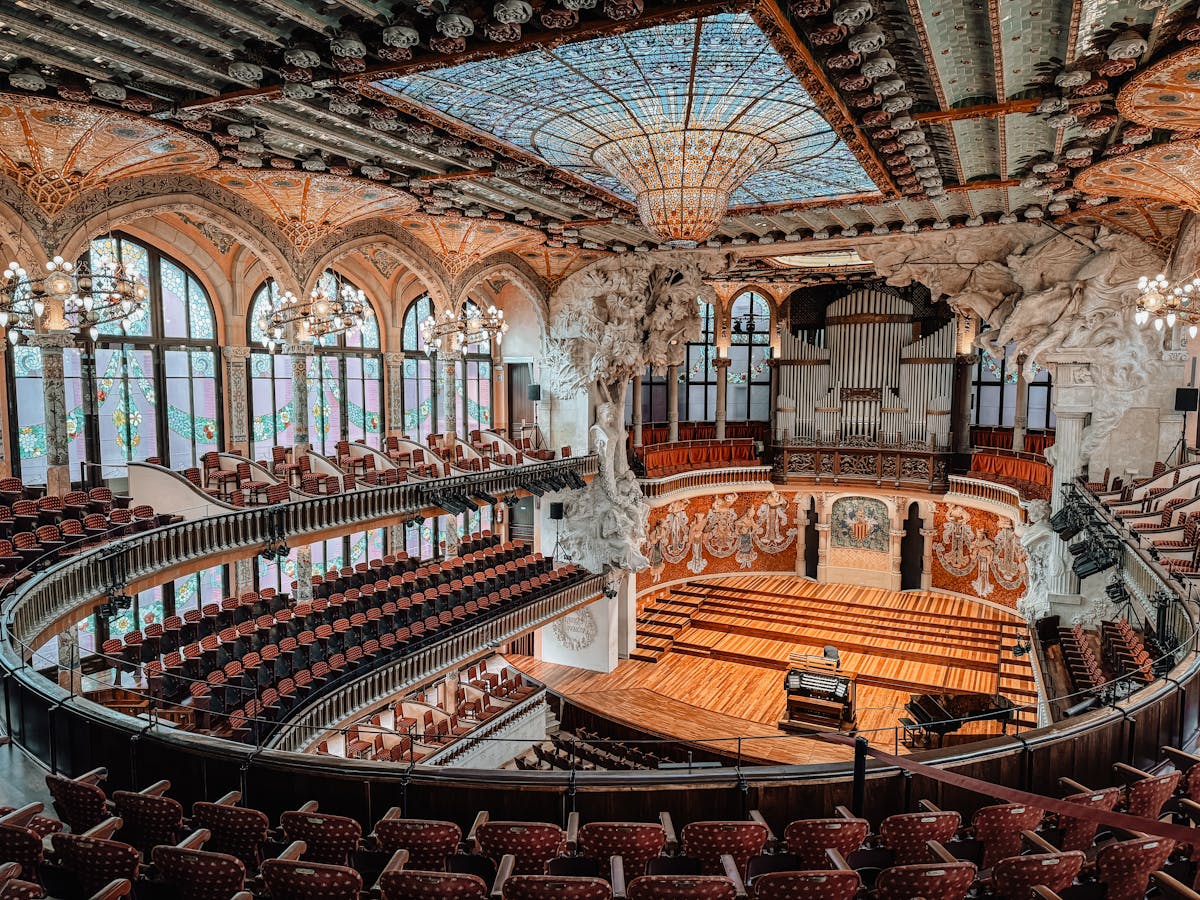
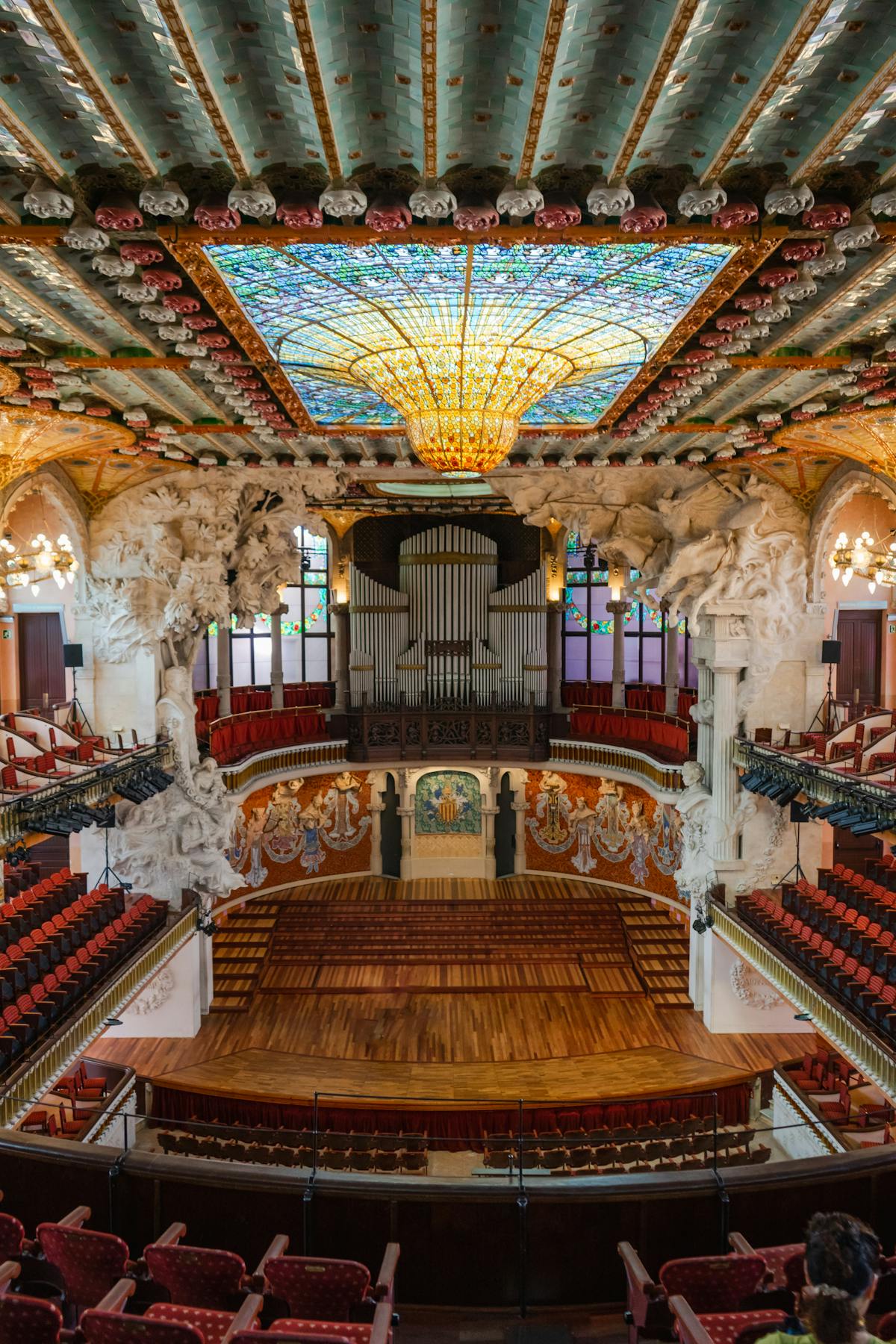
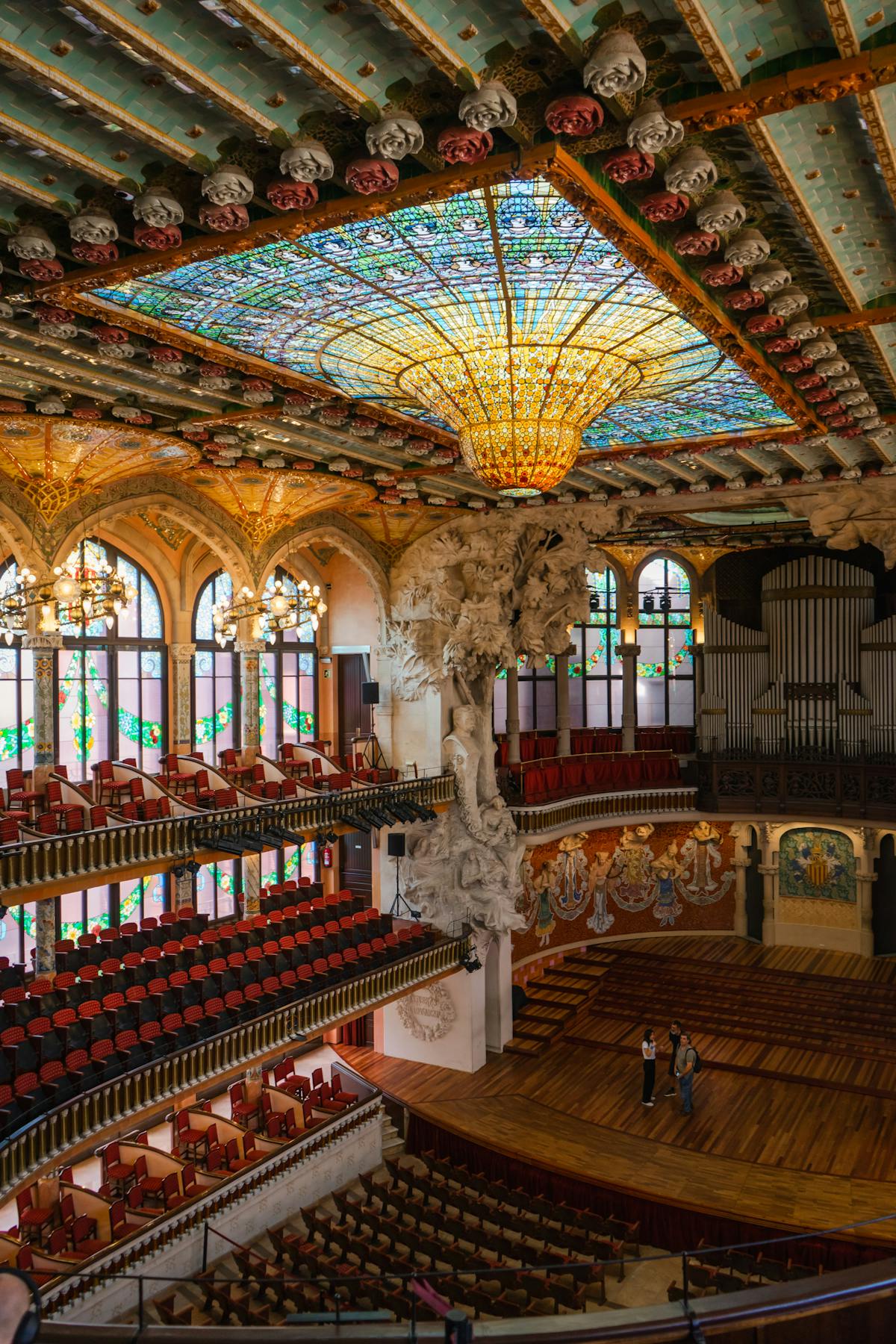
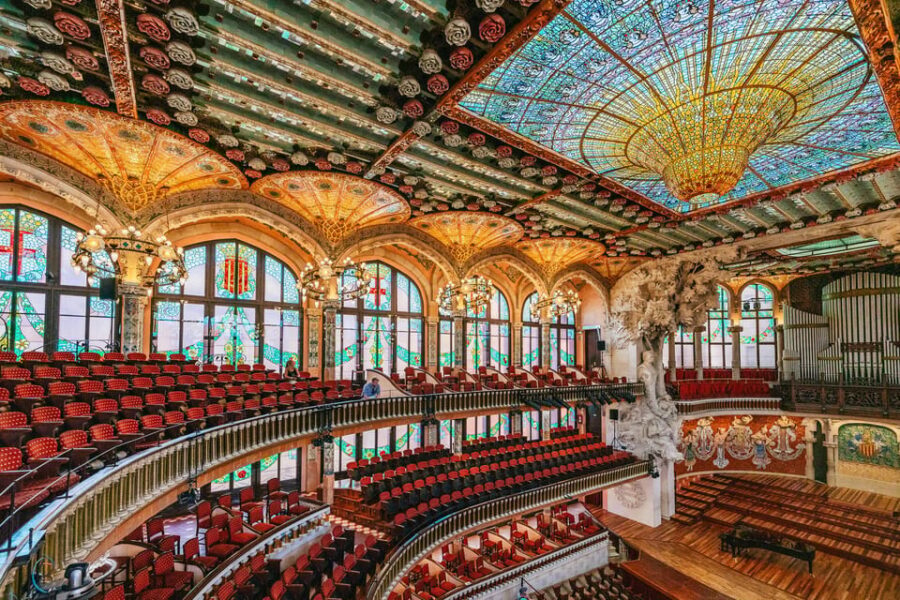
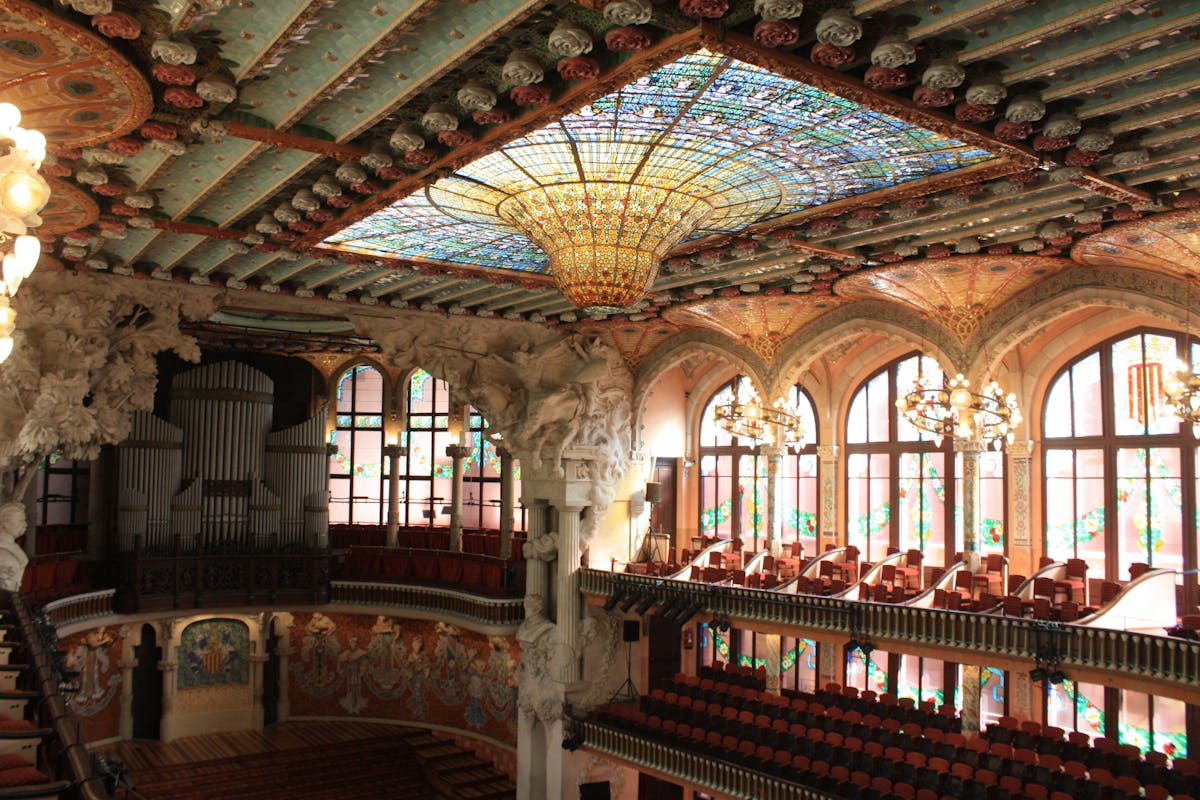
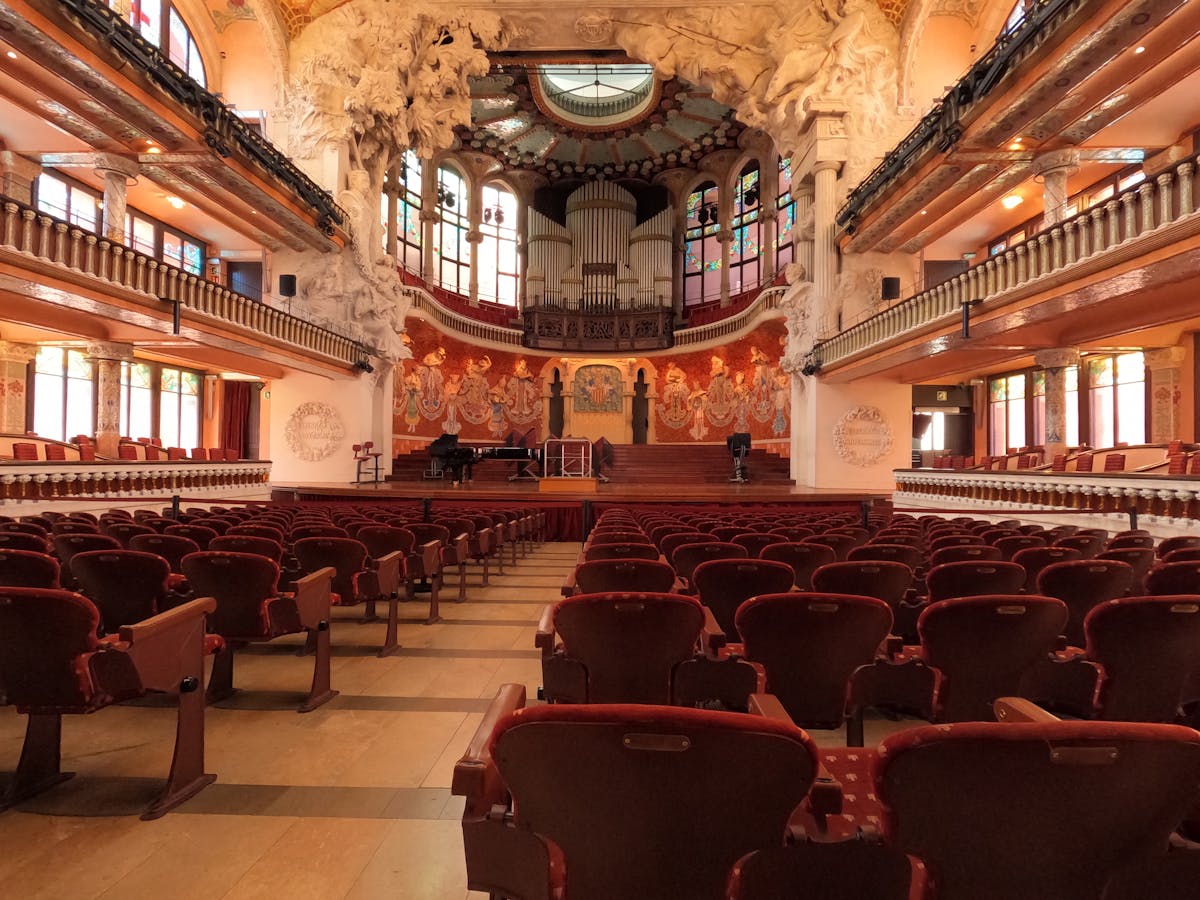
The concert hall seats about 2,200 people. Its walls are almost entirely glass — stained glass panels on both sides, that massive inverted dome overhead — and during daytime performances natural light fills the room. No other major concert hall in the world works this way. Domenech engineered the steel frame specifically to eliminate the need for load-bearing walls, then filled every freed surface with glass, ceramic, mosaic, and sculpture. The effect is that you are sitting inside a giant jewellery box that happens to have extraordinary acoustics.
You can visit the Palau two ways: a guided daytime tour, or by attending a performance. Both are worth doing, and they give you completely different experiences. Here is what you need to know about each option, the best tickets available, and how to plan your visit.
If You’re in a Hurry: My Top 3 Picks
- Best for exploring the building: Palau de la Musica Entry Ticket — $21 per person. Self-guided access with an audioguide. The most affordable way to see the concert hall, the skylight, and the facade details up close. Book this ticket
- Best guided experience: Palau de la Musica Guided Tour — $28 per person. A 50-minute tour with an expert guide who covers the architecture, the history of the Orfeo Catala choir, and the details you would walk right past on your own. Book this tour
- Best cultural experience: Guitar Trio and Flamenco Dance at Palau de la Musica — $65 per person. A 90-minute live performance of Spanish guitar and flamenco inside the concert hall. You see the building the way it was meant to be experienced — full of music and atmosphere. Book this concert
- If You’re in a Hurry: My Top 3 Picks
- Guided Tour vs Concert: Two Different Palaus
- 3 Best Ways to Visit Palau de la Musica
- 1. Palau de la Musica Entry Ticket —
- 2. Palau de la Musica Guided Tour —
- 3. Guitar Trio and Flamenco Dance at Palau de la Musica —
- When to Visit
- Tips Before You Go
- What You’ll See Inside
- More Barcelona Guides
Guided Tour vs Concert: Two Different Palaus
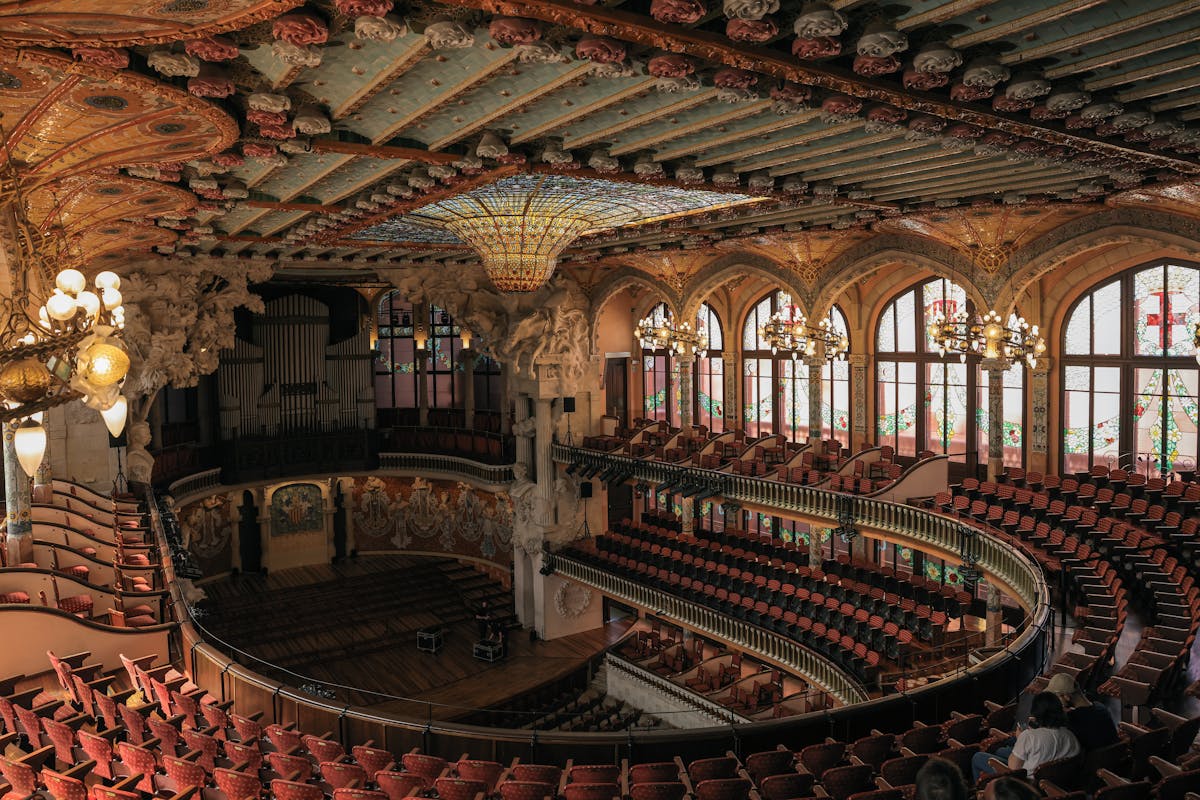
The daytime guided tour runs every half hour and lasts about 50 minutes. A guide walks you through the building from the ground-floor foyer up through the Lluis Millet hall, the rehearsal rooms, and into the main concert hall. The lights are on, the room is empty, and you can look at everything without craning your neck around the person in front of you. This is when you notice the small details: the ceramic roses on the columns, the bust of Beethoven on the proscenium arch, the way the ironwork on the balconies mimics floral stems. The guide explains how Domenech fought with the city council over the design, how the building was paid for entirely by public subscription, and how it nearly got demolished in the 1960s before a restoration campaign saved it.
The concert experience is something else entirely. The hall was built for live music, and it shows. The acoustics are precise without being cold — there is a warmth to the sound that comes from all that glass and ceramic rather than the usual wood panelling. When a guitar is being played on that stage, you hear the resonance differently than in a conventional hall. And the stained glass skylight looks completely different lit from above during an evening performance. The colours go deeper. The whole room feels more intimate.
If you can only do one, I would say the guided tour gives you a better understanding of the building, but a concert gives you a better feeling of it. If your schedule allows both, do the tour first and the concert on another evening. You will appreciate the music more when you already know what every surface around you means.
3 Best Ways to Visit Palau de la Musica
1. Palau de la Musica Entry Ticket — $21
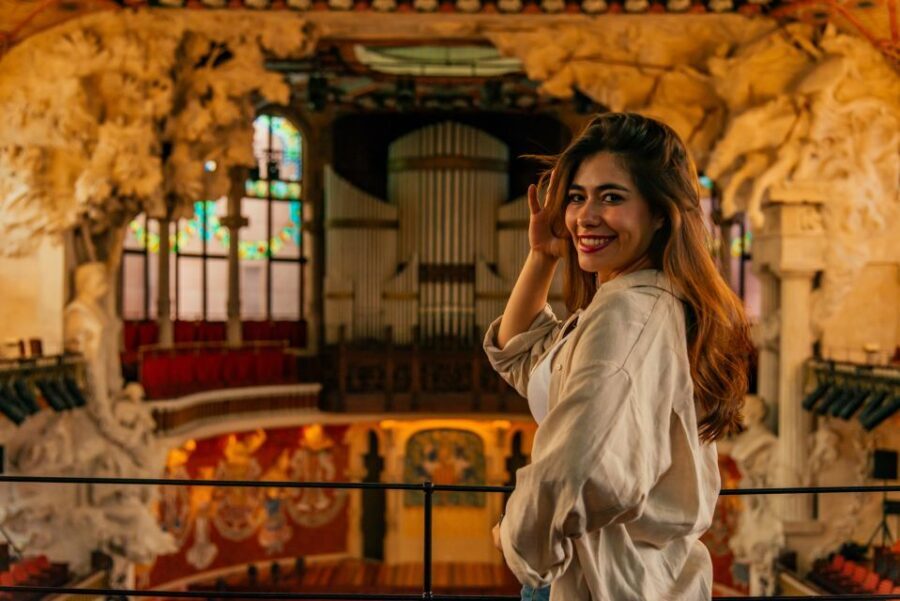
Duration: Full day (visit at your pace) | Price: $21 per person | Type: Self-guided entry with audioguide
This is the simplest way in. You get timed entry and an audioguide that covers the main concert hall, the foyer, the Lluis Millet room, and the exterior facade. The audioguide is available in multiple languages and runs about 45 minutes if you follow it straight through, though you can stop and start as you like.
At $21 it is one of the better deals in Barcelona sightseeing. For context, a coffee and pastry at one of the cafes along Passeig de Gracia costs nearly half that. The self-guided format means you control your time — linger at the skylight as long as you want, skip the rooms that do not grab you, and photograph the details at your own pace.
The tradeoff is that you miss the deeper architectural context a live guide provides. The audioguide covers the basics well enough, but it does not get into the rivalry between Domenech and Gaudi, the political history of Catalan nationalism that shaped the building, or the engineering tricks that make the glass walls possible. For a quick visit on a tight schedule, though, this is the right pick.
2. Palau de la Musica Guided Tour — $28
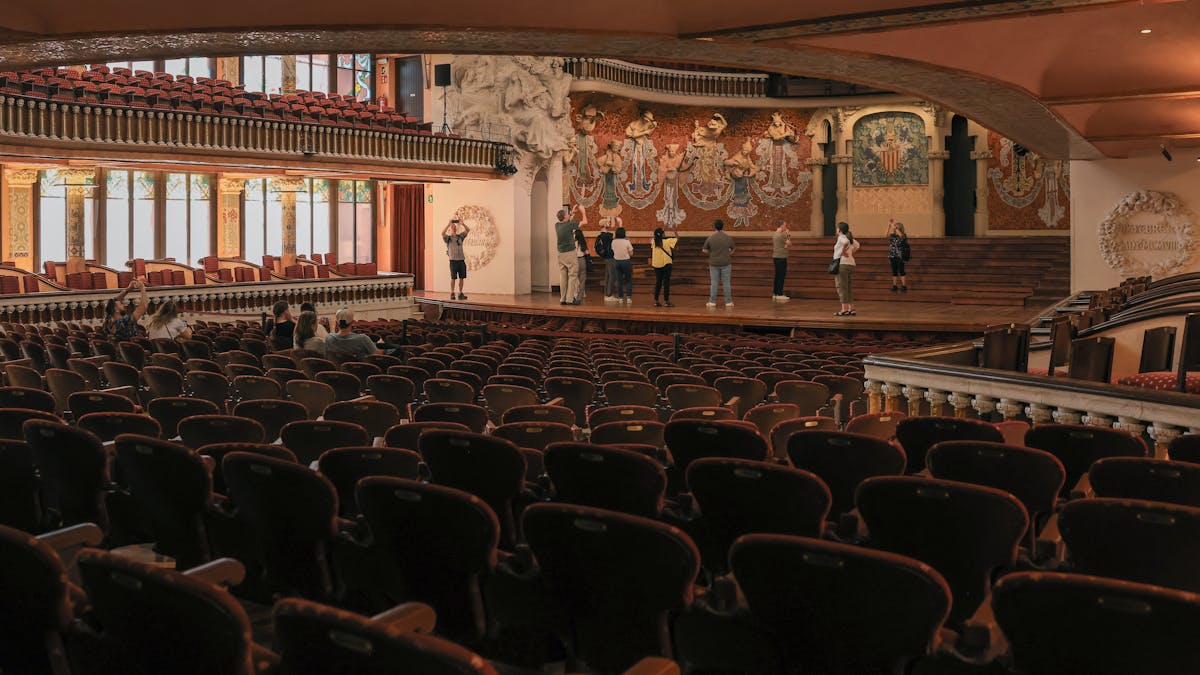
Duration: 50 minutes | Price: $28 per person | Type: Guided tour
This is my recommended option for most visitors. The guided tour covers everything the self-guided ticket does, plus areas you cannot access on your own: the Lluis Millet rehearsal room, the original library, and parts of the recently expanded modern wing that connects to the old building.
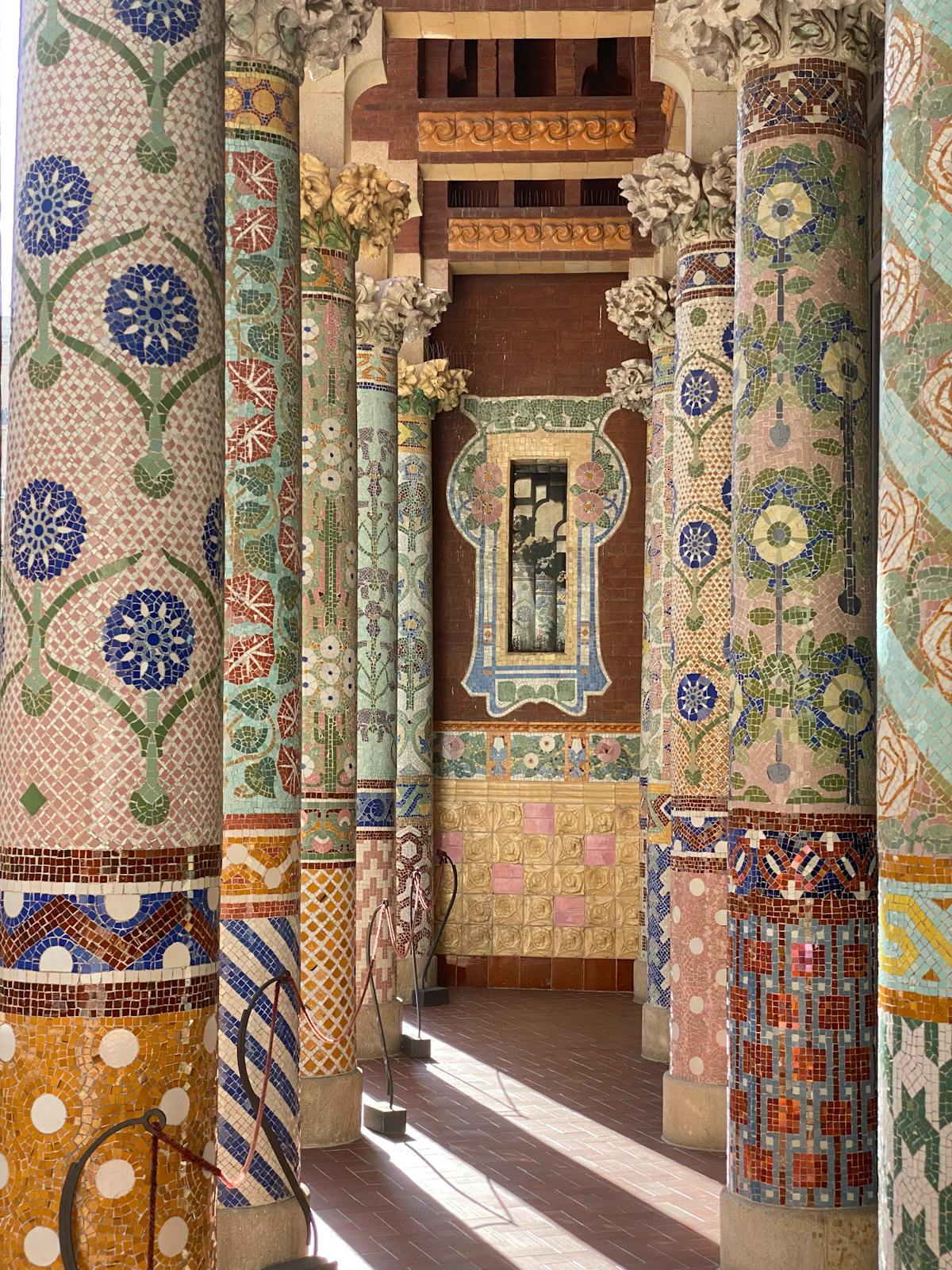
The guides are specialists in Catalan Modernisme, and the best ones are genuinely passionate about Domenech’s work. They explain how the architect used industrial materials — steel frames, prefabricated ceramic tiles, mass-produced glass — to create something that looks entirely handcrafted. They point out the symbolism woven into every surface: the stone sculptures on the facade representing folk music and classical music, the mosaic columns in the foyer that reference different musical traditions, the stained glass patterns that map onto sound waves.
At $28, it is only $7 more than the self-guided ticket, and the extra context and access make it worth every cent. The tour runs about 50 minutes and departs every half hour during the day. Morning tours (before 11am) get the best natural light in the concert hall. Book a couple of days ahead in summer — these fill up.
3. Guitar Trio and Flamenco Dance at Palau de la Musica — $65
Duration: 1.5 hours | Price: $65 per person | Type: Live concert performance
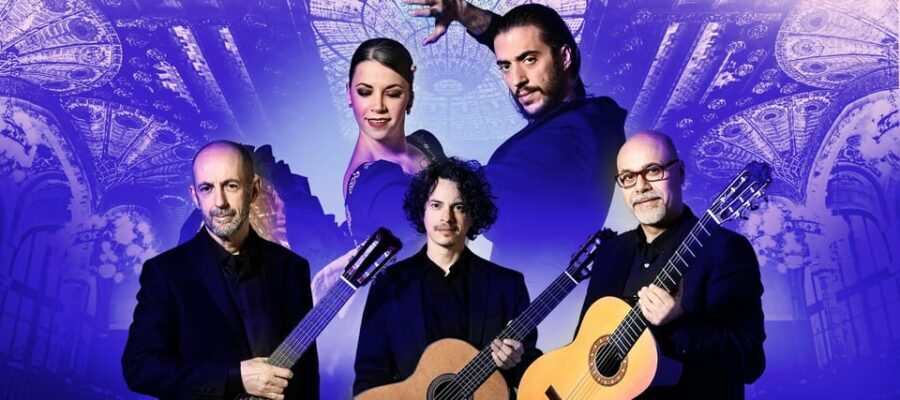
This is the way Domenech intended the building to be experienced. Three Spanish guitarists and a flamenco dancer perform for 90 minutes in the main concert hall, and the combination of the music, the acoustics, and the surroundings is something I still think about.
The programme mixes classical Spanish guitar pieces with flamenco. The guitarists are technically strong — you can hear the individual notes bounce off the glass walls and settle into the room. And the flamenco dancer performs on the stage beneath those carved stone muses, under the stained glass skylight, which turns the whole thing into something that feels like it belongs in a film. The evening performances have the edge because the skylight is lit from above and the interior colours shift from their daytime palette into something warmer and more dramatic.
At $65, it is not cheap. But compare it to a flamenco show in the Barri Gotic (which will run you $40-50 in a converted basement) and the Palau version is a different league. Better musicians, better venue, better acoustics, better everything. The hall itself becomes part of the performance. If you are going to spend money on one evening out in Barcelona, this is a strong contender.
Seats sell out during peak tourist months, especially the weekend evening slots. Book at least a week ahead in summer. Seating is assigned — the front stalls give you the closest view of the performers, but the first balcony gives you a better view of the skylight and the full stage wall.
When to Visit
The Palau runs guided tours year-round, typically from 10am to 3pm, with tours departing every 30 minutes. The concert schedule varies — check the official programme on their website for performance dates during your visit.
For guided tours, mornings are best. The east-facing stained glass panels catch the light between 10am and noon, and the concert hall genuinely looks different when it is flooded with natural colour versus artificial lighting. The first and second tours of the day (10am and 10:30am) tend to be quieter too, before the midday rush of tour groups arrives.
Seasonally, spring and autumn are the sweet spot. The concert programme is strongest from September through June (the summer schedule is lighter), and visitor numbers drop enough in October and November that you can often book a tour the same day. July and August are the busiest months — book tours two to three days ahead minimum.
One scheduling trick: if you want both the tour and a concert, book the guided tour for a morning and the concert for a different evening. Doing both on the same day is possible but rushes the experience, and you will appreciate the concert more after you have already taken in the architectural details at leisure.
Tips Before You Go
Getting there: The Palau is at Carrer Palau de la Musica 4-6, in the Sant Pere neighbourhood. The closest metro stop is Urquinaona (L1 and L4), about a three-minute walk. From the Gothic Quarter it is five minutes on foot heading northeast.
What to wear: There is no dress code for daytime tours. For evening concerts, Barcelona is relaxed about this — smart casual is fine. Nobody wears a suit or gown unless it is a special gala performance.
Photography: Allowed during guided tours (no flash). During concerts, phones must be put away. Take your photos during the tour and then enjoy the concert without a screen in front of your face.
Accessibility: The main concert hall and foyer are accessible by lift. The older upper galleries involve stairs. If you have mobility concerns, contact the venue directly before booking — they are accommodating and can arrange appropriate seating for concerts.
Combine it with: The Palau sits between the Gothic Quarter and the Born neighbourhood. After your visit, walk five minutes south to the Barcelona Cathedral, or head east into Born for lunch along Passeig del Born. The Picasso Museum is a seven-minute walk away. If you are doing a Gaudi-focused day, Casa Batllo and Casa Mila are about 15 minutes west on foot.
Budget tip: The $21 self-guided ticket is one of the best-value cultural entries in Barcelona. If budget is tight, pair it with a walk through the Gothic Quarter (free) and the Picasso Museum ($12-14) for a full day of culture under $40.
What You’ll See Inside
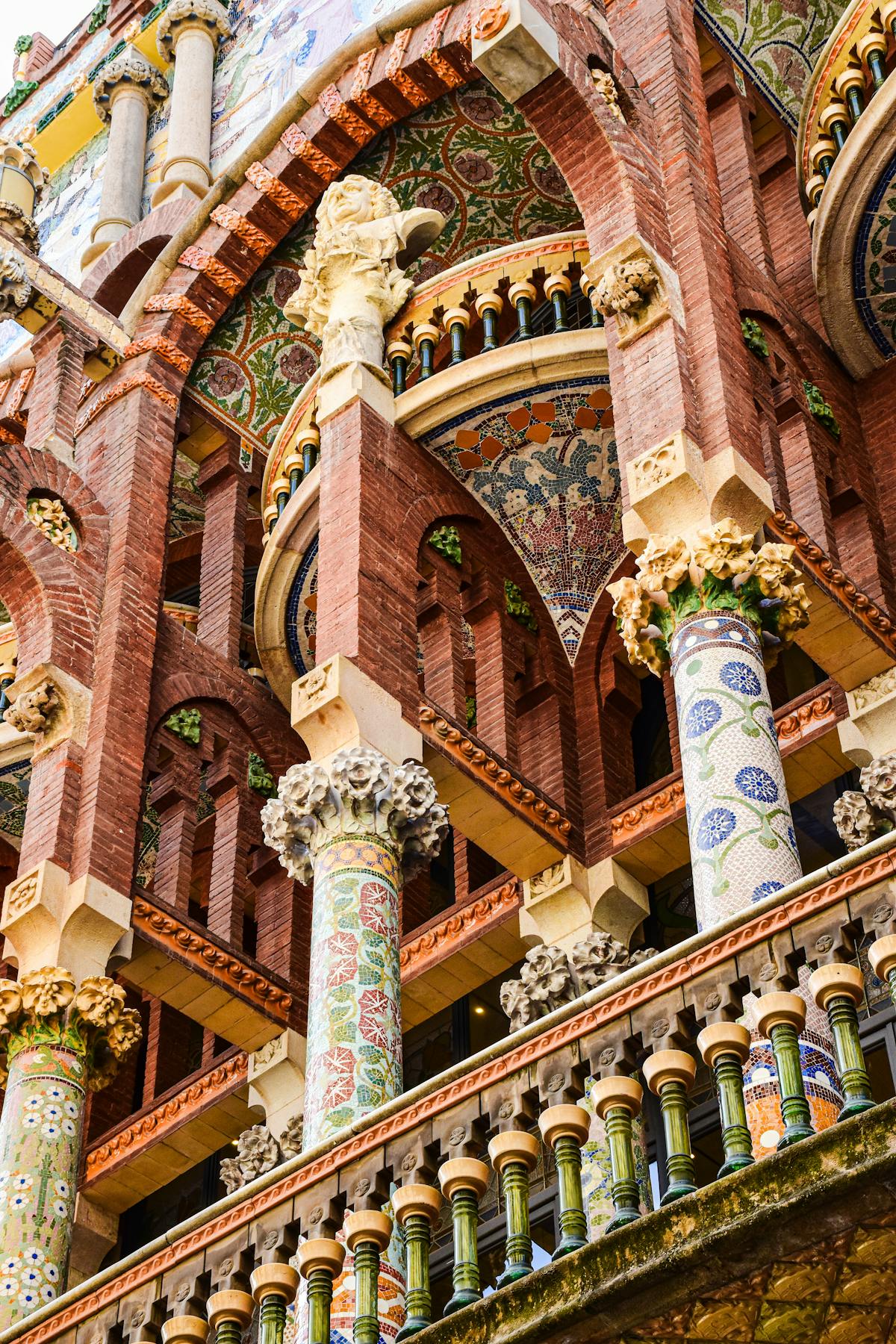
The facade: Start outside before you go in. The corner pillar on Carrer Sant Pere Mes Alt features a sculptural group by Miquel Blay showing Sant Jordi (Saint George, patron saint of Catalonia) protecting a crowd of singers. The mosaic columns flanking the entrance use trencadis — broken ceramic tiles arranged into floral patterns. Look up at the first-floor balcony: the busts above represent Palestrina, Bach, Beethoven, and Wagner.
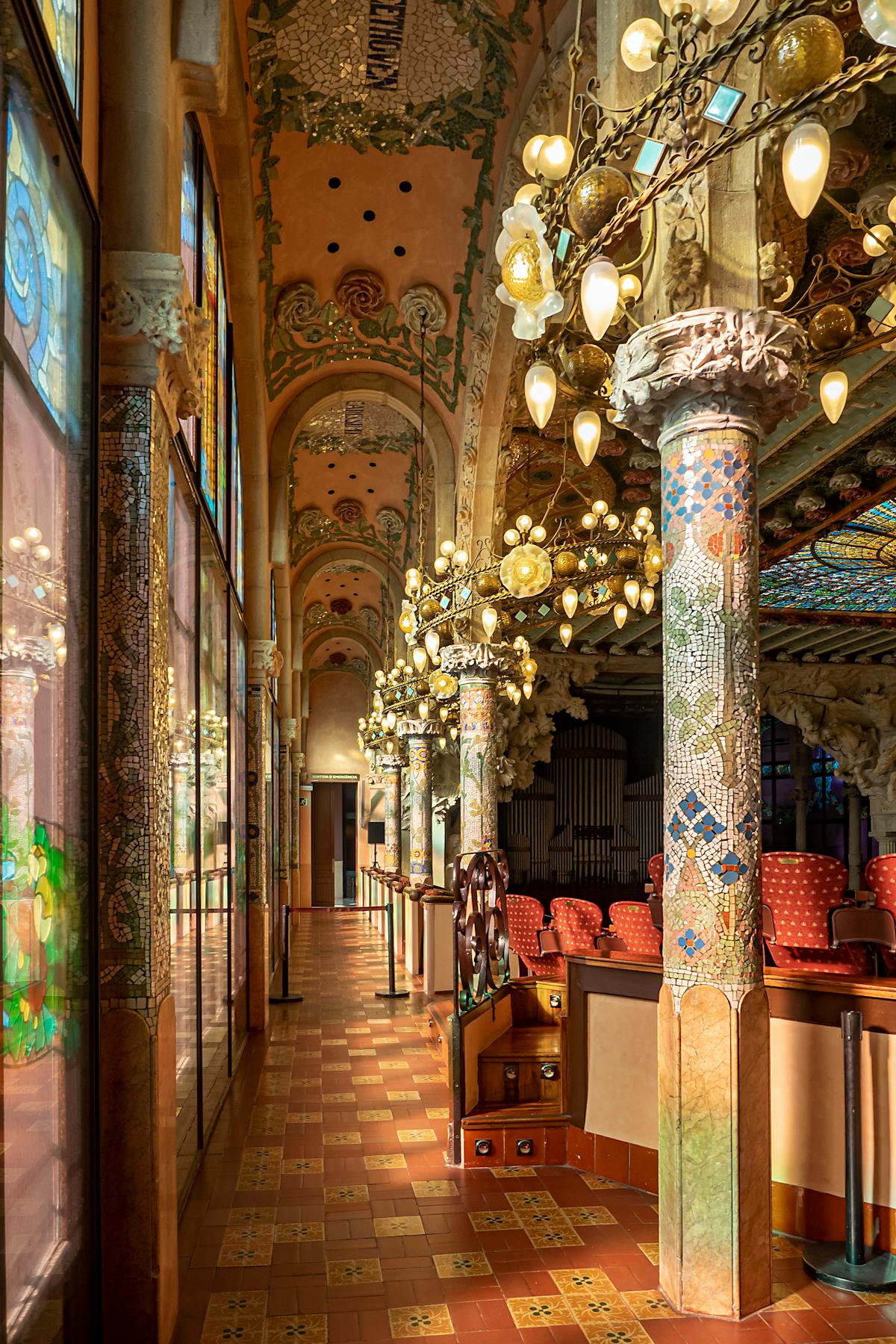
The foyer and staircase: The ground floor opens into a foyer with those famous mosaic columns. The staircase curves up through ironwork balusters shaped like flower stems. The ceramic ceiling panels are worth a look — they are printed with designs that reference different musical traditions from around the Mediterranean.
The Lluis Millet room: A rehearsal and reception space on the second floor with a wall of stained glass arches looking out onto the street. It is quieter than the concert hall and gives you a moment to appreciate the Modernista details at close range — the wooden ceiling, the ceramic trim, the ironwork light fixtures.
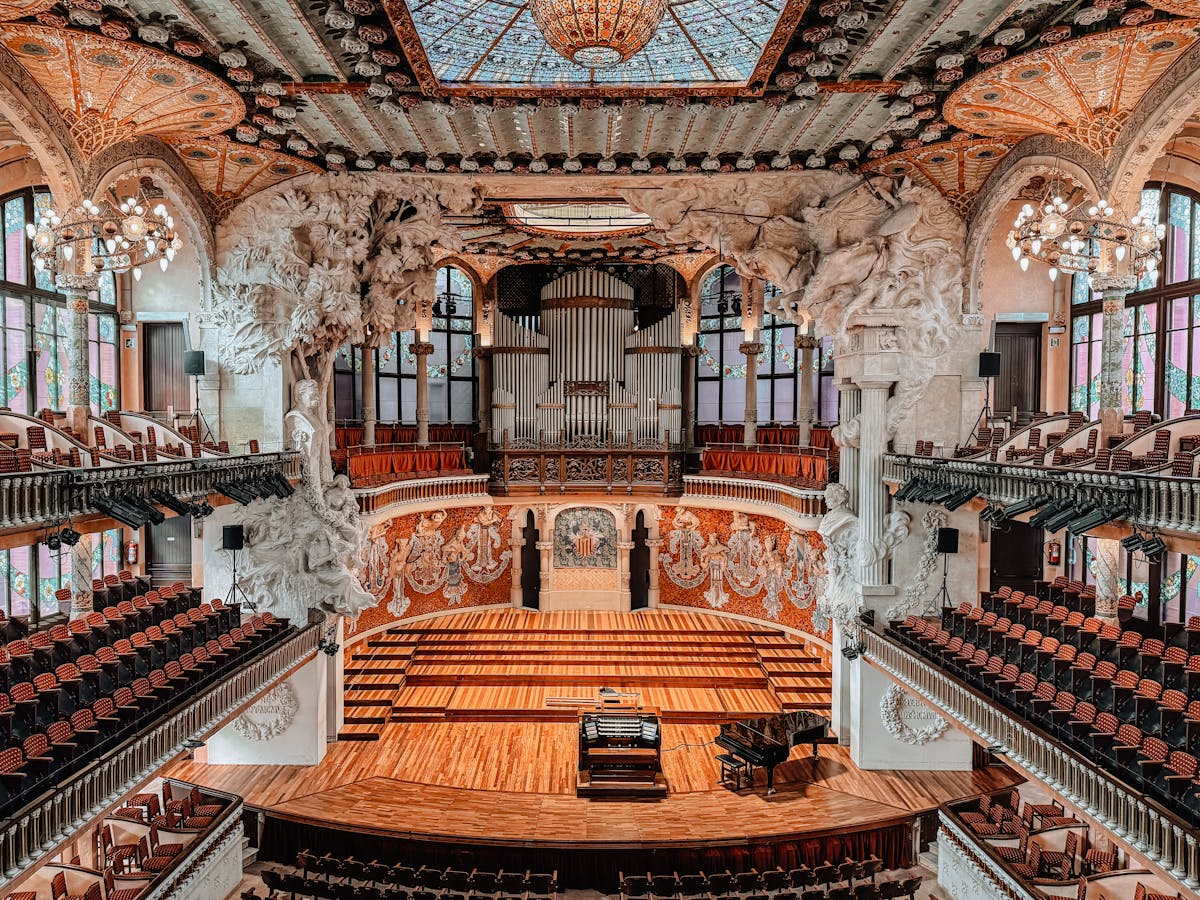
The concert hall: This is why you came. The inverted stained glass dome dominates the ceiling — a sunburst of blues, golds, and warm oranges that weighs over a tonne and is held in place by a steel frame hidden behind the decorative surround. The stage back wall features eighteen carved muse figures that appear to be emerging from the plaster, instruments in hand. On the left side, a bust of Beethoven sits beneath a sculptural Valkyrie horse. On the right, a bust of the Catalan composer Anselm Clave is framed by a tree bearing ceramic fruit. The organ pipes rise from behind the muses, and the side walls are entirely stained glass, divided by slender columns.
The modern extension: Oscar Tusquets Blanca designed the 2003 expansion, which wraps around the original building and adds a new foyer, underground concert hall, and an outdoor terrace. The modern architecture deliberately stays neutral — clean lines, restrained materials — so as not to compete with Domenech’s original. The terrace gives you a nice elevated view of the original facade.