
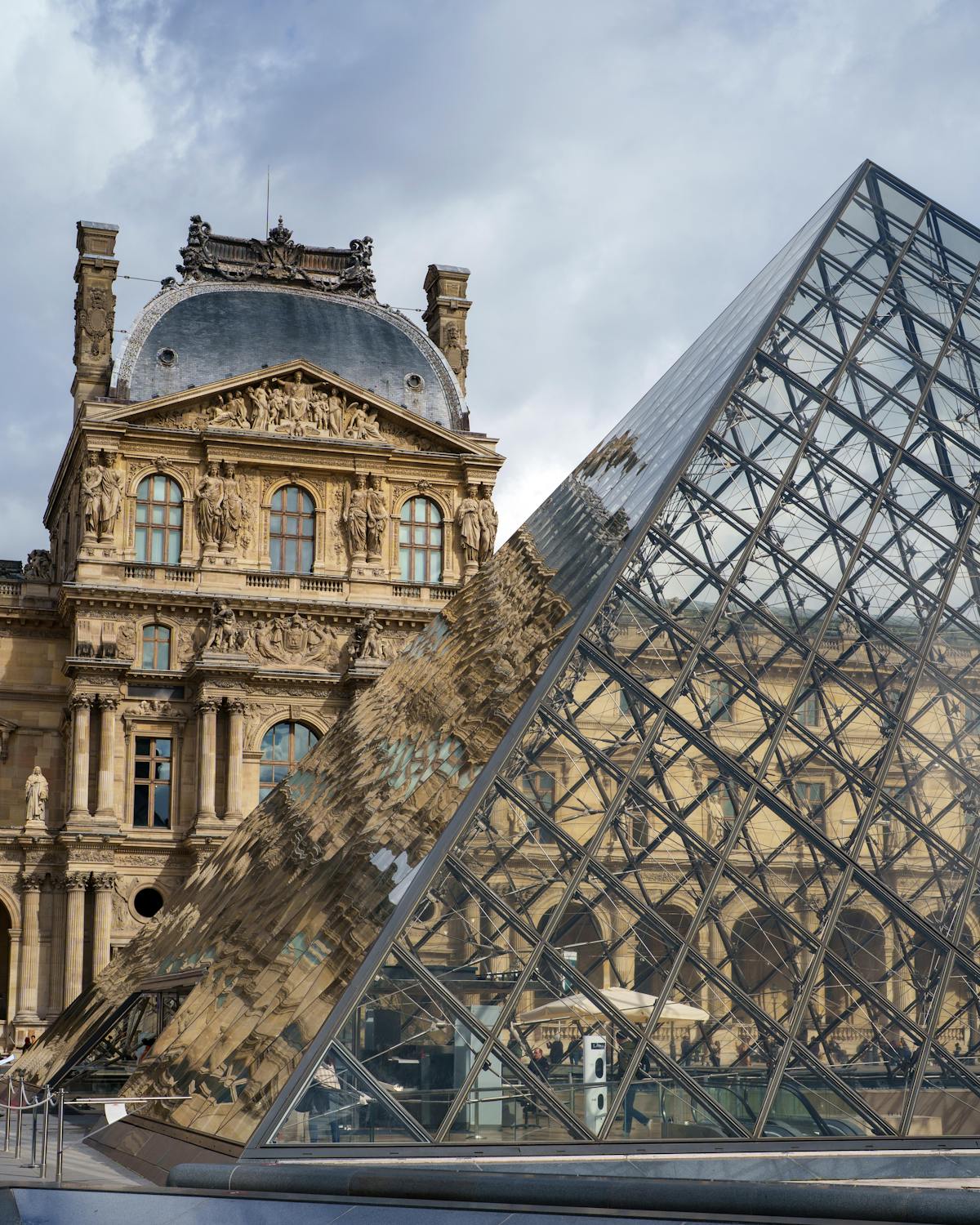
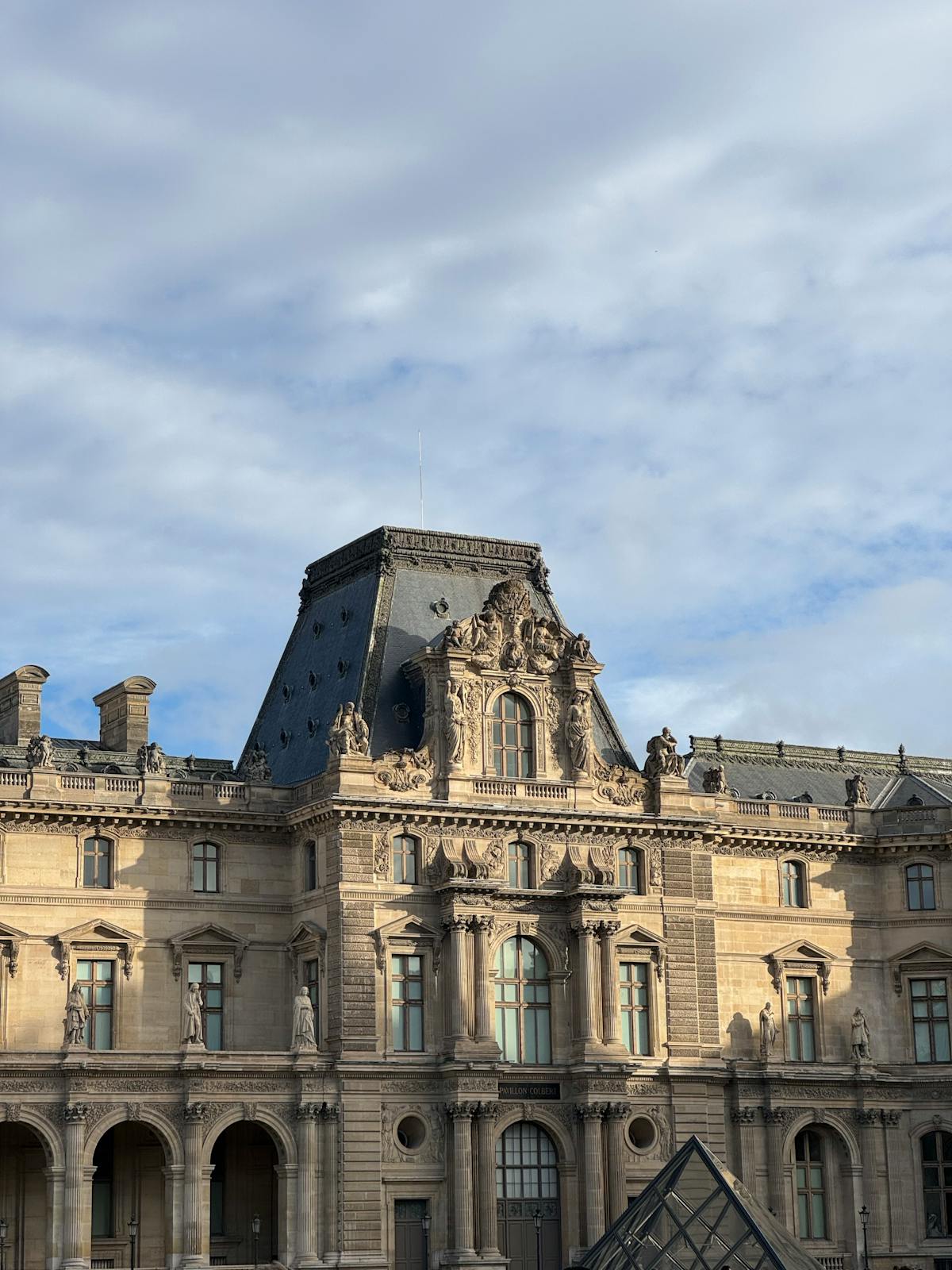
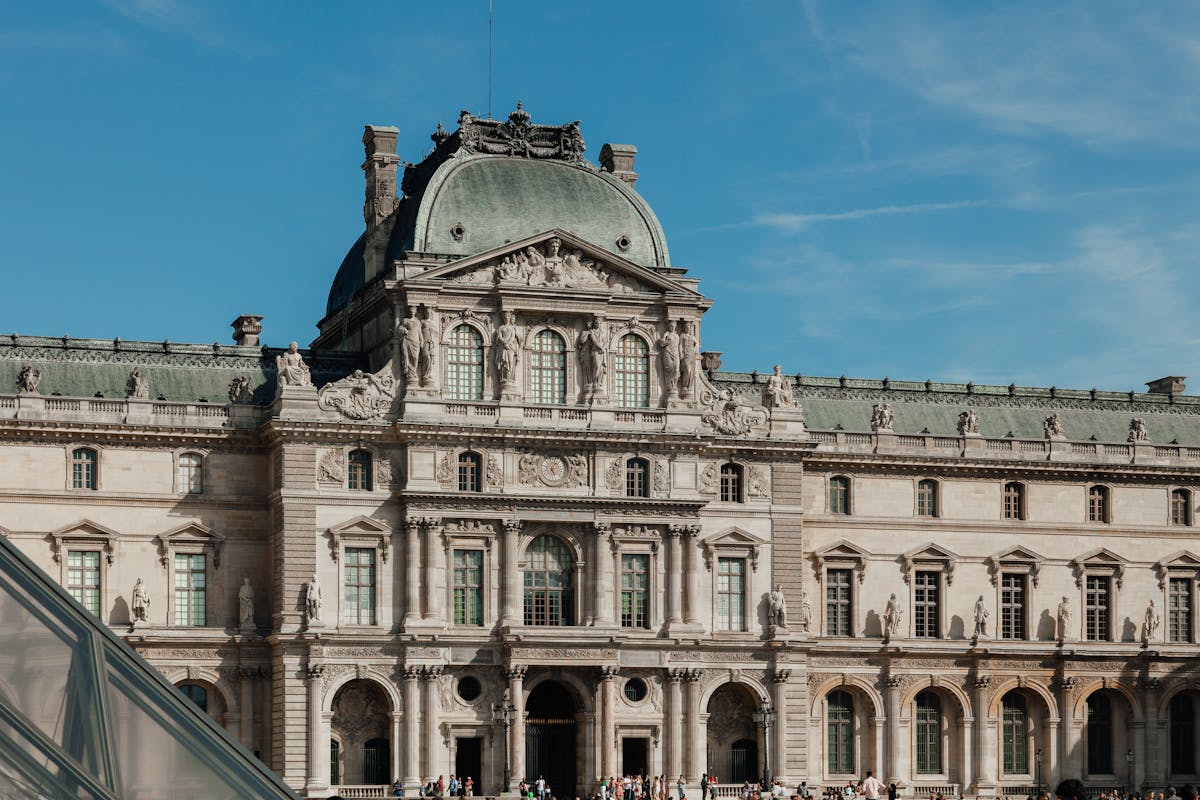
The Louvre holds roughly 380,000 works. You will see maybe one percent of them. And that is fine — because the building itself, a former royal fortress that took seven centuries to become what it is today, deserves as much of your attention as anything hanging on its walls.
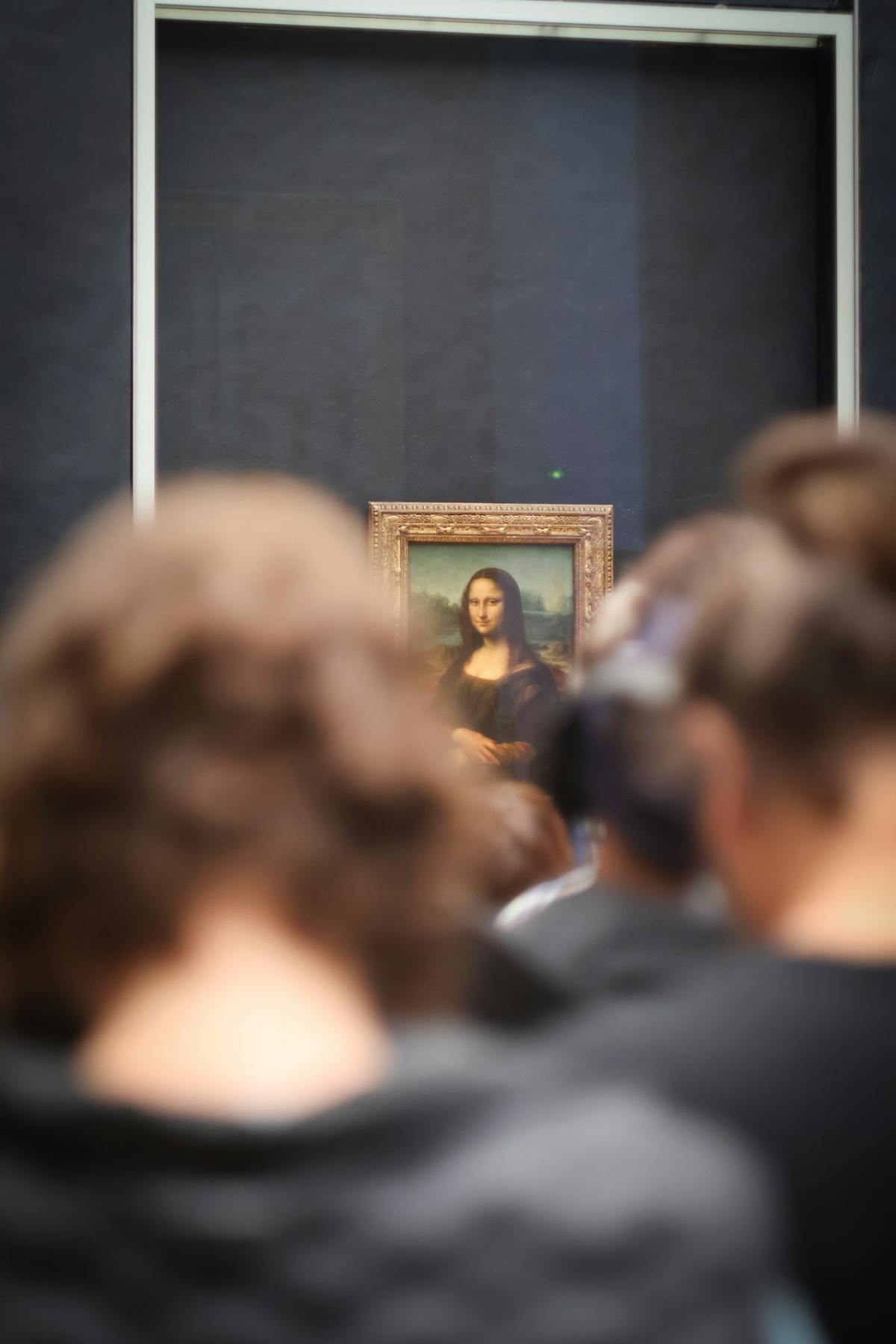
Here is the thing most people do not realize until they are standing in front of it: the Mona Lisa room is smaller than you expect. The painting itself is smaller than you expect. And the crowd around it is significantly larger than you expect. Knowing this changes how you plan your visit.
Free admission if you are under 26 and from the EU. Free for everyone on the first Saturday evening of each month. These are not minor savings — standard admission is 22 euros, and for a family of four that adds up fast.
This guide covers how to get tickets, which tours are actually worth the money, when to go, and the practical details that can make or break your visit. I have spent hours comparing every option so you do not have to.
In a Hurry? My Top 3 Picks
- Louvre Museum Timed-Entrance Ticket — The straightforward option. Pick your timeslot, walk in, explore at your own pace. No guide, no extras, just you and 380,000 works of art. From $26 per person.
- Louvre Masterpieces Guided Tour — A 3-hour walkthrough of the major highlights with a licensed guide who knows exactly which corridors to take and when. Covers the Mona Lisa, Venus de Milo, Winged Victory, and the French Crown Jewels. From $86.89 per person.
- Louvre Entry + Seine River Cruise — Combines museum entry with a Seine cruise, which means you knock out two of Paris’s biggest experiences in a single booking. The cruise runs about an hour past Notre-Dame, the Eiffel Tower, and the Orsay. From $100 per person.
- In a Hurry? My Top 3 Picks
- How Louvre Tickets Work
- Self-Guided vs. Guided Tours
- The Best Louvre Tours Worth Booking
- 1. Timed-Entrance Ticket (Self-Guided)
- 2. Masterpieces Guided Tour (3 Hours)
- 3. Small-Group Guided Tour (Max 8-15 People)
- 4. Masterpieces Tour with Reserved Access (2-3 Hours)
- 5. Louvre Entry + Seine River Cruise Combo
- When to Visit the Louvre
- Tips That Actually Help
- What You Will Actually See
- More France Guides
How Louvre Tickets Work
The Louvre uses timed entry. Every ticket — whether you buy it from the official site or through a tour operator — comes with a specific 30-minute arrival window. Miss your window by more than 30 minutes and you will need to rebook.
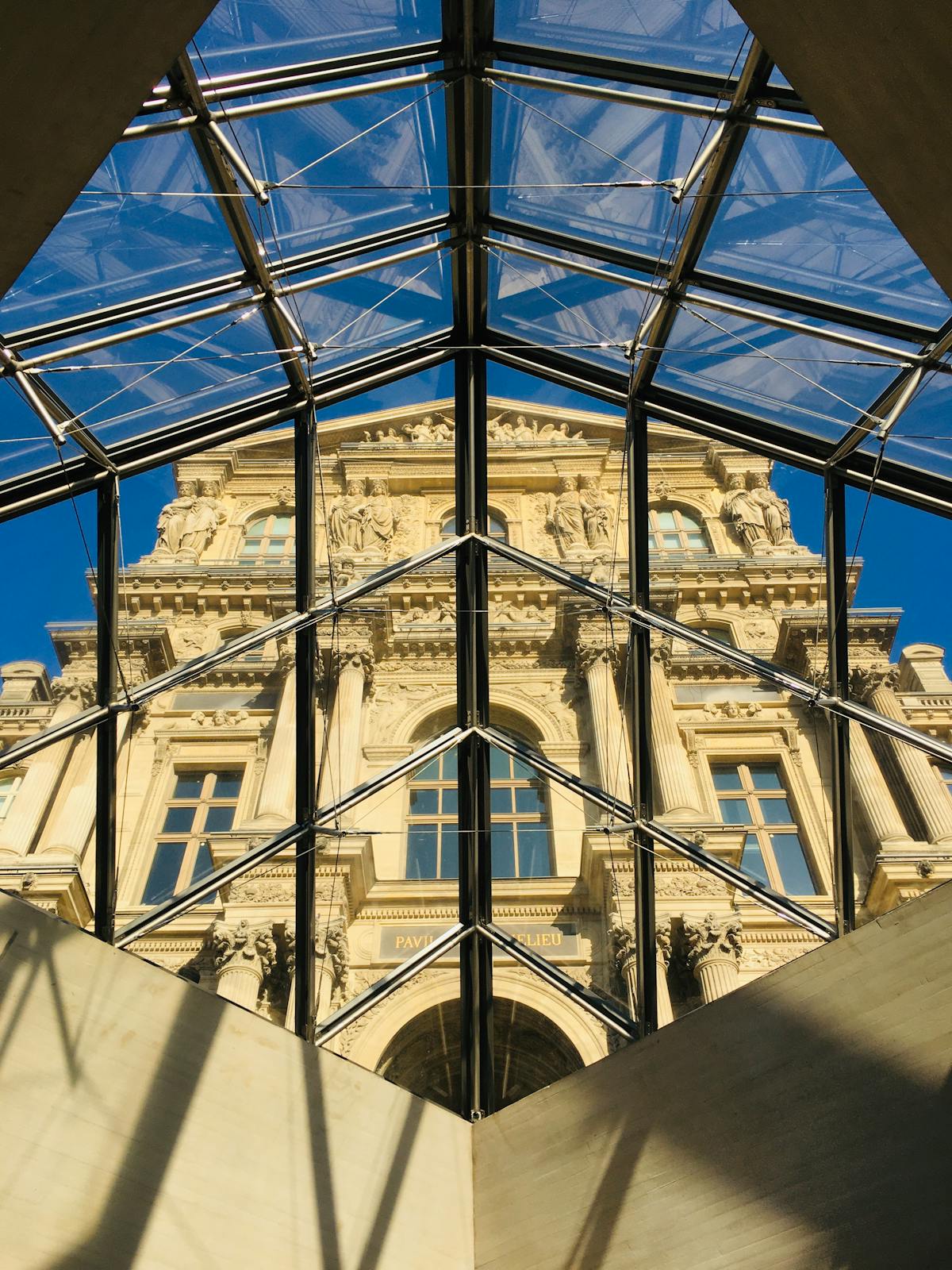
Official tickets cost 22 euros (about $24) when purchased from the Louvre’s official website. The museum recommends booking at least a few days ahead, though summer months and school holidays can sell out weeks in advance.
Once inside, there is no time limit. Your timed slot only controls when you enter. Stay as long as you want — the museum closes at 6 PM most days and 9:45 PM on Fridays.
Free admission applies to several groups:
- Everyone under 18, regardless of nationality
- EU residents aged 18-25
- Disabled visitors and one companion
- Everyone on the first Saturday of each month from 6 PM to 9:45 PM
Even with free admission, you still need a timed-entry reservation. Grab a free ticket from the official website to secure your timeslot.
The Paris Museum Pass covers the Louvre plus 50 other museums. If you are spending several days in Paris and plan to visit the Orsay, Versailles, and the Arc de Triomphe rooftop, the 4-day pass (62 euros) pays for itself quickly. But you still need to reserve a Louvre timeslot separately with the pass — it does not let you skip the reservation step.
Self-Guided vs. Guided Tours
This is the fork in the road that matters most.
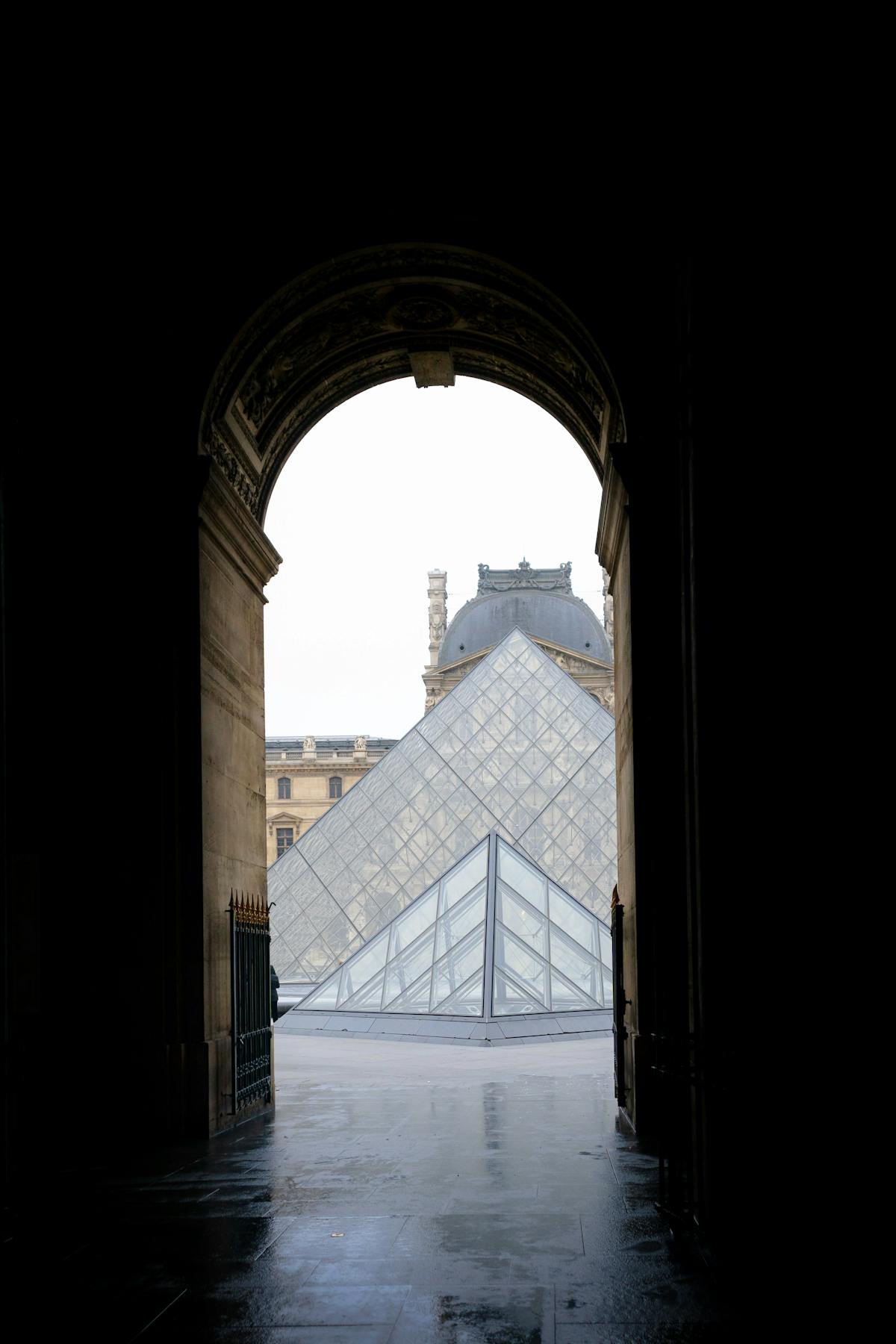
Go self-guided if: you want to spend four or five hours wandering, you have specific galleries in mind beyond the famous pieces, or you are the type who reads every plaque. The Louvre rewards slow exploration. There are entire wings — the Northern European painting galleries, the Islamic art department, the Napoleon III apartments — that most guided tours skip entirely.
Go guided if: you have two to three hours, you want to actually understand what you are looking at (not just photograph it), or this is your first visit and you do not want to waste time figuring out the floor plan. The Louvre is enormous. The building covers 72,735 square meters. Without a guide or a solid plan, most first-timers spend half their visit lost in the wrong wing.
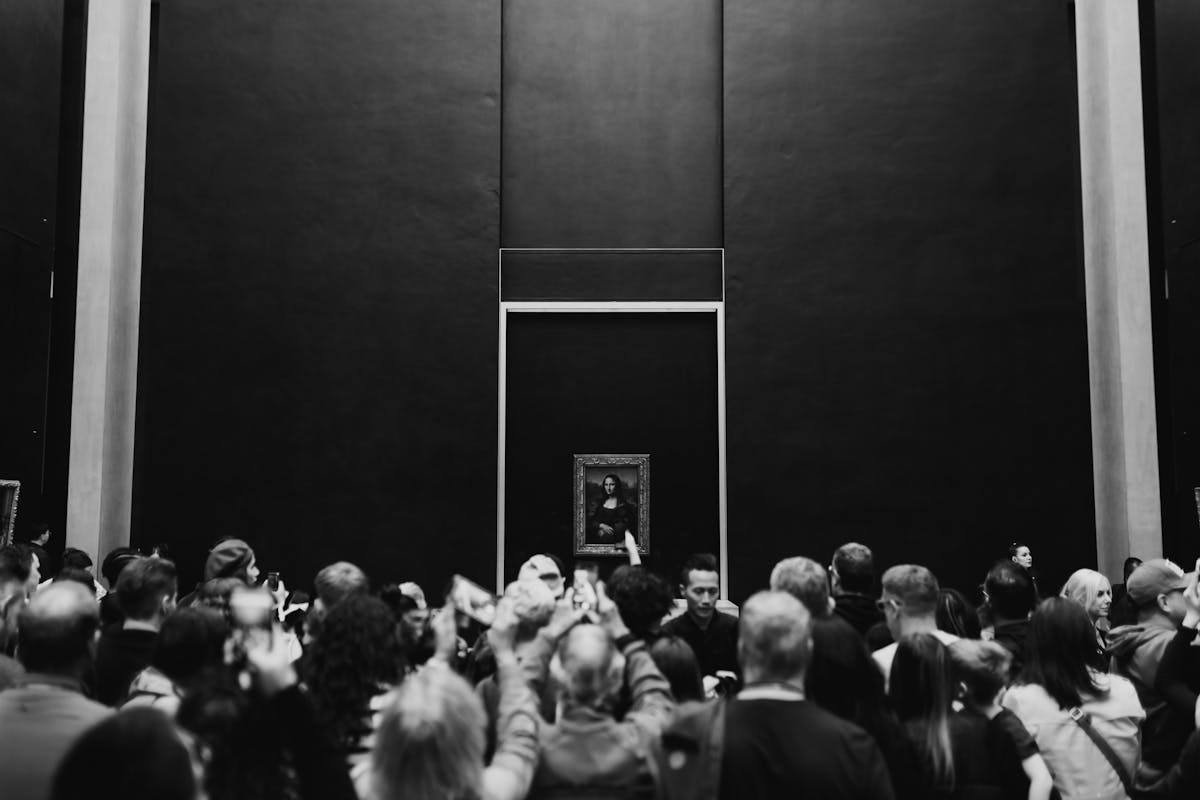
A good guide does more than point at paintings. They know the shortcuts through less crowded corridors to reach the Mona Lisa before the main wave of visitors. They explain why the Winged Victory of Samothrace is positioned at the top of that specific staircase (it was designed to look like she was landing on the prow of a ship). And they know which rooms to skip when the crowds get heavy.
The official Louvre audioguide (available on the Nintendo 3DS at the museum, or through their app) is a decent middle ground at 5 euros. But it covers so many stops that you will either rush through them or run out of time.
The Best Louvre Tours Worth Booking
I have narrowed this down to the five options that cover different needs and budgets. All of them include reserved access, which means you bypass the general admission queue.
1. Timed-Entrance Ticket (Self-Guided)
Price: From $26 per person
Duration: Self-paced (museum closes at 6 PM, 9:45 PM Fridays)
Best for: Repeat visitors, art enthusiasts, anyone who wants more than three hours
This is the no-frills option and honestly all most experienced museum-goers need. You pick your timeslot, walk in, and go wherever you want. No guide, no group, no schedule. If you already know you want to spend two hours in the Egyptian antiquities wing or explore the Italian sculpture galleries that nobody else visits, this is your ticket.
The price through GetYourGuide runs a few dollars more than the official site, but the booking process is simpler and the cancellation policy is usually more flexible.
Check availability and book this ticket
2. Masterpieces Guided Tour (3 Hours)
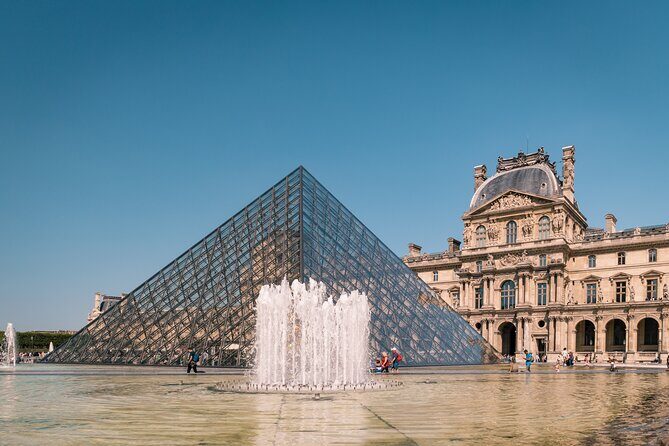
Price: From $86.89 per person
Duration: 3 hours
Best for: First-time visitors who want the highlights with expert context
This is the tour I would recommend to most first-time visitors. Three hours gives the guide enough time to cover the Mona Lisa, Venus de Milo, Winged Victory of Samothrace, the French Crown Jewels, and a handful of lesser-known pieces that tell the story of the collection. The guide handles the navigation, which alone is worth the price — the Louvre’s layout is notoriously confusing, especially in the Sully Wing.
The group size varies but typically caps around 25. If that sounds like too many, look at the small-group option below.
Check availability and book this tour
3. Small-Group Guided Tour (Max 8-15 People)
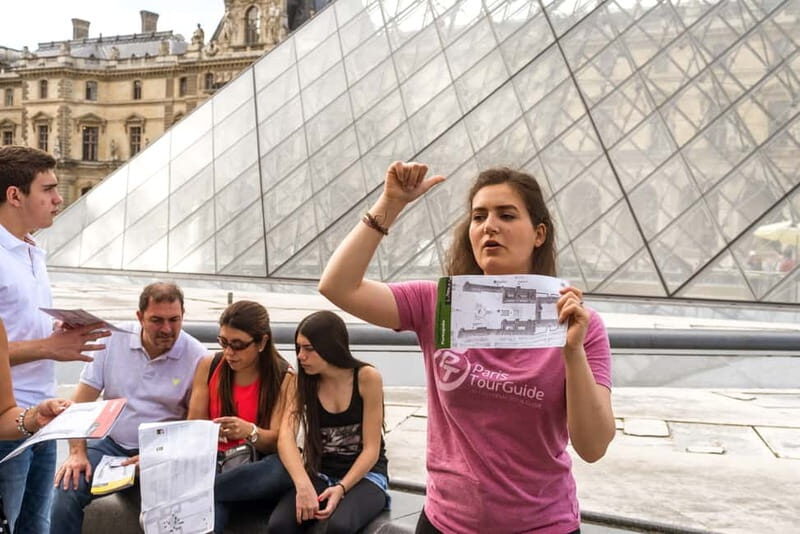
Price: From $129 per person
Duration: 2-3 hours
Best for: Couples, anyone who dislikes large group tours
The premium on the standard guided tour buys you two things: a smaller group (which means you can actually ask questions and hear the answers) and a guide who can adapt the route based on where the crowds are thickest. On a busy Saturday, that flexibility is worth every extra dollar.
Small-group tours also tend to attract visitors who are genuinely interested in art rather than just ticking off the Mona Lisa, so the pace and conversation quality tends to be better.
Check availability and book this tour
4. Masterpieces Tour with Reserved Access (2-3 Hours)
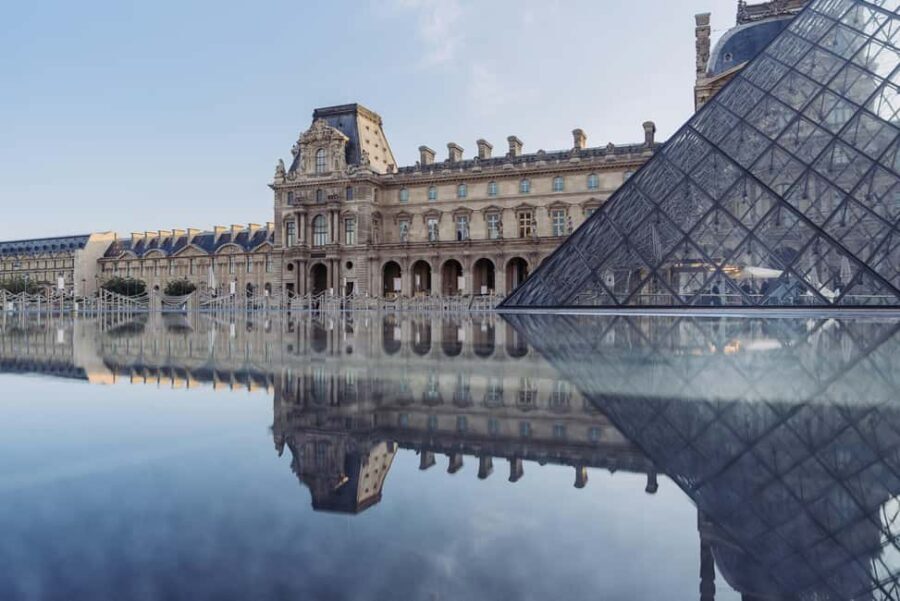
Price: From $80 per person
Duration: 3 hours
Best for: Visitors who want a guided experience at a slightly lower price point
Similar coverage to the masterpieces tour above but through GetYourGuide, which sometimes offers better last-minute availability. The itinerary hits the same major works — Mona Lisa, Venus de Milo, Winged Victory — and the guide provides context on the building’s transformation from medieval fortress to royal palace to the world’s most visited museum.
One advantage of this option: after the guided portion ends, you are free to continue exploring on your own. Your ticket is valid for the rest of the day.
Check availability and book this tour
5. Louvre Entry + Seine River Cruise Combo
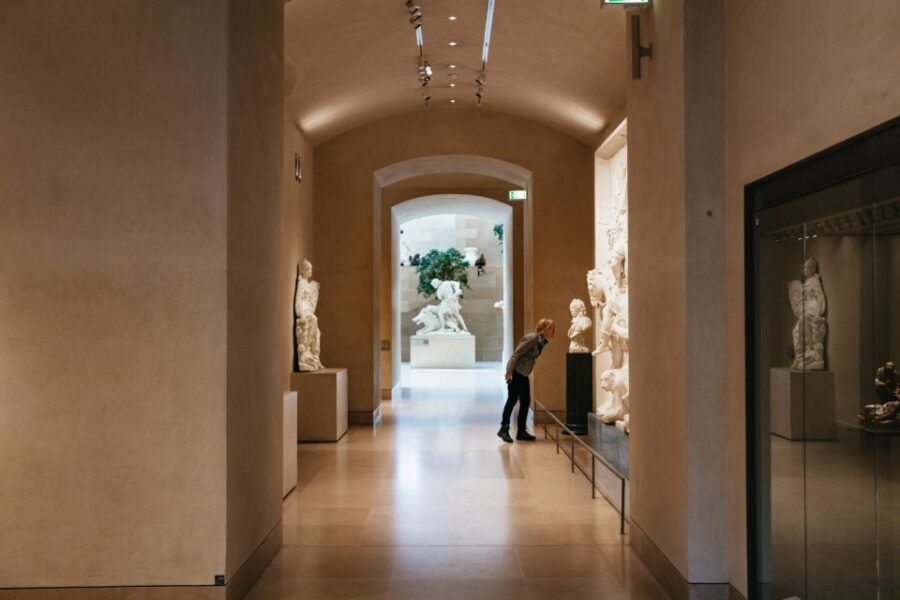
Price: From $100 per person
Duration: Full day (self-paced museum visit + 1-hour cruise)
Best for: Visitors who want to combine two essential Paris experiences
This bundles Louvre entry with a one-hour Seine River cruise. The museum portion is self-guided with a timed entry, and the cruise departs from a dock near the Eiffel Tower. You do not need to do both on the same day — the cruise voucher is usually flexible within a few days of your museum visit.
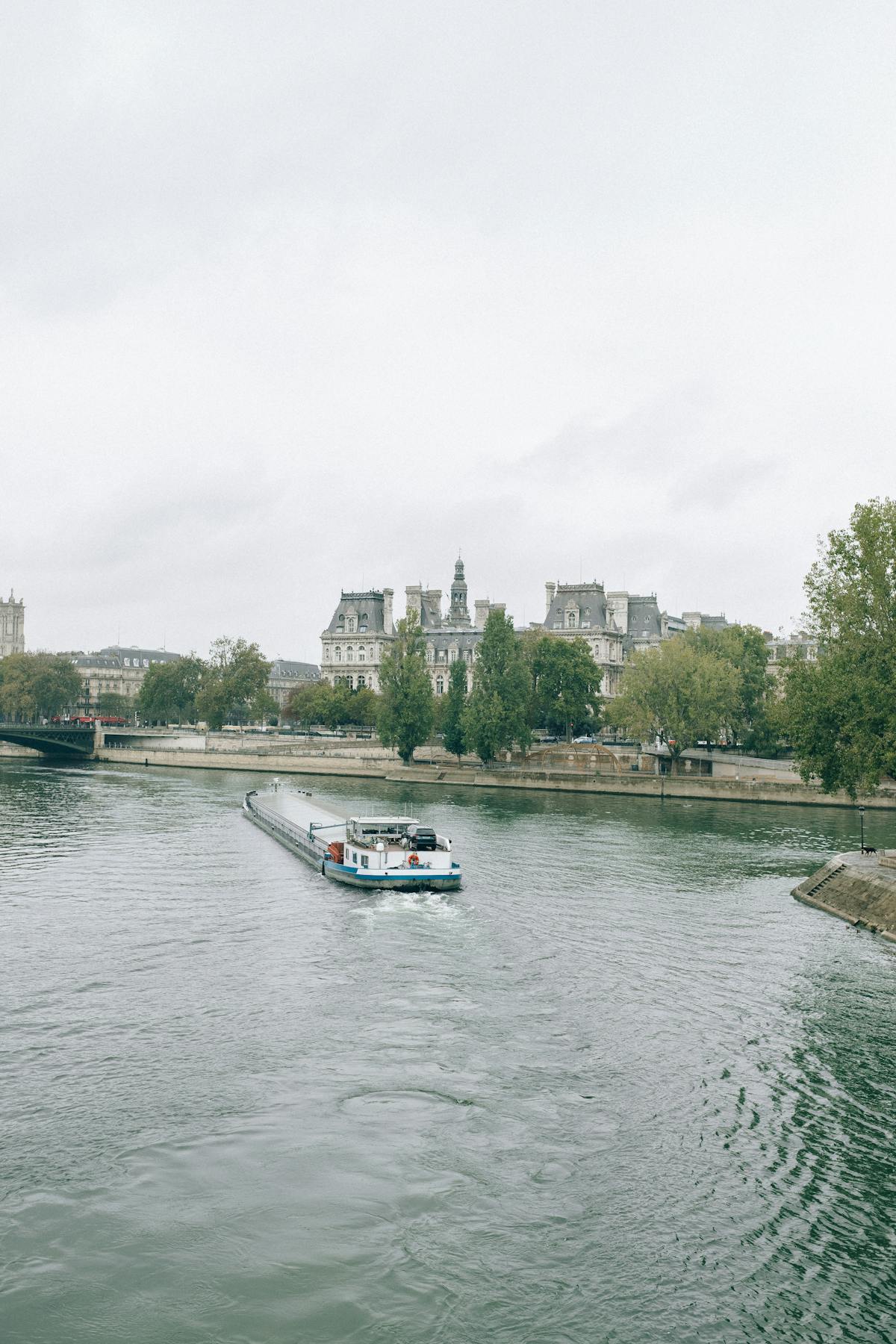
The cruise passes Notre-Dame, the Orsay, the Ile de la Cite, and both banks of the Seine. It is a solid way to get your bearings in Paris, especially if you are visiting for the first time. And honestly, after spending a few hours walking the Louvre’s galleries, a seated boat ride is exactly what your feet will be asking for.
Check availability and book this combo
When to Visit the Louvre
Timing matters more at the Louvre than almost any other museum in Paris. Get it wrong and you will spend more time in queues and crowds than actually looking at art.
Best days: Wednesday and Friday. The museum is open late on Fridays (until 9:45 PM), and the evening sessions from 6 PM onward are genuinely peaceful. Wednesday tends to be the quietest weekday overall.
Worst days: Saturday and Sunday, with Saturday being worse. Monday and Tuesday the museum is closed (it moved from its traditional Tuesday closure to Monday + Tuesday in recent years — double check before planning).
Best arrival time: Either right at 9 AM opening or after 3 PM. The midday hours from 11 AM to 2 PM are when the museum hits peak capacity. If you booked a Friday evening session, arriving at 6 PM is ideal.
Best months: November through February. Summer (June through August) is the peak tourist season and the Louvre fills up accordingly. School holidays in April and October are also busy.
Tips That Actually Help
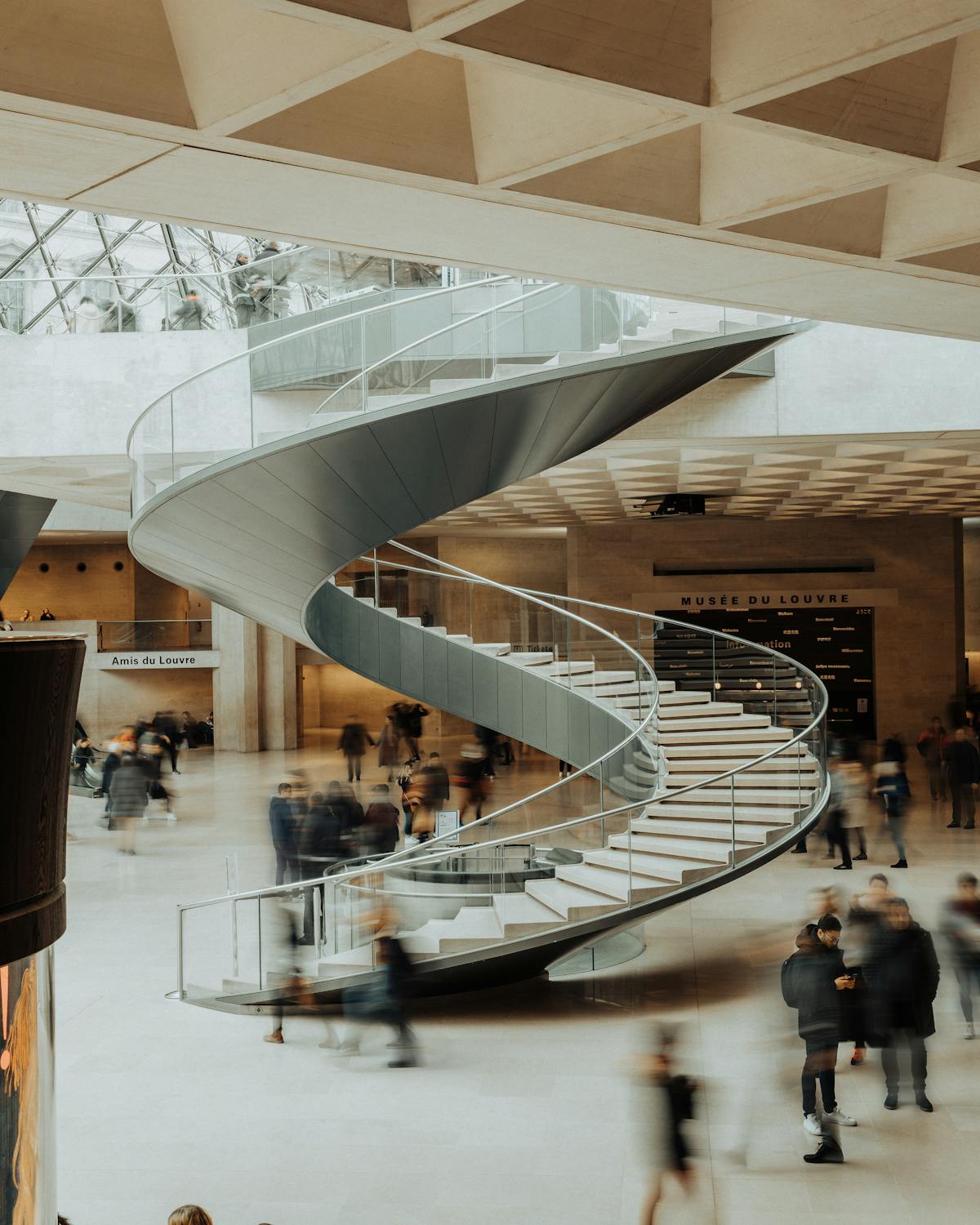
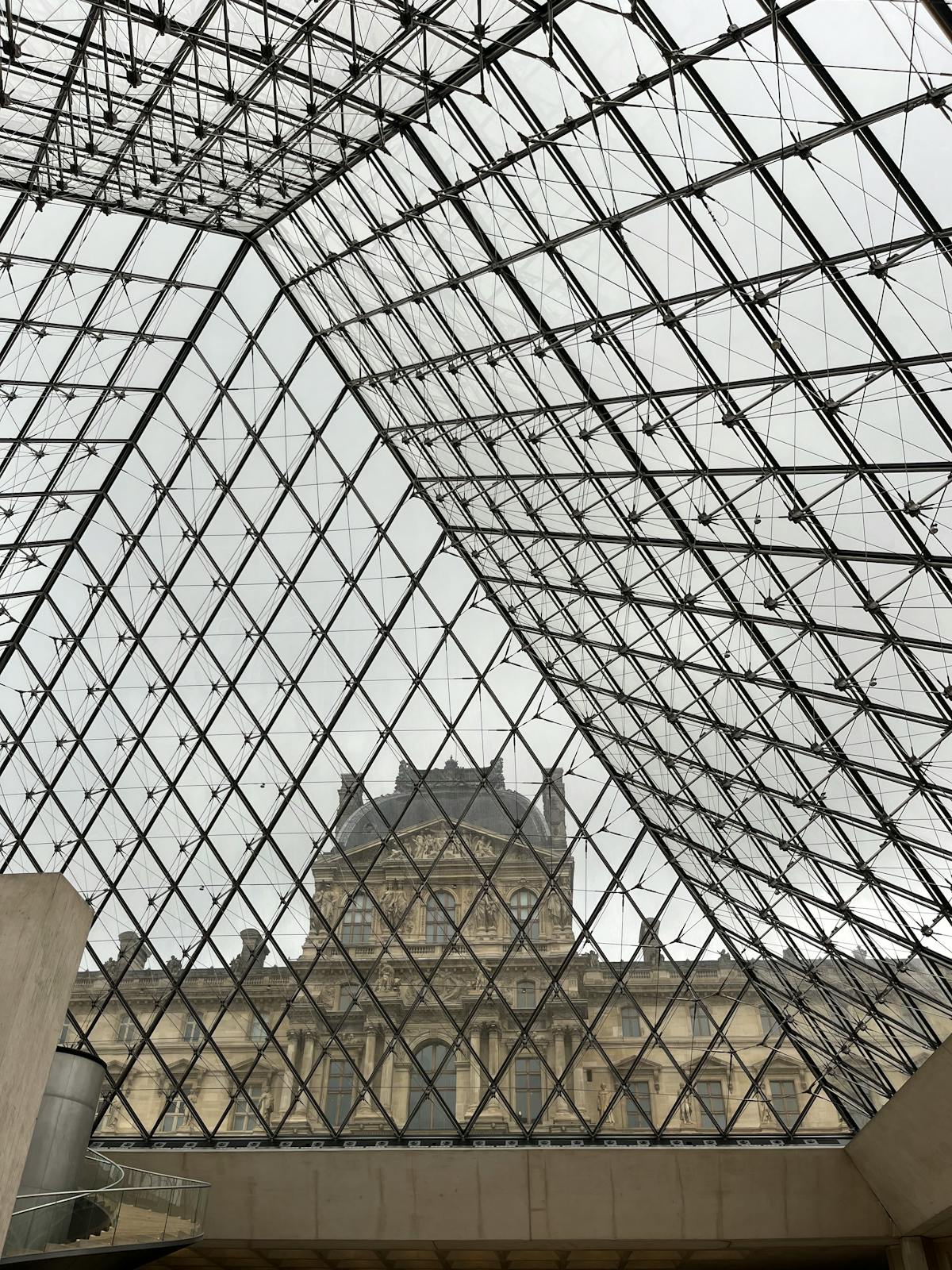
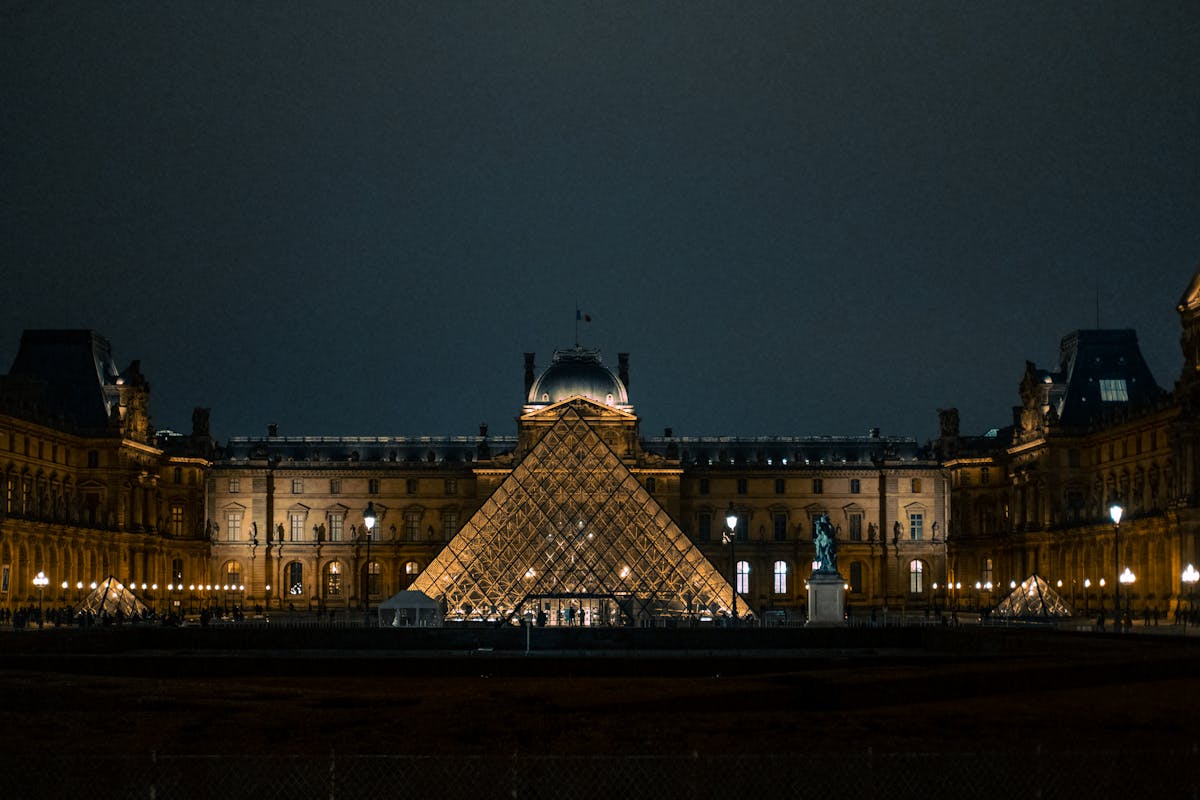
Use the Carrousel du Louvre entrance. Most visitors funnel through the main Pyramid entrance. The underground Carrousel mall entrance (accessible from 99 Rue de Rivoli) has a separate security line that is almost always shorter. The Passage Richelieu entrance is another alternative if you have a pre-booked ticket.
Download the Louvre app before you go. The museum’s official app includes floor maps, suggested routes, and audio commentary. The Wi-Fi inside the museum is unreliable, so download everything before you arrive.
Wear comfortable shoes. Non-negotiable. Even a focused two-hour visit covers about 2.5 miles of walking. A full day can easily hit 6 miles. The marble floors are unforgiving.
Bring a portable charger. Between photos, the app, and the inevitable group chats about where to meet for lunch, your phone will drain faster than you expect.
See the Mona Lisa first or last. Middle of the day is the worst time. First thing in the morning, head straight to the Denon Wing (the guide will do this for you on a tour). Or save it for late afternoon when the selfie crowds thin out.
Do not skip the Napoleon III apartments. First floor of the Richelieu Wing. These lavishly decorated state rooms are one of the Louvre’s most stunning spaces, and they are almost always empty because visitors rush straight to the Mona Lisa. The chandeliers alone are worth the detour.
What You Will Actually See
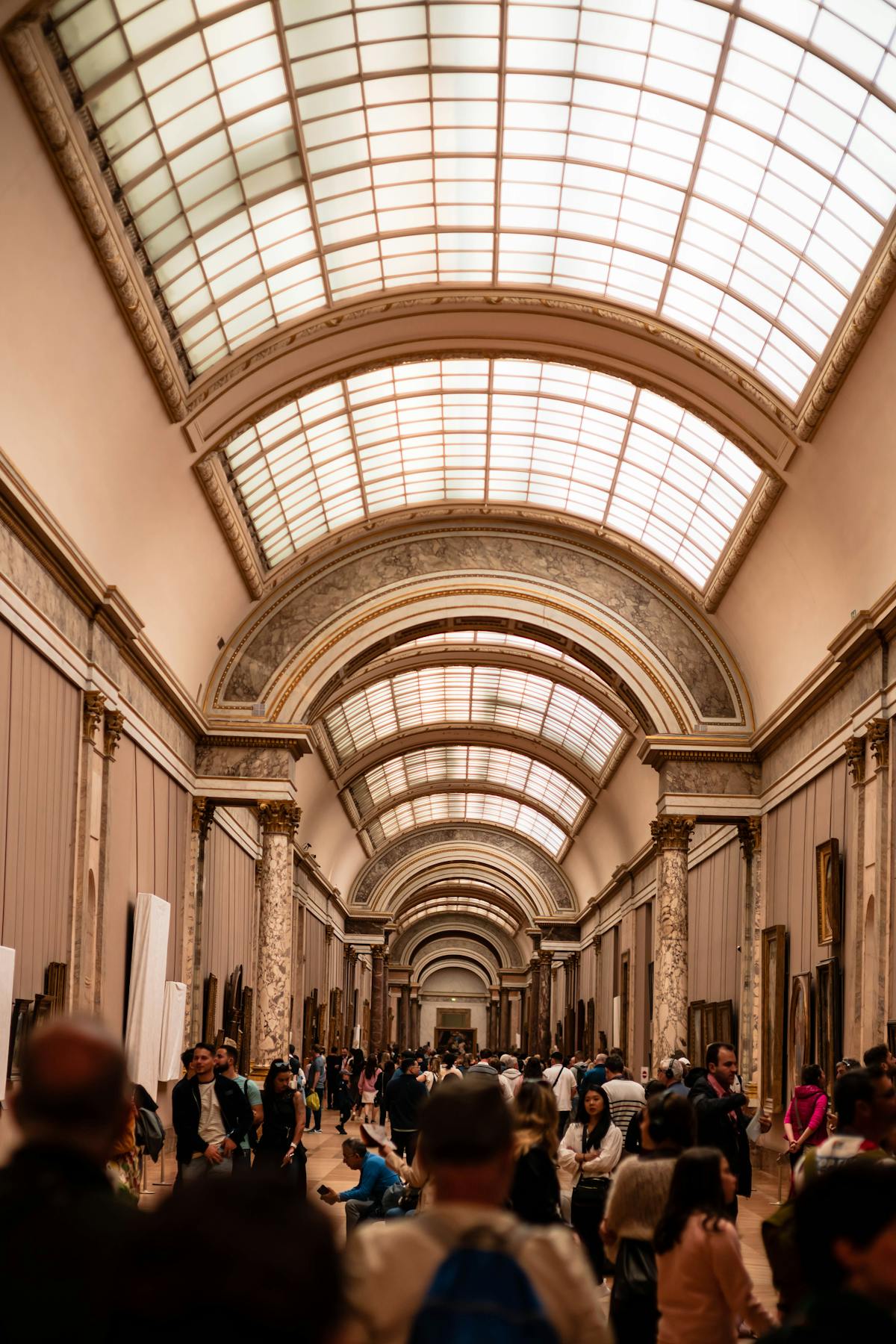
The Louvre is organized into eight departments spread across three wings (Denon, Sully, and Richelieu). Nobody sees everything in one visit. Here is what to prioritize if you have limited time:
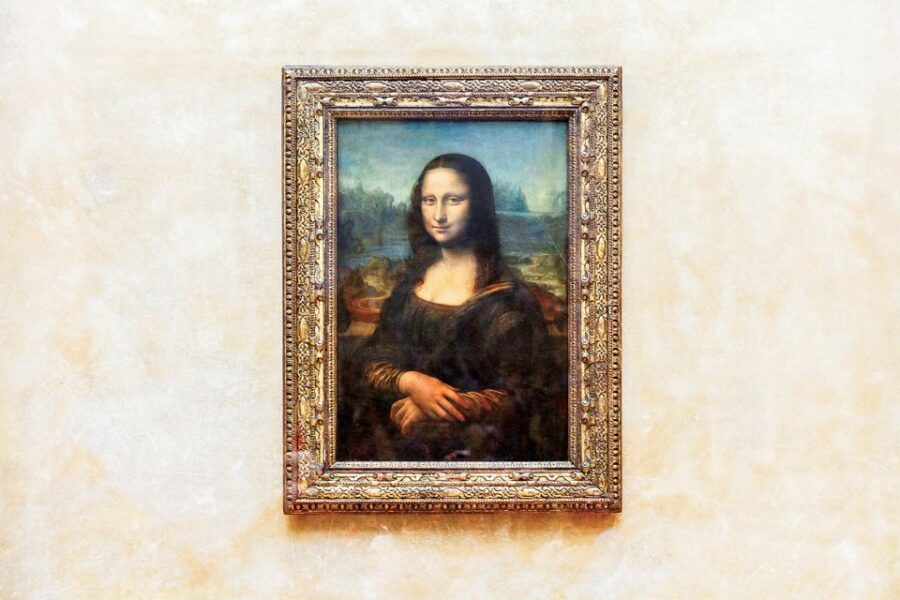
The Mona Lisa (Denon Wing, 1st floor). Yes, it is crowded. Yes, it is behind glass. But standing in front of Leonardo da Vinci’s most famous work is still a moment. The trick is to look at the massive painting on the opposite wall too — Veronese’s Wedding Feast at Cana is 22 feet wide and contains 130 figures, and almost nobody gives it more than a glance.
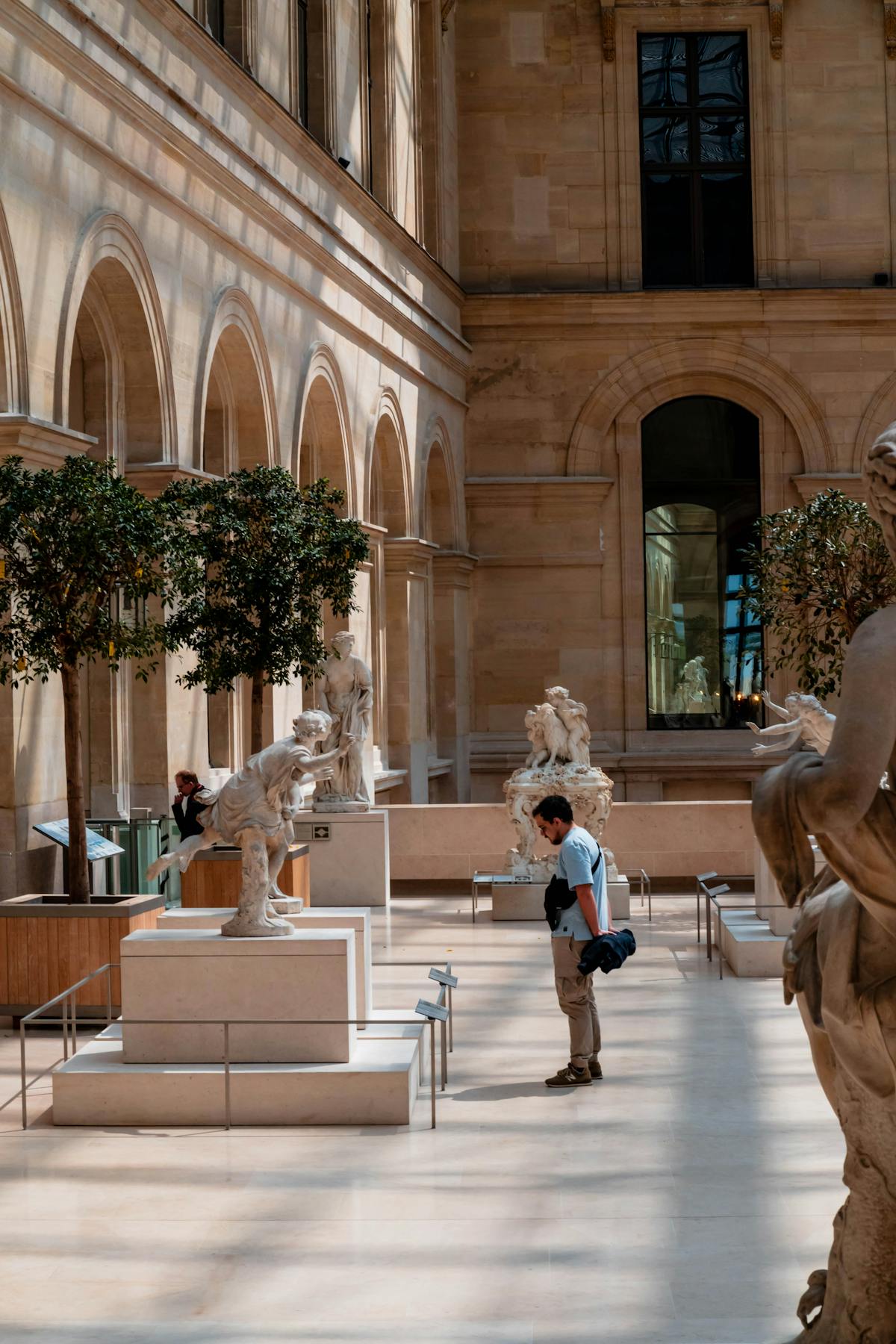
Winged Victory of Samothrace (Denon Wing, top of the Daru staircase). This 2,200-year-old Hellenistic sculpture of Nike landing on a ship’s prow is, for my money, the most dramatic piece in the entire museum. The way it is positioned at the top of the stairs gives it a sense of movement that photographs cannot capture.
Venus de Milo (Sully Wing, ground floor). The armless Greek statue from around 100 BC. Smaller than most people expect, but the craftsmanship is extraordinary when you see it up close. The room is usually less chaotic than the Mona Lisa gallery.
The Egyptian Antiquities collection (Sully Wing, ground and 1st floors). One of the largest Egyptian collections outside of Cairo. The Seated Scribe, carved from painted limestone around 2500 BC, has eyes made of rock crystal and white quartz that look unsettlingly lifelike.
The Napoleon III Apartments (Richelieu Wing, 1st floor). I mentioned these above but they deserve repeating. Gold-leafed ceilings, crystal chandeliers the size of small cars, furniture that would make Versailles jealous. The contrast between this opulence and the ancient sculptures downstairs is striking.
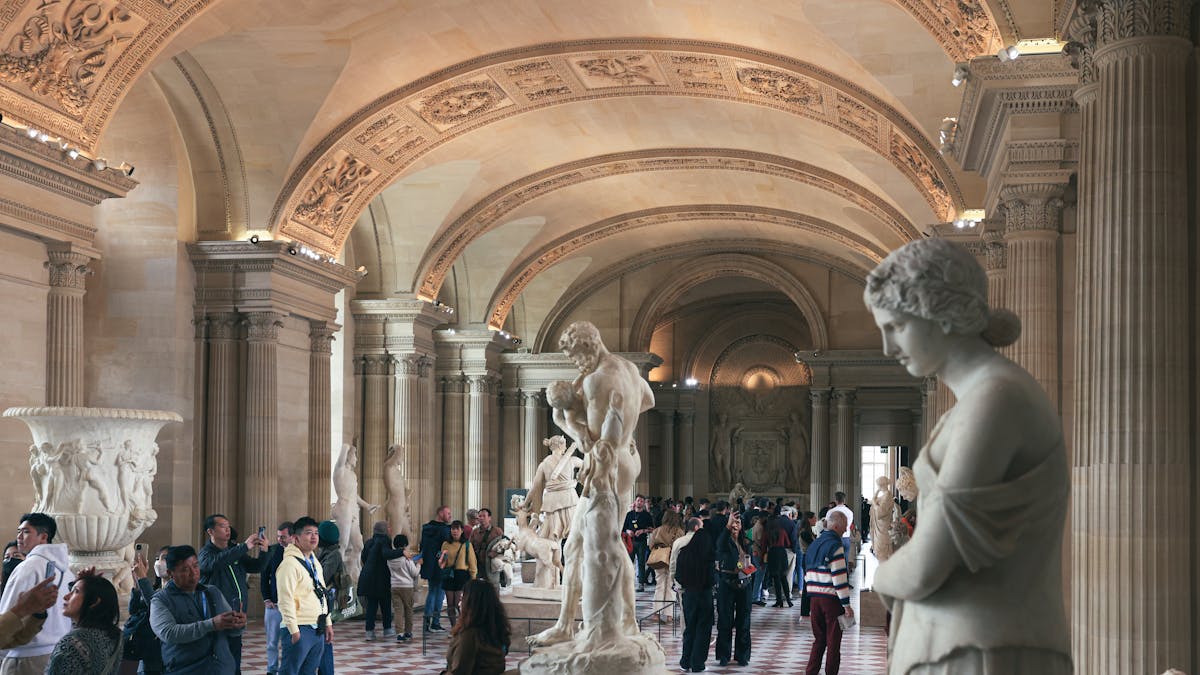
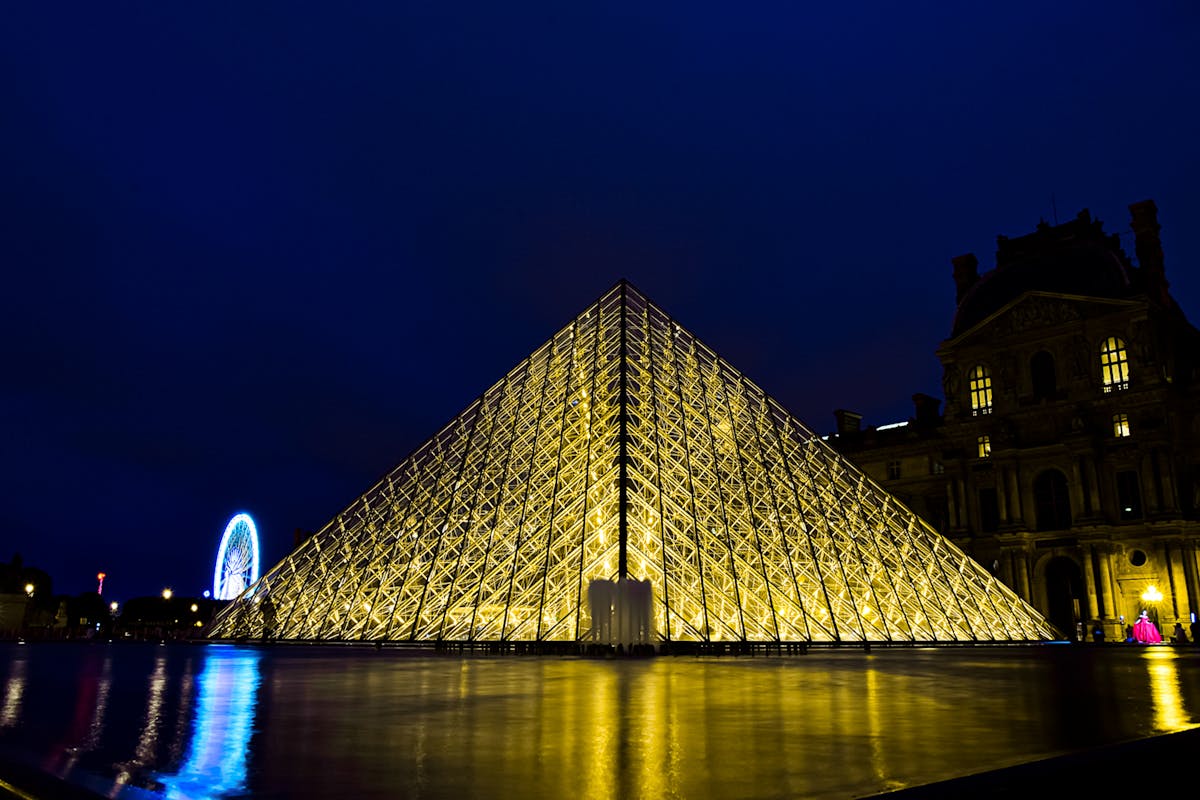

The Louvre sits at the heart of a neighborhood packed with things to do. The Tuileries Garden stretches from the museum’s western exit directly toward the Place de la Concorde, and it is the best place to sit and process everything you just saw. From there, the Orsay Museum is a 15-minute walk along the Seine — if you loved the Louvre’s painting collection, the Orsay picks up where it leaves off with the Impressionists and Post-Impressionists. The Eiffel Tower is about a 30-minute walk west along the river, or one Metro stop. And Notre-Dame, still undergoing its restoration after the 2019 fire but reopened to visitors, is a 20-minute walk east along the Ile de la Cite. Paris rewards walkers, and the stretch along the Seine between the Louvre and Notre-Dame might be the finest urban walk in Europe. For evenings, the Moulin Rouge in Montmartre is a Metro ride north and makes for a completely different kind of Paris experience.
Disclosure: This article contains affiliate links to tour booking platforms. If you book through these links, we may earn a small commission at no extra cost to you. This helps us keep creating free travel guides. All recommendations are based on our own research and experience — we only suggest tours and tickets we genuinely believe are worth booking.
More France Guides
The Louvre anchors a stretch of Paris that rewards a multi-day visit. Walk across the river and you are at the Musee d’Orsay in twelve minutes — the two museums cover different art periods and make a natural pair. From the Louvre courtyard, Sainte-Chapelle on the Ile de la Cite is a fifteen-minute walk and one of the most visually stunning buildings in Europe. A Seine river cruise departs from docks just below the museum and lets you see half of Paris from the water. If you need fresh air after the galleries, a Montmartre tour takes you to the hilltop village that inspired an entirely different kind of art.