
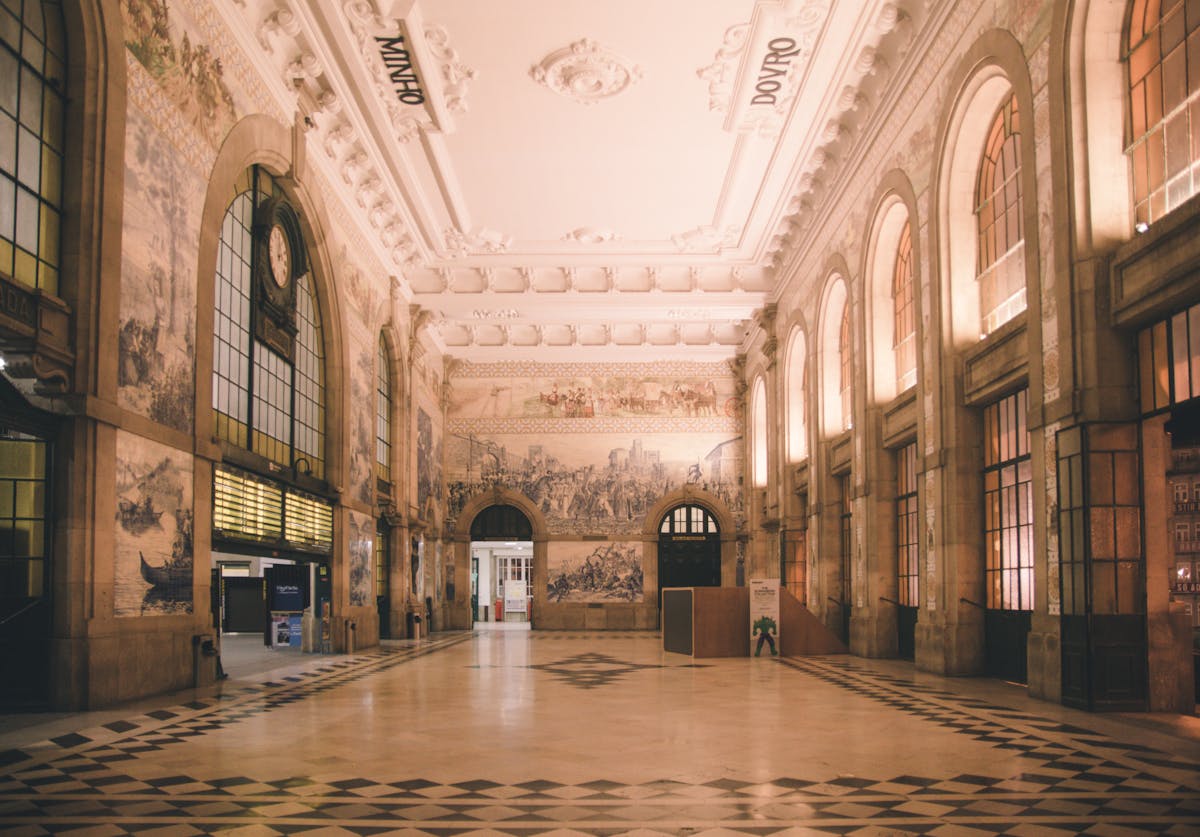
I stepped off the train at São Bento station and almost forgot to leave. The 20,000 hand-painted azulejo tiles covering the main hall are supposed to depict Portuguese history, but they hit more like walking into the world’s most elaborate subway art installation. Then I stepped outside, turned a corner, and the city dropped away beneath me — terracotta rooftops tumbling down toward the Douro, the Dom Luís Bridge catching the afternoon light, and somewhere below, the faint sound of a fado guitar drifting up from the Ribeira.
Porto is a city that makes no sense on a map. The streets twist, the hills are brutal, and the neighborhood names alone will break your navigation app. But on foot, with someone who actually knows the place? It all clicks into place.
Booking a walking tour in Porto is straightforward, but picking the right one takes a bit more thought. Some cover the greatest hits in two and a half hours. Others tack on a river cruise, a cable car ride, even a visit to the Lello Bookshop. Prices range from pay-what-you-wish to about $73 for a full half-day package. I have walked Porto with four different guides now, and the difference between a forgettable tour and a brilliant one comes down to the guide more than the itinerary.
Best overall: Porto Walking Tour with Lello, River Cruise and Cable Car — $73. The full Porto experience compressed into four hours. Walking tour plus river cruise plus cable car ride, and they get you into the Lello Bookshop without the queue.
Best value: Experience Porto’s Charm: 3-Hour Guided Walking Tour — $35. Small groups, excellent guides, covers all the big landmarks plus some back-alley finds. Hard to beat for the price.
Best budget: Porto’s #1 Walking Tour — Under $1. A tip-based walking tour that consistently outperforms tours costing 30 times more. The guides work harder because they are earning your tip.
- Why Walking Is the Only Way to See Porto
- The 5 Best Walking Tours to Book in Porto
- 1. Porto Walking Tour, Lello Bookshop, River Cruise and Cable Car —
- 2. Experience Porto’s Charm: 3-Hour Guided Walking Tour —
- 3. Porto: 3-Hour Guided City Highlights Walking Tour —
- 4. Porto: Historic City Center Walking Tour —
- 5. Porto’s #1 Walking Tour — Under id="section-0"
- When to Walk Porto
- Tips That Will Save You Time (and Your Feet)
- What You Will Actually See on a Walking Tour
- More Porto Guides
Why Walking Is the Only Way to See Porto
Porto was not designed for cars. The medieval streets in the Ribeira district are too narrow for anything wider than a motorbike, and the hills connecting the riverside to the cathedral are steep enough that taxis regularly decline the trip. But that is exactly what makes walking work so well here. The city rewards you for being on foot in ways that a hop-on bus never could.
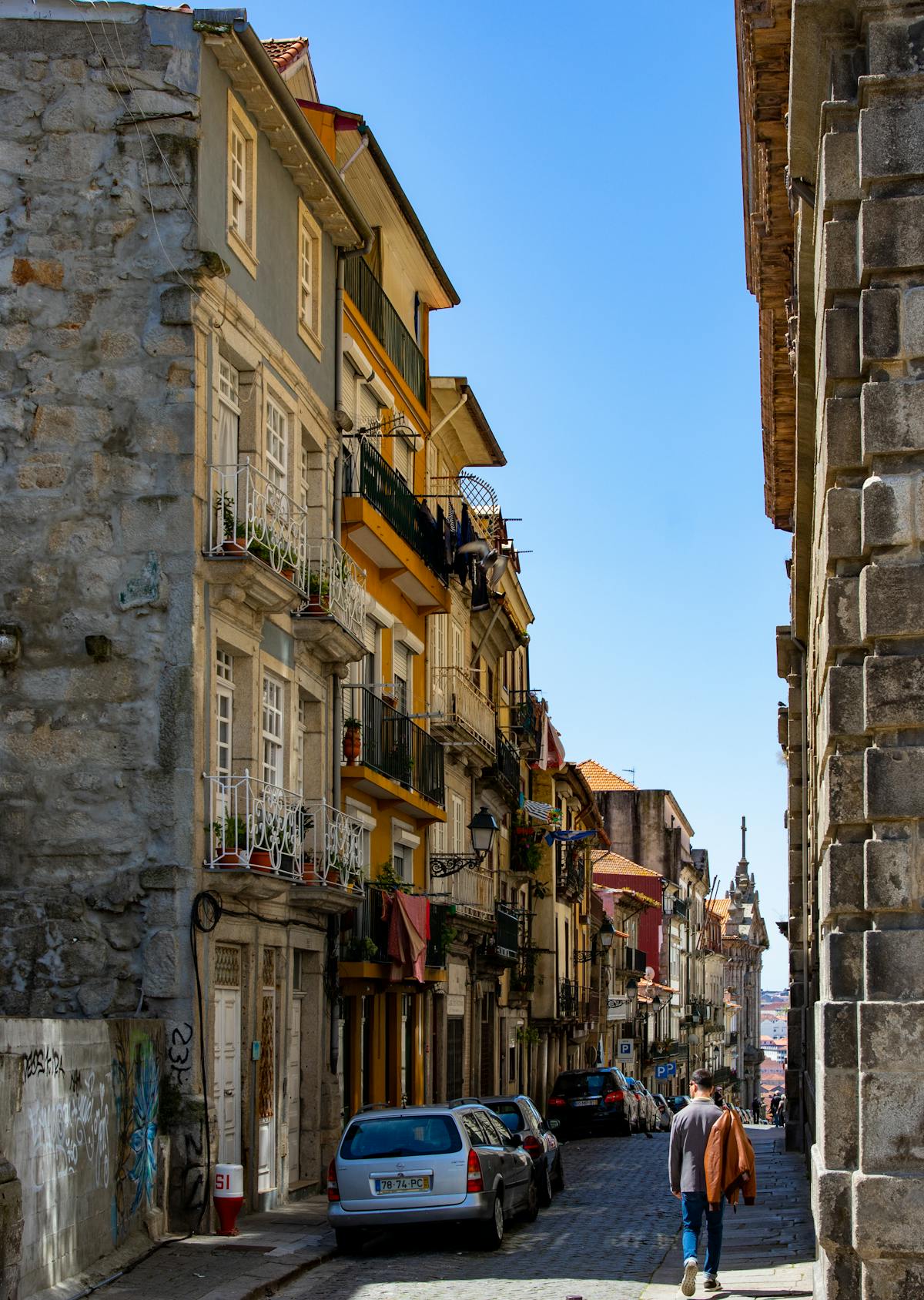
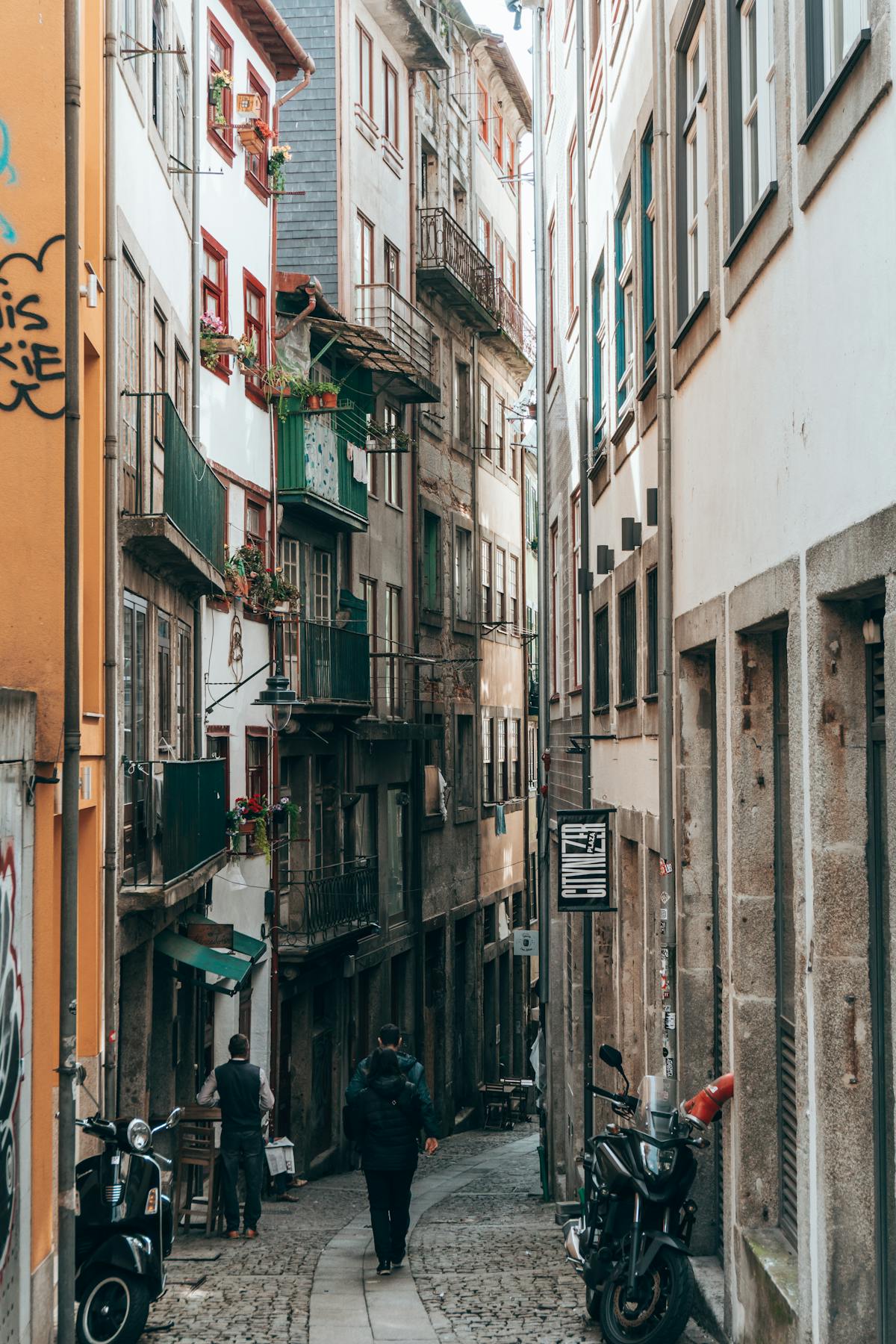
A walking tour guide will take you through the alley behind the cathedral where laundry hangs between buildings three stories above your head. They will point out the azulejo tile panels on the side of a church you would have walked straight past. They will explain why the houses in Ribeira lean at odd angles (the foundations are medieval, the upper floors are not) and why the port wine cellars are all on the other side of the river in Vila Nova de Gaia instead of in Porto itself.
You cover roughly 4-5 kilometers on a standard tour, with plenty of stops. The elevation changes are real — Porto is built on hills and you will feel it in your calves by the end — but no guide is going to sprint you up the Escadas do Codeçal staircase. The pace is gentle enough that anyone in reasonable shape can manage it.
The 5 Best Walking Tours to Book in Porto
I have narrowed this down to five tours that cover different budgets, group sizes, and itineraries. Each one has been booked by thousands of people, and all of them consistently get strong feedback from visitors. They are ordered by how much ground they cover and how much I think you get for the money.
1. Porto Walking Tour, Lello Bookshop, River Cruise and Cable Car — $73
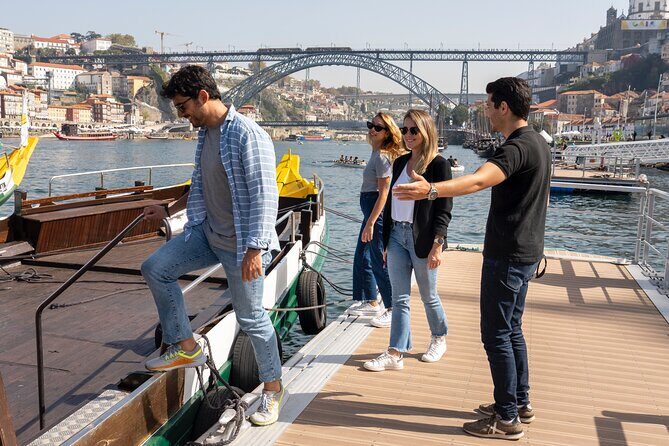
This is the one I recommend if you only have one day in Porto and want to squeeze in everything. It is a four-hour package that starts with a guided walk through the historic center — the same landmarks you would hit on the port wine cellars route — then adds a six-bridge Douro River cruise, a cable car ride up to the upper deck of the Dom Luís Bridge, and skip-the-line entry to the Livraria Lello bookshop.
The walking section covers São Bento station, the Porto Cathedral, the Ribeira district, and the Clerigos Tower area. Then you cross to Vila Nova de Gaia for the river cruise, which runs about 50 minutes and passes under all six of Porto’s bridges. The cable car takes you back up to bridge level afterward, which saves you a serious uphill climb. At $73 per person, it is not cheap, but you would pay close to that amount buying the cruise, cable car, and Lello tickets separately — and you would not get a guide.
2. Experience Porto’s Charm: 3-Hour Guided Walking Tour — $35
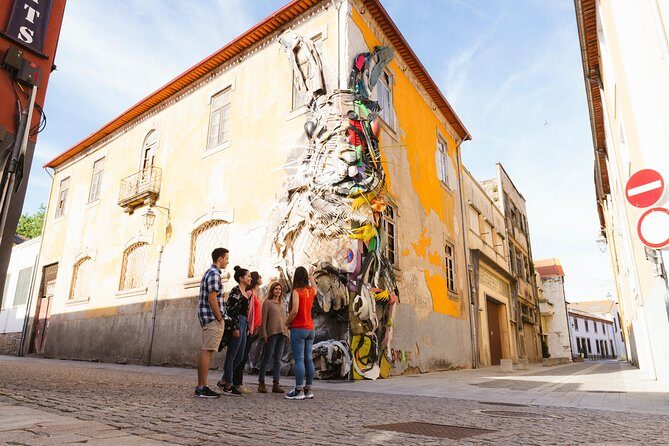
If you want a proper walking tour without the add-ons, this is the best balance of price, duration, and quality. Three hours of walking through Porto’s UNESCO-listed historic center with guides who clearly love the city. The groups tend to stay small, which means you can actually ask questions without holding up 40 people behind you.
The route hits the major landmarks — Clerigos Tower, São Bento station, the Cathedral, Ribeira — but the real value is in the stories between stops. Guides like João (whose name comes up repeatedly in feedback) have a knack for turning a random corner into a 10-minute detour through a neighborhood you would never find on your own. At $35 per person, this is the sweet spot for most visitors. Good enough to be genuinely informative, affordable enough that you do not feel committed to a half-day investment.
3. Porto: 3-Hour Guided City Highlights Walking Tour — $34
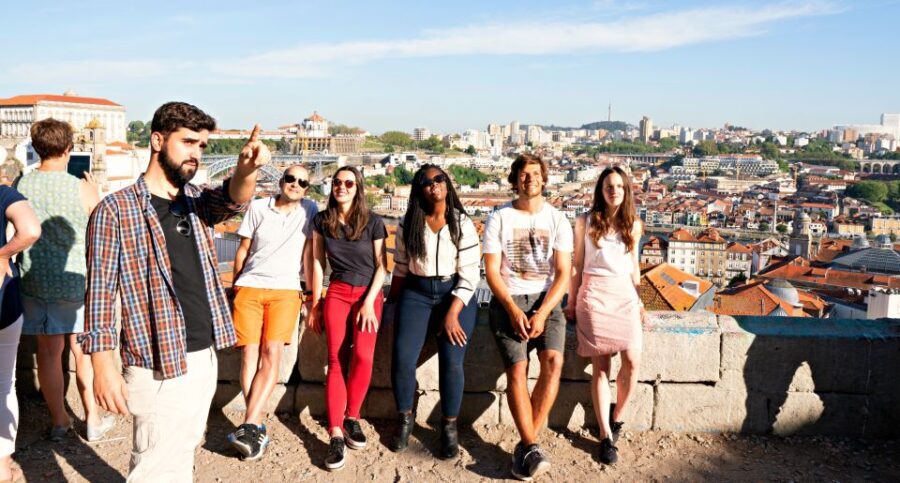
Very similar format to the tour above — three hours, guided walk, UNESCO center — but this one runs through GetYourGuide and has a slightly different route. The key difference is that this tour leans more toward smaller or even private group experiences, which means you get more personalized attention from your guide. Several visitors mention having essentially a private tour when they booked during quieter months.
The route covers the Ribeira waterfront, the cathedral neighborhood, Clerigos, and the main azulejo-covered churches. Guides like Egor and Ricardo get mentioned by name for going beyond the standard script, sharing restaurant recommendations and local tips that you will not find in a guidebook. At $34, it is essentially the same price as the previous option but with a different booking platform and potentially smaller groups. Worth comparing availability on your travel dates.
4. Porto: Historic City Center Walking Tour — $33
This is the budget-friendly guided option for people who want a structured tour without paying for extras they may not want. Three hours covering Porto’s historic center, including the landmarks and a handful of spots that most self-guided itineraries miss — hidden courtyards, lesser-known viewpoints, that kind of thing.
The guides on this one focus heavily on history and local culture, which makes it a better fit if you are genuinely interested in understanding Porto rather than just ticking off photo spots. Barbara gets particularly good mentions for her energy and depth of knowledge about Portuguese history. At $33 per person, this is the most affordable guided option on this list that still runs as a proper organized tour with a set itinerary and professional guide.
5. Porto’s #1 Walking Tour — Under $1

The booking fee is symbolic — under a dollar — and you tip the guide whatever you think the tour was worth at the end. This is the pay-what-you-wish model that has been running in European cities for years, and Porto’s version is one of the best I have encountered. The guides know that their income depends entirely on your experience, so they bring serious energy.
André and Harold both get called out by name as standouts. The tour runs about two and a half hours, covers the main highlights of the historic center, and doubles as an excellent orientation walk if you have just arrived. You will leave with a mental map of the city, a list of restaurant recommendations, and a much better sense of how Porto’s neighborhoods connect. The only downside is that group sizes can run large during peak season — 20 to 30 people is common. If that bothers you, spend the extra and book a smaller-group option. But for the price? Hard to argue with this one.
When to Walk Porto
Porto’s weather is milder than Lisbon but less predictable. Rain blows in off the Atlantic without much warning, especially between November and March. But even in winter, Porto rarely gets genuinely cold — daytime temperatures hover around 10-14°C, which is perfectly fine for walking as long as you have a waterproof layer.
Best months for walking tours: April through June and September through October. Warm enough for comfort, cool enough that uphill climbs do not leave you drenched. July and August are the peak tourist months — temperatures hit 28-32°C, tour groups swell in size, and the Ribeira district gets properly crowded. Still fine, but bring water and book a morning slot.
Best time of day: Morning tours (starting around 9 or 10 AM) give you the city before the cruise ship passengers arrive. The light is softer, the streets are emptier, and you will get better photos at every stop. Afternoon tours work well in spring and autumn when the sun does not set until 7 or 8 PM, giving you that golden-hour glow on the Ribeira waterfront toward the end of the walk.
Tips That Will Save You Time (and Your Feet)
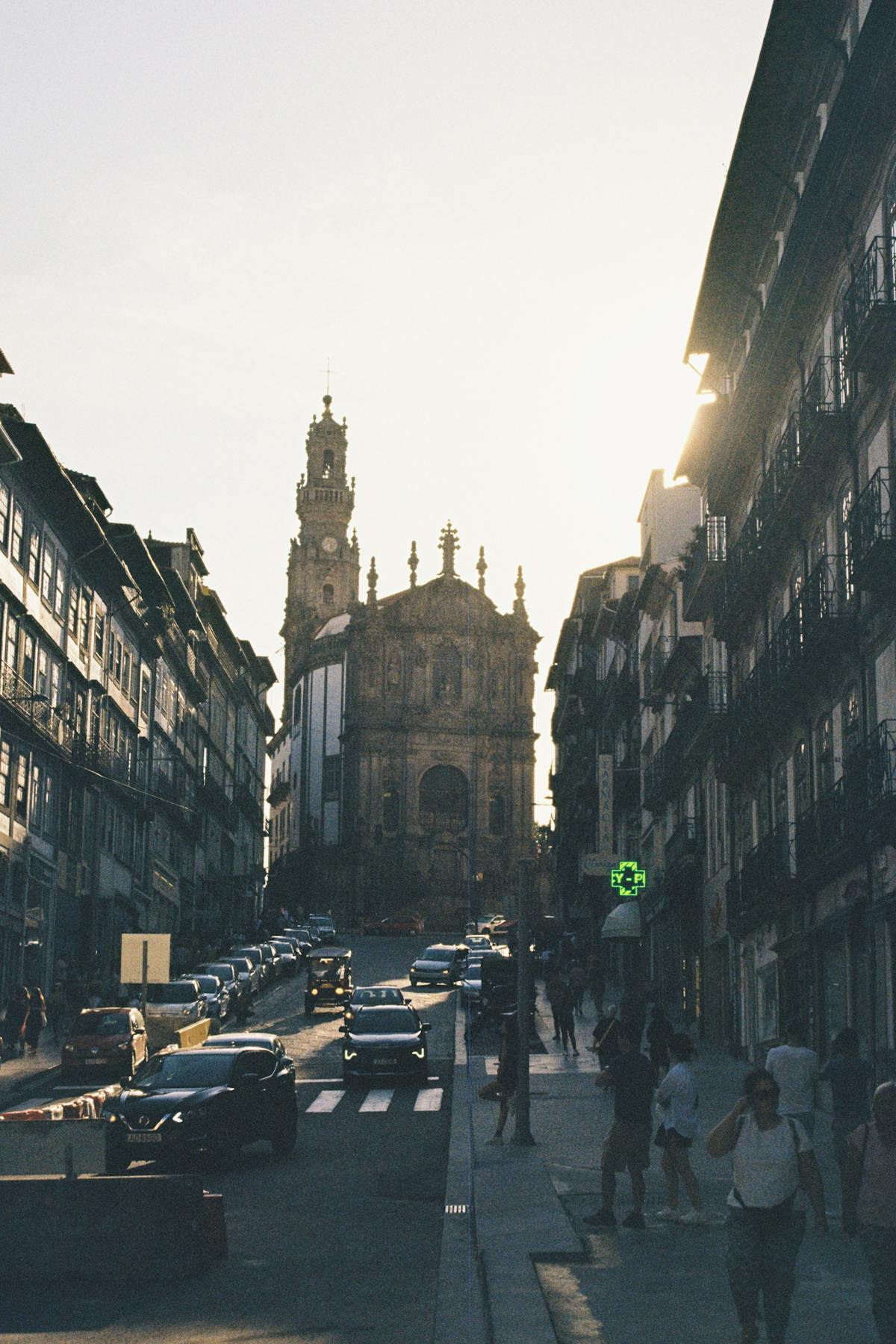
Wear proper shoes. This is not a “nice sandals will be fine” city. Porto’s calçada portuguesa cobblestones are gorgeous and dangerously slippery when wet. Trainers or walking shoes with decent grip are non-negotiable. I watched two people slip on the Ribeira waterfront within an hour of each other.
Book morning tours if you are visiting in summer. By 2 PM in July, the sun-exposed sections of the Ribeira and the upper streets near the Cathedral are genuinely punishing. Morning slots stay relatively comfortable.
Bring water, even if you think you do not need it. Most tours do not include drinks, and there are stretches of 20-30 minutes between accessible shops or cafes. Porto’s hills add up faster than you expect.
Check what is included before booking. The combo tours (walking + river cruise + cable car) include entry fees in the price. The walking-only tours typically do not cover any admission fees for sites along the route. If your tour passes the Clerigos Tower or the Lello Bookshop, you will pay separately to go inside unless the tour description specifically says otherwise.
Free cancellation matters. Porto weather can shift fast. Almost all of the tours listed above offer free cancellation up to 24 hours before the start time, which means you can rebook if the forecast turns ugly. Check the cancellation policy at the time of booking — it varies by operator.
Tipping on free tours. If you book the tip-based tour, the standard tip in Porto is around 5-10 per person for a good experience. Nobody will force you, but guides who just spent two and a half hours walking you around the city on spec deserve fair compensation.
What You Will Actually See on a Walking Tour
Most Porto walking tours follow a similar core route with slight variations. Here is what you can expect to cover on a standard 2.5 to 3 hour tour:
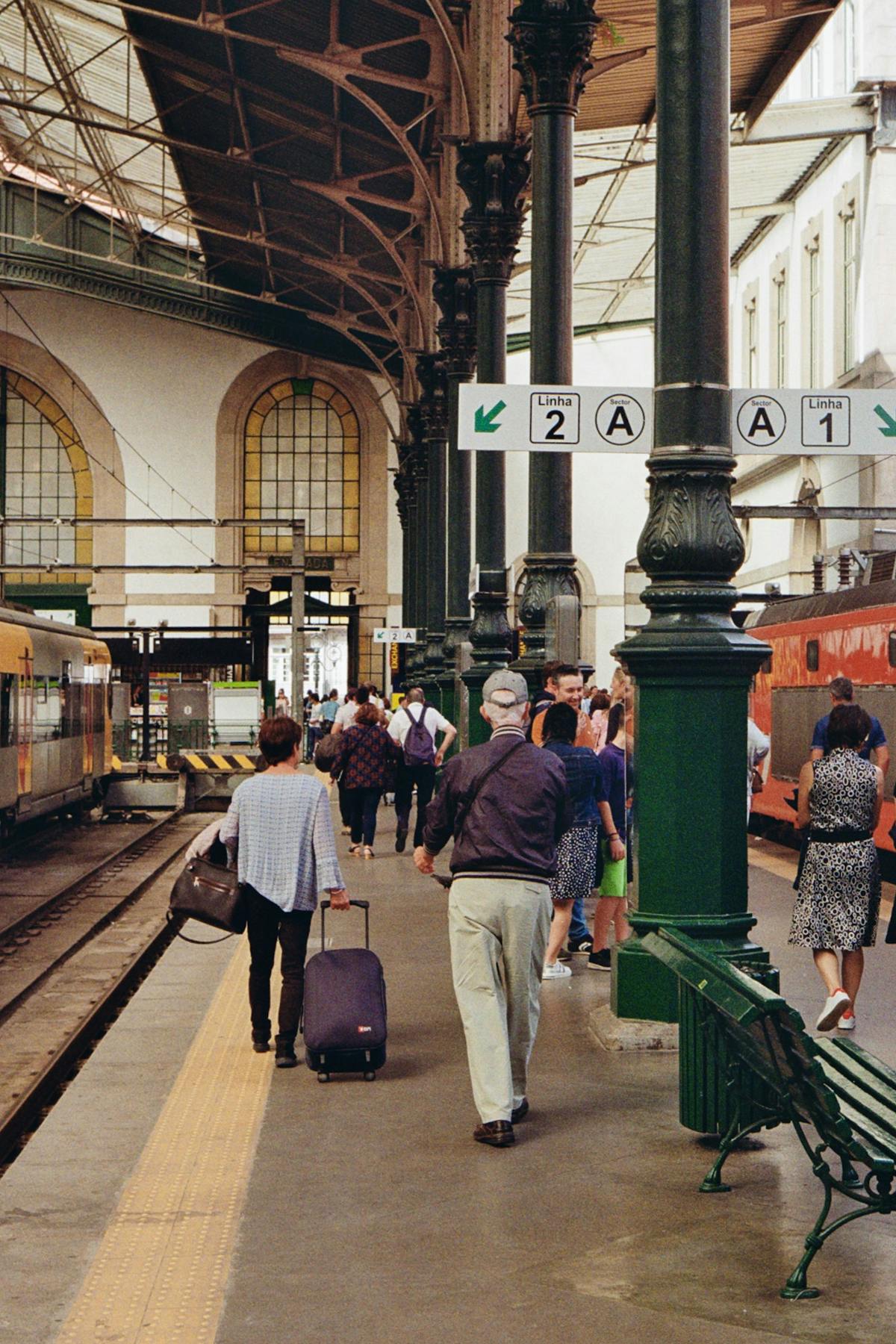
São Bento Station — The entrance hall with its 20,000 azulejo tiles depicting Portuguese history. Not every tour starts here, but most at least pass through. It is a working train station, so you can duck in even if your tour skips it.
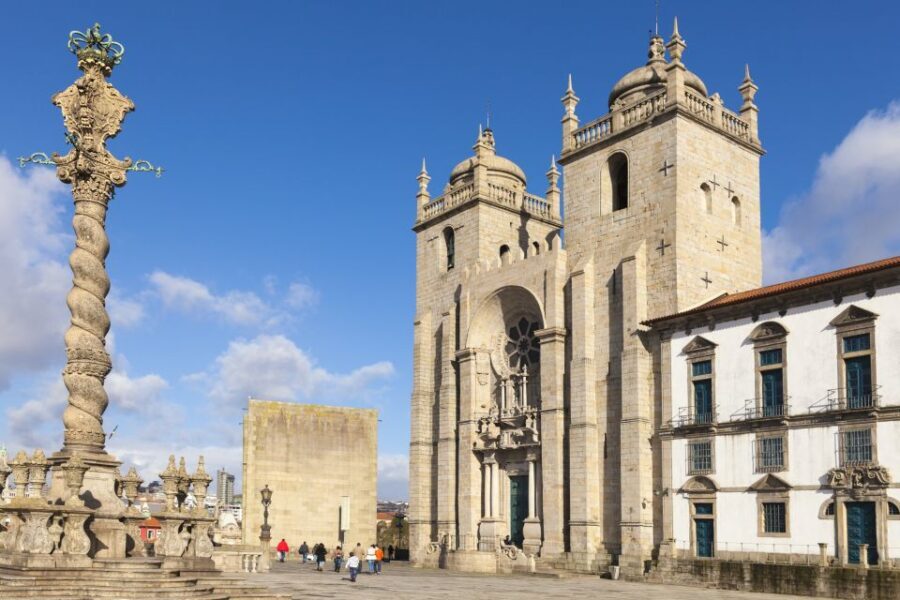
Porto Cathedral (Sé do Porto) — The Romanesque fortress-church sitting at the highest point of the old town. The terrace outside gives you one of the best overhead views of the Ribeira district and the river.
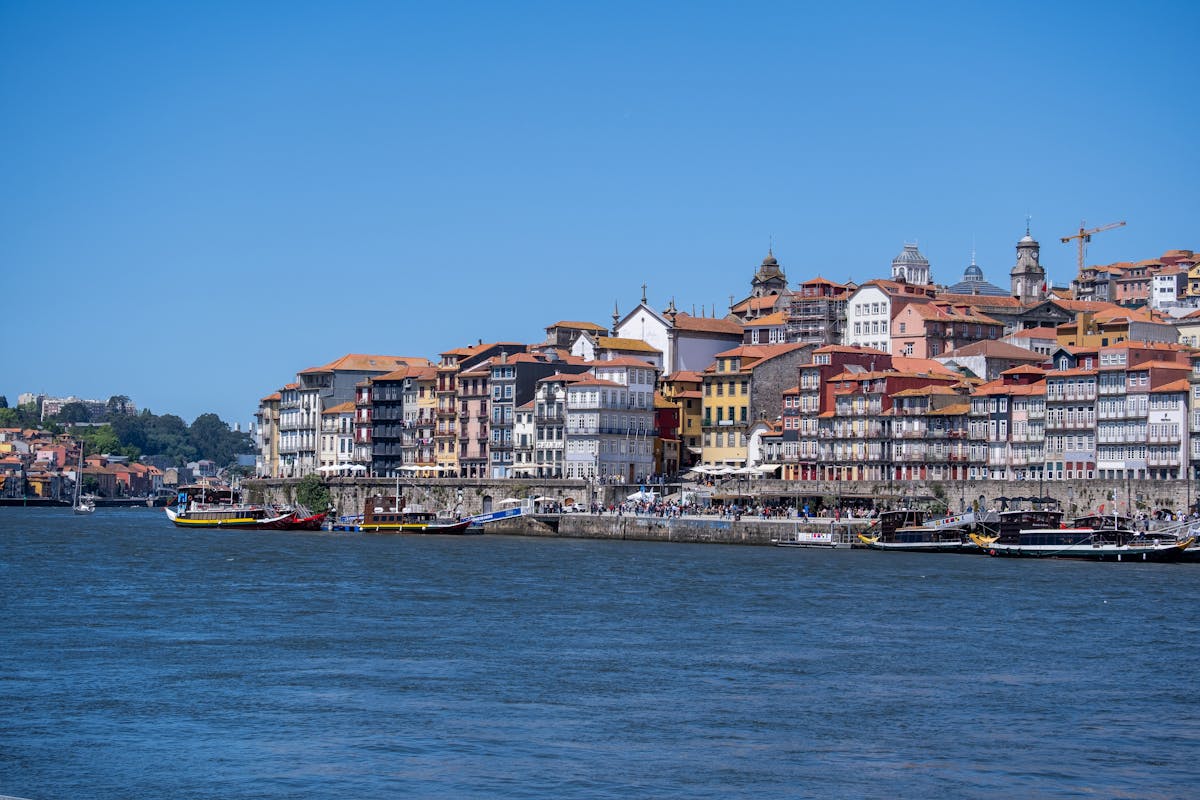
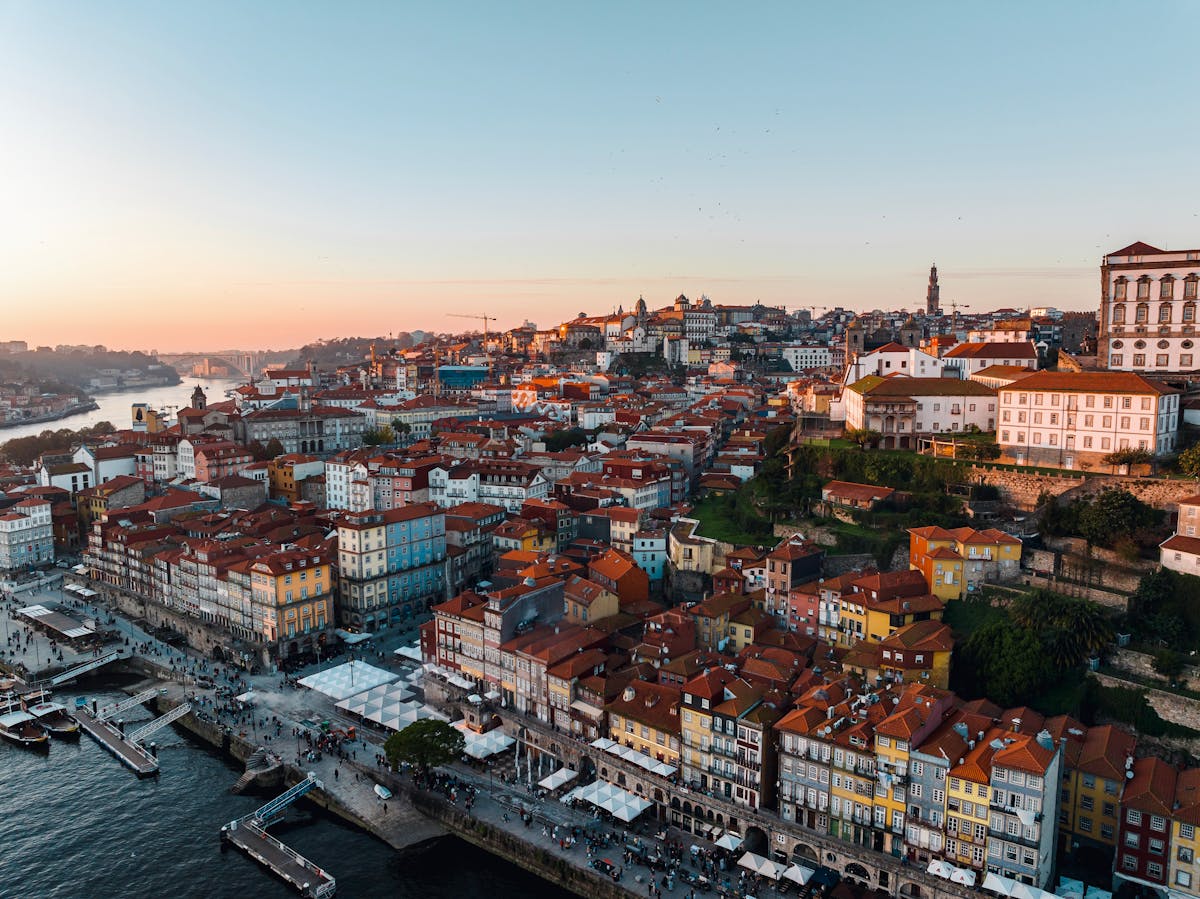
Ribeira District — The UNESCO-listed medieval quarter along the Douro. Narrow streets, leaning houses, restaurants spilling onto the waterfront. This is where you will spend the most time on any tour and where most of the photos get taken.
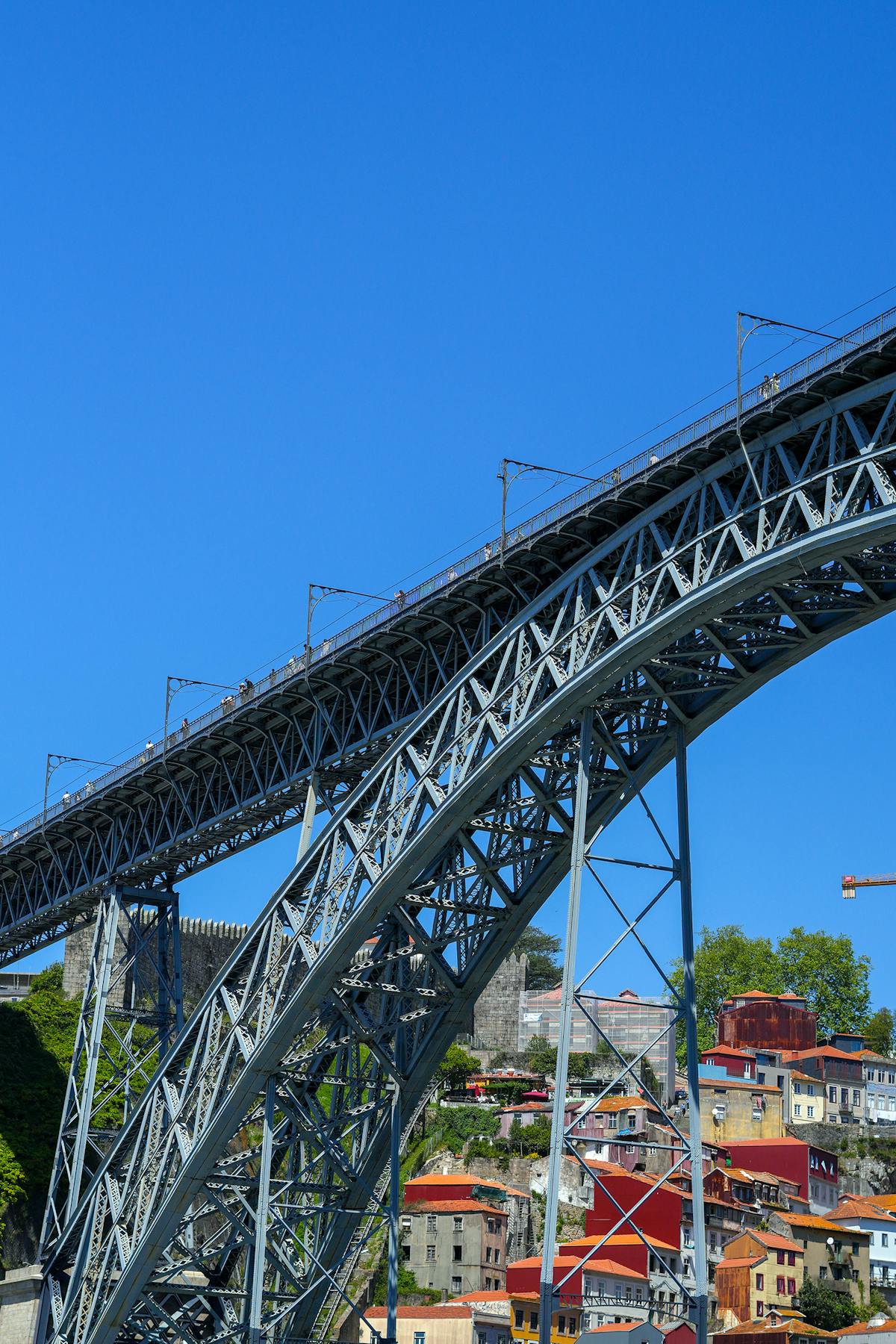
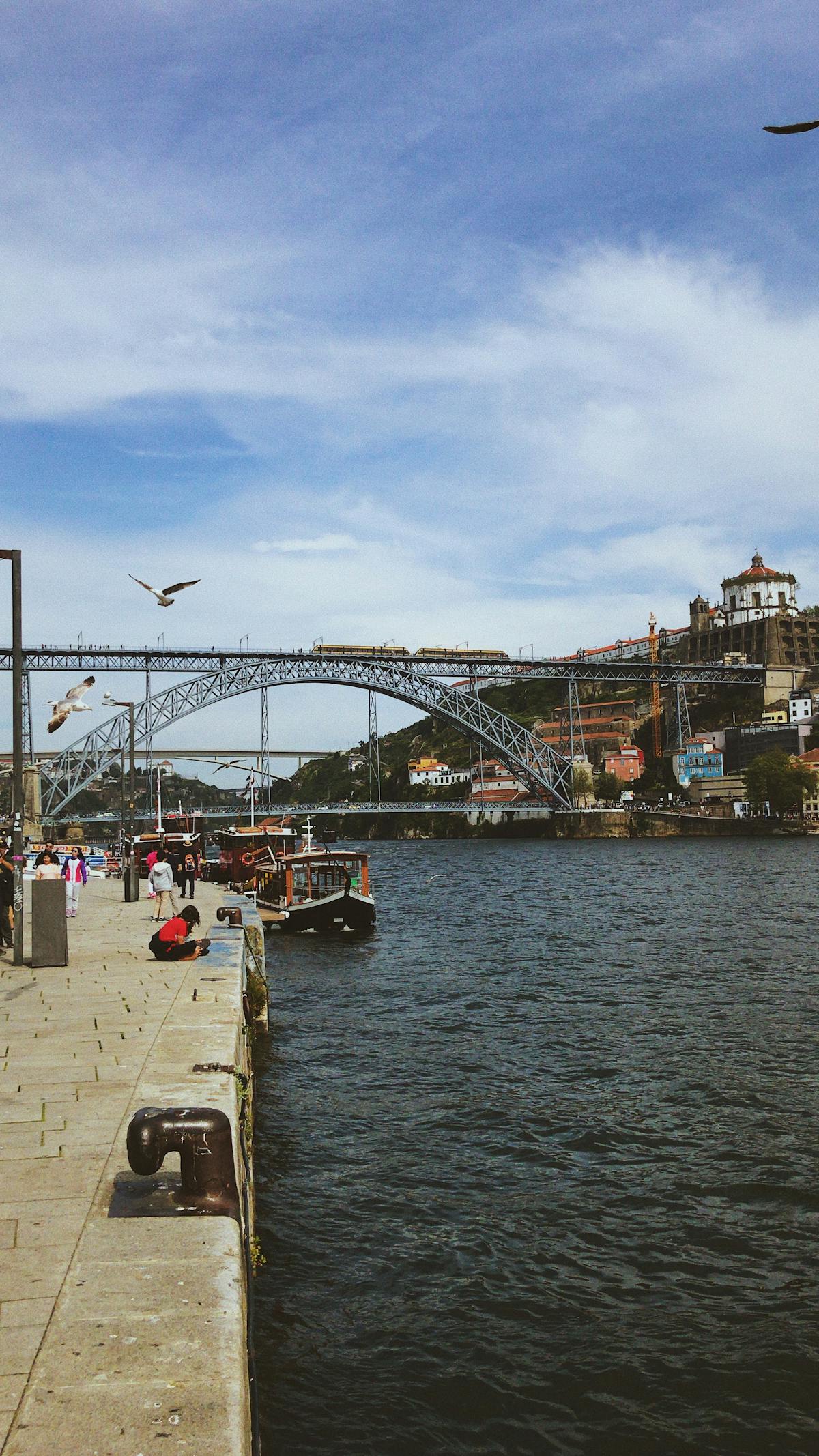
Dom Luís I Bridge — The double-decker iron bridge connecting Porto to Vila Nova de Gaia. Walking across the upper deck is free and takes about 10 minutes. The view from the middle of the bridge is the definitive Porto panorama. Some tours cross it, others just take you to the viewpoint nearby.
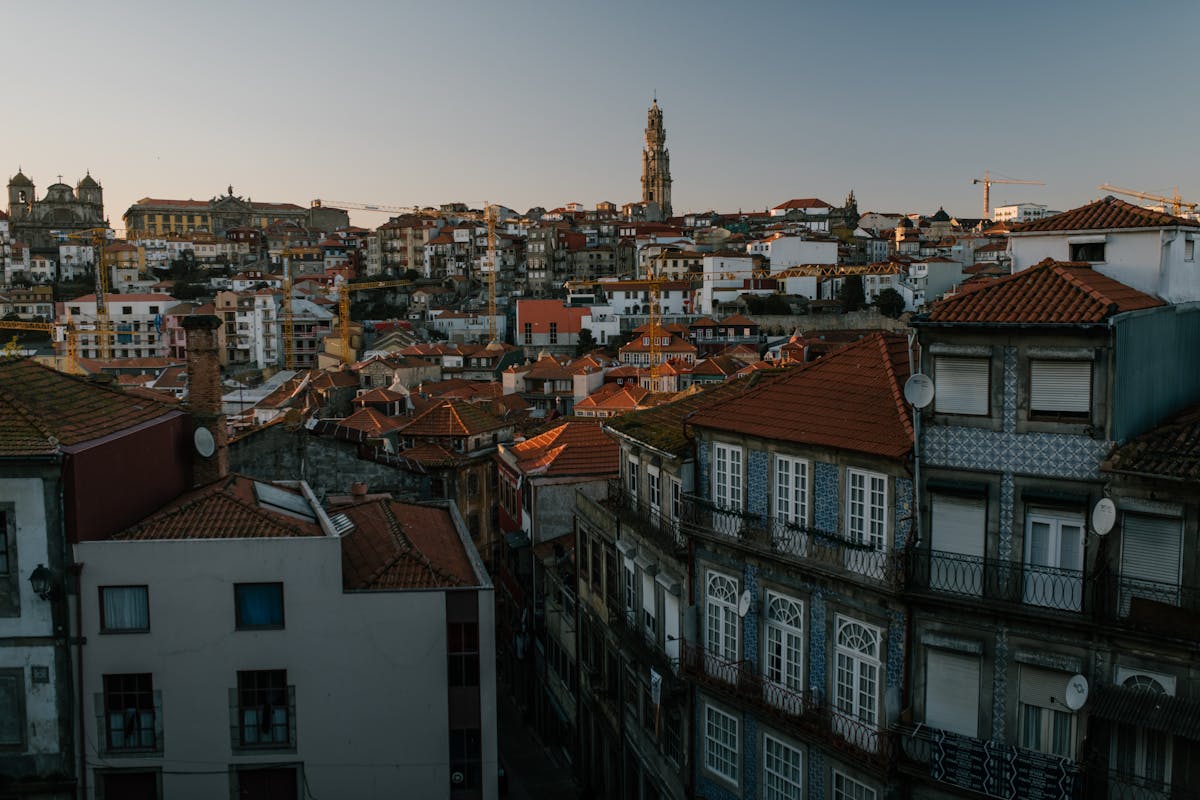
Clerigos Tower — The 76-meter baroque bell tower that dominates Porto’s skyline. Most tours point it out and explain its history, but climbing it (240 spiral steps) is usually not included. Worth doing on your own if your legs can handle more stairs after the tour.
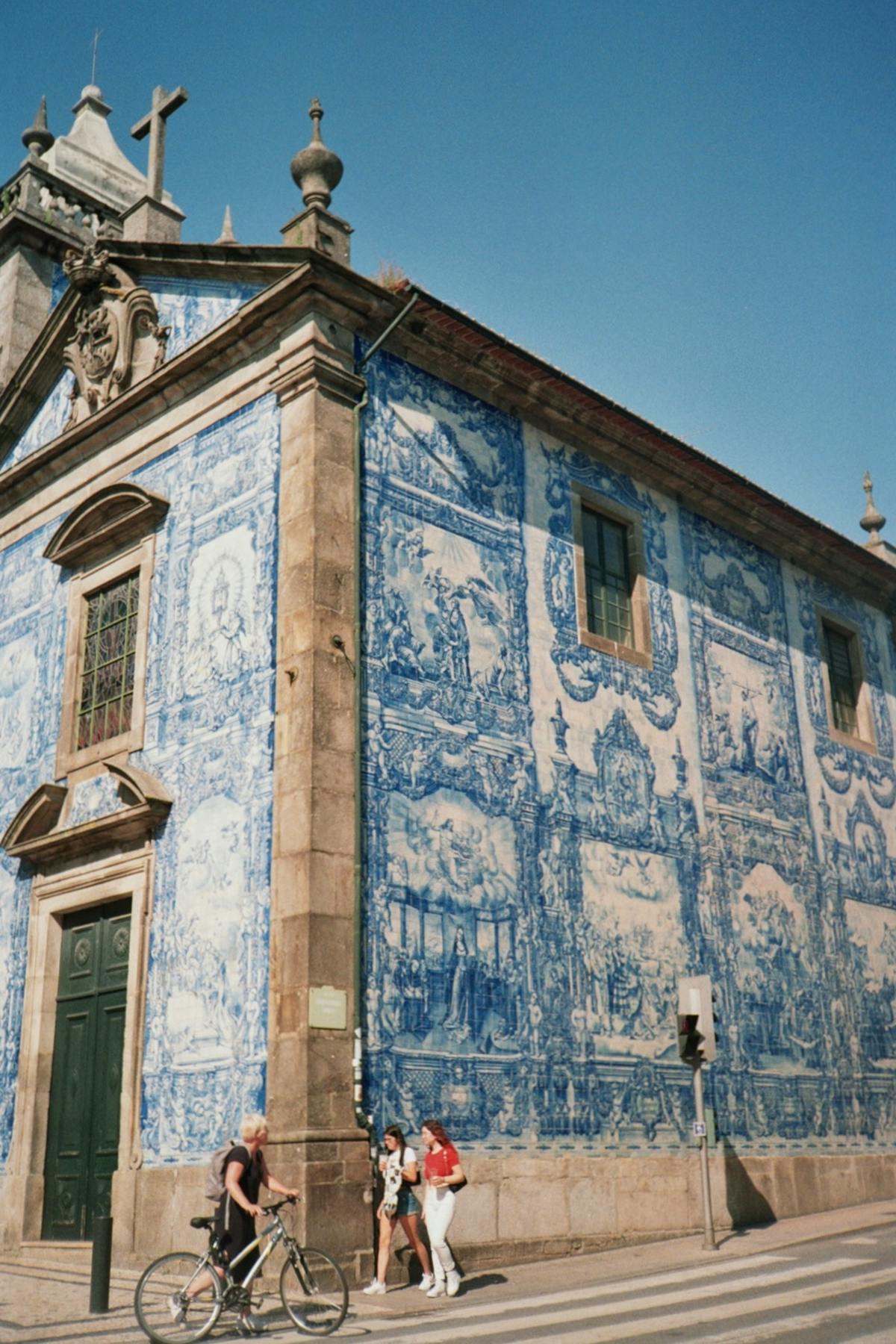
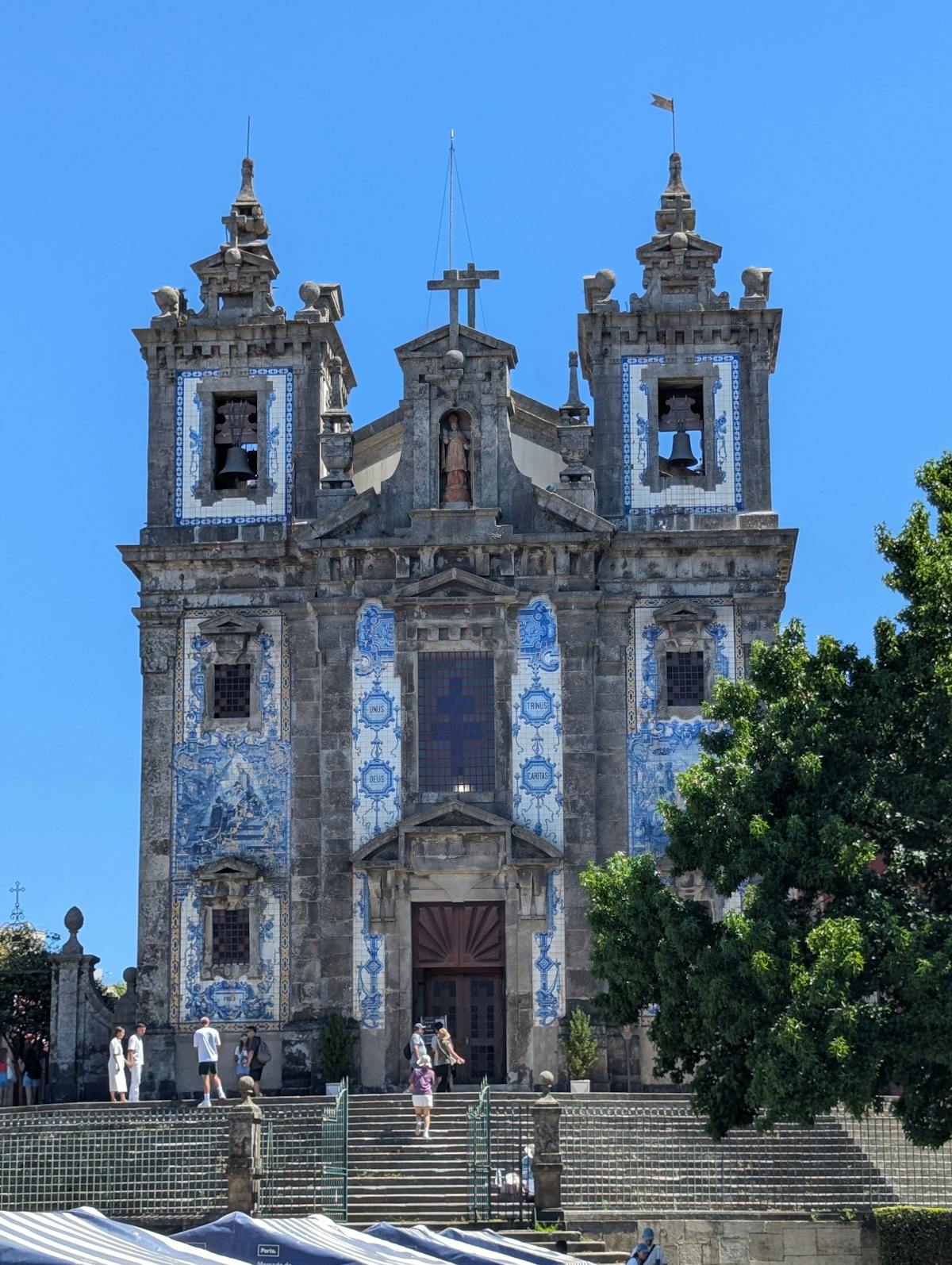
Igreja do Carmo and the Chapel of Souls — Two of Porto’s most photographed azulejo-covered churches. The Chapel of Souls (Capela das Almas) on Rua de Santa Catarina is particularly striking — the entire exterior is covered in blue and white tiles.

More Porto Guides
A walking tour through Porto is just the beginning. Once you know the layout, the city opens up in all sorts of directions. visiting port wine cellars in Porto takes you across the river to where the port wine is stored, and most tours include tastings that make the walk worth it on their own. a river cruise in Porto gives you the Douro from water level, a perspective the walking tour only hints at from the bridges. a food tour in Porto digs into the food scene that locals are genuinely proud of. For day trips, visiting the Douro Valley from Porto is the big one heading into vineyard country, and visiting Braga and Guimaraes from Porto takes you to two medieval cities that are surprisingly easy to cover in a single day. If Lisbon is next on your route, a food tour in Lisbon is a great starting point there.
This article contains affiliate links. If you book a tour through one of our links, we earn a small commission at no extra cost to you. This helps us keep producing free travel guides.