
Somewhere in the bright ground-floor gallery of the Van Gogh Museum, a pair of sunflowers burns against a yellow background. Not the real thing, obviously — thick strokes of oil paint laid down in Arles during the summer of 1888, when Vincent van Gogh was working so fast he barely slept. The painting is smaller than most visitors expect. Standing in front of it for the first time feels oddly personal, like reading someone else’s diary.
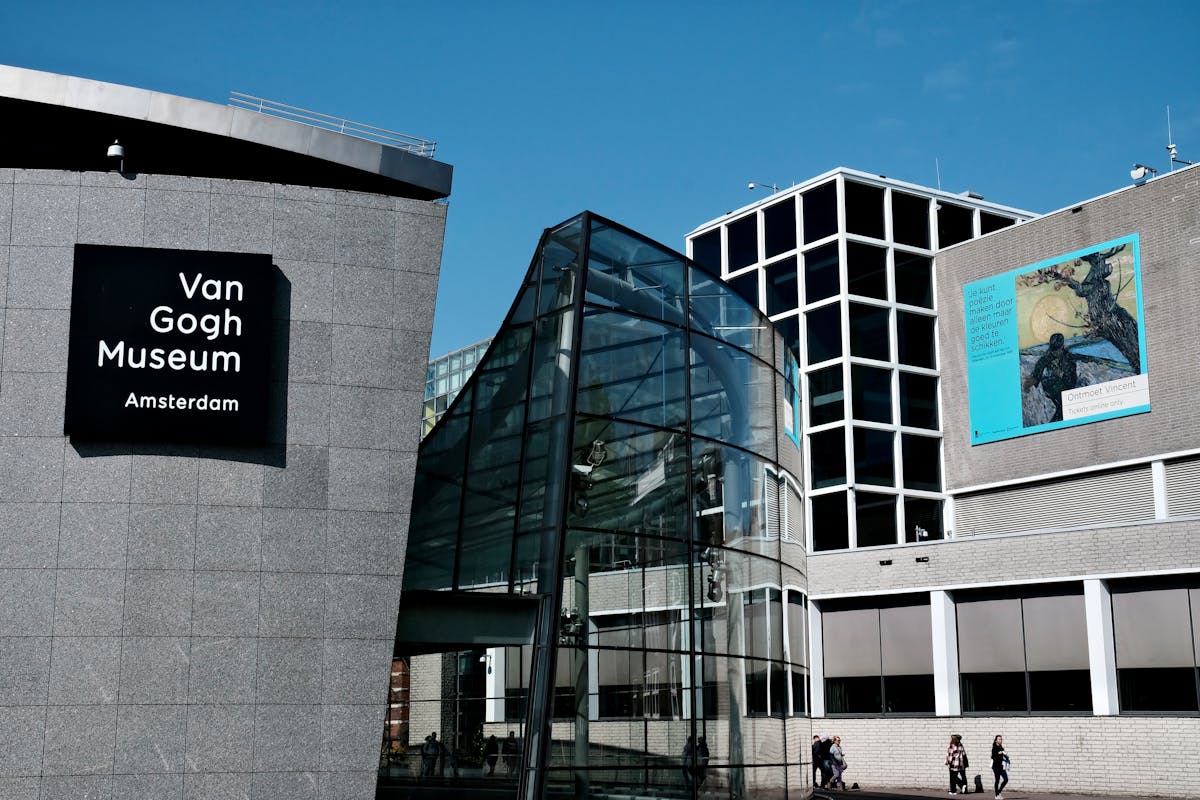
That feeling runs through the entire museum. This is not just a collection of famous paintings hung on white walls. The museum holds over 200 of Van Gogh’s works alongside fragments of the letters he wrote to his brother Theo — letters full of doubt, ambition, loneliness, and the occasional terrible pun about paint supplies. You walk through the galleries and watch him teach himself to draw, fail repeatedly, move to Paris, discover color, move to the south of France, and then produce the work that would eventually make him the most recognized painter in Western art.
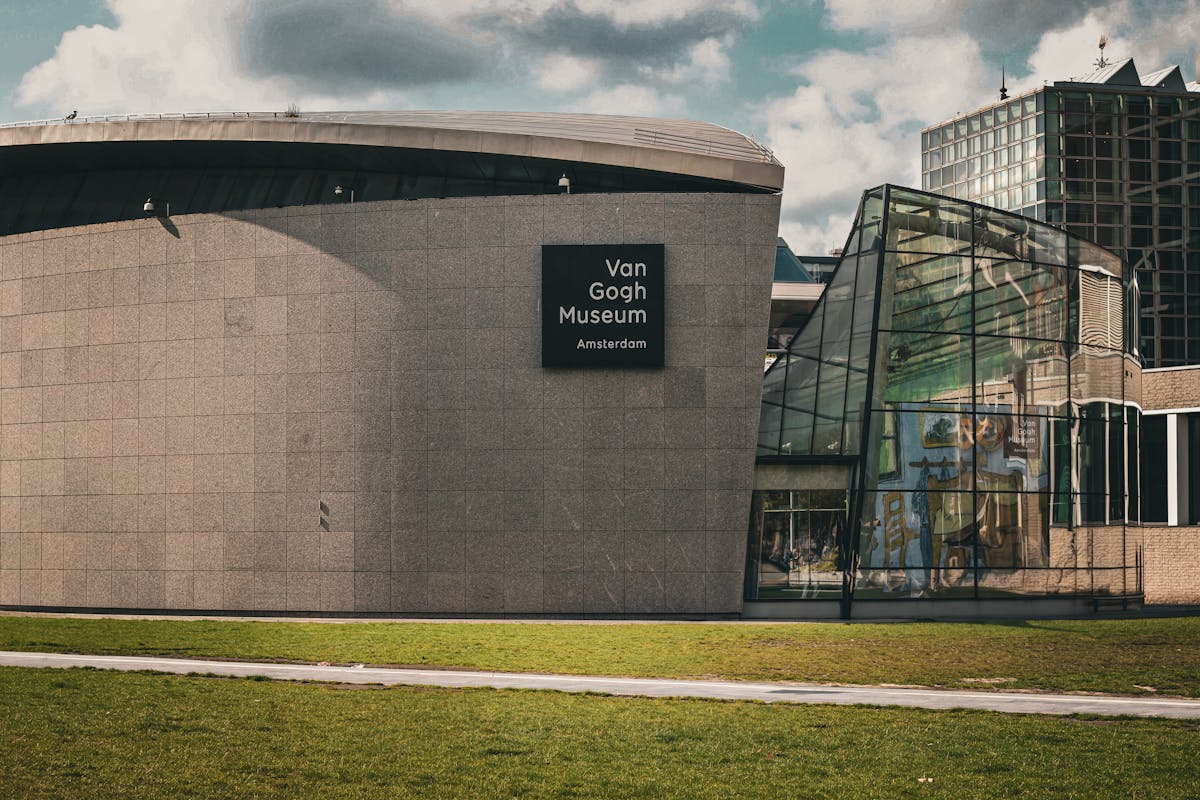
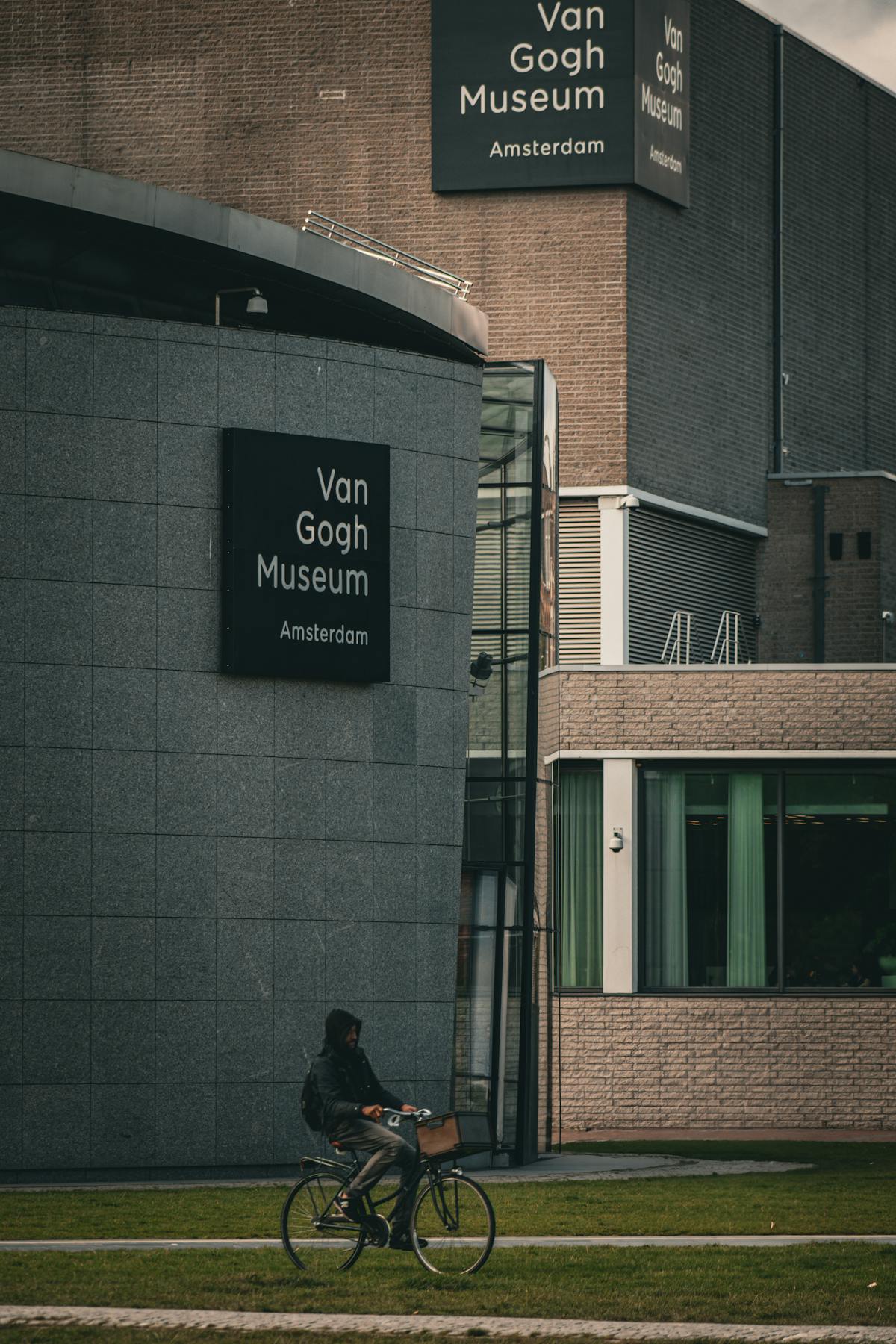
But here is the practical problem. More than two million people visit this museum every year, making it the second most popular in Amsterdam after the Rijksmuseum. It is also considerably smaller. Every visitor needs a timed-entry ticket booked in advance, and in peak season those slots sell out one to three weeks ahead of time. If you show up without a ticket, the door staff will politely but firmly redirect you to an app on your phone.
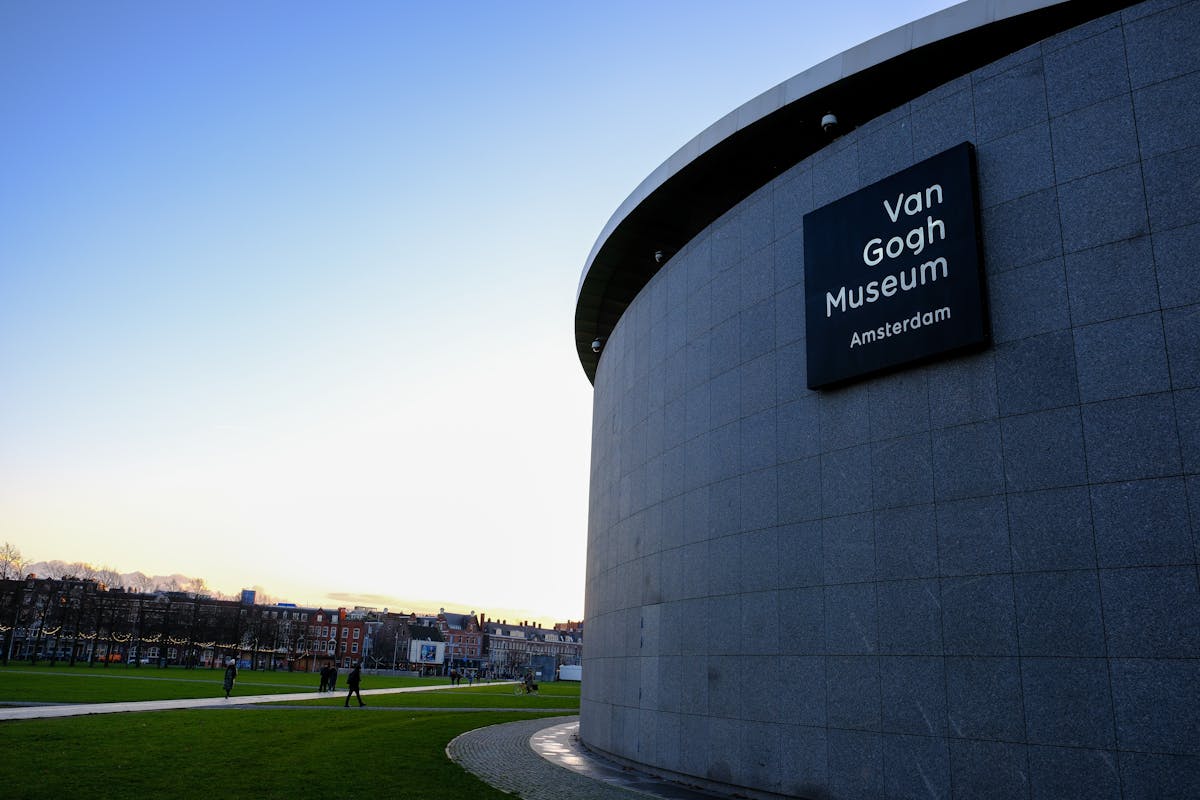
This guide covers exactly how the ticket system works, the best ways to get in (including options when the official site shows sold out), the right time slots to pick, and what you will actually see once you are inside.
In a Hurry? Here Are the Top Picks
- Van Gogh Museum Timed Entry Ticket — The standard option and the one most visitors should start with. You pick your date and a 30-minute arrival window, skip the box office entirely, and head straight to the security check. Budget roughly 1.5 hours inside.
- Van Gogh Museum Entry with Guided Tour — A small-group walkthrough (usually 8 people max) with an art historian who can explain why the brushwork in The Bedroom is deliberately off-kilter and what the color shifts across the self-portraits actually mean. Worth it if this is your first serious encounter with Van Gogh.
- Van Gogh Museum Ticket and Canal Cruise Combo — Pairs the museum ticket with a one-hour canal cruise through the Jordaan and Grachtengordel. Two quintessential Amsterdam experiences on a single booking, and the combo price is cheaper than buying them separately.
How Van Gogh Museum Tickets Work
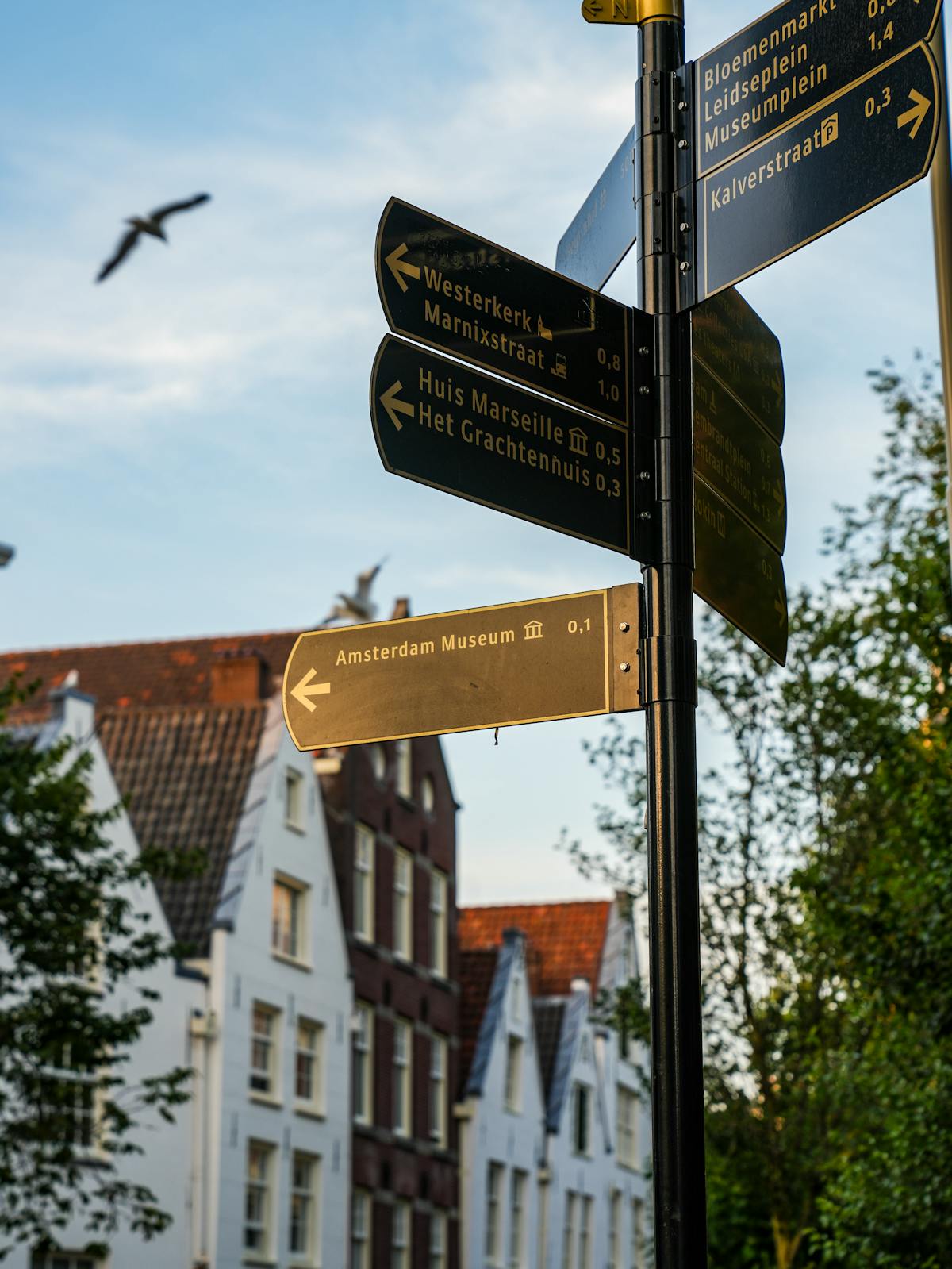
The museum switched to a timed-entry system several years ago and has not looked back. There are no walk-up ticket windows anymore. Every visitor, including children under 18 who get in free, needs a reservation for a specific date and time slot.
Here is how it breaks down:
- Adults (18+): Tickets cost around EUR 22 through the official site, though third-party platforms like GetYourGuide typically charge EUR 30-35 because they include service fees and guaranteed availability.
- Children (0-17): Free admission, but you still need to reserve a timed slot for each child.
- Audio guides: Available in ten languages for a small add-on fee. The Dutch and English versions are particularly well-produced.
- Time slots: You choose a 30-minute arrival window (for example, 10:00-10:30). You must arrive within that window, but once inside you can stay as long as you want until closing.
The critical thing to understand: tickets go fast. During spring and summer, the museum regularly sells out one to three weeks in advance. Even in December — when Amsterdam is cold, grey, and theoretically off-season — visitors have reported finding nothing available. The only reliably quiet window is mid-January.
Best Ways to Get Van Gogh Museum Tickets
There are three solid approaches, depending on how far ahead you are planning and whether the official allocation has already sold out.
1. Timed Entry Ticket (Standard)
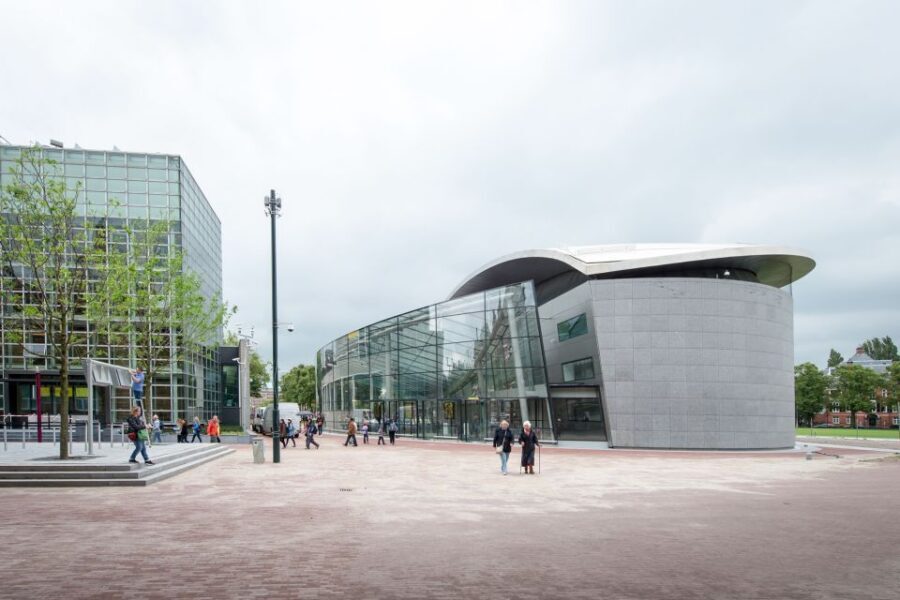
This is the classic option and the right choice for most visitors. You select a date, pick a 30-minute arrival window, and receive a mobile ticket. No printing needed. When you show up, you scan the QR code, pass through a quick security check, and walk in.
The standard ticket gives you access to the permanent collection — all four floors of Van Gogh paintings plus whatever temporary exhibition is running — and you can stay until the museum closes. Most visitors spend between 90 minutes and two hours, though some linger for three.
Check availability and prices for the timed entry ticket here.
2. Guided Tour with Entry
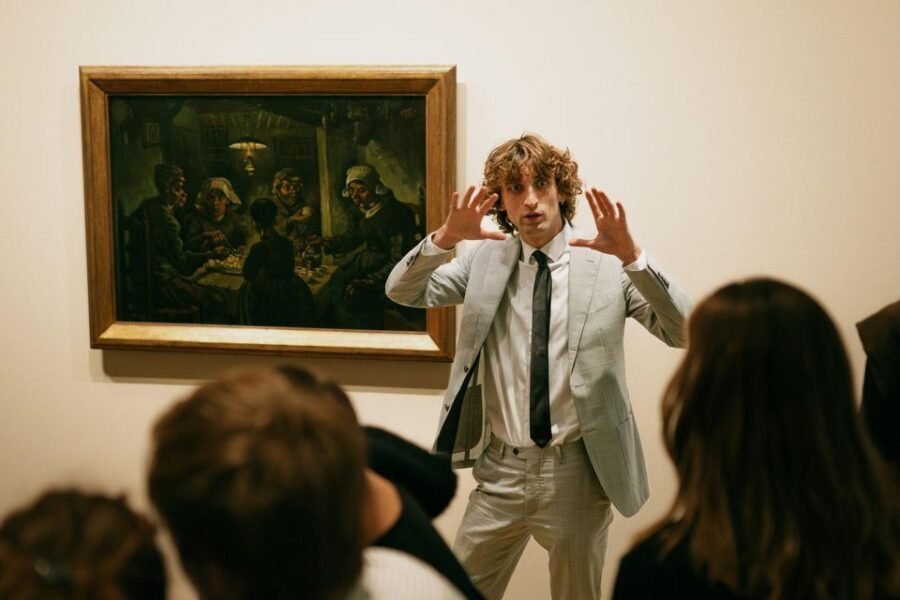
If the standard tickets are sold out — or if you want someone who genuinely knows art history walking you through the collection — a guided tour is the best backup plan. Tour operators hold their own ticket allocations, separate from the museum’s direct sales. This means guided tours frequently have availability even when the official site says sold out.
The tours run in small groups, usually capped at six to eight people. A qualified guide takes you through the highlights over roughly 90 minutes, covering Van Gogh’s artistic development from his early dark Dutch period through the explosion of color in Arles and Saint-Remy. After the guided portion ends, you are free to explore independently for as long as you want.
The trade-off is price. Guided tours run significantly higher than standard tickets. But if your alternative is not seeing the museum at all, the premium is easy to justify.
Check availability and prices for the guided tour here.
3. Museum and Canal Cruise Combo
This bundles the museum ticket with a one-hour canal cruise, and the combined price works out cheaper than booking each separately. The canal cruise takes you through the UNESCO-listed Grachtengordel canal ring, past the skinny houses of the Jordaan, under low bridges, and along houseboats that look like they have been there since the 1970s (some probably have).
Logistically, you can do the museum and the cruise in either order. Most people do the museum first, then walk five minutes to the canal cruise departure point near the Rijksmuseum. The whole thing takes about three hours total.
Check availability and prices for the museum and canal cruise combo here.
When to Visit the Van Gogh Museum
Timing matters more here than at almost any other Amsterdam museum. The building is compact and the collection is concentrated, so when it gets crowded, it gets properly crowded.
Best time slots:
- First slot of the day (9:00 AM): The galleries are noticeably emptier for the first 30-45 minutes. You can actually stand in front of Sunflowers without someone’s phone appearing in your peripheral vision.
- Late afternoon (after 3:00 PM): Tour groups have largely cleared out by this point, and casual visitors start leaving. The last two hours before closing are often the most relaxed.
- Friday evenings: The museum stays open until 9:00 PM on Fridays, and the evening slots (6:00 PM onward) are among the quietest of the entire week.
Worst times:
- 10:30 AM to 2:00 PM: This is peak tour-group territory. The galleries on floors 1 and 2 (where the famous paintings hang) will be shoulder-to-shoulder.
- Weekends during April-August: Amsterdam’s high season overlaps with tulip season and school holidays across Europe. Book your tickets a month ahead if you are visiting during this window.
Best months overall: November through February (excluding the Christmas-New Year spike). The museum is open daily from 9:00 AM to 6:00 PM, with extended hours on Fridays.
Tips for Your Visit
- Book as early as possible. As soon as your Amsterdam dates are confirmed, lock in your museum tickets. Waiting even a week or two during high season can mean missing out entirely.
- Arrive a few minutes before your time slot. There is a brief security check at the entrance (similar to airport screening). If you arrive right at the end of your 30-minute window, you will be cutting it close.
- Start on the top floor. Most visitors follow the suggested route from ground floor upward. Going against the flow means you hit the top floor (Post-Impressionist collection and temporary exhibits) while it is still empty, then work your way down to the famous pieces.
- The audio guide is genuinely good. It covers about 40 works and includes audio fragments from Van Gogh’s letters. The small add-on fee is well spent if this is your first visit.
- Leave large bags at the free cloakroom. Backpacks bigger than A4 size must be checked. The cloakroom is free and efficient, but it adds a few minutes to your arrival.
- The museum shop is surprisingly good. It stays open slightly later than the galleries, and the book section has the best selection of Van Gogh publications you will find anywhere. Worth budgeting 15 minutes for browsing.
What You Will See Inside
The permanent collection is arranged chronologically across four floors, which means you are essentially walking through Van Gogh’s life from start to finish.
Ground floor: The early Dutch period — dark, earthy paintings of peasant life in the Netherlands. The Potato Eaters lives here, along with the grim landscapes of Nuenen. This is Van Gogh before he discovered color, and the contrast with what comes next makes the rest of the museum hit harder.
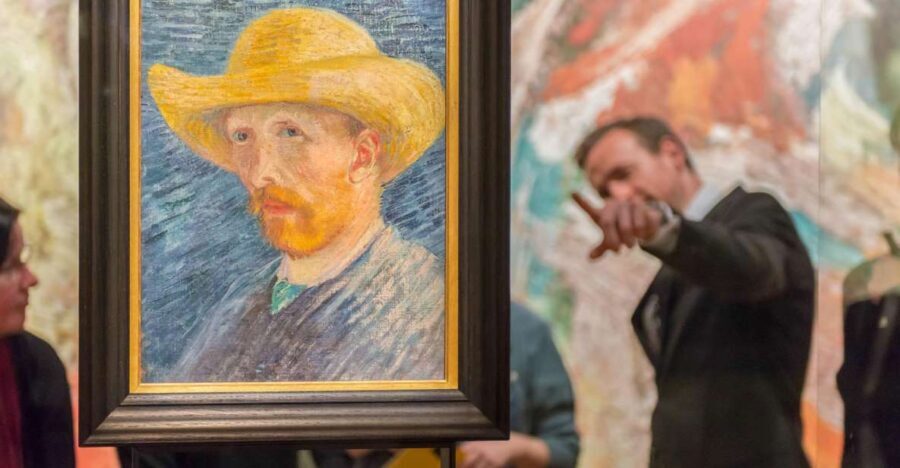
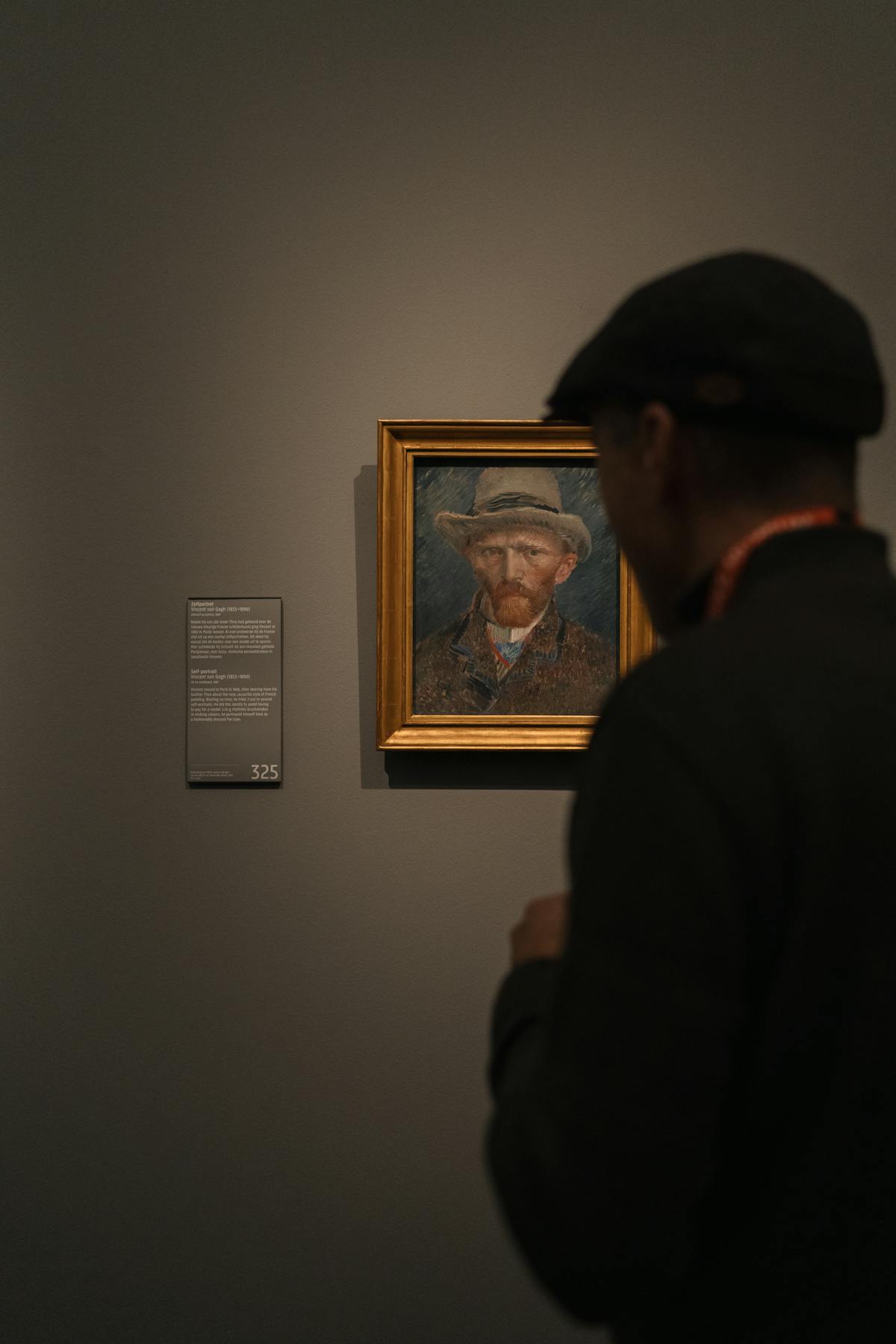
First floor: Paris and the discovery of Impressionism. Van Gogh’s palette shifts dramatically as he encounters the work of Monet, Seurat, and Gauguin. The self-portraits from this period show him experimenting with technique almost in real time.
Second floor: Arles, Saint-Remy, and Auvers-sur-Oise — the final, astonishingly productive years. This is where you will find Sunflowers, The Bedroom, Almond Blossom, and the swirling landscapes that most people think of when they hear his name. The room with Wheatfield with Crows — one of his last paintings — is genuinely affecting.
Third floor: Rotating temporary exhibitions that place Van Gogh’s work in context with his contemporaries. Past shows have explored his relationship with Japanese prints, his influence on Expressionism, and his correspondence with other artists.
Scattered throughout are display cases with original letters to Theo, sketches, and personal artifacts. These are easy to walk past, but they are some of the most revealing items in the building.
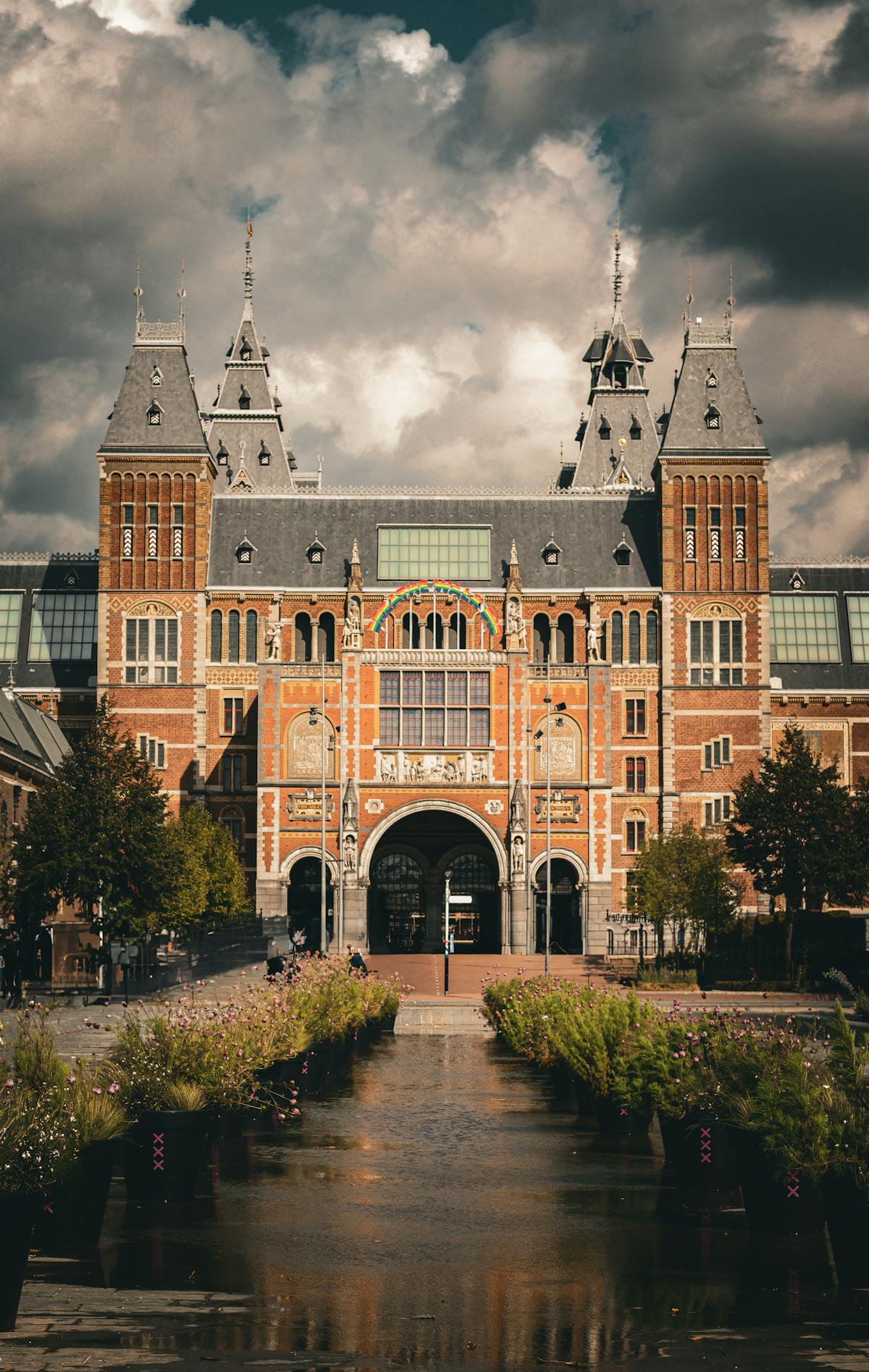
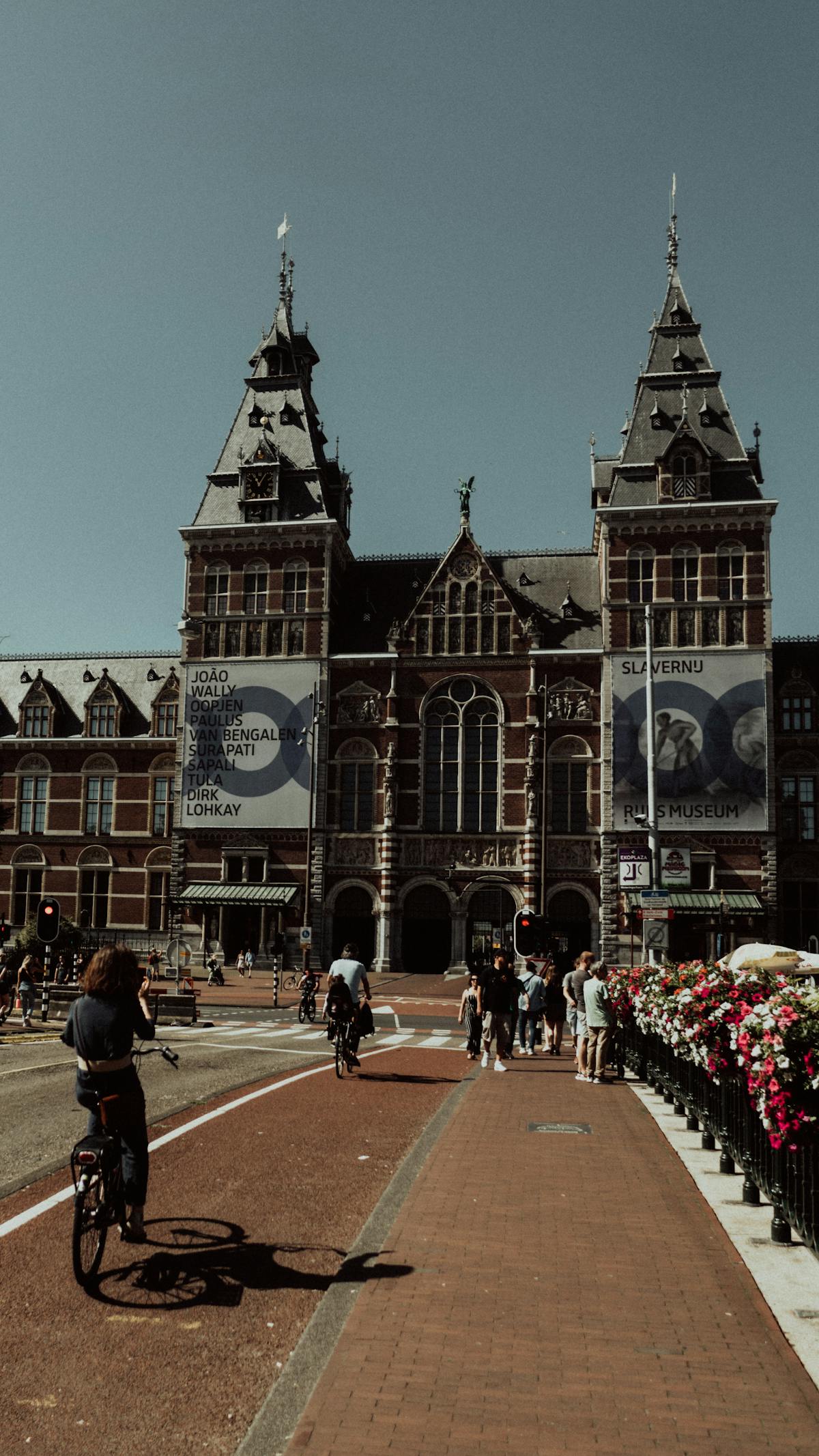
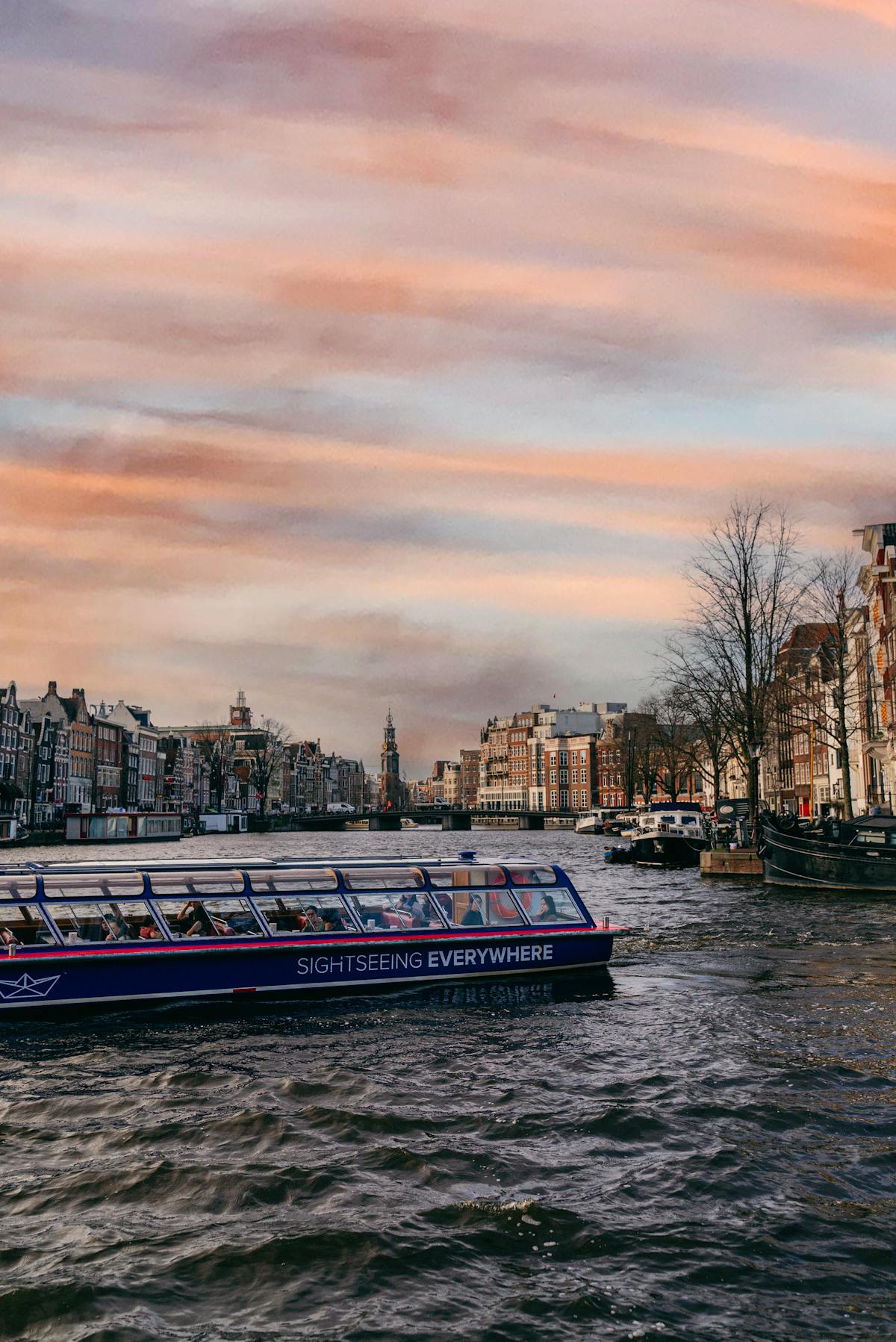
If the Van Gogh Museum leaves you wanting more of Amsterdam’s art and culture, the Rijksmuseum is right across the square and holds Rembrandt’s The Night Watch alongside one of the world’s great collections of Dutch Golden Age painting. The two museums make for a full but deeply satisfying day on Museumplein, especially if you slot a canal cruise in between to give your feet and your eyes a rest. The canals themselves are a kind of museum — four centuries of narrow houses, bridges, and merchant history reflected in water that shifts color with the clouds. It is the kind of afternoon where you realize the city itself is the attraction, and the museums are just the parts that happen to have doors.
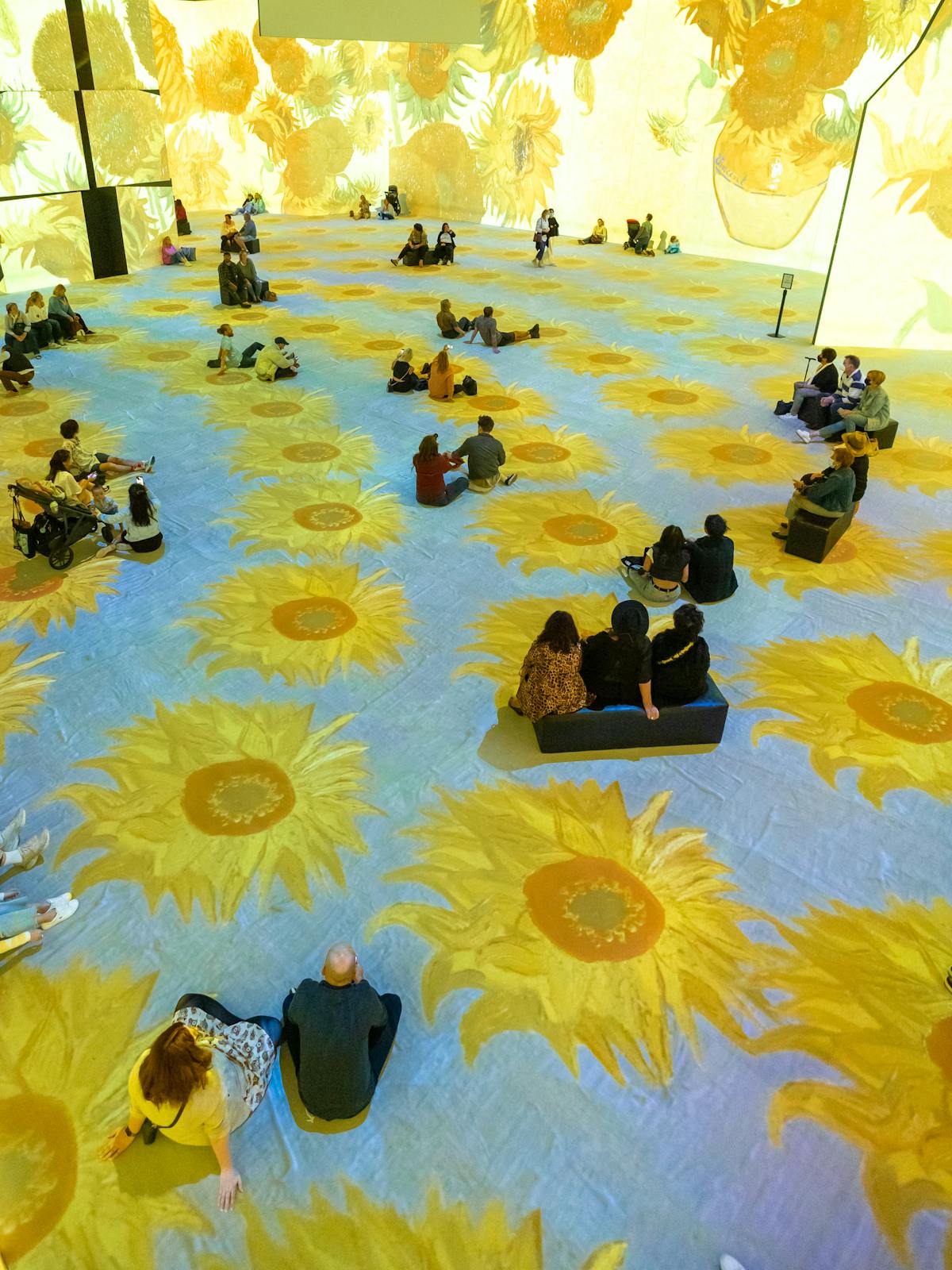
Museumplein is Amsterdam’s cultural nucleus, and the Van Gogh Museum sits right at its center. The Rijksmuseum is a five-minute walk across the square, holding Rembrandt and Vermeer and the rest of the Dutch Golden Age. Around the corner, the Moco Museum pairs Banksy street art with immersive digital installations — a sharp contrast to the 19th-century canvases you just left. The Fabrique des Lumieres takes the immersive concept even further, projecting masterworks floor-to-ceiling inside a converted gasworks.
Between museums, an Amsterdam canal cruise is one of the better ways to rest your feet while still seeing the city. If you are visiting in spring, Keukenhof is an easy day trip from Amsterdam and the tulip fields alone are worth the detour.
This article may contain affiliate links. When you book through these links, we may earn a small commission at no extra cost to you. This helps us keep creating useful travel guides.