
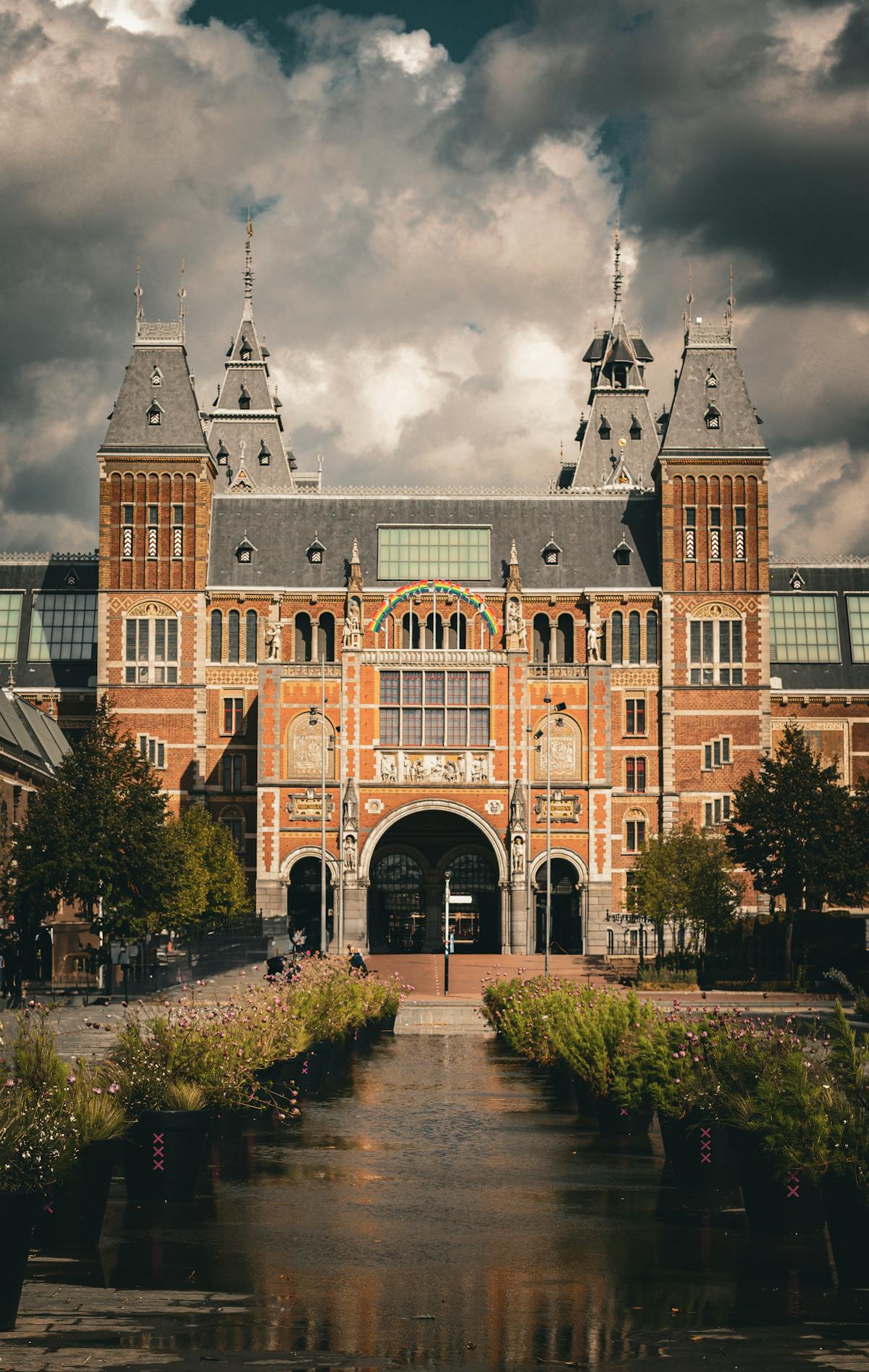
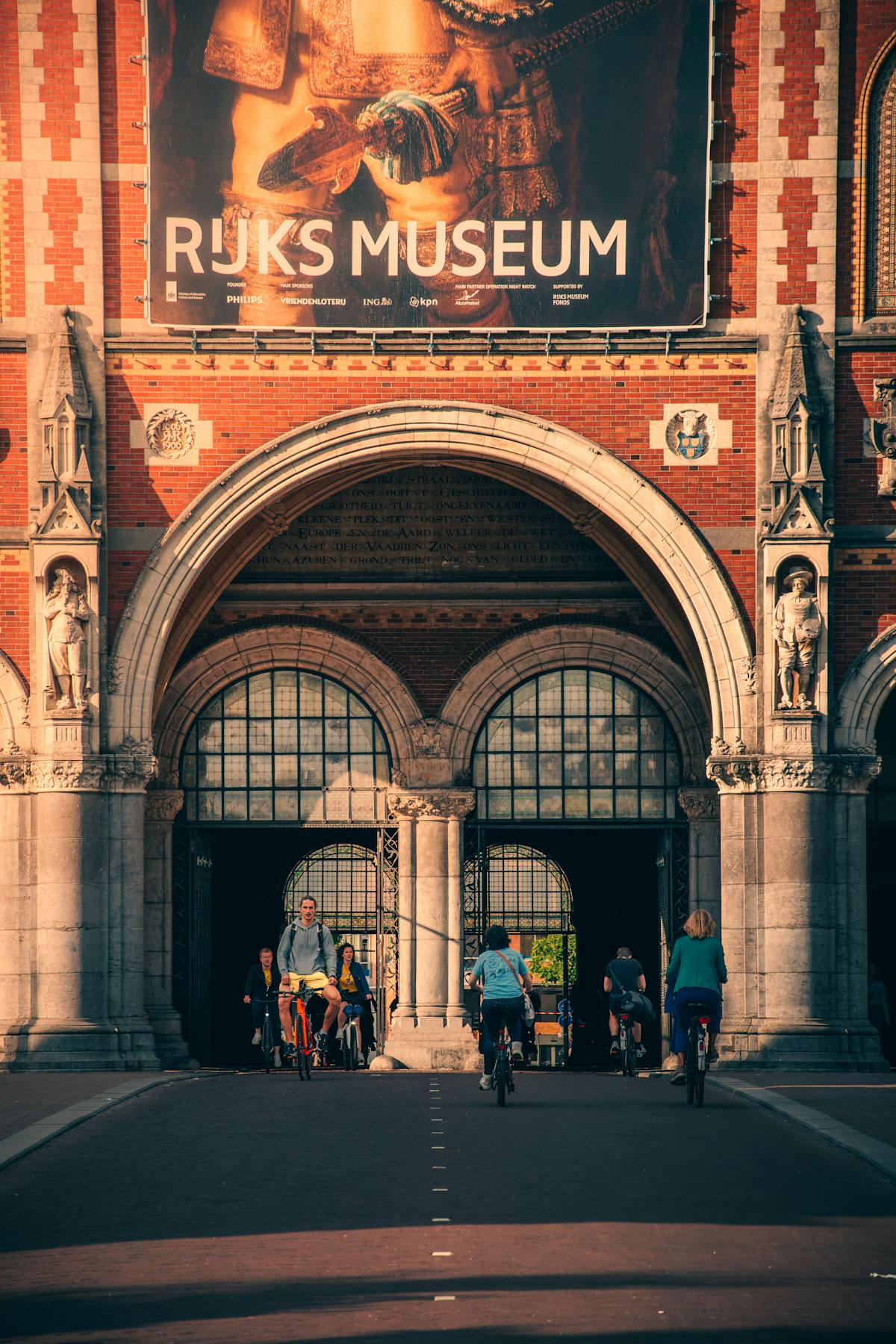
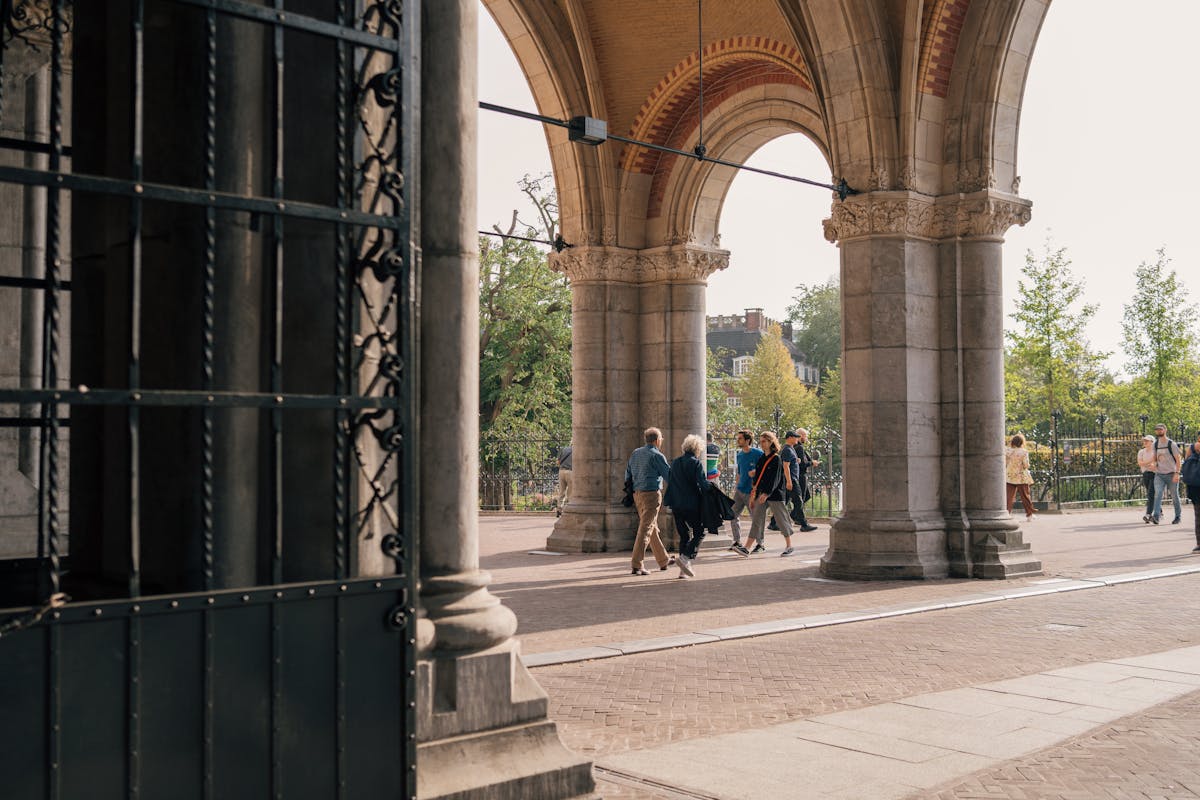
The building itself is the first exhibit. You walk through a passage beneath the Rijksmuseum and hear a cellist playing under the arches, cyclists weaving past on both sides, and then you look up at this cathedral-sized thing and think: right, this is not just a museum.
I made the mistake of showing up without a timed ticket my first time. Stood at the entrance for ten minutes before a guard explained — politely, in that very Dutch way — that the Rijksmuseum only sells online tickets now. No counter, no window, no exceptions.
So here’s everything you actually need to know about getting in.
Best overall: Rijksmuseum Entry Ticket — $31. Timed entry, skip the stress, go at your own pace. The free app doubles as an audio guide.
Best guided: Rijksmuseum Guided Tour — $79. Two hours with someone who actually knows the stories behind the paintings. Worth it if it’s your first time.
Best combo: Canal Cruise + Rijksmuseum — $47. Two of Amsterdam’s best experiences for less than the price of dinner on the Leidseplein.
- How Rijksmuseum Tickets Work
- Self-Guided or Guided Tour?
- The Best Rijksmuseum Tours to Book
- 1. Rijksmuseum Entry Ticket —
- 2. Rijksmuseum Guided Tour with Entrance —
- 3. Canal Cruise + Rijksmuseum Combo —
- 4. Small-Group Guided Tour —
- When to Visit the Rijksmuseum
- Tips That Will Save You Time
- What You’ll Actually See Inside
- How to Get There
- While You’re in Amsterdam
How Rijksmuseum Tickets Work
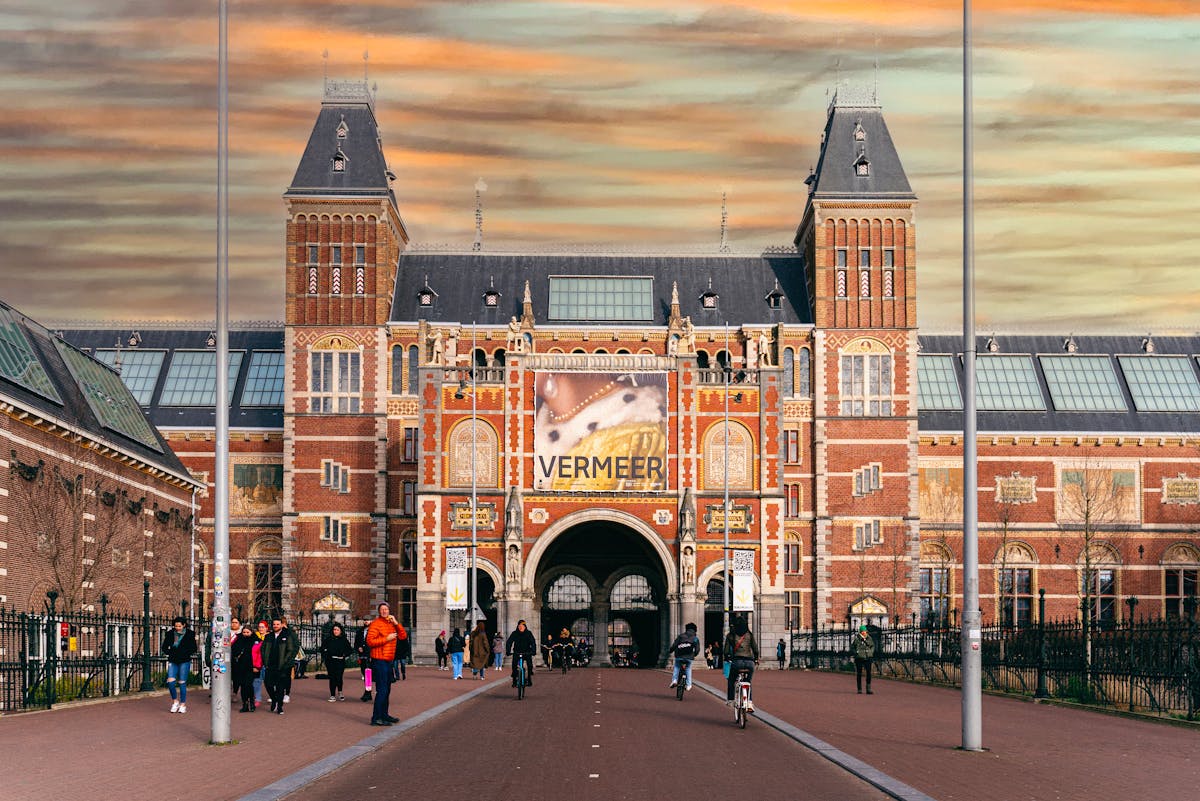
The Rijksmuseum ditched physical ticket sales entirely. Everything is online, everything requires a date and a time slot. This is actually good news — it means the old two-hour queues that used to wrap around the building are mostly gone.
Here’s how it breaks down:
Standard adult ticket: EUR 22.50 (roughly $24-25 depending on exchange rates). That’s all-day access once you’re inside. You pick a 30-minute entry window — say, 10:00 to 10:30 — and show up during that window. After you’re in, stay as long as you want.
Under 18: free. But you still need a timed ticket. This catches people off guard. Even if your kids don’t need to pay, they need a reservation for the same time slot as you. Book these at the same time as your adult tickets or you risk getting split into different entry windows.
The I amsterdam City Card includes Rijksmuseum entry. If you’re hitting multiple museums — and Amsterdam has a lot worth seeing — the card can save real money. But you still need to book your time slot through the Rijksmuseum website using the card code.
Tickets go on sale roughly 3 months in advance. Popular time slots (10:00-11:00 on weekends, anything during school holidays) sell out 2-3 weeks ahead. Morning slots go first.
Self-Guided or Guided Tour?
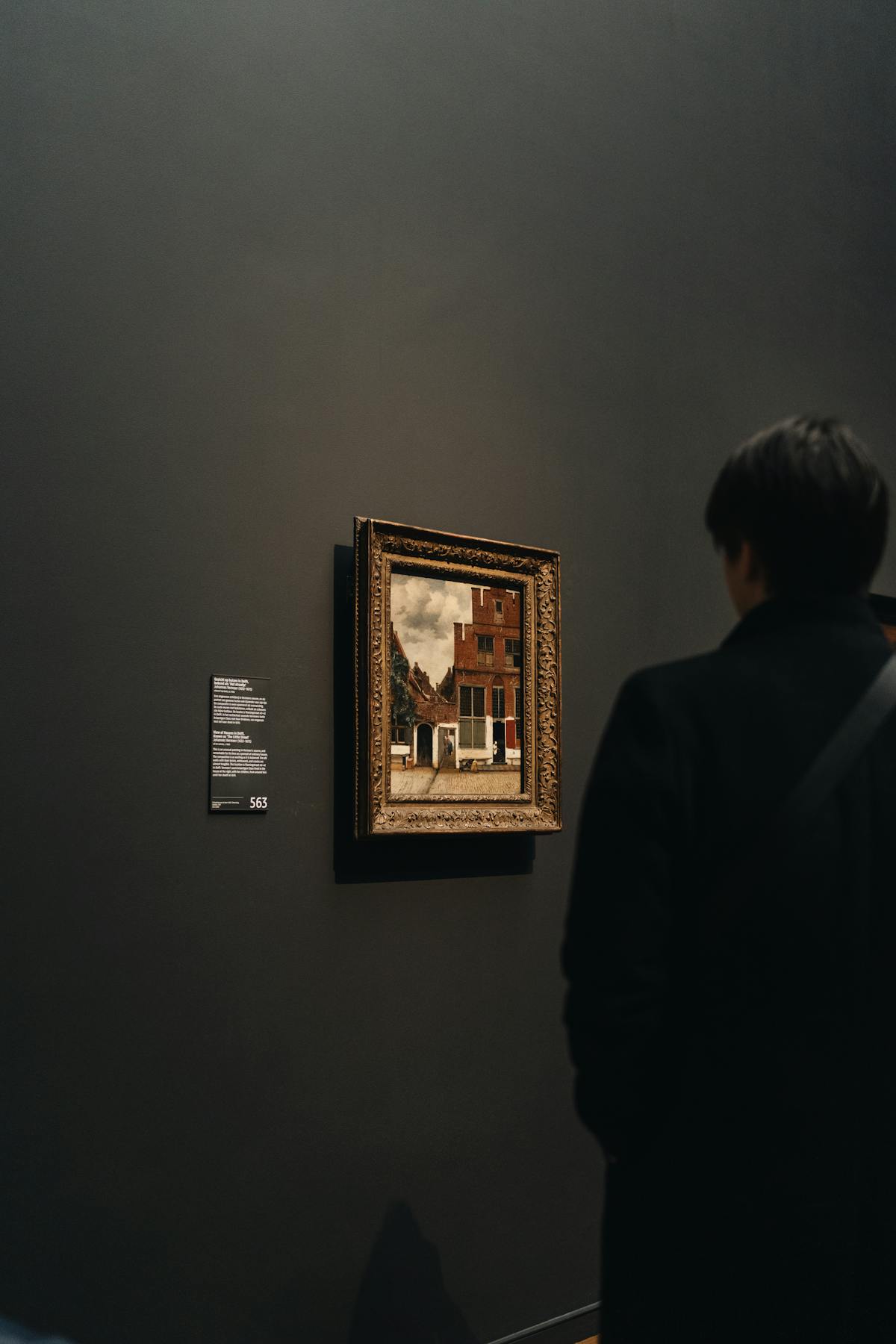
Honest answer: it depends on how much you already know about Dutch Golden Age painting.
If you can tell the difference between Rembrandt and Hals, or you’ve read a bit about the Night Watch, go self-guided. The museum’s free app has solid audio commentary for the major works. Download it before you arrive — the museum Wi-Fi gets slow when it’s busy. The audio guide is also only EUR 6 if you’d rather use their device.
If you’re not a huge art person but you want to get something meaningful out of the visit, a guided tour changes the entire experience. A good guide turns a painting from “nice landscape” into a story about 17th-century trade wars, hidden symbols, and artistic rivalries. The Rijksmuseum has 80 galleries and 8,000+ objects. Without some direction, you’ll spend three hours wandering and remember almost nothing.
I’ve done both. The first time I went self-guided and spent most of my energy finding the Night Watch. The second time I went with a small-group guided tour and learned more in two hours than I had in four hours on my own.
The Best Rijksmuseum Tours to Book
I’ve narrowed this down to the four options that actually make sense. There are dozens of Rijksmuseum tours on the market, but most are just the same ticket repackaged at different price points. These four cover every type of visitor — from “just get me the ticket” to “I want someone to explain what I’m looking at.”
1. Rijksmuseum Entry Ticket — $31

This is the one most people should buy. It’s the standard timed-entry ticket booked through GetYourGuide, which means you get free cancellation up to 24 hours before — something the official Rijksmuseum site doesn’t always offer. At $31 it’s essentially the same price as buying direct, with more flexibility.
The entry ticket gives you all-day access. Pair it with the free Rijksmuseum app and you’ve got a self-guided experience that rivals most paid audio tours. One tip: the app’s “Highlights Tour” route takes about 90 minutes and covers the 30 most important works. Start there if you’re short on time.
This is the most booked Rijksmuseum option by a wide margin, and for good reason. Simple, flexible, and you’re not paying for extras you might not need.
2. Rijksmuseum Guided Tour with Entrance — $79
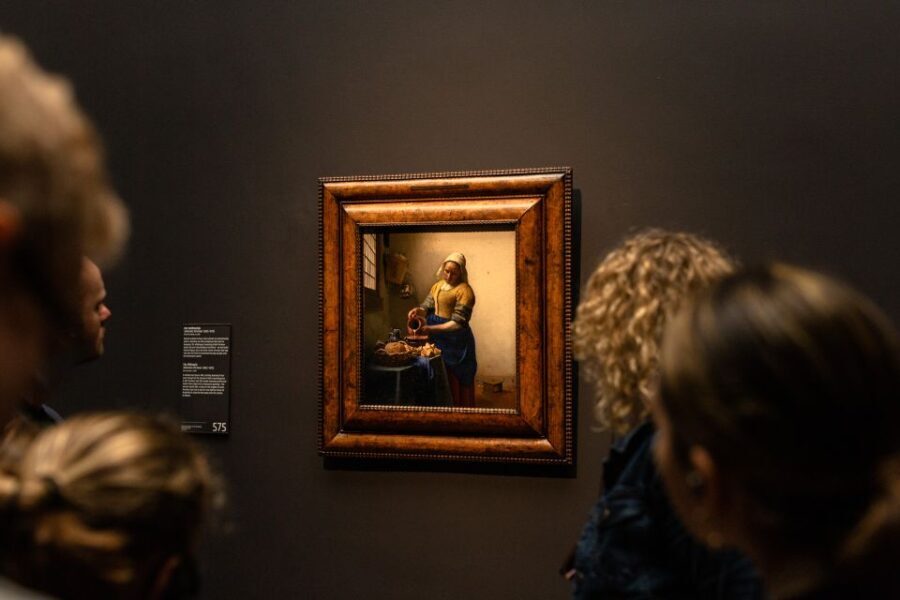
This is my pick for first-time visitors who actually want to understand what they’re seeing. $79 gets you skip-the-line entry plus a two-hour guided walk through the highlights — Rembrandt’s Night Watch, Vermeer’s Milkmaid, the Delft pottery collection, and the building’s own architecture, which is genuinely part of the experience.
The guides on this tour know their material cold. They don’t just read from a script — they connect paintings to real historical events, point out details you’d walk right past, and adjust the pace based on the group’s interest. After the guided portion, you’re free to explore on your own for as long as you want.
At $79 it’s not cheap, but compare it to wandering around confused for three hours and leaving with vague memories of “that big painting.” The guided experience is worth the premium.
3. Canal Cruise + Rijksmuseum Combo — $47
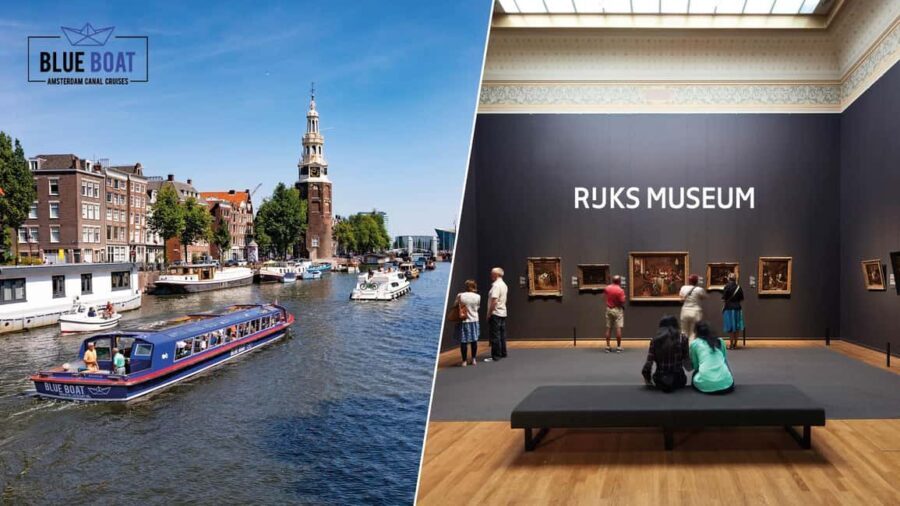
If you’re going to do a canal cruise anyway — and you should, it’s one of the best things to do in Amsterdam — bundling it with the Rijksmuseum saves you about $15 compared to booking separately. At $47 for both, this is the best-value option on the list.
The cruise runs 75 minutes through the Canal Ring, past the Westerkerk, Anne Frank House, and the old merchant houses along Herengracht. The museum ticket works the same as a standard entry — pick your time slot, scan your phone, full-day access.
One thing to know: book the museum for the morning and the cruise for after. The combo ticket requires you to use the museum portion on the same day, but the cruise has more flexible timing. Starting with the museum means you’re seeing art with fresh eyes and legs, then relaxing on the water after.
4. Small-Group Guided Tour — $91
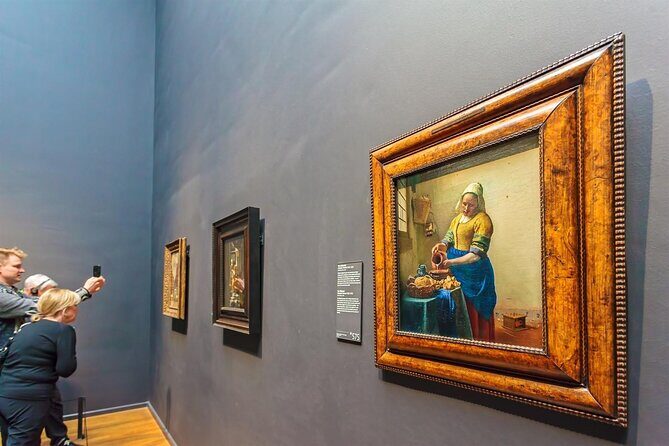
This Viator-booked tour caps at 15 people, which makes a real difference inside a museum that draws over two million visitors a year. You get a proper art historian guide for two hours, covering Rembrandt, Vermeer, Frans Hals, and the Rijksmuseum’s impressive collection of Delftware and ship models.
At $91 it’s the priciest option here, but the small group size means you can actually have a conversation with the guide. Ask about the hidden self-portrait in the Night Watch, or why Vermeer’s light looks different from everyone else’s. This is the tour for people who genuinely love art and want more than a surface-level walkthrough.
Skip-the-line entry is included. After the tour ends, you keep your ticket and can go back to any gallery that caught your eye.
When to Visit the Rijksmuseum
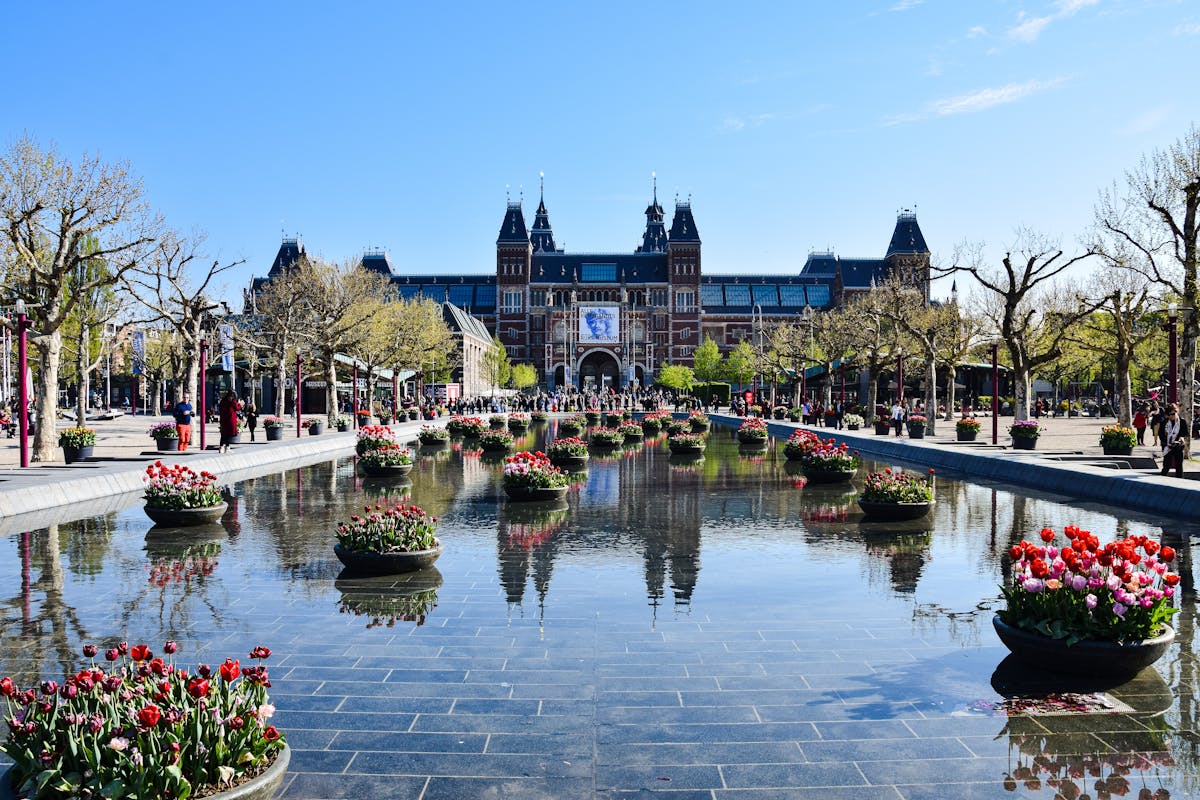
The museum is open every single day, 365 days a year, from 9:00 AM to 5:00 PM. Last entry is at 4:00 PM. No closing days, no exceptions — not even Christmas or King’s Day.
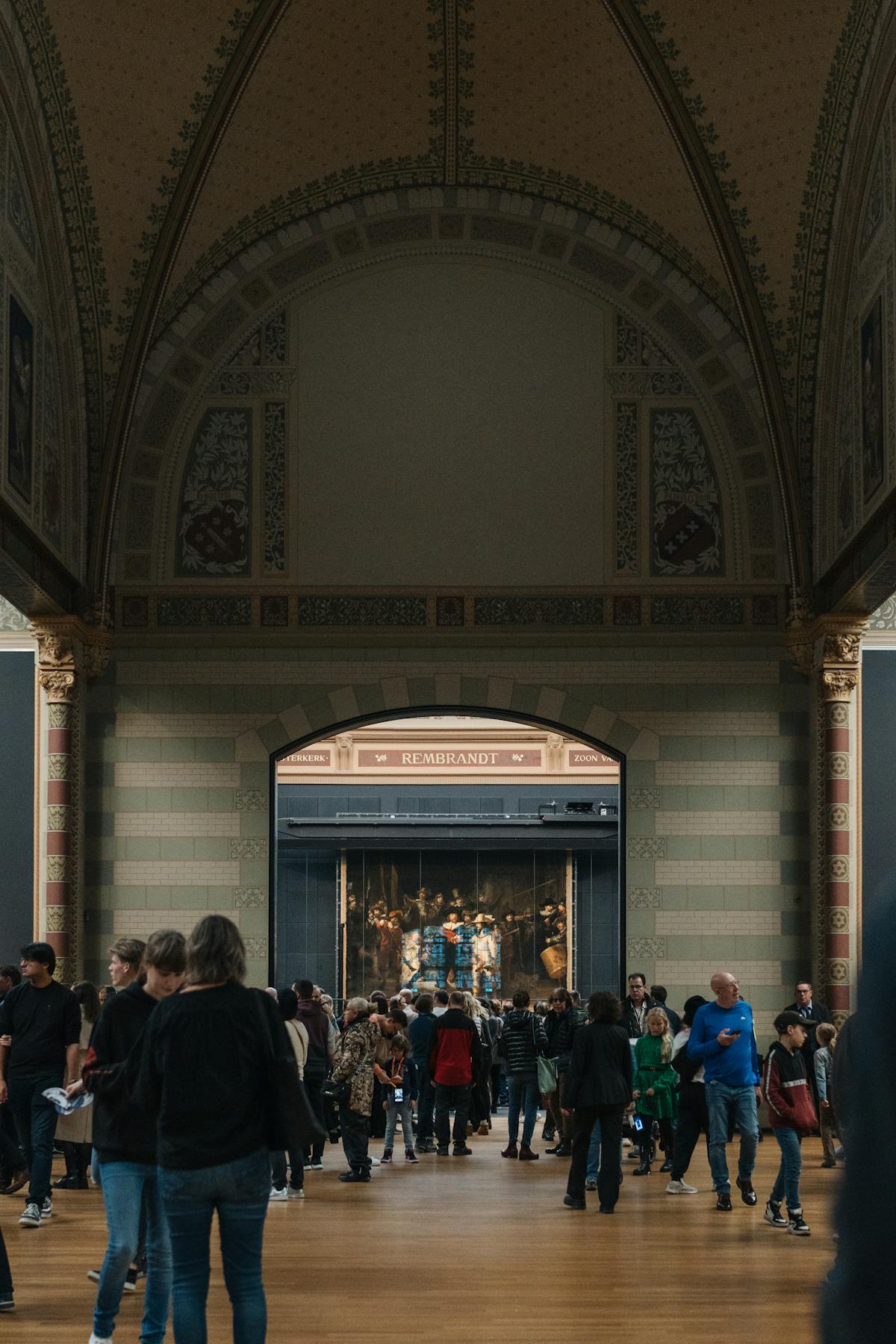
Best time: Book the 9:00 AM slot. The first hour is genuinely quiet. You can stand alone in front of the Night Watch and actually take it in without someone’s phone blocking your view. The gallery fills up around 10:30.
Second-best: After 3:00 PM. Most tour groups finish by mid-afternoon, and the light coming through the tall windows is softer and warmer. You only get about two hours before closing, but that’s enough if you know what you want to see.
Worst time: Saturday mornings between 11:00 and 2:00. This is when every weekend visitor in Amsterdam converges on Museumplein. The Van Gogh Museum is right next door, and people bounce between the two.
Best months: January and June get the fewest visitors. December, April, and July-August are the busiest. If you have any flexibility on dates, a Tuesday or Wednesday in January is almost absurdly quiet compared to an August Saturday.
Tips That Will Save You Time
Download the Rijksmuseum app before you go. The museum Wi-Fi works but it’s slow when the galleries are full. The app includes free audio commentary for hundreds of works — it’s essentially a free audio guide.
Start in the Gallery of Honour on Floor 2. This is where the Night Watch, the Milkmaid, and the other marquee paintings live. It fills up fastest, so see it first while it’s still manageable. Then work your way through the Asian Pavilion and the ground floor, which stay quieter throughout the day.
The Rijksmuseum Library is free to enter and it’s one of the most photographed rooms in Amsterdam. Spiral staircases, floor-to-ceiling bookshelves, a reading room that feels more like a temple. It’s on the ground floor and most visitors walk right past it.
There’s a cloakroom. It’s free. Use it. Walking through 80 galleries with a heavy coat and backpack gets old fast.
Bring a portable phone charger. Between the app, photos, and looking up context for paintings, your battery will drain faster than you expect. Three hours in the museum plus a canal cruise after and your phone is dead by 3 PM.
The museum garden is included in your ticket and it’s surprisingly good. Sculptures, fountains, and a quiet corner where you can sit and process what you just saw. Most people skip it entirely.
What You’ll Actually See Inside
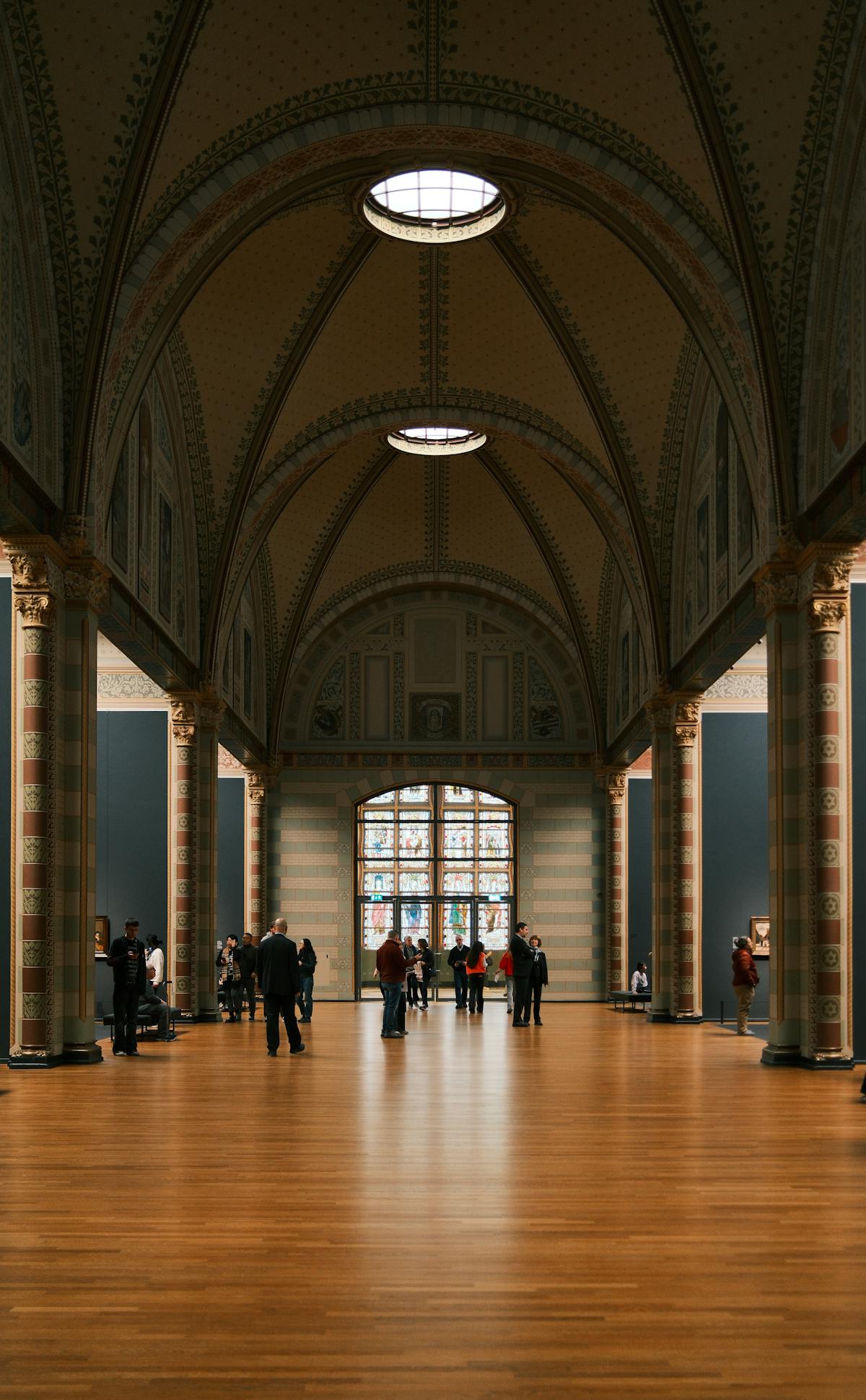
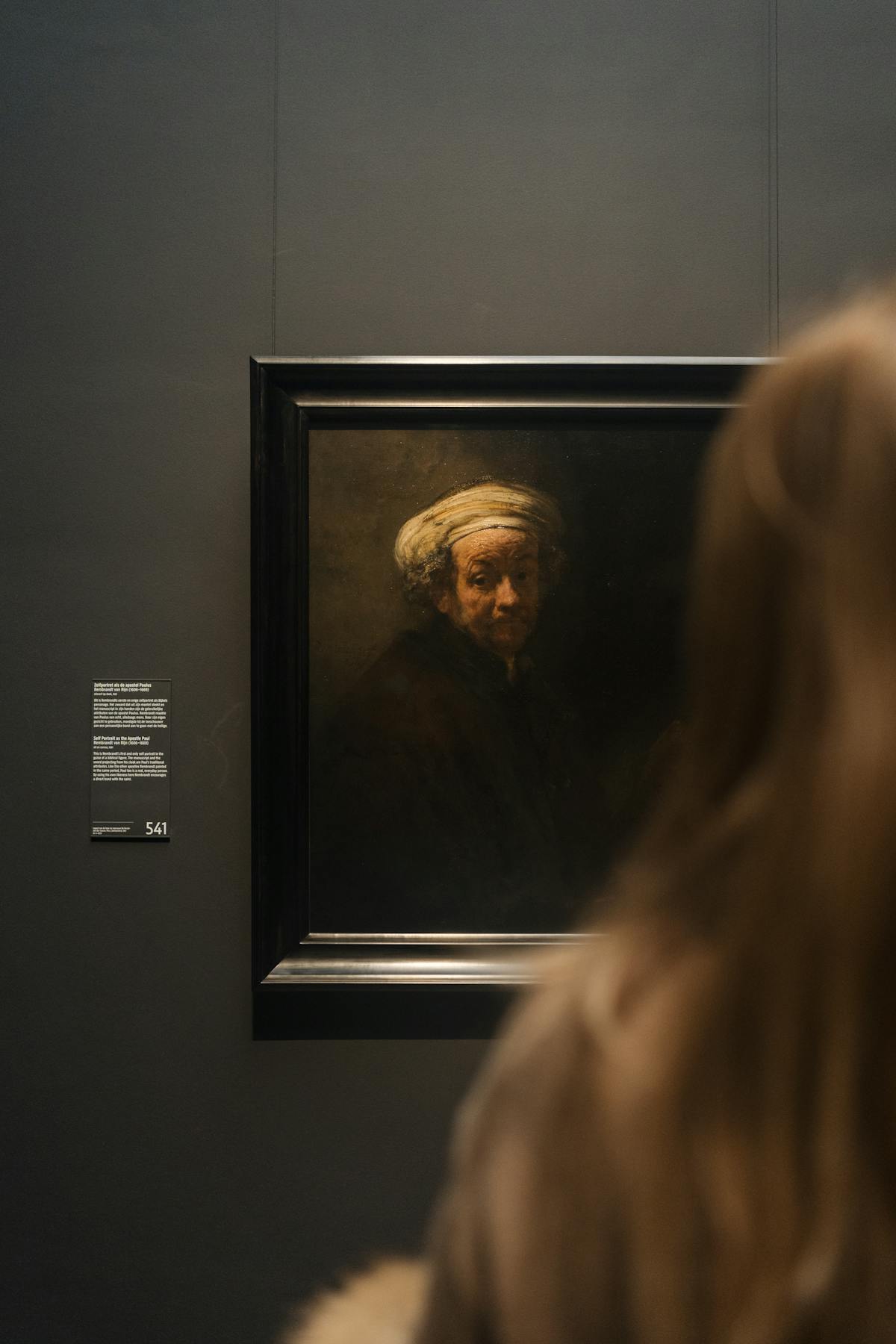
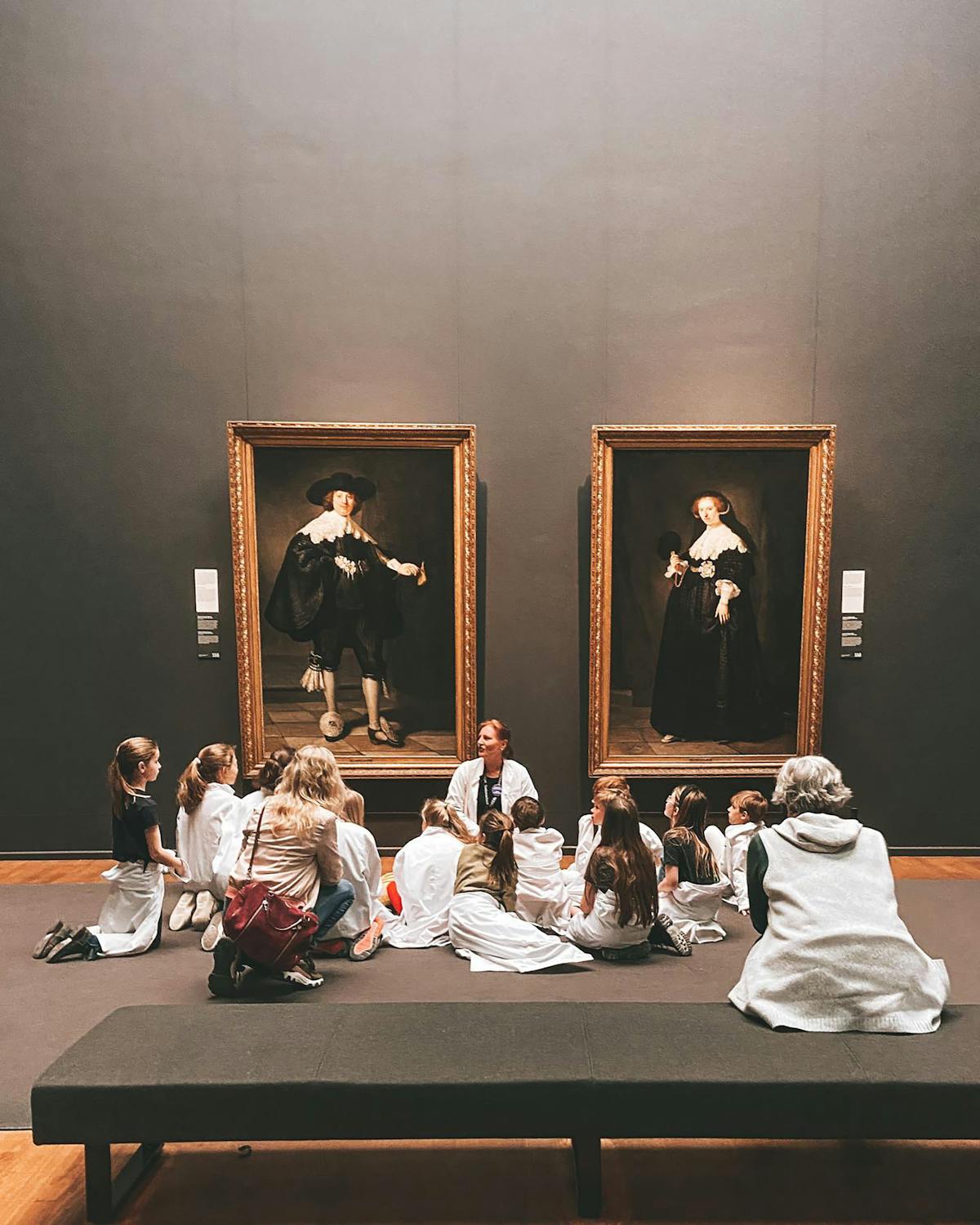
The Rijksmuseum’s collection spans 800 years, but let’s be honest — most people come for the Dutch Golden Age, and that’s on Floor 2. The Gallery of Honour is a long, skylit corridor that builds to a crescendo: at the far end, in a room designed specifically around it, hangs Rembrandt’s Night Watch. The painting is enormous — over 3.5 metres tall — and seeing it in person is genuinely different from any reproduction. The scale, the darkness of the background, the way faces seem to glow. It stops people in their tracks.

Vermeer’s Milkmaid is in a smaller room off the main gallery, and the intimacy of the painting hits harder because of the space. It’s tiny compared to the Night Watch — barely larger than a laptop screen — but the light in it is extraordinary. There’s a reason art students still fly here to study it.
Beyond the headliners, the Rijksmuseum holds Delftware ceramics, an entire wing of ship models from the Dutch East India Company era, 17th-century dollhouses that cost more than actual houses at the time, and a collection of Indonesian art that rarely gets the attention it deserves. The Asian Pavilion on the ground floor is almost always empty, and the Buddha statues and Chinese ceramics there are world-class.
How to Get There
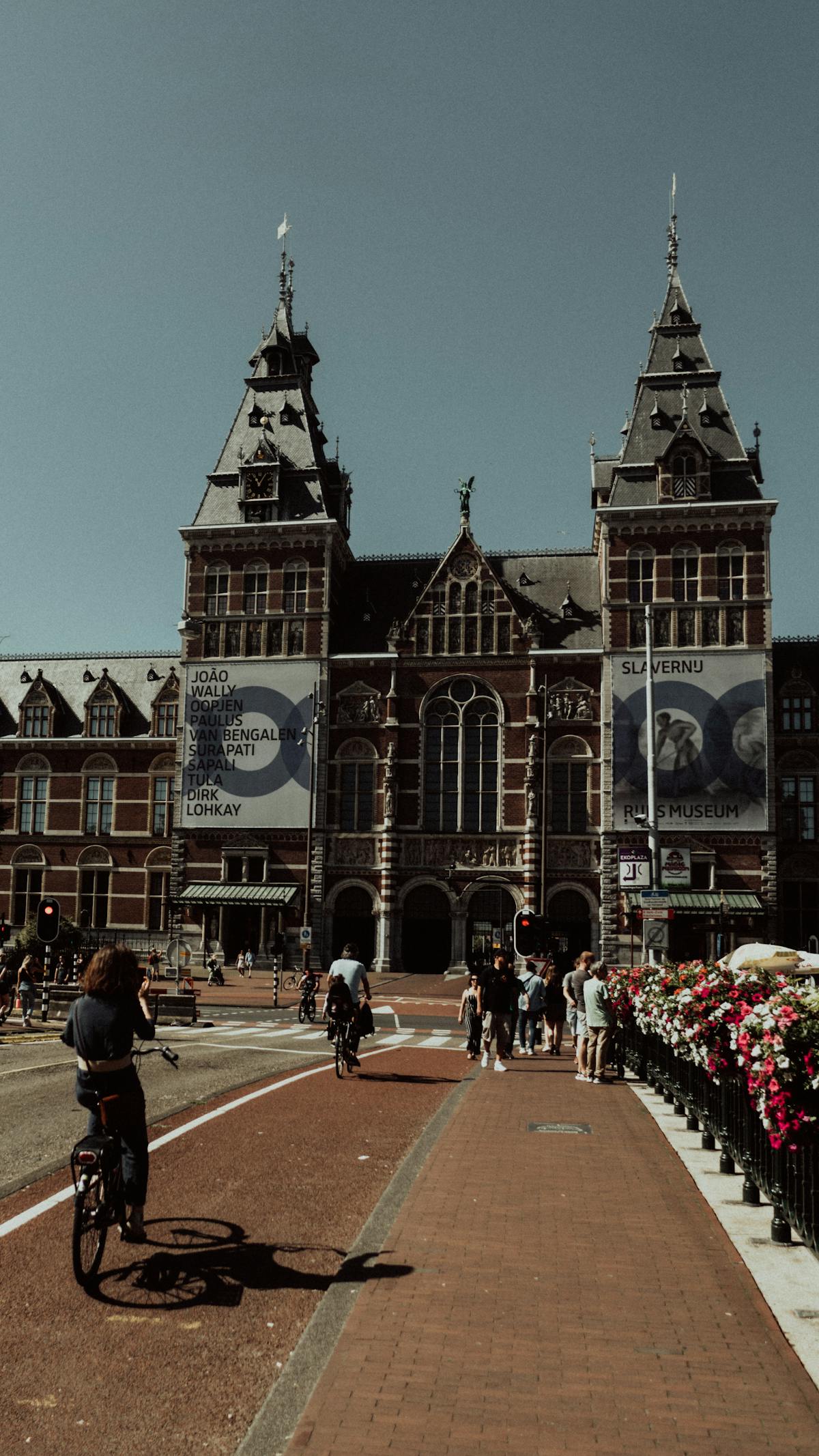
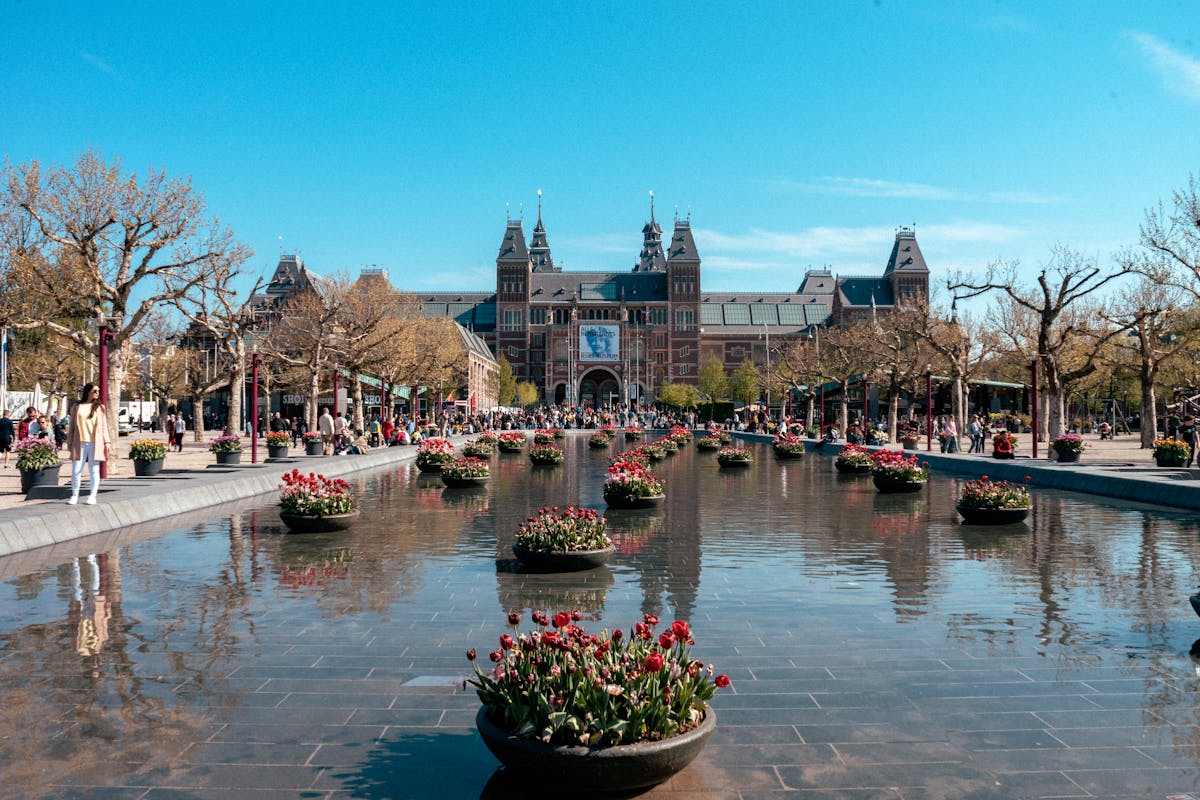
The Rijksmuseum sits on Museumplein, about 2 km south of Centraal Station. Tram lines 2 and 5 both stop right at the museum — the stop is literally called “Rijksmuseum.” From Centraal Station it’s about 15 minutes on the tram.
If you’re coming from Amsterdam Zuid station, take Tram 5 — same stop, about 8 minutes. The Airport Express bus 397 from Schiphol stops nearby at Museumplein as well, making this one of the easiest museums in Europe to reach straight from the airport.
Walking from the city centre takes about 25 minutes along the Leidsestraat and through the Vondelpark area. It’s a pleasant walk, and you pass good coffee shops (the actual coffee kind) along the way.
While You’re in Amsterdam
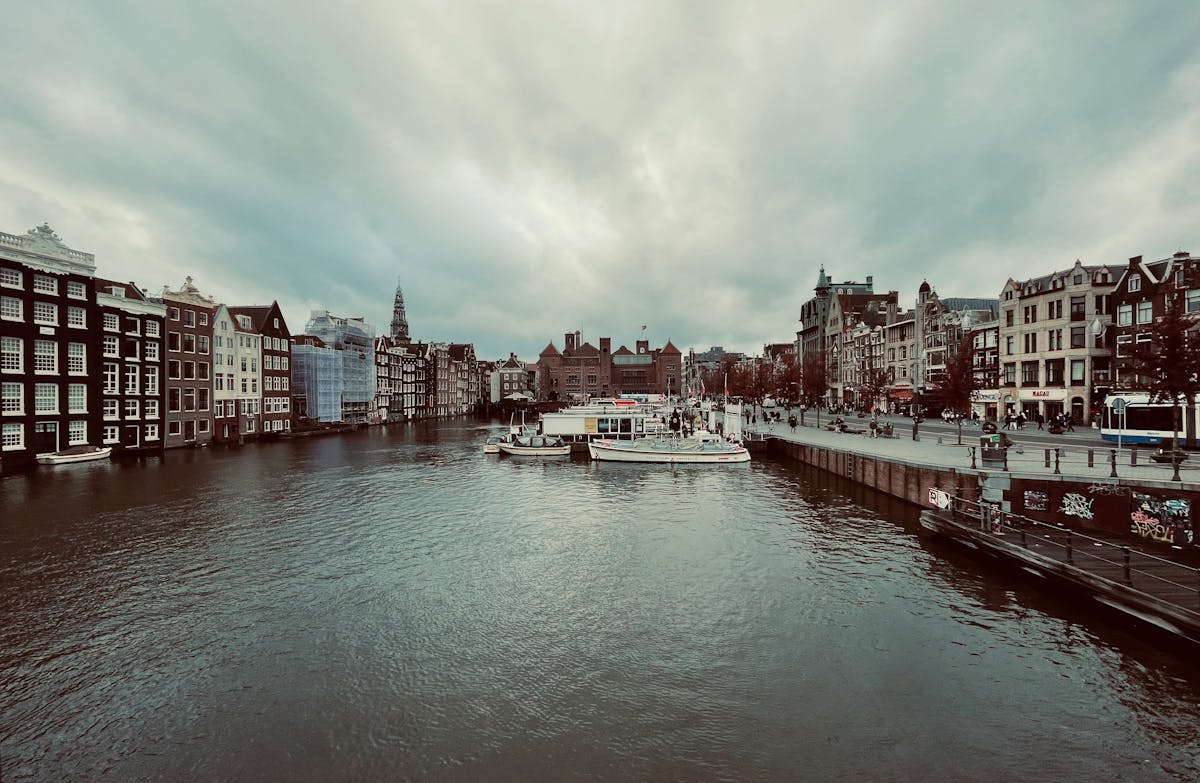
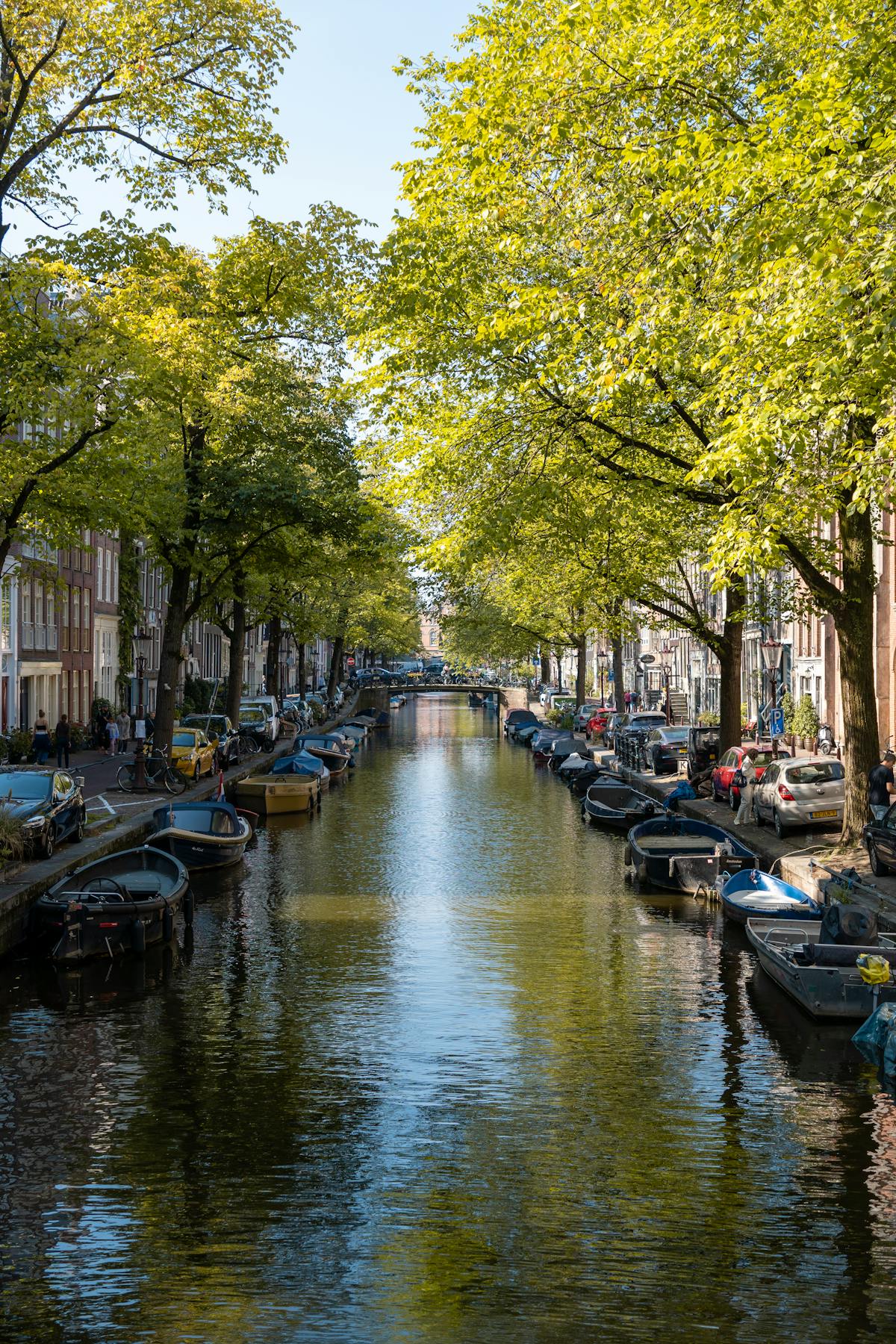
The Van Gogh Museum is literally next door — a five-minute walk across Museumplein — and our guide to getting Van Gogh Museum tickets covers the same timed-entry system and best times to visit. If you’re doing both in one day, hit the Rijksmuseum at 9:00 AM and the Van Gogh after lunch. A canal cruise fits perfectly between the two, especially the combo ticket I mentioned above. Amsterdam’s canal ring is a UNESCO World Heritage site, and seeing the old merchant houses from water level gives you context for all that Golden Age wealth you just saw hanging on the walls inside. Between the museums, the canals, and the neighbourhood around Museumplein, you could easily fill two full days in this part of the city without running out of things to do.
This article contains affiliate links. When you book through our links, we may earn a small commission at no extra cost to you. This helps us keep producing free travel guides.
The Rijksmuseum anchors Museumplein alongside several other major attractions. The Moco Museum is around the corner, mixing Banksy originals with immersive digital rooms that feel like the opposite end of the art spectrum from Rembrandt. Across the square, the Anne Frank House is a twenty-minute walk through the Jordaan — a visit that pairs strangely well with the Night Watch, since both deal with Amsterdam’s history from angles you do not expect.
If you would rather keep exploring on foot, a walking tour connects the Museumplein area to the canal ring and Dam Square, filling in the stories behind the facades you walked past on the way to the museum. A bike tour covers even more ground and gets you into neighborhoods like the Eastern Docklands that most travelers never see.