
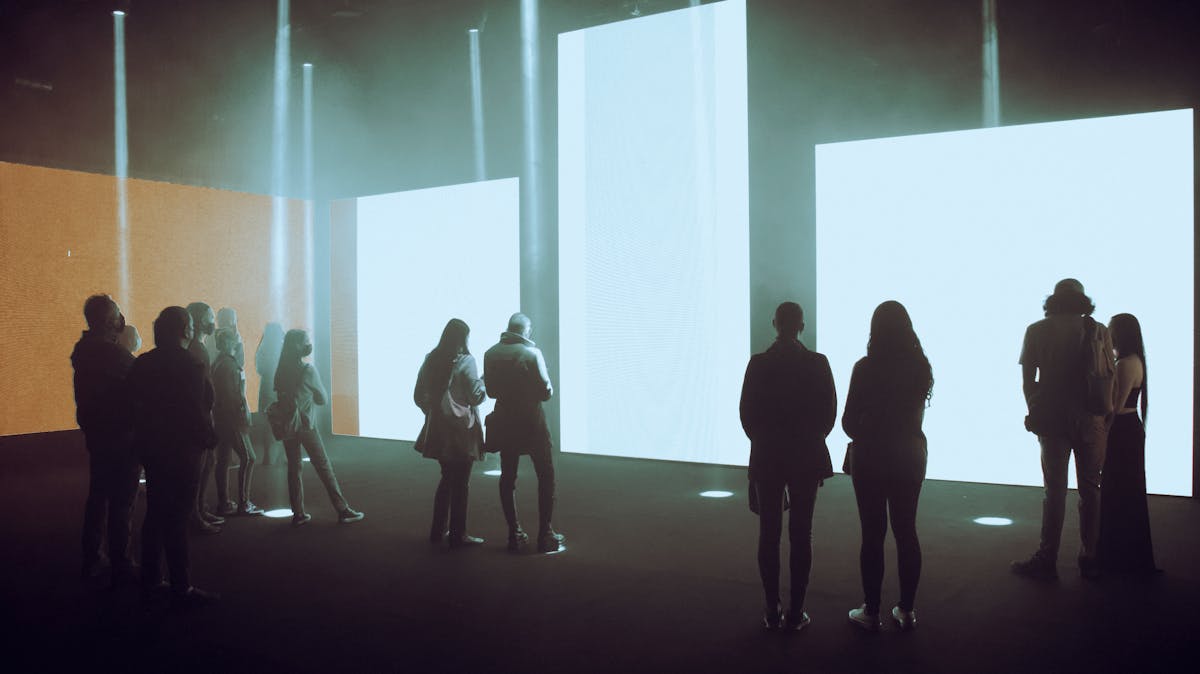
The building used to purify gas. Seriously. The Zuiveringshal on Amsterdam’s Westergasfabriek grounds spent decades processing coal gas before the city switched to natural gas and forgot about the place entirely. Then somebody had the idea to fill it with 3,000 square meters of floor-to-ceiling digital projections, surround-sound, and the works of Monet, Vermeer, and Van Gogh at a scale that makes traditional museums feel like looking through a keyhole.
That somebody was Culturespaces, the same group behind the Atelier des Lumieres in Paris. And when I walked into Fabrique des Lumieres for the first time, I understood immediately why they picked this building. The industrial bones — soaring ceilings, raw concrete pillars, vast open floor — give the projections a weight and drama that a purpose-built white box never could.
Best overall: Monet: Master of Impressionism — $21. The most popular show for good reason. Monet’s gardens and water lilies projected across every surface is genuinely moving.
Best for art lovers: Dutch Masters: From Vermeer to Van Gogh — $21. Vermeer’s light studies and Van Gogh’s swirling skies feel completely different at building scale. Morning slot only.
Most unique: The Sea — $21. Digital art meets environmental storytelling. A newer exhibition that takes a completely different direction from the classic masters shows.
- How the Ticket System Works
- Ticket Prices
- Official Tickets vs Booking Platforms
- The Best Fabrique des Lumieres Exhibitions to Book
- 1. Monet: Master of Impressionism —
- 2. Dutch Masters: From Vermeer to Van Gogh —
- 3. The Sea —
- When to Visit
- How to Get There
- Tips That Will Save You Time
- What You’ll Actually See Inside
- While You’re in Amsterdam
How the Ticket System Works
Fabrique des Lumieres runs multiple exhibitions simultaneously, each with its own time slot. This trips people up because it’s not like a normal museum where you buy one ticket and see everything. You’re booking a specific show at a specific time.
Here’s how the current schedule breaks down (valid through May 3, 2026):
- Dutch Masters: From Vermeer to Van Gogh — morning only, 9:30-10:45 AM
- Prehistoric Planet: Dinosaurs — all day, 11:00 AM – 5:00 PM (weekends until 7:30 PM)
- Monet: Master of Impressionism — late afternoon/evening, 5:05-6:00 PM
- The Moonwalkers: A Journey with Tom Hanks — select Friday/Saturday evenings, 8:00-9:00 PM
Doors open at the listed time, but the show itself starts about 10 minutes later. Last entry is one hour before closing, and I’d strongly suggest arriving at least 15 minutes before your slot to find a good spot on the floor.
Ticket Prices
All tickets are purchased through the official website or via third-party booking platforms. Prices are straightforward:
- Adults: EUR 18 (~$21)
- Students and youth (5-17): EUR 14
- Family pack (2 adults + 2 youth): EUR 52 — saves you a few euros over buying separately
- Under 5: Free
- CJP, I amsterdam, European Youth Card holders: EUR 14
- Stadspas holders: Free (only at the ticket desk, not online)
The price is the same regardless of which exhibition you pick. I’d call it reasonable for what you get — you’re inside for roughly 45 minutes to an hour, and the production value is genuinely high.
Official Tickets vs Booking Platforms
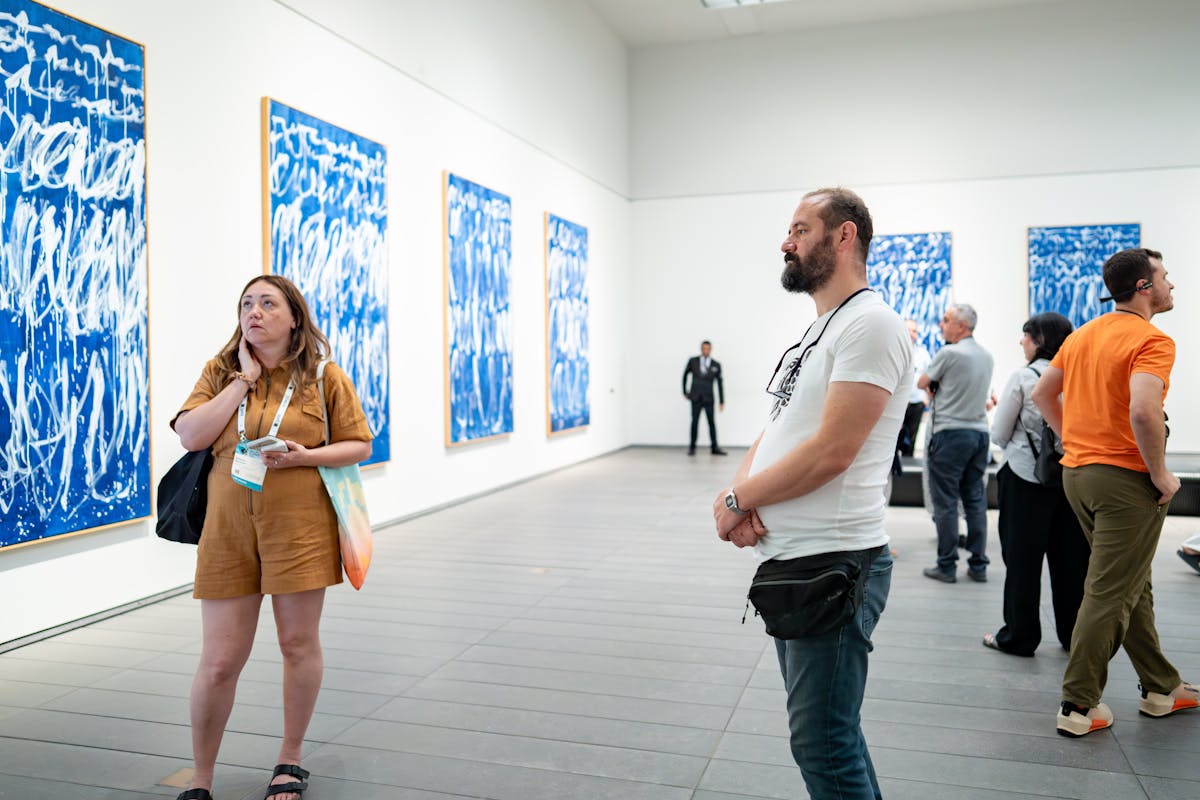
You have two options: buy directly from fabrique-lumieres.com, or book through a platform like GetYourGuide.
Official site pros: Wider time slot selection, family ticket bundles, Stadspas redemption. If you want the Dutch Masters morning slot or the Moonwalkers evening show, the official site tends to have more availability.
Booking platform pros: Free cancellation up to 24 hours before (GetYourGuide’s standard policy), which the official tickets don’t always offer. If your Amsterdam plans are still flexible, this matters. You also get everything in one app alongside your canal cruise tickets and Van Gogh Museum booking.
Price-wise, there’s almost no difference. The platform tickets are $21 (roughly EUR 18), which matches the door price. Honestly, I lean toward the booking platforms for the cancellation flexibility — Amsterdam weather and overly ambitious itineraries have a way of reshuffling plans.
The Best Fabrique des Lumieres Exhibitions to Book
Fabrique des Lumieres rotates its exhibitions, but here’s what’s running right now and how I’d rank them. All three are worth seeing if you have time, but if you’re picking just one, here’s where to start.
1. Monet: Master of Impressionism — $21
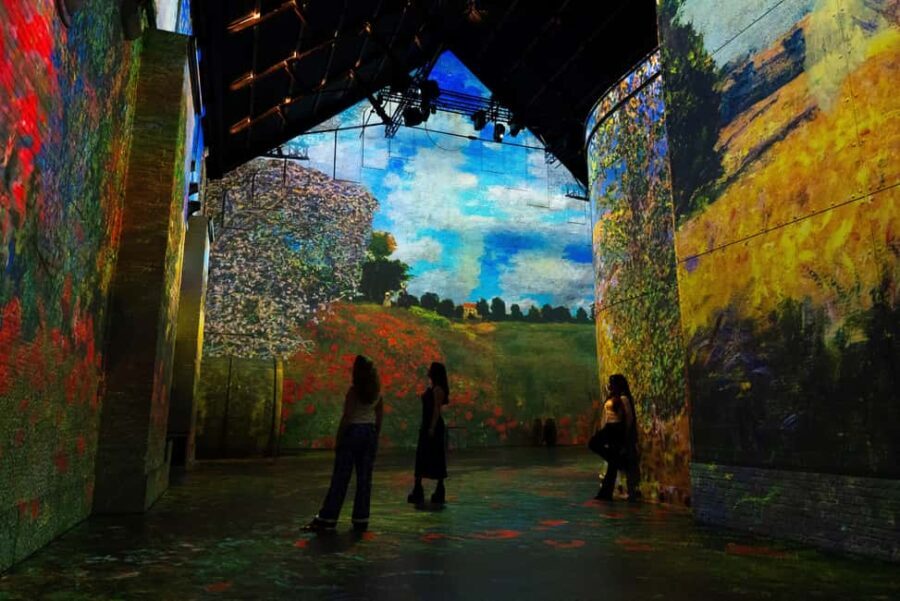
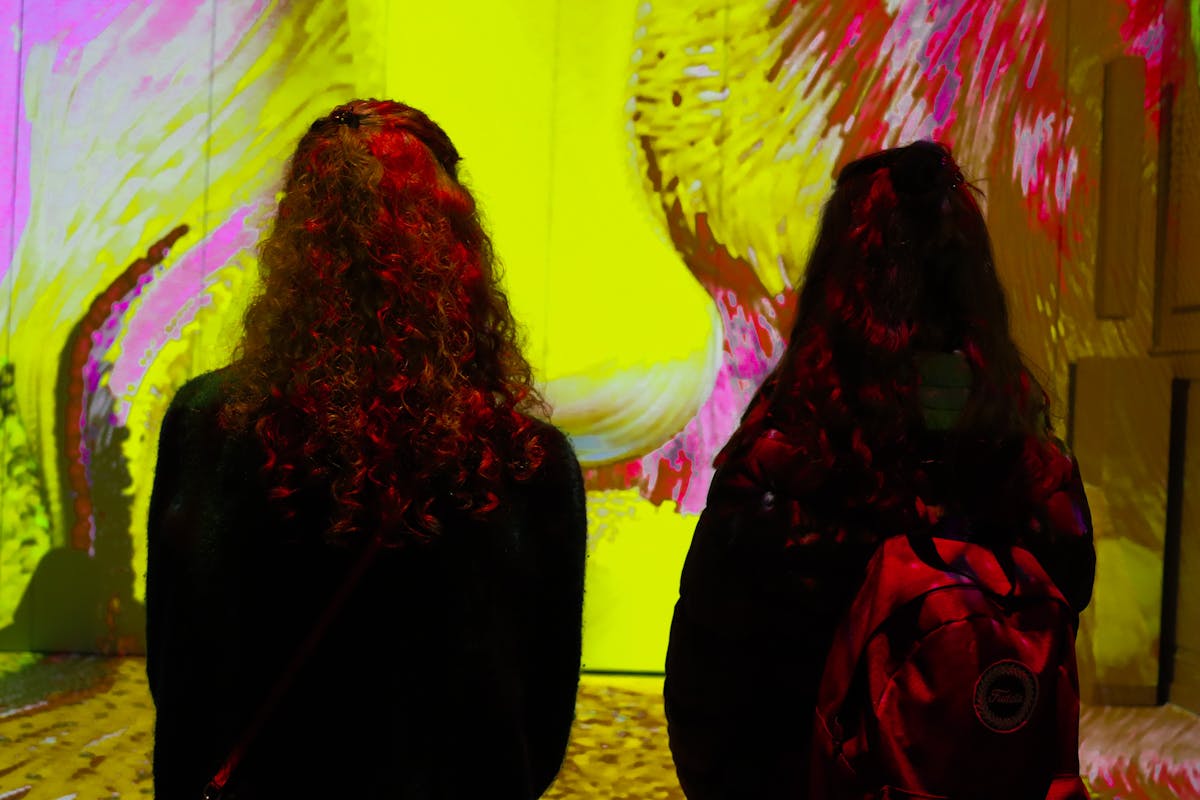
This is the one to book if you only have time for a single show. The Monet experience takes his most famous works — the water lilies, the Japanese bridge at Giverny, the haystack series, the Rouen Cathedral paintings — and blows them up to industrial scale. It sounds gimmicky when you describe it. It isn’t. The projections move, dissolve, and reform in ways that pull details out of paintings you thought you already knew.
What surprised me most was the sound design. Each painting transition comes with a carefully matched score that builds and fades with the imagery. People actually sit on the floor and watch the whole thing twice. At $21, it’s less than half the price of the Rijksmuseum and arguably a more memorable experience for anyone who isn’t a committed art history student.
2. Dutch Masters: From Vermeer to Van Gogh — $21
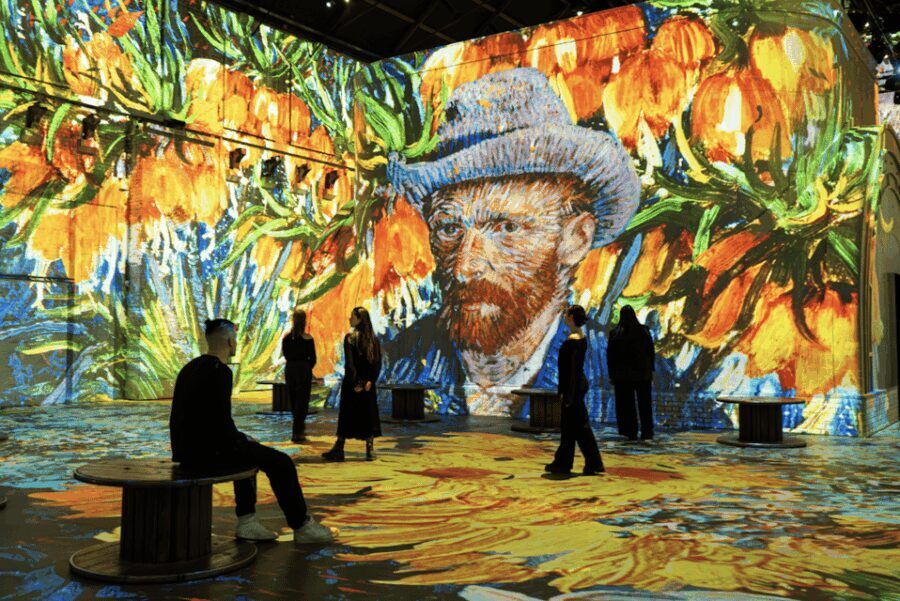
If you’re visiting Amsterdam specifically for the art — and honestly, why wouldn’t you be — the Dutch Masters show is the most fitting choice. It takes the Golden Age painters who made this city famous and lets you stand inside their work. Vermeer’s Girl with a Pearl Earring fills an entire wall. Van Gogh’s Starry Night wraps around you. Rembrandt’s Night Watch becomes a room you walk through.
The catch is the time slot. Dutch Masters only runs in the morning, 9:30-10:45 AM. That’s actually a blessing in disguise — morning crowds at Fabrique are noticeably thinner than the afternoon sessions. $21 gets you in, and the early slot means you can walk over to the Rijksmuseum afterward with fresh eyes for the originals.
3. The Sea — $21
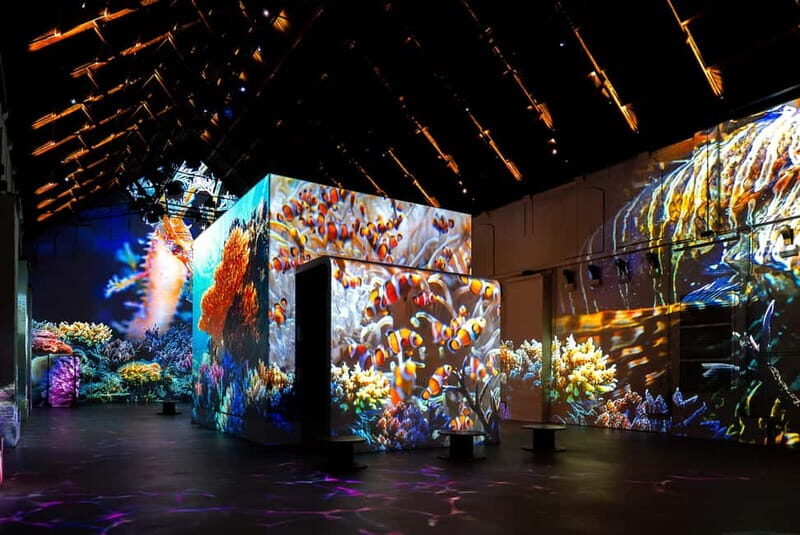
The Sea exhibition takes a completely different approach from the other two shows. Instead of projecting classic masterpieces, it uses original digital art to explore the ocean — from deep-sea bioluminescence to coral reef systems to the stark reality of marine pollution. It’s more contemporary, more experimental, and honestly a little more emotionally intense than the other options.
I’d recommend this one for anyone who has already done a Culturespaces exhibition elsewhere (Paris, Bordeaux, Seoul) and wants something that pushes the format in a new direction. The environmental angle gives it a weight that lingers after you leave. At $21, it’s the same price as the other shows, but the experience feels distinctly different.
When to Visit
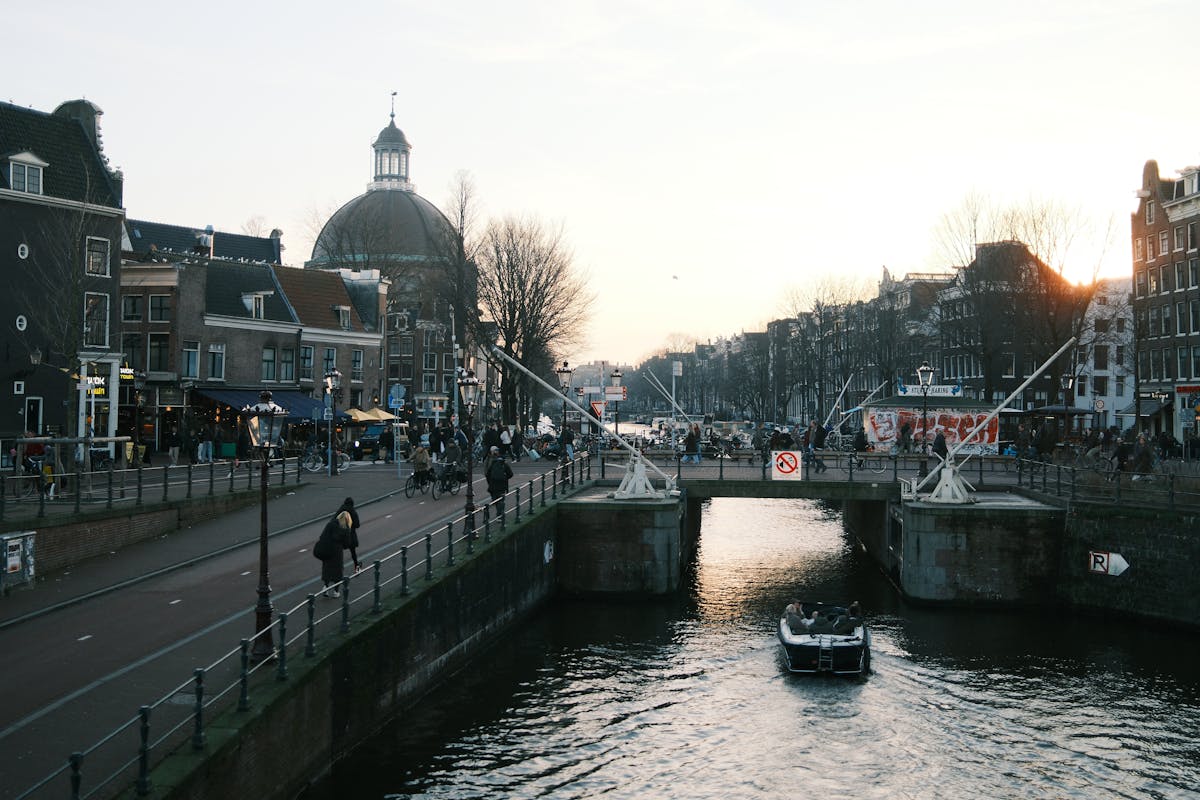
Best time: First slot of the day, any day. The 9:30 AM Dutch Masters show or the 11:00 AM Prehistoric Planet opening are noticeably less crowded than afternoon slots. Weekday mornings are the absolute sweet spot — you’ll share the space with maybe 30-40 people instead of 150+.
Worst time: Saturday afternoons between 2:00 and 4:00 PM. Every tourist in Amsterdam who didn’t plan ahead ends up here. The experience still works, but you’ll spend more time navigating around people than absorbing the art.
Evening shows: The Monet slot (5:05-6:00 PM) hits a nice balance — the afternoon rush has thinned, and the late-day timing means you walk out into a beautiful Amsterdam evening. The Moonwalkers show on select Friday and Saturday evenings (8:00-9:00 PM) is perfect for a date night, though availability is limited.
Season tip: Exhibitions rotate roughly every 6-12 months. If you’re interested in a specific show, check the schedule before booking your trip. The current lineup runs through early May 2026.
How to Get There
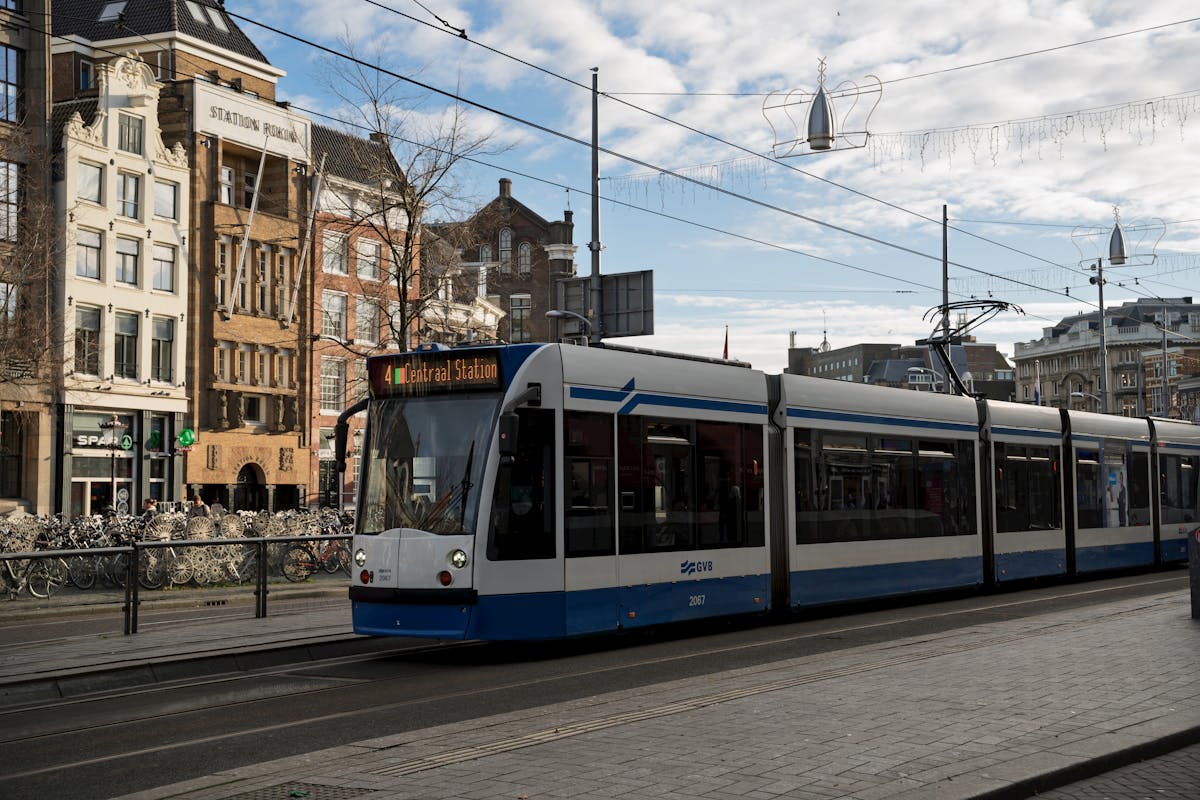
Fabrique des Lumieres sits at Pazzanistraat 37 on the Westergasfabriek grounds in Amsterdam West. It’s not in the tourist center, which is actually part of its charm.
By tram: Take tram 5 or 19 from Amsterdam Centraal Station to the Van Limburg Stirumplein stop. From there, it’s a 5-minute walk west into the Westerpark. This is the easiest option and takes about 15 minutes total.
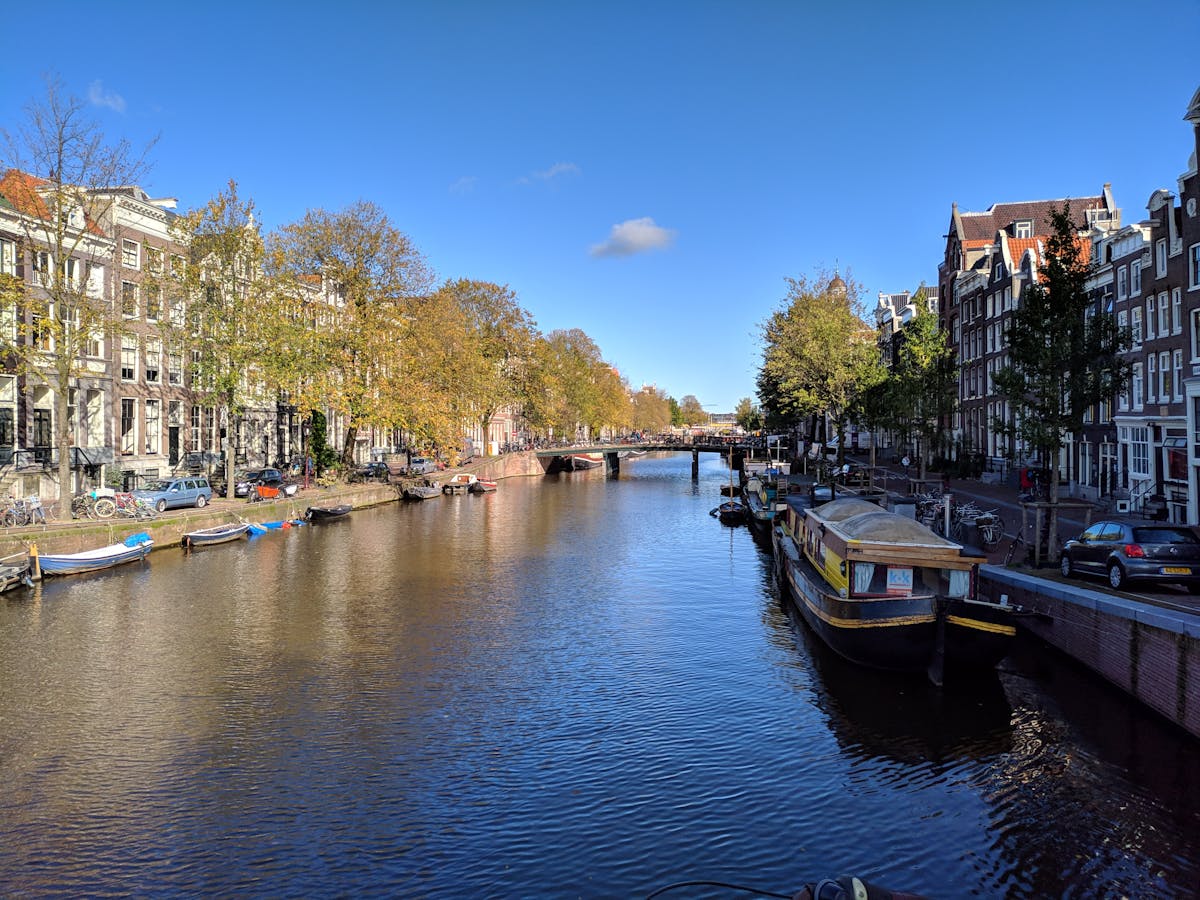
By bike: If you’ve rented a bike in Amsterdam, ride west from Centraal along the Haarlemmerstraat, which turns into Haarlemmerdijk. Keep going until you hit Westerpark — you can’t miss the old gasworks buildings. The ride takes about 10 minutes and is completely flat.
On foot: It’s a 25-minute walk from Centraal Station. The route goes through the Haarlemmerbuurt neighborhood, which is full of independent shops and cafes — good for killing time before your slot if you arrive early.
By bus: Bus 21 or 22 from Centraal Station stops at Van Limburg Stirumstraat, a 3-minute walk from the entrance.
Parking: There’s limited parking at Westerpark. The P+R options at Sloterdijk station are cheaper and only one tram stop away. Drive only if you absolutely have to.
Tips That Will Save You Time
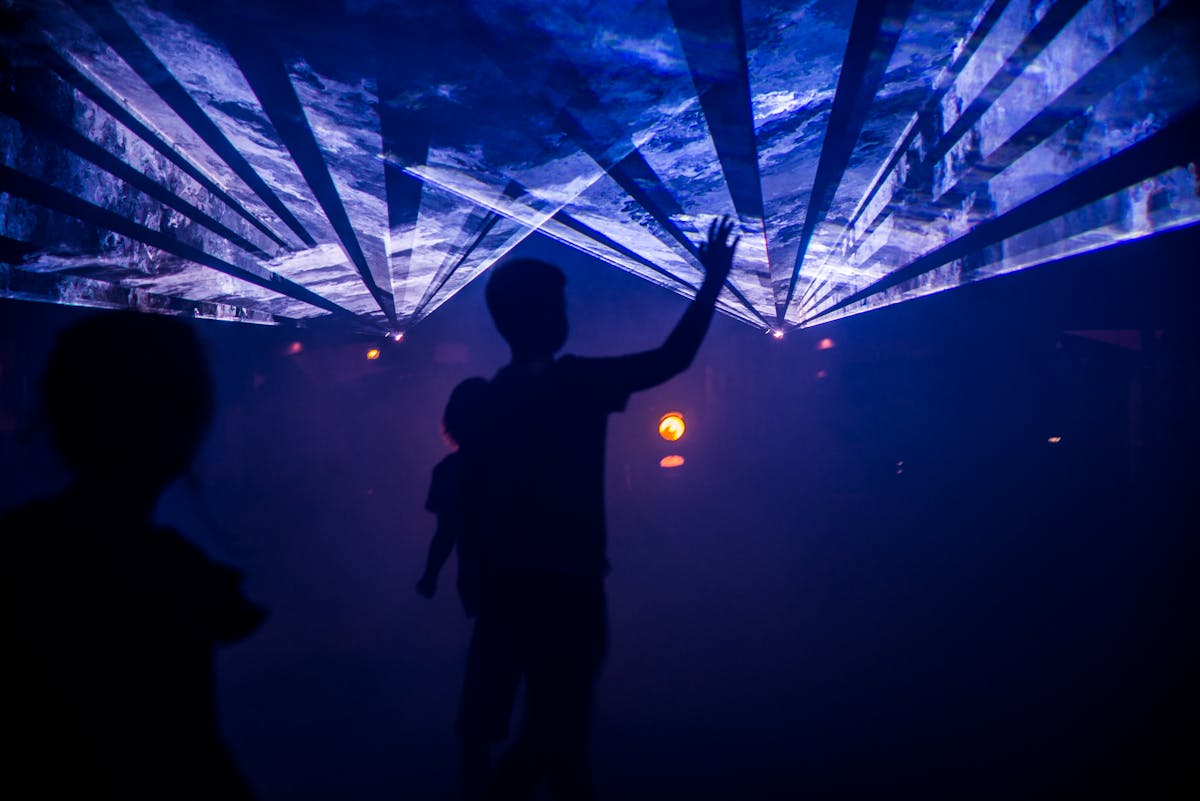
- Book your time slot at least 2-3 days ahead. Weekend evening shows sell out regularly. Weekday mornings almost never do.
- Wear dark clothing. This sounds odd, but the projections reflect off white and bright fabrics. Darker clothes mean fewer distracting reflections and better photos.
- Bring a light jacket. The venue is a massive former industrial hall. Even in summer, the interior stays cool — much cooler than you’d expect after walking through Amsterdam in the heat.
- Go straight to the back of the room first. Most people cluster near the entrance and middle. The back wall projections are just as impressive, and you’ll have more space.
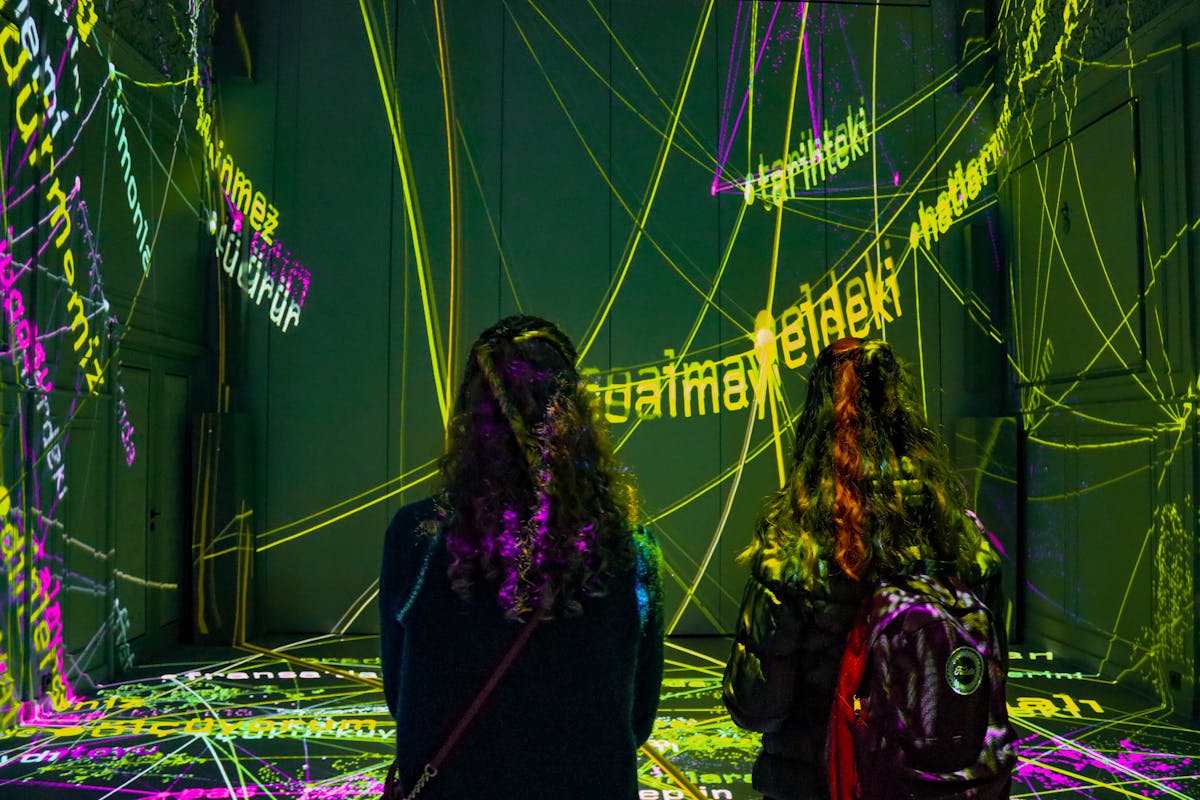
- The floor is part of the show. Projections cover the floor, too. Sit down — plenty of people do, and it completely changes the experience. The venue provides seating, but the floor gives you the full 360-degree immersion.
- Plan 60-75 minutes total. The main show loops for about 35-40 minutes, followed by a shorter complementary piece. Most people stay for the full cycle. Budget 15 minutes for arriving, finding your spot, and leaving.
- Phone cameras work fine. You don’t need a fancy camera. The projections are bright enough that even a phone captures decent photos and video. Just silence your shutter sound — the space is surprisingly quiet between musical pieces.
- Combine with Westerpark. The surrounding park has restaurants, a cinema, a brewery (Brouwerij Troost), and weekend markets. Build your visit around a half-day in the area, not just the show.
What You’ll Actually See Inside

The Zuiveringshal (the main exhibition hall) measures roughly 3,000 square meters. That’s about the size of a large warehouse, but with ceilings high enough to project multi-story images. The projections come from over 100 high-definition projectors mounted throughout the space, synchronized to a spatial audio system that makes the music feel like it’s coming from inside the artwork.
Each show follows a narrative arc. The Monet exhibition, for example, doesn’t just throw paintings on the wall — it moves through his career chronologically. You start with his early impressionist street scenes, watch the colors deepen and blur as he ages, and end up completely submerged in the water lily series from his final decades at Giverny. The progression from sharp, structured paintings to the almost abstract late works is something you can feel in the room, not just read about in a textbook.
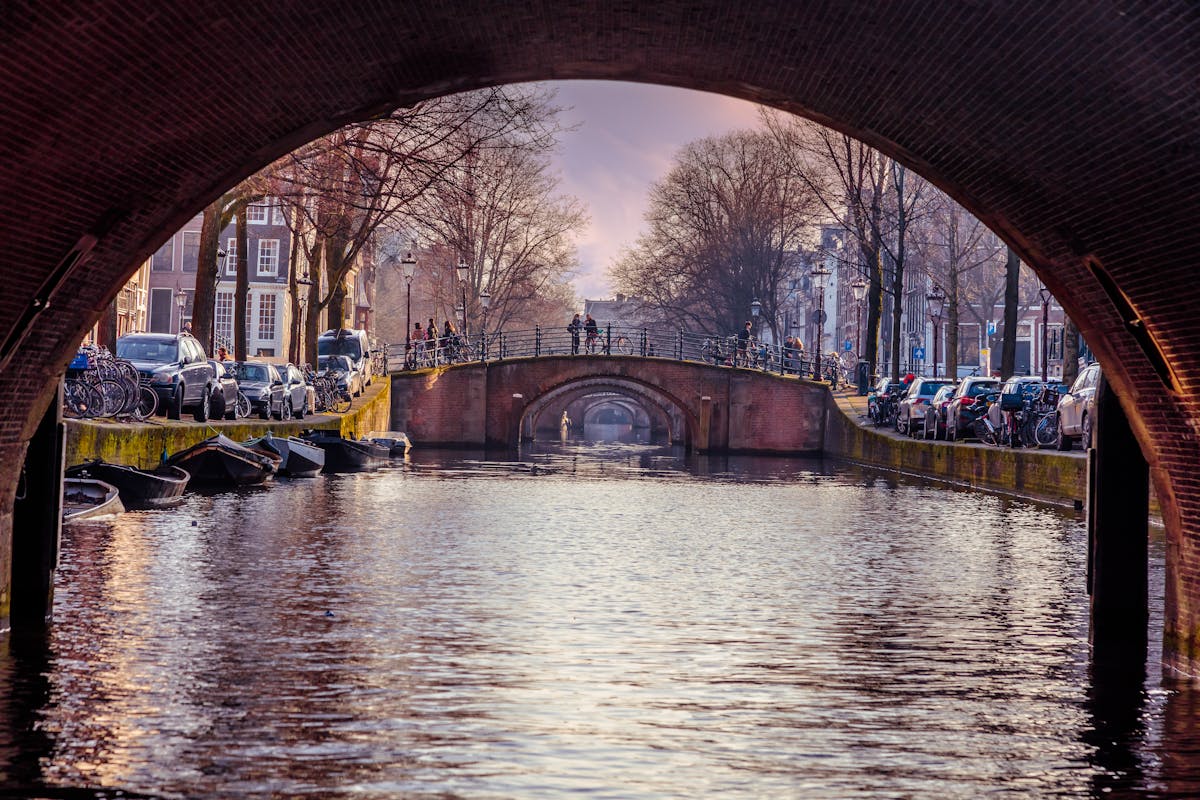
The Dutch Masters show covers a wider range — Vermeer’s intimate domestic scenes, Rembrandt’s dramatic chiaroscuro, Van Gogh’s frantic brushwork — but uses that variety to tell a story about Dutch painting itself. You see how each artist influenced the next, how light obsessed all of them, and how the same gray Dutch skies that you walked under on your way here produced some of the most luminous paintings in history.
After the main show, there’s usually a shorter digital art piece (10-15 minutes) that’s more abstract and contemporary. Think of it as a palate cleanser. Some people leave before it starts, which means more space for you.
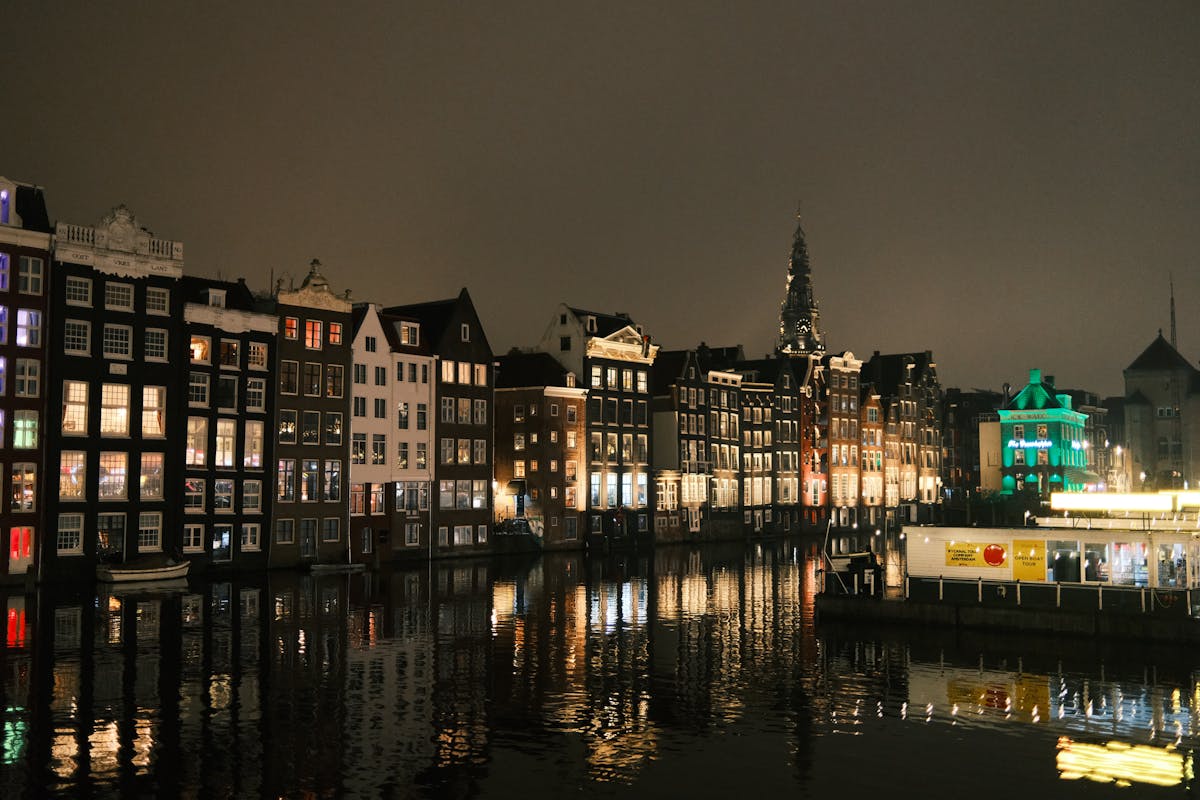
One thing I didn’t expect: the building itself contributes to the experience. The original concrete pillars and industrial infrastructure aren’t hidden — they’re incorporated. The projections wrap around them, creating depth and dimension that a flat white gallery wall could never match. There’s a reason Culturespaces chose a former gas purification hall over a standard event space.
While You’re in Amsterdam
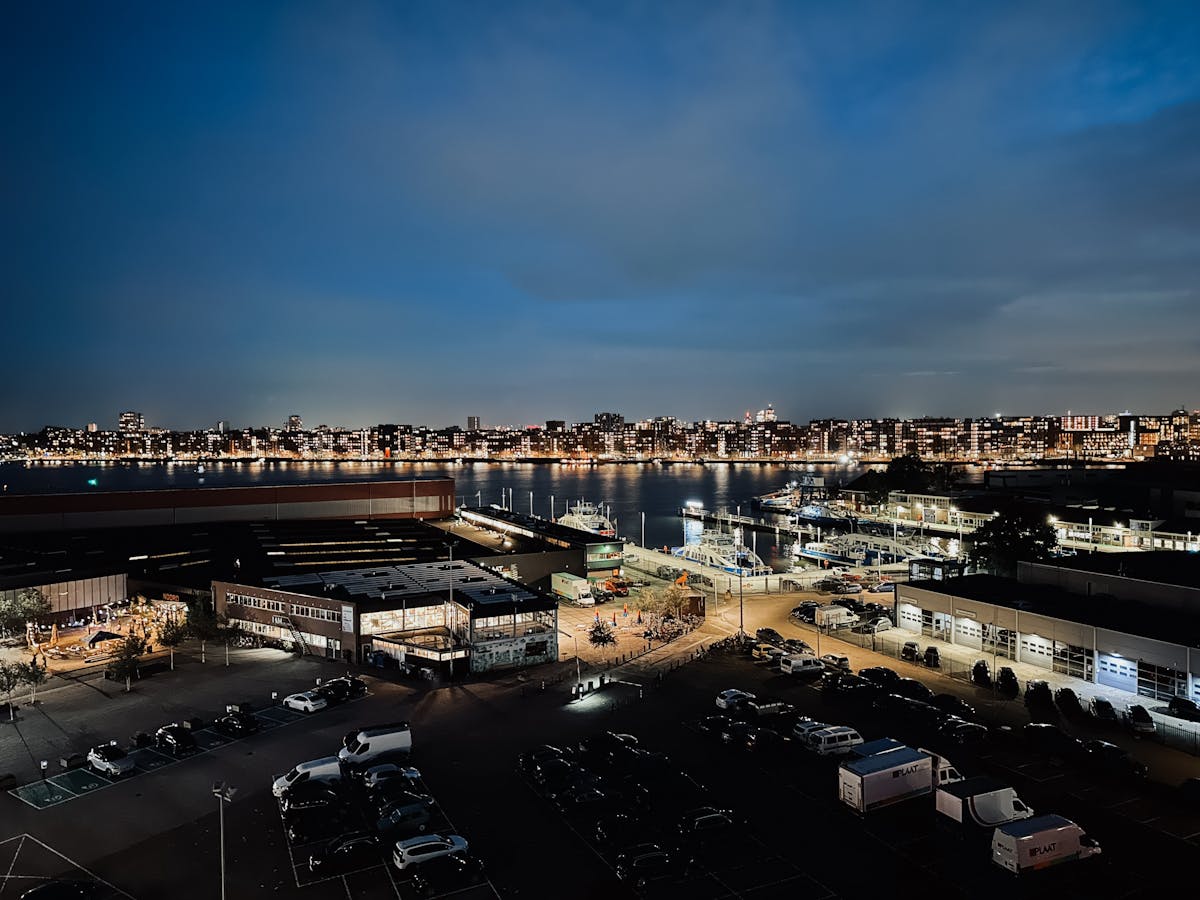
Amsterdam’s museum scene goes well beyond the big three, and Fabrique des Lumieres fits nicely into a broader itinerary. The Van Gogh Museum is the obvious pairing — seeing his Starry Night projected across an entire wall and then standing in front of the real painting later that day is a genuinely special double hit. The Rijksmuseum houses the Dutch Masters originals if the morning show sparks your curiosity, and Anne Frank House is a must for a completely different but equally powerful experience. For something lighter, a canal cruise in the evening pairs perfectly with an afternoon Fabrique visit — especially if you book one with drinks. And if Dutch windmills are on your list, the Zaanse Schans day trip is an easy morning excursion that leaves the afternoon free for the light shows.
This article contains affiliate links. When you book through our links, we may earn a small commission at no extra cost to you. This helps us keep creating free travel guides.
Fabrique des Lumieres sits in the Westerpark neighborhood, inside a 19th-century gasworks that the designers left deliberately industrial. The Moco Museum on Museumplein also features immersive digital rooms, though on a smaller scale, and the contrast between the two is worth experiencing. The Body Worlds exhibition on Damrak offers yet another form of spectacle — real human anatomy preserved and posed in ways that provoke the same mix of awe and unease as Fabrique’s floor-to-ceiling projections. For a lighter evening, the Amsterdam canal cruises pass through the same Westerpark area, and sunset on the canals after an hour inside the darkened gasworks is a genuinely beautiful transition.