
I was standing in the middle of Marienplatz, trying to figure out whether the Glockenspiel had already played or if I’d just missed it, when a tour group swept past me. Their guide pointed at the New Town Hall and rattled off something about jousting knights and a plague. Twenty seconds in, I already knew more about that building than I’d figured out in an hour of wandering alone.
That’s the thing about Munich. It’s compact, flat, and almost everything worth seeing sits inside a tight ring you can cover on foot in under two hours. But the city’s layers — medieval, royal, war-torn, rebuilt — aren’t obvious unless someone points them out.
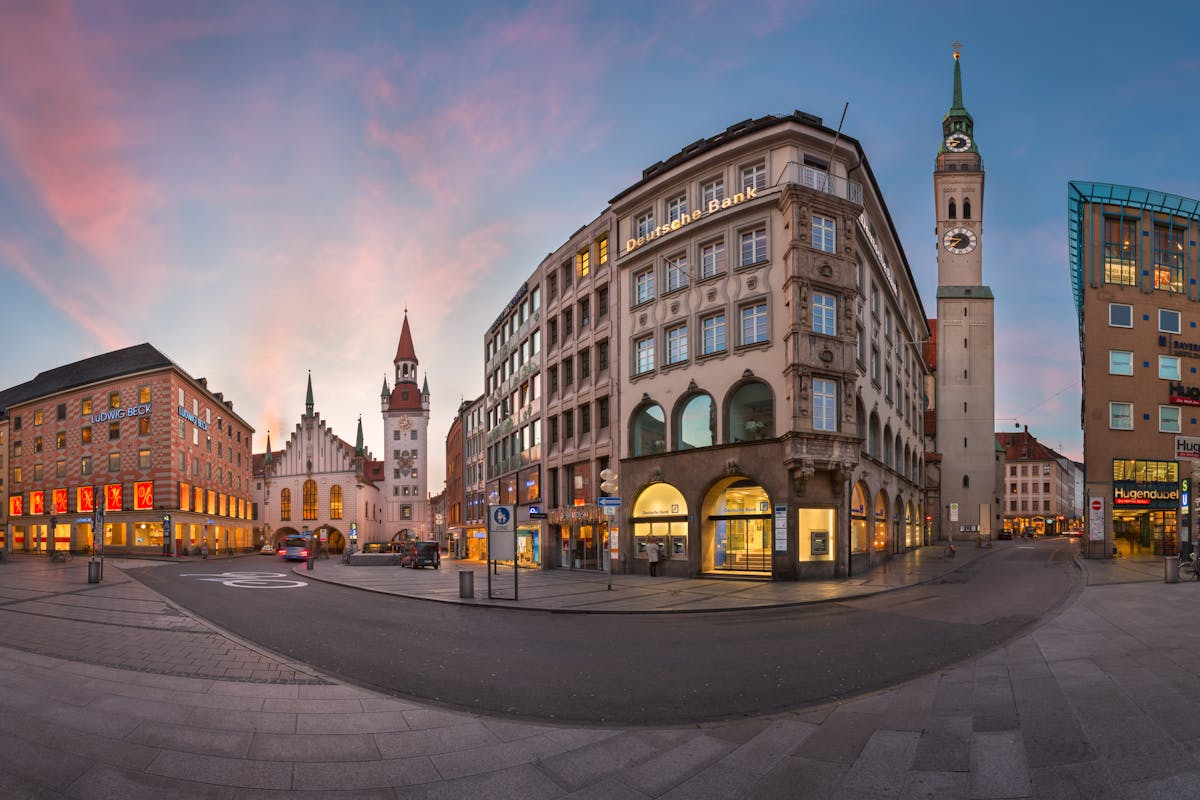
A walking tour is the smartest first move in Munich. You’ll hit Marienplatz, the Frauenkirche, Odeonsplatz, the Residenz, the Hofbrauhaus, and — if you picked the right tour — the Viktualienmarkt and the edge of the English Garden. All in about two hours, with context you would never get from a guidebook or Google Maps.
Best overall: Munich Old Town Walking Tour — $28. Classic 2-hour route through all the highlights with sharp, funny guides who actually know their stuff.
Best budget: Marienplatz & English Garden Tour — $23. Covers the old town AND the English Garden, which most tours skip entirely.
Best for a deeper experience: Private Tour with a Local — $112. Fully customizable route with a local guide who adapts to what you actually want to see.
- How Walking Tours in Munich Actually Work
- What Kind of Tour Should You Book?
- The Best Munich Walking Tours to Book
- 1. Munich Old Town Walking Tour —
- 2. Munich City: Marienplatz & English Garden Walking Tour —
- 3. Discover Munich Small Group Walking Tour —
- 4. Private Walking Tour: Highlights & Hidden Spots — 2
- When to Take a Walking Tour
- Getting to the Meeting Point
- Tips That Will Save You Time (and Money)
- What You’ll Actually See on a Munich Walking Tour
- After the Tour: Where to Go Next
- Beyond Munich
How Walking Tours in Munich Actually Work
Almost every Munich walking tour follows a similar pattern. You meet at Marienplatz (usually near the Mariensaule column or outside a specific shop), walk for 1.5 to 2.5 hours through the old town, and end near the Hofbrauhaus or Odeonsplatz. The distance is short — maybe 3 kilometers total — so it’s not physically demanding at all.
Here’s what most tours include:
- Marienplatz — the main square, the New Town Hall, and the Glockenspiel (if your timing is right)
- Frauenkirche — Munich’s cathedral with the twin onion domes and the Devil’s Footprint legend
- Odeonsplatz — the Theatinerkirche, the Feldherrnhalle, and the Beer Hall Putsch history
- The Residenz — exterior of the former royal palace, sometimes a look into the courtyards
- Viktualienmarkt — the famous food market, a two-minute walk from Marienplatz
- Hofbrauhaus — at minimum you’ll walk past it, and some tours end with a beer here
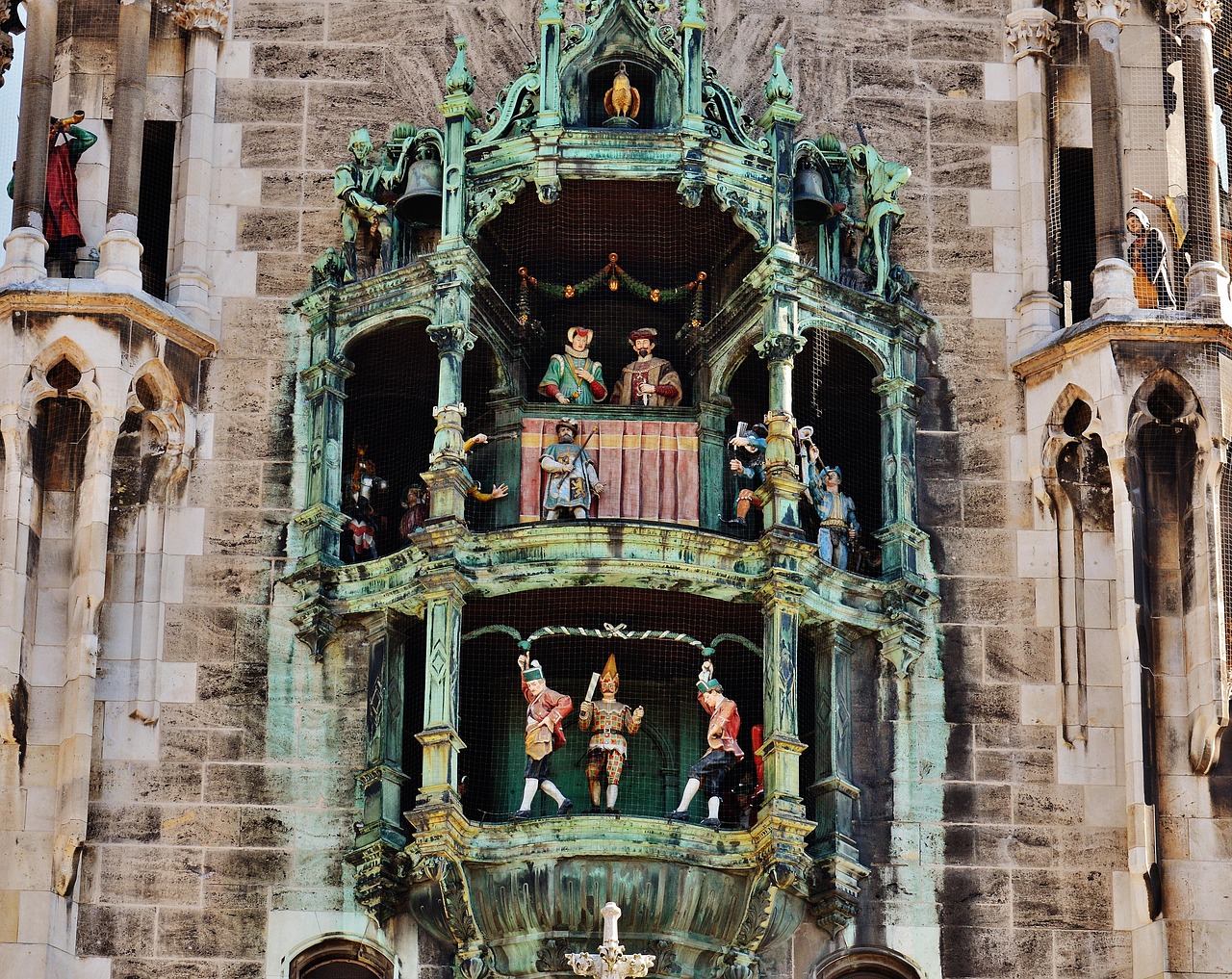
The Glockenspiel plays daily at 11 am and noon (plus 5 pm March through October). If your tour starts at 10 am, you’ll usually catch the 11 am show mid-tour. But don’t stress about it — the Glockenspiel is honestly more impressive as a concept than as a spectacle. The figurines are tiny from street level and the whole thing lasts about 12 minutes. Nice to see once, but it shouldn’t dictate your tour time.
What Kind of Tour Should You Book?
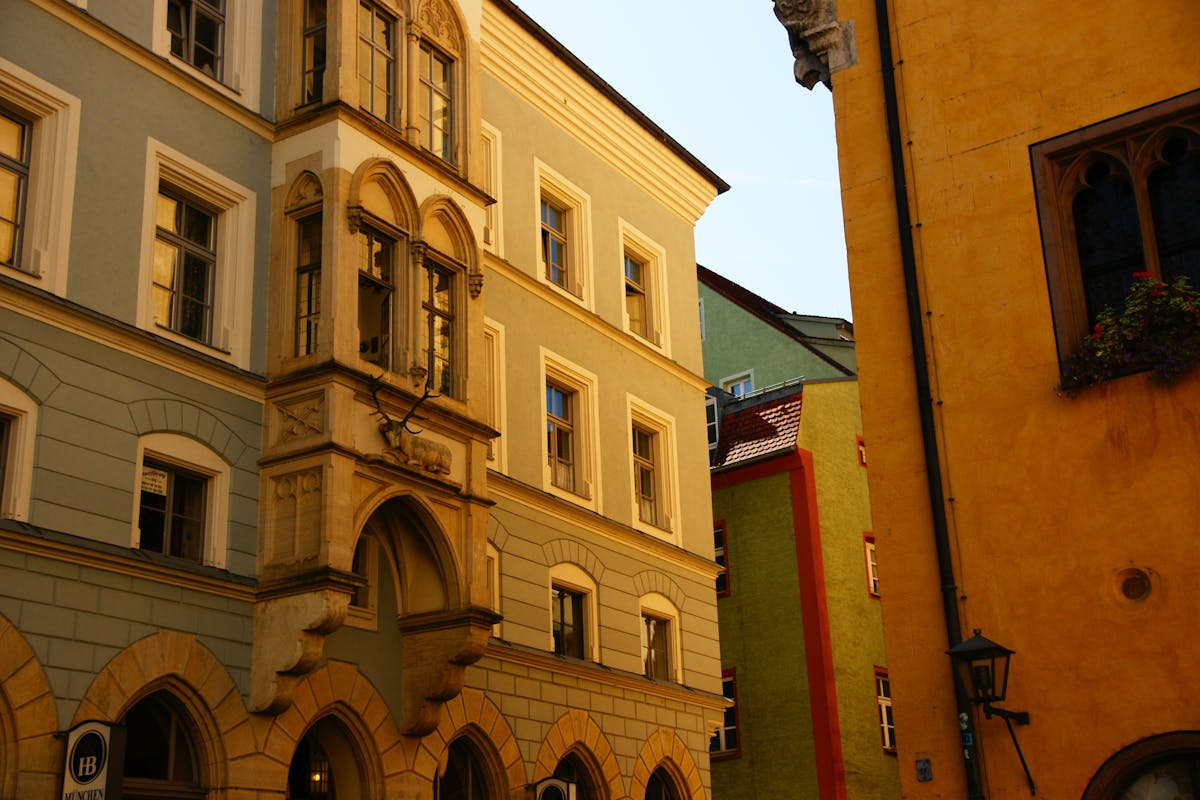
Munich walking tours basically split into four types. Knowing which one fits you saves a lot of disappointment.
General old town tours are the standard — two hours through the main sights, good for first-time visitors, priced around $23-30 per person. This is what most people should book.
Theme tours focus on one angle: Third Reich and WWII history, beer culture and breweries, ghost stories, or food. If you’ve already done a general tour or if you’re genuinely interested in one topic, these are worth it. The Third Reich walking tours in particular are some of the most well-reviewed tours in the whole city.
Free walking tours exist in Munich — companies like SANDEMANs and others run tip-based tours starting at Marienplatz. They’re decent but crowded (groups of 30-40 people), and the guides vary wildly in quality. You also have to deal with the awkward tip negotiation at the end. For an extra $23-28, a paid small-group tour is genuinely better value.
Private tours cost more ($100-120 per person) but you set the pace, the route, and the stops. If you’re with a family or a small group, the per-person cost drops fast and you get a completely different experience.
The Best Munich Walking Tours to Book
I went through the tours available for Munich and picked four that actually deliver. These are ranked by how well they cover the city for the price, not by how many reviews they have.
1. Munich Old Town Walking Tour — $28
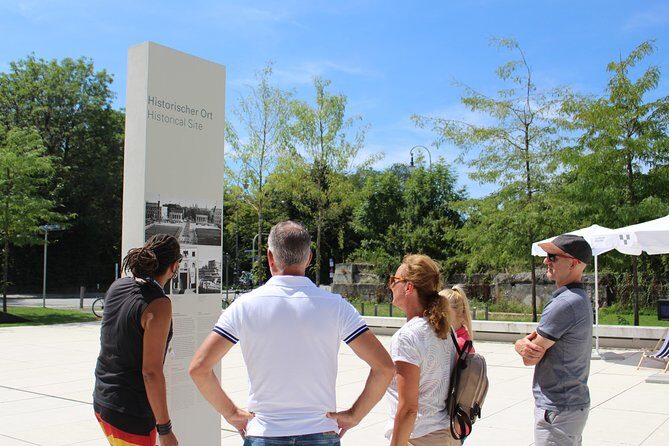
This is the one to book if you want a straightforward, no-nonsense introduction to Munich. Two hours, all the main landmarks, and guides who manage to make 800 years of Bavarian history actually entertaining. The route covers Marienplatz, the Frauenkirche, Odeonsplatz, the Residenz exterior, and ends near the Hofbrauhaus.
At $28 per person it hits the sweet spot — cheap enough that you won’t overthink it, good enough that you’ll feel like you actually learned something. The guides are consistently sharp, funny, and well-paced. Groups are manageable (not the 40-person free tour chaos).
One thing to flag: this tour covers the old town only. If you want the English Garden or deeper WWII history, you’ll need a different option or a second tour.
2. Munich City: Marienplatz & English Garden Walking Tour — $23
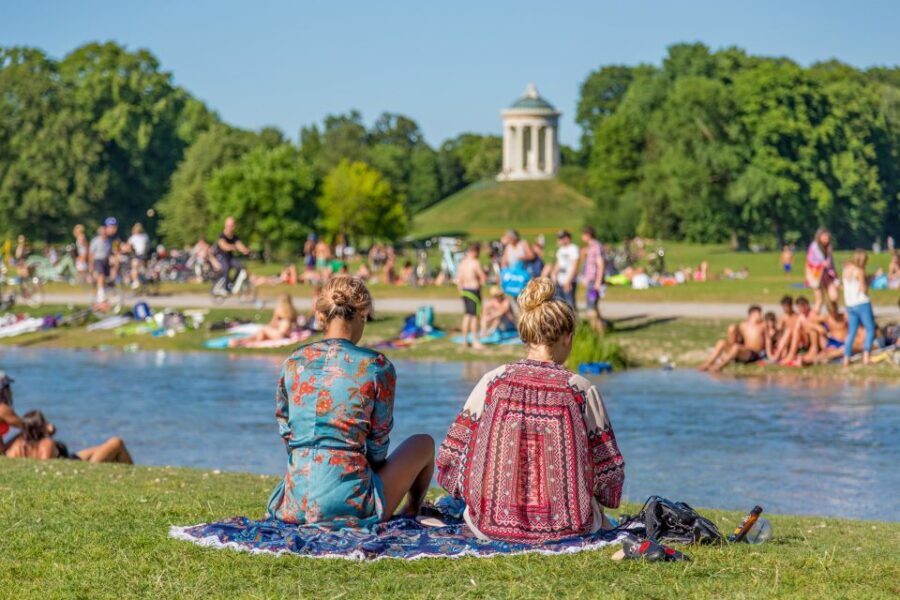
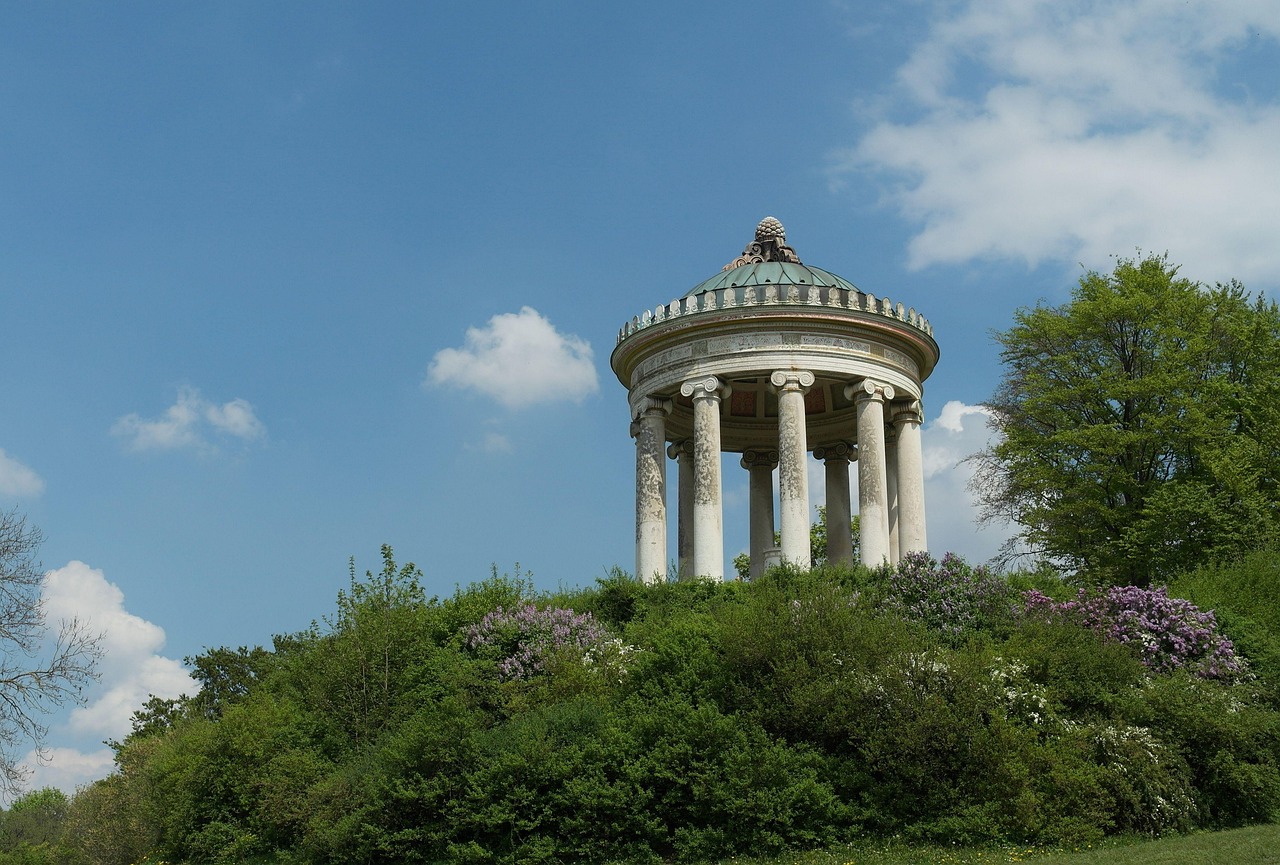
This is my budget pick, and honestly it might be the best value walking tour in Munich. For $23 you get the standard old town route plus a detour through the English Garden, which most tours completely ignore. The English Garden is larger than Central Park, and the section you’ll walk through includes the Monopteros hilltop with its panoramic views and (in summer) the famous Eisbach surfer wave.
Two hours covers a lot of ground — the guides keep things moving but not rushed. And at this price, it’s cheaper than most “free” tours once you factor in a reasonable tip.
The only downside is that adding the English Garden means slightly less time at each old town stop. If you want to really linger at the Residenz or Viktualienmarkt, the Old Town-only tour might be a better fit.
3. Discover Munich Small Group Walking Tour — $27
If the group size matters to you — and it should — this is the one. Small group means roughly 15-20 people max, compared to the 30-40 you’ll find on free walking tours. You can actually hear the guide, ask questions, and move at a comfortable pace without constantly losing people at crosswalks.
The route covers Marienplatz, the Rathaus-Glockenspiel, Frauenkirche, and the key old town landmarks, with insider tips on local restaurants and bars woven in. At $27 per person it’s a dollar less than the Viator option and the small-group format makes a noticeable difference.
One guide in particular — Leon — gets mentioned again and again for being funny and genuinely knowledgeable. You can’t guarantee you’ll get him, but the standard across this tour is consistently good.
4. Private Walking Tour: Highlights & Hidden Spots — $112
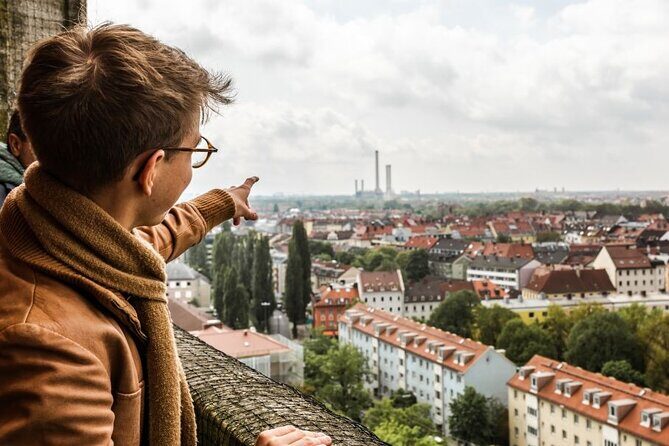
This is the premium option and it’s worth it in the right situation. At $112 per person for a 2-hour tour (expandable up to 6 hours), you get a local guide who tailors the route to whatever you want. Families, couples, or small friend groups splitting the cost end up paying about the same per person as a standard group tour, but with zero waiting around and complete flexibility.
What makes this different isn’t just the private format — it’s that the guides are locals who genuinely live in Munich. They’ll take you to side streets and courtyards that no group tour bothers with. One guide, Joel, apparently focuses heavily on architectural details and historical context that most tours skim over.
The booking is flexible too — they’ll meet you at your hotel, adjust the route mid-tour, and extend the time if you’re enjoying yourself. Not cheap for a solo traveler, but for a group of 3-4 people it’s the best way to see Munich.
When to Take a Walking Tour
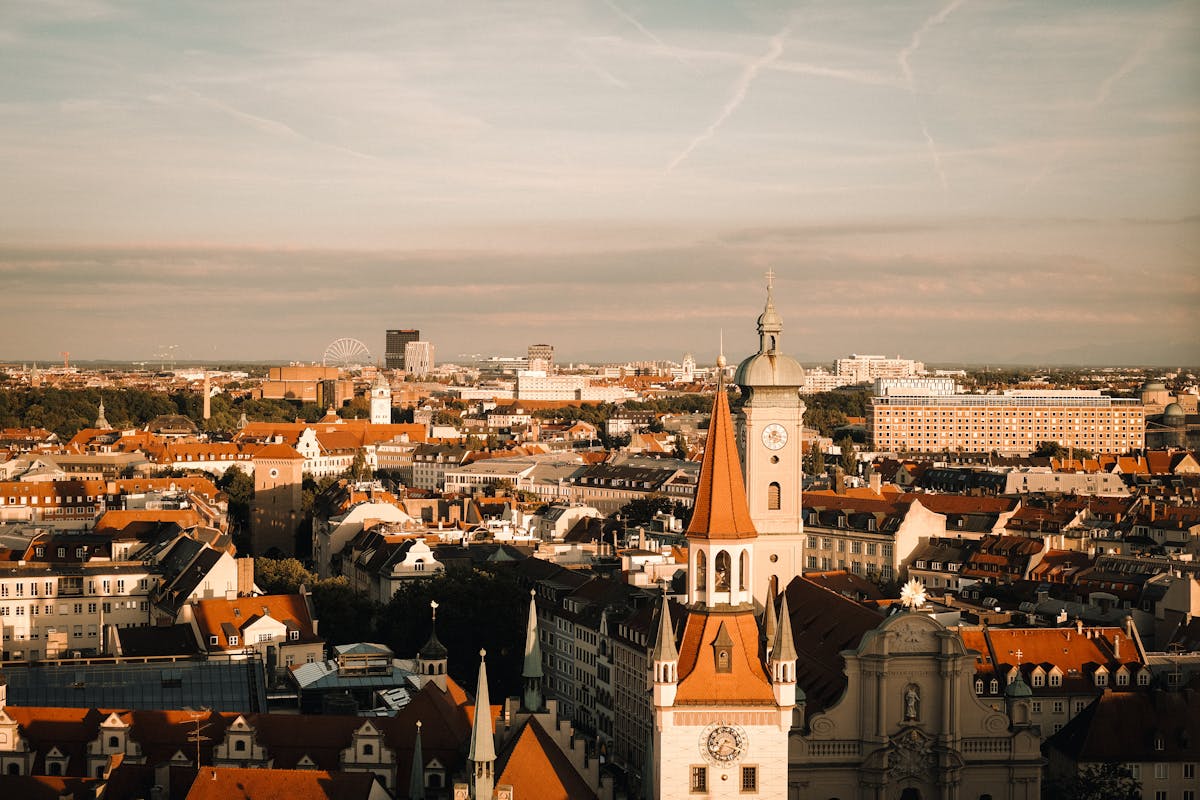
Morning tours (9-11 am) are the best call, especially in summer. The streets are quieter, the light is good for photos, and you’ll finish in time for lunch at the Viktualienmarkt or a beer garden. The 10 am start also lines up perfectly with the 11 am Glockenspiel show.
Afternoon tours work fine in spring and autumn when it’s not blazing hot. In July and August, walking for two hours in direct sun through stone streets with no shade gets old fast. If you’re visiting in summer, go morning or late afternoon.
Seasonal notes: December is magical because of the Christmas markets around Marienplatz, but it’s cold and tours are bundled up and brief. April through June and September through October are the sweet spot — pleasant weather, manageable crowds, and everything is open.
During Oktoberfest (late September to early October), Munich walking tours book out fast. Reserve at least a week in advance. The city is packed, but the atmosphere adds an extra layer to the experience.
Getting to the Meeting Point
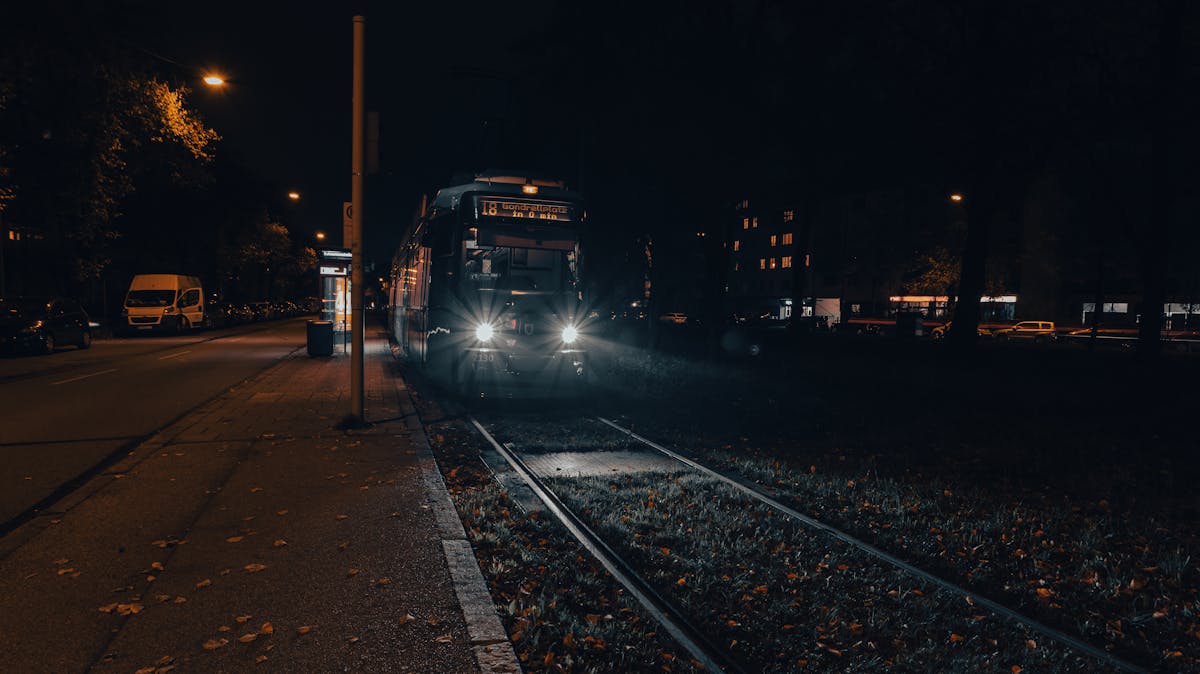
Almost every walking tour meets at or near Marienplatz, which is the easiest place to reach in the entire city.
- U-Bahn/S-Bahn: Take the U3, U6, S1-S8, or virtually any S-Bahn line to Marienplatz station. Exit toward “Marienplatz” and you’re right there
- From Munich Hauptbahnhof (main station): 10-minute walk east along Karlsplatz/Neuhauser Strasse, or one S-Bahn stop
- From the airport: S1 or S8 directly to Marienplatz, about 40 minutes
Arrive 10 minutes early. The meeting points are usually very specific — “in front of the Tourist Information office” or “at the Mariensaule column” — and guides won’t wait for latecomers. Read your booking confirmation carefully for the exact spot.
Tips That Will Save You Time (and Money)

Wear comfortable shoes. This sounds obvious but Munich’s old town is almost entirely cobblestoned. Two hours on cobbles in new shoes is a recipe for blisters. Sneakers or broken-in walking shoes.
Skip the free tours if you’re short on time. They’re fine if budget is your absolute priority, but the groups are huge (30-40 people), you’ll spend time at the back straining to hear, and the tip pressure at the end is real. A $23-28 paid tour is a better use of two hours.
Book your walking tour for Day 1. It’s the best way to orient yourself. You’ll learn where things are, what’s worth going back to, and get restaurant recommendations from the guide. Everything else you do in Munich will be better for it.
Ask about Viktualienmarkt. Not all tours include it. If yours doesn’t, the market is a 2-minute walk south of Marienplatz and you should go immediately after your tour. The beer garden in the center of the market is one of the most pleasant spots in Munich for a post-tour drink.
Pinakothek museums are $1 on Sundays. If your visit lines up, this is one of the best bargains in European art. The Alte Pinakothek has Durer, Rubens, and Rembrandt. All three Pinakothek buildings are a 15-minute walk from the old town.
What You’ll Actually See on a Munich Walking Tour
Munich’s old town is dense with landmarks, and a good guide connects them into a story rather than just ticking off a list. Here’s what the major stops actually are and why they matter.
Marienplatz has been the city’s central square since 1158. The New Town Hall (Neues Rathaus) looks medieval but was built in 1908 — a deliberate throwback that’s become the most photographed building in Munich. The Glockenspiel in the tower plays at 11 am, noon, and 5 pm with mechanical jousting knights and dancing coopers.
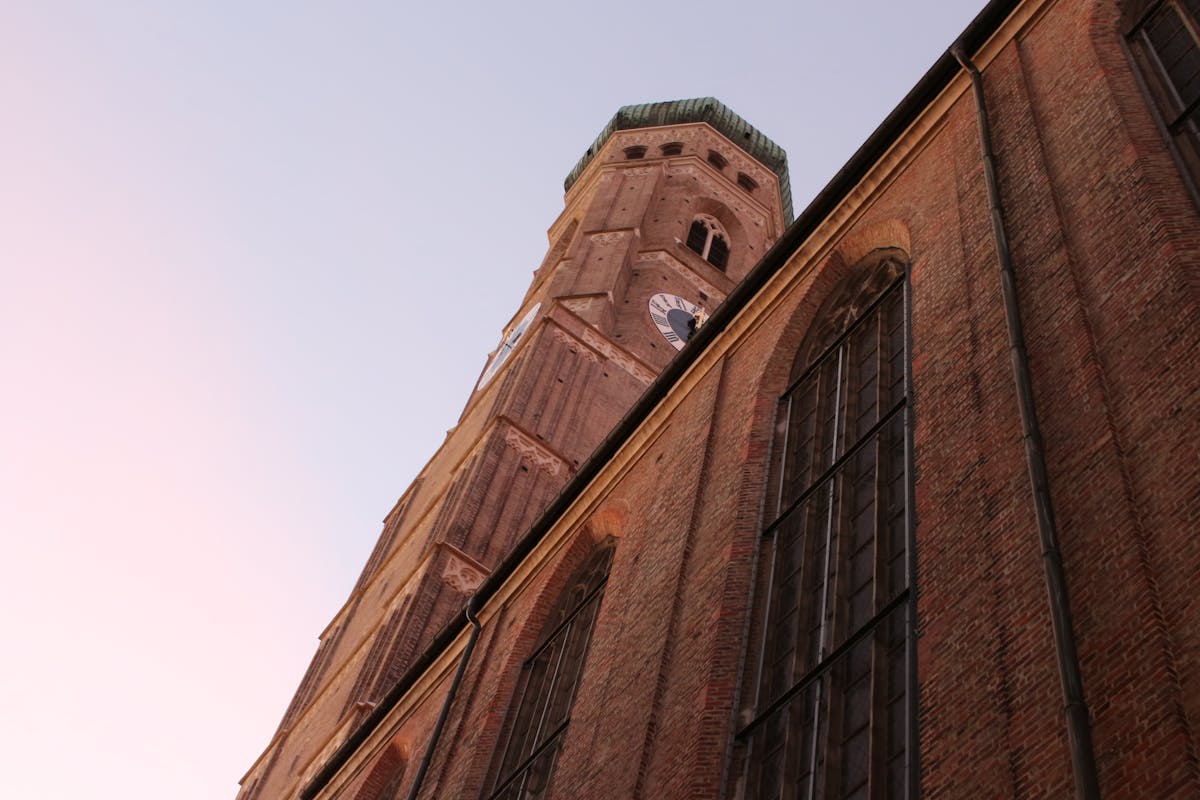
St Peter’s Church (Peterskirche) is Munich’s oldest parish church, just south of Marienplatz. Most tours point it out but don’t go inside. If you climb the 301 steps to the top of the tower (5 EUR), you get the best view of the old town, the Viktualienmarkt below, and on clear days the Alps on the horizon.
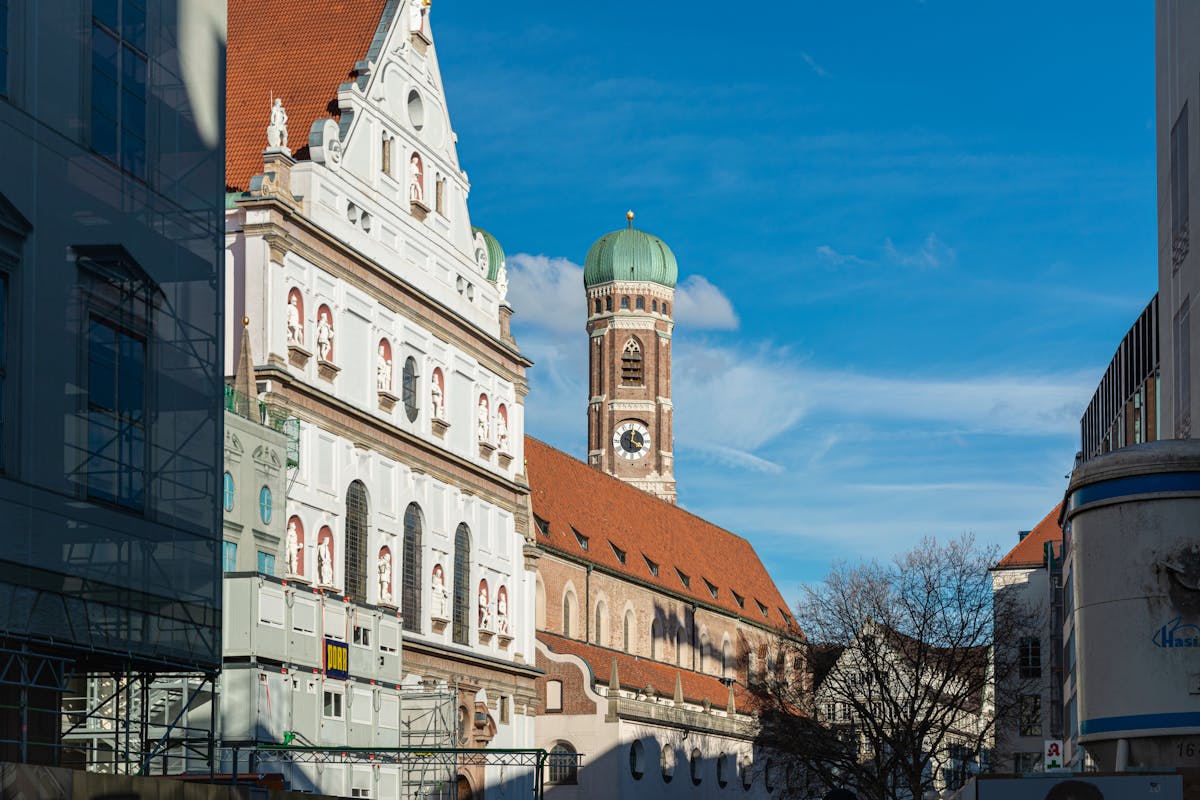
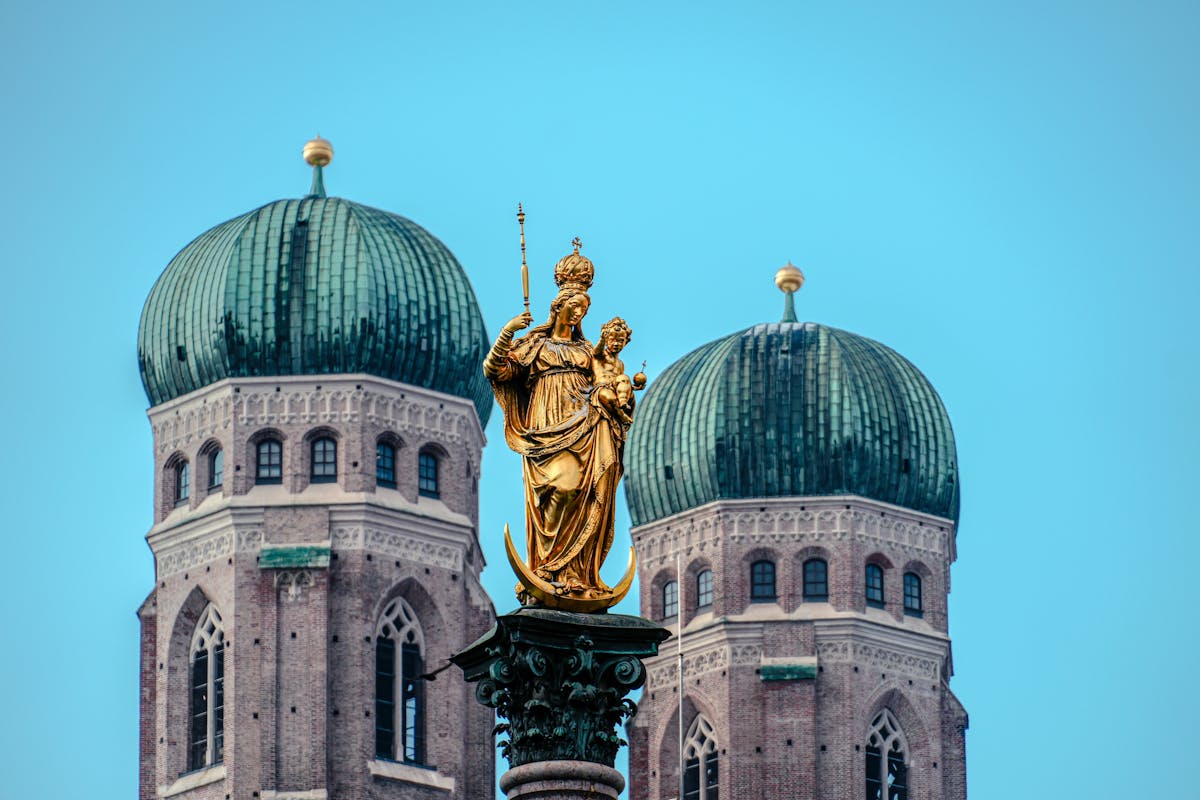
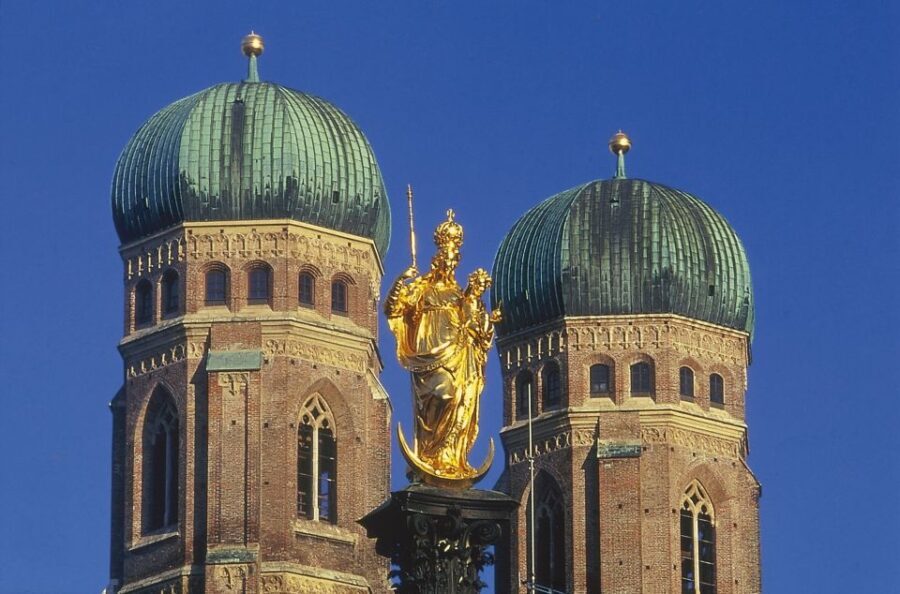
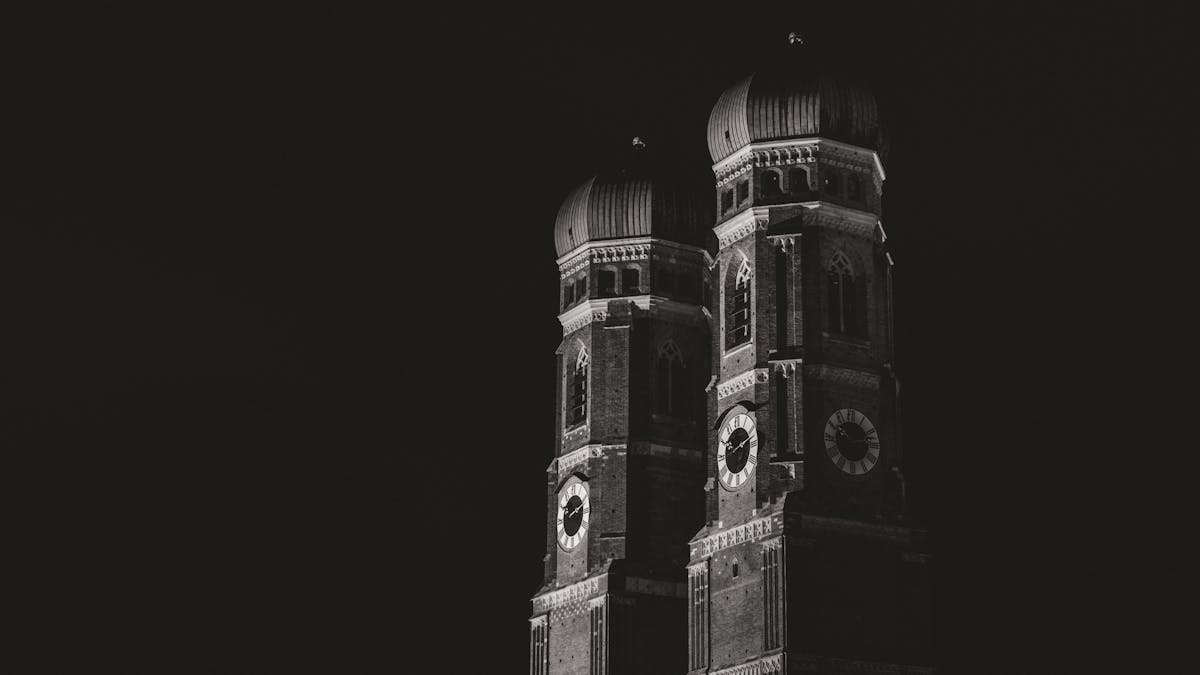
The Frauenkirche is Munich’s cathedral — you can’t miss the twin onion domes. Inside, look for the “Devil’s Footprint” near the entrance, a dark mark in the stone floor that legend says was left by the Devil himself when he was tricked by the cathedral’s architect. The story is better when a guide tells it.
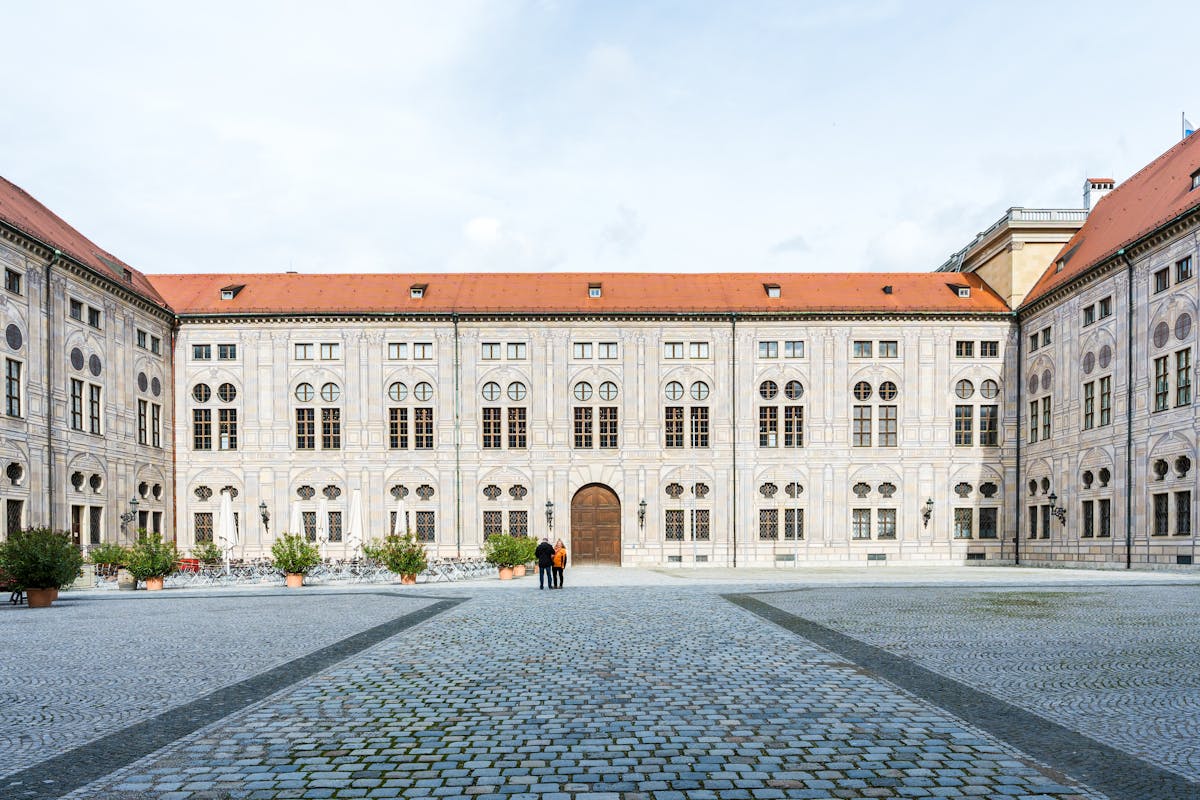
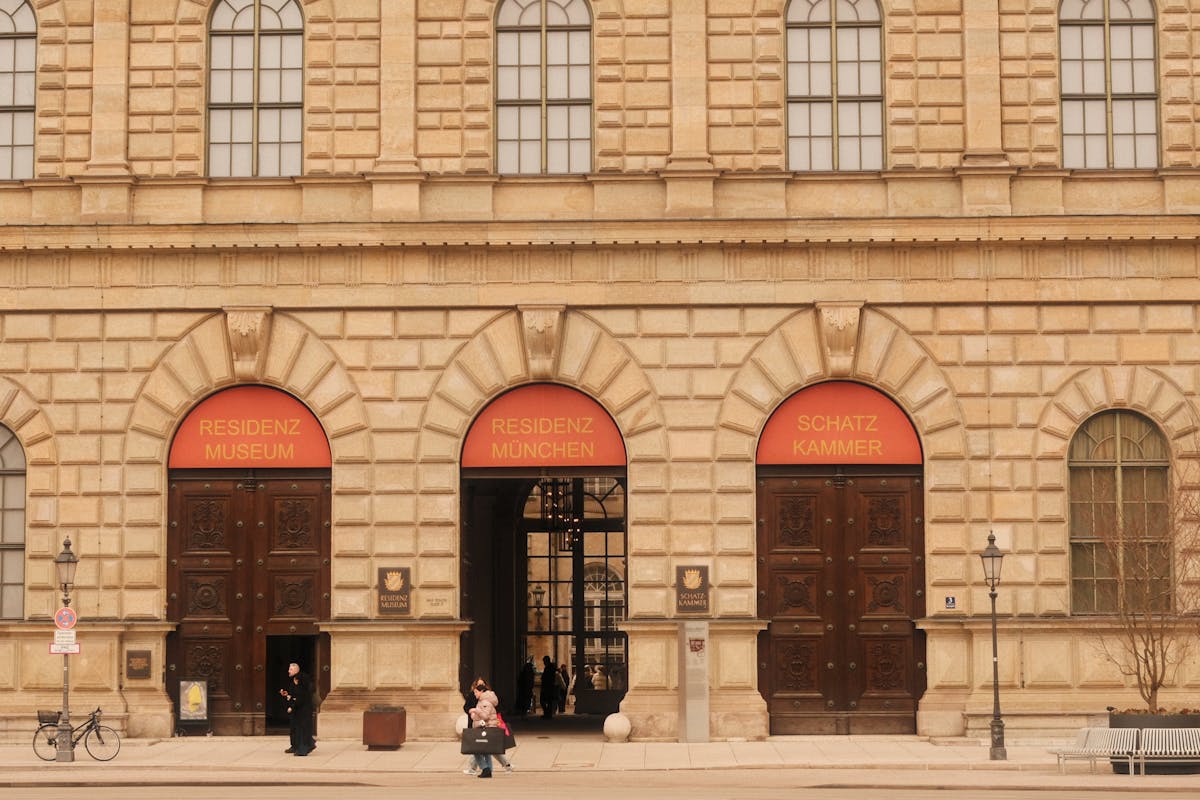
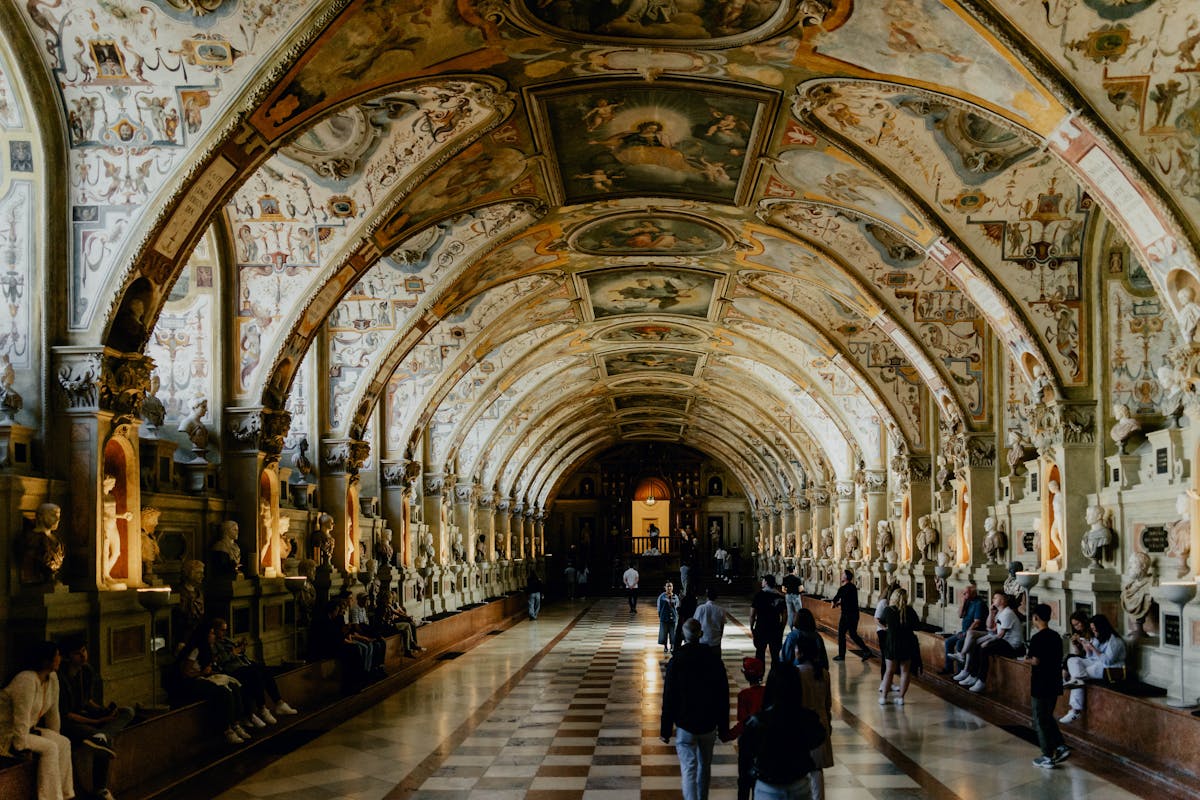
The Residenz was the royal palace of the Wittelsbach dynasty for over 400 years. Most tours cover the exterior and the courtyards (which are free to enter). The full museum inside is massive — 130 rooms — and worth a separate visit. The Antiquarium, a Renaissance banquet hall covered floor to ceiling in painted grotesques, is the standout room.
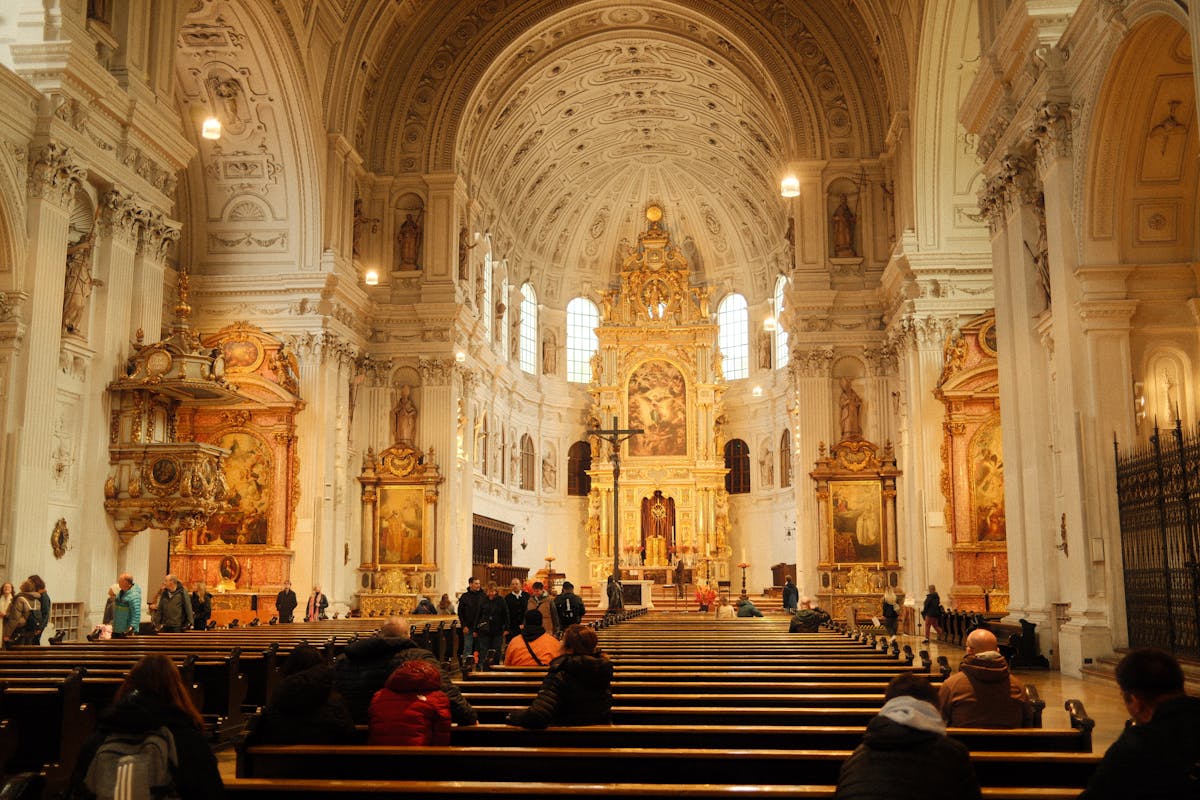
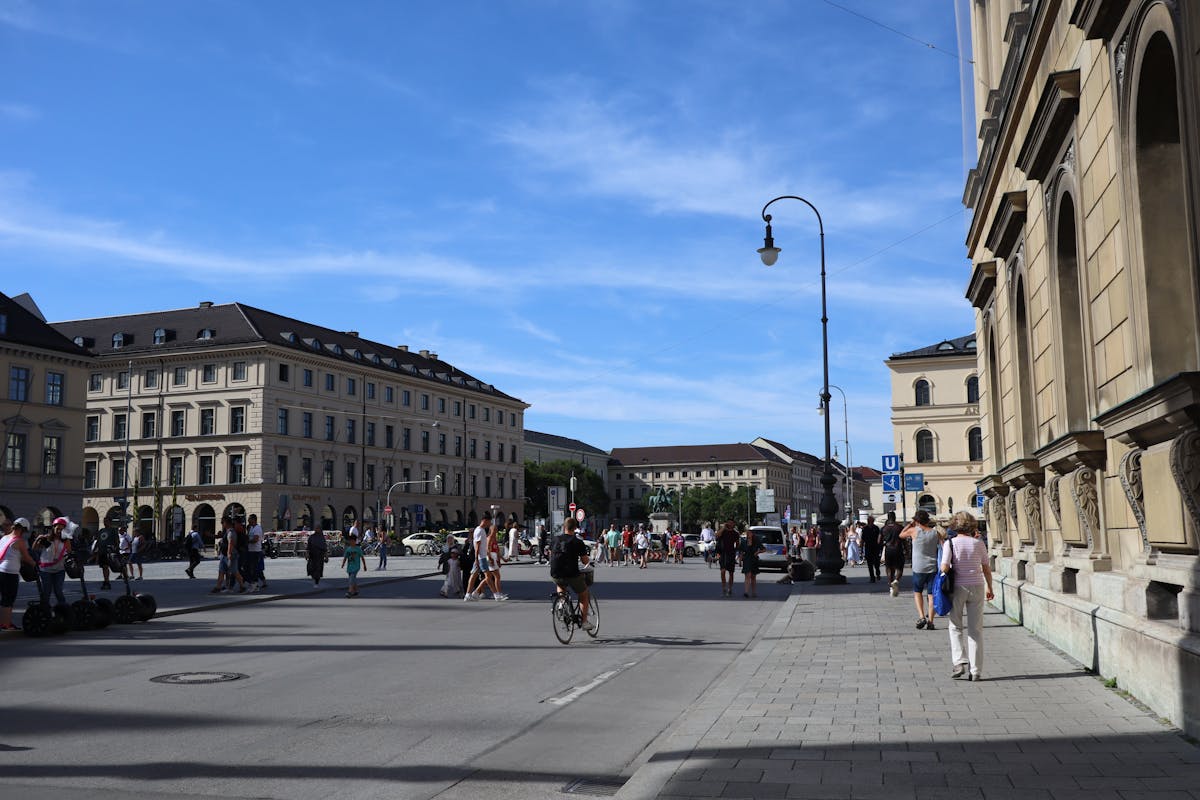
Odeonsplatz is where the old town meets the royal quarter. The Theatinerkirche is gorgeous inside (all white Baroque stucco, surprisingly quiet), and the Feldherrnhalle next door is where Hitler’s Beer Hall Putsch was stopped by police in 1923 — a story that most guides handle thoughtfully.

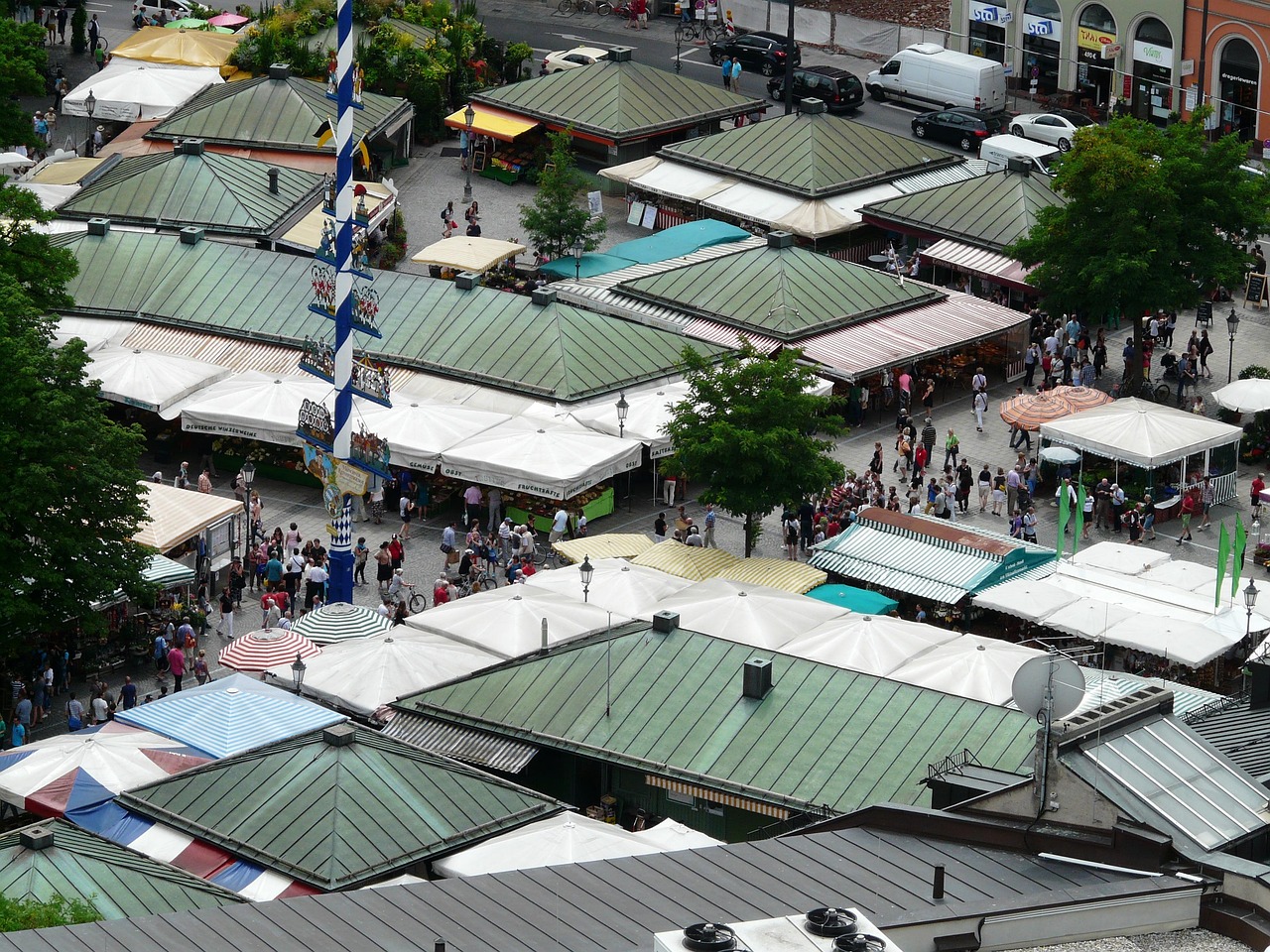
Viktualienmarkt is Munich’s daily food market, running since 1807. Cheese, meat, bread, fruit, flowers, honey — plus a beer garden right in the middle where you can sit among locals having their lunch. Some tours walk through here; if yours doesn’t, come back on your own.
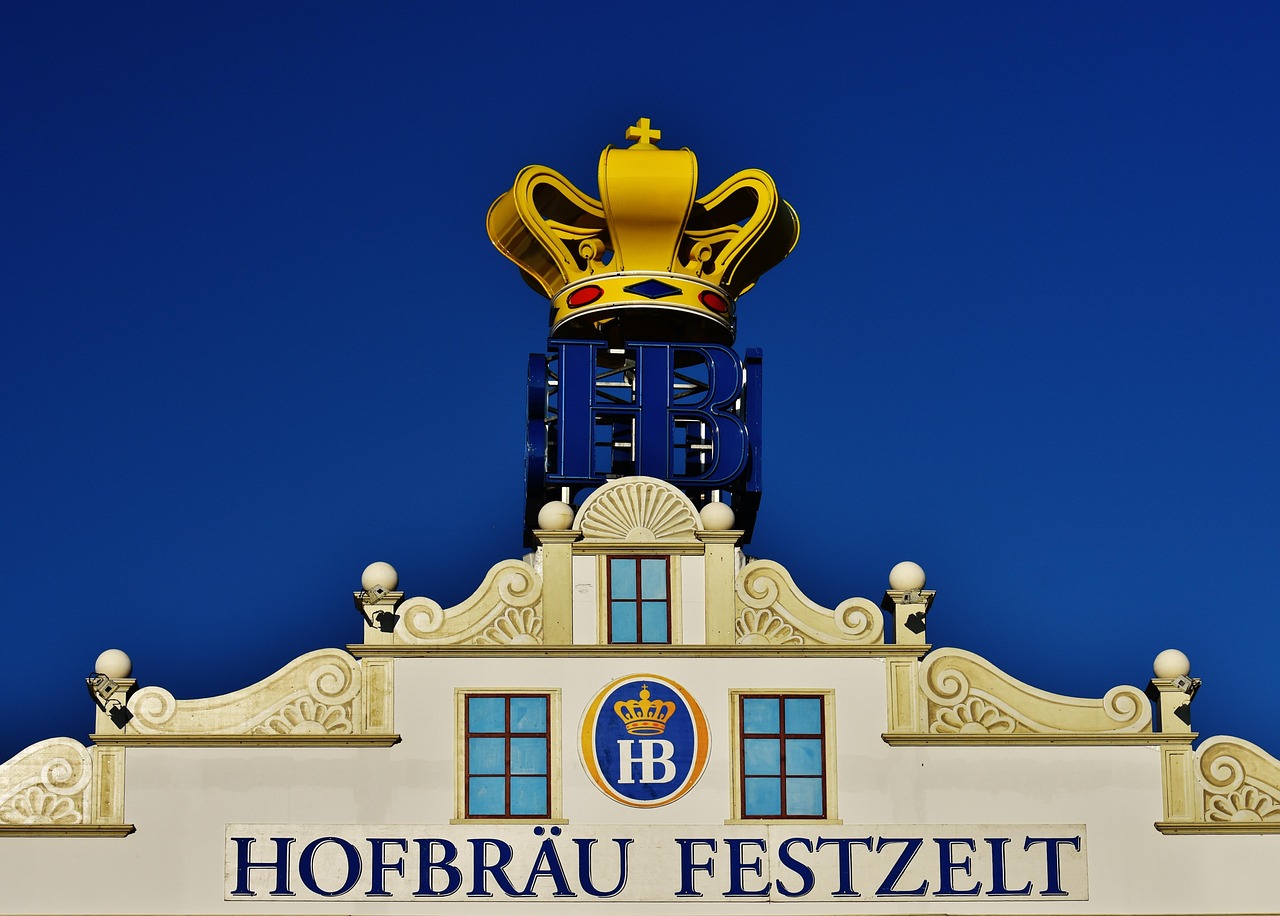
The Hofbrauhaus is a tourist magnet and most locals avoid it, but it’s still worth poking your head in at least once. The main hall seats 1,300 people, there’s an oompah band most evenings, and a Masskrug (one-liter beer) costs about 12 EUR. Go at lunch when it’s less chaotic.
After the Tour: Where to Go Next
A walking tour gives you the overview. Here’s what to do with the rest of your day.
The English Garden starts a 10-minute walk north of the old town and keeps going for almost 4 kilometers. Head to the Monopteros hilltop for a panoramic view, then walk down to the Eisbach wave to watch surfers (yes, surfers — in the middle of Munich) ride a standing wave under a bridge. The Chinesischer Turm beer garden seats 7,000 people and is the most relaxed spot in the city for a beer.
Climb St Peter’s tower if you didn’t during the tour. Five euros, 301 steps, and the best rooftop view in Munich. Go mid-afternoon for the best light.
The Residenz Museum deserves at least two hours. The treasury has one of the best collections of royal jewels in Europe, and the Antiquarium alone justifies the entry fee.
Beyond Munich
If you have got a few days in Munich, the walking tour is just the start. Neuschwanstein Castle is the classic day trip — you can reach it by train plus bus or book a guided tour that handles the logistics. The ticketing system is confusing enough that I would recommend the latter. For something completely different, a Munich beer tour takes you through the historic beer halls in a few hours, which is a genuinely fun evening after a day of sightseeing.
The Dachau Memorial is a sobering but essential half-day trip — the first Nazi concentration camp, 45 minutes from the city by train. If your Germany trip continues north, a Berlin walking tour covers the Cold War and Wall history that Munich only touches on, and the Dresden Night Watchman tour is one of the most atmospheric evening walks in the country.
This article contains affiliate links. If you book through them, we earn a small commission at no extra cost to you. This helps us keep creating free travel guides.