
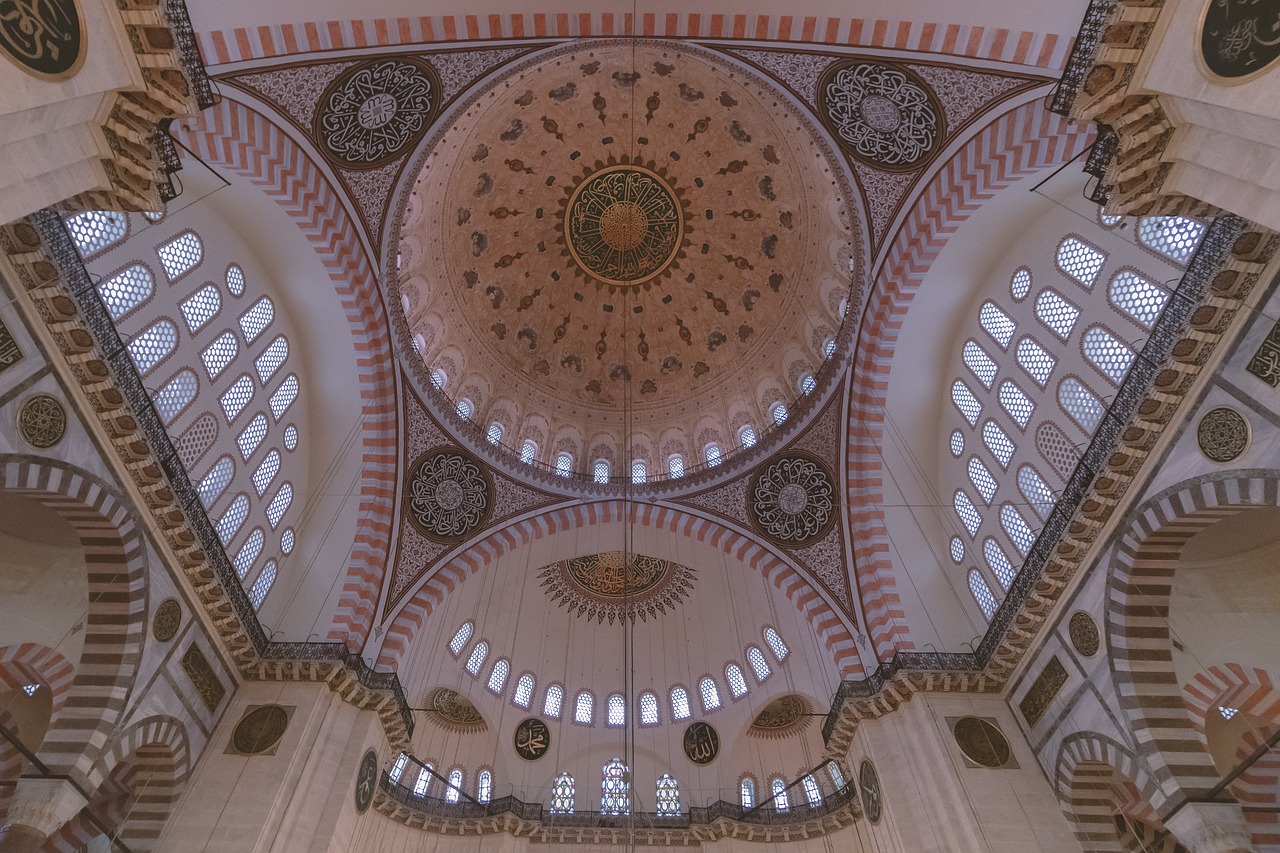
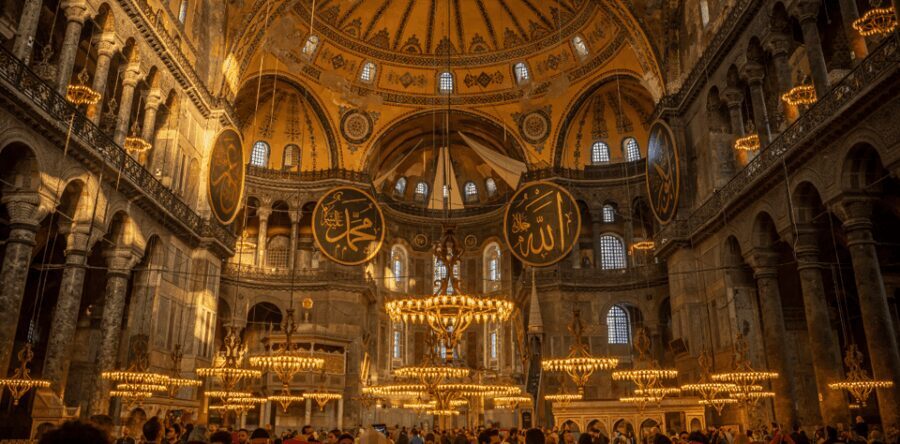
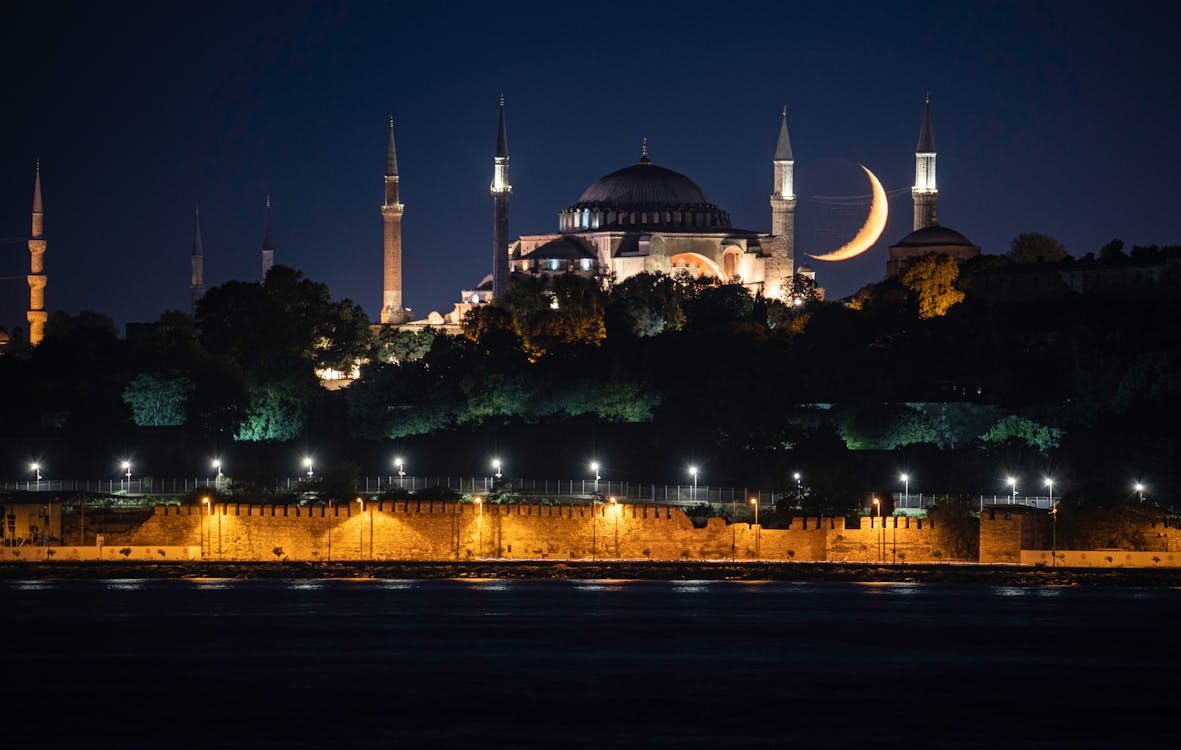
A cathedral for a thousand years. A mosque for five hundred. A museum for eighty-something. And now a mosque again. Hagia Sophia has been reinvented more times than any building on Earth, and the weird thing is that every version of it is still visible inside. Christian mosaics of Christ stare down from the upper gallery while enormous Islamic calligraphy medallions hang from the columns below. Nobody cleaned up after the previous tenants. That layering is what makes this place genuinely unlike anything else you will ever walk into.
I stood under that dome for maybe twenty minutes before I remembered I was supposed to be taking notes. It does that to people.
Best overall: Blue Mosque and Hagia Sophia Guided Tour — $39. Skip-the-line entry with a guide who actually explains the mosaics. Covers both buildings in one go.
Best budget: Hagia Sophia Skip-the-Line Ticket — $33. Just the ticket and an audio guide. No frills, no waiting in line, and you go at your own speed.
Best combo: Basilica Cistern and Hagia Sophia Combo — $74. Two of Istanbul’s most impressive interiors for one price. The Cistern is five minutes away on foot.
- How the Hagia Sophia Ticket System Works
- Who Gets In Free?
- Official Ticket vs Skip-the-Line vs Guided Tour
- The Best Hagia Sophia Tours to Book
- 1. Blue Mosque and Hagia Sophia Guided Tour with Tickets —
- 2. Hagia Sophia Skip-the-Line Ticket with Museum Option —
- 3. Basilica Cistern and Hagia Sophia Combo Ticket —
- 4. Hagia Sophia Skip-the-Line Ticket with Audio Guide —
- When to Visit Hagia Sophia
- How to Get to Hagia Sophia
- Tips That Will Save You Time and Money
- What You Will Actually See Inside
- A Very Short History (So You Know What You Are Looking At)
- More Istanbul Guides
How the Hagia Sophia Ticket System Works
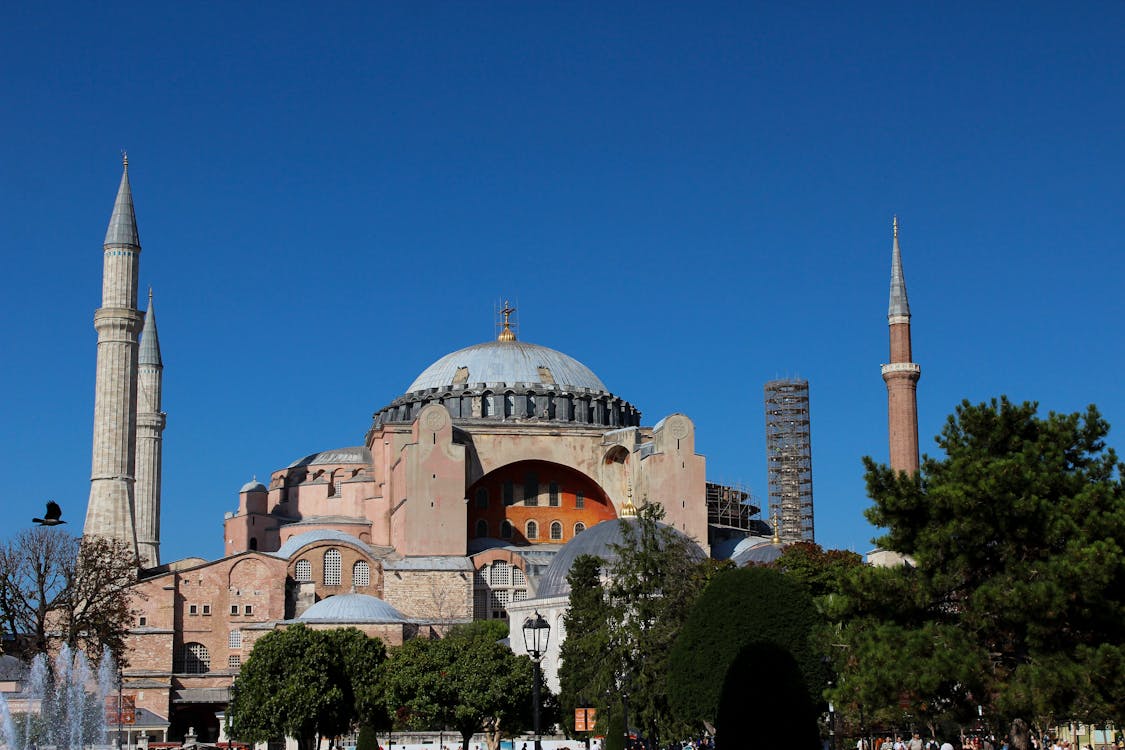
Since January 2024, travelers pay to enter Hagia Sophia. Before that, it was free when it operated as a mosque (and before that, as a museum). The money goes toward maintaining a building that has needed constant structural attention since the 6th century.
There are two separate entrances and this trips people up constantly:
- Prayer entrance — at the front, facing the tram line on Divan Yolu. Free, but this is for worshippers, not travelers. You will not see the upper gallery or the mosaics from here.
- Tourist entrance — around the back, near the Topkapi Palace main gate. This is the one you want. It is the paid entrance with the security screening.
Ticket price: 25 EUR (around $28) at the official window. But the official line can be brutal — an hour-plus in summer, and there is no shade for most of it. A skip-the-line ticket from a third party costs a few dollars more and saves you all of that. I would not bother with the official queue unless you are visiting on a winter weekday morning.
The tourist section is open 9:00 AM to 7:30 PM daily, though the last entry is about 30 minutes before closing. It is one of the few mosques in Istanbul that allows tourist entry during prayer times, but it closes to non-worshippers on Friday mornings for the noon prayer. Plan around that.
Who Gets In Free?
Children under 8 enter free. Turkish citizens and residents enter through the prayer entrance at no charge. There is no student discount for foreign visitors, which is annoying. EU concessions that work at many Istanbul museums do not apply here because it operates as a mosque, not a museum.
Official Ticket vs Skip-the-Line vs Guided Tour
You have three real options here, and the right one depends on how much you care about understanding what you are looking at.
Option 1: Official ticket at the door. Cheapest at 25 EUR, but you will queue. In July and August, that queue regularly hits 90 minutes. You get inside and you are on your own — no explanation for any of the mosaics, no context for the Islamic additions, nothing about the structural engineering that makes the dome work. If you already know the history, fine. If not, you will walk around thinking “wow, big building” and miss everything that makes it special.
Option 2: Skip-the-line ticket. Usually 30-35 EUR from third-party providers. You bypass the ticket queue entirely and go straight to security. Most come with a basic audio guide you can listen to on your phone. This is the sweet spot for independent travellers who want to move at their own pace but still learn something. You will still wait 10-15 minutes at security — everyone goes through that, skip-the-line or not.
Option 3: Guided tour. 37-90 EUR depending on what is included. A guide walks you through the building, points out details you would absolutely miss on your own (the Viking graffiti in the upper gallery, the weeping column, the asymmetrical mosaics), and usually covers either the Blue Mosque or Basilica Cistern as well. Worth it for a first visit. The guided tours also skip the ticket line.
The Best Hagia Sophia Tours to Book
I went through the major options available and picked four that cover different budgets and styles. All of them include skip-the-line entry, which alone justifies the price over buying at the window.
1. Blue Mosque and Hagia Sophia Guided Tour with Tickets — $39
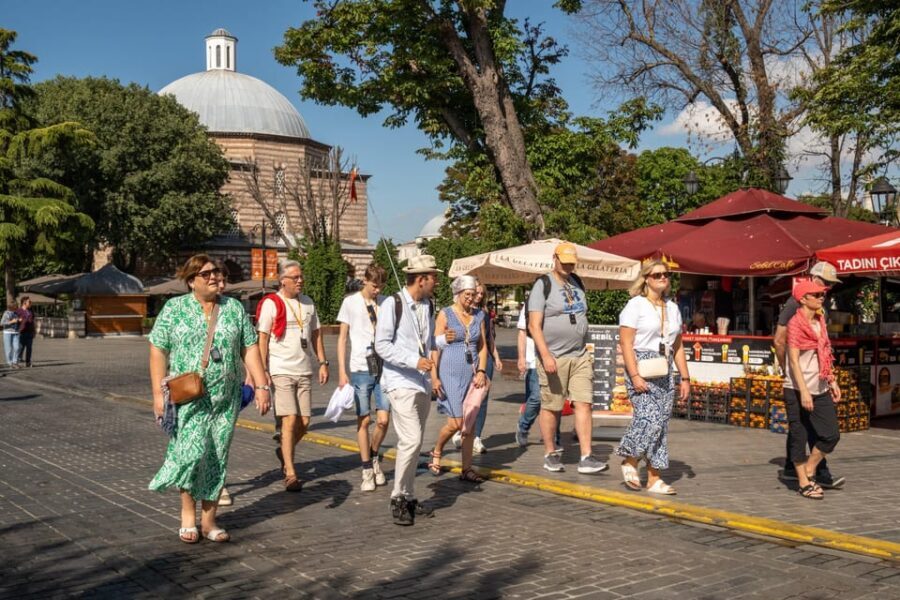
This is the one I would recommend to most first-time visitors. At $39 per person for a 2.5 to 3-hour guided tour that covers both the Blue Mosque and Hagia Sophia, the value is hard to beat. The guide walks you through the entire history of both buildings — from the Justinian-era engineering of the dome to the Ottoman conversion and the political significance of its recent reclassification as a mosque. Small group size keeps it from feeling like a cattle drive.
The Blue Mosque and Hagia Sophia tour is the most popular Istanbul tour in our database for a reason. Having both buildings explained back-to-back gives you a sense of how Islamic architecture evolved directly in response to the Byzantine original across the square. You will not get that context from an audio guide.
2. Hagia Sophia Skip-the-Line Ticket with Museum Option — $33
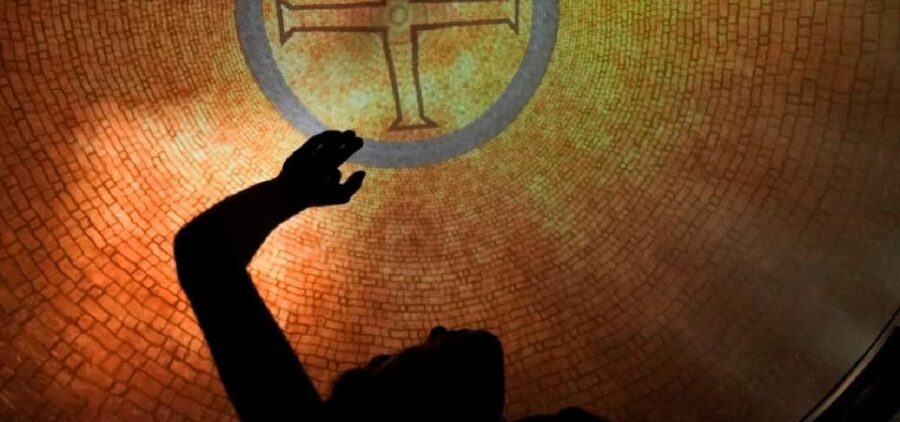
If you do not want a guide and just want to get inside without the queue, this is the ticket. $33 gets you skip-the-line entry plus an audio guide and an optional AR (augmented reality) experience on your phone. The AR piece overlays what the building looked like in different historical periods, which sounds gimmicky but is actually well done — particularly for seeing the mosaics before they were plastered over.
The one thing to know: the rating on this ticket sits lower than the guided options, and that is mostly because the audio guide app can be glitchy on older phones. Download it before you arrive and make sure it works. The actual skip-the-line access works exactly as advertised. For self-guided visits, this is the best option at the lowest price.
3. Basilica Cistern and Hagia Sophia Combo Ticket — $74
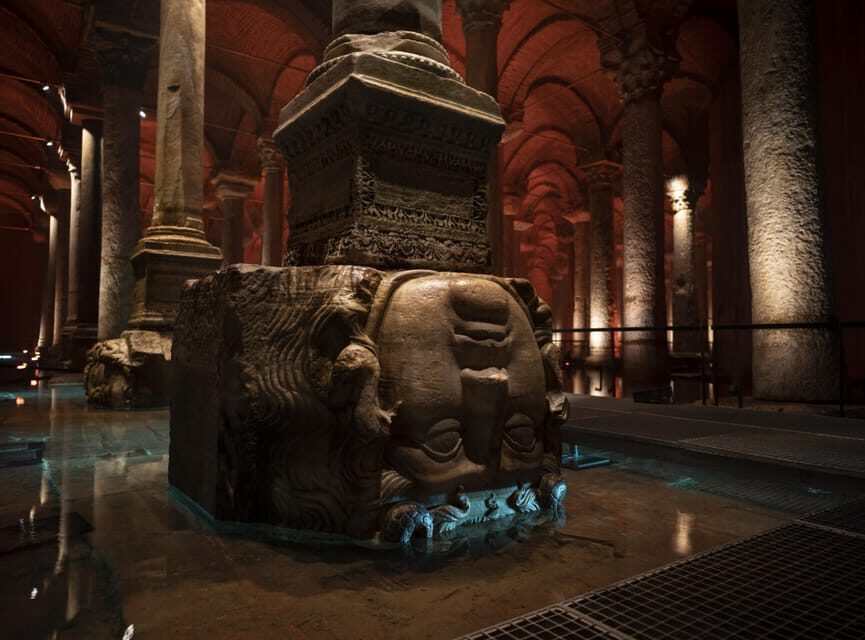
Two of Istanbul’s most impressive interiors for $74. You get skip-the-line entry to both Hagia Sophia and the Basilica Cistern, which is the underground water reservoir with 336 marble columns that Byzantine emperors built to keep Constantinople from dying of thirst during sieges. The Cistern has its own ticket queue that can be just as bad as Hagia Sophia’s, so the combo skip-the-line saves time at both.
This combo is ideal if you are spending a full day in Sultanahmet and want to knock out both major sites without dealing with lines twice. The Cistern is genuinely eerie and atmospheric — completely different energy from Hagia Sophia — and the combo ticket works out cheaper than buying them separately. Start with the Cistern when it opens at 9am, then walk to Hagia Sophia after. The crowd flow works better that way.
4. Hagia Sophia Skip-the-Line Ticket with Audio Guide — $35
Very similar to option 2 but at $35 per person, this one has a more detailed audio narrative and slightly higher satisfaction scores. The audio guide here covers the full 1,500-year timeline with more depth on the engineering and the political history of the conversions. If you care about the architectural specifics — why the dome is structurally impossible, how the pendentives work, what happened during the various earthquakes — this audio guide goes deeper than the other.
The main difference between this and the $33 option is the audio quality and depth of content. Both skip the line. Both let you go at your own pace. If you are the type who reads every museum plaque, pick this one. The audio guide ticket is worth the extra $2 for a richer experience.
When to Visit Hagia Sophia
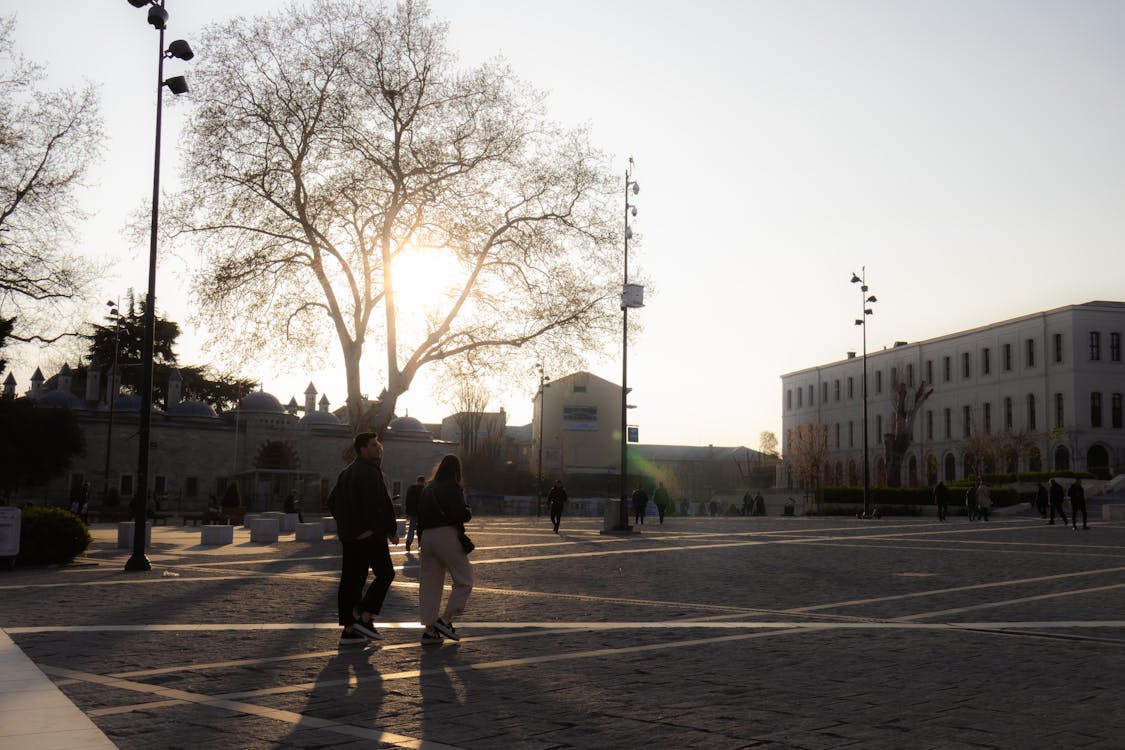
Best time of day: First thing in the morning (9:00 AM sharp) or after 4:00 PM. The midday crush between 11am and 2pm is genuinely miserable in summer — you are standing in a security line in direct sun, surrounded by tour buses that all arrive at the same time. Late afternoon visits get the added bonus of warmer light coming through the upper windows, which makes the interior glow.
Best day of the week: Monday, Wednesday, or Thursday. Avoid Tuesdays — Topkapi Palace is closed that day, which pushes all those visitors to Hagia Sophia instead. Fridays are tricky because the building closes to travelers for the noon prayer, and the crowds stack up around reopening. Weekends are the worst.
Best time of year: Late October through February. Istanbul gets cold and occasionally rainy, but the tourist crowds thin dramatically. March and April are decent shoulder months. June through September is peak season and the lines prove it. If you are visiting in summer, a skip-the-line ticket is not optional — it is necessary.
How to Get to Hagia Sophia
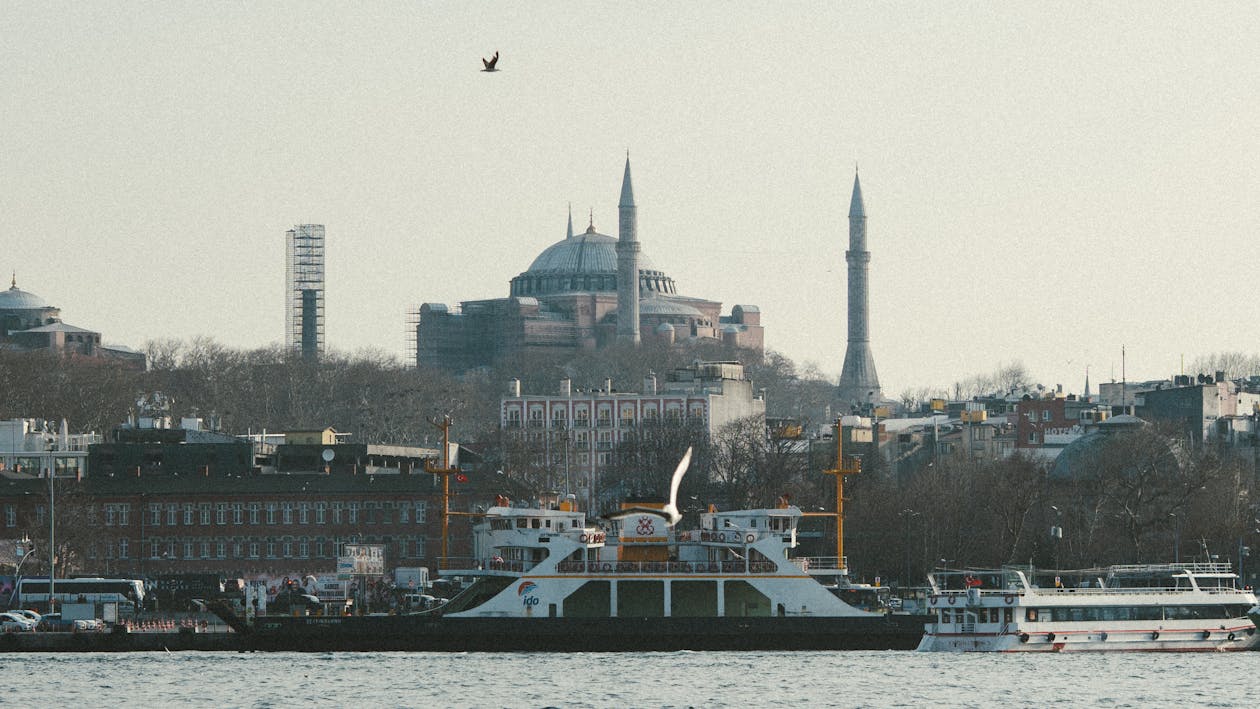
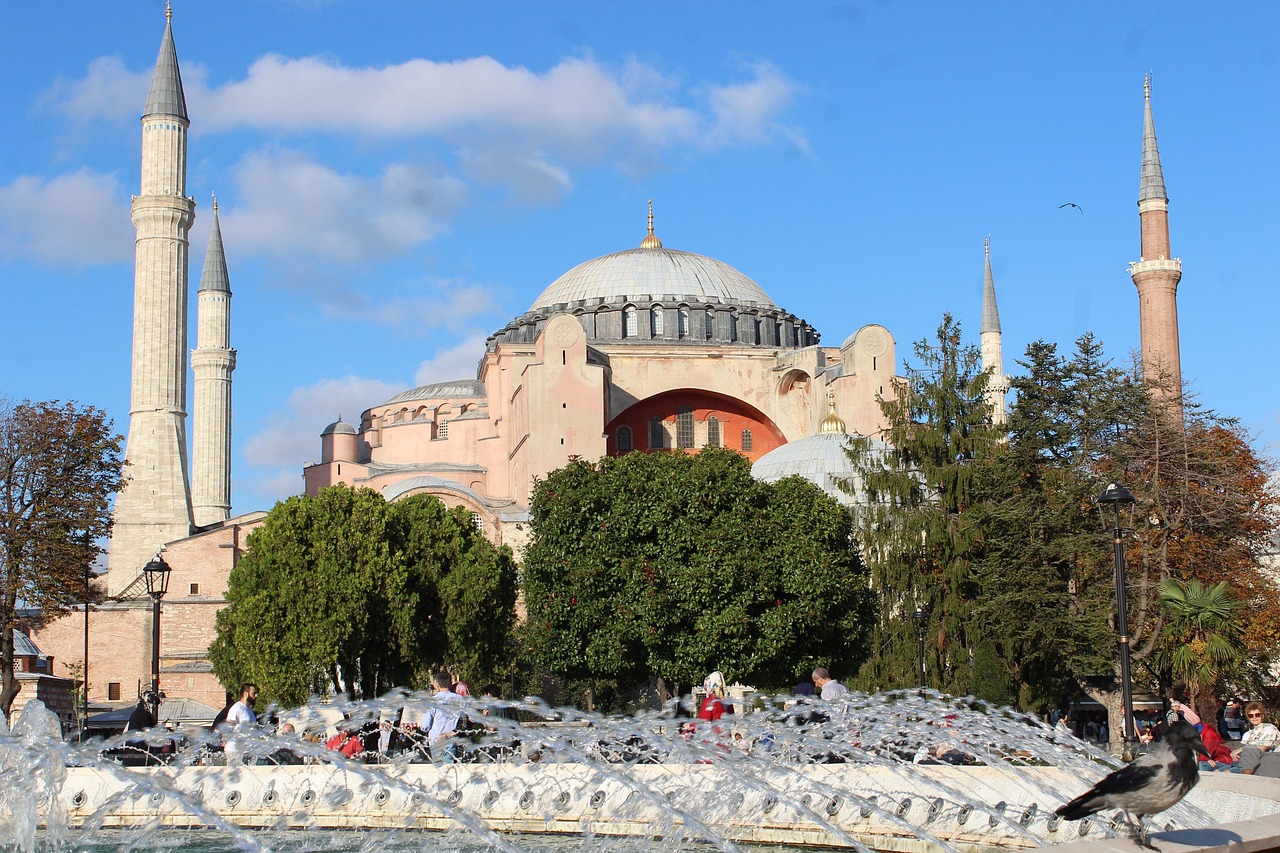
Hagia Sophia sits right in the middle of Sultanahmet, which is the old city centre on the European side of Istanbul. Getting there is straightforward:
By tram: Take the T1 tram line to Sultanahmet stop. Walk about 3 minutes uphill toward the square. You will see the dome before you see the entrance. This is the easiest option from most Istanbul hotels on the European side. An Istanbulkart (the city’s transit card) costs about 100 TL and each ride is around 20 TL.
From the Asian side: Take the Marmaray metro under the Bosphorus to Sirkeci station, then switch to the T1 tram for one stop to Sultanahmet. Total journey is about 25-30 minutes from Kadikoy. Or take a ferry to Eminonu and walk 15 minutes through the streets behind the Spice Bazaar.
From the airport: Istanbul Airport is far — about 45 minutes by taxi with no traffic, which never happens. Budget 60-90 minutes and 400-600 TL for a taxi. The Havaist bus to Sultanahmet is cheaper at around 200 TL but takes longer. Sabiha Gokcen airport on the Asian side is even further from Sultanahmet.
Tips That Will Save You Time and Money
Bring a headscarf. Women need to cover their hair. Hagia Sophia does not lend headscarves like other Istanbul mosques do — they sell disposable paper-like ones at the entrance for a few lira, but they look and feel terrible. Tie a scarf to your bag before you go. Men need to cover their knees, so no shorts.
Shoes come off. You will need to remove your shoes at the entrance and carry them in a plastic bag while inside. Wear shoes that slip on and off easily. The marble floor is cold in winter and hot in summer. Thick socks help.
Download your audio guide before you arrive. The building has WiFi but it is unreliable with thousands of travelers all connected. Download any apps or audio guides to your phone at your hotel. Some skip-the-line tickets include an app that needs to be set up in advance.
Budget 45 minutes to an hour inside. Some people rush through in 20 minutes. That is a mistake. The upper gallery alone — where the best mosaics are — takes 15 minutes to reach and explore properly. The main floor has details you will only notice after your eyes adjust to the lighting.
Combine it with the Blue Mosque. The Blue Mosque is literally across the square, it is free to enter, and it takes 20-30 minutes. Seeing both buildings on the same day gives you the full picture of how Ottoman architects responded to Byzantine engineering. The Blue Mosque opens to travelers outside of prayer times — check the posted schedule at the entrance.
What You Will Actually See Inside
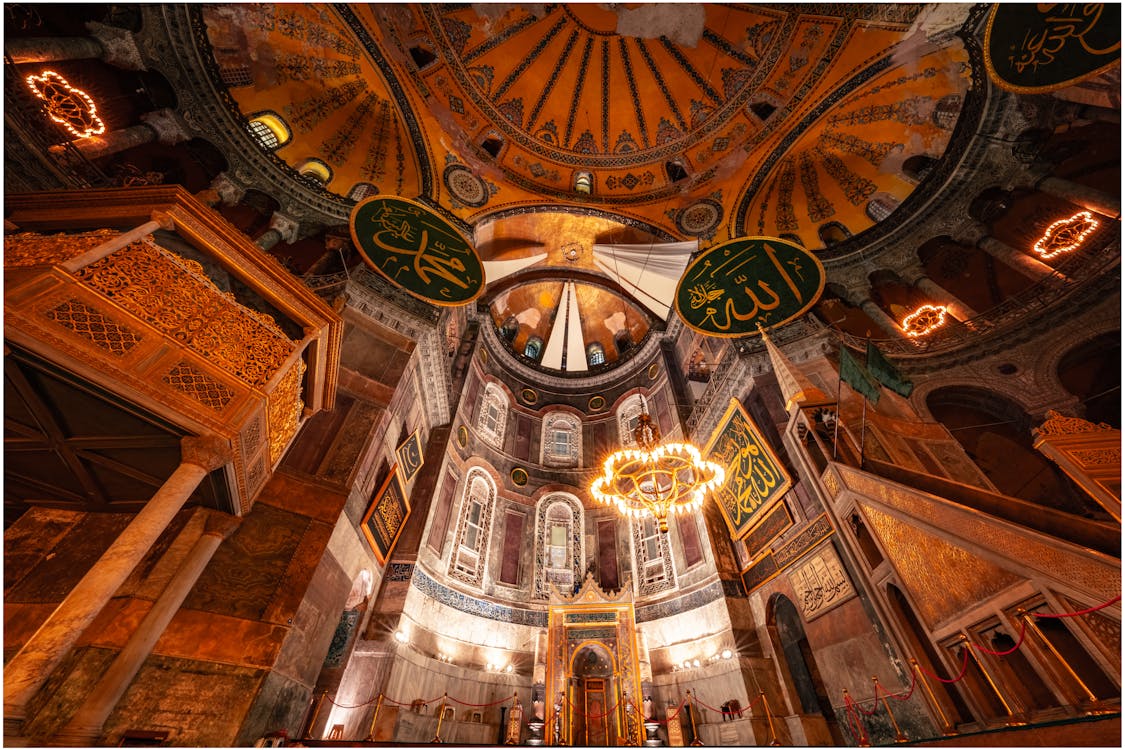
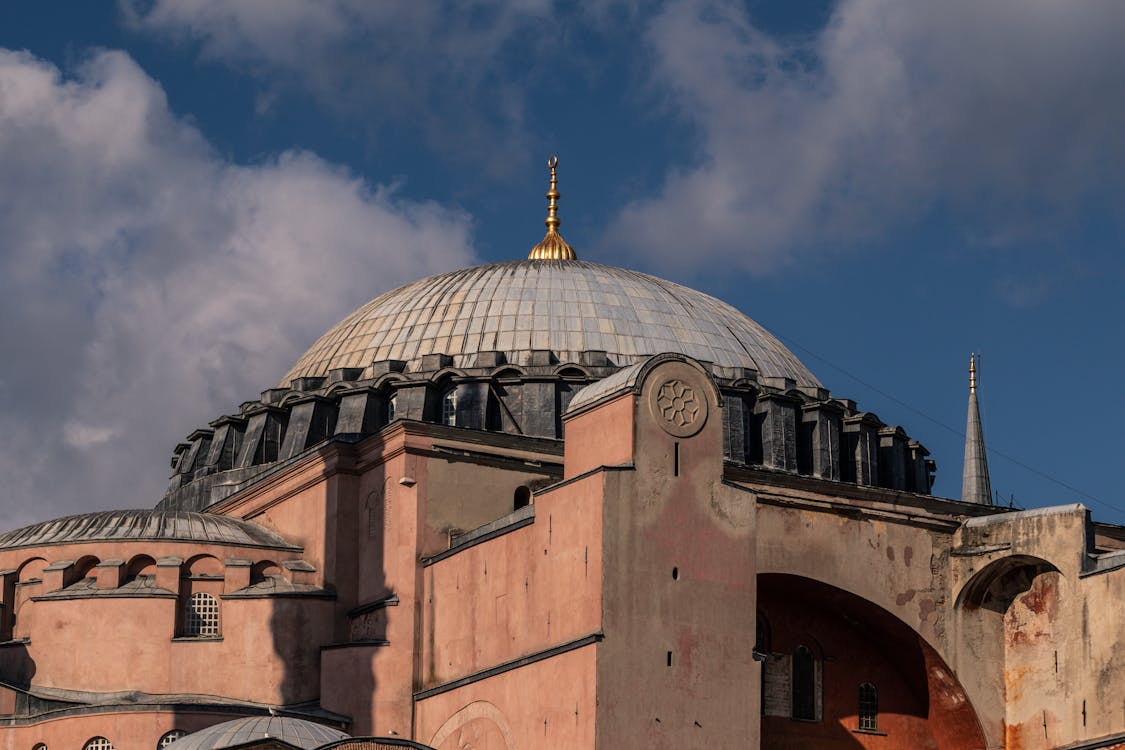
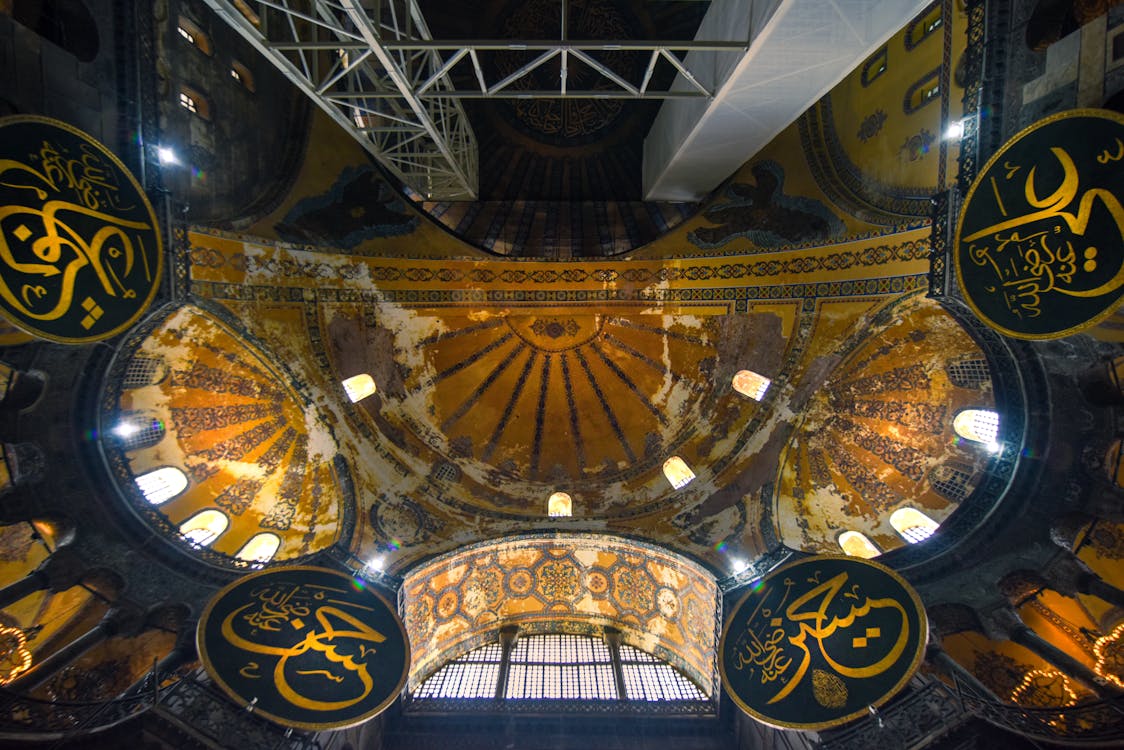
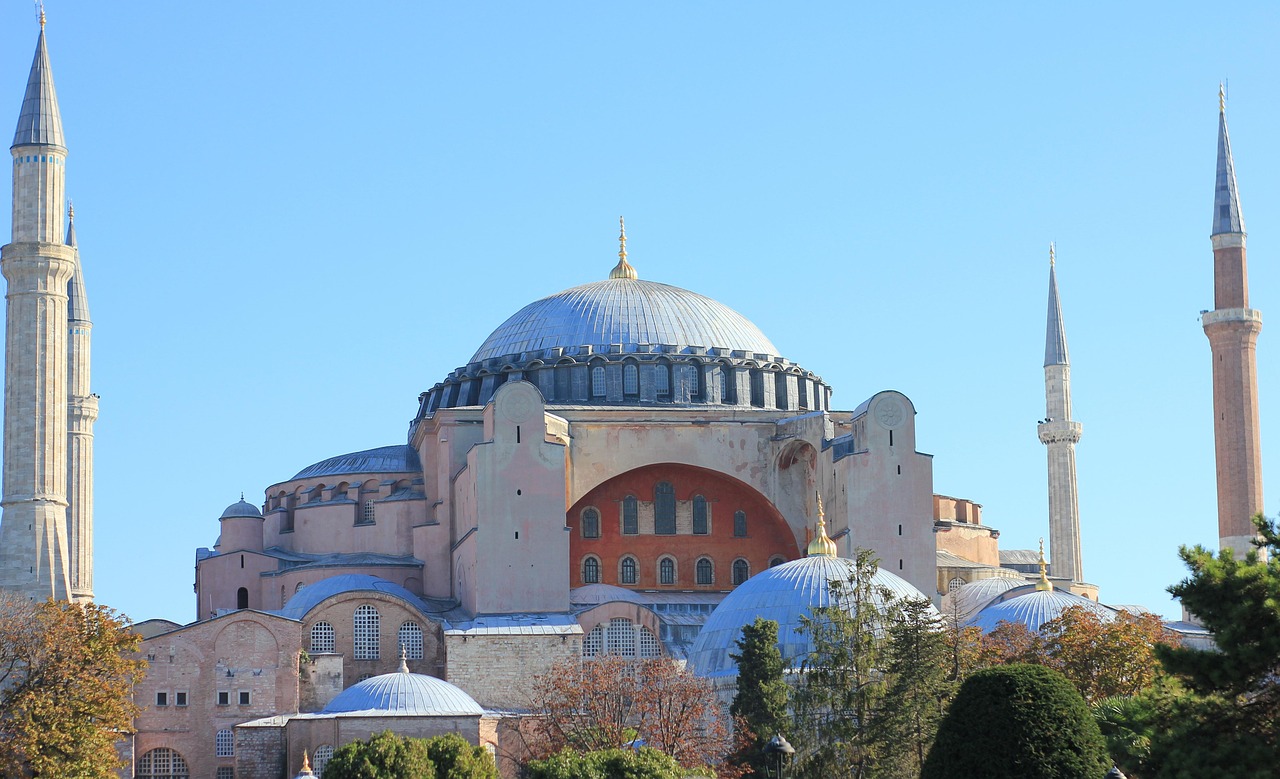
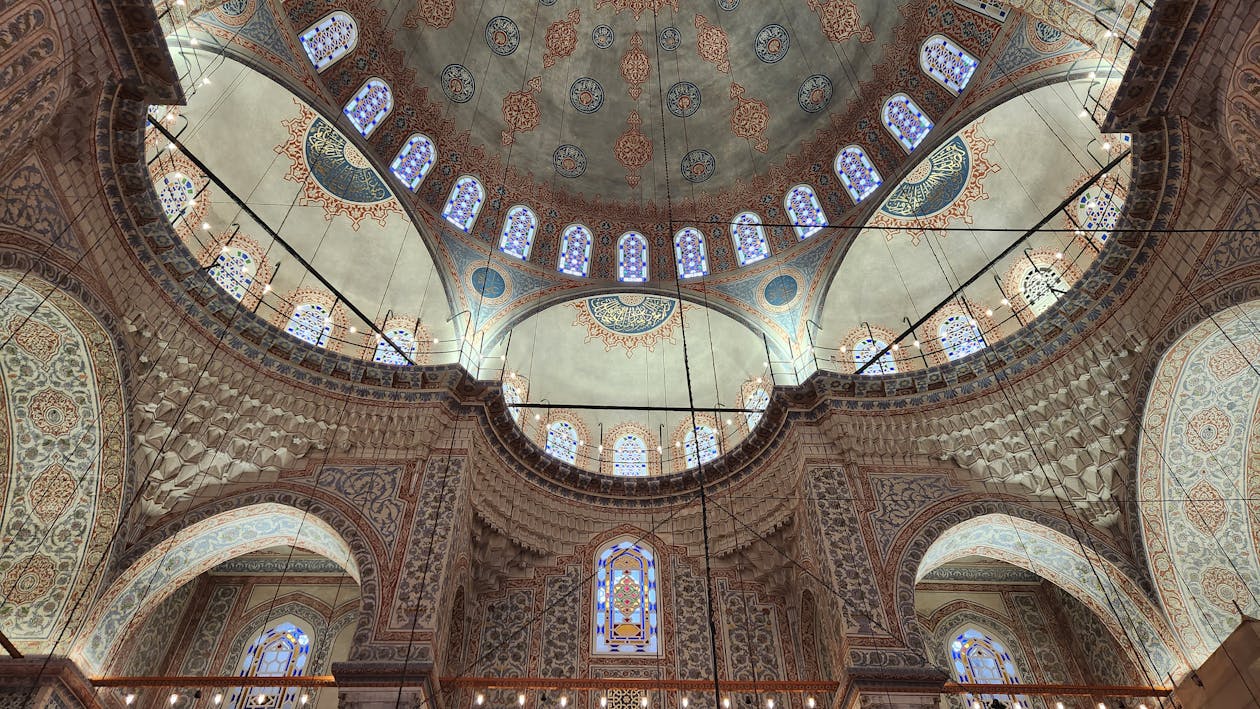
The building was finished in 537 AD under Emperor Justinian I, and the engineering is still staggering. The central dome spans 31 metres across and sits 55 metres above the floor. It rests on a ring of 40 windows that let in light from every direction, which creates the illusion that the dome is floating. When it was completed, it was the largest enclosed space in the world, and it held that record for nearly a thousand years.
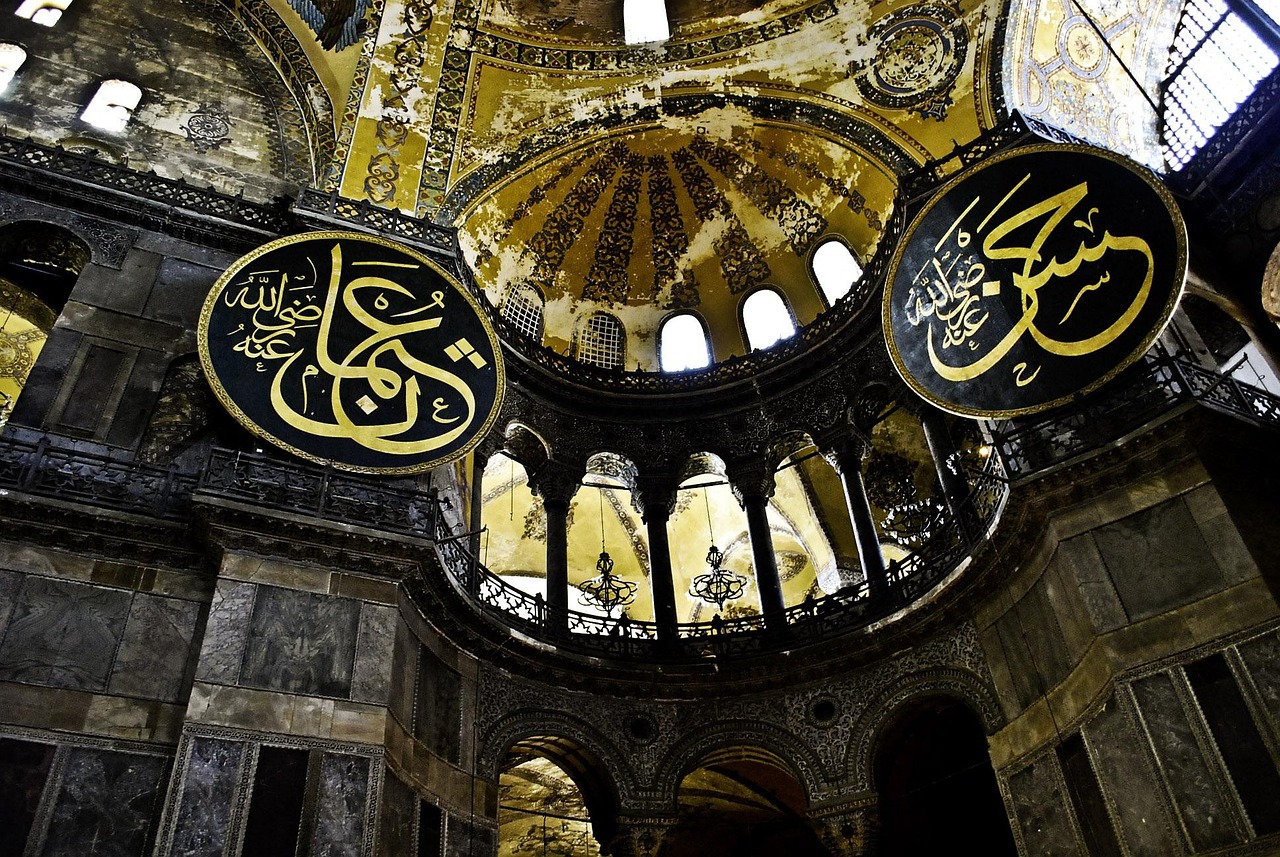
The main floor is where you will feel the scale. The nave stretches out in front of you, carpeted now for prayer, with massive Islamic calligraphy roundels bearing the names of Allah, Muhammad, and the early caliphs. These are some of the largest calligraphic works in the Islamic world, and they hang from the columns like enormous shields. Above them, if you look carefully into the apse, you can see the 9th-century mosaic of the Virgin and Child — one of the first images restored after the Byzantine Iconoclasm period.
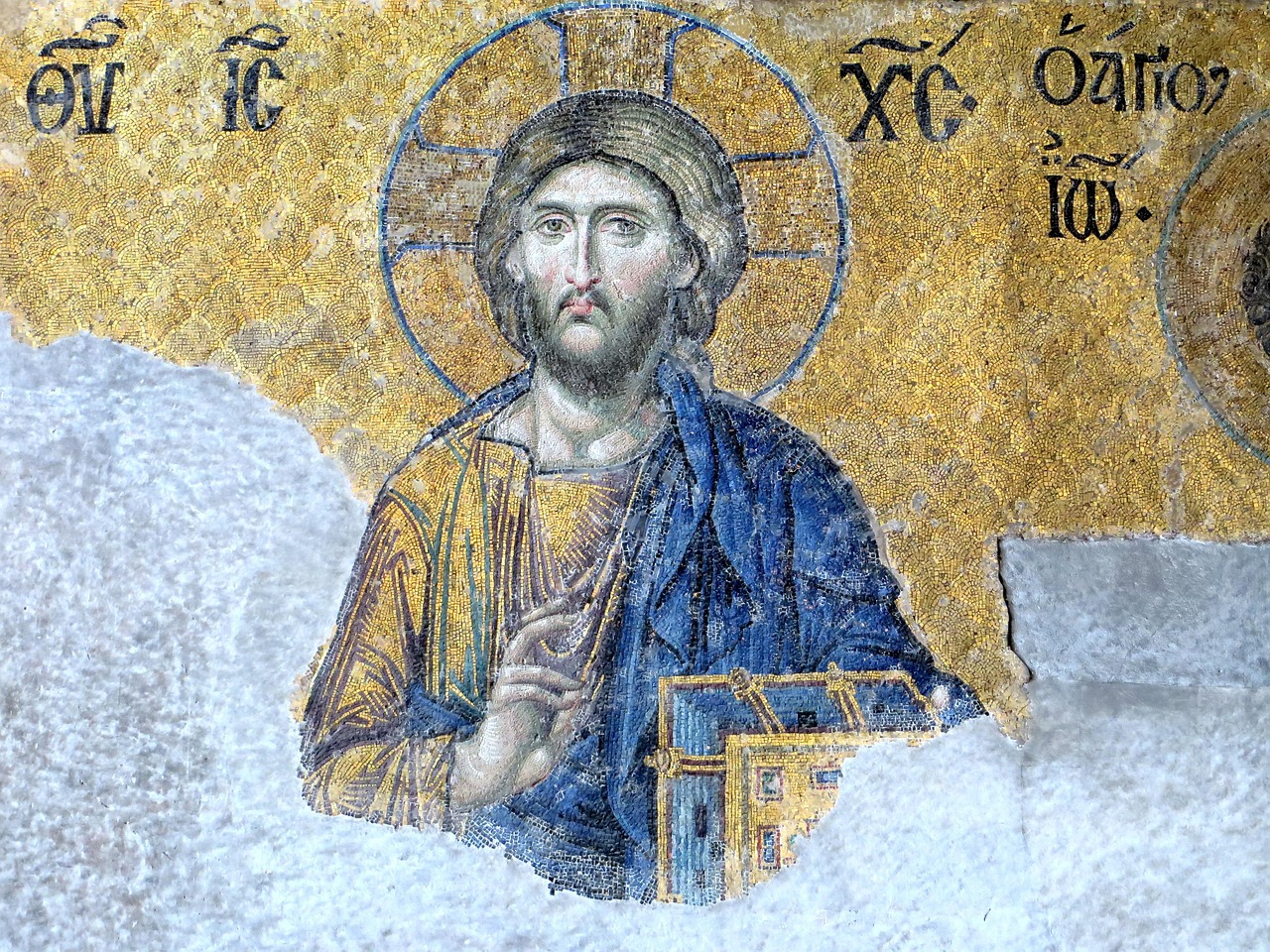
The upper gallery is accessed by a stone ramp (not stairs — the Empress used to ride up on horseback). This is where you will find the Deesis mosaic, a 13th-century masterpiece showing Christ flanked by the Virgin Mary and John the Baptist. The faces are hauntingly realistic by medieval standards. The gold tiles catch the light differently depending on the time of day. You will also find the marble door leading to the gallery, covered in graffiti — including runic inscriptions left by Viking mercenaries who served as Byzantine palace guards. Look for it on the upper gallery’s stone railing.
On the ground floor, find the Weeping Column (also called the Wishing Column). It has a copper plate with a hole worn smooth by centuries of visitors sticking their thumbs in and making a wish. The legend says if your thumb comes out wet, your wish will come true. The line for this is usually short.
The narthex (entrance hall) has some of the oldest surviving mosaics, including the Imperial Gate mosaic showing Christ enthroned with an emperor prostrating at his feet. The Vestibule of Warriors, used by the imperial bodyguard, has a 10th-century mosaic of the Virgin Mary flanked by Emperors Constantine and Justinian — one offering the city, the other offering the church. It is easy to walk right past both of these if you do not know to look up.
A Very Short History (So You Know What You Are Looking At)
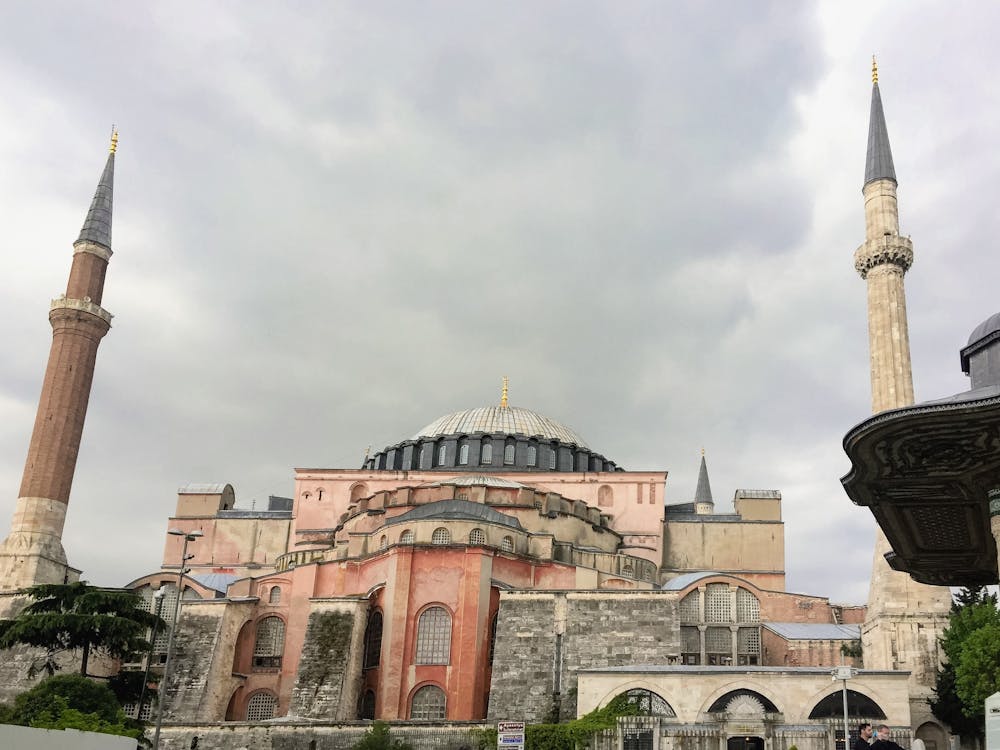
Emperor Justinian I ordered it built in 532 AD after riots destroyed the previous church on the site. Two mathematician-architects, Anthemius of Tralles and Isidorus of Miletus, designed it in just five years — which is absurd for a building this complex. Legend says Justinian walked in on the day it was completed and said he had surpassed Solomon.
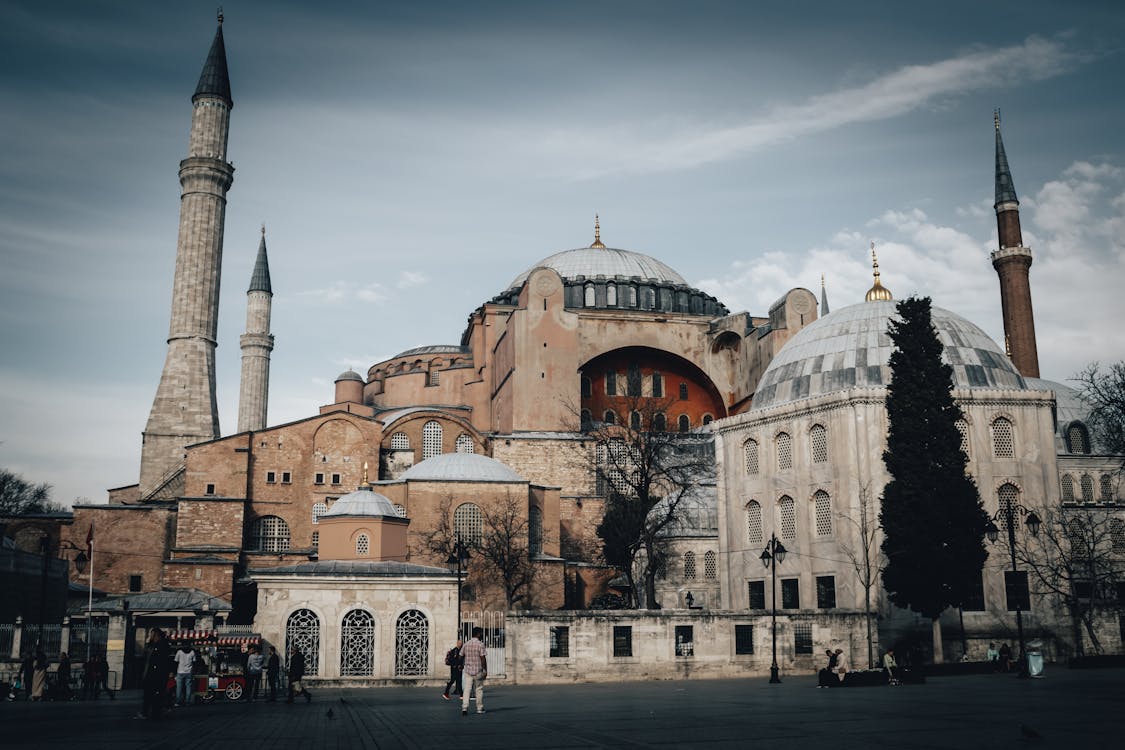
For 916 years it served as the seat of the Patriarch of Constantinople and the centre of Orthodox Christianity. When the Ottomans conquered Constantinople in 1453, Sultan Mehmed II converted it to a mosque. The minarets were added, the mosaics were plastered over (which ironically preserved them), and Islamic elements were introduced. Ataturk turned it into a museum in 1934. In 2020, it was converted back to a functioning mosque, though the tourist section remains accessible.
The building has survived earthquakes, crusader sacking (the Fourth Crusade in 1204 was particularly brutal), fires, and 1,500 years of political upheaval. The structural repairs alone — visible in the different coloured stones and patches on the exterior — tell a story of a city that refused to let this building fall.
More Istanbul Guides
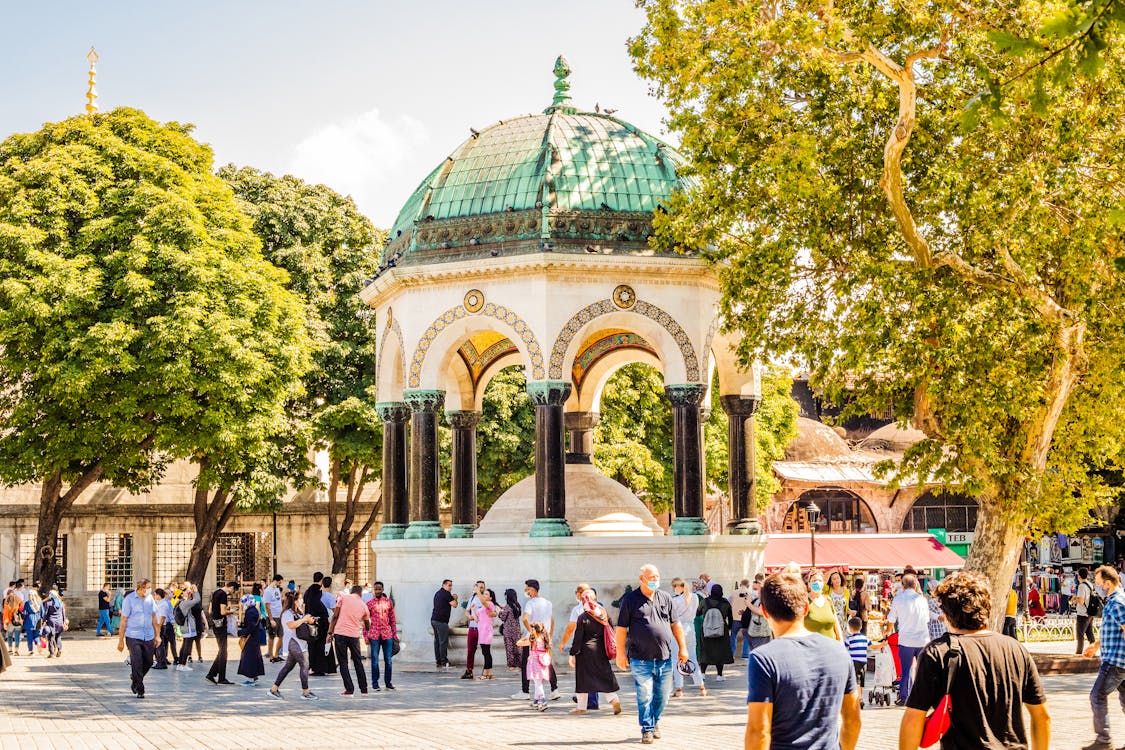
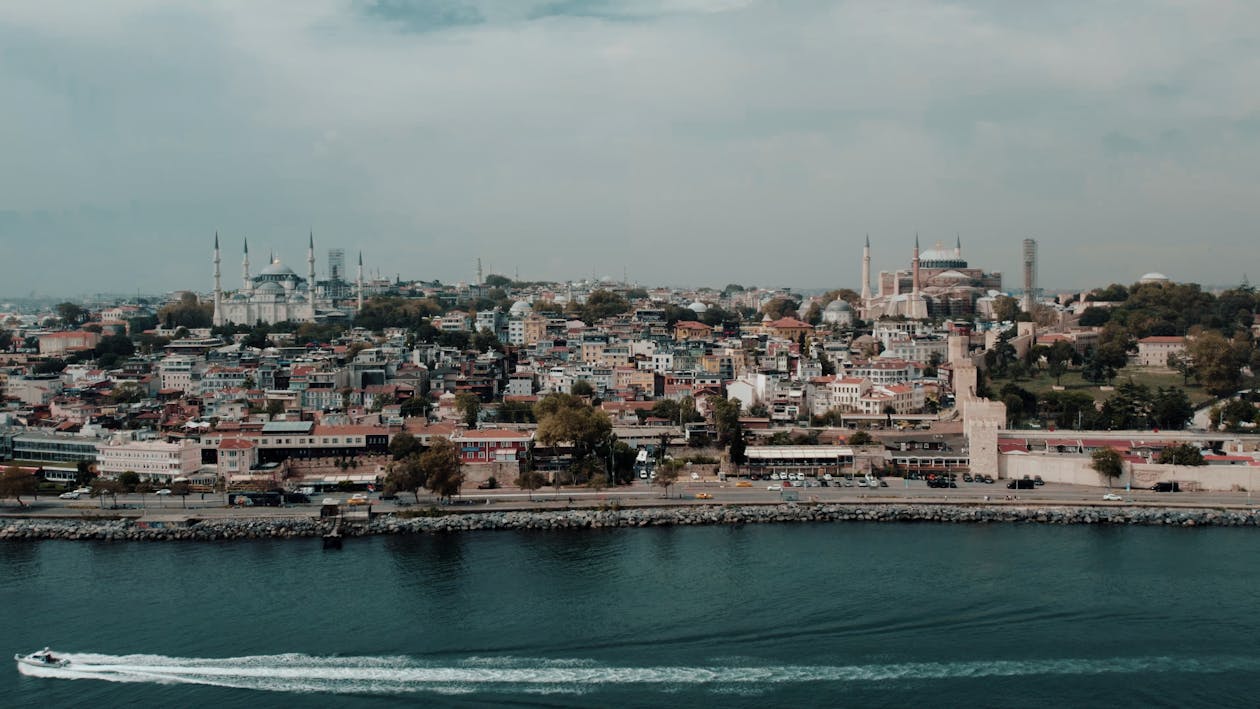
Hagia Sophia sits at the heart of Sultanahmet, and most of what you want to see in Istanbul is within walking distance. Topkapi Palace is right next door through the gate behind the fountain — the sultans who converted Hagia Sophia into a mosque ruled from there for four centuries. Budget at least two hours for the palace, and go early before the Harem section fills up.
Across the tram tracks and down a set of stairs, the Basilica Cistern is a genuinely eerie counterpoint to the grandeur above ground. It takes about 30 minutes and pairs perfectly with a Hagia Sophia morning. If you want someone to tie all three together with context you would never get from a guidebook, an Old City walking tour covers this entire triangle plus the Blue Mosque and Grand Bazaar.
For a completely different side of the Bosphorus, Dolmabahce Palace shows what happened when the Ottomans decided Topkapi was too old-fashioned and built a European-style palace with 14 tonnes of gold leaf. A Bosphorus cruise passes right by it, and the views from the water put the whole skyline in perspective.
After the historical overload, two experiences offer a change of pace. A Turkish bath in one of the 15th-century hamams near Sultanahmet is the most physical way to connect with Ottoman culture. And a whirling dervish ceremony — the real Sufi kind, not a tourist show — is genuinely moving if you catch it at the right venue.
If you have extra days, the three big day trips from Istanbul are Cappadocia (fly or take a two-day tour), Ephesus (doable in a long day by air), and Pamukkale (best as an overnight). All three are worth it if you can spare the time.