
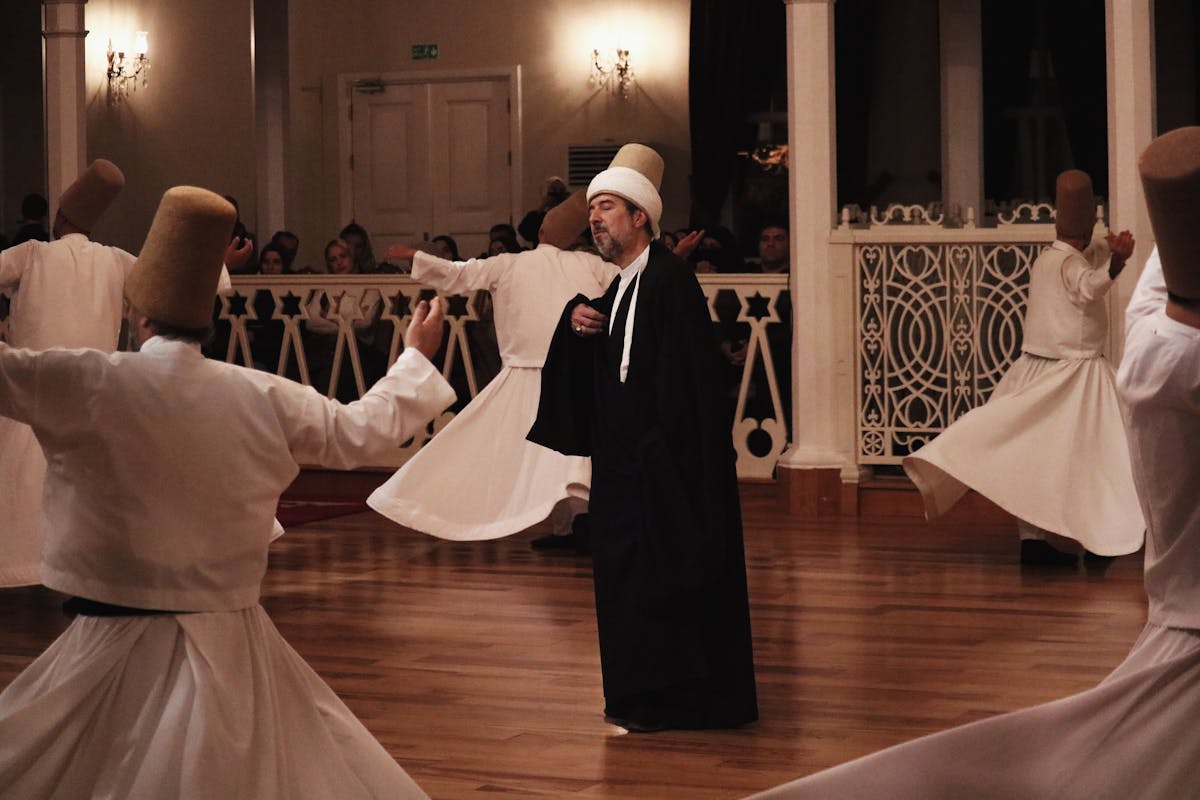
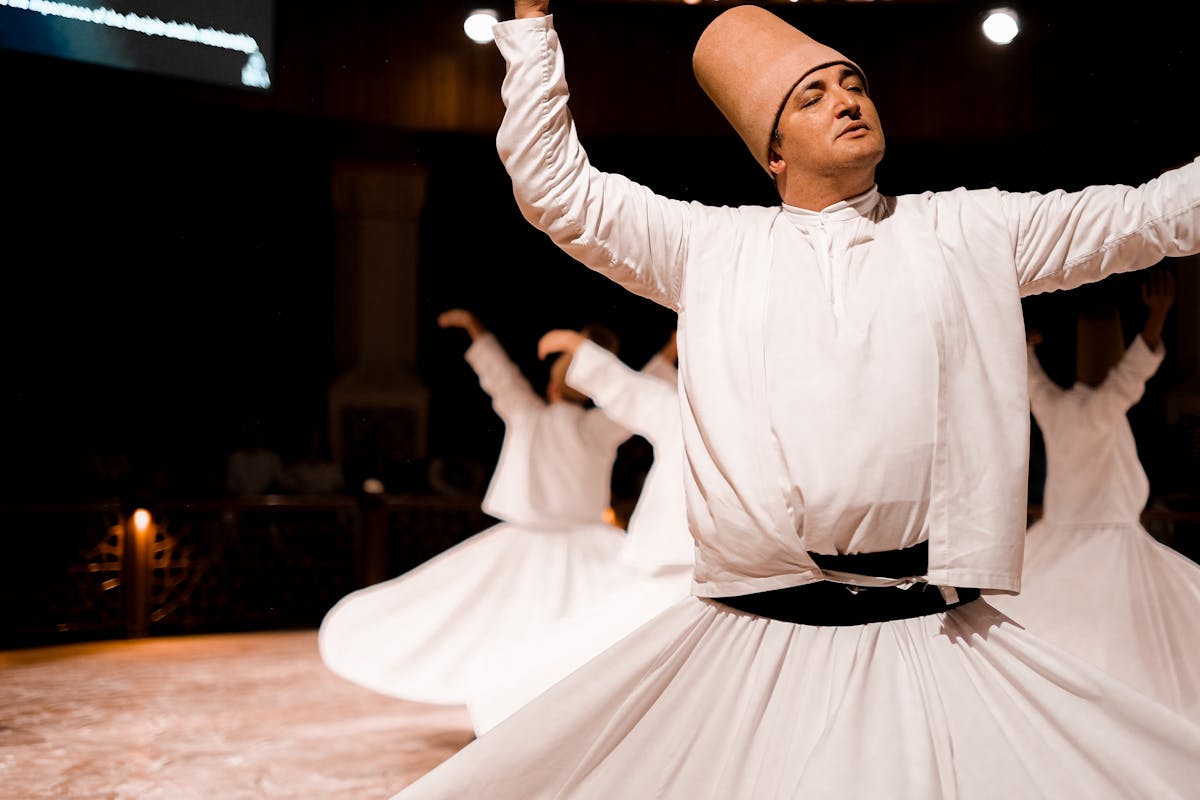
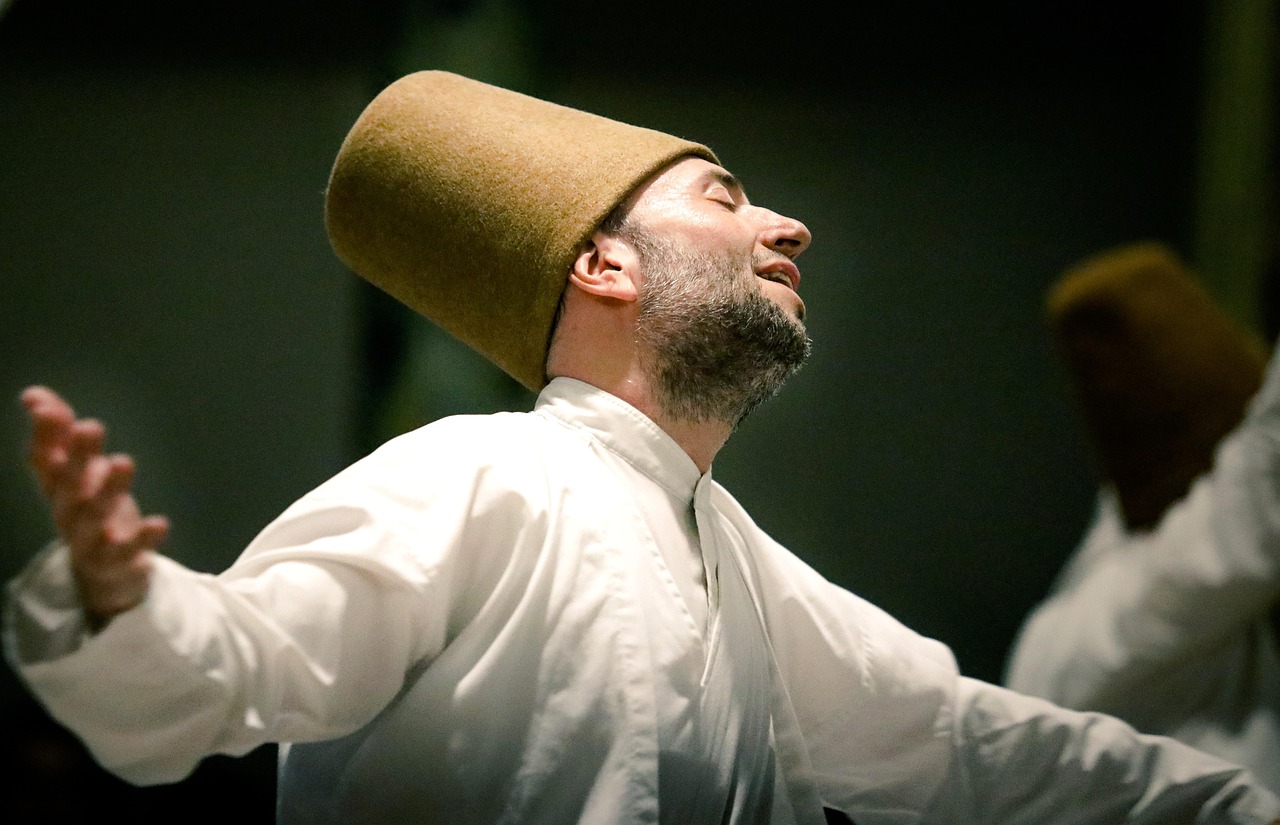
The first thing you need to understand about the Whirling Dervish ceremony — the Sema — is that calling it a “show” misses the point entirely. This is a 750-year-old Sufi meditation rooted in the teachings of Jalaluddin Rumi, the 13th-century mystic poet from Konya. The spinning isn’t choreography. It’s prayer. The dervishes are surrendering their ego, turning one palm toward the sky to receive grace and the other toward the earth to pass it on.
That said, you absolutely can attend one in Istanbul, and you should. But which one matters. A lot of venues have turned the Sema into a dinner-and-a-show tourist trap with neon lighting and a single performer spinning for tips. The authentic ceremonies are quieter, more deliberate, and genuinely moving — even if you don’t consider yourself a spiritual person.
- In a Hurry? Top 3 Dervish Experiences
- What Actually Happens During a Sema Ceremony
- Where to See an Authentic Ceremony in Istanbul
- The Galata Mevlevi Museum (Galata Mevlevihanesi)
- HodjaPasha Dance Theater
- EMAV (Foundation of Universal Lovers of Mevlana)
- What to Skip
- The Best Dervish Tours to Book
- 1. Whirling Dervish Ceremony Tickets in Istanbul
- 2. Istanbul: Original Whirling Dervish Ceremony
- 3. Istanbul Bosphorus Tour With Whirling Dervish Show
- Rumi, Konya, and Why Istanbul Does This at All
- Etiquette and What to Wear
- Booking Tips and Timing
- Getting to the Main Venues
- Pair It With These Istanbul Experiences
In a Hurry? Top 3 Dervish Experiences
- Whirling Dervish Ceremony Tickets in Istanbul — From $22.55/person. Skip-the-line entry to an authentic Sema at a historic venue. Check Availability
- Istanbul: Original Whirling Dervish Ceremony — From $23.02/person. An intimate ceremony in a restored Ottoman building. Check Availability
- Istanbul Bosphorus Tour With Whirling Dervish Show — From $6.53/person. Combines a Bosphorus cruise with a Sema performance — good value if you want both. Check Availability
What Actually Happens During a Sema Ceremony
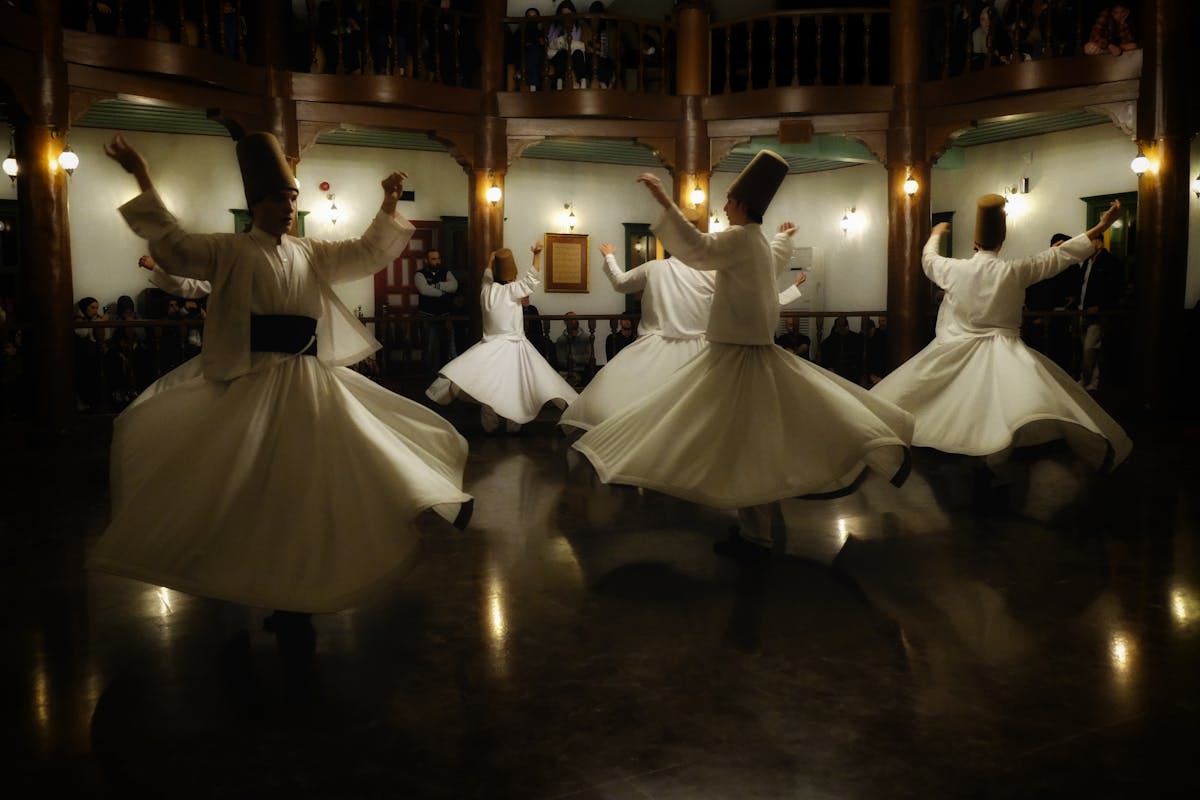
A proper Sema follows a strict structure that hasn’t changed much since the Mevlevi Order established it in the 1200s. It’s broken into four segments called Selams, each representing a different stage of spiritual connection.
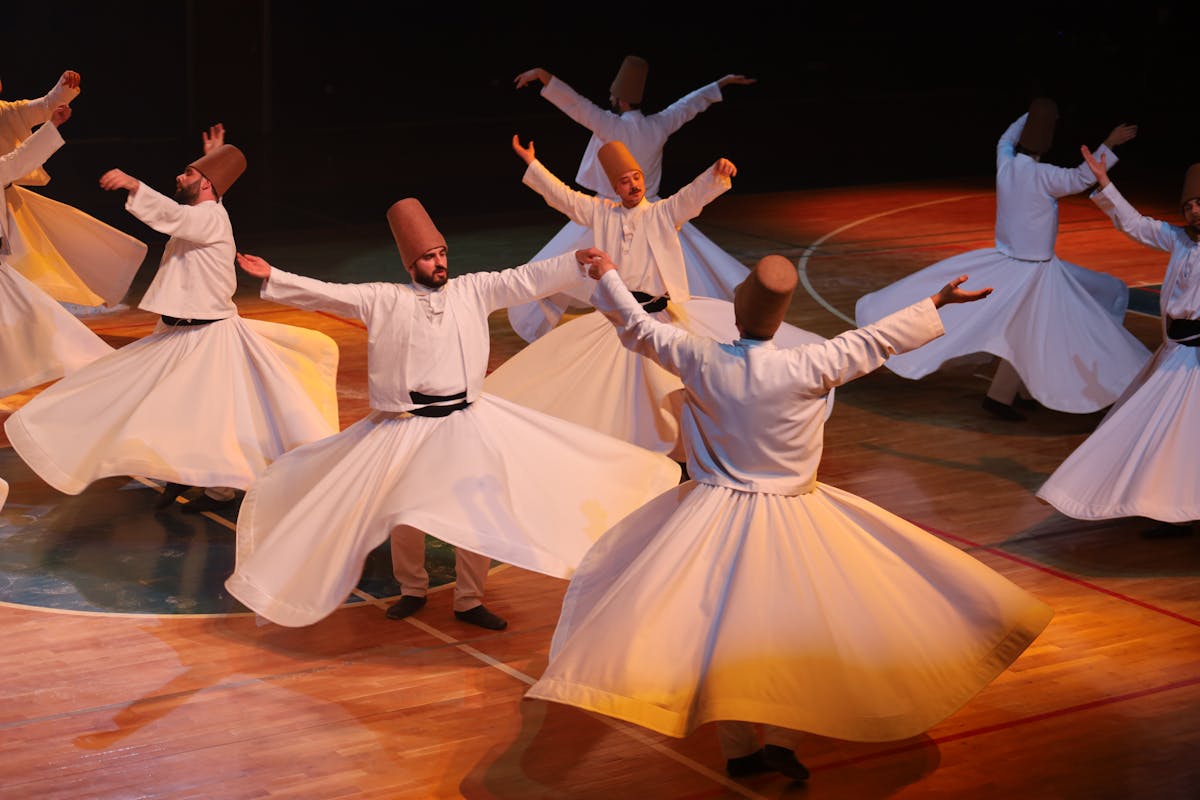
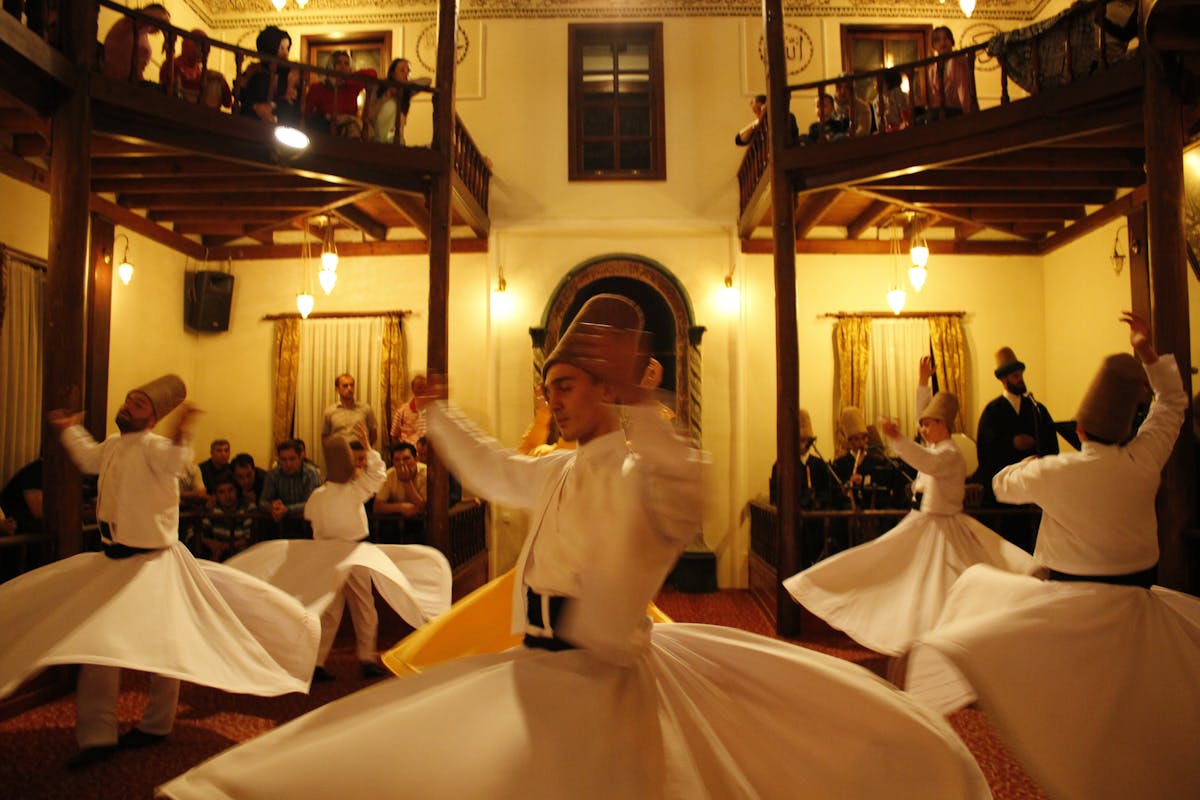
The ceremony begins with a recitation from the Quran, followed by a drum strike that symbolizes God’s command to create. Then the ney (a reed flute) plays — a haunting, almost uncomfortably intimate sound. The dervishes enter in black cloaks, which they remove before they begin spinning. Black cloak off = ego shed. White robe revealed = spiritual rebirth.
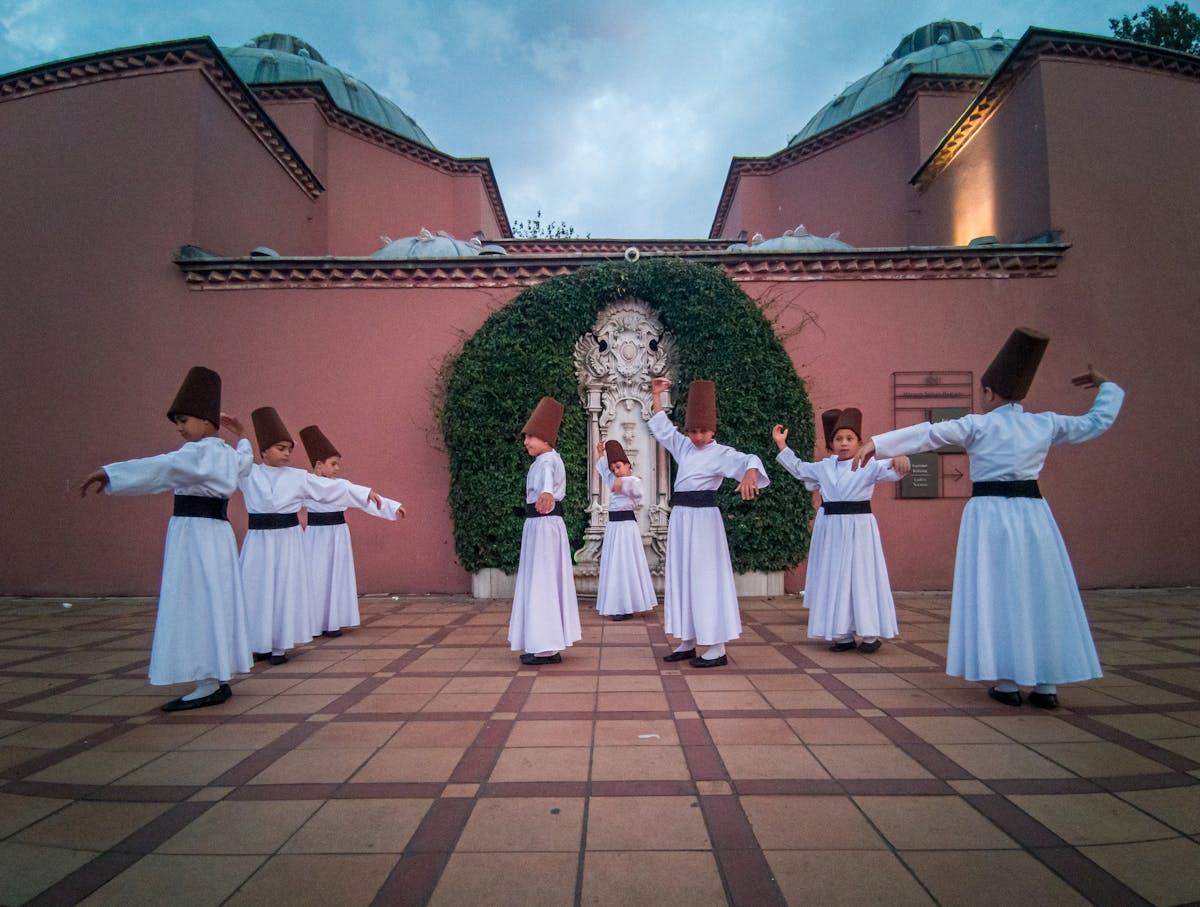
During the whirling itself, each dervish extends their right hand upward and their left hand downward. They’re a conduit — receiving from the divine and channeling it to earth. The Sheikh stands at the center, barely moving, watching everything.
The whole thing takes about 45-60 minutes. Nobody talks. The only sounds are the ney, the drums, and the soft shuffling of bare feet on stone. It’s the kind of quiet that makes you suddenly very aware of your own breathing.
Where to See an Authentic Ceremony in Istanbul
This is where it gets tricky. Istanbul has maybe a dozen places advertising “Whirling Dervish Shows” and they range from genuinely sacred to cringe-inducingly commercial. Here’s what to look for.
The Galata Mevlevi Museum (Galata Mevlevihanesi)
The most historically significant venue. This is the actual tekke (lodge) of the Mevlevi Order in Istanbul, sitting on Galipdede Caddesi near the Tunel end of Istiklal. Sunday ceremonies at 5:00 PM. Capacity is about 150, and it sells out — often weeks in advance during peak season. Tickets around 150 TL at the door, but you need to queue from Saturday at noon for popular dates.
The space itself is beautiful. High ceilings, wooden floors, the octagonal semahanesi (whirling hall) where dervishes have been spinning since the 1400s. This is the real deal, not a recreation.
HodjaPasha Dance Theater
A converted 15th-century hammam near Sirkeci train station. This one splits opinion. It’s more commercial than the Galata tekke — nightly shows, professional lighting, no photography — but the building itself is stunning and the performers are skilled. Shows at 7:00 PM, with additional performances added in high season. Tickets run about $25-40 depending on the package.
Honestly? If the Galata is sold out and you’ve only got one evening in Istanbul, HodjaPasha is a solid fallback. Just go in knowing it’s a curated presentation rather than an active spiritual practice.
EMAV (Foundation of Universal Lovers of Mevlana)
The option most locals will point you toward. EMAV runs ceremonies in Fatih on Thursday evenings at 8:30 PM and Saturday at 7:00 PM. Tickets are about EUR 39 through Les Arts Turcs. Small congregation-style setting, deeply respectful atmosphere. The dervishes here participate as an act of faith, not performance.
What to Skip
A few places to approach with caution: any venue that pairs the Sema with a “Turkish Night” dinner package, any place where a single performer spins under colored lights, and any restaurant that advertises it as “entertainment.” These exist all over Sultanahmet and Taksim. They’re about as spiritually meaningful as a hotel lobby pianist playing classical music.
The Best Dervish Tours to Book
If you’d rather not deal with ticket queues and venue research, booking through a tour operator handles the logistics. Here are the strongest options we’ve reviewed.
1. Whirling Dervish Ceremony Tickets in Istanbul
Price: From $22.55 per person
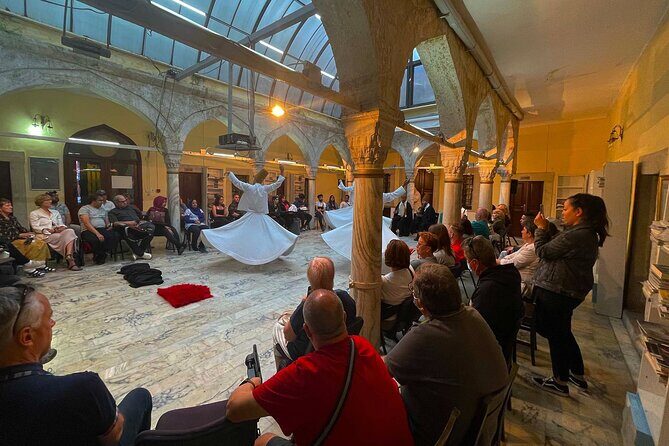
Straightforward and well-organized. You get skip-the-line entry to a genuine Sema ceremony at a historic venue, with a brief English introduction before the ceremony starts. The guide explains the symbolism of each element — the robes, the hat, the hand positions — which makes the experience significantly more meaningful if you’re not already familiar with Sufism.
The venue varies by date, but they consistently use spaces with proper acoustics and atmosphere. No dinner upsells, no tacky lighting. Just the ceremony done right.
Check Availability | Read our full review
2. Istanbul: Original Whirling Dervish Ceremony
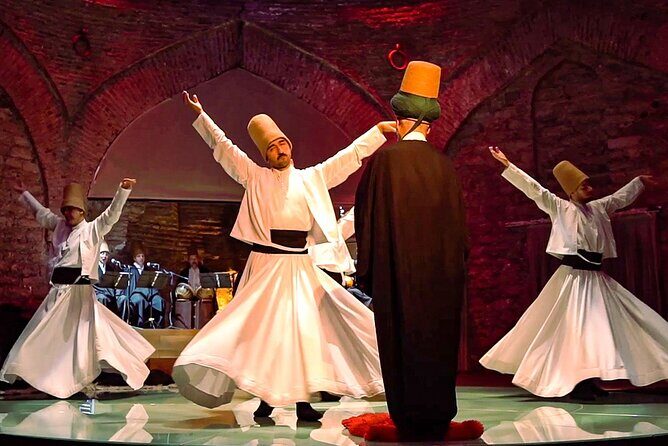
Price: From $23.02 per person
Similar price point, slightly different execution. This one takes place in a restored Ottoman-era building and bills itself as the “original” ceremony format. The venue seats fewer people, which means a more intimate feel. They take the “no phones” policy seriously here, which honestly improves the experience.
One thing worth noting: some visitors report the space can feel cramped during full bookings. If you’re claustrophobic or need personal space, grab an aisle seat or arrive early to choose your position.
Check Availability | Read our full review
3. Istanbul Bosphorus Tour With Whirling Dervish Show
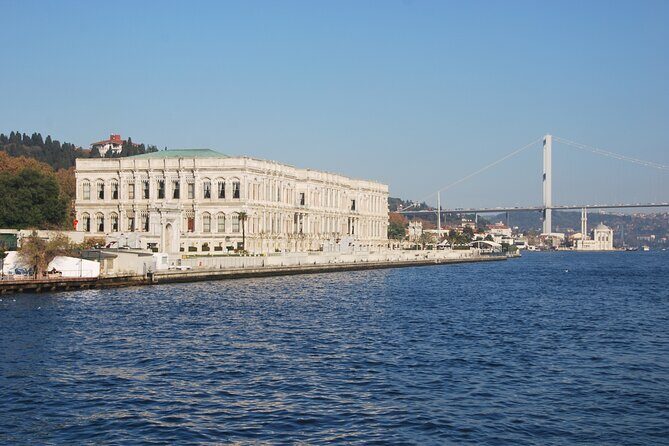
Price: From $6.53 per person
The budget pick, and it’s genuinely surprising value. You get a Bosphorus cruise and a dervish ceremony in one ticket. The trade-off? The dervish portion is shorter and more of a tasting-menu version of the full Sema. But if you’re trying to pack Istanbul into two or three days and want to cross both items off your list, this handles it cleanly.
Don’t expect the same depth as a standalone ceremony. Think of it as a thoughtful introduction rather than the full spiritual experience. For $6.53, though, it’s hard to argue with.
Check Availability | Read our full review
Rumi, Konya, and Why Istanbul Does This at All
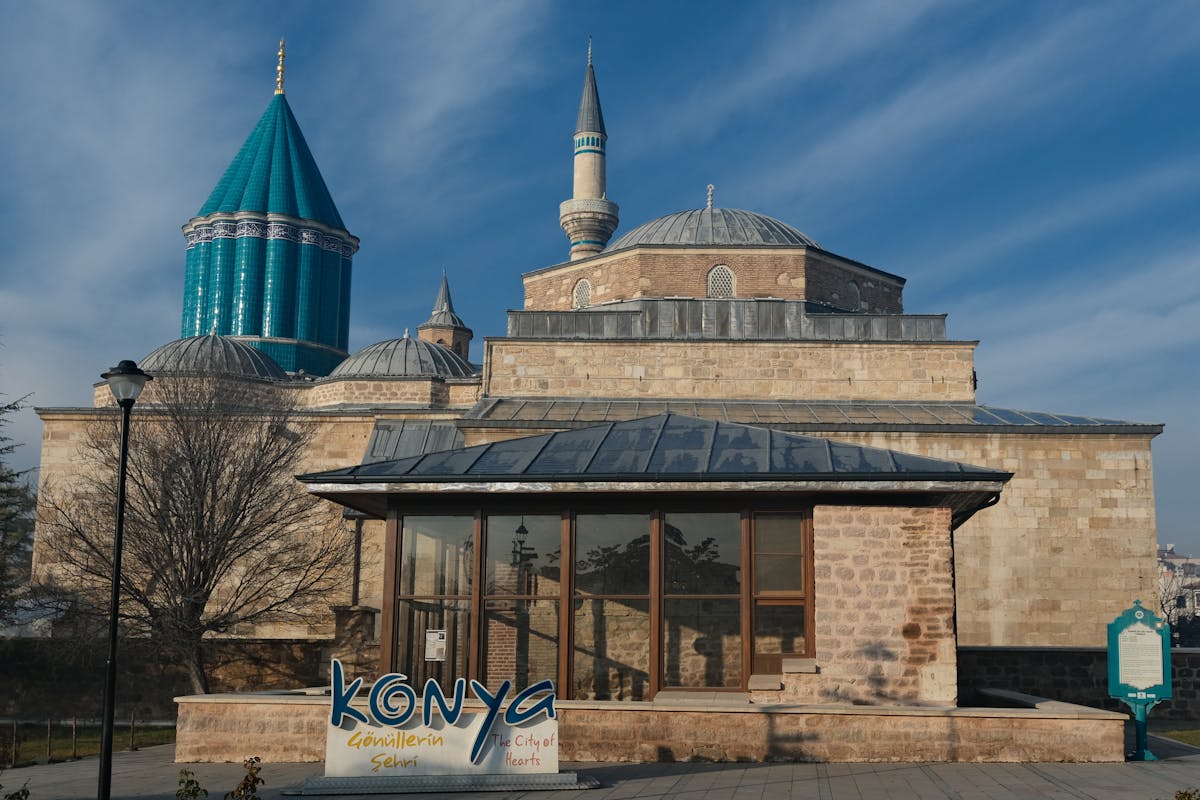
Quick history, because it makes the ceremony make more sense. Jalaluddin Rumi — known in Turkey as Mevlana — was a 13th-century Persian poet, scholar, and Sufi mystic who settled in Konya. His followers formed the Mevlevi Order, and the Sema was their primary form of worship: spinning as a way to lose yourself and find something bigger.
Turkey banned all Sufi orders in 1925 as part of Ataturk’s secularization reforms. The Sema survived by being reclassified as a “cultural performance” — which is both how it was preserved and why so many tourist-oriented versions exist today. The genuine practitioners still treat it as worship. The commercial venues treat it as heritage entertainment. Same spinning, very different intention.
Konya hosts the biggest Sema festival every December during the week of Rumi’s death anniversary (December 17). If you’re serious about this, that’s the pilgrimage. But Istanbul’s offerings are solid year-round, and far more accessible for most travelers.
Etiquette and What to Wear
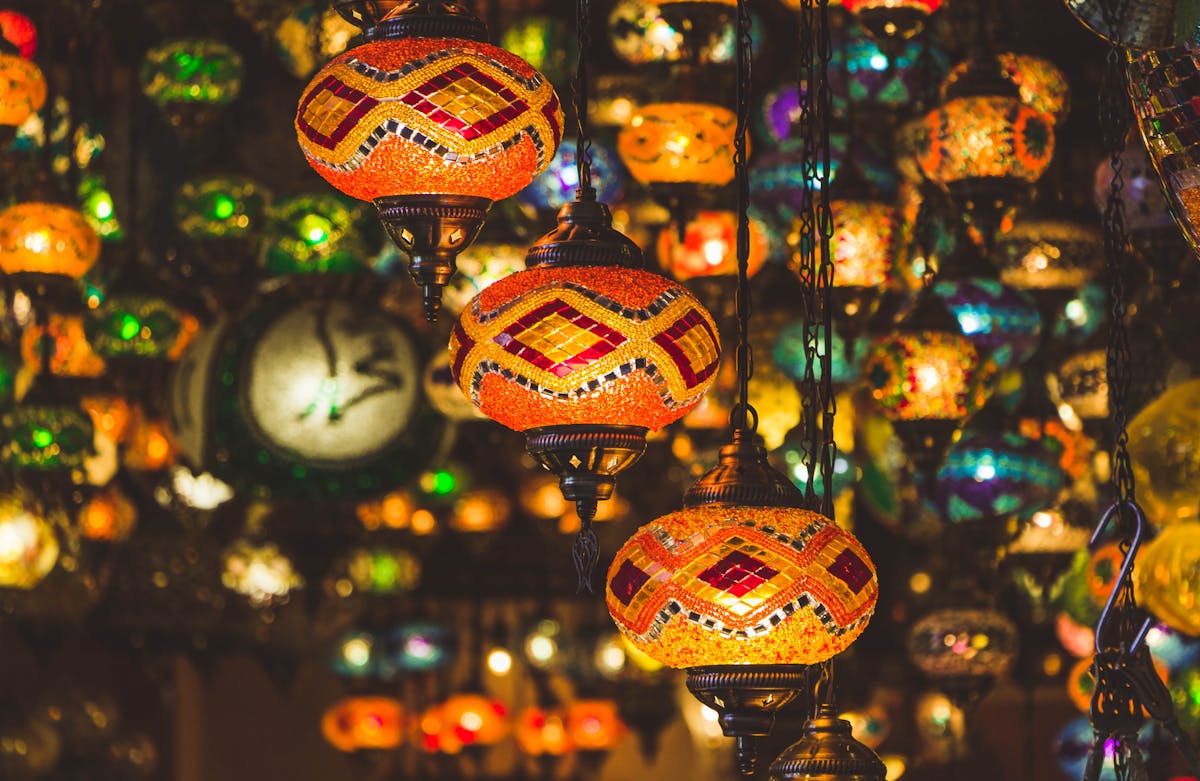
The authentic venues take this seriously, and you should too.
Dress code: Long sleeves and long trousers or a flowing skirt. Some venues ask you to remove your shoes. This isn’t a beach bar in Bodrum — it’s a religious ceremony, so dress as you would for entering a mosque. Head coverings aren’t required for women at most venues, but having a scarf handy doesn’t hurt.
Photography: Varies wildly by venue. EMAV allows photography without flash. HodjaPasha prohibits it entirely. The Galata Mevlevihanesi generally allows discreet photos. But honestly? Put the phone away. The ceremony is best experienced without a screen between you and the spinning.
Behavior: No talking during the Sema. No getting up and walking around. No clapping — this isn’t a concert. If you need to leave, wait for a pause between Selams. Arriving late is frowned upon at serious venues and outright refused at some.
Sitting: Most venues have floor seating or low cushions. If you have mobility issues, ask when booking — some venues have limited chair seating, but it fills quickly.
Booking Tips and Timing
Book ahead. The Galata Mevlevihanesi sells out two weeks in advance during summer and over the December Konya festival period. Even the commercial venues fill up on weekends between April and October. Booking online through a tour operator guarantees your spot and saves you the in-person ticket queue.
Best time of day: Evening ceremonies hit harder. The lighting is lower, the atmosphere more concentrated. The Sunday afternoon session at the Galata is good too, but evening just works better for something this contemplative.
Best day of the week: Thursday and Saturday evenings at EMAV are the sweet spot for authenticity. Avoid Friday-night tourist-zone shows if you want something real.
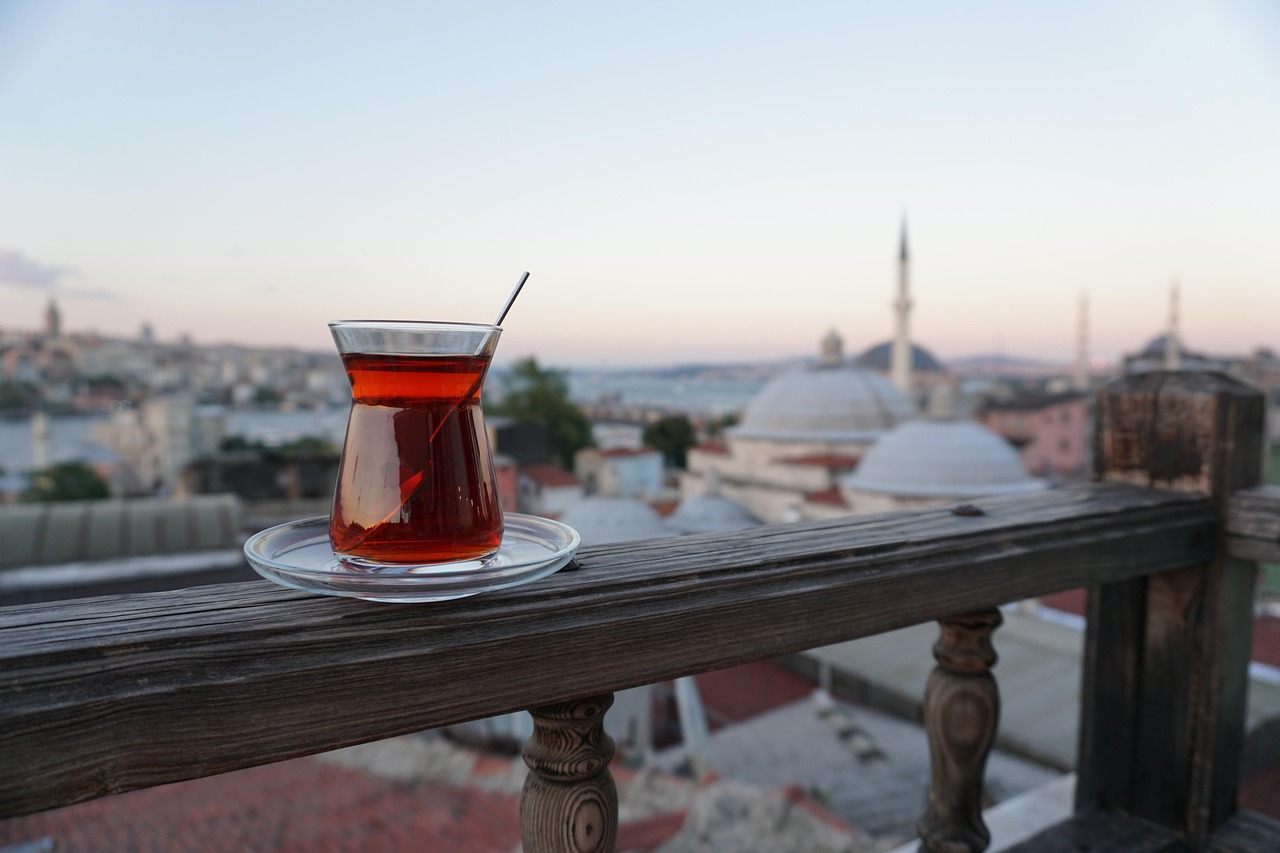
Duration: Plan for 60-90 minutes total, including seating, introductions, the ceremony itself (about 45 minutes), and the closing prayer. Some tours add a brief museum visit or tea service before or after.
Getting to the Main Venues
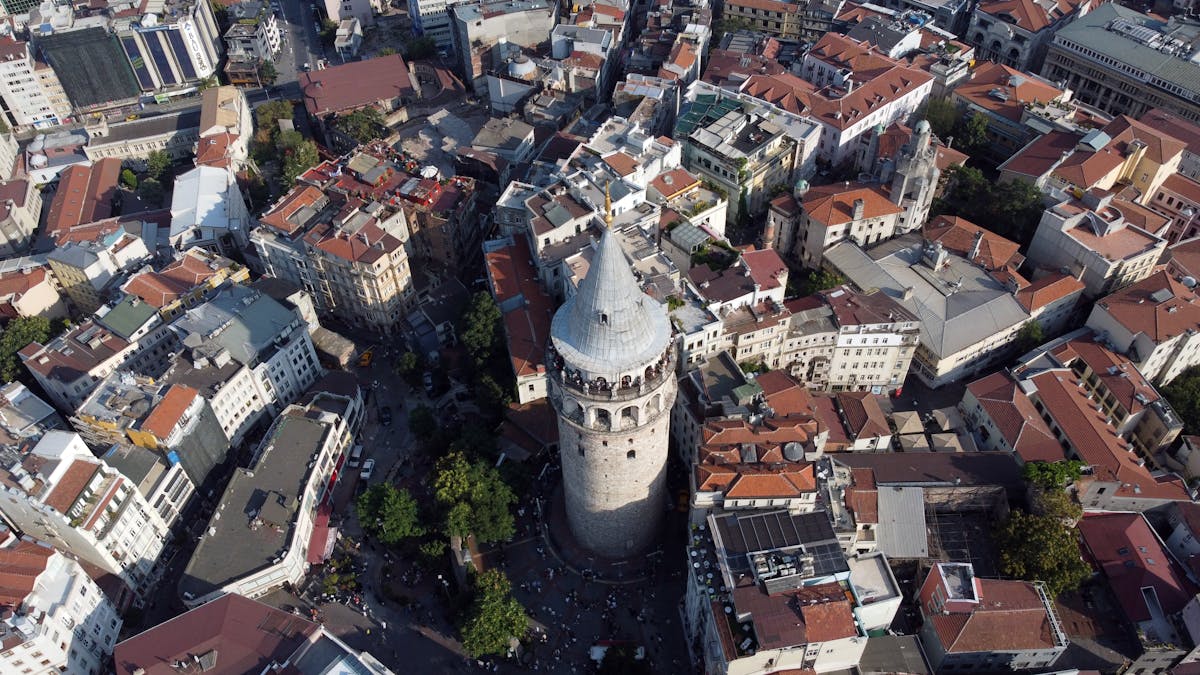
Galata Mevlevihanesi: Walk from Taksim down Istiklal Caddesi (about 15 minutes) or take the Tunel funicular from Karakoy. It’s right on Galipdede Caddesi, impossible to miss. The area around the Galata Tower is packed with cafes if you arrive early.
HodjaPasha: A 5-minute walk from Sirkeci station, or 10 minutes from the Sultanahmet tram stop. If you’re staying in the Old City, this is the most convenient option by far.
EMAV (Fatih): A bit further from the tourist zone. Take the tram to Aksaray or a taxi from Sultanahmet (about 15 minutes, under 100 TL). The neighborhood itself is worth exploring — it’s one of Istanbul’s most traditionally conservative areas, with great street food and none of the tourist markup.
Pair It With These Istanbul Experiences
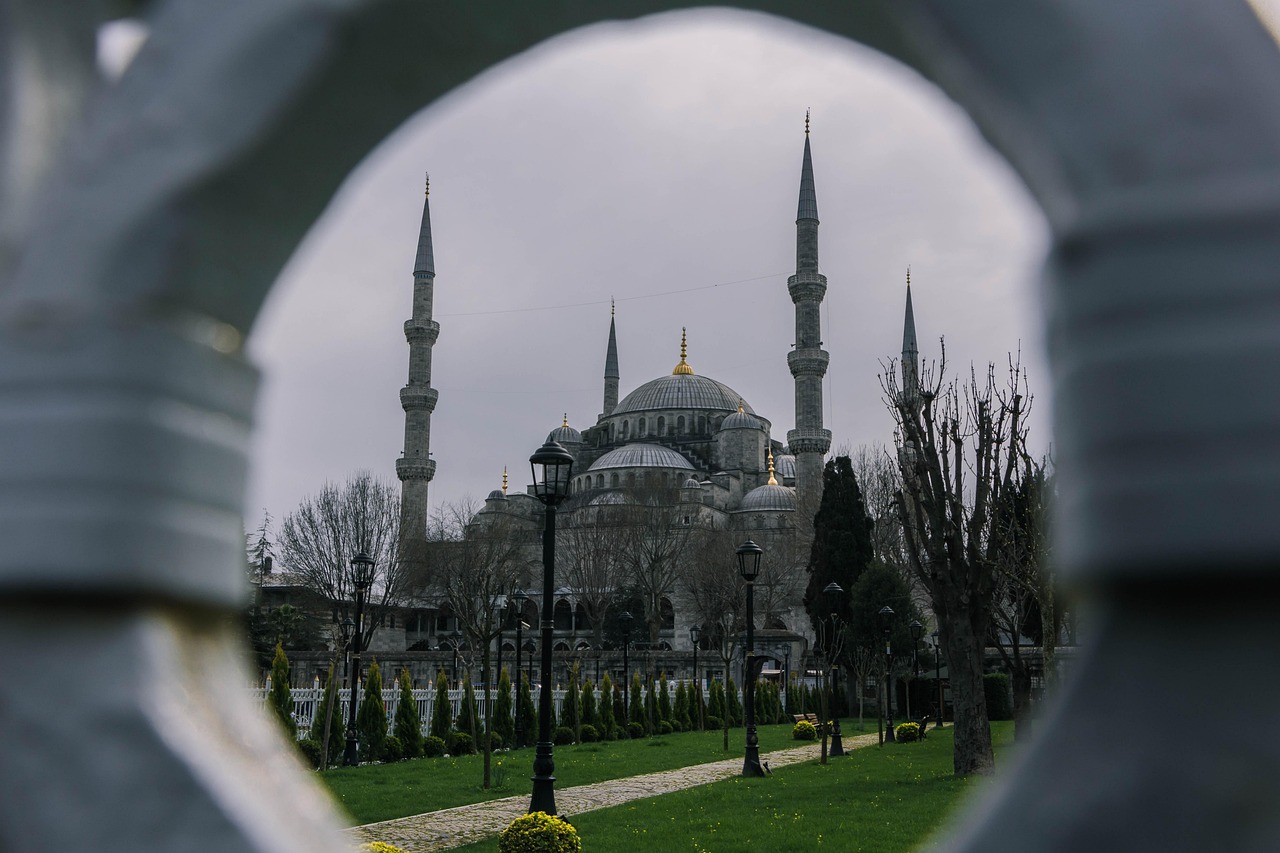
A dervish ceremony sets a specific tone for an evening — contemplative, quiet, unlike anything else you will see in Turkey. Earlier in the day, the sightseeing counterparts are the big Sultanahmet monuments. Hagia Sophia shares the same spiritual weight, having served as both cathedral and mosque, and Topkapi Palace houses an impressive collection of Islamic relics including the Prophet’s mantle.
Underground, the Basilica Cistern has an atmosphere that feels almost ceremonial itself. Above ground, an Old City walking tour covers the whole Sultanahmet circuit and frees up your evenings for the ceremony. Dolmabahce Palace is worth seeing for the sheer contrast — Ottoman excess versus Sufi austerity.
For something physical after the reflective evening, a Turkish bath the following morning shares the hamam tradition’s emphasis on ritual and cleansing. And a Bosphorus cruise at sunset creates a similar sense of calm, with the minarets silhouetted against the water.
Beyond Istanbul, Cappadocia has cave churches with centuries of Christian and Islamic art layered on top of each other, and the hot-air balloon sunrise there rivals the dervish ceremony for sheer emotional impact.