
The Parthenon has been standing on that hill for nearly 2,500 years. It survived Persian invasions, a Venetian cannonball that blew up a gunpowder magazine inside it, and Lord Elgin sawing off half the sculptures. What it hasn’t survived particularly well is the modern ticketing system, which manages to confuse roughly half the people who attempt it.
I’ve walked up that rock four times now, in different seasons and at different times of day, and the single biggest factor in how much I enjoyed each visit wasn’t the weather or the crowds — it was whether I’d sorted my ticket situation before I got there.
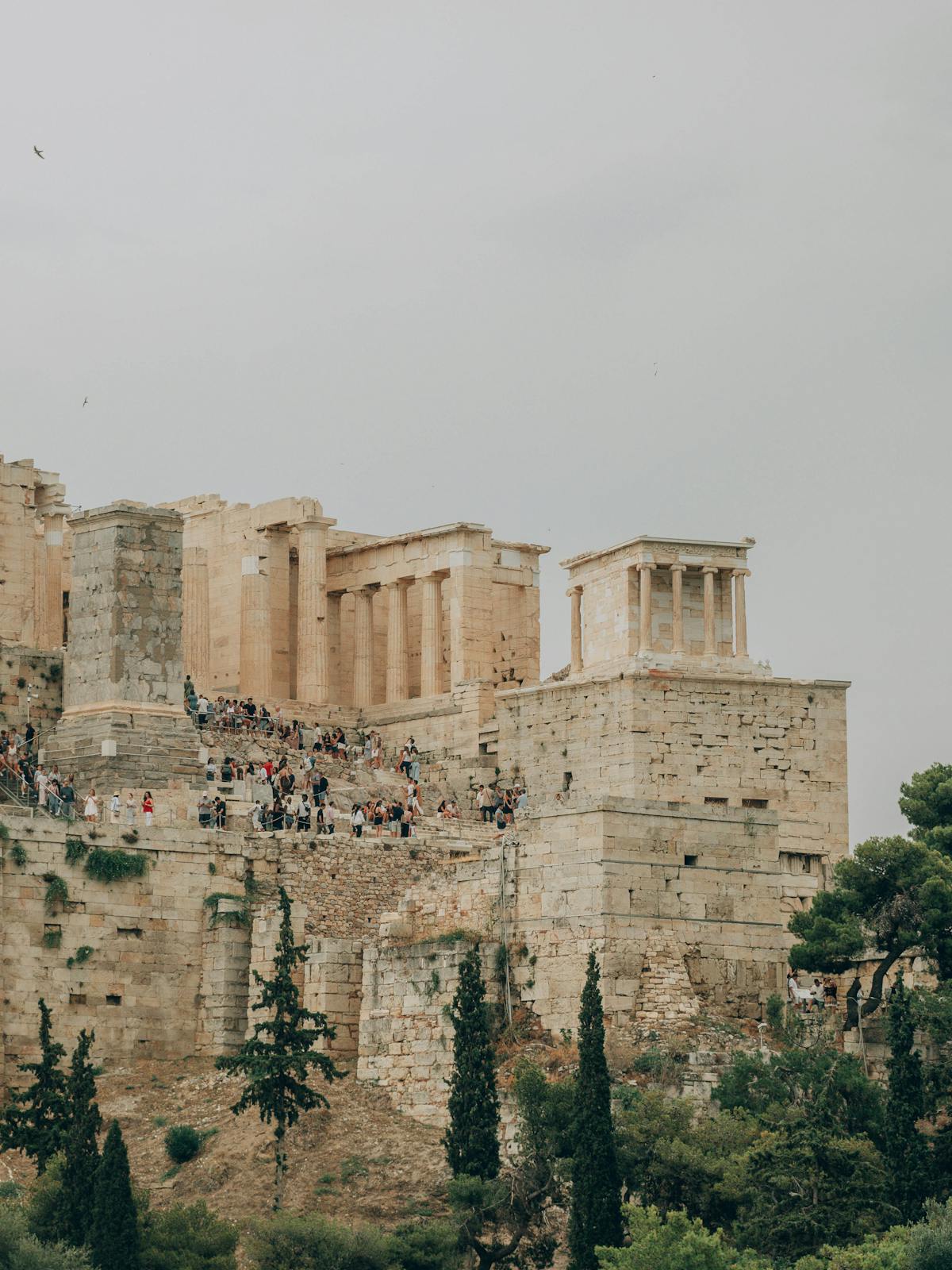
Here’s everything I’ve learned about getting Acropolis tickets without the headaches, the wrong-ticket mistakes, and the “why is this line 90 minutes long” discoveries.
Short on time? Here are my top picks:
Best overall: Acropolis, Parthenon & Museum Guided Tour — $40. Covers the hilltop and the museum in one shot with a guide who actually makes ancient Greek politics interesting.
Best value: 5-Site Combo Pass — $42. Skip-the-line access to the Acropolis plus four other sites. If you’re in Athens for more than a day, this pays for itself.
Best for early risers: First Access Morning Tour — $40. Gets you through the gates before the main rush. The photos alone are worth the early start.
- How the Acropolis Ticket System Works
- Official Tickets vs. Guided Tours
- The Best Acropolis Tours to Book
- 1. Acropolis, Parthenon & Acropolis Museum Guided Tour —
- 2. Acropolis & 5 Archaeological Sites Combo Pass —
- 3. Acropolis and Parthenon Guided Walking Tour —
- 4. Acropolis Monuments & Parthenon Walking Tour (with Museum option) —
- 5. First Access Acropolis and Parthenon Guided Tour —
- When to Visit the Acropolis
- How to Get There
- Tips That Will Save You Time
- What You’ll Actually See at the Top
- More Greece Guides
- More Greece Guides
How the Acropolis Ticket System Works
Greece sells official Acropolis tickets through hhticket.gr, the Ministry of Culture’s booking portal. The system works, but it’s not the most intuitive website you’ll ever use. Tickets are timed-entry, meaning you pick a specific 30-minute window and need to arrive within that slot.
There are two main ticket types:
Single-site ticket (around EUR 20 in peak season, EUR 10 in winter): Gets you into the Acropolis archaeological site only. This covers the Parthenon, the Erechtheion, the Temple of Athena Nike, the Propylaea gateway, and the Theatre of Dionysus — basically everything on the hilltop and its slopes. Winter pricing (November through March) is half the summer rate, which is one of the best deals in European tourism.
Multi-site combo ticket (EUR 30): Covers the Acropolis plus the Ancient Agora, Roman Agora, Temple of Olympian Zeus, Hadrian’s Library, Kerameikos cemetery, and Aristotle’s Lyceum. Valid for five days. If you’re spending more than one day in Athens, this is the obvious choice — you’d pay more buying individual tickets to just three of those sites.
Free entry days: The first Sunday of every month from November through March is free. So are a handful of national holidays (March 6, April 18, May 18, the last weekend of September during European Heritage Days, and October 28). Free days sound appealing until you experience them — the crowds are genuinely overwhelming, and with no timed entry to regulate flow, the hilltop gets packed shoulder-to-shoulder.
Discounts: EU citizens aged 6-25 and non-EU students with a valid ISIC card get reduced tickets. Children under 5 enter free.
The Acropolis Museum is a separate ticket (EUR 15 full price, EUR 10 reduced). It’s not included in either the single-site or combo ticket. Most people don’t realize this until they’re standing at the museum entrance wondering why their combo ticket isn’t scanning. A guided tour that bundles both is the easiest way to avoid this confusion entirely.
Official Tickets vs. Guided Tours
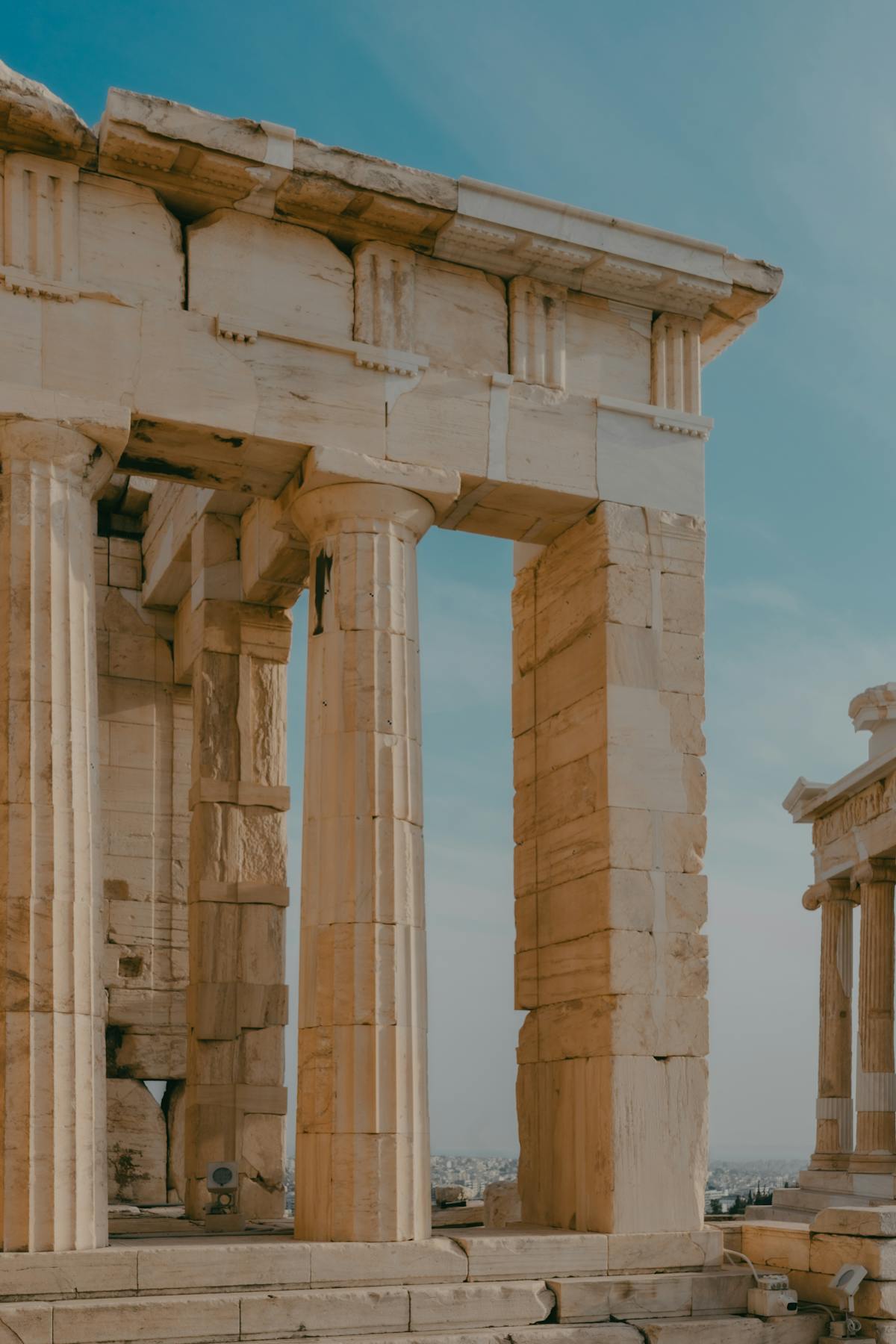
Buying directly through the official site is cheaper, obviously. But the Acropolis is one of those places where context matters enormously. Without a guide, you’re looking at a bunch of impressive broken columns and vaguely remembering something about Pericles from school. With a good guide, you understand why there’s a crane that’s been parked on the Parthenon since 1975, what the holes in the marble floor are from, and why the Erechtheion has those famous caryatid statues (spoiler: one of them is in London, and the Greeks are still furious about it).
Go with official tickets if: You’ve been to the Acropolis before and just want to walk the grounds again. Or if you’re genuinely on a tight budget and have done your reading beforehand. Audioguides are available on-site for a few euros.
Go with a guided tour if: This is your first time, you want skip-the-line access without navigating the official booking portal yourself, or you want to combine the Acropolis with the museum in one seamless visit. Most guided options include the entry ticket in the price, so the premium over a DIY ticket is really only EUR 15-20 for 2-3 hours of expert context. That’s a pretty reasonable deal.
The Best Acropolis Tours to Book
I’ve gone through the major options across GetYourGuide and Viator, compared what each includes, and ranked them based on what actually matters: guide quality, value for money, and how well they handle the logistics of getting you up that hill without wasting time.
1. Acropolis, Parthenon & Acropolis Museum Guided Tour — $40
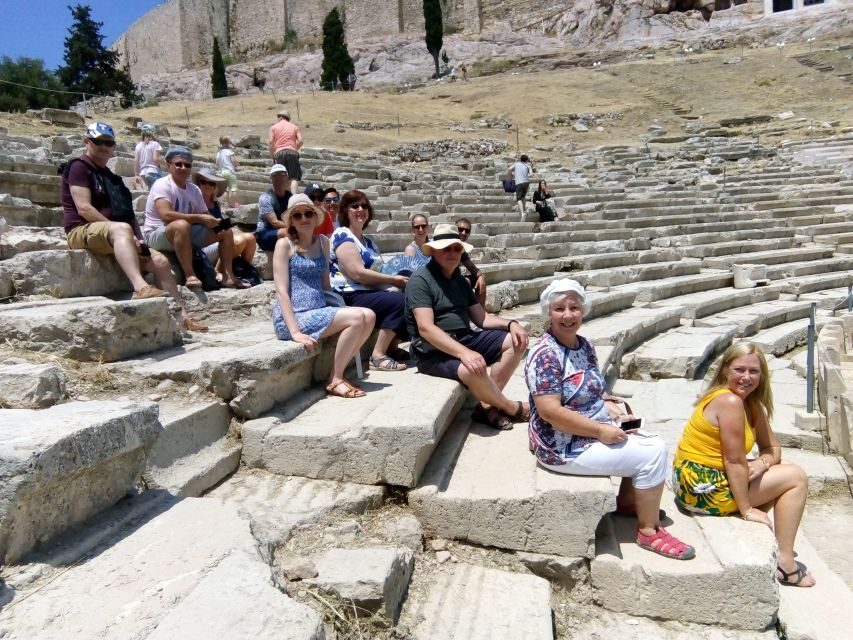
This is the complete Acropolis experience in one package. You get a licensed archaeologist guide (not just a history graduate with a headset), skip-the-line entry to the Acropolis, and then a full walkthrough of the Acropolis Museum where the real storytelling happens. The museum is where you see the original caryatids up close and the Parthenon frieze fragments that Greece has been trying to get back from the British Museum for decades.
At $40 per person for a 2-4 hour experience that includes both site entries and a professional guide, this is hard to beat on value. The hilltop portion runs about 90 minutes, then you cross the street to the museum for another hour. Groups stay small enough that you can actually hear the guide and ask questions. This is the one that consistently gets the strongest feedback from visitors, and it’s the tour I’d pick if I could only do one thing in Athens.
2. Acropolis & 5 Archaeological Sites Combo Pass — $42
If you’re spending two or more days in Athens, this combo pass is the smartest way to cover ground. For $42, you get skip-the-line access to the Acropolis plus up to five additional archaeological sites: the Ancient Agora (where Socrates actually walked and argued), the Roman Agora, Temple of Olympian Zeus, Hadrian’s Library, and Kerameikos. Each of those sites would cost you EUR 8-10 individually, so you break even after the Acropolis plus two extras.
The pass is flexible — use it across multiple days at your own pace. There’s no guide included, so this works best for independent travelers who’ve done their homework or plan to use an audio guide app. The skip-the-line benefit alone makes it worthwhile during peak summer months when the regular ticket queue at the Acropolis entrance can stretch past 45 minutes. One thing to note: several visitors have reported issues with free-day redemption codes, so if your dates overlap with a free Sunday, buy the regular pass anyway and don’t rely on promotional codes.
3. Acropolis and Parthenon Guided Walking Tour — $40
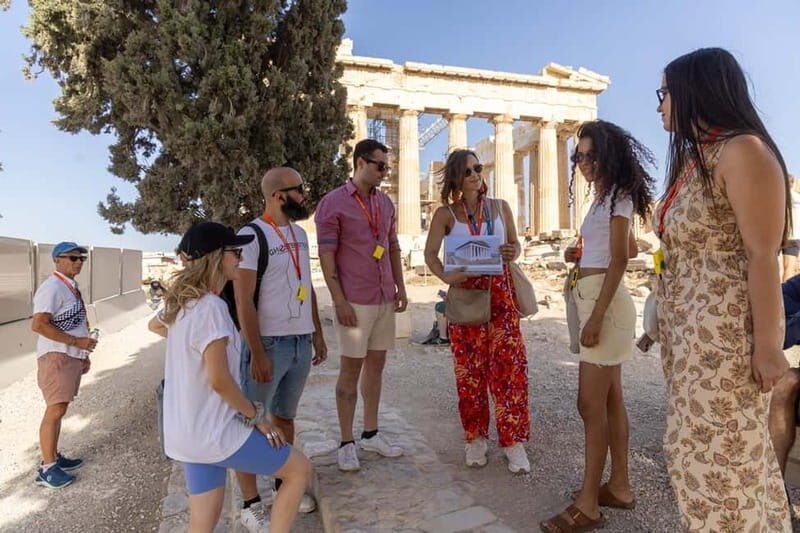
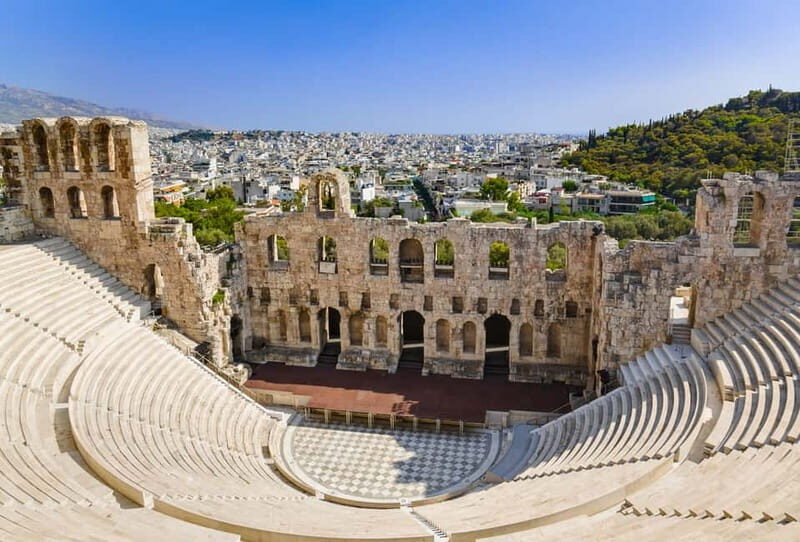
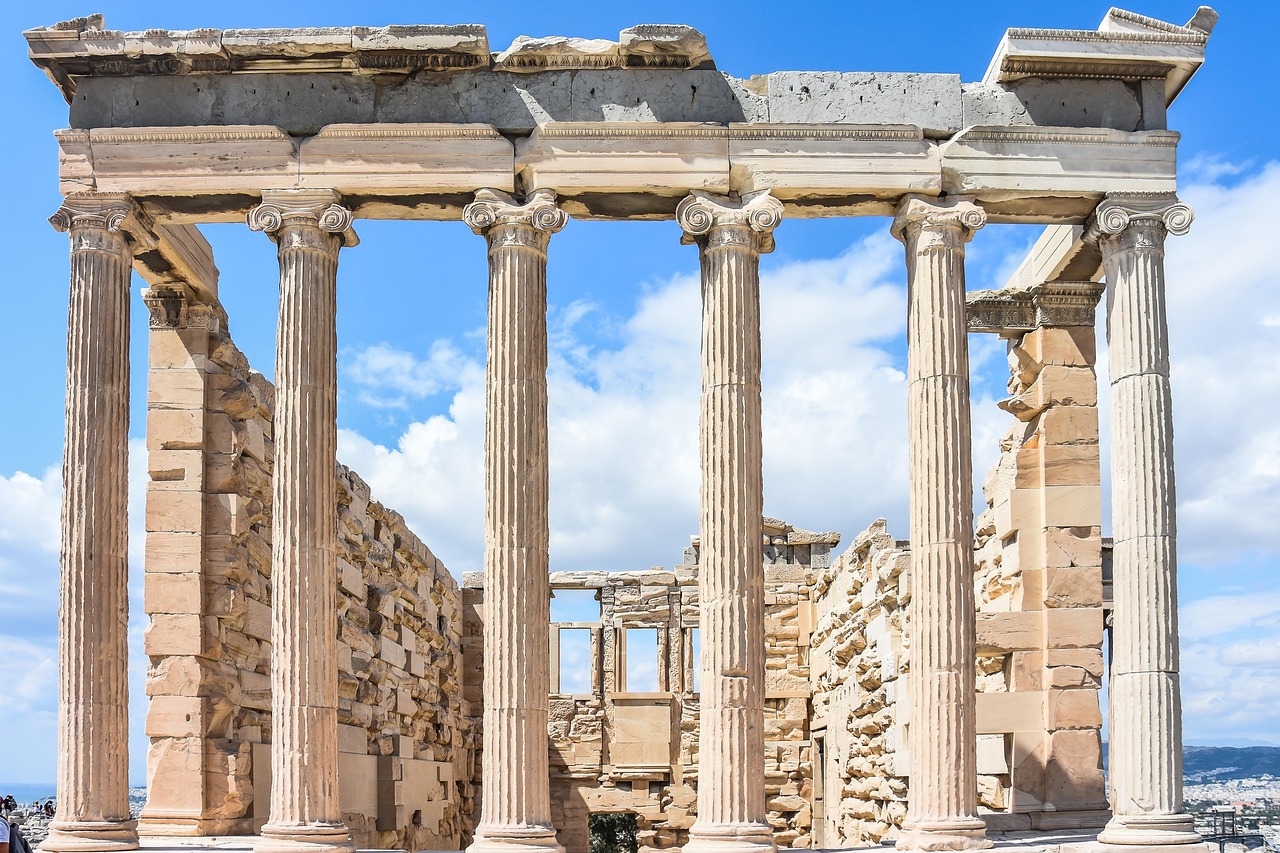
This is the streamlined version — just the Acropolis hilltop with a licensed guide and skip-the-line entry, no museum detour. At $40 for 2-4 hours, you get the full archaeological walkthrough of the Parthenon, Erechtheion, Temple of Athena Nike, and the Propylaea, plus the Theatre of Dionysus and Odeon of Herodes Atticus on the slopes below.
I’d recommend this one if you want to visit the Acropolis Museum separately (maybe later in the afternoon when it’s air-conditioned and your feet need a break from the marble). The guides on this tour tend to be archaeology graduates who know the site deeply, and the smaller group format means you actually get to linger at the viewpoints rather than being herded past them. If you’ve already seen the museum on a previous trip or prefer to explore museums at your own speed, this is the better fit than the combined option above.
4. Acropolis Monuments & Parthenon Walking Tour (with Museum option) — $42
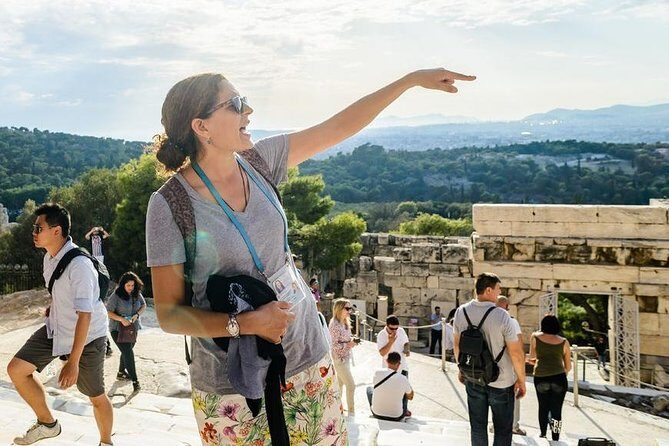
This Viator-booked tour is the longest of the bunch at roughly four hours, and that extra time shows. Where other tours rush through the slopes to get to the Parthenon, this one spends real time at the Theatre of Dionysus (where Western drama was literally invented) and the Odeon of Herodes Atticus before heading up. At $42 per person, there’s an optional museum add-on that extends it further.
The guides here tend to have archaeological backgrounds, and the pacing is deliberately slower. You’re not sprinting uphill to stay on schedule. If you’re the type who wants to actually read the information plaques and take proper photos without feeling rushed, this is the one. The trade-off is the price is a couple dollars more and you’re committing a bigger chunk of your morning. For a first-time Athens visitor who wants depth over speed, that’s a trade worth making.
5. First Access Acropolis and Parthenon Guided Tour — $40
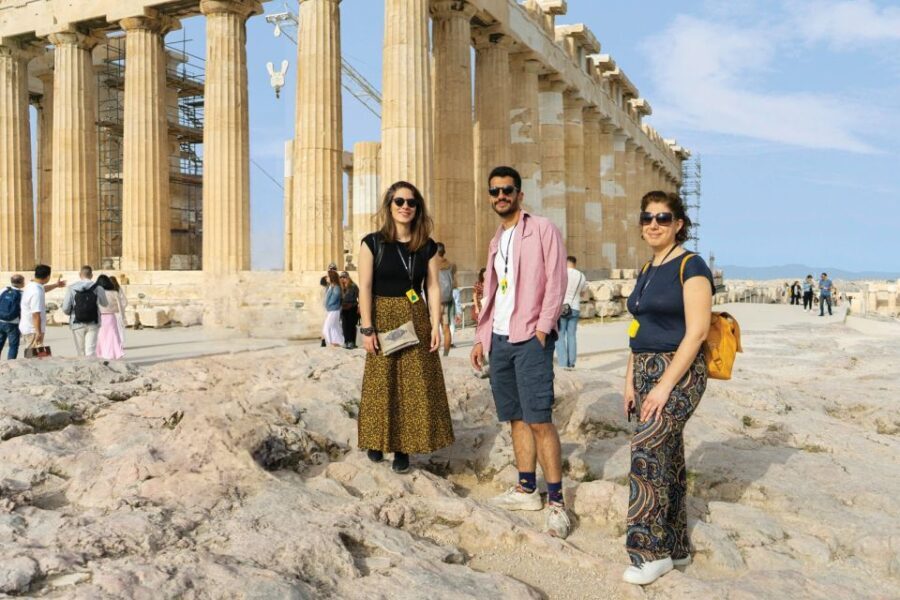
This is the early bird option, and if you can drag yourself out of bed, it’s genuinely transformative. The First Access tour gets you through the gates right when they open, before the main wave of tour buses arrives. At $40 for about 2 hours, you get a guided walk through the major monuments with morning light that makes the marble glow gold instead of the flat white it looks in midday photos.
The practical advantage is real: in peak season (June through September), the Acropolis receives up to 20,000 visitors per day. By 10 AM, every viewpoint is packed three rows deep with selfie sticks. At 8 AM, you can actually stand at the east end of the Parthenon and take in the view toward the Temple of Olympian Zeus without someone’s phone blocking your sightline. The guides on these early tours also tend to be especially knowledgeable — they’re the ones who chose the unpopular time slot because they genuinely love the site, not because it was the shift they were assigned.
When to Visit the Acropolis
Opening hours: The Acropolis is open daily year-round. Summer hours (April through October) run 8:00 AM to 8:00 PM, with last entry at 7:30 PM. Winter hours (November through March) are 8:00 AM to 5:00 PM, last entry at 4:30 PM. The site closes on major holidays (January 1, March 25, Easter Sunday, May 1, December 25-26).
Best time of day: First thing in the morning (8:00-9:30 AM) or late afternoon (after 5:00 PM in summer). The midday slot from 11 AM to 3 PM is the worst combination of peak crowds, peak heat, and peak sun glare on white marble. I once made the mistake of going at noon in July. The marble reflects heat like a frying pan, there’s almost no shade on the hilltop, and the temperature up there runs several degrees hotter than street level. My advice: morning for photos, late afternoon for atmosphere.
Best season: Late September through early November is the sweet spot. The summer crowds have thinned, temperatures drop to a comfortable 20-25 degrees Celsius, and the light has that golden Mediterranean quality. Spring (April-May) is lovely too, but school groups from all over Europe descend on Athens starting in late April. Winter is the quietest and cheapest, but shorter daylight hours limit your time and some surrounding sites have reduced hours.
Heat warning: In July and August, temperatures regularly hit 38-40 degrees Celsius. Greece has started closing the Acropolis during extreme heat events (they shut it down several times in the summers of 2023 and 2024 when temperatures crossed 43 degrees). Check the forecast before you go, bring more water than you think you need, and wear a hat. There is one water fountain near the top, but the line for it gets long.
How to Get There
Metro: Akropoli station (Line 2, the red line) drops you about a 10-minute walk from the main entrance. This is the easiest option. The station itself has a small archaeological display in the atrium from the excavations they did while building it, which is a nice preview.
Walking from Monastiraki/Plaka: If you’re staying in the old town (which you should be, for convenience), the Acropolis is a 15-20 minute uphill walk from Monastiraki Square through the Plaka neighborhood. Follow Dionysiou Areopagitou street along the south side — it’s a wide pedestrian boulevard with shade trees and the walk itself is pleasant. The south entrance (near the Acropolis Museum) tends to have shorter queues than the main west entrance.
From Syntagma Square: About 20 minutes on foot, mostly downhill through the National Gardens and then along Dionysiou Areopagitou. Or take the metro one stop from Syntagma to Akropoli.
Which entrance? There are two: the main entrance on the west side (the monumental Propylaea gateway) and a smaller south entrance near the Acropolis Museum. The south entrance usually has shorter lines, especially mid-morning. If you’re doing a guided tour, most meet near the south entrance.
Tips That Will Save You Time

- Wear proper shoes. The marble paths are polished smooth by millions of feet and become dangerously slippery, especially on the ramps. Sneakers or hiking shoes. No sandals, no flip-flops, no matter how hot it is.
- Bring your own water. There’s one fountain near the top and a small kiosk near the entrance, but prices are marked up and lines are long. Freeze a bottle overnight and carry it up.
- The south entrance is faster. Most day tours approach from the west (Monastiraki side). Walking in from the Acropolis Museum side to the south entrance often saves 15-20 minutes of queue time.
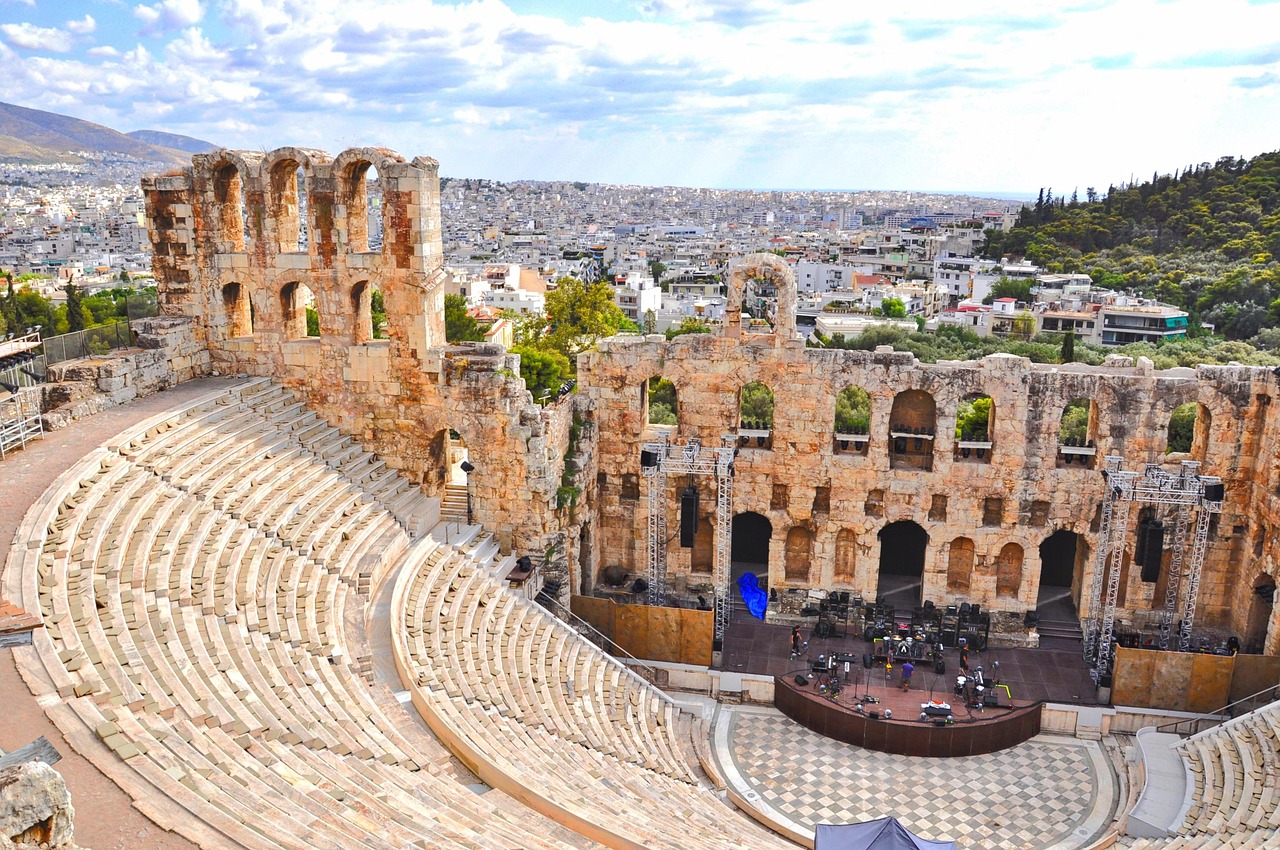
- Don’t skip the Theatre of Dionysus. It’s on the south slope below the main hilltop and most people walk right past it. This is the birthplace of Greek tragedy — Sophocles and Euripides premiered their plays here. It takes five minutes and it’s included in your ticket.
- Buy the combo ticket even if you only “plan” to visit the Acropolis. You’ll inevitably wander past the Ancient Agora or the Temple of Zeus while exploring Athens, and you’ll want to go in. The EUR 10 difference pays for itself the moment you enter a second site.
- Keep your ticket/QR code accessible. You’ll need to scan it at each site if you bought the combo.
- Backpacks are allowed but there’s a small bag check area. No tripods, no drones (seriously — they’ll confiscate it), and no large suitcases.
What You’ll Actually See at the Top
The Acropolis isn’t just the Parthenon, though that’s what everyone comes for. The hilltop complex includes several structures, and understanding what you’re looking at makes the visit considerably more interesting.
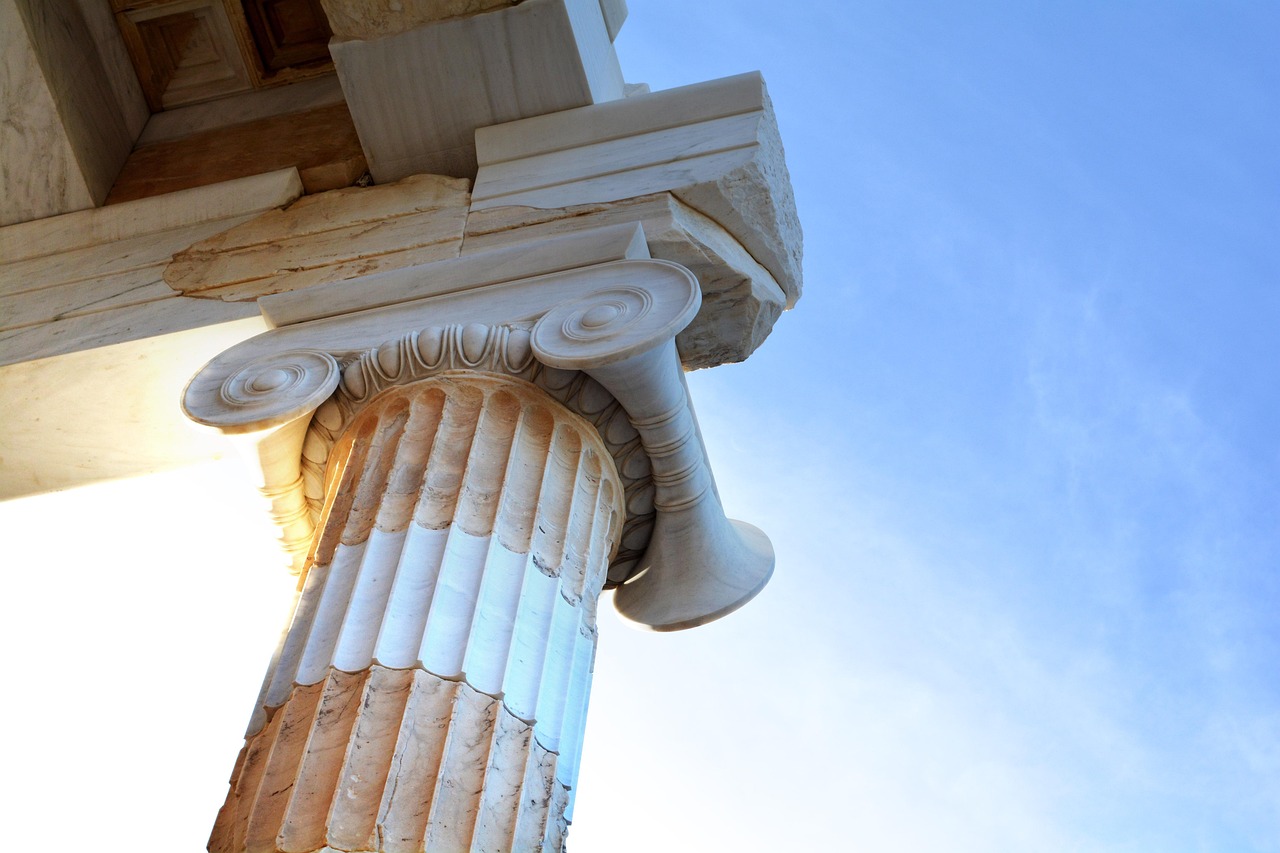
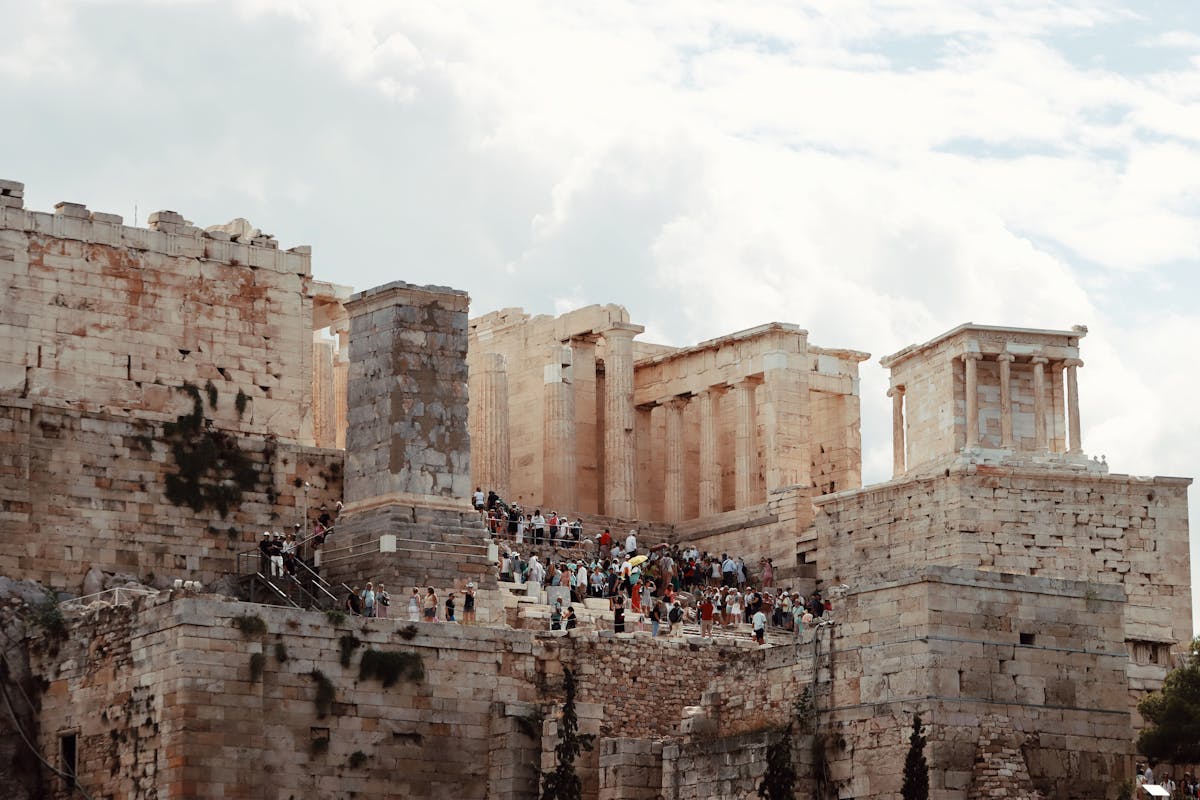
The Propylaea: The monumental gateway at the top of the west approach. This was designed to awe visitors as they entered the sacred precinct, and 2,400 years later, it still works. The ceiling coffers were originally painted with gold stars on a blue background.
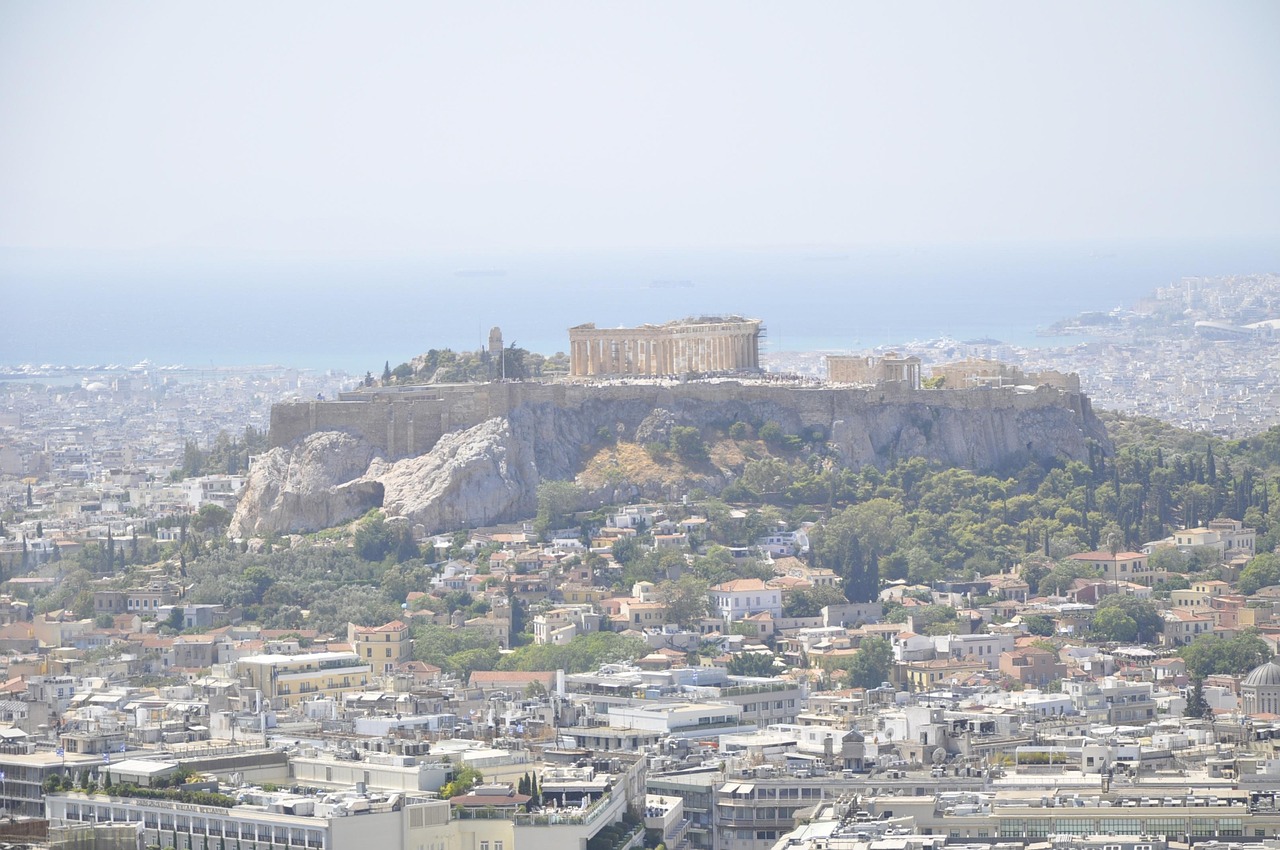
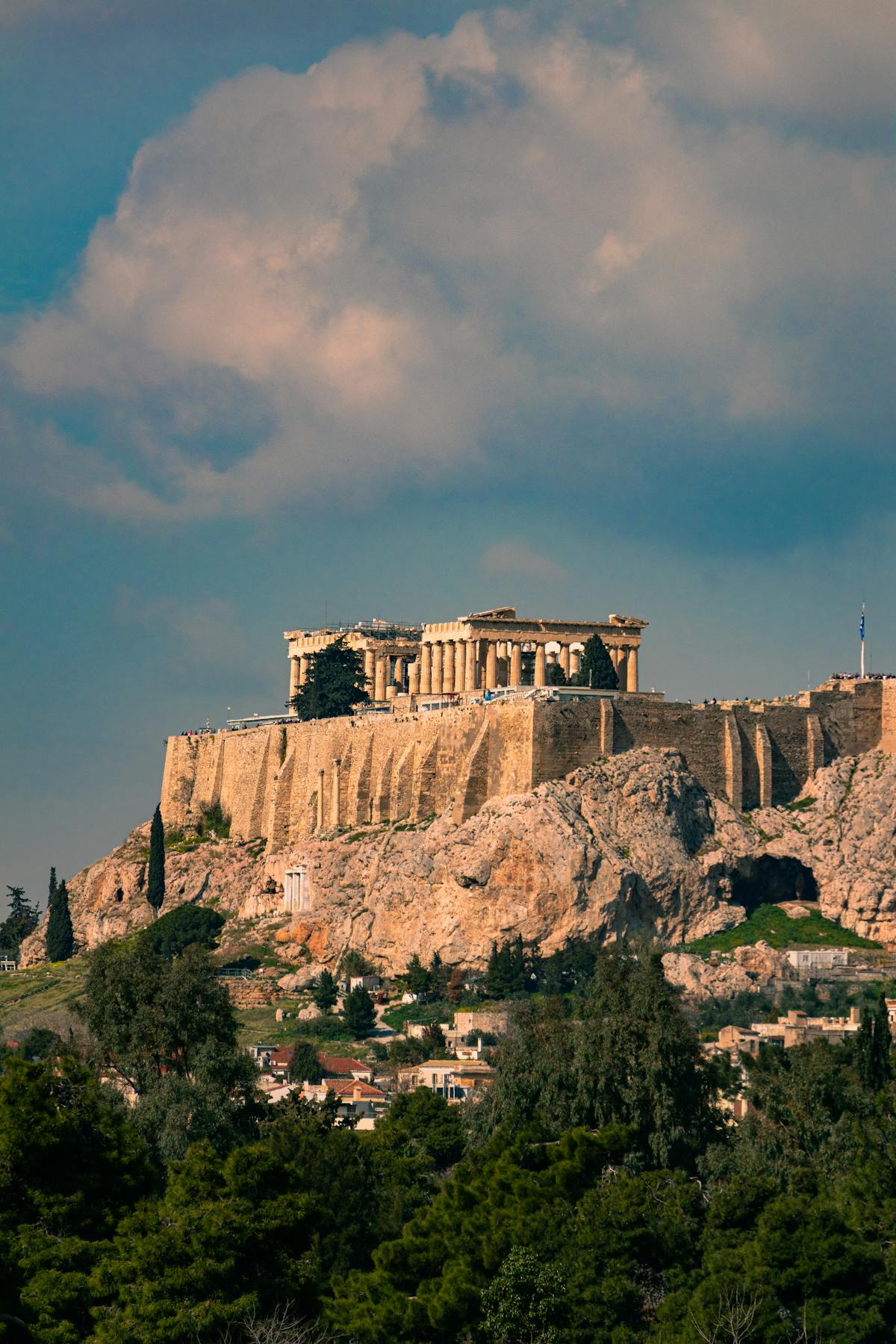
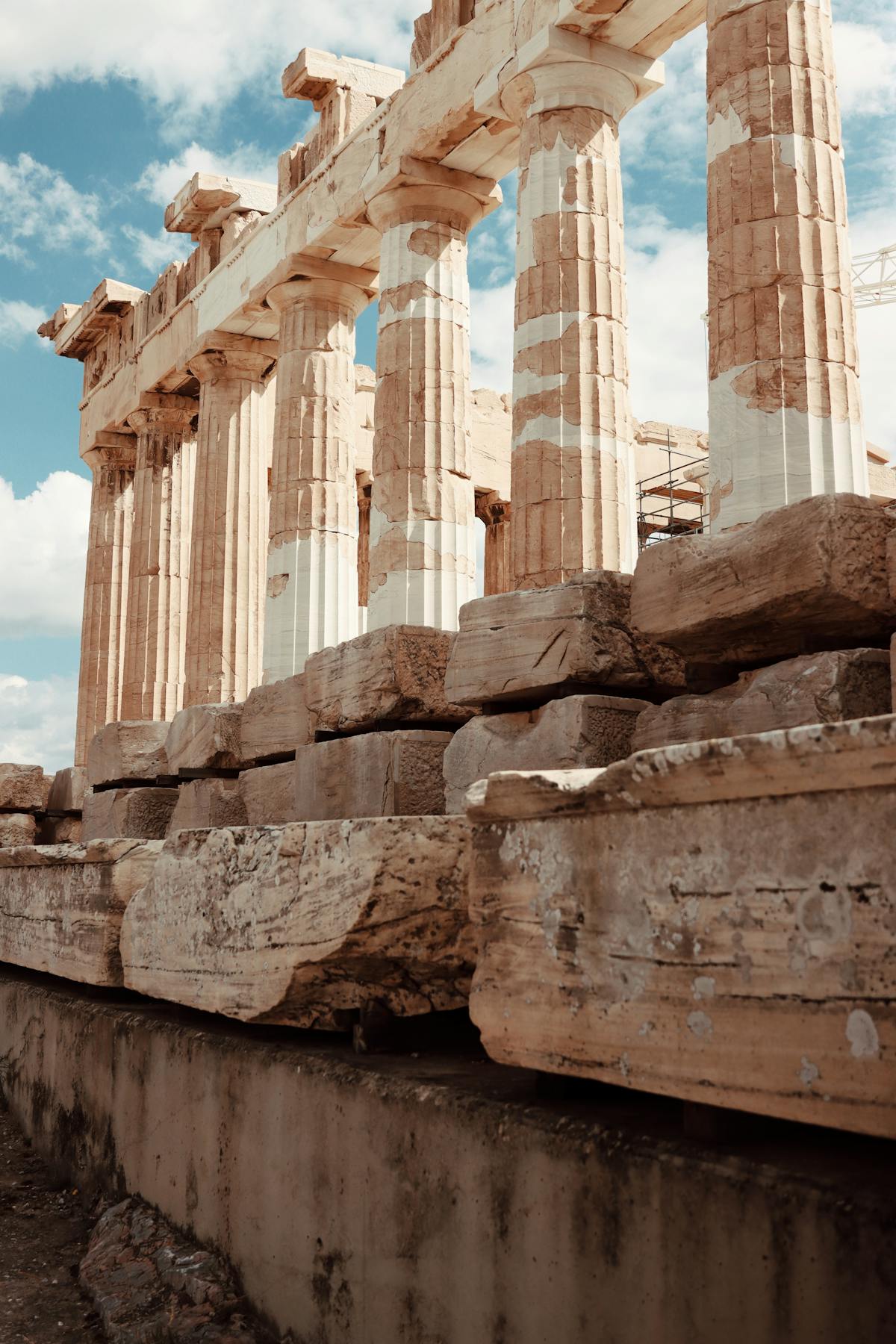
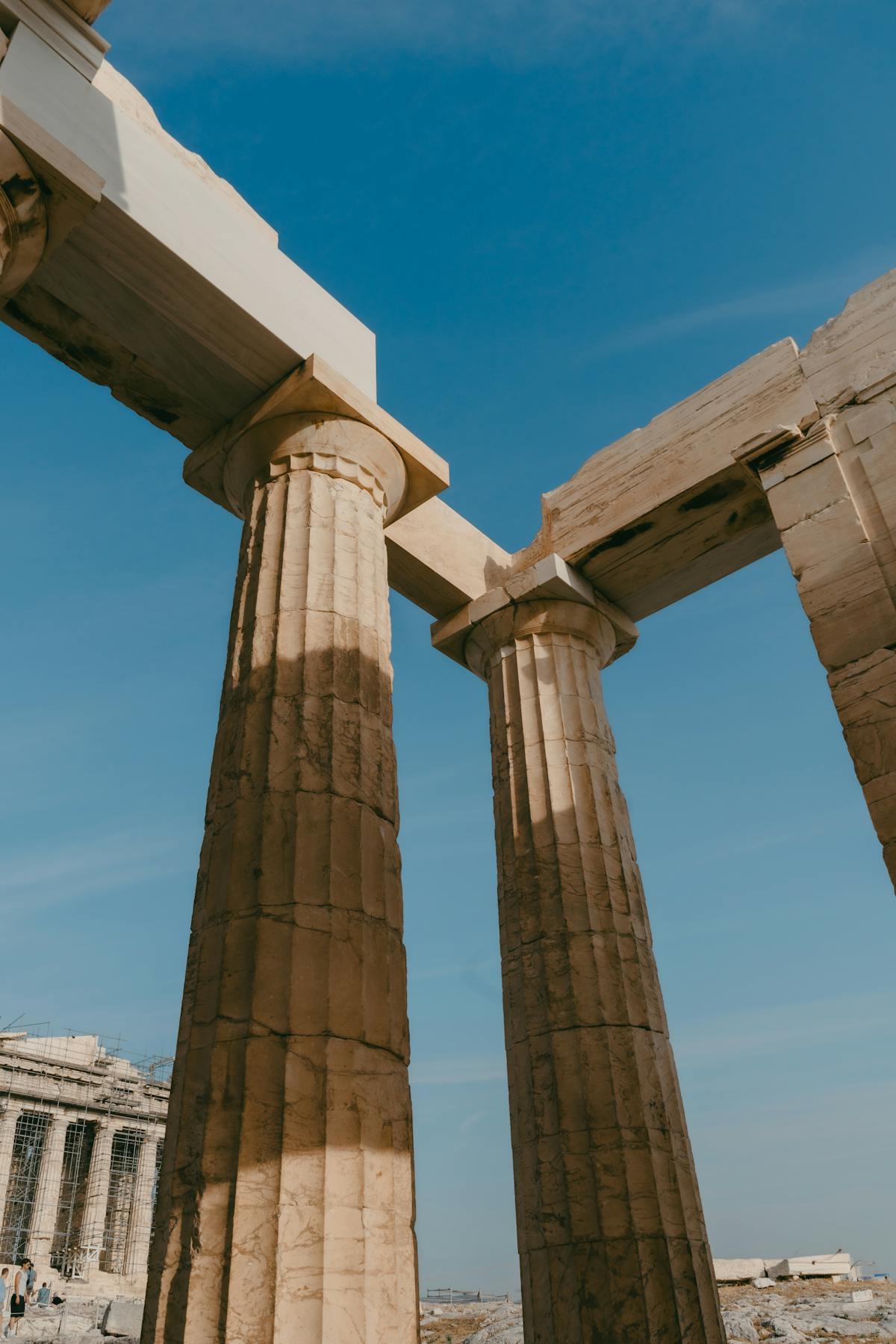
The Parthenon: The big one. Dedicated to Athena, built between 447-432 BC under Pericles. You can’t go inside it (the interior has been closed to the public since the 1970s for ongoing restoration), but the exterior alone is staggering. The building uses almost no straight lines — the columns lean slightly inward, the floor curves upward at the center, and the corner columns are slightly thicker. All of this was deliberate, designed to make the building appear perfectly straight to the human eye.
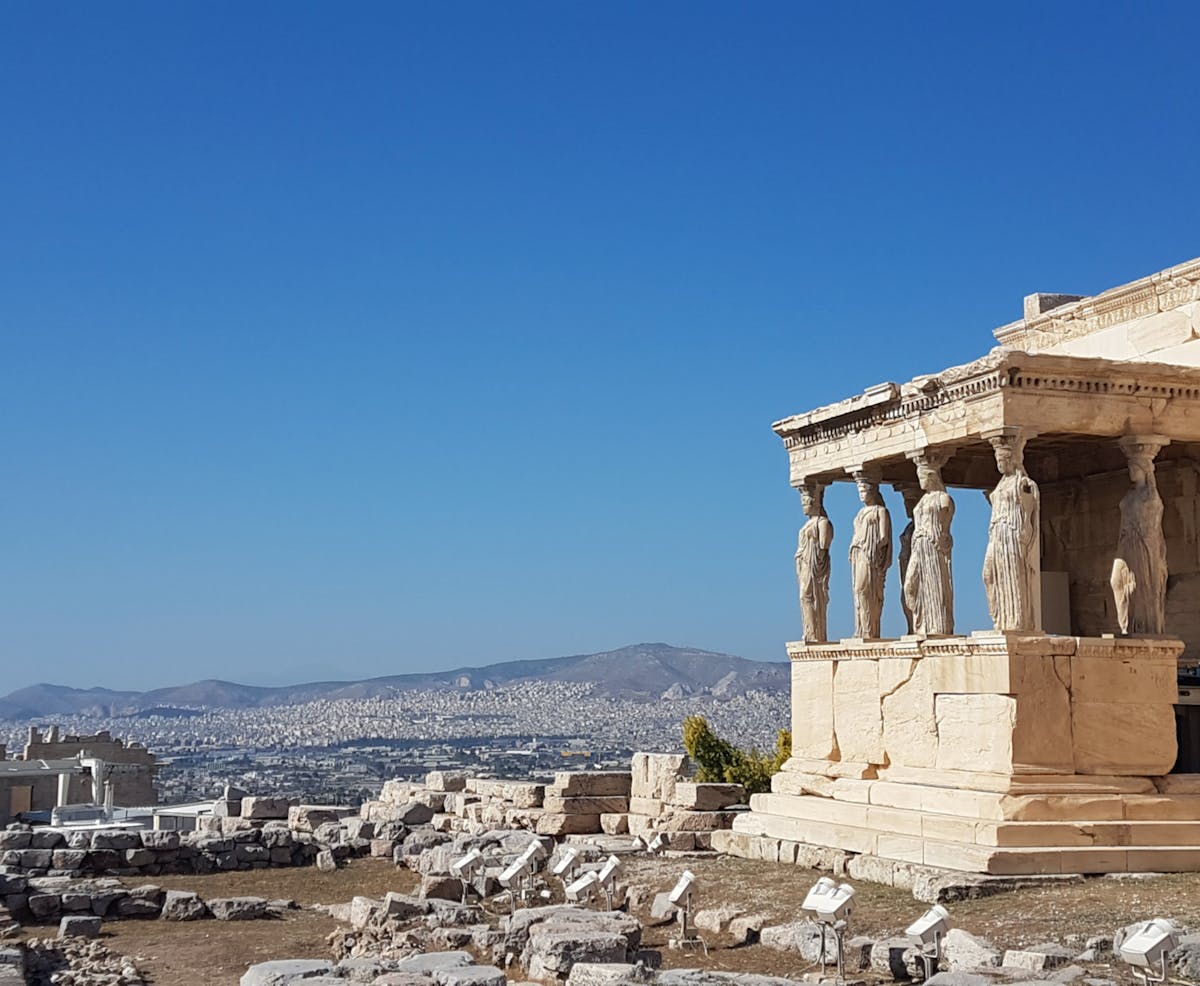
The Erechtheion: The asymmetrical temple on the north side, famous for the Caryatid porch — six female figures serving as structural columns. The ones you see are casts; five originals are in the Acropolis Museum, and one is in the British Museum (a sore point you’ll hear about from any Greek guide).
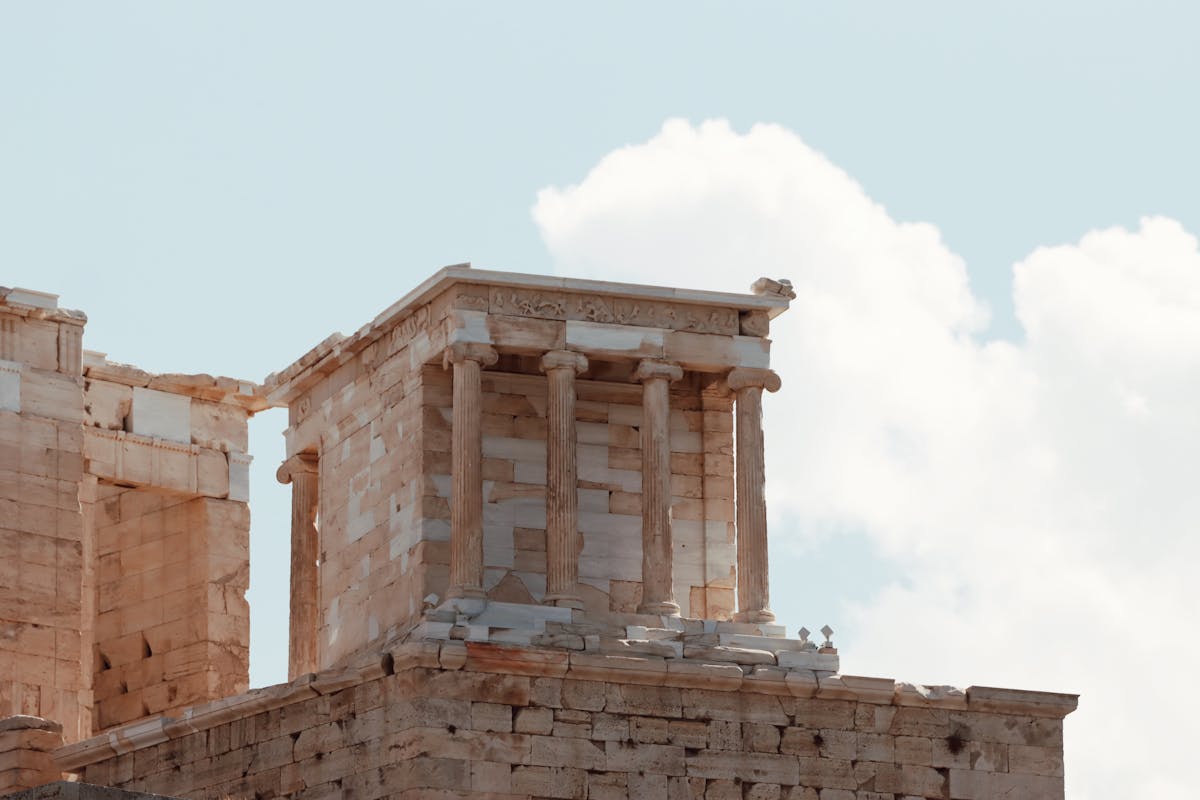
Temple of Athena Nike: The small, elegant temple perched on the southwest corner of the hilltop. It’s tiny compared to the Parthenon but beautifully proportioned. The frieze originally depicted battles between Greeks and Persians.

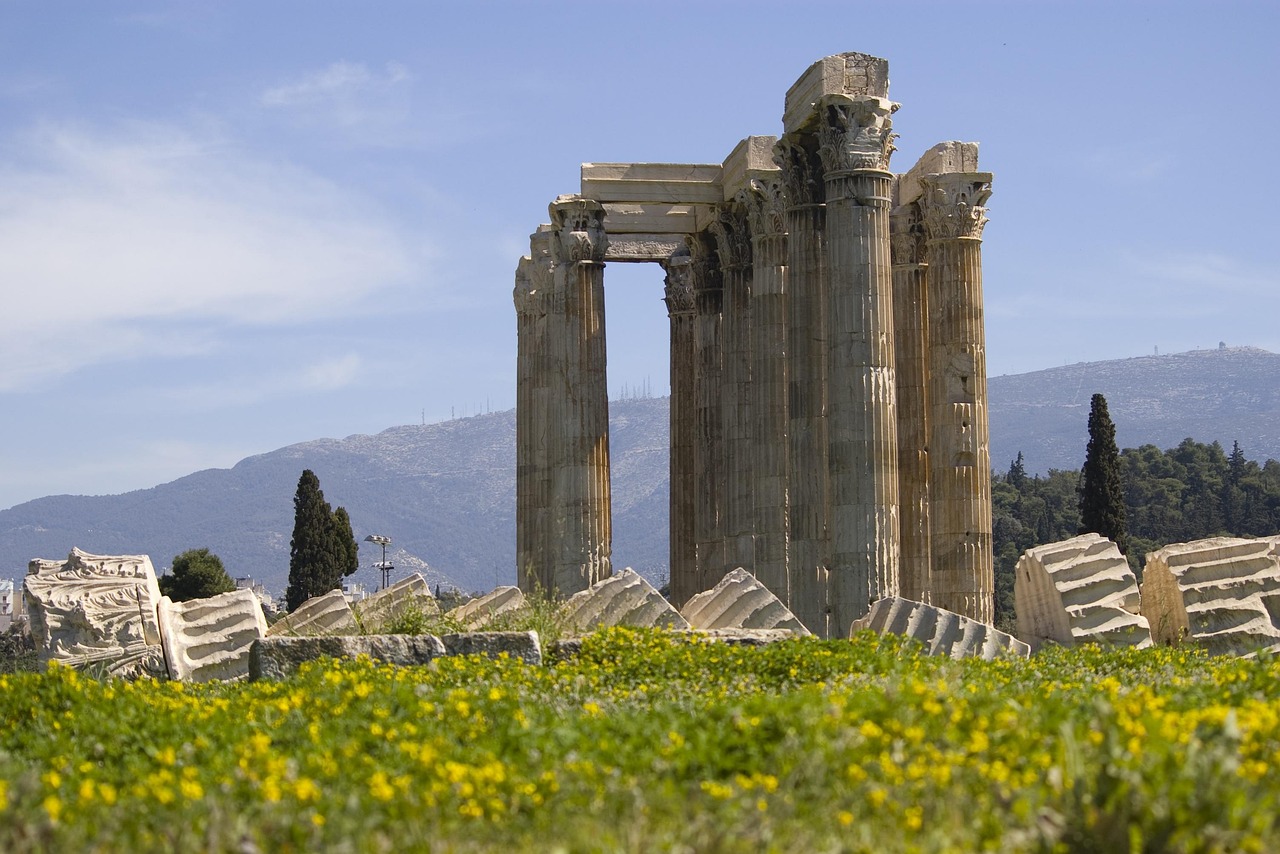
The views: Don’t forget to look outward. From the south side, you can see the Temple of Olympian Zeus, Hadrian’s Arch, and the Panathenaic Stadium. From the north, the Ancient Agora and the Hephaestus temple (the best-preserved ancient Greek temple anywhere). On a clear day, you can see the Saronic Gulf islands.
More Greece Guides
Athens makes a natural base for exploring the rest of mainland Greece. If you have a spare day, the day trip to Meteora is one of the most spectacular excursions in the country — those cliff-top monasteries look like something from a fantasy film, and the guided tours handle the long drive so you can just enjoy it. For island time, a Santorini caldera cruise is the classic Cycladic experience and surprisingly easy to organize even on short notice. Both pair well with a couple of days exploring the Acropolis and the rest of ancient Athens.
This article contains affiliate links to tours and experiences. If you book through these links, we may earn a small commission at no extra cost to you. This helps us keep creating free travel guides.
More Greece Guides
The Acropolis is just the beginning of ancient Athens. The National Archaeological Museum holds thousands of artifacts that fill in the gaps the hilltop leaves out, including bronze statues and gold death masks pulled from sites across Greece. If you want to cover the major landmarks without worrying about navigation, the Athens hop-on hop-off bus stops at both the Acropolis and the museum on the same route.
Most visitors pair an Acropolis morning with a food-heavy afternoon. The Athens food tours that wind through the neighborhoods just below the hill give you a completely different angle on the city after a morning of marble and mythology.
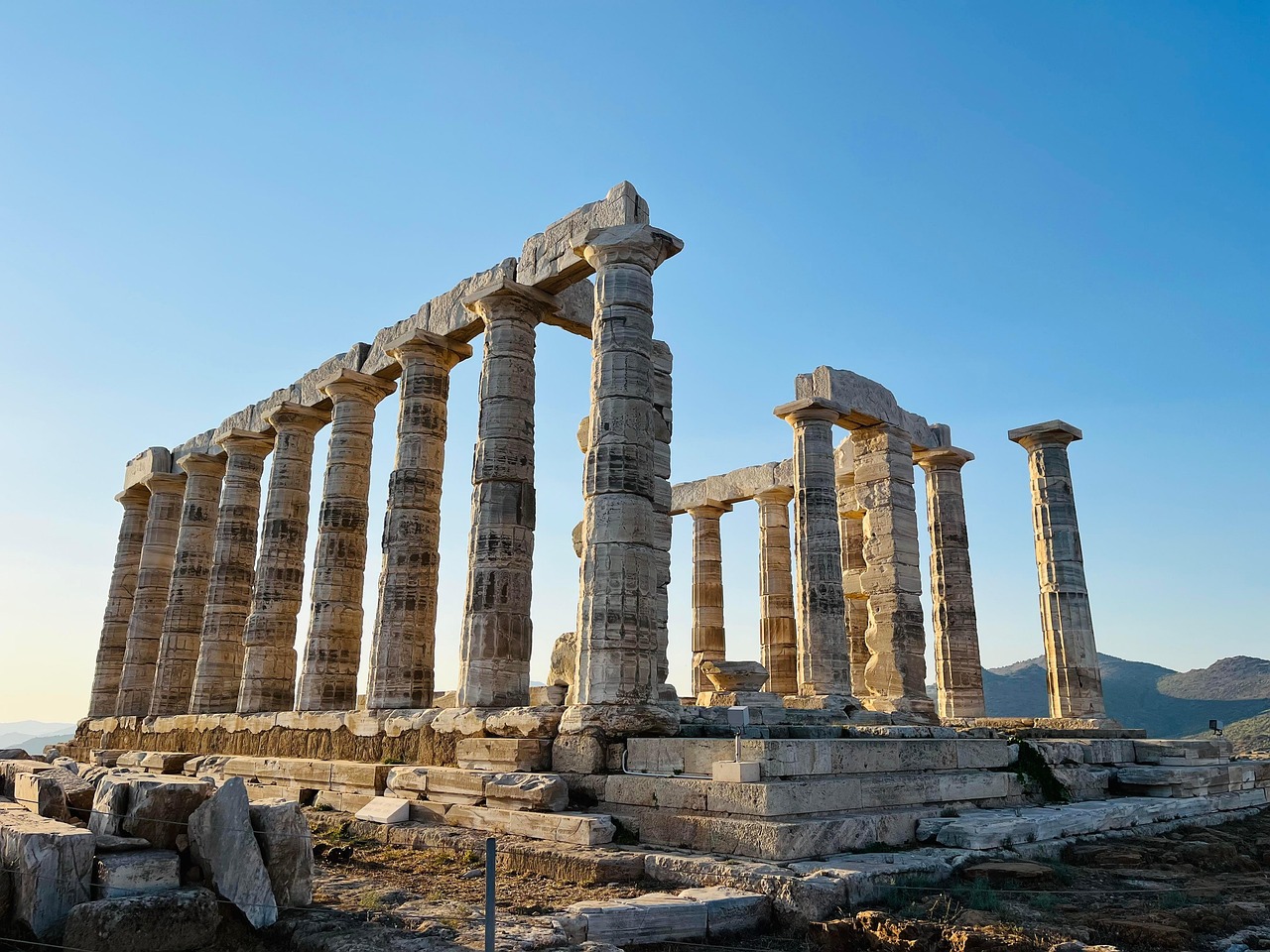
If you have a second day in Athens, the half-day trips are worth considering. Cape Sounion puts you at the Temple of Poseidon by sunset, while Delphi and Meteora are each a full day but rank among the most impressive ancient and medieval sites in all of Greece.