
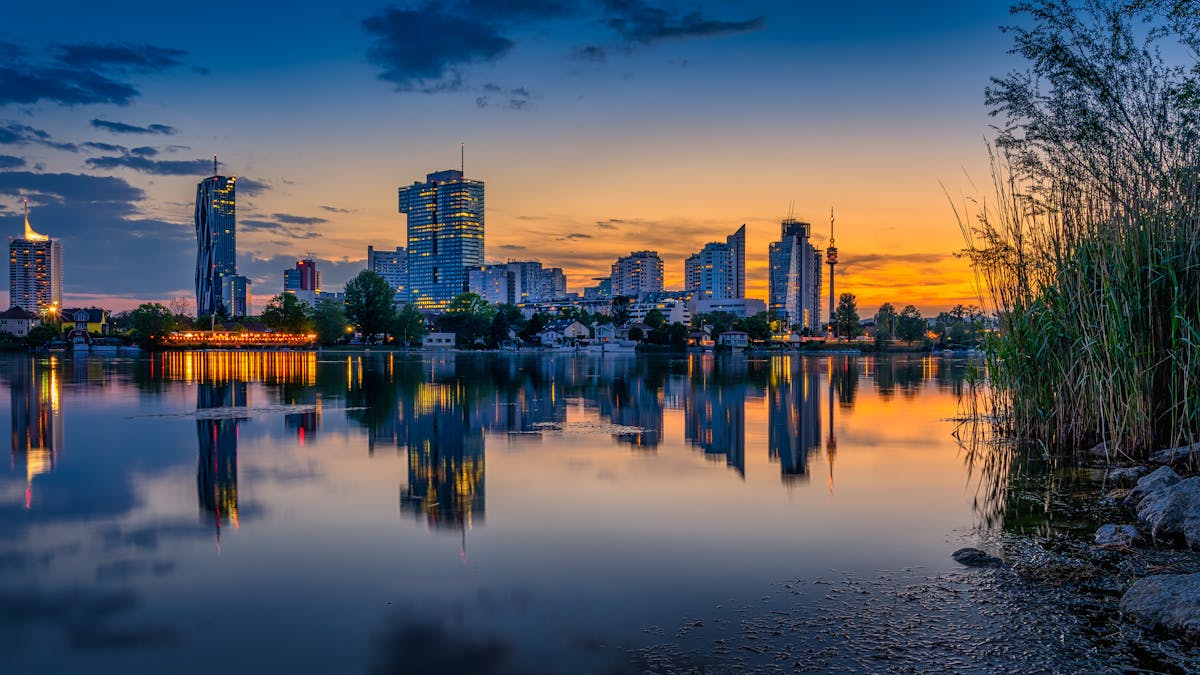
They call it the Blue Danube, but I have some news: the Danube is not blue. It is green-brown most days, occasionally gray, and on one particularly overcast Wednesday, I would have described it as “the color of milky tea.” None of that matters once you are actually on the water at sunset, watching Vienna’s skyline dissolve into pinks and golds. The city looks completely different from a boat. Better, frankly.
I had walked along the Danube Canal dozens of times before I finally stepped onto a cruise. I kept thinking it would be a tourist trap. Overpriced wine, canned commentary, the works. I was wrong about almost all of it.
What surprised me most was the variety. You can do a two-hour sightseeing loop, a three-hour evening cruise with dinner, a Sunday brunch with live jazz, or a full-day trip into the Wachau Valley wine country. The price range runs from about $45 for a basic panorama cruise to $176 for a private retro boat with a gourmet picnic. And the booking process is simple once you know which type of cruise matches what you are actually looking for.
Best overall: Evening Cruise Along The Danube — $55. Three hours on the water with food and sunset views. The one most people should book.
Best budget: 2-Hour Danube Panorama Tour — $45. Short, scenic, and easy to fit into a packed Vienna itinerary.
Best for a special occasion: Sunday Brunch Cruise with Live Music — $78. Brunch, jazz, and the Danube on a Sunday morning. Hard to beat that combination.
- How the Danube Cruise System Works in Vienna
- Walk-Up Tickets vs. Booking Through a Tour Platform
- The Best Danube Cruises to Book in Vienna
- 1. Vienna: Evening Cruise Along The Danube —
- 2. Vienna: 2-Hour Danube Panorama Tour —
- 3. Vienna: Sunday Brunch Danube Cruise with Live Music —
- 4. Vienna: Retro Boat Tour with Picnic — 6 per group
- When to Take a Danube Cruise in Vienna
- How to Get to the Cruise Departure Points
- Tips That Will Save You Time and Money
- What You Will See from the Water
- More Vienna Guides
How the Danube Cruise System Works in Vienna
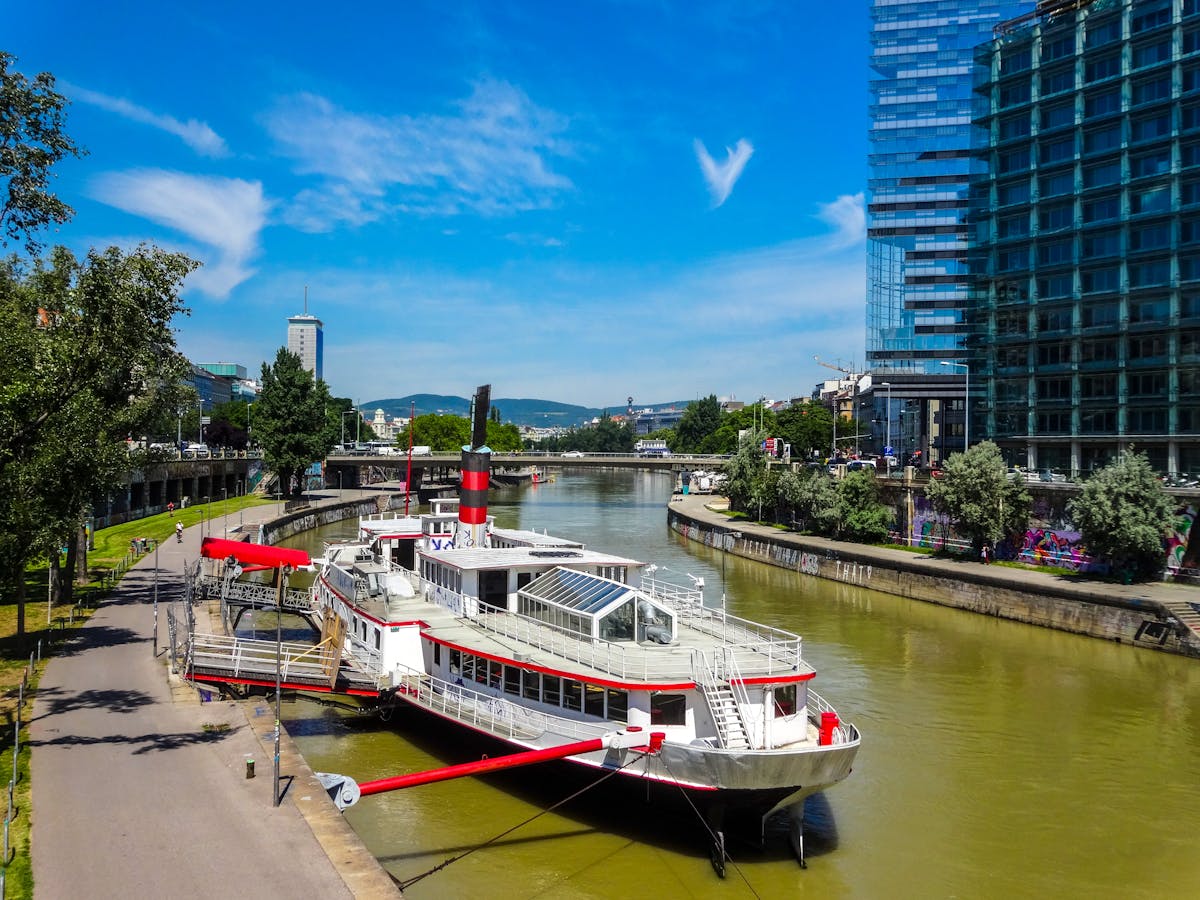
Vienna has two main waterways that cruises use, and this is where most first-timers get confused. The Danube Canal (Donaukanal) runs through the city center, passing the historic first district, street art walls, and canal-side bars. The main Danube River (Donau) is wider, flows through the eastern part of the city past Donau City and the UNO complex, and is where the longer cruise ships operate.
Most short cruises (two to three hours) stick to the Danube Canal or the section of the main Danube closest to the city center. Full-day excursions head upriver into the Wachau Valley, passing through wine villages, medieval castles, and the Melk Abbey. Those are gorgeous but require a whole day.
The main operator for public cruises is DDSG Blue Danube, which runs the most frequent scheduled departures. Several other operators handle smaller boats, private charters, and specialty cruises (dinner, brunch, party boats). All of these are bookable online through tour platforms, and most do not require advance booking more than a day or two ahead — except during high season in July and August, when evening cruises sell out regularly.
Walk-Up Tickets vs. Booking Through a Tour Platform
You can buy tickets directly at the DDSG Blue Danube kiosk near Schwedenplatz (Handelskai 265). Walk-up prices are the same as online prices for their standard cruises. The advantage of booking through a platform like GetYourGuide is free cancellation up to 24 hours before the cruise, which is useful if Vienna weather decides to throw a curveball at you.
For the specialty cruises — the Sunday brunch, private boats, and themed evening events — booking through a platform is the only realistic option. These run on specific dates and fill up faster than the regular scheduled departures.
My advice: book online at least two days ahead for evening cruises during summer. For daytime panorama cruises in spring or fall, you can usually walk up and grab a spot.
The Best Danube Cruises to Book in Vienna
I have narrowed it down to four cruises worth your time and money. Each serves a different purpose, and the best one for you depends on how much time you have, what time of day you are free, and whether you want food on board or just the views.
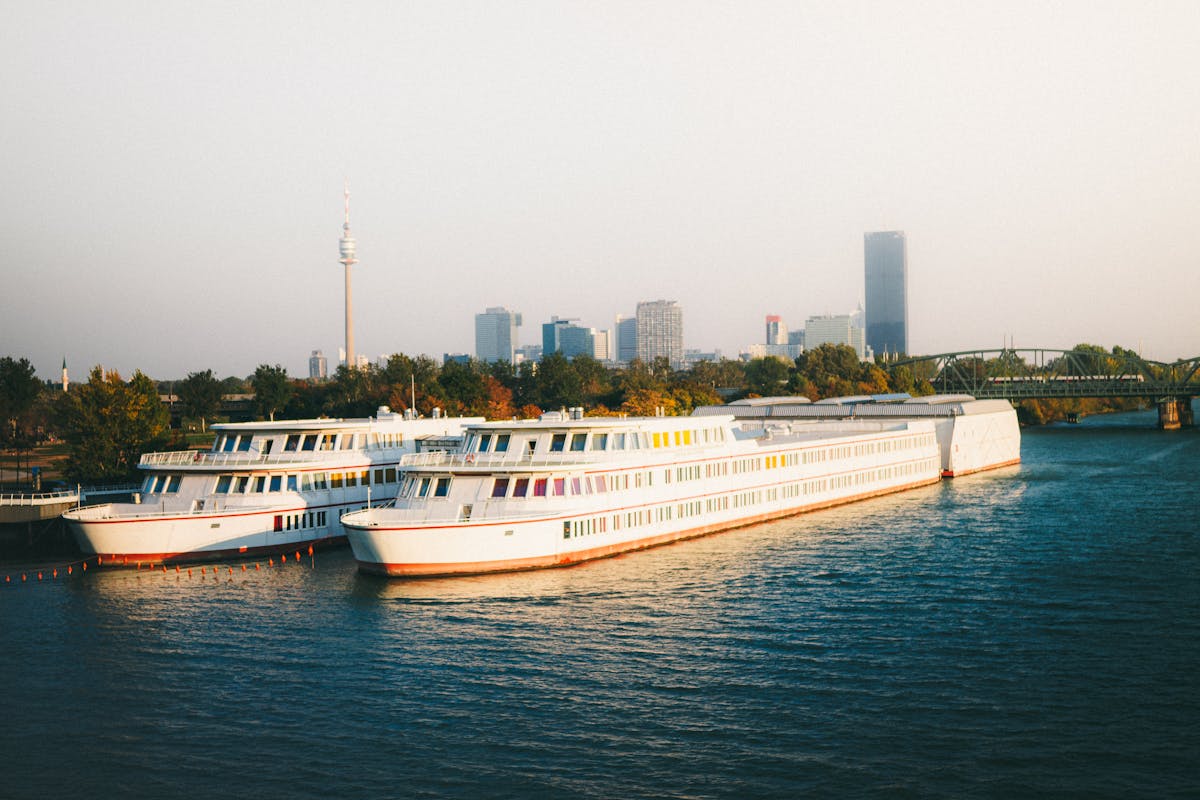
1. Vienna: Evening Cruise Along The Danube — $55
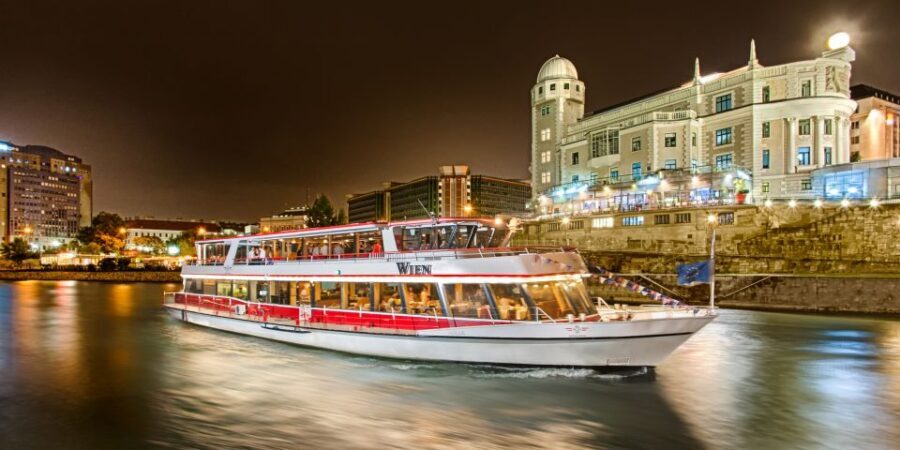
This is the one I recommend to most people visiting Vienna. Three hours on the water, departing in the late afternoon so you catch both daylight and sunset views. There is an onboard restaurant with surprisingly decent food — not gourmet, but solid Viennese dishes at reasonable prices. You order and pay separately, so the $55 ticket just covers the cruise itself.
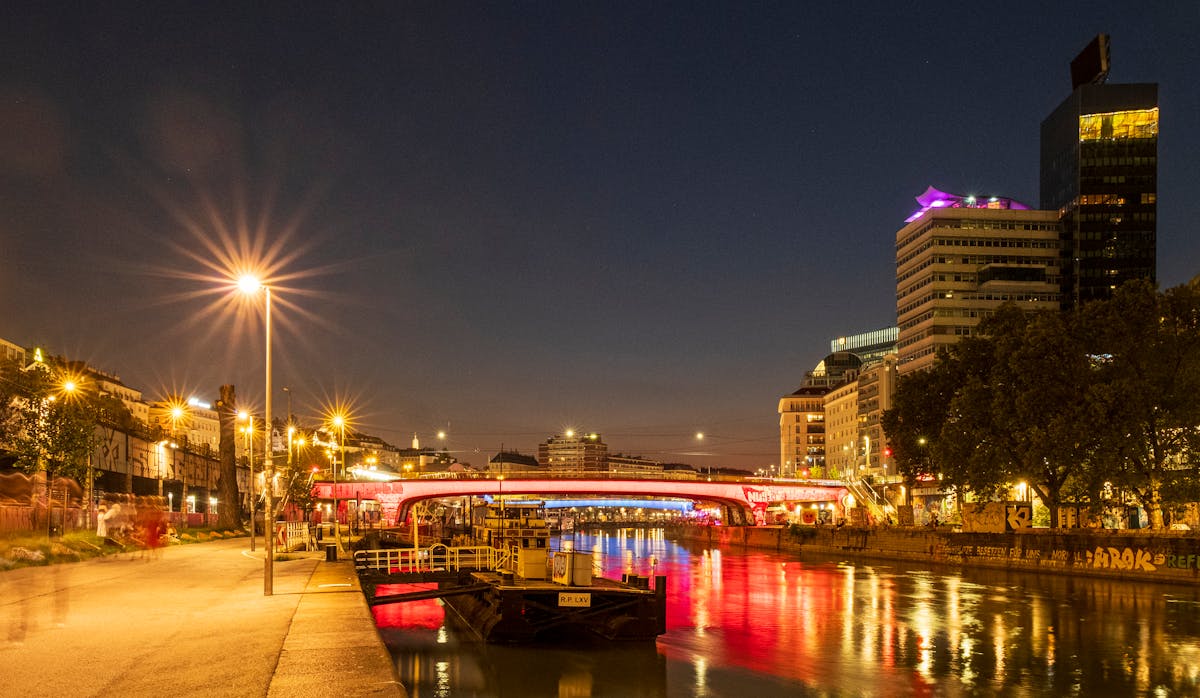
The route heads out along the Danube past the modern waterfront developments, turns around, and comes back through the canal-side stretch with all the historic buildings lit up. The return leg after dark is honestly the highlight. One thing to know: the actual time on the open Danube is shorter than you might expect because part of the three hours includes navigating the canal sections. Still absolutely worth it.
This cruise draws the biggest crowds of any on the river, which tells you something about the value. It runs year-round, though the summer departures are obviously more popular.
2. Vienna: 2-Hour Danube Panorama Tour — $45
If you only have a couple of hours to spare, this is your best bet. It covers the scenic highlights without the dinner service, which keeps the price down to $45. The route takes you along the main stretch of the Danube with views of the Vienna Woods, the Millennium Tower, and the old town silhouette from the water.
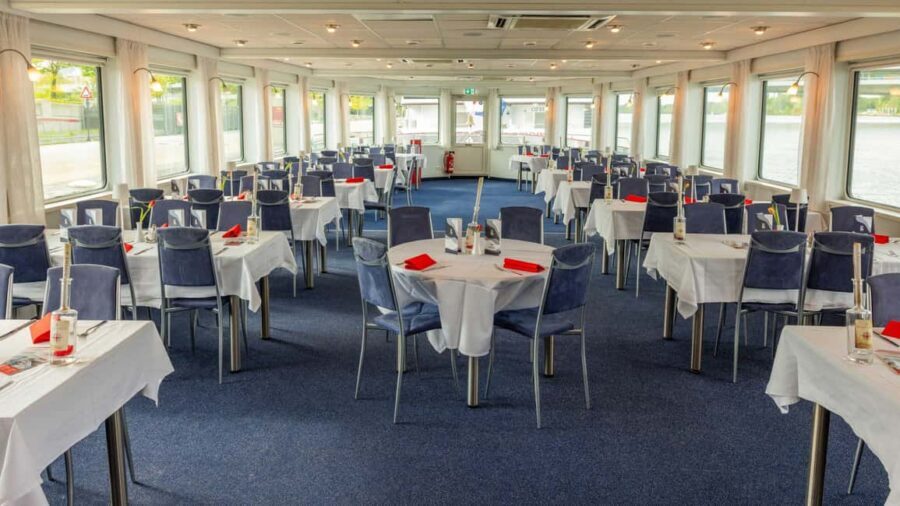
The boat has both an indoor cabin and an open upper deck. There is a bar on board where you can grab drinks and light snacks. The vibe is more relaxed and casual than the evening cruise — fewer dressed-up couples, more families and solo travelers just enjoying the scenery. One honest note: a few visitors have mentioned that the riverside scenery outside the city center section is not the most dramatic. The best views come at the beginning and end of the route, near the historic areas.
This works well as a mid-afternoon break between museum visits. Pair it with a morning at Schonbrunn Palace and you have a solid day.
3. Vienna: Sunday Brunch Danube Cruise with Live Music — $78
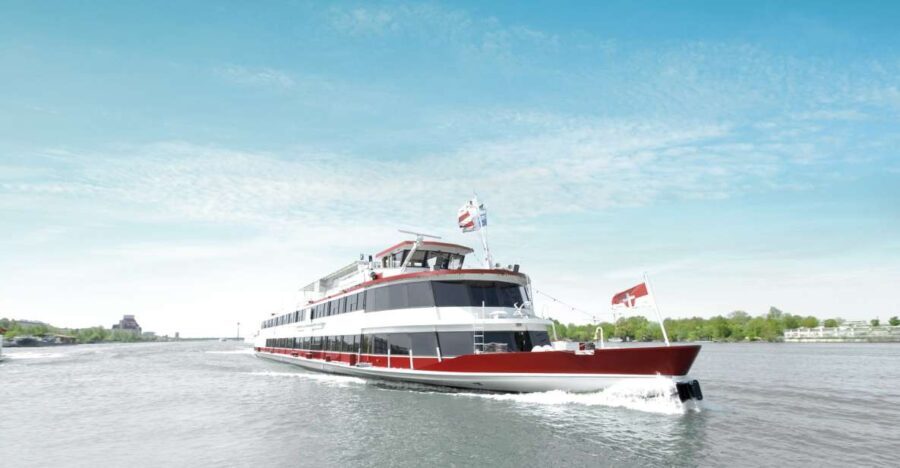
This is the splurge option, and it earns it. A Sunday morning cruise with a brunch buffet and live music playing while you float past Vienna’s waterfront. At $78 per person, you are paying for the full experience — food, entertainment, and the cruise itself. It only runs on Sundays, which limits availability, so book ahead if your trip includes a Sunday.
The brunch spread includes both sweet and savory options. A few guests have noted the selection is decent but not elaborate — expect croissants, pancakes, cold cuts, and fresh fruit rather than a five-star hotel breakfast. The live music makes up for it. There is something about jazz drifting over the water on a lazy Sunday that just works, especially if you have nowhere else to be.
This pairs perfectly with an afternoon spent at a classical concert later in the day. Brunch on the water, then Mozart in the evening — that is a proper Viennese Sunday.
4. Vienna: Retro Boat Tour with Picnic — $176 per group
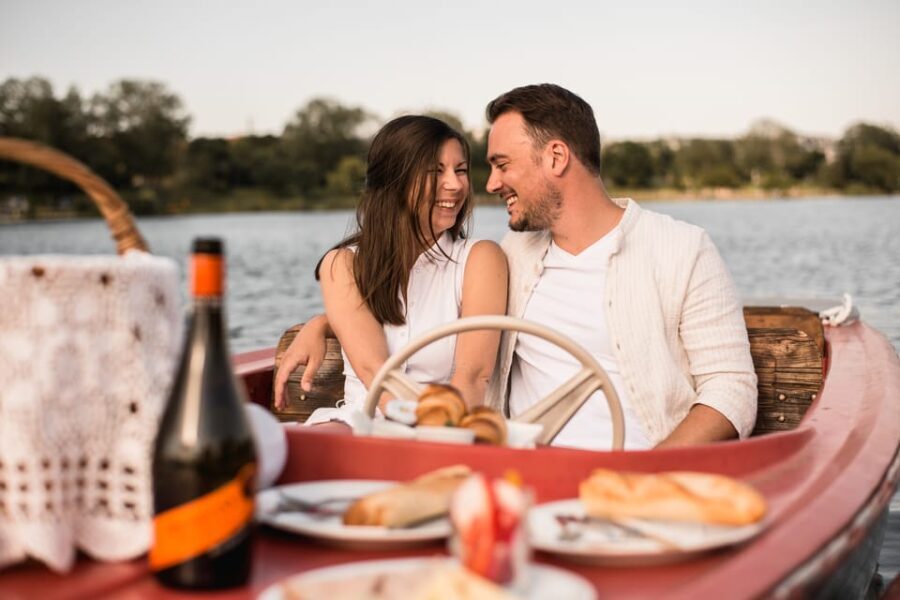
This is the most unique option on the list and the one that surprised me the most. Instead of a big commercial cruise ship, you board a small retro-style boat for a private experience. The $176 is per group (up to four people), not per person, which makes it $44 each if you fill the boat. That is actually cheaper per person than the brunch cruise.
The package includes a gourmet picnic basket prepared fresh on the day. The owner meets you personally at the dock, walks you through the route, and sends you off with everything you need. The boat cruises the Old Danube (Alte Donau), which is the calm backwater arm of the river — no current, no big ships, just you and the water and the Vienna skyline in the distance.
This is ideal for couples, small families, or anyone who finds the idea of a 200-person cruise ship unappealing. The trade-off is that it does not run on a fixed schedule — you book a time slot directly, and availability is limited. Reserve at least a few days in advance.
When to Take a Danube Cruise in Vienna
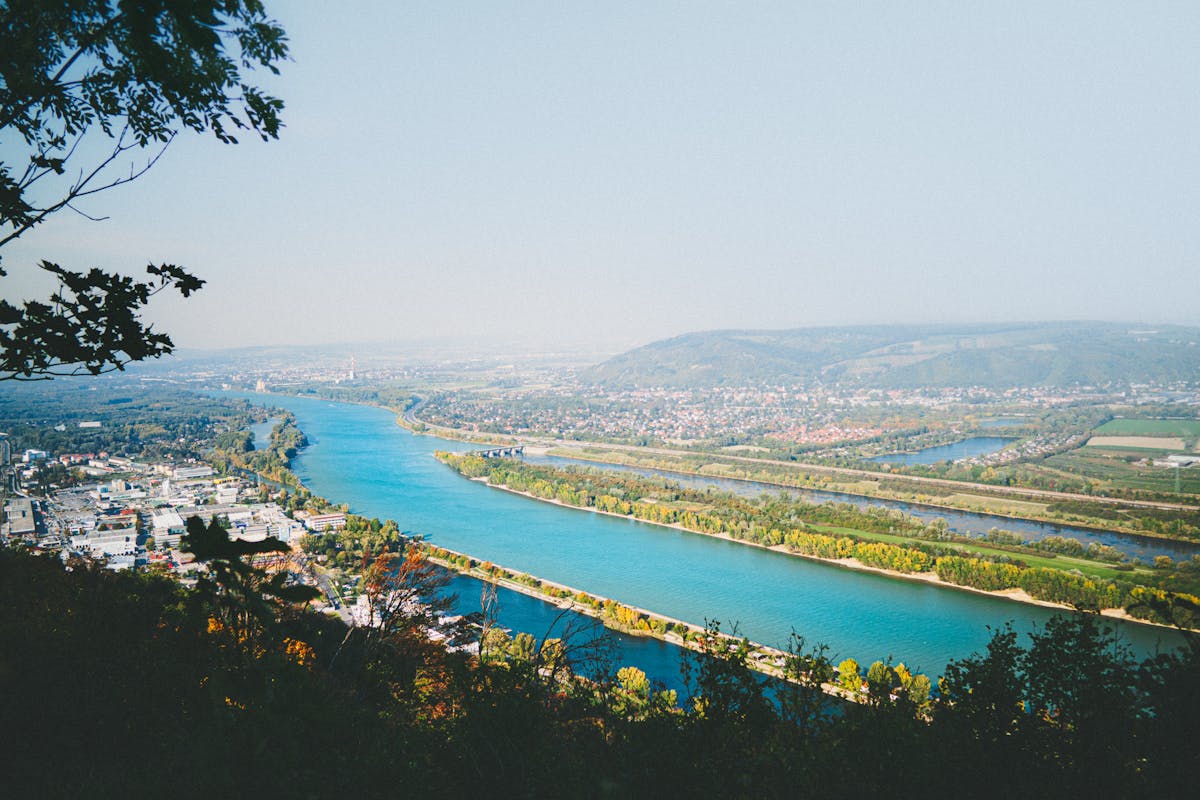
Best months: May, June, September, and October. The weather is warm enough to sit on the upper deck without freezing, but the tourist crowds have not reached their July-August peak. September and October add autumn foliage along the riverbanks, which makes the whole route more scenic.
July and August are the busiest months. Evening cruises sell out days in advance, and the boats are packed. If you are visiting in high summer, book at least a week ahead for evening departures. Daytime cruises are easier to get last-minute even in peak season.
Winter cruises run on a reduced schedule (usually just a few departures per week). The experience is different — cold, dark, and surprisingly atmospheric. The Christmas market season (late November through December) adds a festive twist, and some operators run special Advent cruises with mulled wine.
Time of day matters more than month. Evening departures around 5-6 PM in summer give you the best combination of daylight views and sunset. Morning cruises are quieter and less crowded. The midday slots are the least atmospheric — harsh light, full sun, not great for photos.
How to Get to the Cruise Departure Points
Most cruises depart from one of two locations:
Schwedenplatz / Handelskai — This is the main hub for DDSG Blue Danube and most of the big operators. Take the U1 or U4 metro to Schwedenplatz station, and the docks are a two-minute walk along the canal. You will see the ticket kiosks and the boats from the station exit.
Alte Donau (Old Danube) — The retro boat tours and some private charters depart from the quieter Old Danube area. Take the U1 to Alte Donau station. The walk from the station to the docks depends on the specific operator, but it is usually five to ten minutes.
Reichsbrucke / Handelskai — Some of the larger river cruises (especially the full-day Wachau Valley trips) depart from the main Danube docks near Reichsbrucke. The U1 stops at Vorgartenstrasse or Donauinsel, both within walking distance.
A Vienna City Card or day pass for the Wiener Linien public transport covers all the metro lines you need to reach any departure point. Taxis from the city center to Schwedenplatz cost about five to eight euros and take ten minutes.
Tips That Will Save You Time and Money
Sit on the right side. When departing from Schwedenplatz heading downstream, the right side of the boat (starboard) faces the old town. On the return trip, switch to the left. The upper deck is better than the lower cabin for views, but it gets cold after sunset even in summer — bring a light jacket.
Do not buy onboard food if you are on a tight budget. The panorama and evening cruises let you bring your own drinks and snacks. Pick up a bottle of Austrian wine and some cheese from a Billa supermarket before boarding. The evening cruise onboard restaurant is reasonably priced, but you are not obligated to eat there.
The Vienna Pass includes some cruises. If you are doing heavy sightseeing, the Vienna Pass covers certain DDSG Blue Danube routes at no extra charge. Check which routes are included before buying a separate cruise ticket — you might already be covered.
Avoid the Danube Island side unless you want party vibes. The Donauinsel (Danube Island) is Vienna’s summer party strip. Cruises that route past it are noisier and more crowded on warm weekends. If you want peaceful scenery, the Alte Donau and upper canal routes are better.
Combine it with another experience. A morning cruise pairs well with an afternoon at Schonbrunn Palace, and an evening cruise sets you up perfectly for the Spanish Riding School morning exercises the next day. Planning two Vienna activities around a cruise makes the most of your transit time.
What You Will See from the Water
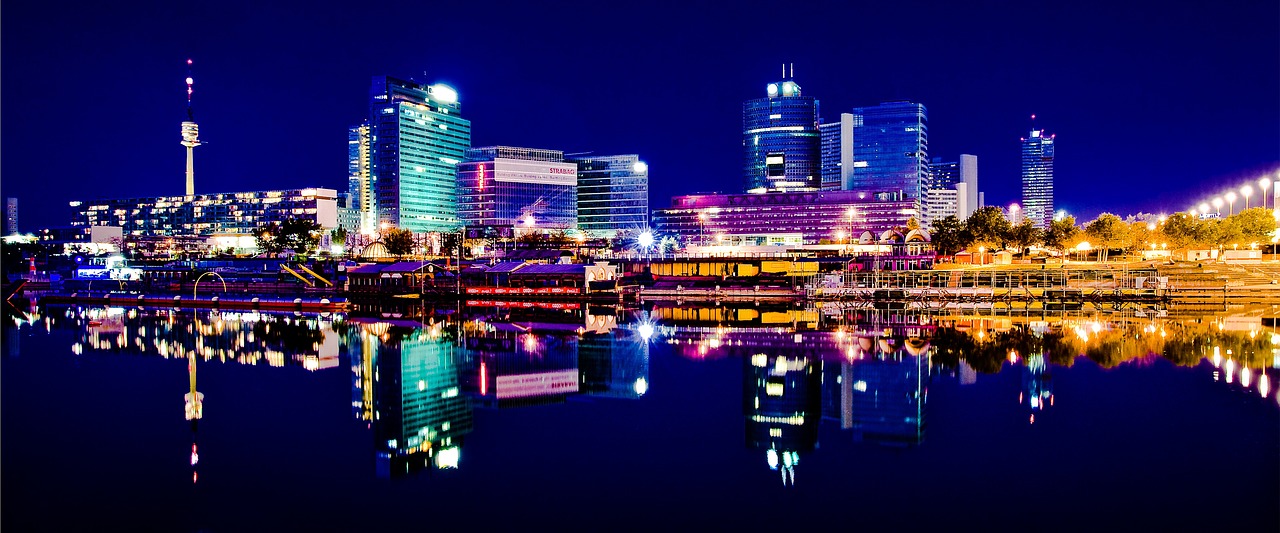
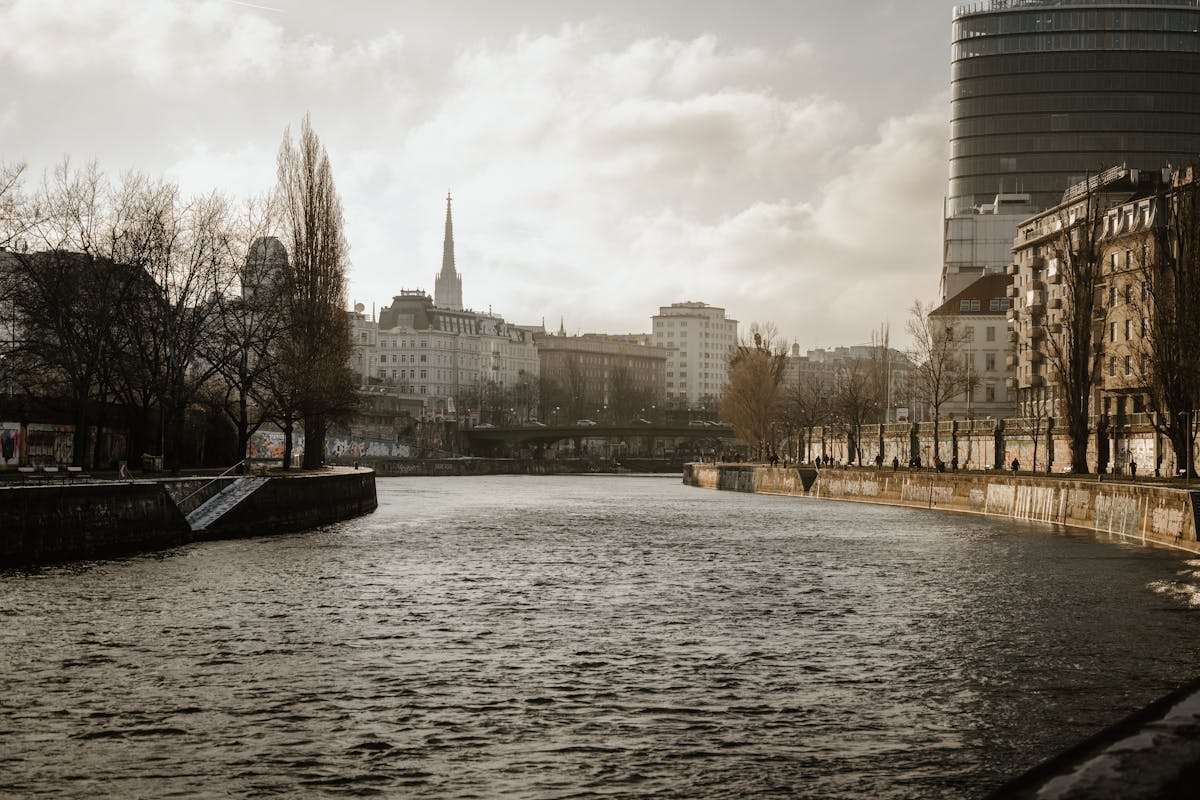
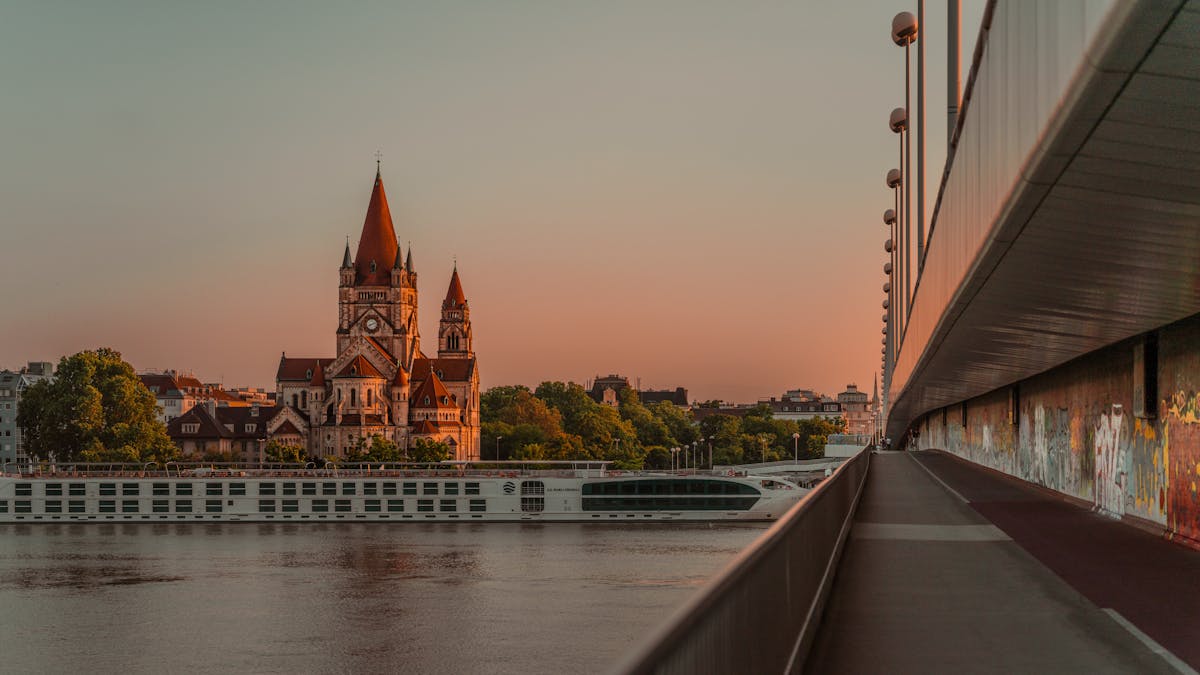
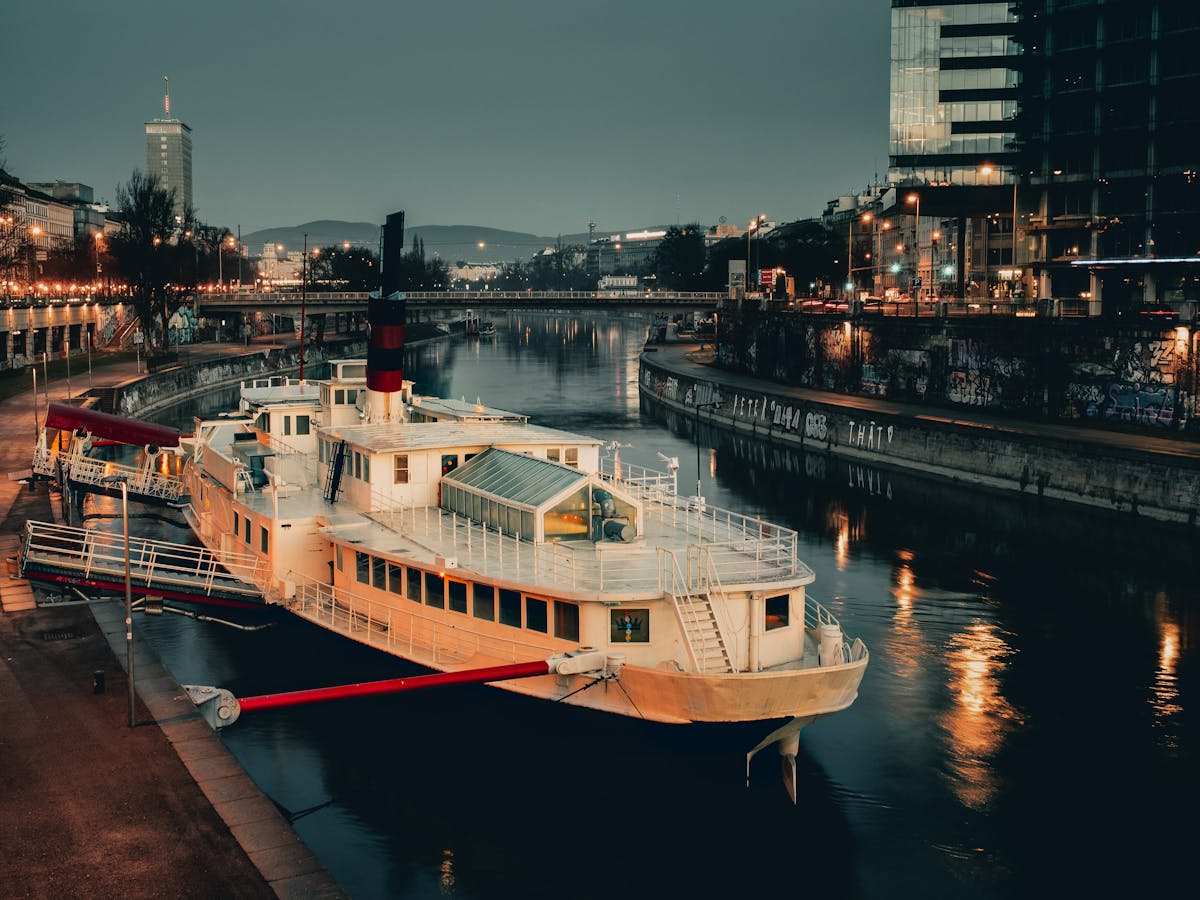
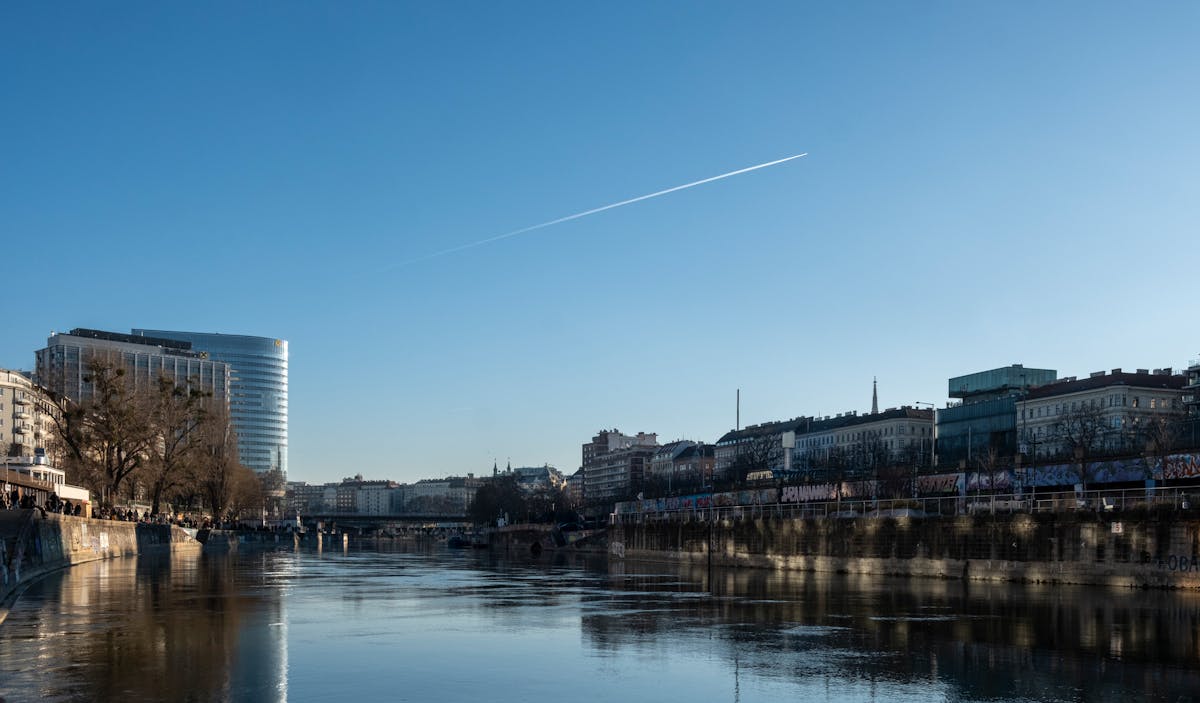
The canal routes pass through the most architecturally interesting stretch of Vienna’s waterfront. You will see the Urania observatory (that distinctive green-domed building at the canal bend), the Ringturm tower, the graffiti-covered walls of the Donaukanal street art scene, and depending on the route, the distinctive onion domes of the St. Francis of Assisi Church (Mexikokirche) that dominate the riverfront skyline.
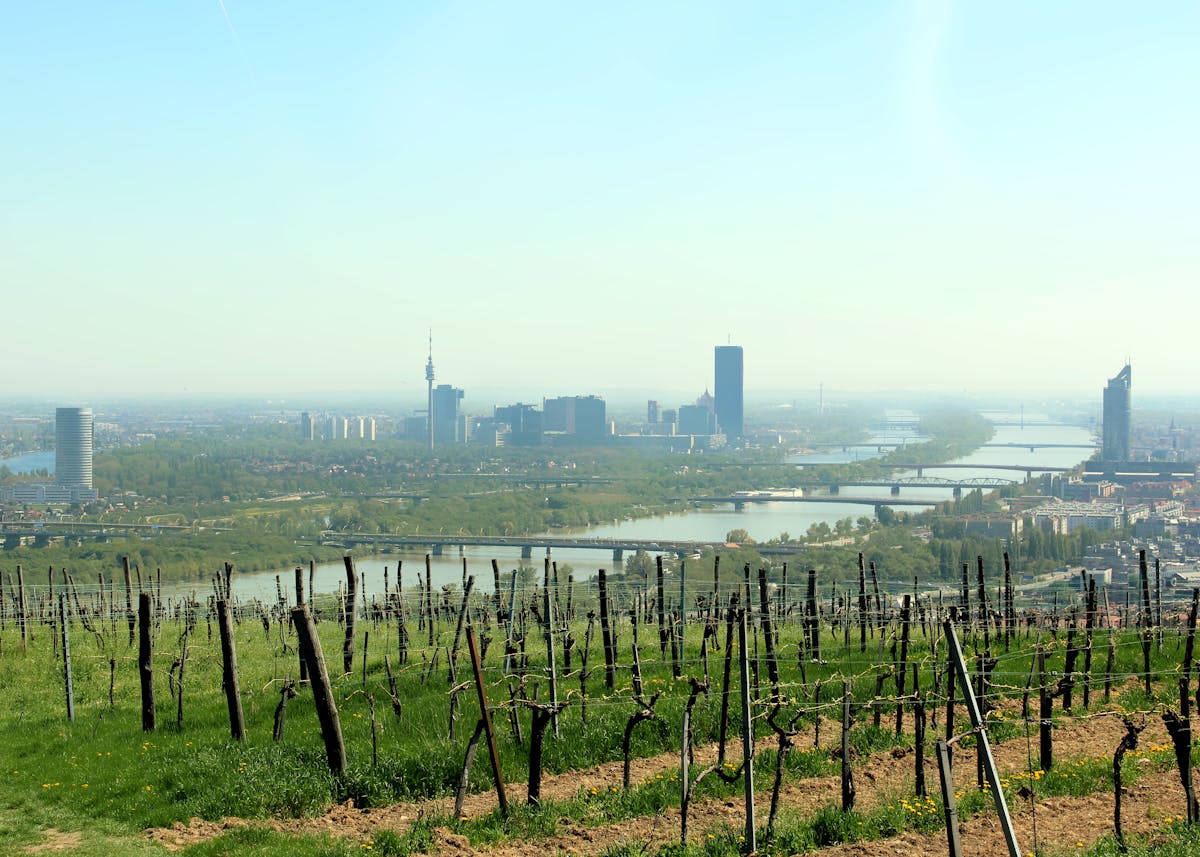
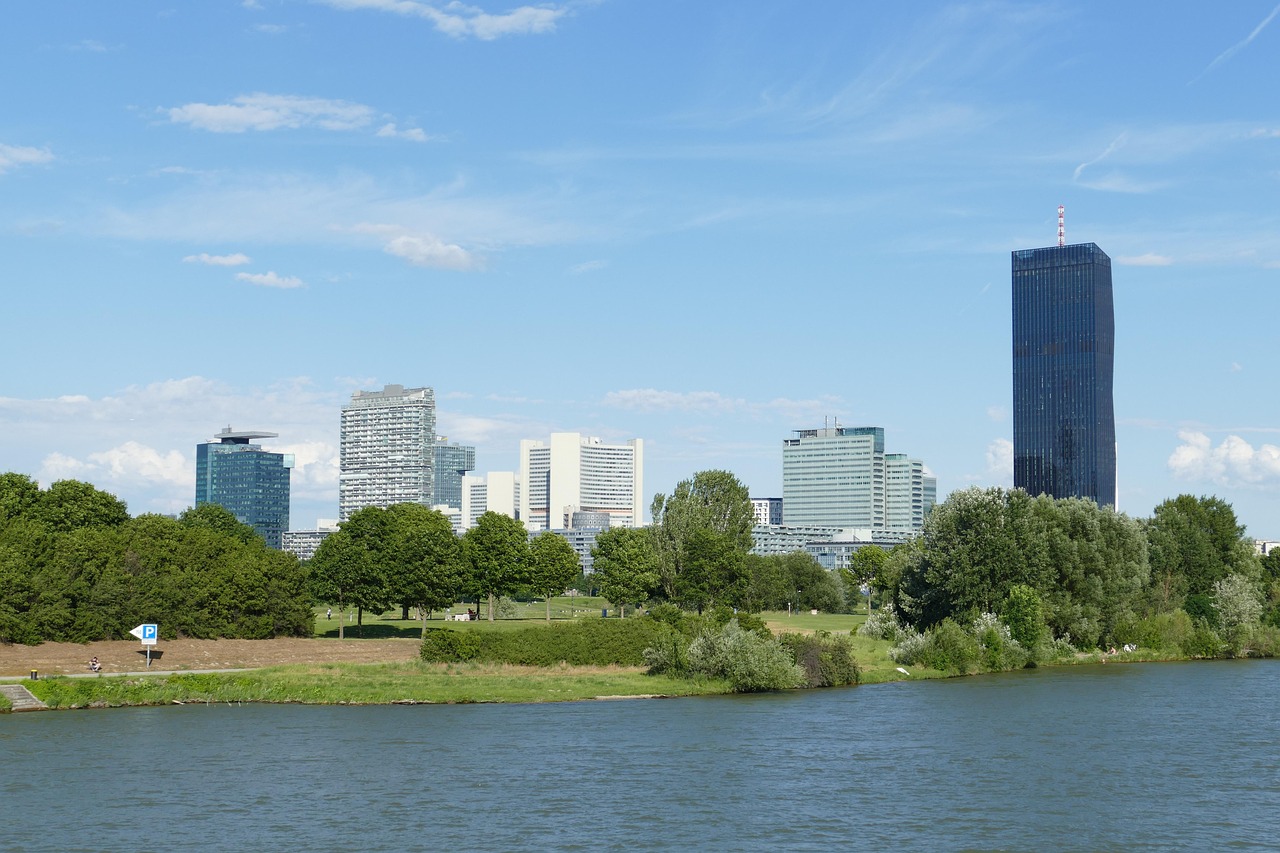
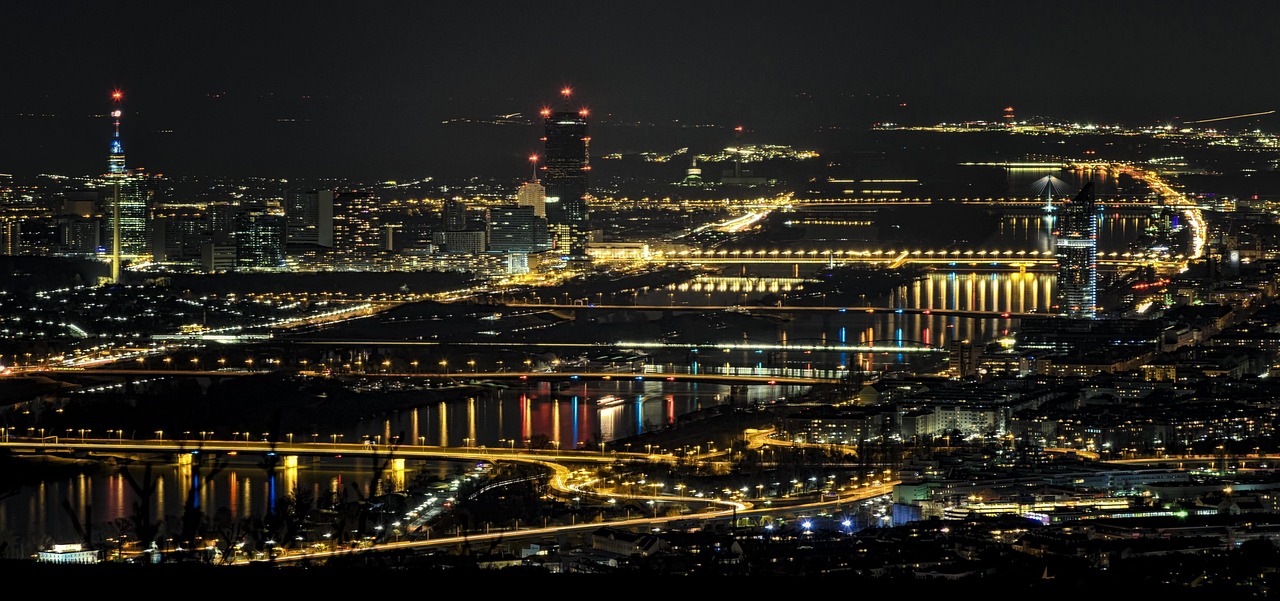
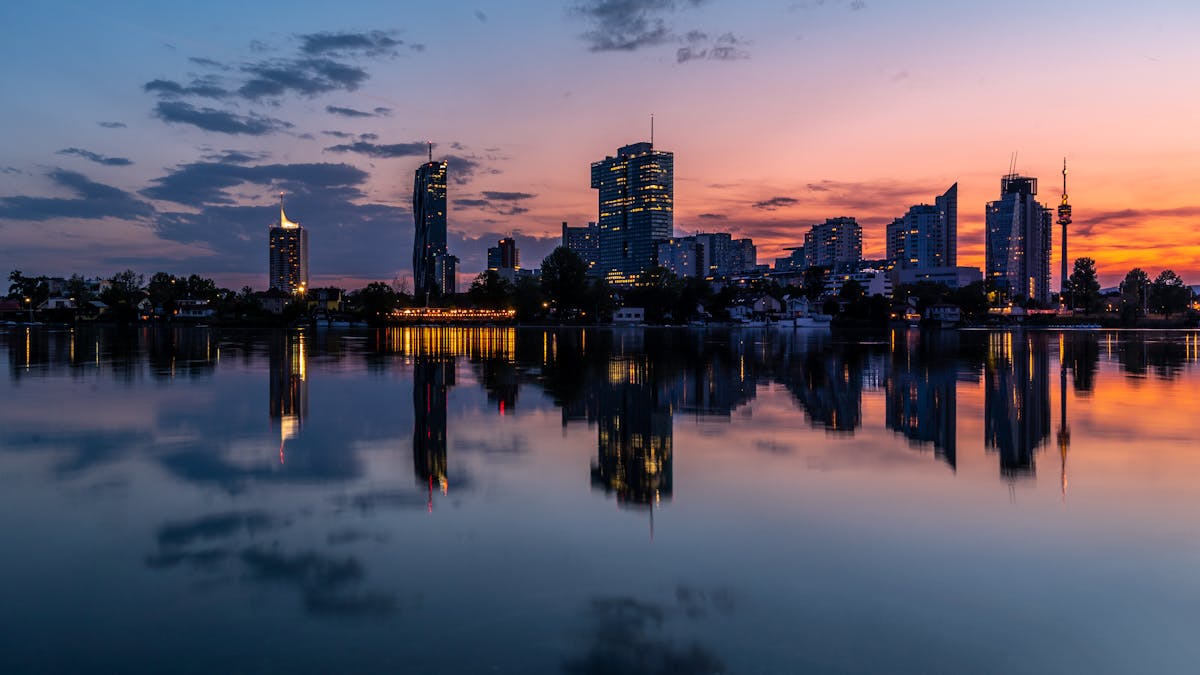
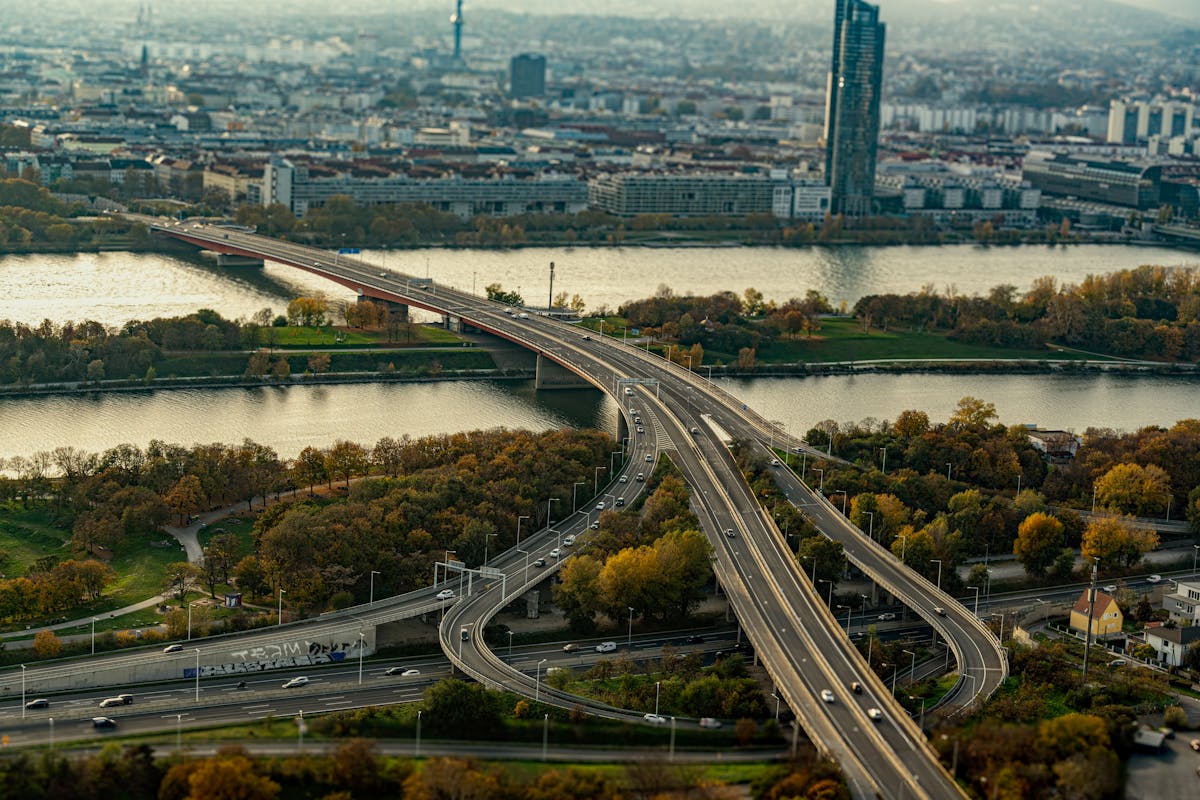
On the main Danube routes, the scenery shifts to the modern side of Vienna. The DC Tower and the UNO City complex look impressive from the water, and on clear days you can see the Vienna Woods ridgeline in the distance. The Millennium Tower is another landmark that stands out from the river perspective.
The longer Wachau Valley day trips take you completely outside the city into wine country. You pass medieval villages, ruined castles perched on hilltops, and terraced vineyards dropping down to the water. The highlight for most people is Melk Abbey, a massive baroque monastery visible from the river for miles before you reach it. If you have a full day to spare, that trip is genuinely spectacular, though it is a different experience entirely from the city cruises.
More Vienna Guides
If the Danube is taking up your evening, your daytime is wide open. A walking tour through the old town is the best way to get your bearings, especially on your first day. Schonbrunn Palace is the headline act and deserves at least half a day, while the Spanish Riding School offers one of Vienna’s most unusual experiences if you can score morning exercise tickets. The Belvedere has Klimt’s The Kiss and is a good pairing with a cruise since it sits near the canal, and the Hofburg and Sisi Museum gives you the full Habsburg winter residence story.
For a full-day orientation, the hop-on hop-off bus loops past everything from the Prater to Schonbrunn. For an evening without a cruise, classical concert tickets are the obvious swap — performances run nightly. And a food tour through the Naschmarkt is a solid lunch option that doubles as cultural education.
Outside Vienna, Hallstatt makes a long but rewarding day trip. And if you are heading west, the Salzburg salt mines, Sound of Music tour, and Eagle’s Nest each fill a day from Salzburg.