
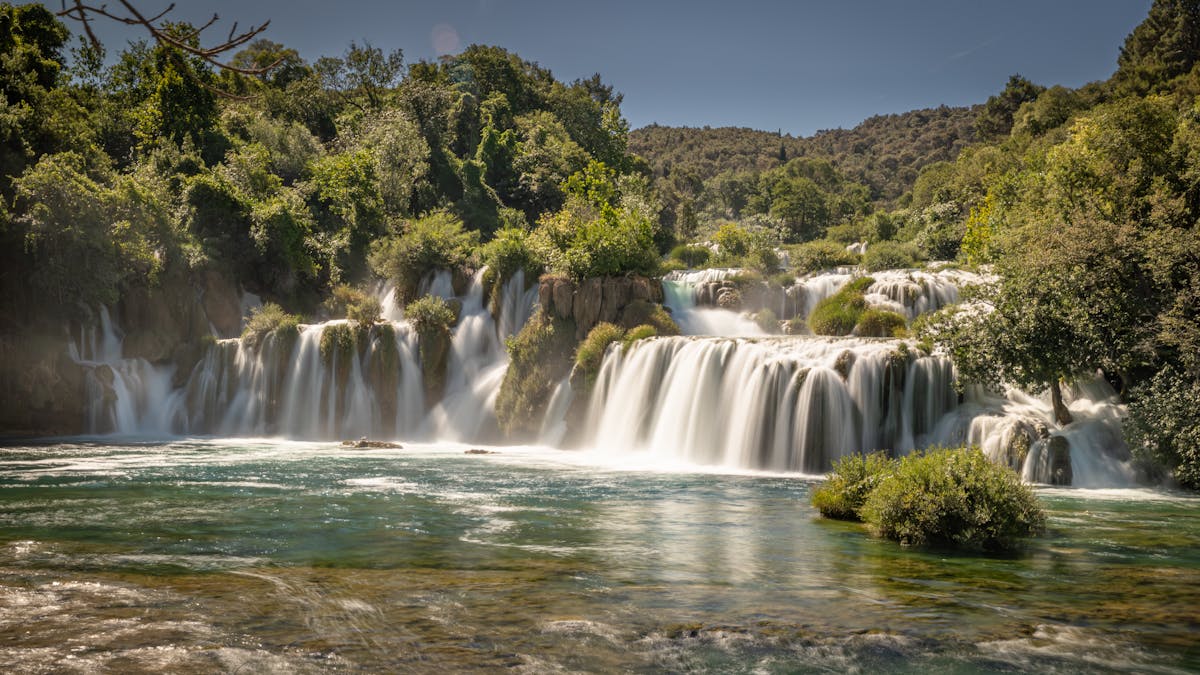
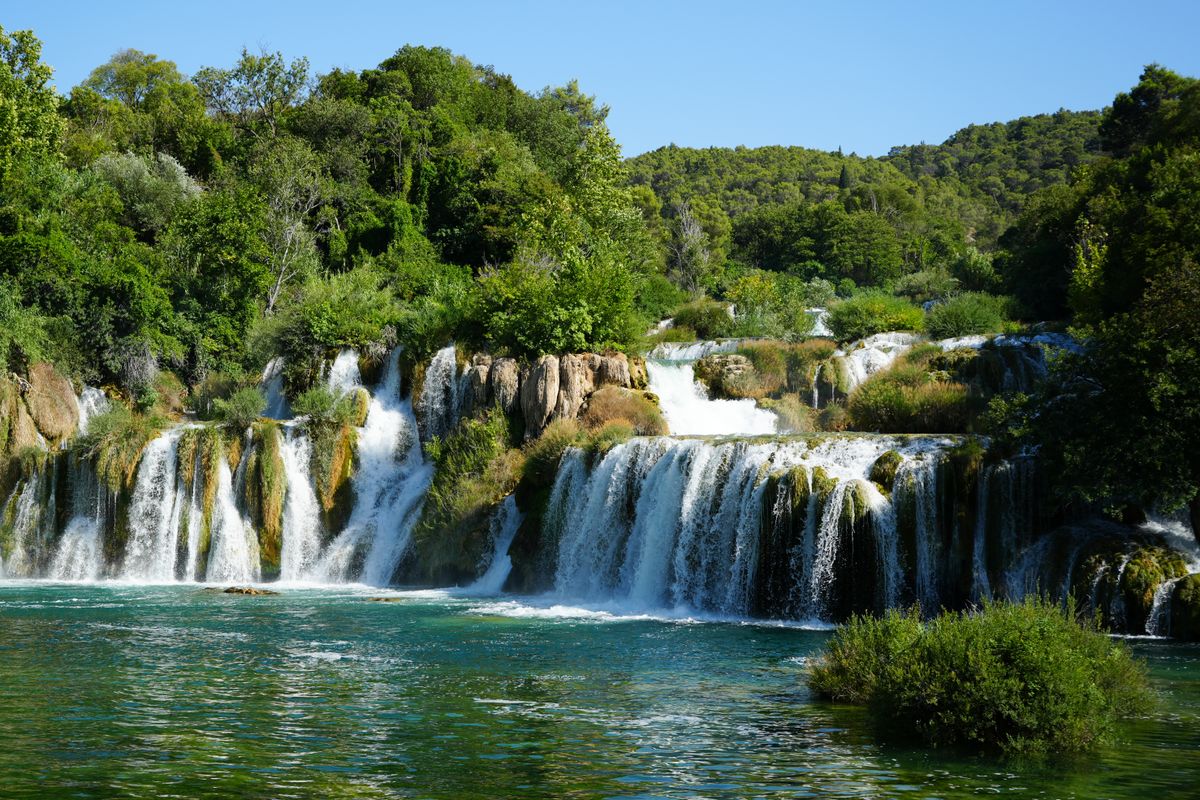
Krka National Park is one of those places that looks Photoshopped until you see it in person. An hour’s drive north of Split, the Krka River drops through a series of travertine waterfalls surrounded by dense forest, creating natural pools of impossibly turquoise water that have been attracting visitors since the park was established in 1985.
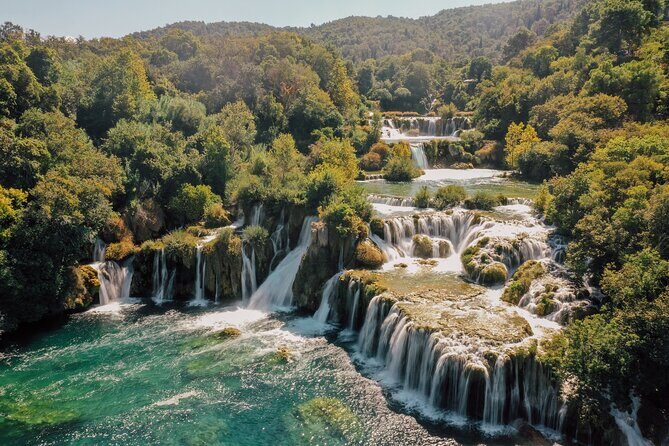
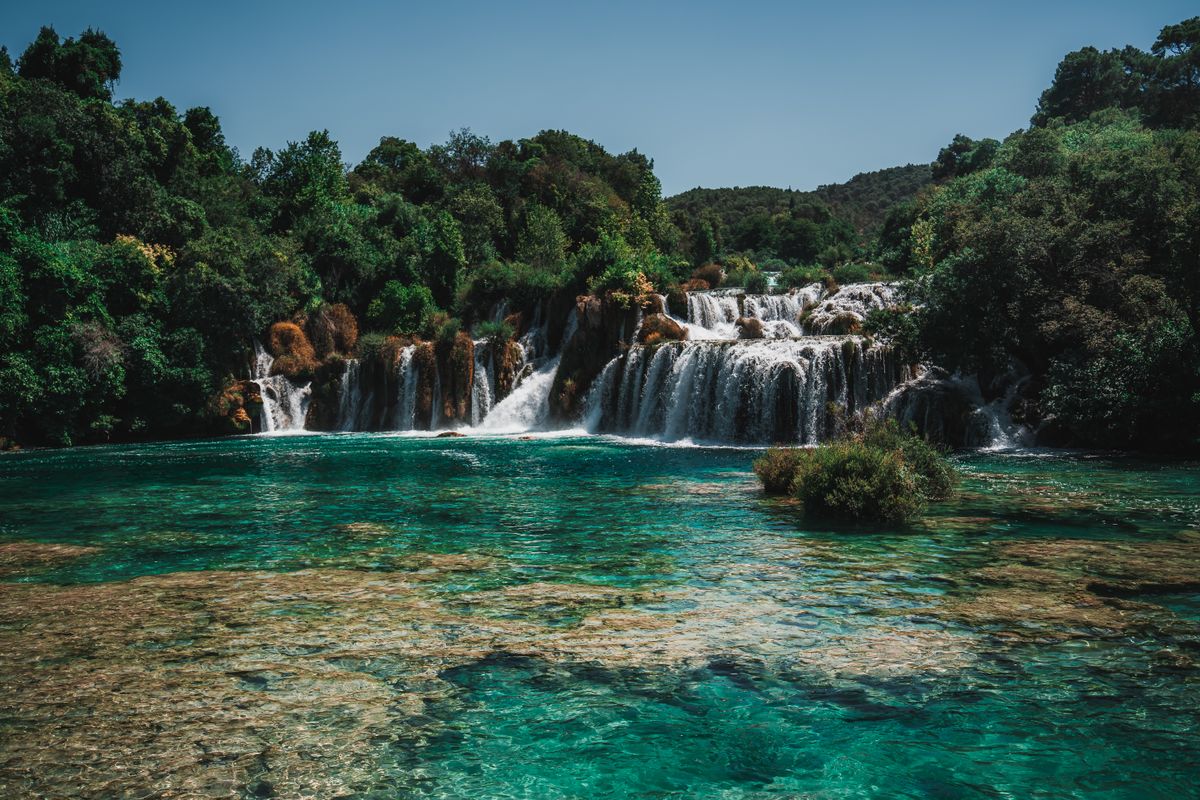
The star attraction is Skradinski Buk — a 17-step cascade spanning 400 metres of the river, ending in a wide natural pool that was once open for swimming (more on that below). Boardwalks wind through the falls, giving you eye-level views of water thundering over moss-covered limestone. It’s Croatia’s answer to Plitvice Lakes, but closer to the coast and easier to reach from Split.

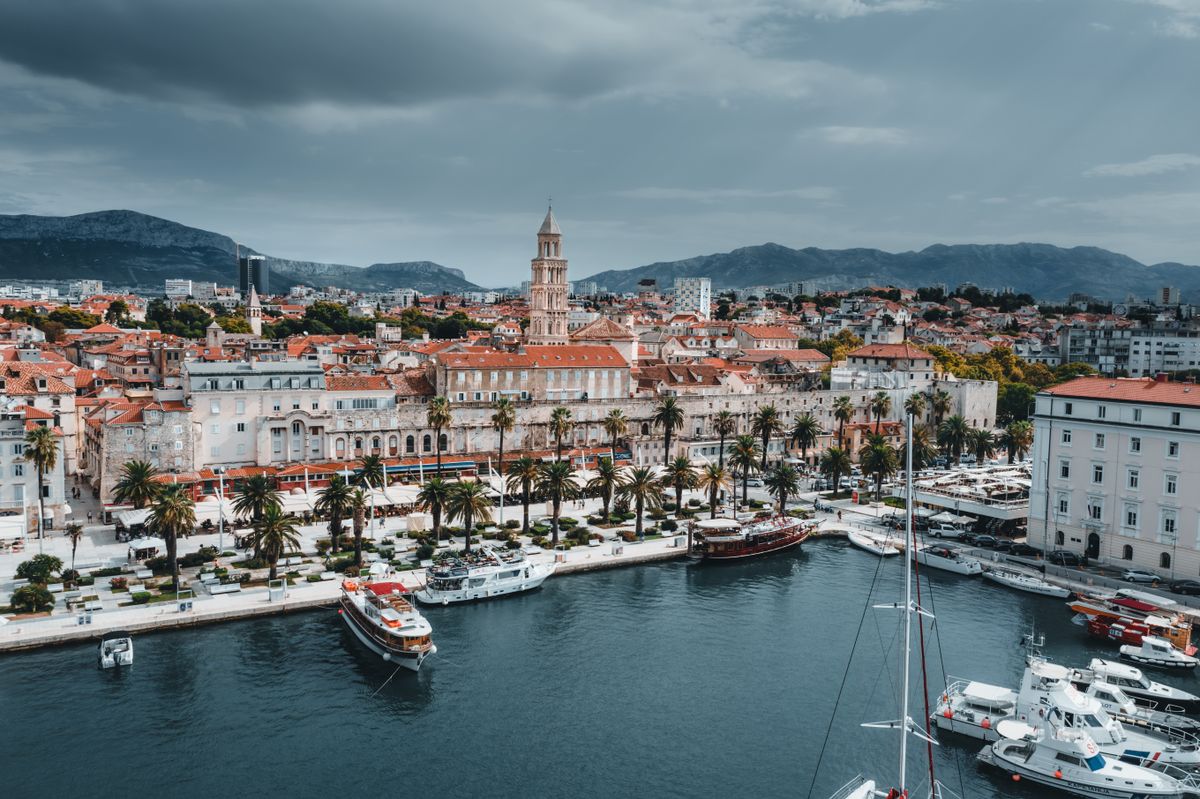
I’ve compared the most popular Krka day tours from Split. Most include a scenic boat cruise on the river, and some add wine tasting, the medieval town of Trogir, or extra time in the charming harbour town of Skradin. Here are the best options, plus everything you need to know about visiting.
Short on time? Here’s what to book:
Best overall: Krka Waterfalls, Food & Wine Tasting Tour — €46. Full day with the waterfalls, a boat cruise, traditional lunch, and Croatian wine tasting. The complete experience.
Best value: Krka Waterfalls Tour, Boat Cruise & Swimming — €33. Waterfalls plus a river boat cruise and swimming stop. Everything essential at an unbeatable price.
Best with Trogir: Krka Waterfalls with Trogir Walking Tour — €48. Combines the waterfalls with a guided walk through Trogir’s UNESCO-listed old town. Two highlights in one day.
- A Brief History of Krka National Park
- What to Know Before Visiting Krka
- Swimming is no longer allowed at Skradinski Buk
- The boat cruise is a highlight, not filler
- It’s a full day, but not exhausting
- Summer is crowded but spectacular
- The Best Krka Waterfalls Tours from Split
- 1. Krka Waterfalls, Food & Wine Tasting Tour — €46
- 2. Krka Waterfalls Tour, Boat Cruise & Swimming — €33
- 3. Krka Waterfalls Day Tour with Boat Ride from Split & Trogir — €33
- 4. Krka Waterfalls Tour from Split with Boat Ride & Swimming — €30
- 5. Krka Waterfalls with Trogir Walking Tour & Panoramic Boat Cruise — €48
- Can You Visit Krka on Your Own from Split?
- Tips for Getting the Most Out of Your Visit
- What else to see near Krka
- Krka vs Plitvice: which should you visit?
- When to Go
- Frequently Asked Questions
- Can you still swim at Krka Waterfalls?
- How does Krka compare to Plitvice Lakes?
- Is Krka suitable for children?
- Is the park entrance fee included in tour prices?
- How much walking is involved?
A Brief History of Krka National Park

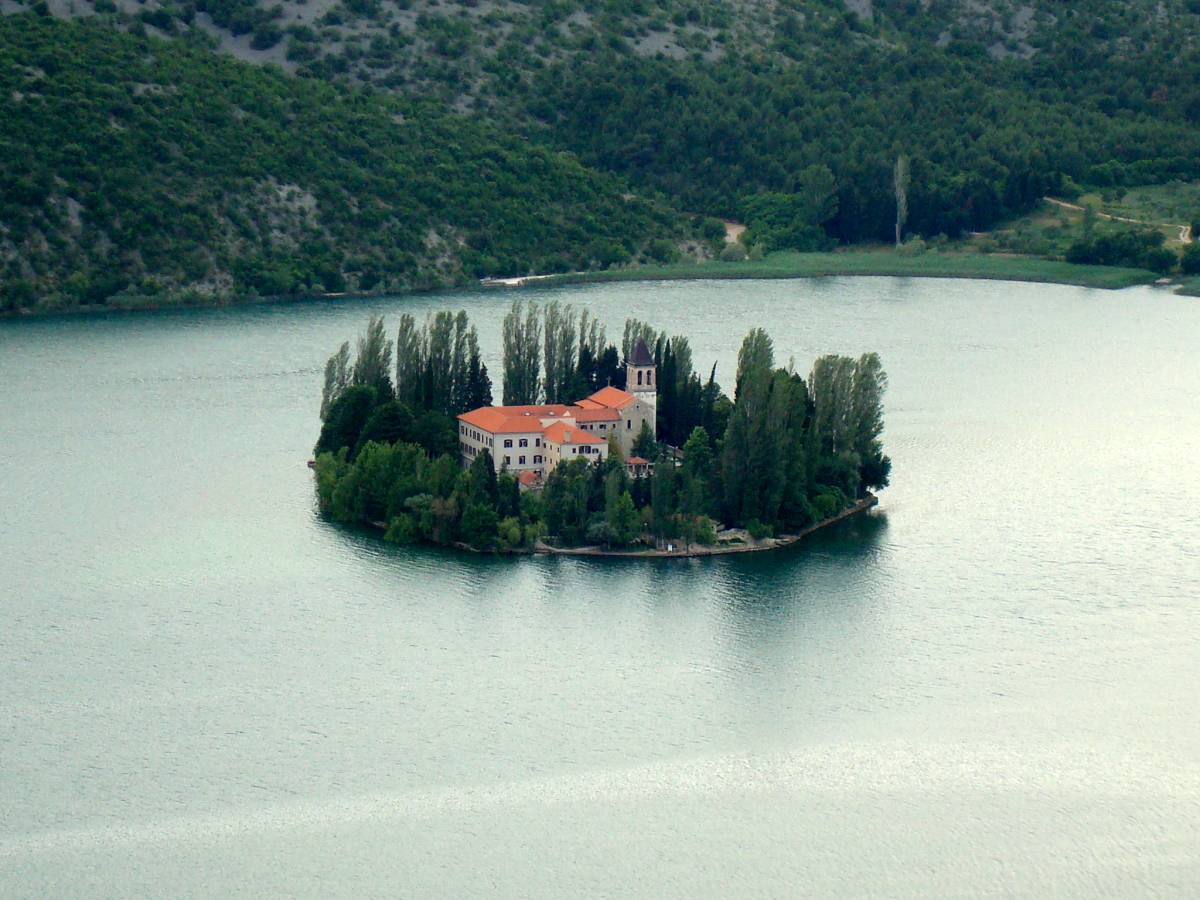
The Krka River has been central to Dalmatian life for thousands of years. Roman settlements dotted its banks, medieval Croatian kings built fortresses overlooking its canyon, and Franciscan monks established a monastery on the island of Visovac in the middle of the river in 1445 — it’s still there, still functioning, and you can visit it on some tours.
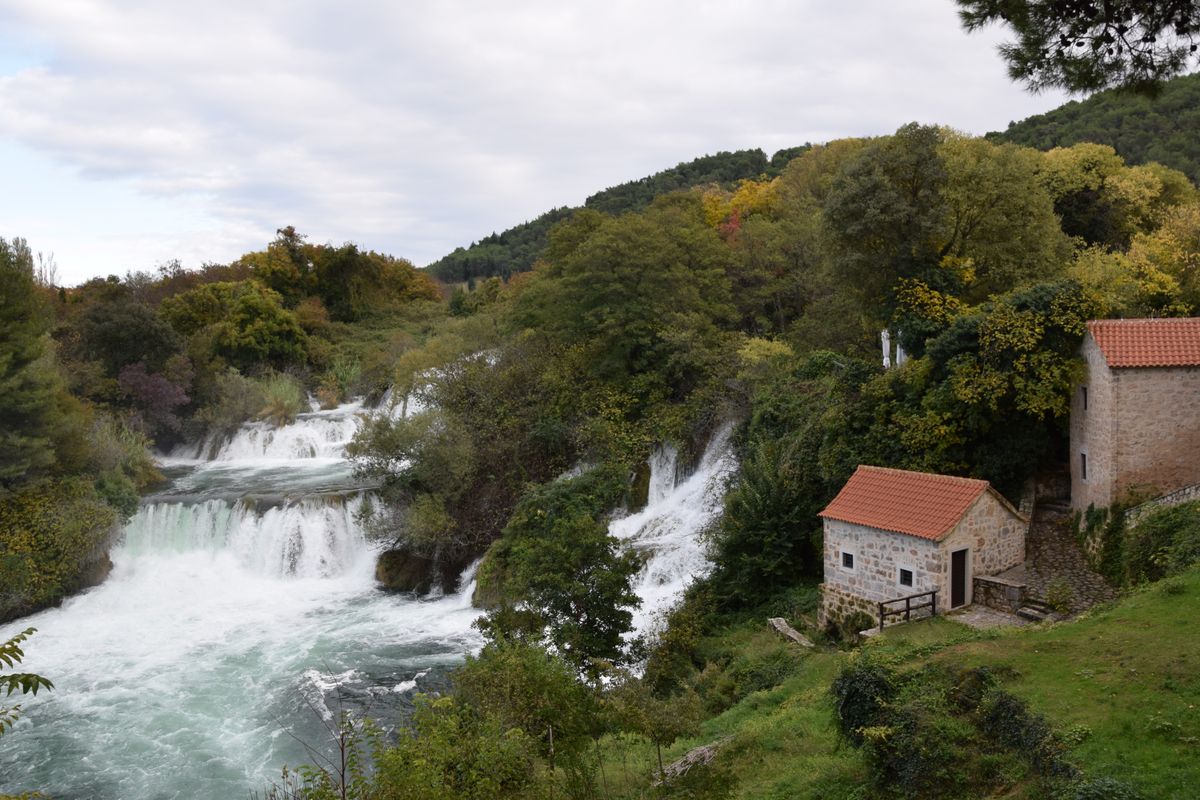
But the most remarkable piece of Krka’s history involves electricity. In 1895, a hydroelectric power plant was built at Skradinski Buk — just two days after Nikola Tesla’s famous plant at Niagara Falls began operating. The tiny Dalmatian city of Sibenik became one of the first cities in the world to have electric street lights, powered by the very waterfalls you’ll be photographing. The remains of the original plant can still be seen near the base of the falls.
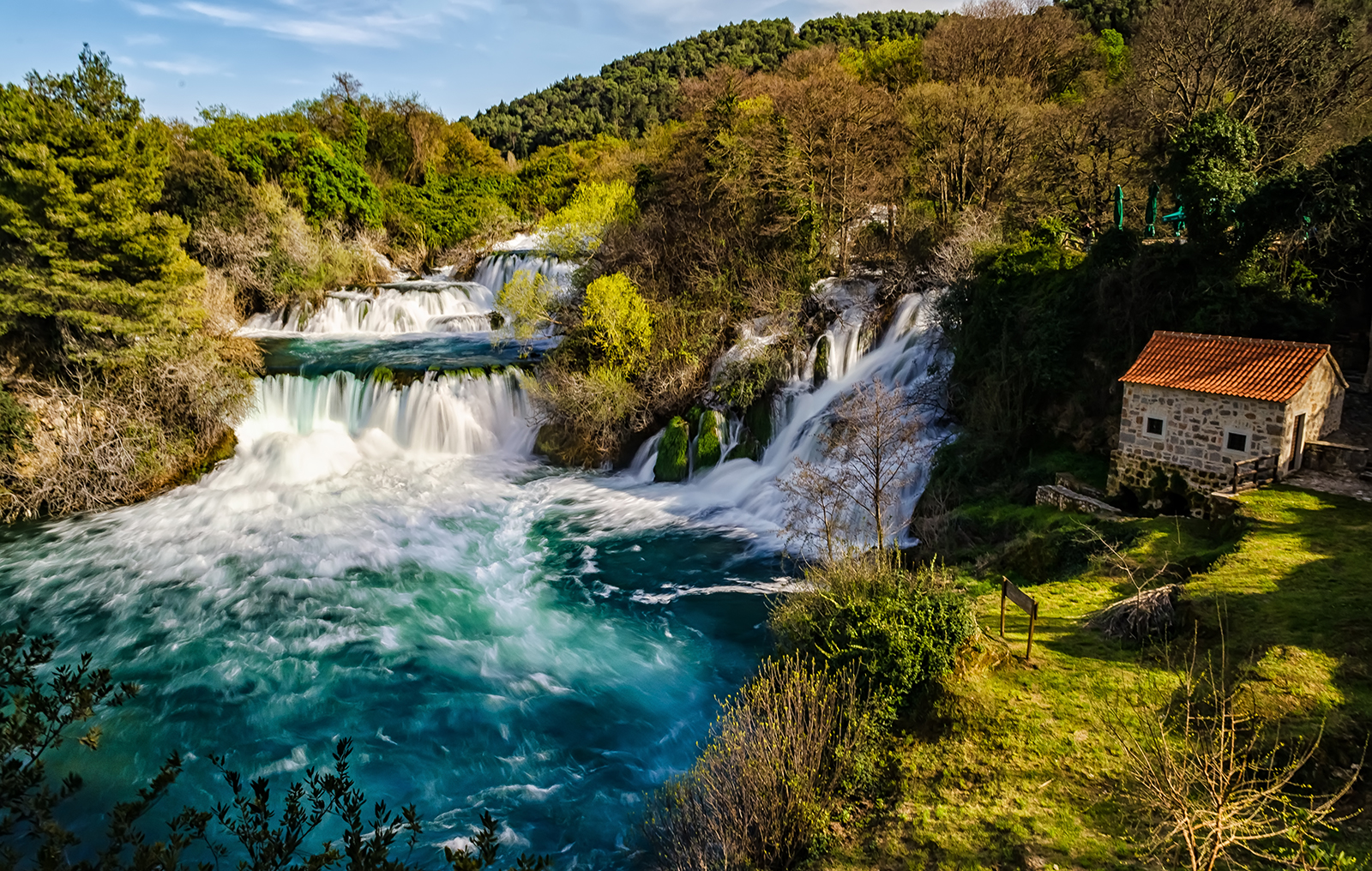
The park was formally established in 1985, protecting 109 square kilometres of river valley, canyon, and surrounding karst landscape. Seven major waterfalls exist along the Krka River, though Skradinski Buk is by far the most accessible and most visited. The park is home to over 860 plant species and 200 bird species — including nesting griffon vultures on the canyon walls.
The travertine formations that make Krka so photogenic are actually alive — they’re built by a combination of moss, algae, and bacteria that deposit calcium carbonate from the water, creating the stepped barriers that slow the river into cascades. This process adds about 1 to 3 centimetres of new travertine per year, meaning the landscape is literally still being built. It’s one of the reasons swimming was eventually banned at the main falls — thousands of feet daily were damaging formations that took decades to grow.
What to Know Before Visiting Krka

Swimming is no longer allowed at Skradinski Buk
The biggest change in recent years: swimming in the main waterfall pool at Skradinski Buk has been banned since 2021 to protect the fragile travertine formations. Some tours still advertise swimming, but this now refers to designated swimming spots elsewhere on the river or in Skradin harbour — not at the famous cascade pool. You can still walk right up to the water’s edge, just not get in.
The boat cruise is a highlight, not filler
Most tours include a boat cruise on the Krka River as part of the transport to the park. This isn’t just a shuttle — the river winds through a dramatic canyon with steep walls, passing old fortresses and monastery islands. Some tours cruise from Skradin to the falls, others take a different route. Either way, the boat portion is genuinely scenic.
It’s a full day, but not exhausting
Tours run 7 to 10 hours from Split. The drive is about an hour each way, the boat cruise adds 30-45 minutes, and you typically get 2-3 hours at the waterfalls themselves. The walking at Skradinski Buk is mostly on flat boardwalks — no hiking fitness required.
Summer is crowded but spectacular
July and August bring the biggest crowds and the warmest weather. The boardwalks can get congested around midday. Tours that arrive early (before 10 AM) or late afternoon have a noticeably better experience. Shoulder months — May, June, September — offer warm weather with significantly fewer visitors.
The Best Krka Waterfalls Tours from Split
1. Krka Waterfalls, Food & Wine Tasting Tour — €46
This is the tour that goes beyond the waterfalls. You get the full Skradinski Buk experience — boardwalk circuit, riverside views, photo stops at every angle — plus a traditional Croatian lunch with wine tasting at a local estate in the Krka valley. The food is homemade Dalmatian cuisine: grilled meats, fresh salads, local cheeses, and bread baked that morning.
The wine tasting features Croatian varietals that most visitors have never encountered — Babic, Plavac Mali, Posip — from a family vineyard in the Skradin hills. It’s a genuine cultural addition that turns this from a nature tour to a proper Dalmatian day out. At €46 including lunch and wine, the value is outstanding.
Duration: 10 hours | Departure: Split, early morning
2. Krka Waterfalls Tour, Boat Cruise & Swimming — €33
The best-value Krka tour on the market. At €33 you get transport from Split, a scenic boat cruise on the Krka River, the full Skradinski Buk boardwalk experience, and a swimming stop (at a designated area, not the main falls). The boat cruise from Skradin through the river canyon is genuinely spectacular — vertical cliffs, dense vegetation, and water so clear you can see the bottom five metres down.
This tour strips away the extras (no wine, no lunch) and focuses on the main event: the waterfalls and the river. If the waterfalls are all you’re after and you’d rather save money for dinner in Split, this is the smart choice. Bring your own snacks and a swimsuit.
Duration: 10 hours | Departure: Split, early morning
3. Krka Waterfalls Day Tour with Boat Ride from Split & Trogir — €33
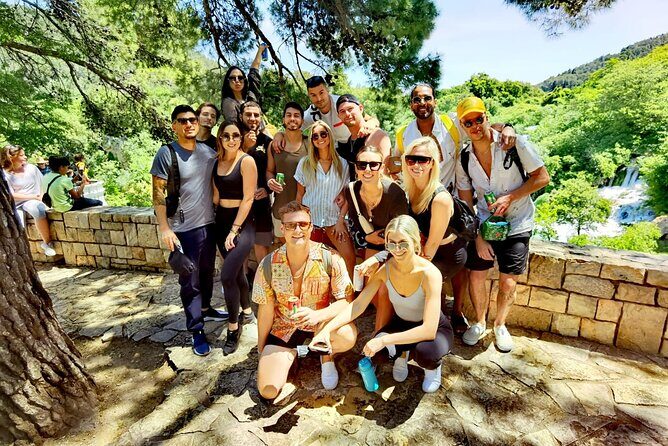
A well-organized alternative that picks up from both Split and Trogir. The itinerary covers the Skradinski Buk waterfalls with a boat ride component, giving you the core Krka experience at a competitive price. The dual pickup makes it particularly convenient if you’re based in Trogir or anywhere along the coast road between the two cities.
The tour allocates a solid 2.5 hours at the park — enough to complete the full boardwalk loop, take photos from every angle, and still have time for a coffee at the riverside cafe. The boat ride through the canyon adds that scenic element that makes Krka tours special compared to simply driving to the park entrance.
Duration: 8.5 hours | Departure: Split or Trogir, morning
4. Krka Waterfalls Tour from Split with Boat Ride & Swimming — €30
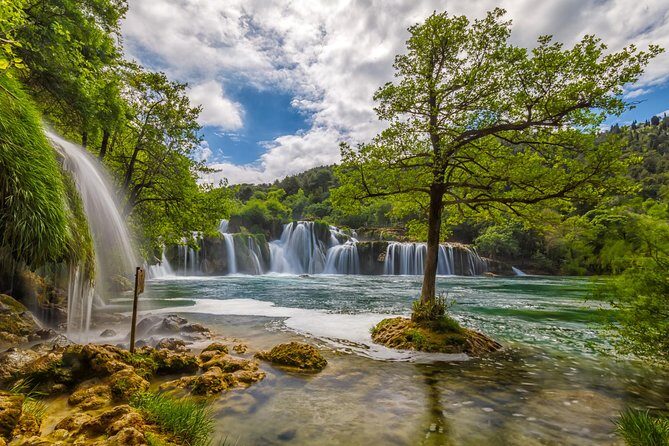
The budget option that still delivers. At €30 per person, this is the cheapest way to see Krka’s waterfalls on a guided tour from Split. The itinerary includes the Skradinski Buk boardwalk, a river boat ride, and a swimming stop. The tour is slightly shorter at 7.5 hours, which actually suits some visitors who want to be back in Split earlier for evening plans.
The shorter duration means a tighter schedule at the park, but you still get a good 2 hours at the waterfalls. Guides are knowledgeable about the park’s geology and history, and the smaller group size keeps things personal. If budget is the priority and you want the essentials without extras, this hits the mark.
Duration: 7.5 hours | Departure: Split, morning
5. Krka Waterfalls with Trogir Walking Tour & Panoramic Boat Cruise — €48
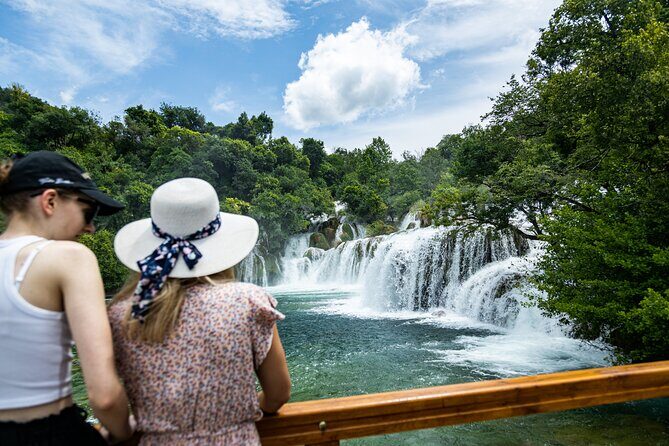
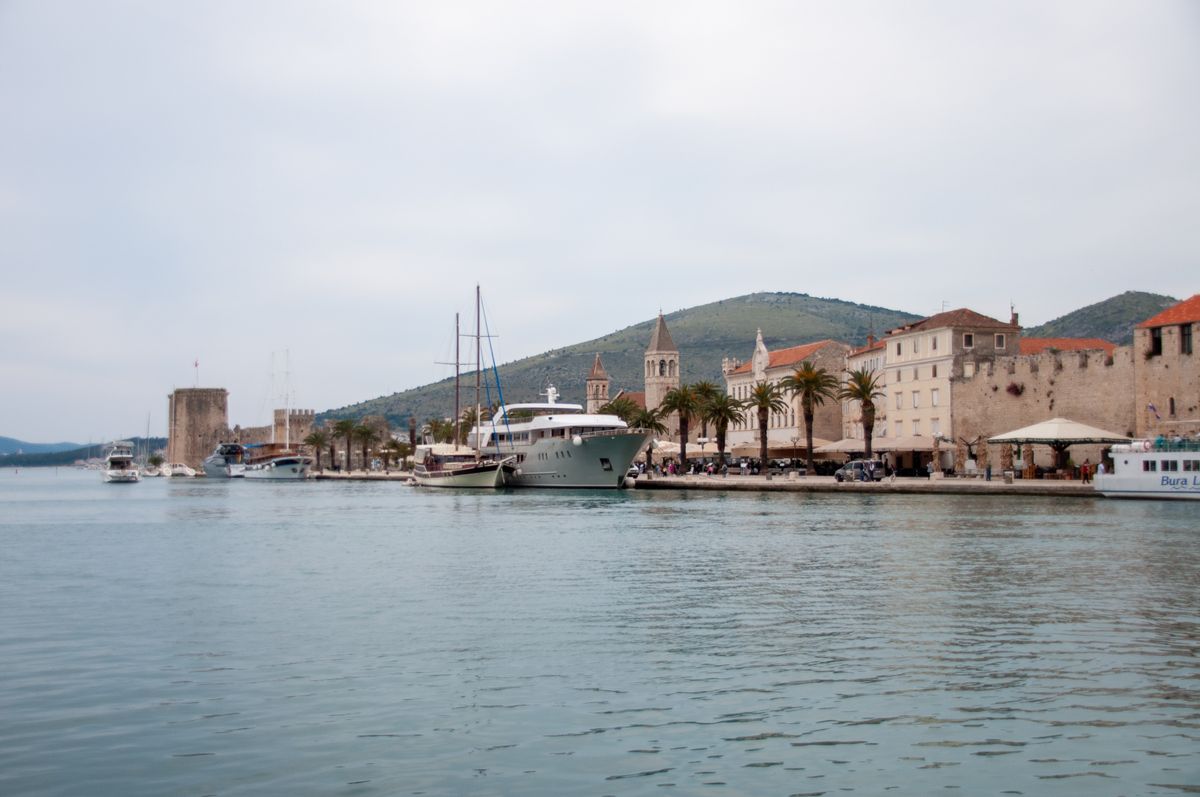
The two-in-one option for culture-seekers. This tour combines Krka’s waterfalls with a guided walking tour of Trogir, the perfectly preserved medieval island town just 30 minutes west of Split. Trogir’s old town is a UNESCO World Heritage Site — a stunning collection of Romanesque churches, Venetian palaces, and narrow stone alleys packed onto a tiny island connected to the mainland by a bridge.
The Krka portion includes a panoramic boat cruise — slightly different from the standard Skradin river cruise, offering higher-up views of the canyon. Your guide walks you through Trogir’s Cathedral of St. Lawrence, the Kamerlengo Fortress, and the main square with genuine historical depth. If you only have a few days in Split, combining these two attractions in one day is excellent time management.
Duration: 8.5 hours | Departure: Split, morning
Can You Visit Krka on Your Own from Split?
Absolutely, and it’s straightforward. Your options:
By car: About 1 hour 15 minutes from Split to the Skradin entrance. Park in Skradin (free lots fill early in summer, paid lots available), then take the free park boat to Skradinski Buk. National park entrance is around €30 in peak season, €20 in shoulder months.
By bus: Regular buses from Split to Skradin (about 1.5 hours). From the bus stop, it’s a short walk to the boat dock. Less flexible than a car but entirely doable.
By rental boat from Skradin: If you want to explore the river independently, small boats can be rented in Skradin harbour.
A guided tour makes sense if you don’t have a car, want the boat cruise included, or want a guide to explain the geology and history. Independent visits give you more time at the park and flexibility to arrive early before the crowds.
Tips for Getting the Most Out of Your Visit

Arrive as early as possible. The boardwalks get crowded between 11 AM and 2 PM in summer. Tours that depart Split at 7-8 AM reach the park before the worst crowds. If visiting independently, aim to be at Skradin by 9 AM.
Walk the boardwalk loop counter-clockwise. Most visitors follow the main path clockwise. Going the opposite direction means you’ll hit the most photogenic viewpoints with fewer people blocking the view.
Bring water shoes if you plan to swim. The designated swimming areas have rocky bottoms. A pair of water shoes makes the experience much more comfortable than bare feet on stones.
Don’t forget sunscreen and a hat. The boardwalks are partially exposed and the Dalmatian sun in summer is fierce. The mist from the falls provides some relief, but the walk between viewpoints can be hot.

Eat in Skradin, not the park. The riverside restaurants in Skradin town serve excellent Dalmatian food at reasonable prices. The options inside the park are limited and overpriced. If your tour doesn’t include lunch, budget time for a meal in Skradin.
What else to see near Krka
Skradin: This tiny harbour town at the park entrance is worth more than a toilet stop. The waterfront restaurants serve excellent seafood and Dalmatian grilled meats, and the old stone streets have a quiet charm that Split’s tourist centre lacks. If you have time, a coffee on the harbour wall with views up the Krka canyon is a perfect bookend to your visit.

Sibenik: Croatia’s most underrated coastal city, just 15 minutes from the park. The Cathedral of St. James is a UNESCO World Heritage Site and the only European cathedral built entirely from stone — no bricks, no wood in the structure. Most Krka tours bypass Sibenik, but it’s worth adding to your itinerary if you’re visiting independently.
Visovac Island: A tiny island in the middle of Krka Lake with a Franciscan monastery dating to 1445. Some tours include a boat stop here. The monastery houses a collection of rare books, paintings, and archaeological artefacts. The approach by boat — crossing the still lake with the monastery emerging from the trees — is one of the most serene moments you’ll experience in Croatia.

Krka vs Plitvice: which should you visit?
This is Croatia’s eternal debate. Both are travertine waterfall parks, both are absolutely stunning, and both deserve your time. But if you have to choose:
Choose Krka if: you’re based in Split, want a shorter day trip (1 hour vs 3+ hours to Plitvice), enjoy boat cruises, and value proximity to the coast.
Choose Plitvice if: you want more variety (16 cascading lakes vs one main waterfall), don’t mind a longer drive, and want a more immersive full-day hiking experience.
Choose both if: you have the time. Seriously, they’re different enough to justify separate visits. Krka is the quick hit of waterfall drama; Plitvice is the extended nature immersion.
When to Go
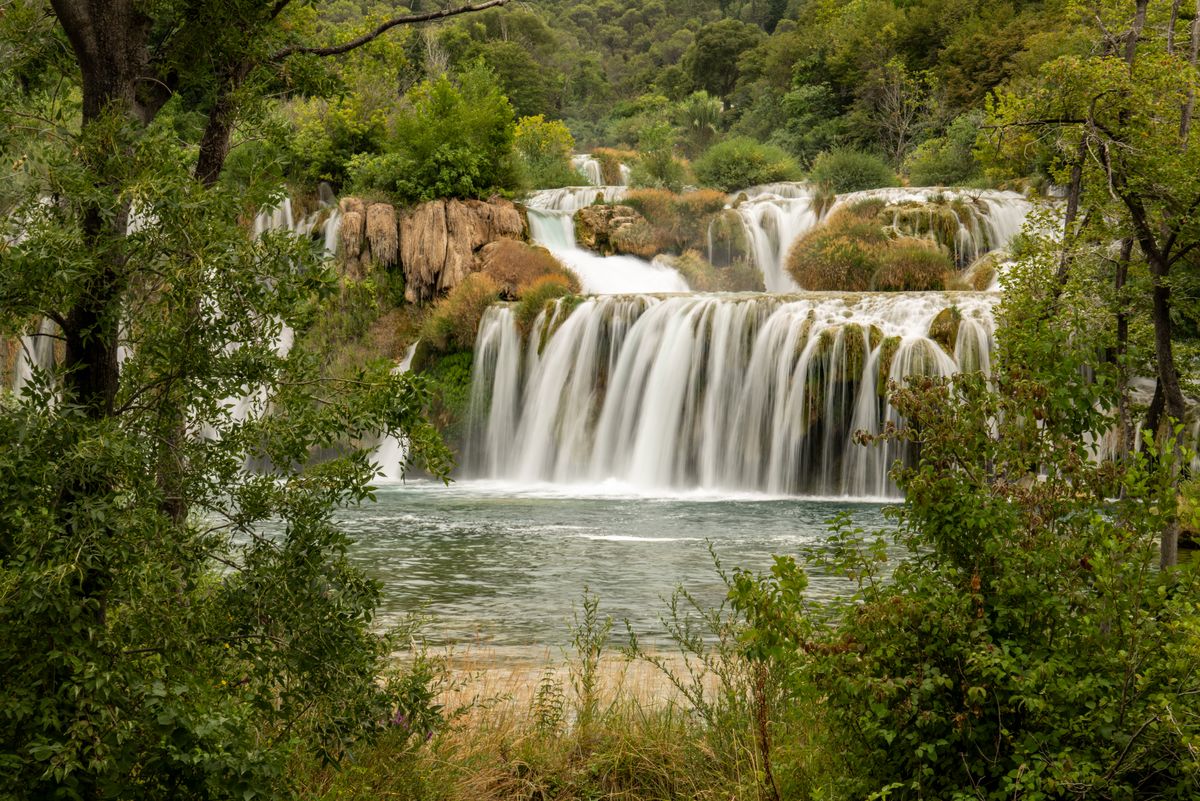
Best months: May and June for warm weather, manageable crowds, and the waterfalls at full flow from spring rainfall. September is equally good — warm, fewer travelers, and golden afternoon light.
Peak season: July and August. Hot, crowded, and park entrance fees are at their highest. The waterfalls are beautiful but the boardwalks can feel like a queue. If you must visit in peak season, go early or late.
Off-season: November through March. The park is open but some facilities close, the swimming areas are shut, and the weather can be cold and rainy. However, the waterfalls are at their most powerful after autumn rains, and you’ll have the boardwalks almost to yourself.
Frequently Asked Questions
Can you still swim at Krka Waterfalls?
Not at the main Skradinski Buk cascade — swimming there was banned in 2021 to protect the travertine. Some tours include swimming at designated areas on the Krka River or in Skradin harbour. Check the specific tour description for current swimming options.
How does Krka compare to Plitvice Lakes?
Both are stunning but different. Plitvice has more lakes and a wider variety of landscapes. Krka has one main cascade that’s arguably more dramatic, plus the river boat cruise that Plitvice doesn’t offer. Krka is closer to Split and the coast, making it the easier day trip from a beach holiday.
Is Krka suitable for children?
Yes, the boardwalks are flat and manageable for children. Pushchairs can navigate most of the main path. The boat cruise is exciting for kids, and the waterfalls themselves are endlessly fascinating. Bring snacks and water — the walk is longer than it looks to small legs.
Is the park entrance fee included in tour prices?
Yes, all tours listed here include the Krka National Park entrance fee in the ticket price. If visiting independently, check current prices on the park’s official website — they vary by season.
How much walking is involved?
The main Skradinski Buk boardwalk loop is about 2 kilometres and takes 1-1.5 hours at a comfortable pace with photo stops. The terrain is flat boardwalk throughout — no climbing or difficult sections.
Krka Waterfalls are just one of the spectacular day trips from Split. If you’ve covered the waterfalls, the island of Hvar offers lavender fields, Venetian architecture, and some of the best nightlife in Croatia. For something more dramatic, Plitvice Lakes is a longer drive but rewards you with 16 cascading lakes in a primeval forest. And if you’re heading south to Dubrovnik, the Blue Cave on Bisevo island is a natural wonder that glows electric blue on sunny mornings.