
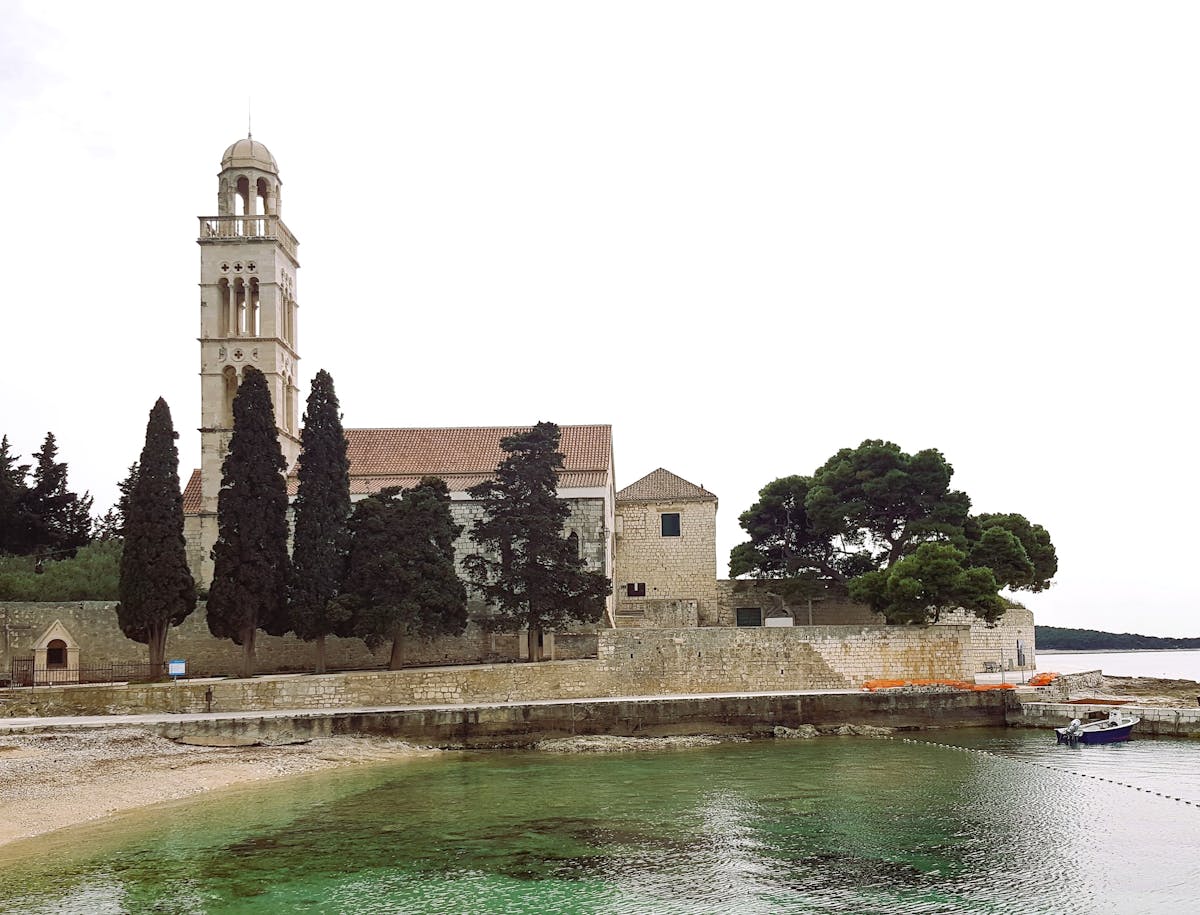
Hvar has been called the sunniest island in the Adriatic, and after spending a day here you’ll understand why everyone from Roman emperors to modern yacht owners has fought to claim a piece of it. Sitting about two hours by boat from Split, this long, narrow island combines lavender-scented hillsides, Venetian architecture, crystal-clear swimming coves, and a nightlife scene that’s earned it the nickname “the Croatian St-Tropez.”
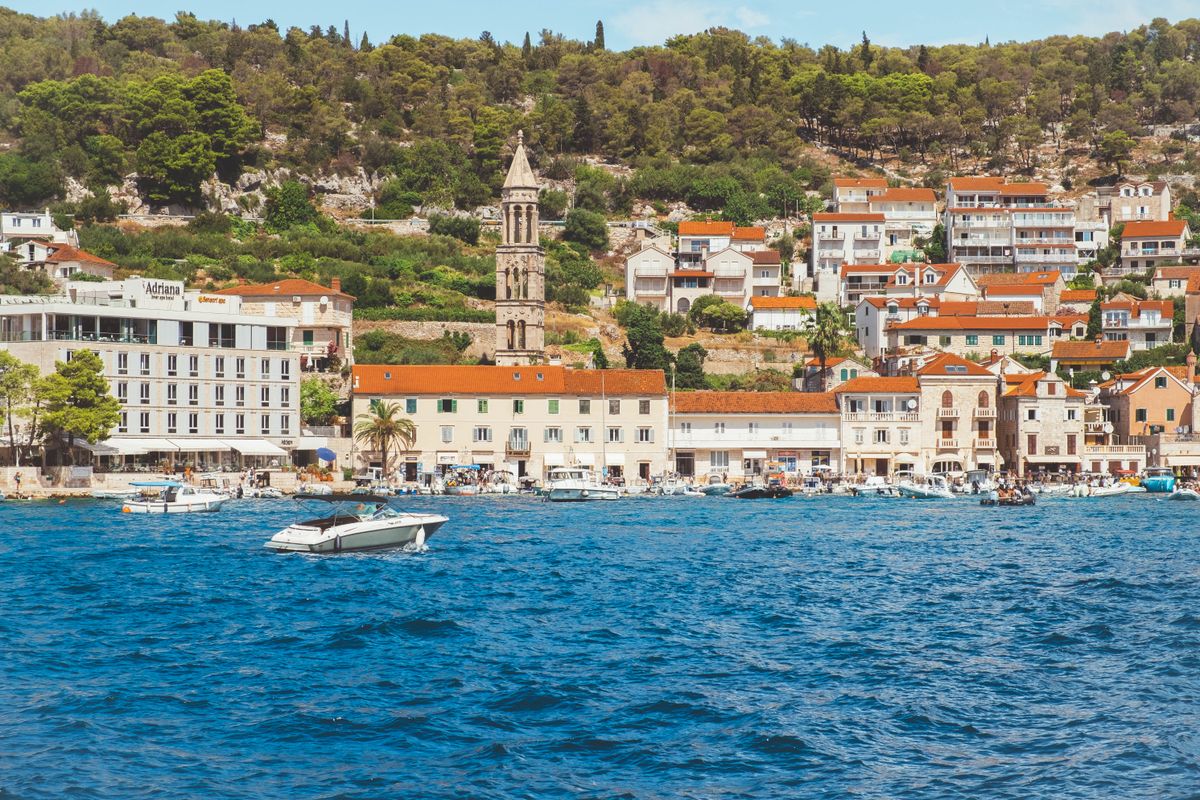
But Hvar isn’t just a pretty harbour. The island has 2,400 years of documented history, the oldest public theatre in Europe (built in 1612, before Shakespeare’s Globe), and the Stari Grad Plain — a UNESCO World Heritage Site where the ancient Greek agricultural land division system from 384 BC is still visible in the field patterns today. It’s the kind of place where you come for the swimming and stay for the stories.

I’ve compared the best ways to visit Hvar from Split, from multi-island speedboat adventures to relaxed catamaran cruises with lunch and drinks. Most tours combine Hvar with other islands — the Blue Cave, the Pakleni archipelago, or the town of Bol on Brac — turning a single day into an island-hopping odyssey across the central Dalmatian coast.
Short on time? Here’s what to book:
Best all-rounder: Blue Cave, Mamma Mia & Hvar 5 Islands Speedboat Tour — €111. Five islands in one day by speedboat, including the Blue Cave, Hvar Town, and the Mamma Mia filming location. The most popular island tour on the Dalmatian coast.
Best for relaxation: Hvar, Brac & Pakleni Islands Cruise with Lunch — €96. Traditional boat cruise with on-board lunch, drinks, and swimming stops. Slower pace, more time on each island.
Best premium: Catamaran Cruise to Hvar & Pakleni Islands — €120. Full-day catamaran with food, free drinks, and stops at Hvar’s best swimming coves. The most comfortable boat option.
- What to Know Before Visiting Hvar
- Hvar Town vs the rest of the island
- The Blue Cave is often part of Hvar tours
- Speedboat vs traditional boat — choose your style
- You’ll typically get 1-2 hours in Hvar Town
- The Best Hvar Island Tours from Split
- 1. Blue Cave, Mamma Mia & Hvar 5 Islands Speedboat Tour — €111
- 2. Hvar, Brac & Pakleni Islands Cruise with Lunch & Drinks — €96
- 3. Blue Cave, Mamma Mia & Hvar 5 Islands from Trogir — €111
- 4. Full-Day Catamaran Cruise to Hvar & Pakleni Islands — €120
- 5. Blue Cave & Vis Island Speedboat Tour from Hvar — €121
- Hvar Through the Ages: 2,400 Years of Island History
- Can You Visit Hvar Island Independently?
- What to Do with Your Time in Hvar Town
- When to Go
- Frequently Asked Questions
- How long is the ferry from Split to Hvar?
- Is one day enough to see Hvar?
- Is Hvar expensive?
- Can you swim at Hvar Town?
- What’s the Blue Cave and is it worth it?
What to Know Before Visiting Hvar

Hvar Town vs the rest of the island
Most tours stop in Hvar Town — the island’s main settlement and social hub. It’s gorgeous, but Hvar Town is only a fraction of the island. The rest of Hvar is rolling hills covered in lavender, rosemary, and olive groves, with hidden villages, abandoned stone settlements, and empty beaches that feel untouched. If you return independently, rent a scooter and explore the interior — it’s a completely different island.
The Blue Cave is often part of Hvar tours
The Blue Cave (Modra Spilja) on Bisevo island is a natural sea cave that glows electric blue when sunlight enters through an underwater opening. Many Hvar tours combine the island visit with a Blue Cave stop. This is brilliant value — you’d pay almost as much to visit the Blue Cave alone. The cave can only be entered in calm seas, so there’s a small weather risk.
Speedboat vs traditional boat — choose your style
Speedboat tours cover more islands (typically 5) but spend less time at each. Traditional boat cruises visit 2-3 islands with longer stops and a more relaxed pace. Speedboats are exciting and cover more ground; traditional boats are more comfortable and include full meals. Your choice depends on whether you want adventure or relaxation.
You’ll typically get 1-2 hours in Hvar Town
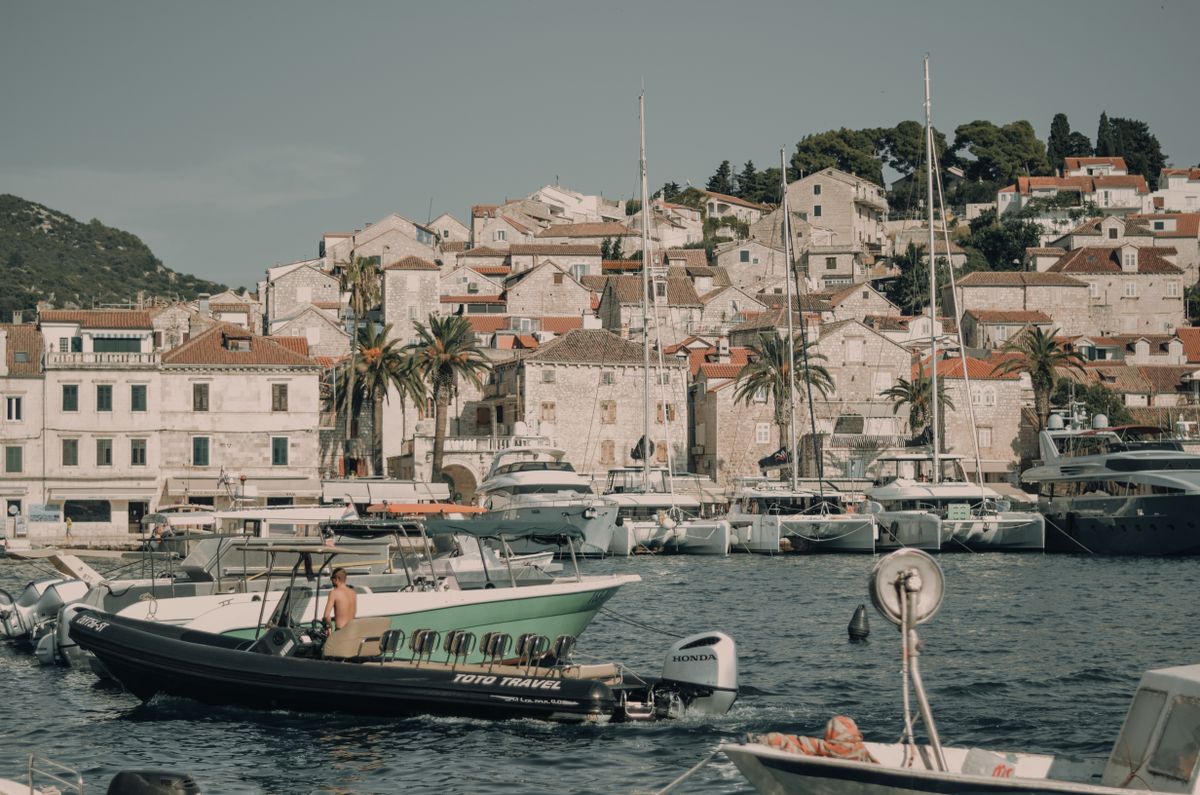
On multi-island tours, your stop in Hvar Town is usually 1-2 hours. That’s enough to walk up to the Spanish Fortress for panoramic views, browse the main square, pop into the 17th-century theatre, and grab a coffee or gelato. For a deeper exploration, consider a dedicated Hvar day trip with more island time.
The Best Hvar Island Tours from Split
1. Blue Cave, Mamma Mia & Hvar 5 Islands Speedboat Tour — €111
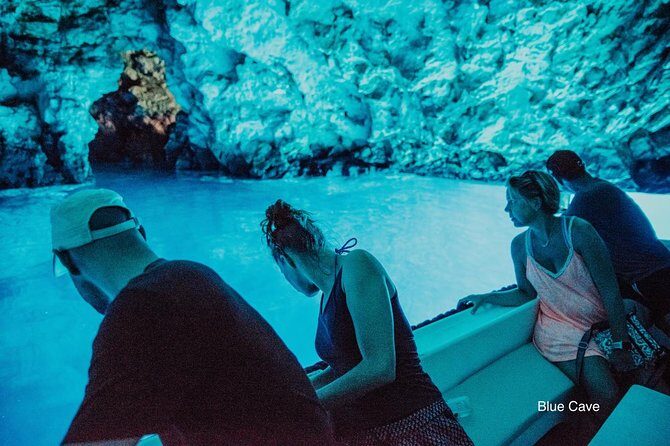
This is the flagship island tour of the Dalmatian coast — the one with the most reviews, the highest rating, and an itinerary that reads like a greatest hits album. You leave Split on a speedboat and visit five islands in a single day: the Blue Cave on Bisevo, the “Mamma Mia” bay on Vis (featured in the 2018 film), the green lagoon of Budikovac, Palmizana in the Pakleni Islands for swimming, and finally Hvar Town.
The pace is fast — this is an adventure, not a leisurely cruise. The speedboat ride itself is exhilarating, bouncing across open water with the Dalmatian islands spread across the horizon. Snorkelling gear is provided, and the swimming stops are in water so clear it feels like a swimming pool with a view. The Blue Cave, when conditions allow, is the kind of natural wonder that makes you understand why people traveled for days to see it.
Duration: 10-12 hours | Departure: Split or Trogir, early morning
2. Hvar, Brac & Pakleni Islands Cruise with Lunch & Drinks — €96
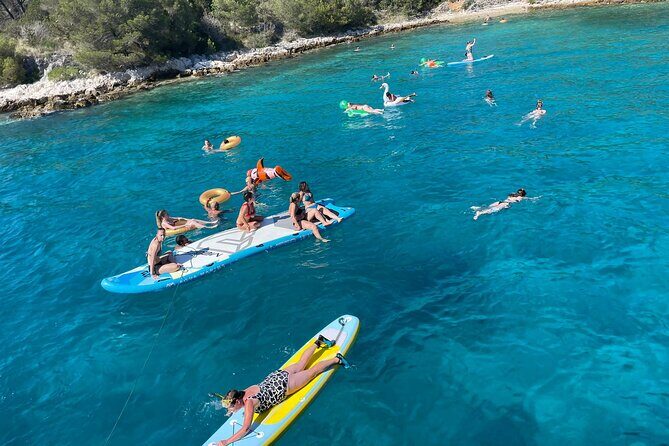
The gentler alternative to the speedboat experience. A traditional wooden boat takes you from Split to three islands — Hvar Town, the Pakleni archipelago for swimming, and Bol on Brac (home to Zlatni Rat, one of Croatia’s most photographed beaches). Lunch is fresh Dalmatian food cooked on board, with unlimited wine, beer, and soft drinks.
This tour gives you more time on fewer islands, which suits travellers who’d rather relax and swim than race between photo ops. The Pakleni Islands swimming stop is in a sheltered bay with warm, turquoise water surrounded by pine forest — the kind of spot that feels private even in peak season. The boat itself is comfortable with shaded seating and space to sunbathe.
Duration: 10 hours | Departure: Split or Trogir, morning
3. Blue Cave, Mamma Mia & Hvar 5 Islands from Trogir — €111
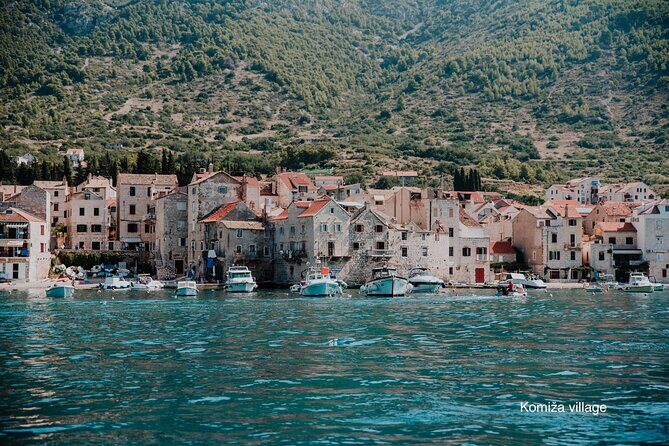
The same five-island speedboat experience as the top pick, but departing from Trogir instead of Split. The itinerary is identical — Blue Cave, Mamma Mia bay, green lagoon, Pakleni Islands, Hvar Town — and the experience is equally spectacular. The Trogir departure simply saves you a trip into Split if you’re based in or near the medieval island town.
The route may differ slightly from the Split departure depending on the skipper and weather conditions, but all the major stops are the same. Trogir itself is worth exploring before or after the tour — its UNESCO-listed old town is one of the most intact Romanesque-Gothic urban centres in Europe, compact enough to see in an hour.
Duration: 10-12 hours | Departure: Trogir, early morning
4. Full-Day Catamaran Cruise to Hvar & Pakleni Islands — €120
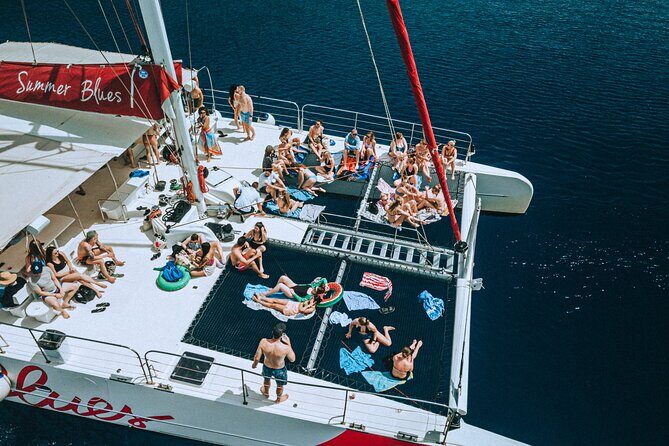
The most comfortable way to reach Hvar from Split. A modern catamaran provides a stable, spacious platform with shaded seating, sunbathing areas, and the front nets that are perfect for lounging over the water. The itinerary focuses on Hvar Town and the Pakleni Islands, with food and free drinks included throughout the day.
The catamaran stops at multiple swimming spots in the Pakleni archipelago — secluded bays ringed by pine trees where the water is warm, shallow, and impossibly clear. The pace is relaxed and the vibe is social. This is less about ticking off islands and more about spending a perfect day on the Adriatic with good food, good wine, and water that looks like it was designed by a colourist.
Duration: 10 hours | Departure: Split, morning
5. Blue Cave & Vis Island Speedboat Tour from Hvar — €121
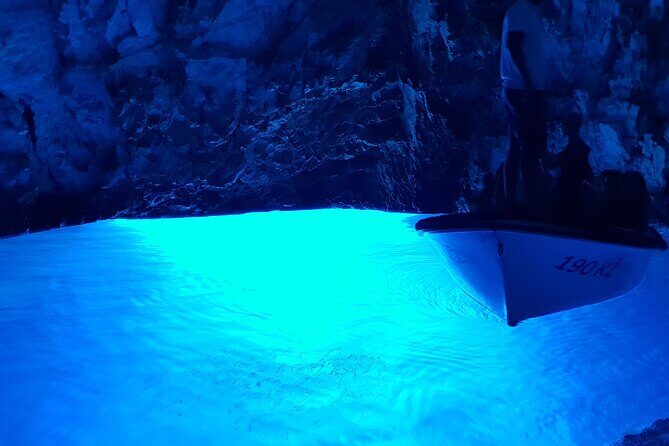
Different from the other tours on this list because it departs from Hvar itself, not Split. If you’ve taken the ferry to Hvar independently or are staying overnight on the island, this speedboat tour takes you to the Blue Cave and Vis Island — the most remote inhabited island in the Croatian Adriatic.
Vis was a Yugoslav military base until 1989 and closed to foreigners for decades, which preserved it in a kind of time capsule. The island’s fishing villages, stone houses, and vineyards feel untouched by mass tourism. The Blue Cave and Stiniva Beach (voted Europe’s best beach in 2016) are the headline attractions, but the real charm is Vis’s unhurried, authentic atmosphere.
Duration: 7-8 hours | Departure: Hvar Town, morning
Hvar Through the Ages: 2,400 Years of Island History

Hvar’s recorded history begins in 384 BC, when Greek colonists from the island of Paros (hence the name Pharos, later Hvar) established a settlement at what is now Stari Grad. The Stari Grad Plain — the agricultural land the Greeks divided into geometric plots for growing grapes and olives — is still farmed today using essentially the same field system. It’s a UNESCO World Heritage Site and one of the best-preserved examples of ancient Greek agricultural colonisation in the entire Mediterranean.
The island passed through Roman, Byzantine, Croatian, and Venetian hands over the centuries. Venice controlled Hvar for nearly 400 years (1420-1797), and their mark is everywhere — the elegant loggia on the main square, the fortified harbour, and the arsenal that now houses the Theatre of Hvar. Built in 1612, it’s the oldest public theatre in Europe. When London was still rebuilding after the Great Fire, the citizens of Hvar were already watching plays in their purpose-built theatre.

The Venetians weren’t the only ones who shaped Hvar. In 1571, the Ottoman fleet attacked the island during the Battle of Lepanto campaign, burning Hvar Town. The city was rebuilt grander than before — the Renaissance palaces and churches you see today date largely from this post-attack reconstruction. The scars of the Ottoman raid are still visible if you look closely: cannon-ball marks on the town walls and the fortress that was hurriedly strengthened after the attack.

Hvar’s lavender industry is another layer of the island’s identity. For centuries, farmers on the island’s interior have cultivated lavender on the sun-baked hillsides, producing essential oil that was once exported across Europe. Today the lavender fields bloom in late June and early July, turning the island’s hinterland into a purple-scented paradise that contrasts sharply with the coastal blue. Small sachets of Hvar lavender are the island’s signature souvenir — and unlike most tourist trinkets, they actually smell incredible for months.


Can You Visit Hvar Island Independently?
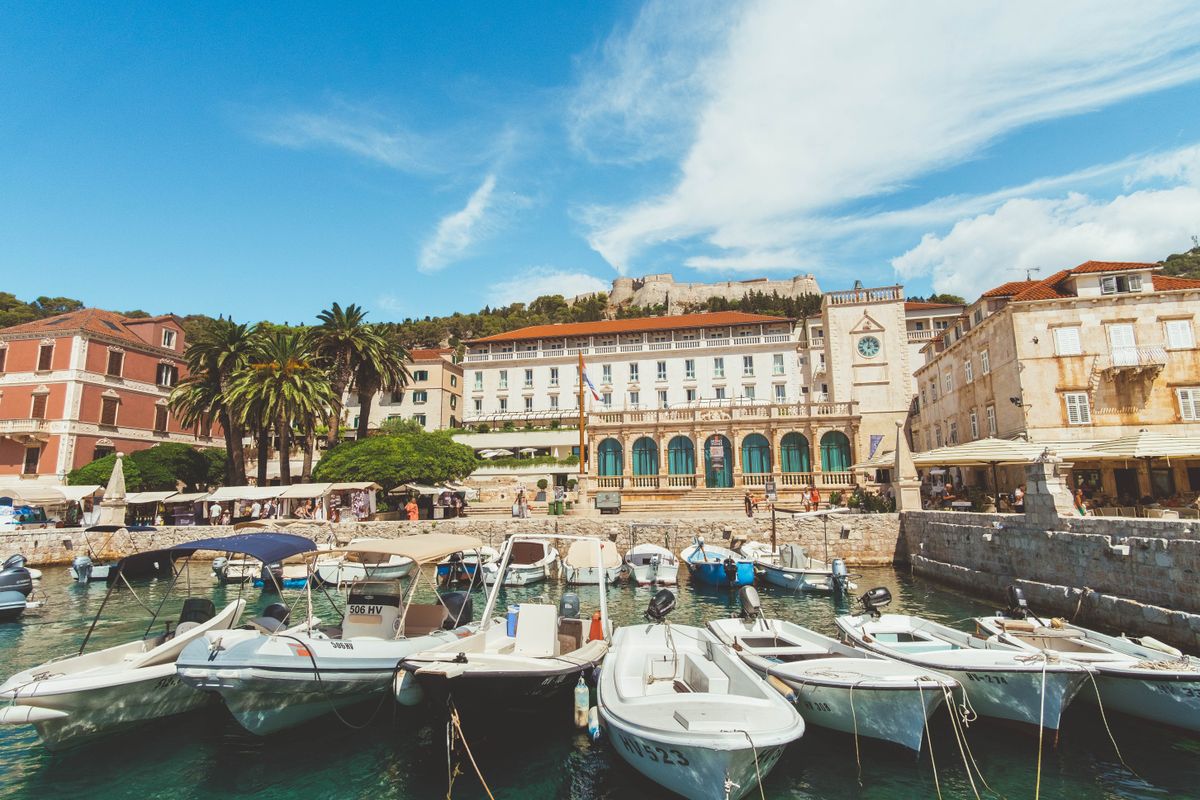
Absolutely, and many visitors prefer it. Your options:
Catamaran ferry: Jadrolinija and Krilo run fast catamarans from Split to Hvar Town (about 1 hour, around €15-25 each way). Book in advance during summer — these sell out fast. This is the best option for a Hvar-focused day trip.
Car ferry: The Jadrolinija car ferry runs from Split to Stari Grad (about 2 hours). From Stari Grad, it’s a 20-minute drive or bus ride to Hvar Town. Cheaper than the catamaran but slower.
Private water taxi: Faster and more flexible, but significantly more expensive. Useful for groups or if regular ferries are sold out.
The guided tours are better value if you want multiple islands in a day (especially the Blue Cave combo). The independent ferry is better if you want to spend a full day (or more) exploring Hvar Town and the island at your own pace.
What to Do with Your Time in Hvar Town

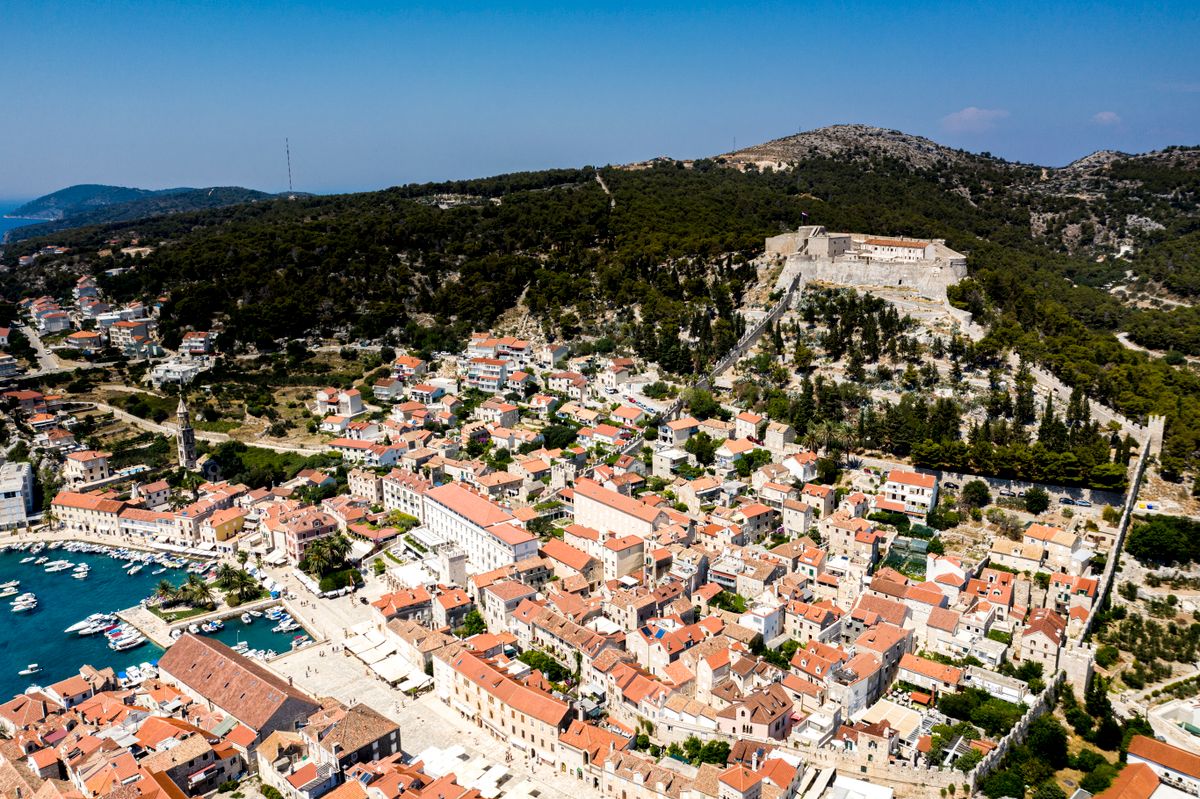
Climb to the Spanish Fortress. A 15-minute uphill walk from the main square gives you the best panorama on the island — Hvar Town below, the Pakleni Islands in the middle distance, and on clear days, the Italian coast on the horizon. Go just before sunset for golden light and fewer people.
Visit the world’s oldest public theatre. Inside the old arsenal on the harbour, the Theatre of Hvar (built 1612) is a small but significant piece of European cultural history. Performances still take place here in summer — check the schedule if your timing allows.
Swim at the town beaches. Several small pebbly beaches are within walking distance of the harbour. They’re not world-class but they’re perfectly pleasant, and the water is warm and clear. For better swimming, take a water taxi to the Pakleni Islands (10 minutes, a few euros each way).
Eat at Konoba Menego. Tucked into a narrow lane behind the cathedral, this family-run konoba (traditional tavern) serves Hvar’s best bruschetta, local cheese, and wine from the island’s vineyards. It’s a tiny terrace with enormous character — exactly the kind of place a guided tour would never take you.
When to Go

Best months: June and September. Warm enough for swimming, sunny enough for outdoor dining, and the island isn’t yet (or no longer) at peak-season capacity. Late June also catches the lavender bloom.
Peak season: July and August. The island is beautiful but crowded, accommodation prices triple, and the harbour fills with superyachts. Book tours and ferries well in advance.
Shoulder season: May and October. Warm days, quiet beaches, lower prices. Some restaurants and bars are still closed for the season, but enough are open for a great visit. Sea temperatures around 20 degrees — fine for swimming if you’re not fussy.

Frequently Asked Questions
How long is the ferry from Split to Hvar?
The fast catamaran takes about 1 hour to Hvar Town. The car ferry to Stari Grad takes about 2 hours, plus a 20-minute drive to Hvar Town. Book the catamaran in advance during summer — it sells out regularly.
Is one day enough to see Hvar?
One day is enough for Hvar Town and a swimming stop. To see the lavender fields, Stari Grad, and the island’s interior, you’d want at least two days. The multi-island speedboat tours give you a good taste of Hvar in a single day alongside other islands.
Is Hvar expensive?
Hvar Town is the most expensive part of the Dalmatian coast — waterfront restaurants and cocktails are priced for the yacht crowd. Move one street back from the harbour and prices drop significantly. The interior villages are much cheaper. Bring cash for smaller businesses.
Can you swim at Hvar Town?
Yes, there are several small beaches within walking distance of the harbour. For better swimming, take a water taxi to the Pakleni Islands (about 10 minutes, 5-10 euros) where the beaches are sandy, the water is clearer, and the coves are sheltered.
What’s the Blue Cave and is it worth it?
The Blue Cave is a natural sea cave on Bisevo island that glows electric blue when sunlight enters through an underwater opening. It’s absolutely worth seeing, but it’s weather-dependent — rough seas mean the cave entrance is too dangerous. The combined Hvar + Blue Cave tours offer the best chance to see both in one day.
Hvar is one piece of a remarkable Dalmatian coast. If you’ve covered the island, heading north to Krka Waterfalls takes you from sea to river — travertine cascades in a lush canyon barely an hour from Split. Down the coast, the Elaphiti Islands from Dubrovnik offer a quieter island-hopping experience with incredible Ragusan history. And for something completely different, a day trip to Plitvice Lakes from Split reveals Croatia’s most famous national park — sixteen cascading lakes in a primeval forest.