
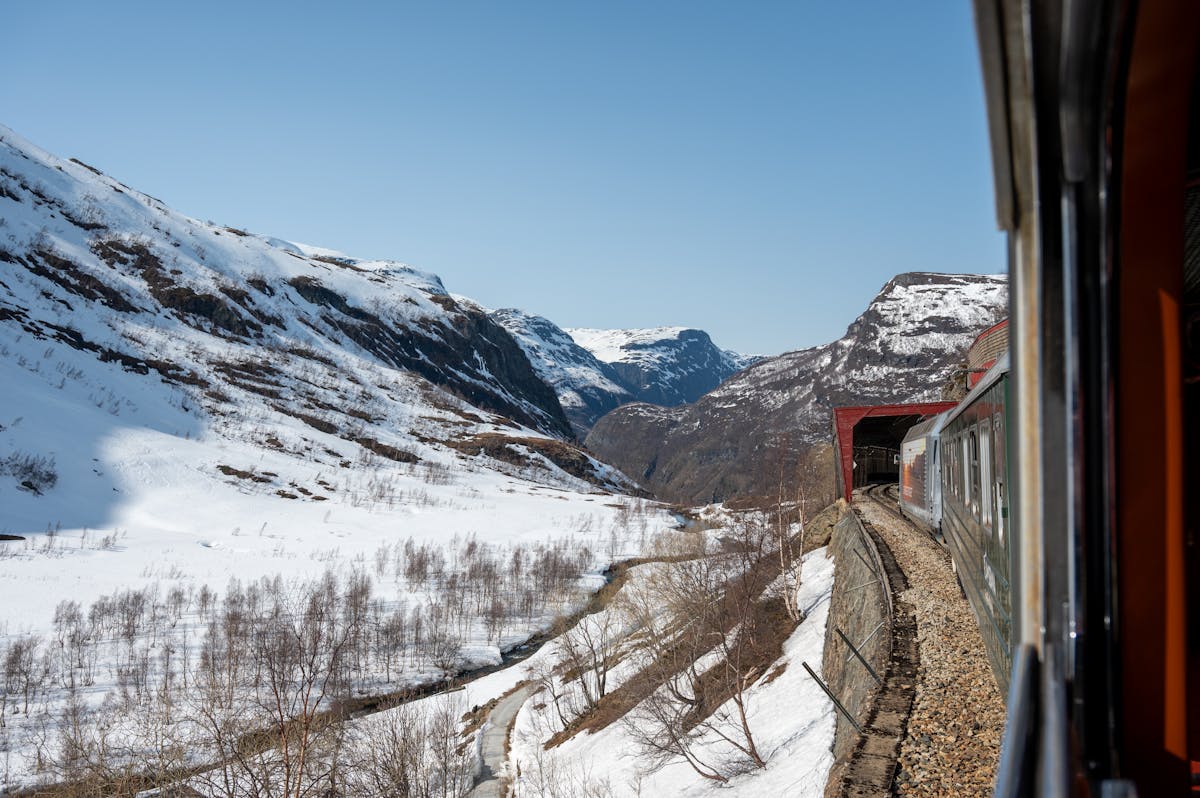
The Flam Railway is one of the steepest standard-gauge railway lines in the world, dropping 863 metres over just 20 kilometres as it winds from the mountain station at Myrdal down to the tiny fjord village of Flam at sea level. The train passes through twenty tunnels — eighteen of them hand-carved through the mountain by Norwegian navvies during the 1920s and 1930s — crosses bridges that span waterfalls, and delivers views of deep valleys, snow-capped peaks, and impossibly green hillsides that justify every superlative the Norwegian tourism board has ever used.
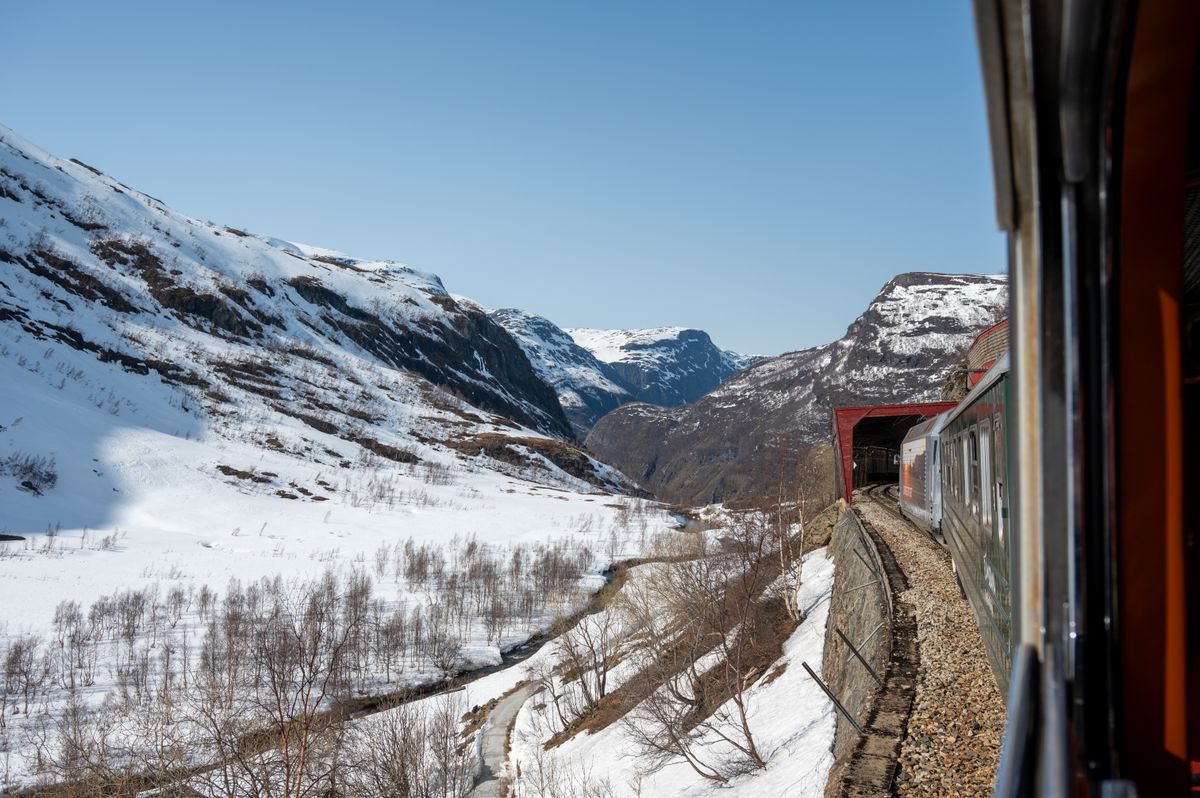
But the Flam Railway is usually just one part of a much bigger day. The best tours from Bergen combine the train ride with a cruise on the Naeroyfjord — the narrowest fjord in the world and a UNESCO World Heritage Site — plus a stop at the Stegastein viewpoint, a glass-and-steel platform that juts 30 metres over the fjord edge at 650 metres above sea level. Some tours add a Viking village visit or the Borgund Stave Church, one of the best-preserved wooden churches from the Middle Ages. It’s a day that covers a thousand years of Norwegian history and some of the most dramatic landscapes on Earth.

I’ve compared the best Flam Railway and fjord tours from Bergen. They range from self-guided “Norway in a Nutshell” packages to fully guided premium experiences with Viking villages and stave churches. Here are the top picks, plus the remarkable engineering story behind the railway and the ancient Norse history of the fjord region.
Short on time? Here’s what to book:
Best premium: Viking Village, Naeroyfjord Cruise & Flam Railway — €418. The full experience: Viking village, fjord cruise, Flam Railway, and Stegastein viewpoint. Guided with lunch. The most complete day from Bergen.
Best guided tour: Guided Tour to Naeroyfjord, Flam & Stegastein — €319. Expert guide, Naeroyfjord cruise, Flam stop, and the Stegastein viewpoint. 11 hours of fjord country.
Best from Flam: Wonders of Flam Half-Day Shore Excursion — €140. Already in Flam? This half-day tour covers the Stegastein viewpoint, Borgund Stave Church, and the Laerdal valley. Perfect for cruise ship passengers.
- What to Know Before Booking
- Norway is expensive — plan your budget
- The railway is one piece of a multi-part day
- Book the train in advance during summer
- Weather is unpredictable — dress in layers
- The Best Flam Railway & Fjord Tours from Bergen
- 1. Viking Village, Naeroyfjord Cruise & Flam Railway — €418
- 2. Guided Tour to Naeroyfjord, Flam & Stegastein — €319
- 3. Naeroyfjord, Flam & Stegastein Bus Tour — €309
- 4. Naeroyfjord Cruise, Flam & Stegastein by Bus — €273
- 5. Wonders of Flam Half-Day Shore Excursion — €140
- Building the Impossible: The Engineering of the Flam Railway
- The Naeroyfjord: Norway’s Narrowest Masterpiece
- Stave Churches: Medieval Engineering in Wood
- Can You Do the Flam Railway Independently?
- When to Go
- Frequently Asked Questions
- How long is the Flam Railway ride?
- Is the Flam Railway included in tour prices?
- Is the Naeroyfjord cruise included?
- Can children do these tours?
- What if the weather is bad?
What to Know Before Booking

Norway is expensive — plan your budget
There’s no way around it: Norway is one of the most expensive countries in Europe. The Flam Railway and fjord tours range from €140 to €435 per person. A sandwich and a coffee in Flam will cost €15-20. This is normal Norwegian pricing, not tourist gouging. The tours represent genuine value for what you get — hours of spectacular scenery, professional guides, and multiple transport modes (train, boat, bus). Budget for it rather than being shocked by it.
The railway is one piece of a multi-part day
No tour is just the Flam Railway. The train ride takes about an hour, and most tours combine it with a Naeroyfjord or Aurlandsfjord cruise (2 hours), the Stegastein viewpoint (30 minutes), and sometimes additional stops. The full day from Bergen runs 10-12 hours. It’s a lot of transport, but every segment delivers its own spectacular views.
Book the train in advance during summer
The Flam Railway is one of Norway’s most popular attractions. In July and August, trains sell out days ahead — both for independent tickets and tour allocations. Book your tour or tickets at least a week in advance during peak summer. Shoulder months (May-June, September) are easier.
Weather is unpredictable — dress in layers
Bergen is one of the rainiest cities in Europe (it rains roughly 240 days per year). The fjord region can be sunny at sea level and snowy at Myrdal in the same hour. Bring a waterproof jacket, layers, and sturdy shoes. The Stegastein viewpoint at 650 metres is significantly colder and windier than Flam at sea level.
The Best Flam Railway & Fjord Tours from Bergen
1. Viking Village, Naeroyfjord Cruise & Flam Railway — €418
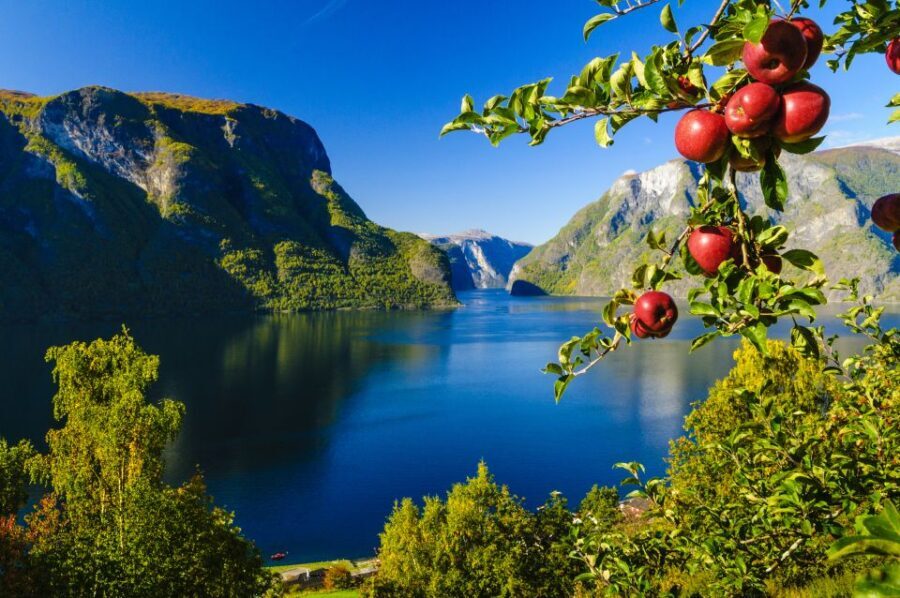
The premium option and the most complete Flam experience available from Bergen. Your day starts at the Njardarheimr Viking Village in Gudvangen — a reconstructed Norse settlement where costumed villagers demonstrate Viking crafts, archery, and daily life. It’s not a theme park; it’s an archaeological and historical recreation that takes the Viking era seriously.
From the Viking village, you cruise the Naeroyfjord — the narrowest and most dramatic fjord in Norway, hemmed in by 1,800-metre peaks on both sides. The cruise deposits you in Flam, where you ride the famous railway up to Myrdal, passing Kjosfossen waterfall (where the train stops for photos). The day finishes at the Stegastein viewpoint, a cantilevered glass platform offering what might be the most vertigo-inducing panorama in Scandinavia. At €418, it’s not cheap — but for a full day covering a thousand years of Norwegian history and some of the finest landscapes on the planet, it represents the best Norway has to offer.
Duration: 10.5 hours | Departure: Bergen, morning | Includes: Guide, Viking village, fjord cruise, Flam Railway, Stegastein, lunch
2. Guided Tour to Naeroyfjord, Flam & Stegastein — €319
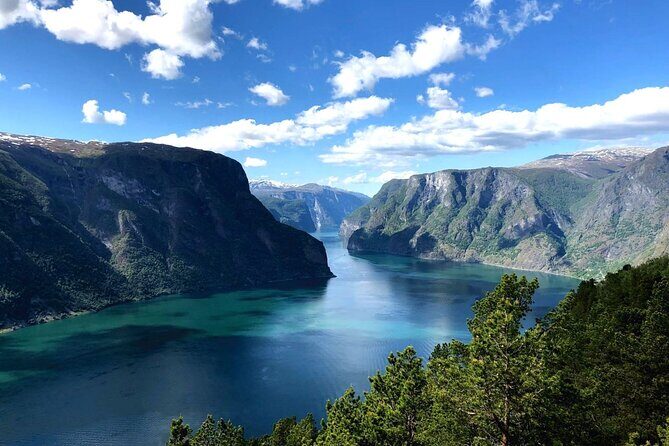
A guided tour that focuses on the three headline attractions: the Naeroyfjord cruise, Flam village, and the Stegastein viewpoint. Without the Viking village stop, it’s slightly more streamlined and €100 cheaper than the premium option. The guide provides commentary on the fjord’s formation, the railway’s engineering, and the scattered farms clinging to impossible mountainsides along the route.
The Naeroyfjord cruise is the centrepiece — two hours on water so calm it mirrors the mountains above, passing through a passage so narrow that the echoes of the boat’s engine bounce between the cliff faces. At Flam, you have free time to explore the tiny village, visit the railway museum (free), and board the Flam Railway for the climb to Myrdal. The return via Stegastein adds the aerial perspective that connects everything you’ve seen from water level.
Duration: 11 hours | Departure: Bergen, morning | Includes: Guide, fjord cruise, Flam time, Stegastein
3. Naeroyfjord, Flam & Stegastein Bus Tour — €309
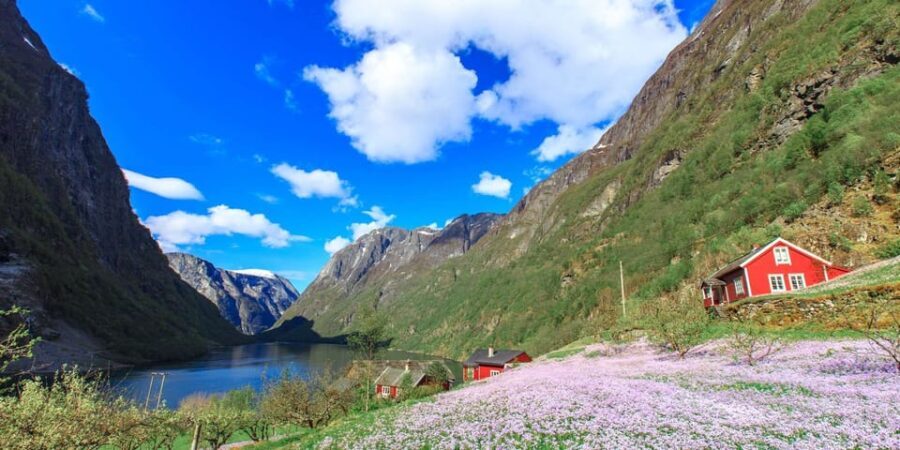
Similar to the tour above but with a slightly different routing that may include additional photo stops along the mountain roads. The core experience is the same: Naeroyfjord cruise, time in Flam, and the Stegastein viewpoint. The guide provides running commentary during the bus portions, pointing out geological features, abandoned farmsteads, and the engineering marvels of Norway’s mountain road system.
The drive between Bergen and the fjord region is itself a highlight — the road passes through tunnels carved into the mountain, over passes with snowfields even in summer, and past waterfalls that tumble directly onto the road surface. At €309, this is the most affordable full-guided option from Bergen that covers all three major attractions.
Duration: 11 hours | Departure: Bergen, morning | Includes: Guide, bus transport, fjord cruise, Stegastein
4. Naeroyfjord Cruise, Flam & Stegastein by Bus — €273
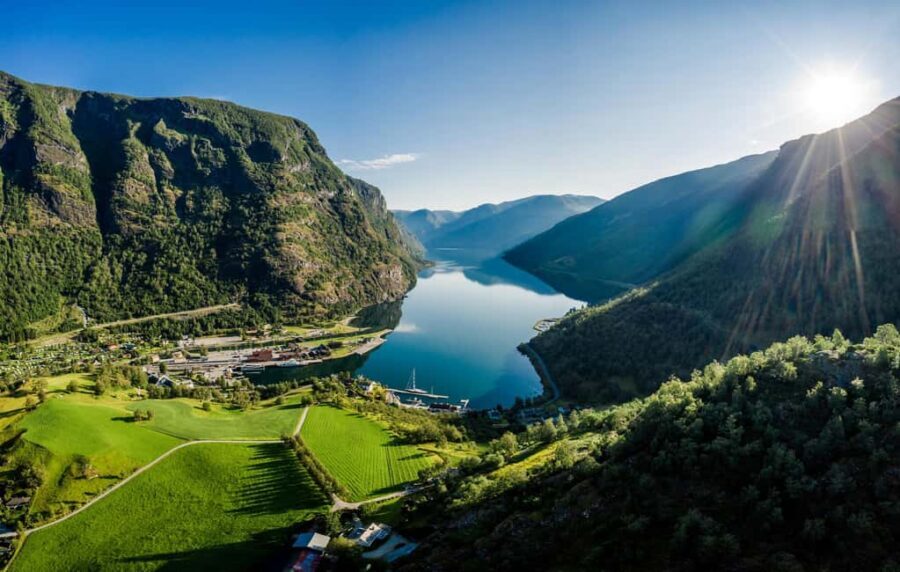
The most affordable guided option from Bergen that still covers the Naeroyfjord cruise, Flam, and Stegastein. The itinerary mirrors the other tours — fjord cruise through the UNESCO-listed narrows, free time in Flam village, and the glass-platform viewpoint at 650 metres. The guide provides commentary throughout, and the bus is comfortable for the mountain road sections.
At €273, this is the entry point for a guided Flam experience from Bergen. You sacrifice nothing on the core attractions — the fjord cruise and Stegastein viewpoint are identical regardless of tour price. The savings come from larger group sizes and fewer premium extras. For travellers who prioritise the landscapes over the frills, this delivers all the views at the best price.
Duration: Full day | Departure: Bergen, morning | Includes: Guide, bus transport, fjord cruise, Stegastein
5. Wonders of Flam Half-Day Shore Excursion — €140
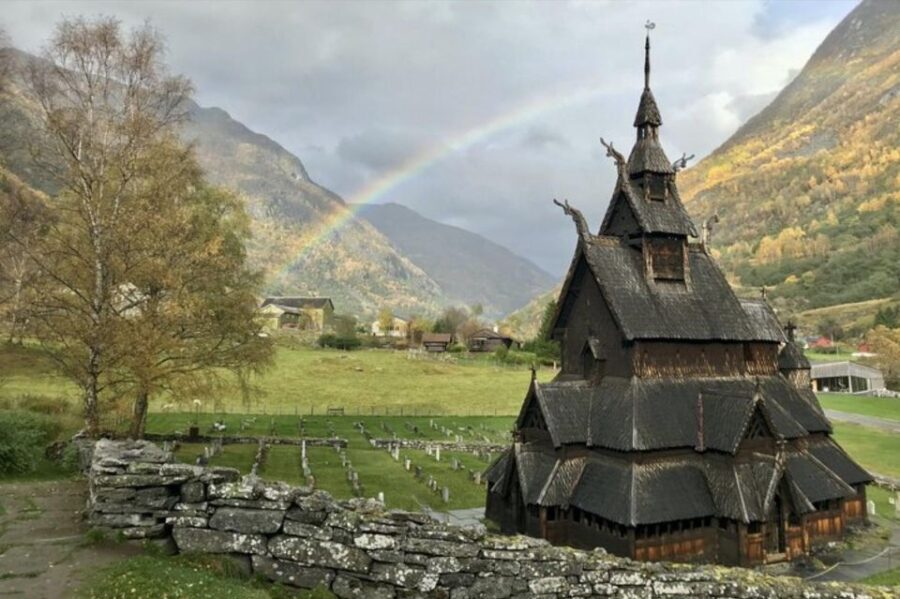
A different proposition from the Bergen-based tours. This half-day excursion departs from Flam itself, making it ideal for cruise ship passengers docking at Flam harbour or anyone who’s already in the village. In five hours, you visit the Stegastein viewpoint, the Borgund Stave Church (one of Norway’s most impressive medieval wooden churches), and the Laerdal valley — all guided.
The Borgund Stave Church is a genuine highlight that the Bergen day tours don’t include — an 850-year-old wooden church with dragon-head carvings, overlapping shingle roofs, and a construction technique that has fascinated architects for centuries. At €140 for a half-day including a professional guide and all transport, this is excellent value and pairs perfectly with an independent Flam Railway ride.
Duration: 5 hours | Departure: Flam, morning | Includes: Guide, transport, Stegastein, Borgund Stave Church
Building the Impossible: The Engineering of the Flam Railway

The Flam Railway took twenty years to build (1924-1940) and is considered one of the greatest engineering achievements in Norwegian history. The challenge was extraordinary: connect the main Bergen-Oslo railway line at Myrdal (867 metres above sea level) to the fjord at Flam (2 metres above sea level) over a horizontal distance of just 20 kilometres. The gradient required is among the steepest ever attempted for a standard-gauge railway.
The solution involved eighteen tunnels totalling over 6 kilometres of underground track — all carved by hand using dynamite and manual labour. One tunnel, the Nali Tunnel, includes a complete 180-degree turn inside the mountain, allowing the train to loop around and descend on a different level of the same valley. The navvies who built these tunnels worked in shifts around the clock, advancing just a few metres per day through solid granite.
The most dramatic moment on the ride is the stop at Kjosfossen waterfall, where the train pauses beside a 93-metre cascade that drops directly alongside the track. In summer, a figure dressed in red — meant to represent the huldra, a seductive forest spirit from Norse folklore — dances on a ledge beside the waterfall. It’s theatrical, slightly corny, and absolutely everyone pulls out their camera. The waterfall itself, viewed from inside the tunnel mouth, is genuinely spectacular regardless of the folklore addition.

The railway was originally built to connect the isolated fjord communities to Norway’s national rail network. Before its completion, villages like Flam were accessible only by boat — a days-long journey from Bergen through narrow waterways. The railway transformed the region, but it was the tourist potential that saved the line from closure. By the 1990s, passenger numbers had declined to the point where the line was nearly shut down. The decision to market it as a tourist attraction — rather than just a commuter service — turned it into one of Norway’s most visited destinations, carrying nearly a million passengers per year.
The Naeroyfjord: Norway’s Narrowest Masterpiece
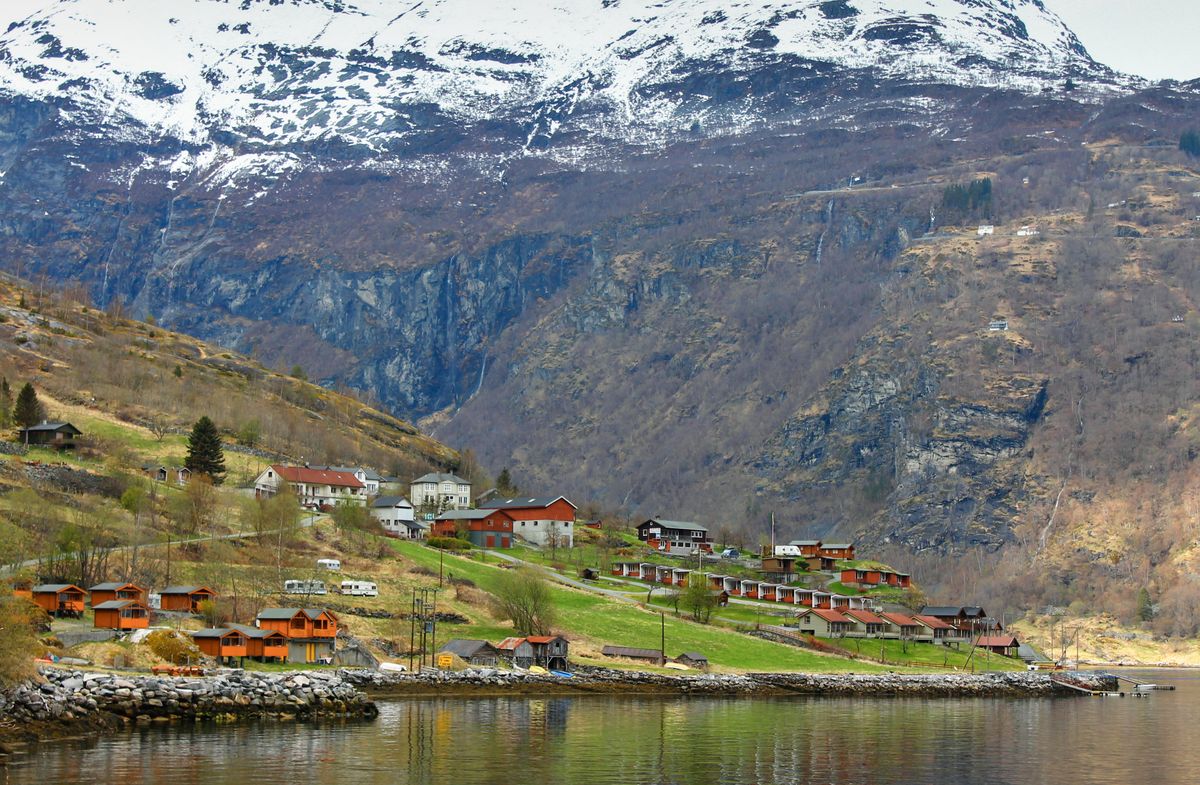
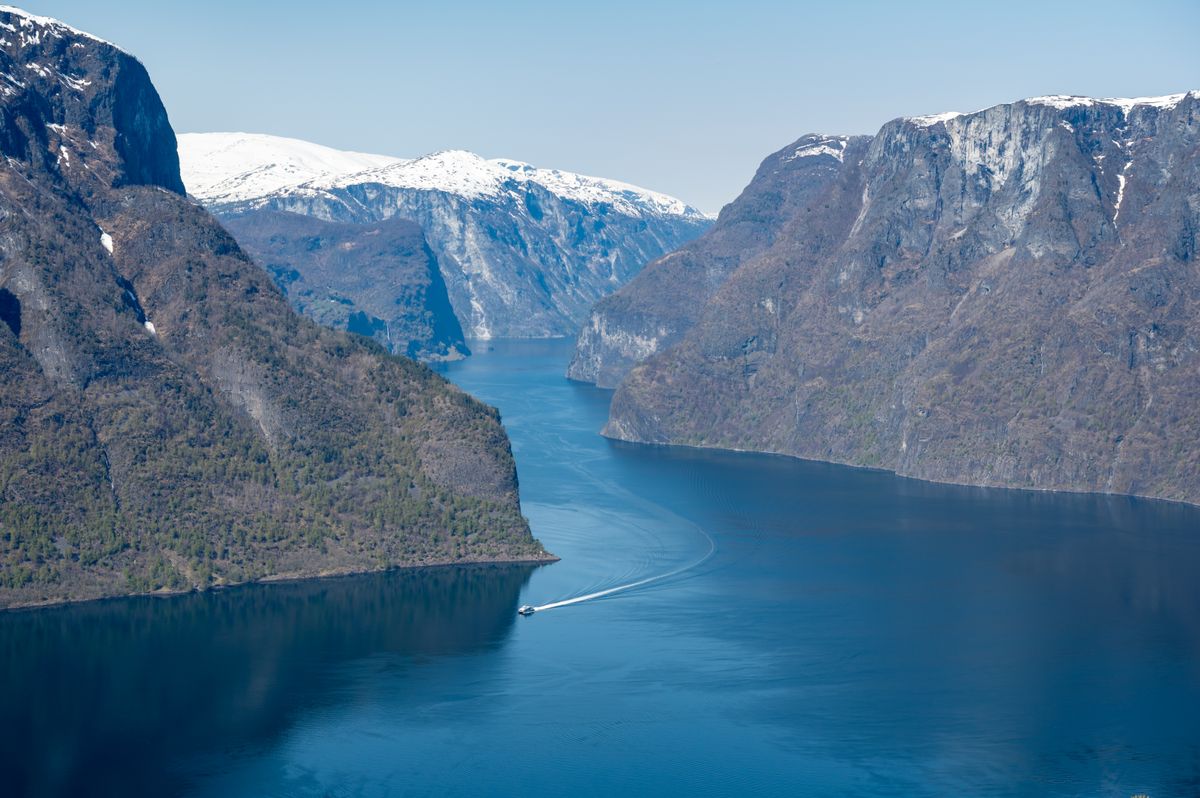
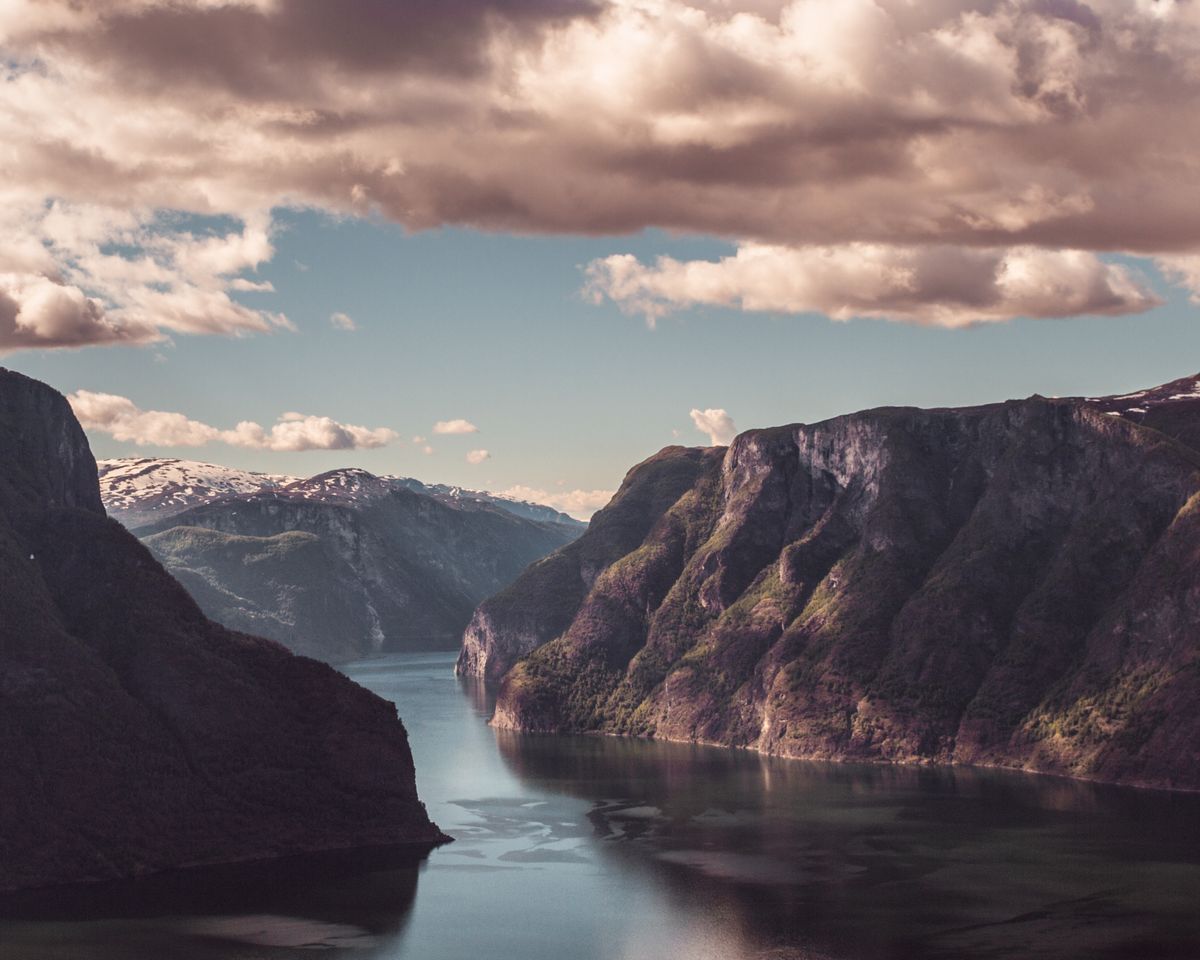
The Naeroyfjord is an arm of the Sognefjord — Norway’s longest and deepest fjord at 204 kilometres and 1,308 metres deep. The Naeroyfjord branches off at the inner end and narrows to just 250 metres between vertical cliffs that rise 1,800 metres on either side. It was inscribed as a UNESCO World Heritage Site in 2005 alongside its neighbour, the Geirangerfjord.
Sailing through the Naeroyfjord is an experience in scale. The mountains above are so high and the channel so narrow that the sky becomes a strip of blue between the cliff tops. Waterfalls thread down the rock faces — thin ribbons of white against dark granite. Scattered farms cling to impossibly steep slopes, some accessible only by boat. In winter, the upper reaches of the fjord occasionally freeze, creating a surreal landscape of ice and stone.
The fjord was carved by glaciers during the last ice age, roughly 10,000-12,000 years ago. The glaciers that filled these valleys were up to 2,000 metres thick, grinding down through the bedrock with enough force to excavate channels over a kilometre deep. When the ice retreated and sea levels rose, the ocean flooded the valleys, creating the fjords. The U-shaped valley profile — steep walls, flat bottom — is the signature of glacial erosion, and the Naeroyfjord is a textbook example.

Stave Churches: Medieval Engineering in Wood

If your tour includes the Borgund Stave Church (the shore excursion from Flam does), you’ll encounter one of Europe’s most remarkable medieval buildings. Norway once had over 1,000 stave churches; only 28 survive. Borgund, built around 1180 AD, is among the best preserved.
The construction technique is fascinating. Vertical timber “staves” form the load-bearing walls, raised on stone foundations to prevent rot. The roofs are layered with wooden shingles in overlapping tiers, creating the distinctive silhouette that looks more like a Viking longship turned upside down than a conventional church. Dragon-head carvings on the roof ridges — a holdover from pre-Christian Norse decoration — sit alongside Christian crosses, creating an architectural style that exists nowhere else in Europe.
The survival of these churches for 850 years is remarkable given that they’re built entirely from wood. The secret is a combination of pine tar (applied regularly to the exterior), clever engineering that channels rainwater away from structural elements, and the cold, dry Norwegian climate that slows decay. Walking inside Borgund, you enter a dim, pine-scented space supported by columns carved with rune-like patterns — a building that connects the Viking age to the Christian era in a single structure.

Can You Do the Flam Railway Independently?

Yes, through the famous “Norway in a Nutshell” self-guided route. You book individual tickets for the Bergen Railway (Bergen to Myrdal), the Flam Railway (Myrdal to Flam), the Naeroyfjord cruise (Flam to Gudvangen), and a bus back to Bergen. The official Norway in a Nutshell website sells combination tickets.
Advantages of DIY: Flexibility to spend more time at each stop. You can overnight in Flam (recommended — the village is magical after the tour buses leave). Potentially cheaper if you book individual segments during off-peak periods.
Advantages of guided tours: All logistics handled for you. Expert commentary throughout. Additional stops (Viking village, stave church, Stegastein) that the DIY route doesn’t include. No stress about connections or timetables. In a region where transport is infrequent and distances are large, having someone else manage the schedule is worth a premium.
When to Go
Best months: May through September. The waterfalls are fullest in May-June from snowmelt. July-August are warmest but busiest. September offers golden autumn colours on the mountainsides and significantly fewer crowds.
Peak season: Late June through August. Tours sell out, trains are full, and Flam village can feel overwhelmed by cruise ship passengers. Book 1-2 weeks ahead minimum. Despite the crowds, the landscapes are at their greenest and the weather is most likely to cooperate.
Shoulder season: May and September-October. Cooler, quieter, and often with dramatic weather that makes for better photos than flat summer sunshine. Some tours reduce frequency but the railway runs daily.
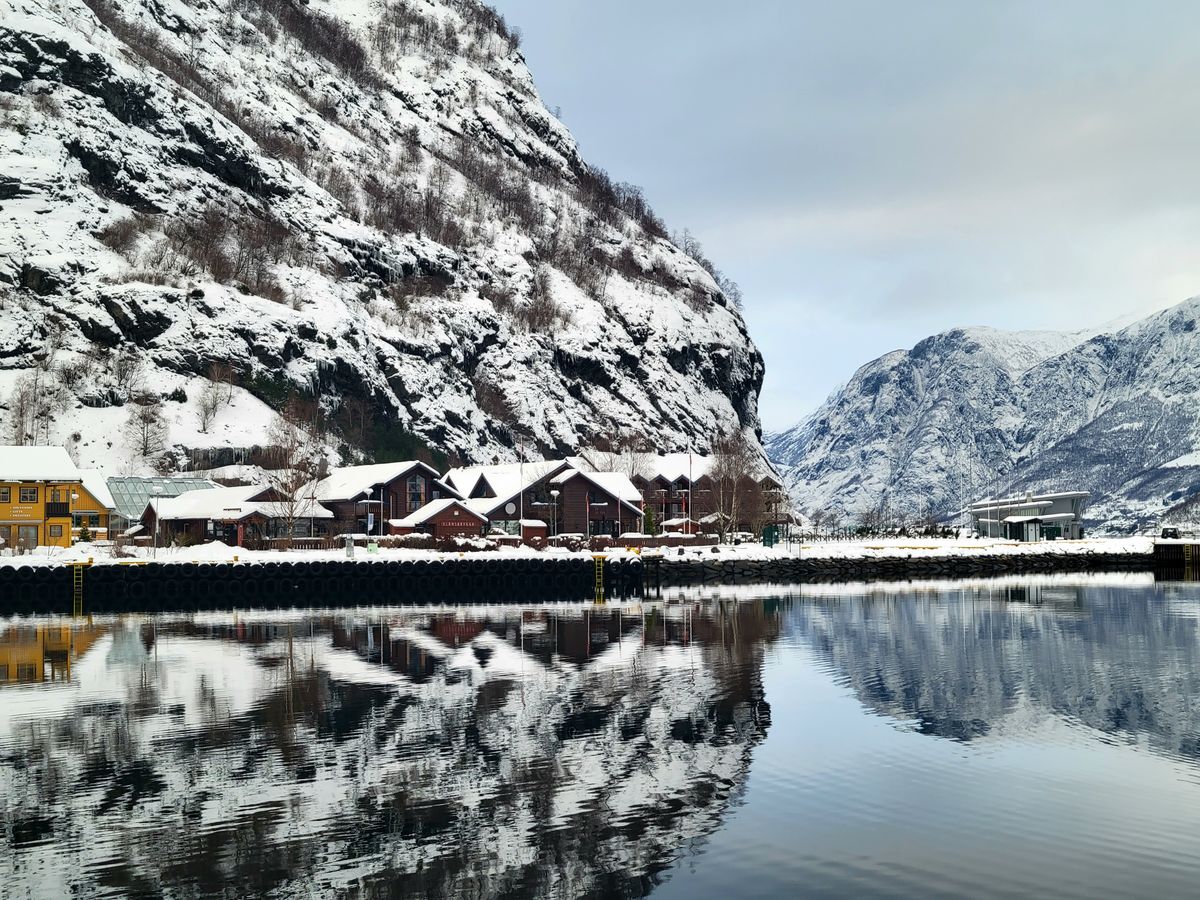
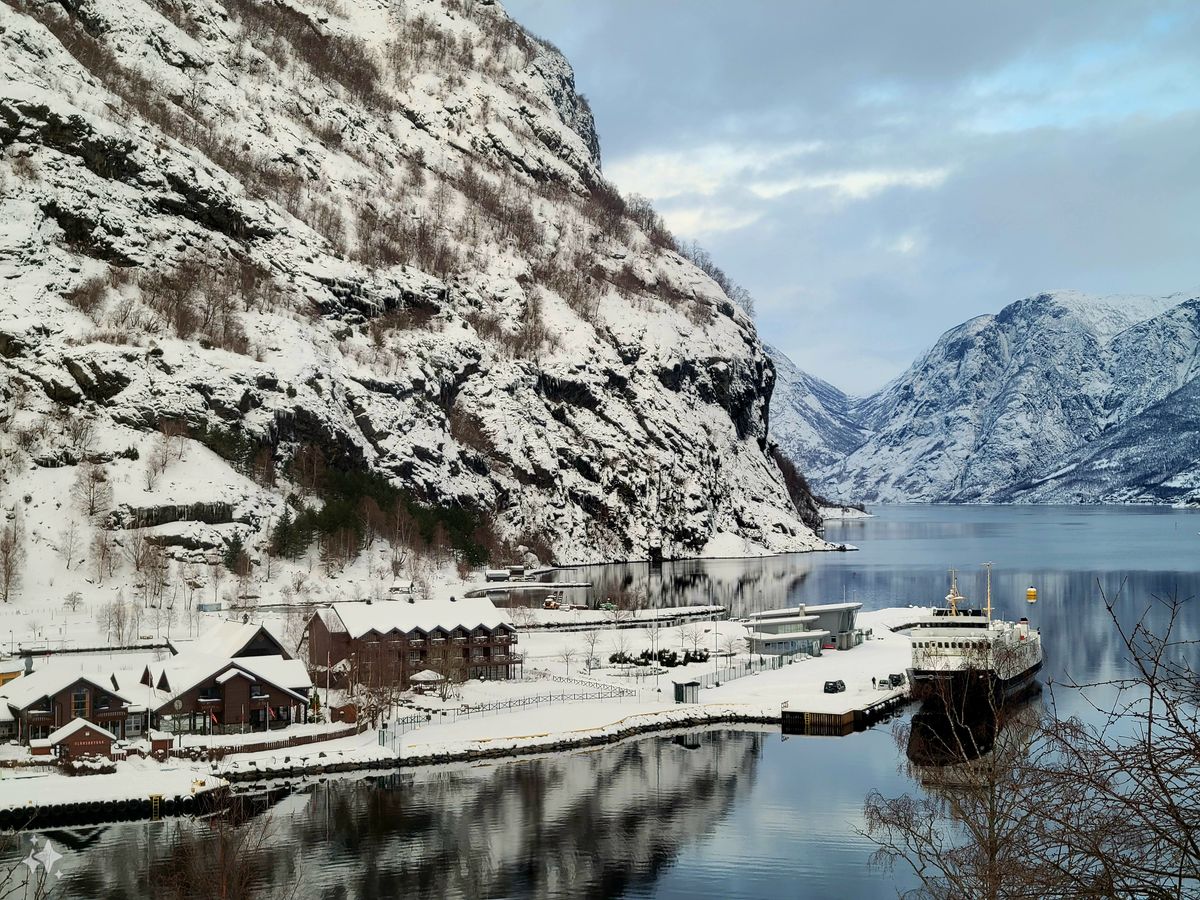
Winter: The Flam Railway runs year-round. Winter brings frozen waterfalls, snow-covered peaks, and the surreal beauty of a silent, ice-bound fjord. Daylight hours are short (4-6 hours in December) and some tour options don’t operate, but the landscape is hauntingly beautiful and you’ll share it with very few others.

Frequently Asked Questions
How long is the Flam Railway ride?
About one hour from Myrdal to Flam (or vice versa). The train makes one scheduled stop at Kjosfossen waterfall for a 5-minute photo opportunity. The total track length is 20.2 kilometres.
Is the Flam Railway included in tour prices?
Not all tours include the railway ticket — some focus on the fjord cruise and bus transport. Check the specific tour description carefully. The tours listed here as “Flam Railway” explicitly include the train ride. The stand-alone railway ticket costs around 400-500 NOK (€35-45) one way.
Is the Naeroyfjord cruise included?
All Bergen-departure tours listed here include the fjord cruise. The shore excursion from Flam does not — it focuses on the road-based attractions (Stegastein, Borgund, Laerdal). If the fjord cruise is your priority, book a Bergen-departure tour.
Can children do these tours?
Absolutely. The train ride and fjord cruise are exciting for children of all ages. The long day (10-12 hours) can tire very young children. Bring snacks, entertainment for bus sections, and layers for temperature changes. Most operators offer reduced child rates.
What if the weather is bad?
Tours run in virtually all weather. Rain and fog actually add atmosphere — the mountains emerging from mist, waterfalls at full power, and the fjord shrouded in low cloud can be more dramatic than a clear blue-sky day. The train runs regardless of conditions. Only extreme weather (severe storms) causes cancellations, and this is rare.
The Flam Railway is one gateway to Norway’s fjord country. For more fjord experiences from Bergen, a dedicated fjord cruise offers different routes and longer time on the water. In Oslo, an Oslo Fjord cruise shows you a gentler, island-dotted coastline that’s completely different from the dramatic western fjords. And for Norway’s other headline natural phenomenon, a trip to Tromso for the Northern Lights is the winter equivalent of the fjord experience — equally unforgettable, in an entirely different register.