
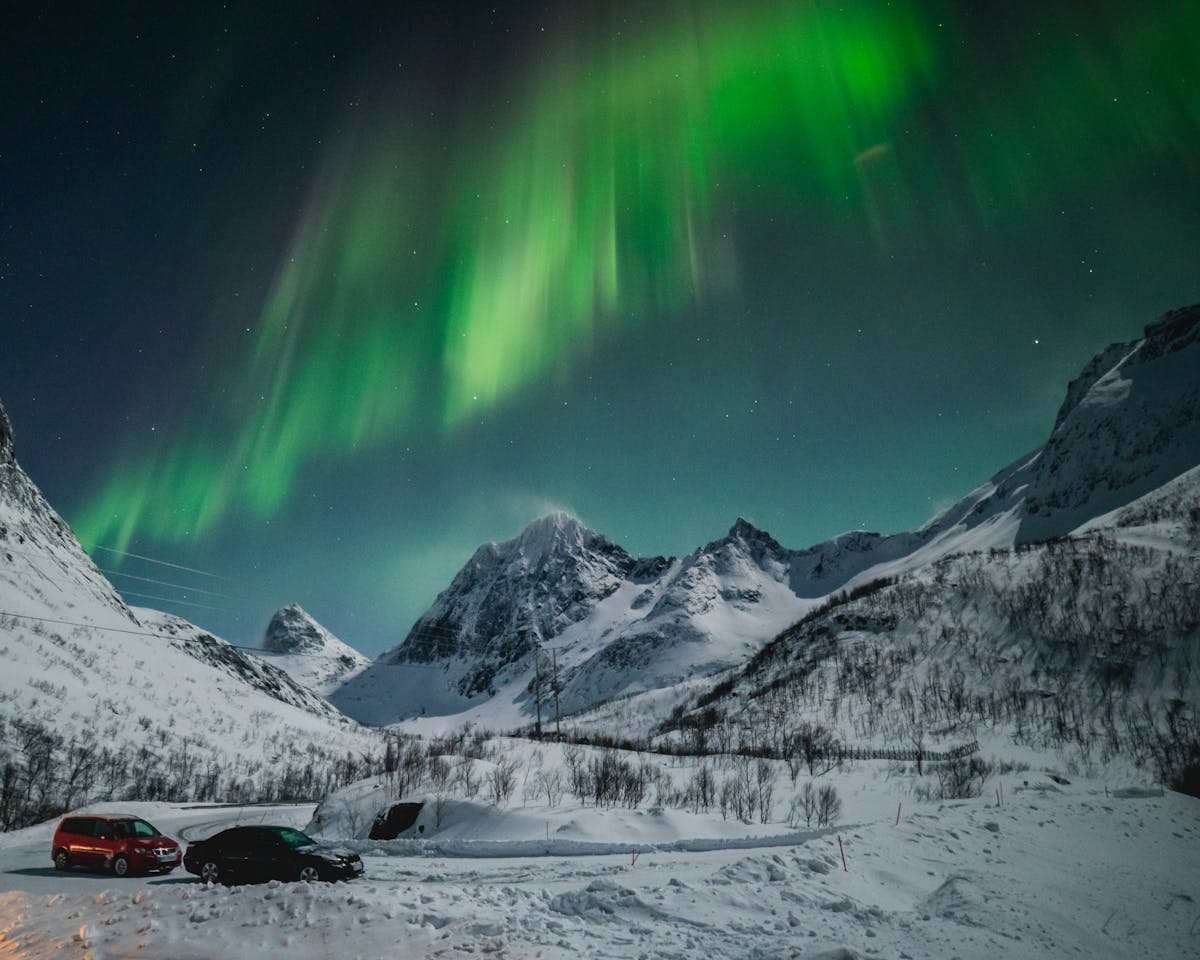
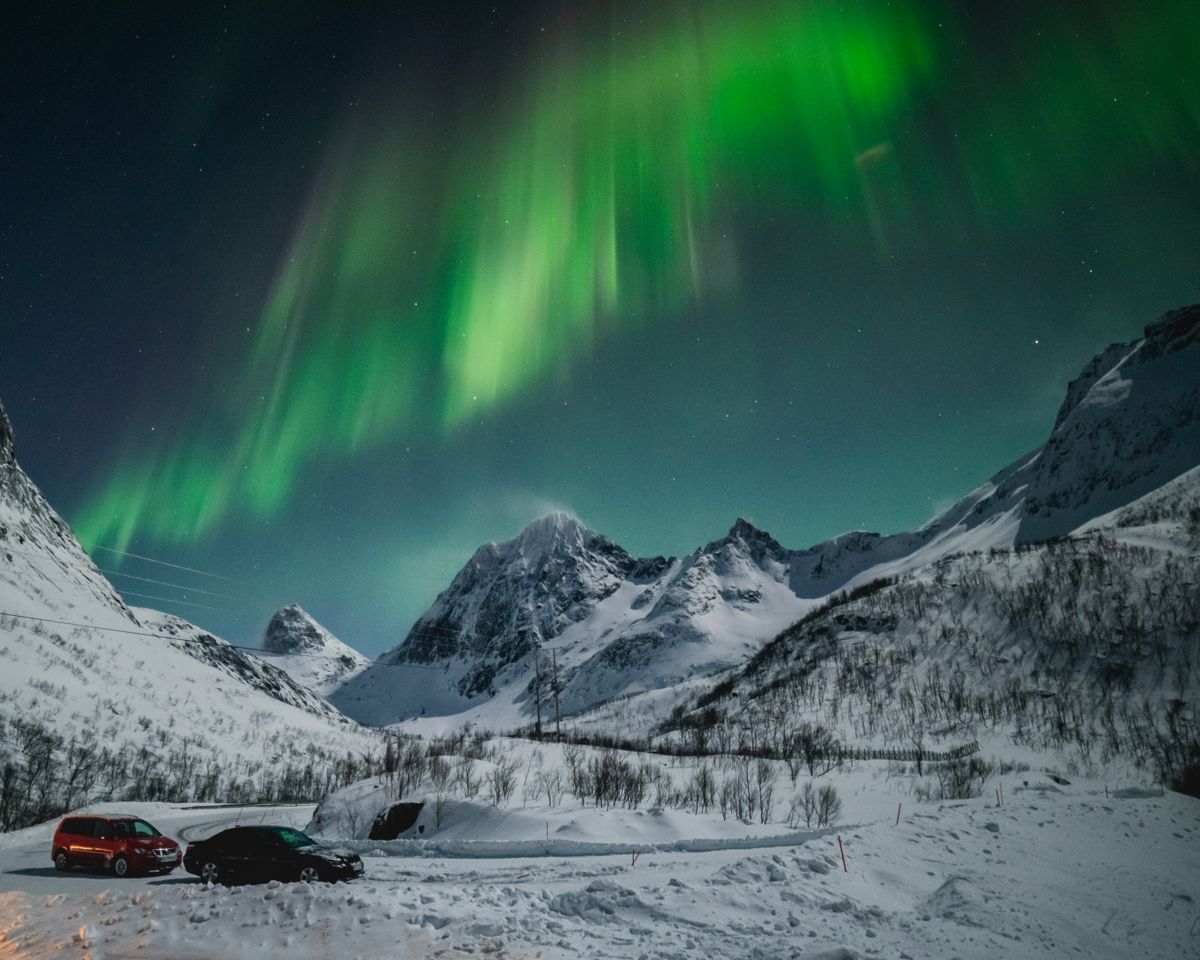
The Northern Lights are one of the great natural spectacles on Earth — curtains of green, purple, and pink light dancing across the Arctic sky with a speed and fluidity that no photograph or video can truly capture. Seeing them in person is a fundamentally different experience from seeing them on a screen. The lights move. They pulse. They appear from nowhere and vanish in seconds, then return stronger. And standing on a frozen Norwegian mountainside at midnight watching them ripple overhead, in complete silence, surrounded by snow and stars, is one of those travel moments that genuinely changes your frame of reference for what nature is capable of.
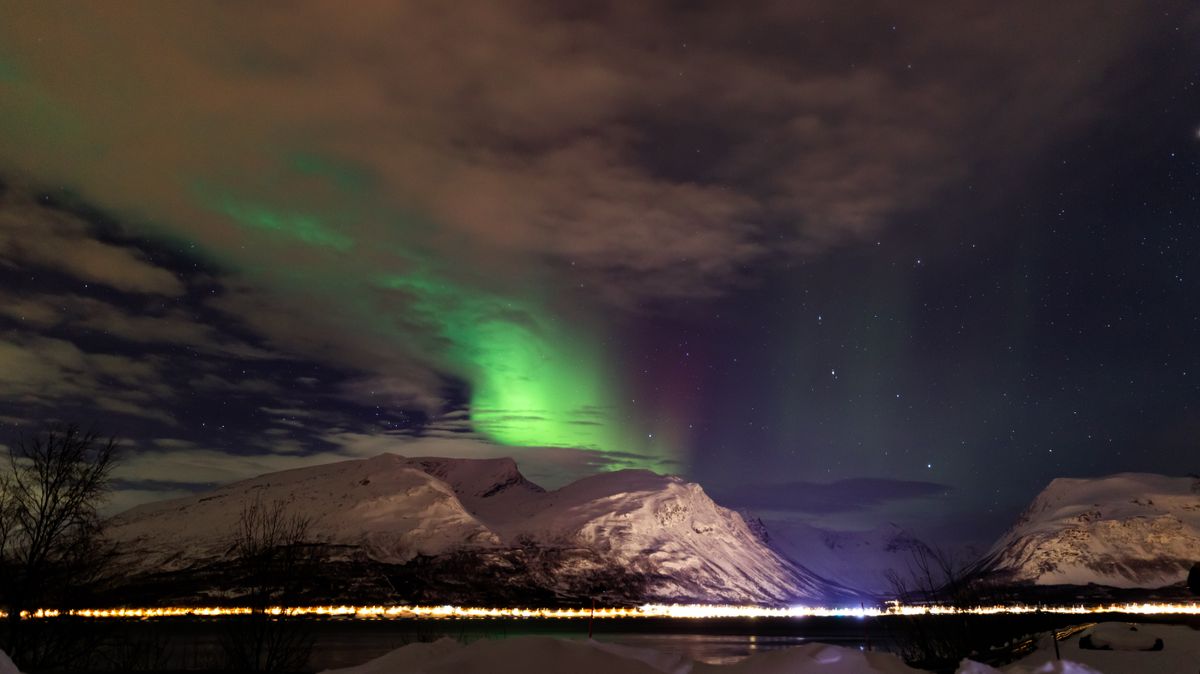
Tromso is the world’s most accessible Northern Lights destination. At 69 degrees north — 350 kilometres above the Arctic Circle — it sits directly under the auroral oval, the ring-shaped zone around the magnetic pole where the lights are most frequently visible. But unlike most places at this latitude, Tromso has a relatively mild climate (thanks to the Gulf Stream), an international airport with direct flights from major European cities, and a small but genuinely interesting city centre with restaurants, bars, and the Arctic Cathedral.

I’ve compared the best Northern Lights tours from Tromso, from budget minibus chases to premium experiences with Sami reindeer camps and husky visits. Every tour on this list involves driving away from the city’s light pollution to dark-sky locations where the aurora is visible on clear nights. Here are the top picks, plus the science behind the lights, how to maximise your chances, and the remarkable story of the Norwegian scientist who first explained what causes them.
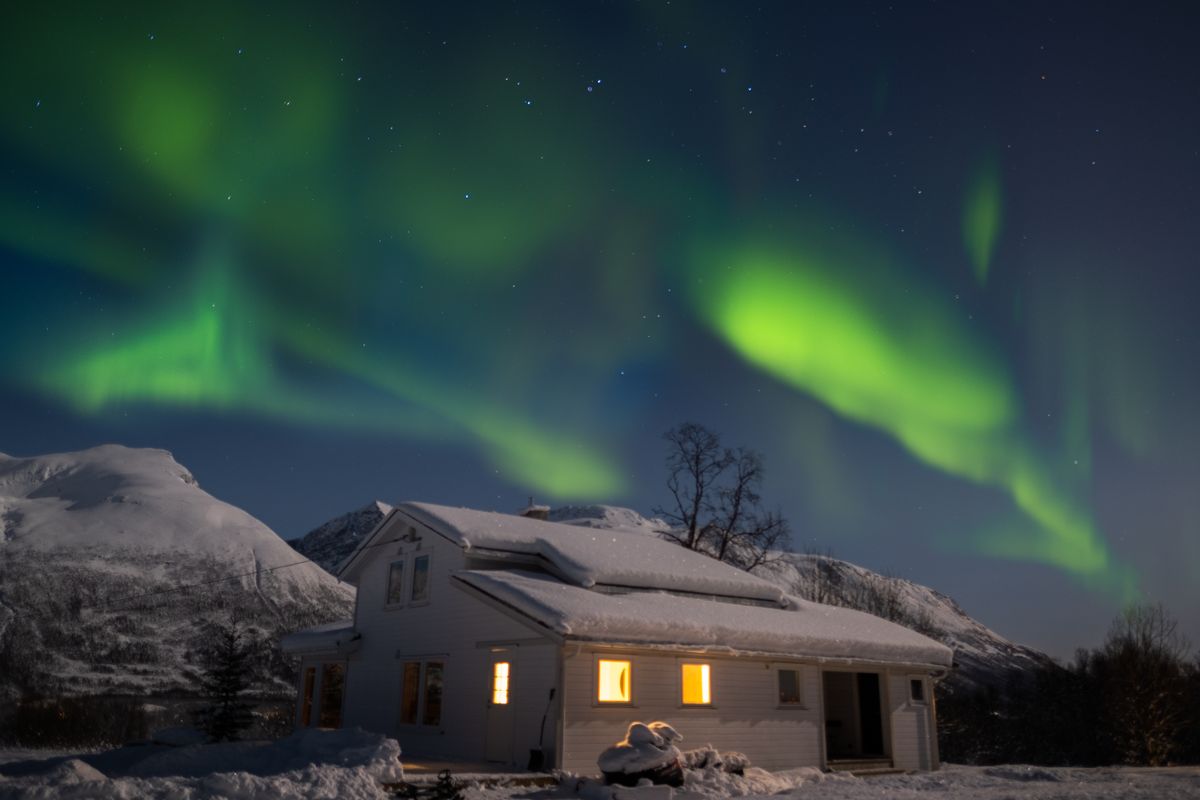
Short on time? Here’s what to book:
Most popular: Aurora Borealis Chase from Tromso — €119. The most reviewed Northern Lights tour in Tromso. Expert guides chase clear skies by minibus, driving up to 3 hours to find the best conditions. Photos included.
Best with culture: Northern Lights with Husky Visit & Traditional Dinner — €187. Combines the aurora chase with a visit to a husky kennel and a traditional Sami dinner in a lavvu (tent). The most complete Arctic evening.
Best budget: Northern Lights Safari with Experienced Guide — €93. Smaller group, experienced guide, free photos. The cheapest quality option with excellent reviews.
- What to Know Before Booking
- There are no guarantees
- The chase is part of the experience
- Season runs September to March
- Dress warmer than you think
- The Best Northern Lights Tours from Tromso
- 1. Aurora Borealis Chase from Tromso — €119
- 2. Northern Lights by Minibus with Photos & Bodysuits — €125
- 3. Aurora Hunt with Citizen Science — €227
- 4. Northern Lights with Husky Visit & Traditional Dinner — €187
- 5. Northern Lights Safari with Experienced Guide & Photos — €93
- What Causes the Northern Lights: A Norwegian Discovery
- How to Maximise Your Chances of Seeing the Aurora
- When to Go
- Frequently Asked Questions
- What if I don’t see the Northern Lights?
- Can I see the Northern Lights from Tromso city?
- How cold does it get?
- What’s the best camera for aurora photos?
- Is it worth it if I’ve seen the Northern Lights elsewhere?
What to Know Before Booking
There are no guarantees
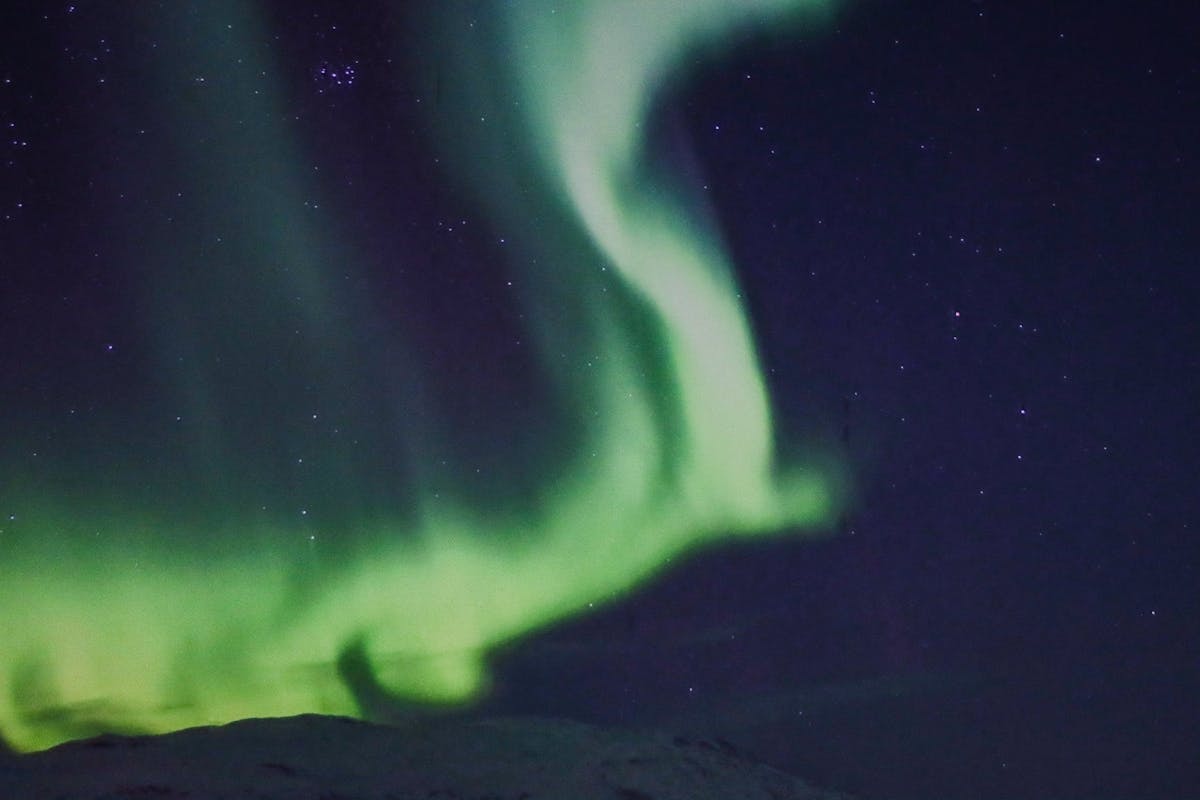
The Northern Lights are a natural phenomenon. No tour can guarantee you’ll see them. They require two things simultaneously: solar activity (which is beyond anyone’s control) and clear skies (which guides chase by driving to locations with breaks in the cloud). Success rates for multi-night visitors are around 80-90% during peak season — meaning if you book tours on two or three nights, you’ll almost certainly see them at least once. Booking just one night gives you roughly a 60-70% chance.
The chase is part of the experience
Northern Lights tours from Tromso are “chase” tours — the guide monitors weather radar and satellite data in real time, then drives to wherever the skies are clearest. This sometimes means a 2-3 hour drive into the Norwegian wilderness. Far from being tedious, the chase builds anticipation, and guides fill the drive with stories about the aurora, the Arctic, and life above the Arctic Circle. When you finally step out of the bus and look up to see the sky dancing, the journey makes the payoff even sweeter.
Season runs September to March
The aurora is visible year-round, but you need dark skies to see it. From late May to mid-July, Tromso experiences the Midnight Sun — 24 hours of daylight — which makes the aurora invisible. The Northern Lights season runs from September to March, with the darkest months (November-January) offering the longest viewing windows and the shortest days.
Dress warmer than you think
You’ll be standing outside, stationary, for 1-3 hours in Arctic winter temperatures that can drop to -15 or -20 degrees. Most tours provide thermal suits, but bring your own warm base layers, thick socks, insulated boots, and gloves. A balaclava or warm hat that covers your ears is essential. Cold feet and hands will ruin the experience faster than clouds will.
The Best Northern Lights Tours from Tromso
1. Aurora Borealis Chase from Tromso — €119
The flagship aurora tour from Tromso and the most reviewed for good reason. Expert guides use real-time weather data, aurora forecasts, and years of local knowledge to drive you to the best viewing location within a 2-3 hour radius of the city. The chase typically covers remote locations in the Troms region — frozen lakes, mountain passes, and fjord shores where light pollution is zero and the sky stretches from horizon to horizon.
When the lights appear, guides set up tripods and take long-exposure photos of you with the aurora — images that your phone camera simply cannot capture. These photos are included in the tour price and are often the best souvenir you’ll bring home from Norway. Hot drinks and snacks are served while you wait, and the guide’s commentary on aurora science, Sami culture, and Arctic wildlife fills the darker moments between displays. At €119, it’s the best-value aurora experience in Tromso.
Duration: 6-7 hours | Departure: Tromso, evening (around 6-7 PM)
2. Northern Lights by Minibus with Photos & Bodysuits — €125
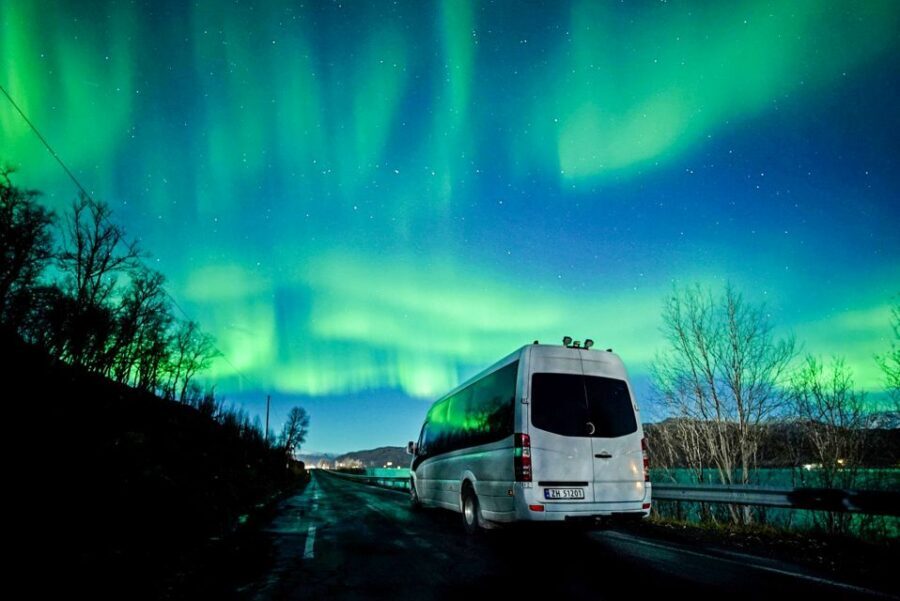
The second most reviewed tour, with a key extra: full-body thermal suits provided. This matters more than you might think. Standing outside at midnight in the Arctic without adequate insulation means you’ll be too cold to enjoy what you’re seeing. With the bodysuit, you can stand comfortably for hours, fully focused on the sky rather than your freezing extremities.
The tour uses minibuses (smaller than full coaches) for a more intimate group experience. Guides are aurora specialists who explain the science behind the lights while chasing clear skies across the Troms landscape. Professional photos are included — long-exposure shots of you silhouetted against the aurora that are genuinely worth framing. Hot chocolate, marshmallows, and campfire stories round out the Arctic atmosphere.
Duration: 7 hours | Departure: Tromso, evening
3. Aurora Hunt with Citizen Science — €227
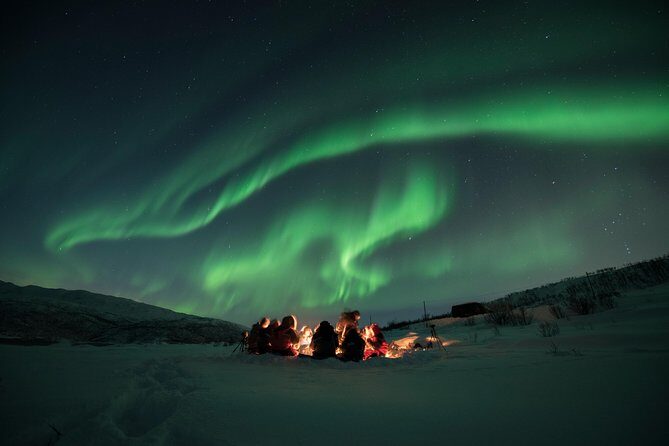
The science-focused option. Run by Wandering Owl, this tour partners with aurora researchers at the University of Tromso, turning your Northern Lights chase into a citizen science expedition. You don’t just watch the aurora — you help record it, using specialised observation protocols that contribute to real scientific data about the magnetosphere and solar wind.
Guides are selected for their scientific knowledge as well as their tour-guiding ability. The explanations of what causes the aurora, why it appears in different colours, and how solar activity cycles affect its intensity go far beyond what standard tours offer. The chase itself covers the same territory — remote locations with dark skies — but the context transforms the experience from “pretty lights” to “understanding a phenomenon that connects the sun to our atmosphere.” At €227, the premium buys genuine scientific depth.
Duration: 5-8 hours | Departure: Tromso, evening
4. Northern Lights with Husky Visit & Traditional Dinner — €187
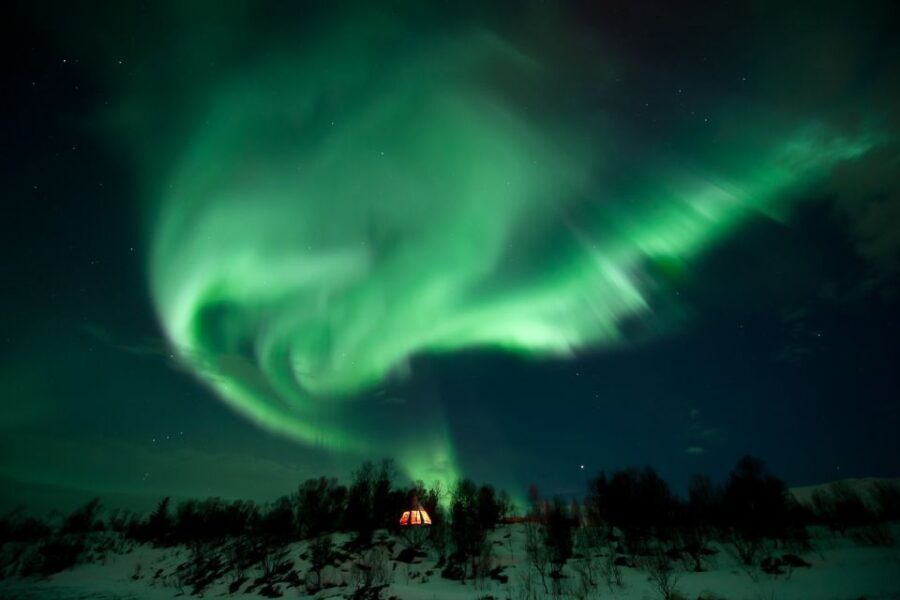
The culture option. Before the aurora chase begins, you visit a husky kennel outside Tromso where Alaskan huskies are trained for sledding. Meeting the dogs — friendly, excitable, and clearly in love with the Arctic cold — is delightful regardless of your feelings about the Northern Lights. Some tours offer short sled rides depending on conditions.
The evening continues with a traditional Sami dinner served in a lavvu (a conical tent similar to a teepee) around a central fire. The meal features Arctic specialities — reindeer stew, salmon, and traditional bread — eaten while your guide explains Sami culture, their relationship with the Aurora (which they called “Guovssahas,” the light you can hear), and how reindeer herding has shaped life above the Arctic Circle for millennia. After dinner, the aurora chase begins. At €187, you get three experiences in one evening: huskies, Sami culture, and the Northern Lights.
Duration: 4 hours | Departure: Tromso, evening
5. Northern Lights Safari with Experienced Guide & Photos — €93
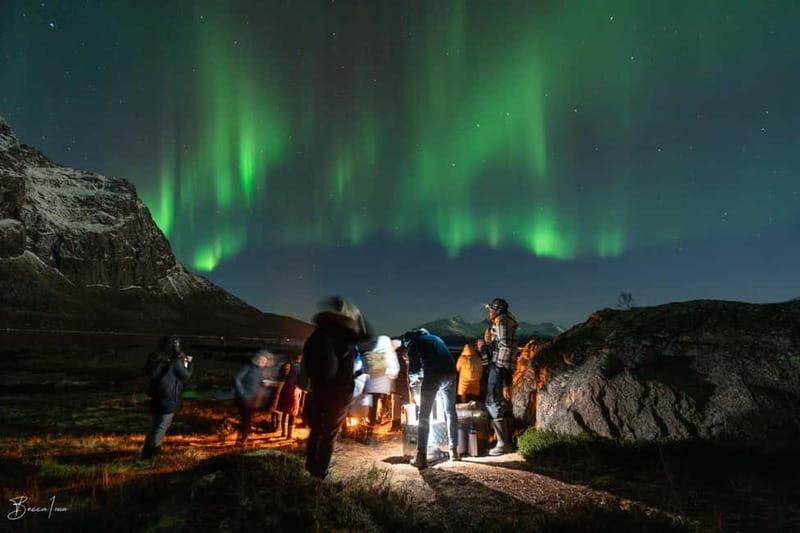
The budget option that doesn’t compromise on the core experience. At €93, this is the most affordable quality Northern Lights tour from Tromso. You get an experienced guide, a sky chase using weather data and local knowledge, and professional photos included in the price. The group may be slightly larger than premium tours, but the aurora doesn’t care how many people are watching — it performs the same show for everyone.
The guide provides aurora commentary, hot drinks during the wait, and help with camera settings for anyone wanting to try their own photos. The chase covers the same remote locations as the more expensive tours — frozen fjords, mountain plateaux, and inland valleys where light pollution is zero. For travellers who want the Northern Lights experience without the husky/dinner additions, this delivers exactly that at the best price.
Duration: Evening | Departure: Tromso, evening
What Causes the Northern Lights: A Norwegian Discovery
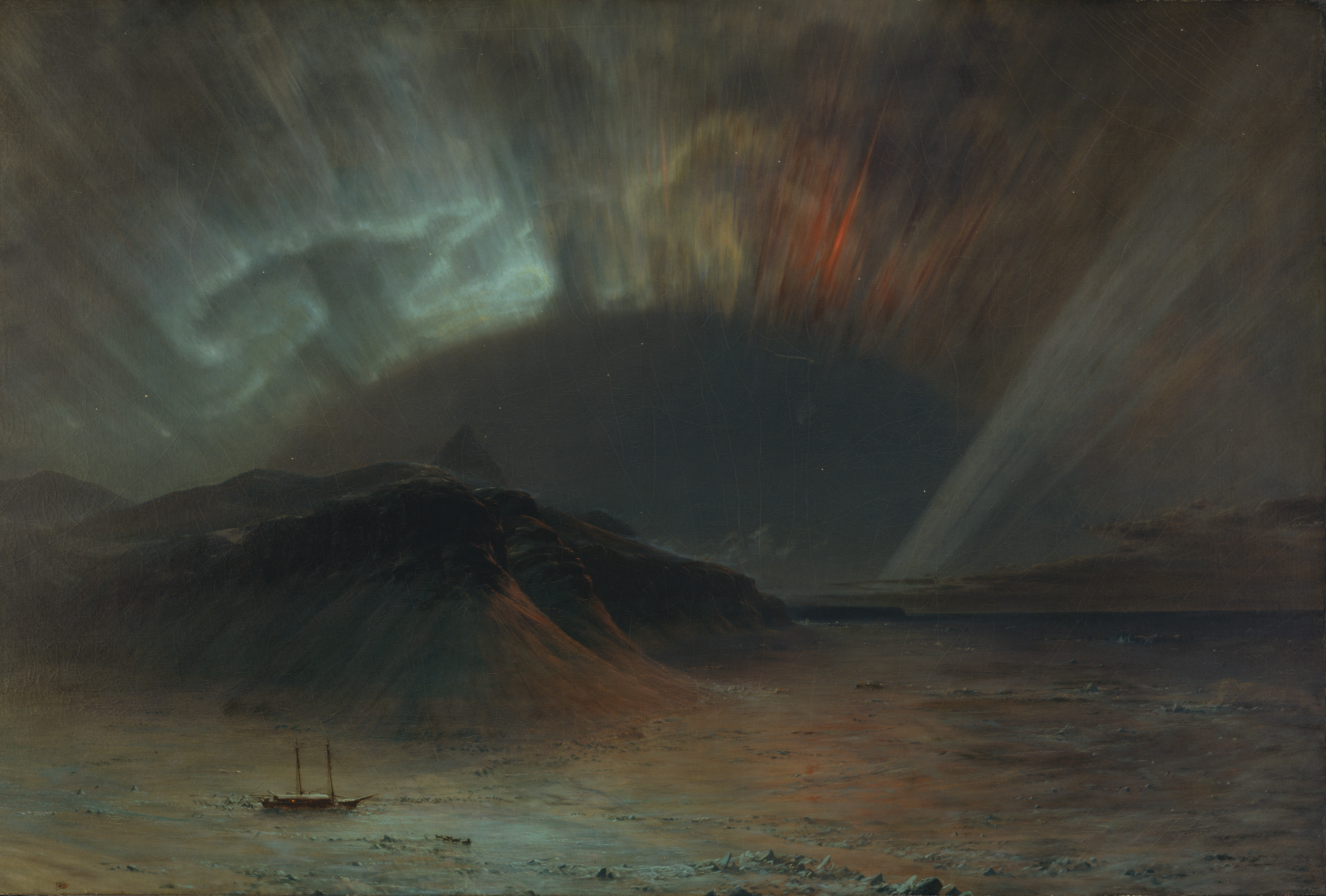
The Northern Lights have been observed and mythologised for thousands of years. The Norse believed they were reflections from the shields and armour of the Valkyries, the warrior maidens who carried fallen heroes to Valhalla. The Sami people called them Guovssahas — “the light you can hear” — and believed that making noise or whistling at them was dangerous, as it might attract their attention.
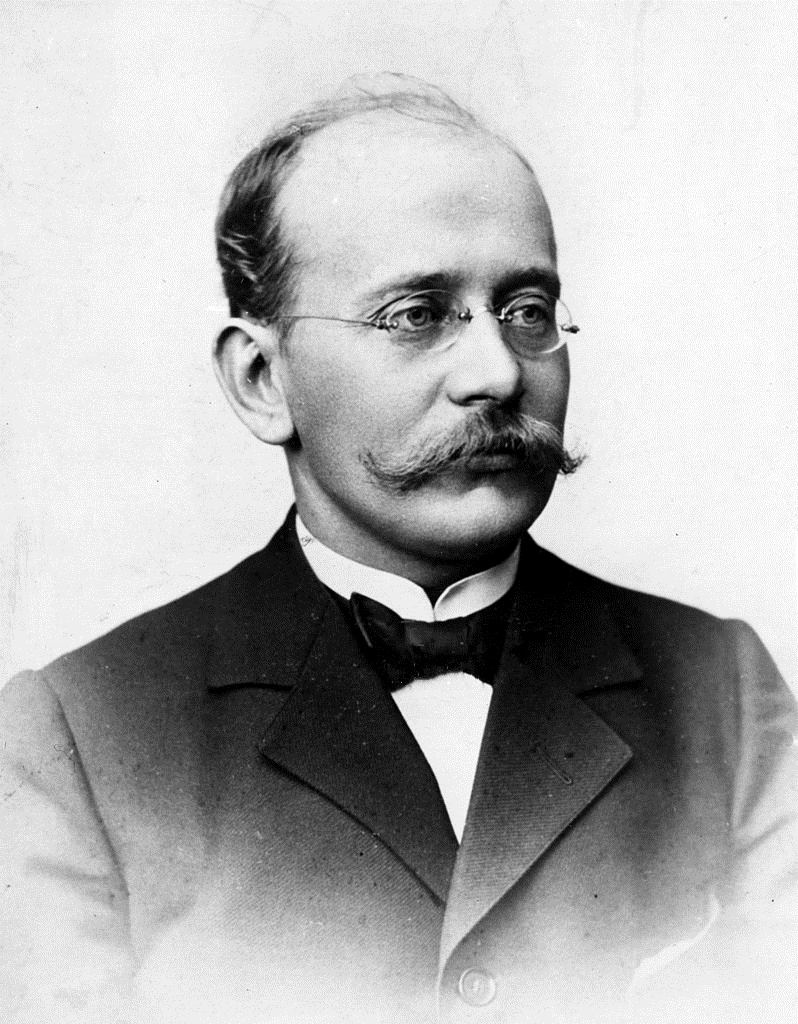
The scientific explanation came from a Norwegian. Kristian Birkeland, a physicist from the University of Christiania (now Oslo), became obsessed with the aurora in the late 1890s. He organised expeditions to northern Norway, built observation stations on mountaintops, and endured brutal Arctic winters to collect data. His breakthrough came in the laboratory: using a magnetised sphere called a “terrella” (little Earth) inside a vacuum chamber, he demonstrated that charged particles from the sun, guided by Earth’s magnetic field, could create glowing patterns at the poles.
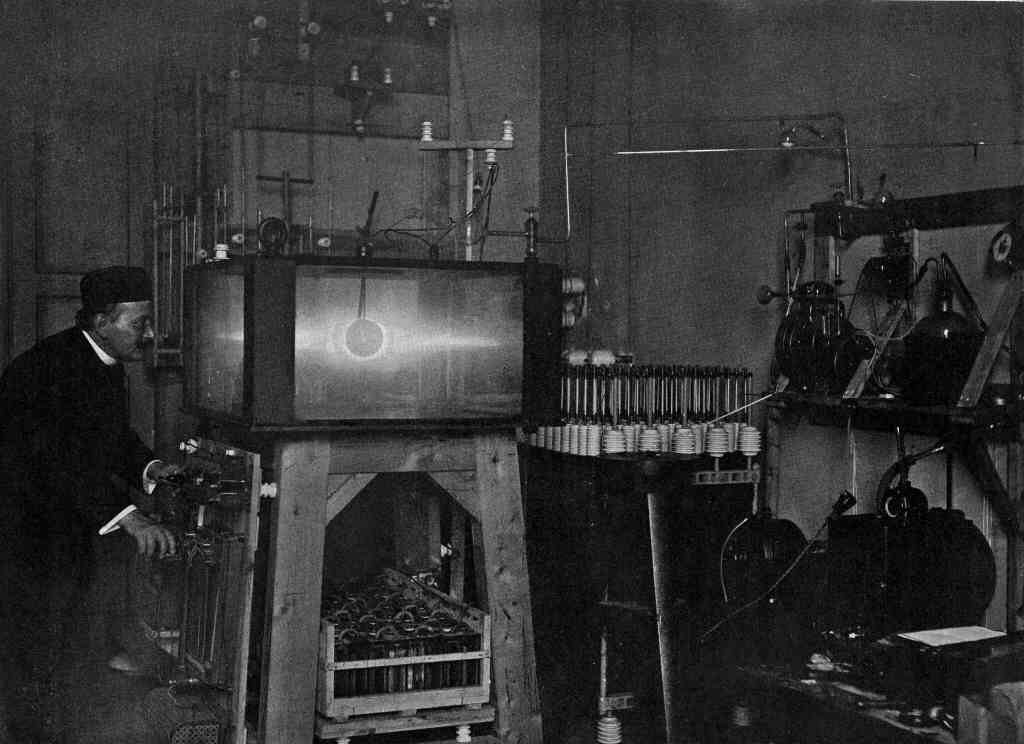
Birkeland was right, but his theory was controversial. Most scientists of his era believed the aurora was an atmospheric phenomenon unrelated to the sun. It took until the 1960s — and the advent of satellite measurements — for Birkeland’s solar-wind theory to be definitively confirmed. He died in 1917, decades before his vindication. Today he’s honoured on the Norwegian 200-kroner note, and the Birkeland currents — the electrical currents that flow between the solar wind and Earth’s atmosphere, creating the aurora — bear his name.
The process works like this: the sun constantly emits a stream of charged particles (the solar wind). When these particles reach Earth, most are deflected by the magnetic field. But at the poles, where the magnetic field lines converge, some particles are funnelled into the upper atmosphere. There, they collide with oxygen and nitrogen atoms at altitudes of 100-300 kilometres, transferring energy that the atoms release as light. Green light comes from oxygen at lower altitudes. Purple and red come from nitrogen and high-altitude oxygen. The dancing, rippling movement is caused by fluctuations in the solar wind and changes in Earth’s magnetic field — no two displays are ever the same.

How to Maximise Your Chances of Seeing the Aurora
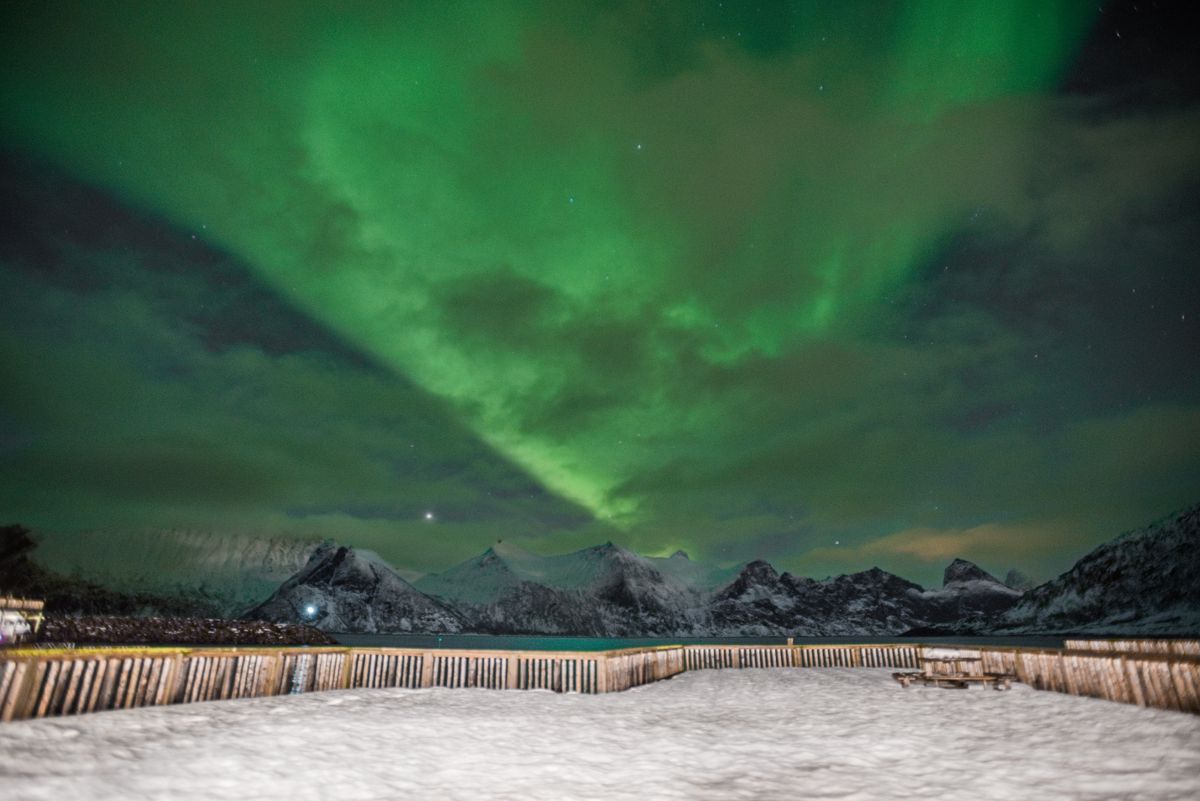
Book multiple nights. This is the single most important tip. No single night guarantees a sighting. But booking tours on two or three nights raises your cumulative probability to nearly 90%. Many operators offer discounts for multi-night bookings.
Check the Kp index. The aurora’s intensity is measured on the Kp scale (0-9). Kp 3-4 produces visible displays from Tromso. Kp 5+ creates strong, active displays. Apps like My Aurora Forecast and Norway Lights give real-time Kp predictions. Book your tour for the night with the highest predicted Kp.
Clear skies matter more than solar activity. A Kp 7 storm under cloud cover shows you nothing. A Kp 3 on a clear night can be beautiful. Your guide will chase clear-sky patches, but sometimes Tromso is socked in for days. This is why multiple nights matter — weather patterns change nightly.
Give your eyes time to adjust. When you arrive at the viewing location, resist the urge to check your phone. Let your eyes adjust to darkness for 15-20 minutes. The aurora is much more impressive to fully dark-adapted eyes than to eyes still recovering from a screen’s backlight.

Photograph with the right settings. Smartphone cameras have improved dramatically, but the aurora still challenges them. Use manual/night mode if available. Set ISO to 1600-3200, shutter speed to 5-15 seconds, and focus to infinity. A phone tripod or propping against something stable makes the difference between a blurry mess and a memorable shot. Or just let the tour guide take the professional photos — they have the equipment and know exactly which settings work.

When to Go
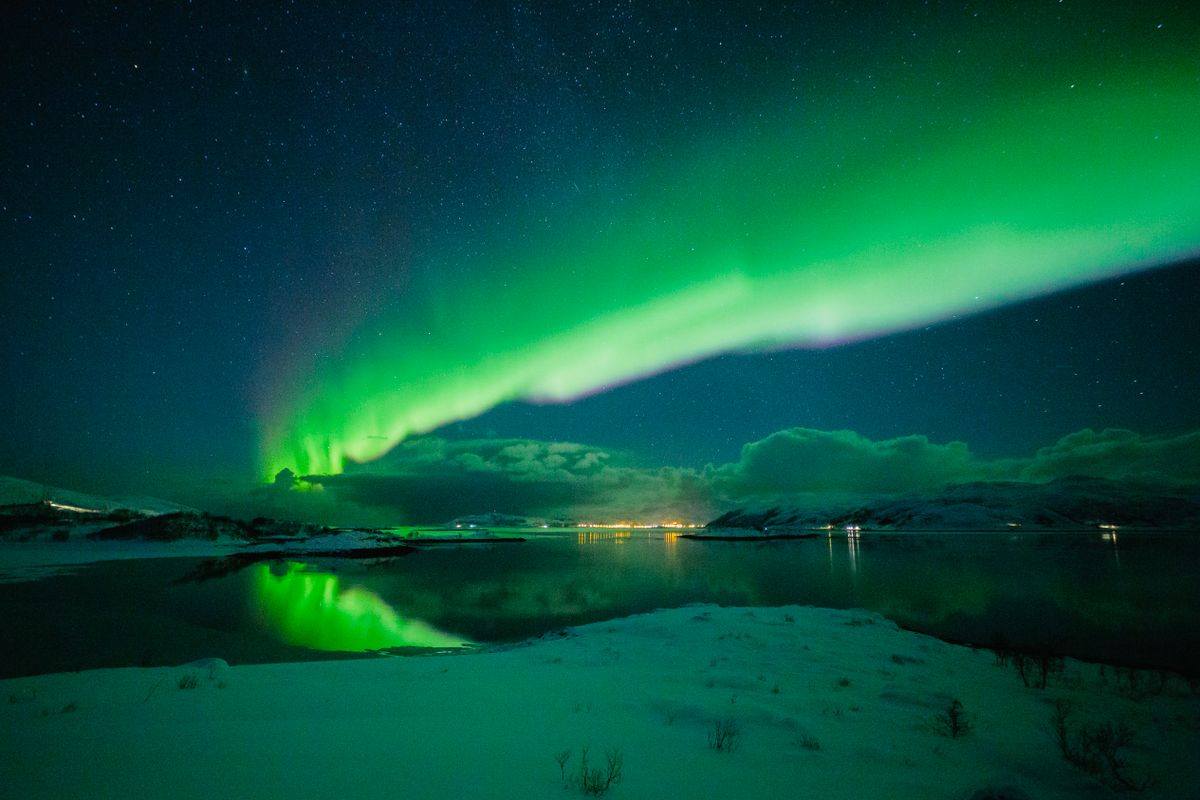
Best months: Late September to mid-March. The equinox months (September-October and February-March) statistically produce the most active displays. January and February offer the longest dark hours and the best chance of snow-covered landscapes.
Darkest period: November to January. Tromso experiences the polar night (Mork tid) from late November to mid-January — the sun doesn’t rise at all. The prolonged darkness means more potential viewing hours, but the weather is coldest and cloud cover is common.
Spring aurora: February to March is considered optimal by many aurora experts. Days are getting longer (providing daytime activities), nights are still dark enough for aurora viewing, and the equinox effect boosts geomagnetic activity. Snow conditions are also excellent for the landscape photos.
Avoid: April to August. Even during the solar maximum, the midnight sun makes aurora viewing impossible. If you’re visiting Tromso in summer, come for the midnight sun, whale watching, and hiking instead — and plan a separate winter trip for the aurora.


Frequently Asked Questions
What if I don’t see the Northern Lights?
It happens. Some tours offer a free rebooking for another night. Others provide a partial refund. Check the specific tour’s policy before booking. The most important strategy is booking on multiple nights — this dramatically increases your overall chances.
Can I see the Northern Lights from Tromso city?
Sometimes, on strong displays (Kp 5+). But city light pollution significantly dims the experience. Even driving 20-30 minutes outside the city makes an enormous difference. The guided tours drive 1-3 hours to find the darkest, clearest locations.
How cold does it get?
Tromso in winter averages -4 to -7 degrees, but remote viewing locations can be -15 to -20 degrees with wind chill. Most tours provide thermal suits. Bring your own warm base layers, insulated boots, thick gloves, and a hat that covers your ears. Cold is the biggest comfort challenge, not the aurora itself.
What’s the best camera for aurora photos?
A DSLR or mirrorless camera with manual settings and a tripod produces the best results. Modern smartphones (iPhone 15+, Samsung Galaxy S23+) can capture decent aurora photos in night mode. The tour guide’s professional photos are usually the best option — they have the right equipment and know the settings intimately.
Is it worth it if I’ve seen the Northern Lights elsewhere?
Every aurora display is unique. And Tromso’s combination of accessible Arctic location, professional guides, and wild Norwegian landscape makes it arguably the best place in the world to experience them. Even seasoned aurora chasers return to Tromso for the guides, the scenery, and the unpredictability of each night’s display.
The Northern Lights are one end of Norway’s natural spectrum — the winter counterpart to the summer fjord experiences. For the other side of Norwegian nature, the Flam Railway from Bergen takes you through the country’s most dramatic mountain and fjord scenery. In Oslo, an Oslo Fjord cruise shows you a gentler, island-dotted coastline in the country’s south. And for raw cliff-edge drama, the Pulpit Rock hike from Stavanger puts you on a 604-metre cliff overlooking the Lysefjord — one of Norway’s most iconic viewpoints.