
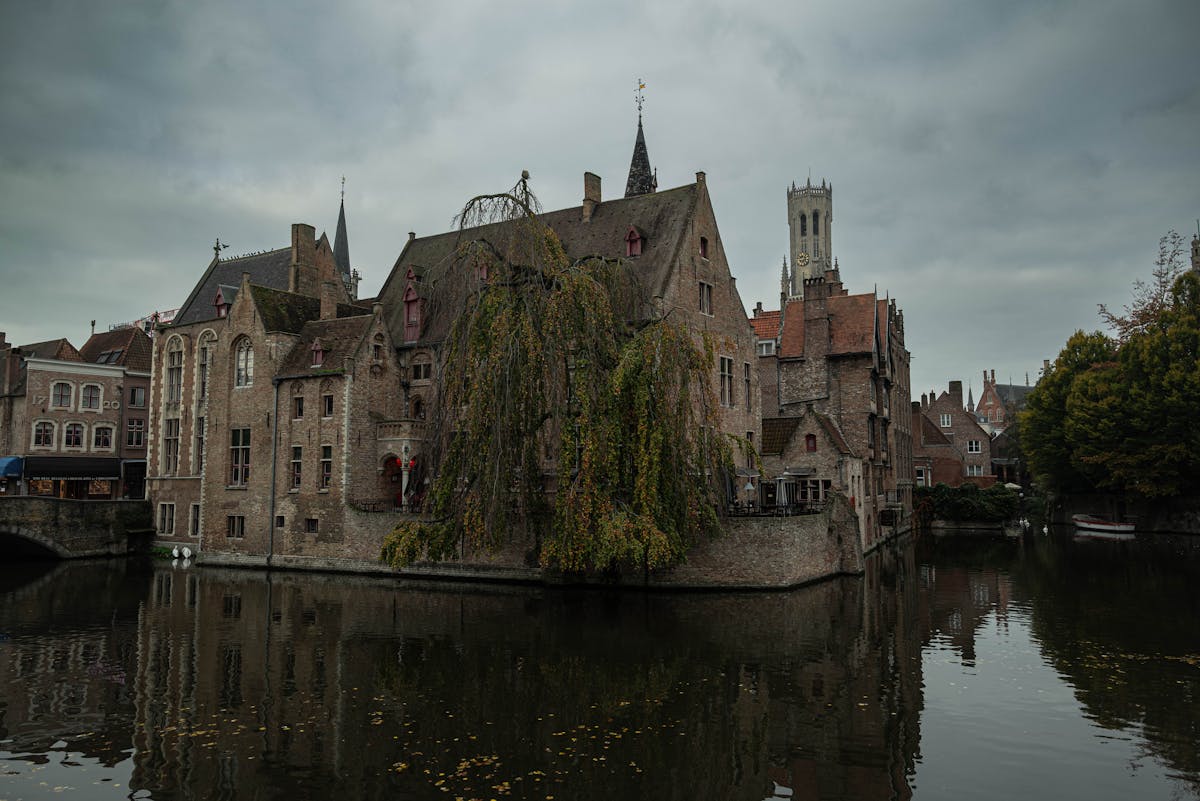
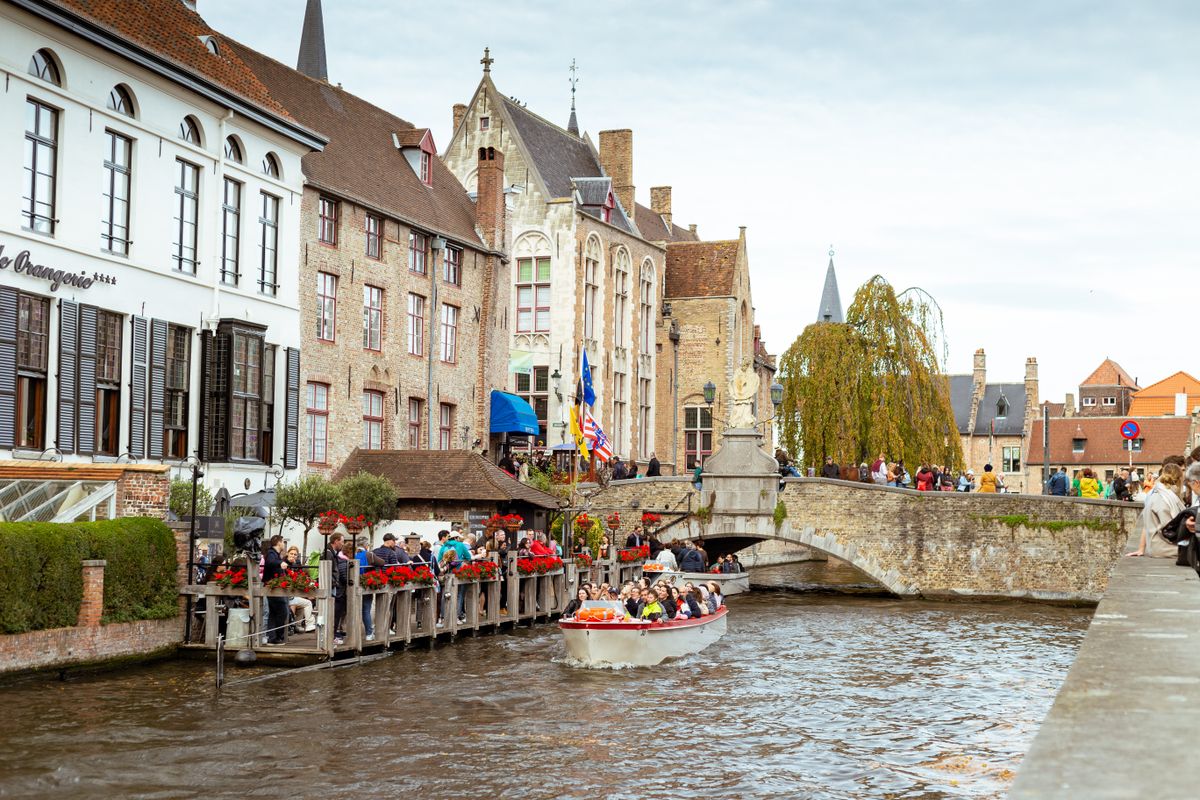
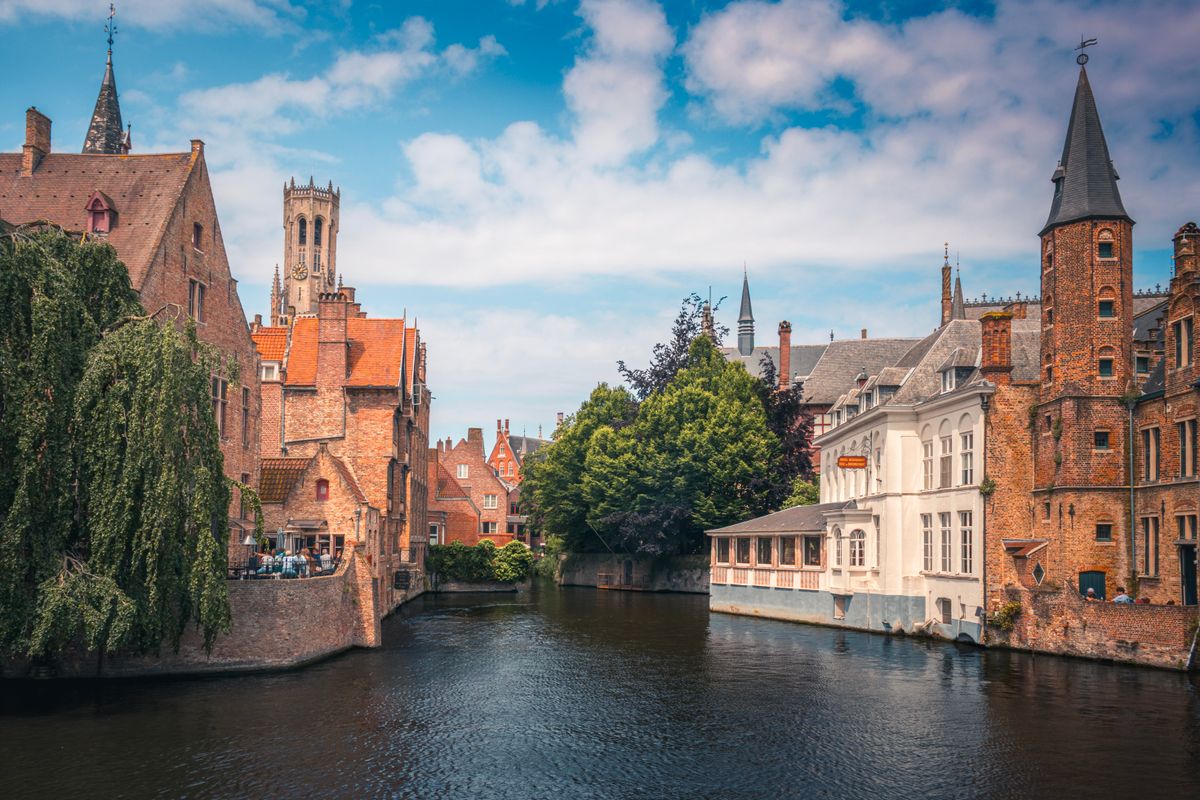
Bruges is the kind of city that makes you question whether you’ve accidentally stepped into a film set. A perfectly preserved medieval trading centre, it has cobblestone streets, gabled brick houses reflected in mirror-still canals, a market square dominated by an 83-metre belfry, and more chocolate shops per square metre than any city has a right to. From Brussels, it’s barely an hour by train — close enough for a day trip, compelling enough to make you wish you’d booked a night.
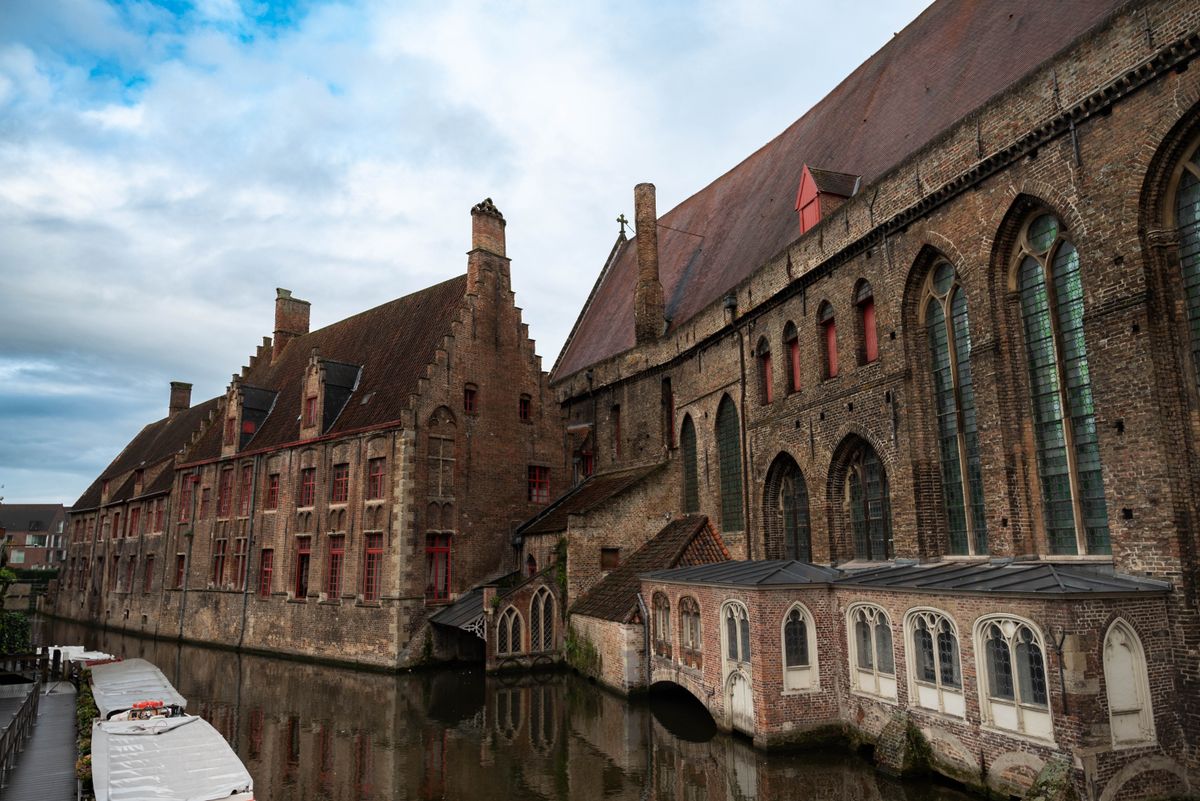
In the 13th and 14th centuries, Bruges was one of the wealthiest cities in Europe — the commercial capital of northwestern Europe, where Flemish cloth was traded for Italian silk, English wool for Baltic timber, and merchant banking was invented alongside the world’s first stock exchange. The wealth built the churches, guildhalls, and canal-side mansions that survive almost unchanged today. Then the harbour silted up, trade moved to Antwerp, and Bruges fell asleep for 400 years — which is exactly why it looks the way it does. Nobody had the money to tear down the medieval buildings and replace them with something modern.

I’ve compared the best Bruges day trips from Brussels, from guided coach tours that combine Bruges with Ghent to independent options and walking tours within Bruges itself. Here are the top picks, plus the remarkable economic history that made this small Flemish city one of the richest places on Earth.
Short on time? Here’s what to book:
Best combo: Guided Day Trip to Bruges & Ghent — €55. Two medieval cities in one day. Guided tour of both with transport from Brussels. The most reviewed and best-value option.
Best in Bruges: Small Group Boat Cruise & Guided Walking Tour — €51. Already in Bruges? This combines a canal cruise with a guided walk. The most popular in-city experience.
Best budget: Historical Walking Tour: Legends of Bruges — €4. A tip-based walking tour that covers Bruges’ history and legends. Incredible value for a quality guided experience.
- What to Know Before Booking
- Brussels to Bruges is easy — train or tour
- Bruges is compact — you can walk everything
- A canal boat ride is non-negotiable
- The chocolate and beer are world-class
- The Best Bruges Tours from Brussels
- 1. Guided Day Trip to Bruges & Ghent from Brussels — €55
- 2. Ghent & Bruges Day Tour from Brussels — €57
- 3. Bruges & Ghent — Belgium’s Fairytale Cities — €59
- 4. Bruges: Small Group Boat Cruise & Guided Walking Tour — €51
- 5. Historical Walking Tour: Legends of Bruges — €4
- Medieval Money: How Bruges Became the Richest City in Northern Europe
- Key Sights You’ll See
- When to Go
- Frequently Asked Questions
- Can I take the train from Brussels to Bruges independently?
- Is Bruges worth it if I’ve seen Amsterdam?
- Should I do Bruges only or Bruges + Ghent?
- Is Belgian chocolate actually better?
- What should I eat in Bruges?
What to Know Before Booking
Brussels to Bruges is easy — train or tour
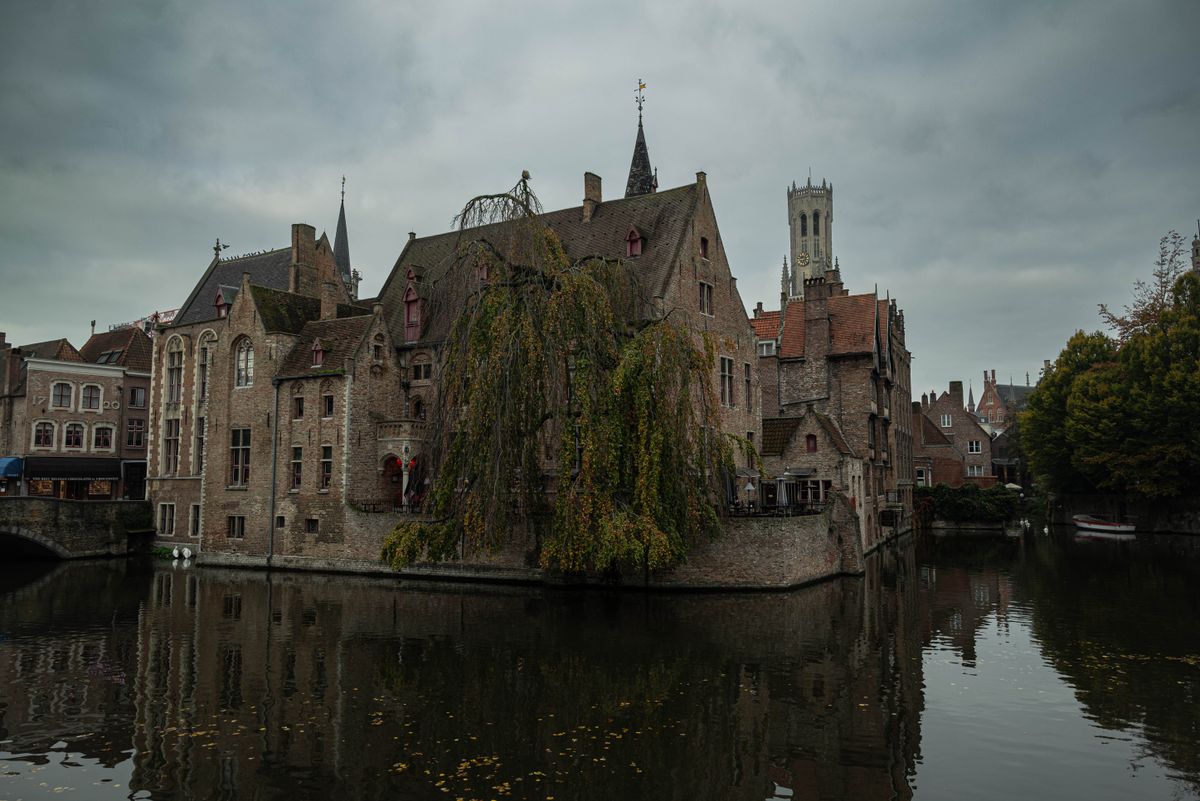
The train from Brussels takes about an hour and runs frequently. It’s a straightforward day trip you can do independently. Guided tours add a coach ride, a guide, and often a second city (Ghent) — which saves you the planning and adds context you wouldn’t get on your own. Both approaches work; the question is whether you want flexibility or a curated experience.
Bruges is compact — you can walk everything
The entire historic centre is about one kilometre across. Every major sight — the Markt square, the Belfry, the Basilica of the Holy Blood, the Beguinage, the canal-side streets — is within walking distance. You don’t need public transport, taxis, or a bicycle. Comfortable shoes on cobblestones are the only transport requirement.
A canal boat ride is non-negotiable
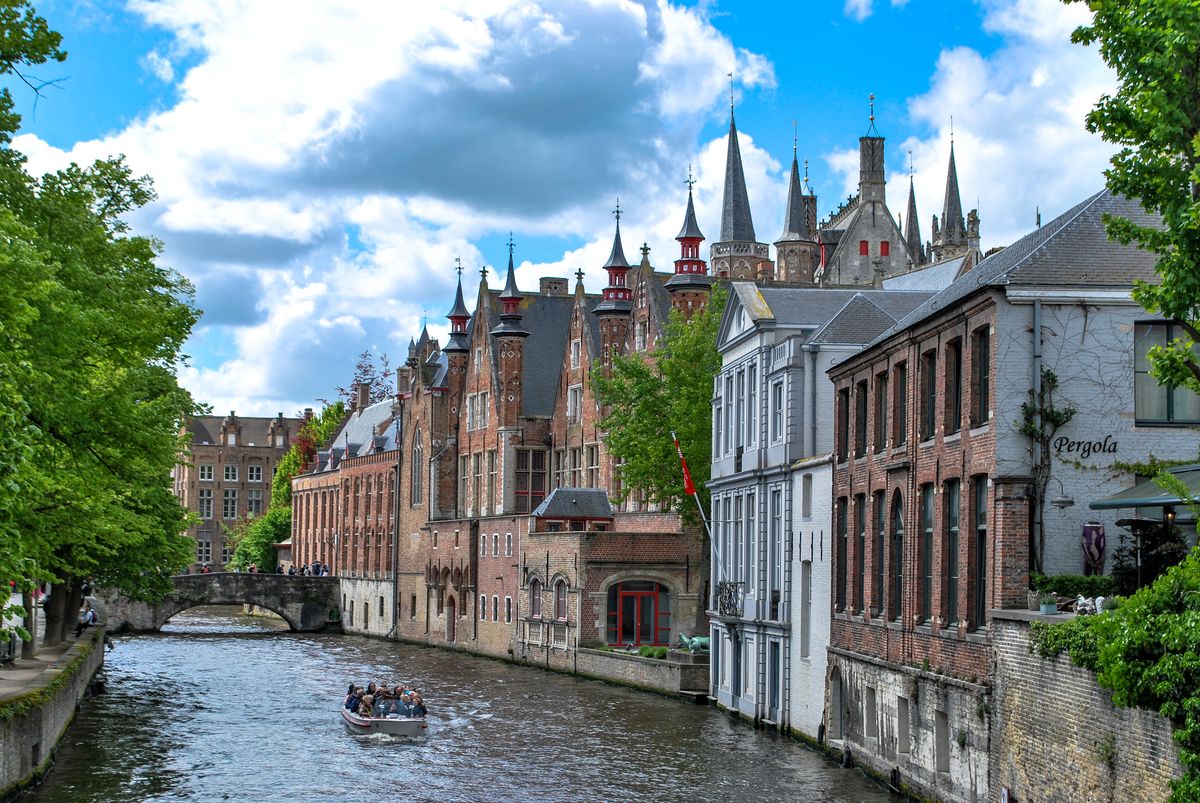
Thirty minutes on a canal boat transforms your understanding of Bruges. From the water, you see the backs of buildings that face the canals — private gardens, medieval warehouse loading bays, bridges designed for barge traffic — perspectives invisible from street level. Boat docks are scattered through the centre; no booking needed, just queue and pay.
The chocolate and beer are world-class
Belgium has more chocolate shops per capita than anywhere else, and Bruges has more than anywhere in Belgium. The quality ranges from tourist-trap pralines to genuinely exceptional artisan work. For beer, Belgium’s tradition of Trappist and abbey brewing is unmatched — try a Brugse Zot (brewed in Bruges’ only remaining brewery) or a Straffe Hendrik at the source.
The Best Bruges Tours from Brussels
1. Guided Day Trip to Bruges & Ghent from Brussels — €55
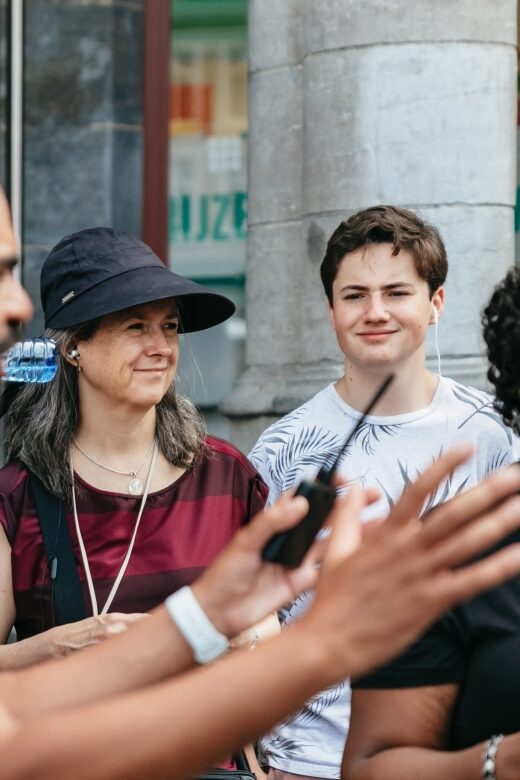
The most popular and best-value option. One day, two of Flanders’ most beautiful medieval cities, all logistics handled. The morning covers Ghent — its imposing Gravensteen castle, the cathedral housing the Ghent Altarpiece (one of the most important paintings in art history), and the waterfront Graslei. The afternoon moves to Bruges for the Markt square, Belfry, canals, and free time for chocolate shopping.
The guide’s knowledge of both cities makes this more than a bus ride between photo stops. The connections between Bruges and Ghent — their rivalry, their different responses to economic decline, and how Flemish identity shaped both — create a narrative that gives the day genuine depth. At €55 including coach transport, this is outstanding value.
Duration: Full day | Departure: Brussels, morning
2. Ghent & Bruges Day Tour from Brussels — €57
Nearly identical in format — Ghent in the morning, Bruges in the afternoon, with guided walking tours in both cities. The price and duration are comparable to the top pick. Different operators may visit the cities in different order or allocate time differently between them.
This tour is an excellent backup when the most-reviewed option is sold out (which happens regularly in summer). The guide coverage is thorough, the transport comfortable, and the core experience — two medieval Flemish cities in a day — is identical. At €57, the minimal premium buys essentially the same day.
Duration: Full day | Departure: Brussels, morning
3. Bruges & Ghent — Belgium’s Fairytale Cities — €59
The Viator-listed version of the Bruges-Ghent combo. The itinerary follows the same pattern — guided walks in both cities, coach transport from Brussels, free time for exploration and chocolate. The guide focuses on the “fairytale” aspects of both cities — the medieval architecture, the canal reflections, the guild halls — but also covers the less picturesque history of trade wars, plagues, and political upheaval.
At €59, this is marginally the most expensive of the three combo options but includes a well-established tour operator with English-speaking guides. The coach is comfortable, the timing allows adequate time in each city, and the return to Brussels is typically by early evening.
Duration: Full day | Departure: Brussels, morning
4. Bruges: Small Group Boat Cruise & Guided Walking Tour — €51
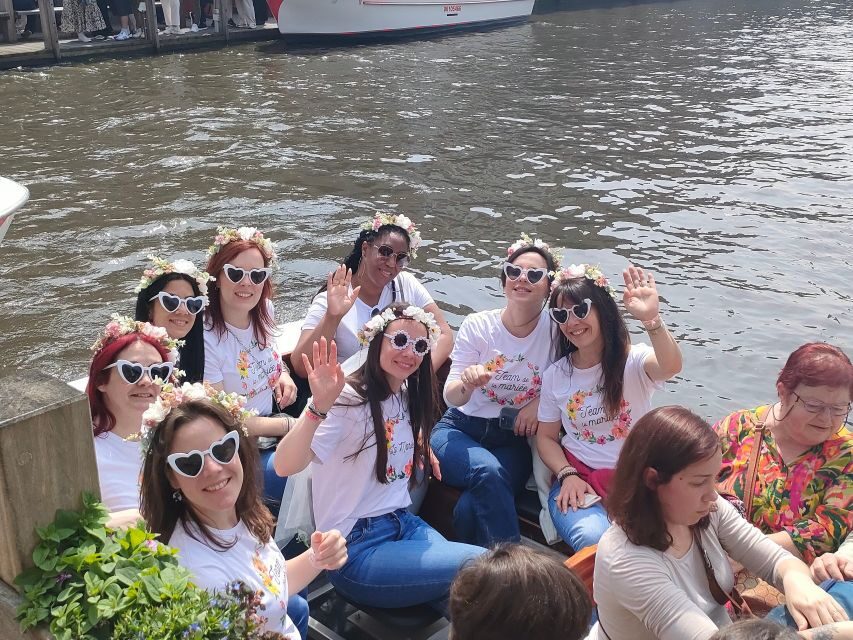
The in-Bruges option for visitors who are getting there independently (by train from Brussels or as part of a longer trip). A small-group guided walking tour covers the major landmarks — Markt, Belfry, Basilica of the Holy Blood, Beguinage — followed by a canal cruise that shows you the city from the water.
The walking tour lasts about two hours, and the canal cruise adds another 30 minutes. The combination gives you the complete Bruges experience in a manageable morning or afternoon. The small group format (max 15-20 people) means the guide can adapt the route and answer questions. At €51, the canal cruise is essentially free on top of a quality walking tour.
Duration: 2.5 hours | Meeting point: Central Bruges
5. Historical Walking Tour: Legends of Bruges — €4
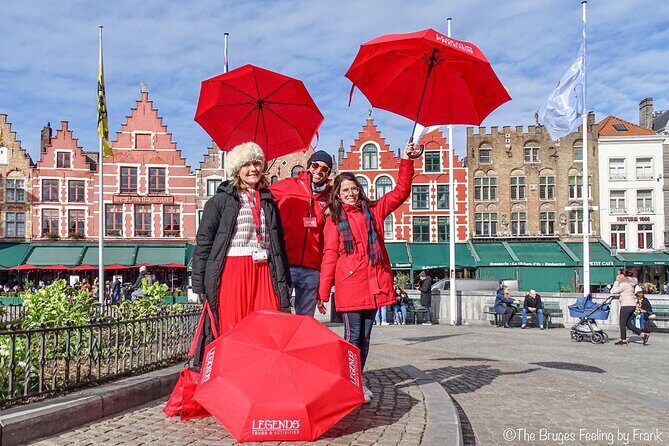
A tip-based walking tour (small booking fee, then you tip your guide based on enjoyment) that covers Bruges’ history and legends. The format attracts guides who are genuinely entertaining — their income depends on it. The route covers the major landmarks with stories that go beyond standard history into the myths, legends, and dark tales that make Bruges more than just pretty architecture.
The Legends of Bruges angle means you’ll hear about medieval executions, plague burials, secret passages, and the supernatural stories that locals tell about the old buildings. It’s history with personality, delivered by guides who know that humour and horror keep audiences engaged longer than dates and facts. At effectively tip-only pricing, this is the most accessible guided experience in the city.
Duration: 2 hours | Meeting point: Central Bruges

Medieval Money: How Bruges Became the Richest City in Northern Europe

Bruges’ golden age began in the 13th century when the city found itself at the crossroads of every major trade route in northern Europe. Flemish cloth — woven from English wool in the workshops of Bruges, Ghent, and Ypres — was the most valuable textile product on the continent. Italian merchants sailed up from Venice and Genoa to buy it. Hanseatic traders came down from the Baltic to sell furs, timber, and amber. The English shipped raw wool across the Channel. And Bruges, sitting at the intersection of all these flows, became the marketplace where everything changed hands.
The wealth was extraordinary. In the 14th century, Bruges was arguably the richest city per capita in Europe north of Italy. The merchants and bankers who lived here created financial instruments that wouldn’t look out of place on a modern trading floor: bills of exchange, letters of credit, and commodity futures. The Bruges Bourse — established in front of the Van der Beurze family’s house on a square that still bears the name — is widely considered the world’s first stock exchange. The English word “bourse” (as in “stock bourse”) and the French word for stock exchange (“la Bourse”) both derive from this Bruges family name.

Then, in the late 15th century, the Zwin inlet that connected Bruges to the sea began to silt up. Ships could no longer reach the city. Trade shifted to Antwerp, then to Amsterdam. Bruges declined from one of Europe’s richest cities to a provincial backwater within two generations. For four hundred years, the city slumbered — too poor to modernise, too beautiful to abandon. When tourism rediscovered Bruges in the 19th century, it found a medieval city preserved almost in amber: the same canals, the same guildhalls, the same market square that had hummed with commerce six centuries earlier.
This is the paradox of Bruges: its beauty exists precisely because it failed. The cities that prospered — London, Paris, Amsterdam — tore down their medieval centres and rebuilt. Bruges couldn’t afford to, and the result is the most intact medieval city centre in northern Europe. Every canal-side house, every stepped gable, every narrow alley between brick buildings exists because Bruges ran out of money at exactly the right moment to preserve everything.

Key Sights You’ll See

The Markt: Bruges’ main square, surrounded by stepped-gable guildhalls and dominated by the 83-metre Belfry. The 366-step climb to the top reveals a panorama of red rooftops, church spires, and flat Flemish countryside stretching to the horizon.
The Beguinage: A serene courtyard of white-painted houses built in 1245 as a community for Beguines — lay religious women who lived together without taking permanent vows. Today it’s occupied by Benedictine nuns and is one of the most peaceful spots in the city.
Basilica of the Holy Blood: A 12th-century chapel that houses a vial believed to contain a cloth stained with the blood of Christ, brought back from the Crusades. The relic is displayed daily and carried through the streets in an annual procession.
The canals: Bruges has over 80 bridges spanning its canal network. The most photographed is the Bonifacius Bridge beside the Church of Our Lady, which contains a marble Madonna and Child by Michelangelo — one of the few Michelangelo sculptures outside Italy.


When to Go
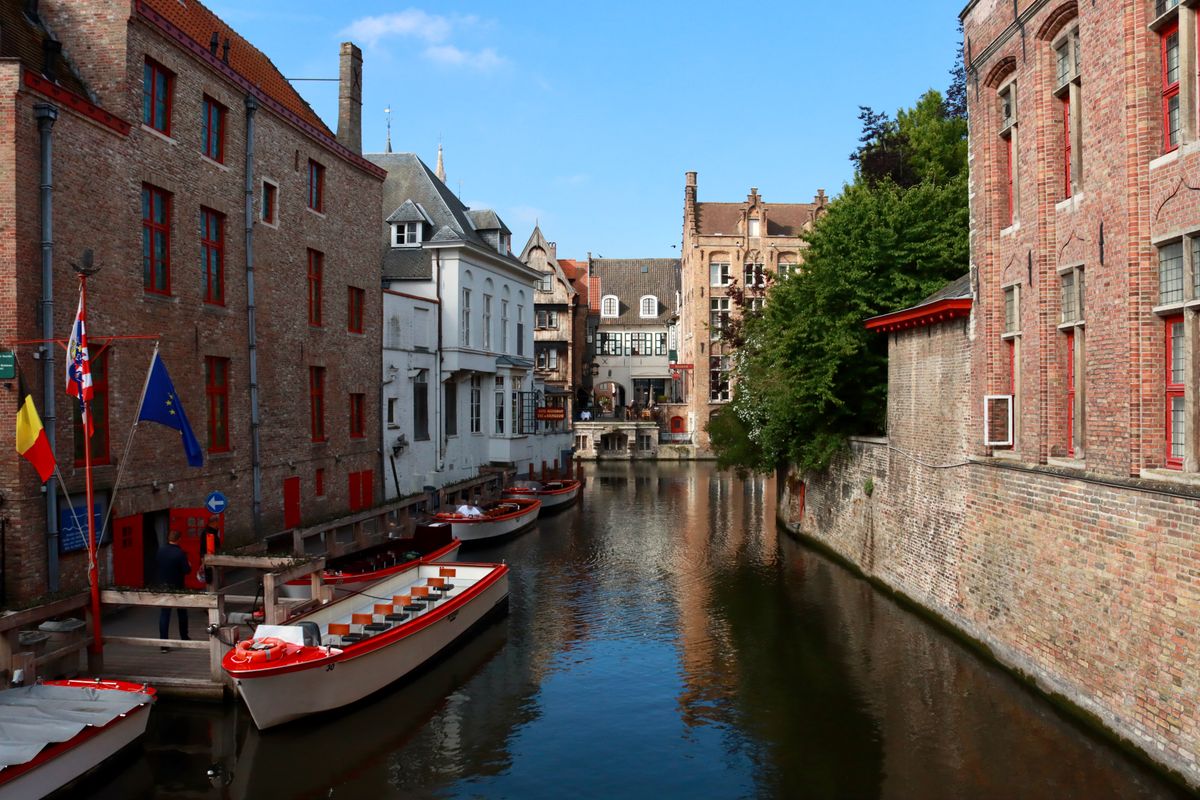
Best months: April through June and September through October. Warm enough for comfortable walking, manageable crowds, and the canals at their most photogenic.
Peak season: July and August. Bruges gets very crowded — the small old town absorbs about 8 million visitors per year, and summer weekends can feel overwhelming. Visit midweek or arrive early morning for the best experience.
Christmas market: Late November through early January. Bruges’ Christmas market on the Markt square is magical — mulled wine, Belgian waffles, chocolate, and medieval buildings strung with lights. Book accommodation well ahead.
Day trip or overnight? A day trip covers the highlights, but Bruges after dark — when the tour groups have left, the canals reflect lamplight, and the restaurants quiet down — is one of Europe’s most romantic urban experiences. If you can, stay one night.

Frequently Asked Questions
Can I take the train from Brussels to Bruges independently?
Yes, and it’s easy. Trains from Brussels-Midi to Bruges run every 30 minutes, take about an hour, and cost €15-20 each way. No reservation needed — just buy a ticket and board. The train station in Bruges is a 15-minute walk from the centre.
Is Bruges worth it if I’ve seen Amsterdam?
Absolutely. Despite the canal comparison, Bruges and Amsterdam are very different. Bruges is smaller, more medieval, more intimate, and far less commercialised. The architecture, food culture, and atmosphere are distinctly Flemish. If you liked Amsterdam’s canals, Bruges takes the concept and wraps it in 700-year-old brick.
Should I do Bruges only or Bruges + Ghent?
If you have a full day from Brussels, the Bruges + Ghent combo is excellent value — you see two distinct medieval cities for one tour price. If you want more depth, a Bruges-only day trip gives you time for the Belfry climb, a longer canal cruise, a brewery visit, and unhurried chocolate shopping.
Is Belgian chocolate actually better?
In a word: yes. Belgium has been the centre of European chocolate making since the 17th century, and Bruges is the epicentre. The best chocolatiers (Dumon, The Chocolate Line, Sukerbuyc) make pralines by hand daily. The difference between Belgian artisan chocolate and mass-produced alternatives is the same as the difference between fresh bread and sliced white.
What should I eat in Bruges?
Moules-frites (mussels and fries) is the classic. Belgian waffles — the Liege style (chewy, pearl sugar, eaten plain) rather than the Brussels style (light, rectangular, with toppings). Flemish beef stew (carbonade flamande). And fries from any frituur (chip shop) — Belgian fries are double-fried and served in a paper cone with mayonnaise. They’re a national art form.
Bruges is one of several outstanding day trips from Brussels. For a deeper Belgian chocolate experience, a chocolate tour in Brussels takes you through the capital’s best workshops and tastings. To the east, Ghent offers a grittier, more lived-in alternative to Bruges’ pristine perfection — equally medieval but with a university-town energy and a thriving contemporary art scene.