
Voltaire and Rousseau are buried six feet apart inside the same building. They spent their entire lives despising each other. Voltaire once called Rousseau a monster. Rousseau was convinced Voltaire was trying to destroy him. And now they have been forced neighbours in the crypt of the Pantheon since 1794, with no way out and all of eternity to work through it.
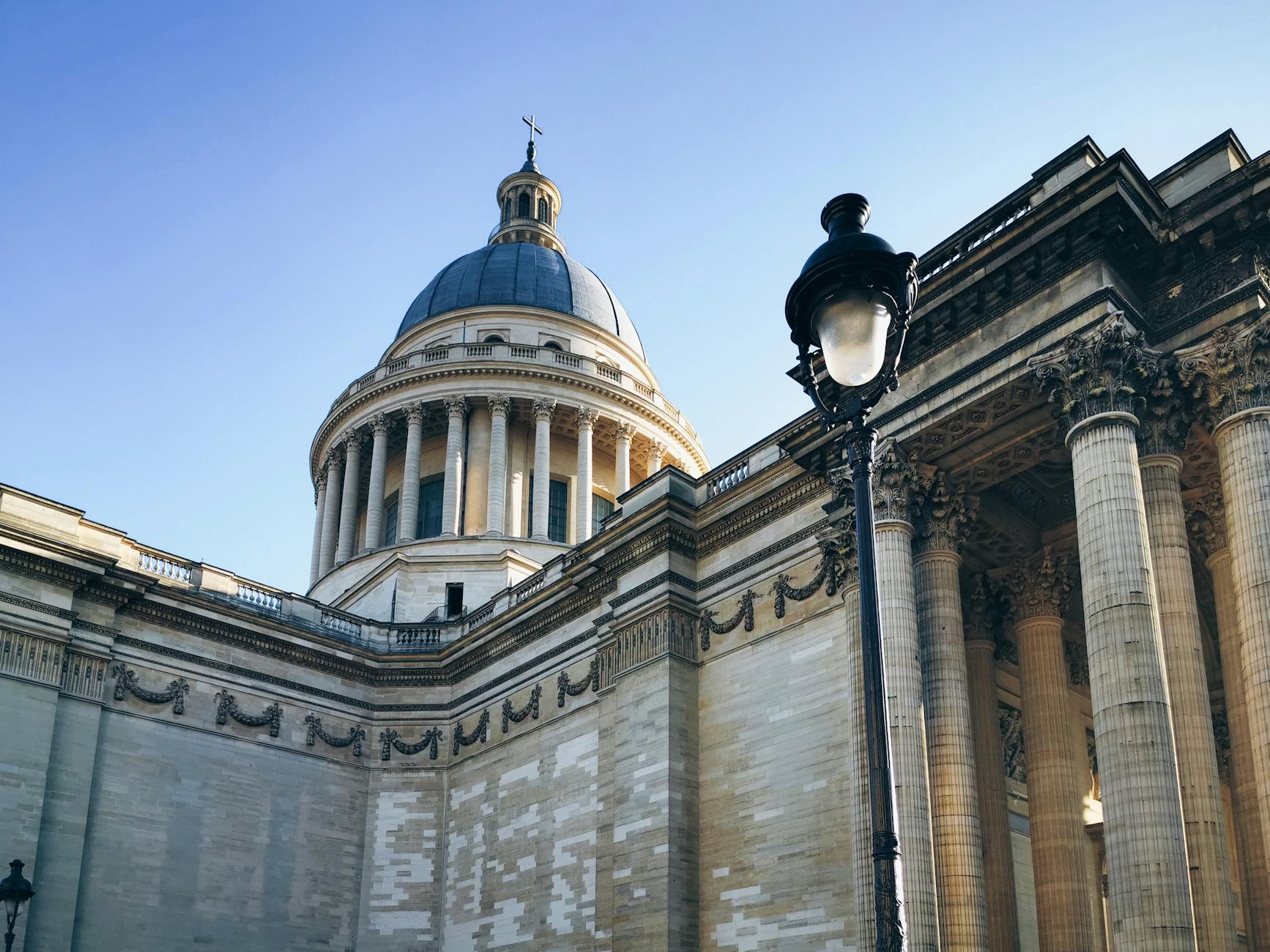
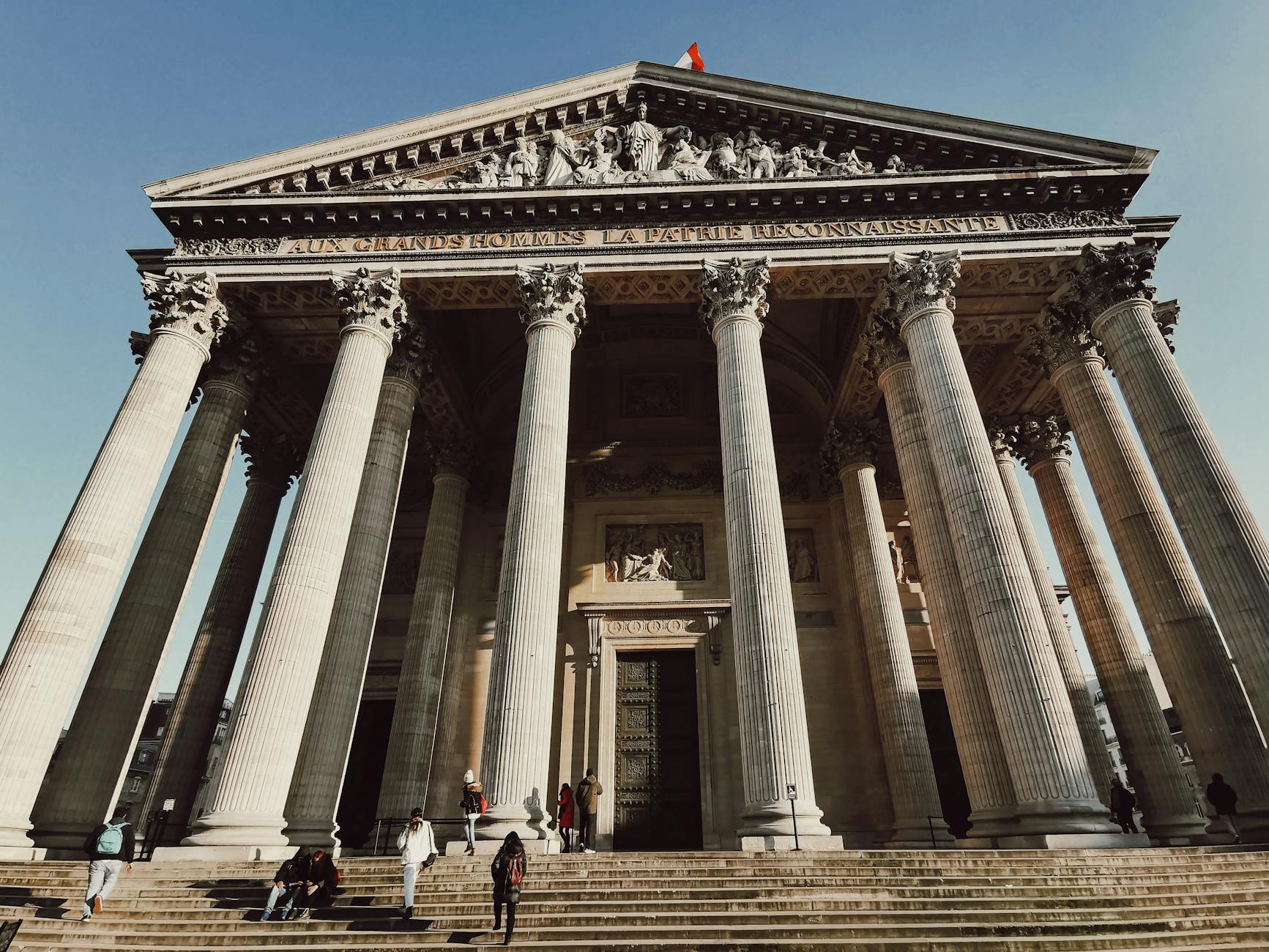
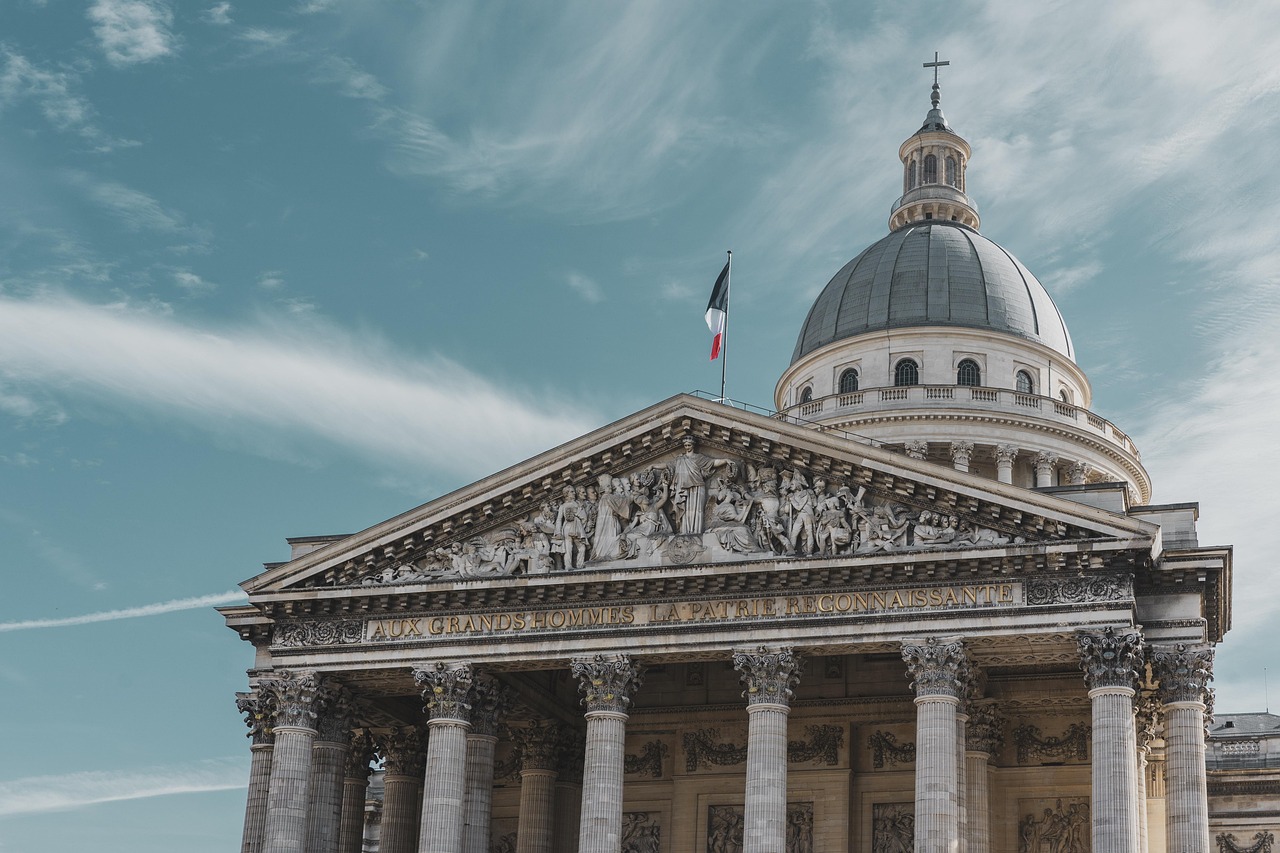
That inscription across the top — AUX GRANDS HOMMES LA PATRIE RECONNAISSANTE (To the great men, the grateful homeland) — tells you exactly what this building is. France’s hall of fame. The final resting place of its greatest scientists, writers, and political figures. Marie Curie is here. Alexandre Dumas. Victor Hugo, whose funeral in 1885 brought two million people into the streets of Paris.
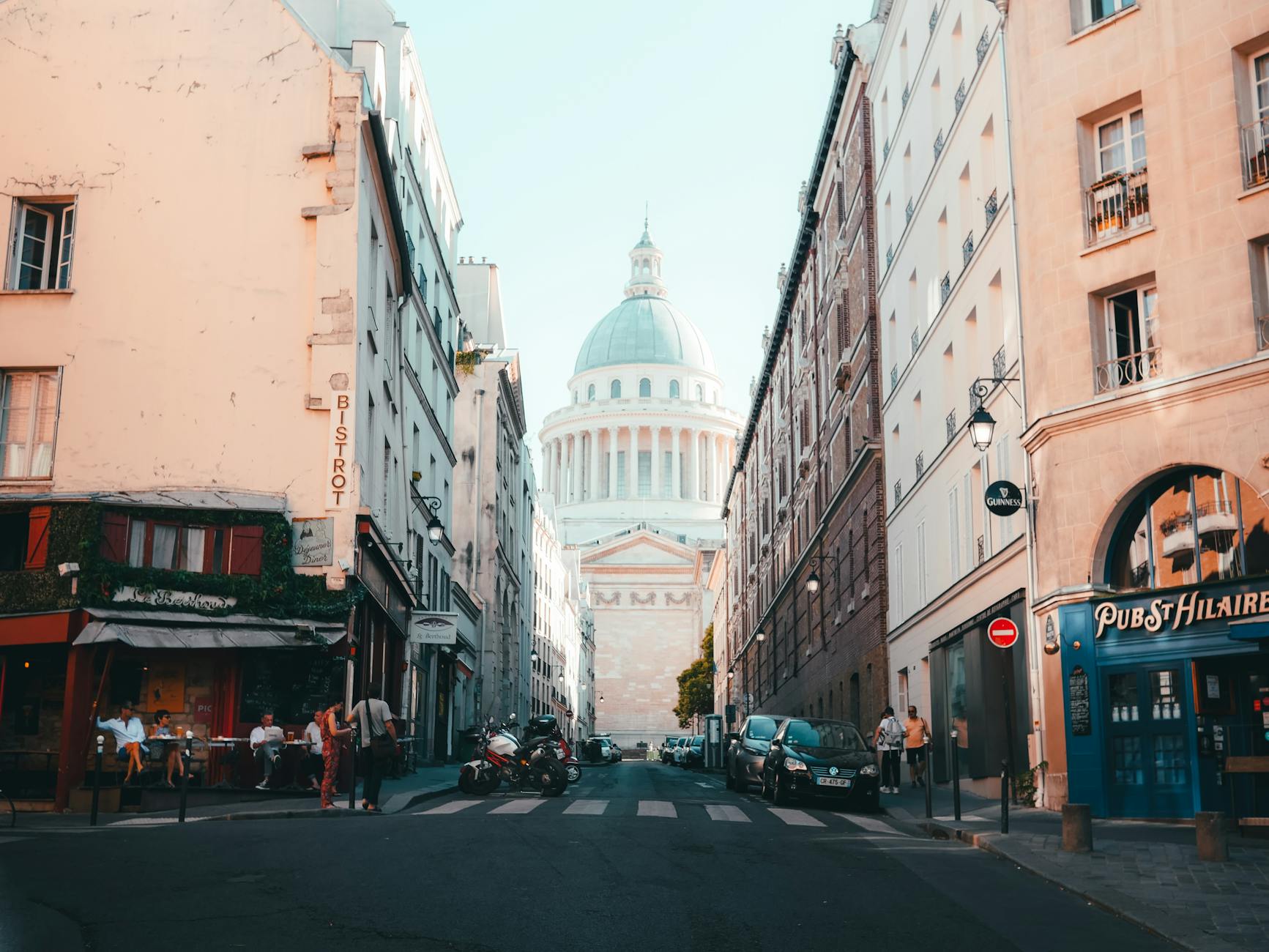
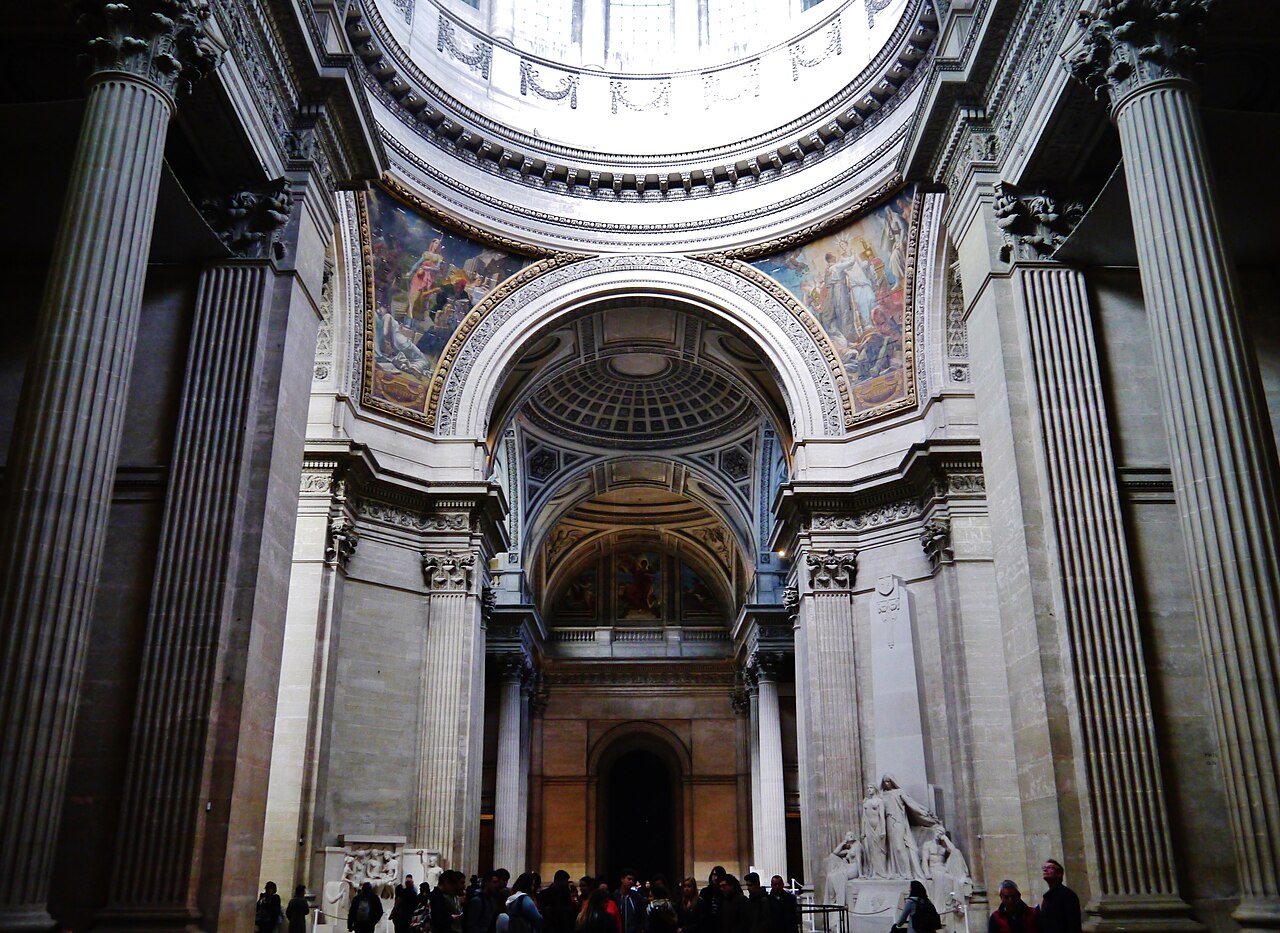
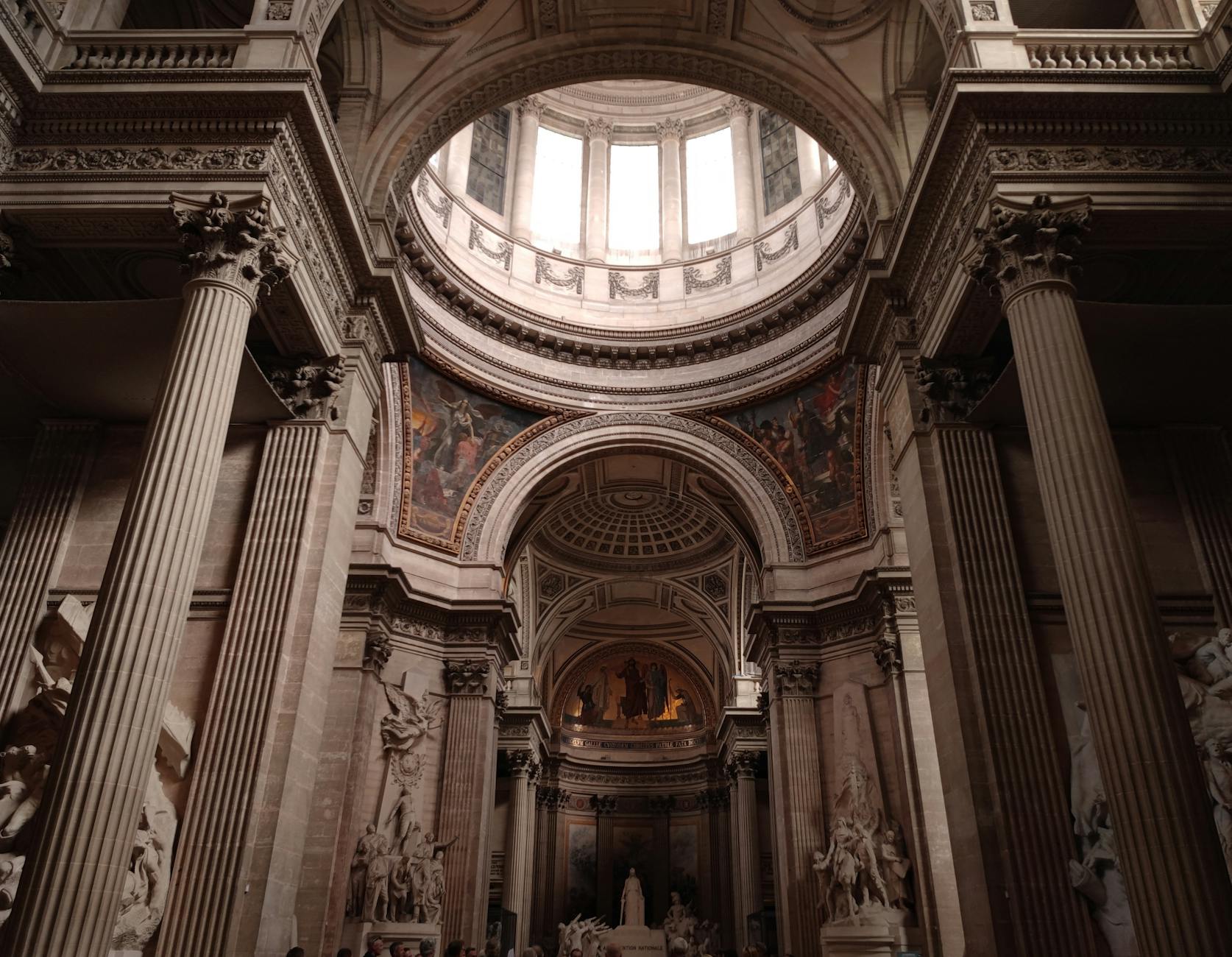
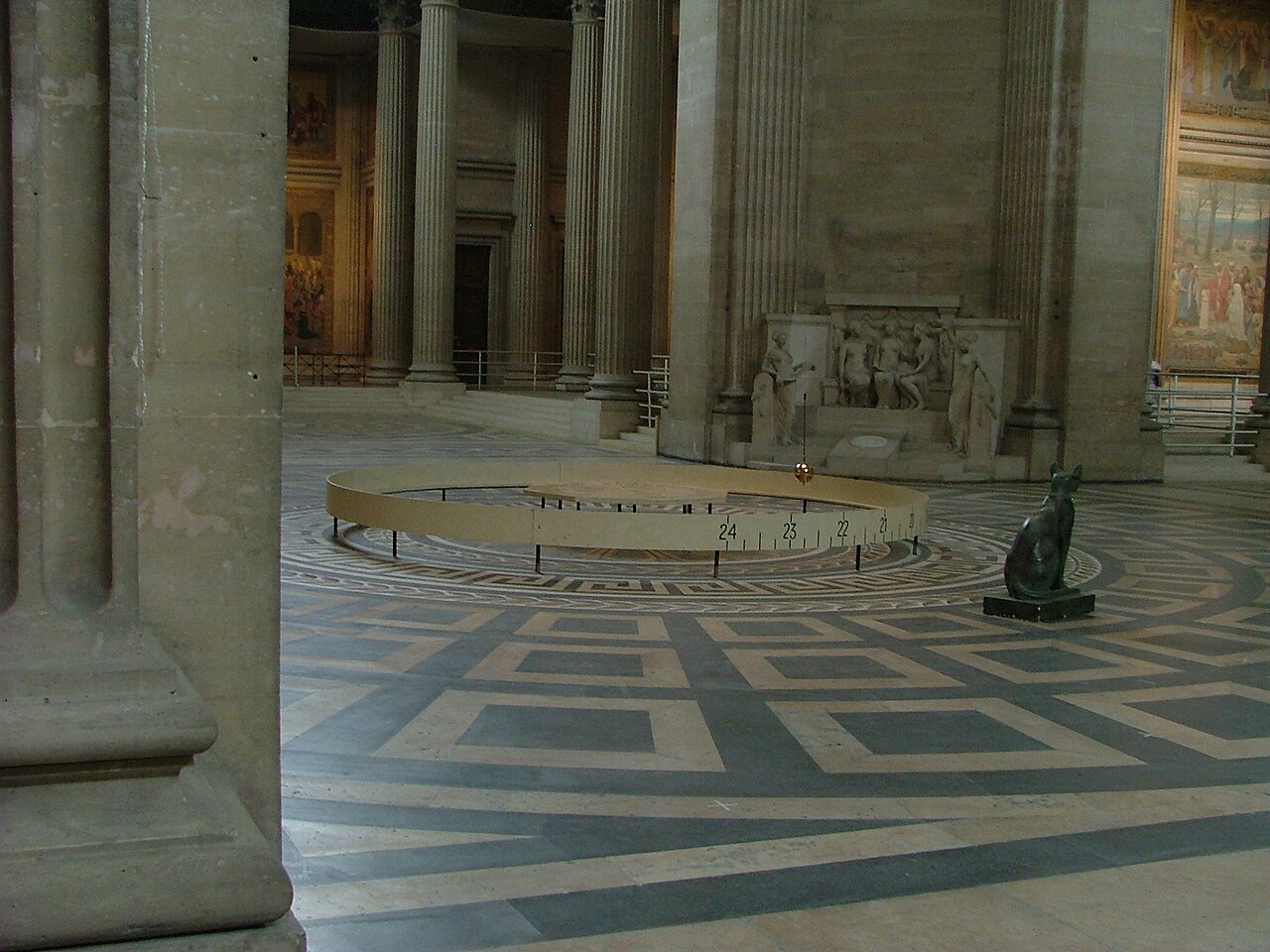
But here is what caught me off guard: the building itself is as much the attraction as the people buried in it. The interior is enormous. Foucault hung his pendulum from this ceiling in 1851 and proved the Earth rotates — a replica still swings in the nave today. The dome paintings, the crypt, the views from the colonnade up top. This is not a quick stop between the Luxembourg Gardens and the Seine. Give it proper time.
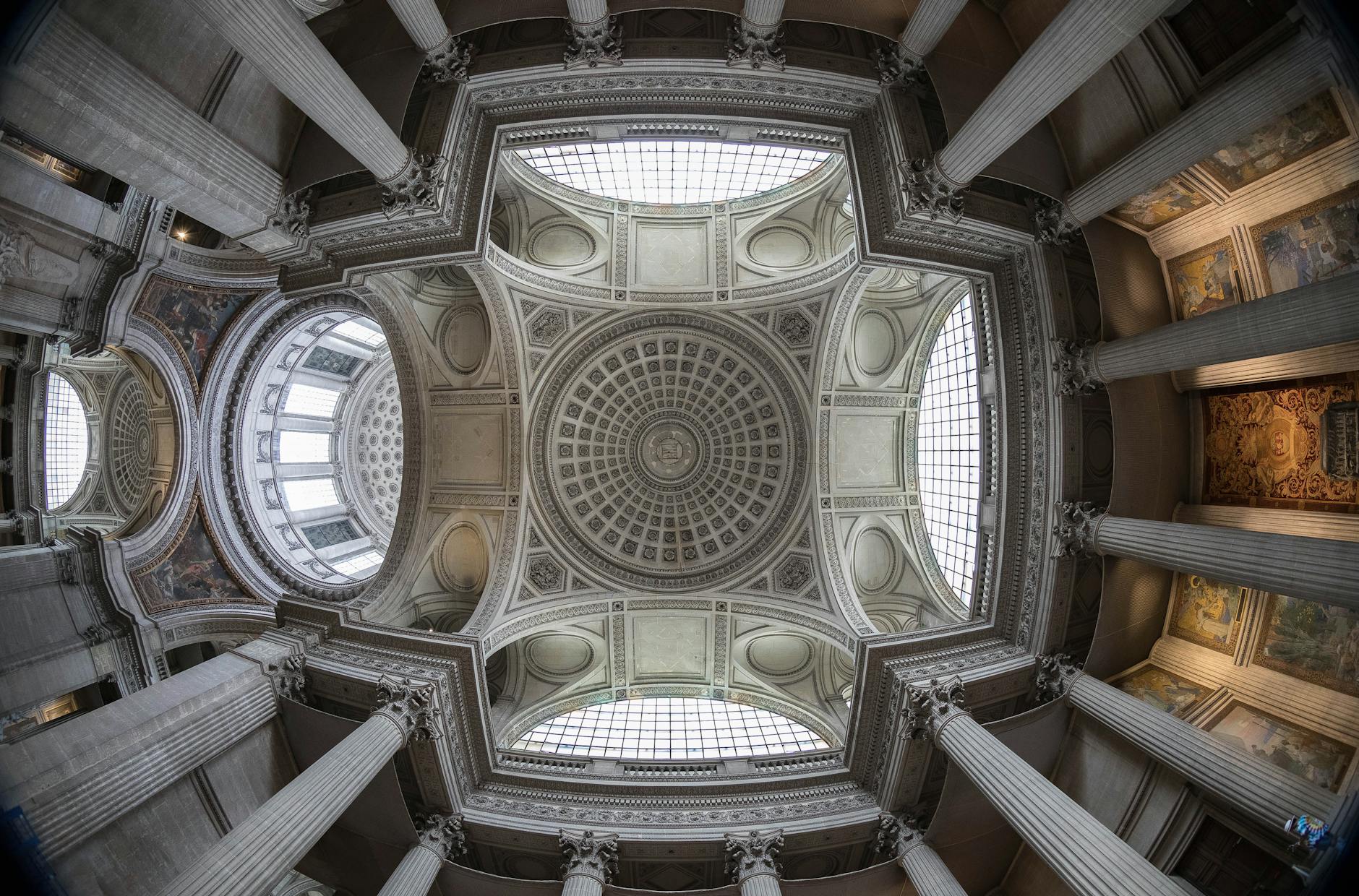
This guide covers how to get your tickets, whether a guided tour makes sense, and everything practical you need to plan your visit. I have broken down every option so you can figure out what works for your trip.
In a Hurry? My Top 3 Picks
- Pantheon Admission Ticket — The standard entry. Pick your date, walk in, explore the crypt and the nave at your own speed. From $15 per person.
- Pantheon Entry + Seine River Cruise — Combines Pantheon entry with a one-hour cruise past Notre-Dame, the Eiffel Tower, and the Louvre. Two major experiences in one booking. From $37 per person.
- Latin Quarter Walking Tour — A 2.5-hour guided walk through the Latin Quarter covering Notre-Dame, the Sorbonne, and the Pantheon neighbourhood. Good context before your visit. From $41 per person.
- In a Hurry? My Top 3 Picks
- How Pantheon Tickets Work
- Official Tickets vs. Guided Tours
- The Best Pantheon Tours to Book
- 1. Paris: Pantheon Admission Ticket —
- 2. Paris: Pantheon Entry + Seine River Cruise —
- 3. Paris: Old Town and Latin Quarter Guided Walking Tour —
- 4. Paris: Notre Dame Exterior, Latin Quarter Tour and Pantheon —
- When to Visit the Pantheon
- How to Get There
- Tips That Will Save You Time
- What You Will Actually See Inside
- Latin Quarter Walking Tours That Include the Pantheon
- More Paris Guides
How Pantheon Tickets Work
The Pantheon is managed by the Centre des Monuments Nationaux, the same organization that runs the Sainte-Chapelle and the Arc de Triomphe rooftop. Tickets are straightforward compared to some Paris museums.
Standard admission is 11.50 euros (about $13). You can buy tickets from the official Pantheon website or at the door. Unlike the Louvre, the Pantheon rarely sells out — but buying online saves you the queue at the ticket desk.
Free admission applies to:
- Everyone under 26 who is an EU or EEA resident
- Everyone under 18, regardless of nationality
- Disabled visitors and one companion
- Job seekers (with proof)
- Teachers with a valid school ID
First Sundays of the month are free for everyone from November through March. This is worth knowing because the Pantheon is less chaotic on free days than the Louvre or the Orsay — it draws a smaller crowd to begin with.
The Paris Museum Pass covers the Pantheon. If you are planning visits to the Louvre, Musee d’Orsay, Sainte-Chapelle, and the Arc de Triomphe rooftop, the pass pays for itself within three or four attractions. The 2-day pass costs 55 euros, the 4-day pass 70 euros.
Audio guides are available inside for an additional 3 euros. They are decent — covering the architecture, the crypt, and the major figures buried here — but not essential if you have done even basic research beforehand.
Official Tickets vs. Guided Tours
This one is simpler than most Paris decisions.
Go with an official ticket if: you are comfortable exploring on your own, you want to spend time in the crypt without being rushed, and you have at least a passing knowledge of French history. The Pantheon is well laid out. The crypt is clearly signposted. You will not get lost.
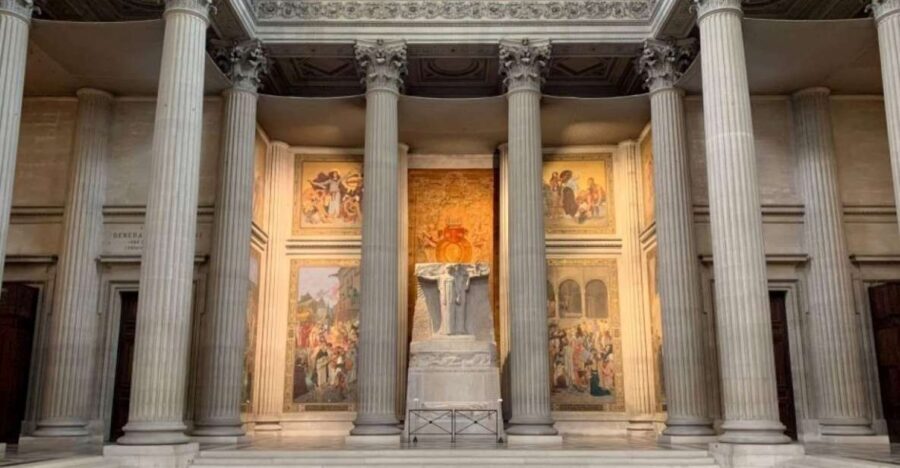
Consider a guided tour if: you want the stories behind the tombs and the architecture, you are combining the Pantheon with a Latin Quarter walk, or you are the type who gets more from a place when someone points out details you would miss on your own. The frescoes in the nave tell the story of Sainte Genevieve, the patron saint of Paris, and without context they are just pretty paintings.
The combined ticket + Seine cruise option is practical if you are doing both anyway. Buying them separately costs more, and the cruise departure point at the Pont de l’Alma is an easy metro ride from the Latin Quarter. You can do the Pantheon in the morning and the cruise in the late afternoon when the light on the river is at its best.
The Best Pantheon Tours to Book
I have pulled the top options from our database of reviewed tours, ranked by visitor feedback and value.
1. Paris: Pantheon Admission Ticket — $15
This is the most popular Pantheon ticket on the market, and for good reason. At $15 per person, it is one of the best value admissions in Paris. You get full access to the nave, the crypt, and Foucault’s Pendulum. No time limit once you are inside.
What makes this worth choosing over buying at the door is the skip-the-queue factor. The official ticket desk can have a 15-20 minute wait during peak season, and this gets you past that. The audio guide is not included but you can grab one inside for 3 euros if you want it.
With over six thousand reviews and a strong rating, this is the go-to option for most visitors. If you just want to see the Pantheon without combining it with anything else, this is the ticket.
2. Paris: Pantheon Entry + Seine River Cruise — $37
This combo saves you a few euros compared to booking the Pantheon and a Seine cruise separately, and it takes the logistics out of the equation. You get full Pantheon access plus a one-hour river cruise that floats past Notre-Dame, the Louvre, the Eiffel Tower, and the Musee d’Orsay.
At $37 per person, this is the smart choice if a Seine cruise is already on your list. The cruise runs multiple times a day so you have flexibility on timing — do the Pantheon first, then head to the river whenever you are ready. The two experiences complement each other well because the Pantheon is an indoor, reflective visit while the cruise is all open air and panoramic.
3. Paris: Old Town and Latin Quarter Guided Walking Tour — $41
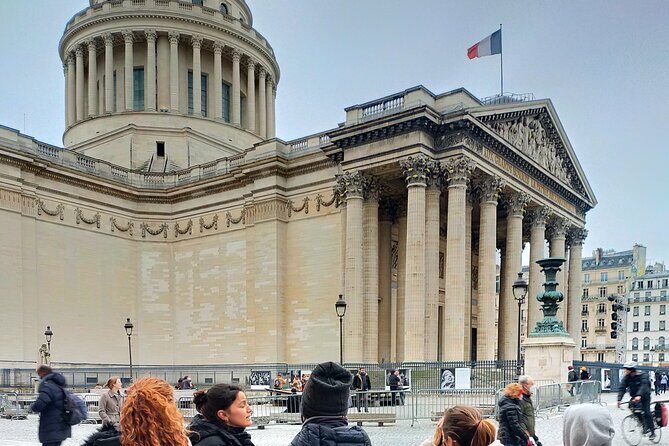
This is not a Pantheon tour specifically, but it is the best way to understand the neighbourhood the Pantheon sits in. A 2.5-hour guided walk through the Latin Quarter covering the Sorbonne, Notre-Dame’s exterior, medieval streets, and the area around the Pantheon. At $41 per person, you get a local guide who knows every hidden courtyard and back street.
The reviews are excellent — visitors consistently praise the guides for making centuries of Parisian history feel personal and relevant. This pairs well with a separate Pantheon admission ticket so you can explore the interior after the walk. Do the walking tour in the morning, then head inside the Pantheon while the neighbourhood context is still fresh.
4. Paris: Notre Dame Exterior, Latin Quarter Tour and Pantheon — $46
This is the all-in-one option if you want a guided experience that includes actual Pantheon entry. The tour covers Notre-Dame’s newly restored exterior, threads through the Latin Quarter, and finishes with a flexible visit inside the Pantheon. At $46 per person, it is a solid deal for two hours of guided context plus Pantheon admission.
It is a newer tour with a smaller review base, but every review gives it top marks. The guides clearly know this part of Paris inside and out. If you only have one morning on the Left Bank and want to cover Notre-Dame, the Latin Quarter, and the Pantheon in a single go, this is the most efficient way to do it.
When to Visit the Pantheon
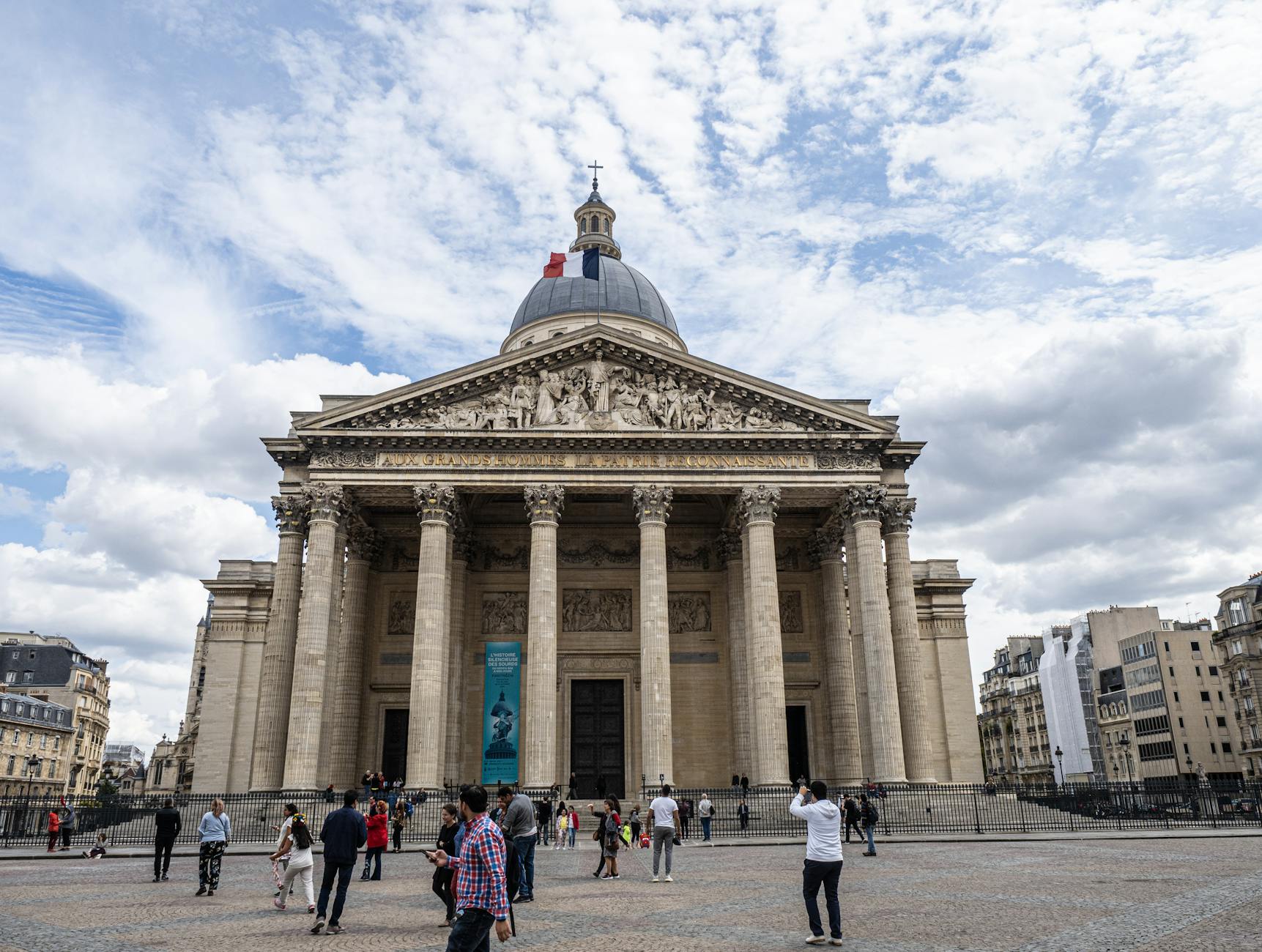
Opening hours: The Pantheon is open daily from 10 AM to 6 PM (April through September, last entry at 5:15 PM) and 10 AM to 6 PM (October through March, last entry at 5:15 PM). Extended evening hours to 11 PM operate in July and August only.
Best time to visit: Early morning, right at opening, or after 3 PM. The tour groups cycle through between 11 AM and 2 PM, so the building is quieter on either side of that window. Weekday mornings outside of school holidays are the calmest.
Worst time to visit: Weekend afternoons from April through October. The Place du Pantheon fills up with visitors, and the crypt can feel cramped when multiple groups are down there at once.
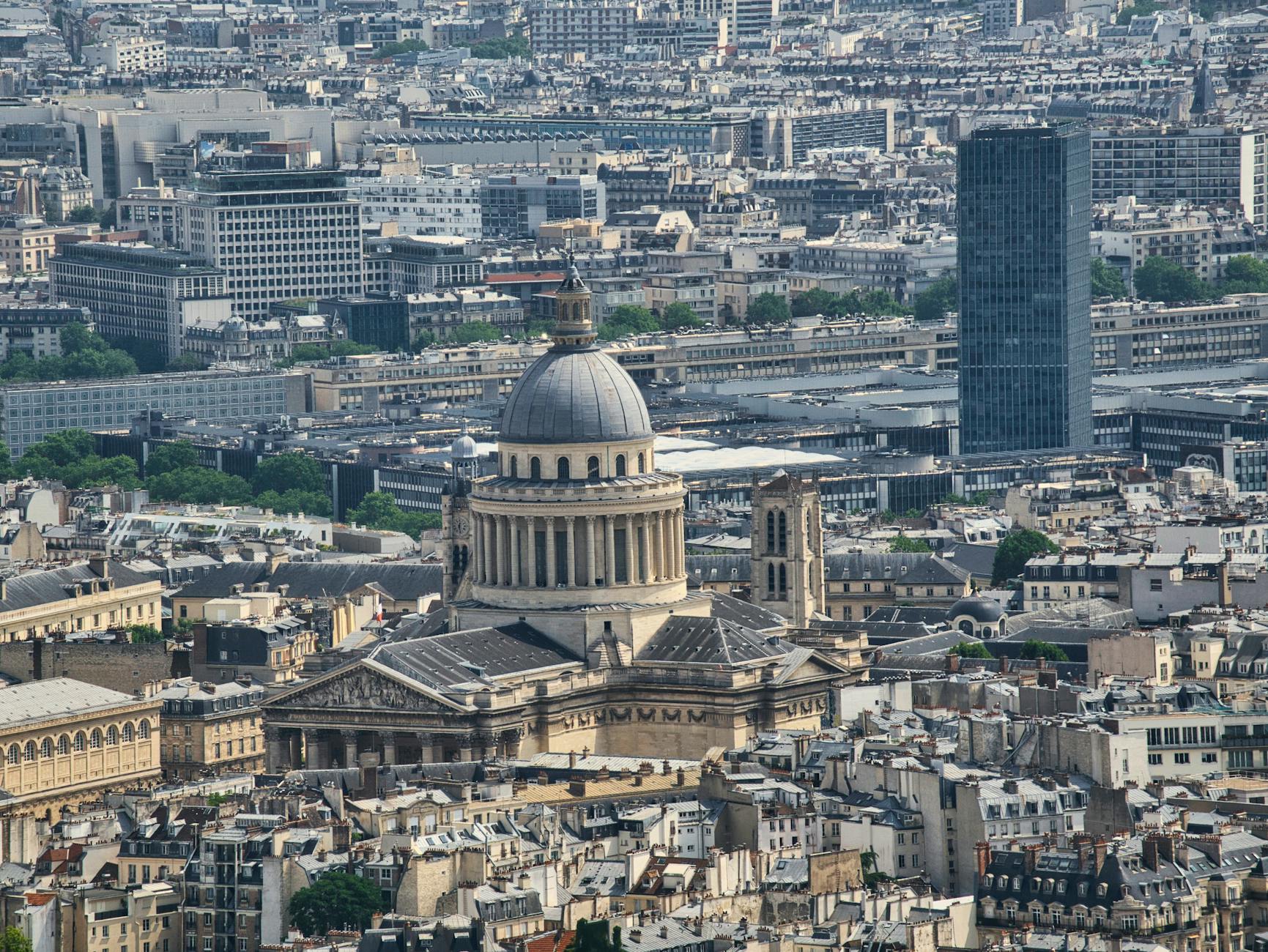
The colonnade terrace at the top of the dome opens seasonally (April through October, weather permitting). This is the part most people miss, and it should not be skipped. The 360-degree views across Paris from up there — the Eiffel Tower, Sacre-Coeur, the Seine — rival anything you will see from the Arc de Triomphe or Montparnasse Tower. The climb is 206 steps with no elevator.
Summer evening visits: During July and August, the Pantheon stays open until 11 PM on certain nights. Seeing the interior lit up at night, with the dome illuminated from within, is a completely different experience from a daytime visit. Check the official site for specific dates.
How to Get There
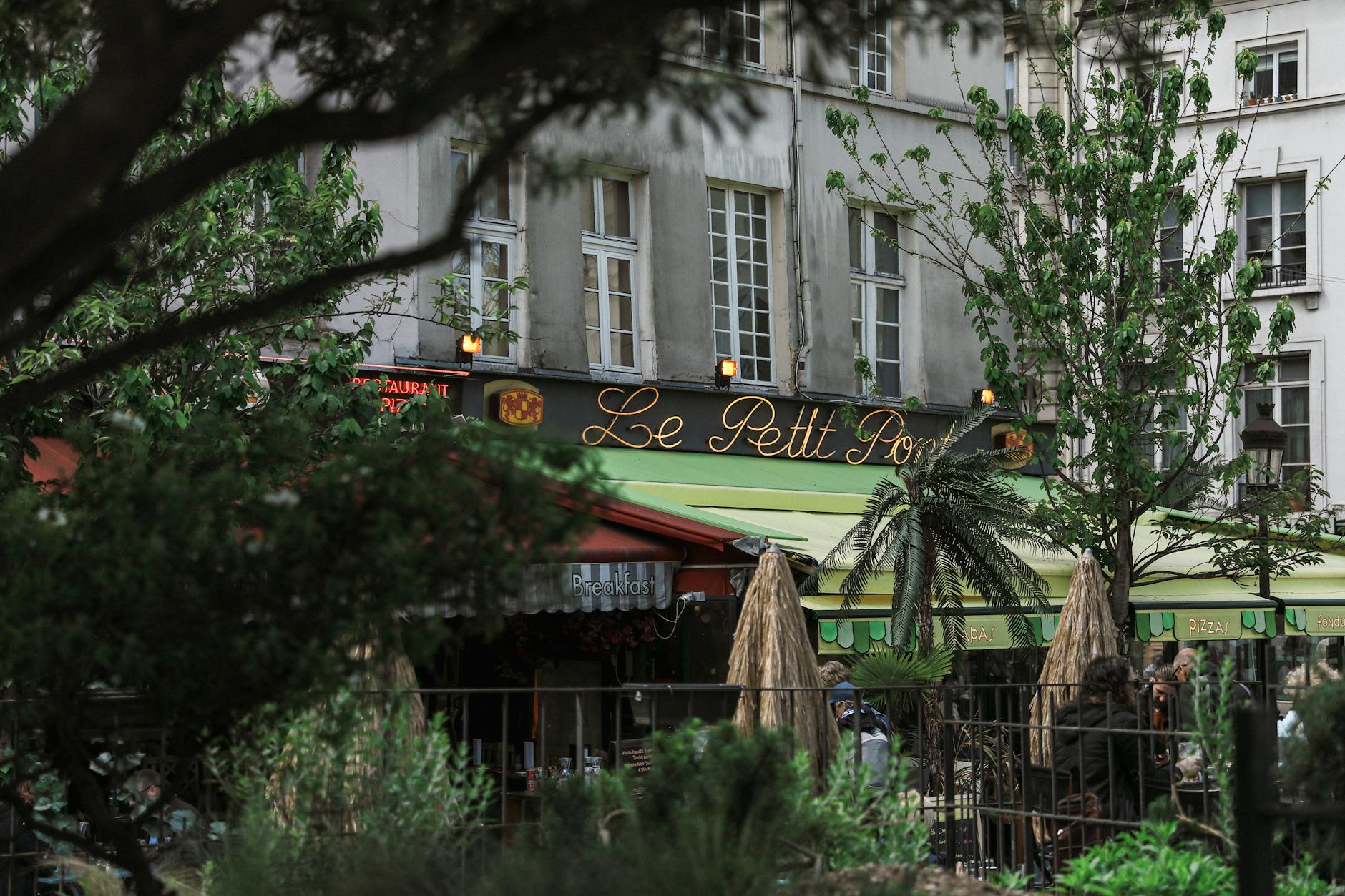
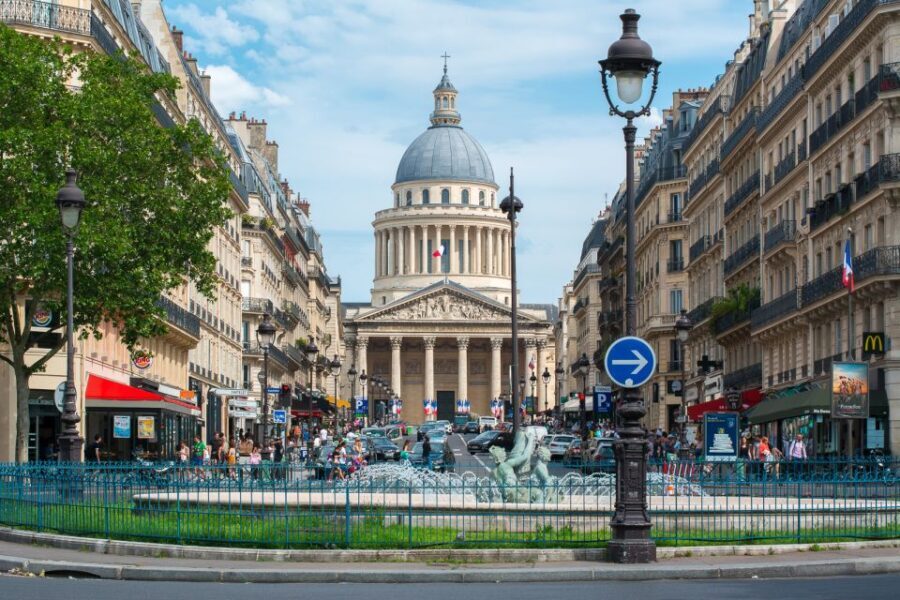
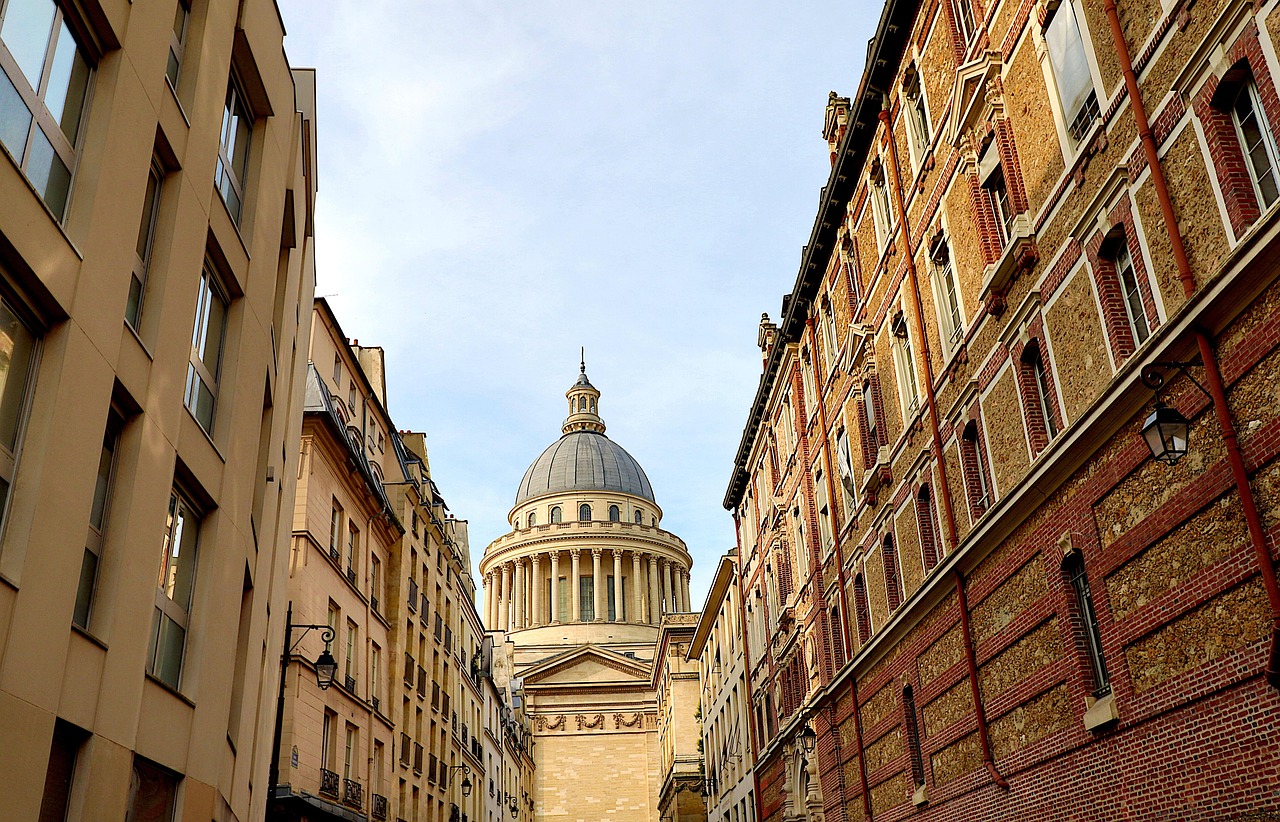
The Pantheon sits on the Place du Pantheon in the 5th arrondissement, right in the heart of the Latin Quarter.
Metro: The closest station is Cardinal Lemoine (Line 10), about a 5-minute walk south. Alternatively, Maubert-Mutualite (Line 10) or Luxembourg (RER B) are both within a 7-minute walk.
Bus: Lines 21, 27, 38, 82, 84, and 89 all stop near the Pantheon. The 84 and 89 routes are useful if you are coming from the Marais or Bastille areas.
Walking from other landmarks:
- From the Louvre: 25 minutes on foot across the Pont des Arts and through the Latin Quarter
- From Notre-Dame: 10 minutes walking south through the 5th arrondissement
- From the Luxembourg Gardens: 5 minutes — the Pantheon is right at the garden’s northeast corner
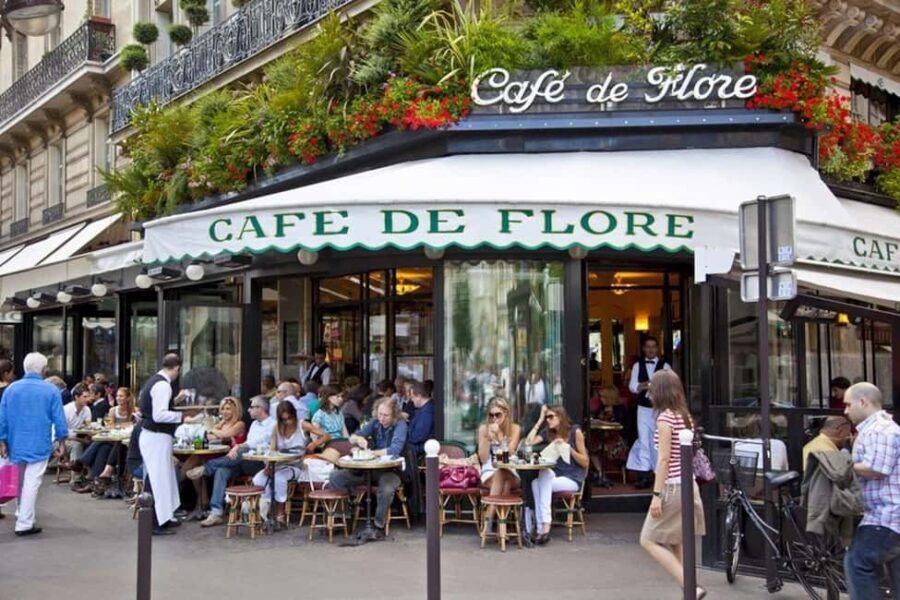
- From the Musee d’Orsay: 20 minutes across the river and through Saint-Germain-des-Pres
Parking: There is a public car park underneath the Place du Pantheon (Indigo Soufflot-Pantheon). Rates are about 3-4 euros per hour. But honestly, do not drive in the Latin Quarter if you can avoid it — the streets are narrow, mostly one-way, and half of them are pedestrianised.
Tips That Will Save You Time
- Buy tickets online, even though it rarely sells out. The queue at the ticket desk can run 15-20 minutes on busy days, and skipping it means more time inside.
- Go to the crypt first. Most visitors start in the nave and work their way down. If you head straight to the crypt when you arrive, you will have it almost to yourself for the first 15 minutes.
- Do not skip the colonnade. The 206-step climb to the dome terrace is the highlight for many visitors, and it is included in your ticket. If you only have time for the crypt or the colonnade, pick the colonnade.
- Combine it with the Luxembourg Gardens. The gardens are a 5-minute walk south and make the perfect spot to sit and decompress after the weight of the crypt. Bring something from one of the bakeries on Rue Soufflot.
- The gift shop is small but good. It has a better selection of architecture books and French history titles than most Paris museum shops.
- Photography is allowed everywhere except during special ceremonies. No flash in the crypt, though — the lighting is low and flash washes out the atmosphere anyway.
- Wheelchair access is available on the ground floor and nave, but the crypt and colonnade require stairs.
What You Will Actually See Inside
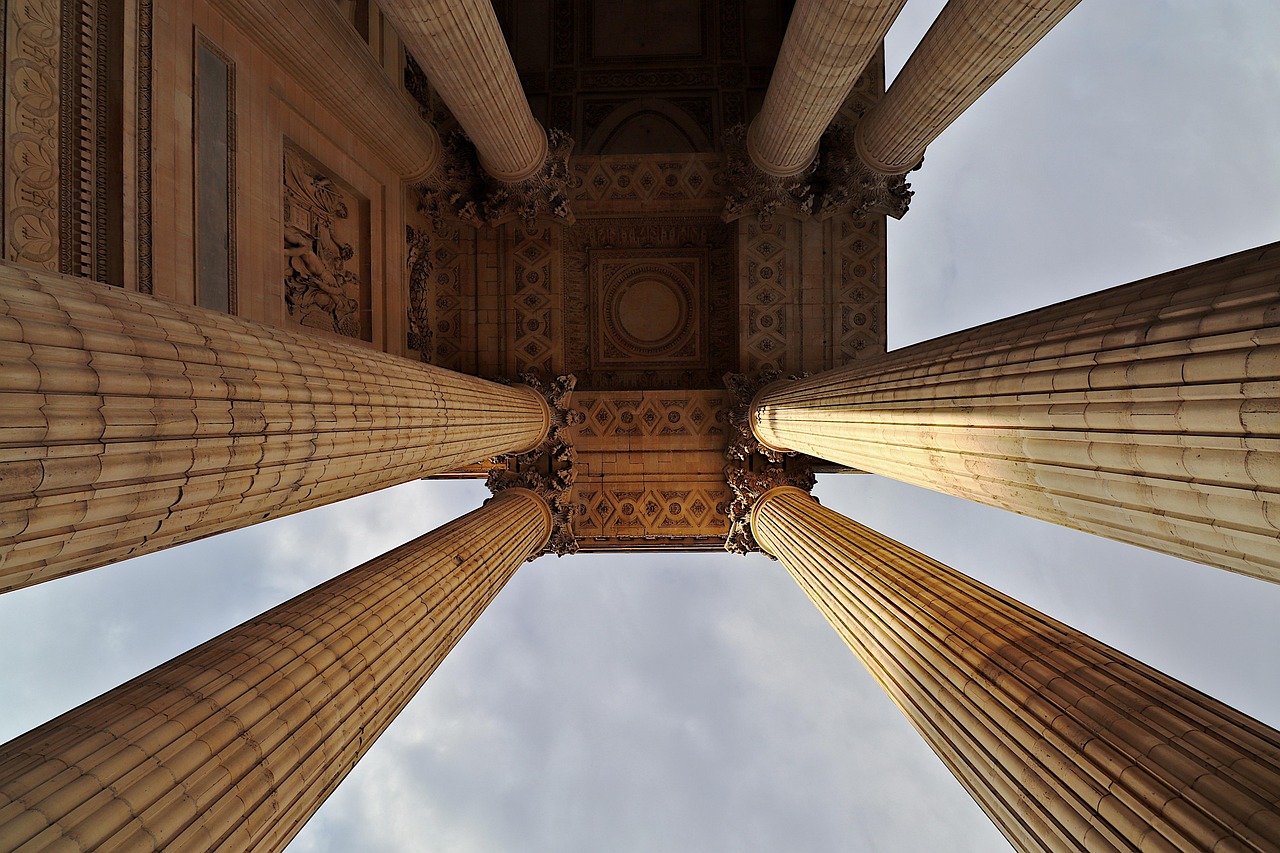
The Pantheon started life as a church. Louis XV fell seriously ill in 1744 and made a vow: if he recovered, he would rebuild the crumbling Abbey of Sainte Genevieve into something worthy of Paris’s patron saint. He recovered. The architect Jacques-Germain Soufflot spent the next three decades designing a building that would combine the grandeur of Greek temples with the structural lightness of Gothic cathedrals. The result is this enormous neoclassical monument with a dome that floats 83 metres above the floor.
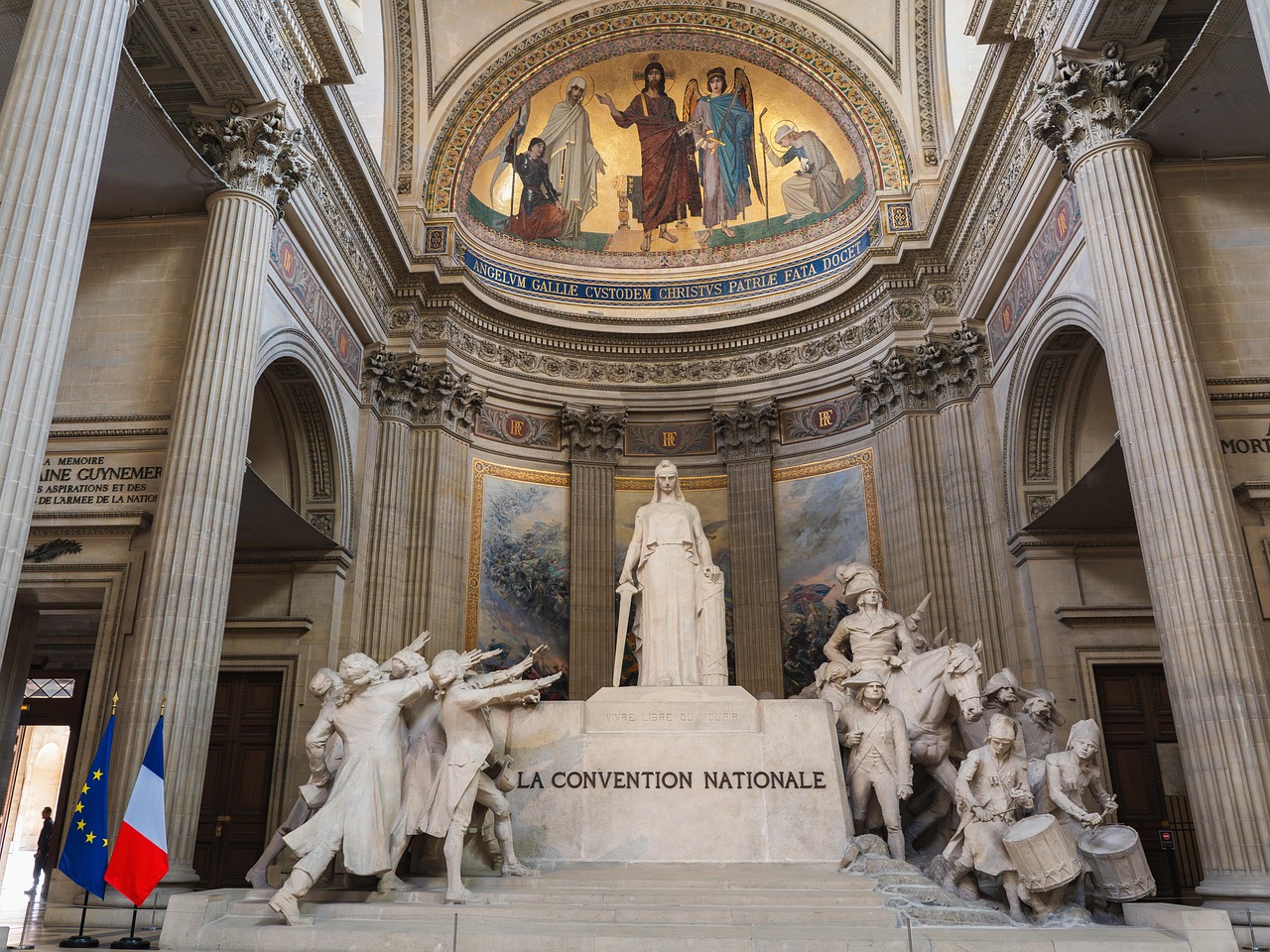
Then the Revolution happened. In 1791, the National Constituent Assembly voted to turn the brand-new church into a secular mausoleum. The first person interred was Mirabeau, one of the Revolution’s early heroes. His remains were later removed when letters surfaced proving he had been secretly corresponding with Louis XVI. Revolutionary fame had an expiry date.
The crypt is where the heaviest history sits. Voltaire’s tomb and Rousseau’s face each other across a narrow corridor. The story goes that Rousseau’s coffin has a small opening shaped like a flame, symbolising his ideas lighting the way. Whether that is true or a guide’s embellishment, the effect in the dim crypt is striking.
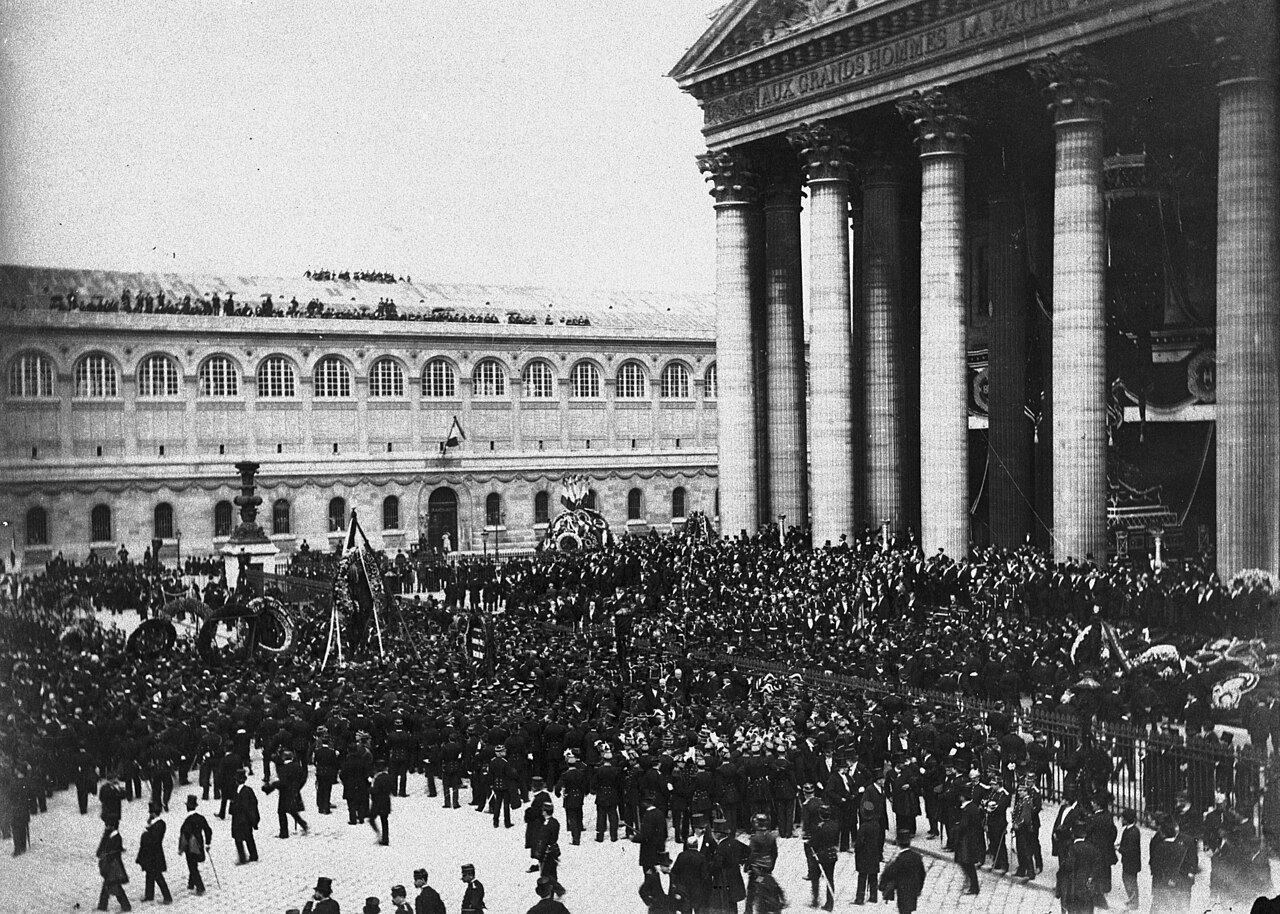
Victor Hugo arrived in 1885 after a funeral that shut down Paris. His body lay in state under the Arc de Triomphe for an entire night, and the procession the next day drew crowds that filled every street from the Champs-Elysees to the Latin Quarter. Two million mourners. The government had to reinstate the Pantheon as a secular mausoleum specifically for the occasion — it had been returned to religious use several times during the 19th century.
Marie Curie was placed here in 1995, becoming the first woman honoured for her own achievements. Her remains are inside a lead-lined coffin because her body is still radioactive. Curie carried vials of radium in her coat pockets and kept test tubes in her desk drawer — her personal effects, including her notebooks, are so contaminated that they are stored in lead-lined boxes at the Bibliotheque nationale, and you need to sign a liability waiver to view them.

Alexandre Dumas arrived in 2002, 132 years after his death. The ceremony was pure theatre: his coffin was draped in blue velvet (the colour of the Three Musketeers) and carried through the streets by men in musketeer costumes while a crowd of thousands watched. President Chirac gave the eulogy. It was the kind of send-off Dumas himself would have written.
And then there is the pendulum. In 1851, physicist Leon Foucault suspended a 67-metre wire and a 28-kilogram brass bob from the dome and invited the public to watch it swing. Over the course of the day, the pendulum’s plane of oscillation appeared to rotate — but it was the Earth turning beneath it. The demonstration was so elegant that it ended centuries of debate. A replica still swings in the nave today, tracing the same slow, hypnotic arc.
Latin Quarter Walking Tours That Include the Pantheon
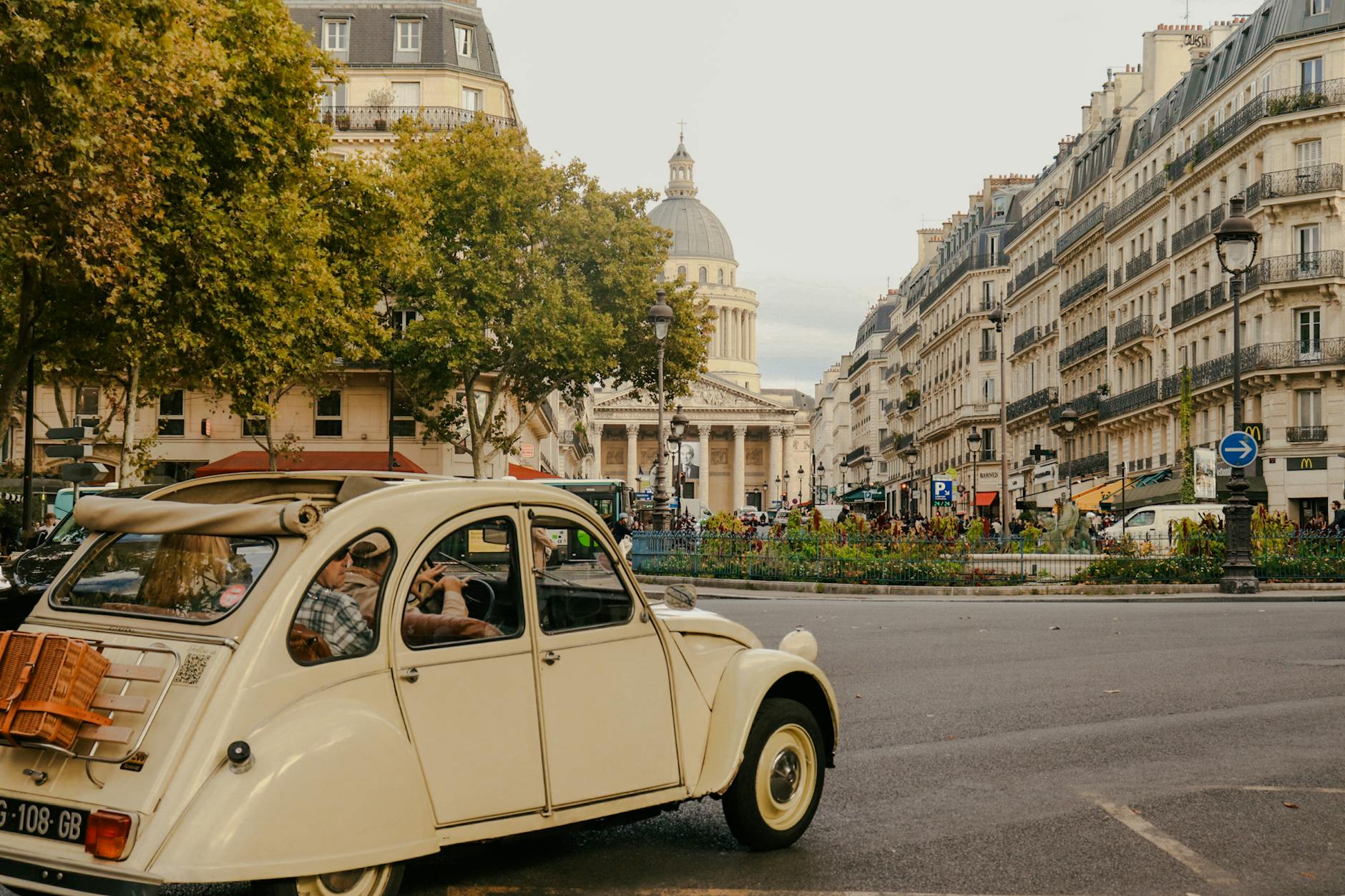
If you want more context for the neighbourhood, a Latin Quarter walking tour is worth considering before or after your Pantheon visit. The area around the Pantheon is one of the oldest parts of Paris, and the stories packed into these few blocks go back to the Romans.
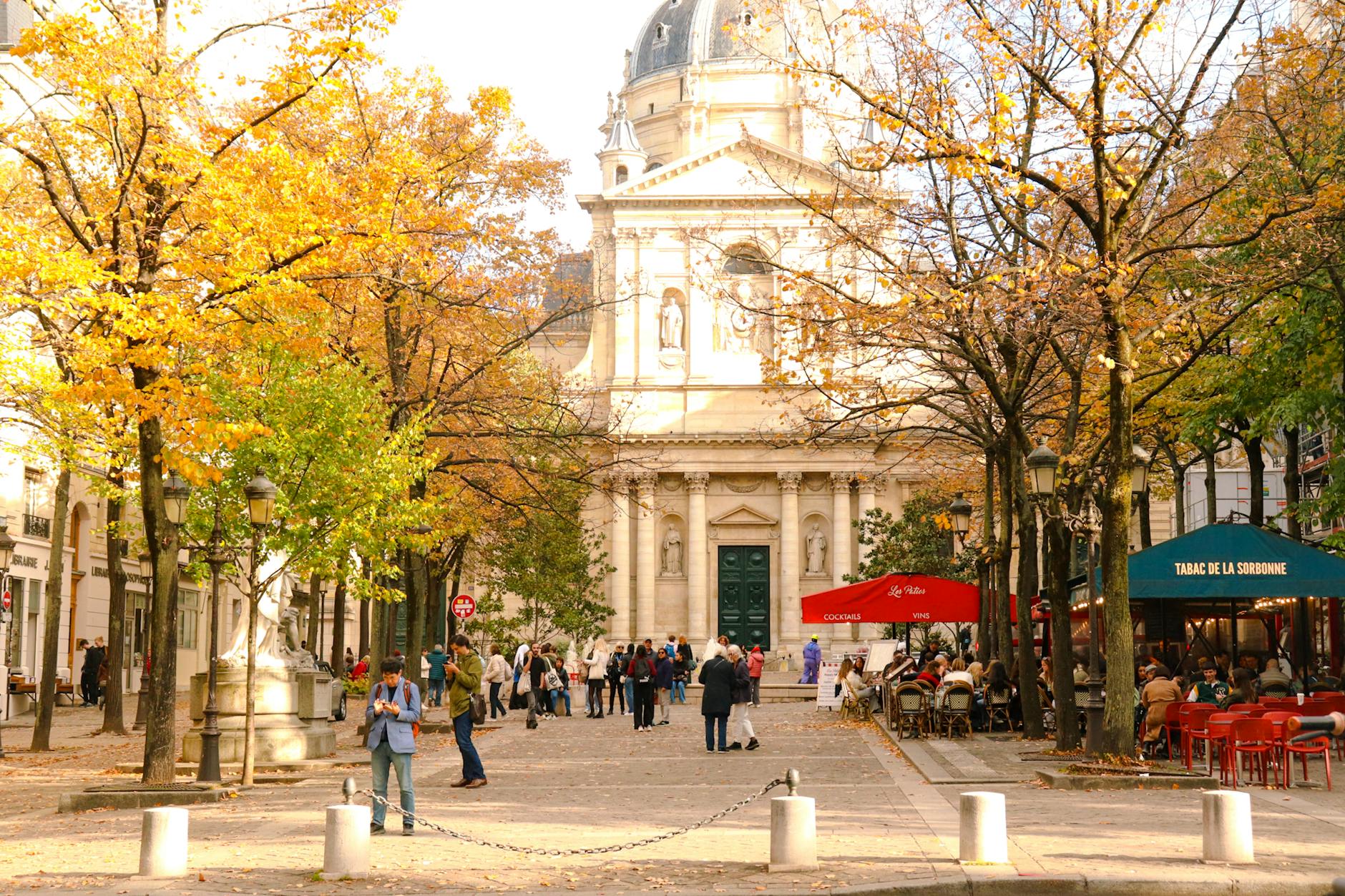
The Old Town and Latin Quarter Walking Tour is the most reviewed option with over 400 five-star ratings. It covers a 2.5-hour route through the medieval streets, past the Sorbonne, and through the squares that Hemingway and the Lost Generation made famous. At $41 per person, it is one of the better deals for a guided experience in central Paris.
For a self-guided option, the Sorbonne to Pantheon audio tour lets you go at your own pace for about $21. It covers roughly the same ground but on your own schedule. Fair warning though — the reviews are mixed on the audio quality and the app reliability, so check the latest feedback before booking.
The Latin Quarter bike tour is something different entirely. It combines the Latin Quarter with the Marais and covers far more ground than a walking tour ever could. Over 760 reviews with top marks. If you have a full morning free and want to see both neighbourhoods, this is the way to do it.
More Paris Guides
If you are spending a few days in Paris, the Pantheon sits right in the middle of the Left Bank’s best museums and monuments. The Louvre is a 25-minute walk north across the river, and the Musee d’Orsay is about the same distance along the quays. For something smaller and often overlooked, the Musee de l’Orangerie has Monet’s Water Lilies in two oval rooms that are worth the detour alone. On the other side of the river, Sainte-Chapelle has the kind of stained glass that makes you stop talking mid-sentence, and the Arc de Triomphe rooftop gives you the best panoramic view in the city — better than the Eiffel Tower, because the Eiffel Tower is actually in the view.
Disclosure: This article contains affiliate links to tour booking platforms. If you book through these links, we may earn a small commission at no extra cost to you. This helps us keep creating free travel guides. All recommendations are based on our own research and experience — we only suggest tours and tickets we genuinely believe are worth booking.