
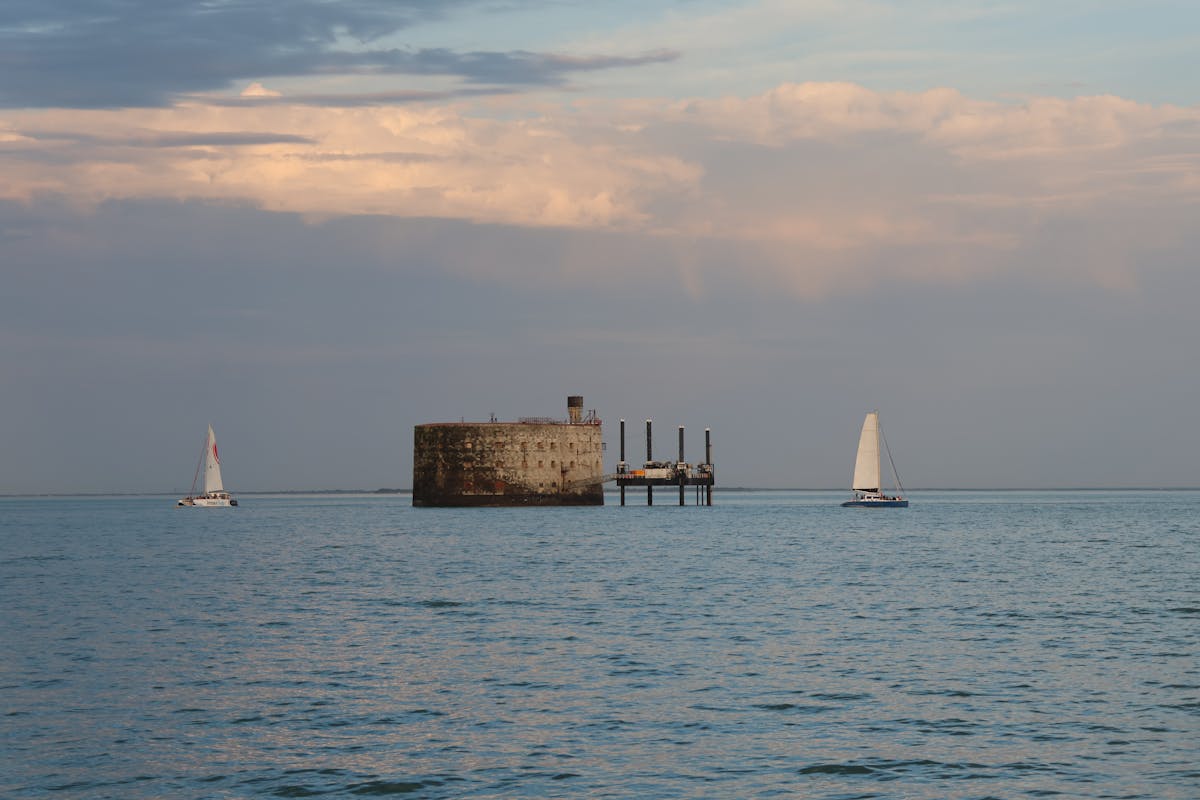
Napoleon ordered its construction because the British kept slipping between the islands of Aix and Oléron to shell the French naval arsenal at Rochefort. His engineers told him building on a submerged sandbar in the middle of a tidal strait was impossible. He did it anyway — or tried to. The project was abandoned, restarted, and finally completed decades later under Napoleon III, by which point artillery range had improved so much that Fort Boyard was militarily useless on the day it was finished.
That kind of history deserves a proper look. And the only way to get one is by boat from La Rochelle or one of the nearby ports.
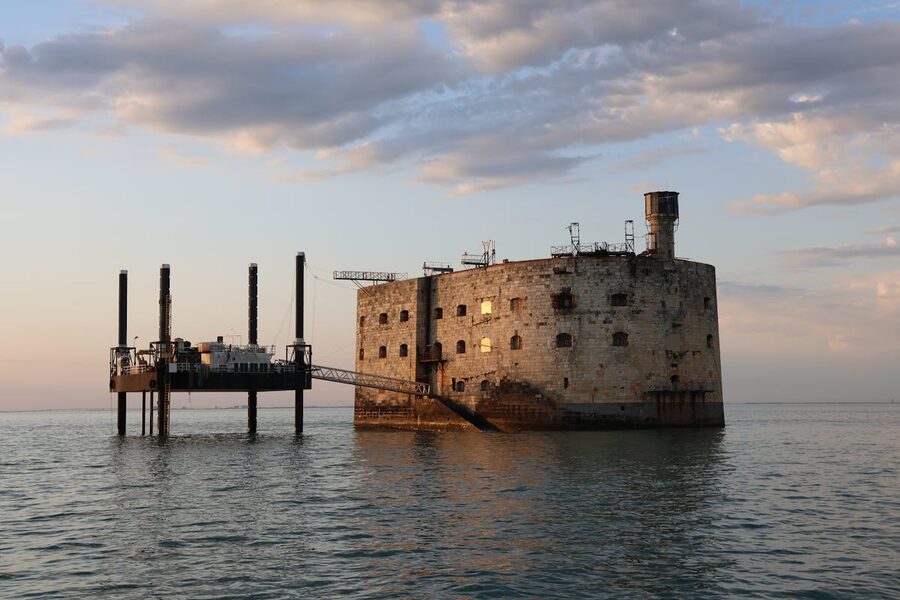
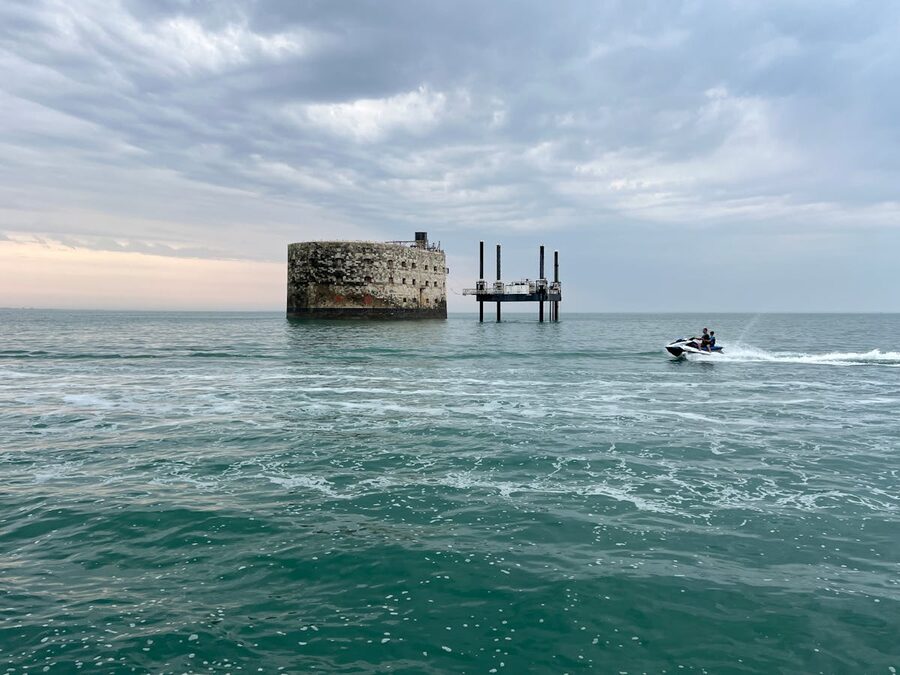
I should clarify something upfront: you cannot land on Fort Boyard. You cannot go inside. The fort is a private TV set — it has been the filming location for the game show Fort Boyard since 1990, and they are not interested in visitors trampling through their obstacle courses. What the boat tours give you is a slow circle around the fort, close enough to see the stonework, the scale of the thing, and the channels cut by tides running through the sandbar below.
Whether that sounds worth it depends entirely on your expectations. If you want to stand inside the fort, you will leave disappointed. If you want to float next to a 19th-century sea fortress that rises straight out of the Atlantic on a strip of sand, with nothing but water and sky in every direction — that is exactly what you will get.
Best overall: La Rochelle: Fort Boyard Guided Boat Trip — $27. Two hours with live commentary from Compagnie Interîles. Departs from La Rochelle’s old port, which means you can combine it with a morning in town.
Best for island views: Discover Fort Boyard — $25. A slightly different route that loops past the Île d’Aix, giving you two landmarks for the price of one.
Best departure point: Fouras: Fort Boyard & Île d’Aix Tour — $20. Leaves from Fouras-Les-Bains, which is actually closer to the fort. Cheapest option and they play the show’s theme music as you approach.
- How Fort Boyard Boat Tours Work
- A Brief History of a Fort That Was Obsolete Before It Was Finished
- La Rochelle vs Fouras: Which Departure Point Should You Pick?
- The 3 Best Fort Boyard Boat Tours to Book
- 1. La Rochelle: Fort Boyard Guided Boat Trip —
- 2. Discover Fort Boyard —
- 3. Fouras: Fort Boyard & Île d’Aix Tour —
- When to Go (and When to Stay on Land)
- Getting to La Rochelle
- What to Do in La Rochelle Before or After Your Tour
- Tips That Will Actually Help
- What You Will Actually See from the Boat
- While You Are in Western France
How Fort Boyard Boat Tours Work
Every tour follows roughly the same pattern. You board at a marina — either in La Rochelle’s Vieux Port or at the smaller harbour in Fouras-Les-Bains — and motor out into the strait between the Île d’Aix and the Île d’Oléron. The ride out takes about 40 minutes from La Rochelle, less from Fouras since it sits closer to the fort.
Once you reach Fort Boyard, the boat does a full lap around the structure. The captain provides commentary on the fort’s construction history, its failed military career, and its second life as a television set. Most boats have upper decks for photos, and you will want to be up there — the oval shape of the fort is best appreciated from a slight elevation.
After the circuit, some tours swing past the Île d’Aix for a look at its Napoleonic fort and coastline. A few tours actually drop passengers on the island for a couple of hours before collecting them again — worth asking about when booking if you want to stretch your legs on solid ground.
The whole thing runs about two hours from dock to dock. Bring a jacket even in summer — the Atlantic wind picks up once you clear the harbour walls, and the temperature on open water drops noticeably compared to the streets of La Rochelle.
A Brief History of a Fort That Was Obsolete Before It Was Finished
The British Royal Navy had a persistent habit of raiding the French coast around Rochefort in the late 18th century. The Charente estuary led directly to one of France’s most important naval dockyards, and the channel between the Île d’Aix and the Île d’Oléron was wide enough for warships to pass through without coming within range of either island’s shore batteries.
Napoleon saw the gap and in 1801 ordered a fort built on the Longe de Boyard, a sandbar roughly in the middle of the strait. His military engineers pointed out that the sandbar was underwater at high tide. Napoleon told them to figure it out. Construction began, failed, resumed, and was abandoned again multiple times over the following decades.
The fort was not completed until 1857, under Napoleon III. By that time, advances in rifled artillery meant that guns on the Île d’Aix and Île d’Oléron could already cover the strait without any help from a mid-channel fortification. Fort Boyard served briefly as a prison, then as a storage depot, and then sat empty for most of the 20th century until French television producers saw its potential as a game show location in the late 1980s.
The show Fort Boyard premiered in 1990 and has since been licensed in over 30 countries. The challenges — crawling through dark passages, solving riddles against the clock, collecting keys from caged tigers — turned the fort into one of the most recognizable structures in France, despite the fact that almost nobody has been inside it.
La Rochelle vs Fouras: Which Departure Point Should You Pick?
Most visitors leave from La Rochelle because that is where they are staying. The old port is gorgeous, there are restaurants and shops within stumbling distance of the boarding point, and you can make a full day of it by combining the boat trip with a walk around town. If convenience is what matters, La Rochelle wins.
Fouras-Les-Bains is the better departure point if you are coming by car and do not particularly care about La Rochelle itself. It is a small seaside town about 30 km south of La Rochelle, and its harbour is physically closer to Fort Boyard. The trip out is shorter, the boats are typically less crowded, and the prices tend to run a few euros cheaper. The Fouras tours also pass right by the Île d’Aix on the way out, which gives you a natural two-for-one.
A third option exists from Boyardville on the Île d’Oléron, though it requires getting to the island first (there is a bridge). These tours are shorter — around an hour — because the island is right next to the fort. Less time on the water, but also less expensive and useful if you are already spending the day on Oléron.
The 3 Best Fort Boyard Boat Tours to Book
1. La Rochelle: Fort Boyard Guided Boat Trip — $27
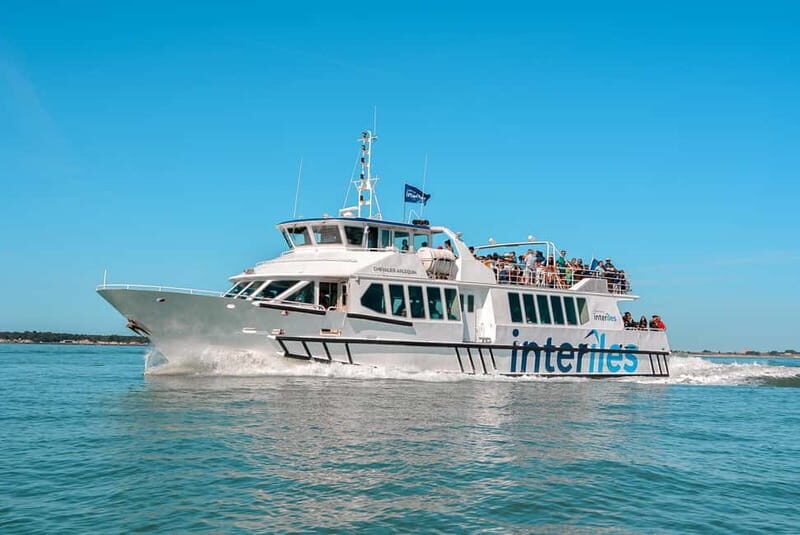
This is the tour I would book for a first visit. Run by Compagnie Interîles, it departs from La Rochelle’s Vieux Port and takes a direct route out to Fort Boyard. The captain gives live commentary in French (and usually some English or at least printed handouts) covering the fort’s construction, its military history, and the TV show filming. At $27 per person, it is the best value for a full-length tour from La Rochelle — two hours on the water, a complete circuit of the fort, and the return trip through the strait.
The boat is large enough that it does not feel cramped even when full, and there is an upper deck for panoramic photos. One thing to know: some sailings also stop at the Île d’Aix to drop off passengers, so you may get a bonus island view on your route. The stop adds a few minutes but does not cut into your time at Fort Boyard.
This is also the most popular Fort Boyard tour on the market — easily the most reviewed and the one that fills up fastest in peak summer. Book at least a few days ahead in July and August. Morning departures tend to have calmer water and better light for photos.
2. Discover Fort Boyard — $25
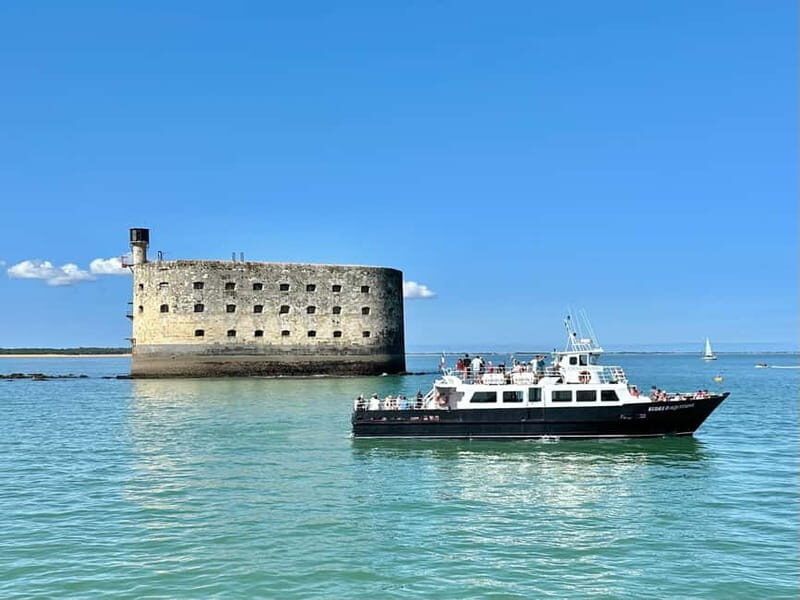
Operated by Croisières Navipromer, this is the slightly cheaper alternative that follows a different route. Instead of heading straight to the fort, it takes a wider arc that brings you along the coastline of the Île d’Aix before circling Fort Boyard. The result is a more scenic approach with views of two historic fortifications rather than one.
At $25 per person for roughly two hours and ten minutes, the pricing undercuts the Compagnie Interîles tour by a couple of dollars. The commentary is solid — focused on the local maritime history of the Charente coast, with plenty of detail about the islands and their role in French naval defence. If you care about the broader geography and not just the fort itself, this route delivers more context.
The trade-off is that you spend slightly less time parked next to Fort Boyard than on the direct tour. The circuit is still complete, but the pace feels faster because the captain has more ground to cover. For most people the difference is negligible — but if Fort Boyard is your only reason for being on the boat, the #1 pick gives you a few more minutes up close.
3. Fouras: Fort Boyard & Île d’Aix Tour — $20
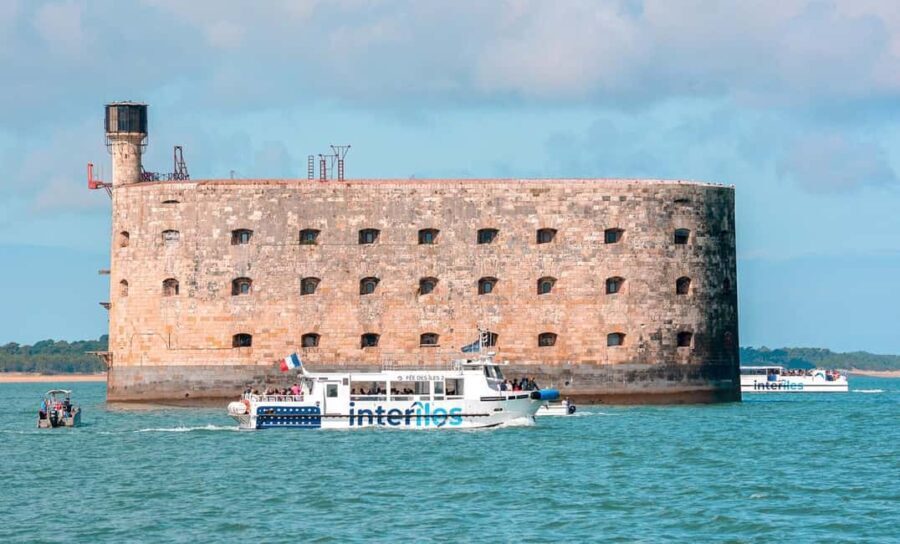
This is the one to book if you have a car. Fouras-Les-Bains sits about 30 km south of La Rochelle, and the harbour there is significantly closer to Fort Boyard. That shorter distance means a quicker transit, more time near the fort, and a ticket price that comes in at just $20 per person — the cheapest Fort Boyard tour available.
Also run by Compagnie Interîles (same operator as the #1 pick, different departure point), this tour doubles as an Île d’Aix excursion. You circle Fort Boyard and then cruise along the coast of the island. One reviewer mentioned that the captain plays the Fort Boyard TV show credits as the boat approaches the fort, which is the kind of detail that makes the difference between a boat ride and a memory.
The boat is comfortable with good sightlines from every seat. Fouras itself is a pleasant, low-key beach town worth a wander before or after your sailing — far quieter than La Rochelle and with a solid collection of seafood restaurants along the waterfront. If you are driving along the Atlantic coast and Fort Boyard is a stop rather than a destination, this is the smartest way to do it.
When to Go (and When to Stay on Land)
Fort Boyard boat tours run from roughly April through October, with the busiest period falling between mid-June and early September. July and August are peak season — schools are out, the coast fills up, and afternoon departures can sell out days in advance.
The best time to go is late May through June, or September. The weather is warm enough for comfortable open-deck sitting, the seas are typically calm, and you will not be fighting for rail space with forty other passengers trying to get the same photo.
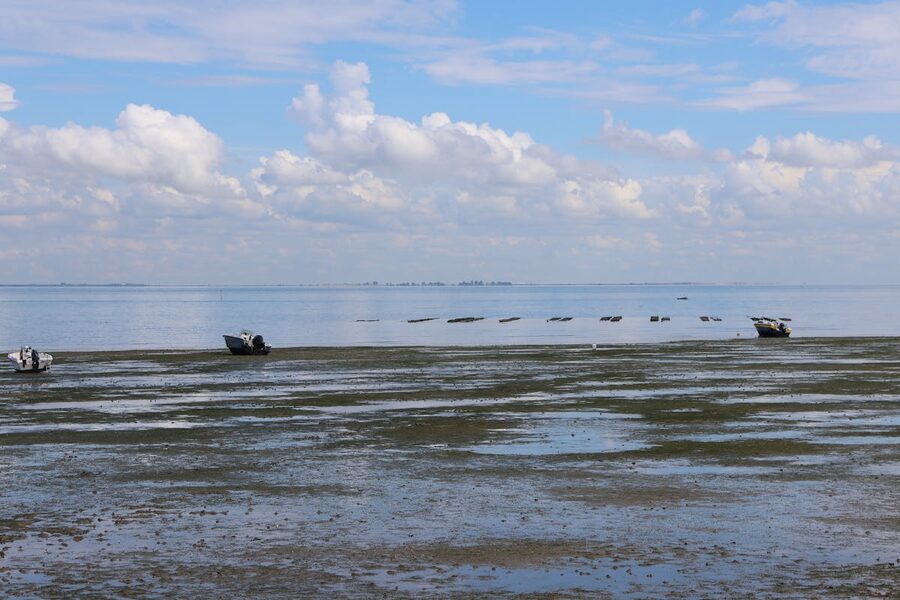
Morning departures tend to offer the flattest water. The Atlantic swell builds through the afternoon, and on choppy days the ride out can get rough enough that people who are borderline with seasickness will regret not taking medication. If you are prone to motion sickness, book the earliest sailing available and take something preventive before boarding.
Avoid going in strong wind or when rain is forecast. The fort looks impressive in any weather, but two hours on an open boat in driving rain is miserable no matter how historically significant the destination. Most operators will cancel sailings in genuinely bad conditions, but they will still run in overcast drizzle, and you will wish they hadn’t.
Getting to La Rochelle
La Rochelle has its own train station with direct TGV connections from Paris Montparnasse. The journey takes about three hours and drops you within a 20-minute walk of the Vieux Port, where most boat tours depart. If you are coming from Bordeaux, the train takes roughly two hours.
By car, La Rochelle sits on the A10 motorway. Parking in the old town is tight and expensive in summer — use the Park-and-Ride lots on the outskirts and take the free bus shuttle into the centre. If you are heading to Fouras instead, the drive from La Rochelle takes about 35 minutes along the D937.
La Rochelle also has a small airport with seasonal flights from the UK and a handful of European cities. It is not a major hub, but if you can find a direct flight, the airport is just 5 km from the old port.
What to Do in La Rochelle Before or After Your Tour
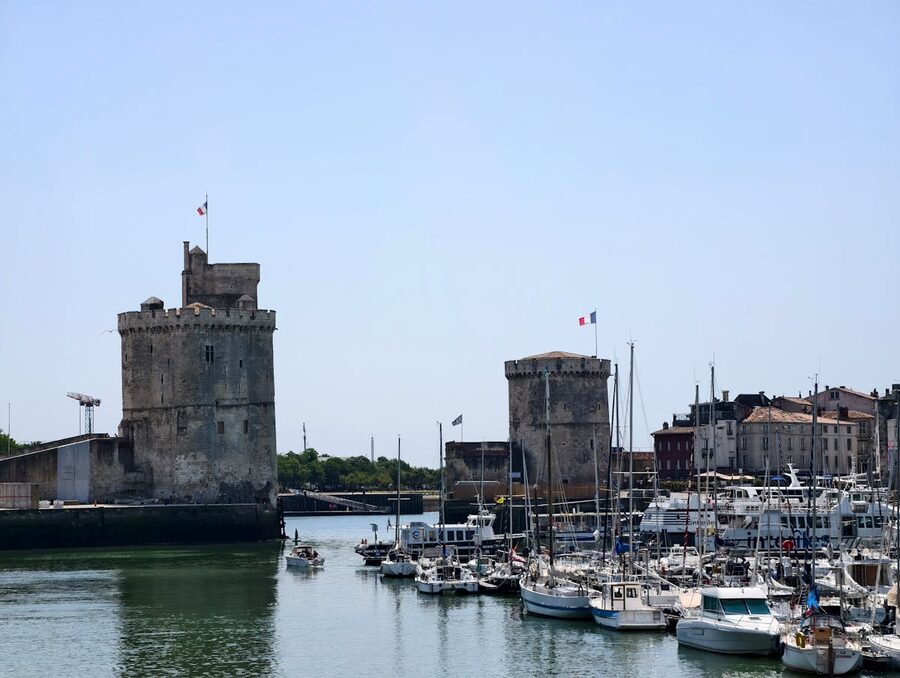
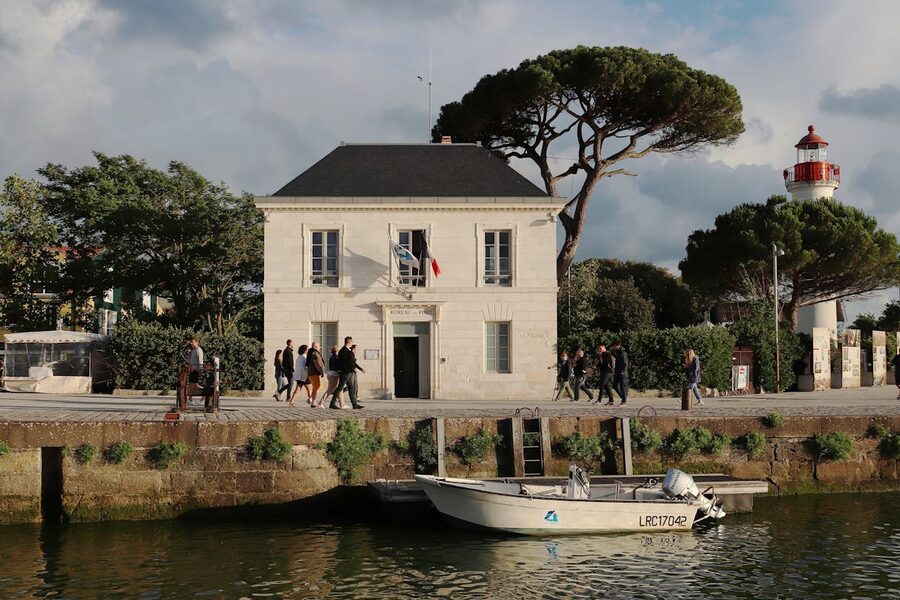
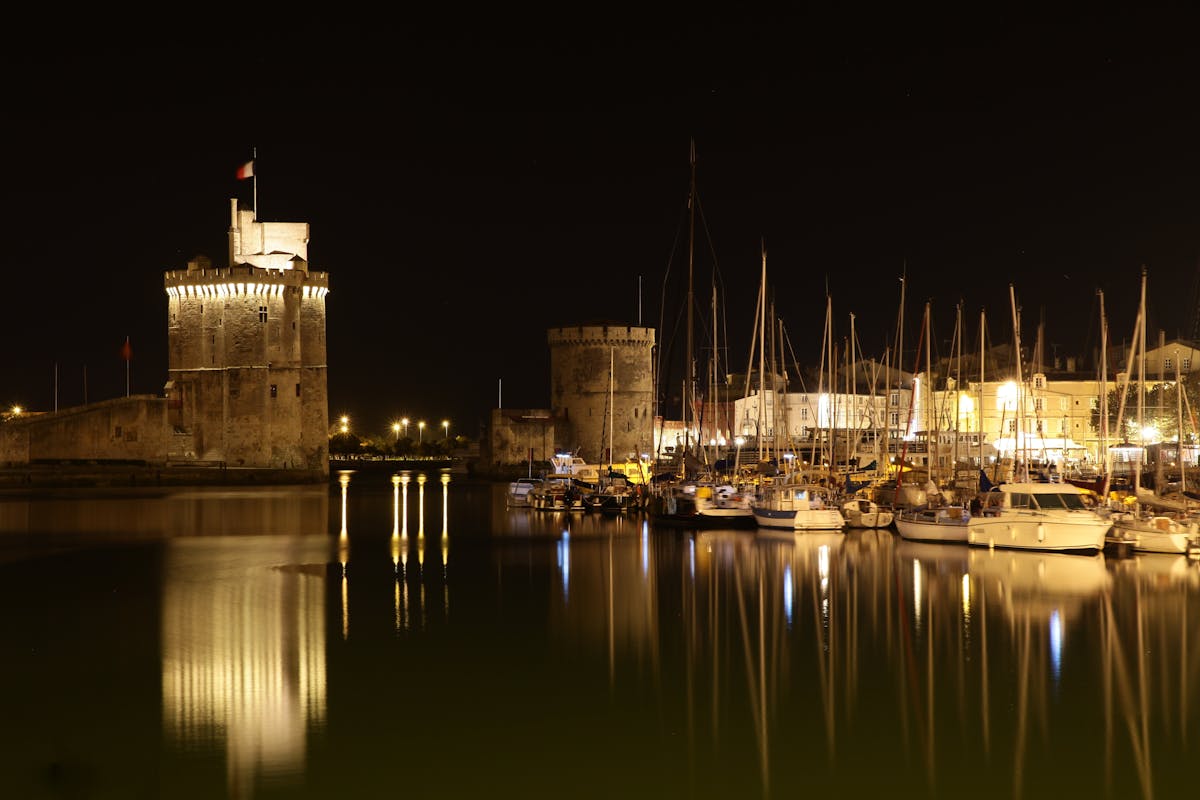
La Rochelle is genuinely one of the most underrated cities on the French Atlantic coast. The old port with its twin medieval towers — the Tour Saint-Nicolas and the Tour de la Chaîne — is photogenic at any hour but especially striking at golden hour when the limestone glows. You can climb both towers for a panoramic view over the harbour and out toward the islands.
The city has a complicated history worth knowing. During the Wars of Religion, La Rochelle was the last major Huguenot stronghold in France. Cardinal Richelieu besieged it in 1627-28, building a massive stone seawall to cut off supplies. The siege lasted 14 months and killed most of the population. If that sounds familiar, the siege features prominently in Dumas’s The Three Musketeers.
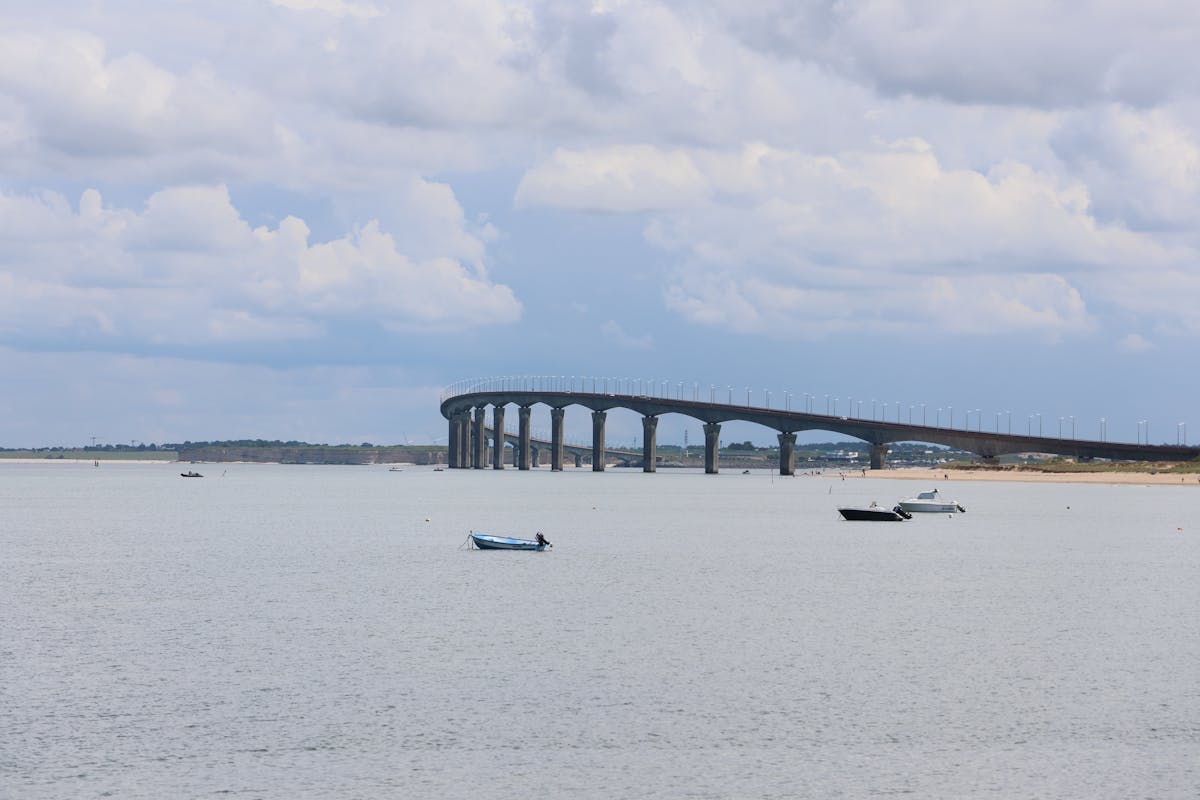
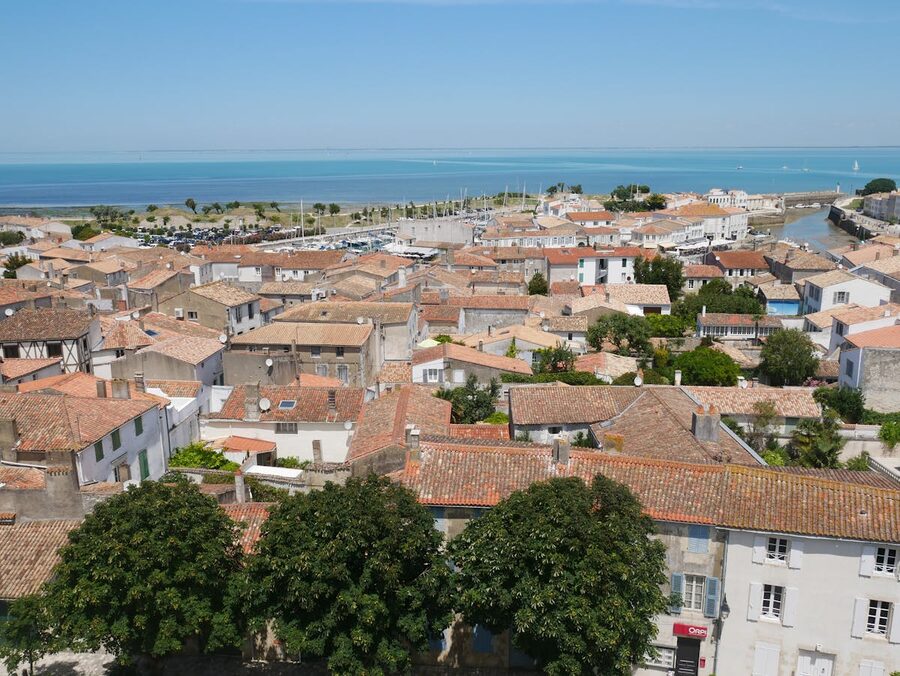
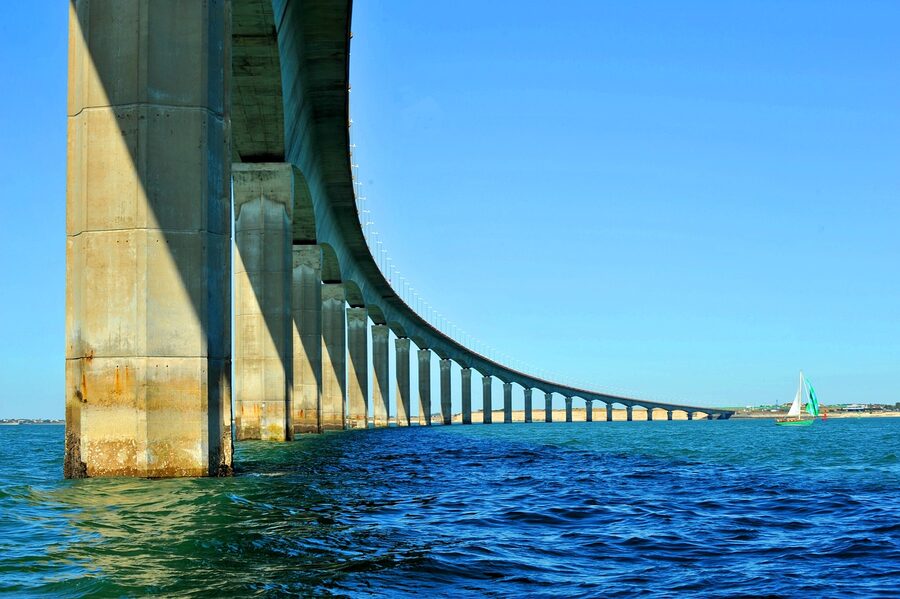
For a half-day addition, drive across the bridge to the Île de Ré. The island is all salt marshes, whitewashed villages, and bike paths through vineyards. Saint-Martin-de-Ré has a Vauban citadel and enough cafés to keep you occupied for an afternoon. The bridge itself is nearly 3 km long and the view from the top is worth the toll.
Tips That Will Actually Help
- Book ahead in July-August. Morning sailings fill up first. An afternoon booking is fine for availability but worse for sea conditions.
- Bring binoculars. The boat gets close to Fort Boyard, but binoculars let you pick out the details in the stonework and see the TV production equipment on the upper levels.
- Sunscreen and a hat. Two hours on open water with no shade will cook you faster than you expect, even on overcast days. The reflection off the water amplifies everything.
- Camera with zoom. Phone cameras are fine for the approach, but once you are circling the fort, a bit of optical zoom makes a real difference. The fort is larger than it looks in photos — wider lenses will not do it justice.
- Layers, not just a jacket. The wind on the strait is cold even when the air temperature in La Rochelle felt warm. A windbreaker over a light jumper is the right call.
- Seasickness prevention. If you are even slightly susceptible, take something before you board. The strait can get choppy, especially on afternoon sailings with a westerly wind.
- Sit on the starboard (right) side heading out for the best views of the Île d’Aix. On the return, switch to port (left) for the approach back into La Rochelle harbour.
- Check the TV filming schedule. During filming periods (usually June-July), the fort may have production equipment visible. Some people find this interesting, others find it distracting. Either way, it does not change the boat route.
What You Will Actually See from the Boat
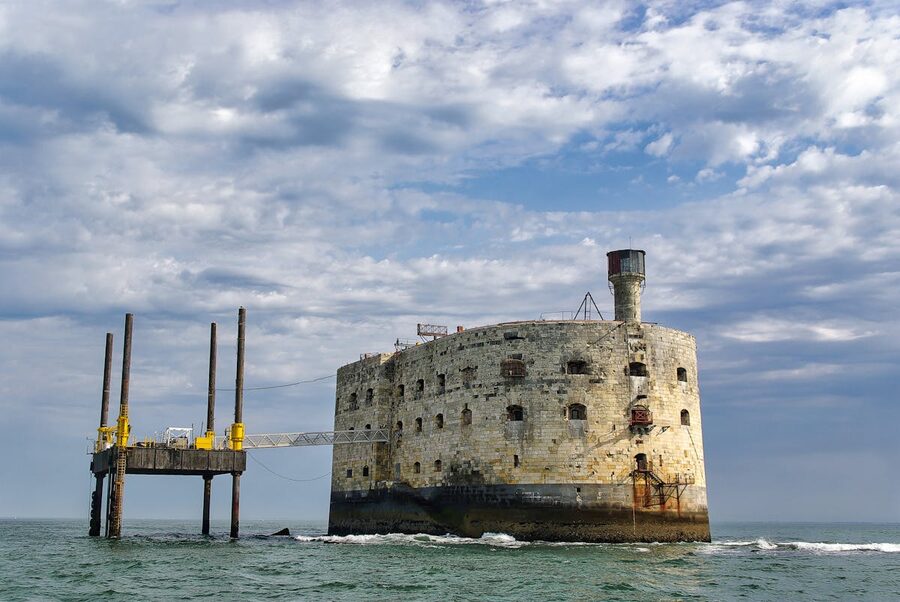
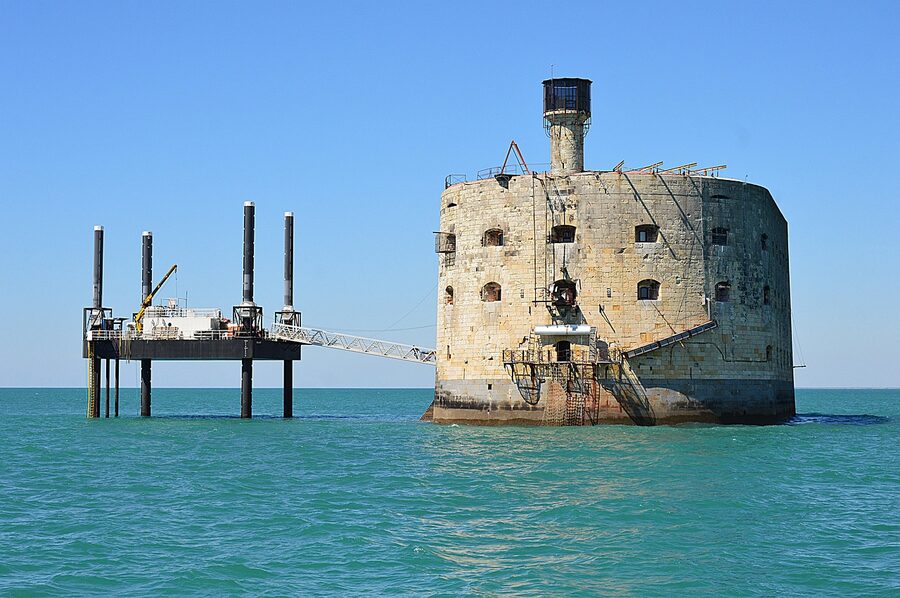
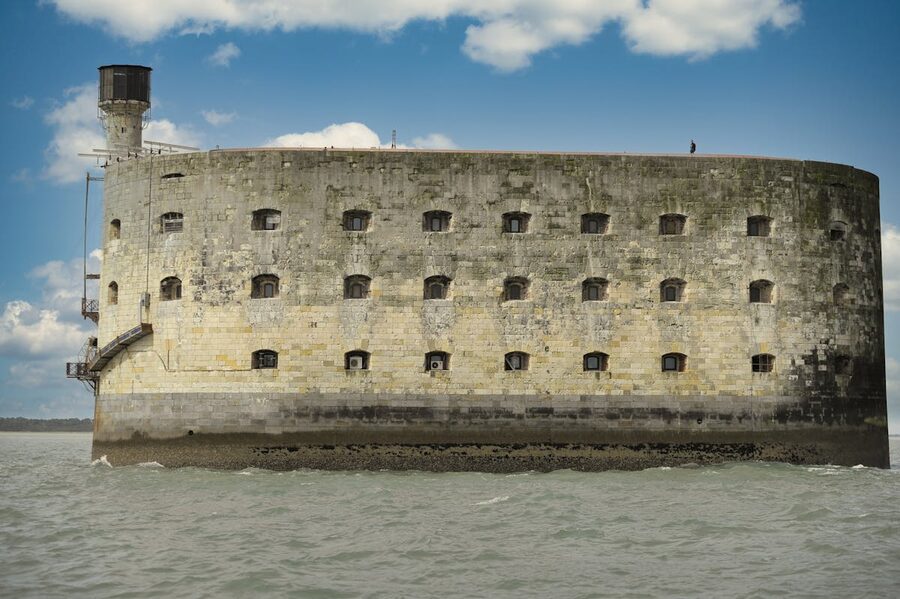
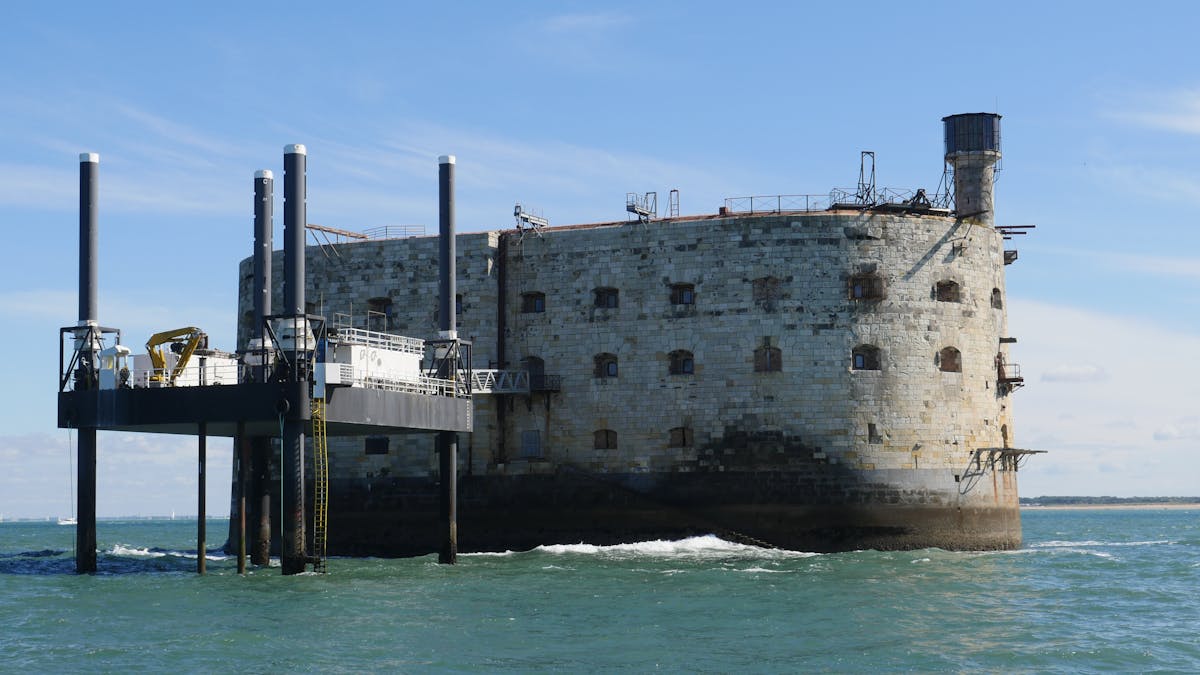
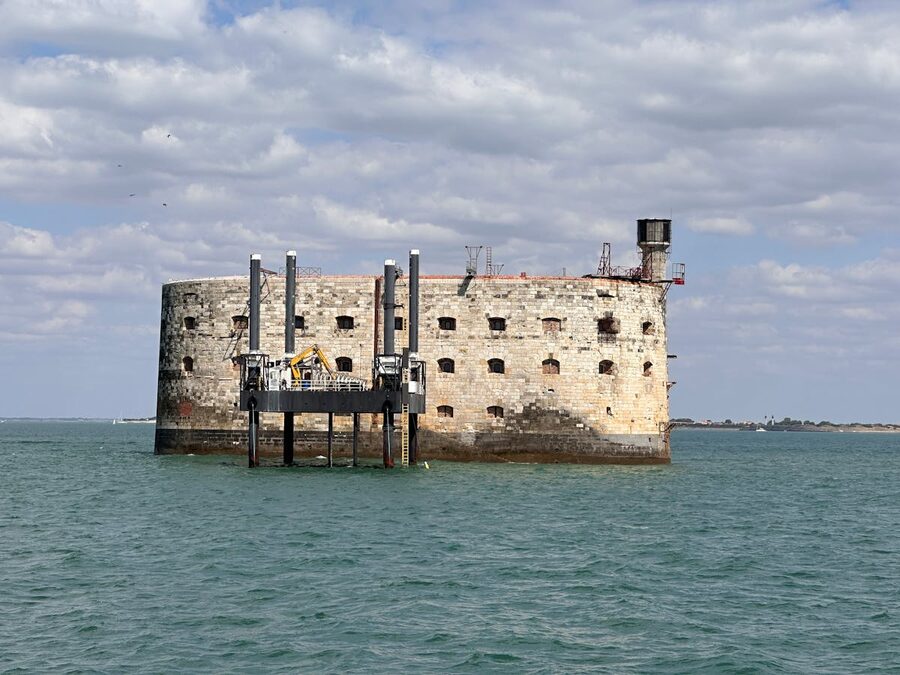
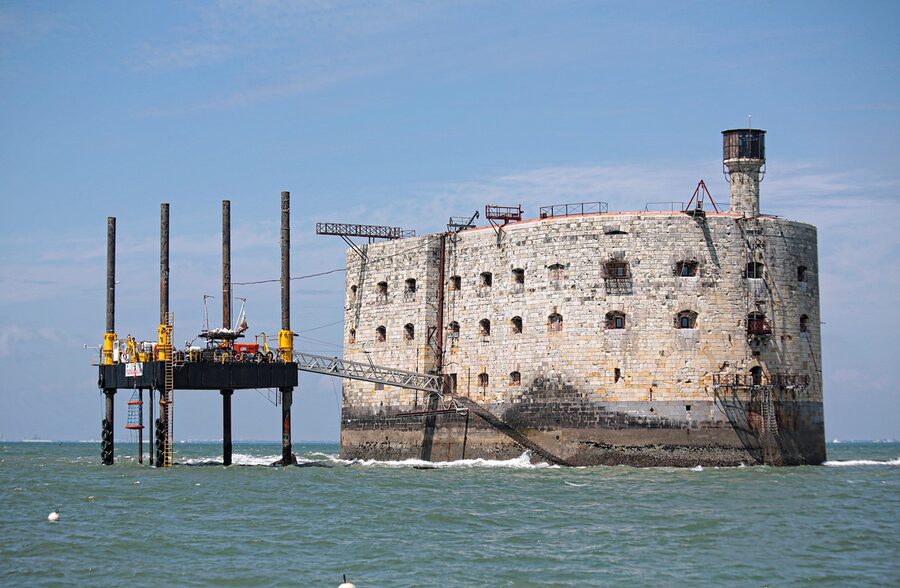
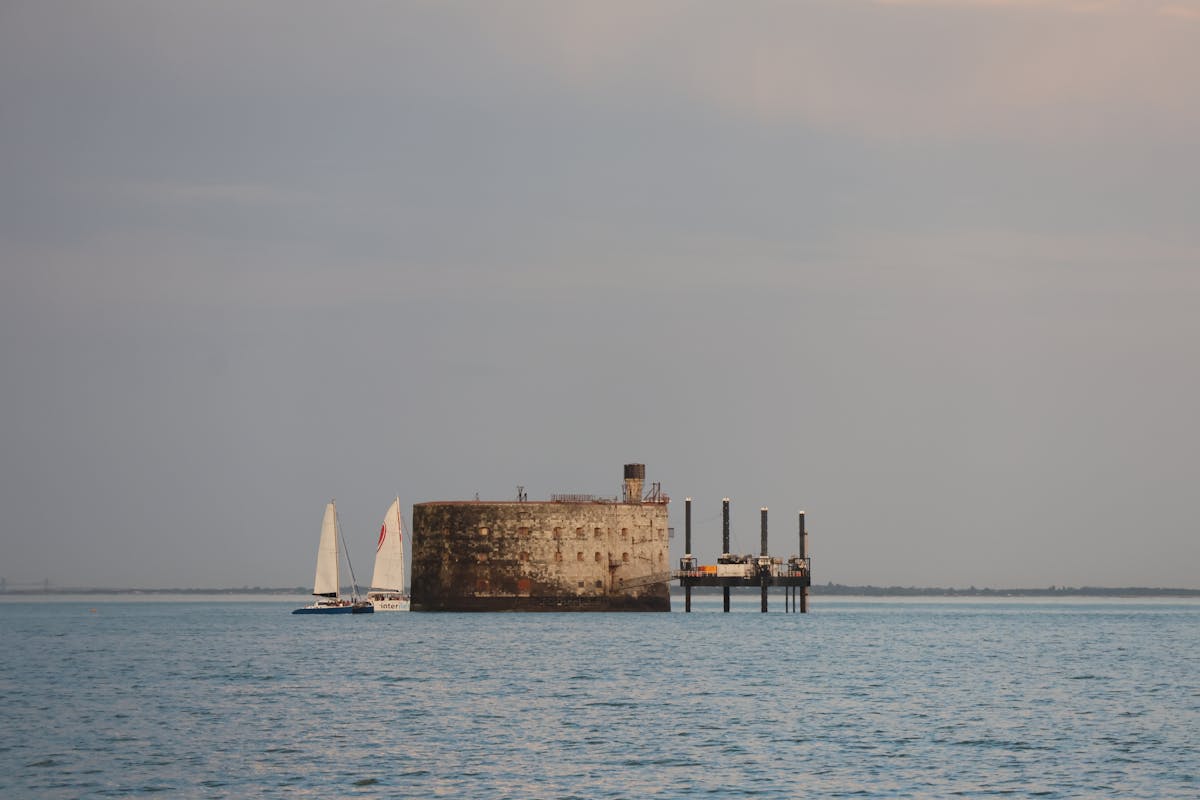
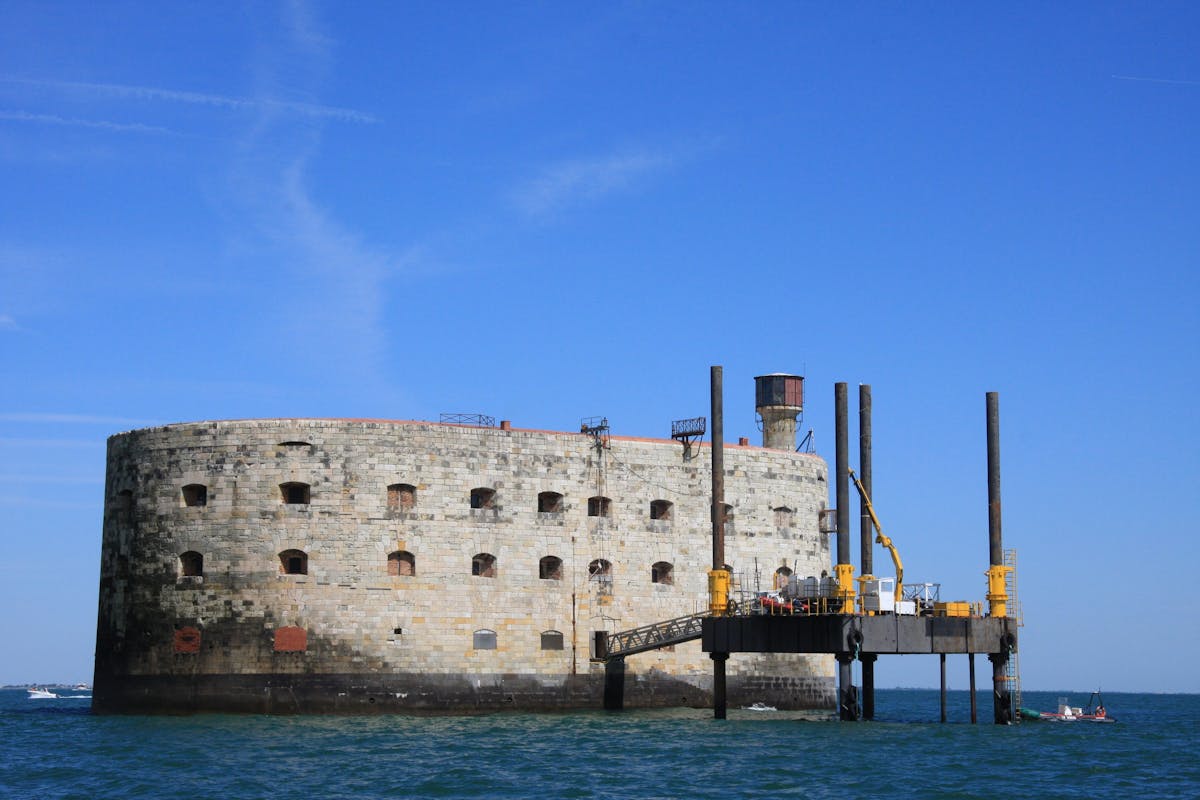
Fort Boyard sits on its sandbar like a stone ship anchored in the middle of the strait. The oval structure rises about 20 metres from the waterline, with thick walls of pale limestone that have weathered into a texture somewhere between fortress and coral reef. At low tide, you can see the rocky platform it sits on — the same sandbar that made construction so difficult and took over 50 years to conquer.
The boat typically makes one complete circuit, giving you views from every angle. The western face is the most photogenic, with the entrance archway and the remains of a small dock visible at water level. The eastern side shows where erosion and storms have taken their toll over the decades. Look for the metal fixtures on the upper floors — those are remnants of the TV production rigging.
Depending on your tour route, you will also pass the fortifications on the Île d’Aix, which Napoleon used as a military base and where he spent his last days on French soil before surrendering to the British in 1815. The island’s star-shaped fort is visible from the water and provides a nice visual counterpoint to Fort Boyard’s oval design.
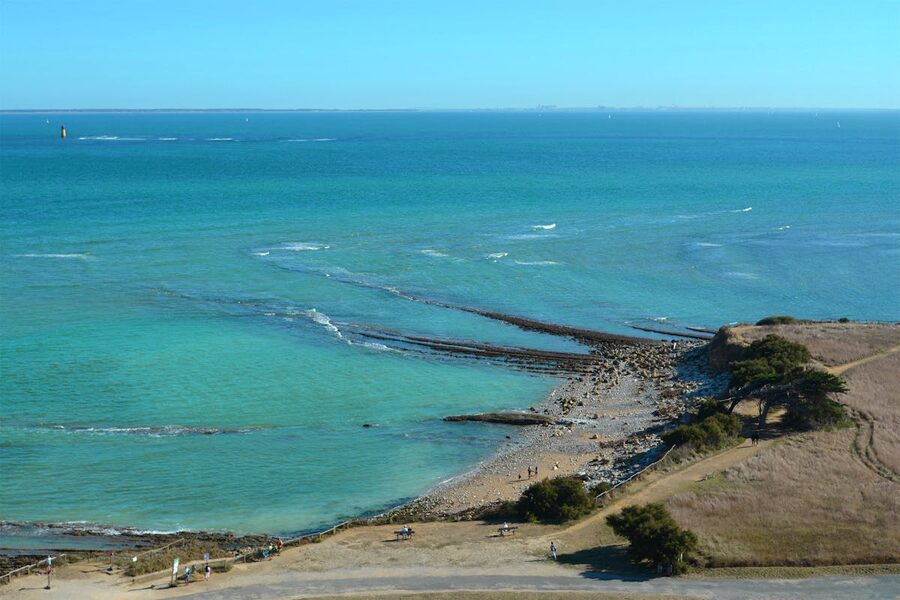
On clear days, the view extends across to the Île d’Oléron — France’s second-largest island after Corsica — and the long curve of the coast toward Royan. The strait is busy with sailing boats, small fishing vessels, and the occasional kayaker, which adds movement and life to what could otherwise be a very static scene.
While You Are in Western France
La Rochelle makes a natural base for exploring the Atlantic coast, and there is plenty within day-trip range that pairs well with a Fort Boyard outing. If you are heading south, a wine tour in Bordeaux is about two hours by train — our guide covers the best options from tasting rooms to full vineyard excursions. The Saint-Emilion wine tours are even better if you want medieval villages with your Merlot. Further south, the Camargue safari from Arles trades ocean for wetlands — wild horses, flamingos, and white sand beaches that feel nothing like the Atlantic coast. And if you are looping back through Paris, our Seine river cruise guide and Loire Valley tour guide cover the inland waterways with the same booking detail.
This article contains affiliate links. When you book through the links on this page, we earn a small commission at no extra cost to you. This helps us keep producing free travel guides.