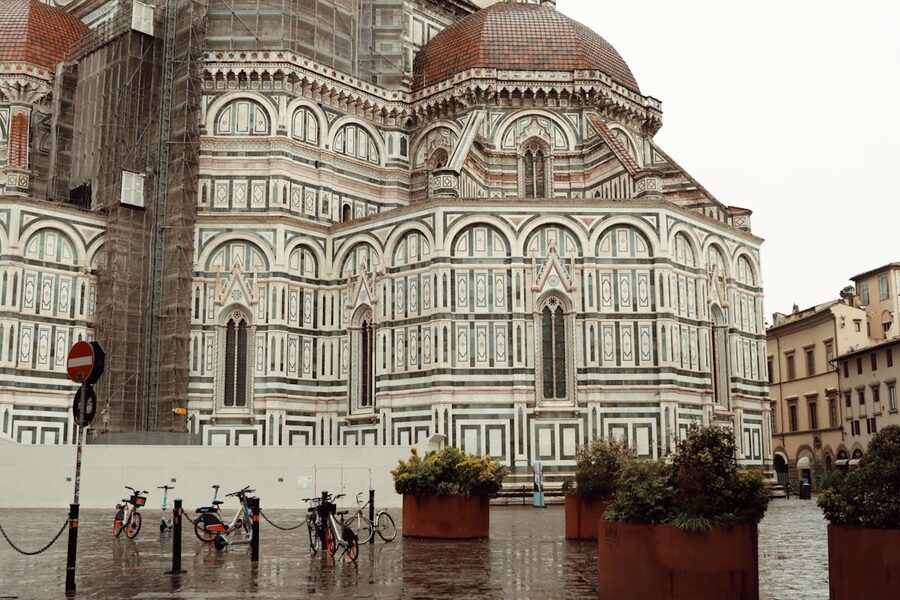
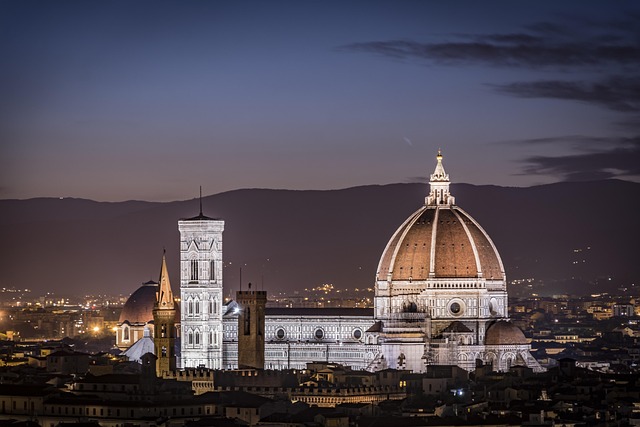
The Leonardo da Vinci Museum in Florence is one of those places that makes you rethink everything you thought you knew about the Renaissance. Forget dusty glass cases and oil paintings behind velvet ropes. This museum lets you get your hands on full-scale working replicas of Leonardo’s inventions — flying machines, war engines, hydraulic pumps, mechanical bridges — all built directly from his 500-year-old notebook sketches. And the best part? Most of them actually work, which is both humbling and slightly terrifying when you consider he designed a tank in the 1480s.
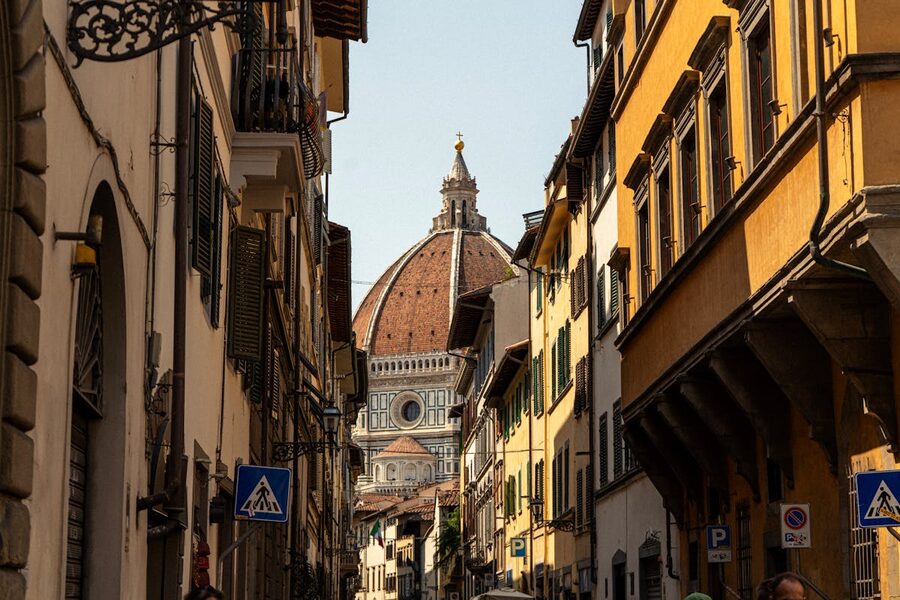
Getting tickets is straightforward, but there are a few things worth knowing before you go — including which ticket type matches your visit and how to skip the biggest crowds. I have broken it all down below.
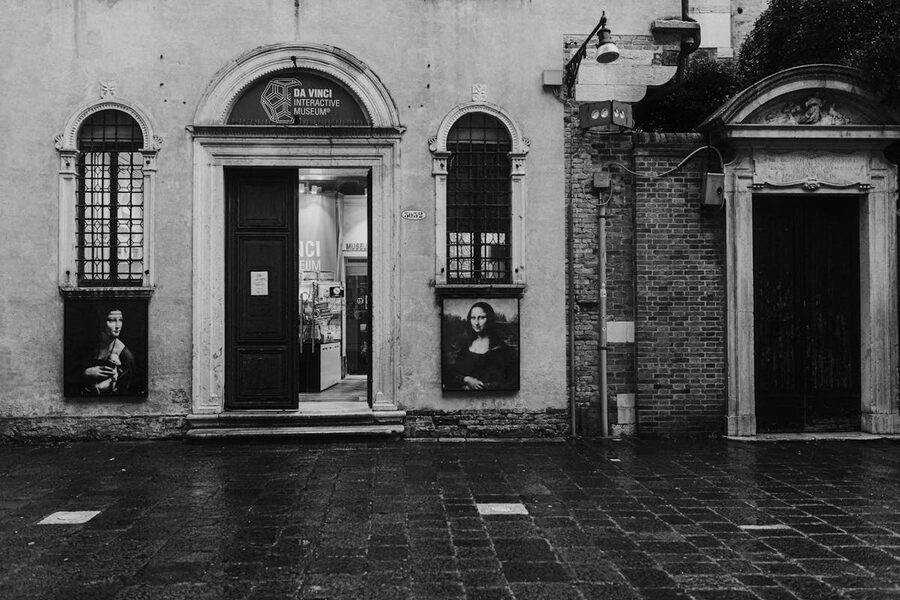
- In a Hurry? Here Are the Best Leonardo Museum Tickets
- Why the Leonardo Museum Is Worth Your Time in Florence
- Leonardo in Florence — The Stories Behind the Genius
- What You Will See Inside the Museum
- Your Ticket Options Explained
- Option 1: Leonardo Interactive Museum Entry Ticket
- Option 2: Interactive Leonardo Da Vinci Museum Visit
- Option 3: Leonardo da Vinci Guided Walking Tour
- How to Book and What to Expect
- Getting to the Museum
- Combining the Leonardo Museum With Other Florence Attractions
- Tips From Someone Who Has Been
- Frequently Asked Questions
In a Hurry? Here Are the Best Leonardo Museum Tickets
- Leonardo Interactive Museum Entry Ticket — Standard entry to the original Leonardo Interactive Museum near the Duomo. Self-paced, hands-on, and under $10.
- Interactive Leonardo Da Vinci Museum Visit — Alternate museum location with a slightly different collection of models and exhibits. Good if the main one is fully booked.
- Leonardo da Vinci Guided Walking Tour — A guided walk through the Florence streets where Leonardo lived and worked, covering his history, rivalries, and legacy across the city.
Why the Leonardo Museum Is Worth Your Time in Florence
Florence does not lack museums. Between the Uffizi, the Accademia, Palazzo Pitti, and the Bargello, you could spend a week just hitting the major ones. So why should the Leonardo Museum make the cut?
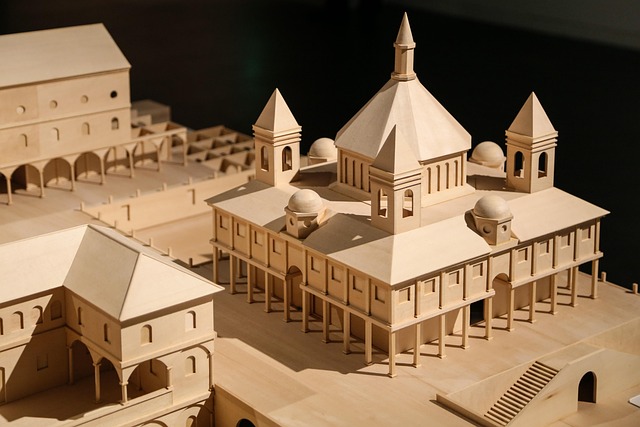
Because it is one of the only museums in the city — or anywhere — where you can physically interact with the exhibits. Every model is a full-scale reconstruction of something Leonardo drew in his notebooks between roughly 1478 and 1519. You can turn cranks, pull levers, and watch gears mesh together. Families with children find this particularly good, but it works just as well for adults who like engineering, design, or just understanding how things work.
The museum sits in a building near the Duomo, right in the historic district where Leonardo himself walked, worked, and sketched daily during his years in the city. He lived in Florence from 1466 to 1482, first as an apprentice and later as a working artist and inventor, so the surrounding streets are genuinely the same ones he would have known.
Leonardo in Florence — The Stories Behind the Genius
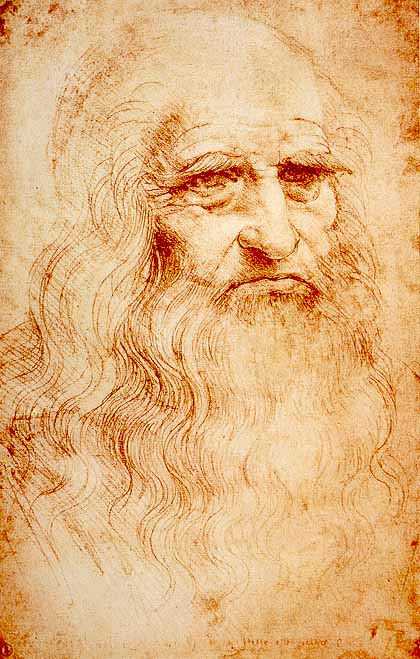
Leonardo arrived in Florence in 1466 as a teenager, apprenticed to the artist Andrea del Verrocchio. This was not some minor workshop — Verrocchio was one of the leading artists in the city, and his bottega turned out painters, sculptors, and goldworkers who went on to define the Renaissance.
The most famous story from this period involves a painting called the Baptism of Christ. Verrocchio was working on it with several apprentices, and the young Leonardo was asked to paint one of the angels. According to Vasari (who wrote the first art history book), Leonardo’s angel was so clearly superior to everything else on the canvas that Verrocchio looked at it, put down his brushes, and swore he would never paint again. Whether or not the story is exactly true, something happened — Verrocchio did shift his focus to sculpture after that painting.
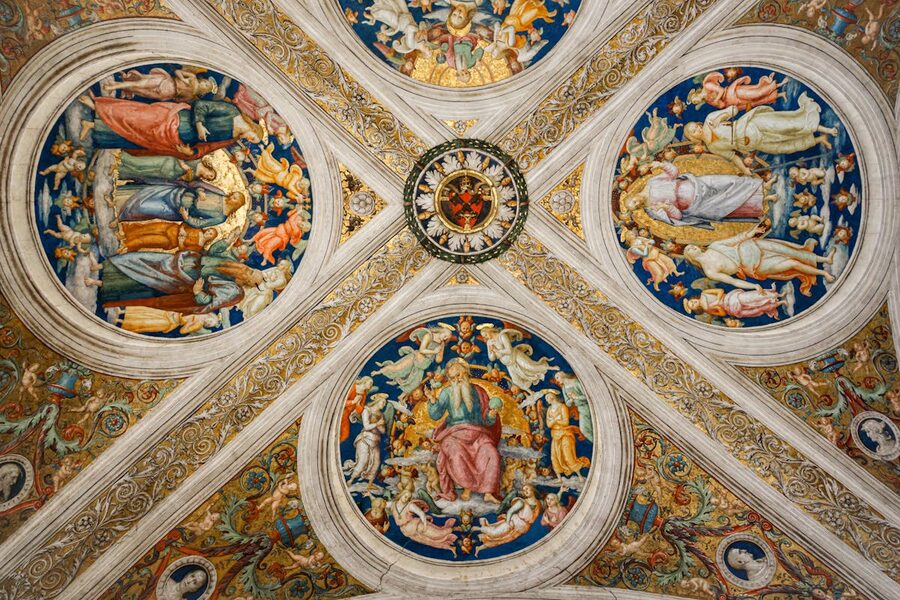
Leonardo’s notebooks, which the museum brings to life, contain designs for a helicopter (sketched in 1489), a tank, a parachute, a diving suit, and a self-propelled cart that some historians call the first automobile design. None of these were built during his lifetime. The museum’s models prove that the engineering was sound — these machines would have actually worked if anyone had built them. It is one thing to read about that in a textbook, and quite another to stand in front of a full-scale flying machine and watch the mechanism operate.
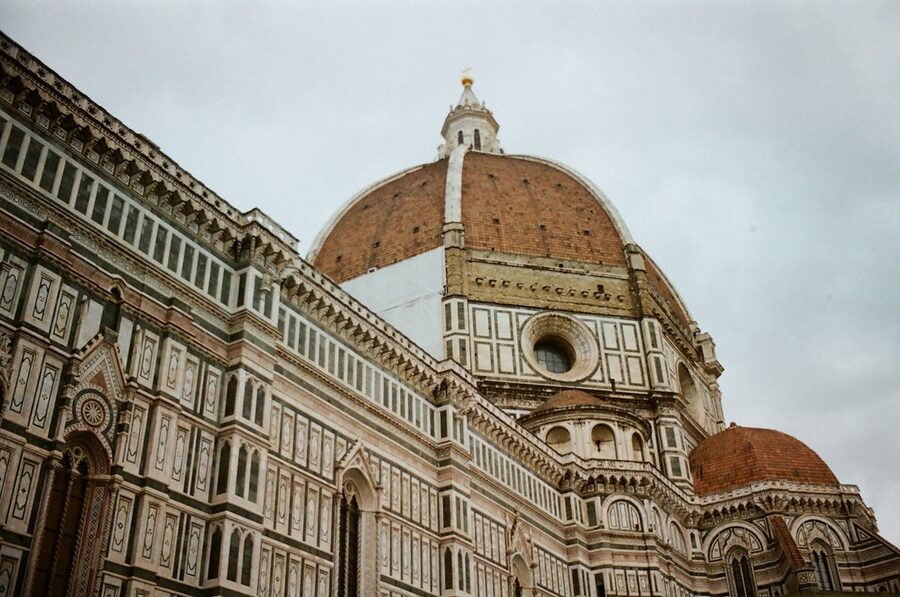
Florence was the centre of the Renaissance precisely because men like Leonardo, Michelangelo, Botticelli, and Brunelleschi all worked within walking distance of each other, funded by the Medici banking family. The museum’s location puts you right in the middle of that geography.
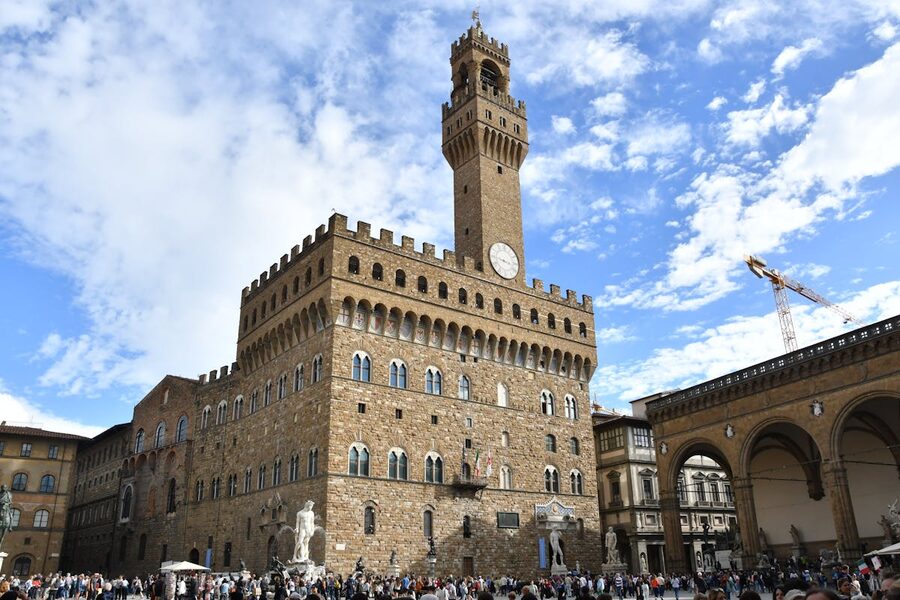
What You Will See Inside the Museum
The museum is organized thematically rather than chronologically, which makes it easier to grasp the sheer range of Leonardo’s thinking. You move through sections dedicated to different types of invention.

The flight section is usually the first one that stops people in their tracks. Leonardo drew a design for an aerial screw — essentially a helicopter — in 1489, more than 400 years before the Wright brothers flew at Kitty Hawk. The full-scale model in the museum shows exactly how the mechanism was supposed to generate lift through a rotating helical surface. There is also a glider based on his studies of bird flight, and a parachute design that was successfully tested (by a brave skydiver, using a modern replica) in the year 2000.
The military engineering section includes the famous tank design — an armored vehicle powered by hand cranks, with guns pointing in every direction. Leonardo designed it for Ludovico Sforza, the Duke of Milan, but it was never built. Engineers who studied the plans later noticed what might be a deliberate error in the gear mechanism, leading some to speculate that Leonardo — who was famously ambivalent about warfare — sabotaged his own design on purpose.
The civil engineering section covers bridges, hydraulic systems, and mechanical tools. Leonardo’s self-supporting bridge, designed for military use, can be assembled without nails or rope. The museum’s working model shows you exactly how it holds together through geometry alone.
Your Ticket Options Explained
There are a few different ways to visit, depending on whether you want to go solo or with a guide, and which specific museum location interests you. Here is what is available.
Option 1: Leonardo Interactive Museum Entry Ticket
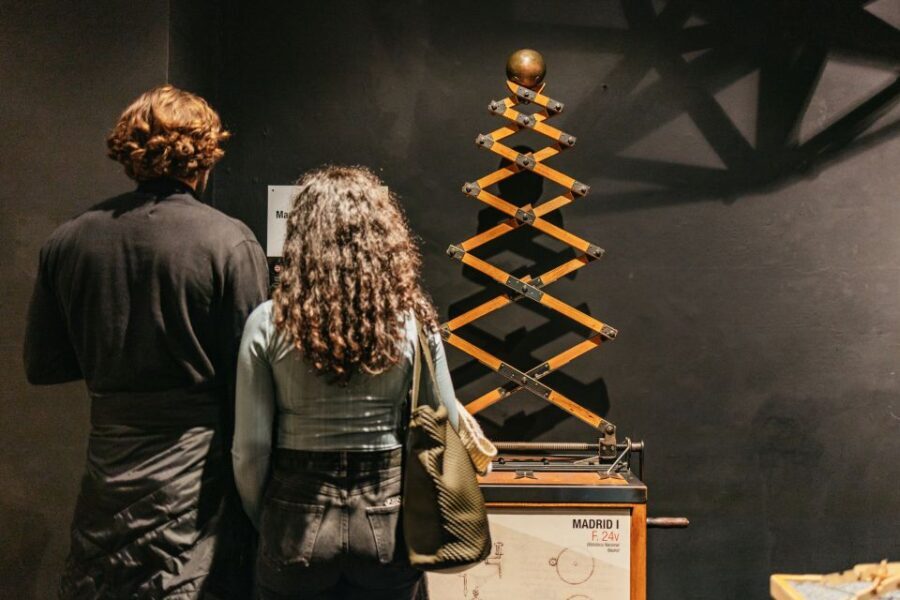
Florence: Leonardo Interactive Museum Entry Ticket
This is the original and most popular option — a self-guided visit to the Leonardo Interactive Museum near the Duomo. You get access to the full collection of working models built from Leonardo’s notebook drawings. Expect to spend between 45 minutes and an hour and a half, depending on how much time you take with each machine. The hands-on exhibits are the main draw: you can actually operate many of the models, which makes it far more engaging than a typical museum visit. Families with kids find this one especially good because the interactive element keeps younger visitors interested.
Price: From $9 per person
Option 2: Interactive Leonardo Da Vinci Museum Visit
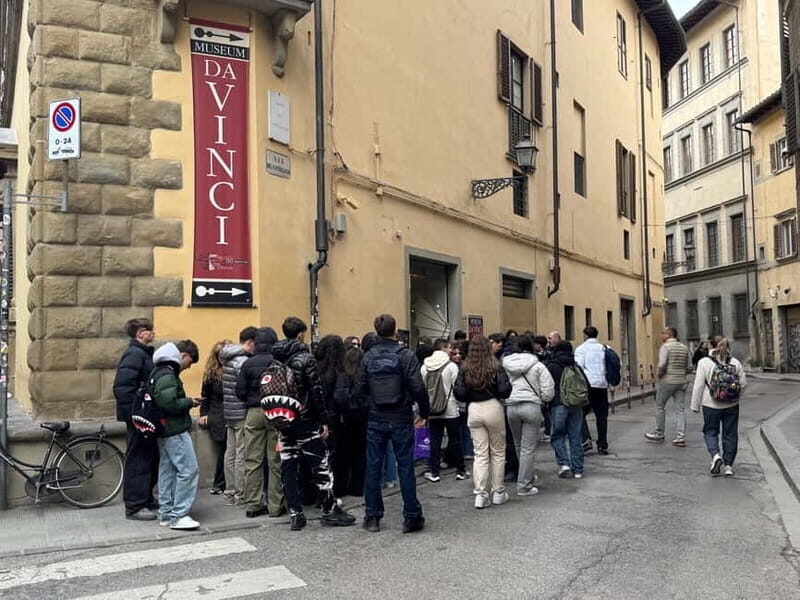
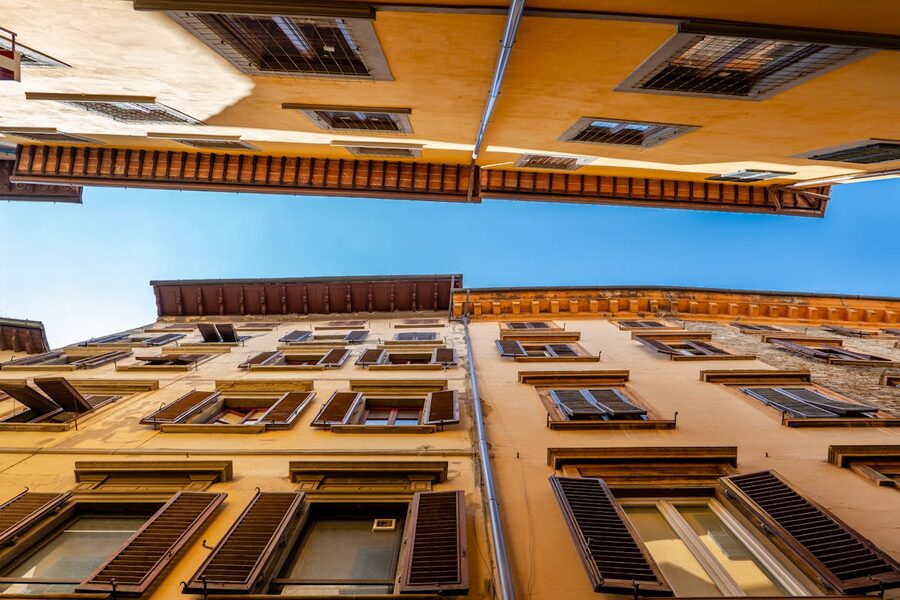
Florence: Visit to the Interactive Leonardo Da Vinci Museum
A second museum location with a slightly different collection of models and a separate focus on some of Leonardo’s lesser-known designs. If the main Interactive Museum near the Duomo is booked or you have already visited it, this is a solid alternative that covers different ground. The Interactive Leonardo Da Vinci Museum also features hands-on exhibits, though the emphasis shifts slightly toward engineering principles and how Leonardo’s ideas connected to broader Renaissance science.
Price: From $11 per person
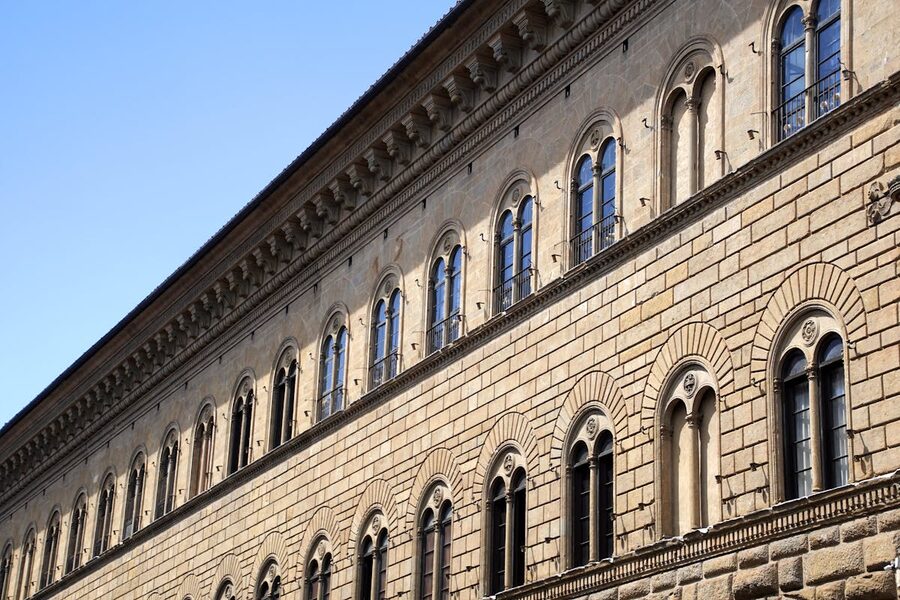
Option 3: Leonardo da Vinci Guided Walking Tour
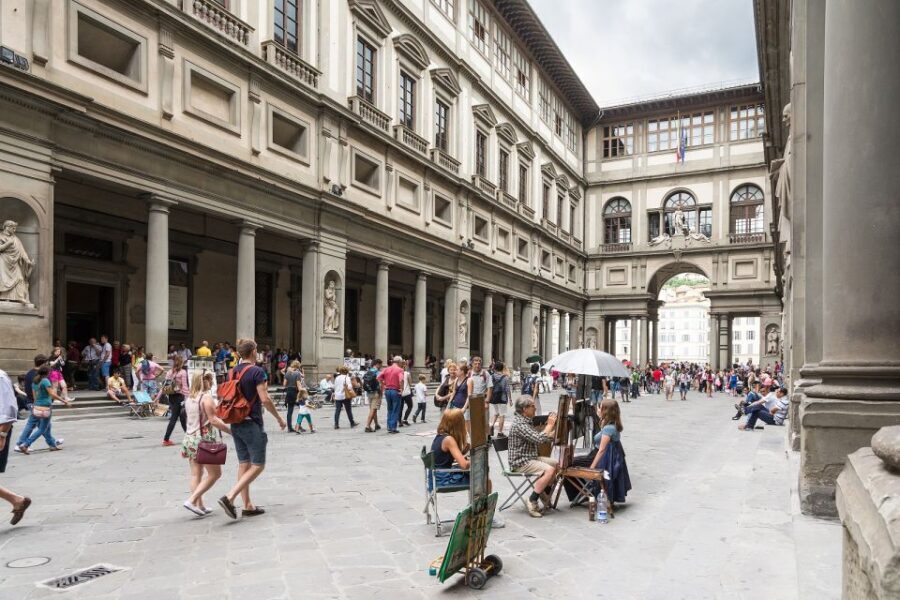
Florence: Leonardo da Vinci Guided Walking Tour
If you want the full Leonardo story with the city as your backdrop, this guided walking tour covers the key locations in Leonardo’s Florence — from where he apprenticed with Verrocchio to the streets where he developed his ideas about flying machines and war engines. The guide covers his rivalries with other Renaissance artists, his relationship with the Medici family, and the specific buildings and piazzas that shaped his work. It runs about two hours and works well as a companion to a museum visit, or as a standalone experience if you prefer history told through real places rather than exhibit halls.
Price: From $34 per person
How to Book and What to Expect
Booking is simple. All three options are available online through GetYourGuide, and you can book right up until the day of your visit in most cases. The museum entry tickets are date-specific, so pick your day when you check out.
What you should know before going:
- No skip-the-line needed: Unlike the Uffizi or Accademia, the Leonardo Museum rarely has massive queues. Your pre-booked ticket gets you straight in.
- Best time to visit: Early morning (right at opening) or late afternoon. The midday rush between 11am and 2pm brings school groups and tour buses.
- How long to allow: 45 minutes to 1.5 hours for the museum. Add 2 hours if you are doing the guided walking tour.
- Good for kids: Absolutely. The hands-on format makes this one of the most child-friendly museums in Florence. Children under 6 usually enter free.
- Accessibility: The museum is on one level and wheelchair accessible.
- Photography: Allowed throughout, no flash.

Getting to the Museum
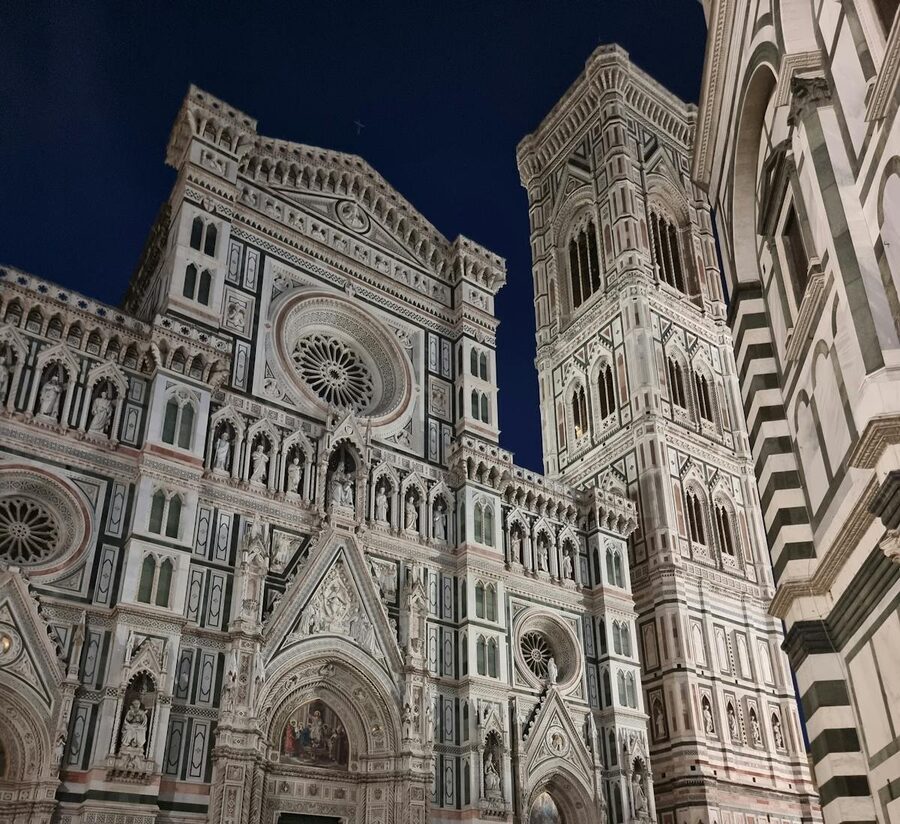
The Leonardo Interactive Museum (the main one, for Option 1) is located on Via dei Servi, a few minutes’ walk north of the Duomo. You cannot miss it if you walk from the cathedral toward Piazza Santissima Annunziata.
From major landmarks:
- From the Duomo: 3-minute walk north along Via dei Servi
- From Santa Maria Novella train station: 12-minute walk east through the city centre
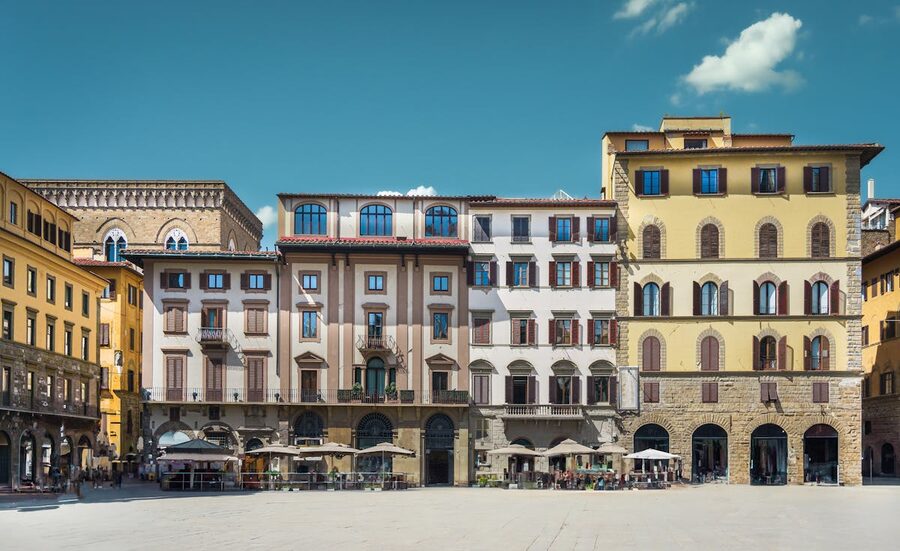
- From Piazza della Signoria: 8-minute walk north past the Duomo
- From the Accademia (Michelangelo’s David): 5-minute walk south
There is no dedicated parking, but that is true of almost everything in the Florence city centre. The entire area is a ZTL (restricted traffic zone), so if you are driving, park outside the centre and walk in or take a bus.
Combining the Leonardo Museum With Other Florence Attractions
The museum’s location near the Duomo makes it easy to pair with other major sights. Here are some combinations that work well without exhausting you.
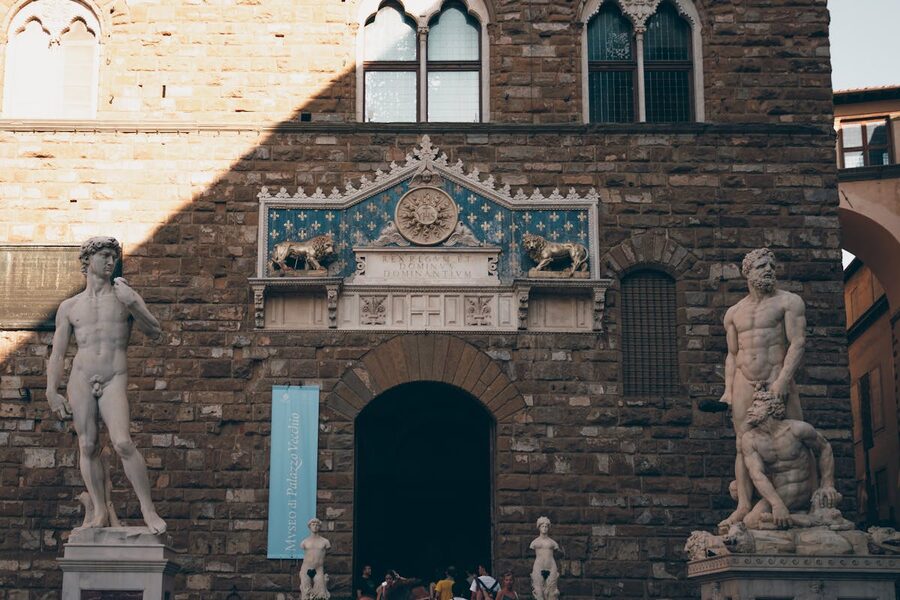
Morning combo: Start with the Accademia Gallery to see Michelangelo’s David (book first slot, 8:15am), then walk five minutes south to the Leonardo Museum. You will be done with both by noon.
Afternoon combo: Visit the Leonardo Museum after lunch, then walk down to the Uffizi Gallery for a late afternoon session. The Uffizi is open until 6:30pm most days.
Full Renaissance day: Leonardo Museum in the morning, then the Florence Cathedral and Brunelleschi’s Dome climb (book a timed slot), followed by lunch and a Florence walking tour in the afternoon.
For food lovers: After the museum, take a cooking class in Florence — several are within walking distance and run in the afternoon. There is something fitting about exploring Leonardo’s mechanical genius in the morning and then learning another Italian art form by hand in the afternoon.
Day trip option: If you have a full day, combine the Leonardo Museum with a Tuscany day trip from Florence on a different day. Trying to fit both in one day is a stretch, so keep them separate.
Tips From Someone Who Has Been
A few things that are not obvious from the booking page:

- The gift shop is actually good. They sell detailed books about Leonardo’s inventions, plus model kits you can build at home. If you are travelling with kids, the kits make a better souvenir than another fridge magnet.
- Combine both museums if you have time. The two Leonardo museums in Florence (Options 1 and 2 above) have different collections. Doing both takes about 2.5-3 hours total and gives you the most complete picture.
- The walking tour adds genuine context. Seeing the actual streets and buildings where Leonardo worked changes how you understand the inventions. Doing the tour before the museum is ideal, but either order works.
- Bring a portable charger. You will want photos of the models — there are over 50 of them, and some are genuinely beautiful pieces of engineering.
- Do not rush. Each model has explanatory panels that are worth reading. Some of the engineering solutions Leonardo came up with are still used in modified forms today.
Frequently Asked Questions
Is the Leonardo Museum the same as the Museo Galileo?
No. The Museo Galileo focuses on scientific instruments from the 16th-18th centuries. The Leonardo Interactive Museum focuses specifically on Leonardo da Vinci’s inventions and designs. They are separate museums in different locations.
Which Leonardo Museum in Florence is best?
The Leonardo Interactive Museum on Via dei Servi (Option 1) is the most established and has the largest collection of working models. It is the one most people mean when they say “the Leonardo Museum in Florence.”
Is it suitable for children?
Very much so. The interactive, hands-on format is designed to engage visitors of all ages, and children tend to be the most enthusiastic. Kids under 6 typically enter free.
How long does a visit take?
Most people spend between 45 minutes and 1.5 hours. If you read every panel and try every model, allow closer to 2 hours.
Do I need to book in advance?
It is not strictly required, but booking online guarantees your entry time and is usually a euro or two cheaper. During peak season (June to September), pre-booking is strongly recommended.

Can I visit both Leonardo museums in one day?
Yes. They are about a 10-minute walk apart. Budget about 3 hours total for both, with a coffee break in between.