
I almost didn’t buy the Verona City Card. Thirty-five euros felt like a lot for a city I planned to spend just a day and a half in. Then I stood in the Arena ticket line for twenty minutes, watched the card holders walk straight past me through a separate entrance, and did the maths on the five museums I wanted to see. The card would have saved me about fifteen euros and an hour of queueing. I bought it the next morning.
Verona does not get the attention it deserves. Everyone goes to Venice, Florence, Rome. But this is a city where you can stand inside a Roman amphitheatre older than the Colosseum’s upper tiers, walk across a bridge that dates to 100 BC, and eat some of the best food in northern Italy — all without fighting through crowds that make you question your life choices.
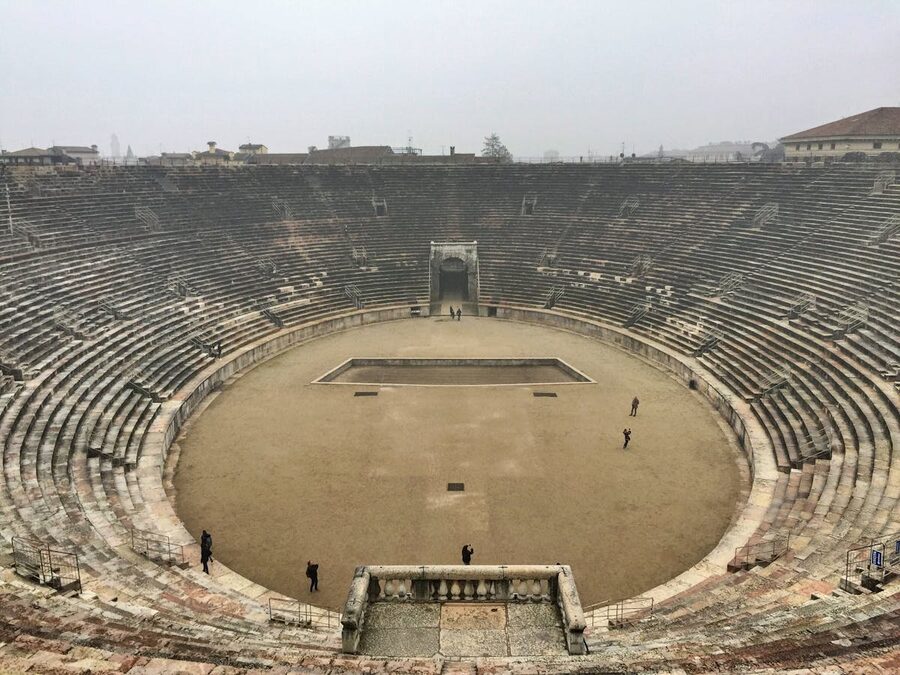
The Verona City Card is the simplest way to see the city properly. One purchase covers priority entry to the Arena, free admission to most museums and churches, and (on the 48-hour version) free public transport. This guide covers how it actually works, what it includes, whether it saves you money, and the three best tours to pair it with.
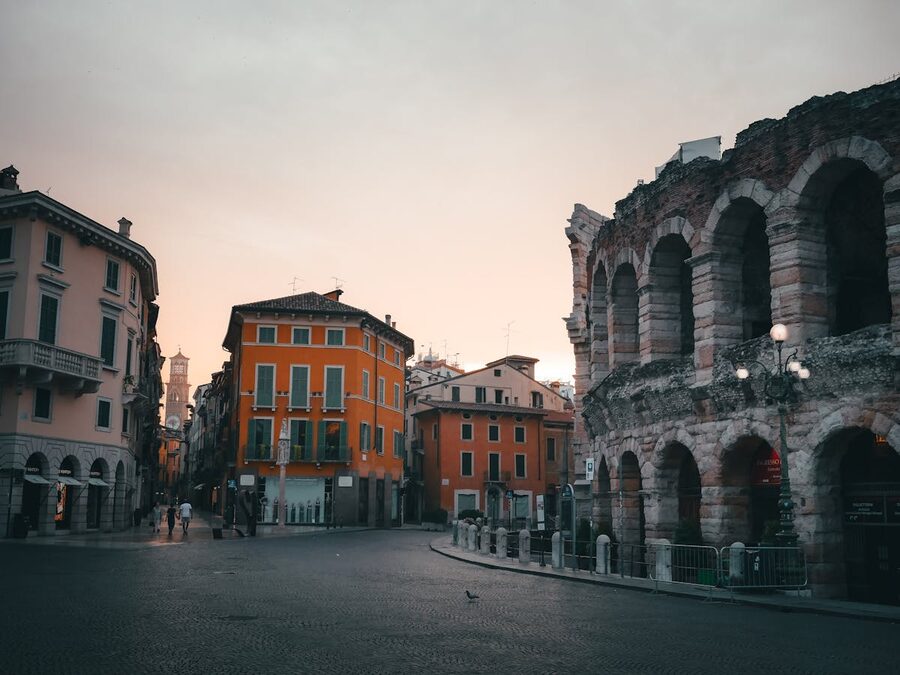
Best overall: Verona City Card with Arena Priority Entrance — $35. Covers 15+ attractions with skip-the-line Arena access. The only pass worth buying.
Best for history lovers: Priority Access Arena Guided Tour — $41. A 45-minute deep dive into the Arena with a guide who brings the gladiator stories to life.
Best for first-timers: History and Hidden Gems Walking Tour — $41. Two hours with a local Veronese guide who knows every back alley and hidden courtyard.
- How the Verona City Card Works
- Is the Verona City Card Worth It?
- Official Tickets vs Guided Tours
- The Best Verona City Card and Tour Options
- 1. Verona City Card with Arena Priority Entrance —
- 2. Priority Access Arena Guided Tour —
- 3. History and Hidden Gems Walking Tour —
- When to Visit Verona
- How to Get to Verona
- Tips That Will Save You Time
- What You’ll Actually See in Verona
- Verona for a Day vs Two Days
- More Italy Guides
How the Verona City Card Works

The Verona City Card comes in two versions: 24-hour and 48-hour. Both include priority entrance to the Arena di Verona (the biggest draw) plus free admission to the city’s main museums, churches, and historic sites. The 48-hour card adds free public transport, though honestly Verona is compact enough that you can walk everywhere.
Here is what the card actually covers:
- Arena di Verona — priority entrance, no separate ticket needed
- Juliet’s House (Casa di Giulietta) — the courtyard is free but the balcony and museum cost EUR 6 without the card
- Torre dei Lamberti — the tallest tower in the city, great panoramic views
- Castelvecchio Museum — medieval art and armour in a genuinely beautiful castle
- Roman Theatre and Archaeological Museum — across the river, overlooking the old town
- Basilica of San Zeno — arguably the finest Romanesque church in northern Italy
- Juliet’s Tomb (Tomba di Giulietta) — underwhelming, but included
- Several smaller churches — Sant’Anastasia, the Duomo complex, San Fermo
You pick up the physical card at the first attraction you visit. Show the QR code from your booking confirmation, they hand you the card, and you are set. Each attraction gets stamped once — no repeat visits on the same card.
Is the Verona City Card Worth It?
Let me break down the numbers. Here is what you would pay individually for the most popular sites:
- Arena di Verona: EUR 10
- Juliet’s House (interior + balcony): EUR 6
- Torre dei Lamberti: EUR 8
- Castelvecchio Museum: EUR 6
- Roman Theatre: EUR 4.50
- San Zeno: EUR 3 (through the Verona Church Card, or EUR 4 individually)
That is EUR 37.50 for just six attractions. The 24-hour City Card costs around EUR 26 and the 48-hour version around EUR 32. If you visit four or more sites, the card pays for itself. And that is before you factor in the time saved skipping the Arena queue, which on a July afternoon can easily run 30-45 minutes.
When it is NOT worth it: If you only plan to see the Arena and one other thing, just buy individual tickets. The card also does not cover opera performances at the Arena — those are separate (and much more expensive, EUR 30-200 depending on seating).
Official Tickets vs Guided Tours
You have two options for visiting Verona’s main sights: the DIY approach with a City Card, or booking a guided tour that includes entry tickets.
The City Card route works best if you like exploring at your own pace, want to see a lot of sites over 1-2 days, and don’t mind reading plaques and using audio guides. It is cheaper overall and gives maximum flexibility.
A guided tour makes more sense if you are short on time (half a day or less in Verona), want someone to explain the Arena’s 2,000 years of history beyond the information boards, or prefer having the logistics handled. The downside is that tours only cover one or two sights each, so you would need to combine a tour with the City Card if you want to see everything.
My honest advice: get the City Card for the museums and churches, then add one guided tour — either the Arena (for the history and skip-the-line) or the walking tour (for the big picture overview). That combination hits the sweet spot between depth and coverage.
The Best Verona City Card and Tour Options
I have gone through the available tours and passes for Verona and narrowed it down to three that are genuinely worth booking. Each serves a different purpose — the all-in-one pass, the deep-dive Arena experience, and the city overview walk.
1. Verona City Card with Arena Priority Entrance — $35
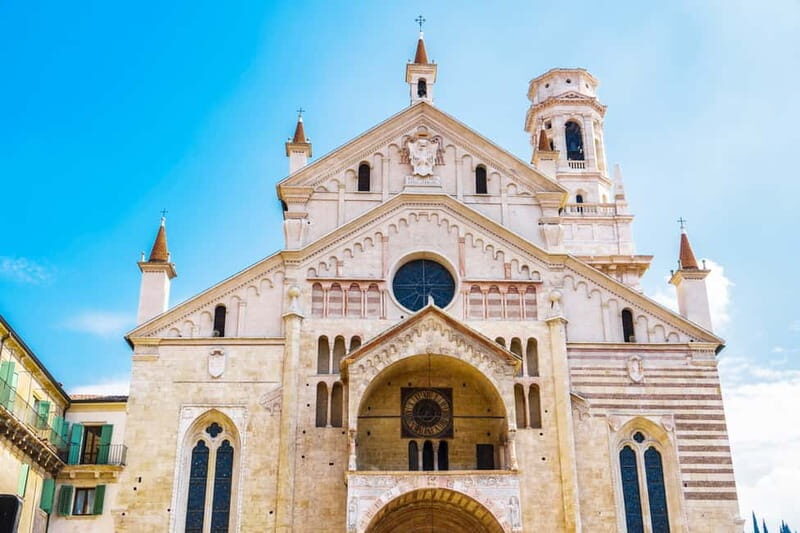
This is the foundation of any Verona visit. The City Card covers priority entry to the Arena, free admission to 15+ museums and churches, and (on the 48-hour version) public transport. At $35 per person, it pays for itself after three or four attractions.
The priority Arena entrance alone justifies the price in summer. While everyone else stands in the general line, you walk straight to the priority lane and you are inside in minutes. The card works for 1 or 2 days depending on which version you pick, and it activates from the moment you first use it — not from when you buy it online.
One thing to know: the card does not cover special exhibitions or opera performances. It is for daytime sightseeing access only. But for that purpose, it is the best deal in the city by a wide margin.
2. Priority Access Arena Guided Tour — $41
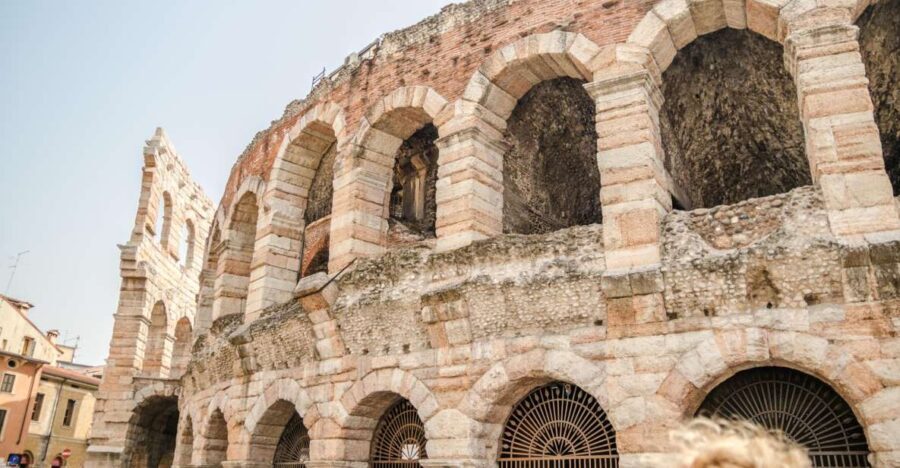
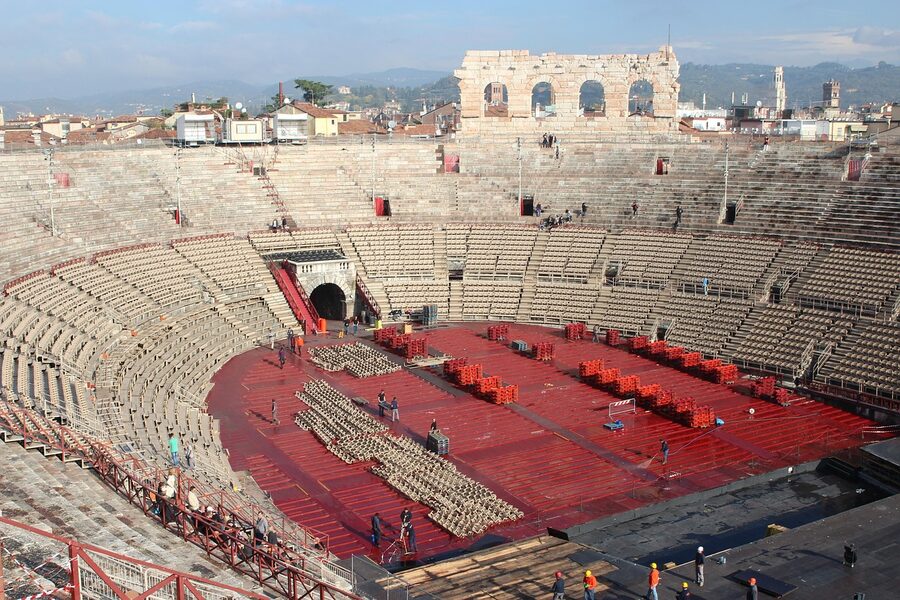
If the Arena is the main reason you are coming to Verona — and for many people it is — this 45-minute guided tour adds a layer of understanding you simply will not get wandering around on your own. At $41, it includes skip-the-line entry and a local guide who covers the gladiatorial history, the medieval jousting tournaments, and the modern opera performances that have been running here since 1913.
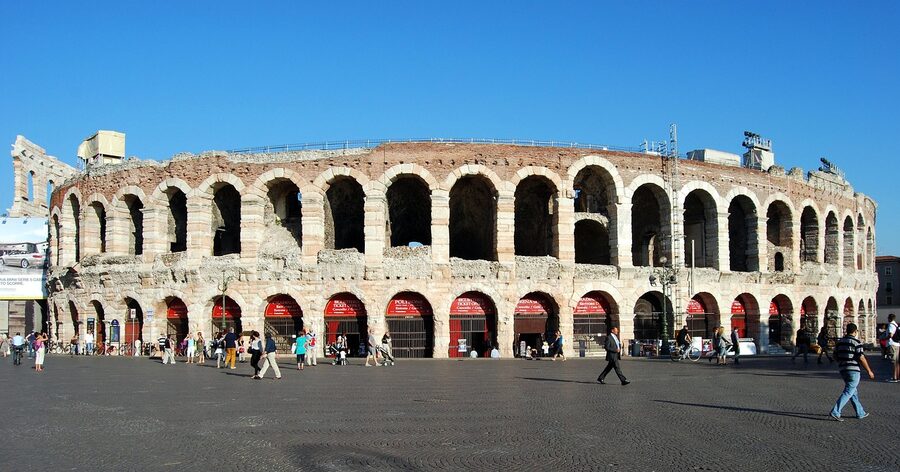
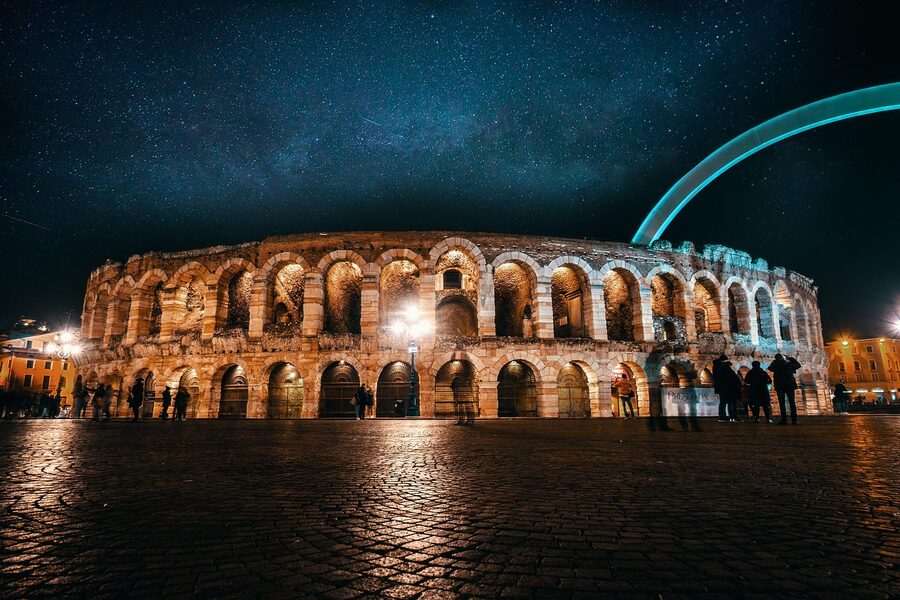
The Arena di Verona is the third-largest Roman amphitheatre in Italy after the Colosseum and the one at Capua. But unlike the Colosseum, it is still fully functional — 15,000 people pack in for opera on summer evenings. A guide explains things like why the outer ring is missing (a 1117 earthquake knocked it down) and how the retractable canvas awning system worked two thousand years ago. You do not get any of that context from the information boards inside.
Pair this with the City Card for the best of both worlds: the guided Arena experience plus self-guided access to everything else.
3. History and Hidden Gems Walking Tour — $41
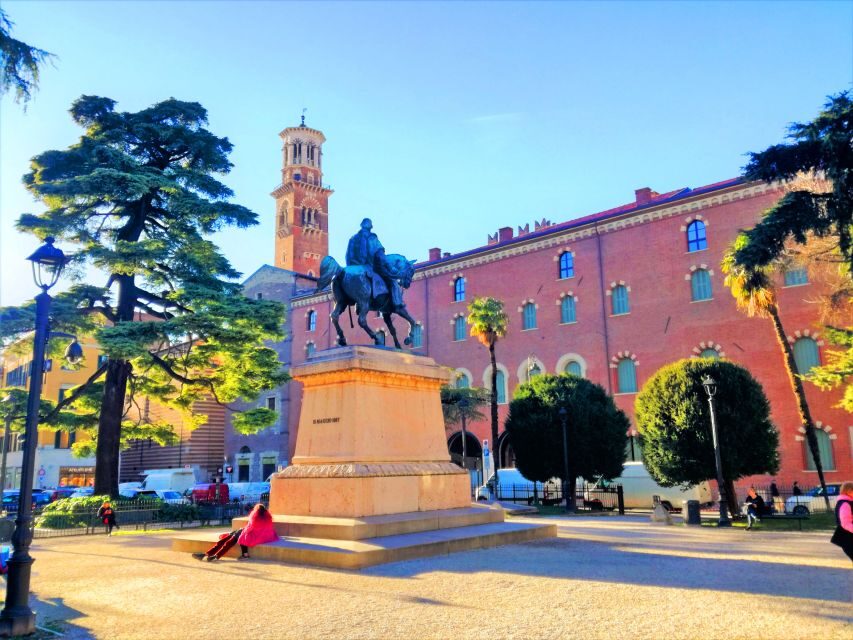
This is the best walking tour in Verona, and it is not even close. Two hours with a local guide — several of the guides are lifelong Veronese residents who treat the tour like showing a friend around their hometown. At $41 per person for a small-group tour, it is excellent value.
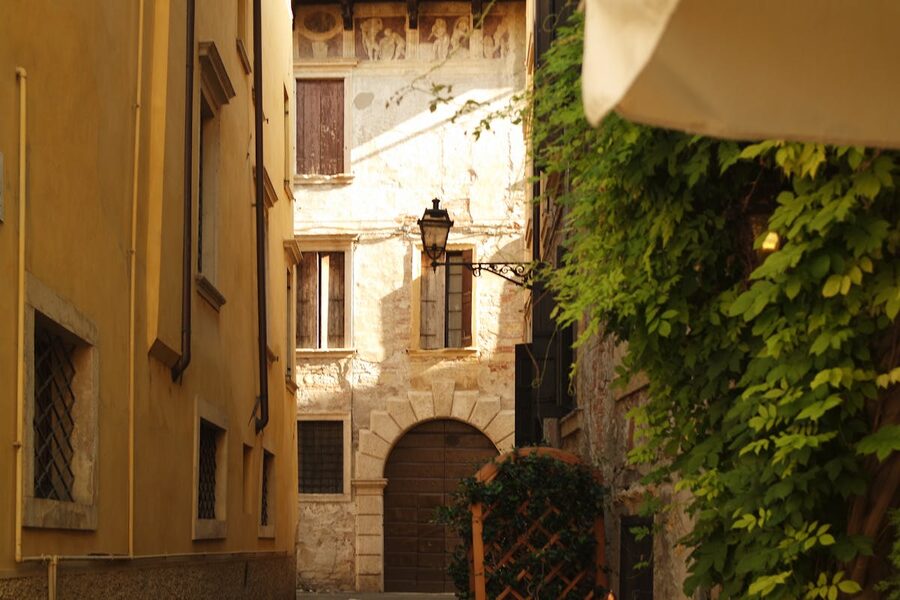
The route covers the Arena (exterior), Piazza delle Erbe, Piazza dei Signori, the Scaliger Tombs, Juliet’s House, and a handful of spots you would never find on your own — hidden courtyards, medieval alleyways, and viewpoints that most travelers walk right past. One of the regular guides, Fabio, gets mentioned by name in almost every review for a reason. The man is a walking encyclopedia of Verona history, and his enthusiasm is infectious.
Do this tour first if you can. It gives you the lay of the land and the historical context that makes everything else you visit that day more interesting. Then use your City Card to go inside the places that caught your attention.
When to Visit Verona
Best months: April through June and September through October. The weather is warm enough for walking but not the brutal heat of July and August. Spring has the added bonus of fewer day-trippers from Venice and Lake Garda.
Opera season (June-September): If you want to see a performance at the Arena, book well in advance. The annual Opera Festival has been running since 1913 and draws crowds from across Europe. Tickets range from about EUR 30 for the stone steps to EUR 200+ for the premium seats. This is one of those genuinely once-in-a-lifetime experiences — Aida or Carmen in a 2,000-year-old amphitheatre under the stars. The City Card does not cover opera tickets, so budget for these separately.
Worst time: Mid-July through mid-August. Temperatures push past 35C, the Arena queues are at their longest, and every hotel room in the city doubles in price. If you have to visit in summer, go early in the morning — the Arena opens at 8:30am and is almost empty for the first hour.
Opening hours: Most museums and churches in Verona open between 8:30am-10am and close at 6pm-7:30pm. The Arena is open Monday 1:30pm-7:30pm, Tuesday-Sunday 8:30am-7:30pm (hours shift during opera season). Check the specific site you want to visit — Monday closures are common for smaller museums.
How to Get to Verona
By train: Verona Porta Nuova is the main station, served by high-speed Frecciarossa trains from Milan (1h15), Venice (1h10), Bologna (55min), and Florence (1h30). From the station, it is a 15-minute walk to Piazza Bra and the Arena, or a quick bus ride on routes 11, 12, or 13.
By car: Verona sits at the junction of the A4 (Milan-Venice) and A22 (Brenner-Modena) motorways. Parking in the centre is a nightmare — use the Parcheggio Arena or Parcheggio Cittadella lots near Piazza Bra (about EUR 2-3 per hour). Better yet, park at the station and walk in.
From Venice: The most common day-trip pairing. Direct trains run every 30-60 minutes and take just over an hour. You can comfortably see Verona’s highlights in a day if you start early, though staying overnight lets you catch the Arena at sunset and is much more relaxed.
From Lake Garda: Verona is the gateway city for Lake Garda. Buses run from Peschiera del Garda (30 min) and Sirmione (45 min). Many Garda holiday-makers do Verona as a day trip.
Tips That Will Save You Time
- Buy the City Card online before you go. You can collect the physical card at your first attraction. No need to find a tourist office first.
- Start with the Arena. The queue builds throughout the morning. If you are there when it opens (8:30am Tuesday-Sunday), you will have the place largely to yourself for the first 30-45 minutes.
- Do the walking tour first. Getting the historical overview and orientation before diving into individual museums makes everything more meaningful. The hidden gems walking tour is ideal for this.
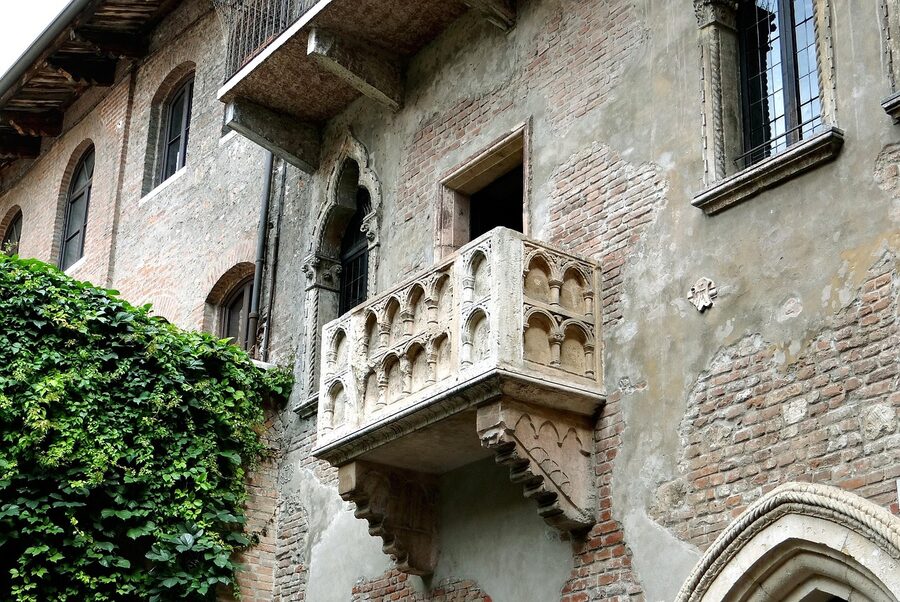
- Skip Juliet’s balcony inside if you are short on time. The courtyard below is free and that is where 90% of the photo ops happen anyway. The “balcony” was built in the 1930s by the city to attract travelers — Shakespeare never even described a balcony scene. That was added by later theatre productions. The house has no connection to any real Juliet.
- The churches close for lunch. Most close from around 12:30pm-1:30pm. Plan your church visits for the morning or late afternoon.
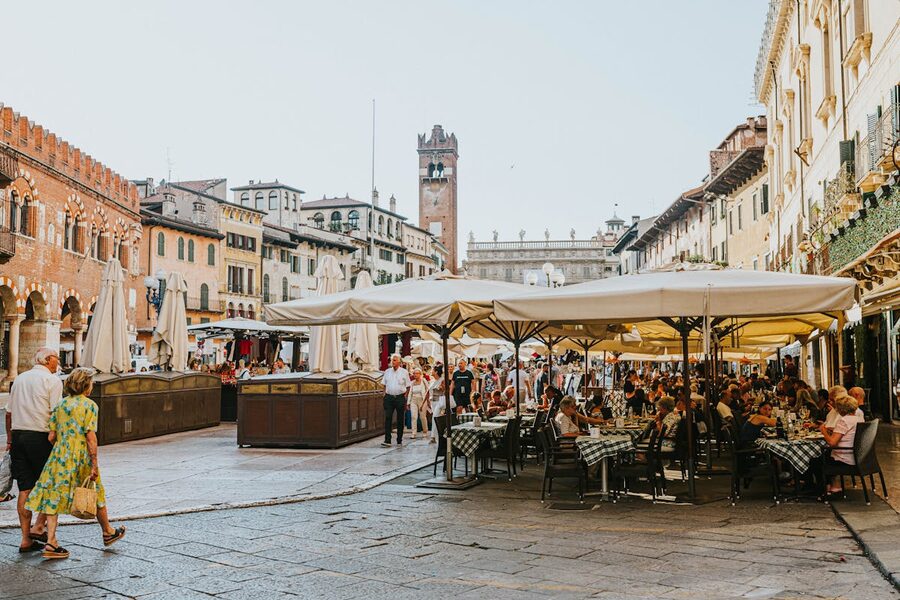
- Eat away from Piazza delle Erbe. The restaurants directly on the square charge a 30-50% markup. Walk two minutes into the side streets (Via Sottoriva is great) for the same quality at normal prices.
- Bring a portable charger. If you are using the digital City Card confirmation on your phone and Google Maps for navigation, a full day of sightseeing will drain your battery by mid-afternoon.
What You’ll Actually See in Verona
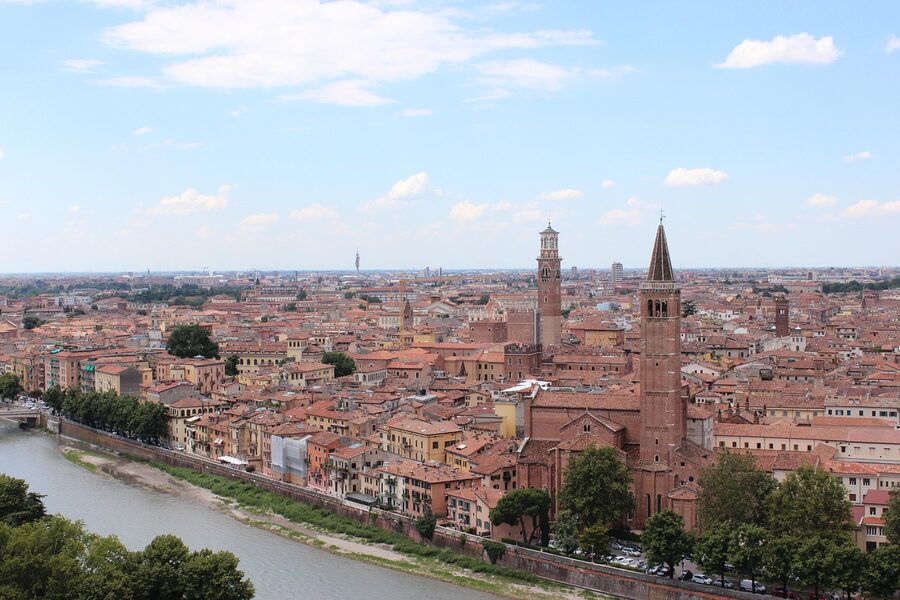
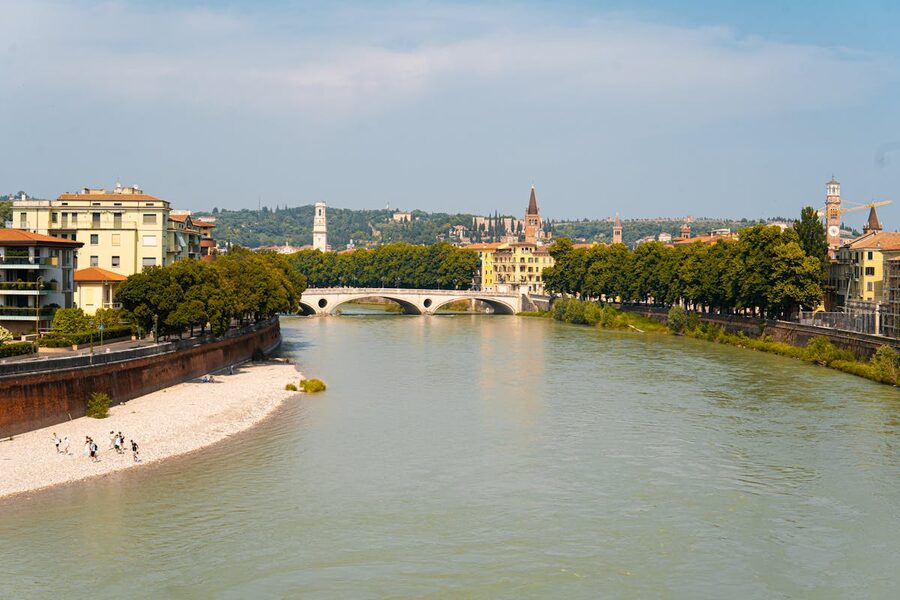
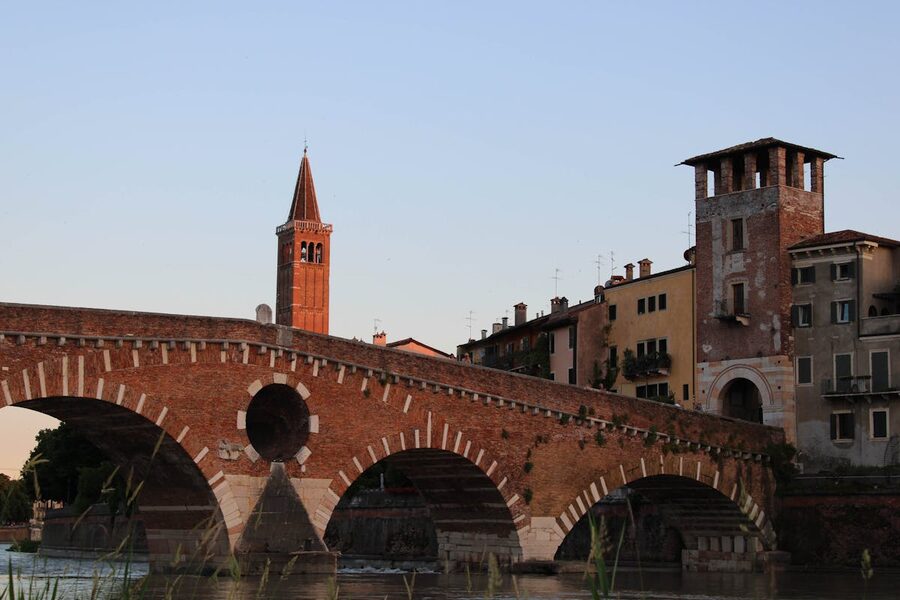
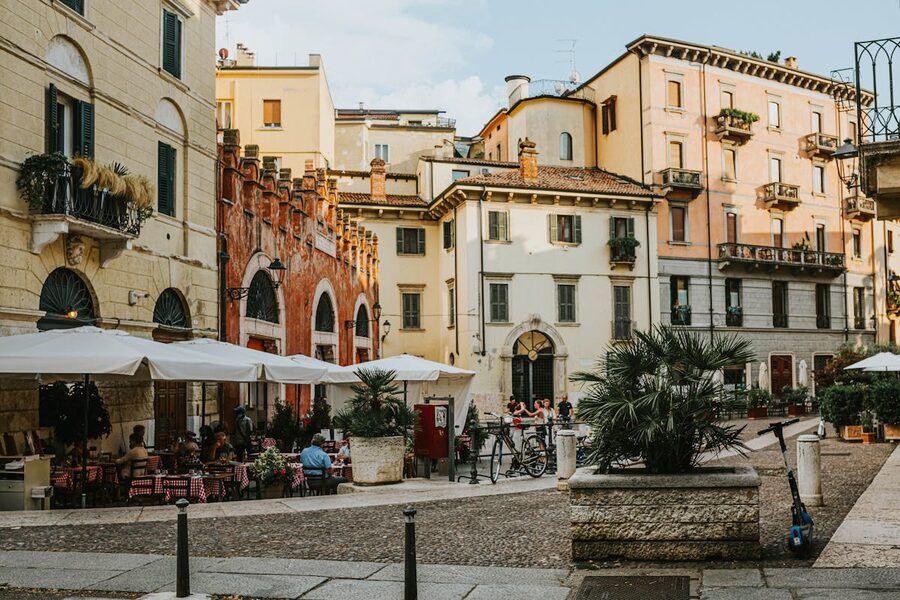
Verona is one of those cities that keeps surprising you around every corner. It was a major Roman settlement — you can still see the ancient gates (Porta Borsari and Porta dei Leoni), walk across a bridge from 100 BC (Ponte Pietra), and stand in an amphitheatre that was hosting spectacles before the Colosseum was finished.
After the Romans, the Scaliger family ruled Verona as a powerful medieval city-state. Their ornate Gothic tombs (the Arche Scaligere, right next to Piazza dei Signori) are some of the most elaborate funerary monuments in Italy — and they are free to see from the street. The Castelvecchio, their fortified castle and bridge, now houses one of the best medieval art collections in the Veneto.
Then came 400 years under the Venetian Republic, which left its mark on the elegant palazzos and the winged lion of St. Mark that you will spot carved into walls throughout the old town.
And yes, there is the Shakespeare connection. He set Romeo and Juliet here, though the story actually comes from an Italian novella by Matteo Bandello published in 1554. The play made Verona famous worldwide, and the city has leaned into it hard — Juliet’s House, Juliet’s Tomb, Romeo’s House (which you cannot enter). It is all a bit manufactured, but the medieval streets and atmosphere are genuinely atmospheric. The story could have happened here, even if it did not.
The Piazza delle Erbe — built on the site of the old Roman forum — is one of the most photogenic squares in Italy. Market stalls during the day, aperitivo bars in the evening, and a view that has stayed more or less the same for centuries. The nearby Piazza dei Signori is quieter and arguably more beautiful, with a statue of Dante (he lived here in exile) surrounded by medieval and Renaissance palazzi.
Verona for a Day vs Two Days
One day is enough to see the Arena, do a walking tour, visit Juliet’s House, climb the Torre dei Lamberti, and wander the main squares. The 24-hour City Card is the right choice here.
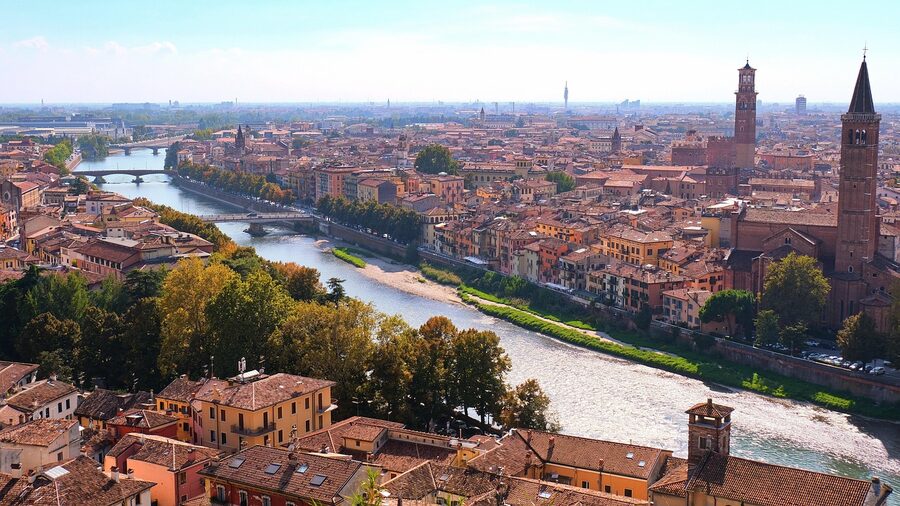
Two days lets you add the Castelvecchio, San Zeno, the Roman Theatre across the river, and — crucially — an evening at the Arena for opera (if visiting June-September). The 48-hour card with transport makes sense for this longer stay. You will also have time to cross the Ponte Pietra, climb up to Castel San Pietro for the panoramic view, and eat your way through the side streets without rushing.
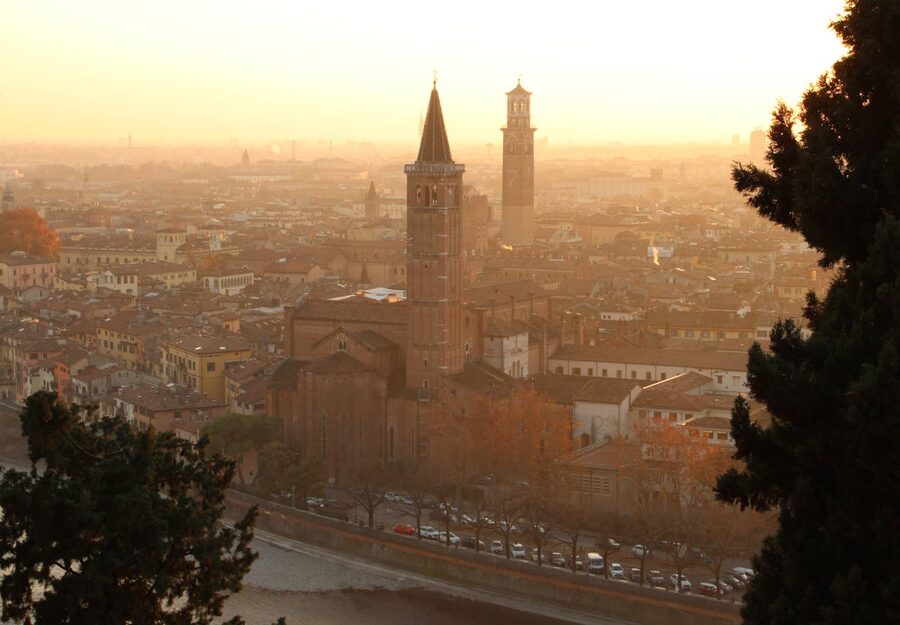
If you are based in Venice or at Lake Garda and trying to decide whether Verona is worth a day trip: yes. Absolutely yes. The train from Venice is just over an hour, and Verona packs more history per square metre than almost anywhere in Italy.
More Italy Guides
Verona sits perfectly between Venice and Milan, which makes it easy to build a multi-city trip. If you are heading east to Venice, our guides to getting Doge’s Palace tickets and booking a gondola ride cover the essentials, and the Murano and Burano island trip is one of the best days out from Venice. If you are planning a full Venice visit, our St. Mark’s Basilica guide and Venice walking tour guide have the same skip-the-line strategies. Going west instead? The Lake Como from Milan day trip guide is worth a look if you have a spare day.
This article contains affiliate links. If you book through our links, we earn a small commission at no extra cost to you. This helps us keep creating detailed travel guides.