
The ferro — that curving metal ornament on the front of every gondola — has six forward-facing prongs for Venice’s six districts and one backward-facing prong for Giudecca island. I only learned this because the guy sitting next to me on a shared gondola happened to be a history teacher from Turin. That’s the thing about sharing a gondola with strangers: occasionally one of them knows something you don’t.
A private gondola ride in Venice costs somewhere between 80 and 120 euros. A shared one? Around 35 to 45 euros per person for the same canals, the same views, the same hand-carved boat. The tradeoff is you’re sitting with four or five other people instead of having it to yourself. For most visitors, that’s not a tradeoff at all.
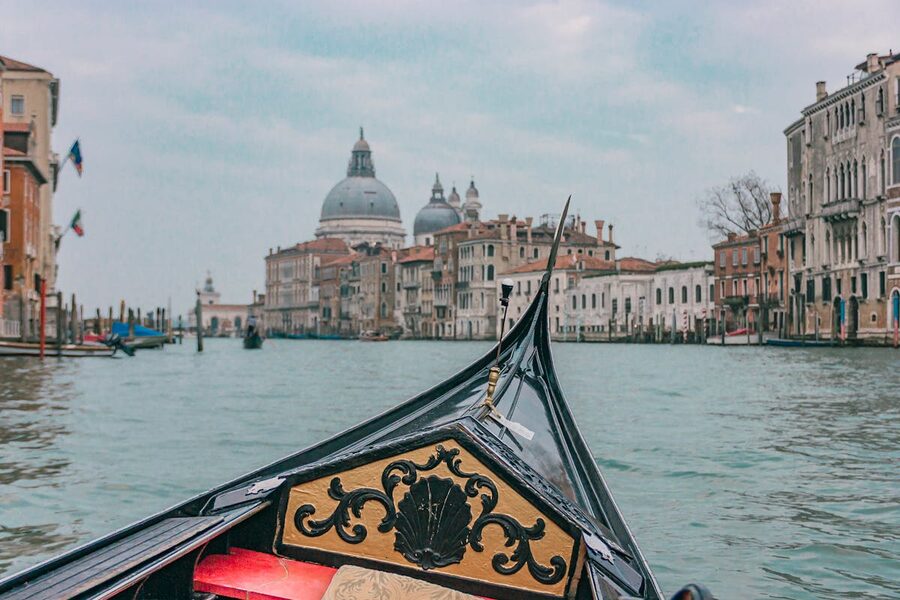
The shared gondola is a relatively recent invention. Gondolas were traditionally hired exclusively — one family, one boat. But tourism economics being what they are, operators figured out they could fill six seats instead of two and drop the per-person price to something that doesn’t require a second mortgage. The format has been running for about a decade now, and it’s one of the smarter ways to experience something that used to be reserved for people with bigger budgets.
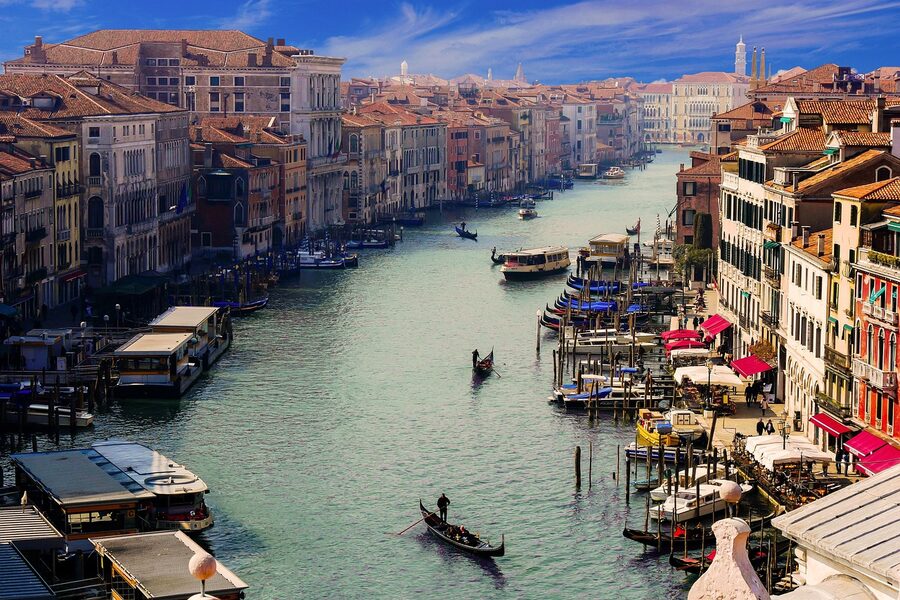
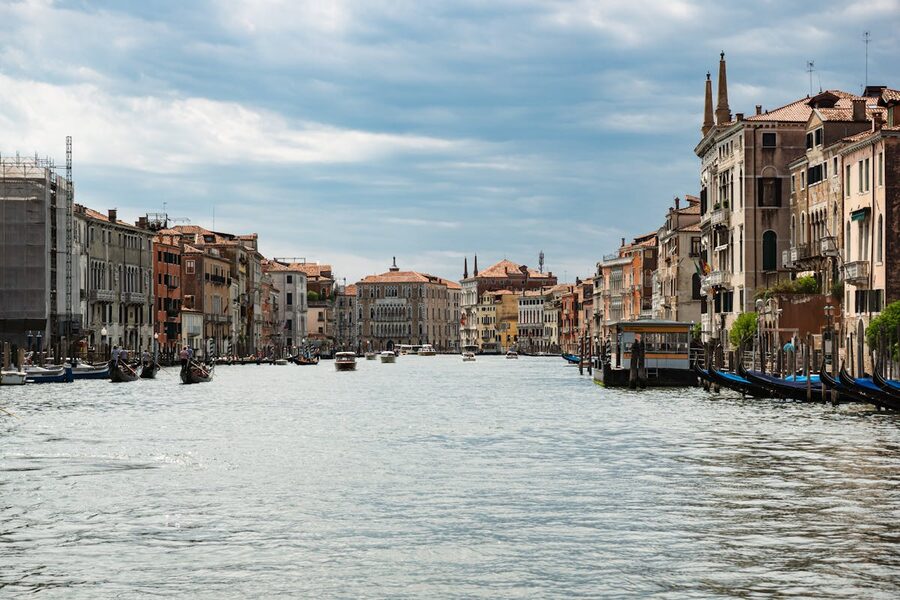
Best overall: Grand Canal Gondola Ride with App Commentary — $39. The most popular shared gondola in Venice by a wide margin. The app commentary means you actually learn something while floating past 600-year-old palaces.
Best budget: Traditional Shared Gondola Ride — $42. No commentary, no extras — just 30 minutes on the water with a gondolier who knows every turn. Sometimes simple is better.
Best for the route: Shared Gondola Ride Across the Grand Canal — $46. Covers both the Grand Canal and the smaller waterways. A solid middle ground between budget and full experience.
- How the Shared Gondola System Works
- Shared Gondola vs Private Gondola — Which One Makes Sense
- The 3 Best Shared Gondola Rides to Book
- 1. Grand Canal Gondola Ride with App Commentary —
- 2. Shared Gondola Ride Across the Grand Canal —
- 3. Traditional Shared Gondola Ride —
- When to Book Your Shared Gondola Ride
- How to Get to the Meeting Points
- Tips That Will Save You Time and Money
- What You’ll Actually See from the Gondola
- More Venice Guides
How the Shared Gondola System Works
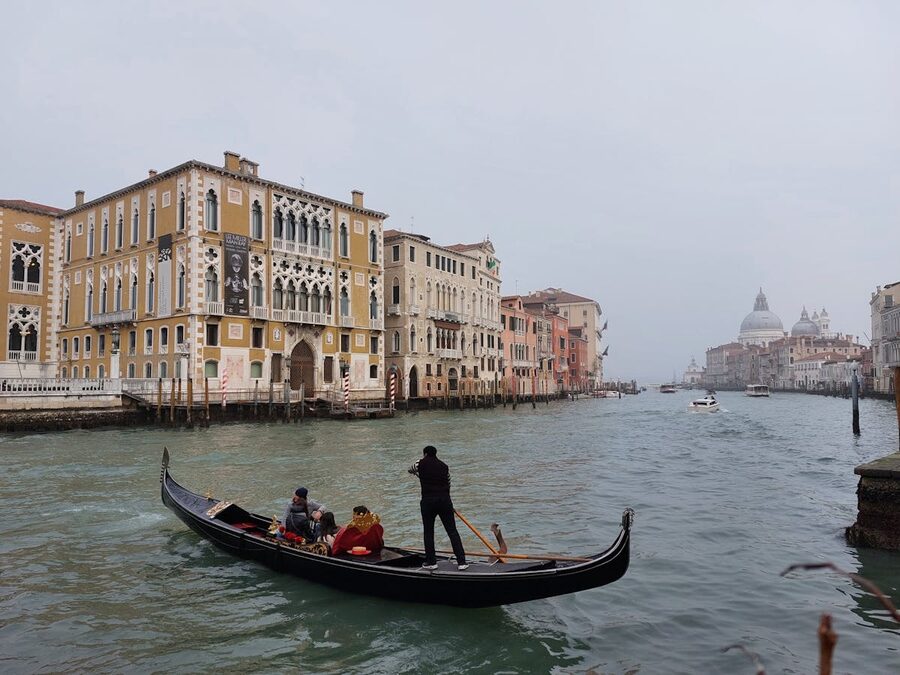
A shared gondola ride puts you in a boat with up to five other passengers — sometimes couples, sometimes solo travellers, sometimes a family that takes up three seats. You don’t get to choose who you ride with. The ride lasts about 30 minutes and covers a fixed route that typically includes a stretch of the Grand Canal plus one or two narrower side canals.
Booking works one of two ways. You either book online in advance through a platform like GetYourGuide (which is what I’d recommend), or you walk up to one of the gondola stations scattered around Venice and negotiate. The walk-up option sounds romantic in theory. In practice, the price is almost always higher, and the shared rides aren’t always available on the spot — they need enough passengers to fill the boat.
Online bookings lock in the price and guarantee your spot at a specific meeting point and time. You show up, show your voucher, and wait for the boat. Most departure points are near major landmarks: San Marco, the Rialto, or the area around Campo Santo Stefano. The operator handles grouping you with other passengers.
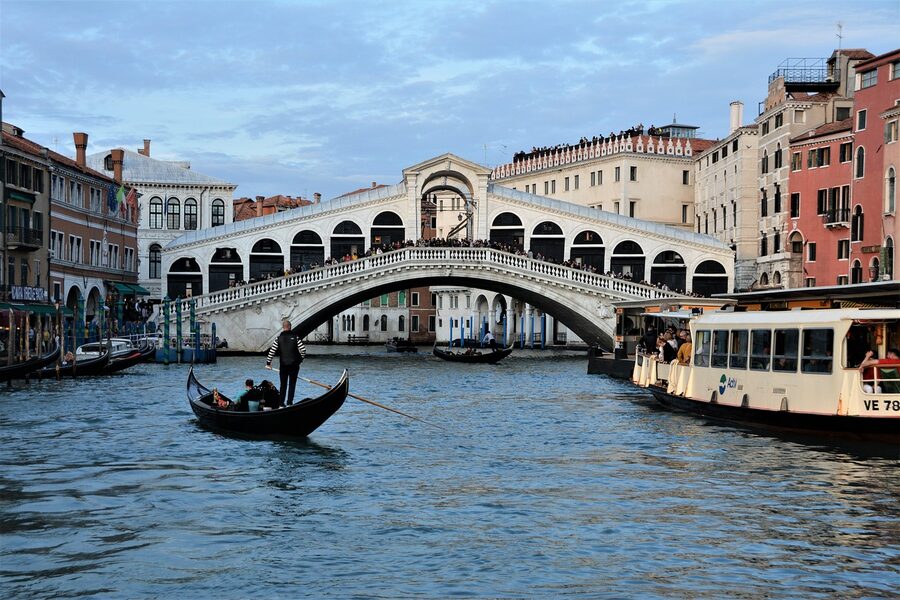
One thing to know: shared gondola rides don’t include the traditional singing. That’s a separate add-on (the “serenade” option), and it bumps the price up by 10 to 15 euros. The standard shared ride is just the gondolier, the boat, and the view. Honestly, that’s enough. The canals are not quiet — water lapping against stone, other boats passing, church bells — and a soundtrack of someone singing O Sole Mio can feel a bit contrived when you’re shoulder to shoulder with strangers.
Shared Gondola vs Private Gondola — Which One Makes Sense
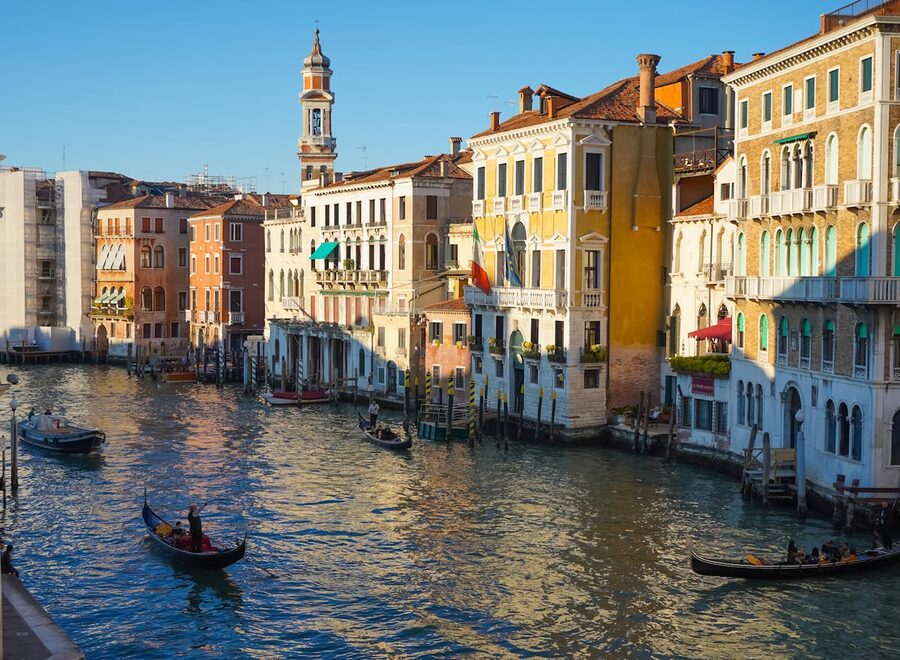
If you’re travelling as a couple and this is a once-in-a-lifetime trip, the private gondola is probably worth the splurge. You get the whole boat, your own route at your own pace, and no one else’s selfie stick in your field of vision. Our full guide to booking a private gondola ride in Venice breaks down every option and price tier.
But if you’re solo, on a budget, or just want to say you rode a gondola without spending the equivalent of a nice dinner, the shared version is the obvious move. Here’s what the comparison actually looks like:
Private gondola: 80 to 120 euros per boat (not per person). Holds up to 6 people, so if you can fill it with friends the per-person cost drops to 13 to 20 euros each. You pick the route. Duration is 30 minutes by default, 40 euros extra for each additional 20 minutes. After 7pm, the starting price jumps to 100 to 150 euros.
Shared gondola: 35 to 50 euros per person. Fixed route, fixed duration (30 minutes), fixed departure times. No route customisation. But also no negotiation, no stress, and no bill shock at the end.
The ride itself feels almost identical. Same boat, same canals, same ancient buildings sliding past at the same gentle speed. The gondolier doesn’t row any differently. The main practical difference is legroom — a full shared gondola feels a bit cramped, and if someone in your group keeps shifting around, the whole boat rocks.
The 3 Best Shared Gondola Rides to Book
I’ve narrowed it down to three. All are shared format, all follow established routes along the Grand Canal and connecting waterways, and all can be booked online for a fixed price. The differences come down to what’s included — commentary, route length, and departure point.
1. Grand Canal Gondola Ride with App Commentary — $39
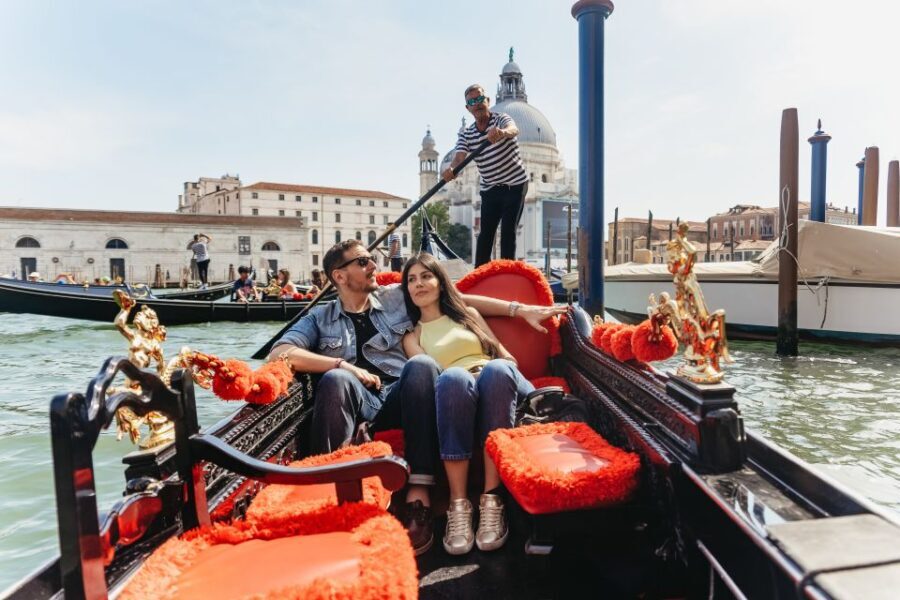
This is the one most people end up booking, and it’s the one I’d point first-timers toward. At $39 per person, it’s the cheapest option on this list, and the app-based commentary fills in the gaps that a silent gondola ride leaves. You’ll hear about the buildings you’re passing, the history of the canal, and the engineering behind the gondola itself — all through your phone, so you can listen at your own pace.
The route covers the main stretch of the Grand Canal past major palazzi and under the Rialto area. It’s the most popular shared gondola option in Venice and it runs like clockwork because of the volume. You’re unlikely to wait long, and the meeting point is easy to find. If you’re doing one gondola ride in Venice and you want it to actually mean something beyond a photo op, this is the one.
2. Shared Gondola Ride Across the Grand Canal — $46
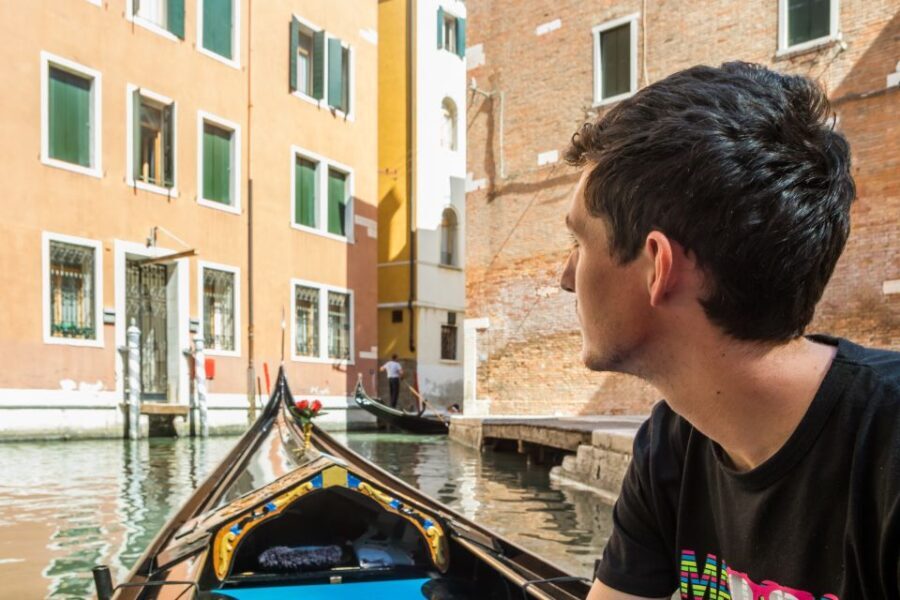
This one costs a bit more at $46 per person and runs for a full 30 minutes through both the Grand Canal and some of the smaller waterways that branch off it. The route is slightly longer than the app commentary version, and you get a mix of the big panoramic canal views and the tight, atmospheric side passages where buildings lean over you.
There’s no commentary included — you’re just sitting in a boat while the gondolier navigates. Some people prefer this. The quiet lets you actually hear Venice: water against stone, the creak of wood, the distant clatter from someone’s apartment. The gondolier doesn’t interact much (that’s consistent across most shared rides), but the route itself does the talking. If you want a slightly longer ride with more variety in the scenery, this beats the basic options.
3. Traditional Shared Gondola Ride — $42
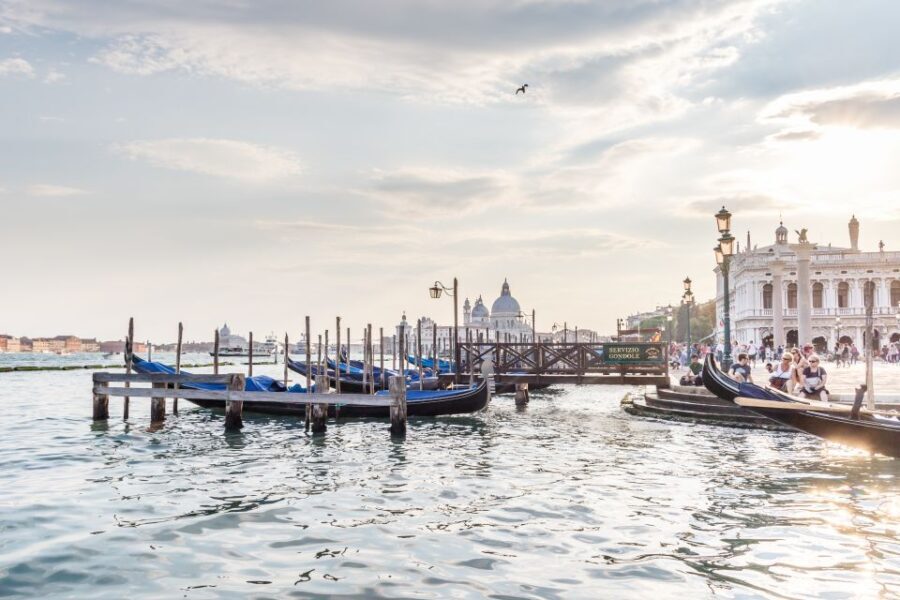
The middle option in terms of price at $42 per person, this is the no-frills shared gondola. Thirty minutes, Grand Canal route, no commentary. What sets it apart from option two is mainly the operator and the exact departure point. The route hits the same general area — palazzi, bridges, the occasional side canal.
I’d pick this one if the other two are sold out for your preferred time slot, or if you want a specific departure time that this operator covers. The flexibility of being able to reschedule (one reviewer mentioned the staff let them come back the next day after arriving late) is a nice safety net for anyone whose Venice itinerary is already packed. If you’re combining this with a visit to the Doge’s Palace nearby, the timing works well — book the gondola for late afternoon and do the palace in the morning.
When to Book Your Shared Gondola Ride
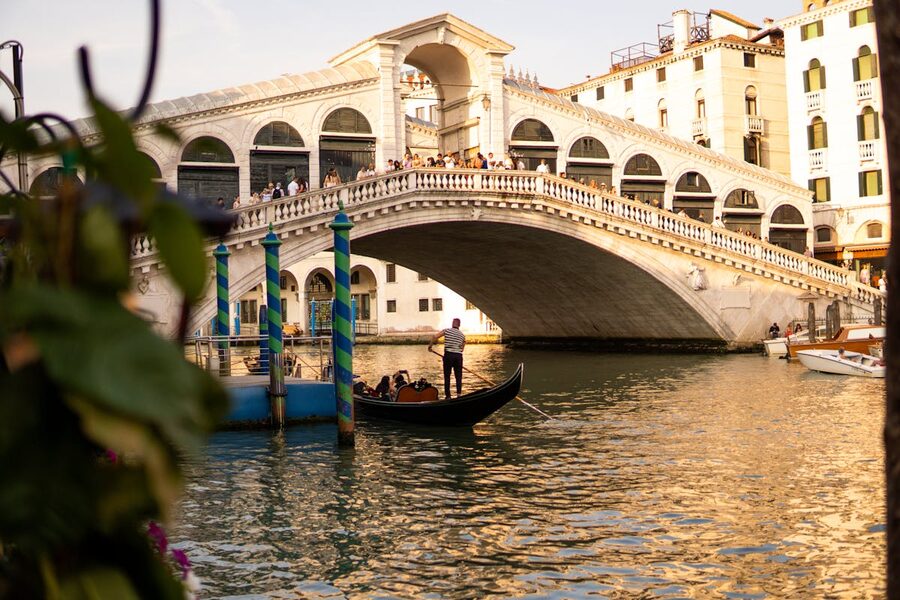
Best time of day: Late afternoon, roughly 4 to 6pm. The light turns golden, the worst of the midday tourist crush has passed, and the temperature drops enough that sitting in an open boat isn’t punishing. Morning rides (before 10am) are the quietest option if you want fewer boats on the water, but the light is flat and the canals are still waking up.
Worst time of day: 11am to 2pm in summer. It’s hot, the canals are crowded with water taxis and delivery boats, and there’s no shade on a gondola. You’ll spend half the ride squinting.
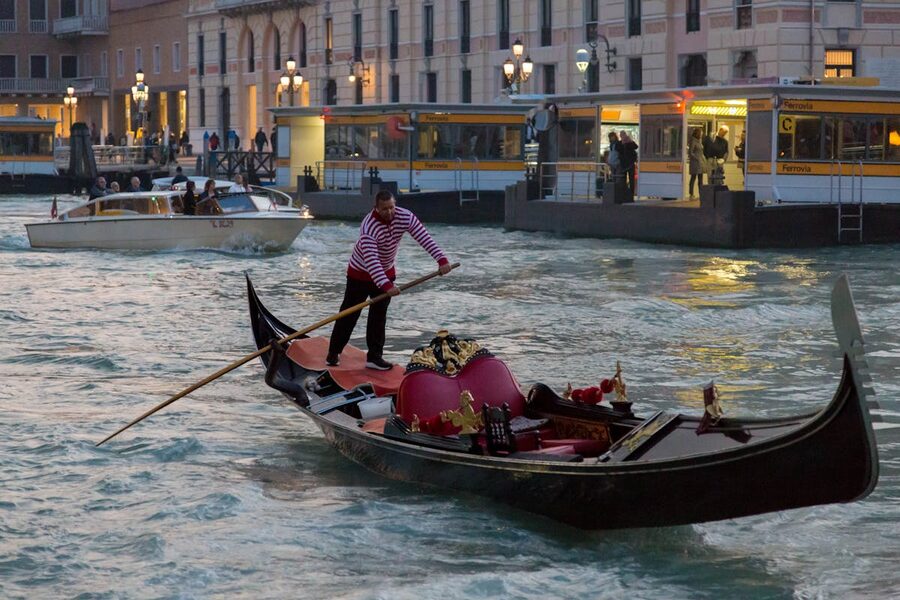
Best season: April to June and September to October. The weather is manageable, the days are long enough for late-afternoon rides, and Venice isn’t quite at capacity. July and August are brutal — not because the ride itself is worse, but because everything around it (queues, prices, crowds) is at maximum intensity.
Off-season: November through March means fewer travelers and cheaper hotels, but shared gondola availability drops. Some operators reduce schedules or require minimum passenger numbers. You might show up and find your ride cancelled because only two people booked. Check cancellation policies carefully if visiting in winter.
How far in advance: A day or two is usually fine for standard time slots. But if you want a sunset slot in peak season (June through August, weekends), book at least a week ahead. Those sell out fast.
How to Get to the Meeting Points
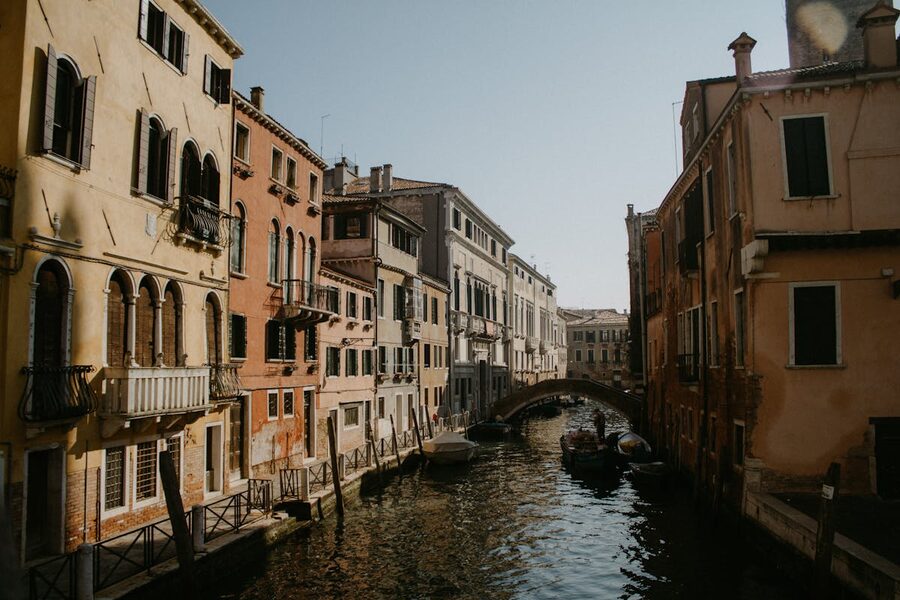
Most shared gondola rides depart from one of three areas: near Piazza San Marco, near the Rialto Bridge, or from Campo Santo Stefano. Your booking confirmation will specify the exact meeting point — usually a named gondola station (stazio) along the canal.
From the Rialto Bridge area: Walk. It’s central and almost every shared gondola station is within a 5-minute walk. The Rialto vaporetto stop (lines 1 and 2) drops you right there if you’re coming from further out.
From Piazza San Marco: Also walkable to several departure points. If you’re coming from the train station (Santa Lucia), take vaporetto line 1 down the Grand Canal — it takes about 45 minutes but the ride itself is worth the time. Line 2 is the express and takes 25 minutes.
From the train station: The walk to most gondola stations is 25 to 35 minutes through the streets. Or take the vaporetto. Just don’t underestimate Venice walking distances — the city looks small on a map, but navigating the alleys adds time. Give yourself at least 15 minutes of buffer.
Arrive early. The booking confirmation says 15 minutes before departure, and they mean it. Shared rides leave on schedule because they’re coordinating multiple passengers. Show up late and you might miss it. One reviewer mentioned being allowed to take the next day’s ride after arriving 5 minutes late — but don’t count on that generosity.
Tips That Will Save You Time and Money
Don’t tip the gondolier unless the service was exceptional. Tipping isn’t expected on shared rides. On private rides, rounding up or leaving 5 to 10 euros is common if the gondolier was chatty and took a good route. On shared rides, the gondolier is doing their standard route regardless.
Sit where you’re told. The gondolier will assign seats based on weight distribution. Yes, it matters — the boat is asymmetric by design (the left side is wider than the right to compensate for the single oar on the right side). Moving around shifts the balance. Stay put.
Skip the serenade option. I know it sounds romantic. But on a shared gondola with five strangers, having someone belt out Italian classics while you all awkwardly avoid eye contact is less “romantic Venice evening” and more “karaoke where nobody asked.” If you genuinely want the singing, book a private gondola serenade instead — at least then you can enjoy it without feeling like you’re in someone else’s dinner show.
Bring a small bag, not a backpack. Space is limited. A full backpack on your lap blocks the view and bumps into the person next to you. A small crossbody or nothing at all is ideal. Your phone and a water bottle are all you really need.

Take photos in the first 5 minutes, then put the phone away. Everyone on the boat will be snapping photos at the start. Get yours early, then spend the remaining 25 minutes actually looking at Venice. The canals are better through your eyes than your camera lens, and you’ll remember more of it.
The traghetto is NOT a gondola ride. If someone tells you there’s a cheap gondola ride across the Grand Canal for 2 euros, they’re talking about the traghetto — a standing-room-only gondola ferry that crosses the canal in about 90 seconds. It’s fine for getting across the canal, but it’s not a gondola ride in any meaningful sense. Don’t confuse the two when booking.
What You’ll Actually See from the Gondola
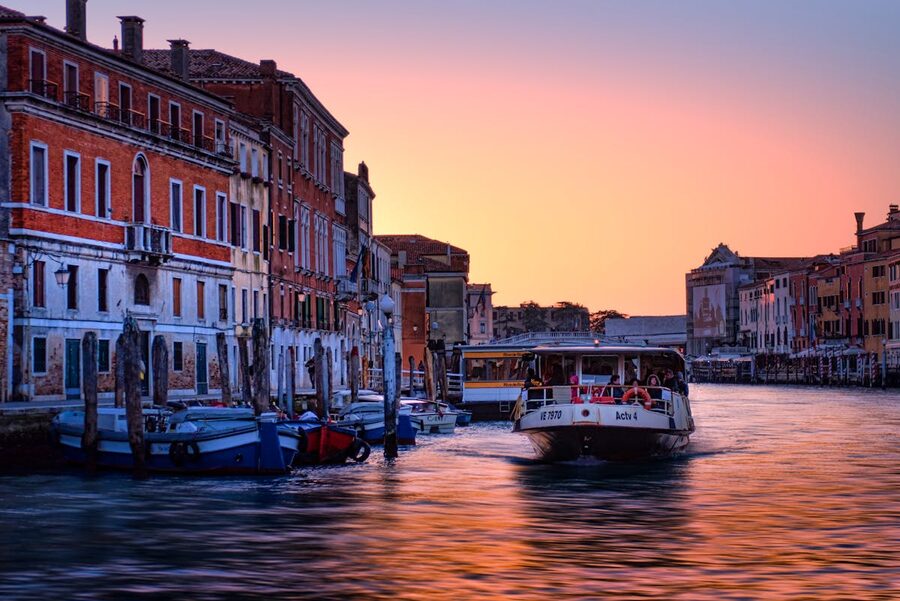
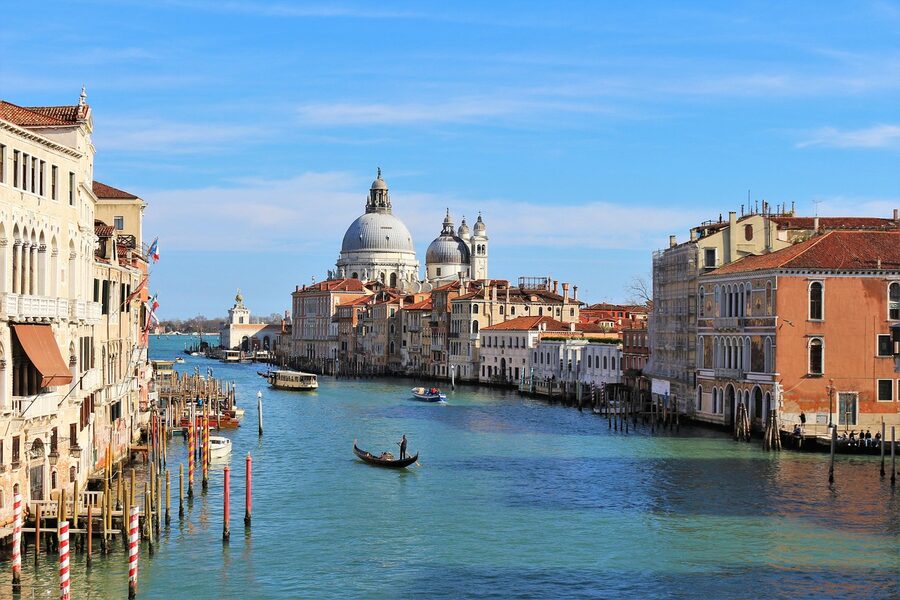
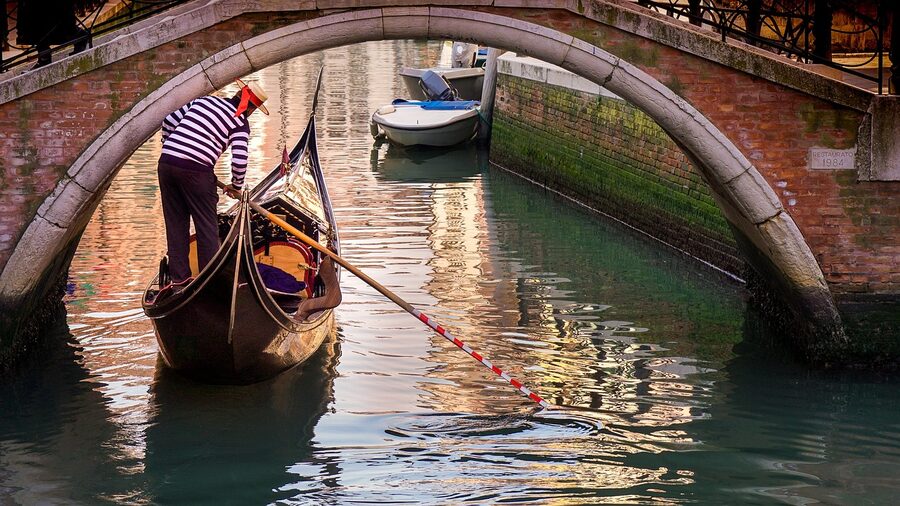
The Grand Canal is Venice’s main street, and it’s lined with palazzi — the grand merchant houses that date back to the 13th through 18th centuries. From a gondola, you’re seeing them from the waterline, which is how they were designed to be viewed. The main facades all face the canal, not the land. Walking past them on the street, you see the back doors.
Gondolas have been Venice’s primary transport since the 11th century. At their peak in the 18th century, there were roughly 10,000 on the canals. Today, about 400 remain, and they exist almost entirely for travelers. Every one of them is painted black by law — a regulation dating back to the 16th century, when wealthy families competed to own the most lavishly decorated boats. Before the ban, gondolas were gilded, painted in bright colours, and draped in silk.
Each gondola is built from 280 pieces of eight different types of wood: cherry, elm, fir, larch, lime, mahogany, oak, and walnut. A single boat takes about 500 hours of labour and costs between 30,000 and 40,000 euros. The hull is intentionally asymmetric — the left side is built wider than the right to counterbalance the gondolier’s single oar stroke from the right side. It’s an engineering solution that looks like an imperfection until you understand the physics.
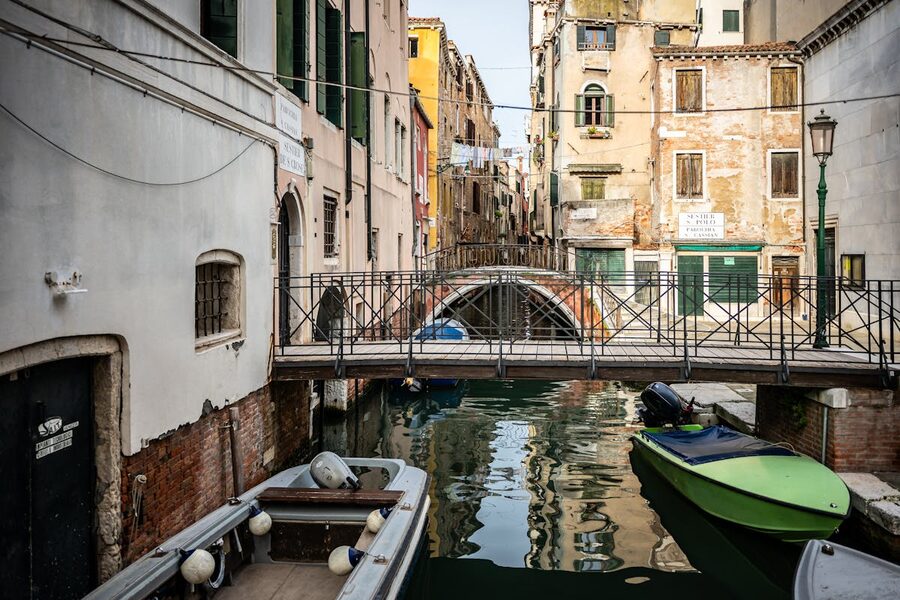
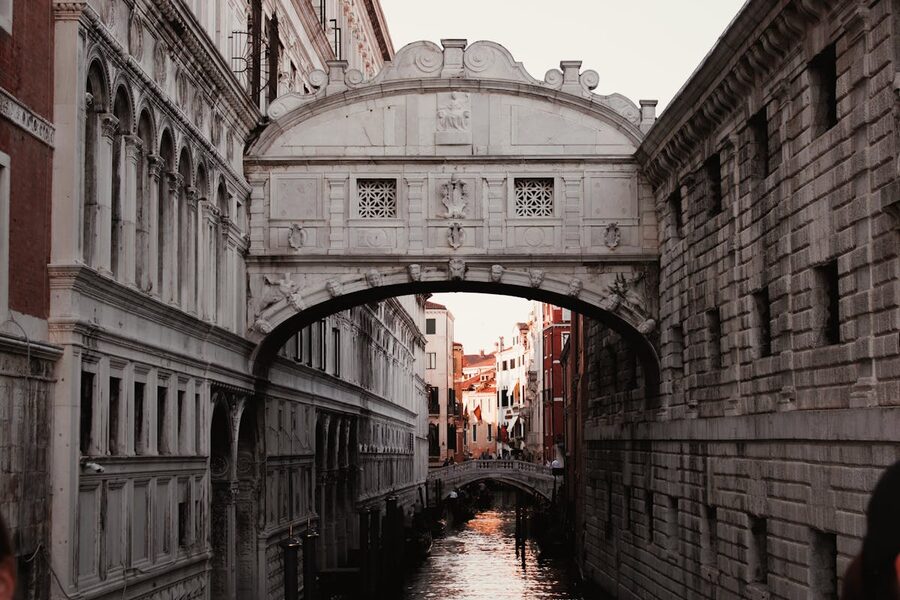
Depending on your route, you might pass the Bridge of Sighs (the enclosed bridge connecting the Doge’s Palace to the prison), the Doge’s Palace itself, the Ca’ d’Oro (one of the oldest palaces on the Grand Canal), and dozens of unnamed buildings that are more atmospheric than any of the famous ones. The side canals — the rii — are where the real character lives. Laundry strung between buildings, cats sleeping on windowsills, boats parked in what would be driveways anywhere else.
More Venice Guides
If the shared gondola whet your appetite for Venice’s water, the boat trip to Murano and Burano is the natural next step — Burano’s painted houses are even more striking from the water than in photos. Back on land, the Doge’s Palace is right next to most gondola departure points and pairs well with a morning or early afternoon time slot. For something completely different, an evening at La Fenice opera house is the kind of Venice experience most travelers skip — and the building’s history of burning down and being rebuilt is almost as dramatic as the operas performed inside. And if you want the full comparison between shared and private gondola options, our complete gondola ride guide covers everything from route differences to tipping etiquette.
This article contains affiliate links. When you book through our links, we earn a small commission at no extra cost to you. This supports our work and helps us keep producing these guides.