
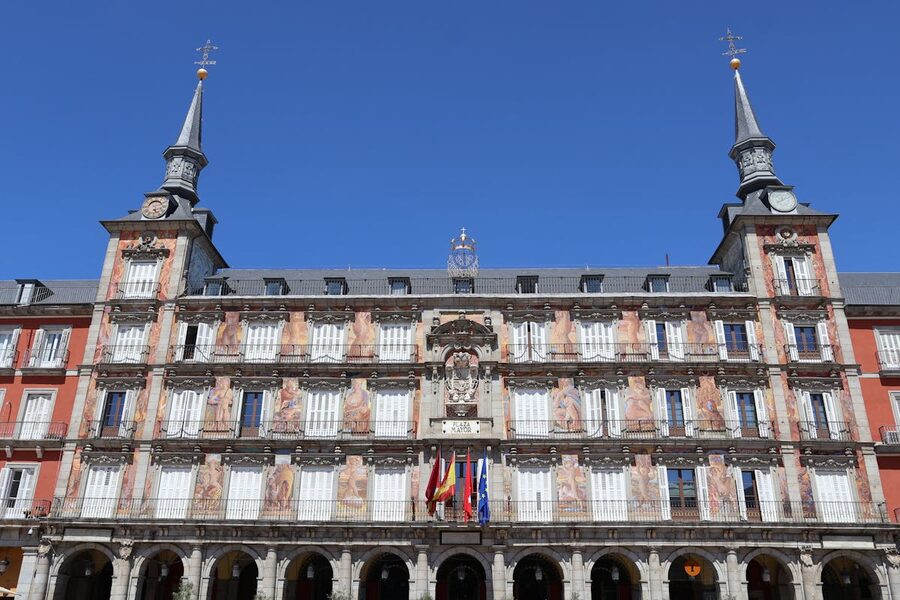
Standing in the middle of Plaza Mayor at eleven o’clock at night, my guide pointed at the cobblestones beneath our feet and said: “Right here. This is where they burned people alive.” She wasn’t being dramatic. Between the 15th and 18th centuries, the Spanish Inquisition conducted public autos-da-fe — trials of faith that ended in execution — in this exact square. The travelers eating overpriced calamari ten metres away had no idea what happened where they were sitting.
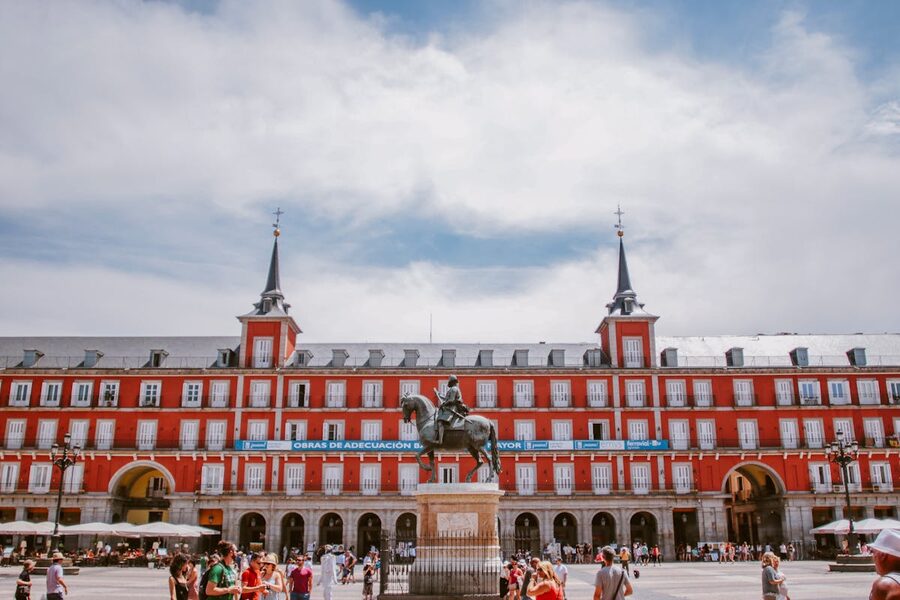
Madrid’s night walking tours cover a side of the city that most visitors miss entirely. The Spanish Inquisition operated its main tribunal near the Plaza Mayor area for over three centuries. The ghosts of the Habsburg dynasty — including the so-called “mad queen” Juana la Loca, who reportedly kept her dead husband’s body with her for years — haunt the streets around the Royal Palace. And Spain’s first documented serial killer, Manuel Blanco Romasanta, the “Werewolf of Allariz,” was tried in the 1850s after confessing to thirteen murders and claiming he’d been cursed to transform into a wolf.
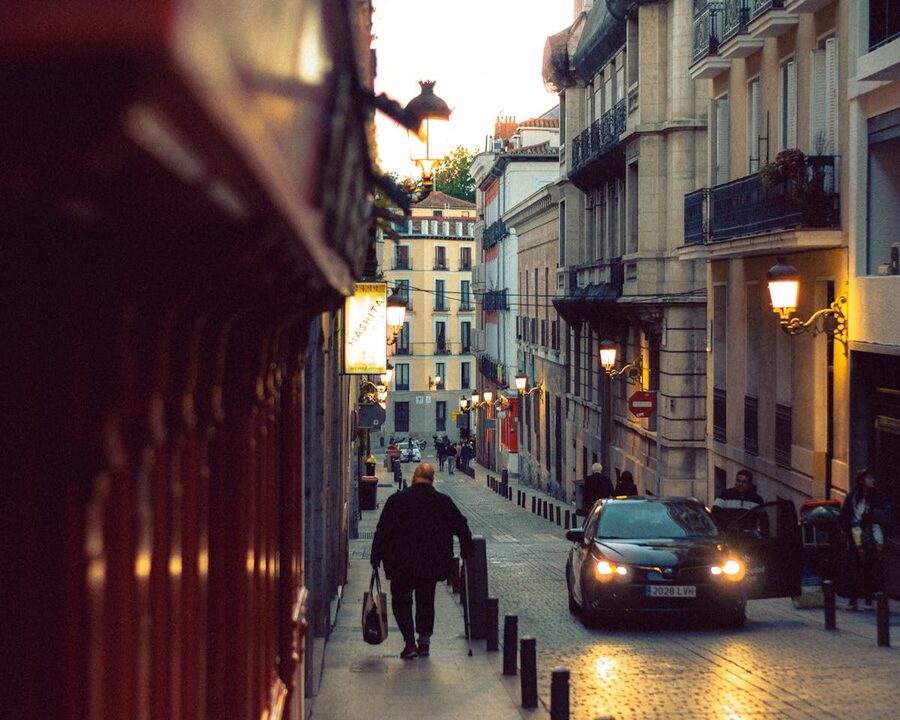
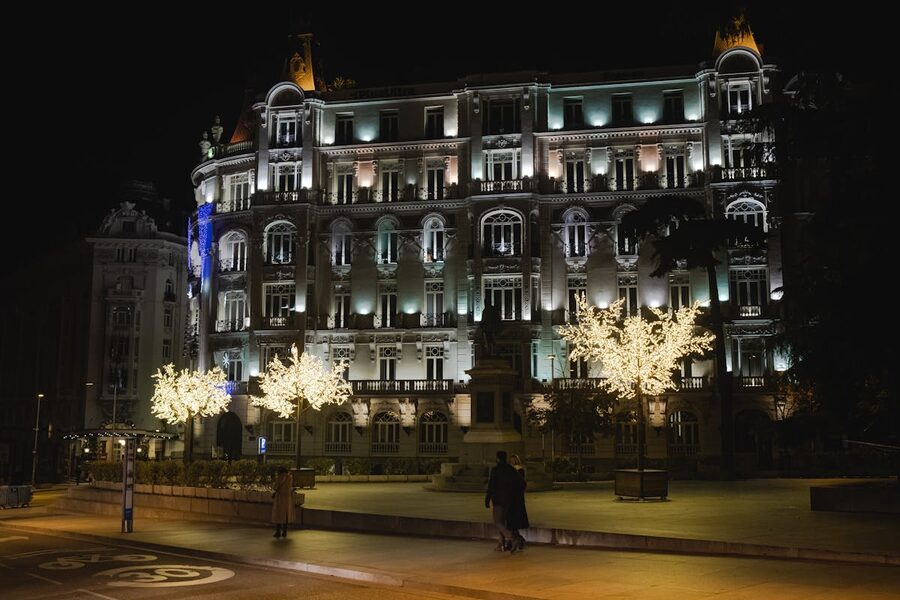
These tours happen after sunset for a reason. The narrow streets of old Madrid look completely different at night — the same alleys that feel charming at noon become genuinely atmospheric when lit only by streetlamps and the glow from closed shop windows.
- In a Hurry? The 3 Best Night Walking Tours in Madrid
- What the Night Walking Tours Cover
- The 3 Best Night Walking Tours in Madrid
- 1. Madrid Tapas Night Walking Tour —
- 2. Spanish Inquisition and Legends Evening Walking Tour —
- 3. Evening Walking Tour: Spanish Inquisition & Legends of Old Madrid —
- How to Choose Between Night Tours
- The History Behind Madrid’s Dark Side
- The Spanish Inquisition in Madrid
- The Habsburgs and Their Ghosts
- Madrid’s Criminal Past
- Practical Tips for Night Walking Tours
- The Best Time of Year for Night Walking Tours
- What to Do Before and After the Tour
- More to Explore in Madrid After Dark
- Where Night Tours Meet and What the Route Looks Like
In a Hurry? The 3 Best Night Walking Tours in Madrid
Best overall: Madrid Tapas Night Walking Tour — $72/person. Combines dark history with tapas stops, running 3.5 hours through the old town. Check Availability
Best budget pick: Spanish Inquisition and Legends Evening Walking Tour — $23/person. Pure history, no food stops. 110 minutes focused entirely on Madrid’s darkest stories. Check Availability
Best for storytelling: Evening Walking Tour: Spanish Inquisition & Legends of Old Madrid — $24/person. A costumed guide leads a two-hour tour through Inquisition sites and ghost stories. Check Availability
What the Night Walking Tours Cover
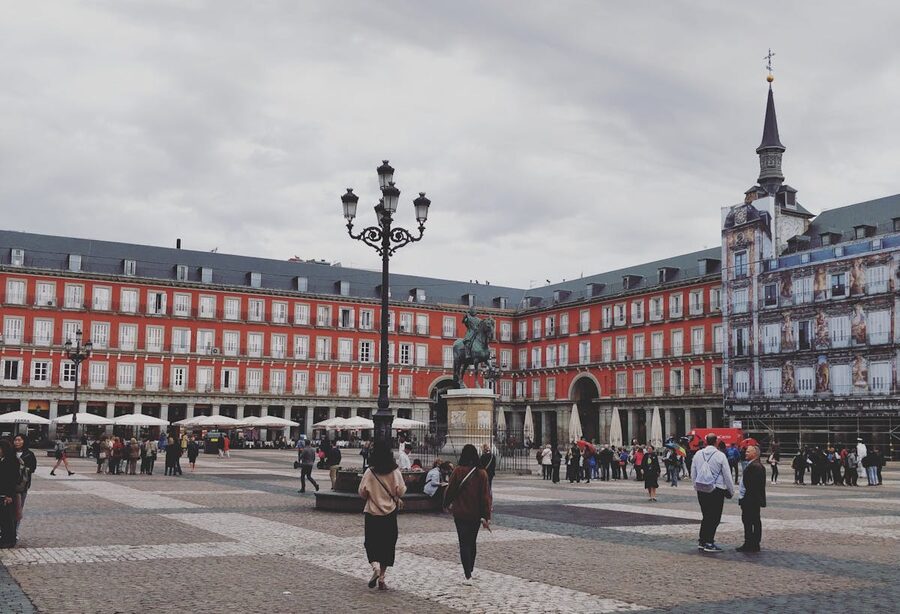
The routes vary by guide, but most tours hit the same core locations. Plaza Mayor, where the Inquisition held public trials and executions. The streets around Calle Mayor, where an assassination attempt on Alfonso XIII’s wedding day killed twenty-five bystanders in 1906. The area near the Royal Palace, where the Habsburg royals — a family so inbred that the last Spanish Habsburg king, Charles II, reportedly couldn’t chew his own food — lived and died.
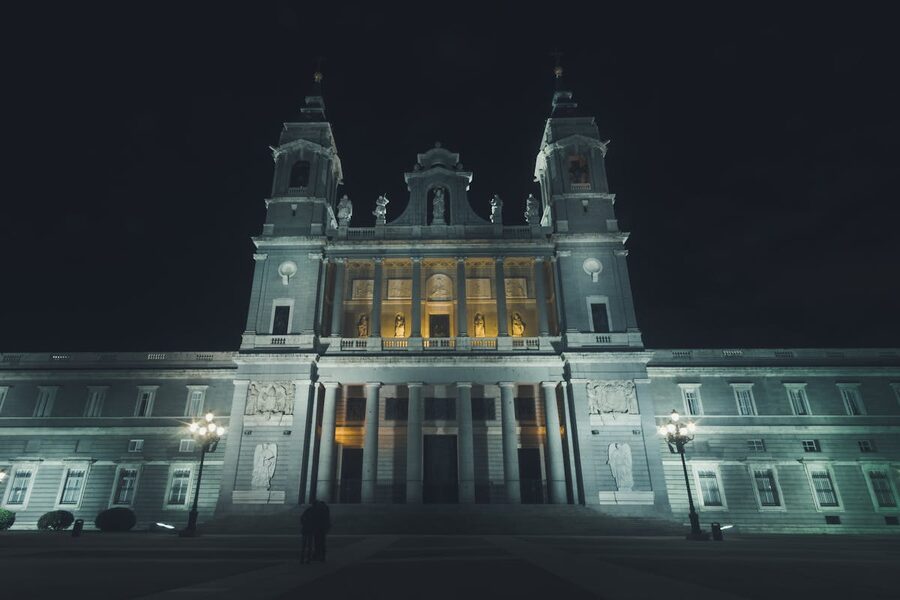
The Spanish Inquisition is the centerpiece of most tours. It lasted from 1478 to 1834 — over three hundred and fifty years. The Madrid tribunal was one of the most active. Guides explain how the system worked: the denunciations, the secret trials, the torture methods (the rack, the water cure, the strappado), and the public executions that drew thousands of spectators to Plaza Mayor. This isn’t sanitized ghost-tour content. It’s real history, and the good guides don’t shy away from the details.
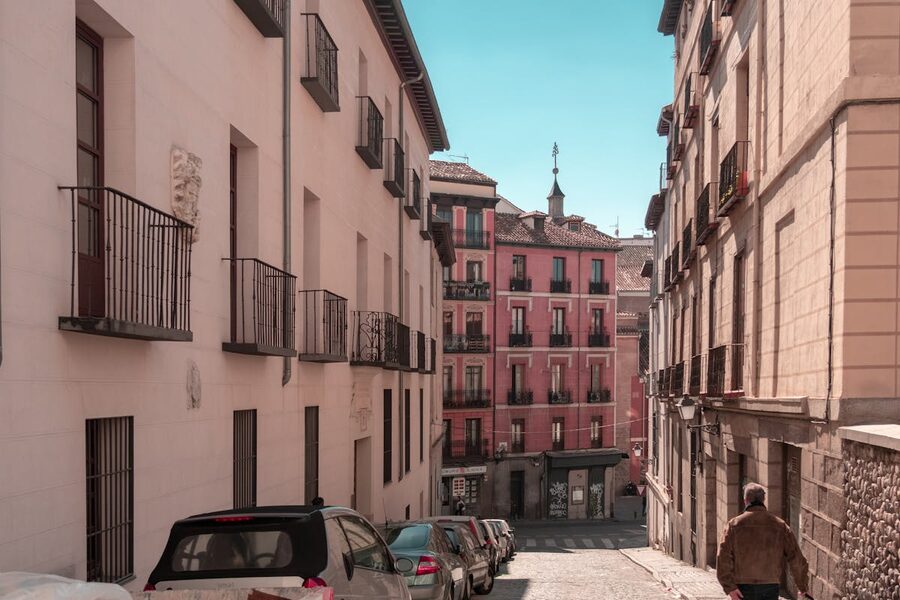
Some tours add legend and folklore to the mix. Ghost sightings in old convents. The tale of the Calle del Gato, named after a cat that supposedly saved a child from a fire. Stories about witchcraft accusations in medieval Madrid. The blend of documented history and urban legend keeps the two-hour walk from feeling like a lecture.
The stops along the route are chosen for atmosphere, not just history. Guides pick the narrowest alleys, the darkest corners, the buildings with the most visible age. One favourite stop is the Arco de los Cuchilleros, the stone archway at the corner of Plaza Mayor that was once the entrance to the knife-makers’ quarter. Standing under that arch at 10 PM, hearing about what the Inquisitors did to people accused of heresy, hits differently than reading about it in a textbook.
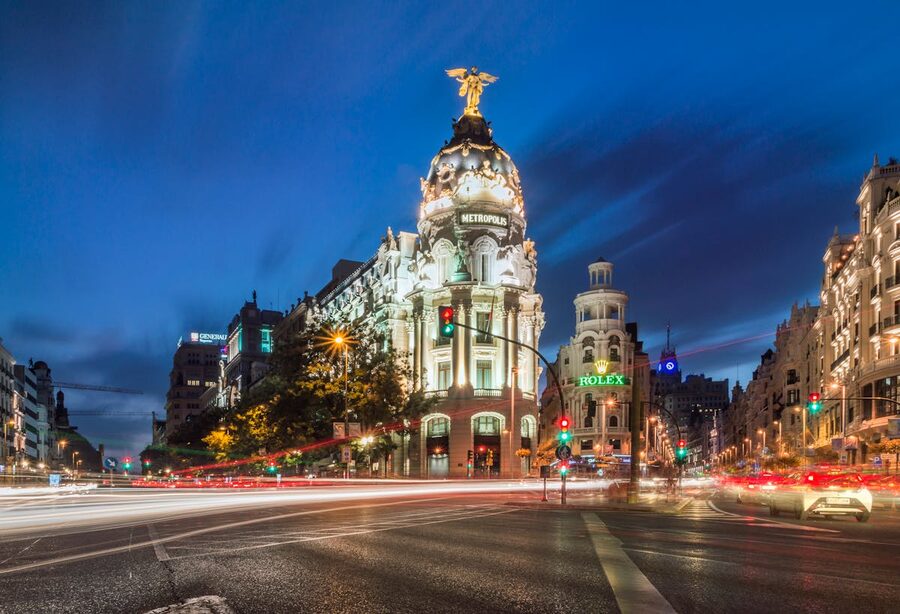
The 3 Best Night Walking Tours in Madrid
1. Madrid Tapas Night Walking Tour — $72

This tour does something clever: it mixes the dark history with tapas stops, so you alternate between learning about the Inquisition and eating croquetas de jamon. It runs 3.5 hours and covers the major night walk sites — Plaza Mayor, the old town alleys, the Habsburg quarter — but breaks up the walking with three or four tapas bars along the way. The price includes all food and one drink at each stop. Our review has the full route and what food to expect.
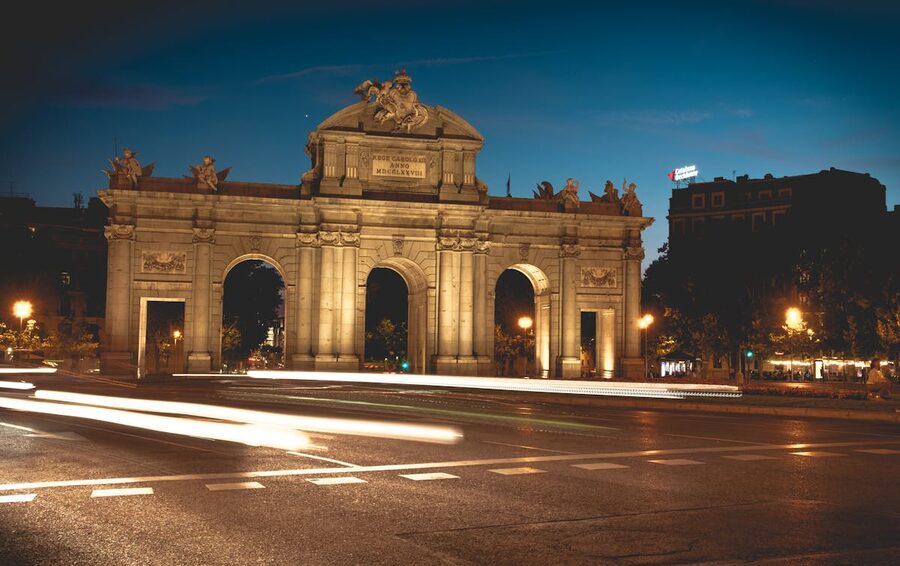
2. Spanish Inquisition and Legends Evening Walking Tour — $23
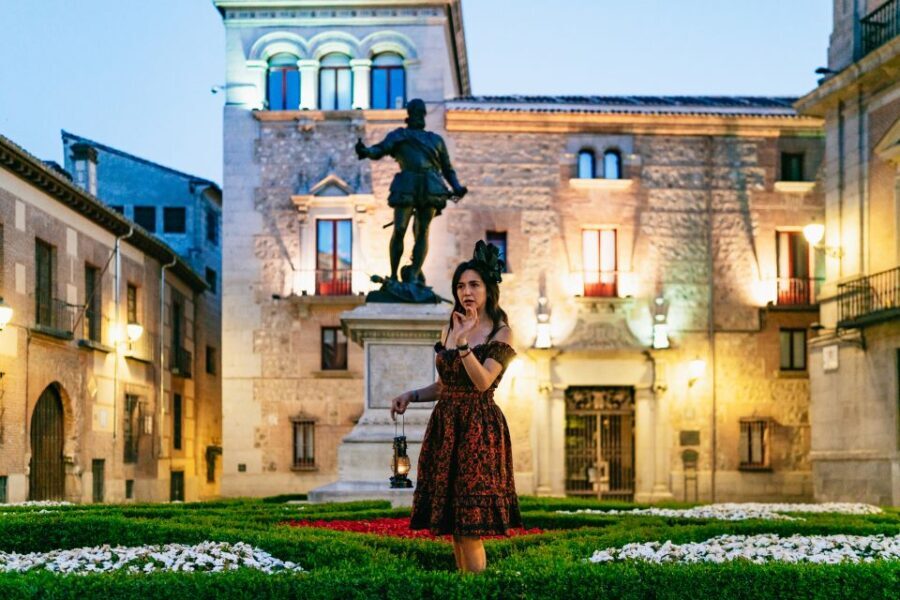
At $23, this is the best-value night tour in Madrid by a wide margin. No food, no drinks — just 110 minutes of pure Inquisition history, ghost stories, and legends of old Madrid. The guides are engaging storytellers who know how to keep a group hooked in the dark. If you want the full dark-history experience without spending more, our detailed review covers the specific sites visited and what the guide’s style is like.
3. Evening Walking Tour: Spanish Inquisition & Legends of Old Madrid — $24
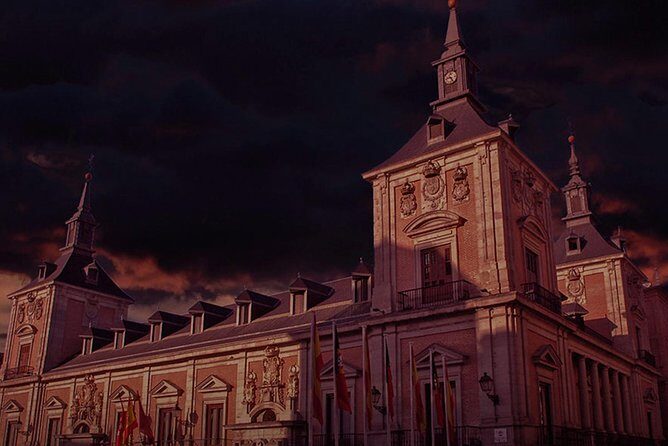
Similar route and price to the tour above, but with a key difference: the guide wears a period costume. It sounds gimmicky, but it works — especially after dark, when a cloaked figure leading you through torch-lit alleys actually adds to the atmosphere. The two-hour format is slightly longer and the storytelling leans more theatrical. Our review compares this one directly to the GYG version if you’re deciding between them.
How to Choose Between Night Tours
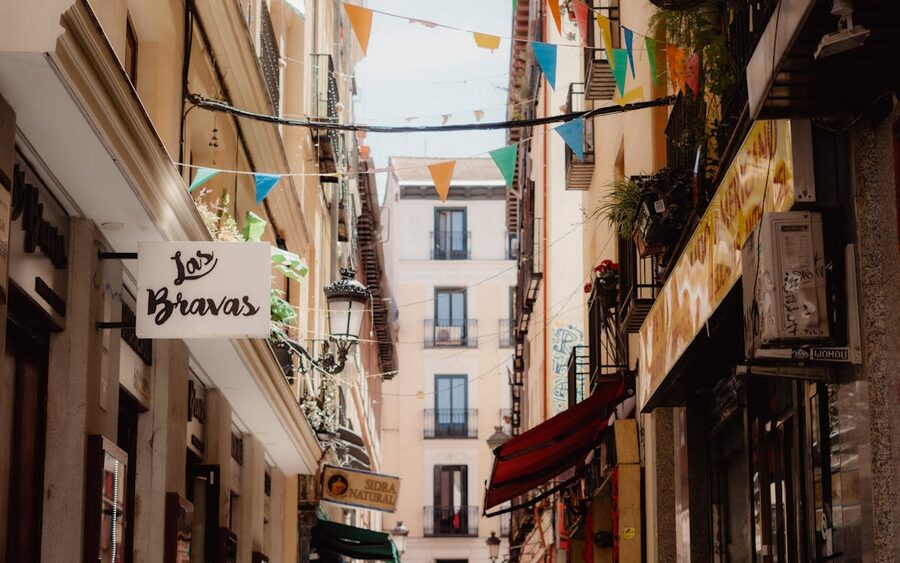
The three tours above serve different needs, and picking the wrong one is the only way to have a bad time.
If you want food AND history: the $72 tapas combo is the one. You get both experiences in a single evening, and the food stops prevent tour fatigue. This is the best option if you’re short on time and want to combine your dinner with the walking tour.
If you’re a serious history nerd: the $23 Inquisition-focused tour gives you more depth per minute than any other option. No food breaks means more time for the guide to dig into the actual history rather than logistics.
If you’re traveling with kids over 12 or teenagers: the costumed guide tour ($24) is the most engaging for younger audiences. The theatrical element keeps attention spans alive, and the ghost stories are more fun than frightening.
If you’re deciding between the two $23-$24 budget options: the GYG tour at $23 leans more factual and historical. The Viator tour at $24 leans more theatrical and dramatic. Both cover similar ground. Choose based on whether you want a historian or a performer.
The History Behind Madrid’s Dark Side
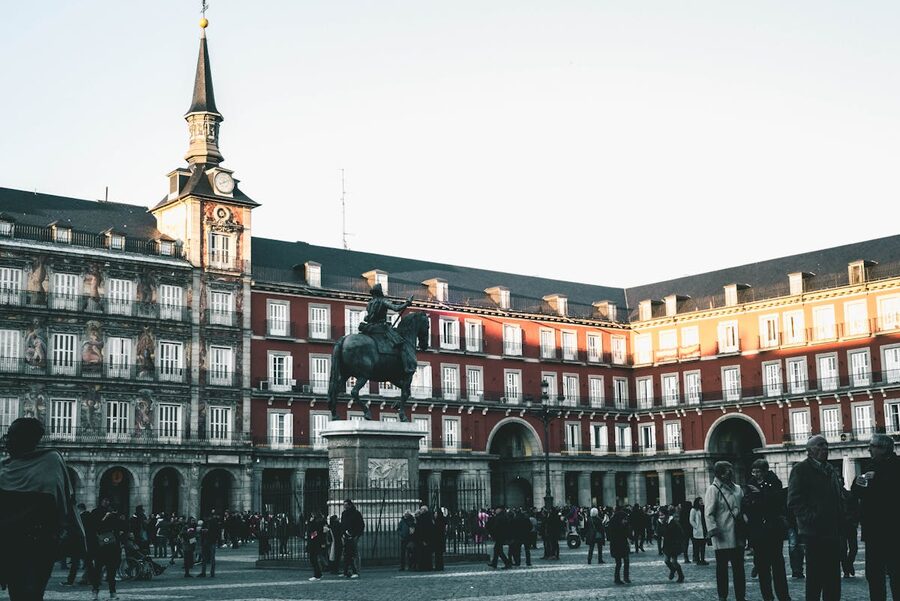
The Spanish Inquisition in Madrid
The Inquisition was established in 1478 by Ferdinand and Isabella to root out heresy — particularly targeting Jews and Muslims who had converted to Christianity but were suspected of secretly practicing their original faith. The Madrid tribunal, based near what is now Plaza Mayor, became one of the busiest in Spain. Between the 15th and 18th centuries, tens of thousands of people were investigated, imprisoned, tortured, and in many cases executed.
The auto-da-fe (act of faith) was the public face of the Inquisition. These were not spontaneous mob events. They were carefully staged spectacles, sometimes lasting all day, where the accused were paraded before crowds, their sentences read aloud, and punishments carried out. The last public auto-da-fe in Madrid was held in 1680, attended by King Charles II himself.
The methods were systematic and bureaucratic, which somehow makes them worse. The Inquisition kept meticulous records. Accusations could be anonymous. Defendants often didn’t know who had accused them or what specific heresy they were charged with. The torture was legally regulated — there were rules about how many times you could be subjected to the rack, how much water could be used in the “water cure” (an early form of waterboarding), and how high you could be hoisted during the strappado. The fact that there were rules made the whole system feel rational, which was perhaps the most terrifying aspect of all.
The Habsburgs and Their Ghosts
The Spanish Habsburg dynasty ruled from the 16th to the late 17th century, and their story reads like a horror novel. Generations of intermarriage between cousins, uncles, and nieces produced increasingly unwell monarchs. Charles II, the last Habsburg king of Spain, was so physically impaired that he could barely walk or eat unassisted. He died in 1700 without an heir, triggering the War of the Spanish Succession.
Juana la Loca — Joanna of Castile — is the dynasty’s most tragic figure. After her husband Philip I died in 1506, she reportedly refused to be separated from his coffin and travelled across Spain with his body. Whether she was genuinely mentally ill or simply politically inconvenient to her father, Ferdinand, is still debated by historians. Either way, she spent the last forty-six years of her life locked in a convent in Tordesillas.
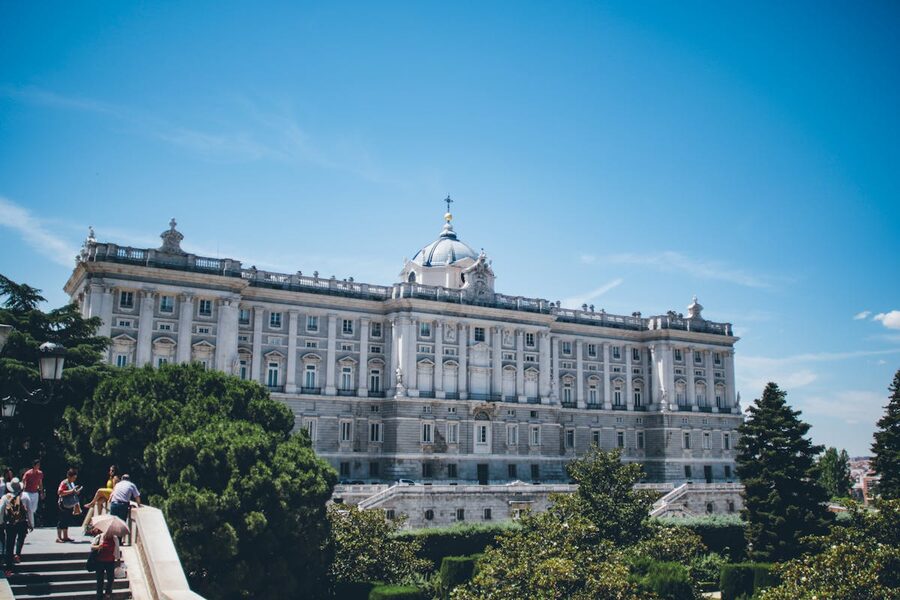
The Habsburg inbreeding is not exaggeration. Philip II married his niece. His son Philip III married his cousin. Philip IV married his niece. By the time Charles II was born, his family tree was more of a family wreath. Modern genetic analysis has confirmed that Charles II had a higher inbreeding coefficient than a child of two siblings. The physical consequences were visible: an enlarged jaw that made eating difficult, chronic illness, and an inability to produce children. When he died, his autopsy reportedly revealed a body with no blood, a heart the size of a peppercorn, and intestines that were gangrenous. Madrid’s night guides love this story.
Madrid’s Criminal Past
The 19th century brought a different kind of darkness to Madrid. Manuel Blanco Romasanta, the “Werewolf of Allariz,” was tried in the 1850s after confessing to thirteen murders across rural Galicia and selling the fat from his victims’ bodies as soap. His defence? He claimed a curse turned him into a wolf during the full moon. The court didn’t buy it, but Queen Isabella II commuted his death sentence to life imprisonment — possibly because she was intrigued by the idea of lycanthropy.
By the early 20th century, Madrid was dealing with political violence. The 1906 bombing on Calle Mayor — a bomb thrown at the wedding procession of Alfonso XIII — killed twenty-five people and injured over a hundred. The bomber, Mateo Morral, escaped in the chaos and shot himself two days later when cornered by police. The street still bears plaques marking the event, and it’s a standard stop on every night tour that passes through the area.
Practical Tips for Night Walking Tours
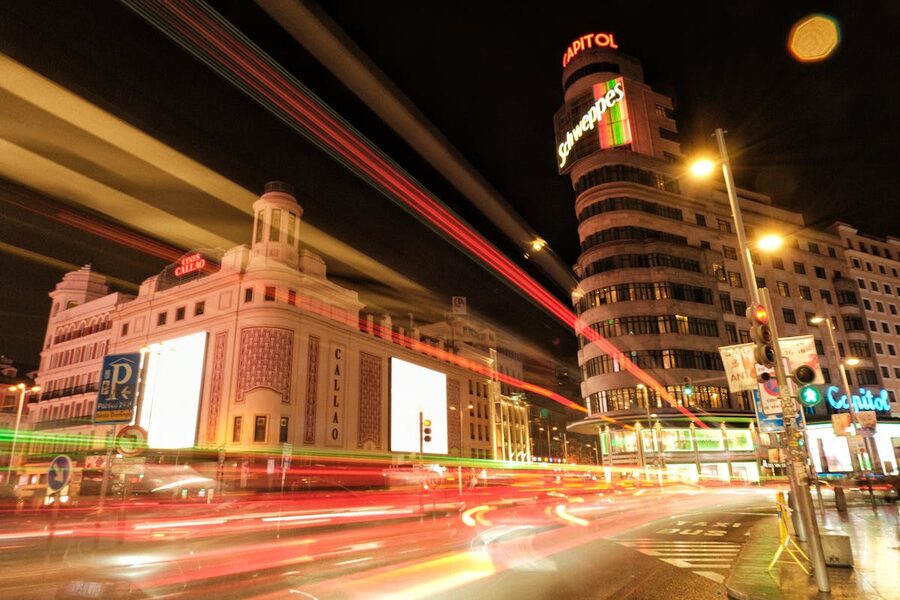
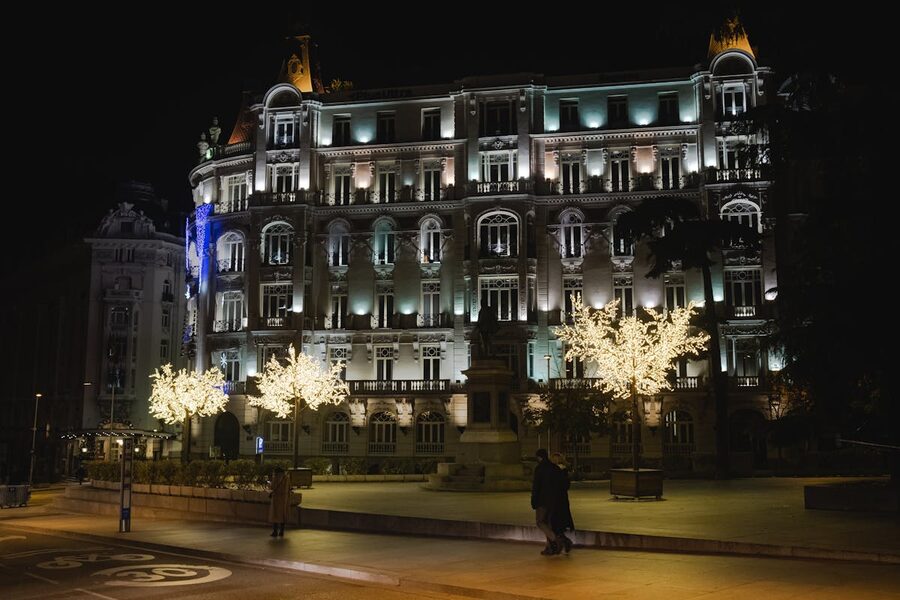
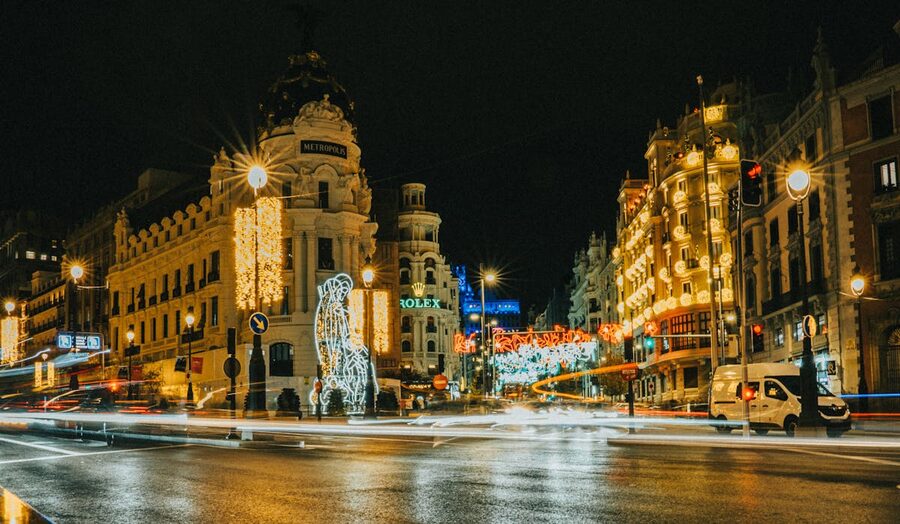
Most tours start between 8:30 and 10 PM. This is Spain — 9 PM is still early evening. The later start means the streets are darker and the atmosphere is better.
Wear comfortable walking shoes. The old town is all cobblestones, and you’ll cover two to three kilometres over two hours. Heels are a bad idea.
Bring a jacket, even in summer. Madrid’s nights cool down fast, especially from October to April. The narrow streets can funnel wind in ways you don’t expect.
The tapas-combo tours are worth the extra cost if you haven’t eaten dinner. The $72 option includes enough food to count as a meal.
Book the $23 pure history tour if you want depth. The budget option doesn’t mean lower quality — it means no food breaks and more time for stories. If you’re genuinely interested in the Inquisition and Madrid’s darker history, you’ll get more from this format.
Groups are usually 10-20 people. The guides project well and the walking pace is relaxed, so being at the back isn’t a problem.
Kids under 10 will likely be bored or scared. The content is genuinely dark — torture, execution, serial murder. There’s no child-friendly version. Teenagers usually love it. Young children won’t understand the historical context, and the graphic descriptions might upset them.
Book at least 2-3 days ahead for weekend tours. Friday and Saturday nights fill fastest. Weeknight tours often have smaller groups, which can mean a more personal experience with the guide.
The Best Time of Year for Night Walking Tours
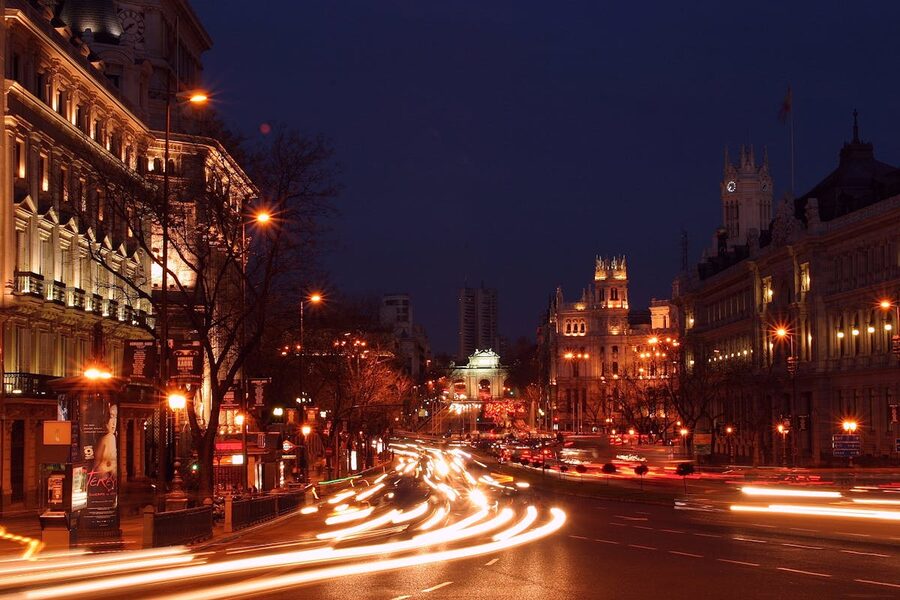
October to March is peak atmosphere season. It gets dark by 6 PM, the air is cold, and the old town feels genuinely eerie. The downside: you’ll need a warm jacket and scarf, and some tours cancel in heavy rain.
April to September means later sunsets and warmer weather. Tours start later (9:30-10 PM) to wait for darkness. The upside: you can combine the tour with a late dinner afterwards without freezing. The downside: the atmosphere is slightly less intense when it’s still 22 degrees at 10 PM.
Halloween week (late October) is the busiest period. Some tour companies run special Inquisition-themed events. Book at least two weeks ahead if you’re visiting during this period.
What to Do Before and After the Tour
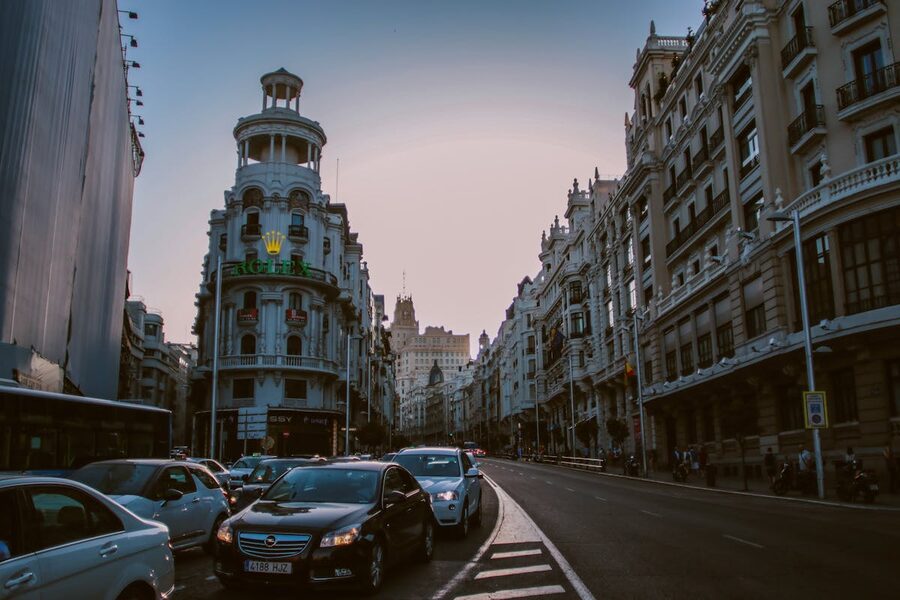
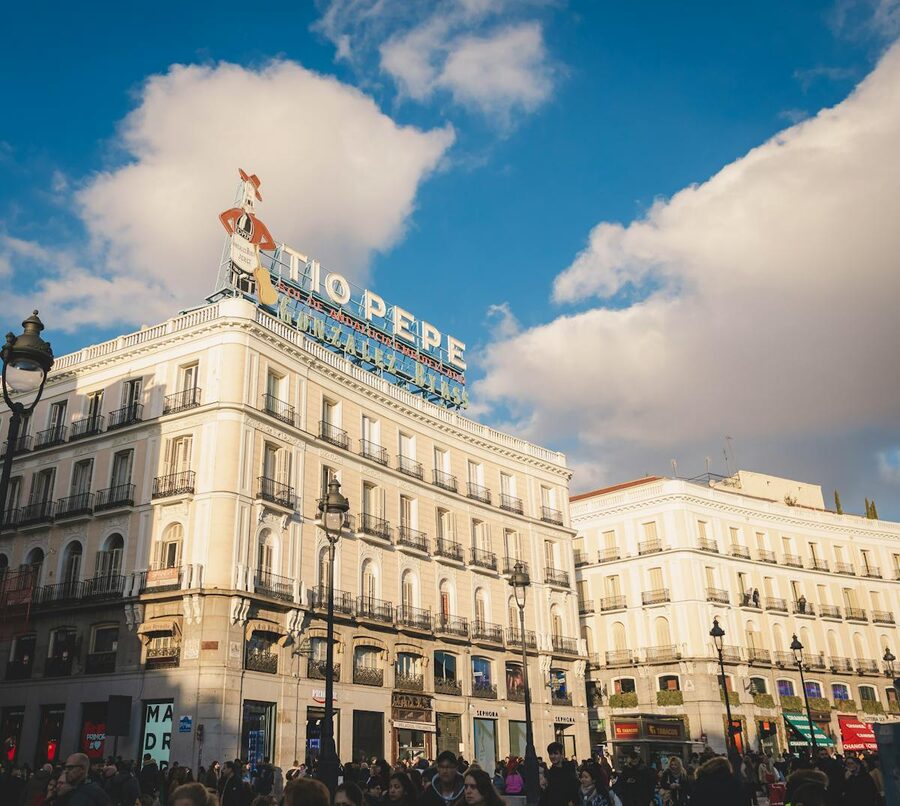
Most tours meet near Plaza Mayor or Puerta del Sol, which puts you in the centre of Madrid’s old town. If you haven’t eaten, grab something light nearby before the tour — you’ll be walking for two hours and the history-only tours don’t include food stops. After the tour, you’re perfectly positioned for a late dinner at any of the tabernas and tapas bars in the La Latina or Sol neighbourhoods.
If you took the pure history tour and left hungry, the Madrid tapas tours make a great next-day follow-up. The night tour gives you the history of the old town; the tapas tour gives you the food. Together they cover Madrid from both angles.
More to Explore in Madrid After Dark
If the night walk leaves you wanting more of Madrid’s food scene, a dedicated tapas tour digs deeper into the city’s best bars and hidden restaurants. For daytime history, the Royal Palace lets you see the Habsburg rooms from the inside — context that makes the night tour stories hit differently. A regular walking tour covers the same old town in daylight, which is a completely different experience. For a high-energy evening instead, the Madrid pub crawl starts in the same neighbourhood. And if you’re building a full Madrid itinerary, the flamenco shows and bike tours round out the experience nicely.
Where Night Tours Meet and What the Route Looks Like
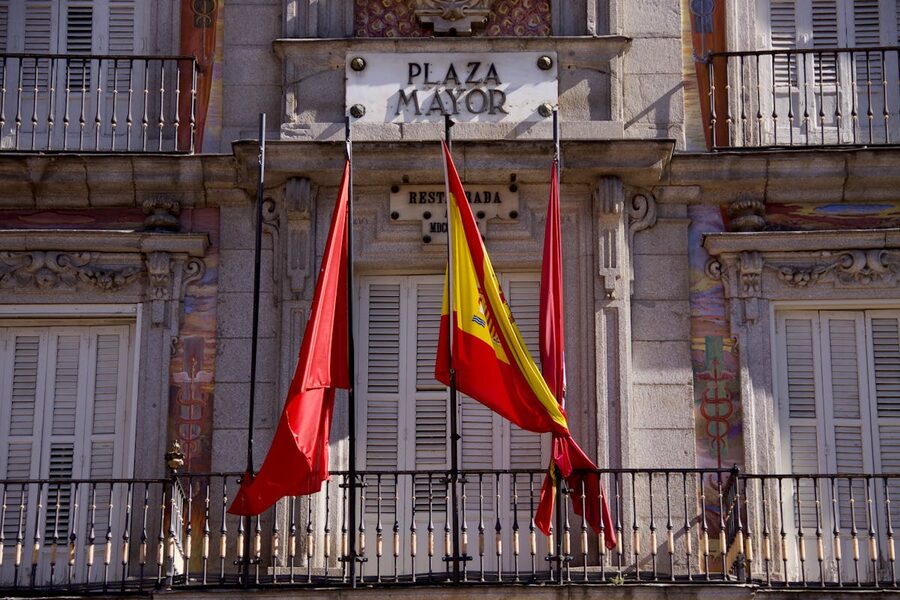
All three tours start in or near Plaza Mayor. The exact meeting point varies — some use the Philip III statue in the centre of the square, others use a specific corner near the tourist office. You’ll get precise meeting instructions after booking.
The typical route follows a rough loop through Madrid’s oldest streets. From Plaza Mayor, you head south through the narrow lanes toward Calle de Cuchilleros, then wind through the streets behind the square where the oldest tabernas in Madrid still operate. From there, the route moves toward the area around the Palacio Real and back through the medieval street grid. The pure history tours stay in the old town. The tapas combo ventures slightly further to reach good food spots.
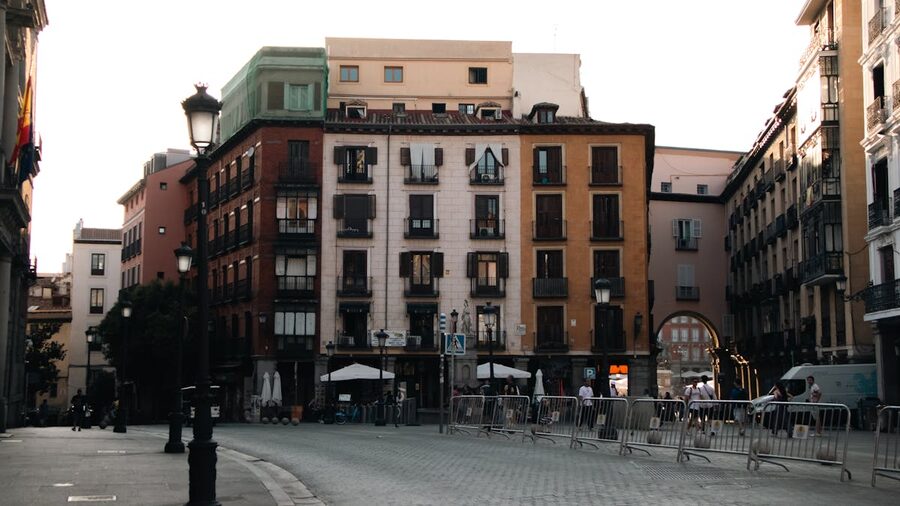
The total walking distance is about two to three kilometres, which sounds short until you factor in the stops. Most guides pause at eight to twelve locations along the route, spending three to five minutes at each one telling a story. The pace is relaxed. Nobody rushes. The best guides time their stops so that the darkest story happens at the narrowest, most atmospheric point in the route.
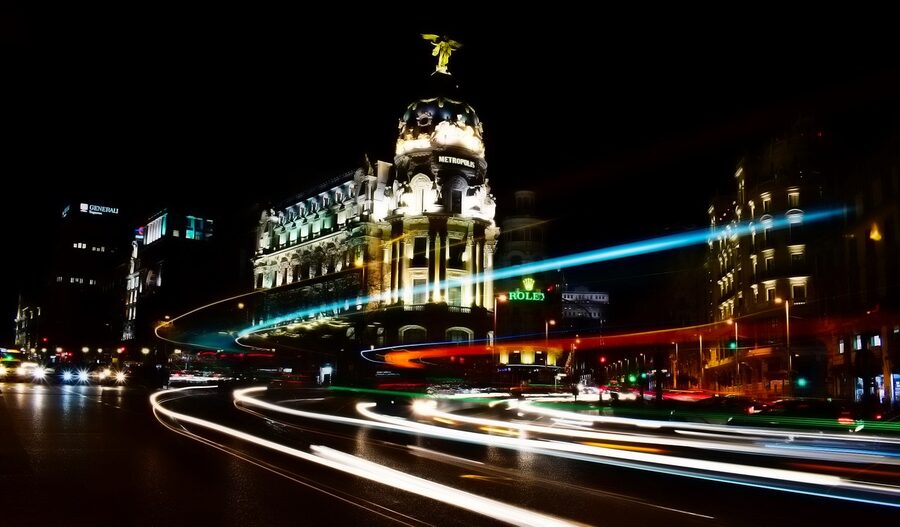
The route ends near where it started — usually within a five-minute walk of Plaza Mayor or Puerta del Sol. This makes it easy to head to dinner, grab a drink, or catch the metro home. If you took the budget tour and skipped dinner, the La Latina neighbourhood is a two-minute walk from most end points, and it has some of the best late-night tapas bars in Madrid.
We research and review tours independently. If you book through our links, we may earn a small commission at no extra cost to you. This supports our work and helps keep our guides free.