
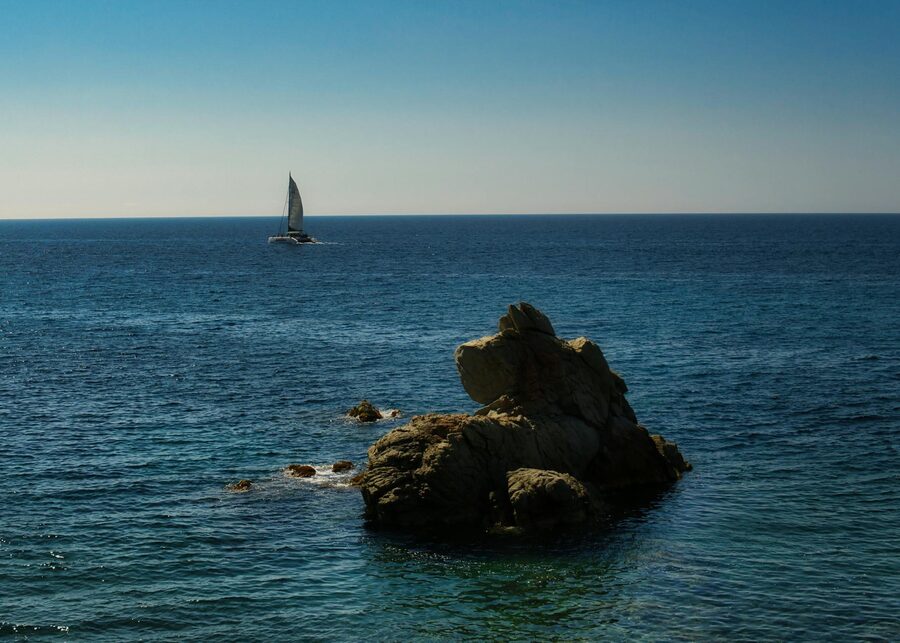
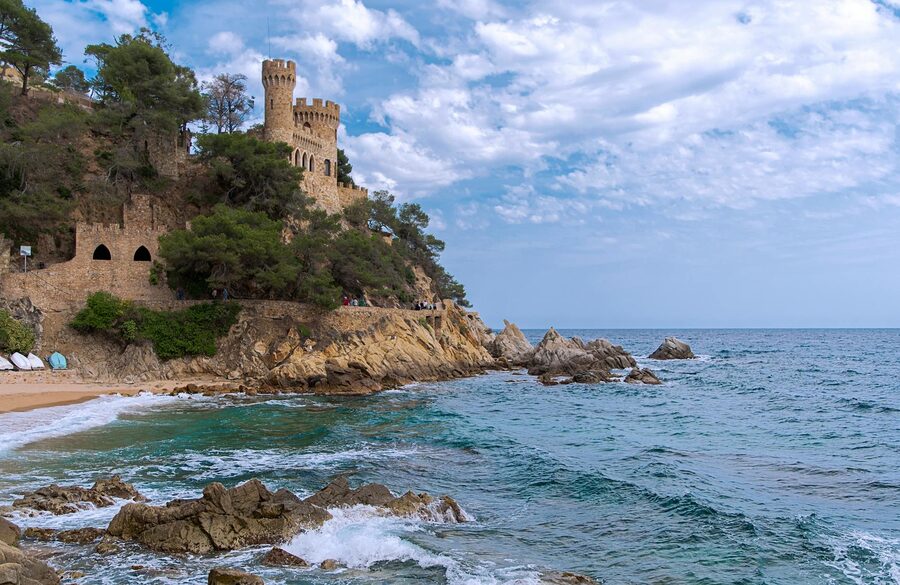
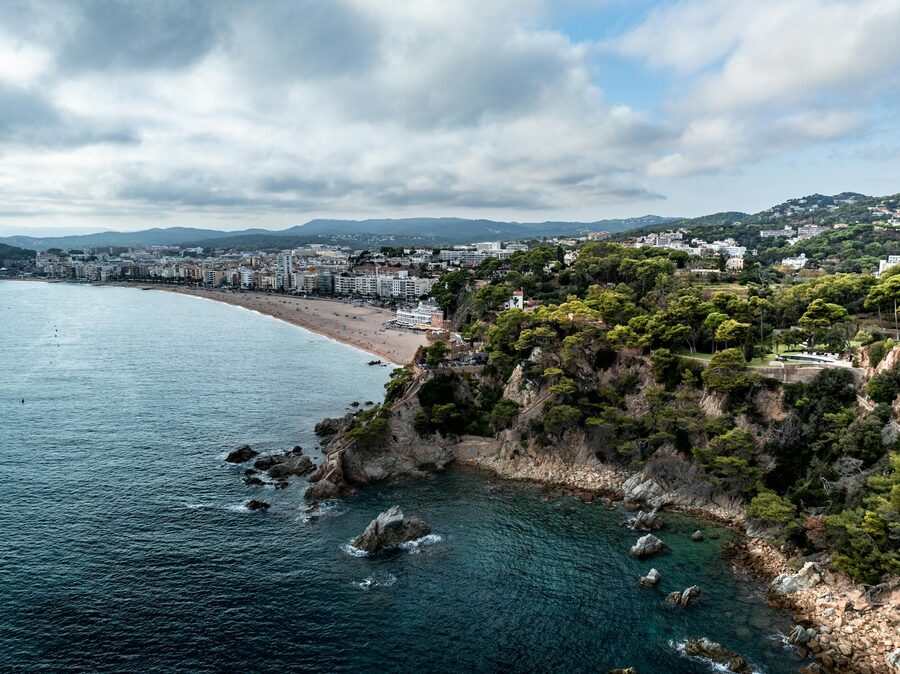
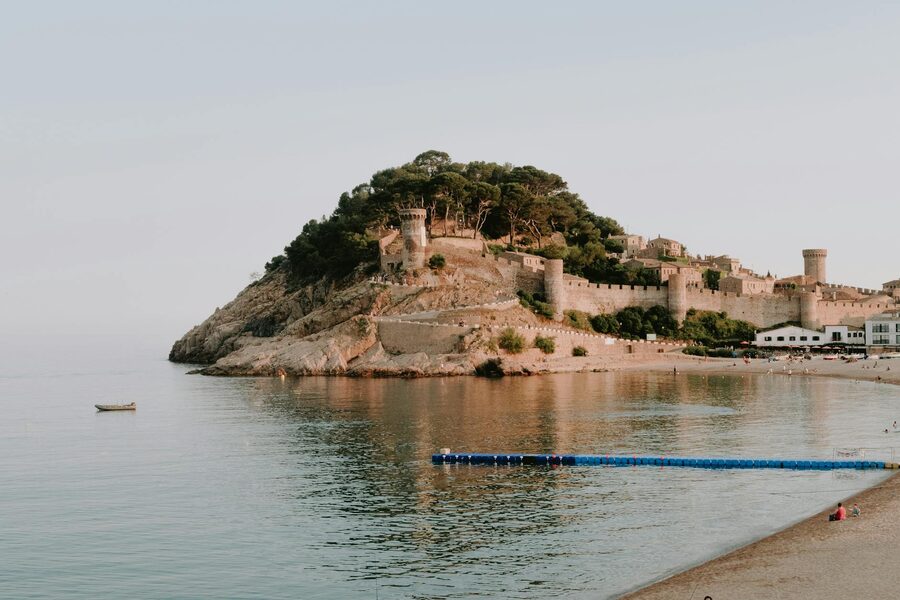
The first time I saw Lloret de Mar from the water, I understood why people keep coming back. From the beach, it’s a fun but crowded resort town. From a catamaran about 500 metres offshore, it transforms into something else entirely — rocky coves, cliffs dropping straight into water so blue it looks photoshopped, and that castle ruin sitting on the headland like it’s been waiting for you to notice it.
- In a Hurry? My Top Picks
- How Catamaran Cruises in Lloret de Mar Actually Work
- What Each Cruise Includes (and What It Doesn’t)
- What to Expect on Board
- My Top Catamaran Cruises in Lloret de Mar
- 1. Catamaran Sailing Cruise with BBQ and Drinks —
- 2. Sunset Catamaran Cruise with DJ and Drinks —
- 3. Catamaran Cruise with Food, Drinks, and Music —
- Best Time to Book a Catamaran in Lloret de Mar
- Lloret de Mar: More Than a Party Town
- Getting to Lloret de Mar
- How Much Does a Catamaran Cruise Cost in Lloret de Mar?
- Tips from Someone Who’s Done This
- What Else to Do on the Costa Brava
In a Hurry? My Top Picks
Best overall: Catamaran Sailing Cruise with BBQ and Drinks — $59 for four hours including a full BBQ lunch and open bar. This is the one with thousands of bookings for good reason.
Best for sunset: Sunset Catamaran Cruise with DJ and Drinks — $41 for two hours with a DJ, drinks, and the kind of Costa Brava sunset that makes everyone pull out their phones.
Best party vibe: Catamaran Cruise with Food, Drinks, and Music — $57 for three hours with food, unlimited drinks, and dancing. Younger crowd, louder music, more energy.
How Catamaran Cruises in Lloret de Mar Actually Work
All three cruises depart from the Passeig Agustí Font, which is the main seafront promenade in Lloret de Mar. You’ll find the meeting point near the central beach — look for the boat operators with clipboards and the queue of people in swimwear holding towels.
Booking is straightforward. You reserve online, show up with your confirmation (phone screen works fine), and board. No printed tickets needed. Most cruises include drinks from the moment you step on, so yes, you can start with a beer at 11am. Nobody’s judging — it’s a catamaran cruise in Spain.
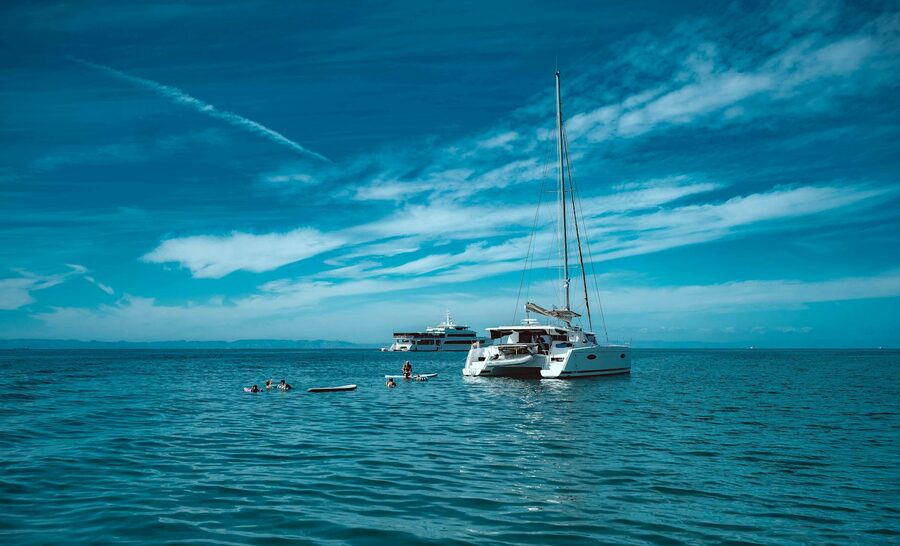
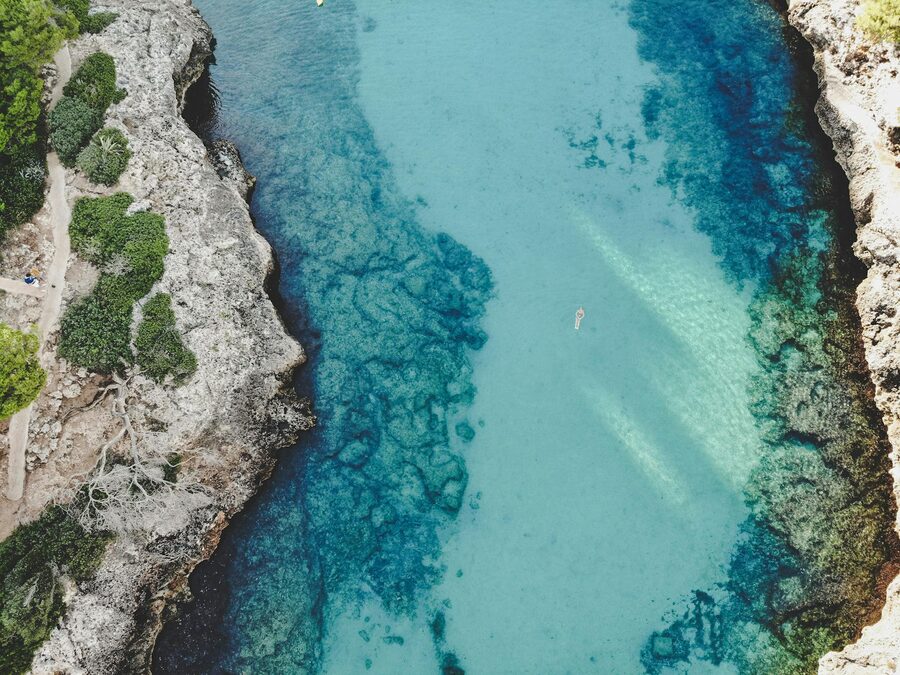
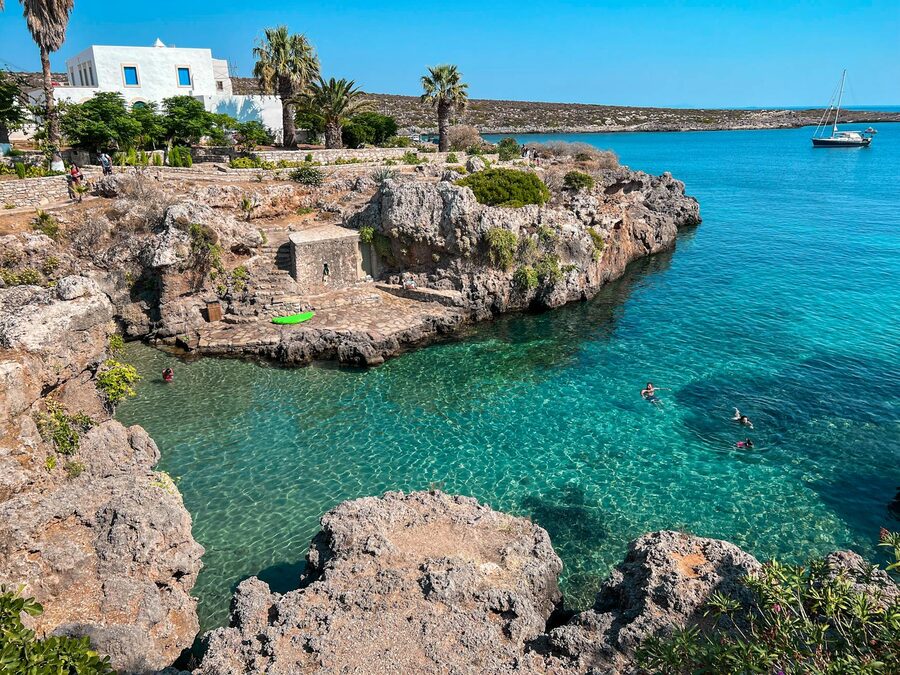
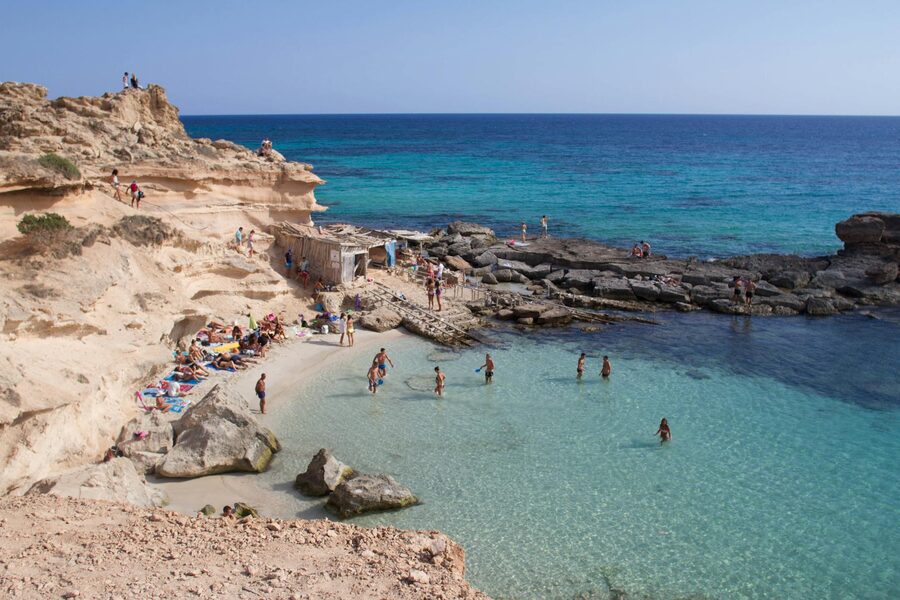
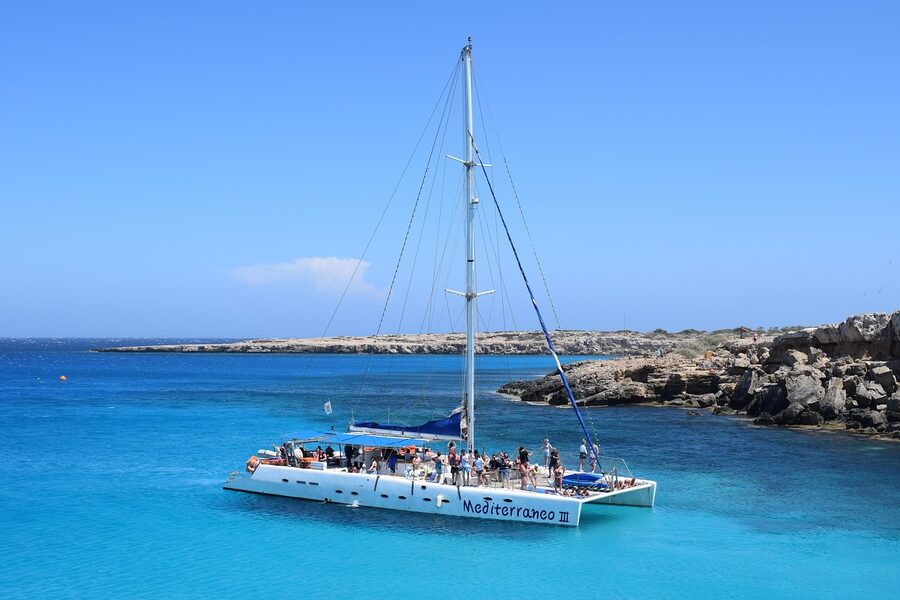
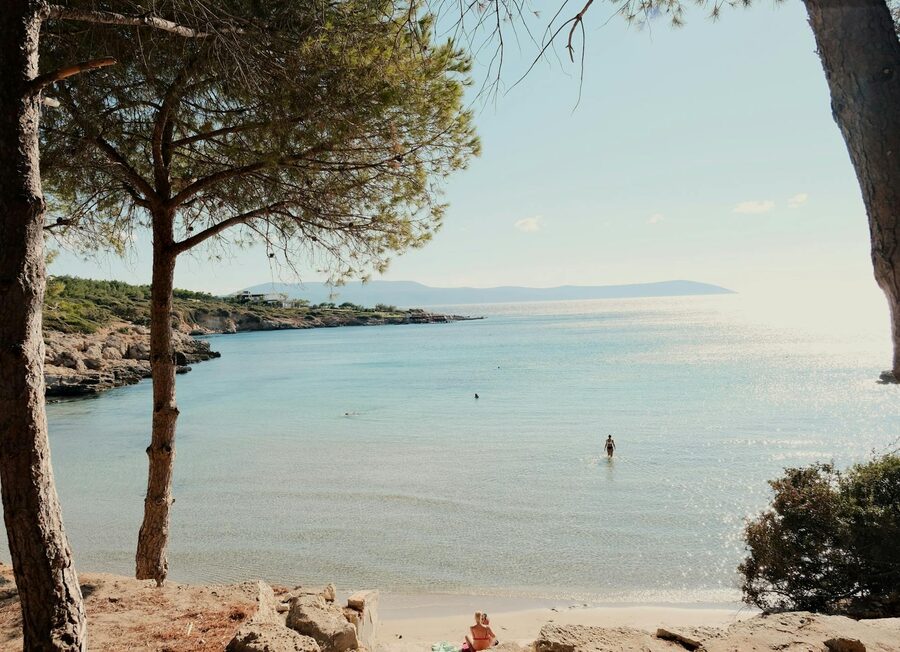
The route heads south along the Costa Brava coastline, passing rocky coves and cliff faces that you’d never see from the road. The boat anchors in a sheltered bay for swimming — usually for 30-60 minutes depending on the tour. The water in these coves is crystal clear, much calmer than the open beach, and warm enough from June through September that you don’t need to psych yourself up before jumping in.
Bring sunscreen, sunglasses, and a towel. The boats have shade areas, but the best spots (the trampolines at the front, the upper deck) are in full sun. A waterproof phone case is worth the few euros — you’ll want photos from the water. Most people wear swimwear with a coverup.
What Each Cruise Includes (and What It Doesn’t)
This is where the three options split. The headline prices all include food and drinks, but the experience is quite different.
The BBQ cruise ($59, 4 hours) is the full-day experience. You get a proper charcoal barbecue cooked on board — chicken, sausages, bread, salads — plus an open bar for the entire four hours. There’s music but it’s background-level, not a party boat. Good for couples, families with older kids, groups of friends who want to chat without shouting. This is the one most people book, and for good reason.

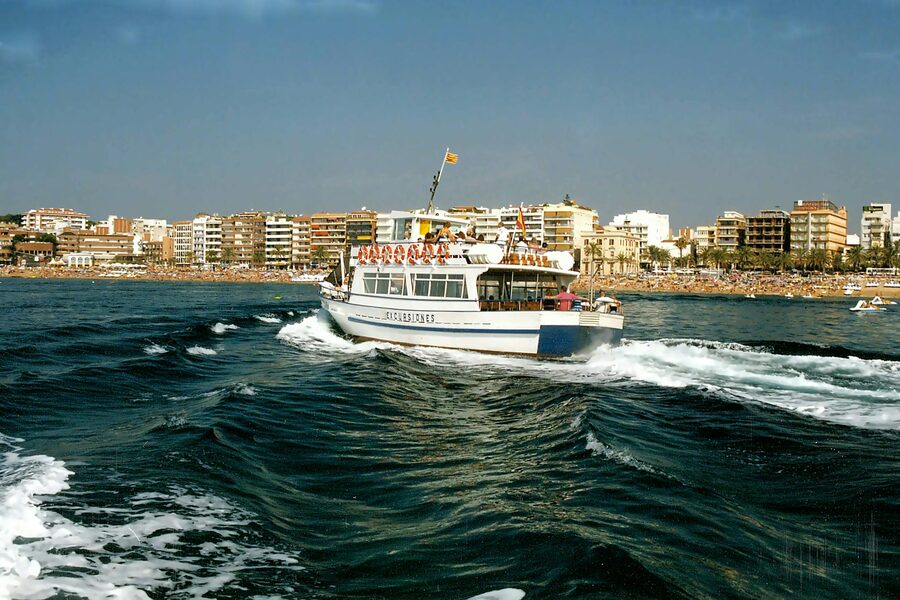
The sunset cruise ($41, 2 hours) is shorter and cheaper. No food (drinks only), but you get a DJ and the golden hour light on the Costa Brava cliffs, which is genuinely beautiful. This one fills up fast in July and August — book at least 3-4 days ahead. It’s more of a social event than a sightseeing trip.
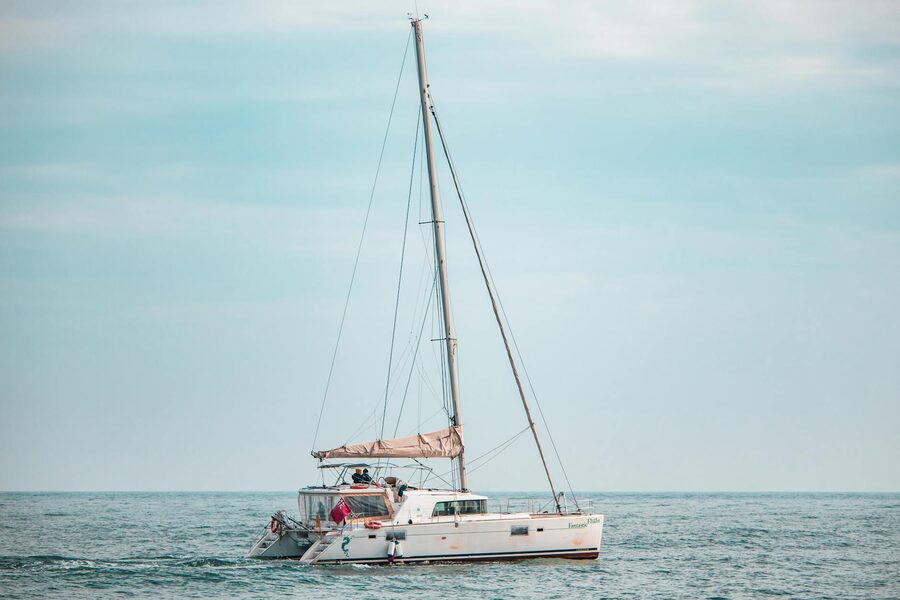
The party cruise ($57, 3 hours) splits the difference. Food and drinks included, plus a DJ and a dance area. It’s aimed at a younger crowd — twenties and thirties, stag and hen parties, groups celebrating something. If that’s your vibe, you’ll love it. If you want a quiet afternoon on the water, pick the BBQ cruise instead.
None of the cruises include hotel pickup or drop-off. You walk to the seafront promenade (which is easy from anywhere in central Lloret), and you walk back. Tips for the crew are appreciated but not expected.
What to Expect on Board
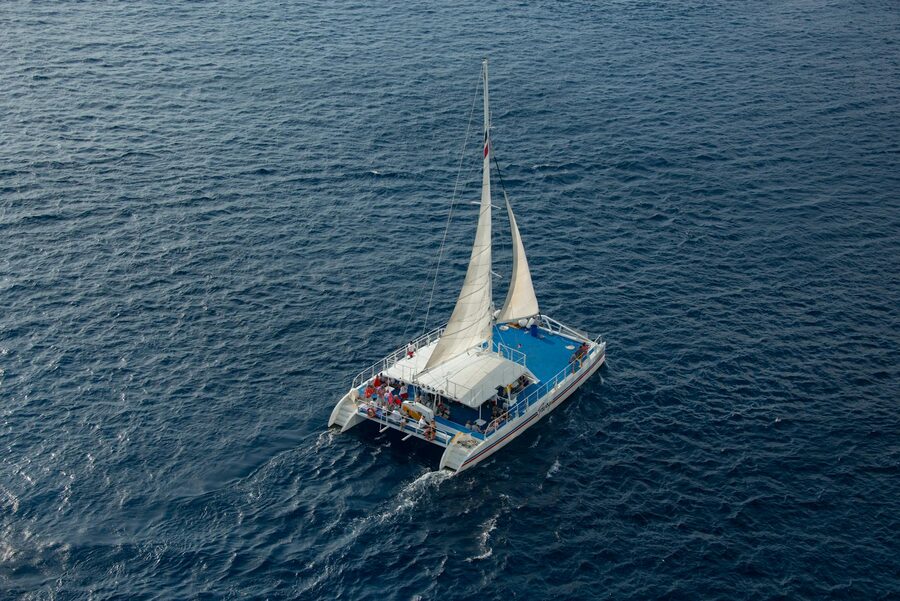
The catamarans used in Lloret de Mar are proper sailing catamarans — not motorised party barges. They range from about 15 to 24 metres long, with space for 40-80 passengers depending on the boat. The twin hulls give them good stability, and the large deck area means you’re never fighting for space.
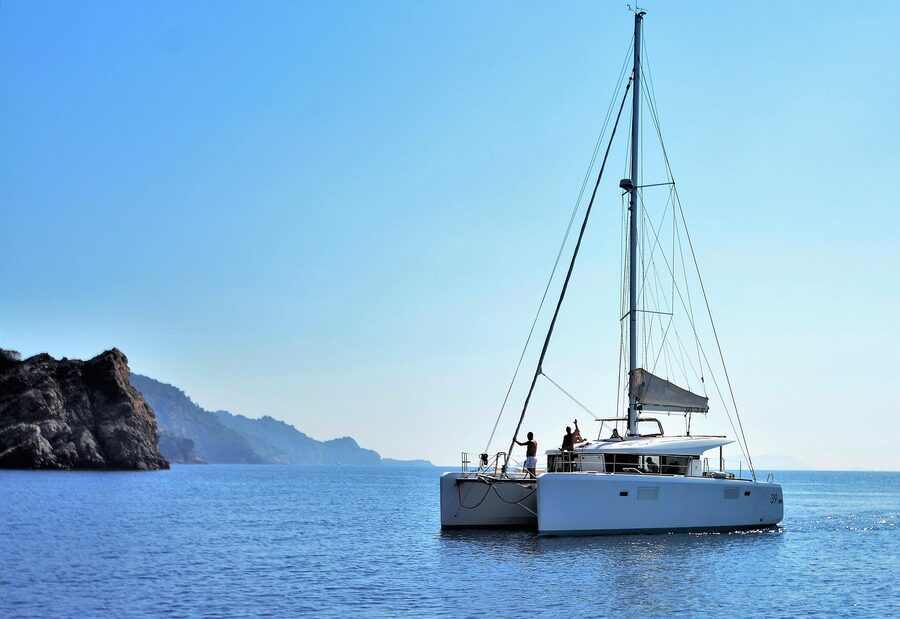
The best seats are the trampoline nets at the front of the catamaran. You lie right above the water, feel the spray, and get completely unblocked views of the coastline. They fill up in the first five minutes of boarding, so get there early. The upper deck is the second-best spot — more shade, elevated views, but further from the water.
Drinks are typically self-service from a bar area. Beer, sangria, soft drinks, and water are standard on all three cruises. The BBQ and party cruises usually add wine and basic cocktails. Don’t expect top-shelf spirits — this is a boat trip, not a lounge bar. The sangria is surprisingly good, though.
Most boats have basic toilet facilities on board. Not luxurious, but functional. Towels are not provided — bring your own, plus a dry bag or plastic bag for your electronics during the swim stop. Locker space is limited, so don’t bring valuables you’d worry about leaving on deck.
My Top Catamaran Cruises in Lloret de Mar
1. Catamaran Sailing Cruise with BBQ and Drinks — $59
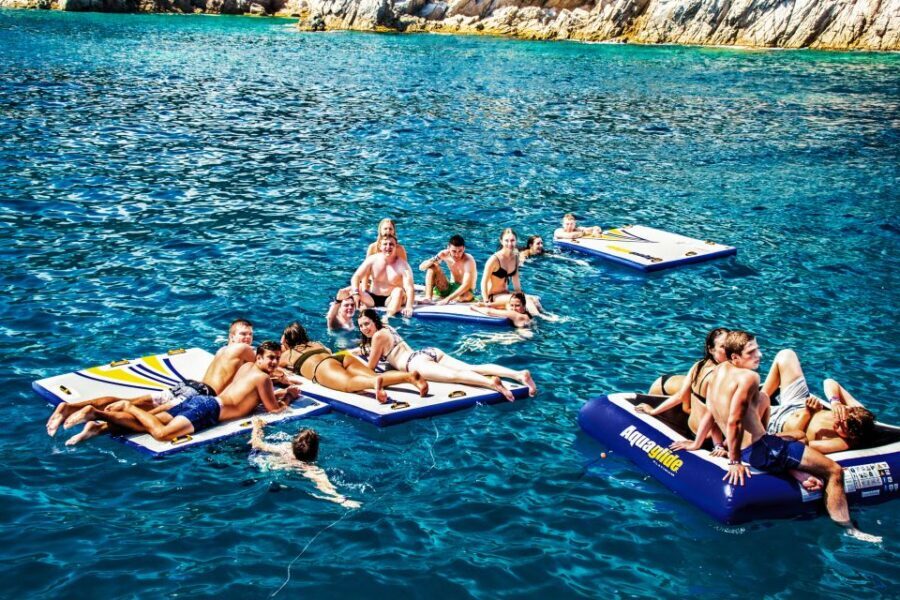
This is the one I’d book again without thinking twice. Four hours gives you enough time to actually relax — you sail, eat a proper BBQ on board, swim in a sheltered cove, and cruise back with a drink in hand. Our full review covers everything you need to know about what the BBQ includes and where the boat anchors. It’s the most booked option in Lloret by a wide margin, and after doing it I get why.
2. Sunset Catamaran Cruise with DJ and Drinks — $41
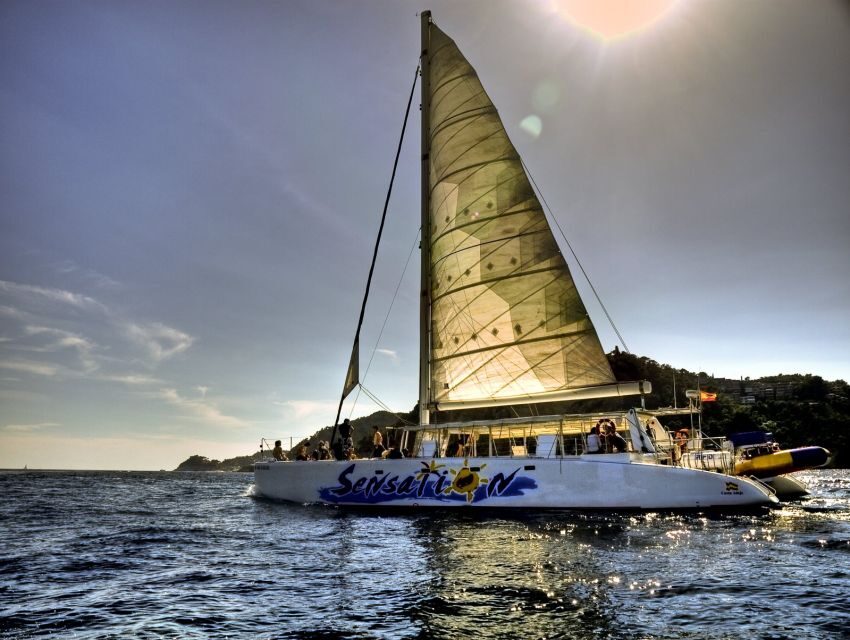
If you’re looking for a shorter, cheaper option that still delivers, this sunset cruise is hard to fault. Two hours with a DJ, unlimited drinks, and the golden-hour light hitting those Costa Brava cliffs. It’s less about the sailing and more about the social scene — our review breaks down what to expect including the music style and crowd. Perfect for your first or last evening in Lloret.
3. Catamaran Cruise with Food, Drinks, and Music — $57
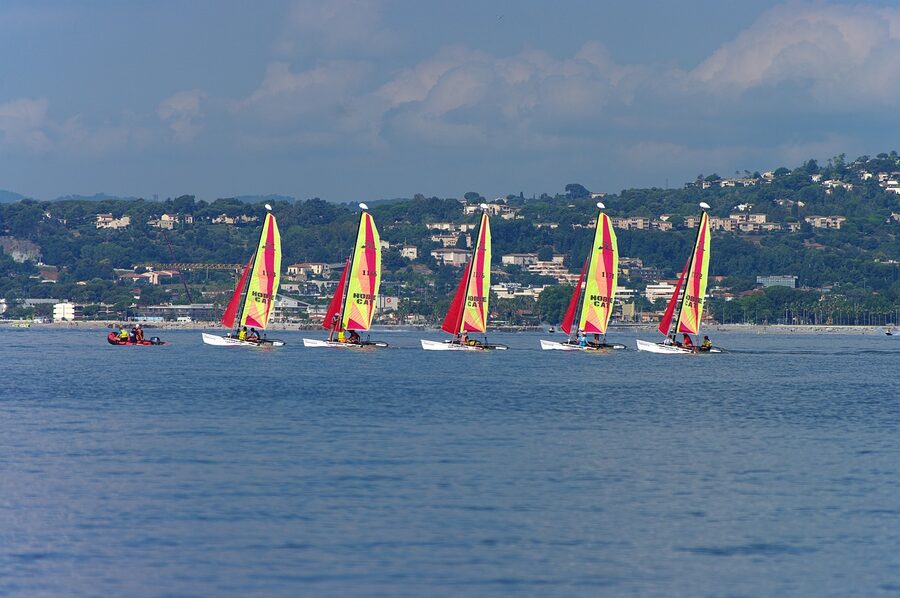
This is the liveliest of the three — food, unlimited drinks, a DJ, and an atmosphere that’s closer to a beach club than a sightseeing trip. Three hours is a good length for this kind of energy. It’s popular with groups in their twenties and thirties. Our review goes into the vibe and what food’s included. If you want the party, this is your boat.
Best Time to Book a Catamaran in Lloret de Mar
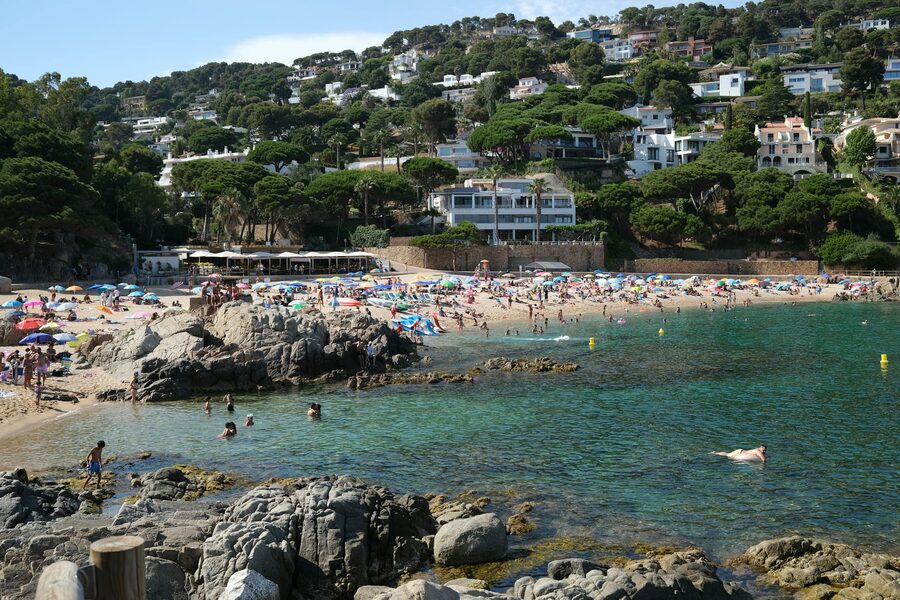
The catamaran season runs from roughly May through October, with the sweet spot being June through September. July and August are peak months — the water is warmest, the weather is most reliable, but the boats fill up fastest. Book at least a week ahead in high summer, especially for sunset cruises.
June and September are my favourite months for this. The water is still warm (22-24C), the crowds thin out noticeably, and prices sometimes drop slightly. May and October are a gamble — some days are beautiful, others are too windy or cool for swimming stops. The boats do cancel for rough seas, and you’ll get a refund if that happens.
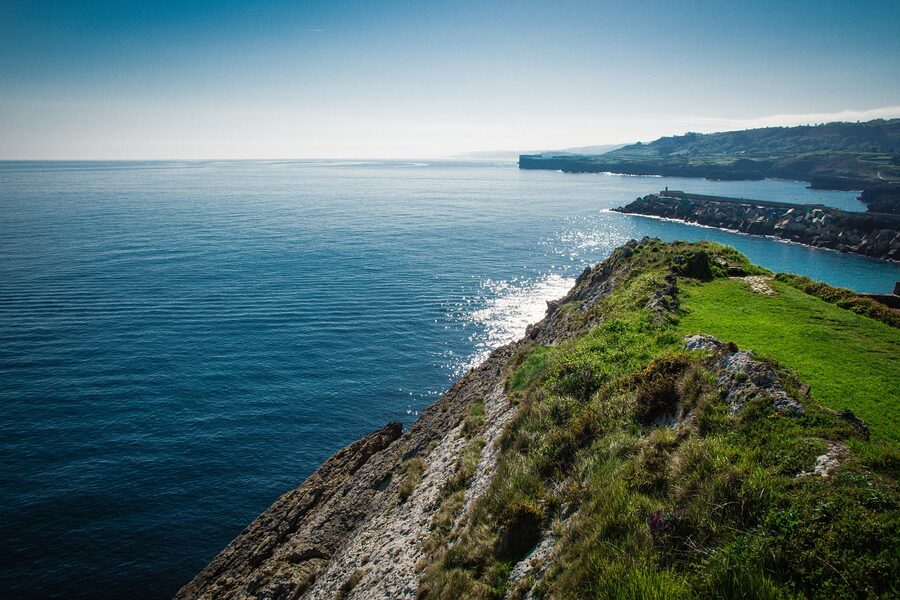
Morning departures tend to have calmer seas. Afternoon sailings get more wind, which is great for actual sailing but can make some people seasick. If you’re prone to motion sickness, pick the morning slot and take something preventive beforehand. The catamaran’s twin hulls make it more stable than a regular sailboat, but it’s not a bathtub — you’ll feel the waves.
Cancellation policies vary between operators, but most offer free cancellation up to 24 hours before departure. Check when you book. If the weather turns bad on the day, the operator will cancel and offer either a reschedule or full refund. I’ve seen boats go out in moderate chop that I personally wouldn’t have chosen — if you’re nervous about rough conditions, ask the operator about sea state before boarding.
Lloret de Mar: More Than a Party Town
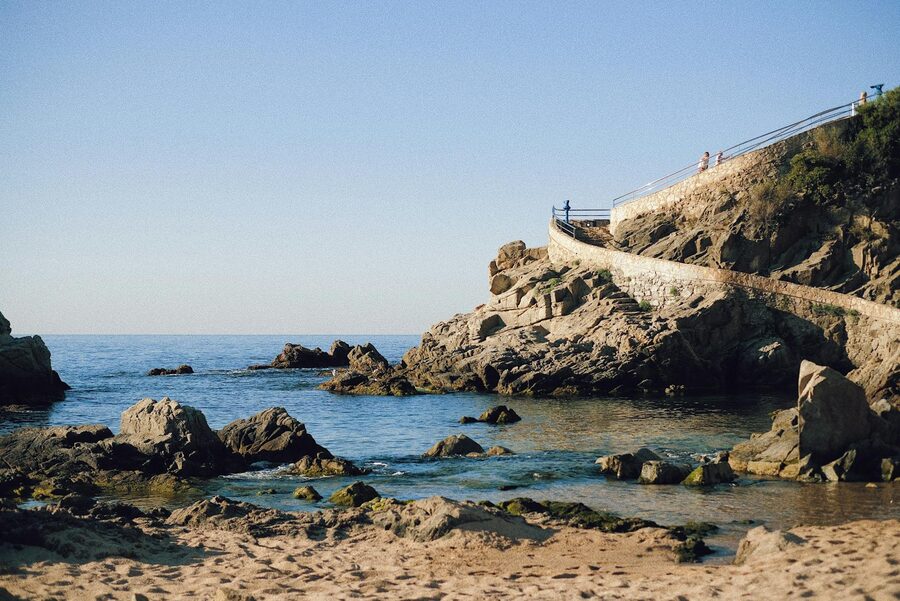
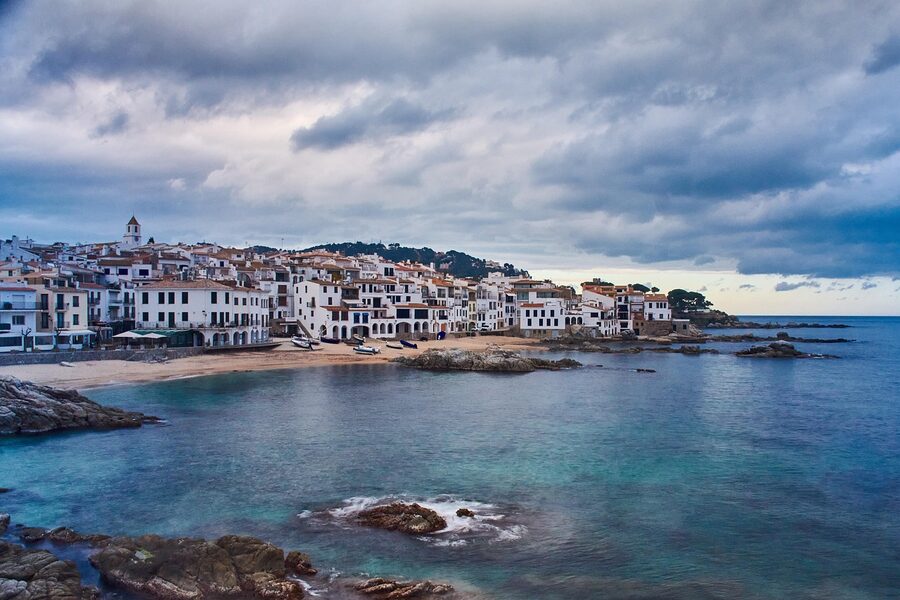
Most people know Lloret de Mar as a package holiday destination — and fair enough, the main strip has more than its share of British pubs and souvenir shops selling inflatable flamingos. But the town has a genuinely interesting history that most visitors never discover.
Lloret was a quiet fishing and cork-trading village until the 1960s package holiday boom completely transformed it. Before tourism arrived, the local economy ran on cork harvested from the forests above the coast — Catalonia was one of Europe’s biggest cork producers, and Lloret was a major shipping point. You can still see the grand houses that wealthy cork merchants built along the seafront, their ornate facades a reminder of a very different era.
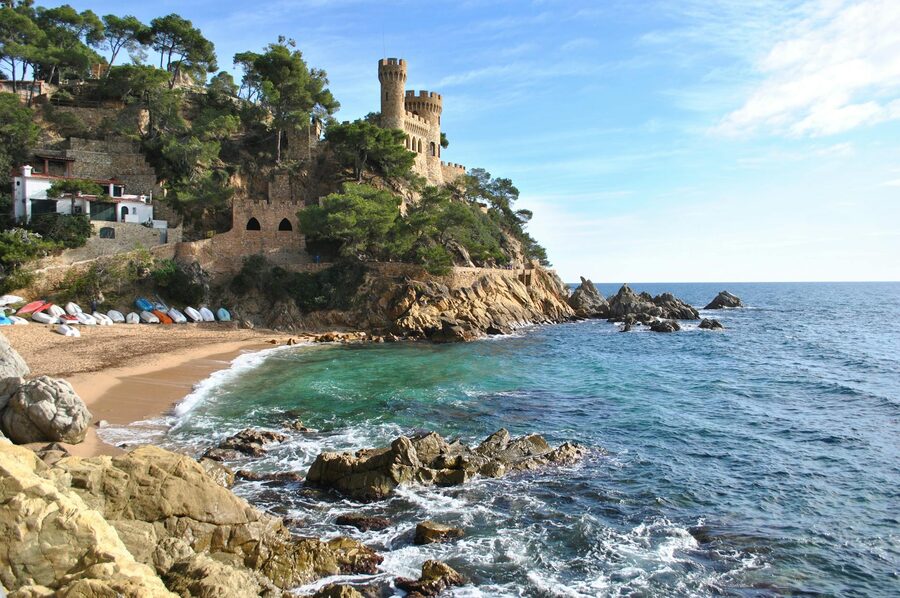
The parish church of Sant Roma is worth a look even if churches aren’t usually your thing. It has a Modernista facade added in 1914 by a student of Antoni Gaudi — colourful ceramic tiles and curved shapes that look wildly out of place on a medieval church. It’s a five-minute walk from the beach and free to enter.
Then there are the Gardens of Santa Clotilde, which is Lloret’s genuine surprise. Built in 1919, these Italian Renaissance-style gardens hang on the cliff edge above the sea. Cypress trees, geometric hedges, fountains, and views straight down to the water. It’s one of the Costa Brava’s best-kept secrets and costs around four euros to enter. Give it at least an hour.
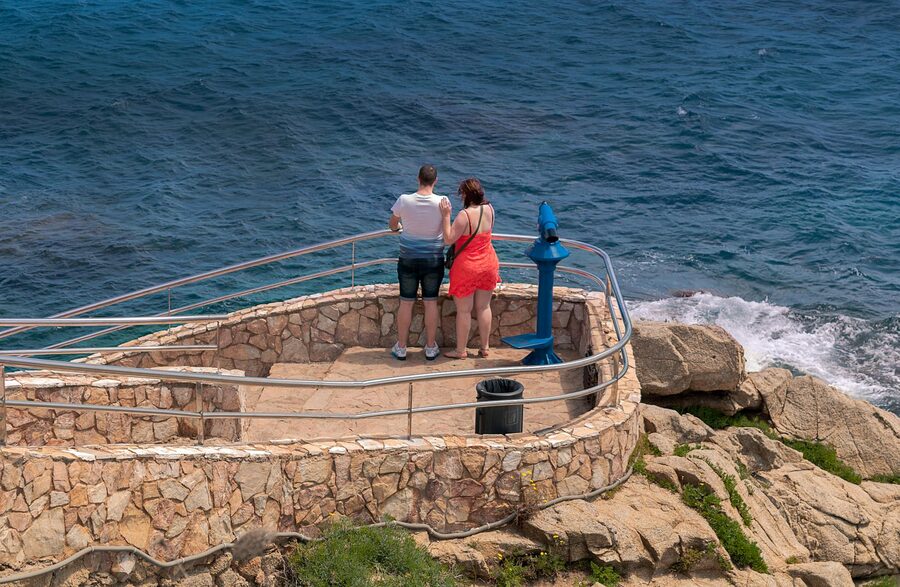
If you walk the Cami de Ronda coastal path from Lloret to the neighbouring beach of Fenals, you’ll pass a bronze statue of a woman looking out to sea. It’s called the Dona Marinera — the Fisherman’s Wife — and it commemorates the wives who waited for their husbands to come home from the sea. Touch her foot for good luck, or so the tradition goes. Half the people in Lloret don’t even know she’s there.
Getting to Lloret de Mar
Lloret de Mar sits about 75km northeast of Barcelona. If you’re coming from Barcelona, the most common options are the bus (Sagales runs a direct service from Barcelona Nord bus station, about 1 hour 20 minutes, around 12 euros) or a rental car (about an hour via the AP-7 motorway). There’s no train station in Lloret, which catches some people off guard.
If you’re flying in, Girona airport is closer — about 30km away. Barcelona El Prat is further but has far more international connections. Both airports have bus services to Lloret, though from Barcelona you’ll need to connect through the city centre or take a transfer service.
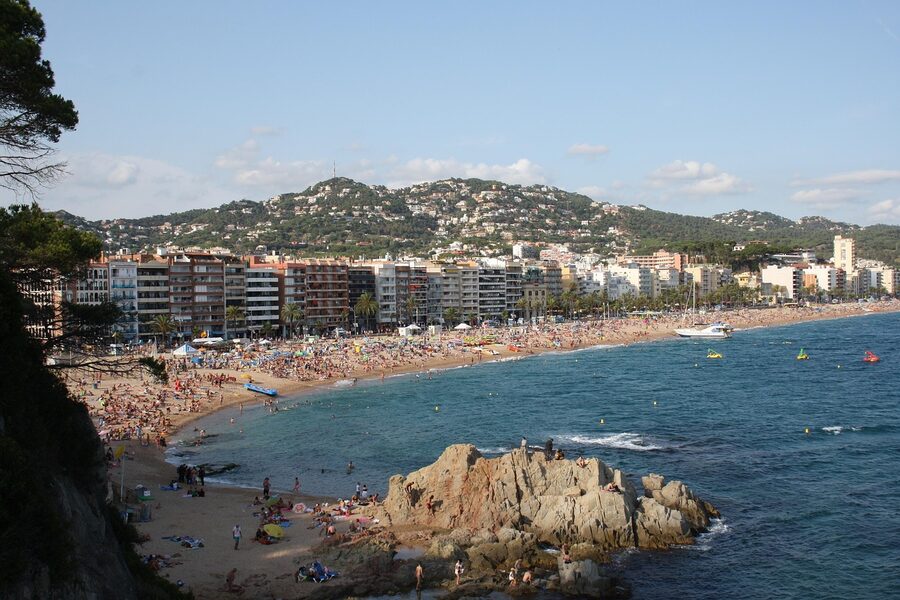
If you’re already on the Costa Brava — staying in Tossa de Mar, Blanes, or anywhere nearby — local buses connect the coastal towns frequently in summer. Tossa de Mar to Lloret is only about 20 minutes by bus. You could also take a kayak tour along the Costa Brava coast if you want to see the coastline from the water at a slower pace.
How Much Does a Catamaran Cruise Cost in Lloret de Mar?
Prices range from $41 to $59 per person, which includes everything you need for the day. Here’s what you’re actually getting for the money:
The $41 sunset cruise is two hours, drinks-only, with a DJ. It’s the cheapest option but also the shortest. Per-hour, it’s actually the most expensive of the three. Still, if your budget is tight and you want the catamaran experience, it’s a good choice — especially since the sunset itself is free and spectacular.
The $57 party cruise gives you three hours, food, unlimited drinks, and music. Better value per hour, and the food means you can skip lunch. The atmosphere is louder and more social.
The $59 BBQ cruise is four hours — the best value by far. That works out to under $15 per hour for a sailing trip with a barbecue lunch and open bar. Compare that to eating at a beachfront restaurant ($15-25 for lunch alone) plus booking a separate boat trip ($30-40), and you’re saving money while having a better time.
Children typically get a discounted rate. Under-3s are often free. Check the specific tour listing for exact pricing — it changes seasonally.
Tips from Someone Who’s Done This
Arrive 15 minutes early. The boats leave on time. If you’re five minutes late, you’ll watch your catamaran pulling away from the dock. It happens to someone on every sailing.
Sit on the nets. The trampolines at the bow of the catamaran are the best spots. You’re right above the water, you get the most breeze, and the views are unobstructed. They fill up in the first five minutes of boarding, so get there early.
The BBQ cruise is better value than it looks. $59 sounds like a lot until you do the maths — a restaurant lunch in Lloret costs 15-20 euros, drinks on the beach are 5-8 euros each, and a boat trip alone would run 30-40 euros. The BBQ cruise bundles all of that into four hours on the water.
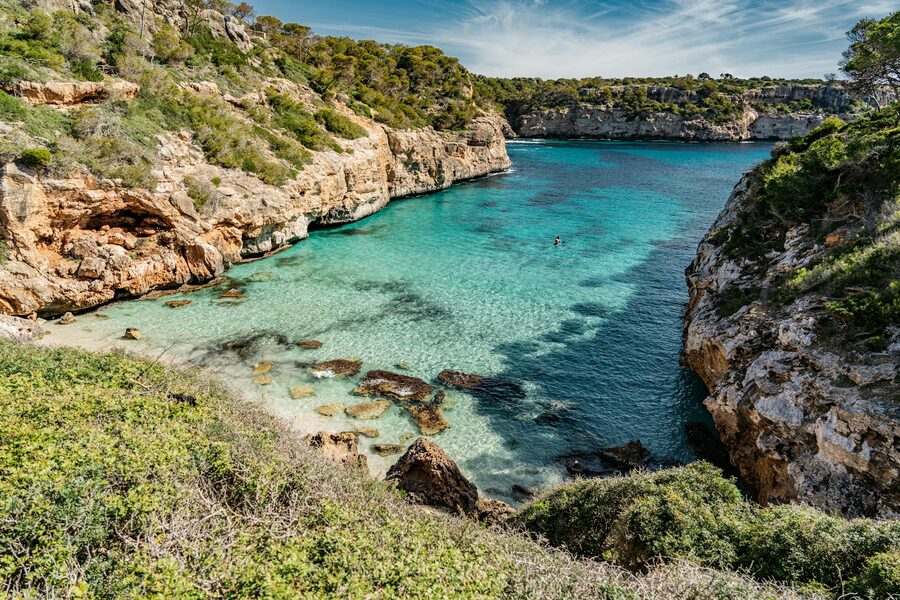
Don’t skip the swim stop. Some people stay on the boat during the swimming break. That’s a mistake. The coves where the catamarans anchor have the clearest water on the Costa Brava. You can see the bottom at 5-6 metres depth. Jump in.
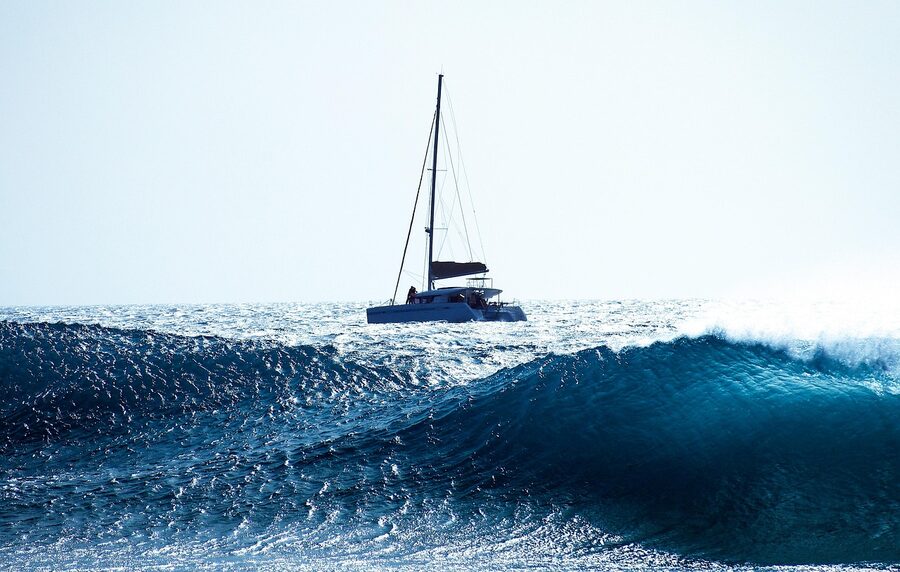
Seasickness is real but rare. The catamaran is stable, but if you’re sensitive, take something before boarding. Don’t rely on finding a calm day — the Mediterranean looks flat from shore but there’s usually some swell once you’re out.
Wear reef-safe sunscreen. You’ll be in the water in a pristine cove. Regular sunscreen washes off and damages the marine environment. It’s not a legal requirement in Spain yet, but it should be. Plus, reef-safe formulas tend to last longer in the water anyway.
Bring cash for extras. While the main drinks and food are included, some boats sell cocktails or premium spirits at extra cost. A few euros in cash saves the awkwardness of asking if they take cards (they usually don’t for on-board extras).
What Else to Do on the Costa Brava
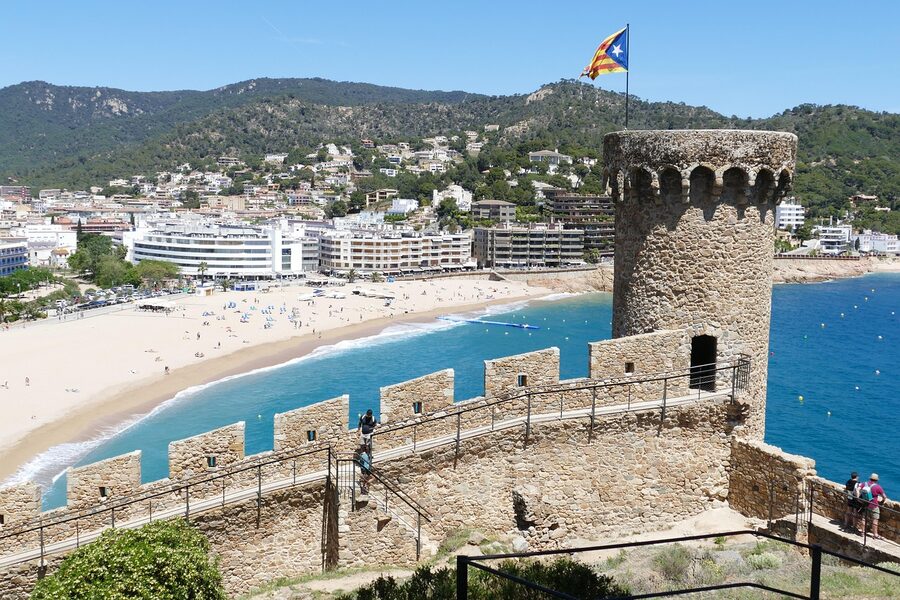
Lloret makes a great base for exploring the wider Costa Brava, and a catamaran cruise is just one way to experience this coastline. If you enjoy being on the water, a kayak tour along the Costa Brava gets you into the sea caves and tiny coves that even catamarans can’t reach — it’s more physical but incredibly rewarding.
Further south, the catamaran cruises in Malaga offer a similar on-the-water experience with a different stretch of Andalusian coastline. If you’re heading that way, pair it with a kayak tour in Nerja through some of the most dramatic cliff scenery in southern Spain. And for a complete change of pace, the day trip to Ronda from Malaga takes you into the Andalusian mountains for a completely different side of Spain.
Up north on the Basque coast, the boat tours in Bilbao show you a completely different side of Spain — green mountains instead of rocky cliffs, Atlantic swells instead of Mediterranean calm. It feels like a different country entirely, and the contrast is exactly why Spain rewards the traveller who moves beyond the beach resorts.
This article contains affiliate links. When you book through these links, we may earn a small commission at no extra cost to you. This helps us keep creating free travel guides.