
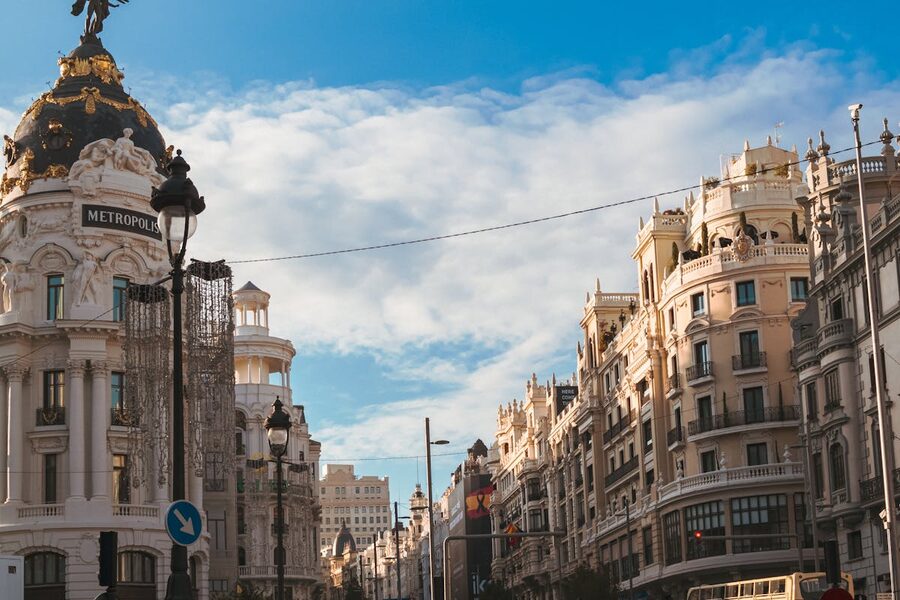
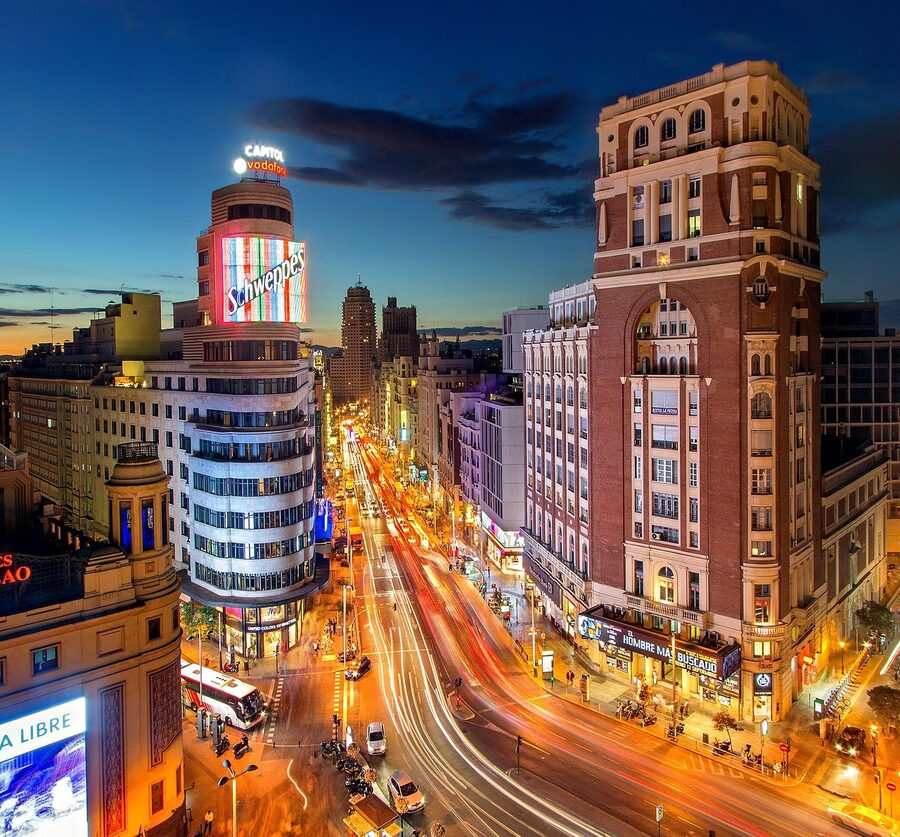
Three hundred buildings were demolished to create the Gran Via. Between 1910 and 1929, Madrid tore through an entire neighbourhood to build what would become its most famous boulevard — a project so ambitious and controversial that locals called it “the Great Work.” From the top deck of a panoramic bus, you can see the full sweep of it in about eight minutes.
That’s the pitch for a panoramic bus tour in Madrid. You sit on top, the city scrolls past, and someone explains what you’re looking at. It sounds lazy. It is lazy. But Madrid’s wide Bourbon boulevards were practically designed for this kind of thing — the Paseo del Prado alone became a UNESCO World Heritage Site in 2021, and you’d never appreciate its full 1.5-kilometre sweep on foot the way you can from an elevated seat at 20 km/h.
I’ll break down the different tour options, what each route covers, and which one is worth your time.
- In a Hurry? Here Are the Top Picks
- How the Panoramic Bus Works in Madrid
- What the Route Covers
- Route 1: Historic Madrid
- Route 2: Modern Madrid
- The Best Tours to Book
- 1. Madrid Panoramic Route City Tour —
- 2. Panoramic Open-Top Bus Night Tour —
- 3. Private Panoramic Tuk Tuk Tour — per group
- Who This Tour Is Actually For
- Day vs. Night — Which Tour to Pick
- When and Where to Board
- Madrid’s Boulevards — Built for Showing Off
- The Cibeles Fountain — Madrid’s Meeting Point (and Victory Lap)
- Practical Tips for the Bus Tour
- What Else to Do in Madrid
In a Hurry? Here Are the Top Picks
Best overall: Madrid Panoramic Route City Tour — $39 per person. Two routes covering all the major landmarks. Most popular option by a huge margin.
Best for night owls: Panoramic Open-Top Bus Night Tour — $28 per person. 1.5 hours with a live guide. Madrid lit up at night is a different city entirely.
Best private option: Private Panoramic Tuk Tuk Tour — $97 per group (up to 4). Smaller, more flexible, goes down streets the big buses can’t reach.
How the Panoramic Bus Works in Madrid
There are two types of panoramic bus tour in Madrid, and people mix them up constantly.
The first is a fixed-route panoramic tour — you get on, the bus drives a set circuit past the major sights with audio commentary, and you get off where you started. Takes 1-1.5 hours. These are the ones covered in this guide.
The second is a hop-on hop-off bus (we have a separate guide for those). Different product, different purpose. Hop-on hop-off is for getting around the city over a full day. Panoramic tours are for seeing the city in one efficient loop.
Why choose panoramic over hop-on hop-off? Three reasons: it’s cheaper, it’s faster, and you get commentary that flows as a narrative rather than broken-up stop announcements. If you just want to see Madrid’s highlights from above without the hassle of getting on and off at every stop, panoramic is the move.
What the Route Covers
The main panoramic tour (the one most people book) runs two routes.
Route 1: Historic Madrid
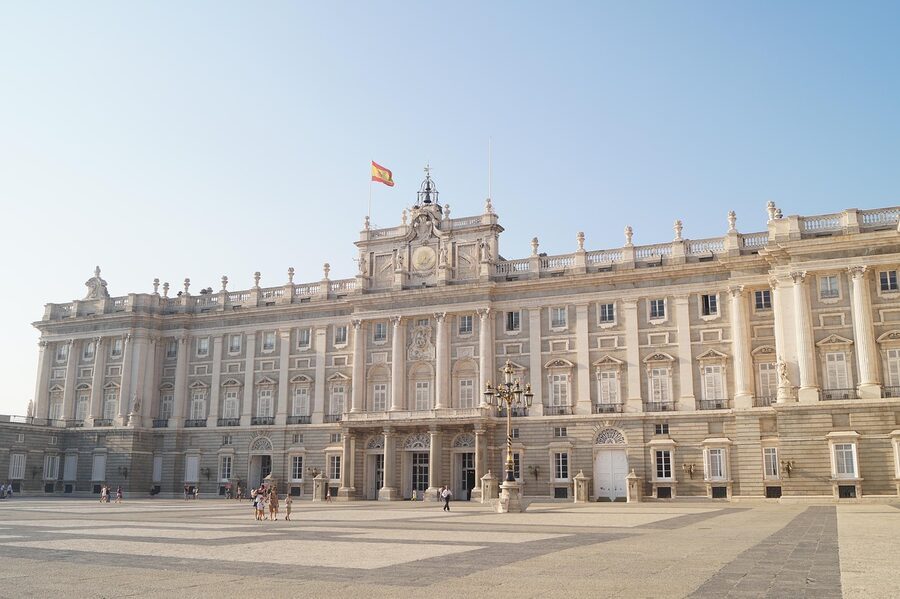
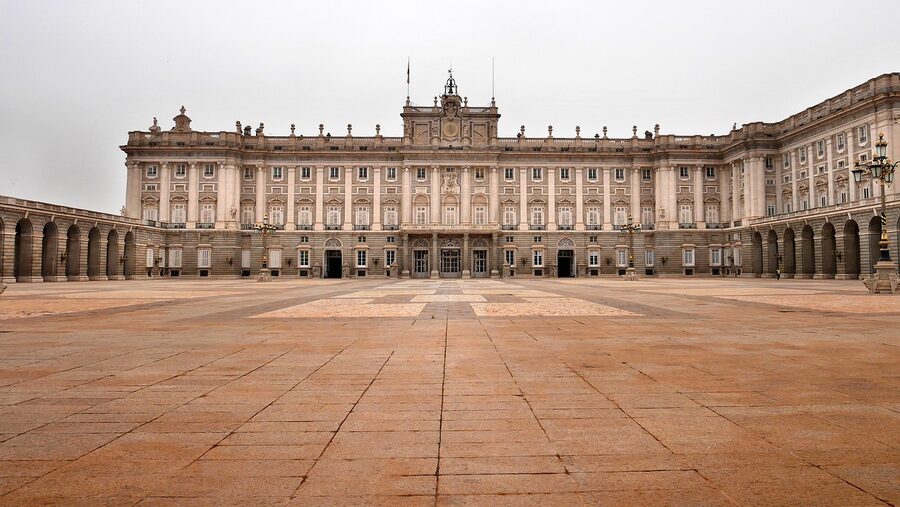
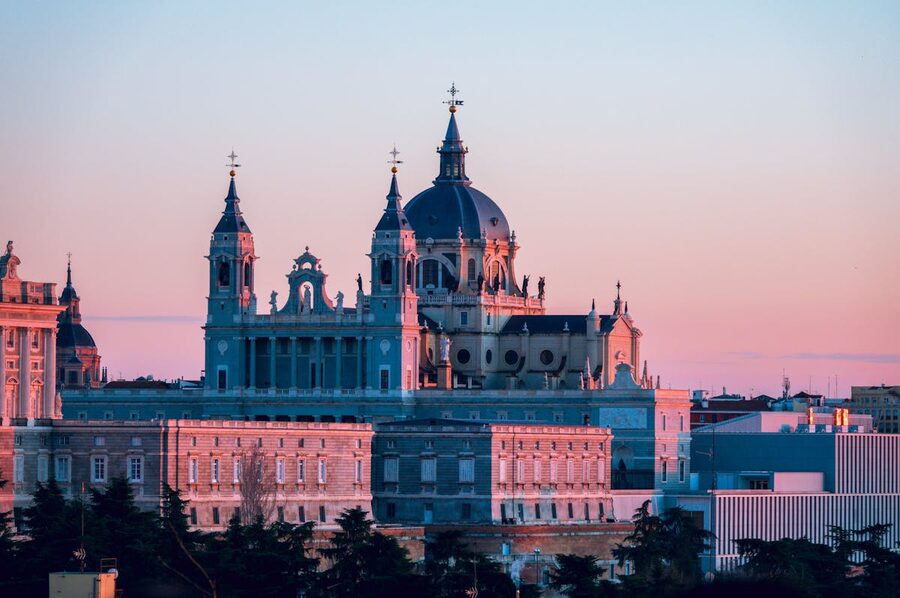
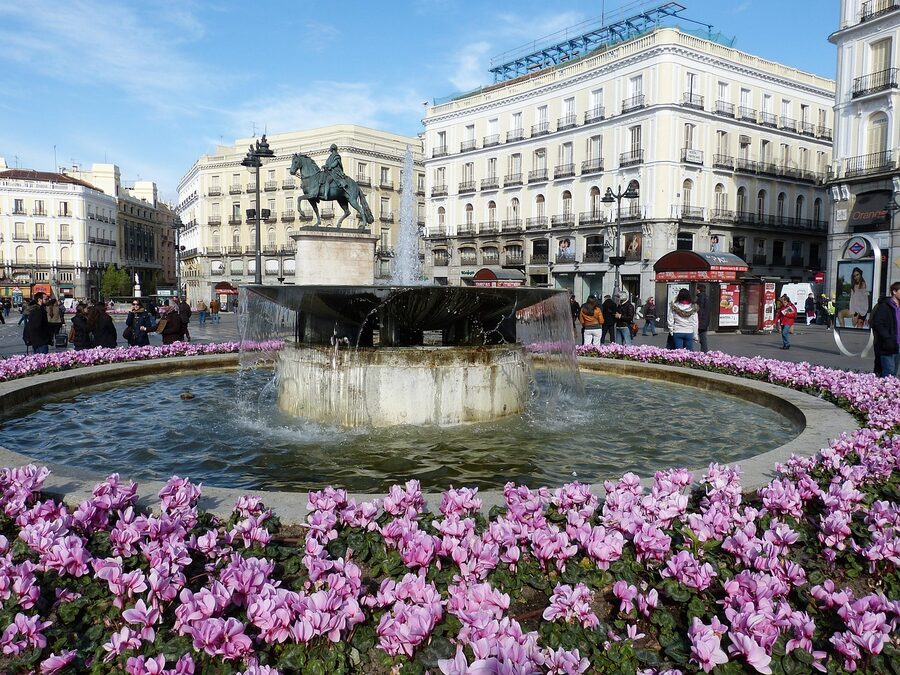
This covers the heavy hitters. The bus passes the Royal Palace (the largest royal palace in Western Europe by floor area — the Bourbons weren’t subtle), the Almudena Cathedral, Puerta del Sol, Plaza Mayor, the Prado Museum, and the Puerta de Alcala.
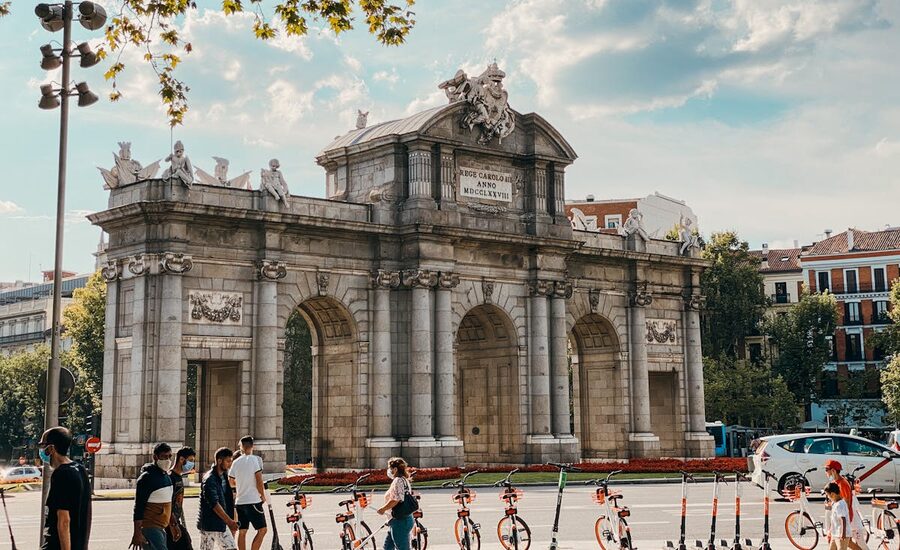
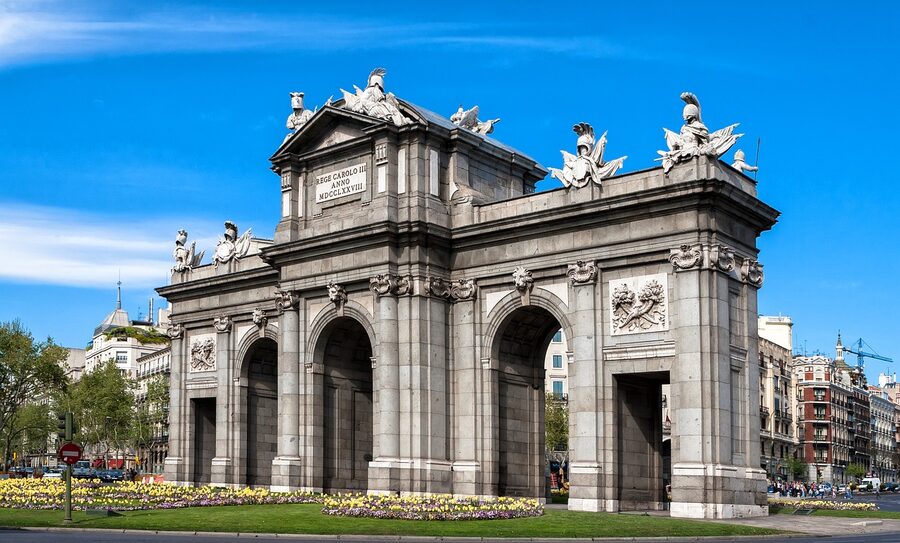
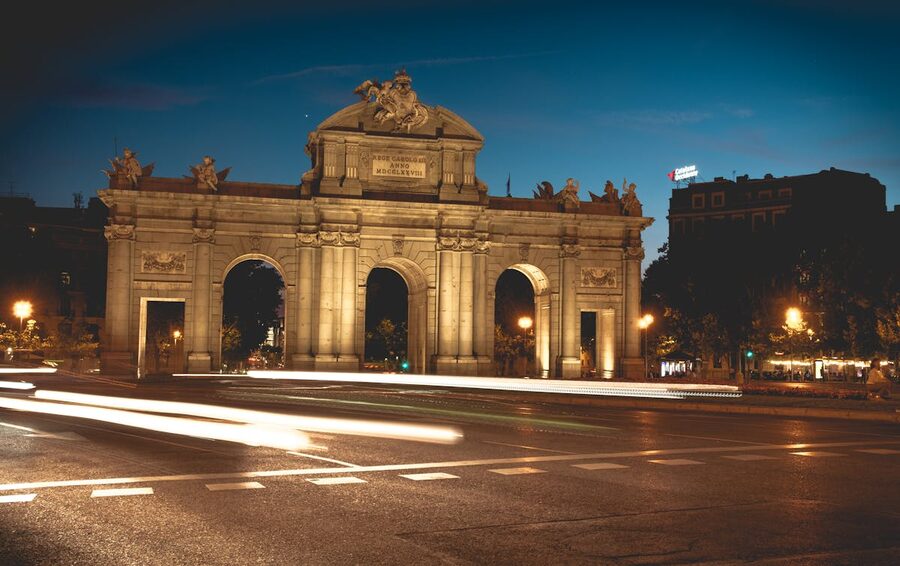
The Puerta de Alcala is worth special attention. Charles III commissioned it in 1778 as a triumphal gate — Madrid’s equivalent of the Arc de Triomphe, though it predates it by 28 years. It’s one of those landmarks that looks best from a distance, and the bus gives you exactly the right angle.
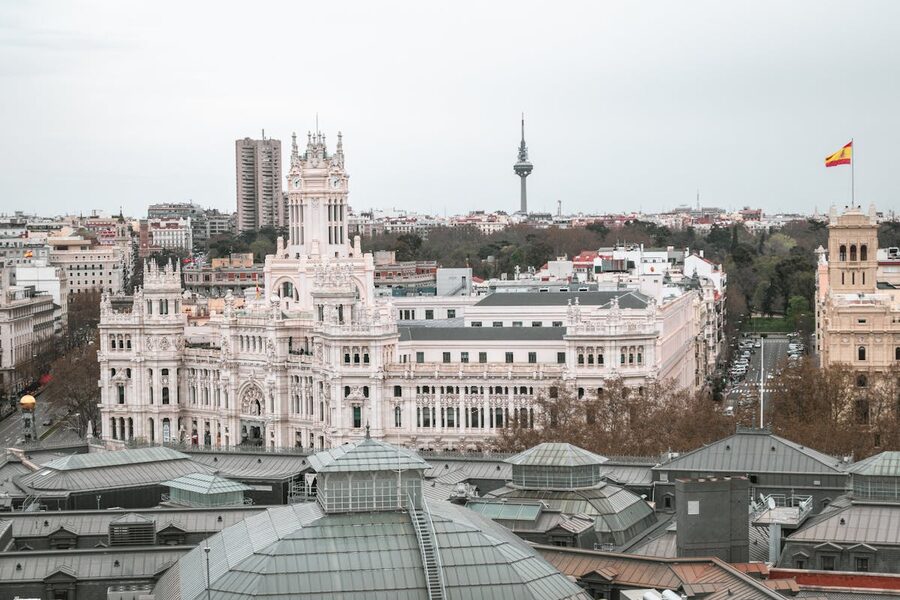
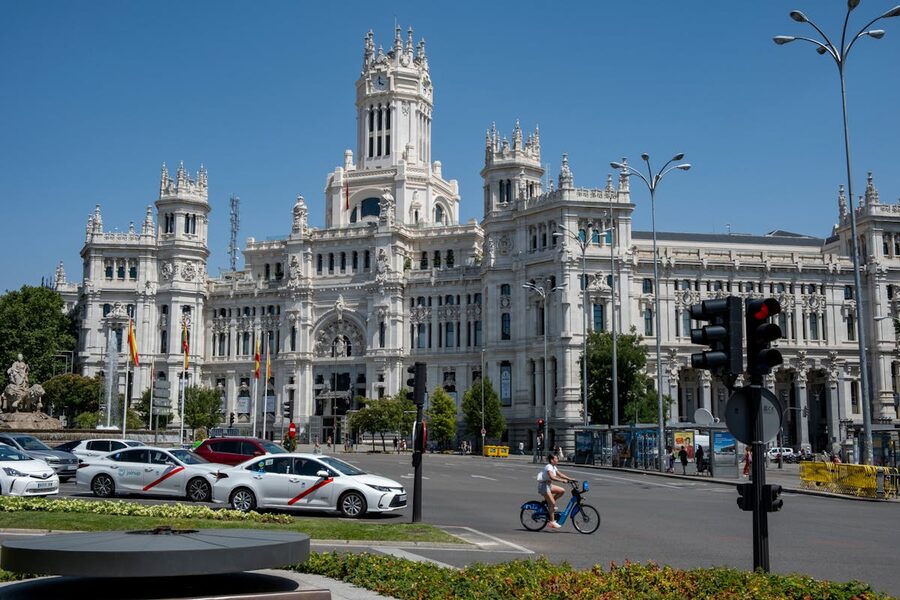
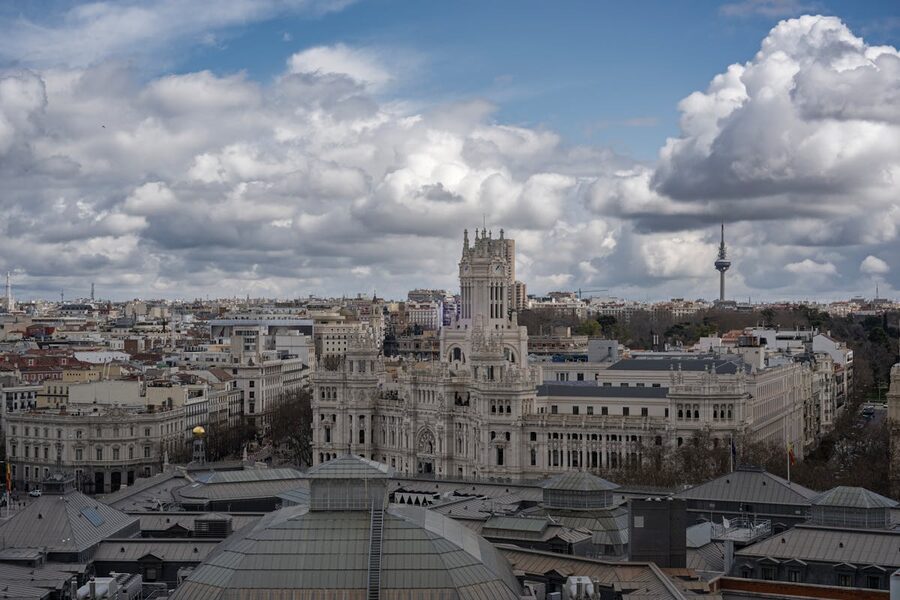
You’ll also pass the Cibeles fountain, which is basically the symbol of Madrid at this point. Real Madrid players come here to celebrate league and Champions League titles — the fountain gets a temporary blue-and-white scarf draped on it during celebrations. The city hall behind it (formerly the Post Office) is arguably the most beautiful government building in Europe.
Route 2: Modern Madrid
The second loop covers the Salamanca district, Paseo de la Castellana (Madrid’s main north-south artery), the Santiago Bernabeu stadium, and the business towers at Plaza de Castilla. It’s shorter and less interesting for first-time visitors, but gives you a sense of modern Madrid beyond the historical centre.
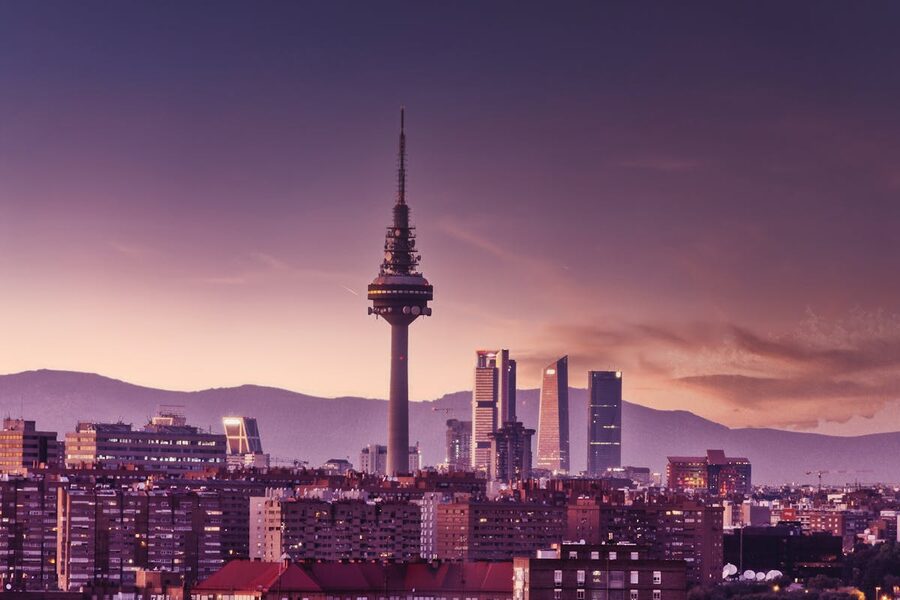
Most people find Route 1 more interesting. If you’re short on time, do Route 1 only. If you’ve got the full day ticket, do both — Route 2 takes about 40 minutes.
The Best Tours to Book
1. Madrid Panoramic Route City Tour — $39
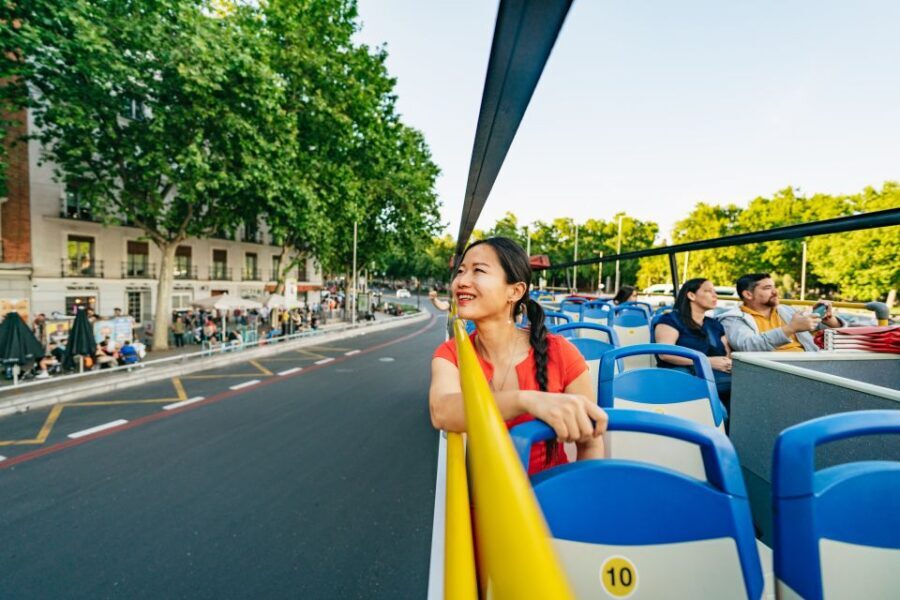
The most popular option and it’s easy to see why. Two routes, audio guide in multiple languages, and a 1-2 day ticket that lets you ride both loops. The buses run frequently (every 15-20 minutes) and cover every major landmark in the city. Our detailed review covers exactly what each route includes and the best time of day to ride. At $39 for up to two days of access, it’s solid value for a first-timer orientation.
2. Panoramic Open-Top Bus Night Tour — $28
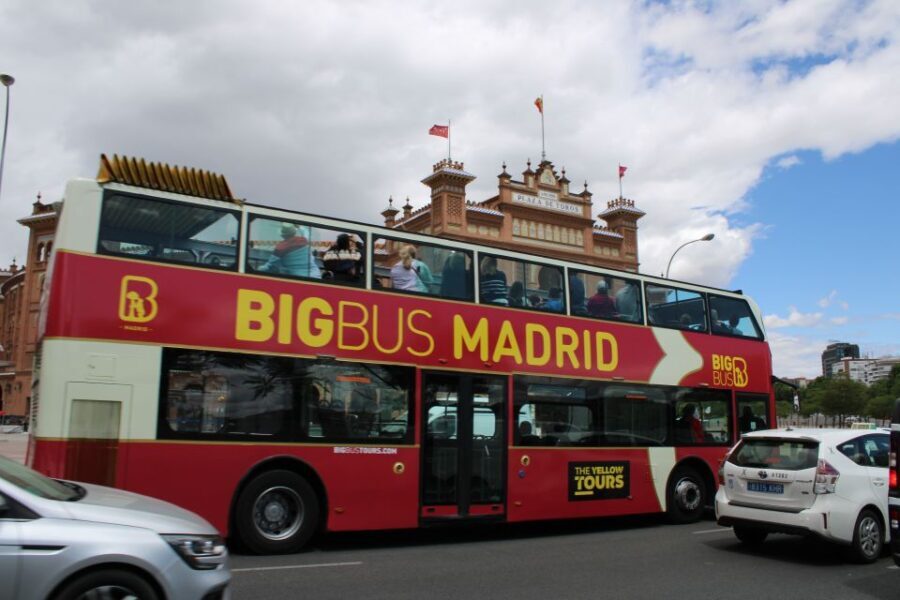
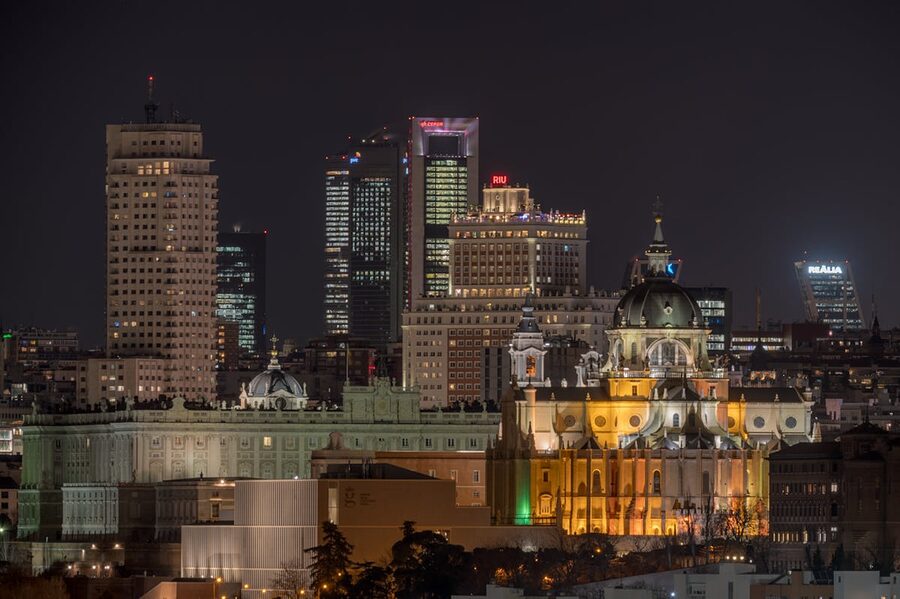
This is the underrated pick. Madrid at night is a completely different experience — the Royal Palace lit up in gold, the Gran Via neon reflecting off the bus windows, the Cibeles fountain glowing white against the dark. The 1.5-hour loop comes with a live guide (bilingual Spanish/English) instead of an audioguide, which makes the commentary feel more personal. Our review explains what the night experience adds over the daytime tour. At $28, it’s cheaper than the day tour and arguably more memorable.
3. Private Panoramic Tuk Tuk Tour — $97 per group
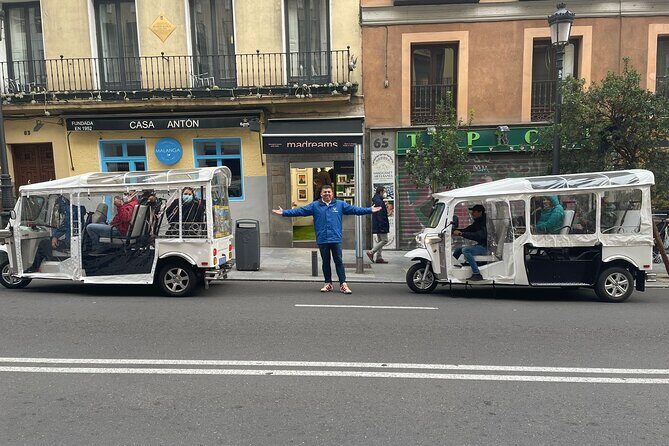
If the idea of a 50-person double-decker bus doesn’t appeal, this is the alternative. A private tuk tuk with a driver-guide who takes you through the historic centre on a route you can customise. It covers 1-2 hours, goes down side streets the big buses can’t fit through, and you can stop wherever you want. For a group of 3-4, the per-person cost drops to about $25 — less than the big bus. Our review breaks down the route and what to expect.
Who This Tour Is Actually For
Let me be direct. The panoramic bus isn’t for everyone.
If you’re a serious walker who wants to discover Madrid street by street, you don’t need this. Madrid is one of the most walkable capitals in Europe — the centre is compact and the metro fills any gaps. A walking tour will give you more depth.
But the panoramic bus is excellent for:
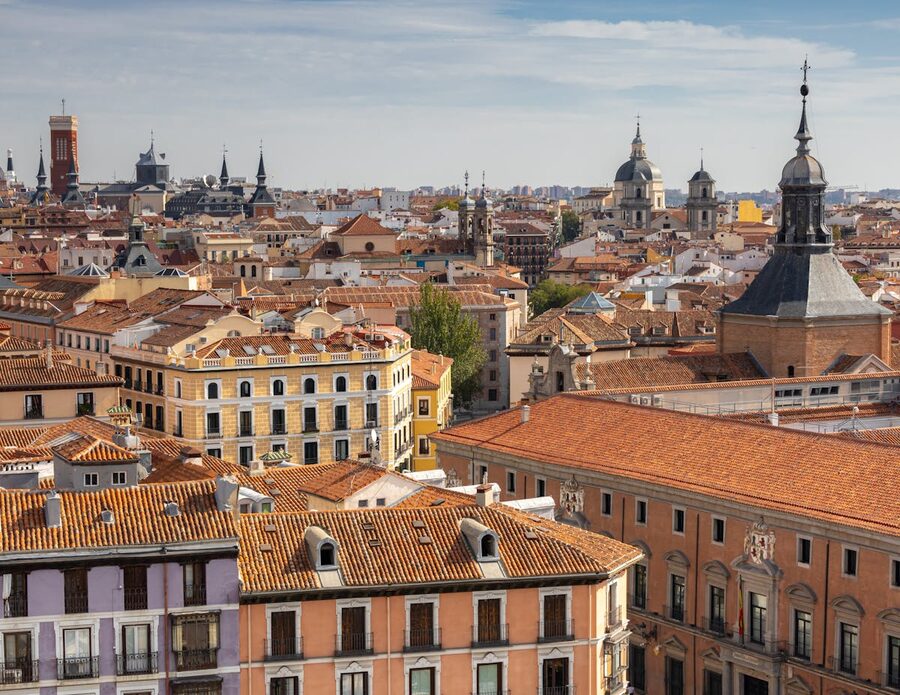
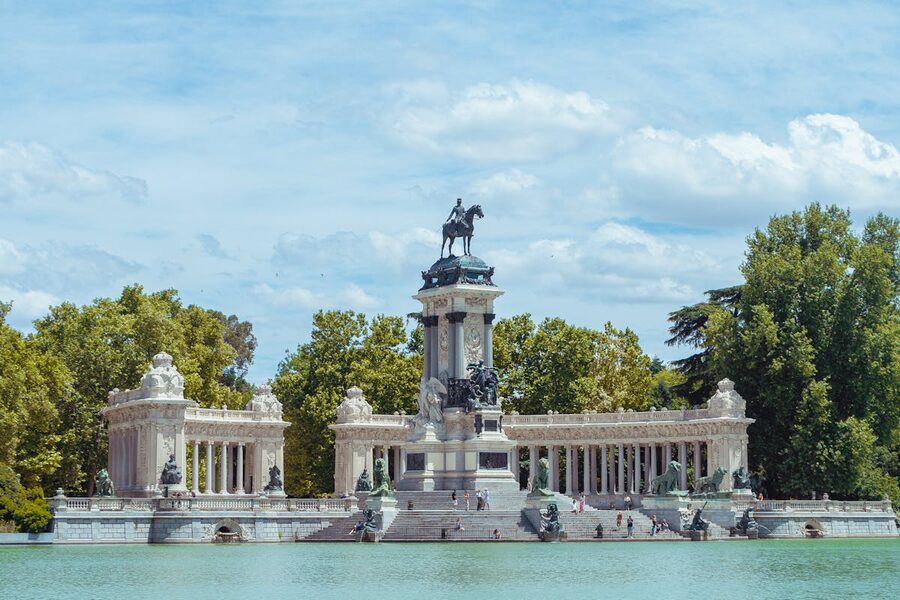
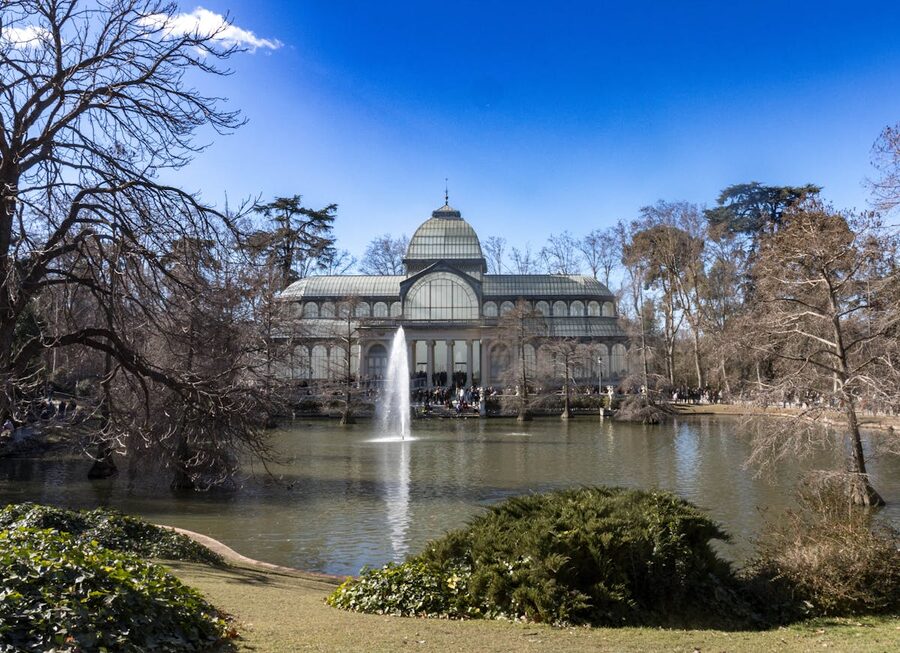
First-timers who want orientation. You’ll understand Madrid’s geography in 90 minutes — where the palace sits relative to the Prado, how Gran Via connects to Sol, why Retiro Park feels like the city’s lungs. That mental map makes every subsequent day better.
People with limited mobility. Madrid is hilly and the pavements can be uneven, especially in the old centre. The bus lets you see everything from a comfortable seat.
Families with kids. Small children don’t care about historical context. They care about sitting on top of a double-decker bus. The top deck buys you 90 minutes of easy parenting while also seeing the city.
Hot summer days. Madrid regularly hits 40°C in July and August. Walking for hours in that heat is genuinely miserable. The bus creates its own breeze as it moves, and the air conditioning on the lower deck is a lifeline.
Day vs. Night — Which Tour to Pick
This depends entirely on when you’re visiting and what you value.
The daytime tour gives you better photos, clearer views of architectural details, and the full two-route experience. You’ll see things like the roofline of the Royal Palace, the tile work on the Plaza Mayor facades, and the sculptures on the Puerta de Alcala that disappear in the dark. If it’s your first time in Madrid and you want orientation, go daytime.
The night tour trades detail for atmosphere. Madrid after dark has a completely different energy — the streets are busier (this is Spain, dinner starts at 10pm), the buildings are dramatically lit, and the live guide adds personality that an audioguide can’t match. It’s also $11 cheaper.
My honest take? If you can only do one, do the night tour. It’s more memorable and the live guide makes it a better experience. If you have two evenings in Madrid, do the day tour on your first day for orientation, then the night tour on your second day for the atmosphere.
When and Where to Board
Departure points vary by operator, but most leave from near Gran Via or Calle Felipe IV (near the Prado Museum). Check your specific booking for the exact meeting point.
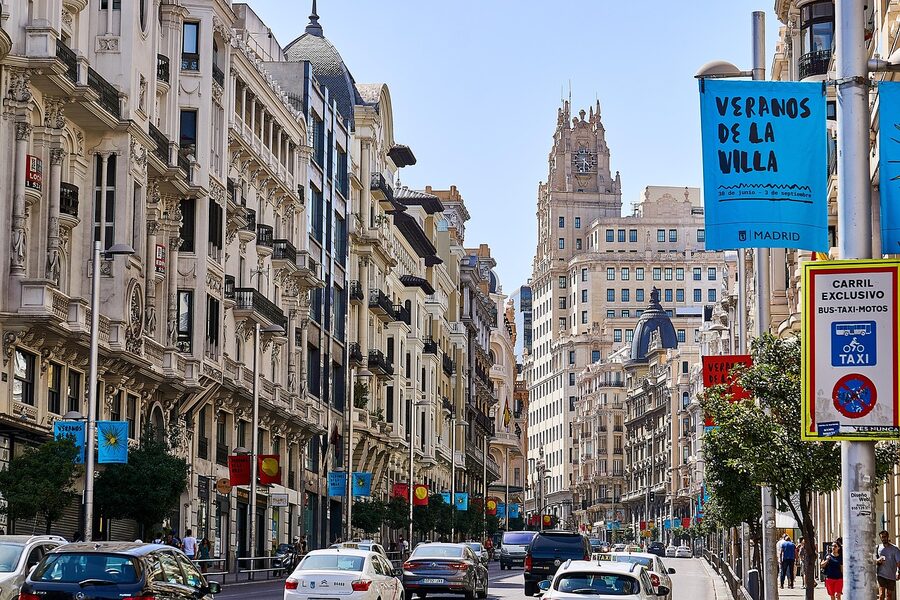
Best time for the daytime tour: Late afternoon (4-5pm), when the light is warm and the worst of the midday heat has passed. Morning departures (10-11am) are less crowded but the light is harsher for photos.
Best time for the night tour: Summer tours usually depart around 9:30pm (perfect timing — it gets dark around 10pm in June). Winter departures are earlier, around 7pm.
Weather: The top deck is open. In summer, bring sunscreen and water. In winter, bring a jacket — Madrid sits at 650 metres elevation and gets genuinely cold after dark. If it rains, you’ll be moved to the lower deck with covered windows.
Sit on the right side (facing forward) for Route 1 — most landmarks are on that side. The front row fills up first, so board early if you want it.
Madrid’s Boulevards — Built for Showing Off
There’s a reason Madrid works so well for panoramic tours. The city’s wide boulevards were a deliberate choice by the Bourbon dynasty in the 18th century.
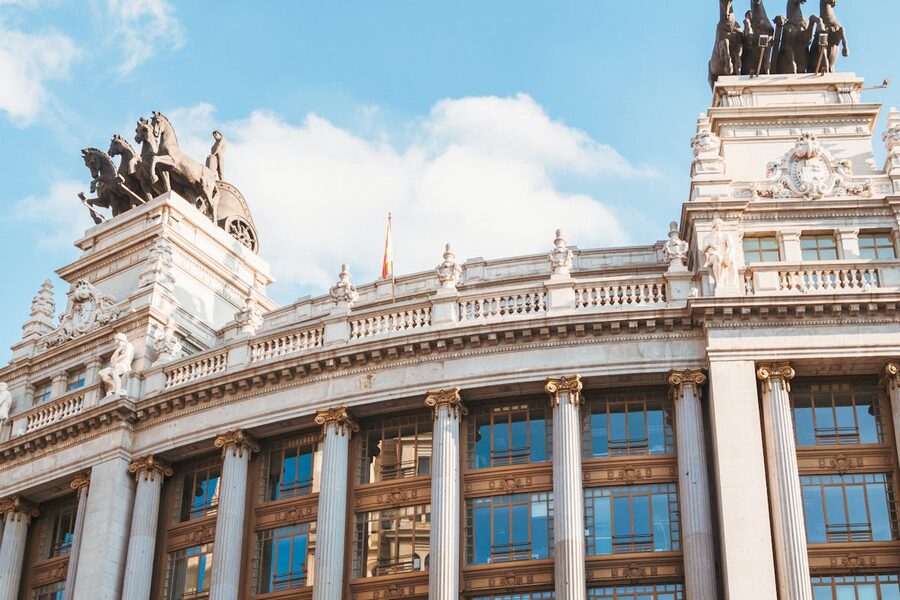
When Charles III became king in 1759, he found Madrid cramped and medieval — nothing like the Naples he’d just come from. He ordered a massive urban renovation that created the Paseo del Prado, the Botanical Gardens, and the Puerta de Alcala. The idea was simple: wide tree-lined avenues flanked by monumental buildings, designed to be seen while moving. These weren’t pedestrian streets — they were processional routes for carriages and cavalry.
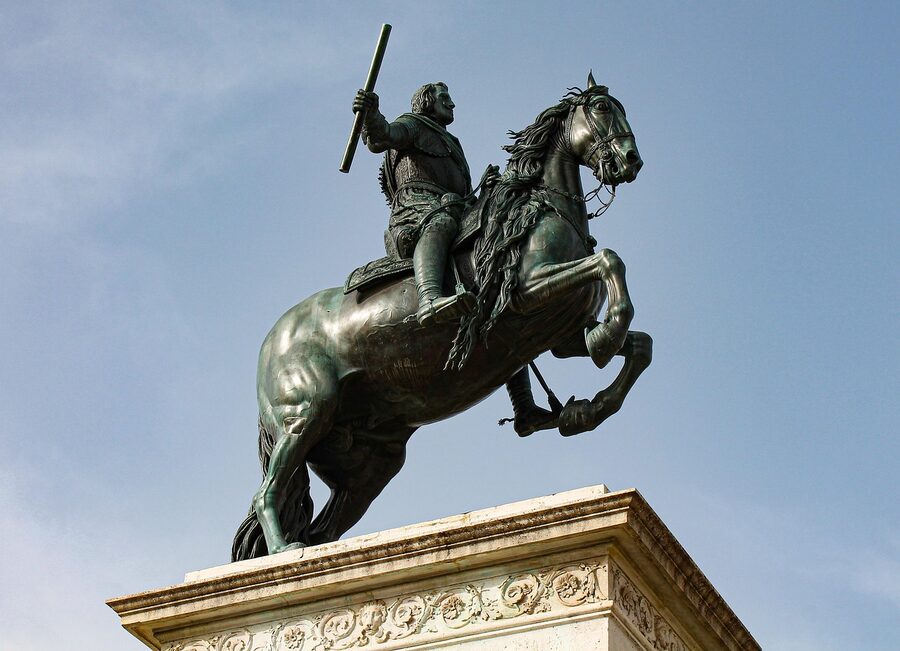
The Paseo del Prado — now a UNESCO World Heritage Site as part of the “Landscape of Light” designation (awarded 2021) — connects the Prado, Thyssen, and Reina Sofia museums in a cultural corridor that no other European city can match. From a panoramic bus, you pass all three in about five minutes. On foot, the same stretch takes 20 minutes and you miss the forest for the trees.
The Gran Via came later — a 20th century addition that razed a medieval quarter to create Madrid’s answer to Broadway. Construction started in 1910 and took nearly 20 years, displacing thousands of residents. The resulting boulevard is a showcase of early 20th century architecture: Beaux-Arts, Art Deco, and Spanish Baroque Revival buildings competing for attention on every block.
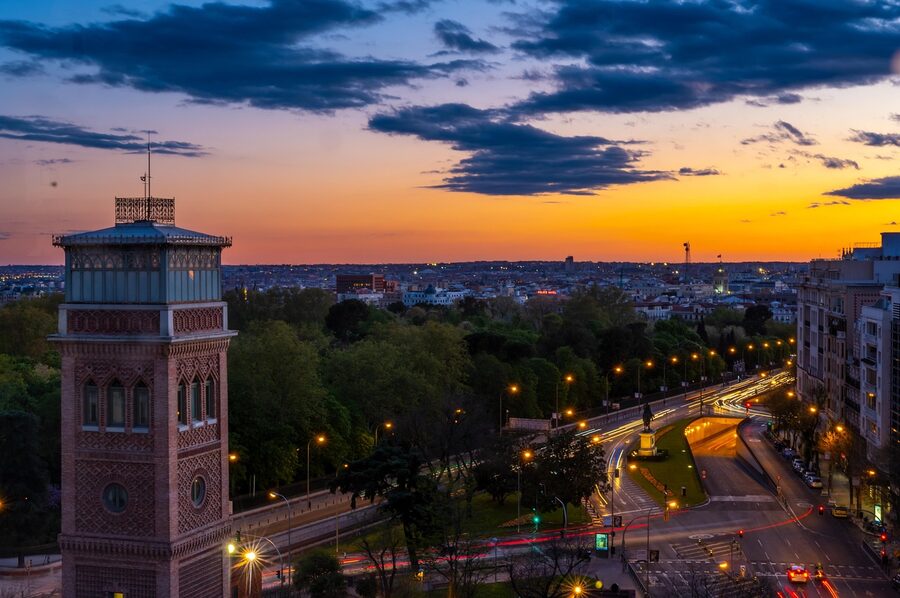
The Cibeles Fountain — Madrid’s Meeting Point (and Victory Lap)
Every panoramic route passes the Cibeles fountain, and the guide will mention it, but here’s the part they usually skip.
The fountain was sculpted by Francisco Gutierrez in 1782 and depicts the goddess Cybele riding a chariot pulled by two lions. It was originally a functional water source — one of the public fountains that supplied Madrid’s growing population. The water came from an underground viaje de agua (water channel) that had been bringing water to the city since the 16th century.
The Real Madrid celebration tradition started in the 1980s and has become the defining image of the fountain worldwide. After winning a major title, the team captain climbs up and drapes a scarf and flag on the goddess. Atletico Madrid, not to be outdone, celebrates at the Neptune fountain — just 500 metres down the same boulevard. The two fountains facing each other on the Paseo del Prado, each claimed by a rival club, is peak Madrid rivalry.
Practical Tips for the Bus Tour
Book online. Walk-ups are possible but tours do sell out, especially the night tour on weekends. Online booking guarantees your spot and sometimes costs a euro or two less.
Charge your phone. You’ll want photos from the top deck. Some buses have USB charging ports, but don’t count on it.
Don’t confuse panoramic with hop-on hop-off. Panoramic means you stay on the bus. If you want to get off at stops and explore, you need a hop-on hop-off ticket instead.
Pair it with a walking tour. The bus gives you the big picture. A walking tour in Madrid fills in the details. Do the bus first (day 1 orientation), then walk specific neighbourhoods (day 2 deep dive).
Accessibility: Most panoramic buses are wheelchair accessible on the lower deck. Check with the specific operator when booking.
Summer warning: The top deck has no shade. If you’re doing a daytime tour between June and September, bring a hat and sunscreen. I’ve seen people finish the tour looking like lobsters because they forgot they were sitting in direct Mediterranean sun for 90 minutes.
Audio guide languages: The main panoramic tour offers commentary in 14 languages. The night tour has a live bilingual guide (Spanish and English). If you need another language, stick with the daytime tour.
What Else to Do in Madrid
The panoramic bus is a great first-day activity, but Madrid has far more depth than what you see from the top deck. If the Royal Palace caught your eye from the bus, go inside — the throne room alone justifies the entrance fee. For food, the tapas tours take you to places the bus can’t reach — tiny bars in Lavapies and La Latina where the tortilla is still made to order. The Toledo day trip is Madrid’s most popular excursion for good reason — a medieval walled city just 30 minutes away by high-speed train. And if you want more bus-based touring, the Avila and Segovia day trip covers two UNESCO cities in a single day. For nightlife orientation, the Madrid pub crawl shows you the bars that locals actually go to — not the tourist traps near Sol.
This article contains affiliate links. If you book through our links, we earn a small commission at no extra cost to you. This helps us keep producing detailed travel guides.