
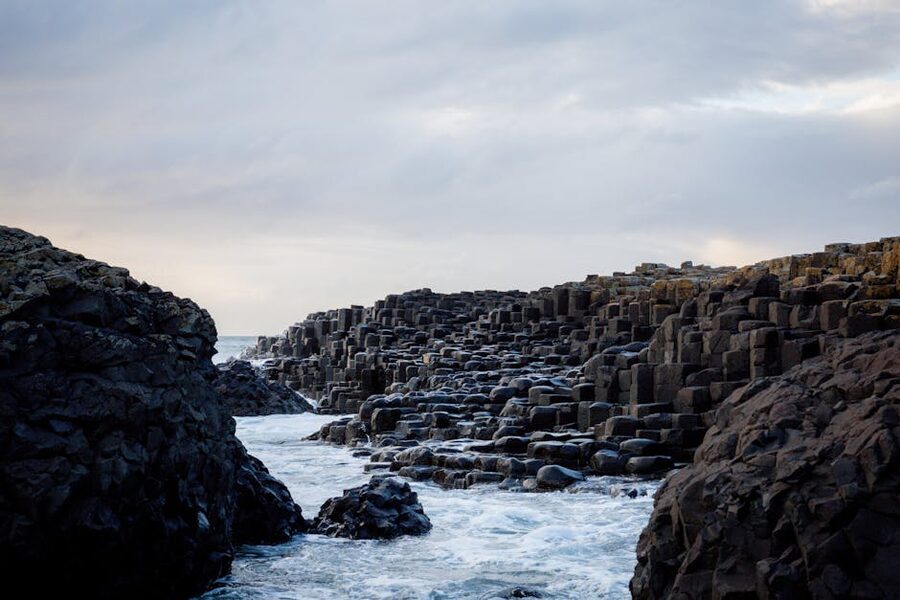
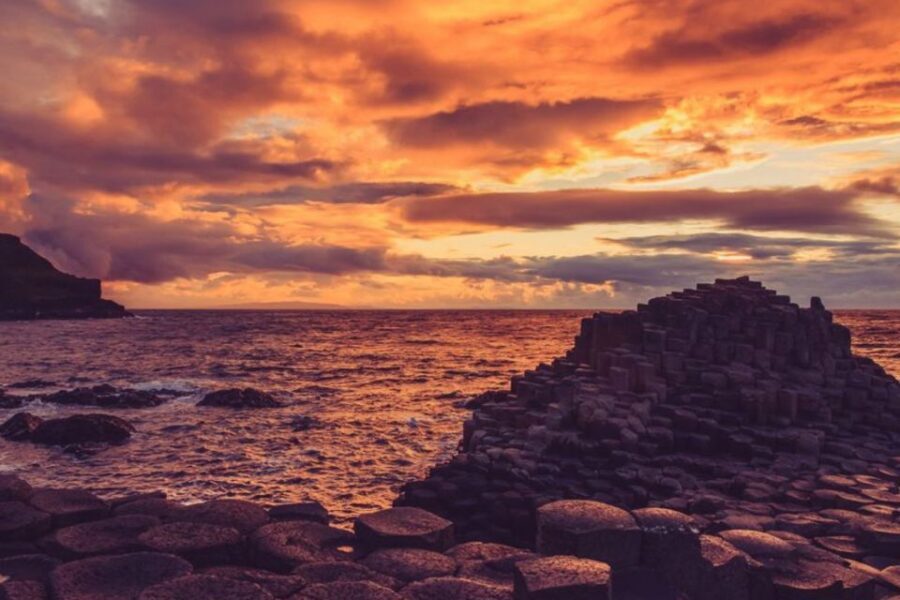
Irish legend says the Giant’s Causeway was built by a giant called Finn McCool to walk across the sea to Scotland and fight a rival. Geology disagrees — it’s 40,000 interlocking basalt columns formed by cooling lava 60 million years ago. Both stories are wrong about how you actually get there today, which is on a tour bus from Dublin or Belfast.
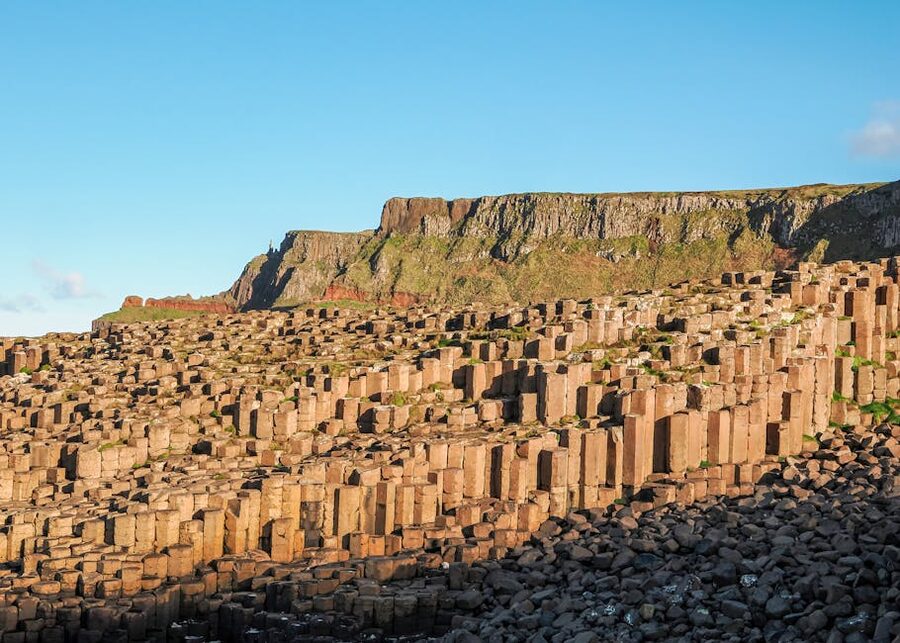
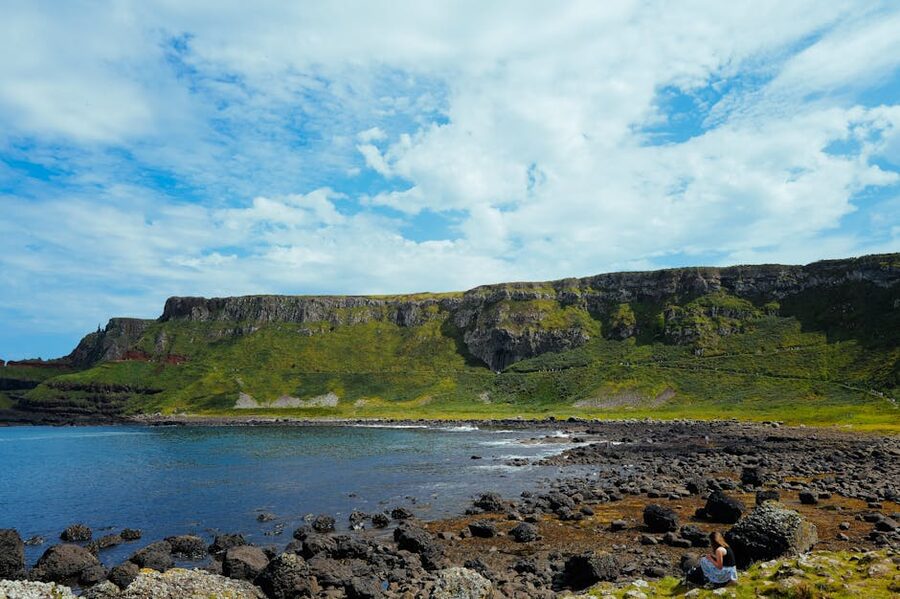
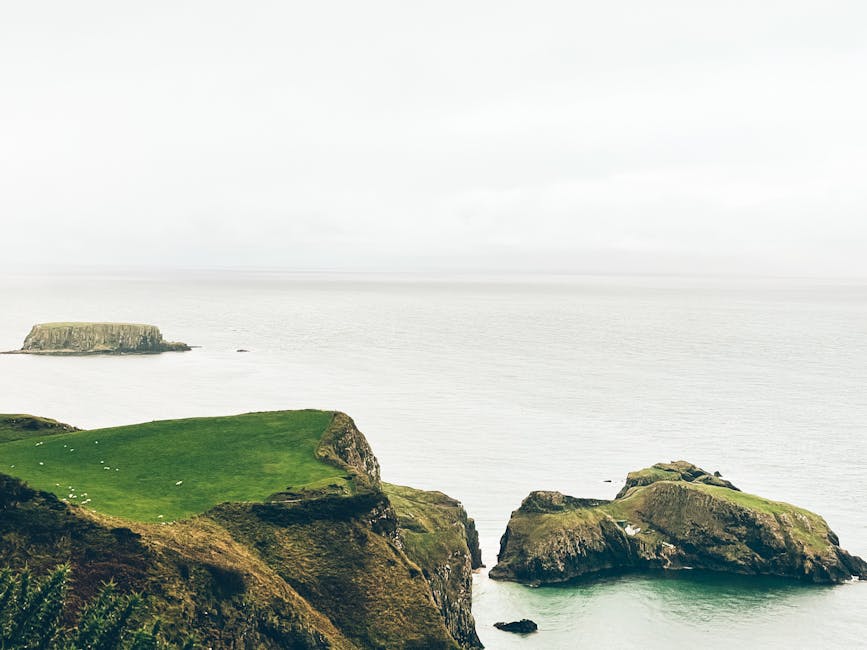
The Causeway sits on Northern Ireland’s Antrim Coast, a two-hour drive north of Belfast and roughly three hours from Dublin. For most travellers this lands as a bolt-on to a London or Edinburgh base — our London walking tour guide covers the city-base side of a combined UK-Ireland trip. Most visitors bundle it into a full-day tour that hits a handful of other Causeway Coast highlights — the Dark Hedges beech tunnel, Dunluce Castle ruins, and a few Game of Thrones filming spots — before heading back the same evening.
This guide covers which Giant’s Causeway day trip to book, whether to go from Dublin or Belfast, and what else the itinerary actually includes.
- In a Hurry? Here Are the Top Picks
- Dublin vs Belfast: Which Start Point
- The Four Main Stops
- The Causeway Itself
- The Dark Hedges
- Dunluce Castle
- Belfast or Titanic Quarter
- The Best Tours to Book
- 1. Dublin: Giants Causeway, Dark Hedges, Dunluce & Belfast Tour — 2
- 2. From Belfast: Giants Causeway and Game of Thrones Day Tour —
- 3. Dublin: Giant’s Causeway, Dark Hedges & Titanic Guided Tour — 4
- The Border Crossing
- When to Go
- A Bit of Geology Before You Go
- Game of Thrones Filming Locations
- What to Bring
- Worth Knowing Before You Book
- Pairing the Causeway Day with the Rest of Your Trip
- Worth the Day or Skippable?
- More UK Guides
In a Hurry? Here Are the Top Picks
Best from Dublin: Dublin: Giants Causeway, Dark Hedges, Dunluce & Belfast Tour — $112 per person. Twelve-hour coach day with all four headline stops.
Best value: From Belfast: Giants Causeway and Game of Thrones Day Tour — $38 per person. Half the price if you’re already in Belfast, plus GoT filming locations.
Best for history buffs: Dublin: Giant’s Causeway, Dark Hedges & Titanic Guided Tour — $124 per person. Same coast but swaps the standard Belfast stop for the Titanic Quarter.
Dublin vs Belfast: Which Start Point
This is the first decision. Both work, but they’re very different days.
From Dublin (12 hours): A long, long day. You leave central Dublin around 7am, drive north across the border into Northern Ireland, stop at the Causeway, Dark Hedges, Dunluce Castle, and Belfast, and get back to Dublin around 7pm. You’ll be on a coach for about 7-8 hours total. The upside: you see everything in one day without a hotel change. The downside: it’s exhausting, and the coach time eats into the sightseeing.
From Belfast (8-9 hours): Much more comfortable. Pickup around 9am, same Causeway Coast loop but without the Dublin-to-Belfast leg in each direction. You get more time at each stop and you’re back in Belfast by early evening. Half the price too.
My recommendation: if you’re already in Northern Ireland or can spend a night in Belfast, take the Belfast tour. The Dublin tour makes sense only if you’re tight on time and can’t do an overnight.
The Four Main Stops
Almost every Giant’s Causeway tour — regardless of origin — hits these four spots. What varies is how long you get at each.
The Causeway Itself
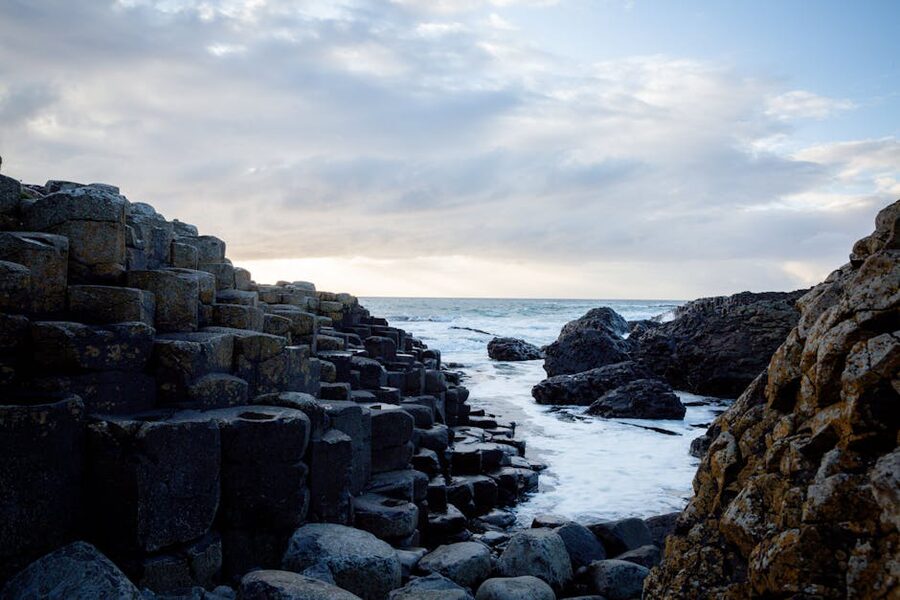
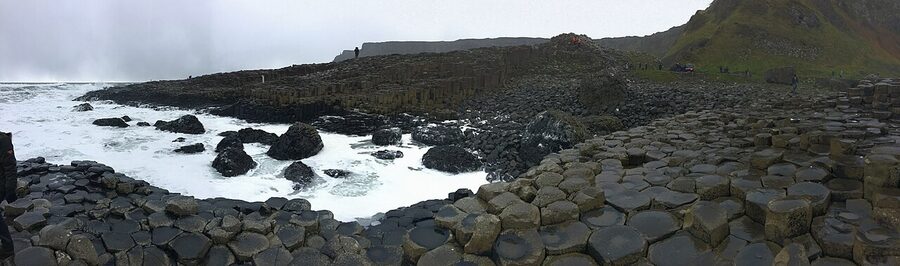
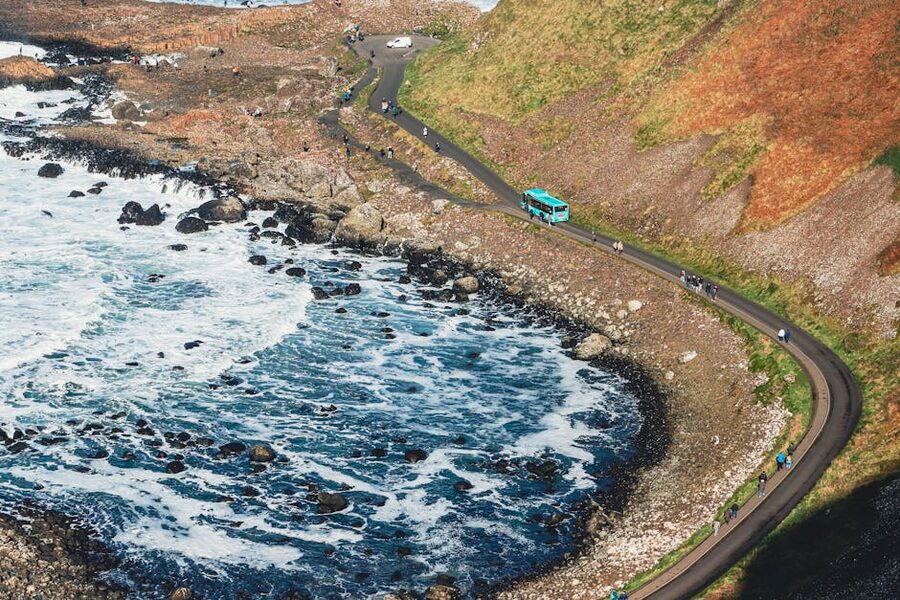
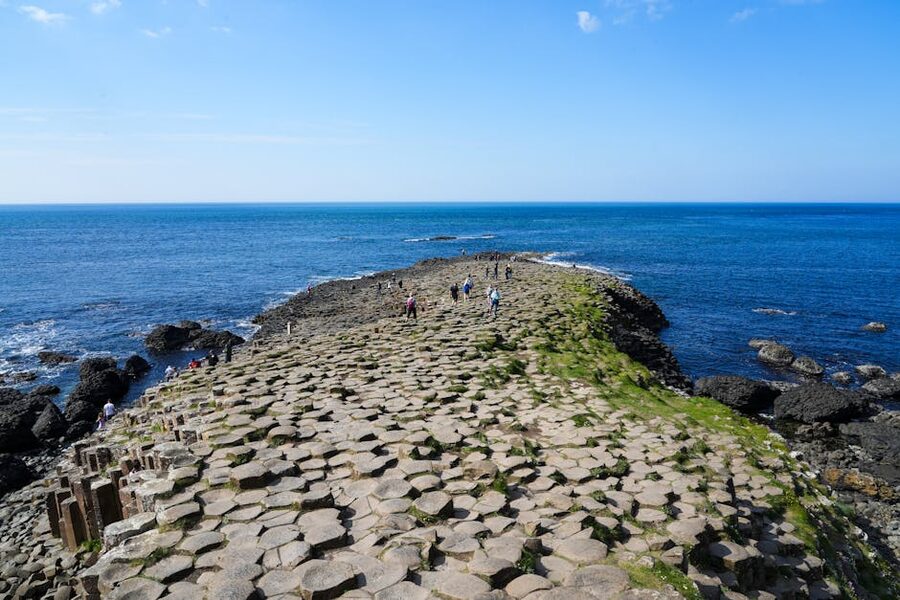
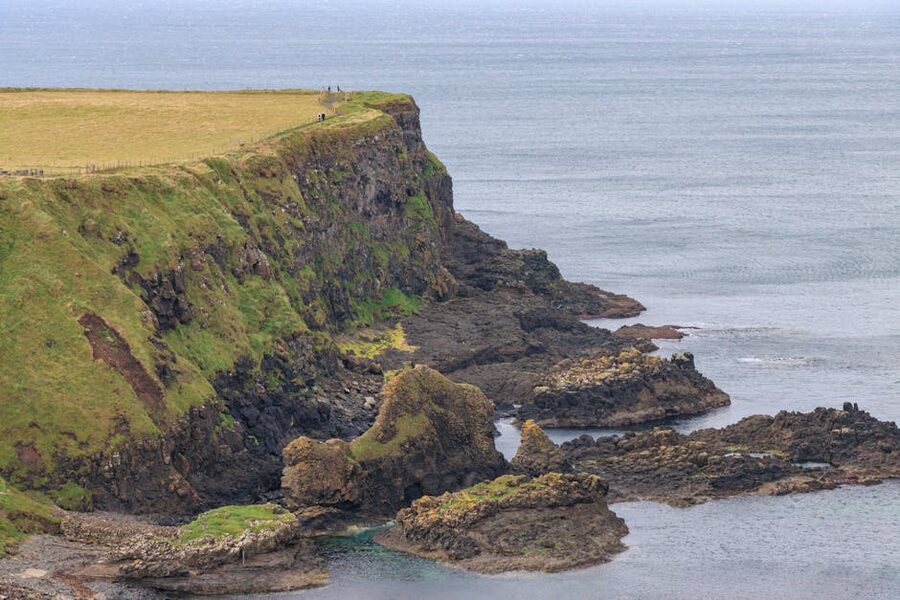
The main event. Tours usually give you 90-120 minutes here. You can walk down to the columns (a 15-minute descent on a paved path, or the “Shepherd’s Steps” shortcut), stand on them, climb around the bigger formations, and take the obligatory photos. A shuttle bus runs from the visitor centre to the columns if you don’t want to walk.
The visitor centre has a decent exhibition about the geology and the myths. Entry to the Causeway itself is free if you walk; the visitor centre charges £14.50 for an audio guide and exhibit access. Most tours include the visitor centre admission.
The Dark Hedges
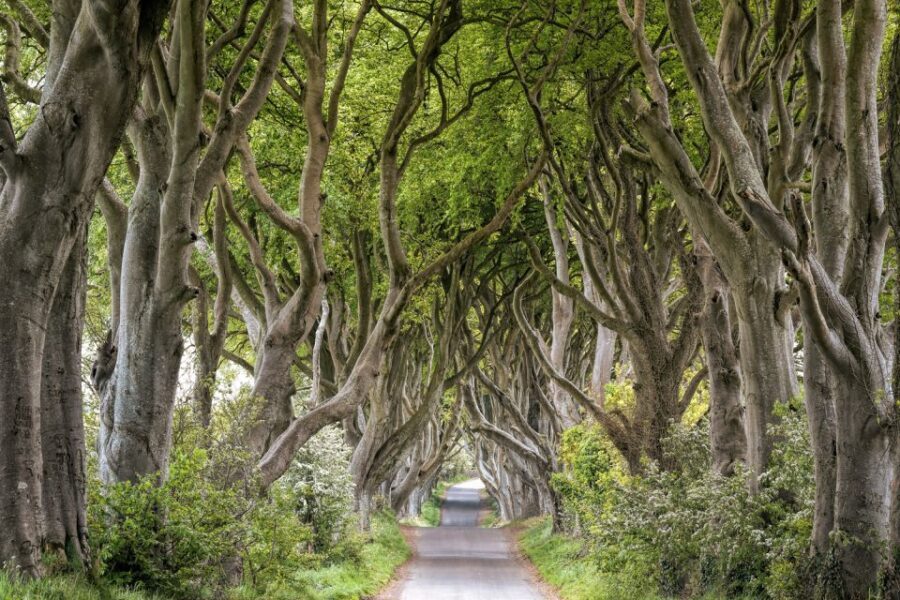
Two rows of intertwined beech trees planted in the 18th century by the Stuart family as an approach to their manor. Today it’s famous as the “Kingsroad” from Game of Thrones — the tunnel of trees Arya walked down in season 2.
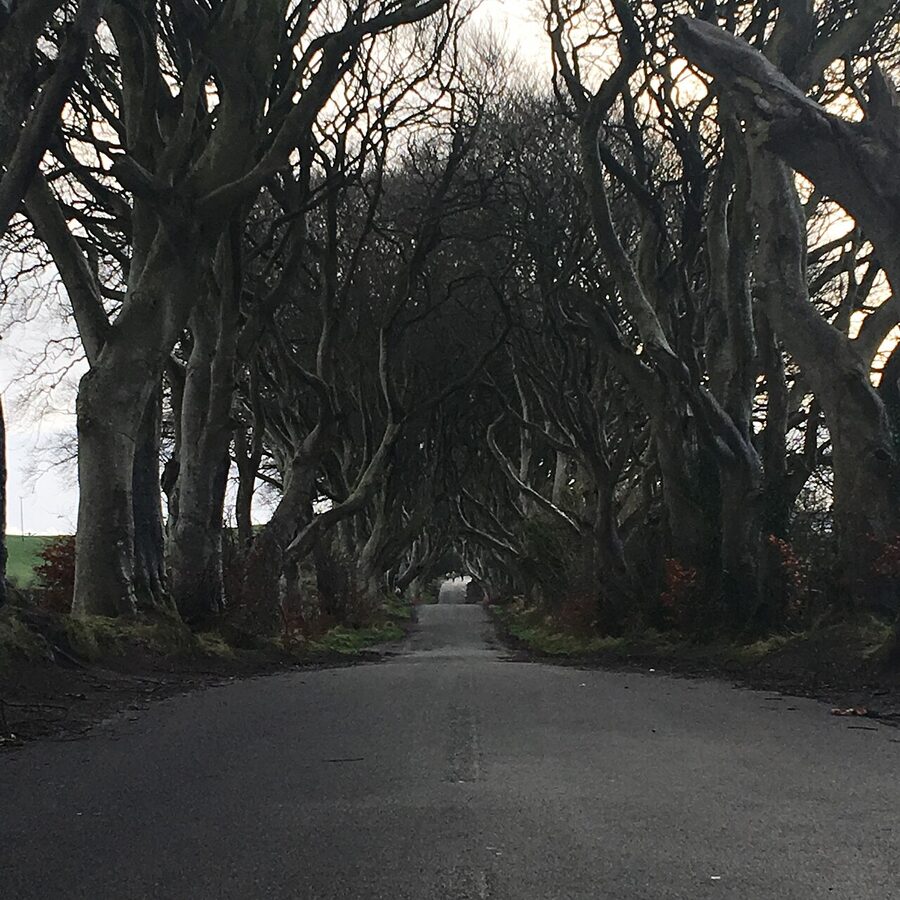
Tours stop for 15-20 minutes. It’s a quick photo stop rather than a long visit — you walk the tree tunnel, take your photos, and get back on the bus. In peak season (June-August) it gets crowded and finding a people-free shot is nearly impossible.
Dunluce Castle
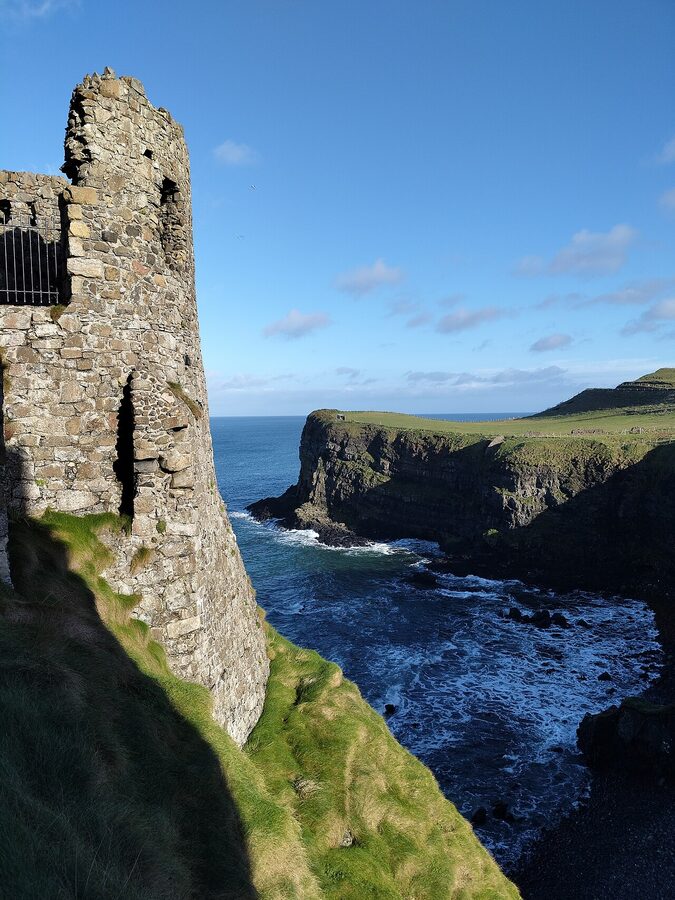
A 14th-century ruin on a clifftop that looks exactly like what you’d imagine a ruined Irish castle to look like. Most tours stop at a viewpoint across the headland for photos rather than going inside the ruins — entry is ticketed separately (£6) and takes 30-45 minutes, which most bus schedules don’t allow.

Belfast or Titanic Quarter
Most Dublin-based tours end with 45-60 minutes in central Belfast for a photo stop at the City Hall and a walk through the Titanic Quarter. The Titanic-focused variant instead gives you proper time at the Titanic Belfast museum (where the ship was built and launched in 1911) — a genuinely excellent museum and worth the swap if shipwreck history interests you more than Game of Thrones.
The Best Tours to Book
1. Dublin: Giants Causeway, Dark Hedges, Dunluce & Belfast Tour — $112
The most-booked Causeway tour full-stop. Twelve hours, comfortable coach with on-board commentary, pickup from central Dublin. Guides are consistently praised for making the long coach journeys entertaining — most are Dublin locals with genuine knowledge of the border history and Irish folk stories. Our review covers exactly what’s included (visitor centre, lunch option) and what the typical day looks like. At $112 it’s expensive for a day trip but it’s also a 500 km round trip — the per-mile cost is modest.
2. From Belfast: Giants Causeway and Game of Thrones Day Tour — $38
The Belfast-based version. $38 is a third of the Dublin price because you’re cutting out the Dublin-Belfast drive each way. The itinerary includes the Causeway, Dark Hedges, Dunluce, and several Game of Thrones filming locations (Ballintoy harbour, Cushendun Caves, the Larrybane Quarry). Our review covers which GoT scenes were filmed where. If you can do a night in Belfast, this is the tour to book — you’ll have a better day for less than half the cost.
3. Dublin: Giant’s Causeway, Dark Hedges & Titanic Guided Tour — $124
The version with the Titanic museum bolted on. $12 more than the standard Dublin tour but you get Titanic Belfast included — a world-class shipbuilding museum that most day-trippers rate as one of the best museums in Ireland, North or South. Our review covers how much time you actually get at each stop. Worth the extra for history-minded travellers; skip it if you care more about the Game of Thrones filming locations (this tour doesn’t include them).
The Border Crossing
Northern Ireland is part of the UK. The Republic of Ireland is a separate country. You cross an international border between them — though these days it’s invisible.
There’s no passport check, no customs stop, nothing. The only sign you’ve crossed is the road signs switching from kilometres to miles. Some mobile carriers silently switch from Irish to UK roaming; some don’t. If you’re on a UK SIM you’re fine; on an EU SIM you’re also fine; on a US SIM check your roaming plan before the trip.
The currency changes though. The Republic uses euros; Northern Ireland uses pounds sterling. Most tour operators handle the currency quietly — on Dublin-based tours, restaurants and the visitor centre take either, but the change you get back will be in pounds. Bring some of each if you’re planning extras.
When to Go
Northern Ireland’s weather is famously unpredictable. Tours run year-round because there’s no summer-only thing here — the basalt columns don’t care what month it is, and the visitor centre is fully enclosed.
May to September is peak season. July and August are the busiest, especially at the Dark Hedges where the crowd can be genuinely oppressive. May, June, and September are the sweet spot — green landscapes, fewer crowds, better photo light.
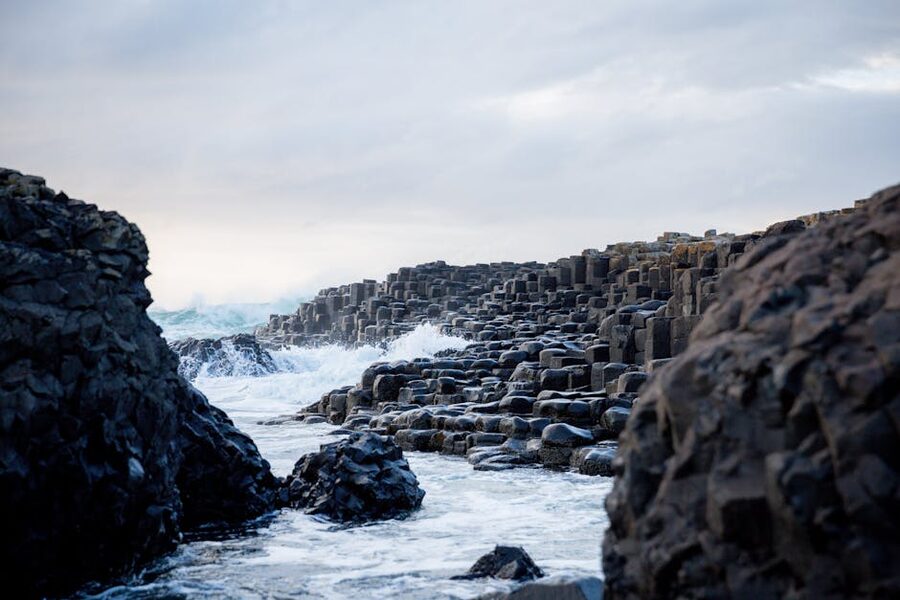
October through April is lower-season. Tours still run but less frequently. The advantage is the coast is atmospherically wilder in winter — dramatic storm light, crashing waves, almost empty car parks. The disadvantage is cold, wet, and sometimes dark by 4pm.
If you’re a photographer: September-October mornings give you the best light on the columns and the softest sea conditions.
A Bit of Geology Before You Go
The Causeway was formed around 60 million years ago during the Paleogene period, when the North Atlantic was still opening up and Ireland was being pulled apart from what’s now Scotland. A series of volcanic eruptions poured basalt lava across the Antrim plateau. As the lava cooled and contracted, it cracked into the hexagonal shapes you see today — the same way mud cracks when a puddle dries, but at the scale of a coastline.
Similar columns exist in Iceland (Reynisfjara), Scotland (Fingal’s Cave on Staffa — where Finn McCool supposedly continued his causeway), and the Pacific Northwest. The Northern Ireland columns are the most famous because they extend right into the sea and because the surrounding coastline adds drama. Fingal’s Cave is technically more spectacular but inaccessible without a boat; the Causeway you can walk on.
Your guide will cover the basics of the geology in about 90 seconds. If you want more depth, the visitor centre’s exhibition does a genuinely good job of explaining the volcanic history.
Game of Thrones Filming Locations
The Belfast-based tour and several Dublin tours include Game of Thrones filming locations. The Causeway Coast was used for several major scenes and a dedicated half-day could cover them all. Headline spots:
Ballintoy Harbour — the Iron Islands in seasons 2-6. Small white stone harbour on a cove that filmed as Pyke.
Cushendun Caves — where Melisandre gave birth to the shadow baby. About 15 minutes’ walk from the main road; most tours make this a quick stop.
Larrybane Quarry — the Stormlands headquarters of Renly Baratheon and the fighting pits of Renly’s camp. Dramatic coastline; tour buses drive past rather than stop.
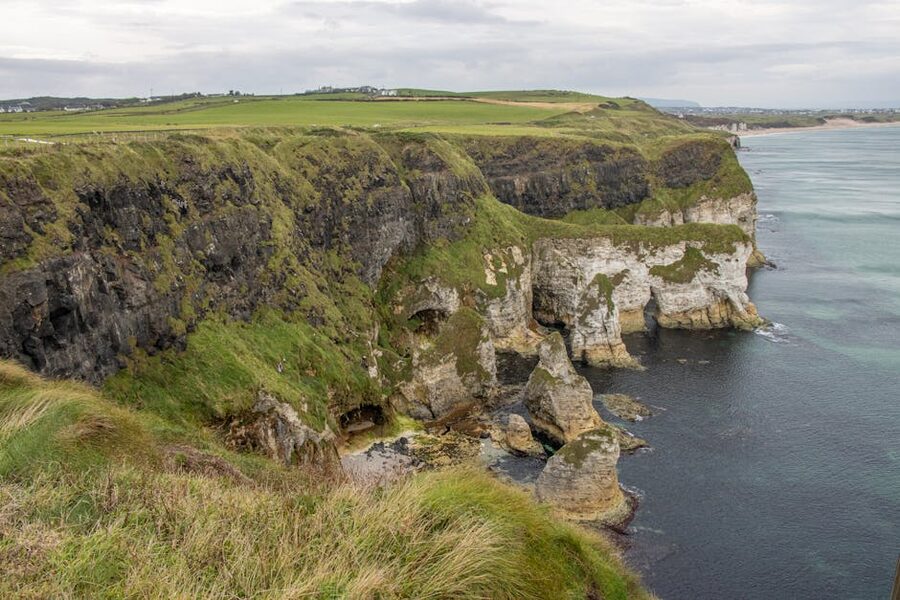
If Game of Thrones isn’t your thing, the locations are still photogenic — the show chose them for a reason. If it is your thing, book the Belfast Game of Thrones tour or ask whether a specific Dublin tour includes filming stops before booking.
What to Bring
Sturdy shoes with grip. The columns at the Causeway are slippery when wet — and on the Antrim Coast, wet is the default. Trainers are fine; heels are genuinely dangerous.
Layers. A windproof jacket is essential; a wool or fleece mid-layer helps. Even in July the Causeway can be windy and cold — sea wind off the North Atlantic doesn’t care about your summer plans.
Waterproof jacket. Rain is likely. A light rain shell folded in your bag saves the day when the forecast turns.
Camera or phone with spare battery. Cold wind drains phone batteries fast, and you’ll take more photos than you expect.
Cash in both euros and pounds if you’re on the Dublin tour. Most places take card but small kiosks at the Causeway and the Dark Hedges still sometimes prefer cash.
Sunscreen. I know. It’s Northern Ireland. But on a clear summer day the reflection off the basalt and the sea surface will burn you faster than you’d expect.
Worth Knowing Before You Book
Coach quality varies dramatically. The top-end tours use air-conditioned coaches with good seats and on-board toilets. Budget tours sometimes use older buses without toilets — a 12-hour day without a bathroom break on demand is painful.
Lunch is rarely included. Most tours stop at the Causeway visitor centre café or a Ballycastle pub for lunch at extra cost. Budget £10-15 for a basic meal.
The Dark Hedges stop is sometimes tight. If you’re photographing, get to the front of the avenue immediately — the lighting is best from that angle and the crowd thins quickly if you’re not at the centre.
The Causeway is a UNESCO World Heritage site and a National Trust property. The audio-guided part of the visit is genuinely good if you like context; the columns themselves are free to walk on regardless of whether you pay for the centre.
Physical accessibility is moderate. The main paved path down to the columns is steep but wheelchair-accessible with the shuttle bus. The clifftop path is narrower and has stairs in places.
Some tours include a ticket to Giant’s Causeway visitor centre, others don’t. Read the inclusions list before booking — it’s a £14.50 extra if not included.
Cancellation policies are usually 24-48 hours for full refund. Weather rarely cancels these tours — Northern Ireland does Causeway trips in the rain routinely.
Pairing the Causeway Day with the Rest of Your Trip
Most visitors do the Causeway as a single day on a Dublin or Belfast base. If you have more time, the Antrim Coast rewards a two-day slow drive.
A full Irish island trip usually includes 3-4 days in Dublin (with a Causeway day trip), 1-2 nights in Belfast, and a couple of days on the west coast for the Cliffs of Moher and Galway. If you’re combining Ireland with the UK mainland, the Belfast-to-Scotland ferry is a good bridge — it’s 2 hours to Cairnryan and you can do an onward Scottish Highlands trip from there.
For UK-focused travellers doing Northern Ireland as a side-trip, the natural pair is a London-based trip that flies to Belfast for 2 nights. Our London walking tour guide covers the base-day version of a London stay, and the Scottish Highlands guide is the complement if you’re going further north.
Worth the Day or Skippable?
Worth the day if: you’re interested in geology, you want to see a genuinely unique landscape, you’re a Game of Thrones fan, or you’ve got a day to spare in Dublin or Belfast.
Skippable if: you’re on a tight 4-day Ireland trip focused on the Republic and the west coast. The Causeway is amazing but it’s a long way from the Dingle Peninsula or the Cliffs of Moher, and it’s better to do Ireland’s west coast well than to stretch yourself north.
For most visitors, though, a single Causeway day is the right call. It’s the one geological landmark in the UK you won’t find the equivalent of anywhere else in Europe.
More UK Guides
If Northern Ireland is one of several UK stops, the companion reads are the Scottish Highlands guide (for the natural-landscape counterpart), the Loch Ness from Edinburgh tour (if you’re making Scotland a full week), and the London walking tour guide for the city-base half of the trip. For Beatles fans or anyone adding Liverpool, the Liverpool Beatles tour guide is the pick. If Ireland is the main event rather than the side-trip, the Belfast-based Game of Thrones tour is worth reading about separately from this Causeway guide — a full day’s worth of film-location detail that doesn’t fit in a broader Causeway overview.
Affiliate disclosure: We may earn a small commission from bookings made through the links on this page. It doesn’t change the price you pay and helps keep the site running.