
Athenians don’t eat in Greek restaurants. Not really. They eat at souvlaki stands, koulouri vendors, corner tavernas that haven’t changed menus in 50 years, and at home. The “Greek food” on most tourist menus — moussaka, tzatziki, gyros — is a small, commercialised slice of what Athenians actually consume. A proper street food tour is the shortest path to understanding the difference.
This guide covers the three main Athens food tours — a dedicated street food tour, a general foodie tour, and a gourmet walking tour. Each gets you at a different tier of Athens eating. We also have a broader Athens food tour overview for the essential context if you’re new to Greek food.
- In a Hurry? Here Are the Top Picks
- What You Actually Eat
- Koulouri
- Tiropita (Cheese Pie)
- Loukoumades
- Souvlaki and Gyros
- Bougatsa
- Greek Salad
- Octopus Meze
- Ouzo and Tsipouro
- The Best Tours to Book
- 1. Athens: Street Food Tasting Tour —
- 2. Athens: Greek Foodie Tour with Tastings —
- 3. Greek Food Walking Tour in Athens — .07
- The Central Market (Varvakios)
- Neighbourhoods Covered
- Monastiraki
- Psirri
- Koukaki
- Exarcheia
- A Short History of Greek Food in Athens
- When to Go
- How Hungry to Be
- What to Bring
- Dietary Restrictions
- Worth Knowing Before You Book
- Pairing with Other Athens Activities
- Worth the Tour or Skippable?
- More Greece Guides
In a Hurry? Here Are the Top Picks
Best street food: Athens: Street Food Tasting Tour — $67 per person. 7-8 tastings at local stands, small group.
Best general foodie: Athens: Greek Foodie Tour with Tastings — $81 per person. 4-hour tour with 10+ tastings including sit-down restaurants.
Most-booked: Greek Food Walking Tour in Athens — $87.07 per person. 3.5 hours, gourmet-level tastings, heavily reviewed.
What You Actually Eat
A typical Athens street food tour hits 7-10 stops over 3-4 hours. Here’s what you’ll try.
Koulouri
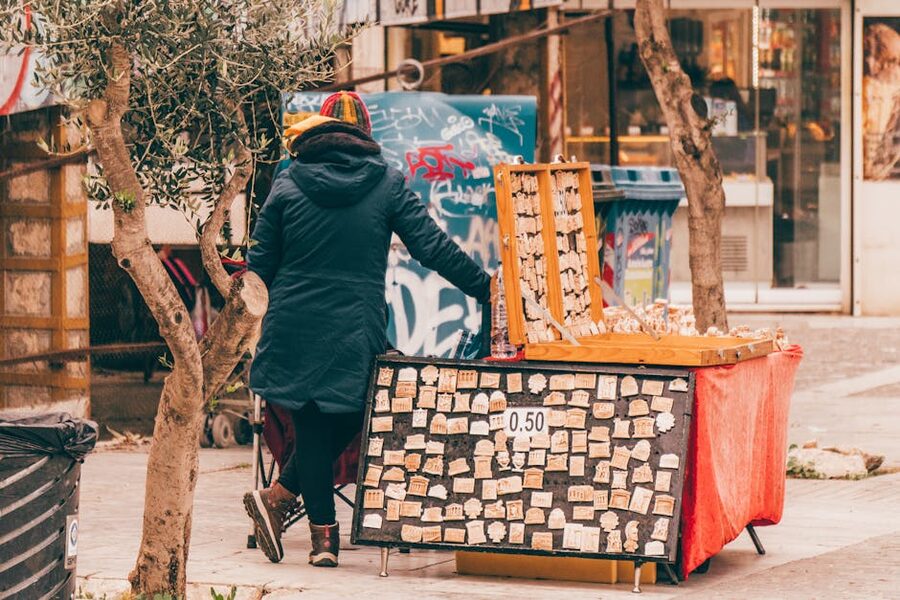
The ring-shaped sesame bread sold from morning street carts. Every Athenian has one for breakfast — €1 from a vendor, warm and crunchy. A food tour will usually start here.
Tiropita (Cheese Pie)
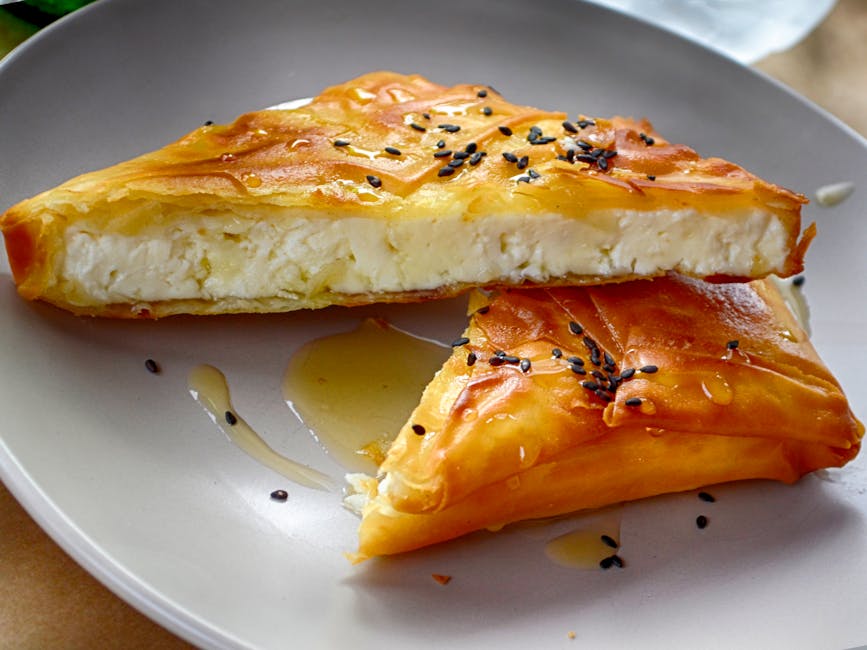
Filo pastry stuffed with feta and ricotta-style cheese, baked. Savoury, salty, served warm. Spinach-pie (spanakopita) is the vegetarian version.
Loukoumades
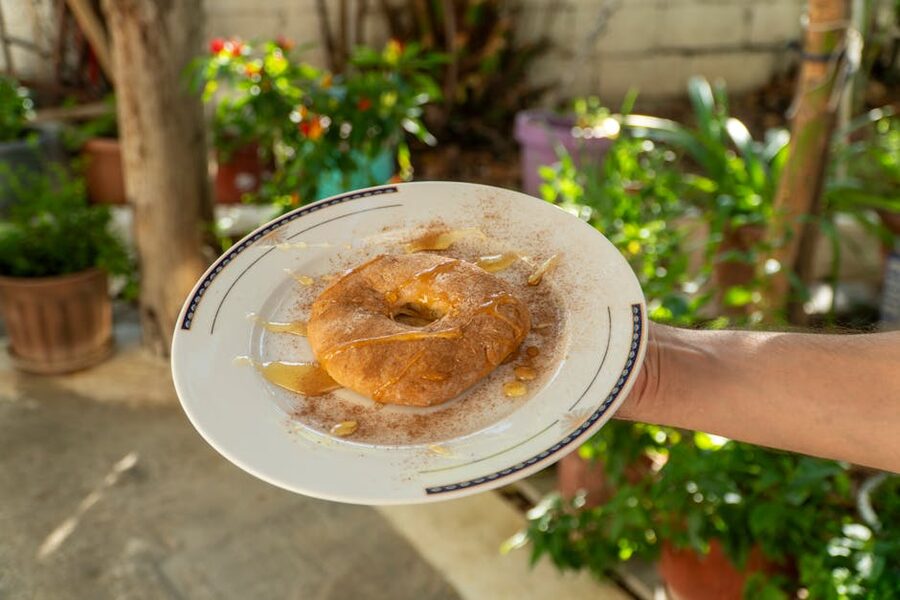
Small Greek doughnut balls fried in oil, drenched in honey and cinnamon, sometimes with walnuts. The Athens specialty version is at Krinos in the Central Market — the same shop has been making them since 1922.
Souvlaki and Gyros
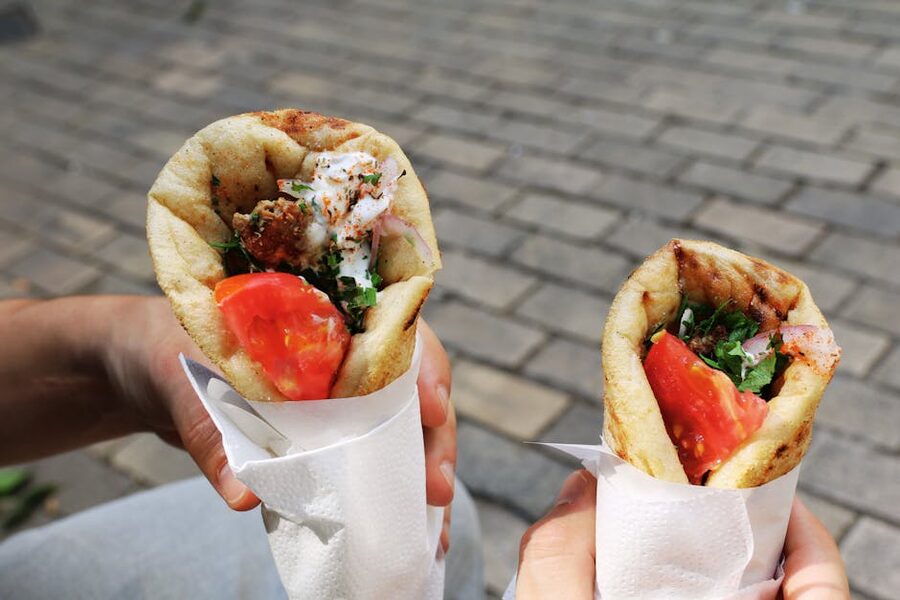
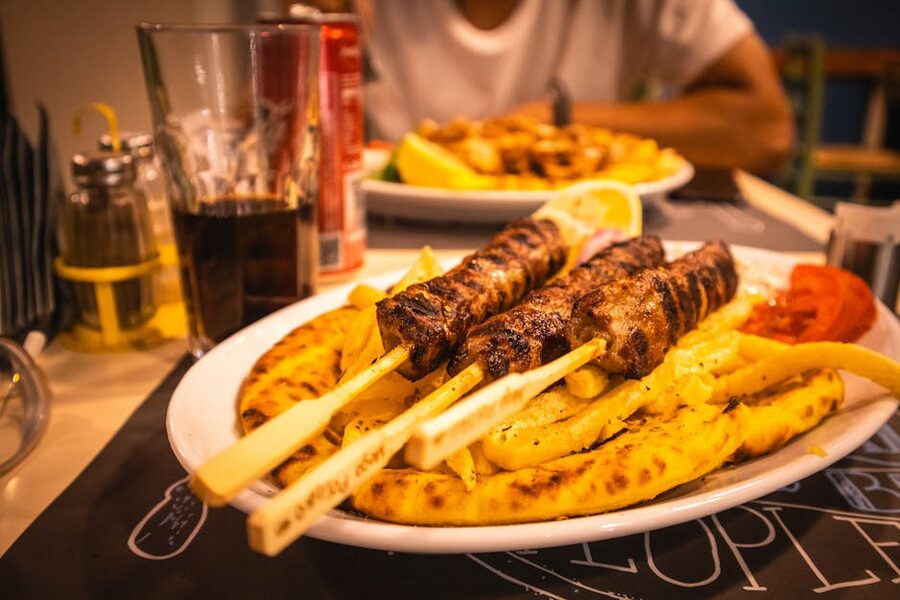
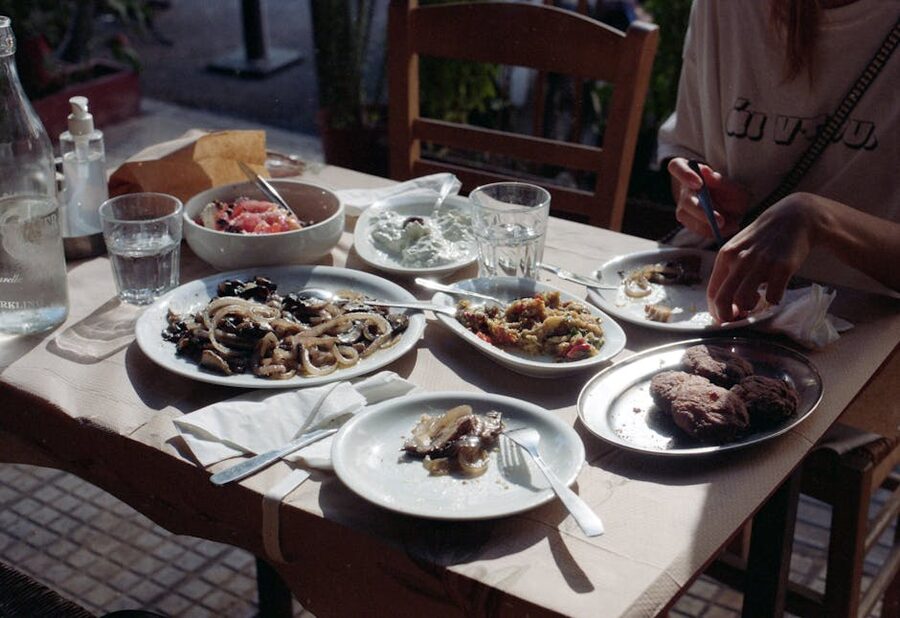
Souvlaki is grilled meat on a skewer. Gyros is the same meat shaved from a rotating spit and wrapped in pita with fries, tomato, onion, and tzatziki. Both are Athens icons. Food tours take you to specific mid-range souvlatzidiko (souvlaki shop) — the best are around Thissio and Psirri neighbourhoods.
Bougatsa
Thessaloniki-originated breakfast pastry — custard wrapped in filo, dusted with icing sugar and cinnamon. Usually served with a Greek coffee. Many food tours include it as a mid-morning stop.
Greek Salad
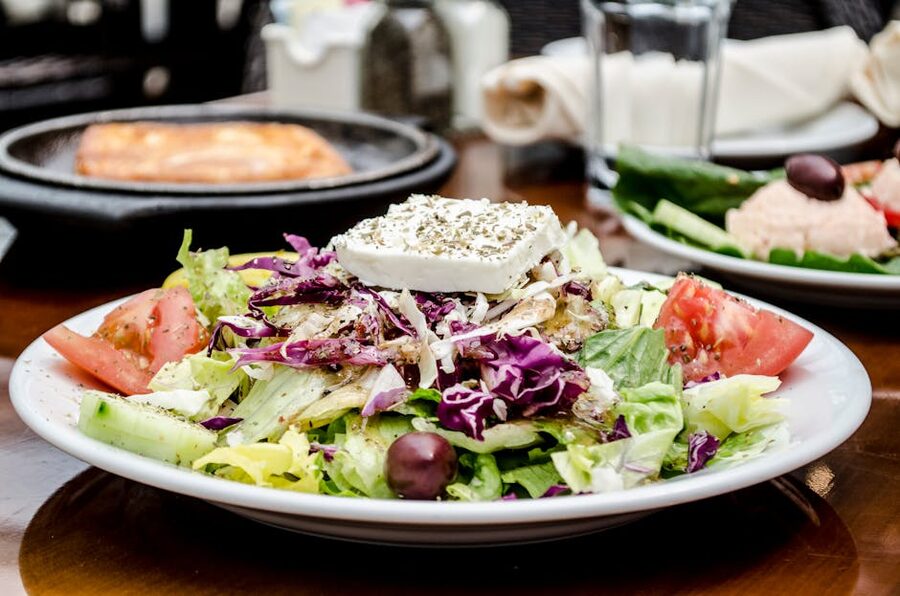
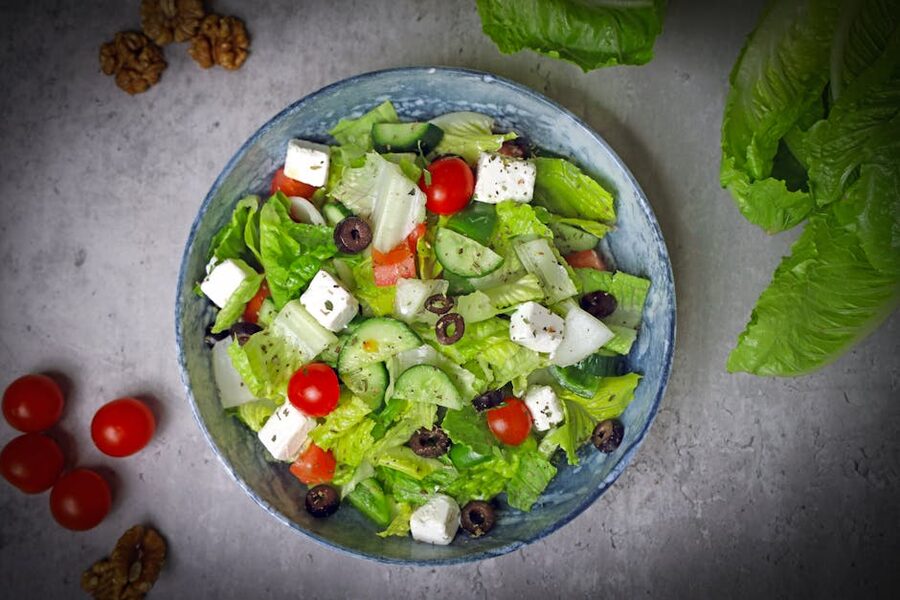
Tomato, cucumber, red onion, olives, feta, olive oil. No lettuce. This is the real Greek salad (horiatiki) — never with lettuce.
Octopus Meze
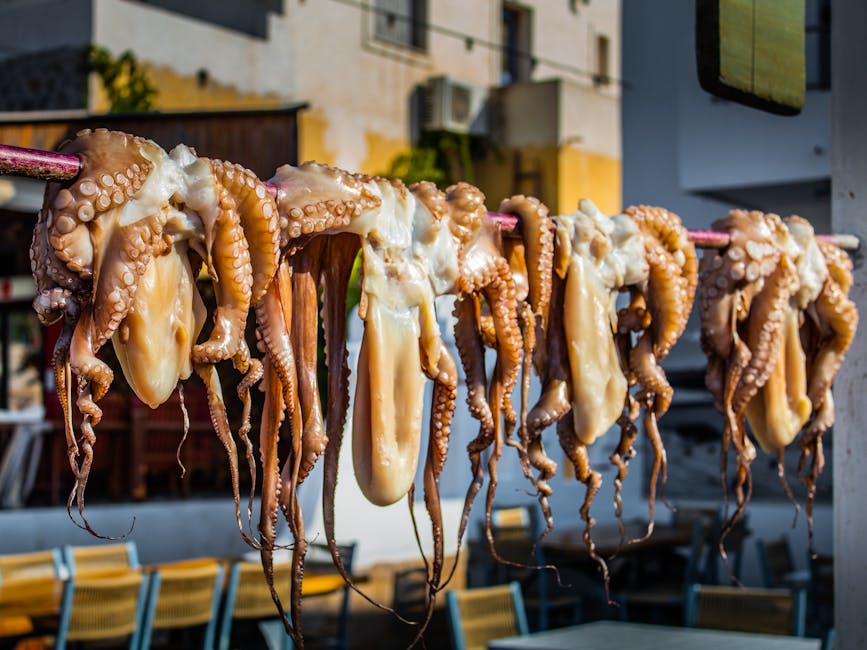
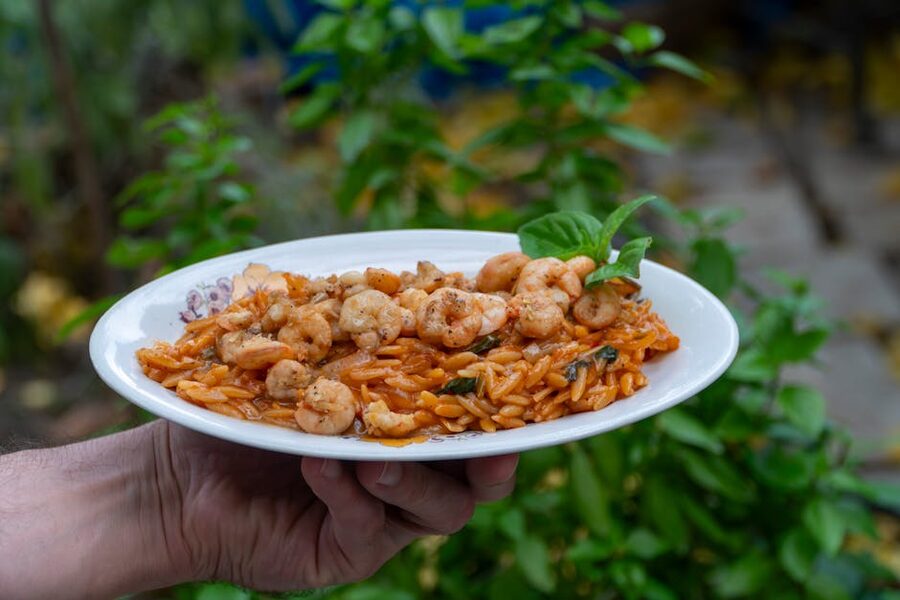
Grilled octopus with olive oil and lemon, served as a small plate (meze) with ouzo or tsipouro (Greek spirits). Octopus is either fresh or sun-dried; the sun-dried version has a deeper, more concentrated flavour.
Ouzo and Tsipouro
Anise-flavoured spirits, served with mezedes (small plates). The ritual is specific — ouzo is drunk with water (turns milky), tsipouro is drunk neat. Most food tours include a small tasting.
The Best Tours to Book
1. Athens: Street Food Tasting Tour — $67
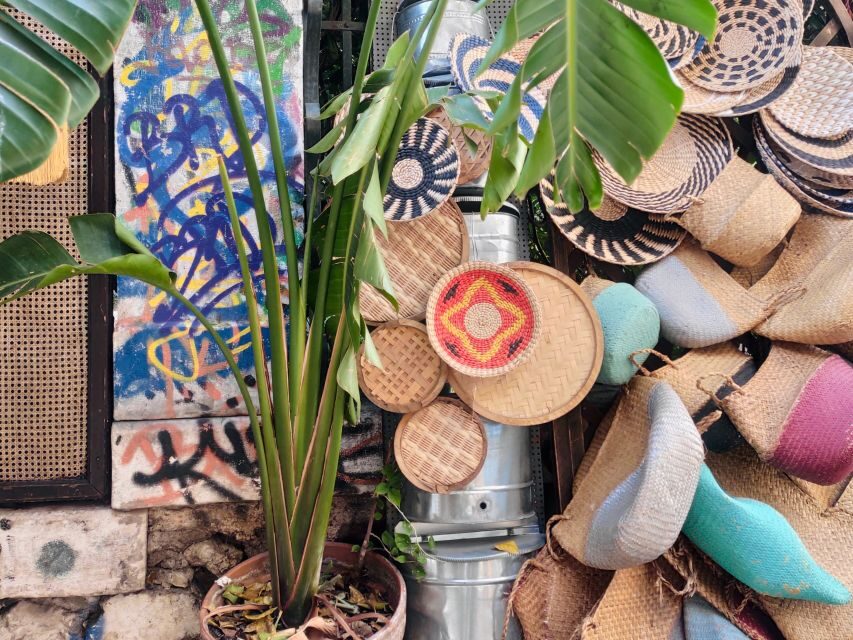
The focused pick. $67 covers 3-4 hours, 7-8 food stops, all street-level. You walk between vendors and eat standing up — this is how Athenians actually eat lunch. Small groups (8-10 max) mean the guide has time to explain each food’s origin. Our review covers exactly which vendors are visited. Past travellers consistently praise the pacing — not rushed, not slow. At $67 it’s the best-value food tour in Athens.
2. Athens: Greek Foodie Tour with Tastings — $81
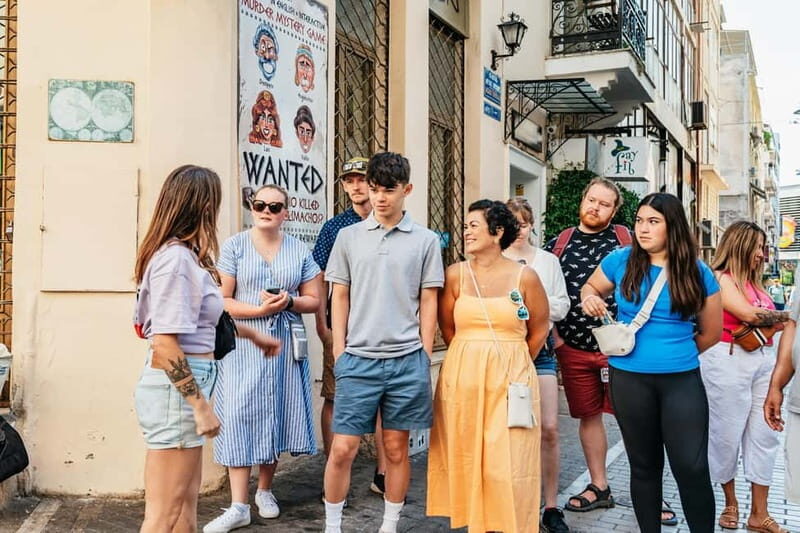
The balanced tour. $81 gets you 4 hours with a mix of street food (souvlaki, koulouri, loukoumades) and sit-down tavernas (meze plates with ouzo). You sit down for 2-3 stops, which means you can actually chat with your guide rather than just eating on the go. Our review covers the specific stops. Better for travellers who want context along with food rather than just volume.
3. Greek Food Walking Tour in Athens — $87.07
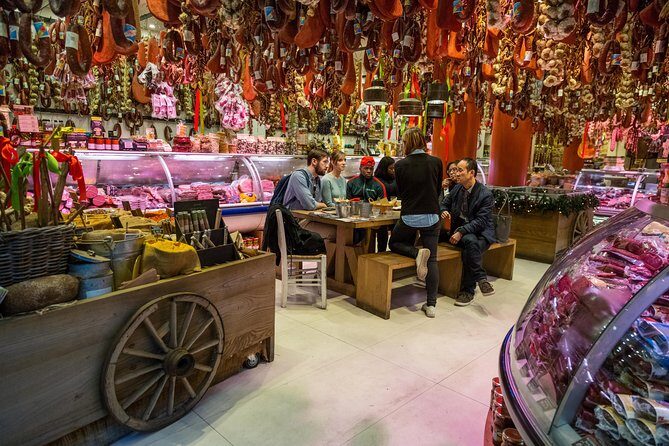
The most popular option by review count. $87 is a slight premium but the experience is noticeably more polished — professional guides (often qualified sommeliers or chefs), small groups (6-8), and semi-private venues. Past visitors consistently rate this as the best food tour they did in Europe. Our review covers what makes this different. Book 24-48 hours ahead; the premium tours sell out fastest.
The Central Market (Varvakios)
Most food tours pass through or stop at the Varvakios (Central Market). Athens’ main food market — three halls covering meat, fish, and fruits/vegetables, plus surrounding streets for grains, cheese, and baked goods. Open Monday-Saturday 7am-3pm, closed Sunday.
The fish hall is the most atmospheric — vendors shouting prices, fresh catch arranged on ice, the specific smell of a working market. Wander freely. Most stall owners speak enough English to explain what’s for sale.
The meat hall is more functional. Lamb (including whole lambs in season), pork, chicken, and specialty cuts. Photographers find the meat hall less appealing than the fish hall.
Surrounding the halls are specialised shops: Miran for pastourma (air-dried cured beef — a Greek version of pastrami), Karavan for bougatsa, Krinos for loukoumades. Food tours usually stop at 2-3 of these.
Neighbourhoods Covered
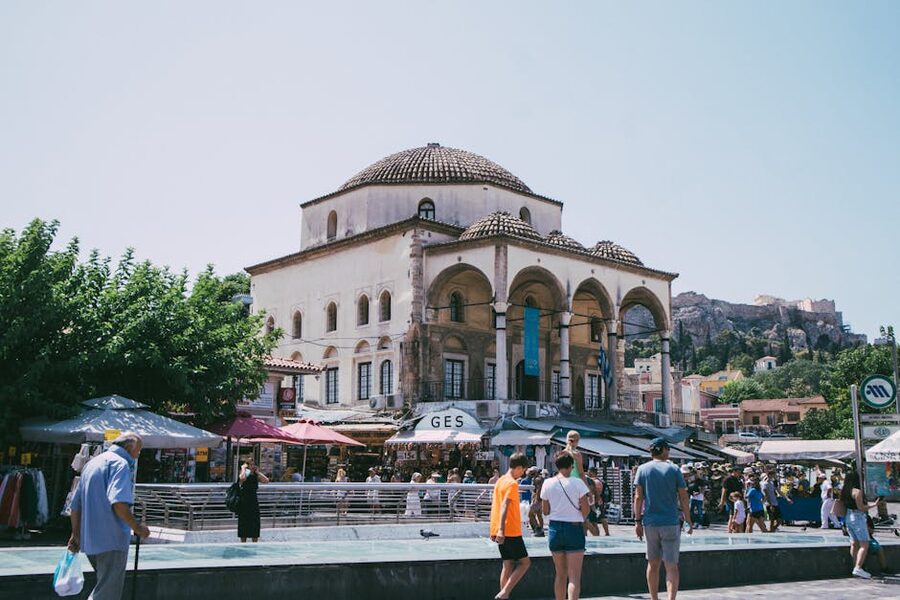
Monastiraki
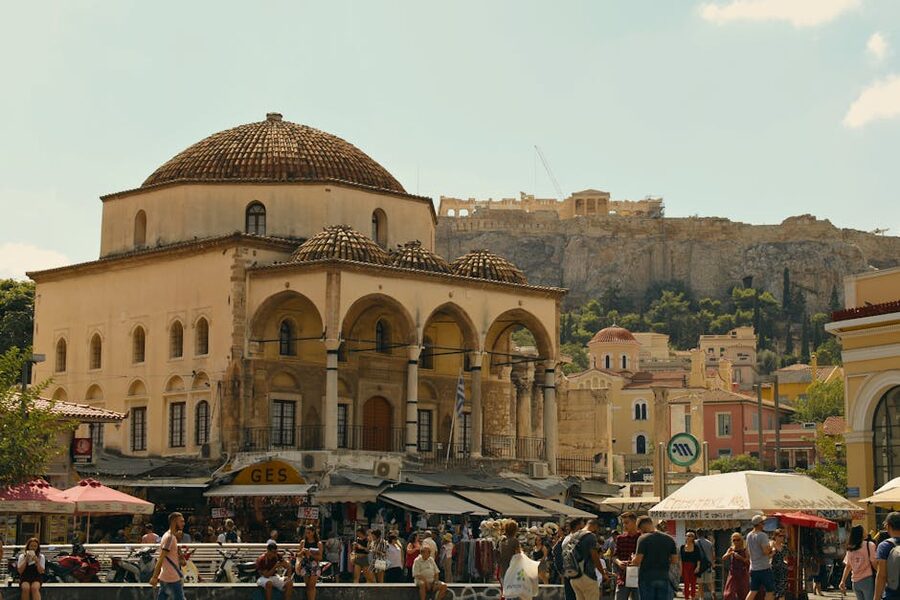
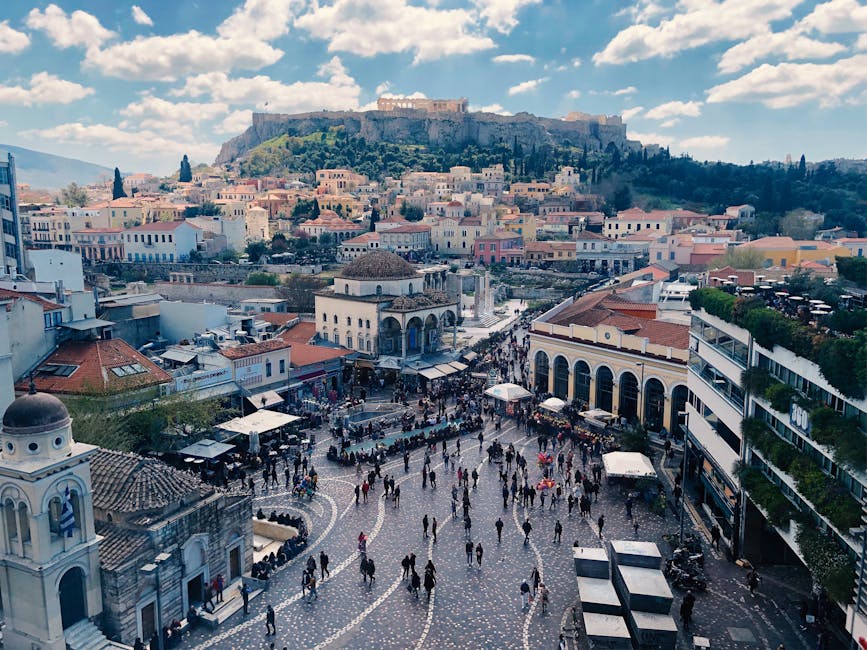
Most-touristy neighbourhood, next to the Acropolis. Street food is present but often more touristy. Flea markets on the edges. Good for souvlaki stands but avoid the main square for sit-down meals.
Psirri
Bohemian neighbourhood north-west of Monastiraki. More authentic than the tourist heart. Good for meze bars, specialty coffee, and small tavernas. Most food tours spend 30-45 minutes here.
Koukaki
Residential neighbourhood south of the Acropolis. Quieter, more family-run establishments. The bougatsa shop Kolombo is here — lines are long but genuinely worth it.
Exarcheia
The “anarchist neighbourhood” — politically charged but also home to Athens’ most interesting food scene. Cafés, wine bars, and traditional tavernas. Some tours include Exarcheia; some avoid it due to its reputation. Worth knowing about.
A Short History of Greek Food in Athens
Ancient Greek cuisine was simpler than you’d think — bread, olive oil, wine, cheese, and fish for most Athenians. Meat was reserved for festivals. Lentil soup and broad beans were daily staples.
The Byzantine period (330-1453 AD) added Middle Eastern influences — spices, stuffed vegetables, rice-based dishes. The Ottoman period (1453-1821) brought Turkish-style coffee, baklava, and a strong meze culture.
Greek independence in 1821 reasserted classical Greek food culture, but modern Greek food is still visibly a mix of the different empires that shaped it. Moussaka is essentially Ottoman (Turkish musakka); baklava is Middle Eastern; the beloved Greek coffee is technically Turkish coffee rebranded.
Athens’ post-WWII food scene was shaped by the 1922 “Asia Minor Catastrophe” — the forced population exchange that moved 1.6 million Greeks from Turkey to Greece. These refugees brought Istanbul-style cooking to Athens, which is why the city’s best gyros, pastourma, and bougatsa are all Thracian/Asia Minor origin rather than classical Greek.
When to Go
Food tours run year-round. Each season has a different character.
Spring (April-May): Fresh vegetables peaking, wine from the previous autumn newly released, mild weather for outdoor tastings.
Summer (June-September): Hot. Tours move indoor stops earlier in the day. Food is fresh but walking between stops in 35°C heat is tiring.
Autumn (October-November): Harvest season. Olive oil and new-season cheese are at peak. Game meat appears on menus.
Winter (December-February): Quieter tours. Indoor stops dominate. Soups and stews come into season. Some stalls in the Central Market close for a few weeks around Christmas.
Timing within a day: most tours start 10-11am (lunch-focused) or 5-6pm (dinner-focused). Morning tours visit markets and bakeries; evening tours focus on tavernas and wine bars.
How Hungry to Be
Most food tours include enough tastings to replace lunch or dinner. Don’t eat a big meal beforehand; 7-10 tastings adds up quickly.
Specific warnings:
– If the tour starts at 11am, you should have had only coffee beforehand
– If the tour starts at 6pm, skip lunch or eat lightly
– Water intake matters — food tours walk 2-4 km and the salt-heavy diet plus summer heat is dehydrating
– Most operators will adjust portion sizes for guests with smaller appetites if you mention it in advance
What to Bring
Comfortable walking shoes. You’ll walk 2-4 km between stops.
Small appetite. Skip the hotel breakfast if your tour is mid-morning.
Water bottle. Some tours provide but it’s hot in summer and extra is useful.
Hat and sunscreen if summer. Most walking is in the sun.
Cash for tips and extras. Your tour guide will earn €5-10 tip per person; a few stops may have optional drinks to purchase.
Camera or phone. Most food tours welcome photos. A few specific sit-down restaurants prefer no photos — guides will flag these.
Sunglasses — Athens’ white buildings are reflective in strong sun.
Dietary Restrictions
Most operators handle dietary restrictions well with advance notice.
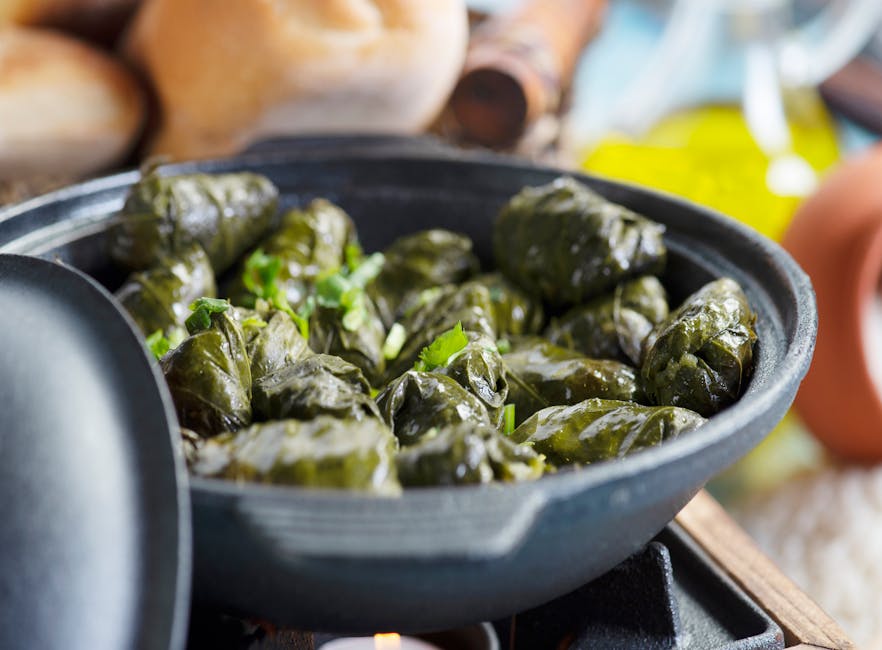
Vegetarian: Greek food is vegetarian-friendly — lots of bean, lentil, and vegetable dishes. Skip the souvlaki and gyros; eat spanakopita, dolmades, and mousaka-bechamel if non-meat.
Vegan: More restrictive. Greek cooking uses cheese and olive oil extensively. Possible but expect fewer options; notify the operator in advance.
Gluten-free: Hard. Bread is a pillar of Greek food — souvlaki wraps, koulouri, pita, bougatsa all contain gluten. Possible but the tour is diminished.
Lactose-free: Moderate. Feta is ubiquitous but not in everything. You can skip it with minimal loss.
Nut allergies: Greek desserts use lots of walnuts and almonds. Savoury dishes use fewer. Clearly communicate with the operator.
Worth Knowing Before You Book
Some operators offer private tours for an uplift. Worth it for groups of 3-4 who want the guide’s full attention.
Alcohol is usually optional. If you don’t drink, tour price is unchanged but you’ll miss the ouzo/tsipouro component.
Portions are small but frequent. A full tour adds up to maybe 800-1000 calories total — you won’t overeat unless you add extras.
Children are welcome but warned about spicy and strong-flavoured foods. Under 5s are usually free; 5-12s discounted 50%.
Cancellation policies are usually 24 hours for free cancellation.
Some food tours overlap significantly. Don’t book multiple unless you’re really into food — you’ll be tasting the same things twice.
Pairing with Other Athens Activities
A food tour is 3-4 hours. Fits well as either a morning activity (finish by 2pm, have afternoon free) or an evening activity (start at 5-6pm, finish late).
Morning food + afternoon ancient: Food tour 10am-1pm, then Acropolis visit 2-4pm (cooler afternoon, lower queues).
Afternoon food + evening performance: Food tour 5pm-8pm, then dinner or drinks in a specific neighbourhood you discovered on the tour.
Food tour + day trip: Do a day trip earlier in the week (Meteora, Delphi, Saronic Islands), food tour later — the tour gives you context for food you’ve been seeing all week.
Worth the Tour or Skippable?
Worth the tour if: you’re interested in food, you want neighbourhood context that a menu can’t provide, or you want to avoid tourist-trap restaurants.
Skippable if: you’re already a confident food traveller who prefers discovering places solo. Athens has enough published food guides in English that self-guided eating is more viable than in smaller Greek cities.
For most first-time Athens visitors, a food tour is one of the better investments for the city. It gives you both the food and the neighbourhood knowledge — far better than eating your way through the top Google-rated restaurants, which will skew tourist-heavy. Book it for the second or third day of your stay rather than day one; you’ll be hungrier by then and your feet will have adjusted to all-day walking. It gives you both the food and the neighbourhood knowledge — far better than eating your way through the top Google-rated restaurants, which will skew tourist-heavy.
More Greece Guides
Athens food pairs well with other Athens-base activities. For context on the city, our Acropolis combo pass, Acropolis-only ticket, and Athens hop-on bus are the essentials. For day trips, Meteora, Delphi, Cape Sounion, and Mycenae & Epidaurus are the four classics. For island-hopping from Athens, our Saronic cruise guide and Santorini caldera guides cover the main cruise options.
Affiliate disclosure: We may earn a small commission from bookings made through the links on this page. It doesn’t change the price you pay and helps keep the site running.