
A bike fits through more of ancient Athens than you’d think. The pedestrian boulevard that rings the Acropolis, Plaka’s stepped alleys, the back streets behind the National Gardens — all rideable. None of them walkable in under half a day.
I did the electric-bike version on a 34°C June afternoon and covered more ground in three hours than I’d managed in two days on foot. The battery assist turns the hills — and Athens has plenty of hills — into a non-event. Here’s how to pick between the main bike tours, what routes they cover, and what the deal is with the e-bike surcharge.

In a Hurry? The Three Bike Tours That Matter
- Best overall: Athens Scenic Bike Tour (electric or regular) — from €33. The most-booked Athens bike tour by a wide margin. Three hours, all the big sights, and you pick electric on the day if it’s hot.
- Best for small groups: Historic Athens Small-Group E-Bike Tour — from €41. Capped groups, faster pace, all electric.
- Best for the route nerds: Highlights of Athens Biketour — from €47. Longer route covering Filopappou Hill and the less-touristy southern slopes of the Acropolis.
- In a Hurry? The Three Bike Tours That Matter
- Can You Actually Bike Athens? Yes — but Only on a Tour
- Electric vs Regular Bike — Does It Matter?
- How Long the Tours Actually Take
- The Best Athens Bike Tours Compared
- 1. Athens Scenic Bike Tour (Electric or Regular) — from €33
- 2. Historic Athens Small-Group Electric Bike Tour — from €41
- 3. Highlights of Athens Biketour — from €47
- What You’ll See — The Classic Athens Bike Route
- Stop 1: Syntagma Square and the Evzone Guards
- Stop 2: The National Gardens and the Zappeion
- Stop 3: The Panathenaic Stadium (Kallimarmaro)
- Stop 4: Temple of Olympian Zeus and Hadrian’s Arch
- Stop 5: The Acropolis Promenade
- Stop 6: The Ancient Agora and Temple of Hephaestus
- Stop 7: Monastiraki and the Roman Agora
- Stop 8: Plaka Wander
- What the Tours Don’t Cover
- When to Book and When to Ride
- What to Wear and Bring
- How It Compares to Walking
- Getting to the Start Point
- If You Only Have Half a Day in Athens
- Practical Questions
- Pairing the Bike Tour With Other Athens Things
- The Short Version
Can You Actually Bike Athens? Yes — but Only on a Tour
Athens is not Amsterdam. There’s no proper cycling infrastructure in the old centre, drivers are aggressive, and the main arteries get genuinely scary in rush hour. That’s why guided tours make sense here in a way they don’t in Copenhagen or Utrecht.
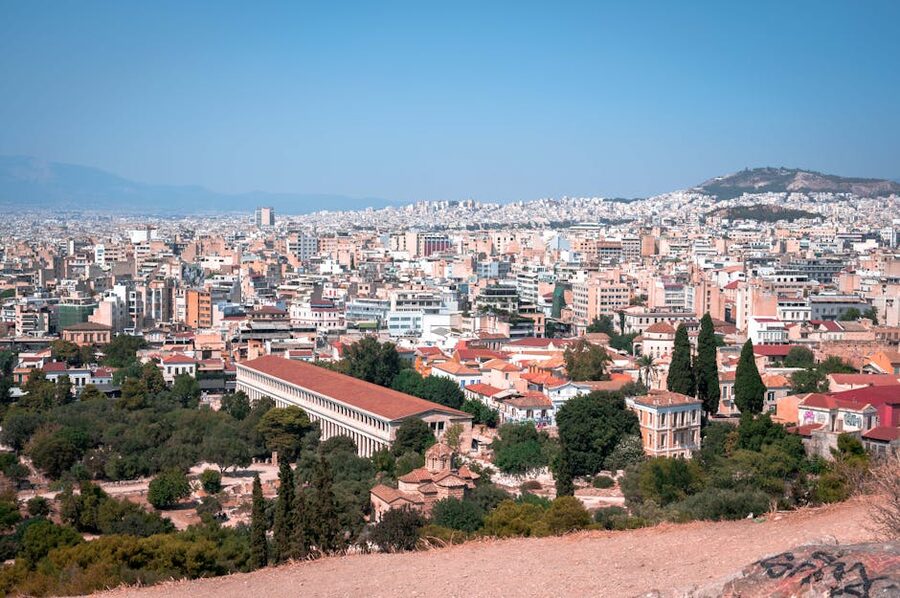
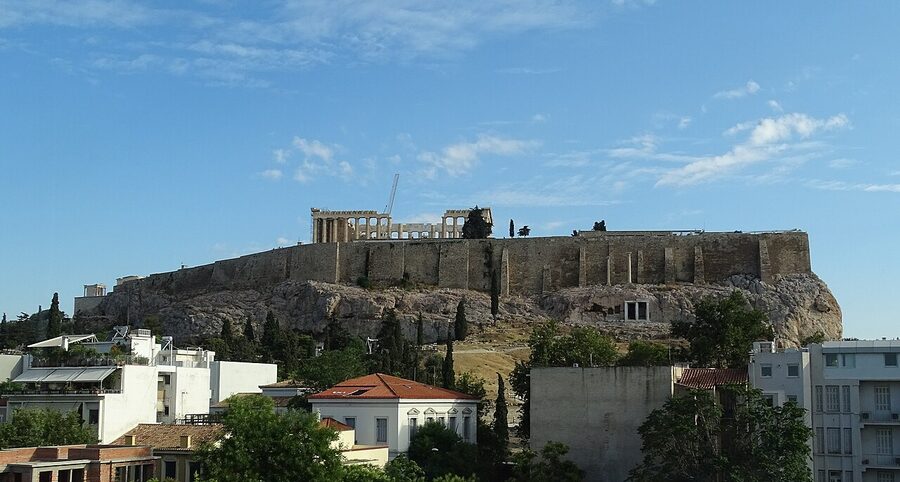
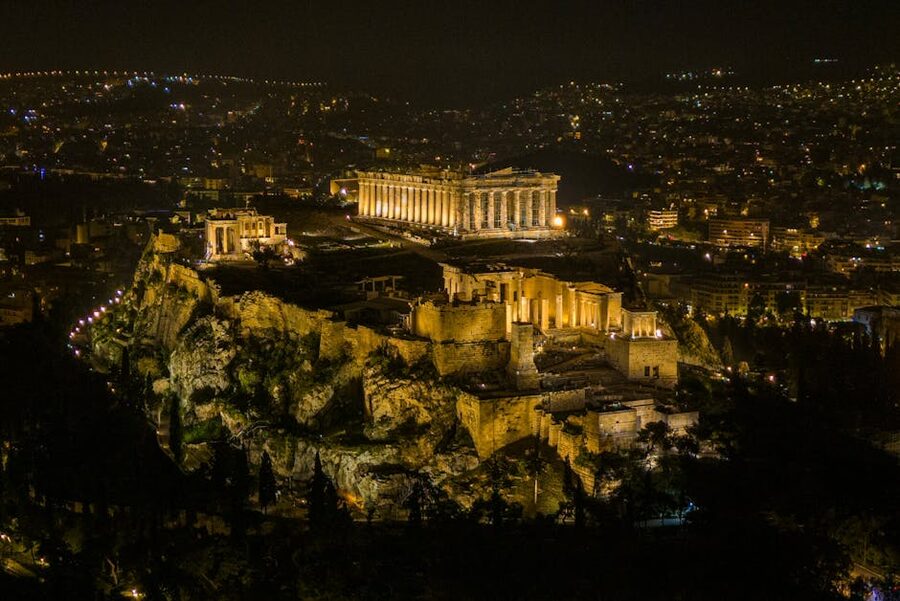
What the tours do is route you along the pedestrianised strip called the Grand Promenade — Dionysiou Areopagitou and Apostolou Pavlou streets — which loops right around the base of the Acropolis. No cars. Marble paving. You can ride about 2.5km of it end to end, with the Parthenon above you the whole way. This is the killer section of any Athens bike tour and the reason you should do it at all.

Electric vs Regular Bike — Does It Matter?
Yes. Pick electric if you’re visiting April–October and care about not being a puddle of sweat by the end of the tour. The extra charge is usually €5–10 on top of the base ticket. Athens has a lot of gentle but continuous climbs — from Syntagma to the Acropolis is 50m of elevation over less than a kilometre, which doesn’t sound like much until you’re doing it on a rental bike on a 35°C afternoon.
If you’re visiting November–March and you’re reasonably fit, the regular bike saves you money and you won’t notice the hills much. The top-rated tour lets you decide when you arrive rather than locking it in at booking.
How Long the Tours Actually Take
All three main tours are marketed as three hours. In practice it’s closer to 2h 45m of actual movement plus photo stops. You ride maybe 13–15km total, which is deliberately low — it’s a sightseeing tour, not a ride. You spend at least half the time stopped, with the guide pointing at something.
The Best Athens Bike Tours Compared
Three tours worth your money, ranked by how I’d pick.
1. Athens Scenic Bike Tour (Electric or Regular) — from €33
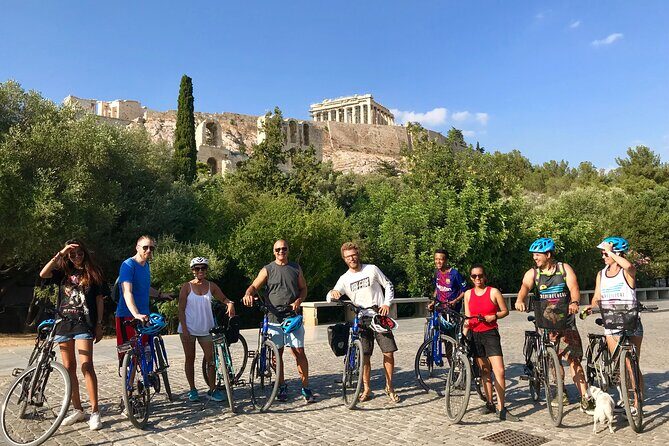
If it’s your first time cycling in Athens, book this one. The guides run the tours in both English and Greek and the route hits the Panathenaic Stadium, National Gardens, Temple of Zeus, Acropolis promenade, Ancient Agora, and Plaka in one efficient loop. Our full review covers where the meeting point is (central, about 5 minutes from Syntagma) and what shoe/clothing to bring.
2. Historic Athens Small-Group Electric Bike Tour — from €41
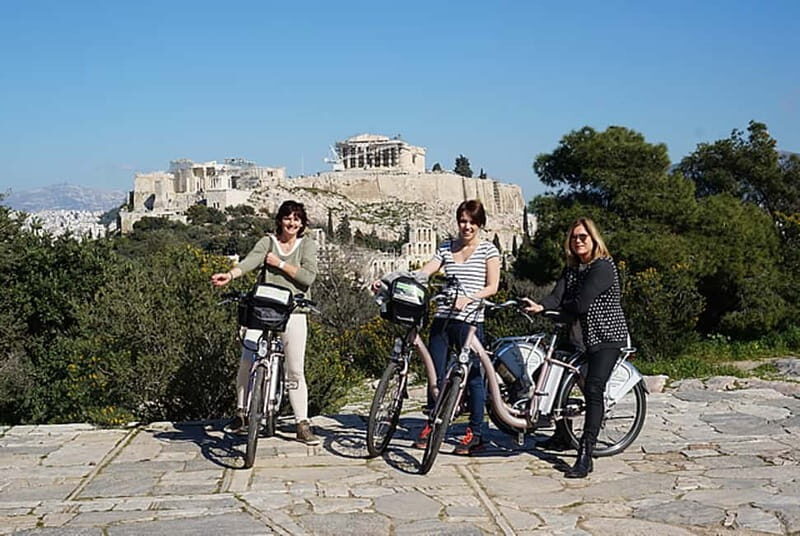
This one’s for people who don’t want to be on a bus on a bike. Maximum group size is around ten, versus twenty on the larger tours, and the whole thing is electric so you’re not waiting for slower riders. Our review breaks down the meeting point (near Syntagma) and the exact stops — there’s a variant that includes a wine tasting stop at the end.
3. Highlights of Athens Biketour — from €47
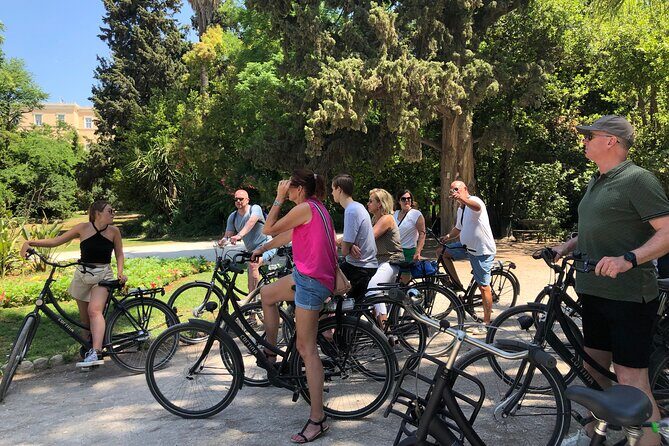
Pick this if you want more distance per euro and don’t mind a slightly more athletic ride. It’s the only Athens bike tour that loops up Filopappou Hill, which gives you the best non-Acropolis view of the Parthenon in the city. Our review has the full route map and notes on the climb (doable on electric, hard on regular).
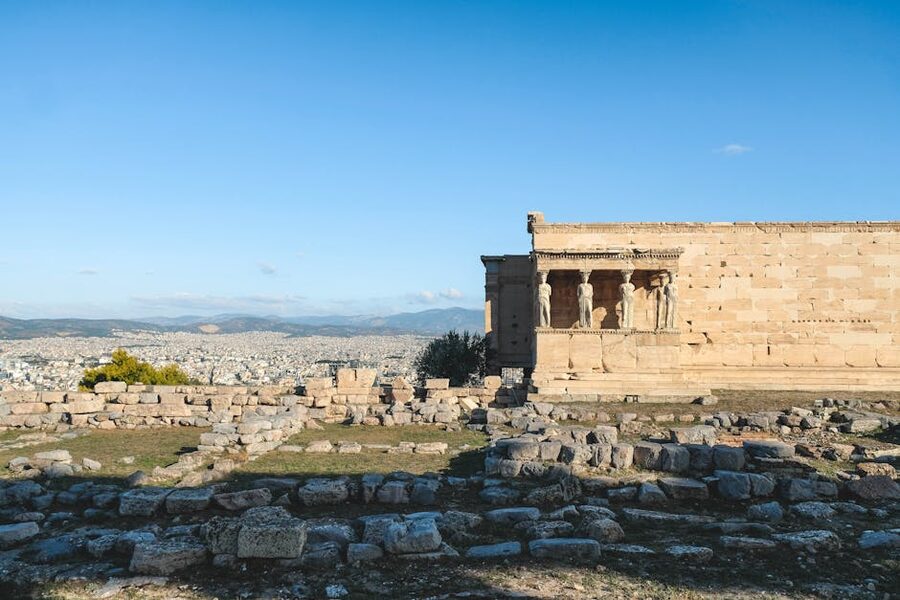
What You’ll See — The Classic Athens Bike Route
All the tours follow rough variants of the same loop. Here’s what to expect.
Stop 1: Syntagma Square and the Evzone Guards
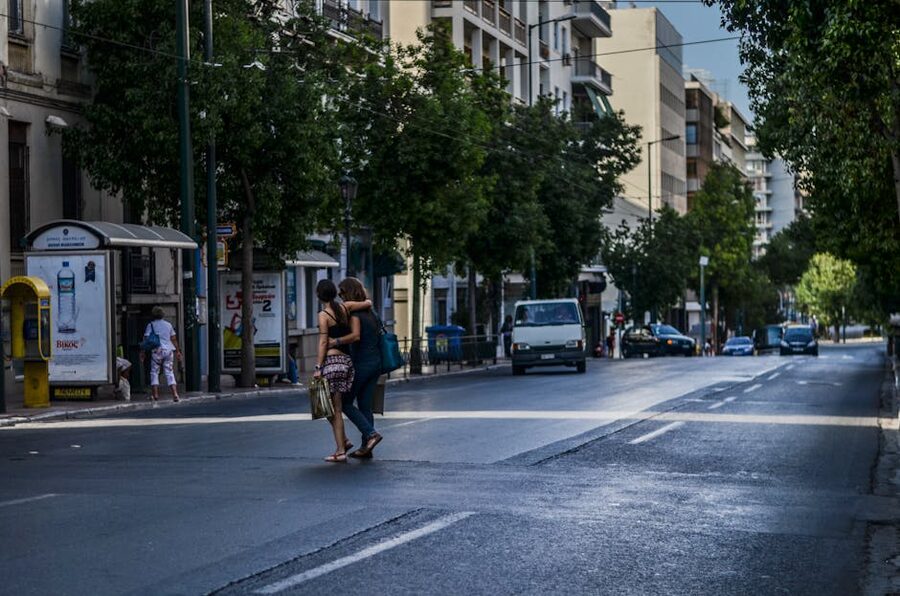
You roll out from somewhere near Syntagma — the huge square in front of the old royal palace, which is now the Parliament. If the timing works, the guides aim to be passing the Tomb of the Unknown Soldier on the hour, when the Evzone guards in pleated skirts and pom-pom shoes do their slow-motion changing ceremony. It’s actually a weirdly moving thing to watch and not what you’d expect from a military drill.
Stop 2: The National Gardens and the Zappeion
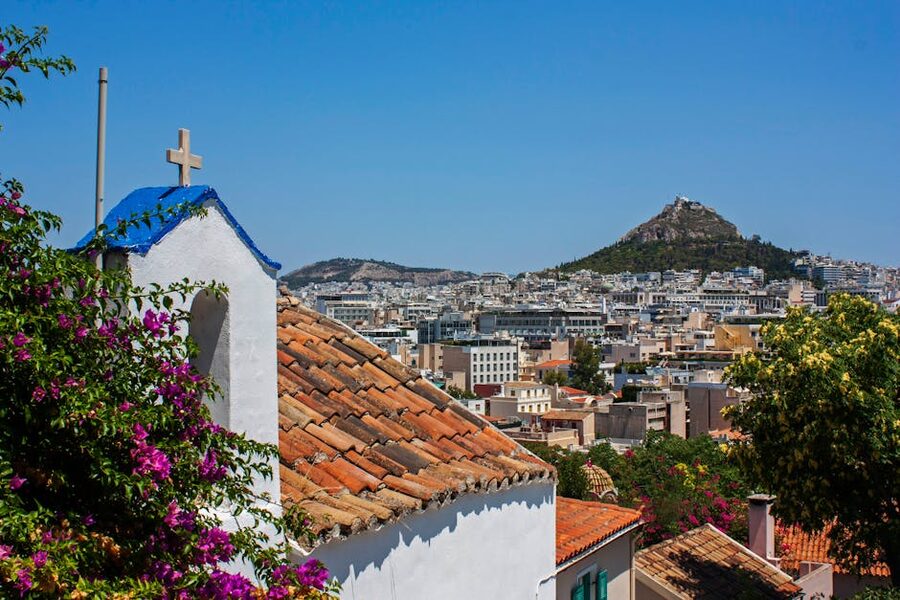
From Syntagma you drop into the National Gardens — 16 hectares of palm trees, pond, and turtles, originally Queen Amalia’s private garden. Cycling paths wind through it. You come out at the Zappeion (the neoclassical conference centre from 1888) and roll on toward the stadium.
Stop 3: The Panathenaic Stadium (Kallimarmaro)
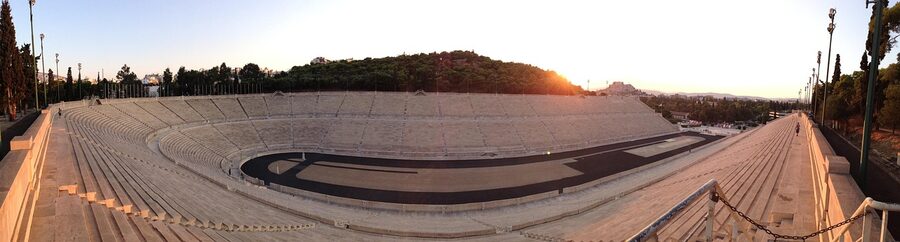
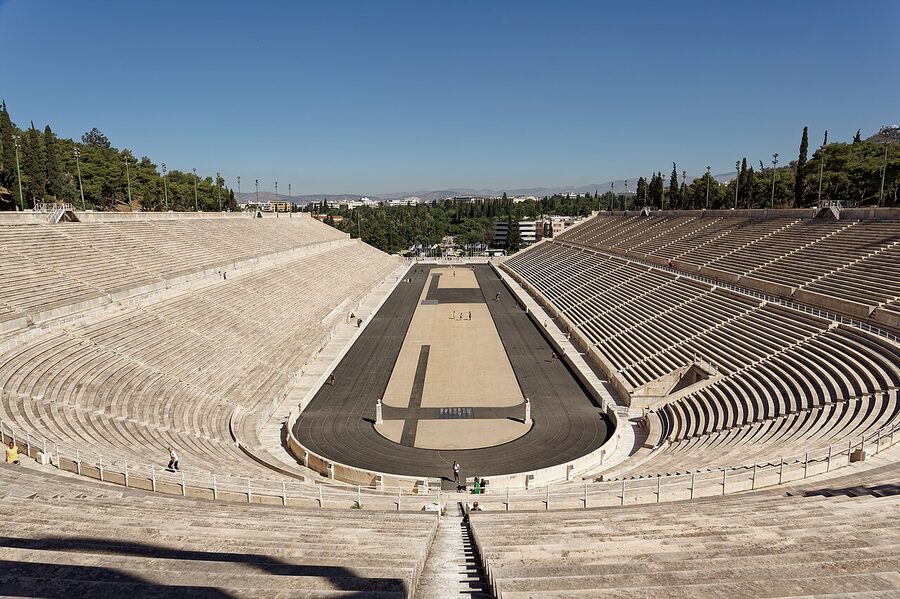
This is where the modern Olympic Games started in 1896. The stadium is a complete rebuild of a Roman-era stadium that was itself a rebuild of a 4th-century BC stadium. Every time Athens rebuilds it they use the same white Pentelic marble from Mount Pentelicus. It’s the only major stadium in the world made entirely of marble. You can’t ride into it, but most tours give you ten minutes to wander the horseshoe entrance and take the photo.
Stop 4: Temple of Olympian Zeus and Hadrian’s Arch

Across Vasilissis Olgas from the stadium. Fifteen huge Corinthian columns standing in a field — all that’s left of what was once the biggest temple in ancient Greece. Hadrian finished it in 131 AD. He also put up the triumphal arch next door, where one side is inscribed “This is Athens, the ancient city of Theseus” and the other side says “This is the city of Hadrian, and not of Theseus.” That kind of tone-deaf was normal for Hadrian.
Stop 5: The Acropolis Promenade
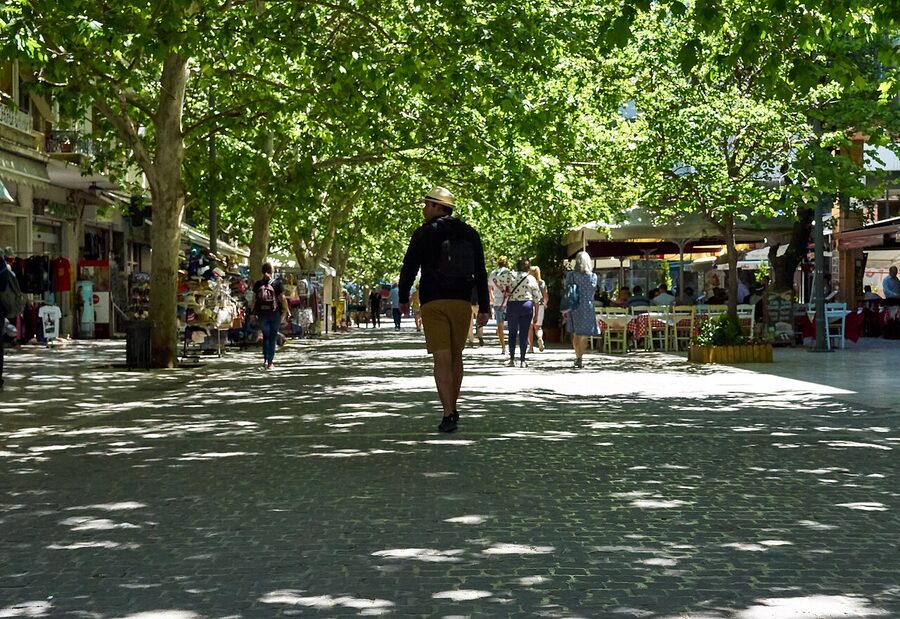

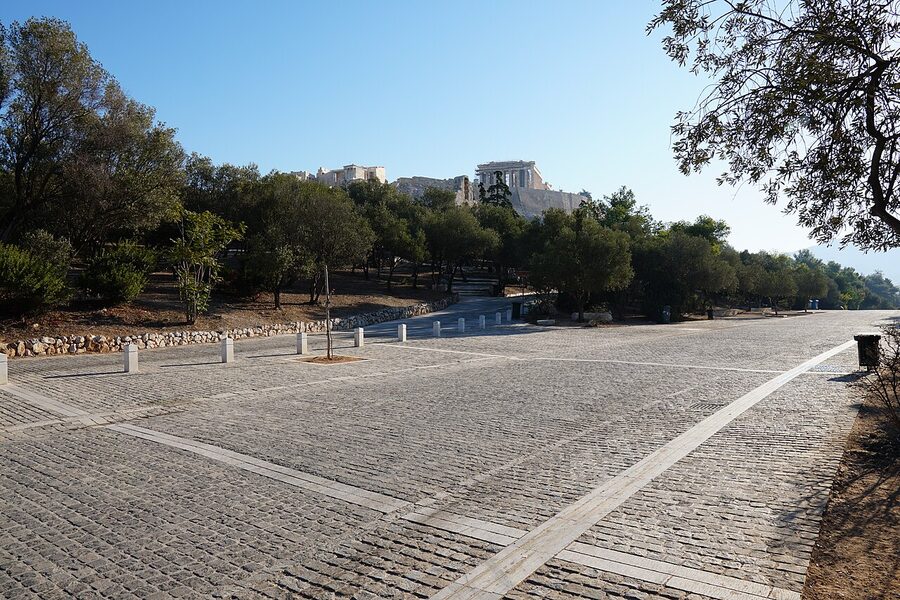

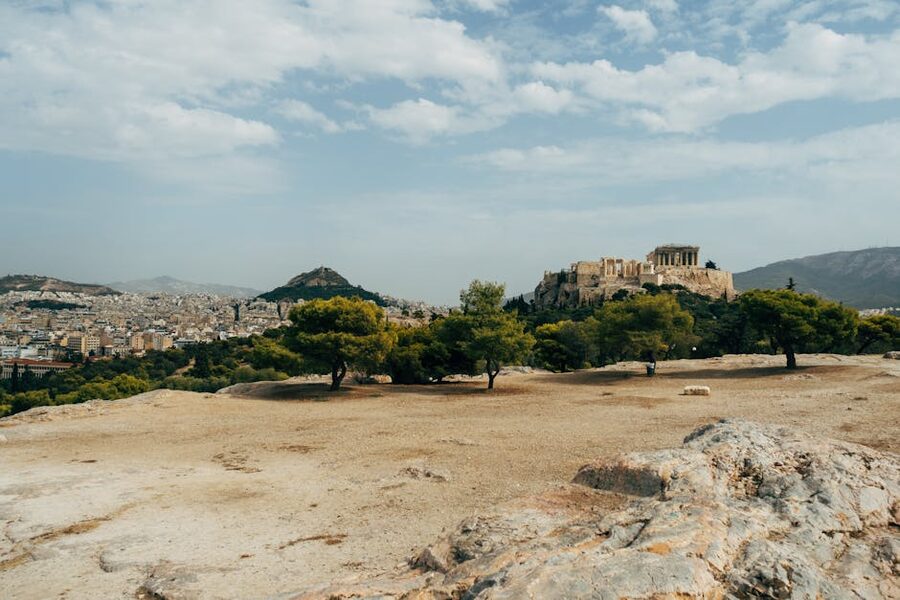
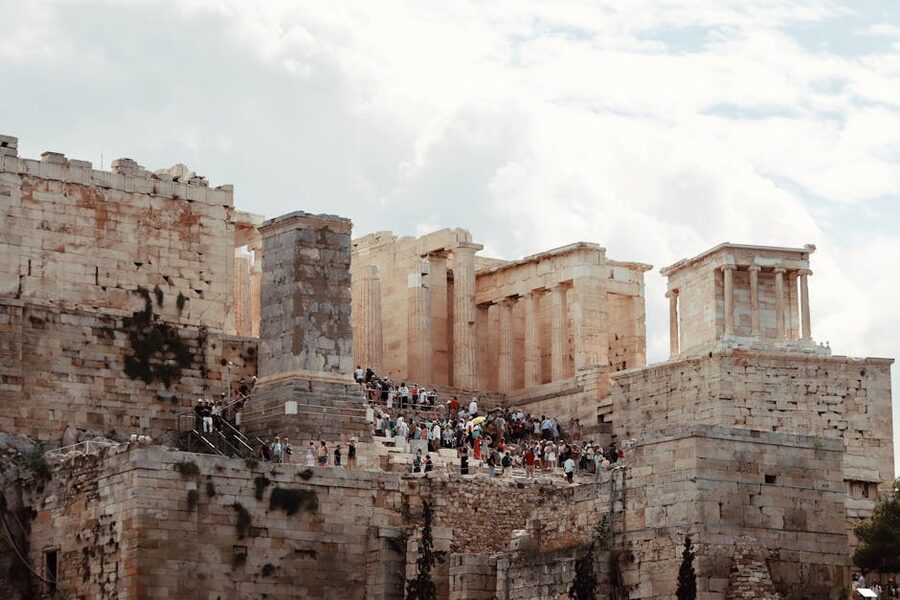
This is the highlight of the tour. Pedestrianised marble road that curves around the southern and western sides of the Acropolis rock. You ride past the Theatre of Dionysus (where Greek tragedy was invented), the Odeon of Herodes Atticus (where it’s still performed), and around to the Agora on the other side.
Because it’s pedestrianised the pace drops way down and the guides spend real time here. This is the section where most of the history gets delivered. If you want more on ticket logistics for the rock itself after your bike tour, our Acropolis ticket guide is the detailed version.
Stop 6: The Ancient Agora and Temple of Hephaestus

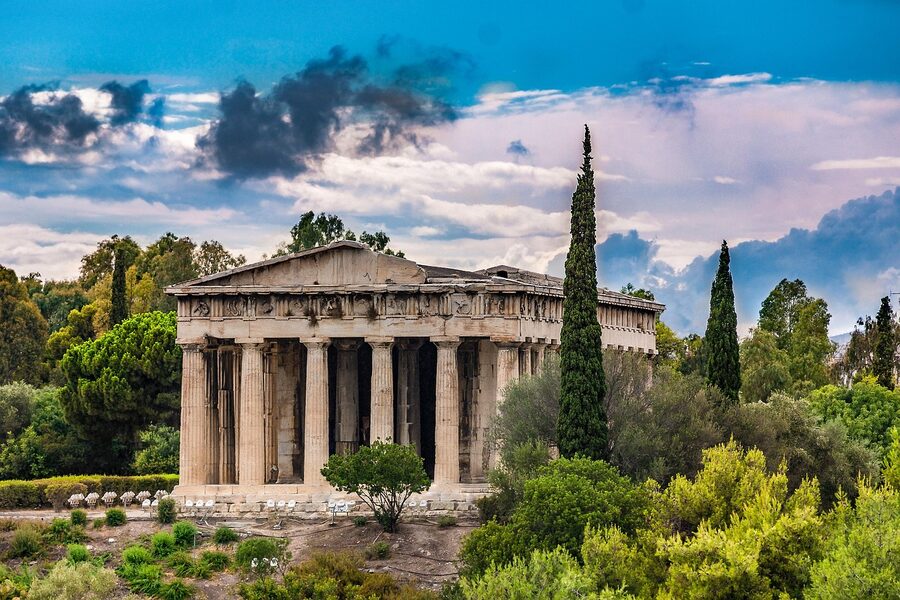
Down the back of the Acropolis you roll into the Ancient Agora — the actual civic centre of classical Athens, where Socrates argued with people and later got executed for it. The Temple of Hephaestus sits at the north end. It’s the most intact ancient Greek temple anywhere — Parthenon included — because it was converted into a church in the 7th century and kept in repair for 1,400 years.
Stop 7: Monastiraki and the Roman Agora
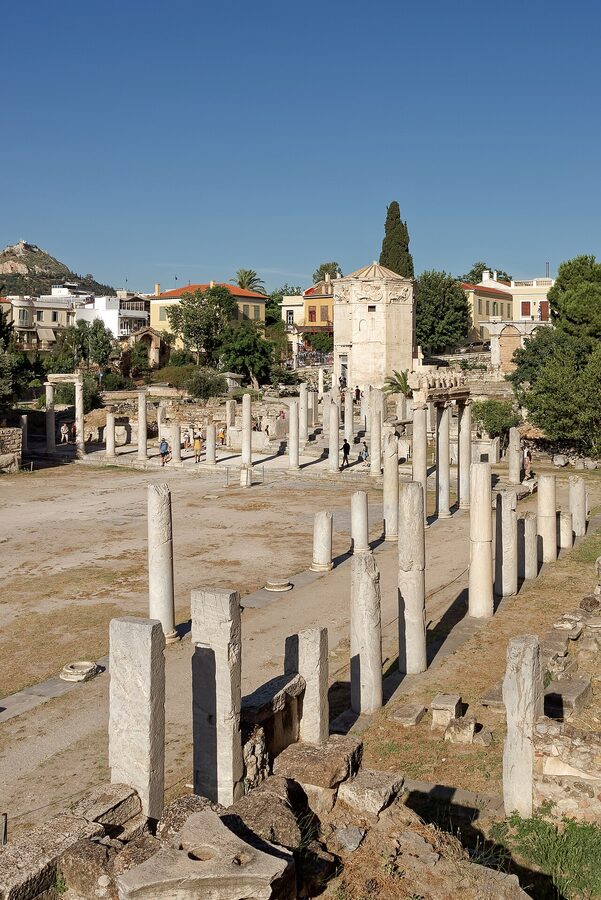

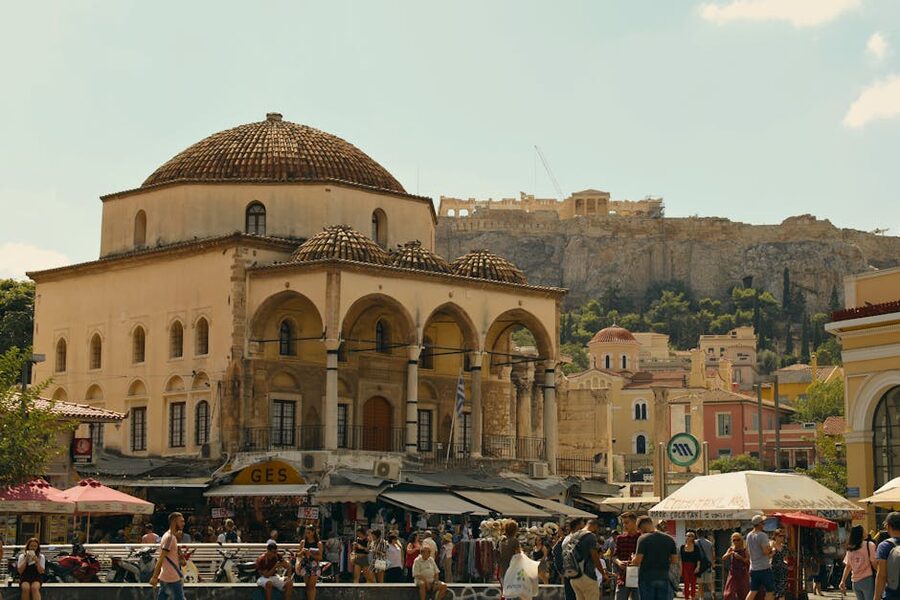
The Roman-era version of the Agora, added when Julius Caesar and Augustus decided the old Greek one was too cramped. The Tower of the Winds next door is a 12m octagonal tower that was a water clock, weather vane, and sundial all in one — each of its eight sides faces a cardinal wind direction. Surprisingly few tourists look up at it properly.
Stop 8: Plaka Wander
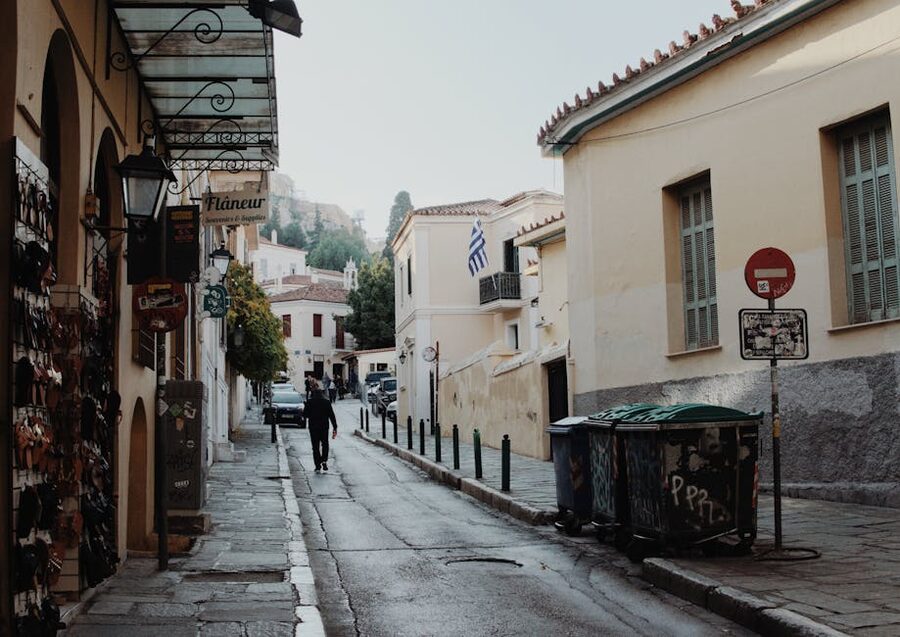
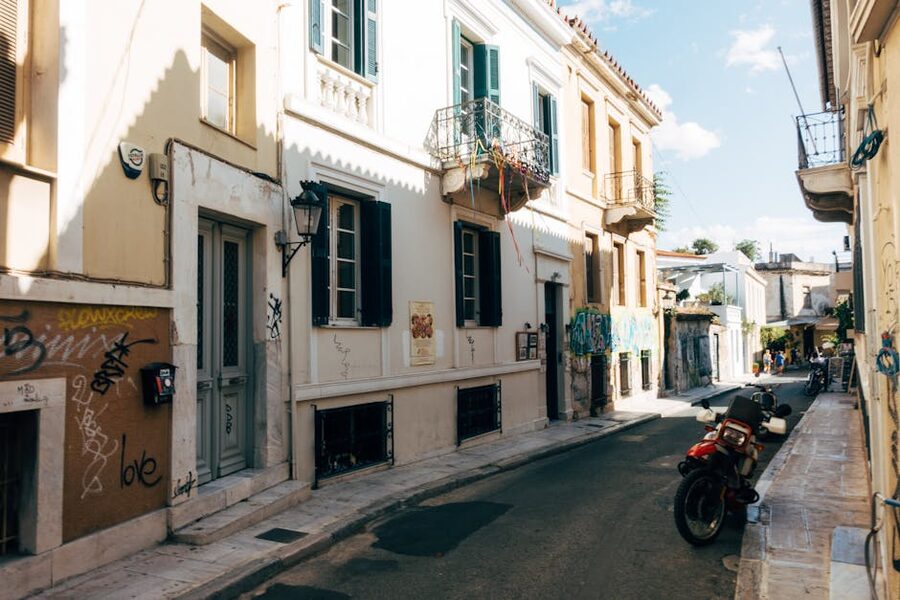
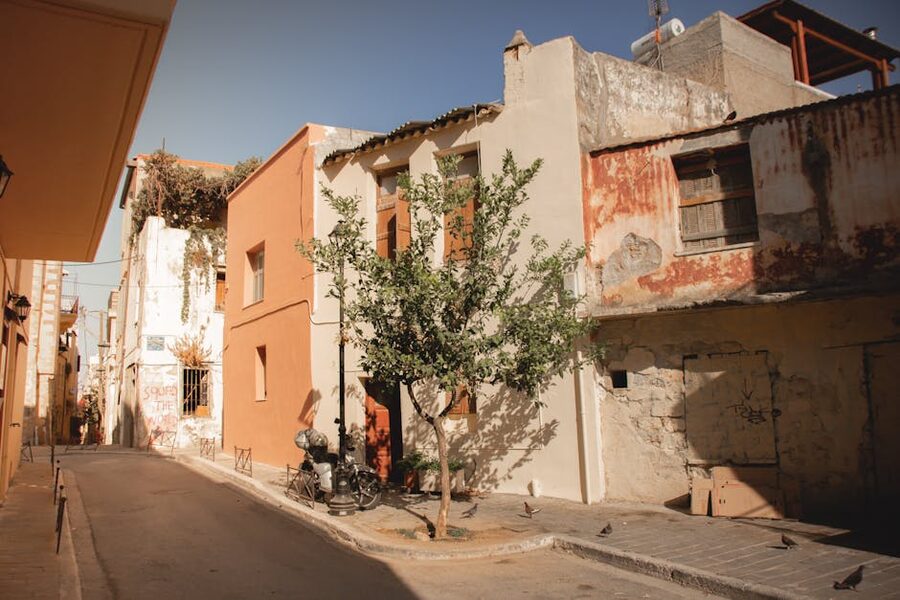
The final stretch. Plaka is the medieval heart of Athens, all stepped lanes and bougainvillea, and the bike-walking portion of the tour. Some tours finish here and let you wander on your own; others loop back to the starting point near Syntagma. Either way, this is where to grab a frappé and a spanakopita before your feet take over again.
What the Tours Don’t Cover
The bike tours are great on ancient and neoclassical Athens. They’re weak on modern Athens. If you’re interested in the current city — the galleries in Metaxourgeio, the bar scene in Psyrri, the street art covering Exarcheia — you won’t see it on a bike tour. Those need their own walks.
The coast is also off-limits. The Athens Riviera, Cape Sounion, the beaches south of Glyfada — all require a different bike tour (or a car, or the bus) because they’re 25–70km away. For those, our Cape Sounion tour guide covers the standard half-day option.
When to Book and When to Ride
April–June and September–October are ideal. July and August are too hot to enjoy properly — the tours still run, most even earlier in the morning (8am starts), but you’re fighting heat instead of looking at temples. December–February is the mellow season: fewer tourists, cooler temperatures, and the hills get easier.
Book at least a day ahead in high season. Evening departures (around 5pm) sell out fastest because they catch the golden hour on the Acropolis promenade — that’s also when I’d book if I had the choice. The 10am slot is the next-best option.
What to Wear and Bring
Closed shoes, not flip-flops — the pedals on rental bikes are not the forgiving platform type. Sunglasses. A small backpack for water (though the tours hand out bottles in summer). If you have cycling shorts, bring them; the saddles are what they are. Bring a lightweight windbreaker in shoulder season for the river breeze along the promenade. Helmets are provided and compulsory.
How It Compares to Walking
Three hours on a bike covers roughly what six hours on foot would. You give up some granularity — you won’t pop into shops, you won’t linger at a specific placard — but you get a proper mental map of how central Athens fits together. I did the bike tour on my second day in the city and everywhere I walked afterwards made more sense because I had the layout from above.
If your style is slow and thorough, pair the bike tour with a dedicated Athens food tour on a different day — the food walks cover exactly the neighbourhoods (Psyrri, Kerameikos) that the bike tours skip. Between the two you get ancient, neoclassical, and modern Athens inside four or five hours of combined walking time.
Getting to the Start Point
All three recommended tours start within a 5-minute walk of Syntagma metro. If you’re staying in Plaka, Monastiraki, Psyrri, or Koukaki, you can walk to the start point in under 15 minutes. Further out, take the metro to Syntagma — it’s the hub station where every line meets.
From the airport, the metro direct to Syntagma takes 45 minutes and costs €9. A taxi is around €40 and hits traffic. Metro’s the move. If you’re on a tight schedule, do the airport-to-city metro and the bike tour same day — drop your bags at your hotel, head to the meeting point, and you’ve seen the whole historic centre by dinner.
If You Only Have Half a Day in Athens

Cruise passengers from Piraeus and people on layovers use these tours heavily for exactly this reason. You can do the 10am bike tour, eat lunch in Plaka, and be back at the port or airport by 4pm. It’s not thorough Athens, but it’s a legitimate taste of every major ancient site in a single morning.
Practical Questions
Do I need to be fit? No. The electric assist handles the hills. If you can ride a bike at all, you can do this.
Can kids come? Minimum age is usually 12 for the main tours. Some operators do family-specific versions with trailer seats for younger children — worth asking directly at booking.
Is it safe in Athens traffic? The tours route around major roads. You spend maybe 10% of the time in actual traffic, mostly on side streets with low speeds. I’ve never felt unsafe on one — but I wouldn’t rent a bike and freestyle it in central Athens.
What if it rains? Tours run in light rain. Heavy rain cancels — you get refunded or rescheduled. Athens doesn’t rain often enough for this to be a real worry.
Pairing the Bike Tour With Other Athens Things
The obvious combo is bike tour + Acropolis. Do the bike first to get the lay of the land, then tackle the rock itself in the afternoon with more context. The Acropolis combo pass is worth considering if you’re planning to do multiple ancient sites.
If you want a follow-up that keeps the moving-vehicle theme, the hop-on-hop-off bus covers the neighbourhoods the bike tours miss — further-out spots like the Olympic Stadium and the southern suburbs.
For ancient history nerds, pair the bike tour with the Acropolis Museum (the sculptures from all the temples you rode past) and the National Archaeological Museum (everything before and after). That’s a proper three-day Athens.
For a day out of the city the classic picks are Delphi, Ancient Corinth, and Mycenae with Epidaurus. Athens is a fantastic base for the whole Attica peninsula.
The Short Version
Book the main Scenic Bike Tour, pick the electric option if you’re visiting between April and October, aim for the evening departure if you can, and wear closed shoes. Three hours later you’ll have seen everything that matters and you’ll know Athens better than a week of wandering on foot.
Affiliate disclosure: Some links in this article are affiliate links. If you book through them we may earn a small commission at no cost to you. Every recommendation is based on my own experience.