
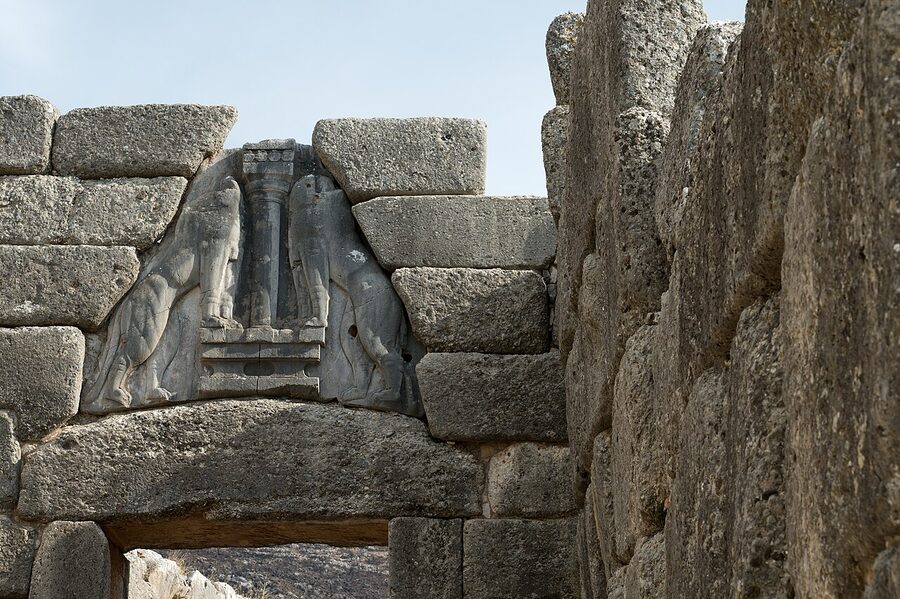
The oldest thing you’ll see on this day trip is also the oldest thing you’ll see in Greece full stop. The Lion Gate at Mycenae went up around 1250 BC — five centuries older than the Parthenon, a thousand years older than anything Roman. Then you drive an hour to a town that was the capital of Greece in 1823 and eat lunch by a tiny Venetian island-fort painted onto every postcard in the country.
This is the classic Athens day trip: Corinth Canal, Mycenae, Epidaurus, and Nafplio in one 10-hour hit. I did the €34 audio-guide version and got home wondering why anyone tries to fit it into less time. Here’s how the tours work, which variant to pick, and what you’ll actually see at each stop.


In a Hurry? The Three Versions of This Day Trip
- Best value: Mycenae, Epidaurus & Nafplio with audio guide — from €34. The most-booked version by a distance. Bus-only, audio guide app on your phone, you set your own pace at each site.
- Best for first-timers: Full-day guided tour — from €33. Licensed live guide on the bus, archaeology walks you through each site in person.
- Longest day: 11-hour tour with more time in Nafplio — from €33. An extra hour built into Nafplio, useful if you want a proper wander around the old town.
- In a Hurry? The Three Versions of This Day Trip
- Why This Is Probably the Single Best Day Trip From Athens
- How It Differs From Just Doing Mycenae and Epidaurus
- The Best Nafplio-Peloponnese Day Tours From Athens
- 1. Mycenae, Epidaurus & Nafplio Day Trip with Audio Guide — from €34
- 2. From Athens: Mycenae, Epidaurus & Nafplio Full-Day Tour — from €33
- 3. Mycenae, Epidaurus and Nafplio — 11-Hour Extended Tour — from €33
- What You’ll Actually See — Stop by Stop
- Stop 1: Corinth Canal (30 minutes)
- Stop 2: Mycenae (90 minutes)
- Stop 3: Epidaurus Theatre (60 minutes)
- Stop 4: Nafplio (2–3 hours)
- What to Do With Your Free Time in Nafplio
- Where to Eat
- The Archaeology in Order — What to Prioritise
- When to Book and Go
- What to Wear and Bring
- Getting to the Pickup Point
- Doing It Without a Tour — Is It Worth It?
- Pairing With Other Athens Day Trips
- If You Love Nafplio — Stay the Night
- Practical Questions
- The Short Version
Why This Is Probably the Single Best Day Trip From Athens
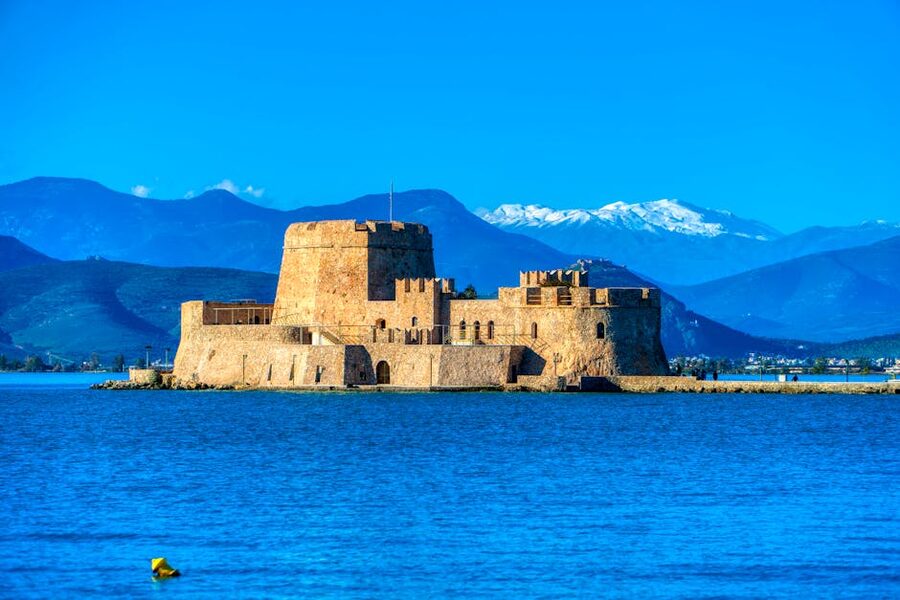
The route covers three kinds of Greece in one day. Mycenae is Bronze Age — before classical, before democracy, before Homer wrote it down. Epidaurus is classical — the theatre is 4th century BC and still works as one of the world’s most acoustically perfect performance spaces. Nafplio is modern Greece — the first capital of the country after independence in 1821, and the place where modern Greece figured out how to be modern Greece.
You couldn’t design a better architectural sampler. And the Peloponnese scenery (orange groves, olive trees, stony hills, bright Aegean water) is a nice bonus after a few days stuck in Athens traffic.
What this day trip isn’t: relaxing. Ten hours on a coach plus four archaeological sites is a lot. If you want calm, pick a different day. If you want to see the three most important Peloponnesian sites and a picture-perfect port town before dinner in Athens, you can’t really beat it.
How It Differs From Just Doing Mycenae and Epidaurus
A lot of Athens tours stop at Mycenae and Epidaurus and skip Nafplio entirely. Those are shorter days, maybe 8 hours, and archaeologically they cover the same ground. But they miss the single most beautiful place in the Peloponnese. Our Epidaurus + Mycenae guide covers the shorter options if archaeology is your only focus and you don’t care about towns.
Pick the full 3-in-1 (what this article is about) if you want the mixed experience. Pick the shorter 2-stop if you’re tight on time or don’t like coach buses.
The Best Nafplio-Peloponnese Day Tours From Athens
Three tours ranked for value and experience.
1. Mycenae, Epidaurus & Nafplio Day Trip with Audio Guide — from €34
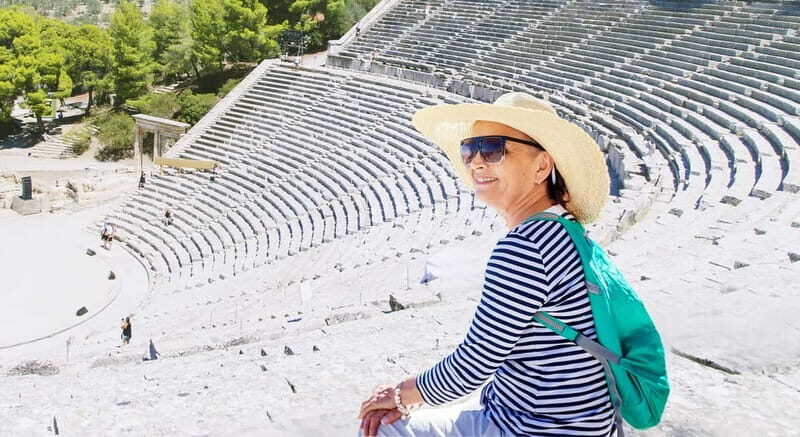
The highest-volume tour, which keeps the price down. No live guide but the audio app is genuinely good — long-form commentary at each site, better than most museum audio guides. You also get more freedom to wander because you’re not tied to a group pace. Our full review covers the exact pickup locations in Athens and the timing at each stop.
2. From Athens: Mycenae, Epidaurus & Nafplio Full-Day Tour — from €33
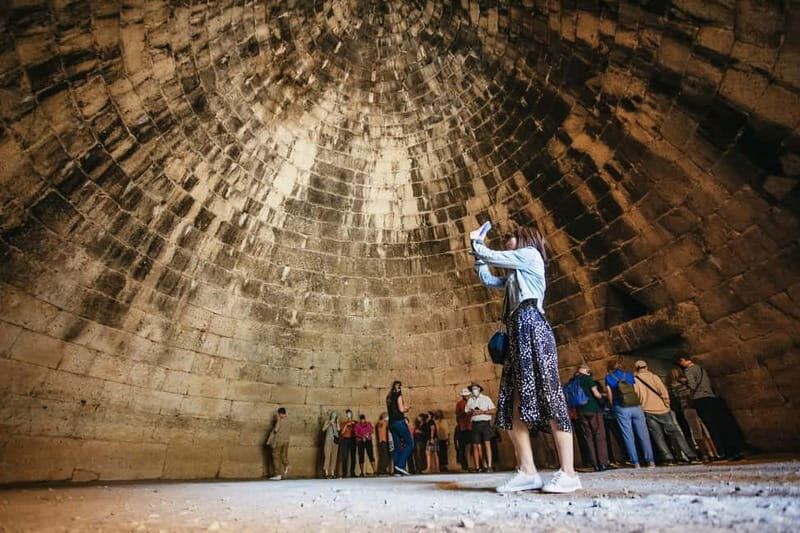
The guided version. You get a licensed Greek archaeologist explaining each site as you walk through it, which is worth the trade-off if you like the slightly regimented group pace. Lunch is included at a Nafplio taverna — not the best you can eat there but decent and pre-arranged. Our review has the exact itinerary and bus comfort notes.
3. Mycenae, Epidaurus and Nafplio — 11-Hour Extended Tour — from €33
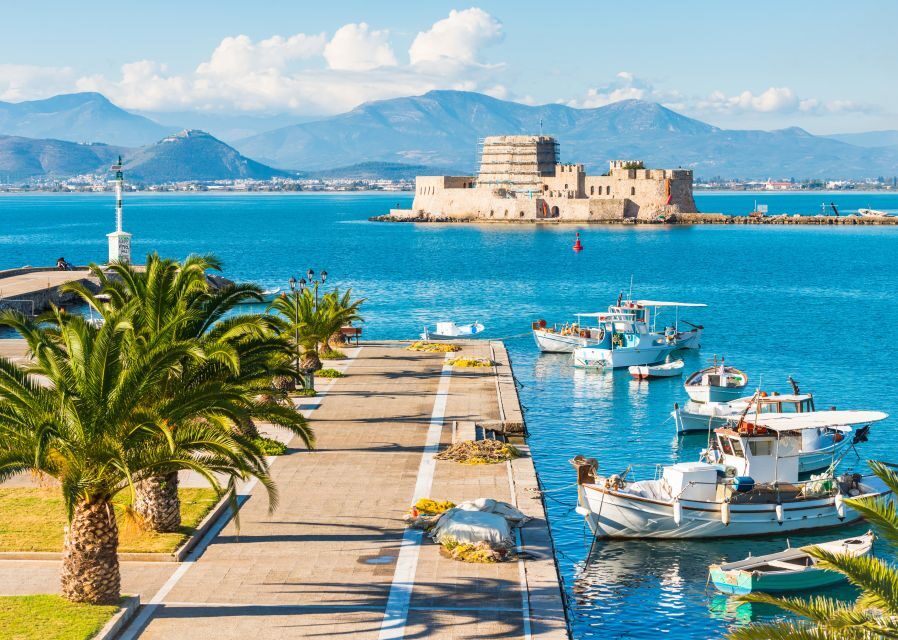
The sleeper pick if you love Nafplio at first sight — an extra hour in the old town rather than rushing through lunch. Same sites, same route, just more time in the place you’re most likely to wish you had more time in. Our review breaks down what you can fit into that extra hour (old town walk, coffee at the marina, sometimes a quick climb up toward Palamidi).
What You’ll Actually See — Stop by Stop
Every variant of the day trip runs the same route. Here’s what happens at each stop.
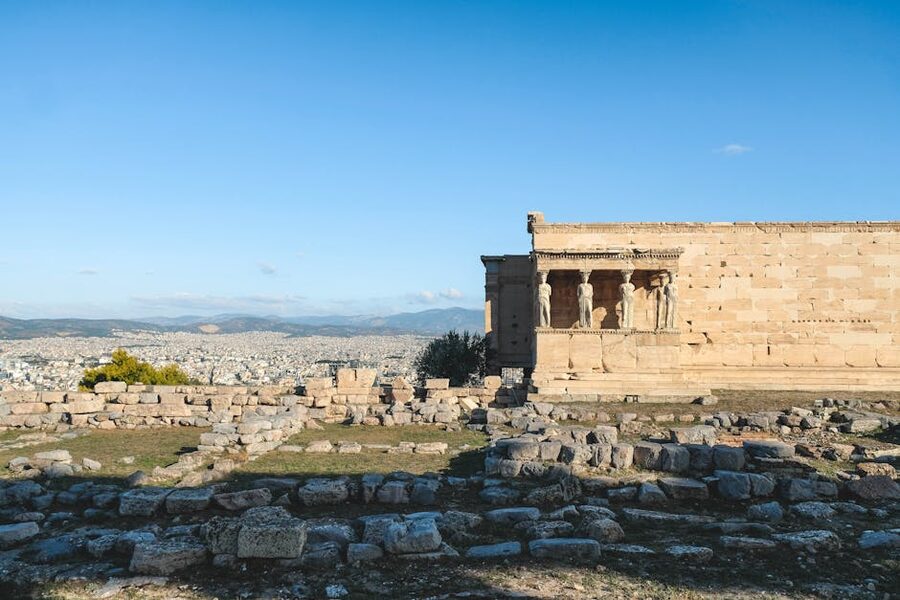
Stop 1: Corinth Canal (30 minutes)
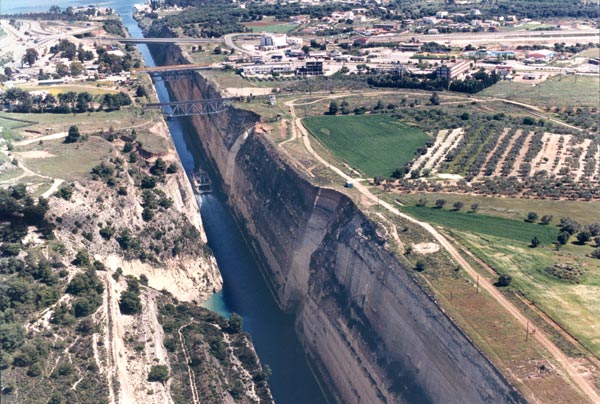
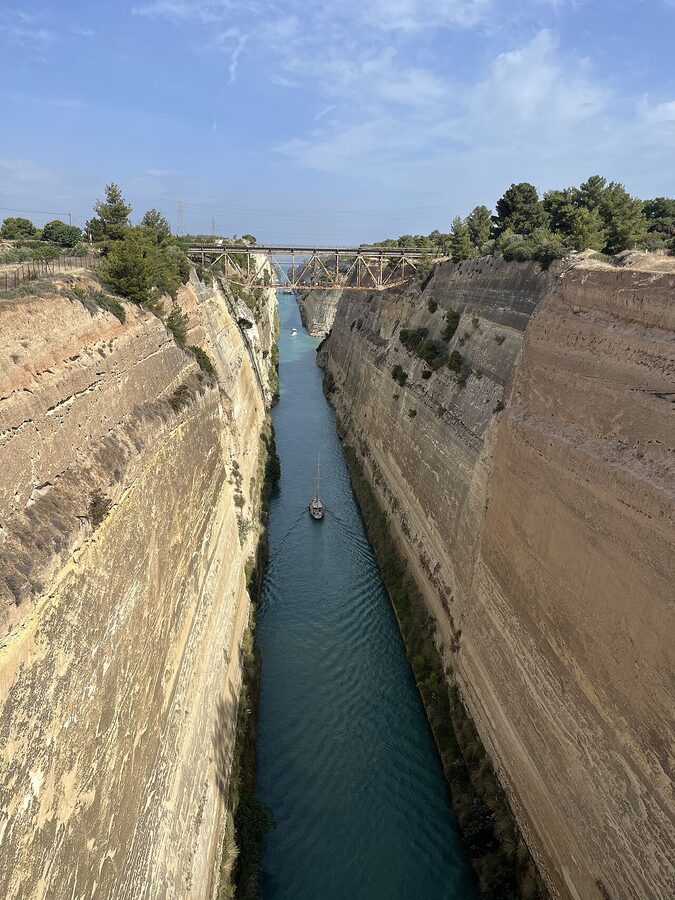
Leave Athens around 8am. 90 minutes on the bus. First stop is the Corinth Canal, which isn’t an archaeological site — it’s an 1893 engineering marvel. 6 km long, 25m wide, carved through solid limestone. The Romans started digging it in 67 AD (Nero took the first swing of the pickaxe, apparently) and gave up. Modern Greeks finished it 1,800 years later.
The tour stops at the pedestrian bridge in the middle. You get about 30 minutes to look down 79 metres at the water and take photos. There’s a cafe at the stop and overpriced souvenirs. Skip the souvenirs, grab a frappé, and be back at the bus on time — drivers are strict.
Stop 2: Mycenae (90 minutes)
Another hour on the bus to the citadel. Mycenae is up on a hill in the Argolid plain, and the location makes more sense the second you see it — this was the strongest fortified position within striking distance of the sea. The Mycenaeans ran most of Bronze Age Greece from here between 1600 and 1100 BC.
The walk-through takes about 45 minutes: you enter through the Lion Gate, walk the ramp up to the palace ruins, see Grave Circle A (where Schliemann dug up the so-called Mask of Agamemnon in 1876), then visit the small on-site museum. If you have time, hike down to the Treasury of Atreus — a massive 14-metre domed tomb in one piece, 500 metres from the main site, that most tour groups skip. Worth the extra ten minutes.
Stop 3: Epidaurus Theatre (60 minutes)
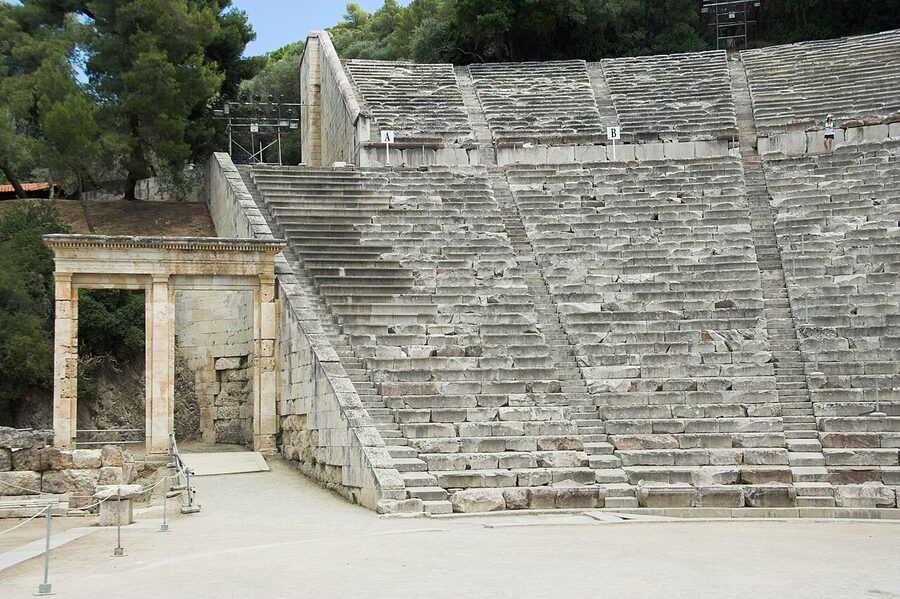

Another 30 minutes on the bus east toward Epidaurus. The main draw is the theatre, which was built in the 4th century BC, seats 14,000, and has the best-preserved acoustics of any ancient theatre anywhere. Guides demonstrate by standing on the stage and whispering. You can hear them from the back row.
The rest of Epidaurus is the Asklepion — the ancient sanatorium where Greeks came to be healed by the god Asclepius. There’s a good small museum on site. You won’t have time for all of it on a tour day, so prioritise the theatre. Climb to the top row. The view back down is the point.
Stop 4: Nafplio (2–3 hours)
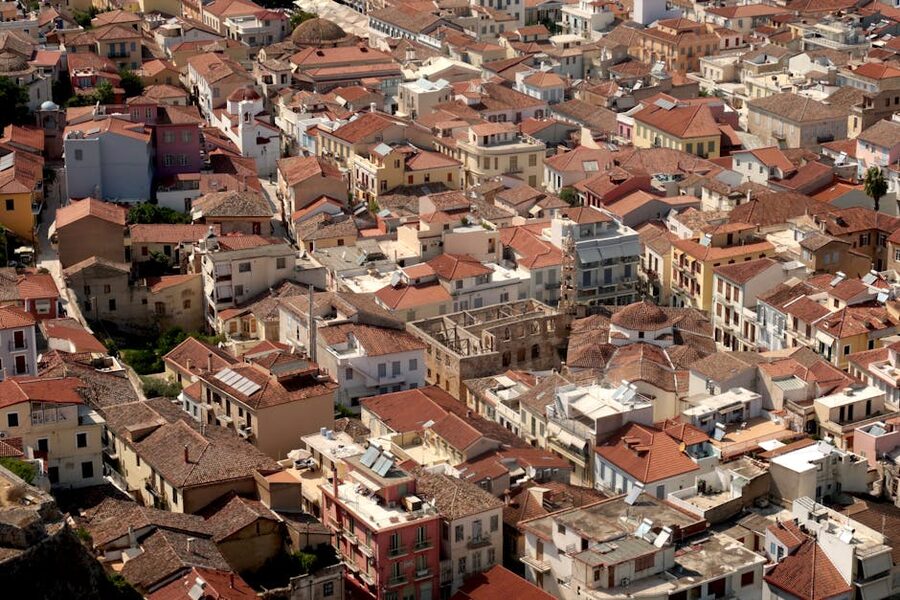
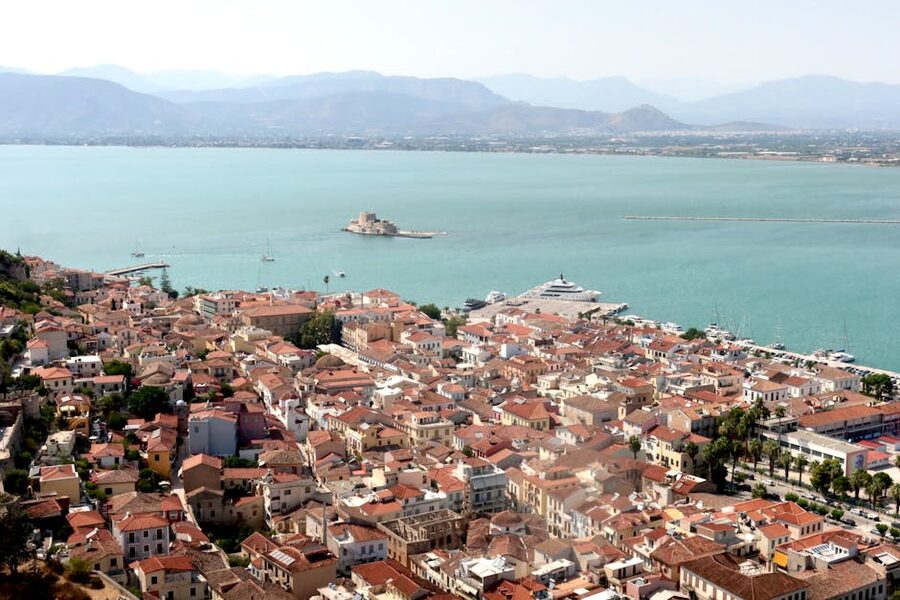
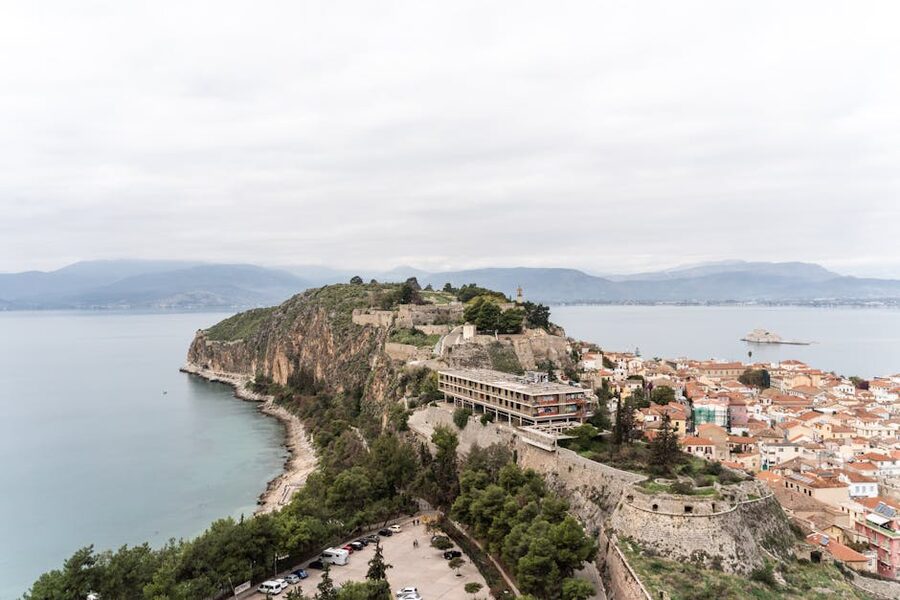
The final stop and the reason most people remember this day trip. Nafplio is a small port town on the Argolic Gulf, 45 minutes by bus from Epidaurus. It was the capital of newly independent Greece from 1823 to 1834, which means the Parliament met in buildings that are still here, and the first president of Greece, Ioannis Kapodistrias, was assassinated on the steps of the church of Saint Spyridon in 1831. You can still see the bullet hole in the wall.
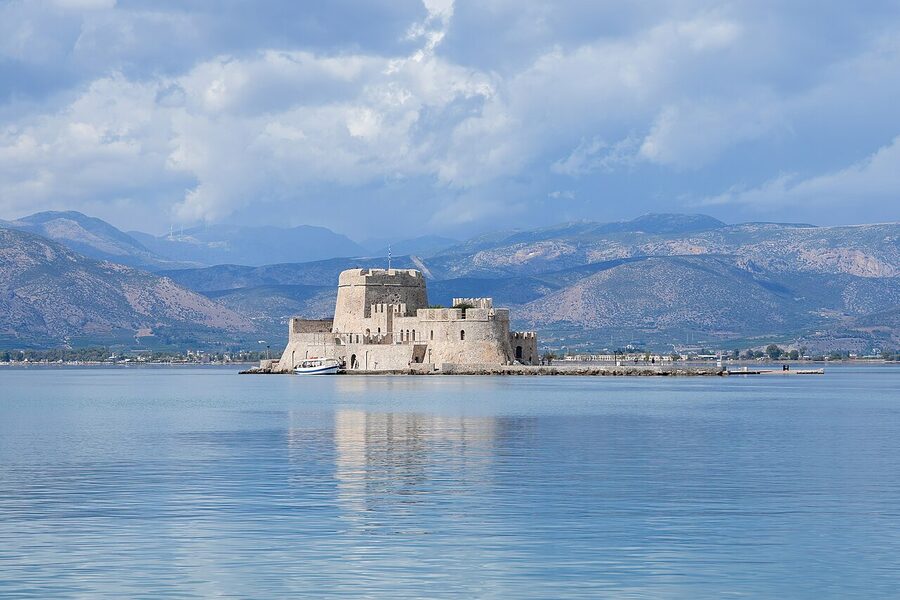

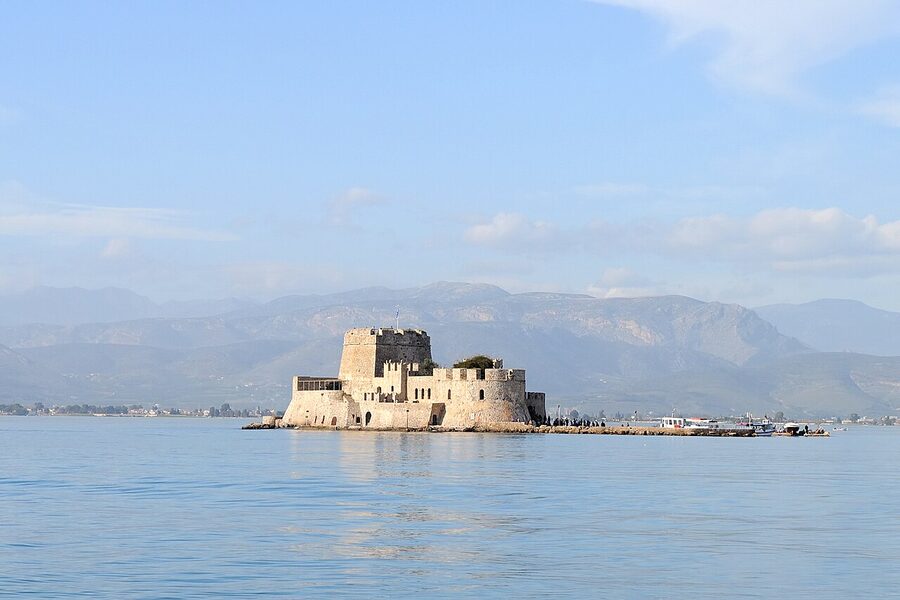
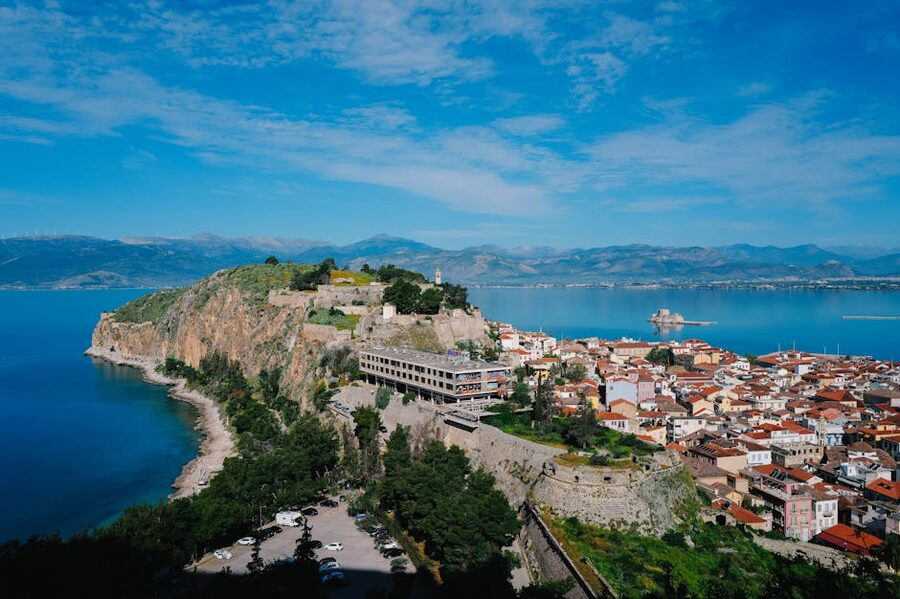
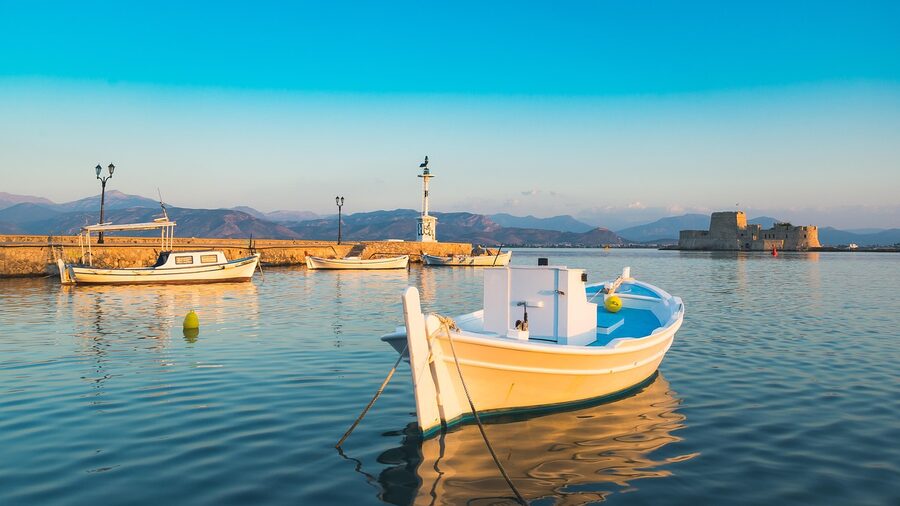
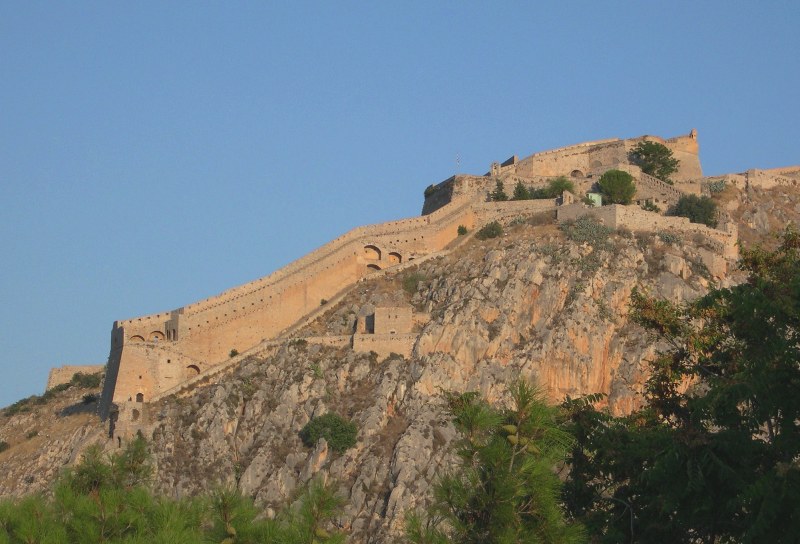
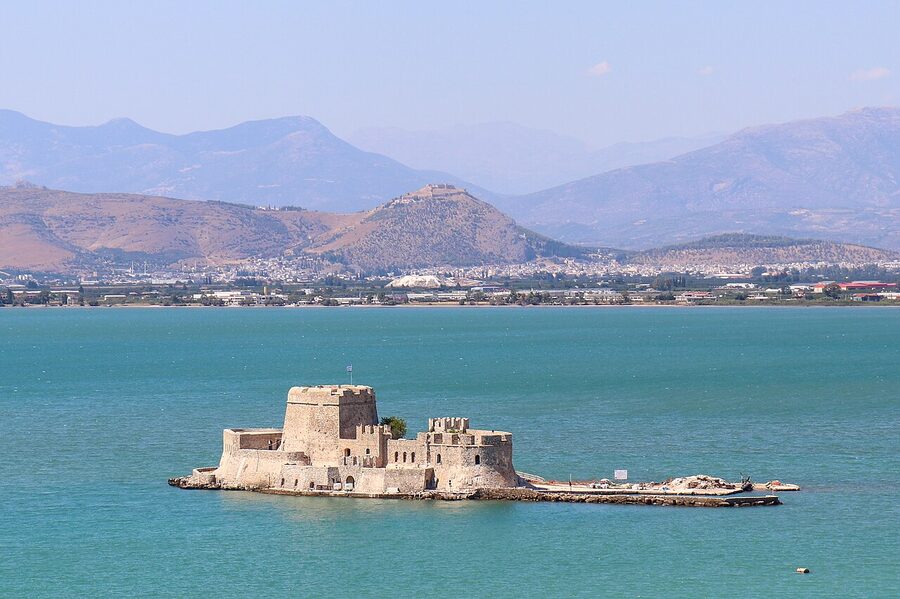
The old town sits on a narrow peninsula with the Bourtzi castle in the harbour, the Acronauplia fortress above the town, and the mountaintop Palamidi fortress looming over everything. You won’t have time for Palamidi on a day trip (it’s 999 steps up — ask me how I know), but the old town is walkable in 90 minutes and the lunch options are better than in most Greek cities ten times its size.

What to Do With Your Free Time in Nafplio
The tours typically give you 90 minutes to 3 hours in Nafplio, depending on which one you booked. Here’s how I’d spend it in each case.
90 minutes (short stop): Walk Syntagma Square (the old Parliament building is now the Archaeological Museum — skip going in, just look), coffee on one of the plane-tree-shaded tavernas, up to the waterfront promenade for Bourtzi photos, quick look at Saint Spyridon’s bullet hole, lunch fast.
2 hours (standard): All of the above, plus a wander up the narrow lanes of the old town (Koletti, Staikopoulou, and the streets above them), and a proper taverna lunch. Sample moussaka and an Argolid rosé.
3 hours (extended tour): Everything above, plus the first 200 steps up toward Palamidi for the view (don’t do all 999 — you’ll run out of time and need a stretcher), or a 20-minute walk along the coastal path east past the Five Brothers cannon battery to the old harbour cannons.
Where to Eat
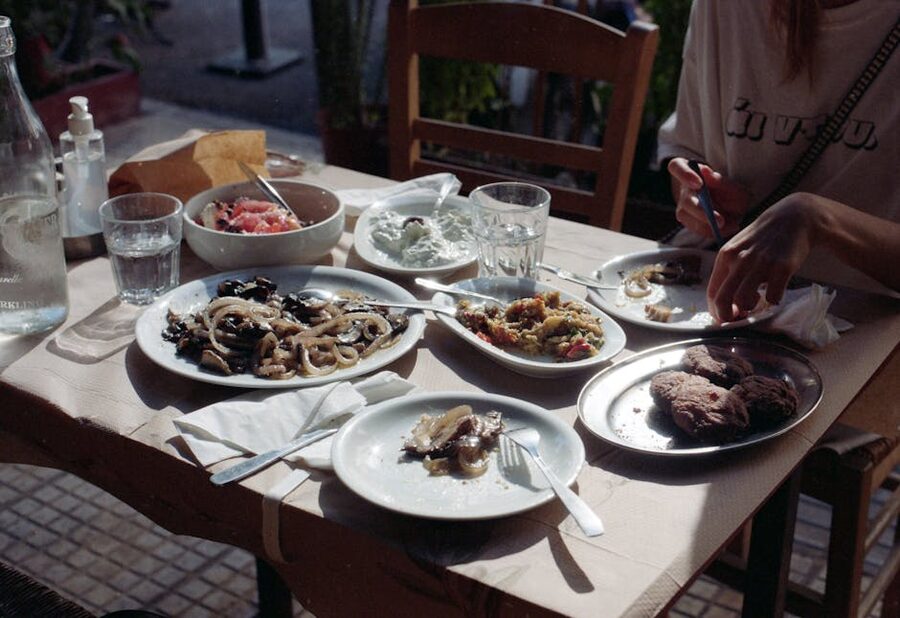
I’d skip anything directly on Syntagma Square (tourist menus) and head up the back streets. Arapakos on Bouboulinas has fresh fish and the best people-watching on the waterfront. Antica Gelateria di Roma for ice cream afterwards — one of the best gelaterias in Greece, run by Italian expats since 1870-something. Mezzo for sit-down tavernas with actual Peloponnesian cooking. None of these costs more than €20 a head.
The Archaeology in Order — What to Prioritise

If you had to rank the three archaeological stops by how much they reward close attention:
Epidaurus theatre — the one you’ll remember the longest. Don’t just look at it from below. Climb to the top row. Sit. Listen to the guide whisper from 60 metres away.
Mycenae’s Lion Gate — not the most visually impressive ruin, but the weight of history is heavier here than anywhere else you’ll visit on the trip. Touch the wall. Think about 3,300 years.
Mycenae’s Treasury of Atreus — technically a separate site 500m from the main citadel, often missed. One of the finest examples of Bronze Age engineering anywhere. Go if you have any spare time.
The Corinth Canal — basically a photo stop. 30 minutes is exactly right.
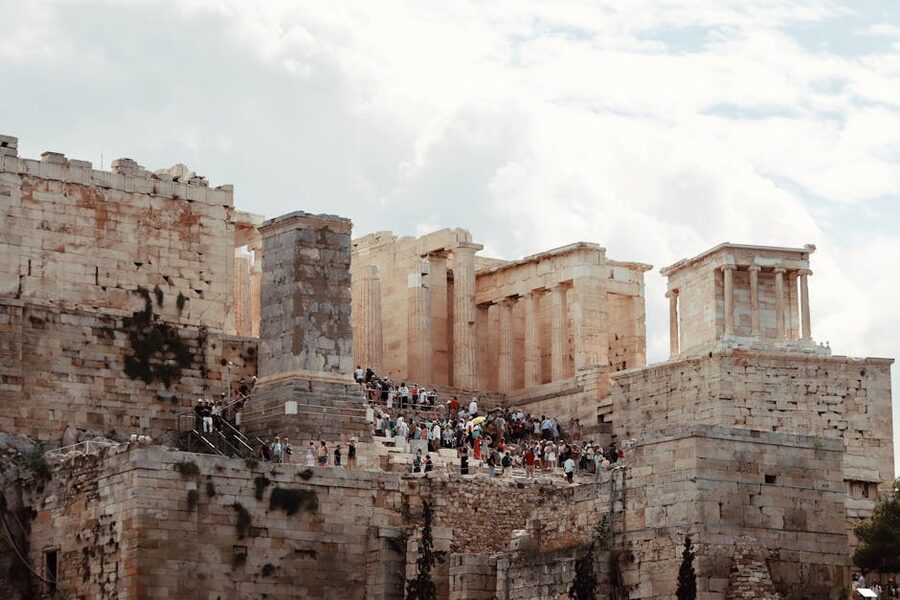
Nafplio old town — the only “live” place on the tour. Treat it as the reward at the end of the day. If you connected with Greek history at the archaeological sites, you’ll understand Nafplio on a deeper level than just “a cute town with red roofs.”
When to Book and Go
April–June and September–October are ideal — everything’s open, weather is kind for outdoor walking, crowds aren’t yet summer-level. July and August are brutal at Mycenae specifically (no shade, sun-blasted hillside) and I’d only do it then if you have no other option. November–March the tours still run but some sites have reduced hours and the sun sets before you get back to Athens.
Book 3-5 days ahead in shoulder season, a week ahead in July and August. Early-morning pickup points are central (most are at Syntagma or Omonia in Athens). You’ll get a hotel-pickup option on some tours for an extra €5–10.
What to Wear and Bring
Closed shoes, not flip-flops. Mycenae and Epidaurus both involve uphill walking on uneven stone. Sunscreen. Hat. Refillable water bottle — there are fountains at most sites. Small daypack. Cash for a taverna lunch in Nafplio (€10-25 depending on what you order). A book or download for the 3+ hours of bus time.
Getting to the Pickup Point
Most tours depart from central Athens pickup points between 7:30 and 8:30am. Double-check which point your specific tour uses — there are about five main ones scattered around the centre. Syntagma and Omonia are the most common. Arrive 15 minutes early; the buses do not wait.
Return time is usually 7-8pm. That gives you a shower and a dinner in Athens, if you’ve got the energy left.
Doing It Without a Tour — Is It Worth It?
Can you rent a car and do the same route yourself? Yes. Is it cheaper? Marginally. Is it better? Depends on whether you enjoy driving unfamiliar Greek roads for 6+ hours in one day. A day-trip rental + gas + site tickets + parking comes to about €90-100 for two people. The audio-guide tour is €34 per person, all in, without the driving stress.
I’d only self-drive the route if: (a) you have multiple days to spread it over, (b) you want to visit sites the tours skip (Nemea wine region, the Argos archaeology, the Tiryns citadel), or (c) you want to stay overnight in Nafplio. The town deserves it.
Pairing With Other Athens Day Trips
.jpg)
If you have a few days in Athens and want to do multiple day trips, here’s how I’d stack them by how tired you’ll be after:
Light day: Ancient Corinth — just one site, under 5 hours, basically a half-day.
Medium day: Delphi — 10 hours but only one site so you’re not rushed, mountain scenery on the drive.
Heavy day (this one): Mycenae + Epidaurus + Nafplio — 10-11 hours, four stops, a lot of walking.
Epic day: Meteora — 13-14 hours round trip, but those monasteries on rock pillars are unlike anything else on earth.
Space them out with rest days. Don’t do this route and Meteora back-to-back unless you’re specifically training for an ultramarathon.
If You Love Nafplio — Stay the Night
Honestly, the best version of this trip is a two-day self-drive: do the day trip on day one, sleep in Nafplio, and use day two for Palamidi (the 999 steps, the 35-acre fortress at the top is one of Greece’s underrated highlights), the waterfront walk east, and a proper evening in the old town. Nafplio at night — lights on Bourtzi, plane trees over the square, live bouzouki from the tavernas — is something the day trip can’t show you.

Practical Questions
Is there a bathroom on the bus? On most tours yes, but plan around the site visits — they all have free toilets at the entrance.
Can I skip Mycenae if archaeology bores me? The tour bus won’t wait around for you, but you can stay at the entrance cafe for the 90 minutes. Epidaurus is the one archaeological site I’d strongly say don’t skip — even non-history people tend to remember the theatre.
What about food and drink? Some tours include a lunch, most don’t. Assume you’re paying for your own meal in Nafplio. Budget €15-25 for a good lunch.
Are the sites wheelchair accessible? Partially. Nafplio old town has cobbles and steps. Mycenae has uneven ramps up to the Lion Gate. Epidaurus has the theatre seating (stone, unavoidable). Ask the operator directly if accessibility matters.
The Short Version
Book the €34 audio-guide version, go in May or October, bring closed shoes and a book for the bus, and plan to crash by 9pm after dinner in Athens. Mycenae’s Lion Gate, Epidaurus’ theatre, and Nafplio’s waterfront in one day is one of Greece’s all-time great experiences — you just have to accept that it’s going to be a long one.
Affiliate disclosure: Some links in this article are affiliate links. If you book through them we may earn a small commission at no cost to you. All recommendations are based on my own trip.