
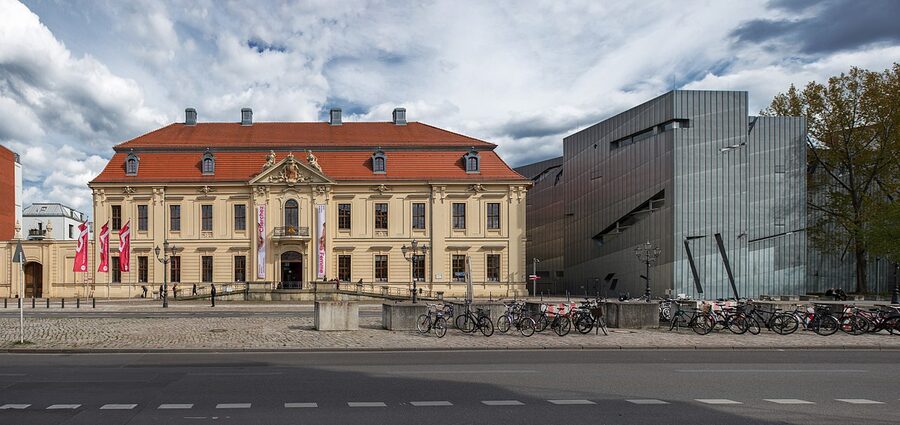
Daniel Libeskind’s Jewish Museum in Berlin has no right angles on its exterior and no neutral rooms inside. You enter through a tunnel. You walk through something called the Axis of Exile. You find yourself in a concrete tower with no heating, one slit of daylight, and a steel gate that locks behind you. Then the permanent exhibition starts.
This is not a normal museum. Tickets are free if you plan it right — but you have to know the rules. Here’s how to book, which days are worth it, and what to prioritise in four hours on a site that most visitors rush through in ninety minutes.


In a Hurry? The Three Ways to See the Jewish Museum
- Free entry: Jewish Museum Berlin entrance — free with timed booking. Yes, free. The permanent exhibition has no entrance fee. You still need a timed ticket to enter.
- Guided context tour: Nazi Berlin and the Jewish Community Tour — from €59 per person. 3-hour walking tour that ends near the museum. The historical context before you go in.
- Private heritage walk: Private Jewish Heritage Walking Tour — from €190. 4-hour deep dive through Mitte’s old Jewish Quarter. For small groups or serious interest.
- In a Hurry? The Three Ways to See the Jewish Museum
- The Ticket Situation — Why It’s Confusing
- Best Jewish Museum Berlin Tickets and Tours
- 1. Jewish Museum Berlin Entrance Ticket (Free) — from €0
- 2. Nazi Berlin and the Jewish Community Tour — from €59
- 3. Private Jewish Heritage Walking Tour of Berlin — from €190
- What the Permanent Exhibition Actually Covers
- The Five Voids
- What to See Around the Museum
- The Neue Synagoge
- The Stolpersteine
- Visiting Strategy
- With Kids
- The Architecture — Why It Matters
- Libeskind’s Later Career
- When to Visit
- What to Wear
- Getting There
- Pairing With Other Berlin Sites
- Food Nearby
- Practical Questions
- The Short Version
The Ticket Situation — Why It’s Confusing
Permanent exhibition: free. Special exhibitions: €8. Guided tours of the building itself: €5. Children under 18: free for everything.
But “free” doesn’t mean “walk in whenever.” The museum requires a timed entry ticket even for the free permanent exhibition. You book online through the museum’s own site or via a third-party ticket service. The slot is in 30-minute intervals between 10am and 5pm (7pm on Tuesdays).
In August and around Jewish holidays the slots for the same week sell out. Book 2-3 days ahead minimum, a week ahead for August and Rosh Hashanah. Walk-up tickets are available but you’ll often be turned away at the door or given a slot for three hours later.

Best Jewish Museum Berlin Tickets and Tours
1. Jewish Museum Berlin Entrance Ticket (Free) — from €0
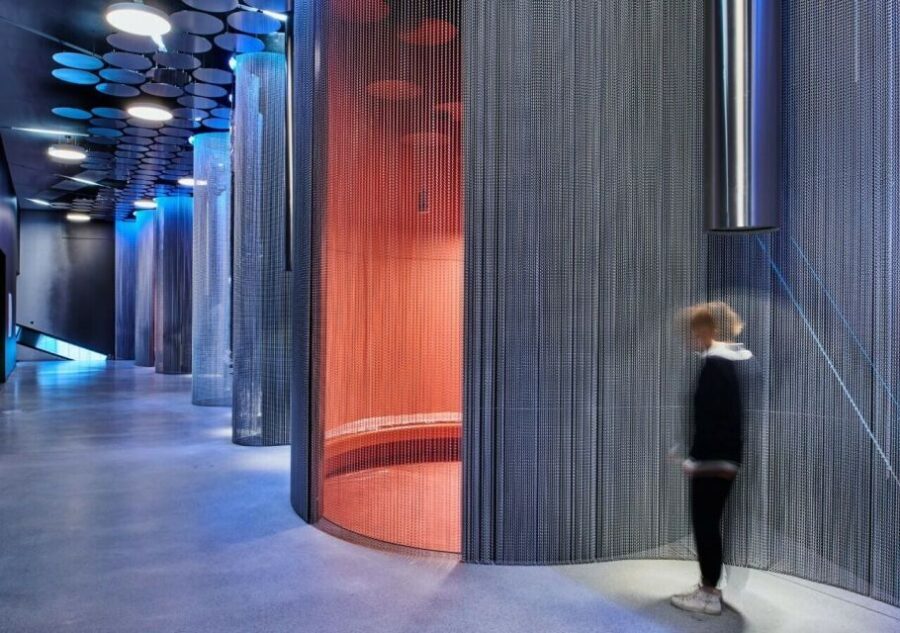
Free timed entry to the permanent exhibition, which covers two millennia of German-Jewish history from early medieval settlements through post-1945. The online booking is the only way to guarantee entry — walk-ups are usually sent away in high season. Our full review has the bag-check rules, security process, and which parts of the building you should prioritise if you’ve only got 90 minutes.
2. Nazi Berlin and the Jewish Community Tour — from €59
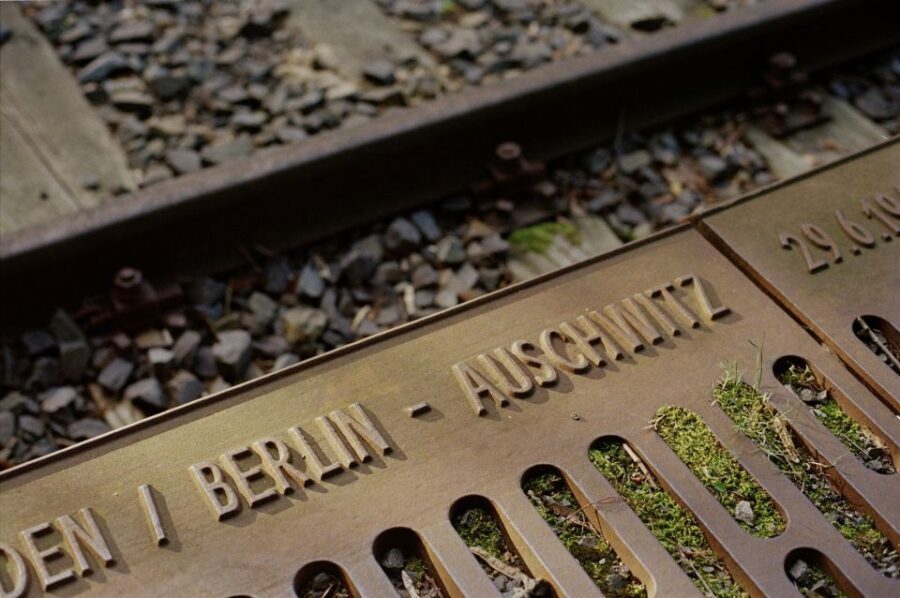
Smart choice for travellers who want the historical context before seeing the museum itself. You visit the Topography of Terror, the Stolperstein (brass “stumbling stones”) in the old Scheunenviertel, and finish at the Holocaust Memorial. The museum visit is separate but the preparation it gives you is real. Our review covers the guide quality and what’s included.
3. Private Jewish Heritage Walking Tour of Berlin — from €190
The private version for families, small groups, or serious travellers. You can customise the route — the standard visits every major site in the old Jewish Quarter and the guide is a trained historian. Pricey per-person for solo travellers, competitive if you’re four people splitting. Our review has the routing options and what to expect.
What the Permanent Exhibition Actually Covers
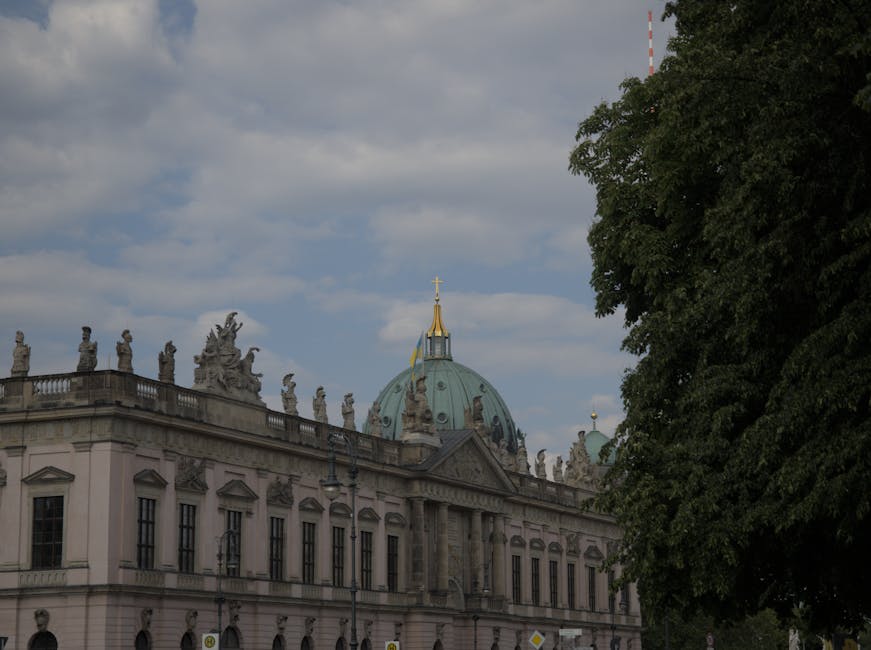
The permanent exhibition (redone in 2020) runs through 1,700 years of German-Jewish history. It’s chronological but the architecture makes you pause every ten minutes to reckon with something non-historical — a void, an empty gallery, an iron-faced floor.
Ground floor: ancient and medieval. First Jewish communities in Cologne around 321 AD. Moses Mendelssohn and the Berlin Enlightenment. Middle floor: emancipation, growth, and the cultural explosion of Weimar-era Jewish Berlin (Einstein, Walter Benjamin, Billy Wilder, Mahler). Top floor: Nazi persecution, the Holocaust, and the fractured post-1945 Jewish presence in Germany.
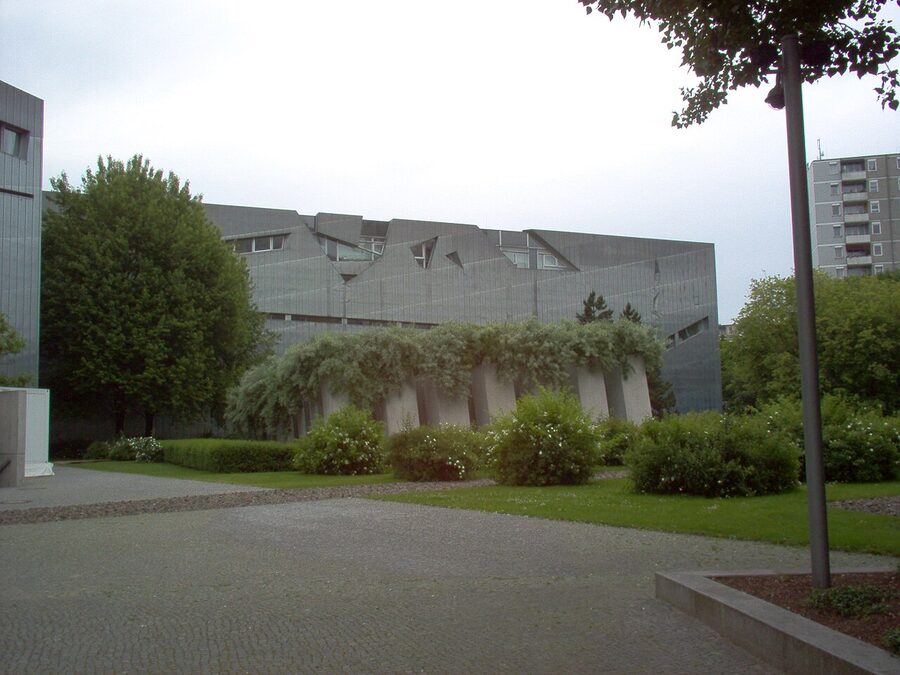
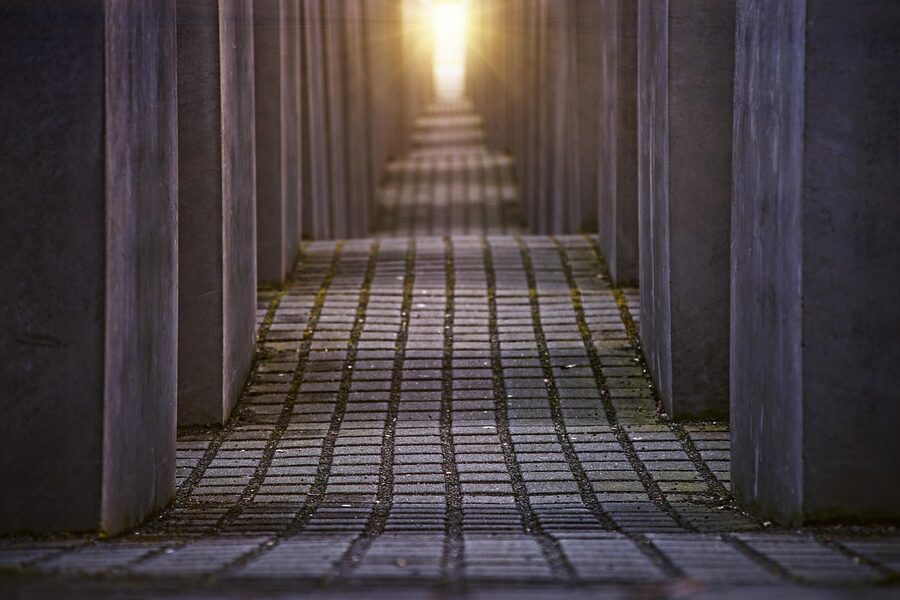
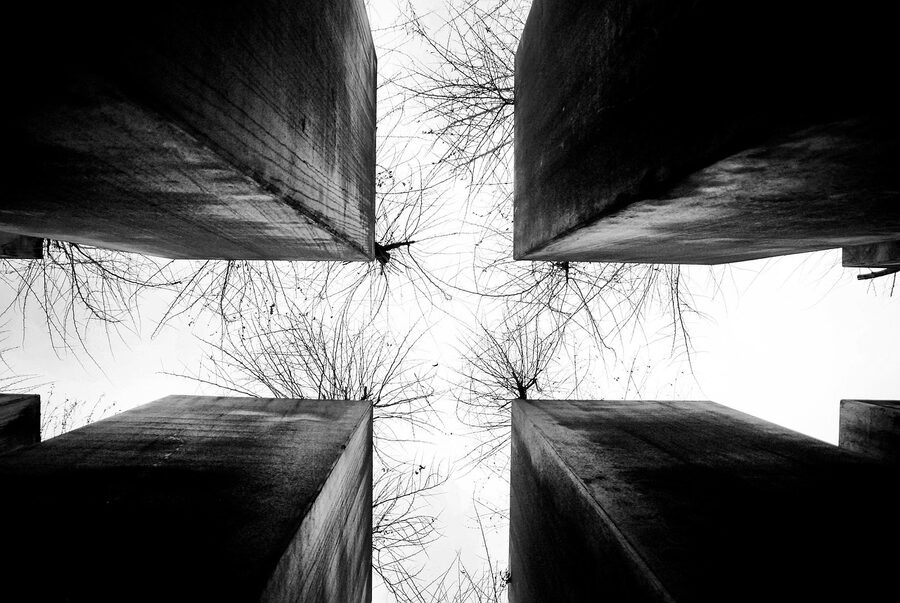
You exit through the Garden of Exile — 49 tilted concrete columns with olive trees growing out of the top. The floor slopes. You feel slightly seasick. That’s intentional.
The Five Voids
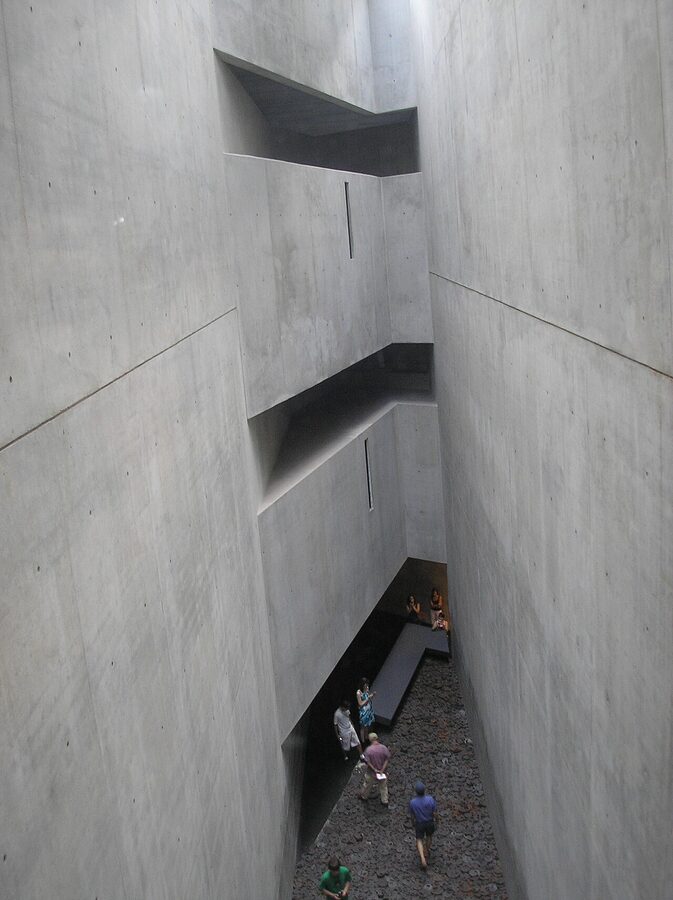
The architectural feature people remember longest. Libeskind cut five voids — full-height empty spaces — through the building, cutting across the exhibition path. You can see into them but rarely enter them. They’re visualisations of the absence left by the Holocaust. The Memory Void (the one with the iron faces on the floor, the one you’re allowed to walk on) is the emotional low point and high point of the visit, depending on how you count.
Don’t rush the voids. Sit on a bench for ten minutes. Watch the light through the slit windows move. This is not a thing you skim.
What to See Around the Museum
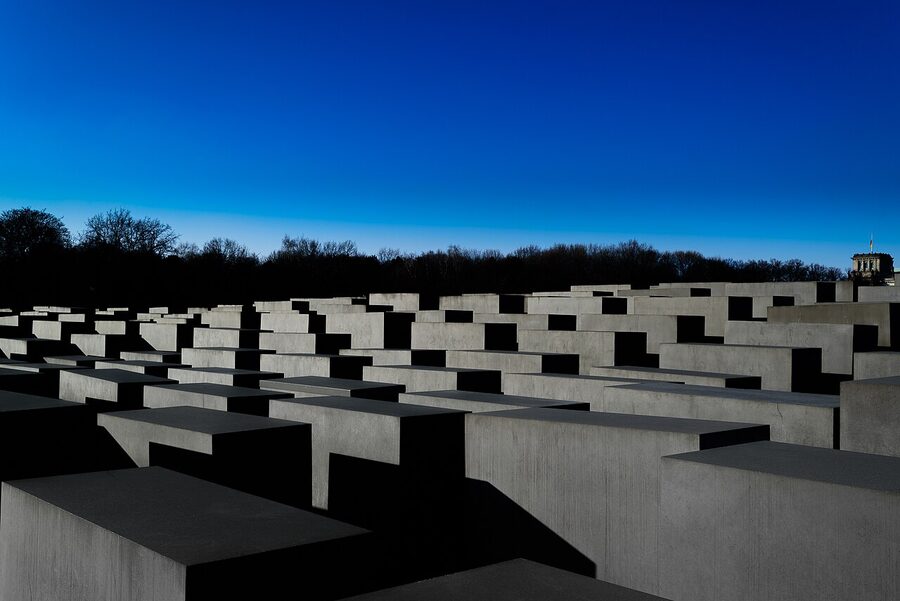
.jpg)
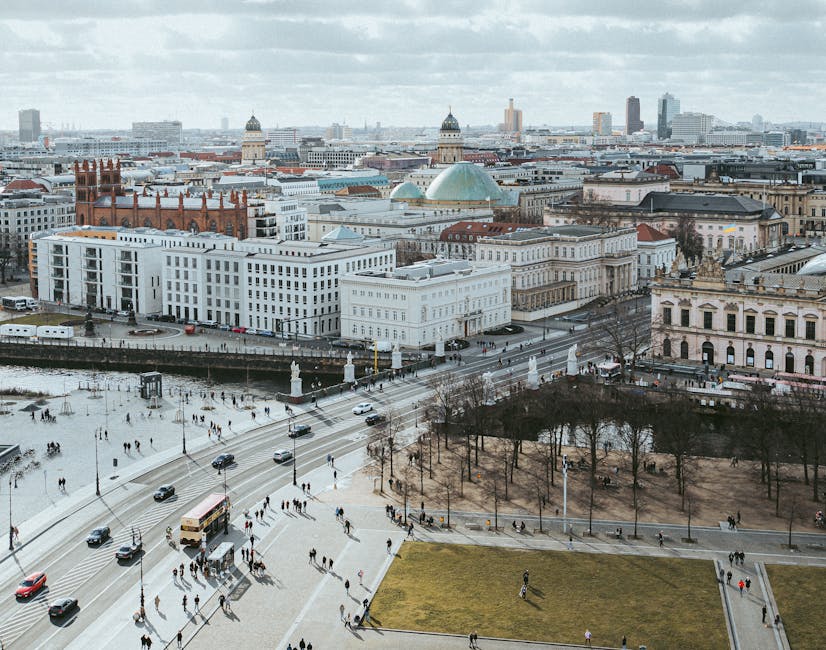
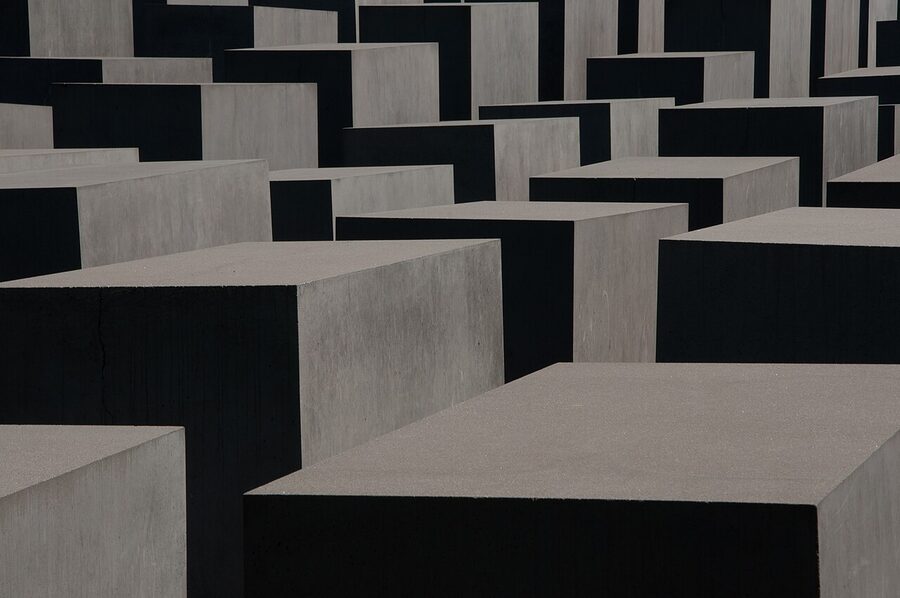
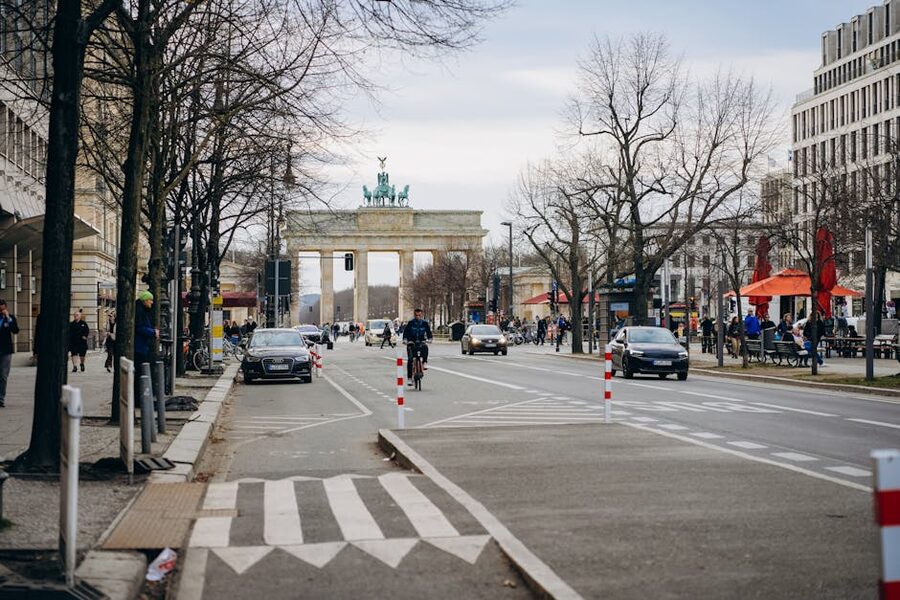
The Jewish Museum is in Kreuzberg, south of the river Spree. It’s not geographically near the other Nazi-history sites. You need the U-Bahn to connect them. The highest-impact route is Jewish Museum in the morning → lunch nearby → Topography of Terror (also in Kreuzberg, 15 min walk away) → Holocaust Memorial → Brandenburg Gate in the late afternoon. That’s a heavy day.

The Neue Synagoge
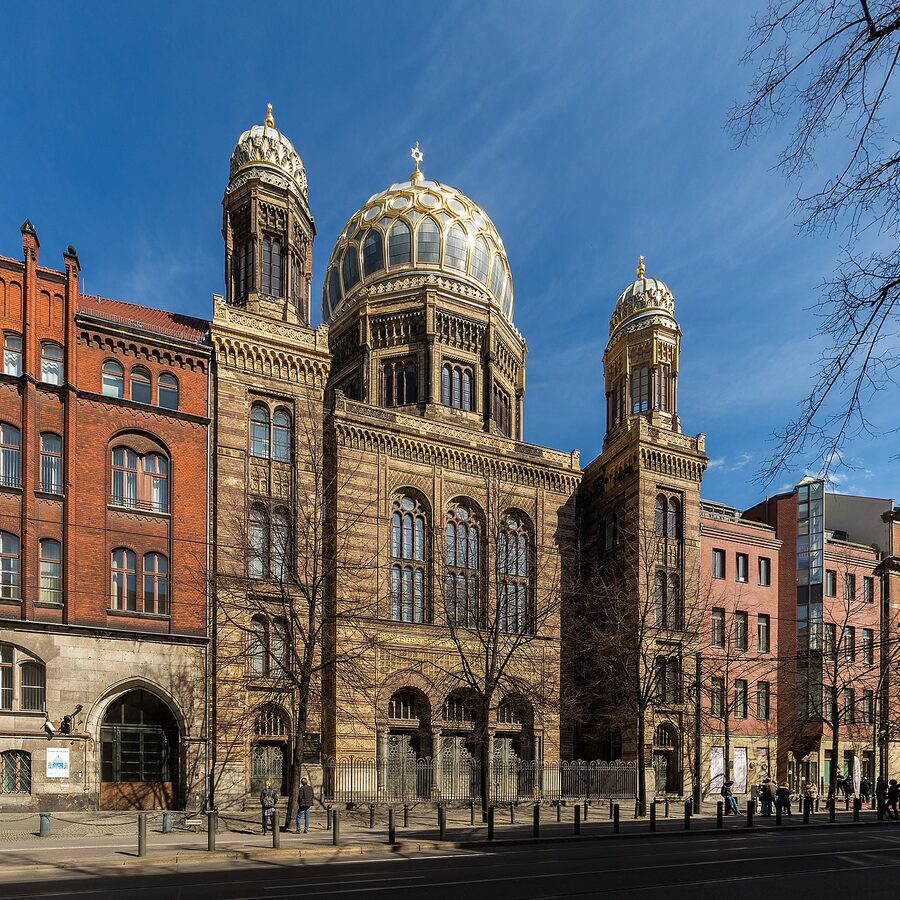

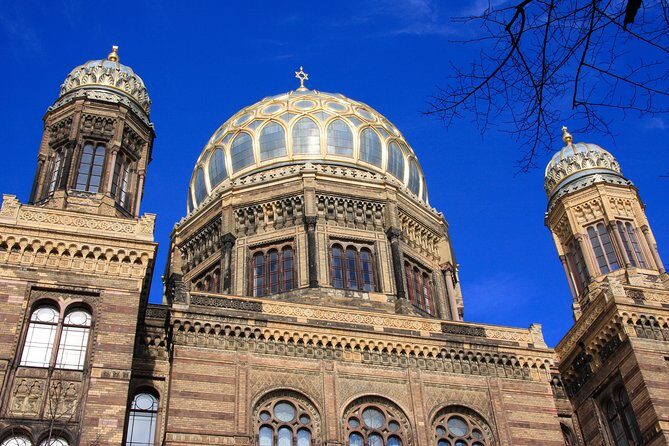
On Oranienburger Strasse in Mitte, across town from the Jewish Museum. Built in 1866 as Germany’s largest synagogue, burnt during Kristallnacht, further damaged in WWII, partially restored in the 1990s. The golden dome is one of Berlin’s signature sights. You can’t use it as a working synagogue anymore but the building functions as a museum and cultural centre.
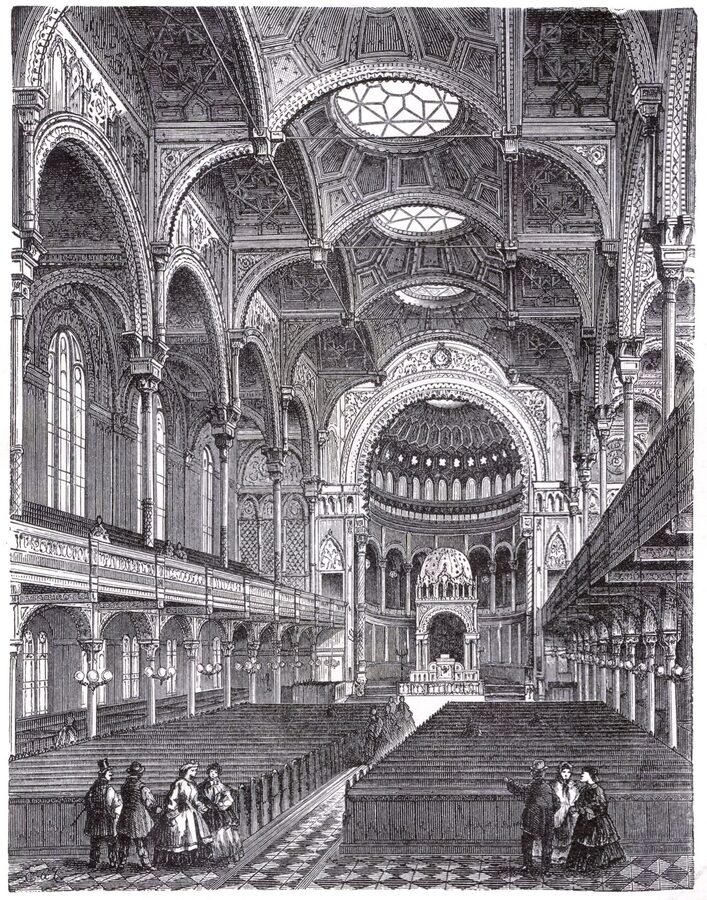
Entry is €8 (€5 for students). Takes about 45 minutes if you’re thorough. Best paired with a walk through the Scheunenviertel (the old Jewish Quarter) afterwards.
The Stolpersteine
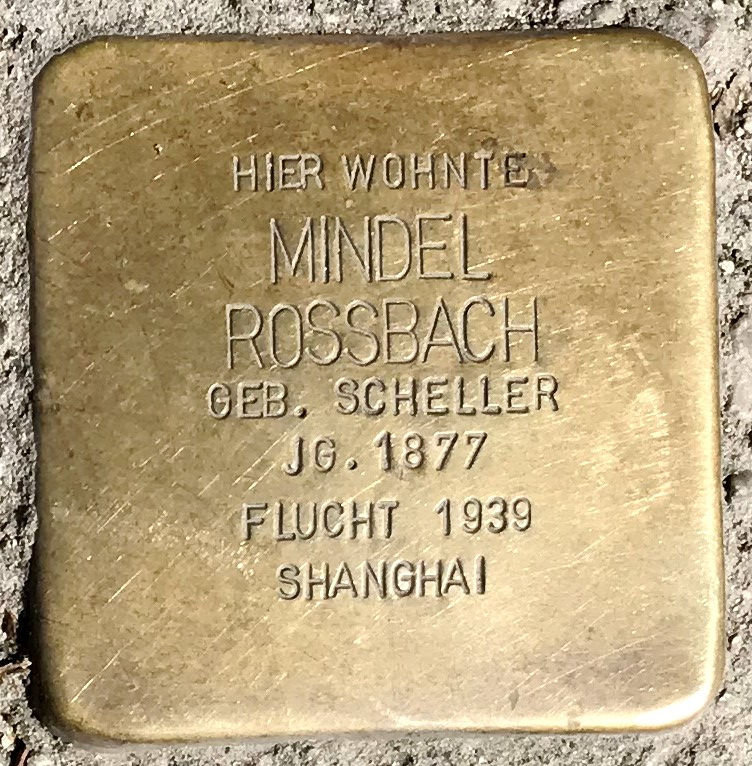

Brass plaques, 10cm square, set into the pavement outside the last freely-chosen residence of Holocaust victims. Berlin has more than 9,500 — the largest concentration of Stolpersteine in the world. Most visitors walk past them without noticing. Once you see one, you see them everywhere. The clustering tells its own story: some streets have dozens in a row, others none at all.
Visiting Strategy
The permanent exhibition is big. 3,500 square metres over three floors. To do it properly you need 3-4 hours. To do it minimally you need 90 minutes. To do it as part of a broader Berlin day, pick your level.
90-minute visit: Enter, ground floor highlights only (the Moses Mendelssohn section is worth it), top-floor Holocaust rooms, Memory Void, exit via Garden of Exile. You’ll feel the architecture but miss the cultural-history sections.
3-hour visit (recommended): All three floors, one special exhibition if one’s on, lunch at the cafe (good), Memory Void with time to sit.
Full day (for history students or writers): Morning at the Topography of Terror (10 minutes walk), lunch, afternoon at the Jewish Museum. Those two institutions together give you the political and the cultural sides of the same history.
With Kids
There’s a dedicated children’s museum next door — the ANOHA — which is not the same as the main museum, has its own ticket, and is specifically designed for under-10s. Parents can split: one kid in ANOHA, one adult in the main museum, swap at lunch. Adults with older kids (12+) can visit the main museum together but prepare them for the emotional weight.
The Architecture — Why It Matters
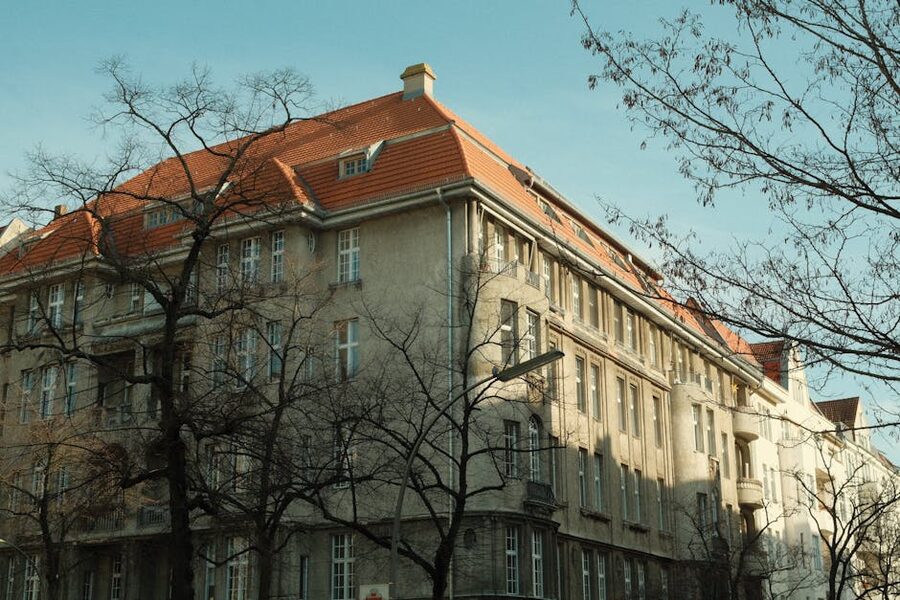
Daniel Libeskind’s design won an international competition in 1989 — the same year the Wall came down. Construction started in 1992. The building was finished in 1999 but stood empty for three years while the curators fought over how to fill it. When it opened in 2001, Libeskind refused to add extra wall space for exhibits; he wanted the architecture to be the first exhibit.
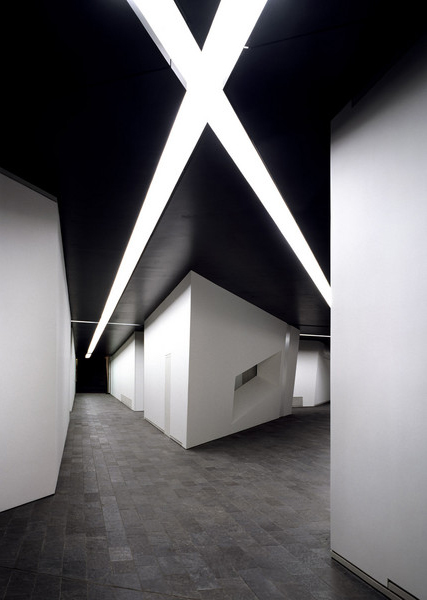
Every room slopes slightly. Every wall has some irregular angle. The Axis of Exile floor tilts enough that walking feels effortful. The Garden of Exile’s 49 columns are all tilted 3% from vertical — you walk through, you get mild vertigo, you understand what the word means as a bodily state rather than an intellectual one.
If you care about contemporary architecture, this is one of the three or four most important museum buildings in the world, alongside Frank Gehry’s Guggenheim Bilbao and Renzo Piano’s Centre Pompidou. The Libeskind-Bau was the one that proved a building could itself be a memorial.
Libeskind’s Later Career
After Berlin, Libeskind won the masterplan for the rebuilt World Trade Center site in Lower Manhattan. He also designed the Imperial War Museum North in Manchester and the Royal Ontario Museum Crystal in Toronto. None of them hit the emotional weight of the Jewish Museum. If you’re visiting and you know other Libeskind buildings, it’ll feel like the key that explains the rest.
When to Visit
Tuesday evening (open until 7pm) is the quietest time. Sunday afternoons are the busiest. First slot of the day (10am) is also quiet and you’ve got the energy for a full 3-hour visit. Last-slot Sunday is to be avoided — security queues, school trips, cruise groups.
Closed on Yom Kippur and Rosh Hashanah. Reduced hours on Shabbat-eve (Friday afternoon).
What to Wear
Comfortable shoes — there’s a lot of walking over polished concrete floors that are hard on the feet. The building is not heated in the Axis of Holocaust areas (deliberately), so bring a jacket in winter.
Getting There
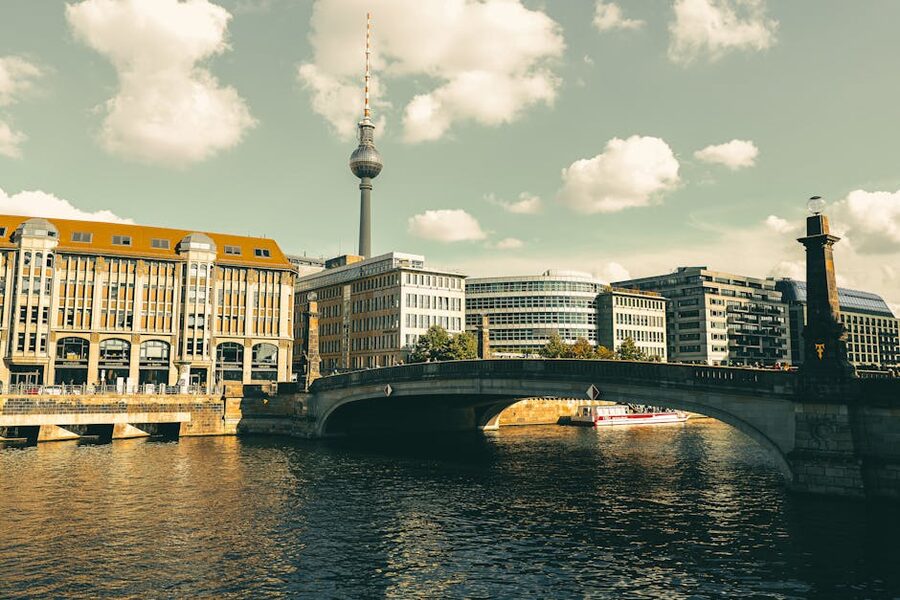
U-Bahn: Hallesches Tor (U1, U3, U6) — 5 minute walk. Kochstrasse (U6) — 10 minute walk. S-Bahn not within walking distance. From Alexanderplatz: U2 to Potsdamer Platz, transfer to U6, 15 minutes total. From Brandenburg Gate: walk south through the Tiergarten for 20 minutes, or take the M29 bus.
If you’re using the Berlin WelcomeCard, the transport is covered and you might get a 25% discount on the paid portions (special exhibitions).
Pairing With Other Berlin Sites
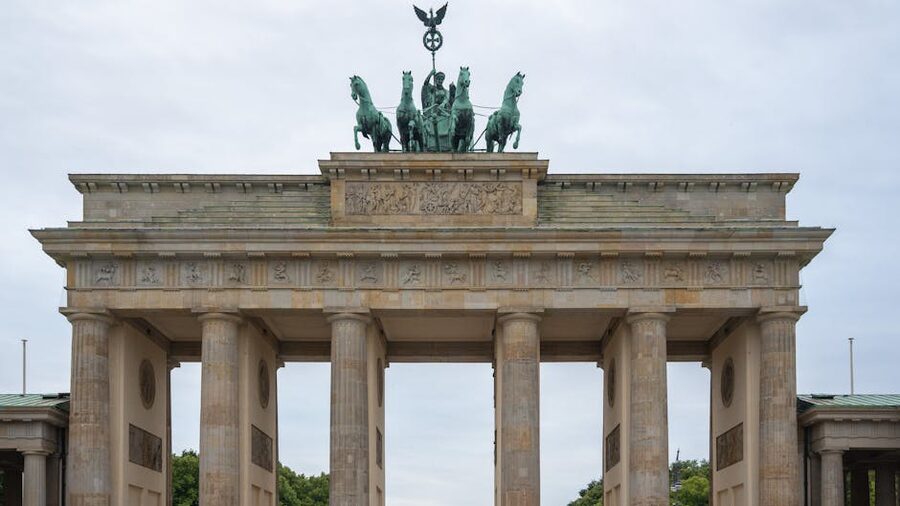
For a full Nazi-and-Jewish-Berlin day: pair the Jewish Museum with the Third Reich walking tour (morning) and the Topography of Terror (5-minute walk from the museum, free entry). That’s the political and cultural sides of the same history.
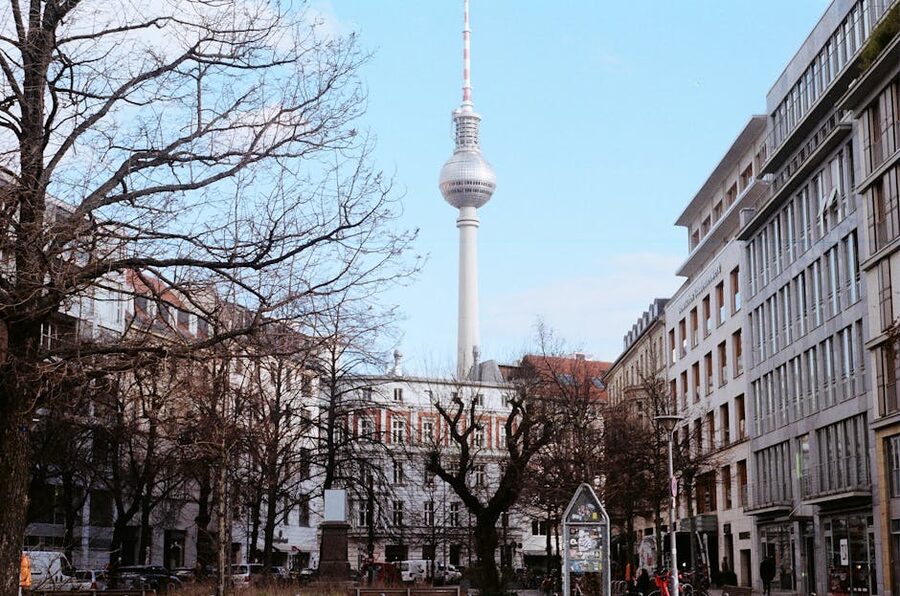
For a broader Berlin history arc: Jewish Museum + Berlin Wall (East Side Gallery section) covers the 20th century — Nazism and communism. Combined with the TV Tower for a view over everything, it’s a proper three-site day.
If you’re staying in Berlin for a week and want one day purely focused on the Jewish history, pair the museum with the Sachsenhausen memorial (just outside Berlin, day-trip distance). They cover different aspects — the museum is cultural, Sachsenhausen is the physical site of persecution. Don’t do them on the same day. Spread them out.
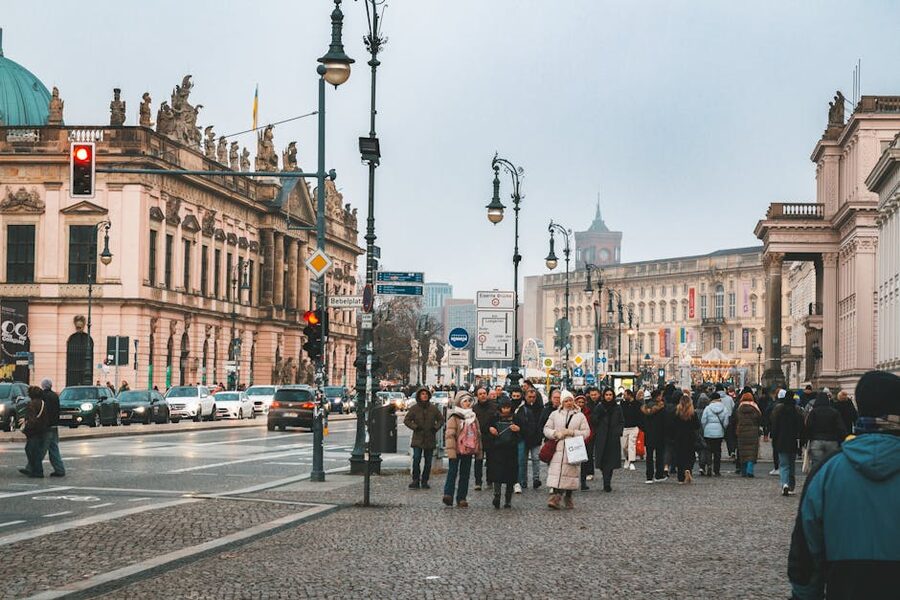
Food Nearby
The museum cafe is good — above average for a museum cafe and reasonably priced. If you want to leave the building, head north into Kreuzberg proper. Street food is the default (kebabs, vegan bowls, Turkish pizzas). Mustafas Gemüse Kebab on Mehringdamm is famous but the queue is always 30 minutes. Zadig & Voltaire a block away does the same food with no queue.
For a proper sit-down meal, Long March Canteen (10 min by U-Bahn) is the best Asian food in Kreuzberg.
Practical Questions
Do I need a guide? No. The museum has excellent signage and a free app-based audio guide. Guided tours add depth for architecture-focused visitors.
Is it too intense for casual visitors? It can be. The Holocaust sections are unflinching. If you’re emotionally sensitive, avoid doing the museum and Sachsenhausen on the same trip.
Can I photograph? Yes, everywhere except special exhibitions. No flash.
Is it accessible? Fully wheelchair accessible. Lifts to all floors. The sloping floors are more challenging for mobility-impaired visitors but navigable.
The Short Version
Book the free timed ticket at least three days ahead. Go Tuesday evening or 10am weekday. Give yourself three hours. Sit in the Memory Void for ten minutes. Walk the Garden of Exile. Then walk the 15 minutes to the Topography of Terror if you want the political context. Then go drink something strong in Kreuzberg.
Affiliate disclosure: Some links in this article are affiliate links. If you book through them we may earn a small commission at no cost to you. All recommendations are based on my own visit.