
The Cologne Chocolate Museum has a 3-metre-tall chocolate fountain that you can dip a freshly-baked wafer into. That’s the headline feature. Behind it is a complete cacao supply chain — a working chocolate factory, a tropical greenhouse with actual cocoa trees, and 4,000 years of chocolate history from the Maya to Milka. Entry is €19. The whole visit takes 2-3 hours.
Here’s how to book, when to go, and which add-ons are worth it — plus how to combine this with the rest of Cologne in a single day.

.jpg)

In a Hurry? The Three Cologne Tickets That Matter
- The main ticket: Cologne Chocolate Museum entry — from €19. Museum, chocolate fountain, factory view, tropical greenhouse. 2-3 hours.
- Brewery alternative: Cologne Brewery Tour with 3 Kölsch tastings — from €32. If you’re more beer than chocolate — and Cologne is genuinely better known for beer.
- City overview: Cologne 24h Hop-On Hop-Off Bus — from €28. Includes a stop at the Chocolate Museum. Good if you’re in Cologne for just a day.
- In a Hurry? The Three Cologne Tickets That Matter
- What the Chocolate Museum Covers
- The Chocolate Fountain
- The Best Cologne Tickets
- 1. Chocolate Museum Entrance Ticket — from €19
- 2. Cologne Brewery Tour with 3 Kölsch Beer Tastings — from €32
- 3. Cologne 24-Hour Hop-On Hop-Off Bus — from €28
- What Makes the Chocolate Museum Different
- The Lindt Partnership
- Shopping at the Museum
- The Cafe
- When to Visit
- How Long You Need
- Getting There
- Pairing With Other Cologne Things
- Day Trip Potential from Cologne
- Who the Museum Is Best For
- How It Compares to Other European Chocolate Museums
- Ticket Tips
- Combos to Look For
- Practical Questions
- Pairing With Other Germany Food-and-Drink Tours
- A Short History of the Museum
- The Short Version
What the Chocolate Museum Covers
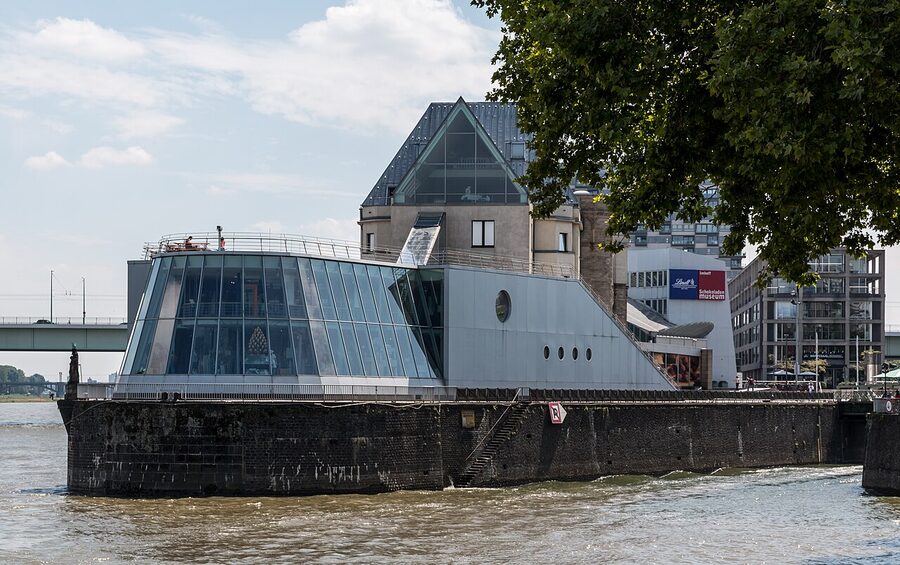

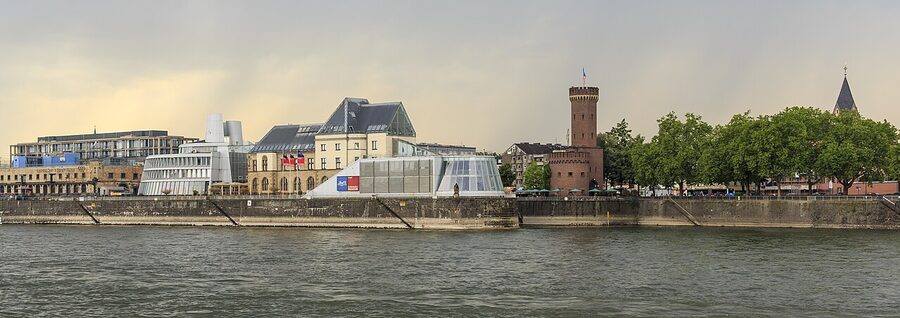
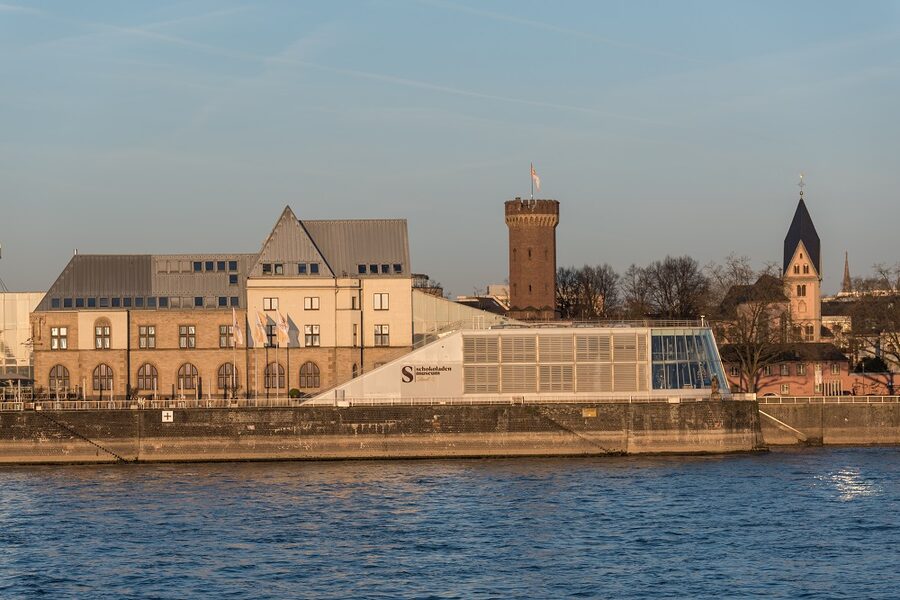
4,000 square metres across three floors. Deliberately encyclopaedic rather than selective — you get the full chocolate story from Mesoamerican origins through colonial trade to modern industrial production.
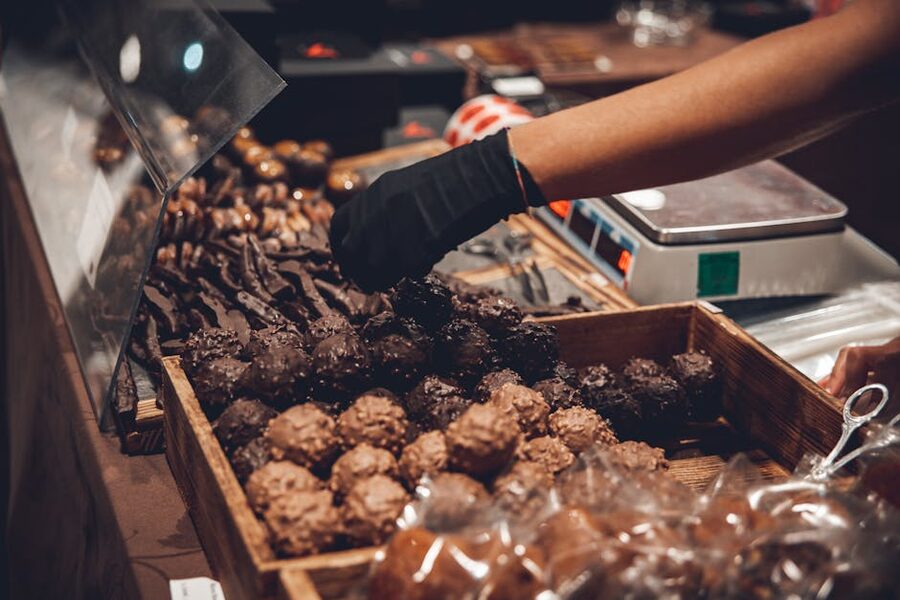
Ground floor: The tropical greenhouse with actual cocoa trees, plus the chocolate-making factory you can watch through glass. The factory is working daily (making Lindt-style pralines) — you see the actual production line, tempering machines, conching. About 500,000 small chocolates produced daily.
First floor: The history exhibition — Mayan and Aztec chocolate drinks, colonial-era cacao trade, 18th-19th century industrialisation, 20th-century globalisation. Objects from the museum’s own collection (Stollwerck old advertising, vintage chocolate moulds, counterfeit-detection equipment).
Top floor: The contemporary industry exhibition. Modern-era chocolate production, branding, ethical/fair-trade issues, contemporary artisanal chocolate.
The Chocolate Fountain
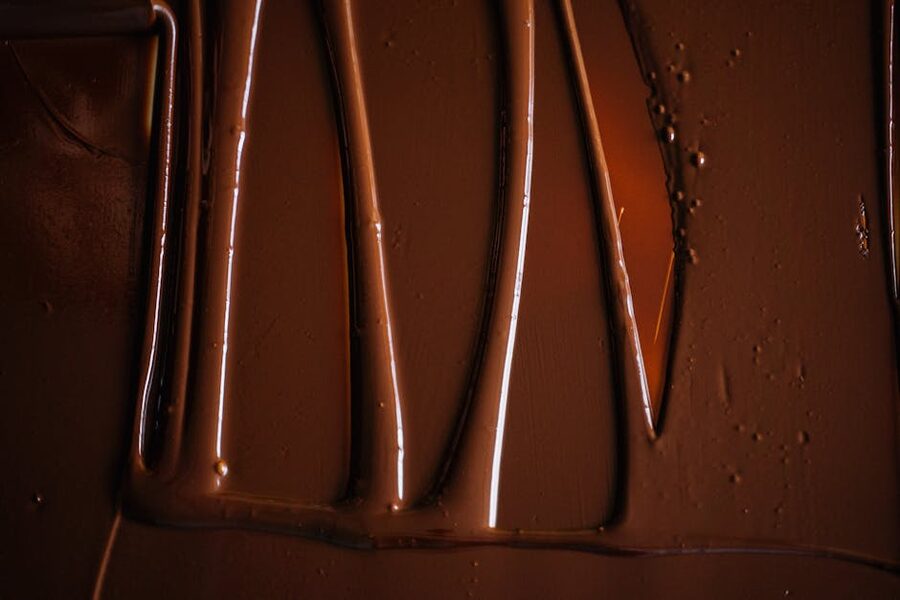
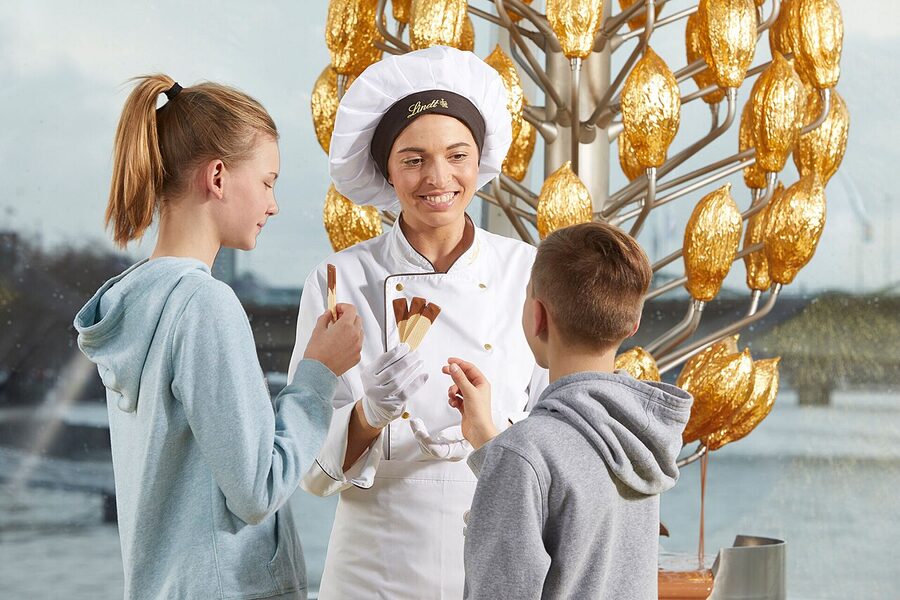
The centrepiece is a 3-metre-tall chocolate fountain in the ground-floor hall. About 200kg of Lindt chocolate circulates continuously. Staff stand next to it and hand out waffle wafers which you dip. It’s genuinely fun — adults and children equally — and worth planning your visit timing around it (the queue at peak times is 15 minutes).
The Best Cologne Tickets
1. Chocolate Museum Entrance Ticket — from €19
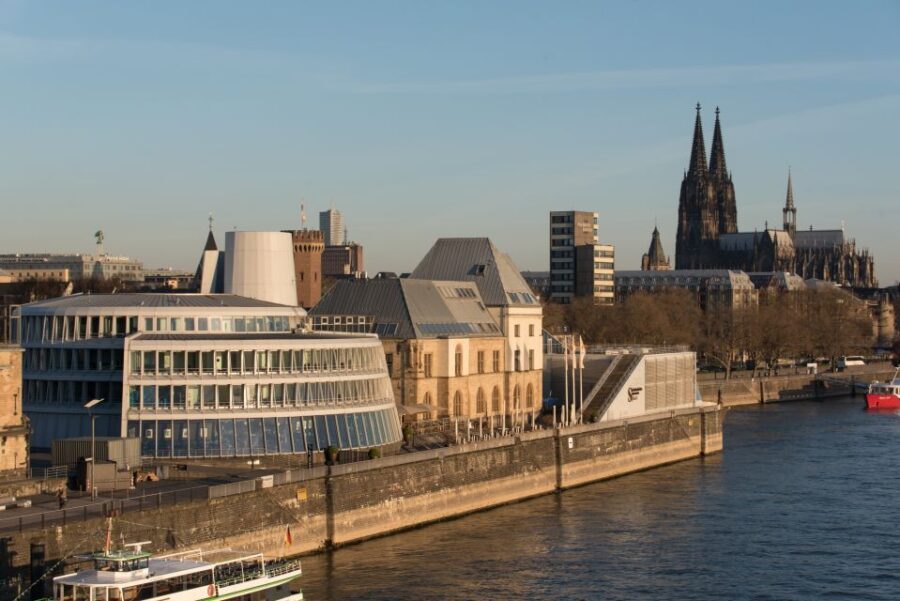
Main museum ticket. Book online to skip the small queue at the counter. Not time-slotted; you arrive when you want, stay as long as you want, eat a chocolate wafer, walk out with a box of pralines from the museum shop (€6-15). Our full review has the family-ticket options and the annual pass math.
2. Cologne Brewery Tour with 3 Kölsch Beer Tastings — from €32
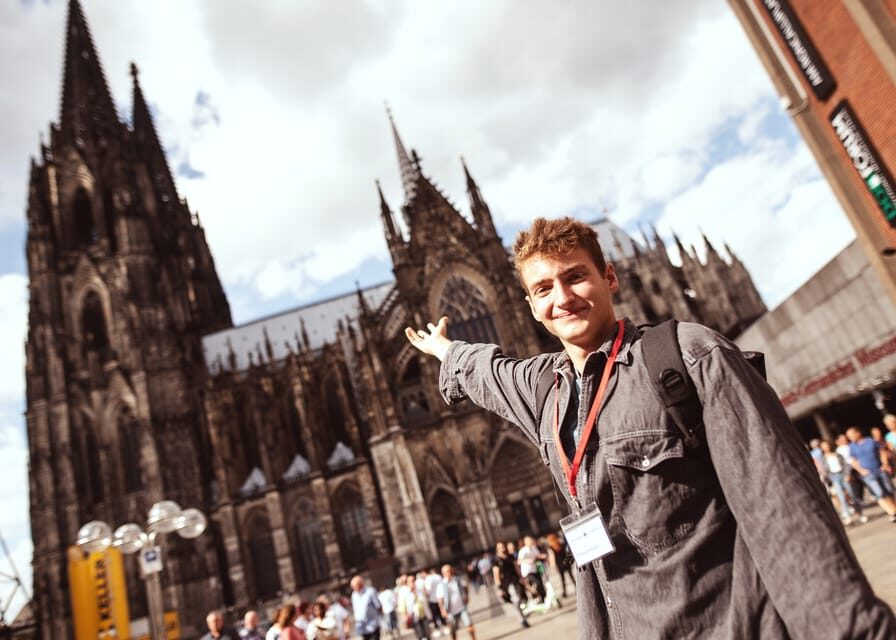
Pick this if you’re more of a beer than chocolate person. Kölsch is a Cologne-specific beer style you can’t really get elsewhere. The tour walks you through the brewery production and the Reinheitsgebot purity law, ending at a brewpub with three tastings. Adults-only, obviously. Our review has notes on which breweries host.
3. Cologne 24-Hour Hop-On Hop-Off Bus — from €28
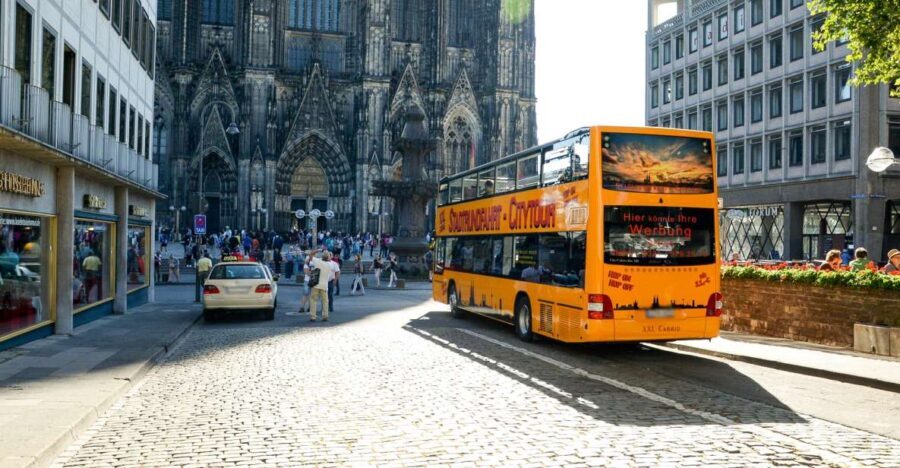
If you’re in Cologne for just a day and want to combine multiple sites. The hop-on-hop-off route includes a stop 2 minutes from the Chocolate Museum. You buy the Chocolate Museum entry separately but the transport is sorted. Our review has the full bus route.
What Makes the Chocolate Museum Different
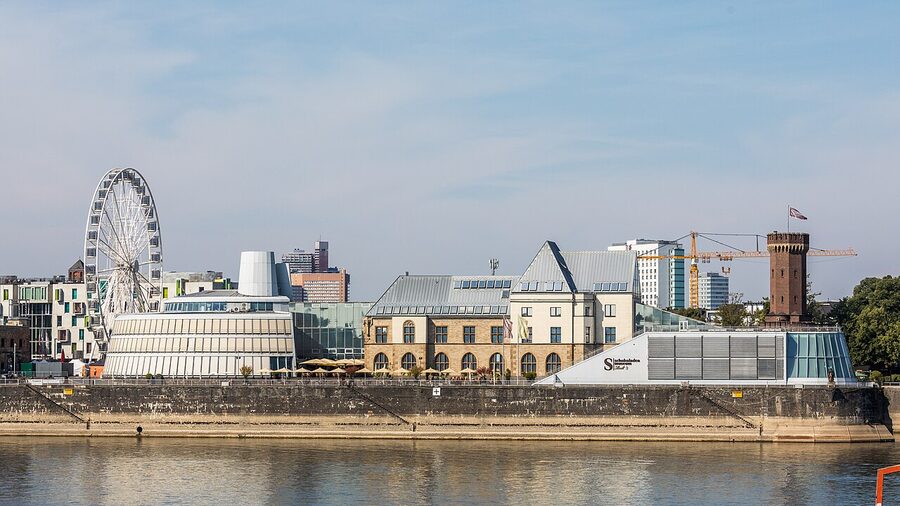

Chocolate museums exist in a few cities (Choco-Story in Brussels, the Lindt Home of Chocolate in Zurich, Brooklyn’s Jacques Torres space). Cologne’s is bigger than most, has the working factory visible, and takes the history more seriously than the marketing-heavy alternatives.
What you won’t get: a working chocolate-making class for visitors. That exists at a few other chocolate museums; Cologne has kept the production purely industrial. If hands-on is what you want, check the museum’s workshop calendar — occasional half-day classes run for €60-80.
The Lindt Partnership
The factory you see through glass is a Lindt production line, operated by the brand under a partnership with the museum. This isn’t a historical exhibit — it’s a real factory making real product you can buy in the shop. The relationship started in 1999 and has been renewed several times. Some visitors find this commercial angle annoying; others find it the most interesting part of the visit.
Shopping at the Museum
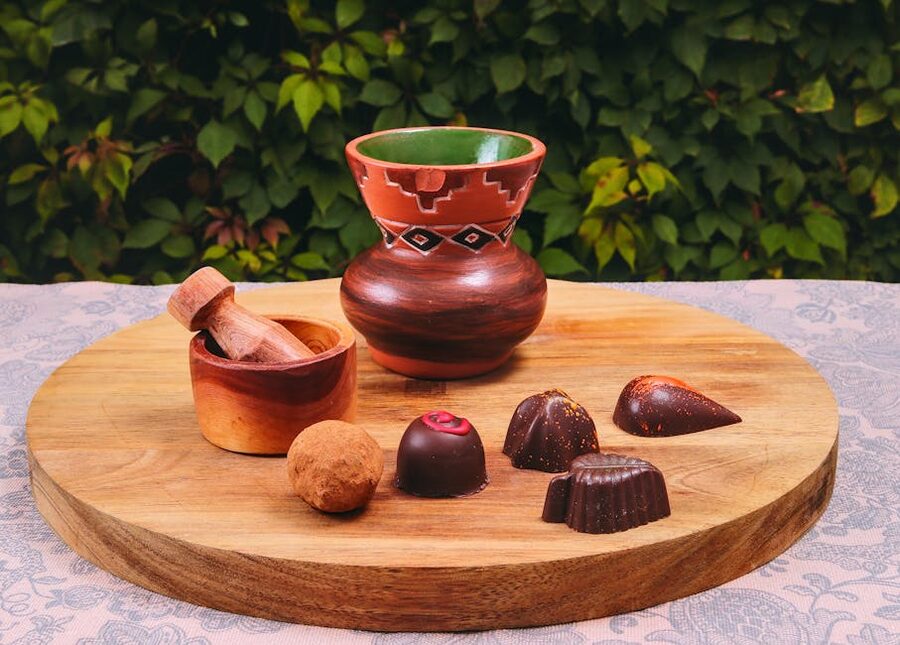
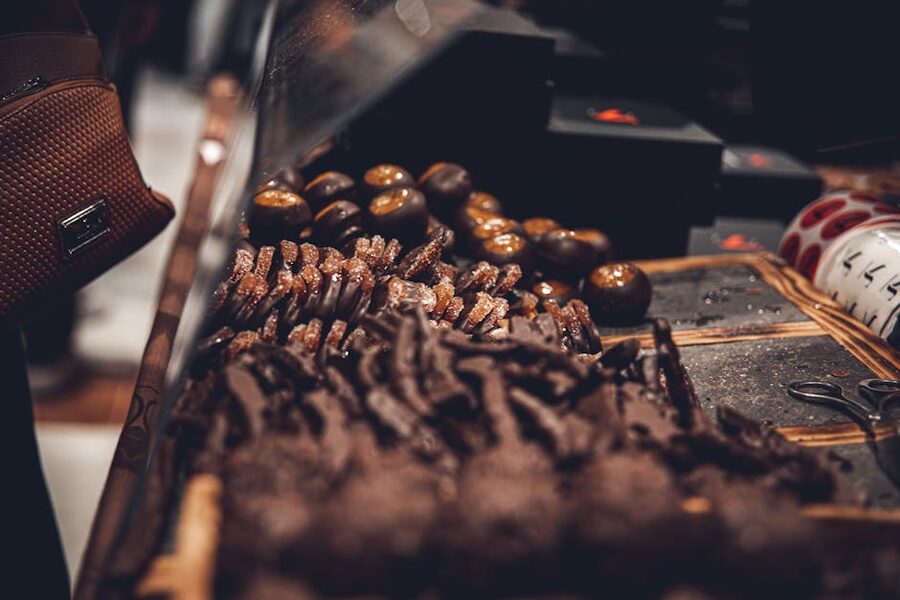
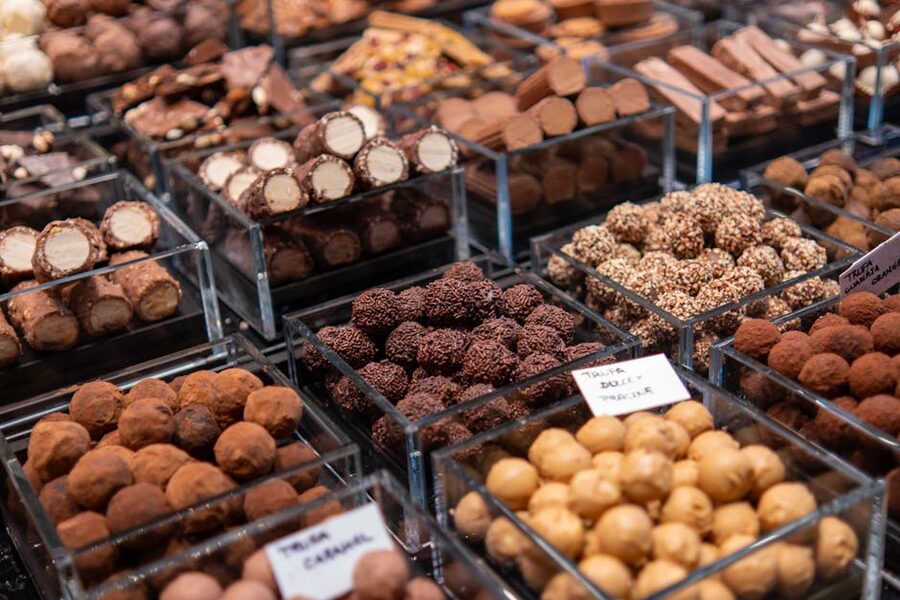
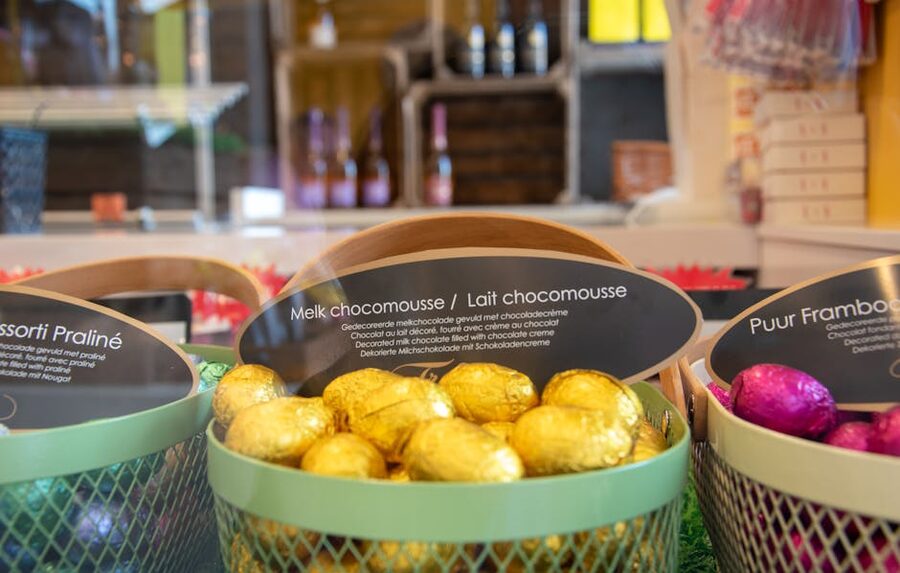
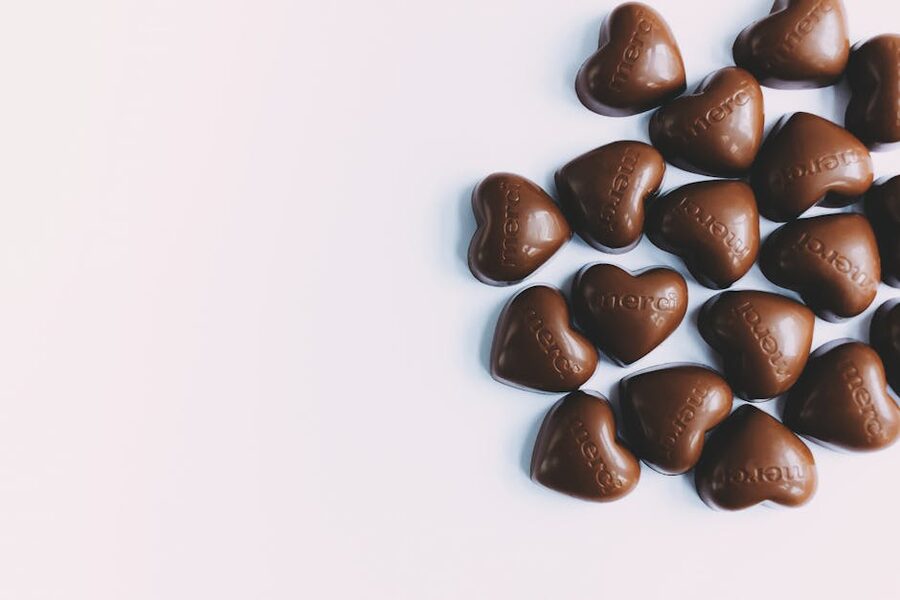
The museum shop sells the chocolate produced on-site. Box of 10 handmade pralines: €15. Large bars (limited editions): €8-15. House-brand “Schokoladenmuseum” ribbon box for gifts: €20-30. Plus the standard Lindt range at standard prices.
If you’re buying gifts for people back home, the museum-branded boxes are a legitimate souvenir — you can’t get them anywhere else.
The Cafe
There’s a cafe on the museum’s river-facing deck. Good coffee, chocolate cake (obviously), light lunch options. Not cheap (€6 for a slice of cake) but the view of the Rhine is genuinely good and you’ve just learned a lot about chocolate.
When to Visit
Open daily 10am to 6pm (7pm on Saturdays). Weekday mornings quietest. Saturdays busiest. Sunday afternoons get child-heavy. Summer (June-August) brings tourist groups; winter (November-February) quieter except Christmas markets.
Avoid: Easter week and December 15-30 (both are peak for German family visits). A normal Tuesday or Thursday morning is ideal.
How Long You Need
90 minutes minimum, 3 hours comfortable. Kids typically need 2 hours to see it all without rushing. If you plan the chocolate fountain + greenhouse + factory + history exhibition + shop, that’s a solid 3 hours of activities.
Getting There
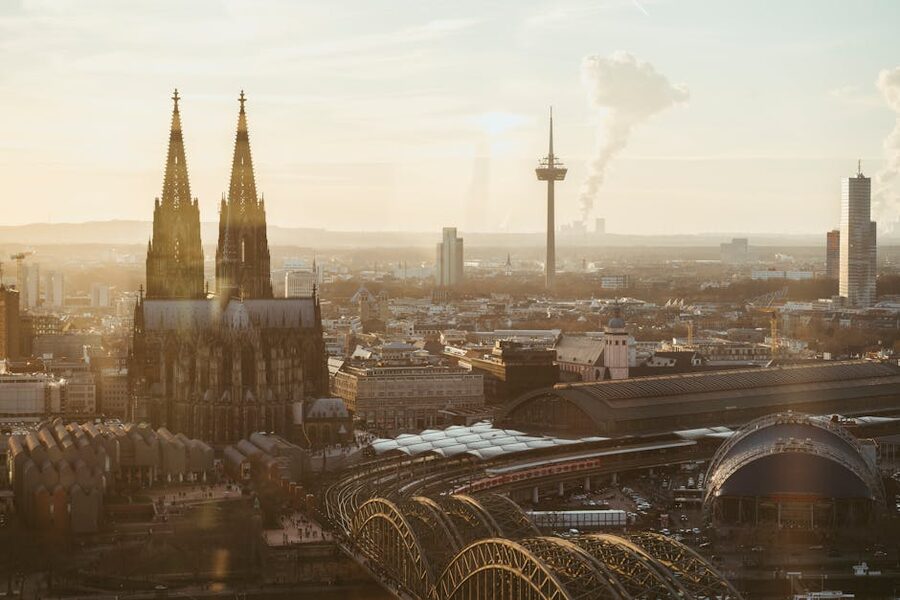
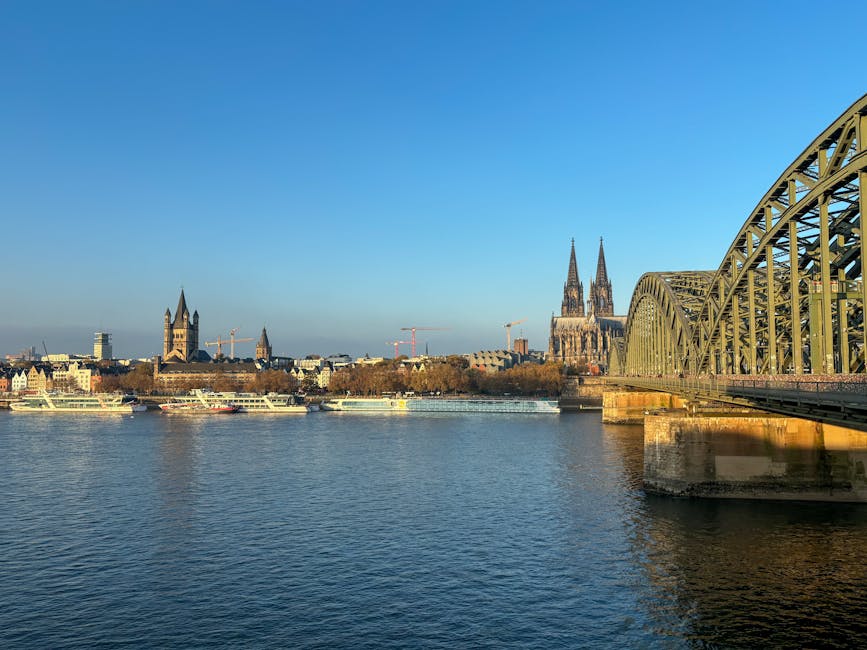
The Chocolate Museum is on the Rheinauhafen peninsula, 1.5 km south of Cologne Cathedral. Walking from the Cathedral takes 15-20 minutes along the Rhine — a pleasant riverside stroll if the weather’s decent.
Public transport: tram lines 1, 5, 7, 9 to Severinstraße (5 min walk to museum). Or U-Bahn to Heumarkt (10 min walk). From the Hauptbahnhof (main station): 10 minutes by tram or 20 minutes on foot.
Driving: paid parking at the nearby Rheinauhafen lot, around €3/hour. Not recommended unless you’re driving the whole Cologne day.
Pairing With Other Cologne Things
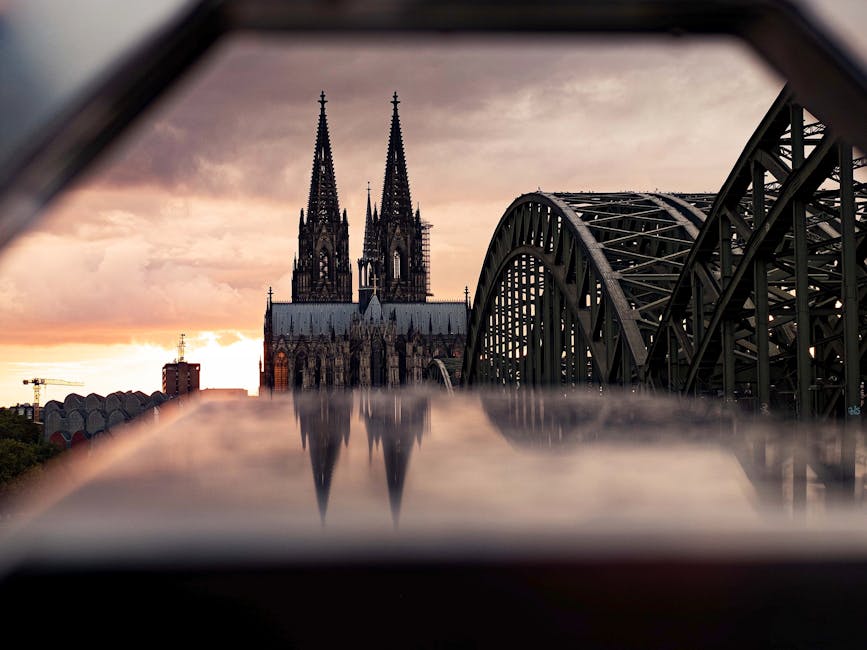
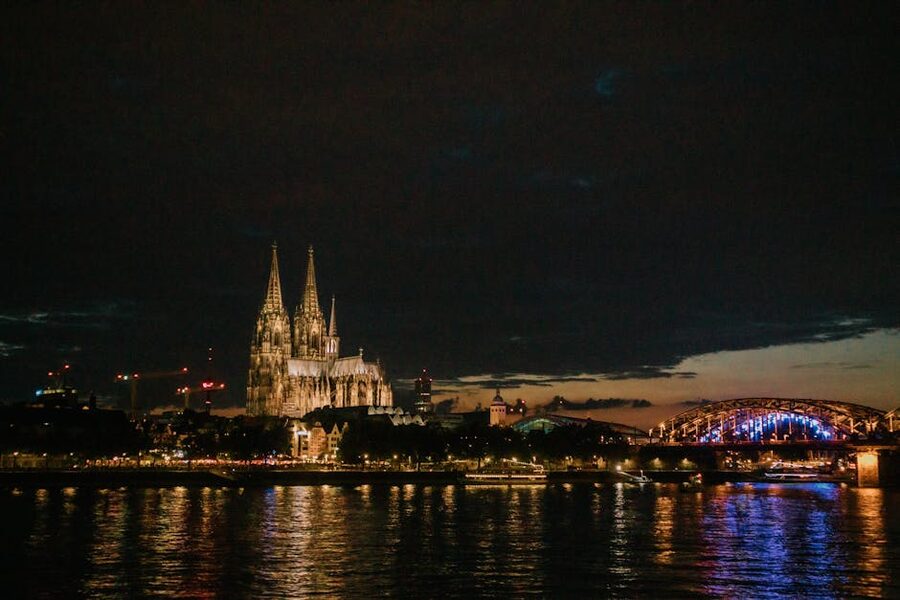
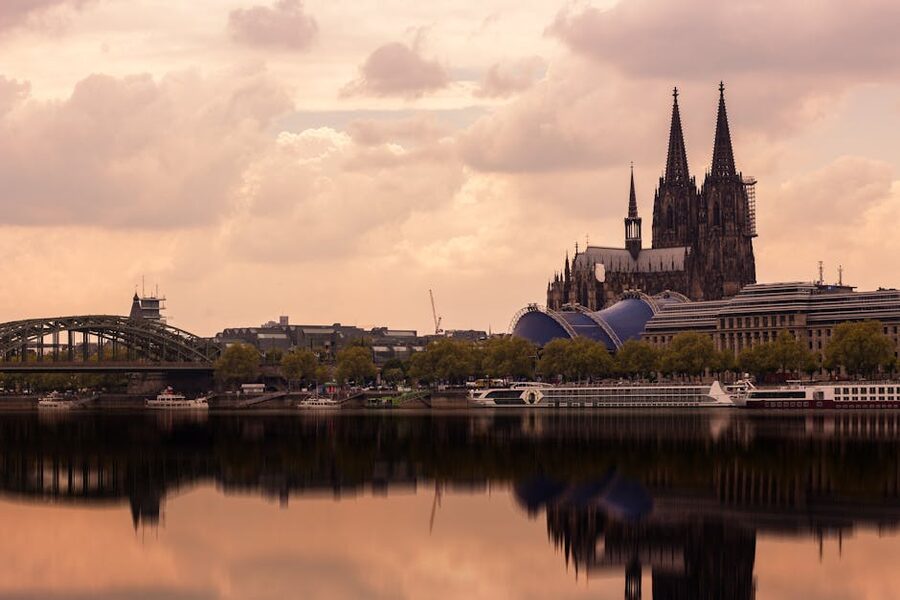
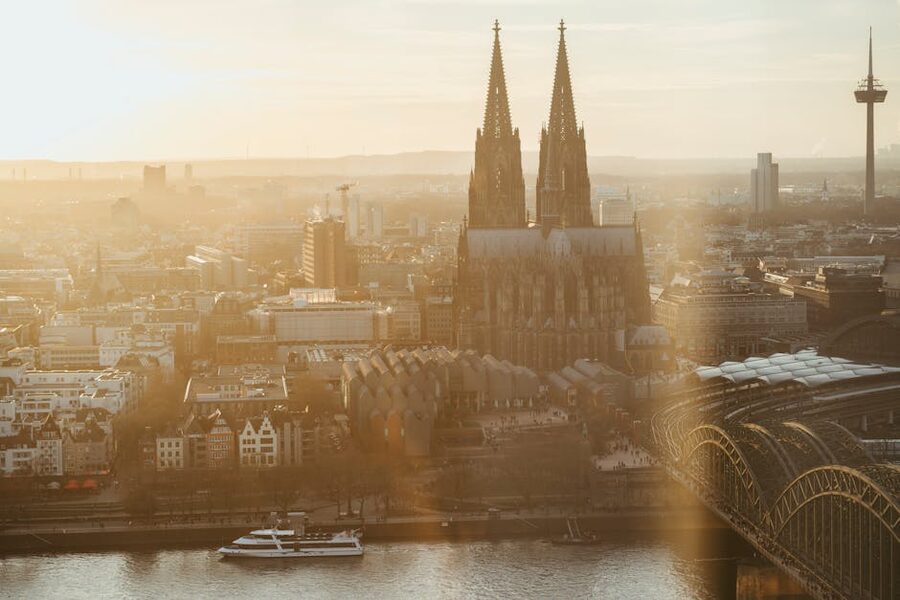
Classic Cologne day: Cathedral in the morning, walk along the Rhine after lunch, Chocolate Museum in the afternoon, dinner in the Altstadt with Kölsch. 8 hours total. You’ll be full of chocolate and beer by the end.
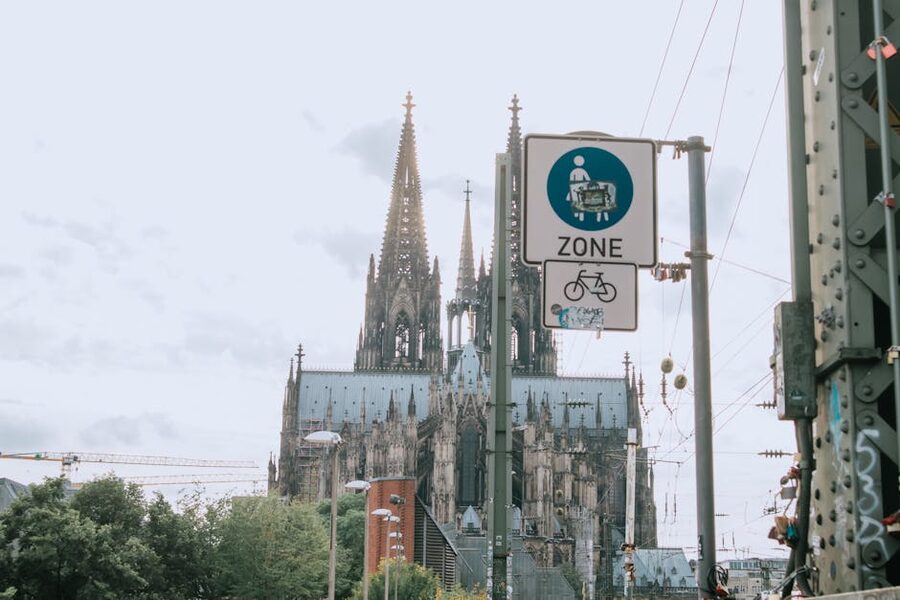
Cologne Cathedral (Kölner Dom) — 500+ steps to the south tower if you’re feeling fit. Otherwise just walk the nave for free. 30-60 minutes.
Rhine river cruise — 1-2 hour sightseeing cruise from the Altstadt. Pairs well with the Chocolate Museum because the ship docks are 10 minutes’ walk from the museum entrance.
Ludwig Museum — modern art right behind the Cathedral. If you’re into 20th-century art, 2-3 hours.
Cologne Old Town (Altstadt) — pubs, museums, the Rathaus. Walkable in 90 minutes.
Day Trip Potential from Cologne
Cologne is central — good base for:
- Düsseldorf (30 min by train)
- Bonn (20 min by train)
- Aachen (1 hour)
- Rhine Valley (to Rüdesheim, Koblenz, Bacharach — 1-2 hours)
If you’re doing the Rhine Valley, the chocolate museum makes a good “before leaving Cologne” morning stop.
Who the Museum Is Best For
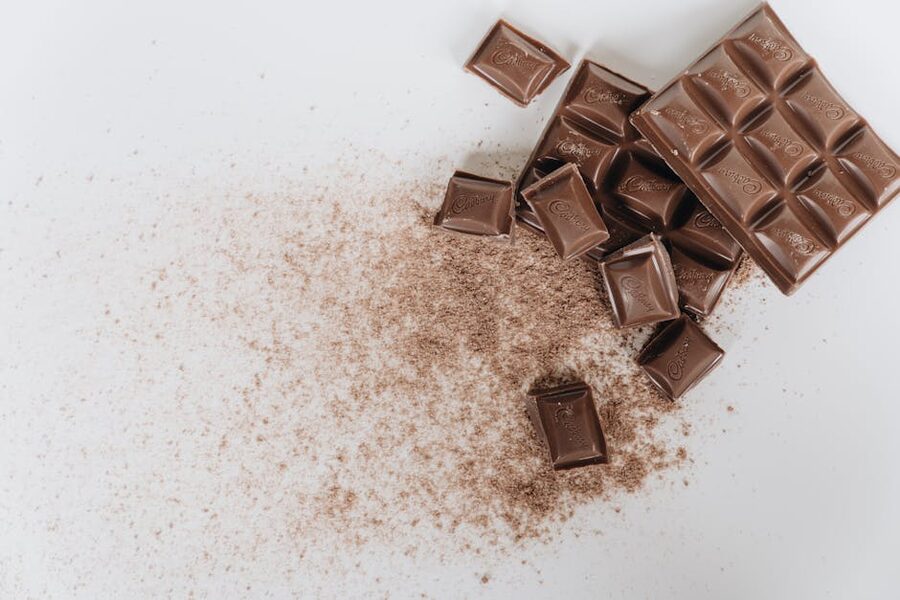
Families with kids: Yes. Strong yes, actually. The factory view fascinates children, the fountain is universally loved, the greenhouse is interactive. 4-12 year olds especially.
Foodies: Good. The history exhibition genuinely is deep — you’ll learn about cacao varieties, fermentation, conching. If food interests you at a technical level, this is above-average.
Cathedral-only tourists: Skip. If you’re in Cologne for 3 hours max and only want to see the Cathedral and its area, the Chocolate Museum is too far and too time-consuming.
Architecture fans: Moderate. The Rheinauhafen redevelopment where the museum sits has some notable contemporary architecture (the Kranhäuser – “crane houses”) visible in a loop around the museum. Worth 30 extra minutes outside the museum.
How It Compares to Other European Chocolate Museums
Lindt Home of Chocolate (Zurich): More focused, more corporate, includes hands-on chocolate making. Bigger fountain (9 metres). €15. Pick this if you’re in Switzerland.
Choco-Story (Brussels): Most comprehensive on Belgian chocolate specifically. €12. Pick if you’re in Brussels.
Chocomuseo (multiple cities in Latin America): Smaller, more regional, usually with hands-on workshops. Pick for a Peru/Mexico travel angle.
Cologne wins on: overall scale, integration with a major tourist city, working factory view, history depth. Loses on: no hands-on workshops without booking ahead, pricier than some alternatives.
Ticket Tips
The €19 online ticket is the same as the counter price. You’re not paying extra for the online booking — just saving a 5-minute queue at the door.
Family tickets are good value: 2 adults + 2 kids for €48 (vs €19 x 2 + €11.50 x 2 = €61).
Annual pass: €50. Worth it only if you live in Cologne or plan 3+ visits in a year. Not for tourists.
Combos to Look For
The Cologne Card (city tourist card) includes Chocolate Museum entry, transport, and some other museum discounts for €16-30 depending on duration. Compare against your planned itinerary — if you’re doing 3+ paid sites, it’s almost always worth it.
Practical Questions
Can I take photos? Yes, everywhere except the factory floor (they don’t want competitor intelligence).
Is it wheelchair-accessible? Yes. Full lift access between floors. Some narrow doorways in the greenhouse section but managers can help.
Do you need advance booking? Not for standard entry. Ticket booking online saves queue time. For special workshops, book 1-2 weeks ahead.
Is there a restaurant? Cafe with light menu (salads, sandwiches, cakes). For dinner, walk back to the Altstadt.
Food tolerances? If you have a chocolate allergy — skip the whole museum, it’s unavoidable.
Pairing With Other Germany Food-and-Drink Tours
If you’re building a “food tourism” Germany trip, the Chocolate Museum is a natural anchor. Others to consider:
Munich beer tour — for the beer side of German culture.
Frankfurt Main River cruise — Frankfurt is 1 hour from Cologne by train and has its own food scene.
Cologne Rhine river cruise — natural add-on the same day as the Chocolate Museum.
Cologne Kölsch brewery tour — the local hyper-specific beer style. Booked as tour option #2 above.
A Short History of the Museum
Hans Imhoff bought the Stollwerck chocolate company in 1972 when it was nearly bankrupt. Stollwerck had been Germany’s biggest chocolate-maker for a century before the war destroyed the Cologne factory in 1943. Imhoff rebuilt it, expanded the brand, and personally funded a dedicated chocolate museum to open in 1993 — partly as industry monument, partly as tourist attraction, partly as private archive of his own collection of antique chocolate moulds and advertising.
Imhoff died in 2007. The museum is still privately operated by his family’s foundation, which is why it feels slightly different from state museums — sharper commercial edge, deeper industry focus, more willing to partner with living brands.
The Short Version
Book the €19 Chocolate Museum ticket for a weekday morning, give yourself 3 hours, dip the wafer in the fountain, buy a praline box from the shop, then walk back along the Rhine to the Cathedral for the afternoon. Cologne in a day — chocolate, Gothic cathedral, a Kölsch at dinner. Classic.
Affiliate disclosure: Some links in this article are affiliate links. If you book through them we may earn a small commission at no cost to you. All recommendations are based on my own visit.