
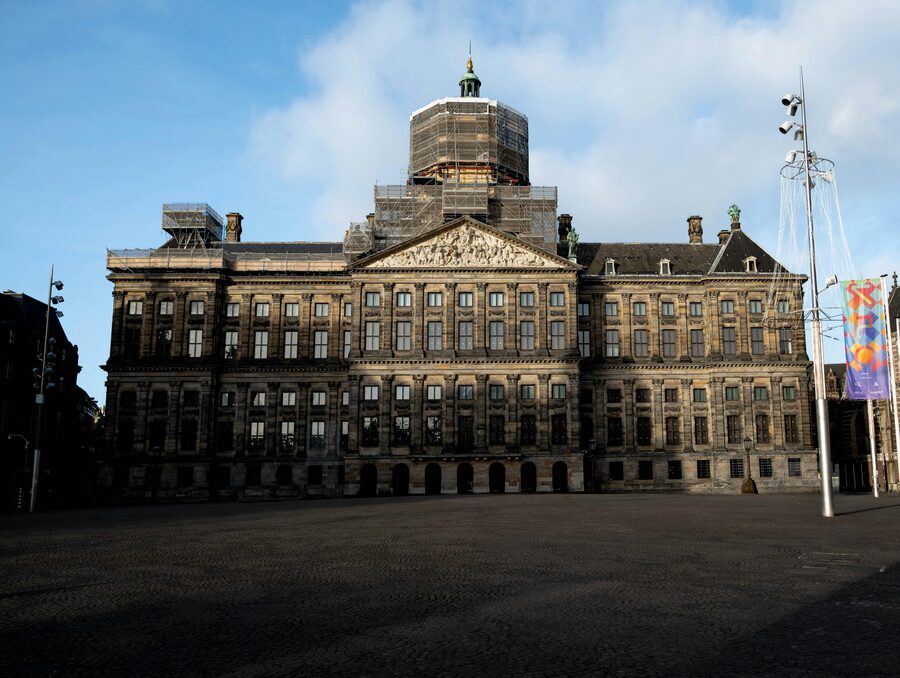
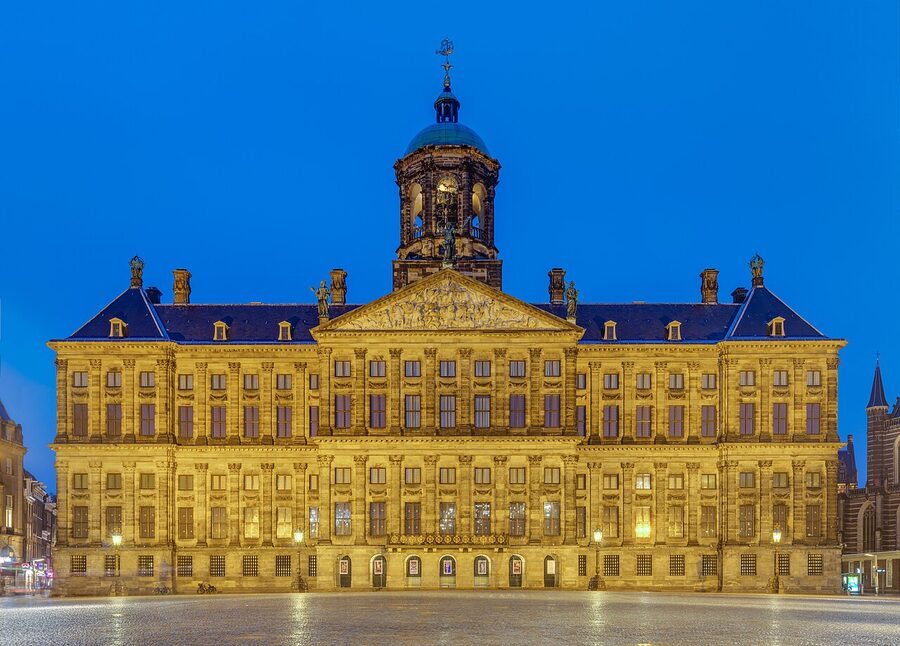
Walk onto Dam Square, look west, and the building taking up almost the entire side of the square is the Royal Palace. What you can’t tell from outside is that it was never meant to be royal. Amsterdam’s merchants built it in the 1640s as a town hall — bigger than any palace in Europe at the time — as a deliberate statement that a republic of traders could outshine any king. Then in 1808 Napoleon’s younger brother Louis moved in and started calling it a palace, and the name stuck.

The entry ticket is €12.50, the audio guide is included, and 75 minutes is the right amount of time. Most tourists skip it in favour of the Rijksmuseum or Anne Frank House — which means on a weekday morning you’ll often have whole rooms to yourself. The Citizens’ Hall alone is worth the ticket.
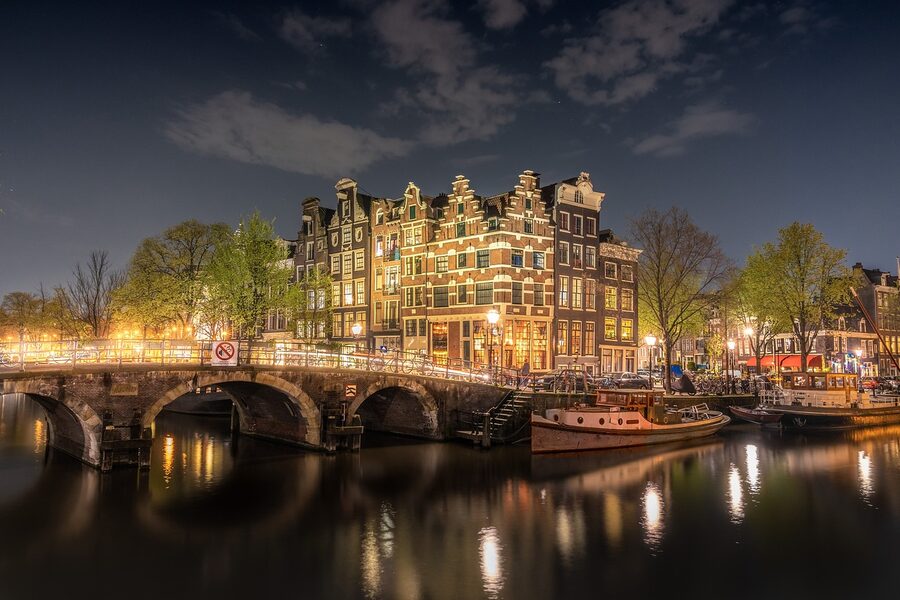
In a Hurry?
- Best overall: Royal Palace Entry + Audio Guide — €12.50, eight audio languages, 75 minutes. The straightforward pick.
- Best for history fans: Skip-the-Line Private Guided Tour — licensed Dutch guide, 90 minutes, the only way to actually understand the iconography.
- Best day out: Palace + Castle de Haar Day Trip — Amsterdam’s civic-to-royal conversion in the morning, a genuine fairy-tale castle in the afternoon.
- In a Hurry?
- What’s Inside — Room by Room
- The Three Ticket Options
- 1. Royal Palace Entry + Audio Guide — from €12.50
- 2. Skip-the-Line Private Guided Tour — from €180 (small group)
- 3. Royal Palace + Castle de Haar Private Day Trip — from €350
- Is the Royal Palace Worth It?
- A Short History of the Building
- When the Palace Is Closed
- How to Pair the Palace With Other Amsterdam Stops
- When to Go
- Tickets, Prices, What’s Included
- Photography
- Accessibility
- Facilities and What’s Nearby
- What Most Visitors Miss
- Comparing to Other European Palaces
- Getting There
- Practical Notes
- King’s Day and Other Dates to Avoid
- The Short Version
What’s Inside — Room by Room
You enter on the ground floor, ride an elevator (yes, really) up one level, and then spend the visit walking down via the ceremonial staircases.
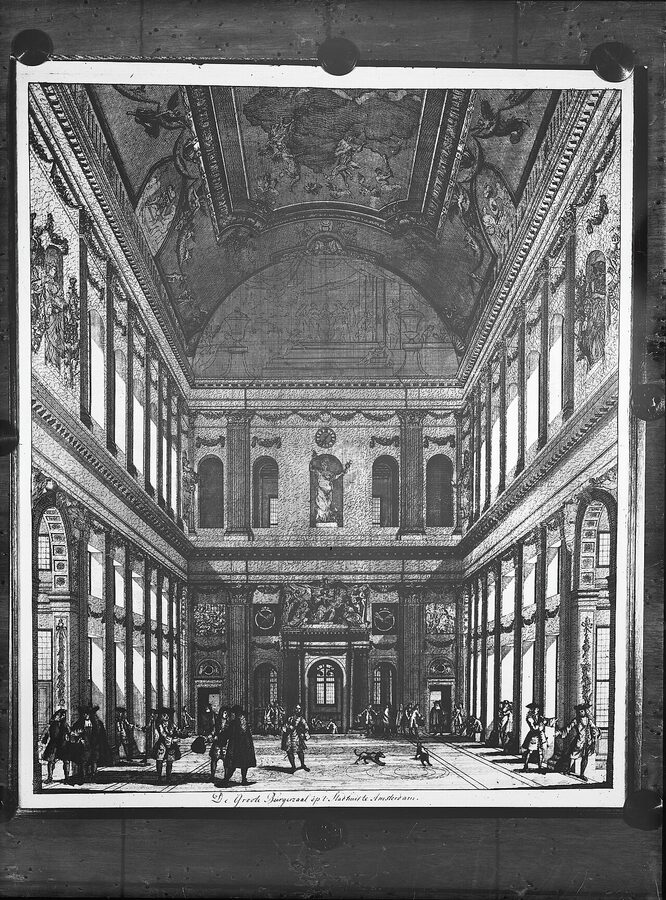

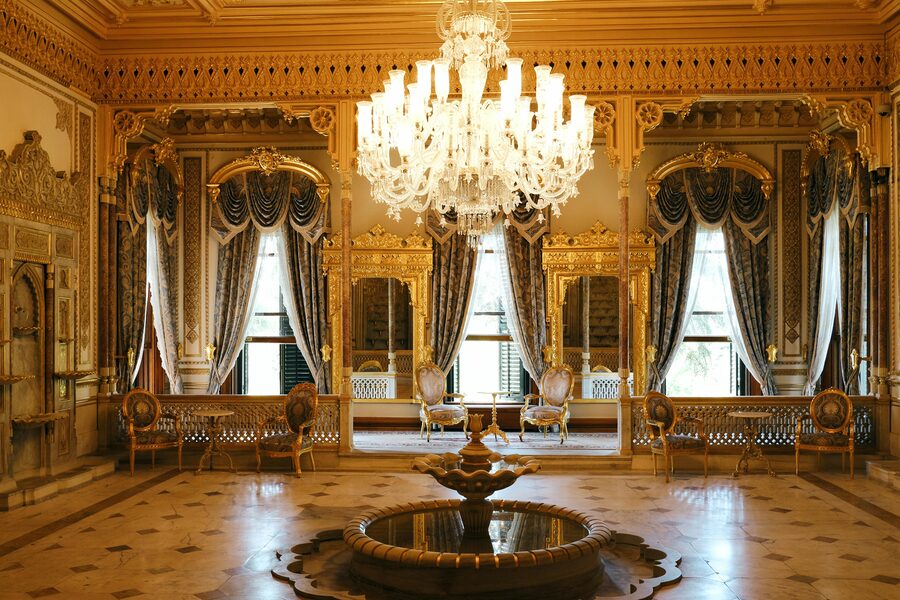
Citizens’ Hall (Burgerzaal). The one room everyone remembers. The floor is inlaid with the Eastern and Western Hemispheres in marble, plus a map of the night sky at the south end — Amsterdam’s 17th-century way of saying “we trade with all of this.” Look for the gap where Australia should be: in 1665 the Dutch East India Company had only partly mapped it, so the cartographers left a blank. The ceiling runs 28 metres up; the chandeliers are modern replicas of originals destroyed during Napoleonic redecorations.
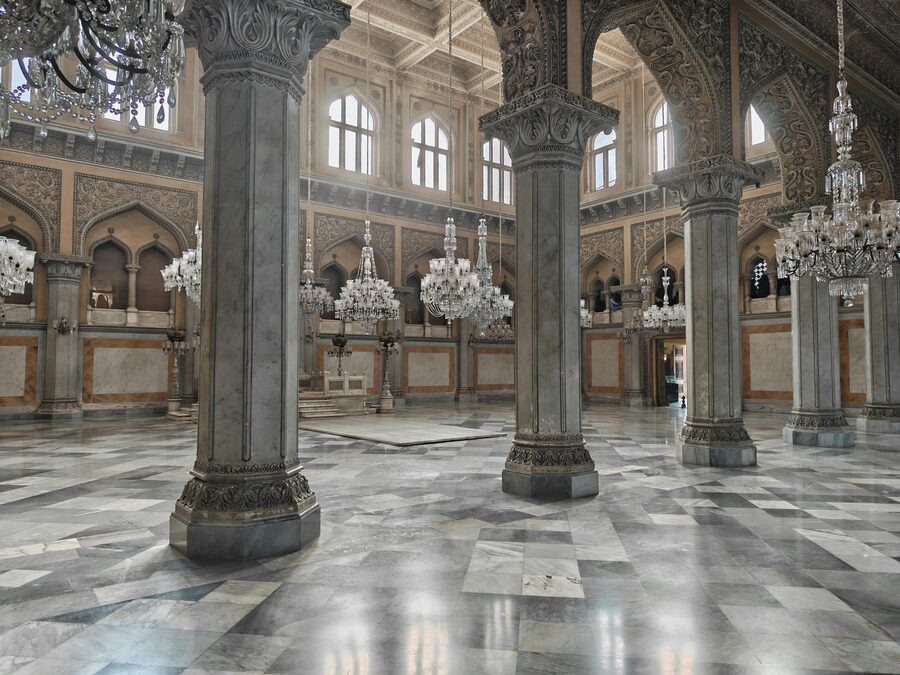
The Tribunal (Vierschaar). A small, cold marble room at the front of the palace where Amsterdam’s magistrates pronounced death sentences. Carved figures of Justice, Wisdom, and Care dominate the walls; subtler carvings hide a skull and what looks like a coffin shape viewed from above. The intent was psychological — defendants were supposed to be softened by the room’s beauty before hearing their fate. Executions themselves happened outside on Dam Square, so visitors could watch from the palace windows.
Throne Room (Troonzaal). Installed by Louis Bonaparte in 1808. The throne itself is modest — this isn’t Versailles. Dutch monarchs still use this room for investitures; King Willem-Alexander was inaugurated here in 2013 after his mother abdicated.
The Mayor’s Chamber (Burgemeesterkamer). Originally where the four Amsterdam burgomasters met — effectively the city’s CEOs. Ceiling paintings show Roman allegorical scenes: Brutus Condemning His Own Sons to Death and The Continence of Scipio. Both were deliberate choices — reminders to 17th-century city leaders that virtue mattered more than personal gain. If you have time, the audio guide’s 4-minute track on this room is the best single piece of content on the tour.
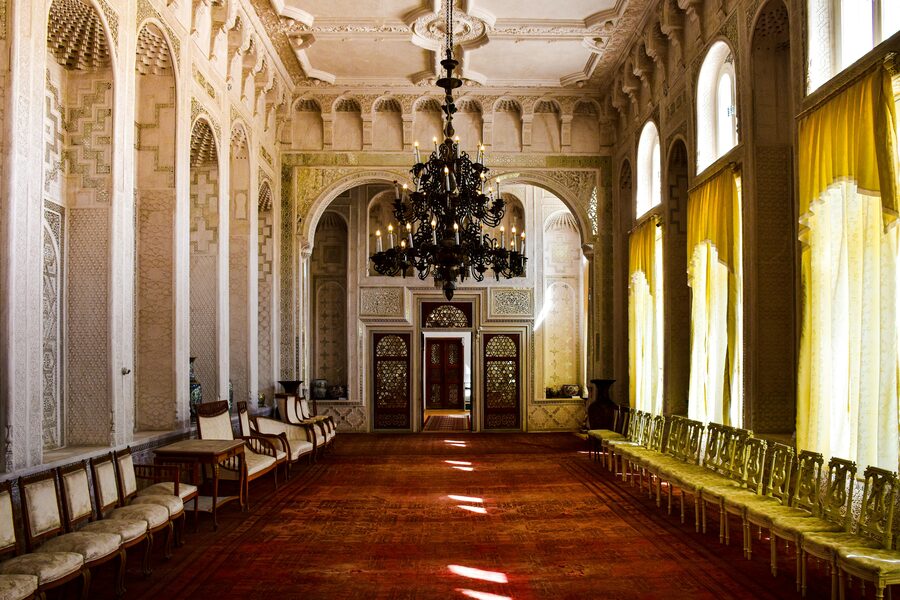
The Bank of Amsterdam Rooms. Easy to miss, but one of the most important spaces in European financial history. The Wisselbank — the world’s first major public bank — operated out of these rooms from 1609 onward, holding merchant gold and issuing the paper credit that ran the Dutch trading economy. The vaults are smaller than you’d expect. The Bank’s architecture influenced the Bank of England a century later.
The Balcony Room. You can’t enter, but you pass it. This is where Dutch royals appear after weddings, births, and investitures — every balcony photo you’ve seen of the Dutch royal family was taken from here. The crowd in most of those photos is standing exactly where you’re standing on Dam Square before entry.
The Three Ticket Options
1. Royal Palace Entry + Audio Guide — from €12.50
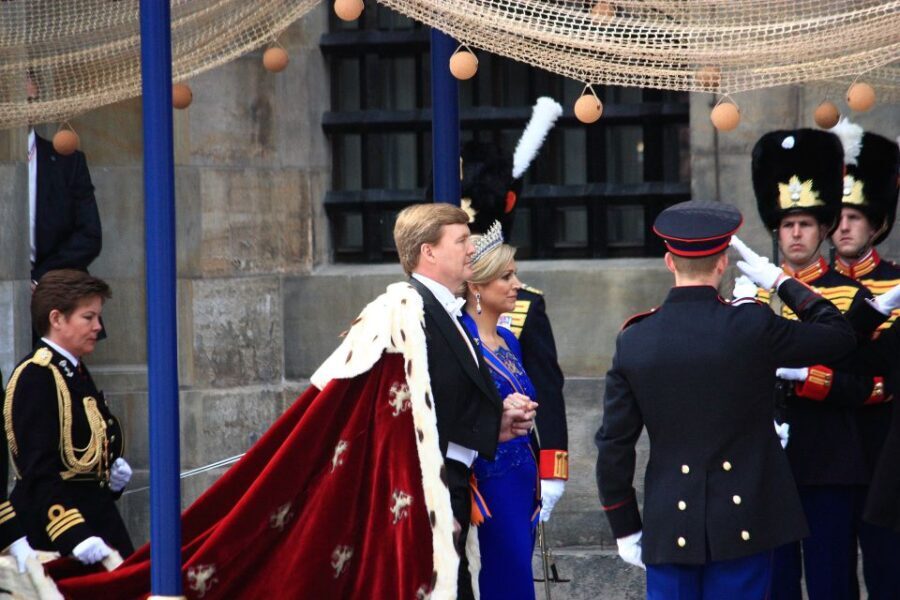
The default ticket. Audio guide in eight languages; each room has a 2-4 minute track. Our review has the rooms where it’s worth slowing down and the ones you can skim.
2. Skip-the-Line Private Guided Tour — from €180 (small group)

If you want to actually understand what you’re looking at, take this one. The audio guide tells you what’s in each room; a guide tells you why 17th-century merchants carved themselves as Roman senators. Full review has the current guide-company options.
3. Royal Palace + Castle de Haar Private Day Trip — from €350
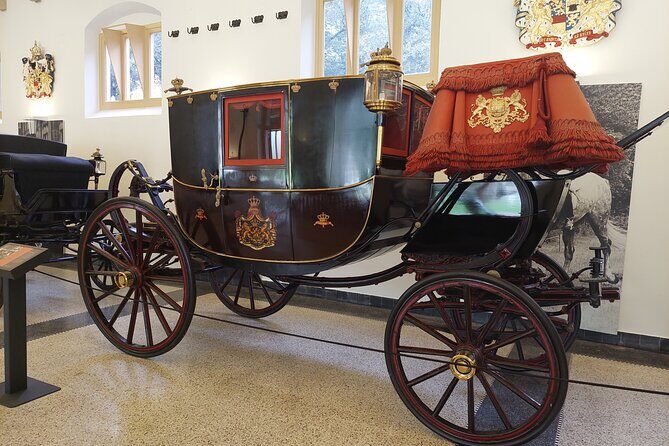
For visitors on their second or third Amsterdam trip who’ve already done the obvious. The palace in the morning, then private transport out to de Haar — which is a genuine fairy-tale castle, not a restored ruin. Our review compares it to a self-organised day.
Is the Royal Palace Worth It?
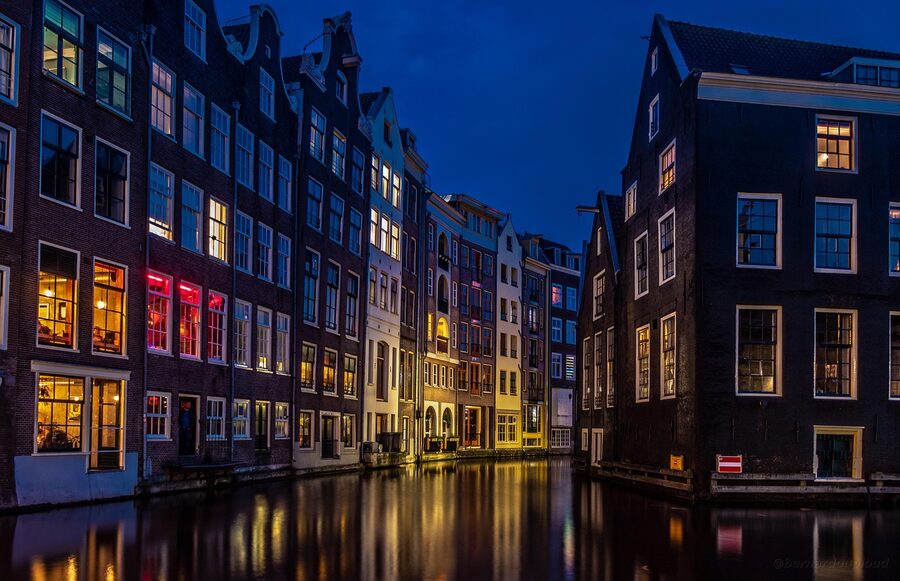
Short answer — yes, if you care at all about the Dutch Golden Age. Here’s who I’d steer toward or away from it:
Strong yes: you’ve done or are doing the Rijksmuseum (the two sites are the same story told in different media); you like Enlightenment-era political architecture; you have 2-3 hours spare on a Dam Square morning; you want a civic counterpoint to all the canal-cruise and food-tour content that usually dominates an Amsterdam itinerary.
Probably skip: first Amsterdam trip with only 3 days — Van Gogh, Anne Frank, a canal cruise, and the Rijksmuseum take priority.
Strong no: you’ve already seen Versailles, the Hofburg, and the Royal Palace of Madrid and thought “I get it, ornate rooms and chandeliers.” Amsterdam’s palace is different in intent from those, but if you’ve hit the palace-fatigue wall, don’t push through.
One rare piece of consensus across tourists, Dutch schoolkids, and architectural historians: the Citizens’ Hall is genuinely world-class. Even people who normally skip palaces often photograph the ceiling.
A Short History of the Building
The short version is that this building is a political statement made in stone, then annexed by a foreign king, then gradually folded back into Dutch identity. The longer version rewards reading.
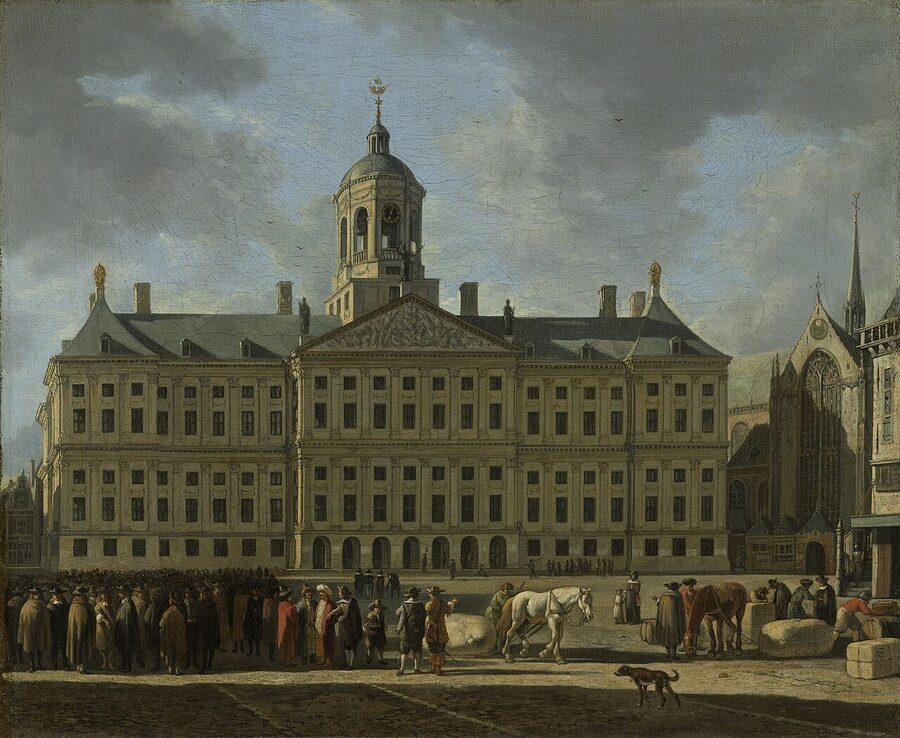

The original town hall on this site burned down on 7 July 1652, halfway through a bigger construction project to replace it. Amsterdam’s regents accelerated the project: demolish everything, build one enormous new civic building in the centre of the city. The architect they chose, Jacob van Campen, was the leading Dutch classicist of his era. He’d studied in Italy, read Vitruvius, and knew how to translate Roman architectural ideas into a Dutch context.
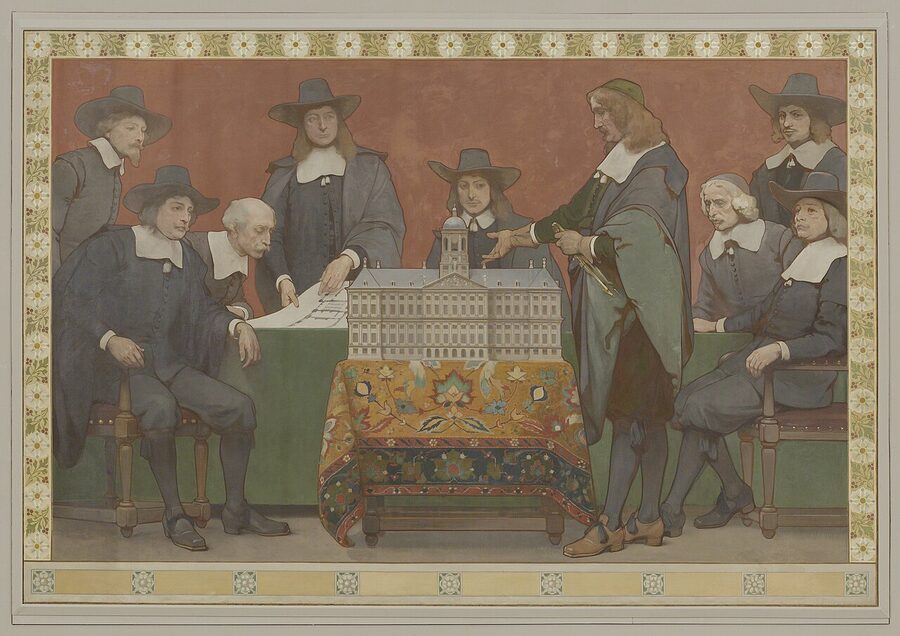

Construction took 17 years, cost the city 8.5 million guilders (an enormous sum — roughly the annual budget of the Dutch navy at the time), and required driving 13,659 oak piles into the sandy ground beneath the building. Dutch schoolchildren still memorise that number as part of a rhyming mnemonic (“Het Paleis op de Dam, staat op dertien duizend palen…”). Wood underwater doesn’t rot; wood exposed to air does. The palace’s foundation is still those 17th-century piles, still underwater because Amsterdam’s water table hasn’t dropped.
The building opened in 1655 as the new Stadhuis (town hall), although the interior decoration continued into the 1660s. Visitors — including the English ambassador — called it the “Eighth Wonder of the World.” The poet Constantijn Huygens wrote celebratory verses. The point of all this was deliberate: Amsterdam was the wealthiest city in Europe, and Amsterdam’s regents wanted architecture that put that wealth in the same league as French monarchy and Italian papacy.
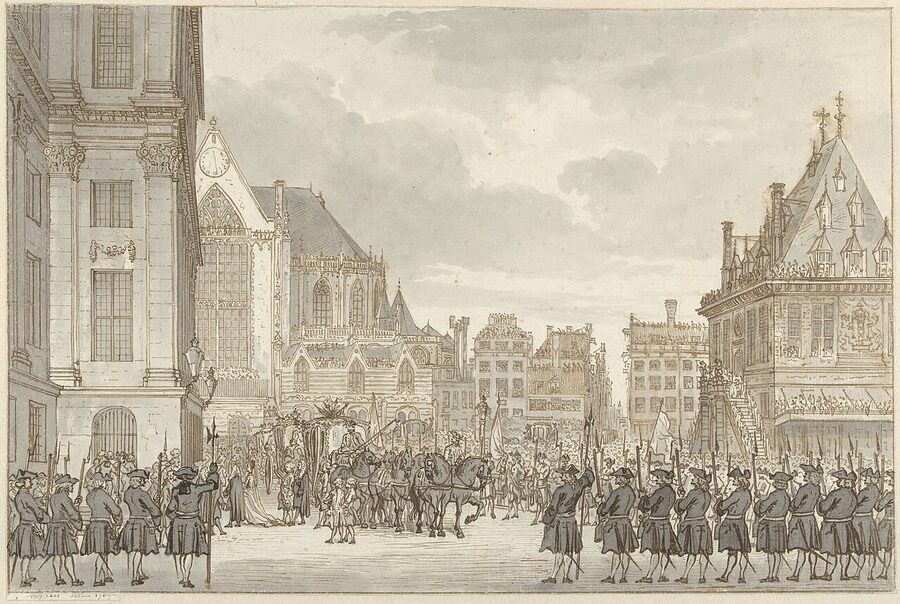

Then came 1795, when French revolutionary forces took the Netherlands and declared it the Batavian Republic. In 1806, Napoleon promoted this to the Kingdom of Holland and installed his younger brother Louis as king. Louis needed a royal residence. He moved into the Stadhuis, ejected the city administration, and began converting ceremonial rooms — adding the throne, bringing in Empire-style French furniture, and commissioning updates to the ceiling paintings.


Louis’s reign lasted four years. Napoleon annexed the Netherlands directly in 1810, dispatching Louis and ending the Kingdom of Holland. But the conversion had been done — the building no longer functioned as a town hall, and the city administration had been dispersed. When the Dutch monarchy was restored in 1813 under William I, the new king decided to keep the building as a palace rather than return it to civic use. Amsterdam was compensated with what is now the current city hall on Waterlooplein.
The 19th and 20th centuries saw various renovations but no major structural changes. The building survived both World Wars undamaged, was fully restored in the 1990s-2000s, and remains the working palace of the Dutch royal family for state occasions roughly 40 days a year. The rest of the year it’s open to visitors.
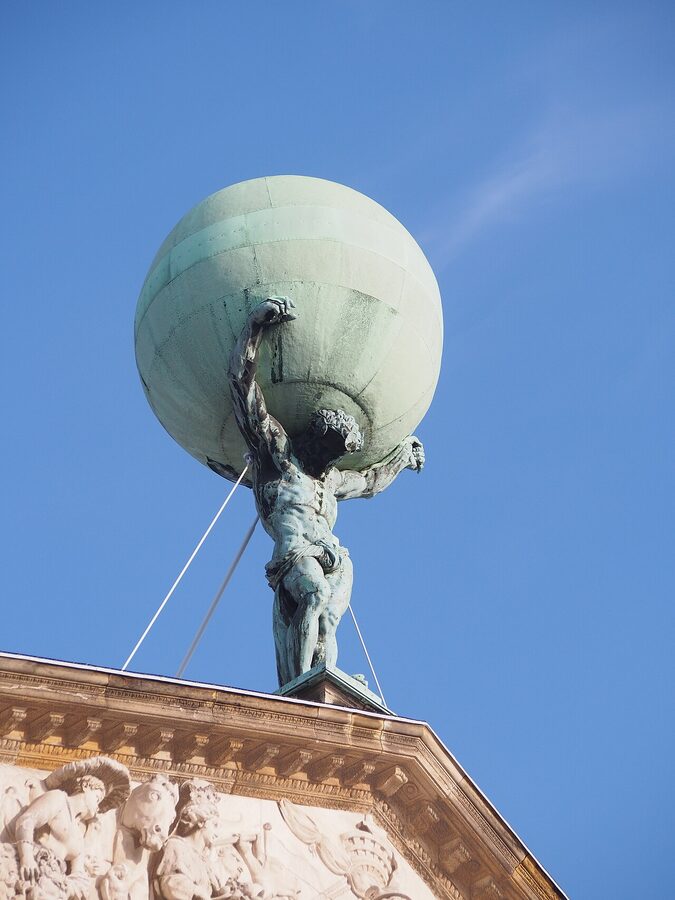

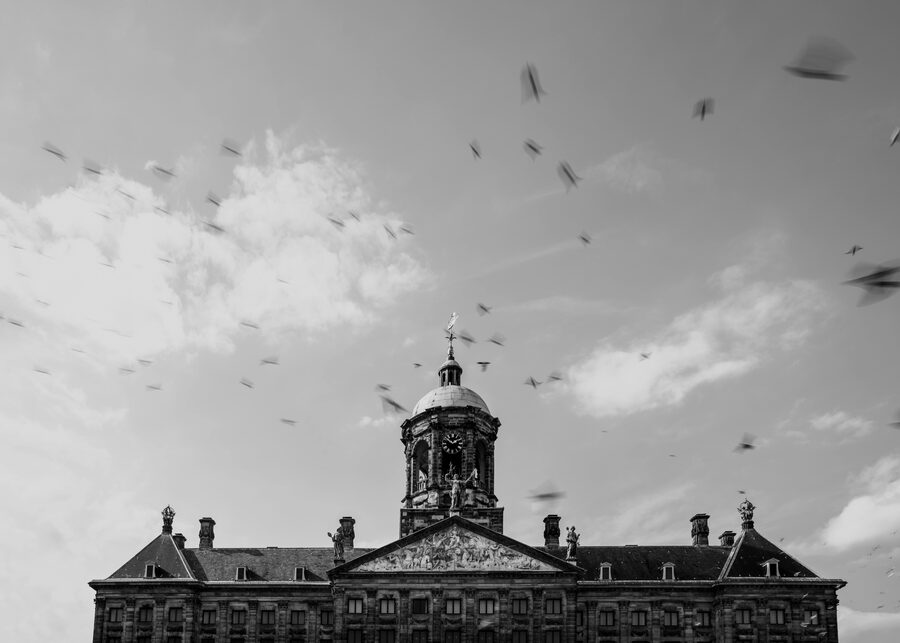
The Atlas statue on the rear pediment is worth walking around for. Installed in 1664 by the sculptor Quellinus, he’s the building’s single most direct symbolic statement: Amsterdam is holding up world trade. In 1664 that wasn’t hyperbole.
When the Palace Is Closed
This catches people out. The palace is a working royal building — the Dutch monarchy uses it for state functions at unpredictable intervals, and when they do, it closes at short notice.
Predictable closures: King’s Day (27 April) and surrounding days; state visits from foreign dignitaries; royal weddings and investitures; the New Year’s reception. Not predictable: sudden closures for security reasons or royal meetings added at short notice.
How to check: the palace’s own site (paleisamsterdam.nl) publishes closures 1-4 weeks ahead. If you’re booking months in advance, go for the flexible-cancellation option. If you’re booking days in advance, the chance of a surprise closure is small.
If it closes on you: automatic full refund. GetYourGuide handles this within five business days. You can often walk up on the day and the palace itself will issue paper refunds.
Rule of thumb: book 3-5 days before, not months. Amsterdam is busy enough that slots are usually still available near your date.
How to Pair the Palace With Other Amsterdam Stops
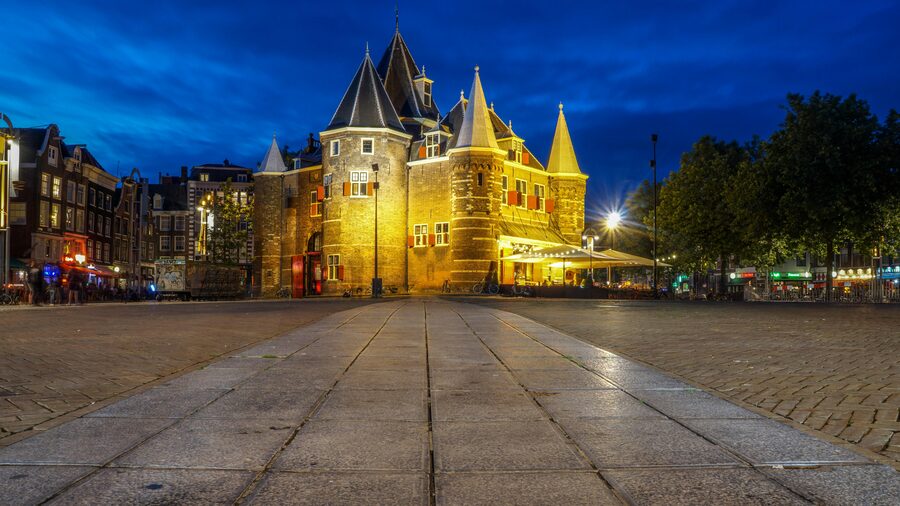
The palace is at the exact centre of old Amsterdam — every tram line points at it. Good pairings:
Palace + Rijksmuseum: the canonical “serious art” day. The Rijksmuseum’s Dutch Golden Age galleries make a completely different kind of sense after you’ve been inside the civic building that declares the same message. 3-4 hours total. See our Rijksmuseum ticket guide.
Palace + Mauritshuis (The Hague): even better for art fans willing to do a day trip. The Mauritshuis holds Vermeer’s View of Delft and Rembrandt’s Anatomy Lesson, in a 17th-century palace only slightly younger than this one. 50-minute train from Amsterdam. Our Mauritshuis guide has the timings.
Palace + Rembrandt House: the same period, a different scale. You see the state’s architectural statement in the morning, then visit the house of its most famous painter in the afternoon. Both were in their prime in the 1660s. See our Rembrandt House guide.
Palace + Canal Cruise: 6 minutes’ walk to the main dock at Prins Hendrikkade. 75 minutes indoors, 75 minutes on water. Our Amsterdam canal cruise guide picks the best operators.
Palace + Nieuwe Kerk (across the square): the church directly opposite hosts rotating art exhibitions; €15-20 depending on show. Both buildings share the same square, so it’s 30 seconds’ walk between.
Palace + Madame Tussauds: tonal whiplash, but 30 seconds apart. Serious architecture in the morning; wax Beyoncé by lunch. Our Tussauds guide covers the pairing logic for travellers with kids.
Palace + Anne Frank House: don’t do these back-to-back. The material is tonally different but both sit heavy. Leave at least two hours between. Our Anne Frank guide explains the timed-slot booking.
When to Go
Best time of year: autumn (October-November) and late winter (February). Low crowds, full opening hours, Amsterdam weather manageable. The palace is climate-controlled so rain outside doesn’t matter.
Peak season: July-August, plus the tulip weeks in mid-April. Crowds manageable by Rijksmuseum standards but you’ll share rooms with tour groups.
Best time of day: 10am when doors open. First slot is the emptiest and the morning light hits the Burgerzaal floor from the east, lighting up the globe maps. Second best: the final 90 minutes before closing, when school groups have left.
Worst time: Saturday 12-3pm in July. Every tour group in Amsterdam cycles through these hours.
Winter: the palace is at its best in winter. The ornate interiors work better against grey outdoor light, crowds are low, Dam Square is quiet, and you can usually book same-day or next-day.
Tickets, Prices, What’s Included
Price: €12.50 adult, €6.25 student, €6.25 child 5-17, free under 5. Museumkaart and I Amsterdam City Card holders enter free.
Opening hours: 10am-5pm daily when open. Last entry 16:00.
What’s included: entry, audio guide, access to the 15 public ceremonial rooms on two floors.
What’s not included: food or drink (no café), guided tours (upgrade separately), children’s activity sheet (free at reception if you ask).
Booking window: 3-5 days ahead is plenty. If you’re travelling in July-August, stretch that to a week.
Cancellation: free up to 24 hours before; within 24 hours, non-refundable. GYG refunds automatically if the palace closes.
Photography
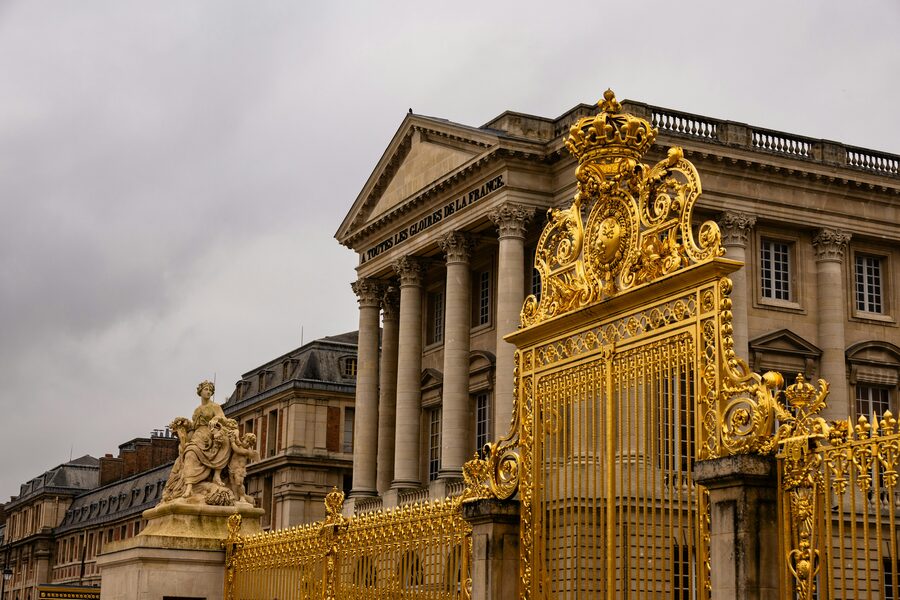
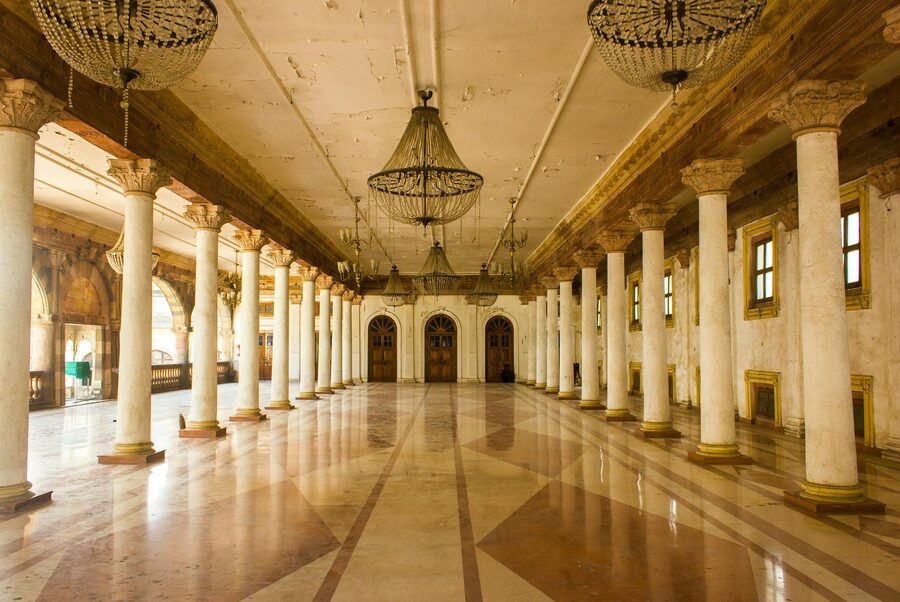
Photos are allowed in most rooms. The exceptions: the Throne Room (often closed anyway for royal preparations) and occasionally the Tribunal. No flash, no tripods. Phones are fine and actively encouraged.
Best shot inside: the Citizens’ Hall ceiling. Lie on your back if you can (staff won’t stop you so long as you move when others need the space) and use a wide-angle lens. The globe maps on the floor are the second-best subject — shoot straight down from eye level.
Best shot outside: from the south end of Dam Square at 10am, when the morning sun hits the facade. At sunset the stone turns a warm cream colour — worth waiting if you’re there in July.
Best hidden shot: walk to Nieuwezijds Voorburgwal behind the palace and look up at the Atlas statue on the rear pediment. Most tourists never see this view.
Accessibility
The palace is fully wheelchair accessible via an elevator from the ground-floor entrance. All ceremonial rooms are step-free. Audio guide subtitles are available for deaf and hard-of-hearing visitors. Dutch Sign Language tours can be booked with two weeks’ notice.
Benches sit in most rooms — unusual for a palace tour and useful if you fatigue easily. The Citizens’ Hall has fixed benches along two walls.
Service dogs welcome. Pet dogs not.
Facilities and What’s Nearby
Inside: no café, small gift shop near the exit (postcards, history books, royal-themed items), toilets at entrance and near the Citizens’ Hall.
Outside, within five minutes’ walk:
- Café de Jaren — 5 min south, riverside terrace, good for a post-palace lunch. €14 mains.
- De Bijenkorf — department store on Dam Square. Seventh-floor rooftop café has the best view of the palace you’ll get without paying for one.
- Van Stapele Koekmakerij — 3 min, single-cookie bakery. Chocolate-and-white-chocolate cookies at €3 each. Queue; it’s worth it.
- In ‘t Aepjen — 6 min north, one of Amsterdam’s oldest bars (15th century). Different era entirely — the palace’s ornate civic style vs a sailors’ bar.
What Most Visitors Miss
The wooden piles. 13,659 oak piles, driven 11-12 metres down into the sand. Dutch schoolchildren memorise this exact number. The building’s entire weight rests on that forest; the foundation has held for 370 years because the water table hasn’t dropped.
Louis Bonaparte nearly demolished it. Shortly after moving in, Louis considered pulling the building down to replace it with something “more palace-like.” He was talked out of it by the city architect on the grounds of cost and the impossibility of replacing the foundation work.
The coffin shape in the Tribunal. The carved wooden element on the ceiling above where defendants stood is, viewed from above, a coffin. 17th-century Amsterdam judges wanted the accused to feel the weight of what might be about to happen. The audio guide doesn’t mention this; a human guide will.
The Continence of Scipio ceiling. The most technically accomplished painting in the palace is in the Mayor’s Chamber. Scipio Africanus, a Roman general, is refusing a beautiful captive woman offered to him as a prize, and returning her to her fiancé instead. The room’s original users were the four Amsterdam burgomasters — this was their visual reminder that personal restraint was expected.
The south-east corner clock. An astronomical clock commissioned during the building’s construction. It shows the phases of the moon and the positions of the planets. Still works.
Comparing to Other European Palaces
Amsterdam’s Royal Palace is smaller than Versailles, less showy than Schönbrunn, and less famous than the Royal Palace of Madrid. If you like one of those, how does this compare?
Against Versailles: completely different intent. Versailles broadcasts the absolute power of one king; Amsterdam broadcasts the collective achievement of a trading city. Smaller, simpler, but more coherent as a statement.
Against Schönbrunn (Vienna): Schönbrunn is 1,400 rooms of Habsburg self-regard. Amsterdam is 50 rooms of Dutch Republican restraint. If Schönbrunn made you think “too much,” Amsterdam will feel better calibrated.
Against the Royal Palace of Madrid: Madrid is Baroque excess; Amsterdam is neoclassical order. A Spanish gilt-heavy palace and this one look like they belong to different universes — and in a sense they did.
Against the Doge’s Palace (Venice): the closest conceptual match. Both are civic buildings for a trading republic. Both display merchant wealth as public virtue. The Doge’s Palace is older and flashier; Amsterdam is tighter and more disciplined.
If you’ve done 3+ European palaces and thought “I get it now,” Amsterdam’s Royal Palace is the one that breaks that pattern — if you can get past the initial “another ornate palace” reaction.
Getting There
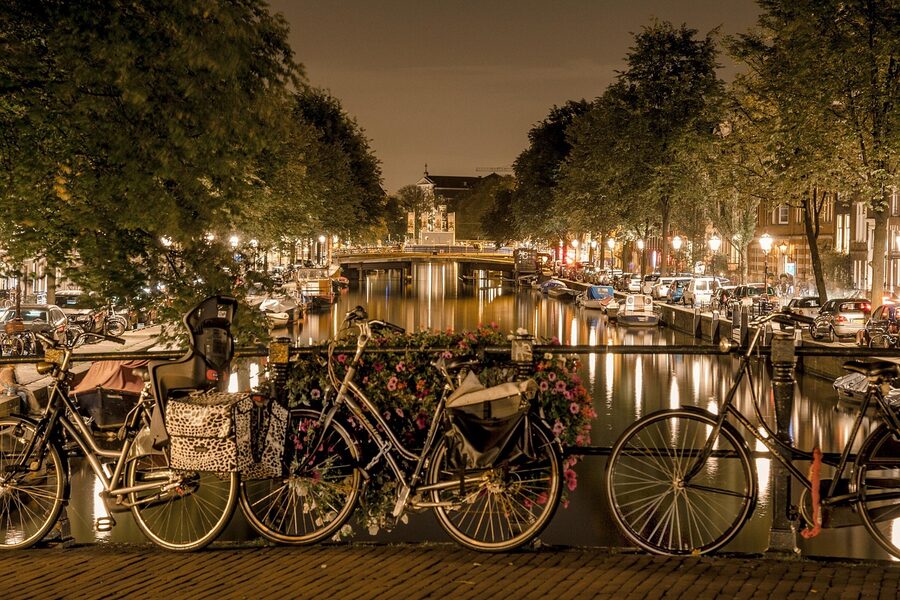
Dam Square is the most connected point in central Amsterdam.
From Centraal Station: 10 min walk south down Damrak, or tram 4/14/24 (2 stops). Both options work; the walk is better in any weather except rain.
From Leidseplein: 12 min walk or tram 2/12 (4 stops).
From Museumplein (Rijksmuseum, Van Gogh): tram 2 or 12, about 10 minutes.
By bike: Amsterdam’s default transport. Bike parking available around the square, though it fills up on sunny weekends — there’s a free underground garage at Centraal if Dam is full.
By car: don’t. Central Amsterdam is effectively closed to private cars. Use Centraal’s P+R garages (€8 for the day including transit).
Practical Notes
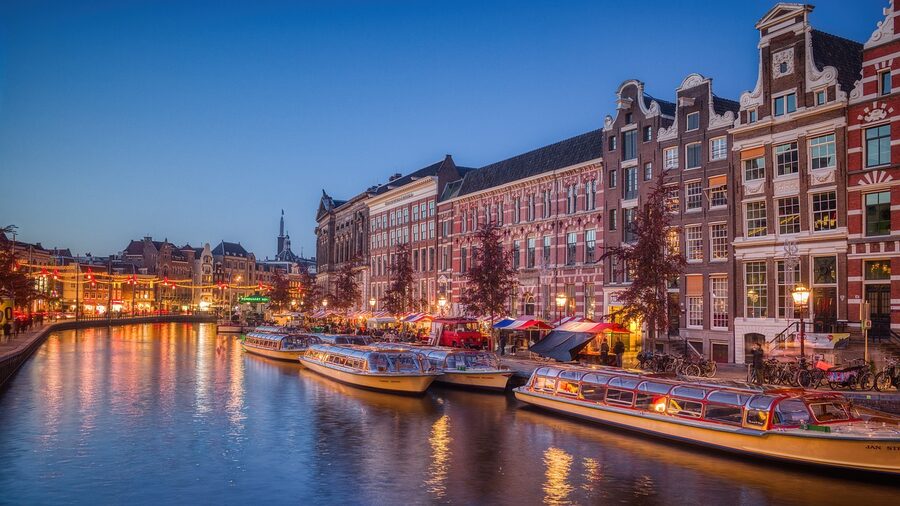
Bag policy: large backpacks to the cloakroom (free). Small bags OK.
Food and drink: not allowed inside. Sealed water bottles tolerated.
Dress code: none, but this is a working palace and the Dutch are understated. Summer shorts are fine; sportswear and beach clothes look out of place.
Kids: kids’ audio guide for ages 8-12 focuses on stories (royal scandals, ghost legends) rather than architecture. Under-7s often find the palace too quiet — better to hit Tussauds or NEMO instead.
Time of day: 10am is emptiest. Post-2pm crowds pick up, but the palace rarely feels “busy” in the way the Rijksmuseum does — rooms are large enough to absorb flow.
King’s Day and Other Dates to Avoid
27 April is King’s Day (Koningsdag). Central Amsterdam turns into a giant orange street party. The palace closes for royal ceremonies. Dam Square is packed enough that you won’t want to be there even for the outside.
If you’re in Amsterdam around 27 April, save the palace for another day. Plan everything else around the fact that trams run on weird schedules, hotels charge double, and bike rental is impossible.
In tulip season (mid-March to mid-May), the palace makes an excellent backup for a day when you can’t get to Keukenhof — see our Keukenhof guide for the tulip-gardens booking strategy.
New Year’s Day and late December: periodic closures for royal receptions.
The Short Version
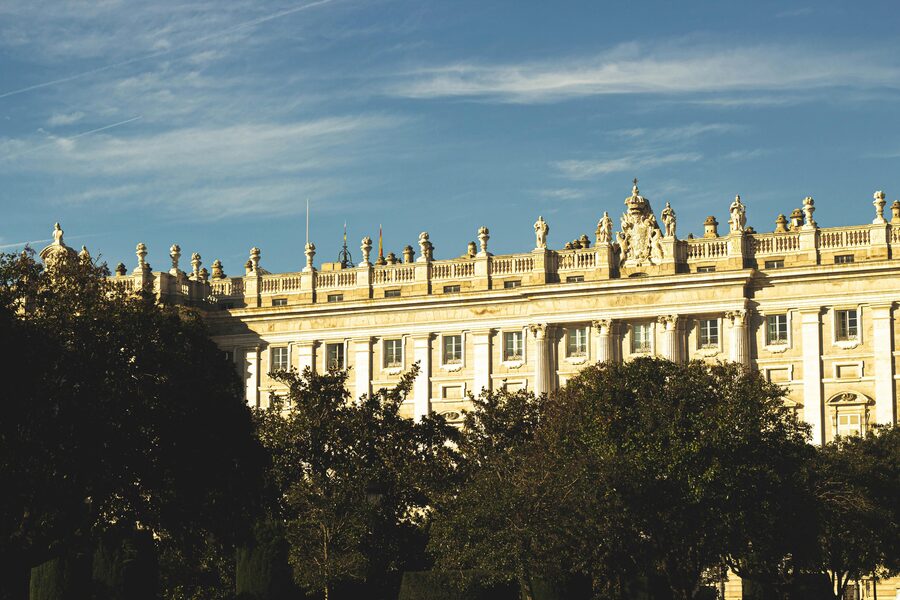
Book the €12.50 audio-guide ticket for a 10am slot. Spend at least 20 minutes in the Citizens’ Hall — look down at the globe maps, up at the ceiling, and across at the chandeliers. Skip nothing. Walk out and cross Dam Square to the Nieuwe Kerk or stop into De Bijenkorf for a coffee on the seventh floor.
Pair with the Rijksmuseum on a 2-3 day first trip. Pair with Rembrandt House or the Mauritshuis in The Hague on a longer trip. Don’t bother on a one-day visit — it deserves more time than that.
Affiliate disclosure: Some links in this article are affiliate links. If you book through them we may earn a small commission at no cost to you. All recommendations are based on my own visit.