
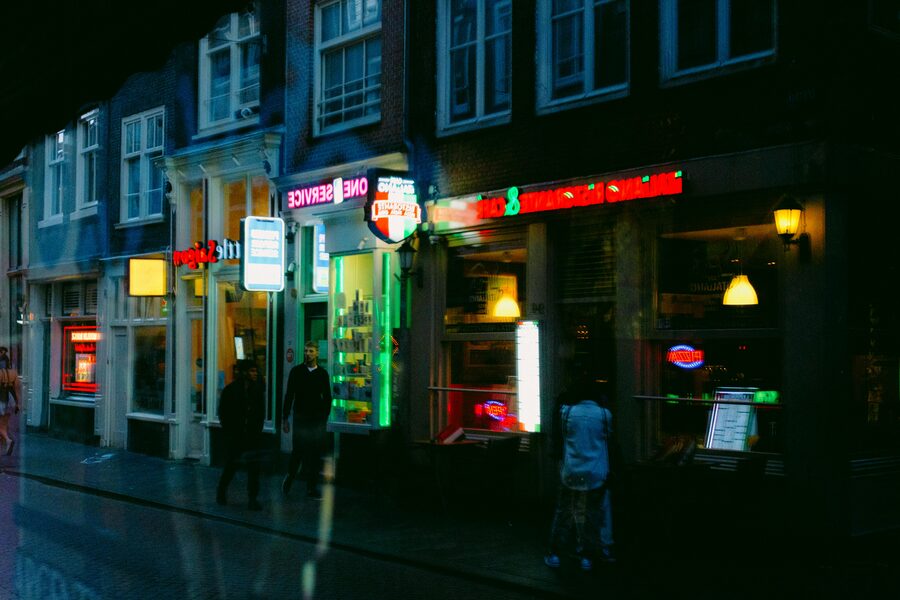
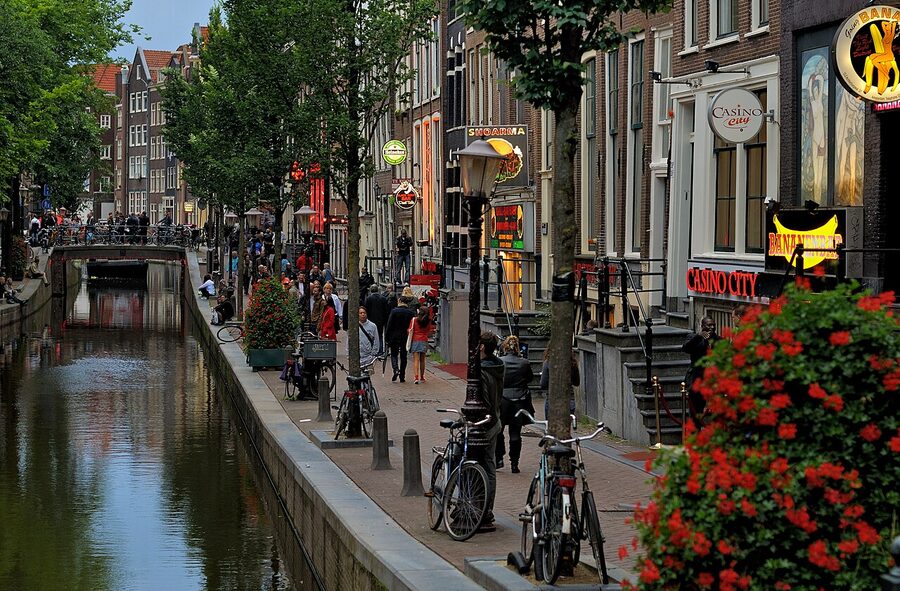
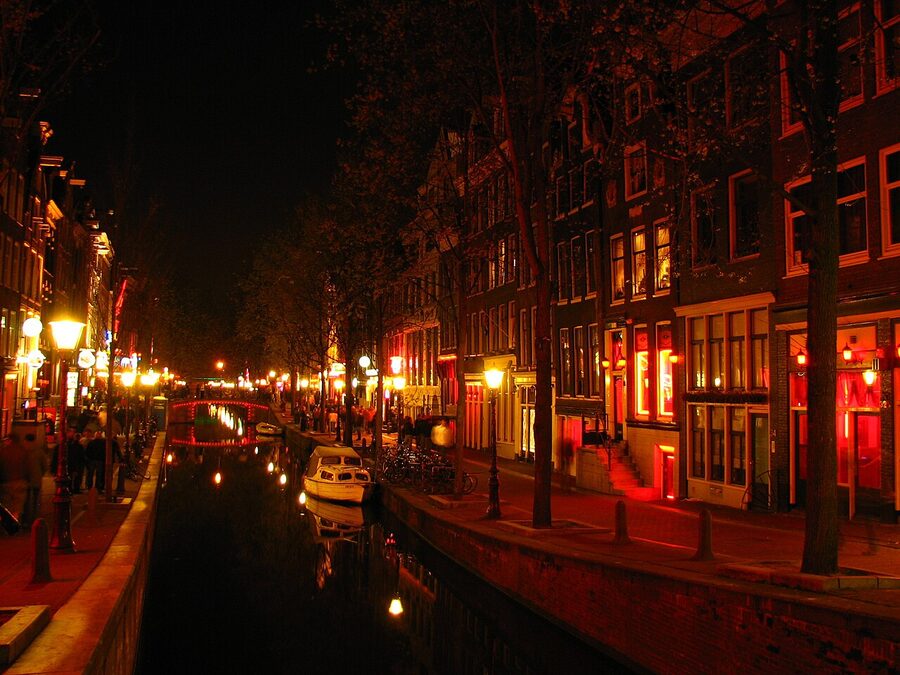
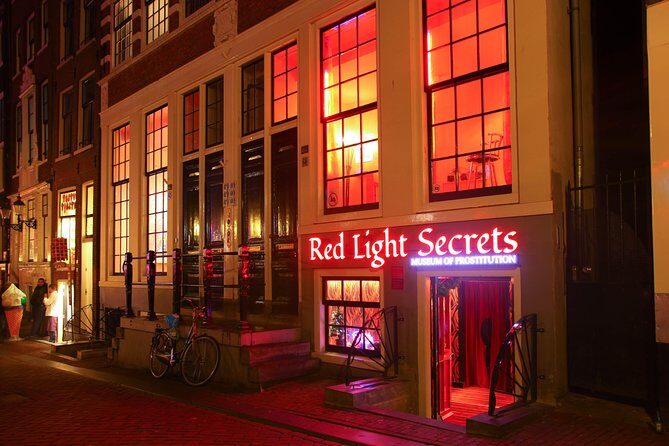
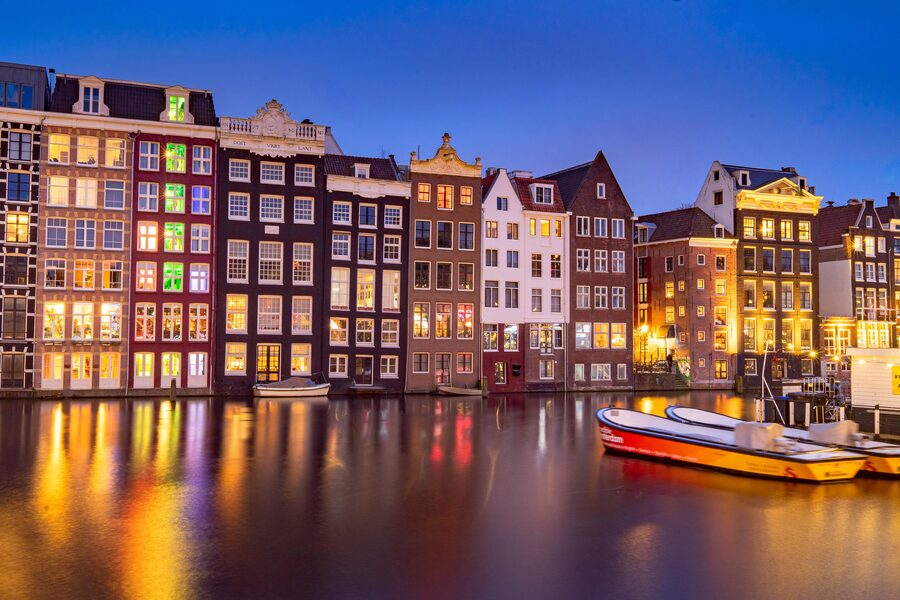
Red Light Secrets is the only museum in the world run out of a former working sex-worker window. The building is a 17th-century canal house on Oudezijds Achterburgwal, the district’s main canal, that was itself a working window room before the 2014 conversion — which means you walk past neighbours who are still at work to get inside. Entry is €13, the visit takes 45-60 minutes, and it reliably ends with visitors going quieter than they came in.
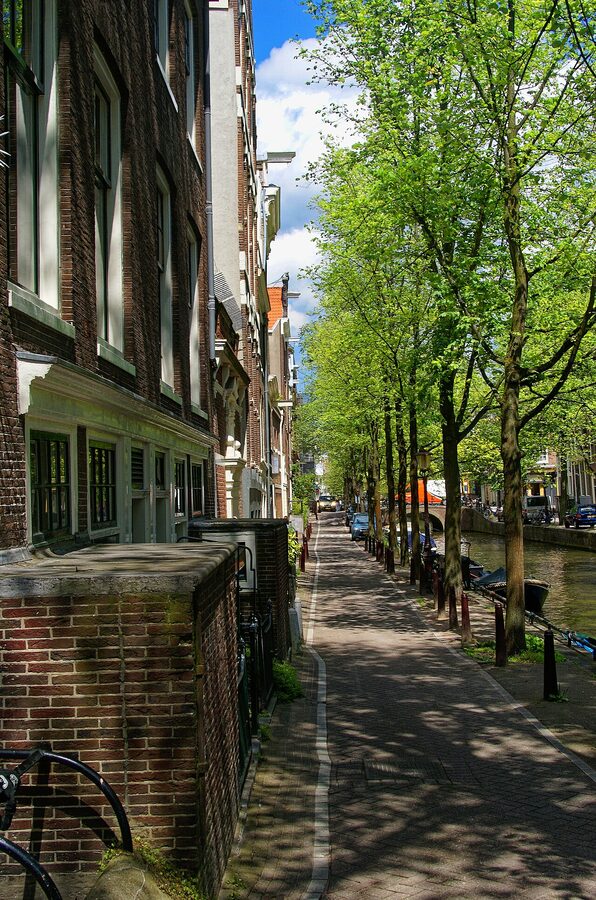

The museum occupies three narrow floors connected by a Dutch staircase steep enough to make first-time visitors pause at the top. The content is social history, not voyeurism. You get the legal framework (Dutch sex work was regulated and legalised in 2000), the human stories (anonymised audio accounts from working sex workers), and a recreated window room you can sit in and see what the district looks like from the worker’s perspective. Most visitors arrive expecting a novelty attraction and leave having thought about the neighbourhood differently.



In a Hurry?
- Best overall: Red Light Secrets Entry — €13, 45-60 minutes, self-paced audio guide.
- Best with context: Private RLD Walking Tour + Museum — 2-hour guided tour ending at the museum.
- Best Viator option: Red Light Secrets via Viator — same museum, different platform, sometimes different slot availability.
- In a Hurry?
- What You See Inside — Floor by Floor
- Three Ways to Visit
- 1. Red Light Secrets Museum Entry — from €13
- 2. Private RLD Walking Tour + Sex Museum — from €95
- 3. Red Light Secrets Admission (Viator) — from €14
- Is the Museum Actually Worth It?
- A Short History of the District
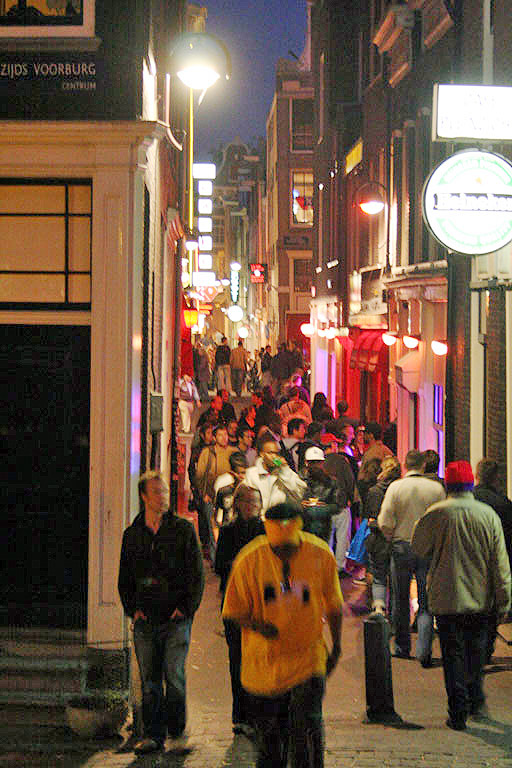
- Etiquette in the Red Light District
- When to Visit
- How the Museum Compares to Other Amsterdam Attractions
- Photography Policy
- Who Visits and Why
- Combining With Other Amsterdam Evenings
- What the Museum Gets Right
- What the Museum Can’t Fix
- Getting There
- Accessibility
- Practical Details
- Common Misconceptions
- The Short Version
What You See Inside — Floor by Floor
Three floors. The stairs are steep.
Ground floor — history and context. The visit opens with a historical timeline of prostitution in Amsterdam, starting in the medieval period and running through the 2000 legalisation. Panels cover the role of the church (the Oude Kerk across the canal has been next to working sex workers since the 13th century), the waves of moral panic, the 19th-century shift from harbour-focused to tourist-facing, and the 2000 Prostitution Act that fully legalised and regulated the profession. Heavy on text but well-written — don’t skim.
First floor — personal stories. This is the heart of the museum. Audio installations feature real sex workers — anonymised, consenting — telling their own stories in their own words. How they entered the profession, what a typical day looks like, what they want visitors to understand. Installations are 3-5 minutes each; you listen through headphones, and the installations play at their own pace. The first floor is what shifts most visitors’ perspectives.

Second floor — the experience room. A recreation of a working window room: bed, sink, small area where a sex worker would sit during her shift. You can sit in it. You see what she sees: the canal outside, the passing street crowds, the cameras pointed at the window. It’s not voyeuristic. The point is perspective. Most people stay 2-3 minutes and come out noticeably quieter.
Small gift area on the way out. Books on Dutch sex-work policy, postcards, documented essays. Not the average tourist shop.
Three Ways to Visit
1. Red Light Secrets Museum Entry — from €13
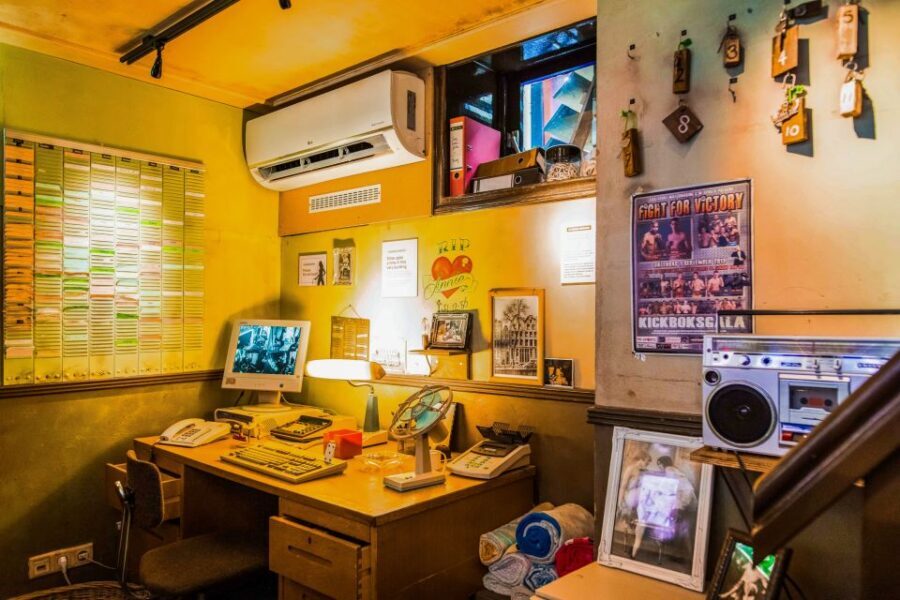
The direct approach. Good for independent visitors who want to process the material at their own pace. Audio installations in English and Dutch with subtitles in other languages. Full review has the floor-by-floor walkthrough.
2. Private RLD Walking Tour + Sex Museum — from €95
For deeper context. The walking tour covers the district’s history, the current legal framework, and the ongoing policy debate about visitor behaviour and worker safety. Ending at the museum gives you a guided frame before walking through the exhibits yourself. Full review.
3. Red Light Secrets Admission (Viator) — from €14
For visitors who prefer Viator’s platform — sometimes easier to combine with other Viator bookings, and inventory doesn’t perfectly overlap with GYG. If GYG is sold out, check Viator.
Is the Museum Actually Worth It?
Short answer depends on why you’re considering it.
Yes if: you’re curious about the Red Light District’s social context; you want to understand Dutch sex-work policy; you prefer museums that take a topic seriously over novelty-focused exhibits.
No if: you expect anything titillating — it isn’t. The museum is straightforwardly educational and most visitors leave respectful rather than entertained.
Maybe if: you’re already walking through the district anyway (and most Amsterdam visitors do). €13 for context is cheaper than piecing it together from Wikipedia.
One honest reservation: the museum is small. If you’re expecting Amsterdam Museum-scale depth, it won’t match. 60 minutes is the right time to allow.
A Short History of the District
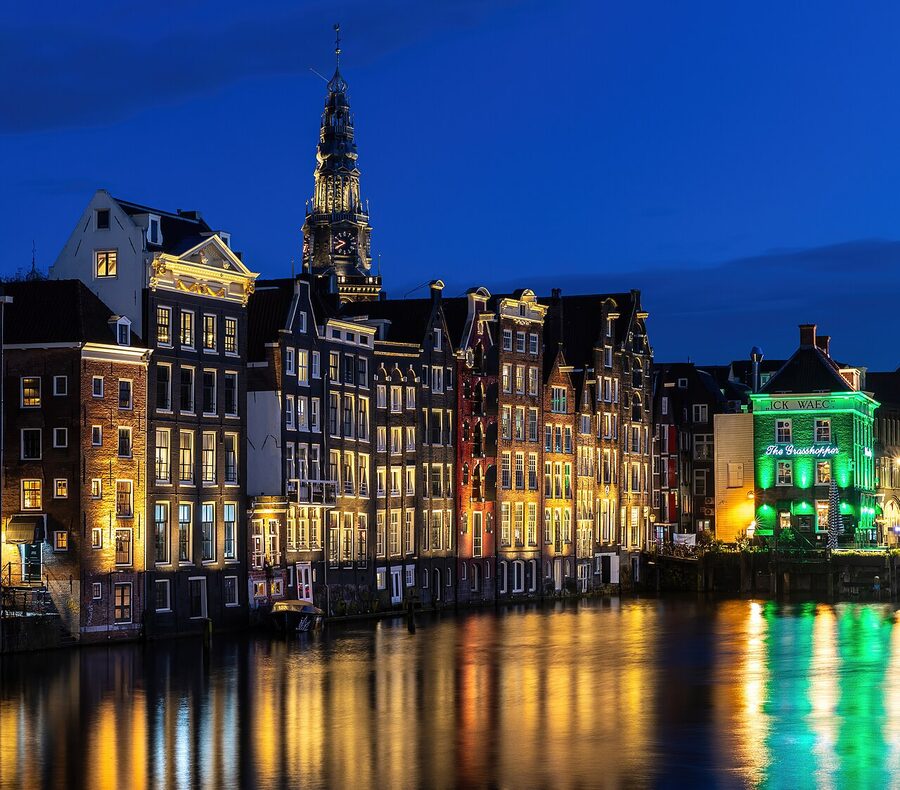

Amsterdam’s Red Light District dates from the 14th century, when the harbour was just north of here and Amsterdam had become an important international trading port. Sailors arrived from across the known world, needed somewhere to drink and find company, and the district — known then as “de Wallen” (“the walls,” a reference to the canals and medieval city walls) — developed to serve them.
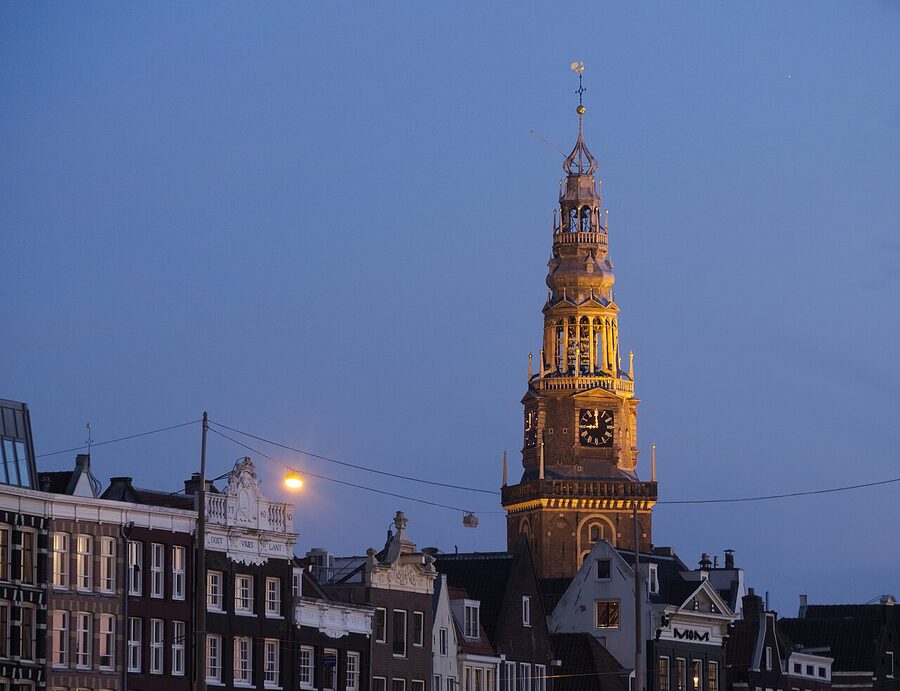
The Oude Kerk (Old Church), the 1213 parish church, sits in the middle of the district. It has been surrounded by working sex workers for 700+ years. The Dutch reformation didn’t change that; neither did the Napoleonic annexation; neither did two centuries of moral panics. The church and the district have existed side by side.
By the 19th century, the trade had become entrenched enough that Amsterdam authorities took a pragmatic approach: regulate rather than ban. Workers were registered, buildings licensed, health inspections mandated. This was not progressive social policy — it was public-health triage, driven by fears about syphilis spreading between sailors and civilians. But it established the precedent that sex work in Amsterdam would be regulated, not prohibited.
The 20th century was less stable. Prohibition became the European norm in most places; Amsterdam kept its regulated system but added ambiguity. Sex work was technically illegal but tolerated if it stayed in the district. This grey zone persisted through most of the century.
In October 2000, the Dutch Parliament passed the Prostitution Act, fully legalising and regulating sex work. Brothels became licensed businesses; workers became self-employed entrepreneurs paying income tax; minimum ages and health regulations were enforced. Amsterdam’s Red Light District was the most visible example of what the new framework looked like in practice.
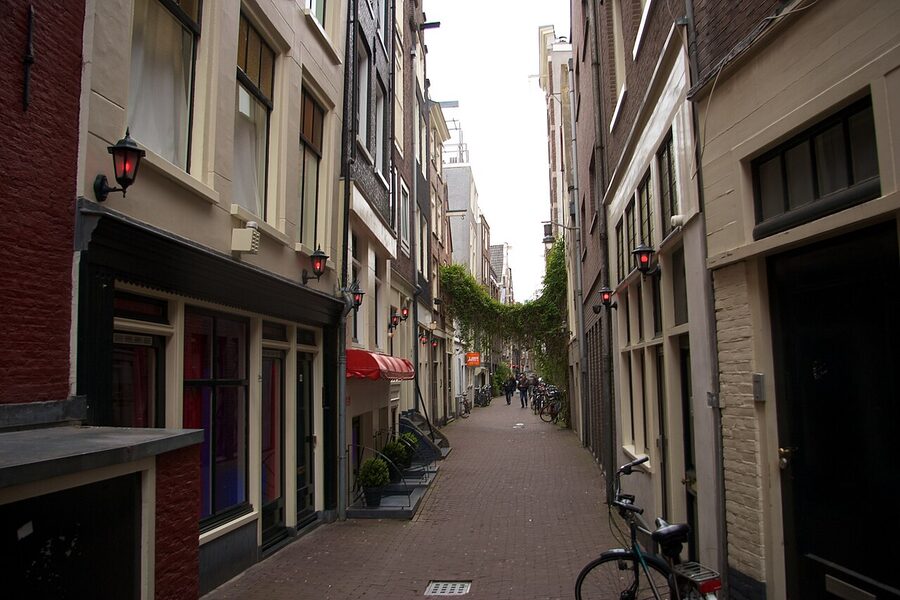

In 2023-2024, the city announced plans to relocate many of the district’s window rooms to a purpose-built “erotic centre” elsewhere in Amsterdam. The motivation is twofold: reduce tourist disruption to residents in the central district, and give workers better infrastructure (larger rooms, better ventilation, on-site health services). The plan is contested — local residents, some workers, and preservation groups all have objections — and timing is unclear. If the relocation happens, the district as you see it today will look substantially different within a decade.
Etiquette in the Red Light District

Before you visit, worth knowing: the district is a working residential neighbourhood, and Amsterdam has been getting stricter about visitor behaviour since 2020. The rules:
Never photograph the windows or the sex workers. This is a €95 fine from city enforcement officers. More importantly, it can result in workers being targeted. Phone cameras pointed at windows will get attention from staff and sometimes other visitors.
Don’t linger outside a specific window. Groups of tourists pointing or staring is disrespectful. Walk through, don’t stop.
Don’t gather in large groups. The city banned guided group tours of the district in 2020. You’ll still see some running (private tours are permitted with restrictions), but the large backpack-tour format is now prohibited.
Respect locals’ routines. People live on these canals. Normal-volume conversation, normal walking speed.
These norms aren’t punitive — they’re what keeps Amsterdam’s regulated system functional. Most visitors instinctively get it within a minute.
When to Visit
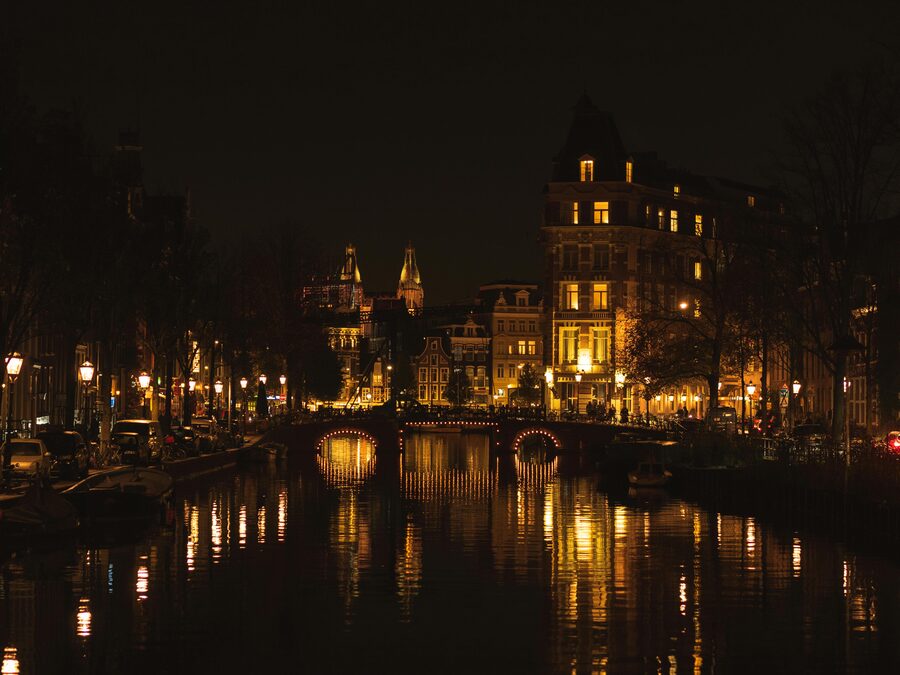
Opening hours: usually 11am-midnight, 7 days a week. Last entry 45 minutes before closing.
Best time: late afternoon (4-6pm). Quieter than nighttime, lighter crowds, and you can pair with an early dinner.
Worth skipping: Saturday nights after 10pm. Stag parties and drunk-tourist density peaks.
Daytime visit: surprisingly peaceful. Windows are usually closed during daytime hours; the district looks like any other pretty Amsterdam canal neighbourhood. The museum is fine during the day though some installations are designed for evening light.
How the Museum Compares to Other Amsterdam Attractions
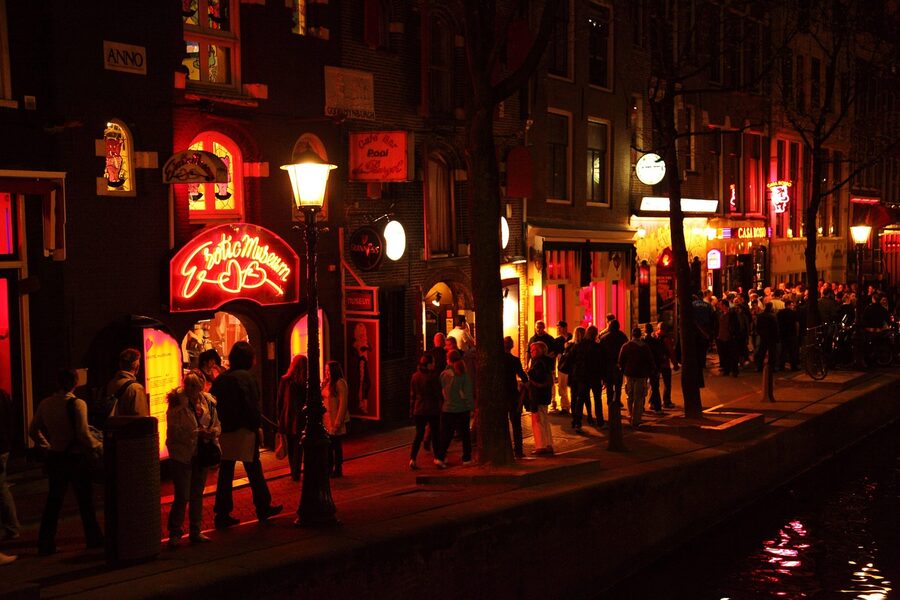
vs. Red Light District walking tours: complementary rather than competitive. A walking tour shows you the neighbourhood from outside; the museum shows it from inside. See our Red Light District tour guide.
vs. Sex Museum (Venustempel) on Damrak: different venue, older, more novelty-focused — closer to a “funny tourist photo” stop. €9. Less serious about its subject than Red Light Secrets.
vs. the Anne Frank House: both are emotionally heavy but different in tone. Don’t do them back-to-back. Leave a proper break between. Our Anne Frank guide has booking advice.
vs. Body Worlds: both ask you to think about human bodies but in opposite ways. Body Worlds is scientific-anatomical; Red Light Secrets is social-political. Pair them if you’re doing a “serious topics” Amsterdam day. Our Body Worlds guide.
Photography Policy
Inside the museum: phone photos allowed, no flash, no tripods. Architecture, installations, historical panels — all fine to photograph. No photos of other visitors or the exit gift shop.
Outside the museum: absolutely no photography of the windows or of canal views that incidentally include windows. Point phones at the ground or the opposite side of the canal.
Who Visits and Why

The visitor mix is more varied than people expect:
Curious first-time Amsterdam visitors: about 40%. Looking for context rather than titillation.
Couples on date nights: about 20%. The museum is surprisingly date-friendly — the seriousness of the material prompts conversation.
Solo travellers: about 15%. The independent-visit format works for reflection.
Sex workers: about 5%. The museum hosts community events; workers sometimes bring family or friends to help explain their profession.
Policy students and researchers: about 10%. The museum is cited in academic work on sex-work policy.
Stag/hen party groups: under 5%. Actively discouraged — the museum enforces quiet-voice rules and charges groups proportionally more.
Combining With Other Amsterdam Evenings
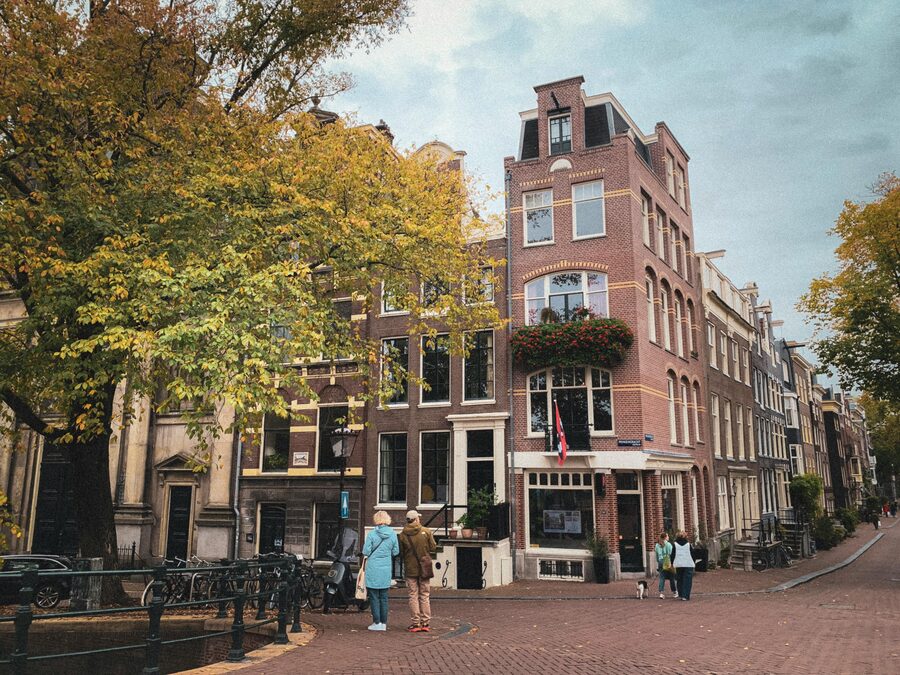
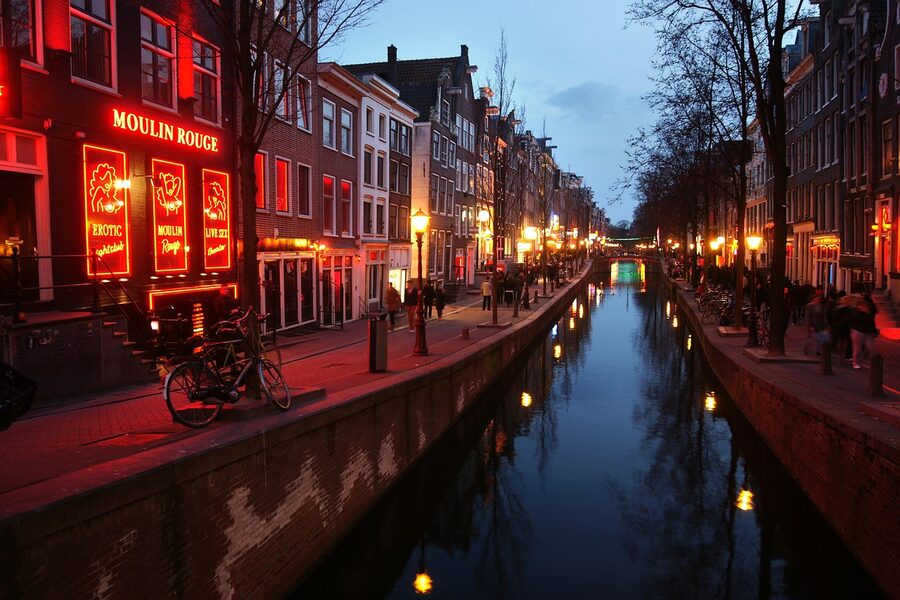
Museum + Indonesian dinner: Zeedijk street is 5 minutes north and has Amsterdam’s best Indonesian rijsttafel restaurants. Dinner there rebalances the evening.
Museum + canal cruise: the main cruise dock near Centraal is 8 minutes’ walk. An evening cruise after the museum works particularly well — you see the same canals from the water. Our canal cruise guide covers evening options.
Museum + drinks at In ‘t Aepjen: In ‘t Aepjen is a 15th-century bar — the kind of place sailors and sex workers have been drinking in for 500 years. Genuinely atmospheric.
Museum + Royal Palace morning: visit the Royal Palace in the morning for contrasting civic history, the museum in the late afternoon. Two different views of 17th-century Amsterdam.
What the Museum Gets Right
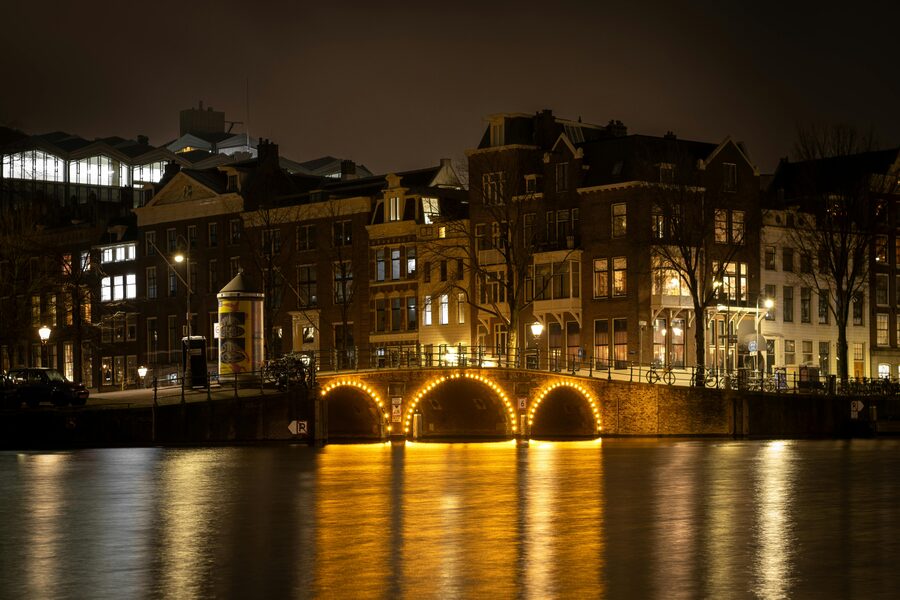
Museums on sensitive topics usually either sensationalise (and lose credibility) or whitewash (and feel like propaganda). Red Light Secrets does neither.
The audio installations make this clearest. Workers choose what they say. Some talk about finding the job financially empowering; some are deeply critical of the structure; some are matter-of-fact about it as labour. The museum doesn’t pick a side — it presents the range.
Similarly, the historical timeline avoids a simple “Amsterdam liberalism good/strict regulation bad” narrative. It presents the 2000 legalisation as a difficult policy experiment with trade-offs for workers, the neighbourhood, and Amsterdam’s tourism model. That’s harder to do than it sounds.
What the Museum Can’t Fix
Red Light Secrets is a museum, not a policy solution. The district has real problems: overtourism has turned much of Oudezijds Achterburgwal into a selfie zone; the city is planning to relocate some windows to an outer neighbourhood; local residents have been pushing back against visitor behaviour for years.
The museum acknowledges all of this, but a 45-minute visit won’t resolve it. If you care about the policy debate, read Dutch journalism on the relocation proposal and the ongoing city-rebalancing work.
Getting There

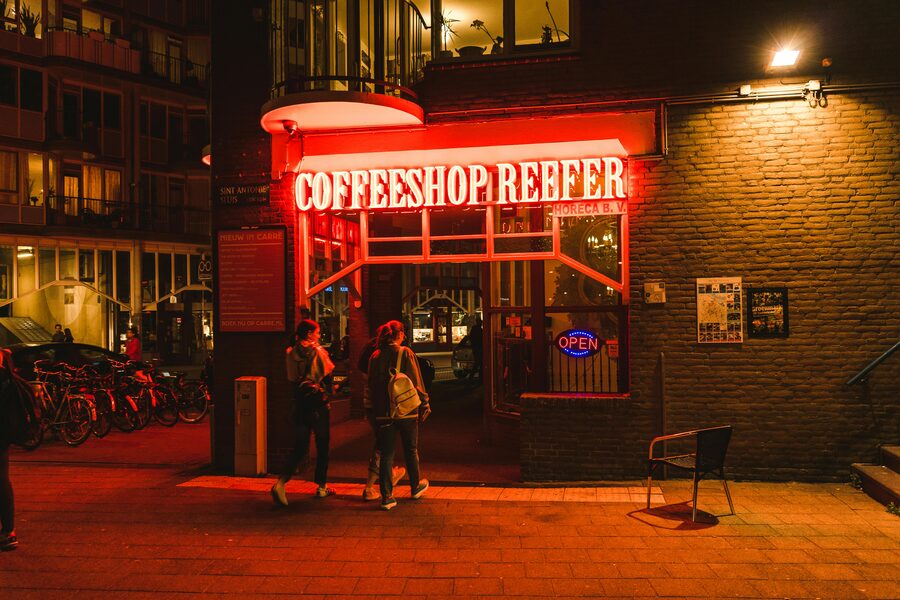
From Centraal Station: 7 minutes’ walk south. Follow signs toward Nieuwmarkt, take Oudezijds Achterburgwal south. Museum on your left.
From Dam Square: 5 minutes’ walk east. Cross Warmoesstraat, cut through to Oudezijds Voorburgwal, turn onto Achterburgwal.
By tram: no direct tram to the district itself. Use Dam or Centraal and walk.
By bike: bike to the district’s edge but bikes aren’t welcome in the pedestrian stretches after dark. Park on Nieuwmarkt.
Accessibility
The museum is in a 17th-century canal house with a steep staircase and no elevator. Mobility-limited visitors can experience the ground floor (about 1/3 of the content) but cannot access upper floors.
For deaf and hard-of-hearing visitors, all audio installations have transcripts in English and Dutch. Ask at reception.
Companion-entry policy: if your mobility limits access, a companion enters free.
Practical Details

Price: €13 adult, €11 student, €9 child 14+. Under 14 not permitted.
Age limit: 14+. No exceptions. Bring ID if you look younger.
Audio languages: English and Dutch. Other languages via QR-code transcripts.
Timed entry: yes, 15-minute slots. Walk-ins often possible but not guaranteed on weekends.
Time needed: 45-60 minutes typical; 90 if you engage with every installation.
Food and drink: not allowed inside.
Bag policy: small bags fine; large backpacks to the cloakroom.
Common Misconceptions
“It’s a sex museum.” No — it’s a social-history museum about legal sex work. The Sex Museum on Damrak is different (and more novelty-focused).
“It’s exploitative.” Most visitors expect this and are surprised by the care the museum takes. Personal stories are voluntary, anonymised, and respectfully presented.
“It’s only for adults.” True — 14+ only — but not because the content is explicit. The discussion of sex work as labour is not suitable for young children, but the museum is not graphic.
“It glorifies prostitution.” It doesn’t. Several installations feature critical perspectives from workers themselves.
“It’s the same as a Red Light District walking tour.” Different. A walking tour shows you the neighbourhood from outside; the museum shows it from inside.
The Short Version
Book the €13 ticket, pick a 4-5pm slot, allow 60 minutes. Expect a serious museum, not a novelty. The personal-story audio installations are the highlight. Pair with Indonesian dinner on Zeedijk or a canal cruise for balance.
If you’re planning to walk through the Red Light District anyway (and most Amsterdam visitors do), spending €13 on context is a cheap way to turn a curious wander into something more respectful and interesting.
Affiliate disclosure: Some links in this article are affiliate links. If you book through them we may earn a small commission at no cost to you. All recommendations are based on my own visit.