
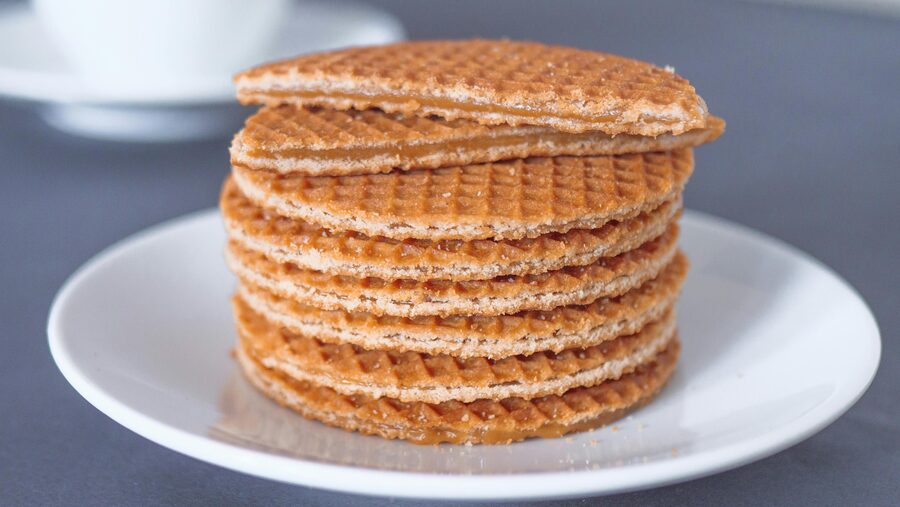
The stroopwafel you’ve had is from a supermarket plastic pack. The fresh version — pressed 30 seconds before you eat it, caramel still liquid — is a completely different cookie. A Gouda baker invented it in 1784 out of leftover breadcrumbs and syrup, and the fresh variant is still how it’s supposed to be eaten.
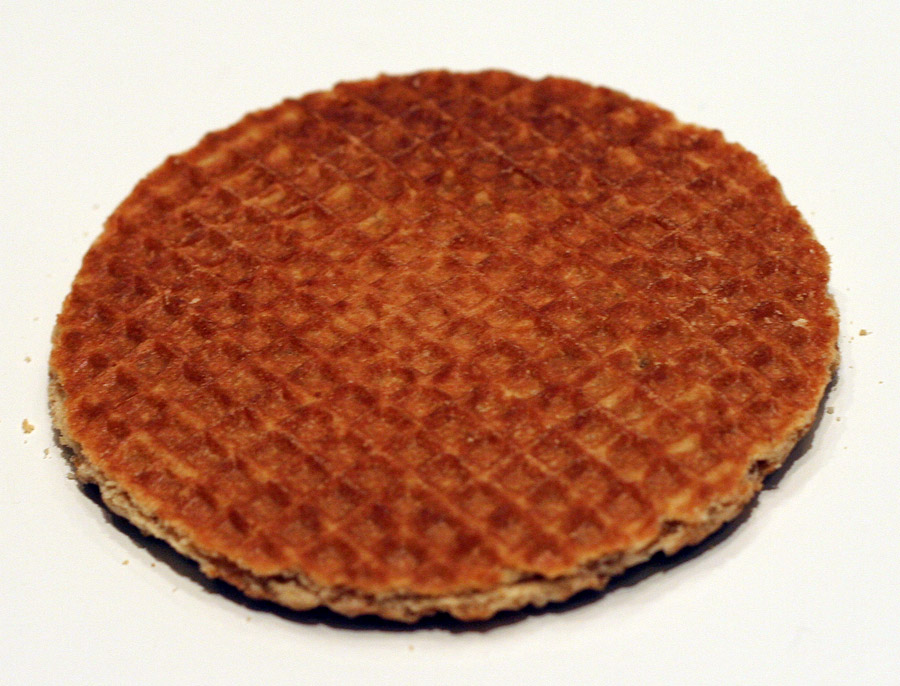

An Amsterdam stroopwafel workshop runs 90 minutes, costs €35-50, and ends with you pressing 10-12 cookies on the same kind of iron the original Gouda baker used, then eating them hot. Workshops are small (usually 8-14 people), happen in working commercial kitchens, and include a take-home box. It’s one of the more genuinely hands-on food experiences in Amsterdam.



.jpg)
In a Hurry?
- Best overall: Amsterdam Stroopwafel Workshop — 90 minutes, press 10-12 cookies, take home a box. €35-50.
- Best low-effort option: Canal Cruise with Free Stroopwafel — cruise and eat, no making. €22.
- Best day trip: Gouda Syrup Waffle Factory — Kamphuisen factory in Gouda (the birthplace). Full day from Amsterdam.
- In a Hurry?
- What Happens in a 90-Minute Workshop
- Three Ways to Try Stroopwafels in Amsterdam
- 1. Amsterdam Traditional Syrup Waffle Workshop — from €35
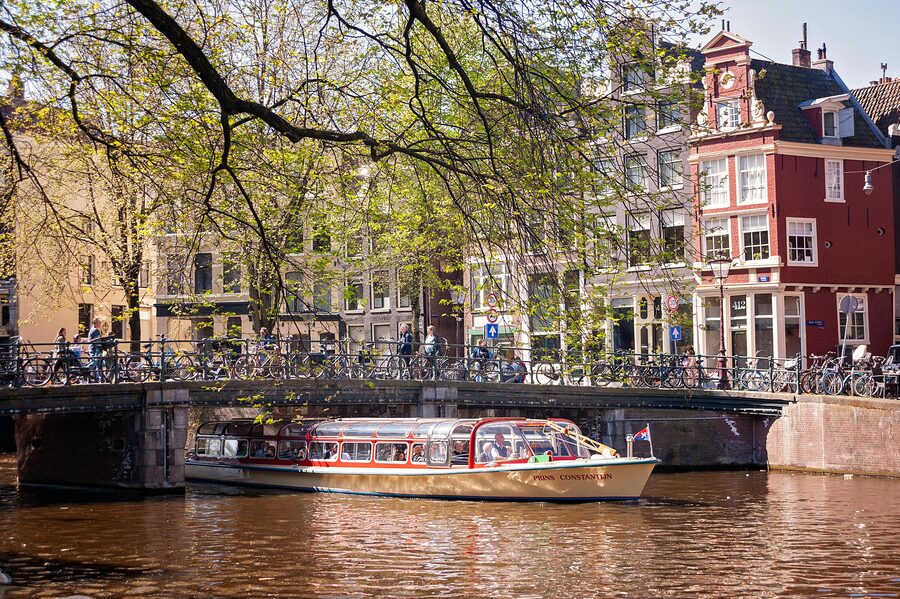
- 2. Canal Cruise with Free Dutch Stroopwafel — from €22
- 3. Gouda Syrup Waffle Factory (Day Trip) — from €8 (entry only)
- A Short History of the Stroopwafel
- Where to Eat a Fresh Stroopwafel in Amsterdam (If You Skip the Workshop)
- The Traditional Iron — What Makes a Good Stroopwafel
- Who the Workshop Works For
- Stroopwafels and Dutch Coffee Culture
- When to Go
- Comparing the Three Options
- Storage — What to Do With Take-Home Cookies
- Pairing With Other Amsterdam Food Experiences
- Accessibility
- Common Mistakes
- Workshop vs Airbnb Experience vs Free-Form
- Price Breakdown
- A Short Recipe (for the Curious)
- Who Should Skip the Workshop
- The Short Version
What Happens in a 90-Minute Workshop
A typical commercial workshop runs this sequence:
0-10 min — welcome and history. Brief intro to the 1784 Gouda origin, the shift from peasant-kitchen leftovers to 20th-century commercial phenomenon. You taste a supermarket stroopwafel for comparison. You’ll remember this comparison later.
10-30 min — making the dough. Butter, flour, sugar, yeast, cinnamon. Not kneaded heavily — Dutch stroopwafel dough is closer to a shortbread texture. It rests while the caramel is made.
30-50 min — making the caramel. Brown sugar, butter, golden syrup (specifically Dutch stroop, not corn syrup), cinnamon. Cooked to soft-ball stage (~117°C). Too hot and it will be rock-hard when it cools; too cold and it won’t spread. This is the technically demanding part.
.jpg)
50-75 min — pressing and filling. Small balls of dough pressed in the iron for 60 seconds, split horizontally while hot, caramel spread, halves reassembled. Repeat 10-12 times per person. You develop a rhythm after the third one.
75-85 min — eating. You eat 2-3 of your freshly pressed stroopwafels on the spot with coffee or tea. This is the moment the supermarket-comparison from minute 10 comes back.
85-90 min — packing take-home. Remaining 8-10 stroopwafels go into a branded box.
Three Ways to Try Stroopwafels in Amsterdam
1. Amsterdam Traditional Syrup Waffle Workshop — from €35
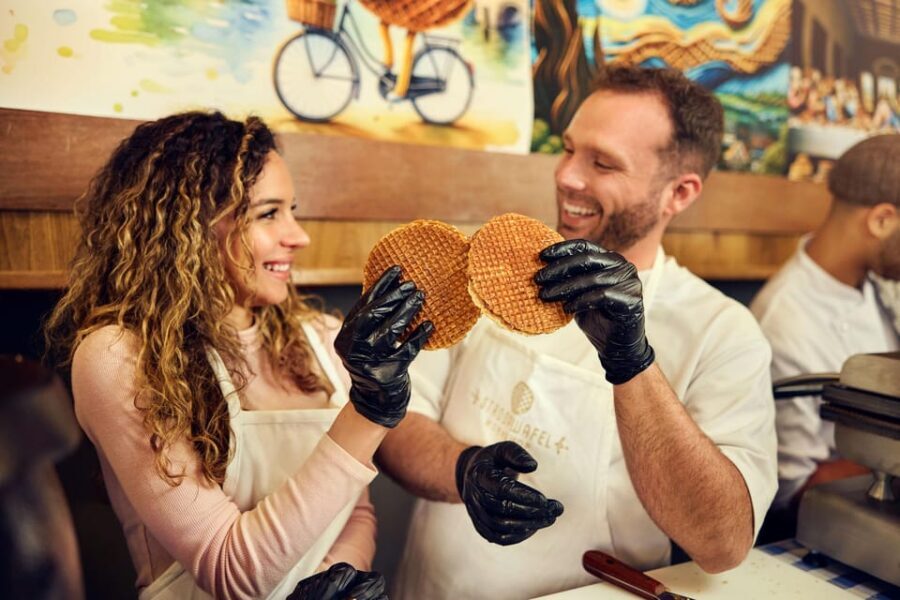
The main experience. Small groups, quality ingredients (real butter, cane sugar syrup, fresh eggs — not corn syrup and vegetable fat). English-language instruction. Multiple sessions daily across several Amsterdam venues. Full review walks through a typical session.
2. Canal Cruise with Free Dutch Stroopwafel — from €22

For visitors on tight schedules who want to try a fresh stroopwafel without committing 90 minutes. 75-minute canal cruise with a warm stroopwafel handed to you with coffee. No making, no kitchen, just eating. Full review.
3. Gouda Syrup Waffle Factory (Day Trip) — from €8 (entry only)

For history fans and day-trippers. The Kamphuisen family has made stroopwafels in Gouda for over 200 years. Factory ticket includes a tour of the making process and one fresh cookie. Pair with Gouda’s Saturday cheese market for a full Dutch food-history day. €8 factory entry plus €20 return train.
A Short History of the Stroopwafel
The cookie was invented in Gouda in the 1780s — most accounts credit the baker Gerard Kamphuisen, whose family bakery still operates. The original recipe combined bakery leftovers (stale breadcrumbs, broken biscuits) with caramel syrup as a use-up solution. Waste-aware Dutch baking logic.
By the 1830s, stroopwafels had spread across the Netherlands through travelling bakers and market stalls. By the 1900s they were a Dutch daily-bread staple — cheap, portable, eaten by farm workers and factory workers on coffee breaks. The 20th-century industrial version (Daelmans, Van der Poel) appeared in the 1970s and is now sold in 40+ countries.
The tourist-facing “warm fresh stroopwafel at a market” experience is actually a relatively recent revival. Most Dutch people who grew up in the 1980s-90s ate packaged stroopwafels, not fresh ones. The fresh-market version returned with food tourism interest in the 2000s — largely driven by the Albert Cuyp market’s Rudi’s Original stand becoming TripAdvisor-famous around 2010.
There’s a Dutch proverb: verdwijnen als stroopwafels op een verjaardag (“disappearing like stroopwafels at a birthday party”). Used for anything that vanishes fast.
Where to Eat a Fresh Stroopwafel in Amsterdam (If You Skip the Workshop)

If the workshop isn’t for you, or you want a cheaper test first:
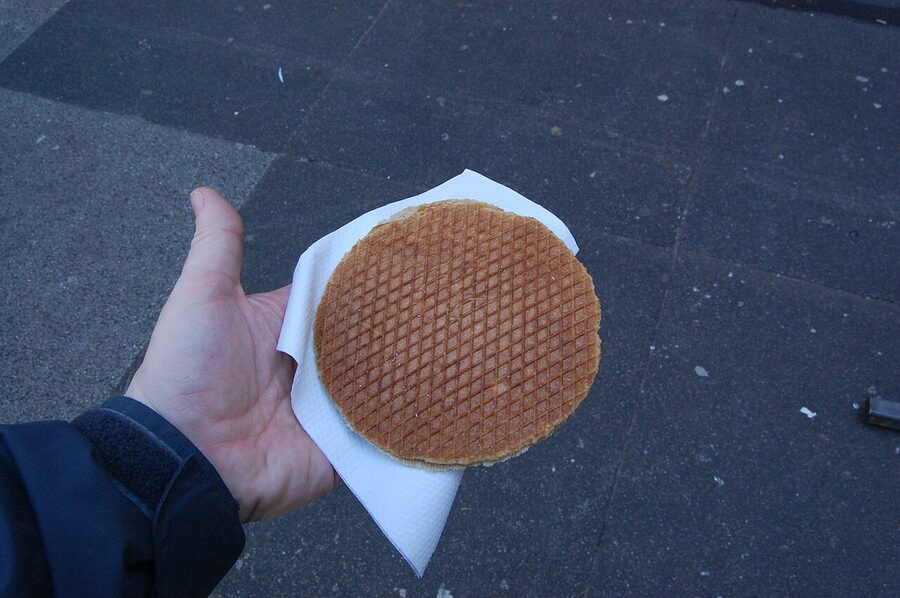
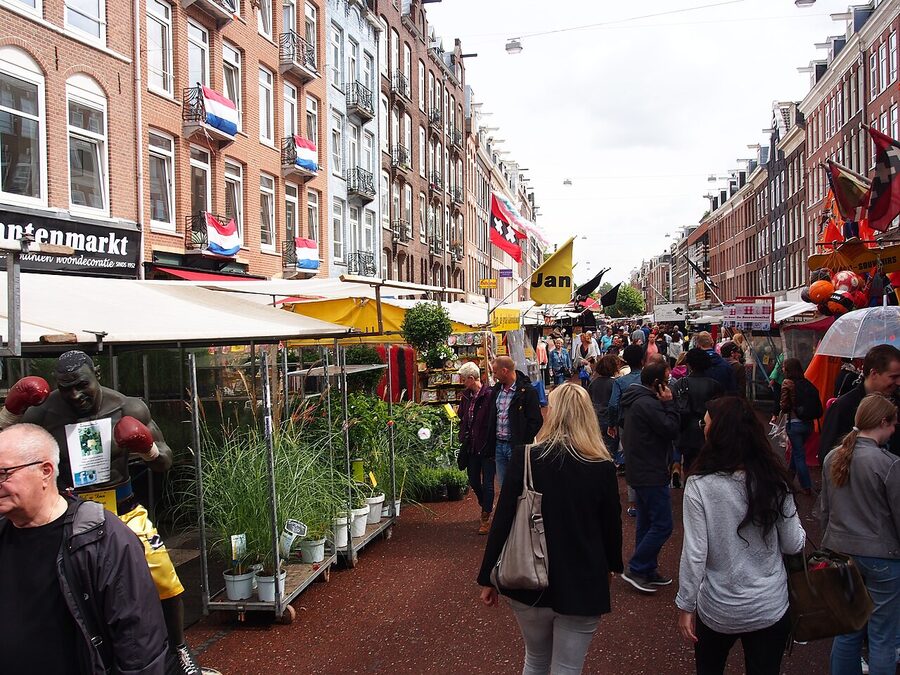
Albert Cuyp Market (Albert Cuypstraat, De Pijp). Open Monday-Saturday 9am-5pm. Rudi’s Original stroopwafel stand is the classic — €3.50 for a fresh one, eaten hot. This is the stroopwafel experience most tourists seek out. Worth stopping for.
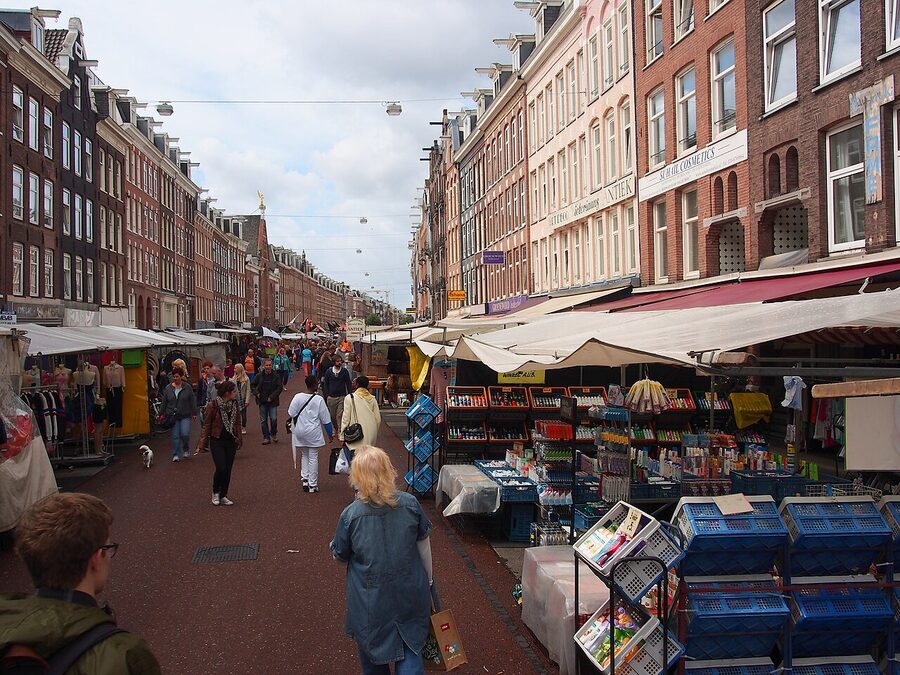

Van Wonderen Stroopwafels (multiple locations, most central at Kalverstraat). A chain, but a good one. Fresh stroopwafels with toppings (chocolate, Oreo, marshmallow). €4-5. Fun rather than traditional.
Lanskroon Stroopwafels (Singel). Open since 1915. Authentic, small family bakery, no fancy toppings. The purist’s choice. €3 per cookie.
Holten Bakery (Jordaan). Traditional bakery, fresh stroopwafels baked daily. Less touristy than the above.
Van Stapele Koekmakerij (Heisteeg). Not stroopwafels specifically — they sell one-cookie-only chocolate cookies — but if you’re in Amsterdam for cookies, stop here too.
The Traditional Iron — What Makes a Good Stroopwafel
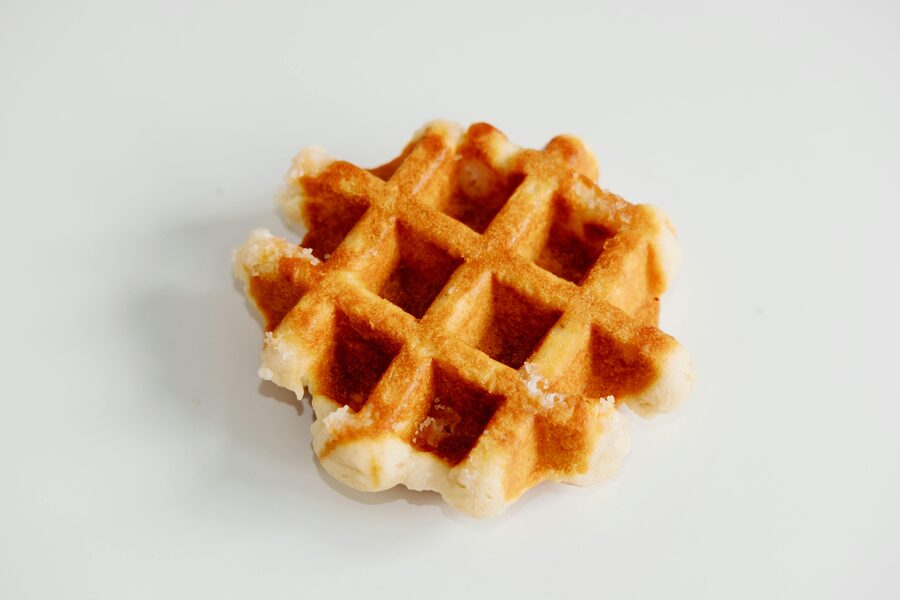
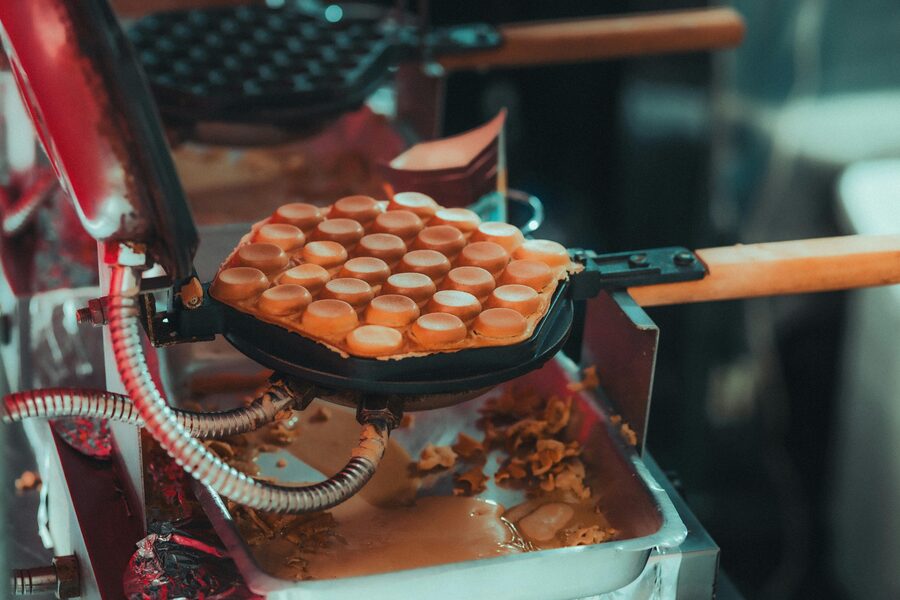
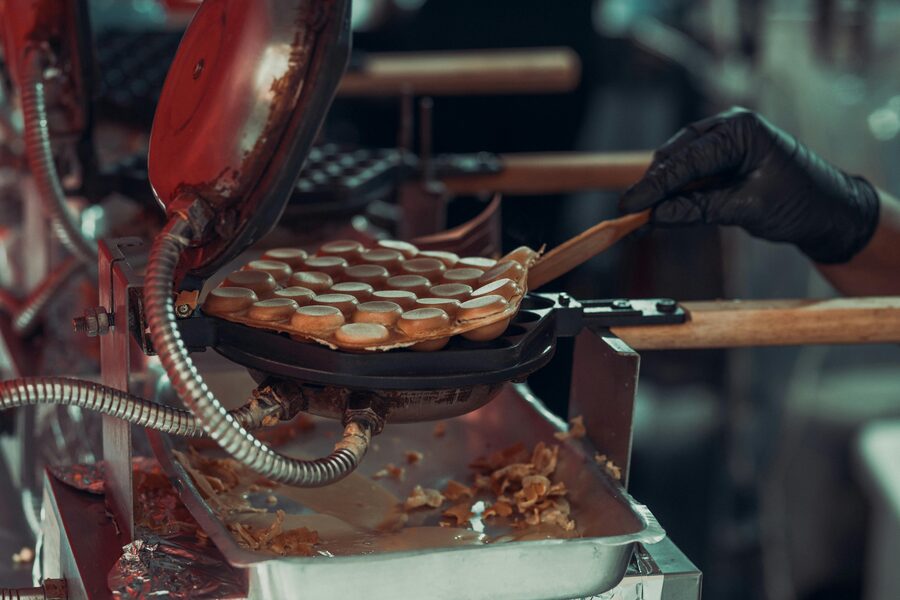
A proper Dutch stroopwafel iron has plates spaced close enough that the finished waffle is 2-3 mm thick. Home pizzelle irons run 5-8 mm thick. The difference matters — a thinner waffle flexes enough to split horizontally with a knife (how you get the two halves for the caramel). A thicker pizzelle doesn’t split cleanly and the ratio of waffle-to-caramel is wrong.
The dough heats for 60 seconds, comes out still flexible, and has 30-45 seconds of splittable window before it cools and gets brittle. This is why workshops run as a choreography — dough in, caramel ready, knife waiting. You pre-stage everything.
Temperature control. Irons should run at 170-180°C. Hotter and the dough burns; cooler and it doesn’t crisp properly. Commercial stroopwafel ovens hold this automatically; home cooks have to eyeball it.
Pigment pattern. The dimpled pattern on the finished waffle isn’t decorative — it increases surface area so the caramel layer adheres properly to both halves. Smooth-plate irons (some cheap home pizzelle) don’t work.
Who the Workshop Works For
Great for: couples on date nights, families with kids 6+, small friend groups, food-curious solo travellers, anyone who wants a hands-on “only in Amsterdam” session.
Less good for: visitors on very tight schedules, people who don’t eat sweets, travellers on strict dietary restrictions (standard recipe has gluten, dairy; caramel has sugar).
Kids: most workshops require 6+, and under-10s usually work with a parent. The hot iron is the only real hazard; instructors watch carefully.
Stroopwafels and Dutch Coffee Culture
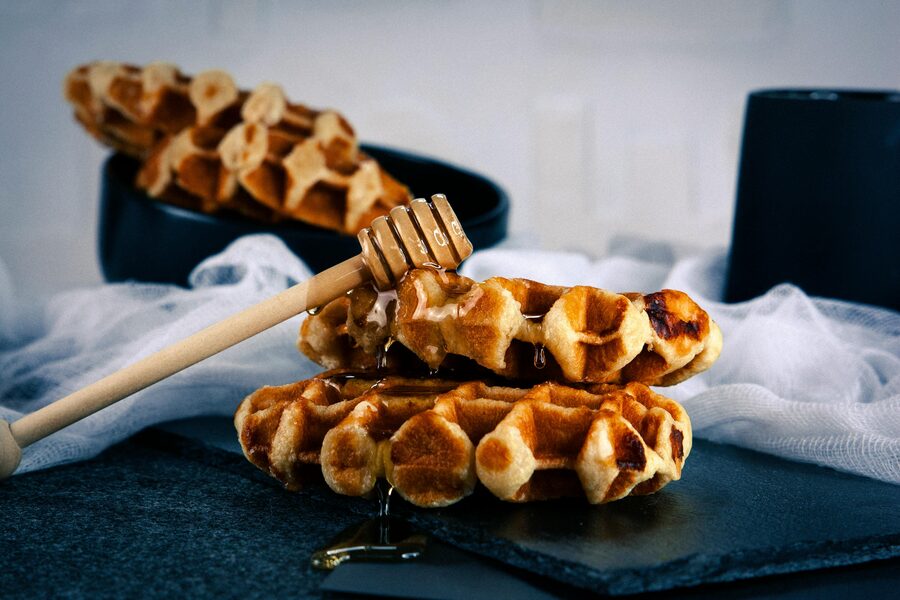
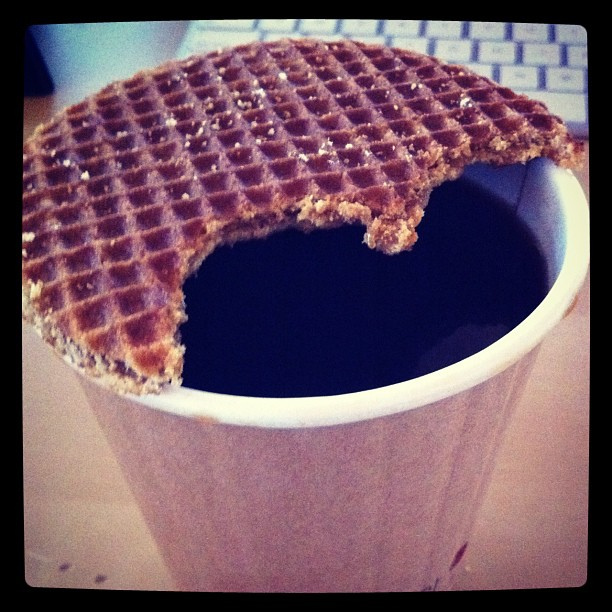
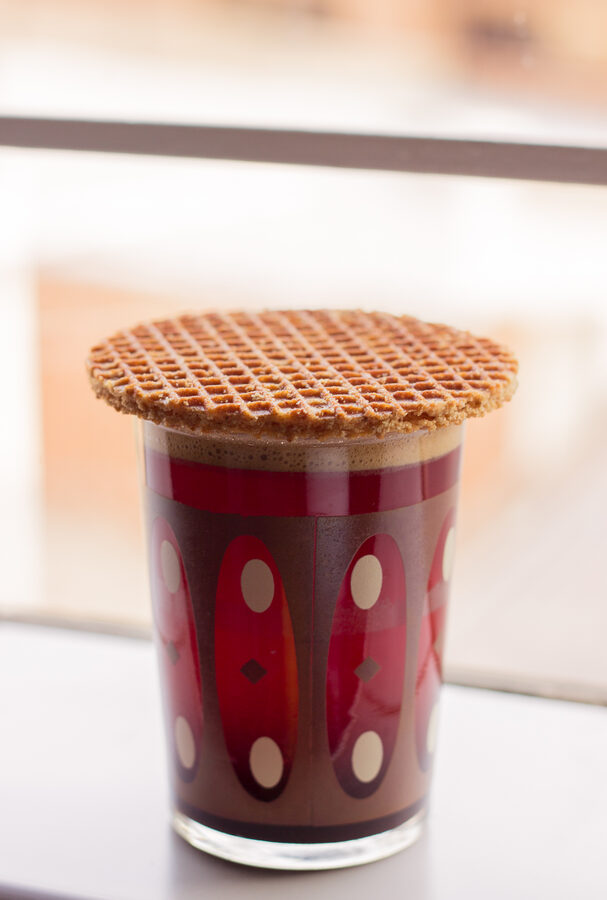
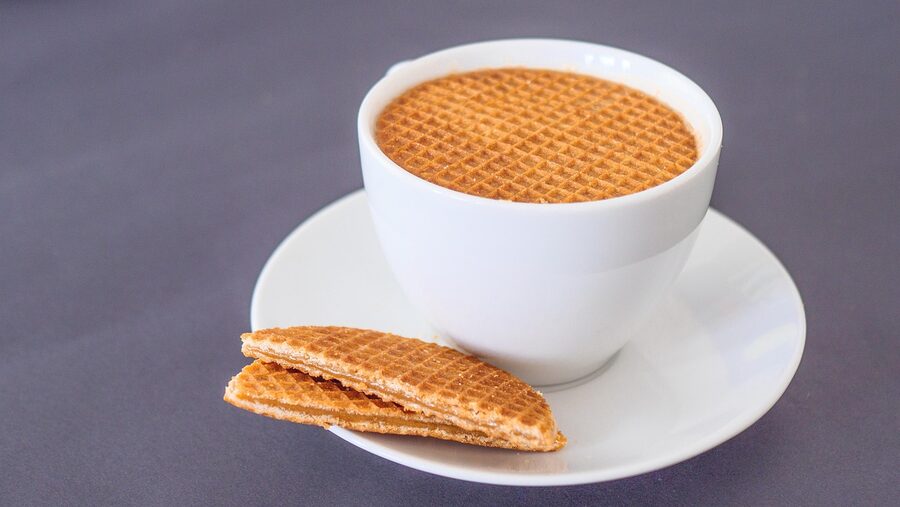
The Dutch relationship to coffee is quieter than Italian espresso culture but no less serious. Most cafés serve coffee with a small “koekje” (cookie) included at no extra charge. When that koekje is a stroopwafel, Dutch tradition says you balance it on top of your coffee cup for 30-45 seconds before eating — the steam softens the caramel and gently warms the waffle. It’s not a marketing invention; it’s genuinely how most Dutch people eat their stroopwafels.
The cup-top ritual is one reason workshops include coffee at the end. You learn the warming trick in context, with a cookie you just pressed. The technique transfers home: any hot drink works, though coffee’s narrower cup geometry holds the steam better than a wide mug.
When to Go

Workshops run daily, 2-3 sessions per day (morning, early afternoon, evening). Popular windows are Saturday afternoon and Sunday morning — booked out 2-3 days ahead.
Best slots: weekday mornings. Smallest group, most one-on-one attention, no rush.
Worst slots: Saturday 2pm. Max group, least individual time.
Seasonal: runs year-round with consistent format. Winter is slightly busier because indoor activities become more appealing.
Cancellation: most operators allow free cancellation 24 hours ahead.
Comparing the Three Options

Workshop (€35-50, 90 min):
- You make 10-12 cookies yourself
- Best memory-per-euro
- Requires 90 minutes hands-on
- Great for gifts and photos
Canal cruise with stroopwafel (€22, 75 min):
- You eat one stroopwafel with coffee
- Pairs two Amsterdam experiences in one slot
- No making — passive
- Best if you’re planning a cruise anyway
Gouda factory day trip (€8 + €20 train + lunch, full day):
- See the 200-year-old factory, eat one fresh cookie
- Best for day-trippers who want a reason to visit Gouda
- Not primarily about the cookie — more about the day
Storage — What to Do With Take-Home Cookies
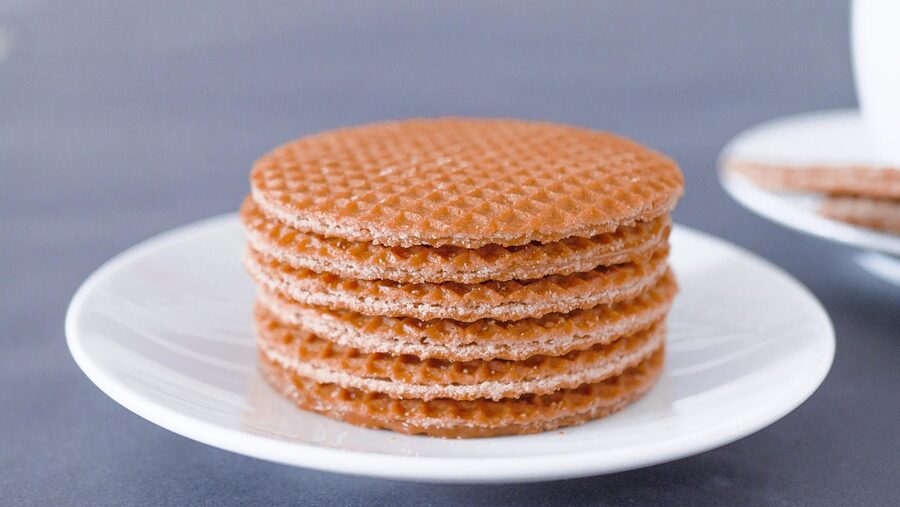
Workshops send you home with 8-10 cookies in a branded box. Storage:
Short term (2-3 days): room temperature in the box. They stay fresh but the caramel firms up as they cool.
Taking on a plane: fine in carry-on. TSA and EU airport security treat them as normal bakery. Carry-on beats checked — cold cargo holds harden the caramel.
Warming them up: the classic method — place one on top of a hot coffee cup for 30 seconds. The steam warms the caramel back to just-liquid. Microwave works (8 seconds) but is less elegant.
Freezing: not recommended. The caramel texture changes and doesn’t fully recover.
Pairing With Other Amsterdam Food Experiences
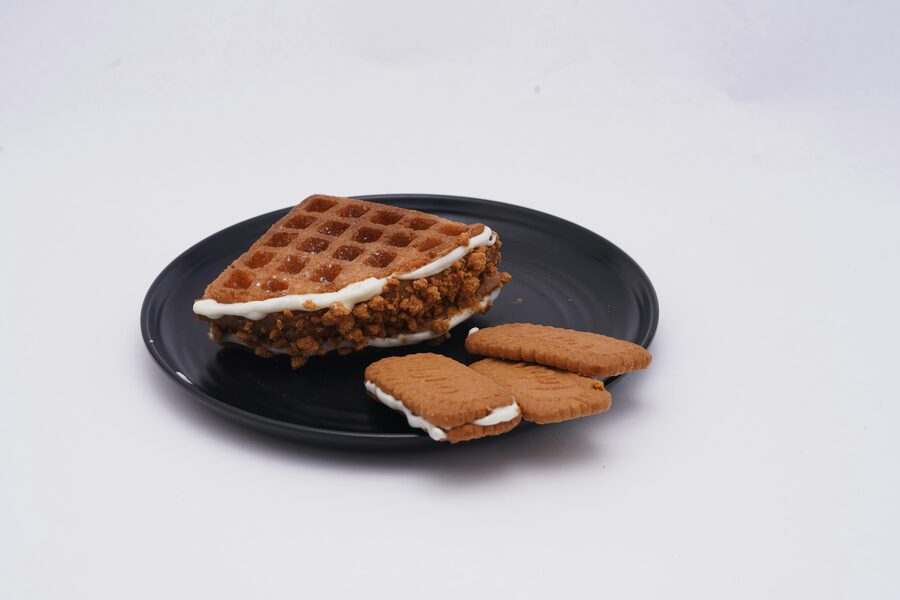
Stroopwafels are a snack, not a main experience. Pair with:
A full Amsterdam food tour: 3-hour walking tour covering stroopwafels plus haring (raw herring), Dutch cheeses, bitterballen, Indonesian-Dutch fusion. Our Amsterdam food tour guide has the current options.
A cheese tasting: separate experience. Goes well with stroopwafels since both are Dutch comfort food. Reypenaer tasting in central Amsterdam is the best.
Indonesian rijsttafel dinner: different cuisine but culturally central to Dutch food. Zeedijk street has the best restaurants.
A canal cruise: if you don’t want the workshop, the cruise-with-cookie option handles both in one booking. Our Amsterdam canal cruise guide.
Amsterdam City Card: if you’re doing multiple activities. Doesn’t cover the workshop directly but covers transport. See our City Card guide.
Accessibility
Most workshops are in commercial kitchens with limited wheelchair access (narrow corridors, step-up to kitchen floor). Check with specific operator before booking. Some offer accessible alternatives.
Dietary accommodations: vegan and gluten-free versions available at most operators with 48 hours’ notice. Standard recipe has gluten, butter, eggs — all three hard to substitute for the caramel-and-waffle texture result.
Children under 6 usually not allowed — the hot press is too close to small hands.
Common Mistakes


Trying a supermarket stroopwafel first and assuming “this is what they taste like.” The fresh version is genuinely a different product. Crispier waffles, warmer caramel, completely different texture.
Booking the workshop for day 1. You’ll be jet-lagged; 90 minutes of concentration feels long. Better for day 3-4.
Not eating one at a market before the workshop. Going in knowing what the end product should taste like helps you calibrate. Workshop quality varies by instructor.
Packing take-home cookies in checked luggage. Cold cargo holds harden the caramel.
Expecting a baking class. It’s a hands-on food experience, not a technical class. You do the steps, but you don’t necessarily leave able to reproduce the recipe without the iron.
Workshop vs Airbnb Experience vs Free-Form
Amsterdam’s stroopwafel market has a few formats:
Commercial workshops (covered above): 8-14 people, working kitchens, commercially run. Most consistent quality.
Airbnb Experiences: smaller, often in a host’s home kitchen. More intimate, more personal. Prices similar. Quality varies widely.
Free-form “visit a factory”: Gouda’s Kamphuisen factory is the main option.
For most visitors the commercial workshop is the safest pick — consistent quality, reliable booking, proper size. Airbnb Experiences are more hit-or-miss. Gouda suits history-focused travellers rather than cookie fans specifically.
Price Breakdown
Commercial workshops (€35-50): includes ingredients, instruction, 10-12 cookies, take-home box, coffee or tea.
Canal cruise + stroopwafel (€22): 75-minute cruise + 1 stroopwafel + coffee. Value is in the cruise, not the cookie.
Gouda factory (€8 + €20 train + ~€25 lunch): budget around €60 for the day trip.
Albert Cuyp market stroopwafel (€3.50): the single cheapest way to try a fresh one. 5-minute experience.
A Short Recipe (for the Curious)

If you want to try at home:
Dough: 250g flour, 125g butter, 125g sugar, 1 tsp yeast, 1 tsp cinnamon, salt, 1 egg, 2 tbsp milk. Mix, rest 30 mins.
Caramel: 150g brown sugar, 100g butter, 60ml golden syrup, ½ tsp cinnamon. Cook to 117°C (soft-ball).
Press: requires a stroopwafel or pizzelle iron. Roll balls, press 60 seconds, split while hot, fill, reassemble.
Equipment is the limiting factor at home — a proper stroopwafel iron runs €80-150. Pizzelle irons work but the waffles come out thicker than traditional.
Who Should Skip the Workshop
If you don’t love sweets, skip it — 10-12 cookies home with you is a lot. If you’re lactose intolerant without a vegan option booked, skip. If you have only one Amsterdam day, skip — 90 minutes is too much of a day.
Instead, buy a fresh stroopwafel at Albert Cuyp Market for €3.50 and call it done. That’s a valid alternative to the full experience.
The Short Version
Book the €35-50 workshop for a day when you’re not jet-lagged, arrive hungry, and plan to eat 2-3 fresh stroopwafels on the spot plus take 8-10 home. If 90 minutes feels like too much, grab one at Albert Cuyp Market or book the canal cruise with cookie. If you love cookie history, make a day of it in Gouda.
Either way, don’t leave Amsterdam without trying a fresh one. The supermarket version is a different product.
Affiliate disclosure: Some links in this article are affiliate links. If you book through them we may earn a small commission at no cost to you. All recommendations are based on my own visit.