
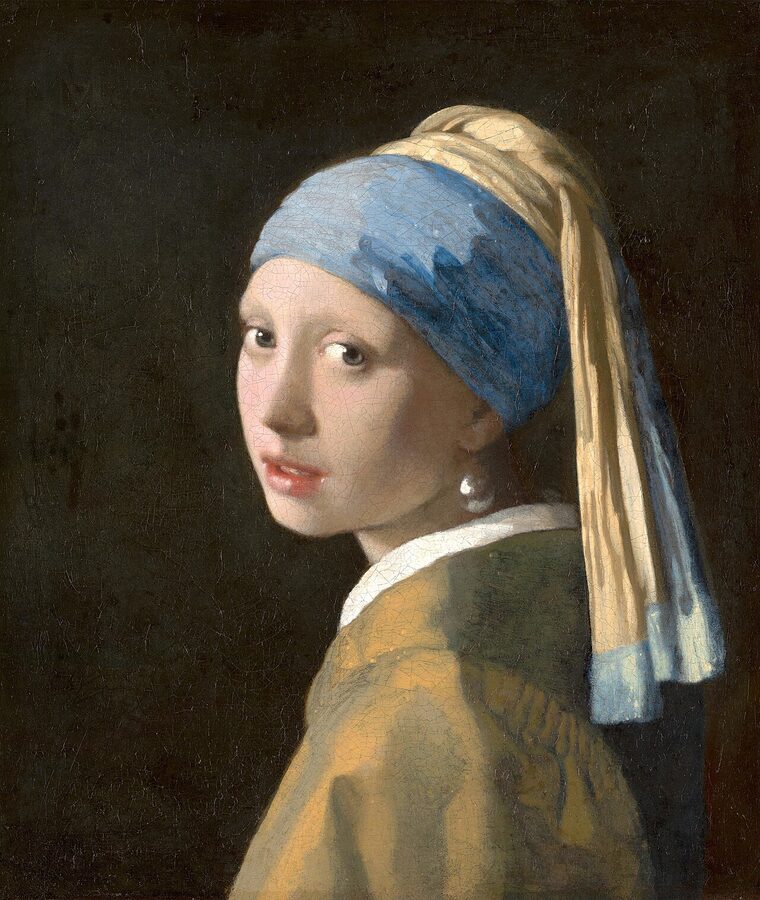
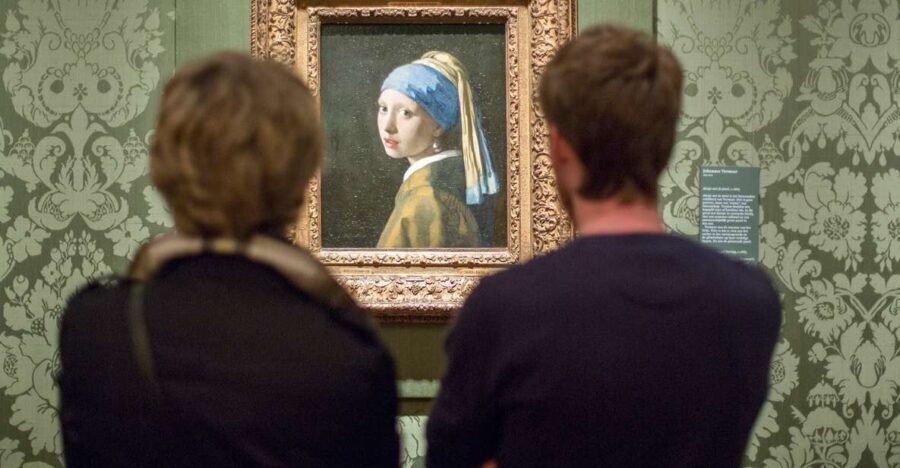
Girl with a Pearl Earring is smaller than you expect. 44 by 39 centimetres — roughly a laptop lid. You stand in a small room on the second floor of a 17th-century palace, and she’s right there, lit from above, eye-level. Most people cry. Most of the ones who don’t at least go quiet.
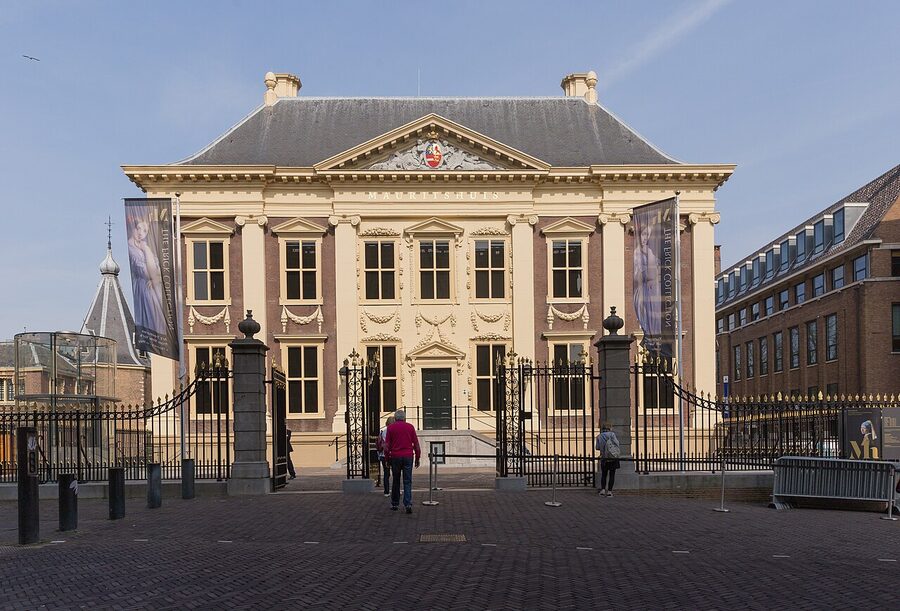

The building holds about 800 paintings, with 250 on permanent display. Almost all are Dutch Golden Age — the tightly-focused collection is smaller than the Rijksmuseum but higher density per room. Entry is €18.50, the visit takes about 2 hours, and the train from Amsterdam is 50 minutes. For any visitor to the Netherlands with even a casual interest in Dutch painting, this is the single best day trip from Amsterdam.


In a Hurry?
- Best overall: Mauritshuis Entrance Ticket — €18.50, audio guide, 2 hours inside. Take the train from Amsterdam yourself.
- Best with transport: Private Hague + Mauritshuis from Amsterdam — door-to-door van, driver, museum entry. Full day.
- Best full day: Kinderdijk + Hague + Mauritshuis — windmills, parliament, museum. 10 hours, big day.
- In a Hurry?
- The Paintings — What to See, In What Order
- Three Ways to Do the Day
- 1. Mauritshuis Entrance Ticket — from €18.50
- 2. Private Hague Trip + Mauritshuis from Amsterdam — from €180/person
- 3. Kinderdijk + Hague + Mauritshuis Day Trip — from €210/person
- A Short History of the Building
- Girl with a Pearl Earring — Managing the Moment
- Is It Worth the Day Trip from Amsterdam?
- How Long Inside and How to Pace It
- Mauritshuis vs Rijksmuseum — What’s Different
- When to Go
- Getting There from Amsterdam
- What Else to Do in The Hague
- Food and Drink
- Accessibility
- Photography
- Tickets and Prices
- Who Loves It, Who Doesn’t
- Connection to the Rest of the Dutch Golden Age Tour
- What About Kids?
- Common Mistakes
- The Short Version
The Paintings — What to See, In What Order
The Mauritshuis has 250 paintings on display at any given time. You’ll see maybe 40 properly. Here’s the order most visitors should follow and the works worth lingering over.
_-_View_of_Delft_c._1660-1661.jpg)
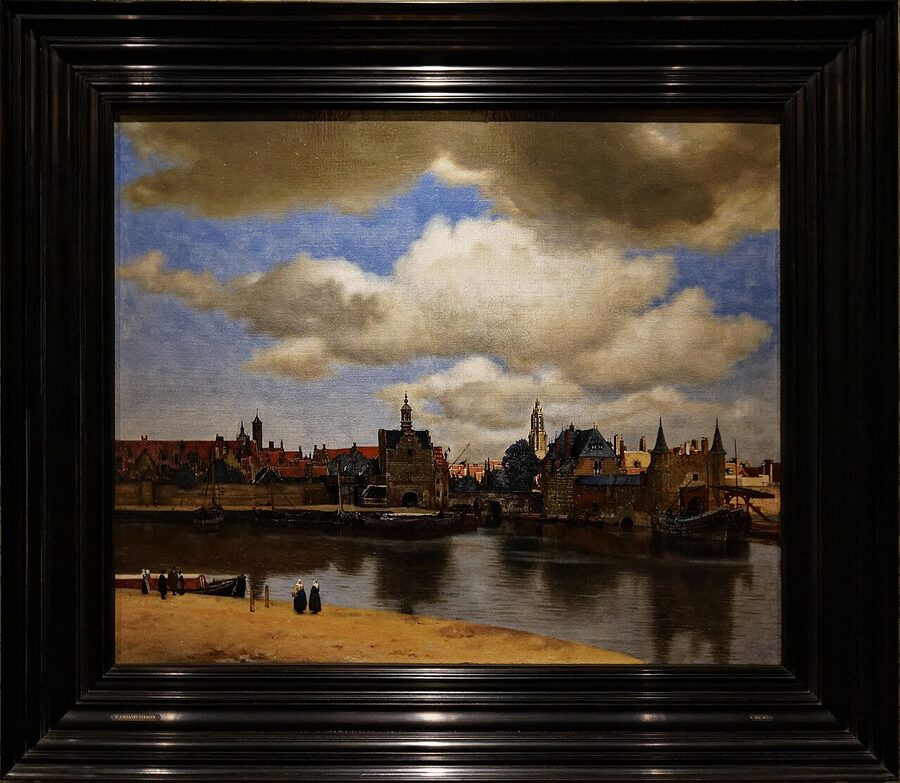
The Vermeers (Room 15). Start here. Only about 34 Vermeer paintings are known to exist worldwide; the Mauritshuis has three. Girl with a Pearl Earring gets 90% of the attention. View of Delft gets most of the remaining 10%. The third, Diana and Her Nymphs, is an earlier Vermeer rarely pulled out of a crowd’s attention — worth five minutes before you leave the room. Don’t rush past it.
The Rembrandts. Three major works. The Anatomy Lesson of Dr Nicolaes Tulp (1632) is the painting that made Rembrandt’s name in Amsterdam at age 26 — a group portrait of surgeons dissecting a corpse, commissioned by the Surgeons’ Guild. Dark, theatrical, revolutionary for its time. Self-Portrait (1669) was painted in his final year, after the deaths of Hendrickje and Titus. Different from the cocky 1630s self-portraits — this is an old man looking at himself with minimal flattery. Susanna and the Elders (1647) is less famous but technically remarkable.
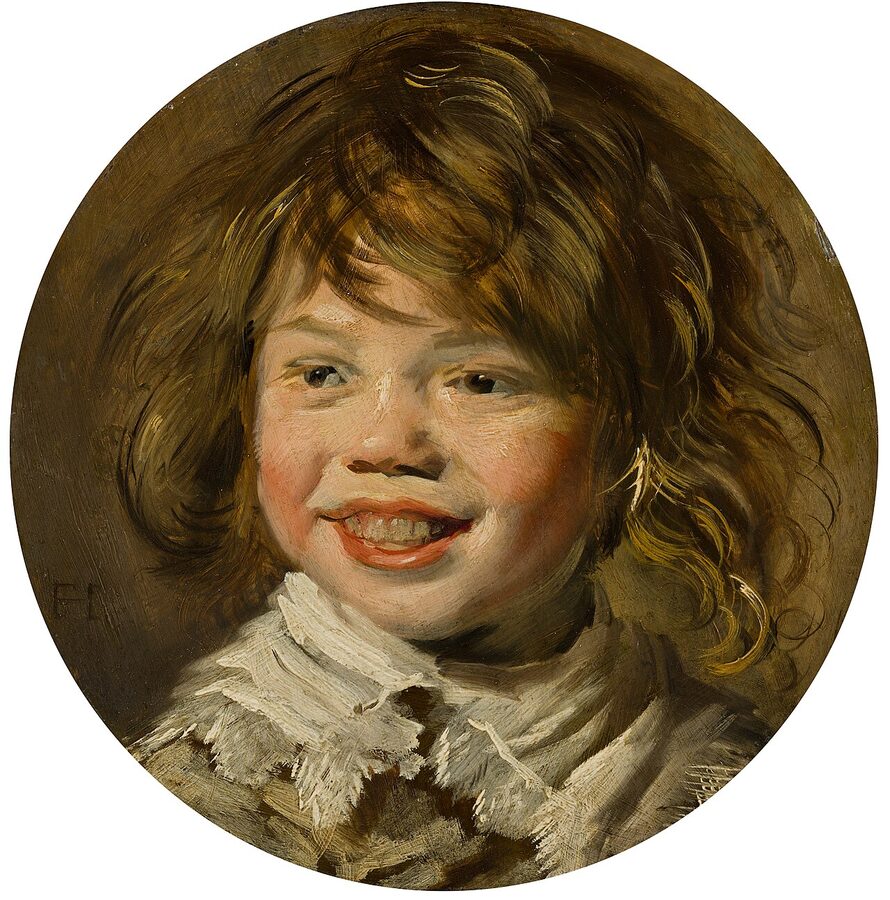
Frans Hals (Room 12). The Laughing Boy is a small painting that people consistently underrate. No narrative, no mythology — just a boy grinning directly at you. Hals’s technique here, all loose quick brushwork, was 200 years ahead of the Impressionists in how it handled light on skin.

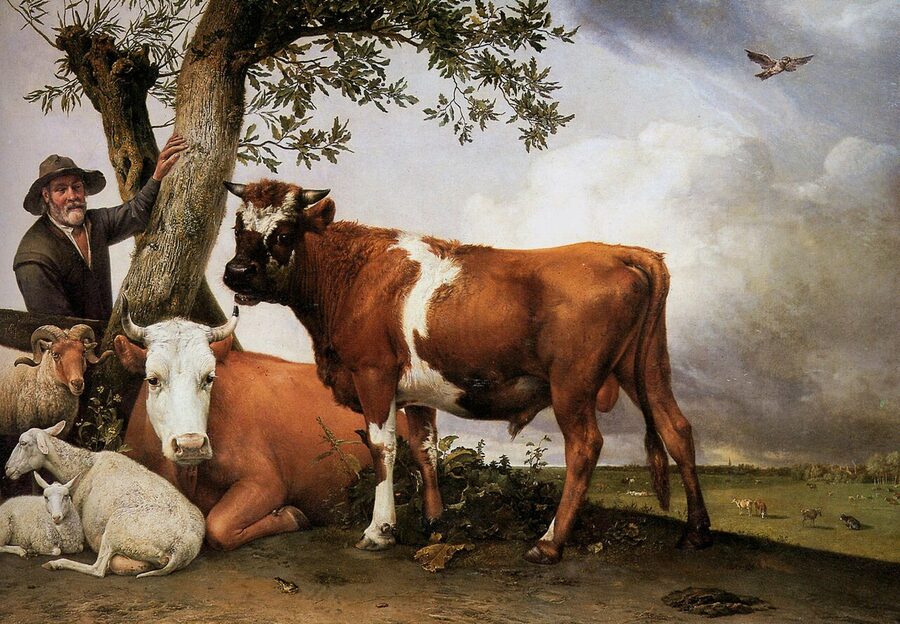
Paulus Potter — The Young Bull. Its own room because it’s enormous. 3.4 metres wide, life-sized bull. The painting looks like something painted in 1800 but was painted in 1647. Kids love it purely for the scale. Art historians love it as one of the earliest life-sized animal paintings in Western art.

Jan Steen. The moralistic genre painter. The Way You Hear It, Is the Way You Sing It (1663) shows adults getting drunk in front of children. The moral — that kids learn from what they see — is spelled out in the title. Steen packed paintings with detail; give this one ten minutes and you’ll find specific jokes you missed at first glance.
Rogier van der Weyden — Lamentation of Christ. A 1460s Flemish painting, several generations before the Dutch Golden Age. Included because the museum traces the lineage — you can see how Weyden’s realism influenced the later Dutch painters two rooms over.
The ceiling paintings. Don’t miss them. The building was originally a private residence, and the ceilings throughout the permanent collection are from that era — allegorical painted ceilings by Gerard de Lairesse and contemporaries. They’re often ignored by visitors pressing toward Vermeer.
Three Ways to Do the Day
1. Mauritshuis Entrance Ticket — from €18.50
The direct approach. Buy online (€18.50), train from Amsterdam Centraal to The Hague Centraal (€11 single off-peak / €22 return), walk 10 minutes. Best for independent travellers with flexible timing. Our review has the room-by-room walkthrough.
2. Private Hague Trip + Mauritshuis from Amsterdam — from €180/person
Higher price, zero logistics stress. Private vehicle pickup from your hotel, driver handles navigation, museum entry included. Best for first-time NL visitors, groups of 3+, or travellers with short schedules. Full review.
3. Kinderdijk + Hague + Mauritshuis Day Trip — from €210/person

For travellers who want “the Netherlands outside Amsterdam” in one shot. Private van, guide, covers Kinderdijk’s 19 historic windmills, the Hague’s political quarter, and the Mauritshuis. 10 hours door to door. Not suitable for kids under 12 or easy-fatigue travellers.
A Short History of the Building
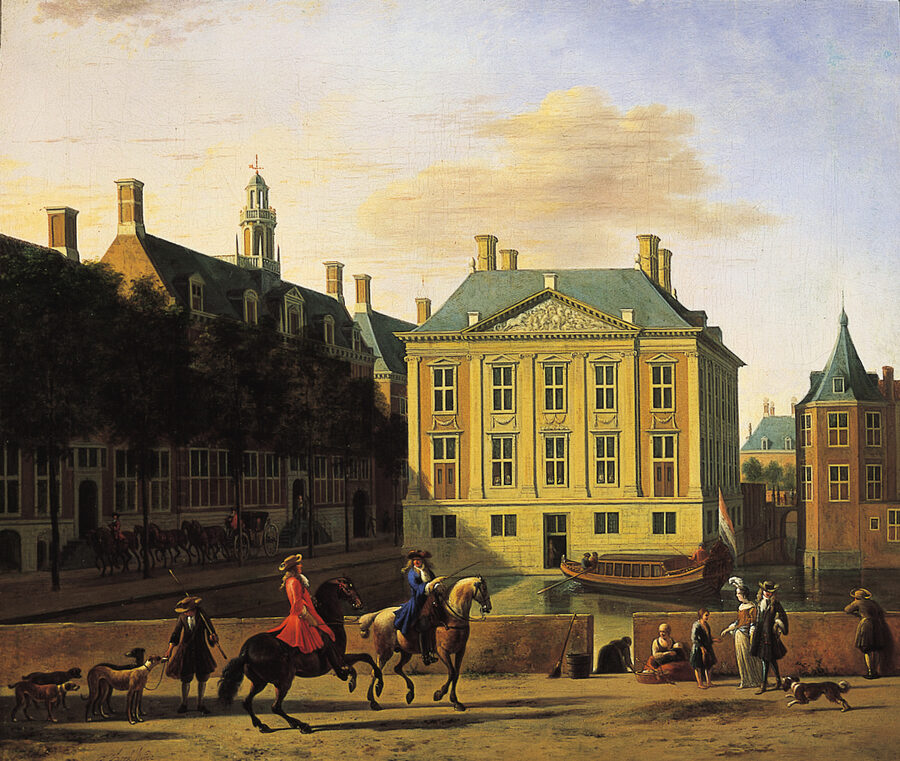

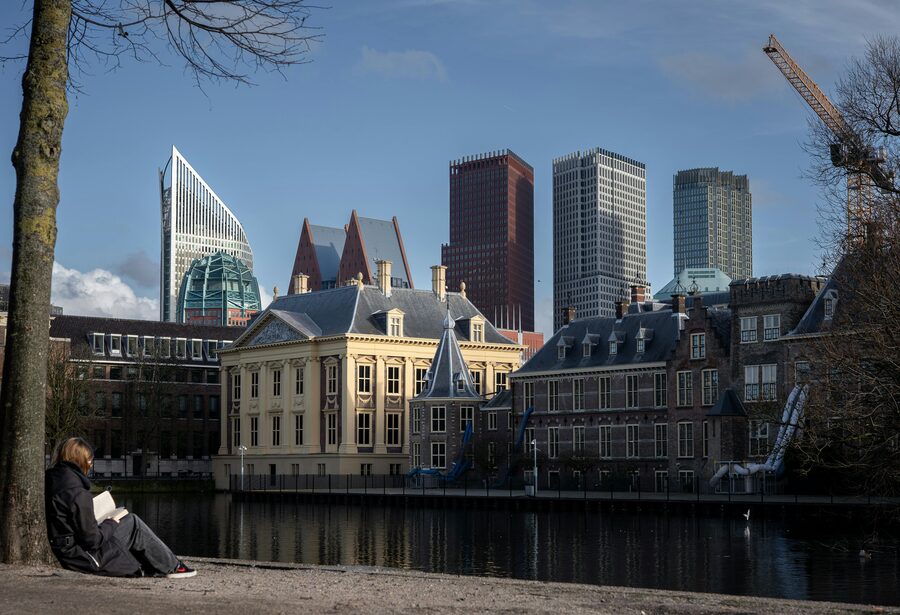
The building was constructed between 1633 and 1644 as a private residence for Prince Johan Maurits van Nassau-Siegen. “Mauritshuis” simply means “Maurits’s House.” At the time, Johan Maurits was the Dutch Governor of the colony in Brazil — one of the stranger positions in 17th-century geopolitics — and he funded construction largely with profits from Brazilian sugar.
The architect was Jacob van Campen, the same classicist who designed Amsterdam’s Royal Palace on Dam Square. The two buildings were built by the same hand in the same decade — one civic and gigantic, one residential and compact. Visit both on the same trip and you see the same architectural language at two scales.
Johan Maurits died in 1679. The building passed through various Orange-Nassau family members before being bought by the Dutch state in 1820 and converted into a museum in 1822. It’s one of the world’s oldest purpose-built public art museums.
The collection was built primarily from two sources: the personal art collections of the Dutch stadholders (William V especially) and later 19th and 20th-century purchases and donations. Girl with a Pearl Earring entered the collection in 1902 after being bought at auction in The Hague for 2 guilders (then roughly one day’s wages). The expert who identified it as a Vermeer — Abraham Bredius — donated it to the museum. It’s now probably valued at nine figures.
The most recent major renovation from 2012-2014 doubled the exhibition space by excavating a new underground wing. The historic interior was untouched. This is why the museum now has dedicated temporary-exhibition rooms alongside the original palace galleries.
Girl with a Pearl Earring — Managing the Moment

The painting is the main reason most people come. Some honest notes to help you not be disappointed:
It’s smaller than you expect. 44 × 39 cm. Roughly the size of a laptop screen. The reproductions you’ve seen are usually blown up; the original is intimate.
Photos are allowed, no flash. You can stand about 80 cm from the painting and take phone photos. The museum actively encourages it.
The queue flows. On a busy Saturday you’ll wait 10-15 minutes to get a 2-minute moment in front of her. On a weekday at 10am you can get 5+ minutes with no one near you.
The effect in person is real. I was skeptical before my first visit — over-hyped, over-reproduced, probably underwhelming in the flesh. I was wrong. The angle of her eye, the way the light lands on the earring, the small parted lips — something specific happens that doesn’t come through in any reproduction I’ve ever seen.
Don’t rush past the other Vermeers. View of Delft gets 10% of the attention that the Girl gets, and it’s arguably the more remarkable painting. Give it 10 minutes.
Is It Worth the Day Trip from Amsterdam?
Short answer: yes, for most NL visitors with 4+ days.
Strong yes: any art fan, Vermeer admirers, anyone who’s done the Rijksmuseum in Amsterdam and wants more Dutch Golden Age depth. Also for Rembrandt House enthusiasts — Rembrandt’s work is better understood with The Anatomy Lesson in mind.
Strong no: one-day Amsterdam visitors. 9 hours of train-and-museum is too much when you could spend that time on Amsterdam itself.
Maybe: 3-day first trip to Amsterdam. You’d need to drop something else (probably the Van Gogh or Anne Frank) and that’s a harder call.
Convert cases: people who expected to rush Girl with a Pearl Earring and leave. Many end up staying three hours because the Frans Hals room or the Rembrandts pull them in.
How Long Inside and How to Pace It
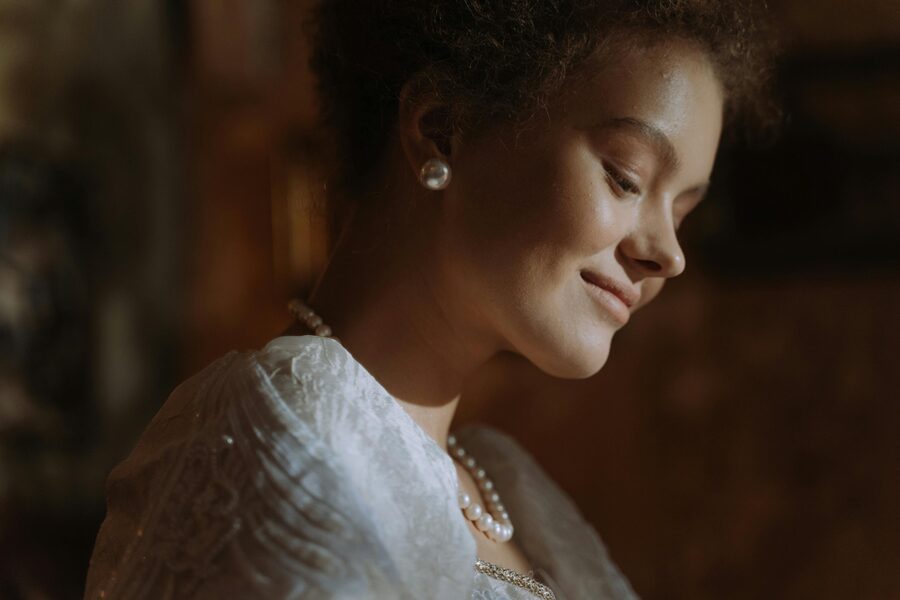
Quick visit (Vermeer + Rembrandt only): 45-60 minutes.
Normal pace: 90-120 minutes. The right amount for most visitors. Room 15 for Vermeer, Room 12 for Hals, main hall for Rembrandts, Young Bull’s own room, then upstairs for the early-Flemish and Italian-influenced works.
Art-student thorough: 3 hours.
With kids under 12: 60-90 minutes. Audio guide kids’ version works for ages 8-12. Younger kids tend to find the museum too quiet and the paintings too demanding.
Timing your arrival:
- 8:30am train from Amsterdam → 9:20am Hague Centraal → 9:40am museum → 10am entry. Easy, zero stress.
- 9:30am train → 10:20am Hague → miss the 10am slot, book 11am instead. Still fine.
- 10:30am train → too late for the best-light first slot. OK but busier.
Mauritshuis vs Rijksmuseum — What’s Different
Both are among Europe’s best Dutch Golden Age collections. Both absolutely worth visiting. Genuine differences:
Rijksmuseum (Amsterdam): 8,000+ works across a massive 19th-century building. The Night Watch is the headline. Scope extends to Dutch decorative arts, ship models, pre-Golden-Age works.
Mauritshuis (The Hague): 250 works in a small 17th-century palace. Focused exclusively on Dutch Golden Age. Higher density of acknowledged masterpieces per room.
Rule: if you can only do one, do the Rijksmuseum — it has the Night Watch, which you’ll feel cheated without. If you can do both, do them both. The Rijksmuseum is the breadth; the Mauritshuis is the depth. Our Rijksmuseum guide has booking details.
When to Go
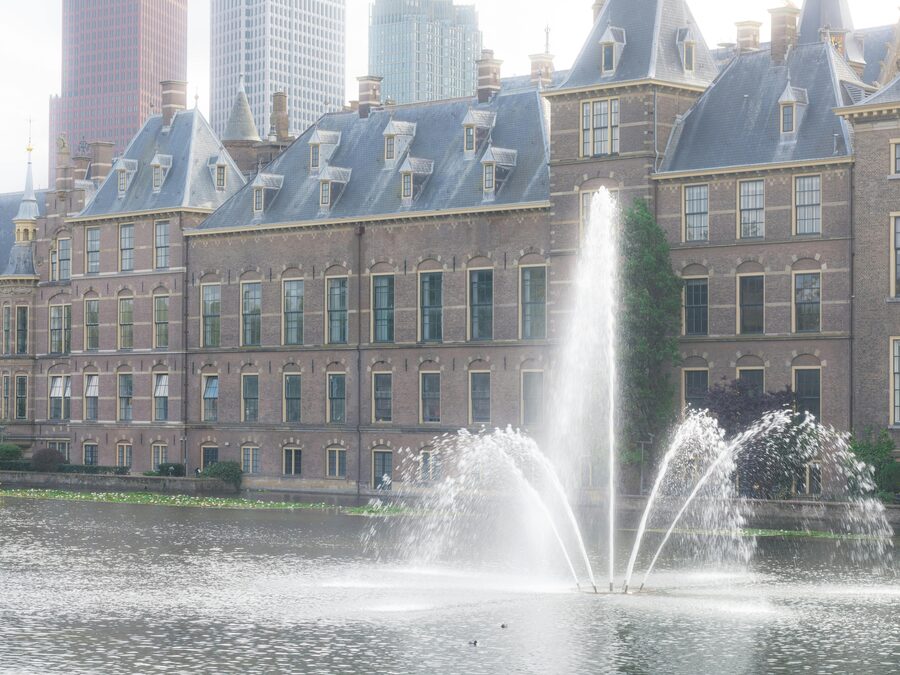
Opening hours: 10am-6pm daily. Monday 1pm-6pm in low season.
Best slot: 10am. Girl with a Pearl Earring’s room is smallest-crowd in the first hour. Weekday mornings you can get 5 uninterrupted minutes.
Worst slot: Saturday 1-4pm. Tour groups arrive, Vermeer’s room fills up, you’ll wait 15-20 minutes for a 2-minute moment.
Seasonal: May-August is busiest; November-February is quietest. The museum is fully climate-controlled so any season works. Winter visits feel different — less rushed, more contemplative.
Train timing: buy off-peak (train leaves after 9am) for the €11 single instead of €13.50 peak. Return is always cheaper same-day.
Getting There from Amsterdam
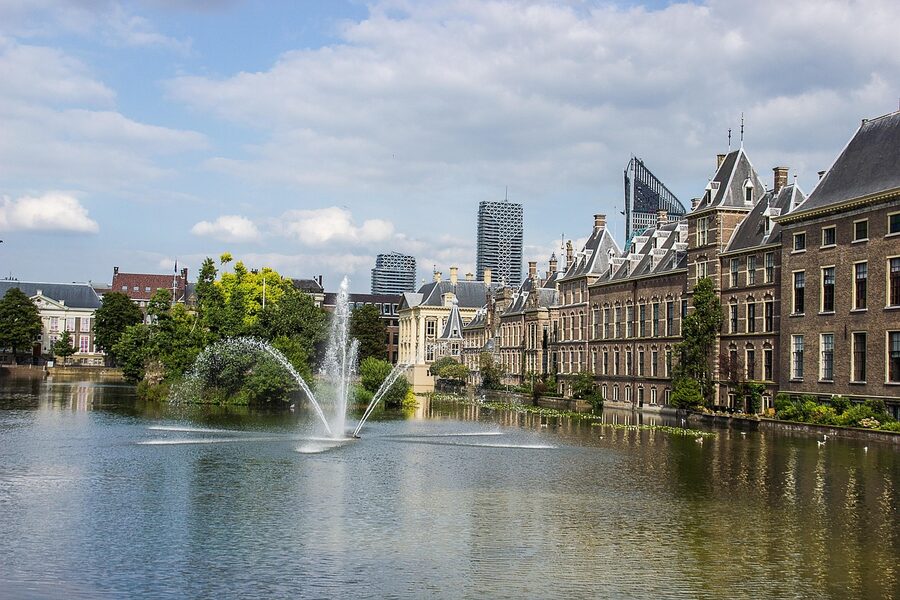
By train: Amsterdam Centraal → The Hague Centraal, 50 minutes, every 15-30 minutes. €11 single off-peak (after 9am), €13.50 peak, return €22 same-day.
From Hague Centraal to museum: 10 minutes’ walk straight down Lange Vijverberg. Or tram 1, 15, or 16 (2 stops, 5 minutes).
By car: 50 minutes from Amsterdam. Parking in The Hague city centre is expensive and limited; take the train.
By tour (options 2 and 3 above): handled end-to-end. Worth the extra cost if you dislike train logistics or want a guide providing context.
What Else to Do in The Hague
If you’ve travelled to The Hague, build out the day. The city is compact — everything is within 15 minutes’ walk of the museum.
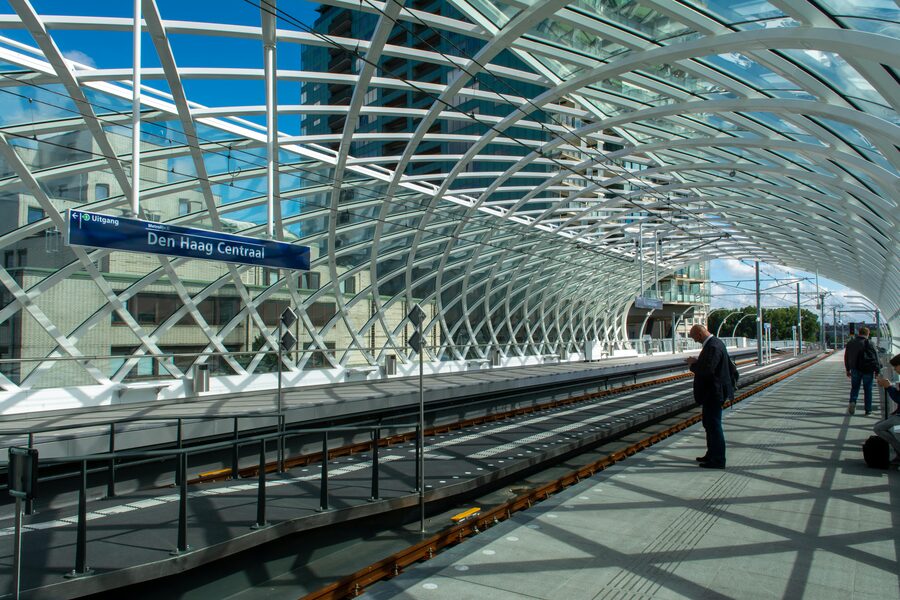
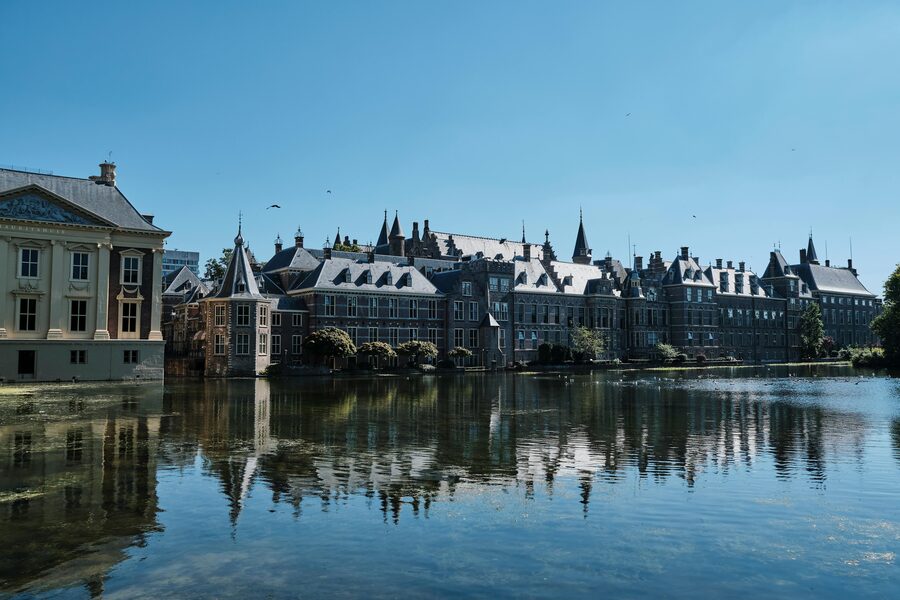
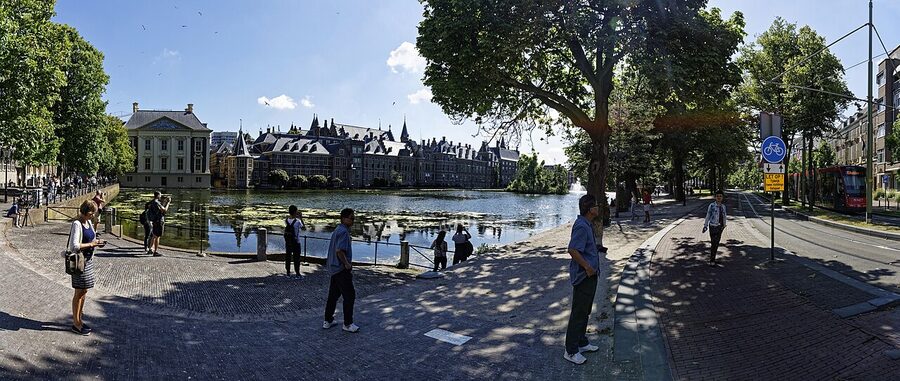
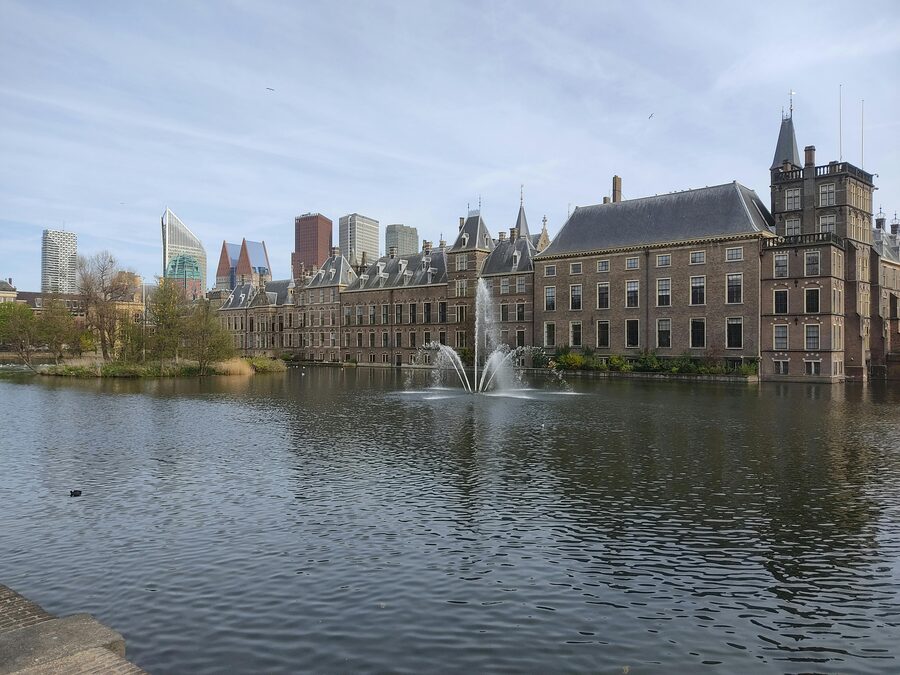
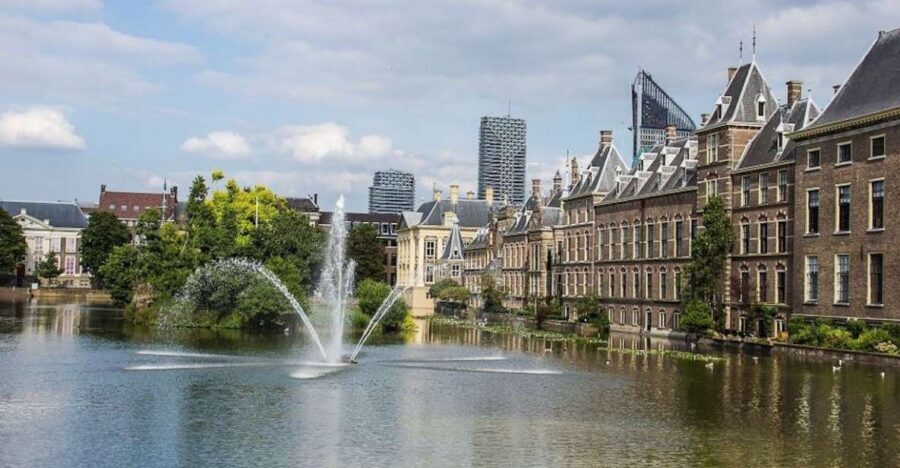
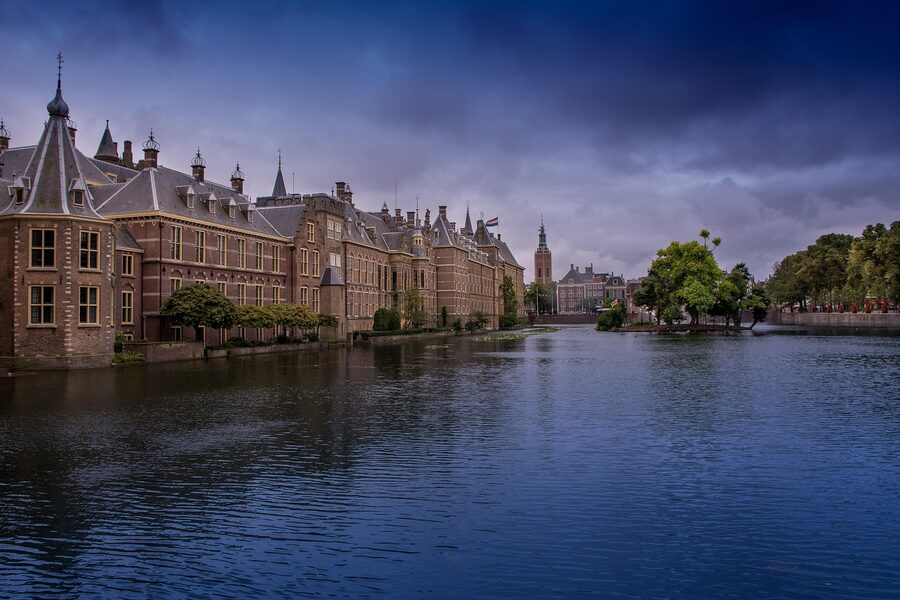
The Binnenhof (next to the museum). 13th-century seat of the Dutch government. Free to walk around the outside courtyards; interior tours run occasionally.
Escher in The Palace. Dedicated museum for M.C. Escher, the Dutch graphic artist. €13, 60-90 minutes. A good thematic pair with the Mauritshuis — two very different kinds of draughtsmanship.
Panorama Mesdag. A 120-metre circular panorama painting of the Scheveningen seaside, painted in 1881 and unchanged since. €13, 45 minutes. One of Europe’s strangest and best-preserved 19th-century panoramas.
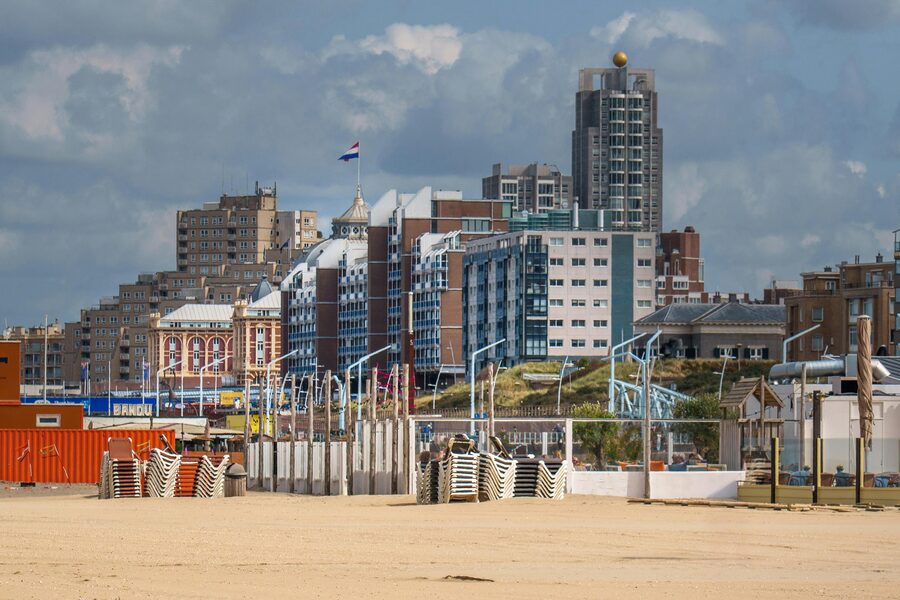
Scheveningen beach. The Hague’s seaside. 20 minutes by tram. Fresh air after museum hours.
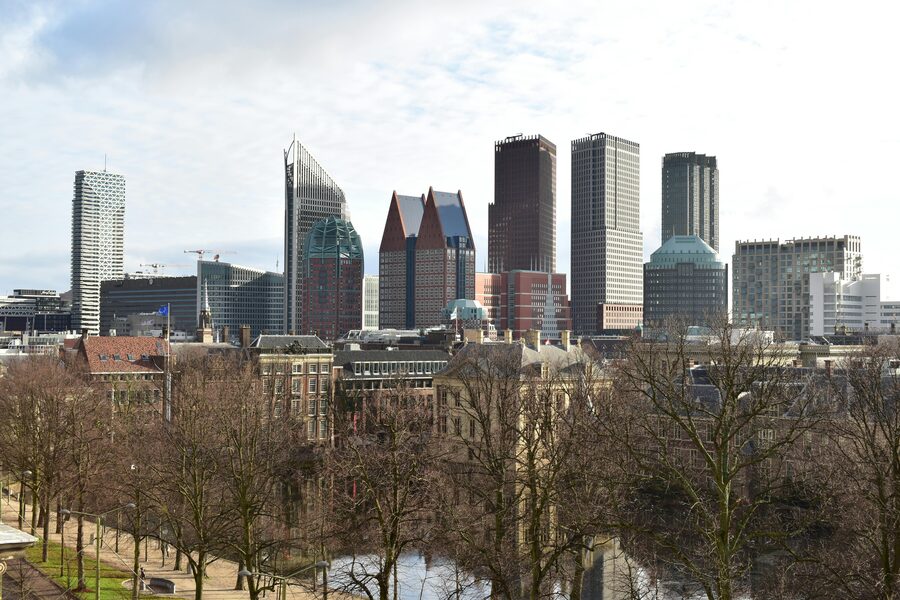
Delft (15 min train). Small historic town with direct Vermeer connections — he was born and died in Delft. The canal views look genuinely close to View of Delft. Half-day or full-day visit.
Food and Drink
Inside: small ground-floor café. Coffee, sandwiches, pastries, €4-12. Fine for a break, not a destination.
Better options nearby:
- Restaurant Bistro Berlage — 4 min walk, classy mid-price lunch
- Haagsche Broodjes — 5 min walk, Dutch sandwich shop
- Dudok — 6 min walk, famous for Dutch appeltaart (apple pie)
- Café de Basketbar — 8 min walk, casual lunch
If you’re making a day of The Hague, budget €20-30 for lunch.
Accessibility

Fully wheelchair accessible via elevator. All rooms step-free. Audio guide includes subtitles for hearing-impaired visitors. Visually-impaired visitors can request tactile representations of specific paintings at the information desk — notable works have raised-relief versions available.
Guide dogs welcome. Pet dogs not.
The museum is unusually good on accessibility compared to older Dutch museums — the 2012-2014 renovation prioritised this.
Photography
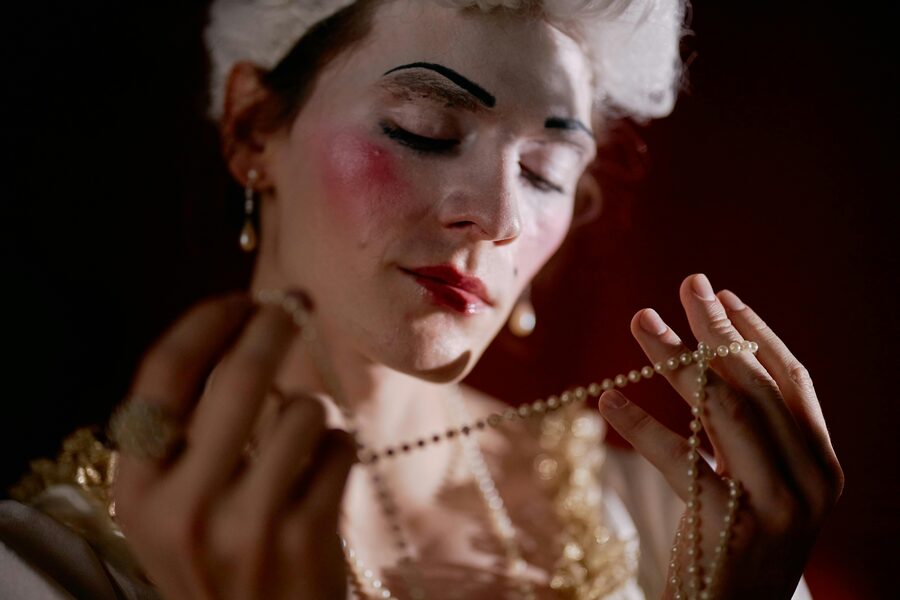
Photos allowed in all permanent-collection rooms. No flash. No tripods. Phones fine.
Best shots: Girl with a Pearl Earring at eye level (avoid crowds by shooting at 10am or last hour). View of Delft works better from a side angle because the reflections in the glass cause glare straight-on. The grand stairwell is photogenic — 17th-century plaster ceilings and marble steps.
The Young Bull room: you need a wide-angle lens to get the whole painting in frame. Phone 0.5x works; standard lenses won’t.
Tickets and Prices
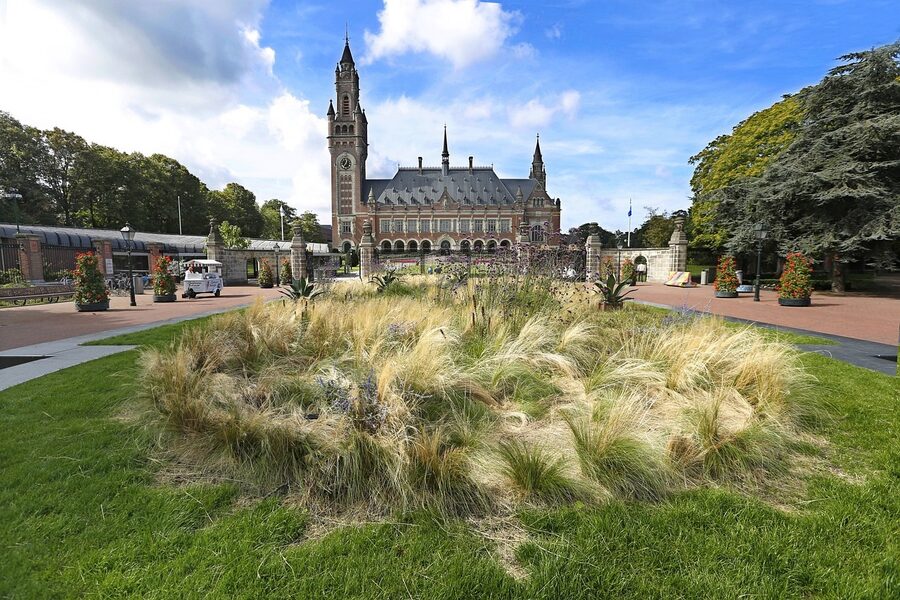
Price: €18.50 adult, free under 18.
Museumkaart: included.
Amsterdam City Card: not included for Mauritshuis (City Card covers Amsterdam only). See our City Card guide for what it does cover.
Timed entry: yes, 15-minute windows. Book 2-7 days ahead for peak times; same-day often available in shoulder season.
Cancellation: free up to 24 hours before.
Best discount: Museumkaart (€80 annual, unlimited at 450+ Dutch museums) makes the Mauritshuis free. Worth it if you’re in the Netherlands 10+ days.
Who Loves It, Who Doesn’t
Strong yes: Vermeer fans (obvious), art history buffs, anyone who’s read Tracy Chevalier’s novel, Netherlands regulars on their second or third visit, day-trippers willing to take a train.
Strong no: visitors on a one-day Amsterdam trip, people who fatigue easily in museums, anyone whose heart lies in contemporary rather than historical art.
Convert case: tourists who went “just to see Girl with a Pearl Earring” and stayed three hours because the Frans Hals room hooked them. Common enough that it’s worth mentioning.
Connection to the Rest of the Dutch Golden Age Tour
The three-museum Dutch Golden Age circuit is the premium art-history experience in the Netherlands:
Rijksmuseum (Amsterdam): the national collection. Night Watch, Vermeer’s Milkmaid, Dutch Golden Age galleries.
Rembrandt House (Amsterdam): the working artist’s studio and life, with live pigment-grinding and etching demonstrations.
Mauritshuis (The Hague): the best-of-best concentrated collection, including three Vermeers.
Do all three across a 4-5 day NL trip and you have the most complete picture of 17th-century Dutch painting available anywhere. They complement rather than repeat.
What About Kids?
The kids’ audio guide (ages 6-12) focuses on stories rather than technique. Kids 8+ enjoy it reasonably. Girl with a Pearl Earring is small enough to hold attention; the Anatomy Lesson paintings have a certain appeal-to-grim-curiosity. The Young Bull’s scale is a reliable kid-winner.
Under 6 struggles. The museum is quiet and reverential in atmosphere; small kids often feel constrained.
Common Mistakes
Going straight to Girl with a Pearl Earring and missing everything else. The museum’s strength is the cumulative effect of the collection, not any single painting.
Not booking train tickets in advance. NS fares are variable; off-peak tickets bought early save €5-8.
Overbooking the day. Mauritshuis + Kinderdijk + Delft + Scheveningen is too much. Pick one additional stop maximum.
Skipping the Rembrandts. Most visitors cluster around Vermeer. The Rembrandt rooms are regularly emptier and hold three remarkable works.
Missing the Young Bull. Paulus Potter’s life-sized bull sits in its own room and gets overlooked. Five minutes there pays off.
Skipping the ceiling paintings. The 17th-century painted ceilings through the permanent collection are themselves artworks — most visitors never look up.
The Short Version
Book the €18.50 ticket for a 10am slot, take the 8:30am train from Amsterdam Centraal, spend 2 hours inside the museum, have lunch in The Hague, and be back in Amsterdam by 4pm. Start your time inside at Vermeer in Room 15, work through the Rembrandts, linger at the Frans Hals and the Young Bull, and look up at the ceilings.
For first-time NL visitors on a 5+ day trip, this day is a priority. For one-day visitors, skip and focus on Amsterdam. For second-trip visitors, it’s the single best day trip from Amsterdam.

Affiliate disclosure: Some links in this article are affiliate links. If you book through them we may earn a small commission at no cost to you. All recommendations are based on my own visit.