
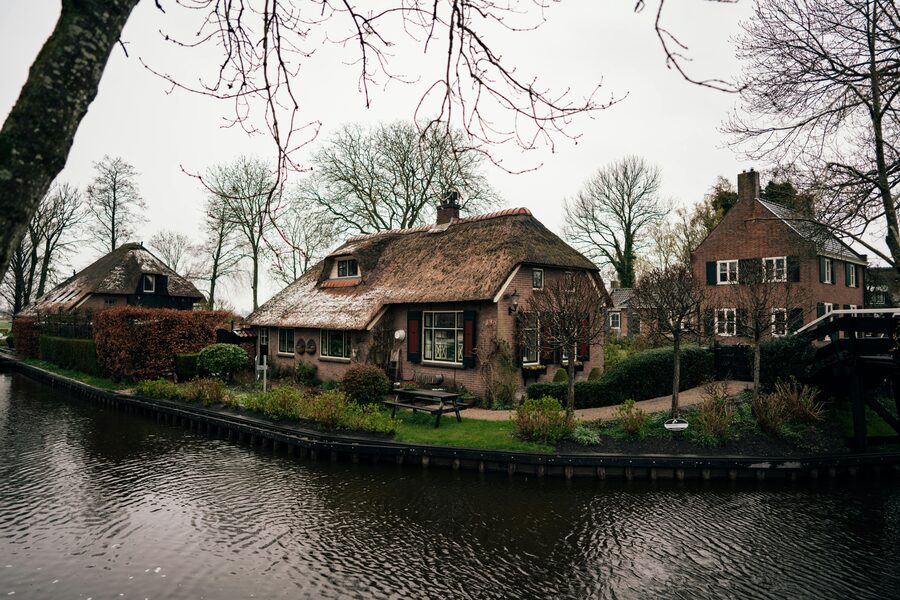
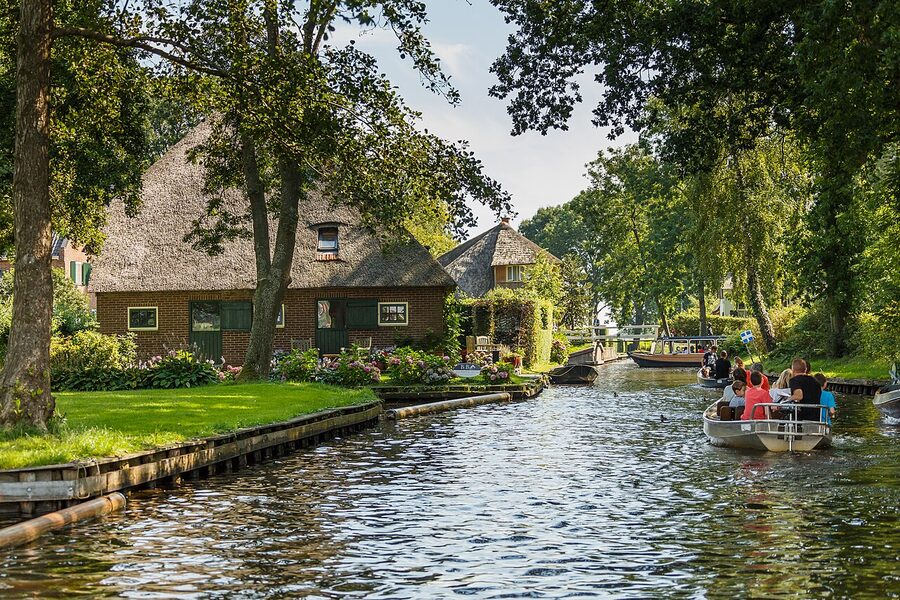
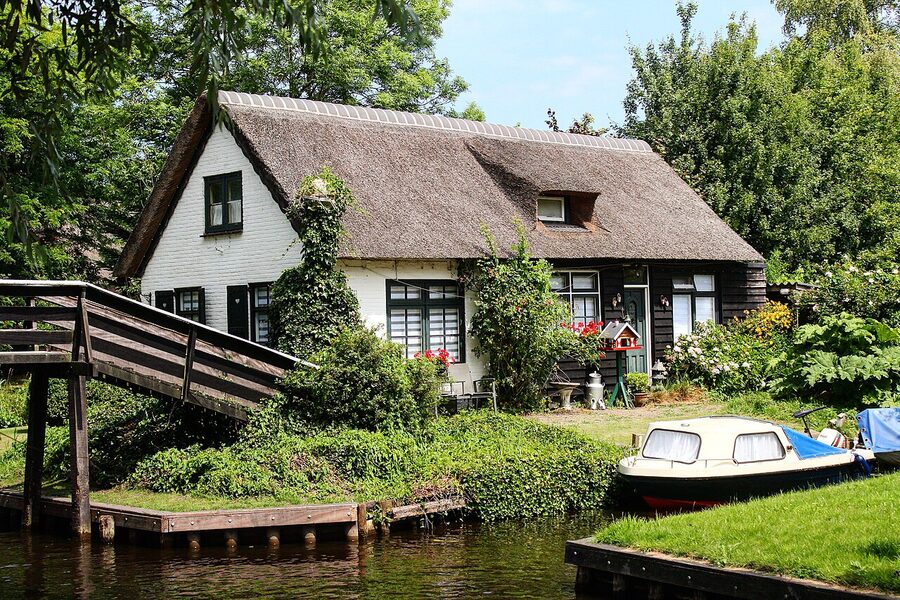
Giethoorn has no roads in its historic centre. Not narrow roads — zero roads. Where a street would be, there’s a canal. Where a pavement would be, there’s a grass footpath. The 180-ish houses are thatched 18th and 19th-century farmhouses, each on its own island, connected to the footpath by a small arched wooden bridge. You don’t walk between houses; you cross a bridge. You don’t drive to a restaurant; you moor a boat at the door.
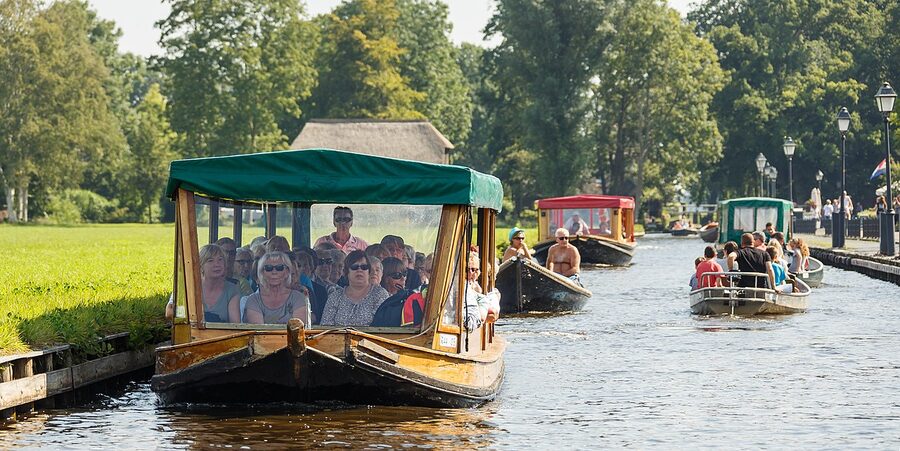

The village sits 120 km northeast of Amsterdam, in Overijssel, and is reached either by coach tour (€75-115, 9-10 hours) or train-plus-bus (cheaper, more time in the village). Most day-tour visitors get 2 hours on the ground plus a 1-hour whisper-boat ride. It’s a 5 km village and you can see the whole of it in that window — but the people who come back for a second visit are usually the ones who slept a night here.


In a Hurry?
- Best overall: Giethoorn + Afsluitdijk Tour — classic combo. Village canals plus the 32-km dam. €75-85, 9 hours.
- Best standalone: Giethoorn Day Trip — just Giethoorn, longer in the village. 8 hours.
- Best for small groups: Giethoorn Small-Group Tour (max 8) — minivan, more intimate, premium.
- In a Hurry?
- What You Actually See in the Village
- How the Boat Ride Works
- Three Ways to Get There from Amsterdam
- 1. Giethoorn + Afsluitdijk Tour — from €75
- 2. Giethoorn-Only Day Trip — from €65
- 3. Giethoorn Small-Group Day Tour — from €115
- A Short History of the Village
- Self-Organised vs Guided Tour
- When to Go
- What Makes Giethoorn Different from Other Dutch Villages
- The Afsluitdijk — If You Do the Combo
- Practical Considerations
- Pairing With Other Amsterdam Day Trips
- Is Giethoorn Worth a 9-Hour Day Trip?
- Photography
- Food in Giethoorn
- Accessibility
- Hidden Corners
- What Giethoorn Isn’t
- Common Mistakes
- The Short Version
What You Actually See in the Village
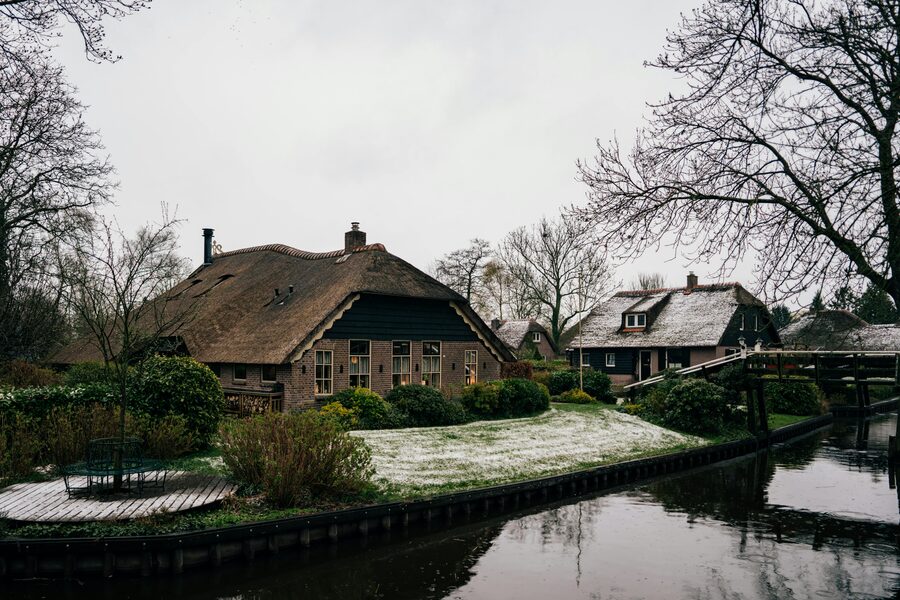
Giethoorn is 7 km long along its central canal, but the touristed core is about 2 km. Key elements:
Dorpsgracht (main canal). Runs the spine of the village. Thatched farmhouses on both sides, tourist boats constant in the summer, rental boats docking every hundred metres. This is where the famous photos are taken.
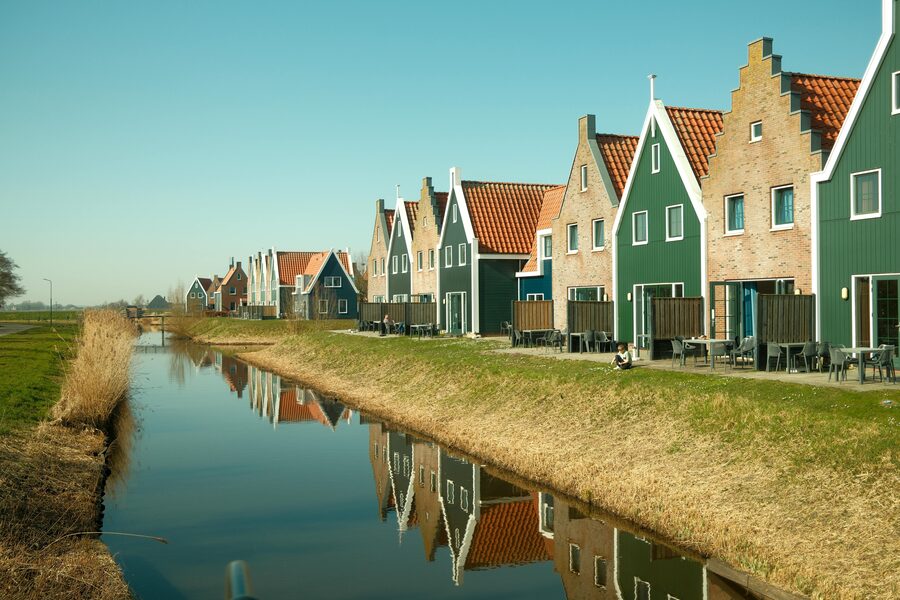
Thatched farmhouses — about 180. Mostly 18th and 19th-century construction. Steep thatched roofs, white-plastered walls, small windows, door facing the canal. Most are still private homes. A small percentage have been converted to B&Bs, craft shops, or restaurants. The architecture is specific to this region — it’s not “all Dutch countryside.”
180+ small bridges. Most are private, linking individual houses to the footpath on either side of the canal. A handful are public crossings. Many are arched wooden bridges; a few are modern concrete.
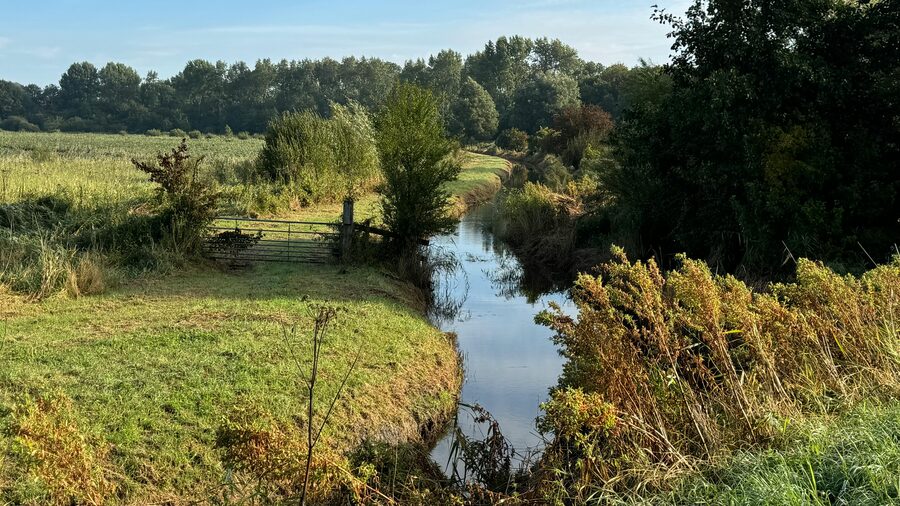
Side canals. Smaller waterways branching off Dorpsgracht. This is where Giethoorn feels most authentic — fewer boats, slower pace, visible wildlife, homeowners going about their day. If you rent your own boat, spend most of your time here.
Pieter van Mijnhardt Museum. Small museum on the village’s peat-cutting origins. 30 minutes, €7.
‘t Olde Maat Uus. A larger farmhouse museum showing 19th-century rural Giethoorn life. 60 minutes, €8.
Restaurants. Several along Dorpsgracht. Most are tourist-priced (€18-25 mains) but the food is reliably decent — traditional Dutch, with the occasional “De Lindenhof” two-Michelin-star option if you’re there for dinner and booking ahead.
How the Boat Ride Works
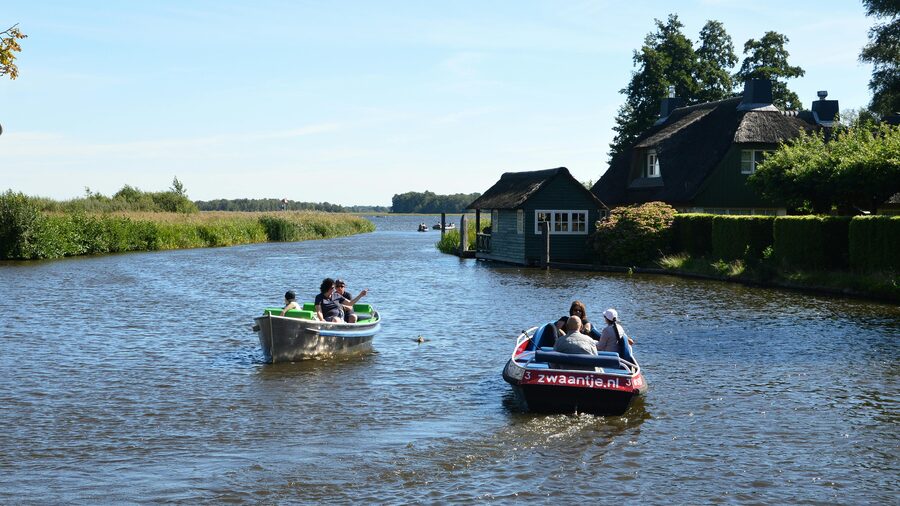
Most day tours include a 1-hour whisper-boat ride (“fluisterboot” in Dutch). Self-organised visitors can rent their own. Options:
Guided group boat (included in most day tours): 6-12 people, local guide, 60-75 minutes of canal commentary in English or Dutch. Straightforward.
Self-driven whisper-boat (€40-60/hour). 4-6 people fits. Comfortable; no licence required. Fine for absolute beginners. The boats max out at about 6 km/h — you won’t crash into anything.
Private gondola-style. Wooden punt with a pole-pushing “gondolier.” More expensive, slower, more romantic. Good for couples.
Canoes / paddle boats. €10-15/hour. More effort, more exercise, more contact with the water.
If you’re on a day tour, the boat is handled — just get on when told. If you’re self-organised, rent at one of the boat-rental docks along Dorpsgracht (they’re everywhere in the central stretch).
Three Ways to Get There from Amsterdam
1. Giethoorn + Afsluitdijk Tour — from €75
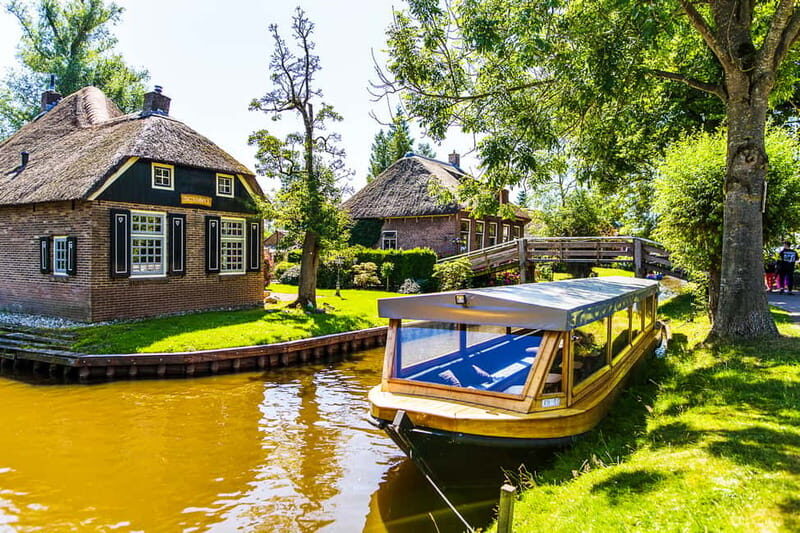
The most popular format. Coach from Amsterdam, 90-minute drive to Giethoorn, 2 hours in the village (includes 1-hour boat ride), 1 hour at the Afsluitdijk viewing tower for photos and a small exhibition, return. Tour guide on the coach. Full review.
2. Giethoorn-Only Day Trip — from €65
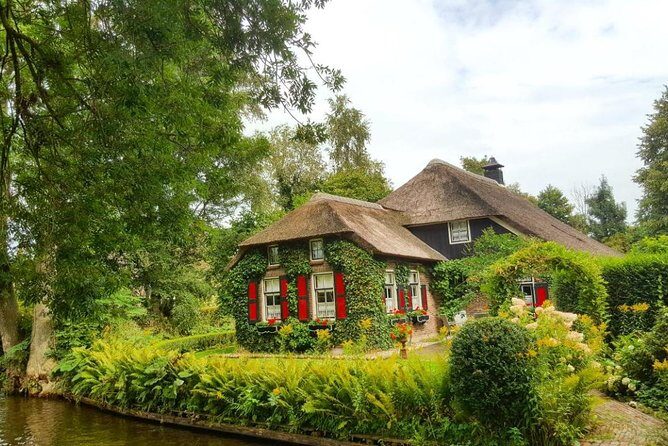
For visitors who want the village to be the main event. Coach from Amsterdam, 90-minute drive, 3 hours on the ground (boat + walking + unhurried lunch), return. Shorter driving and more village time. Full review.
3. Giethoorn Small-Group Day Tour — from €115
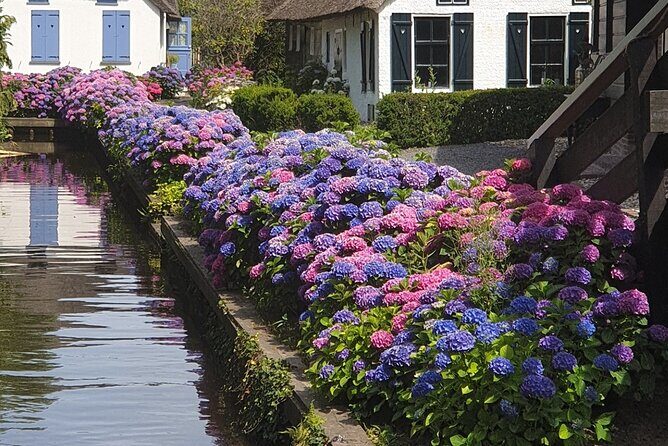
Premium option. Maximum 8 people, minivan instead of 50-seat coach, more flexibility to linger or skip stops. Best for couples, solo travellers, and anyone who finds large tours uncomfortable. Same 8-9 hour day structure.
A Short History of the Village
The reason Giethoorn has canals instead of streets is prosaic: the land between the houses was too wet to build on, so the settlers cut it out in strips and used the strips of land that remained.
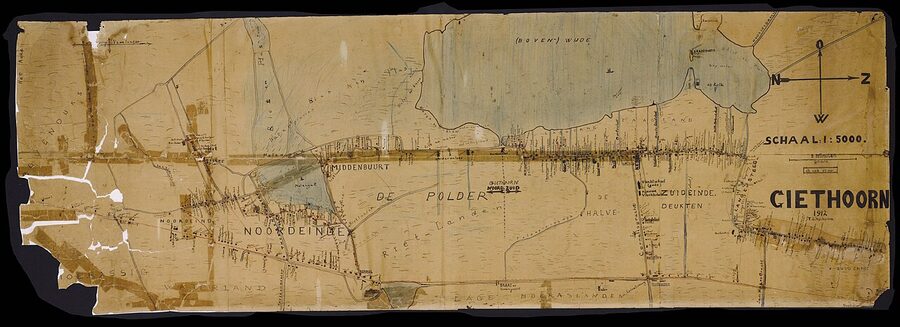
.jpg)
Giethoorn was founded around 1230, according to local tradition by a group of flagellants — a religious commune from the Mediterranean. They settled on the peat bogs and began digging canals to harvest peat for fuel. The name “Giethoorn” derives from “Geythoorns” (goat horns), a reference to the many wild-goat horns the first settlers found buried in the peat — remnants of a massive flood in 1170 that had killed enormous numbers of livestock in the region.
Peat-cutting continued for five centuries. By 1800 the village’s economy started shifting: Dutch coal (and later natural gas) began replacing peat as the dominant fuel. The canals remained, and the residents repurposed them from industrial transport to residential access.
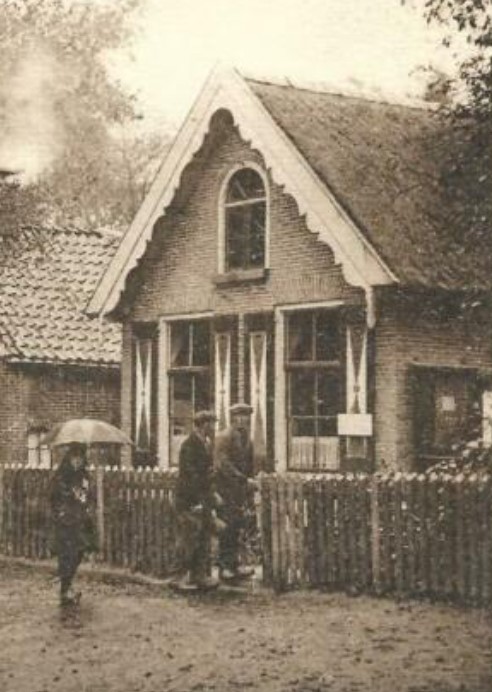

The 1958 Dutch film Fanfare (directed by Bert Haanstra) was shot in Giethoorn and introduced the village to mainstream Dutch audiences. Tourism began building from the 1960s. By the 2010s, Giethoorn was reaching nearly 900,000 visitors per year, most concentrated into a 6-month peak season — an enormous visitor load on a village of only 2,600 residents. The local council has been working on visitor management ever since; you’ll see signs asking tourists to keep noise down and not photograph private gardens.
The village’s architecture has stayed remarkably consistent. Many of the thatched houses date from the 18th and 19th centuries. Thatching remains a specialist craft practised locally — new thatch needs replacement every 30-50 years, and the village supports a handful of working thatchers.
Self-Organised vs Guided Tour
Guided tour (covered above): 8-10 hour coach day, €65-115, all logistics handled. Best for first-time NL visitors, non-drivers, and travellers with short schedules.
Self-organised:
- Train Amsterdam Centraal → Steenwijk (2 hours, €22 single off-peak)
- Bus 70 Steenwijk → Giethoorn (25 minutes, €4)
- Rent whisper-boat in Giethoorn (€40-60 for 2 hours)
- Lunch at a local restaurant
- Return train from Steenwijk
Total cost: €80-110 per person (similar to guided).
Total time: 9-10 hours (similar to guided).
But the experience is noticeably better — you get 3-4 hours on the ground instead of 2, you’re on your own schedule, you can explore side canals the coach tours don’t reach, and you can stop for coffee at any house-turned-café that looks interesting.
Best for: confident travellers, groups of 3-4 who can share boat rental costs, anyone doing 5+ days in the Netherlands.
When to Go
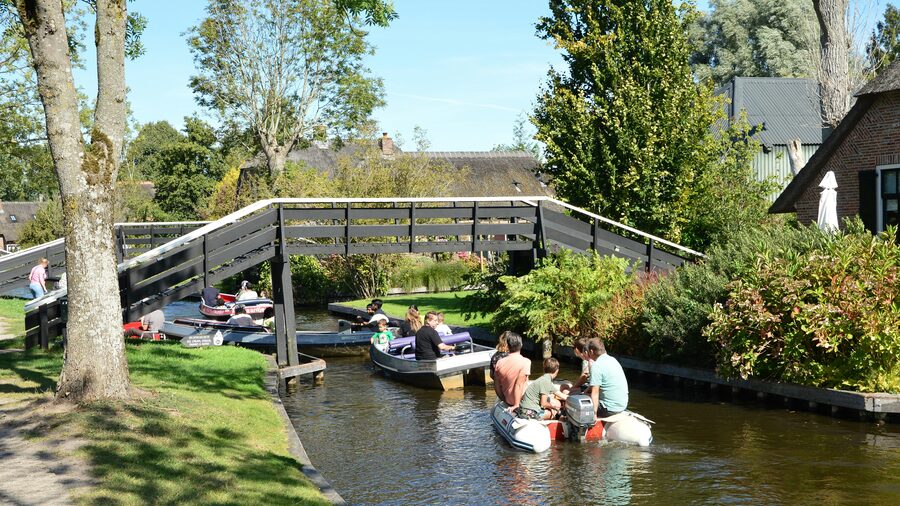
Best time of year: late April-May or late September-October. Mild weather, full foliage, moderate crowds.
Peak: July-August. Crowds are heavy. Expect 30-minute waits at boat rentals, full restaurants, and dozens of coach groups cycling through. Still beautiful, but the experience dilutes.
Shoulder: March, November. Crowds low, some places closed, weather variable.
Winter: December-February. Very few crowds. Many businesses closed. Canals sometimes freeze (rare but memorable — people ice-skate the village in those weeks).
Best day of week: weekdays. Saturday-Sunday brings Dutch day-trippers plus coach tourists — maximum density.
Best time of day: before 10am. Most day tours arrive 10-11am and leave by 3-4pm. If you can be on the ground by 8-9am (self-organised) or 10:30am (early guided tour), you beat the worst crowds.
What Makes Giethoorn Different from Other Dutch Villages
The Netherlands has several pretty rural villages — Edam, Volendam, Marken, Broek in Waterland — that tourists often consider. Giethoorn’s specific distinction is the complete absence of roads in the historic core. Not “narrow roads” — zero roads.
This happened for specific historical reasons. The village grew along canals cut for peat transport, and those canals ended up defining the residential layout. When mainland Dutch villages were building road networks in the 1800s and 1900s, Giethoorn’s topology (every house on its own peat-cut island, linked by bridges) made road construction effectively impossible without destroying the village layout.
Other car-free Dutch villages exist (Marken is partly similar, though smaller) but Giethoorn is the largest and most architecturally complete example. It’s why the village gets almost a million visitors per year.
The Afsluitdijk — If You Do the Combo
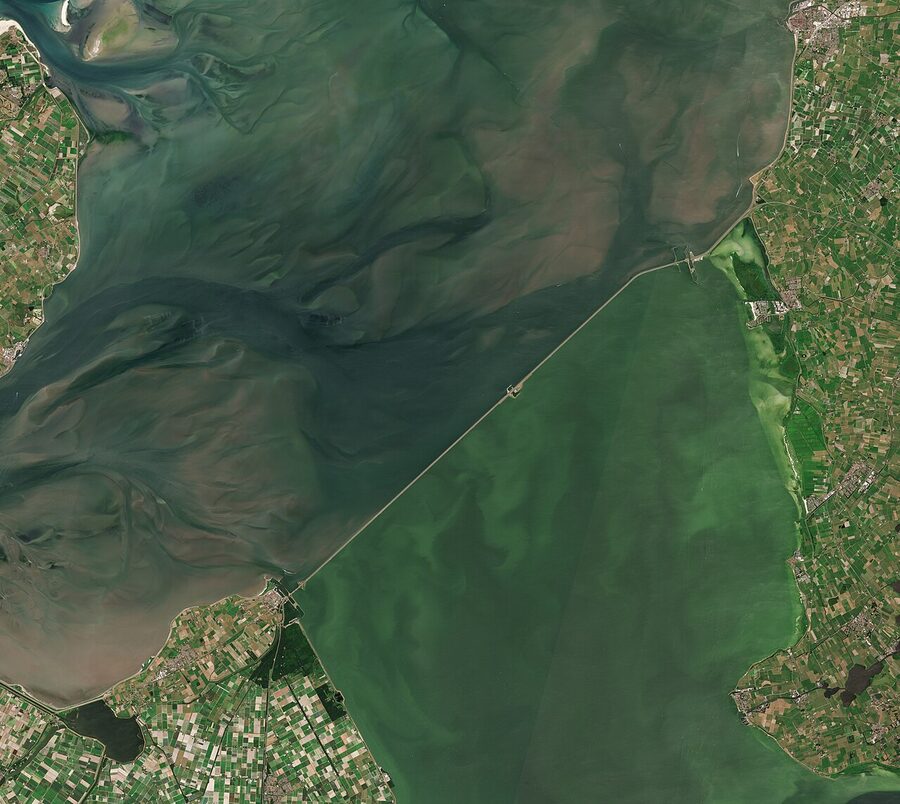

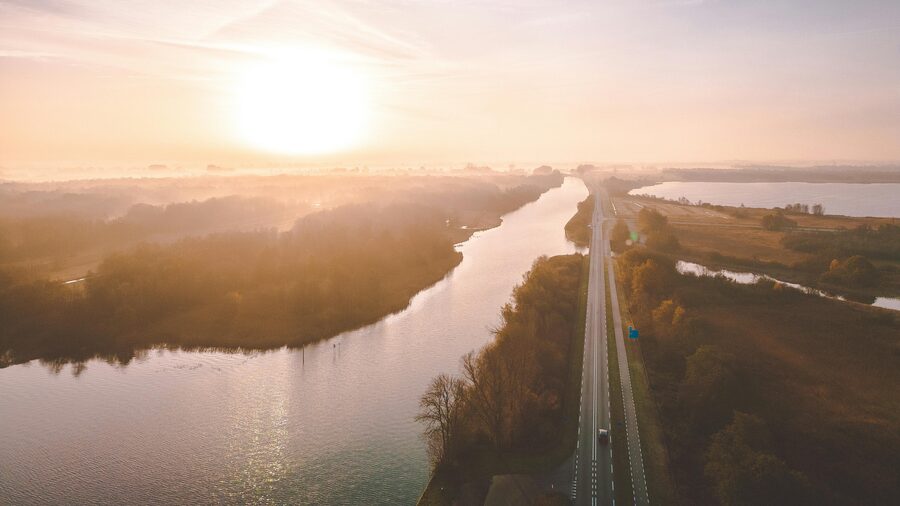
The Afsluitdijk is a 32-kilometre dam built between 1927 and 1932. It separates what used to be the Zuiderzee — an open inlet of the North Sea — from what is now the IJsselmeer, a freshwater lake. The construction turned a massive body of saltwater into fresh water and reclaimed 1,650 km² of land. It is arguably the most ambitious piece of water management the Dutch ever executed, and the Dutch have executed a lot of ambitious water management.
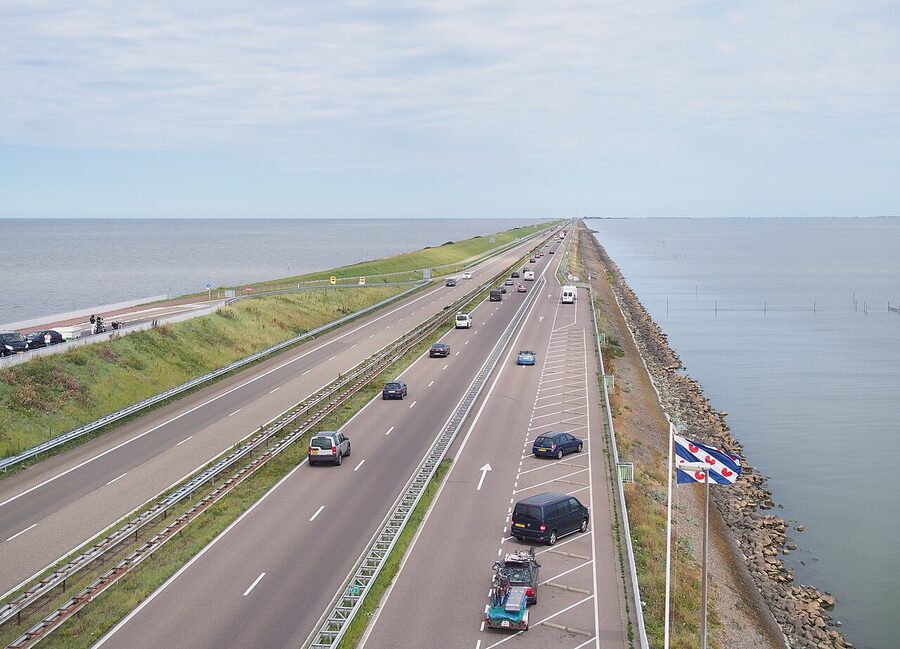

The stop on Giethoorn tours is usually 30-45 minutes at a viewing tower with a small museum. The museum covers the construction history; the tower gives panoramic views of both water bodies. It’s a dry-but-useful stop — non-Dutch visitors often find the scale of the engineering more impressive than expected.
Worth doing on a first Netherlands trip; skippable for repeat visitors who’ve seen it. If you’re specifically interested in Dutch water management, our canal cruise guide covers the Amsterdam equivalent — smaller scale, but the same engineering logic.
Practical Considerations
Cash: most places take cards but cash is useful for small purchases and tips.
Language: Dutch default, English widely understood by tourist-facing staff. Menus usually bilingual.
Bike rental: €15/day. The village itself is tiny, but a bike gets you into the Weerribben-Wieden national park (good walking and cycling trails).
Hotels: several converted farmhouses operate as B&Bs. €120-180 per night. Book 2-3 months ahead for summer. A night here beats a day trip if your schedule allows.
Weather: it rains regularly. Bring a light rain jacket. The whisper-boats have partial coverings but not full enclosure.
Toilets: limited in the village itself. Use a restaurant or the main visitor centre at the southern end.
Pairing With Other Amsterdam Day Trips
Giethoorn is one of several “only in the Netherlands” day trips from Amsterdam. How it fits:
Giethoorn vs Zaanse Schans: Zaanse Schans is closer (30 min vs 90 min), smaller, and more touristy. Our Zaanse Schans guide covers the windmill-village alternative. If you only have time for one, Zaanse Schans is efficient; Giethoorn is more rewarding but takes a full day.
Giethoorn vs Keukenhof: tulip season only (March-May). Different experience — formal gardens vs natural village. Our Keukenhof guide.
Giethoorn vs Mauritshuis (The Hague): nature vs art. On a 5-day trip, do both. Our Mauritshuis guide.
Giethoorn vs Kinderdijk: Kinderdijk is a UNESCO windmill village. Some tours combine the two. Less “authentic Dutch village” feel than Giethoorn.
Giethoorn + a night’s sleep: the genuinely superior option. Book a farmhouse B&B, arrive late afternoon after the day-trippers leave, walk the silent village at 6pm, have dinner at De Lindenhof if you’ve booked weeks ahead.
Is Giethoorn Worth a 9-Hour Day Trip?
Honest answer:
Yes: you love photogenic places; you’re on a 5+ day Netherlands trip; you’ve already done Amsterdam’s highlights; you’d genuinely enjoy a village with no cars.
Maybe: 3-4 day trip; you want one “countryside” day to break up the museum circuit.
No: 2-day trip; you dislike long coach rides; you don’t care about picturesque rural places; you’d prefer another museum day.
The village itself rarely disappoints. The total day-trip experience (3 hours each way by coach + 2 hours in the village) is more variable — some people love it, some find the driving-to-sightseeing ratio too unbalanced.
Photography
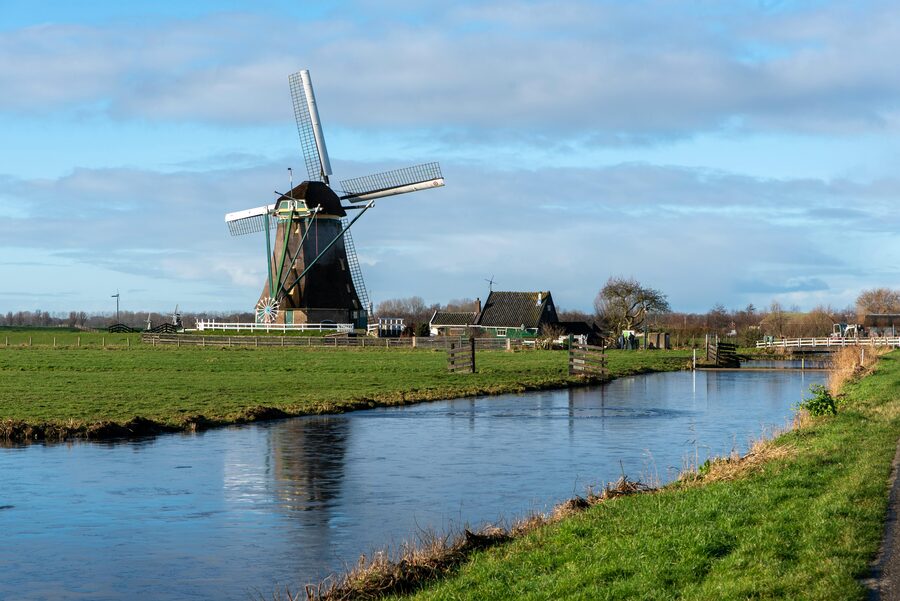
Best light: early morning (7-9am) and late afternoon (4-6pm). Midday flattens the thatched rooflines.
Best angles: low down, shooting along the canal length rather than across it. The reflections double the houses and give the composition a symmetry rare in other Dutch villages.
Best season: late April for flowering trees. October for autumn colour.
Avoid: wide shots with tour boats in frame. Wait 2-3 minutes for a gap between boats.
The arched bridges: side-on shots showing bridge, canal, thatched house. Dozens of compositions available; easy to spend an hour just photographing them.
Food in Giethoorn
The restaurants are tourist-priced but reliably decent:
- De Lindenhof — 2 Michelin stars, reservation essential, €100-150/person. Genuinely great Dutch food. Book weeks ahead.
- Restaurant ‘t Zwaantje — mid-price Dutch, €20-35 mains, canal terrace.
- Café Fanfare — casual lunch, €14-22.
- Giethoorns Pannekoekhuis — pancake house (poffertjes and Dutch pancakes), €10-16, kid-friendly.
Most tour groups eat lunch at a pre-arranged mid-price restaurant. Ask your guide in advance if you want to eat elsewhere — they’ll usually let you skip the group lunch and meet later.
Accessibility
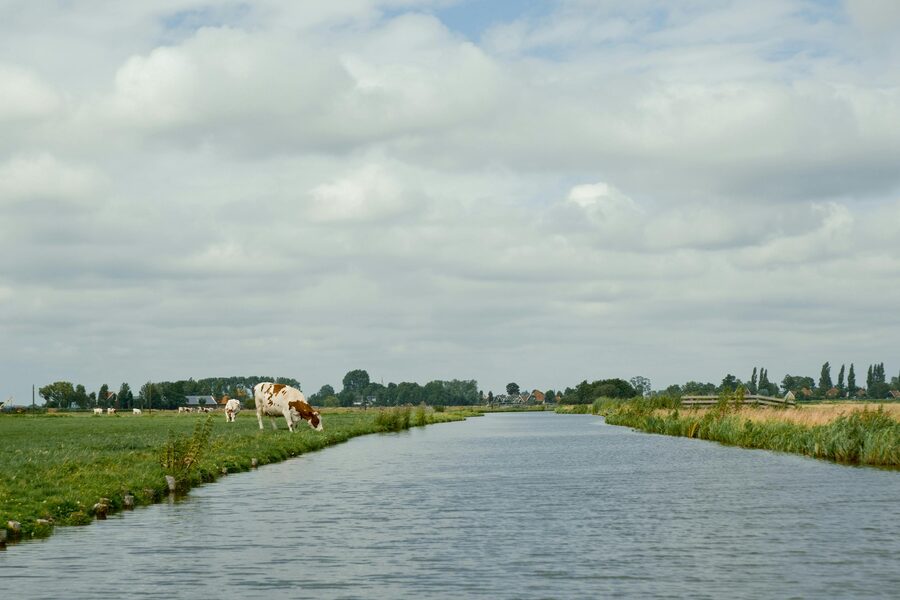
Giethoorn is partially accessible. Main footpaths along the central canal are paved. But many arched bridges are stepped, and some restaurants/shops have step-up entrances.
The whisper-boat is the most accessible experience — boats have low thresholds and some have ramps. Most day tours can accommodate wheelchairs on the boat but the coach transport may need advance notice.
Book with a specific operator 1-2 weeks ahead if you have accessibility requirements.
Hidden Corners
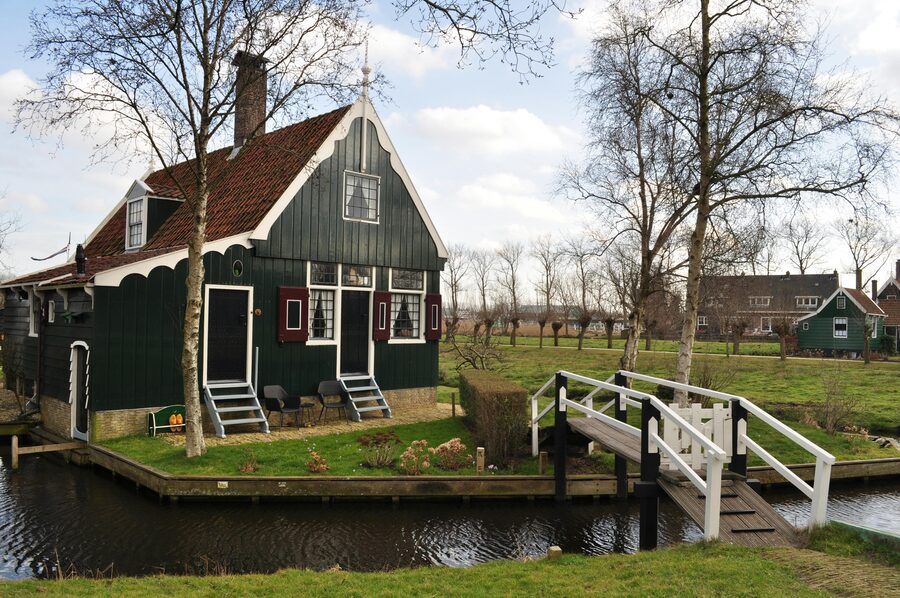
If you have time (self-organised trips), skip Dorpsgracht and explore:
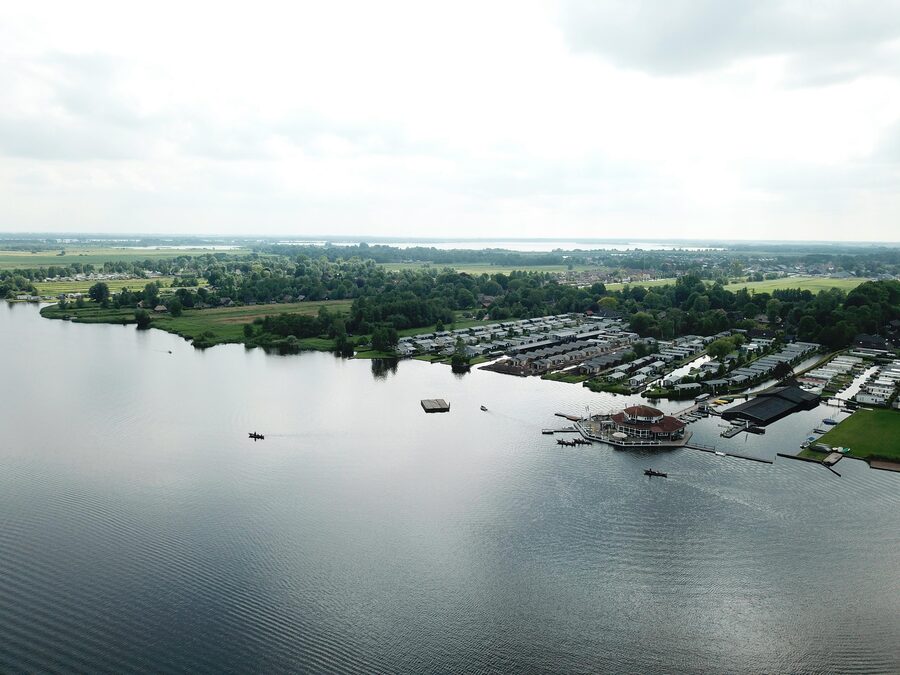
Bovenwijde lake. North of the village. Good for longer boat rides (2-3 hours). Very few tourists reach this far.
Weerribben-Wieden National Park. Huge wetland reserve around the village. Cycling and walking paths. One of the Netherlands’ best nature reserves for bird watching.
Side canals south of Dorpsgracht. Less trafficked than the main canal. Visible wildlife, residents going about ordinary life, quieter thatched houses.
Steenwijk. The nearest town, 10 minutes by bus. Small fortified historic centre. Good for 30 minutes if you’re on a self-organised trip with extra time.
What Giethoorn Isn’t
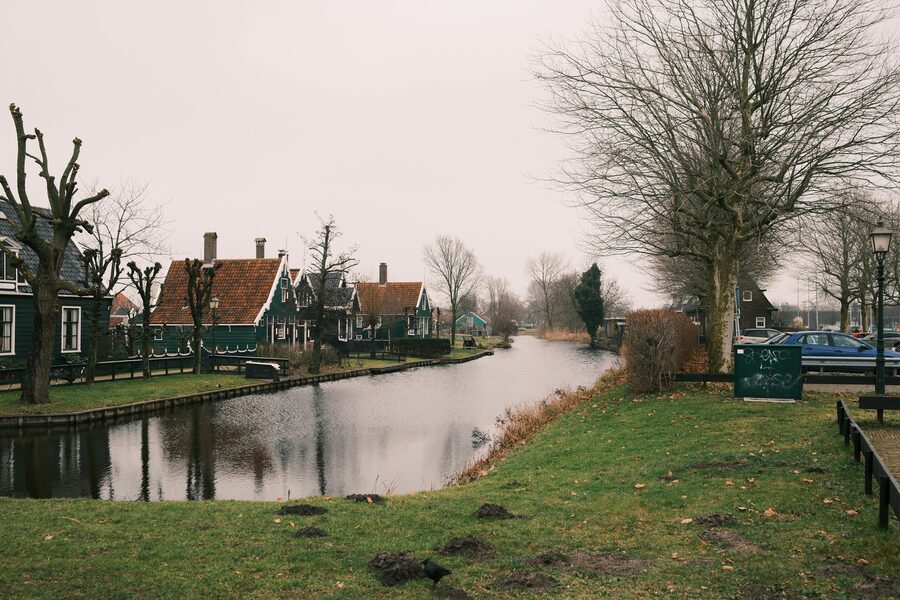
A few honest notes on what Giethoorn doesn’t deliver:
Not remote. Despite the pastoral feel, 900,000+ visitors per year means in summer you’re sharing the canals with hundreds of other boats.
Not a cultural destination. Beyond the two small museums, there’s little cultural programming. It’s a village you look at, not one you learn from.
Not typical of rural Netherlands. The thatched architecture and car-free layout are specific to this region. Don’t conflate “Giethoorn” with “all Dutch villages.”
Not complete without the boat. Walking the village alone will feel incomplete. The canal perspective is essential to the experience.
Common Mistakes
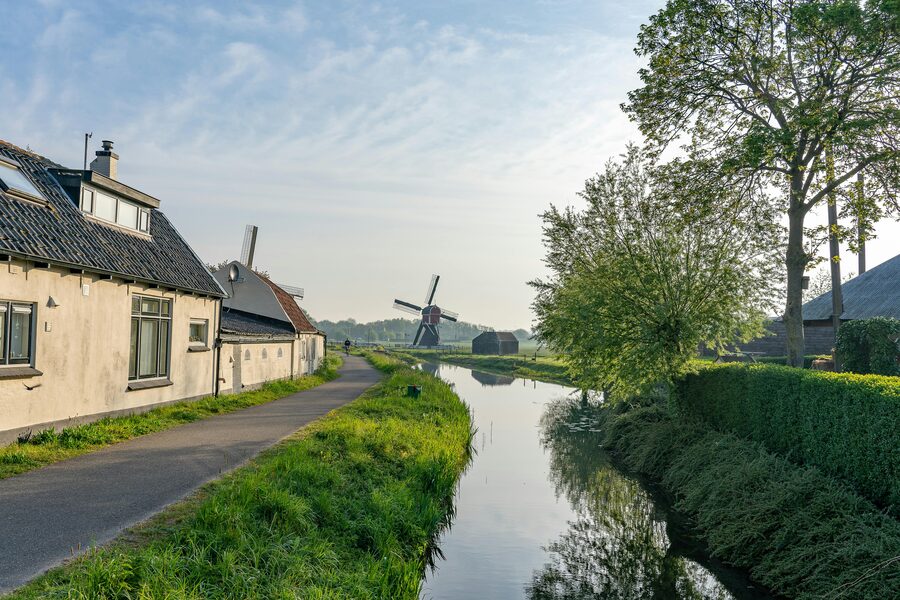
Visiting on a cloudy December day. Giethoorn depends on good weather for its visual appeal; November-February visits can underwhelm.
Booking the cheapest tour without checking group size. 50-seat coaches crunch the experience.
Skipping the boat. Walking alone gives you roughly 30% of the experience.
Combining with too many stops. Giethoorn + Afsluitdijk is fine. Adding Zaanse Schans in the same day is overkill.
Arriving at 11am-1pm. Worst crowd window. Arrive early (by 10am) or come after 3pm.
The Short Version
Book the Giethoorn + Afsluitdijk combo tour (€75-85) for a first-time day out, or go self-organised via train-to-Steenwijk-then-bus if you want more village time. Rent a whisper-boat for at least 60 minutes. Visit on a weekday in spring or early autumn, and avoid the 11am-1pm crowd peak.
For Netherlands visitors on 4+ day trips, this is one of the highest-rated day-trip options. For weekend visitors, the 9-hour commitment might be too much — pick Zaanse Schans (closer, shorter) instead.
Affiliate disclosure: Some links in this article are affiliate links. If you book through them we may earn a small commission at no cost to you. All recommendations are based on my own visit.