
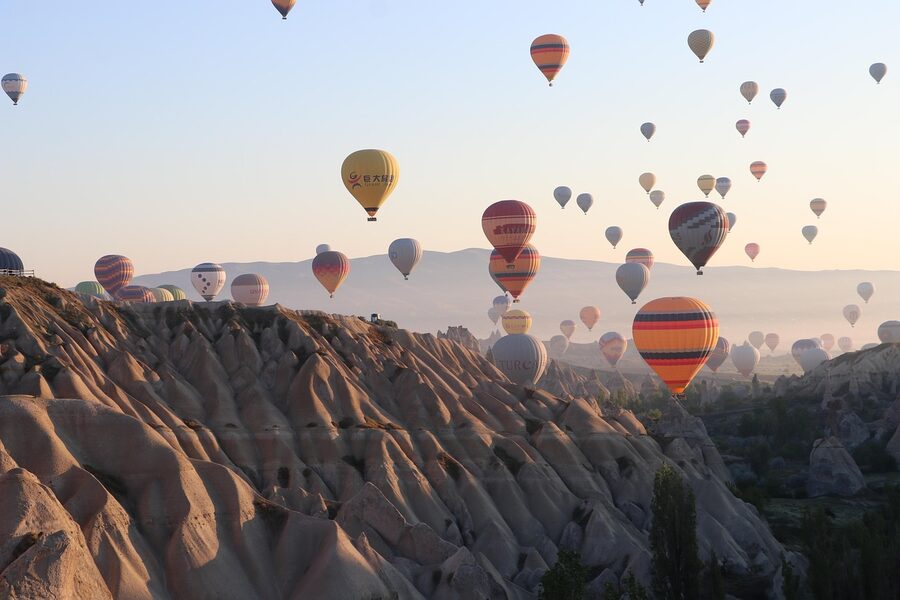
Your 3:30am pickup rolls through a pitch-black Göreme. By 4:15 you’re standing in a cold field holding a paper cup of Turkish tea while a basket the size of a minibus inflates on its side beside you. The pilot — usually Turkish, usually ex-military — nods once and you climb in. 20 minutes later the sun comes up over the Rose Valley and you’re 300 metres above an alien landscape of sandstone spires that look exactly, and I mean exactly, like every photograph you’ve ever seen.
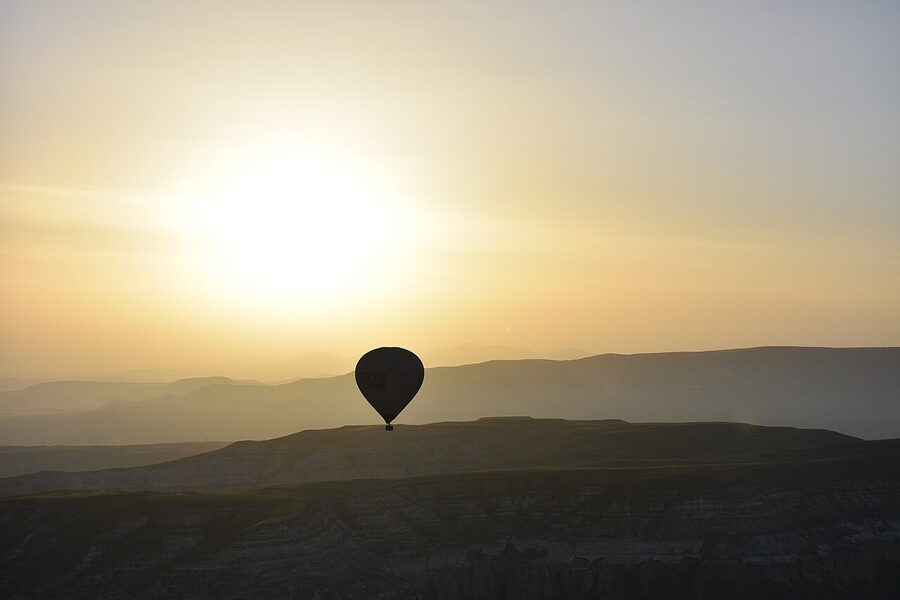

A Cappadocia balloon flight runs roughly €180-280 per person depending on operator and flight length. The actual airtime is 45-90 minutes. Including pickup from your hotel, the cold pre-dawn wait, and the champagne-breakfast afterward, you’re committing about 4 hours to the experience. The total number of flights you can book is limited by Turkish civil aviation, weather (cancellations for wind happen regularly November-March), and available slots — peak summer Saturday mornings can sell out 2-4 weeks ahead.


In a Hurry?
- Best overall: Göreme Sunrise Flight — €190, 60-70 min airtime, hotel pickup and champagne breakfast included. The mainstream pick.
- Best premium: Royal Balloon Ride — €260+, smaller basket (12-16 passengers rather than 20-24), more pilot attention, veteran company.
- Best long-flight: Balloon Ride with Full Breakfast — €220, 90-min flight (longer than most), champagne and buffet breakfast on landing.
- In a Hurry?
- What Actually Happens on the Morning
- The Three Flight Options
- 1. Göreme Sunrise Flight (GetYourGuide) — from €190
- 2. Royal Balloon Ride (Viator) — from €260
- 3. Balloon Ride with Full Breakfast — from €220
- A Short History of Cappadocia’s Balloons
- Best Time of Year to Fly
- Why Cancellations Happen (and What You Can Do)
- What to Wear
- Is It Safe?
- Getting to Cappadocia
- Photography
- Combining Cappadocia With Other Turkey Stops
- Other Things to Do in Cappadocia (Besides the Balloon)
- Food and Drink
- Accessibility
- What Most Guides Don’t Tell You
- Common Mistakes
- The Short Version
What Actually Happens on the Morning
You book the night before (or earlier) and get a pickup time between 3:30am and 5:30am depending on sunrise and your operator’s launch window. The driver collects you from your cave hotel — “cave hotel” in Cappadocia is more literal than you’d expect; many rooms are genuinely carved into volcanic rock — and drops you at a meeting point. Usually it’s the operator’s office in Göreme, Uçhisar, or Avanos.
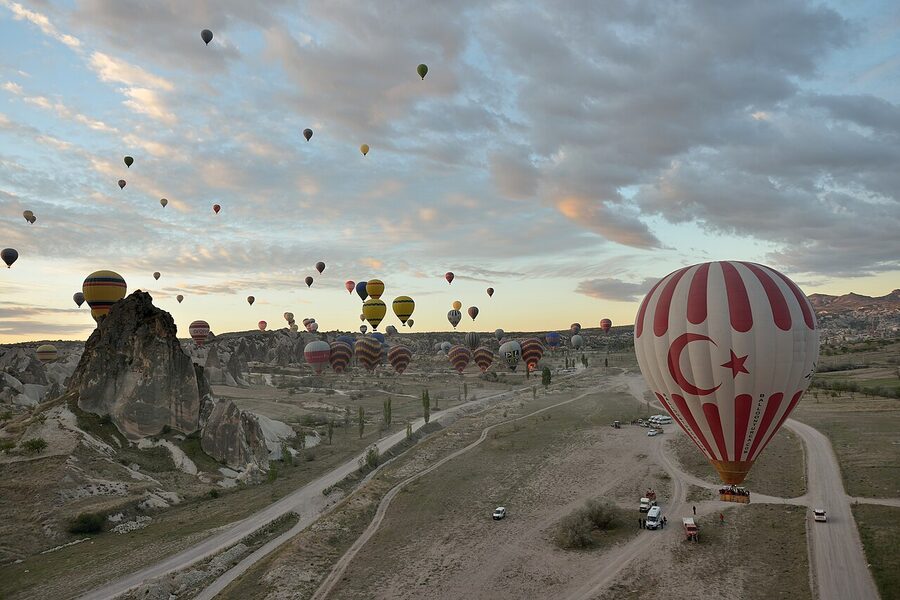

Tea and biscuits while pilots confer with the meteorological office. On a typical good morning, civil aviation issues flight permits around 4:30am; all balloons lift off between 5:00 and 5:30. If the permit doesn’t come — winds too strong, fog, or freezing rain — flights are cancelled on the spot. You get a full refund and are driven back to your hotel with no flight.
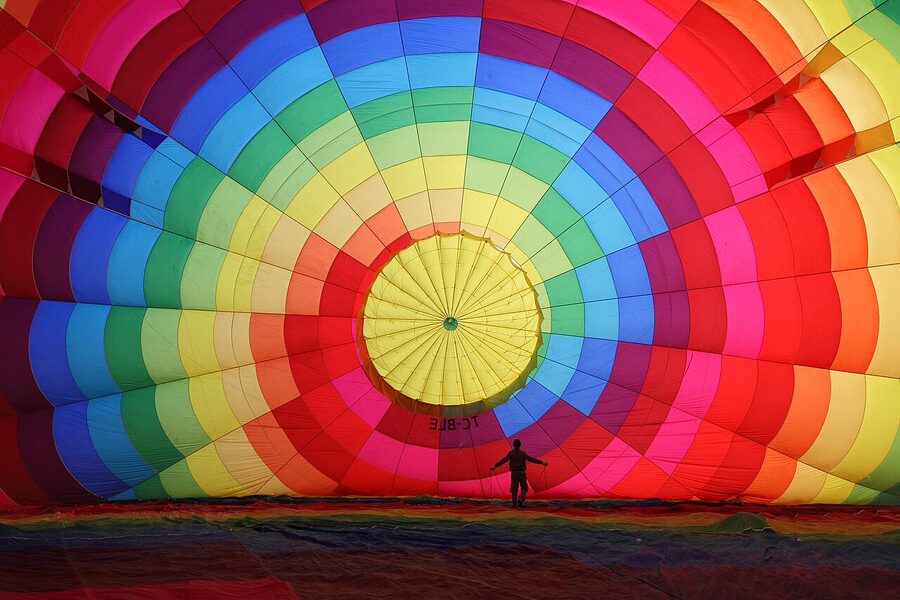
From the meeting point you convoy out to the launch field (usually a wide farm field near Rose Valley or Love Valley). Crews are already there. The envelope — the big fabric balloon part — is laid out on its side, and cold fans fill it with ambient air first. Then the pilot fires the burners and warm air rolls in. It inflates in about 20-25 minutes. Once it’s upright, you climb in, the pilot does a safety brief (maybe 90 seconds — it’s not elaborate), and the crew releases the tethers.
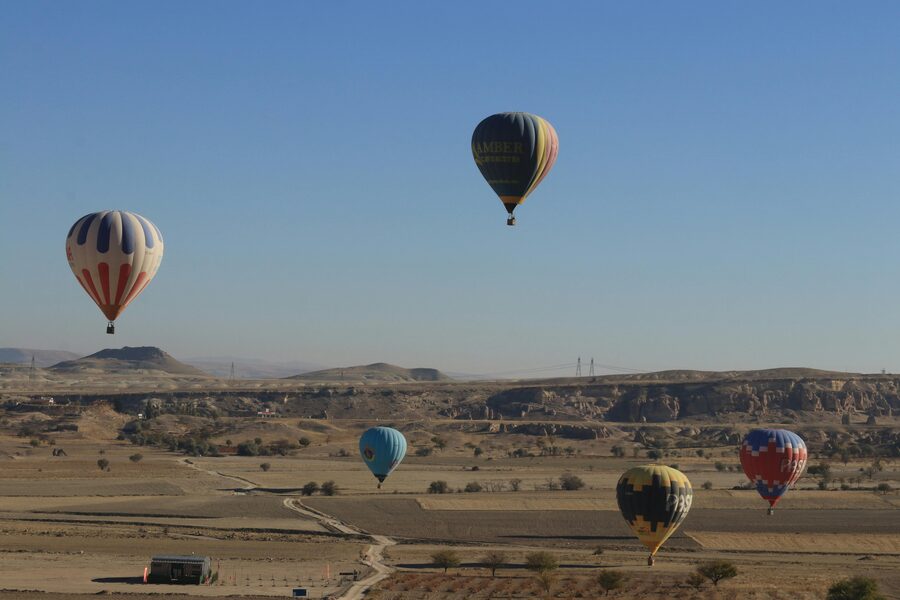
The flight itself is silent except for the occasional burner burst. Altitude varies from about 50 metres (skimming over valley rims, close enough to see rock textures) to 400+ metres (wide panoramic views of the whole region). The pilot adjusts altitude to find winds blowing in the right direction — balloons can’t be steered laterally; you drift with whatever wind you find at a given altitude.
Flight time: 45-90 minutes. Landing is sudden — pilots aim for a flat field, the ground crew catches the basket as it touches down, and you step out onto the grass. Depending on conditions the basket sometimes tips on its side on landing (normal, not dangerous; pilots will warn you to brace).
Champagne breakfast at the landing site. Certificate, photos, drive back to hotel. Usually done by 8:30am.
The Three Flight Options
1. Göreme Sunrise Flight (GetYourGuide) — from €190
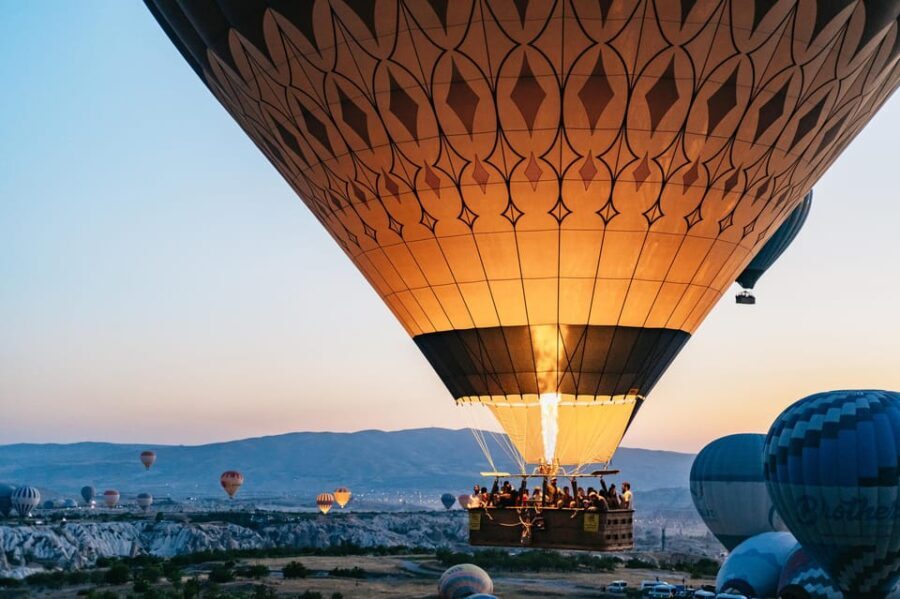
The default pick and what most travellers book. 60-70 minutes airtime, mid-size basket (typically 20-24 passengers), included hotel pickup, champagne breakfast, flight certificate. Solid reliable experience — the company rotates through multiple operators based on availability and weather. Our full review covers the operator quality differences.
2. Royal Balloon Ride (Viator) — from €260
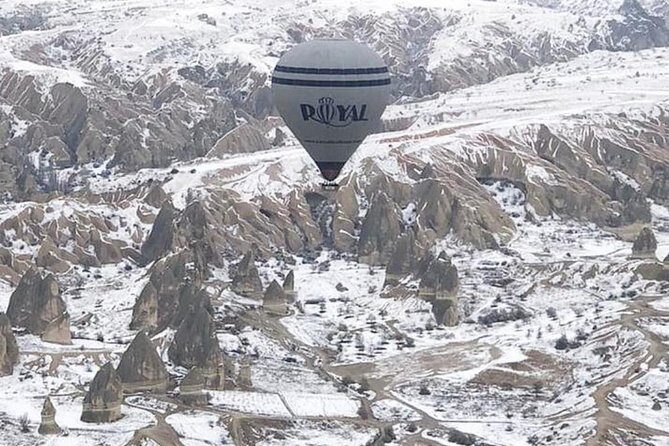
Premium operator, one of the most established Cappadocia balloon companies. Smaller baskets (12-16 rather than 20-28 passengers), more pilot interaction, consistently strong reviews. Slightly more expensive but the experience is noticeably different — you can hear the pilot’s commentary clearly and the basket doesn’t feel cramped. Full review.
3. Balloon Ride with Full Breakfast — from €220
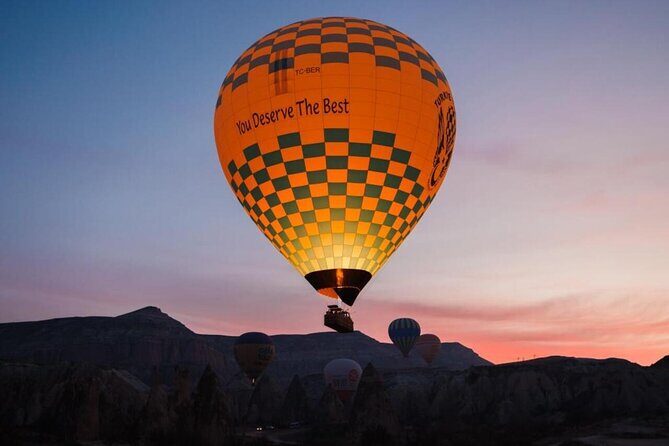
For visitors who specifically want more airtime. 90-minute flight (standard is 60-70), full buffet breakfast at a proper table instead of just champagne on the grass, hotel transfers both ways. Best for travellers who’d rather pay a bit more for a longer experience than rush through the flight. Our review compares it directly to the standard 60-minute flights.
A Short History of Cappadocia’s Balloons
Cappadocia’s commercial ballooning started in 1991 — three Swedes and a Turkish entrepreneur began offering tourist flights out of Göreme, branding the company “Kapadokya Balloons.” It was the first ballooning operation in Turkey. The pitch was obvious even then: the landscape was extraordinary, the morning air was consistently stable, and the region had almost no commercial aviation traffic to compete with.
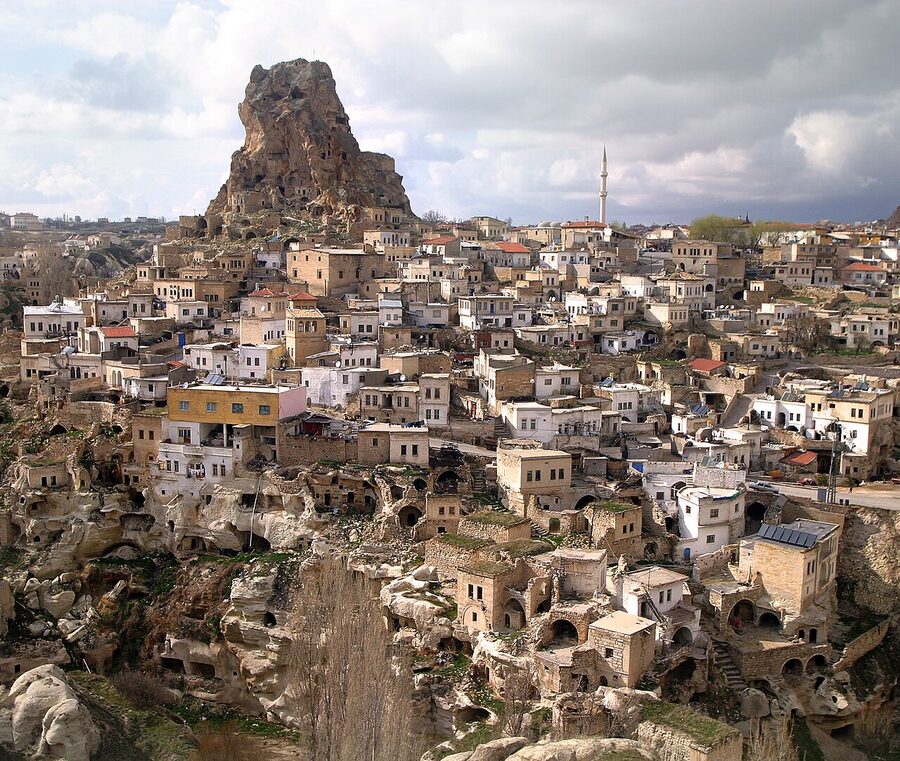

By the 2000s, a dozen companies were operating. By the 2010s, the Turkish civil aviation authority had to impose hard caps — too many balloons were flying the same windows, and near-misses were starting to happen. Today around 25 companies hold commercial permits. Civil aviation issues a daily maximum of balloons allowed aloft (around 150) to keep separation distances safe.
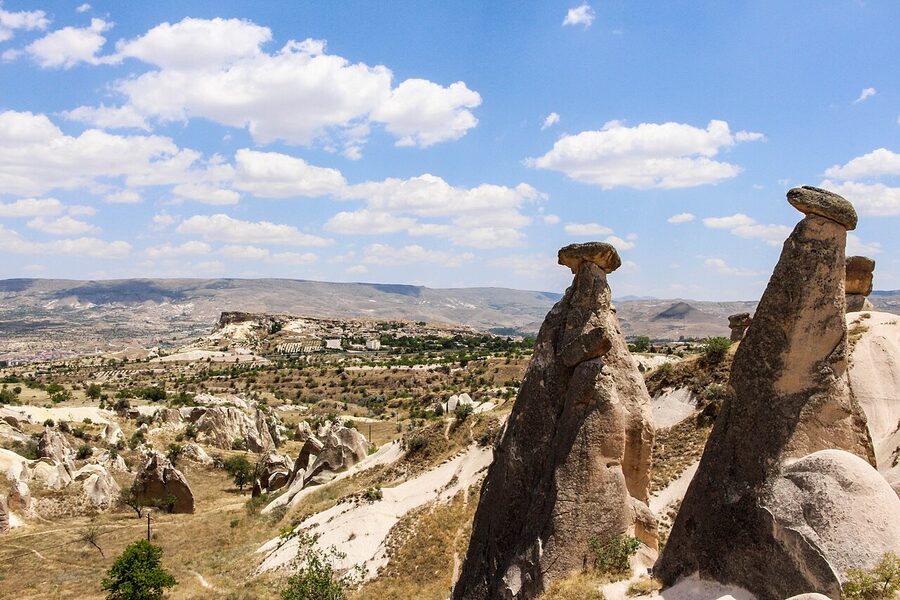
The rock formations the balloons fly over are a separate, much older story. Cappadocia sits on a layer of ignimbrite — compressed volcanic ash from eruptions at Mount Erciyes 9-10 million years ago. The soft ash eroded over millennia, leaving behind the harder basalt caps (and the softer rock directly underneath). That’s why every fairy chimney has a distinctive “mushroom” shape — a dark basalt cap on top, lighter rock tapering below.
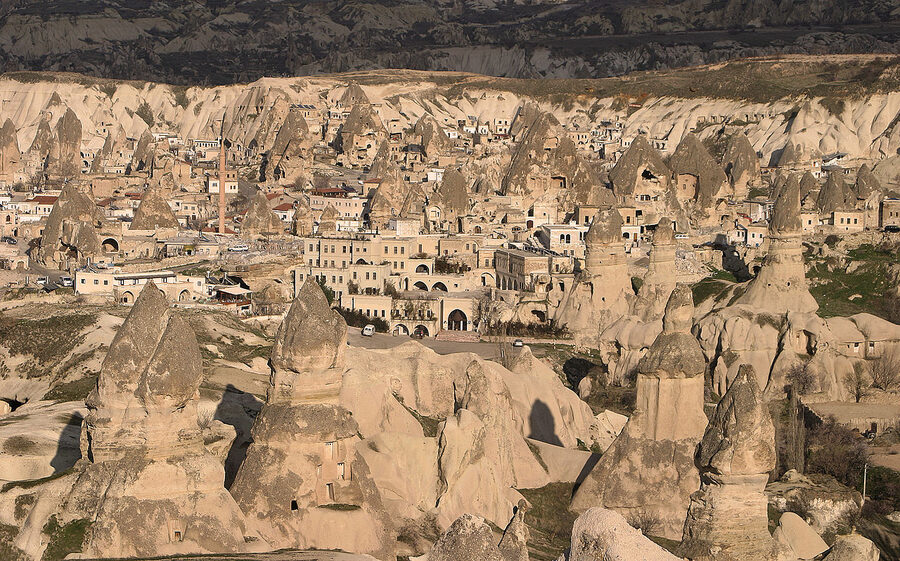

Humans arrived 4-5 thousand years ago and started carving the rock. By the Roman and Byzantine periods, thousands of dwellings and churches had been excavated directly into the cliffs. The famous Göreme Open Air Museum — the cluster of rock-cut Byzantine churches with preserved frescoes — is one of the world’s most important early-Christian monastic complexes. UNESCO World Heritage since 1985.
When you fly, you’re drifting over 10 million years of geology and 5,000 years of human occupation. The balloon pilots don’t always point it out, but that’s what’s underneath.
Best Time of Year to Fly


Flights run daily year-round weather permitting, but conditions vary dramatically by month:
April-May and September-October (best): stable mornings, mild temperatures, cancellation rate around 10-15%. Crowds manageable. This is the sweet spot.
June-August (good but busy): near-zero cancellation, long warm mornings, but maximum crowds in Göreme on the ground. Flights book out 2-4 weeks ahead in peak summer Saturdays.
November-March (unpredictable): cancellation rates hit 40-50% in mid-winter. Snow and fog are common. If you fly successfully in January over a snow-covered valley, the photos are unreal — but you might wait 3-4 days for a clear morning. Book a 4-night minimum to have backup days.
Absolute best: early October, snow-free but with the first hints of autumn. Early April, before peak crowds but after the winter cancellation rate drops. Weather-wise these two windows are statistically the most reliable.
To avoid: mid-August weekends (peak crowds, some fields overcrowded). Christmas-New Year (unreliable weather, everything surge-priced).
Why Cancellations Happen (and What You Can Do)
About 1 in 5 days across the year sees all flights cancelled. Causes:
Wind. Balloons can’t operate if surface winds exceed about 8 knots (15 km/h). Launch conditions in Göreme are usually calm but occasional weather fronts bring windy mornings.
Temperature inversions. If the valley air is significantly colder than the air above, thermals don’t behave predictably and pilots won’t fly.
Fog. Visibility below about 5km triggers automatic cancellation. Winter fog is the main cause of winter cancellations.
Rain or snow. Obvious.
What to do:
- Book at least 3 mornings in Cappadocia. If your flight is cancelled on your one available morning, you can’t reschedule.
- Book on your first available morning — if it’s cancelled, you still have backup days.
- Understand the refund process. Cancellations trigger automatic full refunds. GetYourGuide refunds to card within 5 business days; Viator similar.
- Some operators allow rebooking to a later morning at no charge. Check with your specific booking.
What to Wear
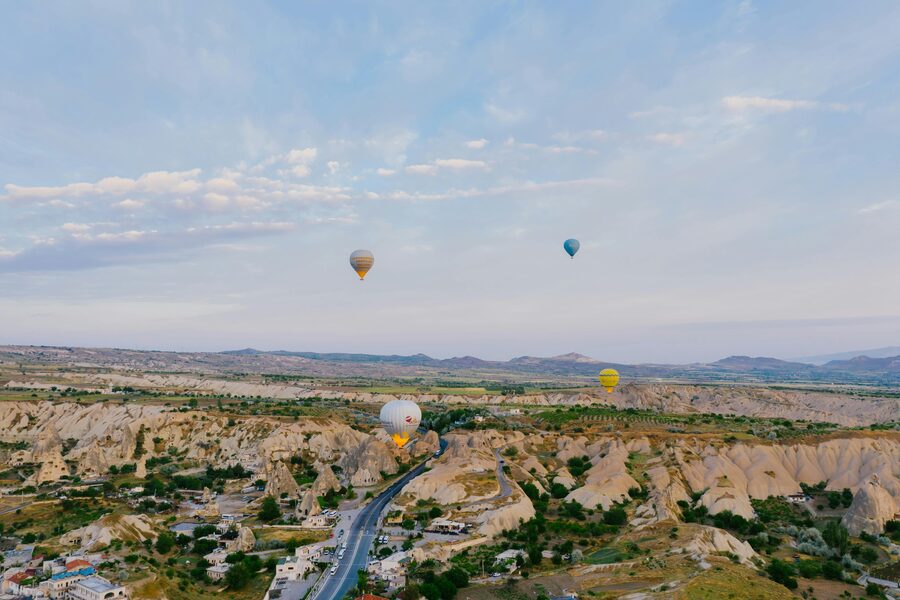
It’s cold at 4am in Cappadocia. Even summer mornings hit 8-12°C on the valley floor. Winter mornings can be -5°C. The basket itself warms slightly because of the burners, but not much.
Layer up. Thermal base layer, fleece mid-layer, windproof outer shell. You’ll take the outer shell off once the sun rises and the burner heat kicks in.
Closed-toe shoes. You’re walking on rough ground before launch; the basket step-over is 80cm high; landing can be a jolt. Sneakers or hiking shoes. No sandals.
Gloves and a hat. Especially important October-April.
Hair tied back. The burners throw heat upward. Loose hair can get briefly singed if you’re standing near the burner column.
Camera strap. Wrist or neck. Dropping a phone or camera out of a balloon at 200 metres ends badly. No exceptions.
Don’t: wear hats that blow off, carry backpacks that won’t fit between you and the basket wall, or bring a tripod (no room and the basket’s unstable footing).
Is It Safe?
Statistically yes, with known exceptions. Hot air ballooning in Cappadocia has had a few fatal incidents — most notably in 2013 when a balloon collision killed two people, and in 2017 when a hard landing caused injuries. The Turkish civil aviation authority tightened regulations significantly after the 2013 incident, imposing the daily balloon cap and stricter pilot licensing.
Modern statistics: roughly 500,000 people fly Cappadocia balloons each year. Fatal incidents in the past 10 years are in single digits — a fatality rate comparable to commercial aviation.
What helps: pick operators with good safety records. Royal Balloon, Kapadokya Balloons (the original 1991 operator), and Voyager Balloons are all long-established and well-regulated. Be wary of the very cheapest options (sub-€150) — some budget operators cut corners on basket weight limits or flight paths.
Insurance: built into your ticket via Turkish civil aviation requirements. Your own travel insurance usually covers balloon flights — check the policy for “recreational aviation” exclusions.
Getting to Cappadocia
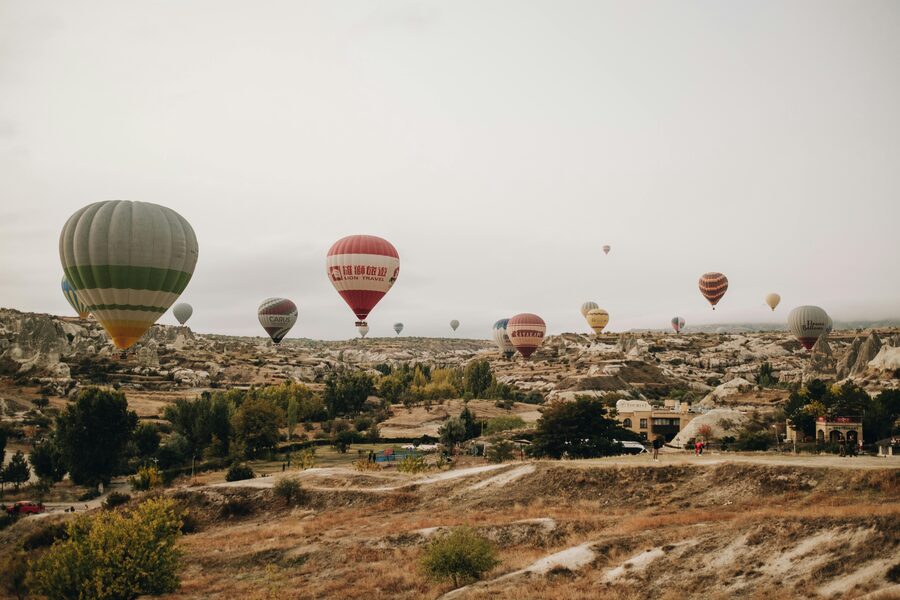
Cappadocia is not close to Istanbul. 700km away, in central Anatolia.
From Istanbul by plane: 1-hour flight to Kayseri (ASR) or Nevşehir (NAV) airport. €40-100 each way on Turkish Airlines or Pegasus. Rent a car or take the operator shuttle to Göreme (45-90 minutes).
From Istanbul by bus: 10-12 hour overnight bus to Göreme or Nevşehir. €25-50. Metro Turizm and Kamil Koç are the main operators. Surprisingly comfortable for a long bus.
Day trip from Istanbul: not feasible unless you take a flight-included tour. Our Cappadocia from Istanbul guide covers the day-trip options.
From Antalya: 6-hour drive or a short flight. A few 2-day tours bundle Antalya + Cappadocia — our Antalya tour guide covers the logistics.
Once in Cappadocia, stay in Göreme, Uçhisar, or Ortahisar. These three villages are where 90% of balloon pickups happen. A “cave hotel” is genuinely carved into the rock and costs €80-200/night for a comfortable mid-range room.
Photography
This is maybe the most photographed experience in Turkey. Some practical notes:
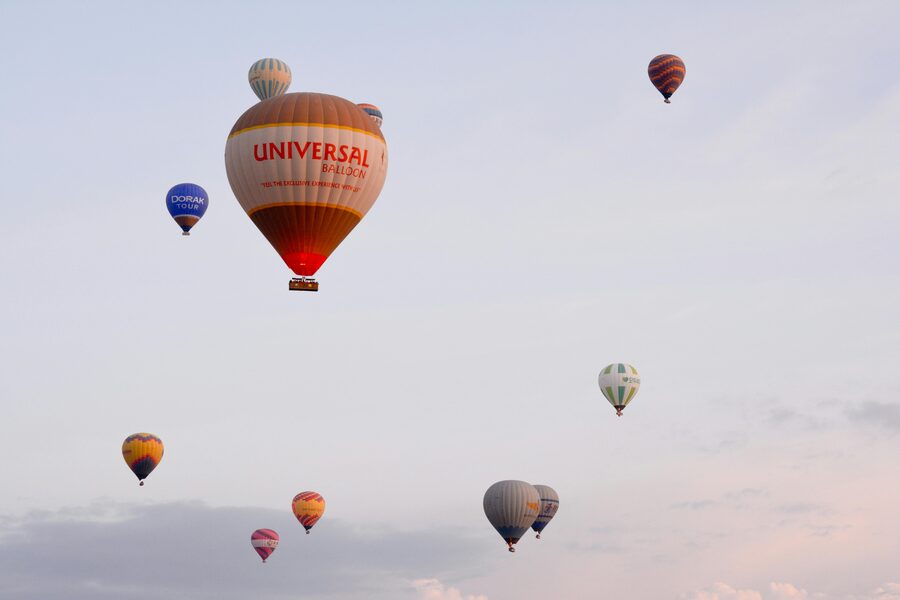
Phone vs camera. Phones work fine. A phone with a wide-angle (0.5x on iPhone) is actually better than most cameras for in-basket shots because you can fit the whole landscape without stepping backward.
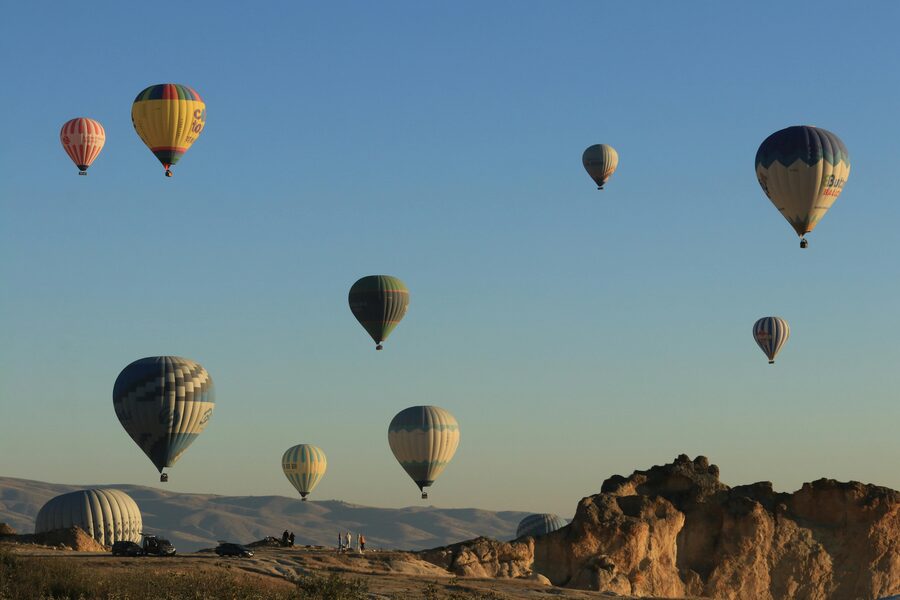
Best angles: other balloons slightly below yours, with the sunrise behind them. The silhouette effect is what makes the famous Cappadocia photos. Shoot with the sun behind you during the first 20 minutes of flight.
Timing: the best light is within the first 15 minutes after sunrise. Within 30 minutes the colours flatten and the magic is mostly over. Make sure you’re shooting in those first 15 minutes.
Phone strap. Mentioned above but worth repeating. Wrist strap, neck lanyard, or a phone case with a built-in loop. Dropping a phone over the edge at 300 metres is a guaranteed loss.
Video: 15-30 second clips work better than full flight recordings. Battery drains fast in the cold.
The ground shot. If you can’t fly — cancelled, schedule doesn’t work, budget — the consolation is that watching balloons from your hotel terrace is itself photogenic. Most Göreme cave hotels have rooftop terraces. At 5am with tea and a camera you can get 80% of the photos without the flight.
Combining Cappadocia With Other Turkey Stops
Most travellers include Cappadocia in a longer Turkey trip. Suggested pairings:
Istanbul + Cappadocia (the classic): 3 nights Istanbul, fly to Kayseri, 3 nights Cappadocia. See Hagia Sophia, Topkapi, Bosphorus in Istanbul (our Hagia Sophia guide and Topkapi guide have the booking details), then fly Cappadocia for the balloon and Göreme Open Air Museum. 7 days total.
Cappadocia + Pamukkale: central Turkey natural-wonders route. 5-6 hours between them. Cappadocia first (3 nights), Pamukkale’s travertine terraces second (1-2 nights). Our Pamukkale guide covers the logistics.
Cappadocia + Ephesus: if you’re interested in ancient history, these pair well thematically. Ephesus is the Greco-Roman remains, Cappadocia is Byzantine Christian. Our Ephesus guide.
Cappadocia deep dive (3-4 nights): balloon + Göreme Open Air Museum + Kaymaklı underground city + Ihlara Valley hike + a pottery workshop in Avanos. That’s a proper visit, not a flyby.
Other Things to Do in Cappadocia (Besides the Balloon)
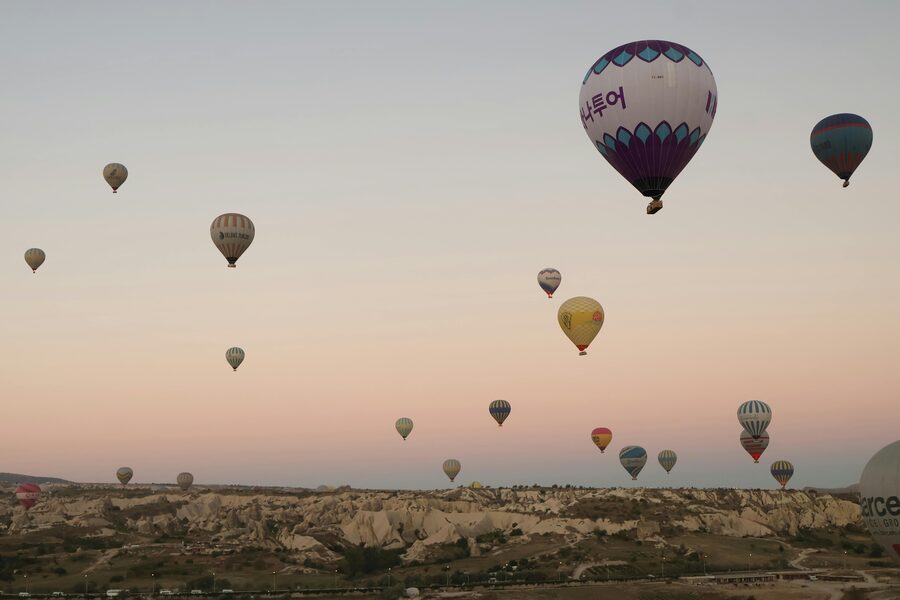
Göreme Open Air Museum: cluster of 10th-12th century Byzantine rock-cut churches with preserved frescoes. €10 entry, 2 hours. Non-negotiable if you’re in Cappadocia.
Uçhisar Castle: massive carved rock fortress with 360° views. €4, 30-45 minutes.
Kaymaklı or Derinkuyu underground cities: multi-level underground shelters carved by early Christians hiding from raids. 8 levels deep at Derinkuyu; claustrophobic and fascinating. €10, 1-2 hours.
Ihlara Valley hike: 14km canyon with dozens of rock-cut churches. Full day. For hikers.
ATV or horseback tours through the valleys: alternative ways to see the landscape. Popular — see our Cappadocia ATV guide.
Green Tour (full-day guided): covers the south-west Cappadocia sites (Derinkuyu, Ihlara, Selime Monastery) in one day. See our Cappadocia Green Tour guide.
Pottery workshop in Avanos: Avanos is the pottery town, producing Hittite-style ceramics for 4,000 years. Workshops run daily at €15-30.
Food and Drink
Cappadocia isn’t a food destination the way Istanbul is, but a few places consistently deliver:
Topdeck Cave Restaurant (Göreme): Turkish classics in a genuine cave setting. €15-25 for a main. Book ahead on weekends.
Seten Restaurant (Göreme): modern Turkish done properly. €25-40 per person. Impressive wine list.
Ziggy Cafe (Göreme): casual, long mezze platters, good for a relaxed dinner. €20-30.
Testi kebab: a regional dish — meat stew sealed inside a clay pot, baked for hours, cracked open at your table. Available at most Cappadocia restaurants.
Post-balloon champagne breakfast: this is the only meal where the operator handles it. Expect basic pastries, fruit, champagne (actually Turkish sparkling wine, but no one complains), coffee.
Accessibility
The balloon itself is not accessible for wheelchair users. The basket step-over is 80cm high and you stand for the entire flight. Most operators don’t accept passengers who can’t stand unassisted for 90 minutes.
Some visual-impairment accommodations are possible — the pilot gives verbal cues and the experience is largely tactile (warmth from burner, movement of basket) — but you’d need to coordinate with a specific operator ahead of time.
Pregnancy: most operators don’t fly pregnant passengers past the first trimester. Check the specific operator’s policy when booking.
Kids: minimum age varies by operator. Usually 6+ with the caveat that they need to be tall enough to see over the basket edge (approximately 130cm / 4’3″) without climbing on anything. Under-12s need an adult in the same basket compartment.
What Most Guides Don’t Tell You
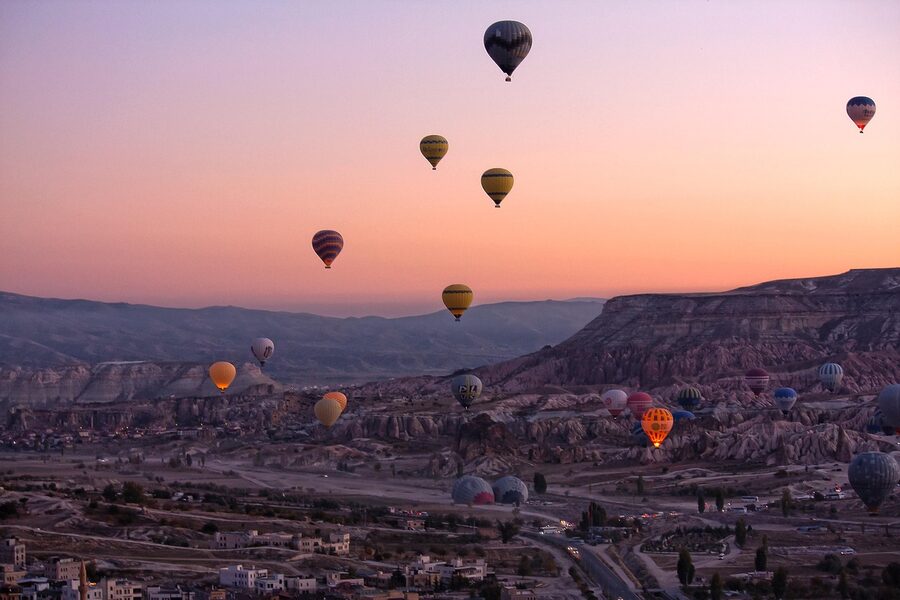
The morning drags before the flight. 3:30am pickup, waiting around in the dark, tea at the office, 30-minute drive, then 25-minute inflation. You’re in the air after about an hour and a half of semi-organised waiting. The actual flight is electric, but the pre-flight isn’t.
You can’t choose your basket position. Pilots balance the basket by passenger weight. You’ll be placed wherever they tell you. Some people get view-side, some get pilot-side with less view.
Landing varies hugely. Calm morning = gentle grass landing. Windy morning = basket tips on its side (not dangerous but startling). Pilots will brief before landing.
The flight certificate is cheesy but kids love it. Expect a laminated certificate with your name and the date. Adults quietly throw it away; children keep it on the fridge for a decade.
Balloon + cave hotel = Instagram tourism. Half the people on your flight are there for the photo, not the experience. The pilot knows this. You’ll be asked to queue for “good” position shots; nobody complains.
Your hotel can often get cheaper prices. Many cave hotels have direct relationships with balloon operators and can book flights at a 10-20% discount versus online rates. Ask at check-in.
Common Mistakes
Booking only one morning. Cancellations are common enough that a single-morning booking has a 20-30% chance of disappointment. Minimum 3 mornings in Cappadocia.
Picking the cheapest option. Sub-€150 operators exist but usually mean larger baskets (up to 30 passengers), rushed flights, less pilot interaction. The premium operators (€220-280) are worth the upgrade for most people.
Over-packing for the basket. Phone, wallet, light jacket. That’s it. No backpack; no separate camera bag. Keep your hands free.
Arriving in Cappadocia the night before a planned flight. You’ll be jet-lagged and exhausted. Arrive at least 2 nights before your planned flight — gives you a day to adjust.
Flying without dressing warmly. It’s cold. Even in July. Layer up.
Not checking winter weather. If you’re planning a January balloon, check historical cancellation rates for that exact week. Some weeks have 60% cancellation.
The Short Version
Book the Göreme Sunrise Flight (€190) for your first morning in Cappadocia; stay at least 3 nights so you have weather backup days; dress warmly even in July; secure your phone with a strap. Pair the balloon with Göreme Open Air Museum and a Green Tour to justify the flights from Istanbul.
If this is your one chance in Turkey to fly over an alien landscape, don’t cut the budget — the Royal Balloon or Breakfast-upgrade options are both worth the extra €30-80. The balloon is the reason most people come to Cappadocia; spend enough to do it properly.
Affiliate disclosure: Some links in this article are affiliate links. If you book through them we may earn a small commission at no cost to you. All recommendations are based on my own visit.