
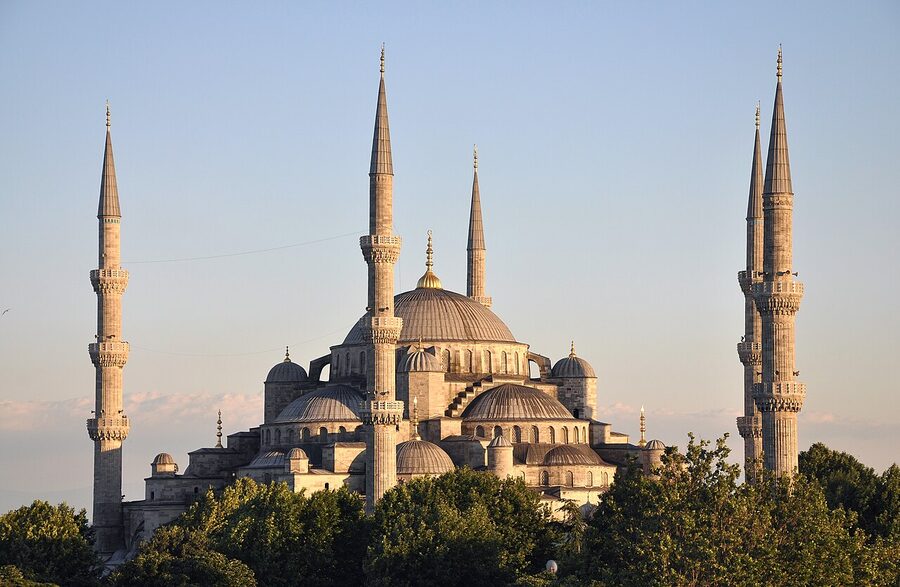
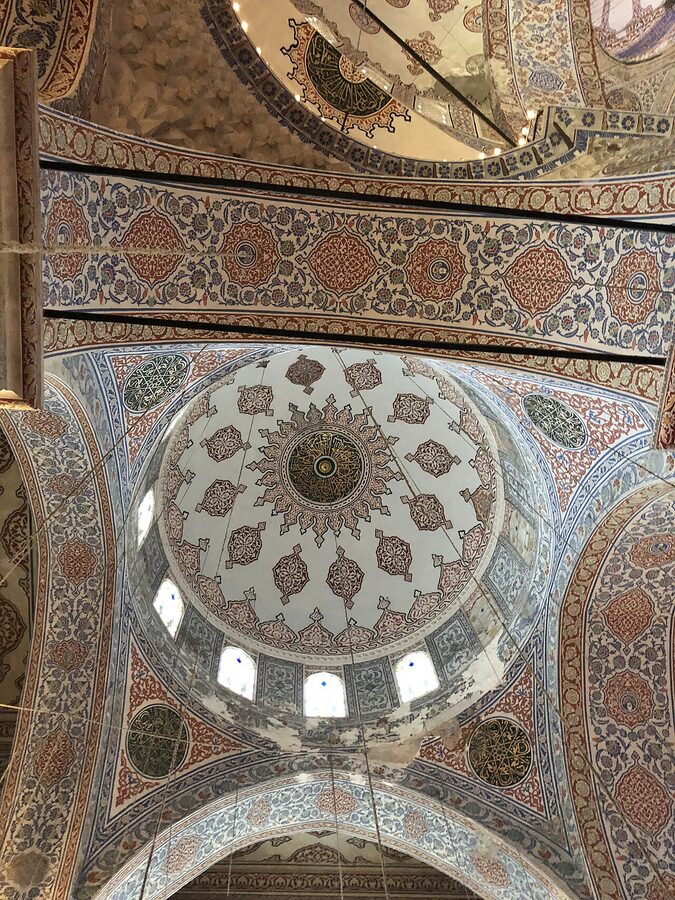
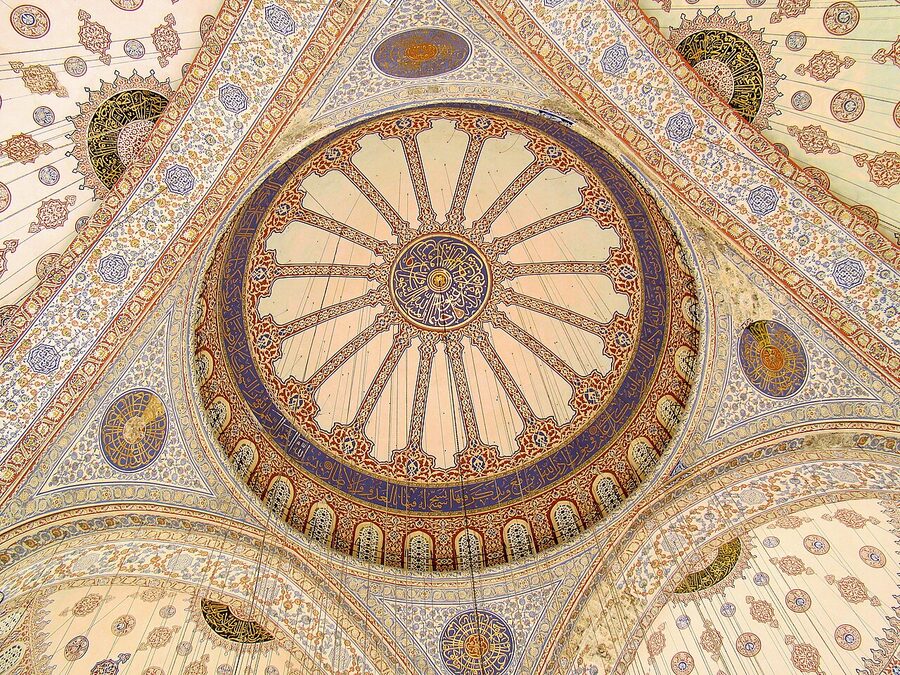
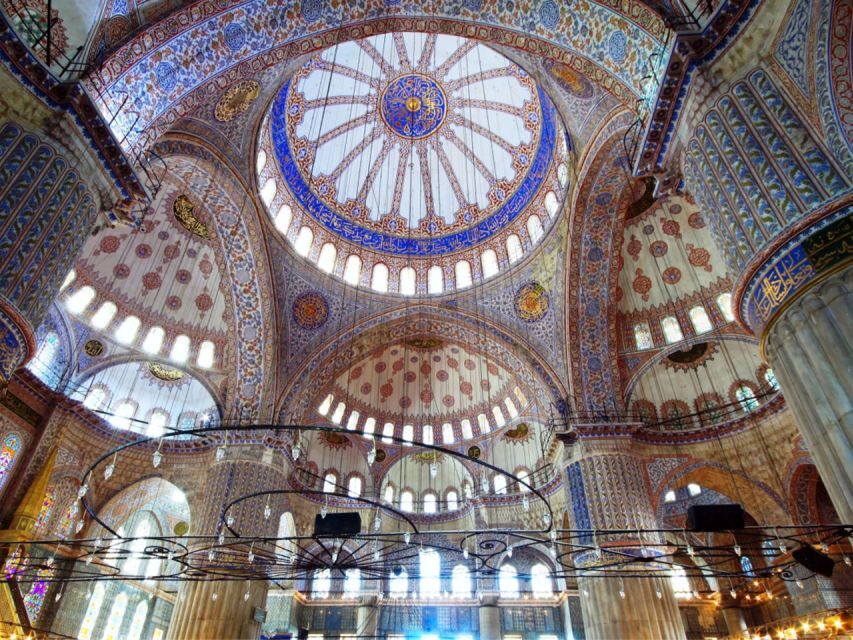
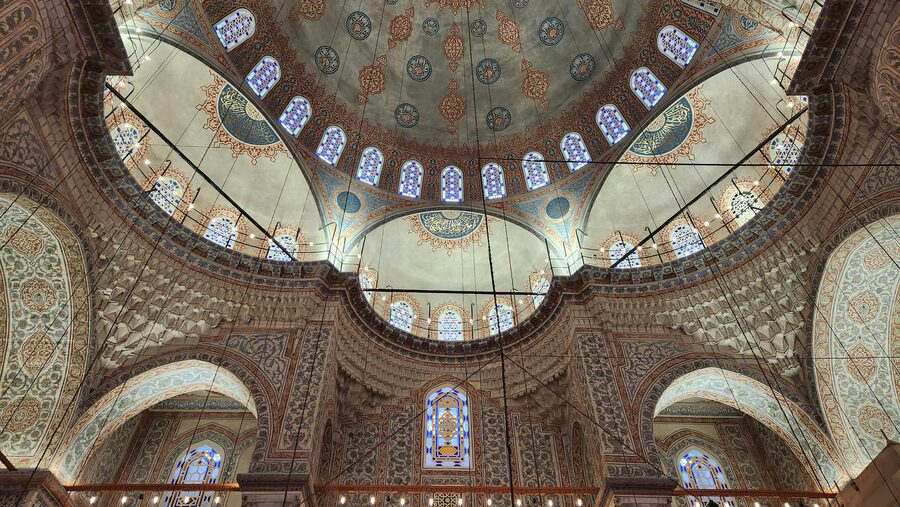
The Blue Mosque is grey stone from outside — the same Ottoman limestone as half the mosques in Istanbul. Step inside, look up, and the ceiling pulses with cobalt blue, tulip patterns, and turquoise arabesques across 20,000 hand-painted Iznik tiles. The name only makes sense from the floor of the prayer hall, head tilted back.

Entry is free. A standard visit takes 20-30 minutes inside (longer if the tile work draws you in). The mosque closes to tourists for 90 minutes during each of the five daily prayers, which matters for planning. Most visitors combine it with Hagia Sophia across the square — the two are a 5-minute walk apart and together define Sultanahmet’s skyline.


In a Hurry?
- Best overall: Blue Mosque Guided Tour — 45-60 min tour with a licensed guide. Makes the iconography make sense.
- Best combo: Blue Mosque + Hagia Sophia Guided Tour — the two defining Sultanahmet landmarks on one tour, about 2 hours.
- Best full morning: Blue Mosque + Hagia Sophia + Basilica Cistern — three headline sites in 3 hours. The standard first-day itinerary.
- In a Hurry?
- What You See Inside
- The Three Tour Options
- 1. Blue Mosque Guided Tour — from €25
- 2. Blue Mosque + Hagia Sophia Guided Tour — from €45
- 3. Blue Mosque + Hagia Sophia + Basilica Cistern — from €65
- A Short History — Why It Exists
- Prayer Times and When It’s Closed to Tourists
- Dress Code and Etiquette
- When to Visit
- Pairing with Other Sultanahmet Sites
- Photography Tips
- Getting There
- Accessibility
- Food and Drink Nearby
- Common Mistakes
- Best Viewing Spots (Without Entering)
- Tips the Official Guides Won’t Tell You
- The Short Version
What You See Inside
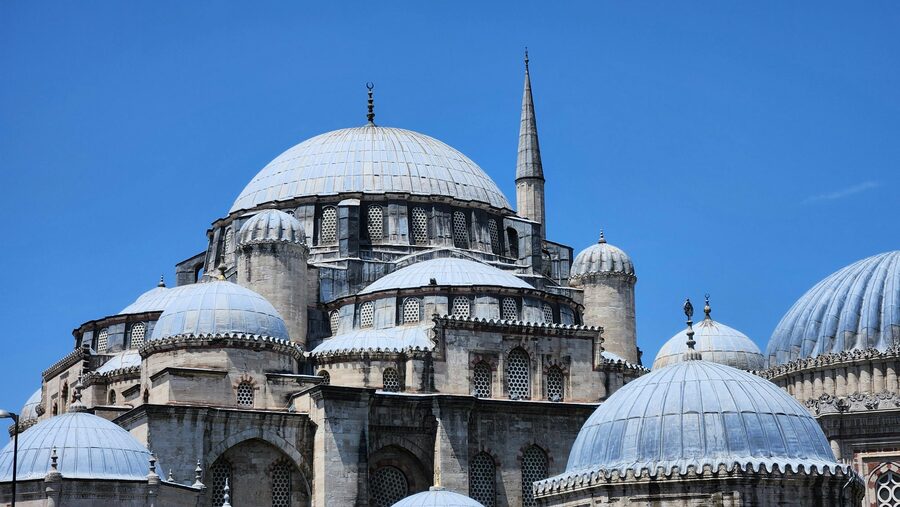
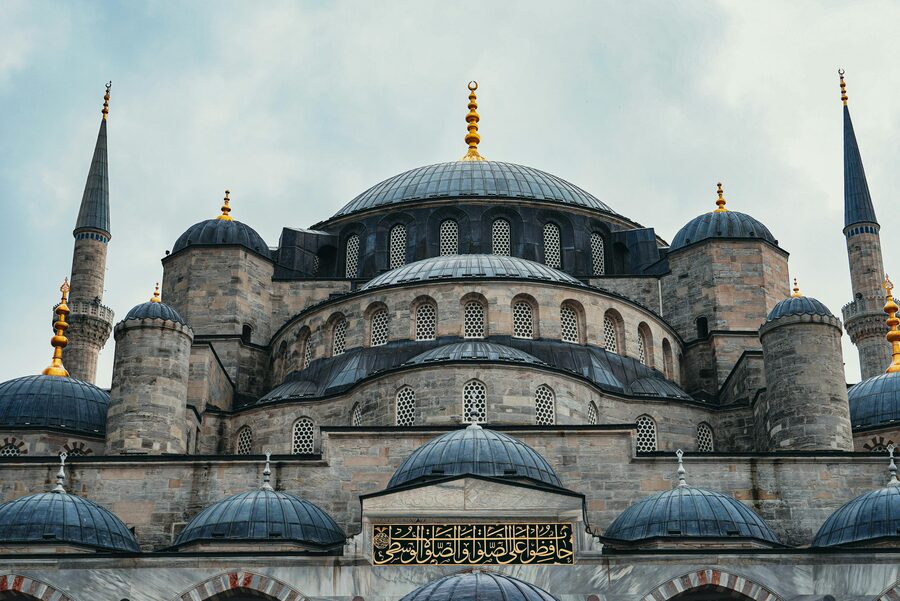
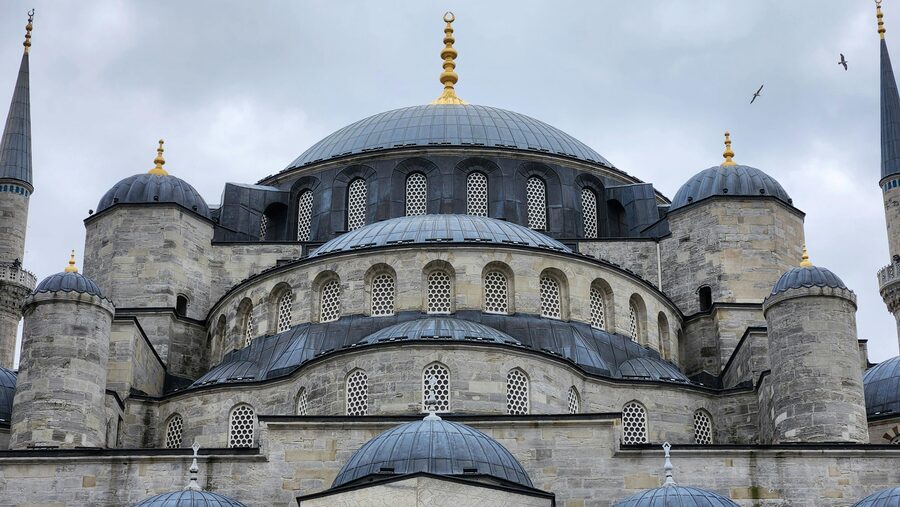
The mosque layout follows the classical Ottoman imperial pattern: a square-plan prayer hall covered by a central dome, supported by four massive “elephant feet” columns, flanked by semi-domes on all four sides. Architect Sedefkâr Mehmed Ağa designed it as a direct architectural response to Hagia Sophia across the square, which had been the template for Ottoman mosque-building since the 1450s.
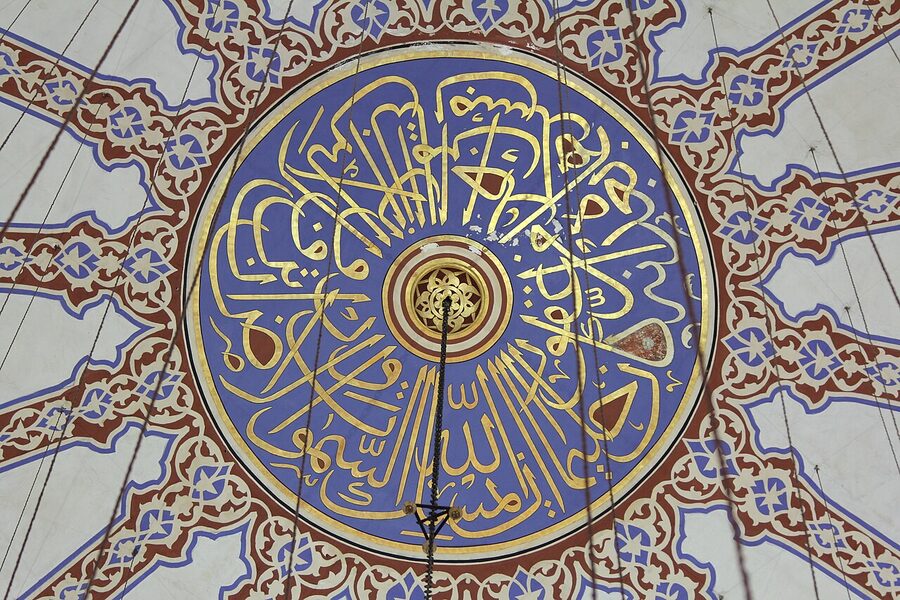

The Iznik tiles. 20,000-ish tiles across 50+ designs, handmade in the Iznik kilns between 1609 and 1617. Styles range from tulip patterns (tulips were a major Ottoman symbol of wealth and virility) to cypress trees (symbolising eternity) to abstract arabesques. The tile work concentrates on the upper galleries and around the central dome — lower walls are mostly plain stone.
The windows. 260 originally, with stained glass imported from Venice in the 1610s. Most of those originals were replaced over the centuries because stained glass degrades. The current windows are 20th-century copies — still impressive, but not the 1617 originals.
The mihrab and minbar. The mihrab (the niche pointing toward Mecca) is carved from a single block of white marble. The minbar (pulpit) to its right is also marble — Friday sermons are still delivered from it.
The royal loge (hünkar mahfili). A raised screened balcony where Ottoman sultans attended prayer separately from the public. Now closed to visitors but visible from the main hall.
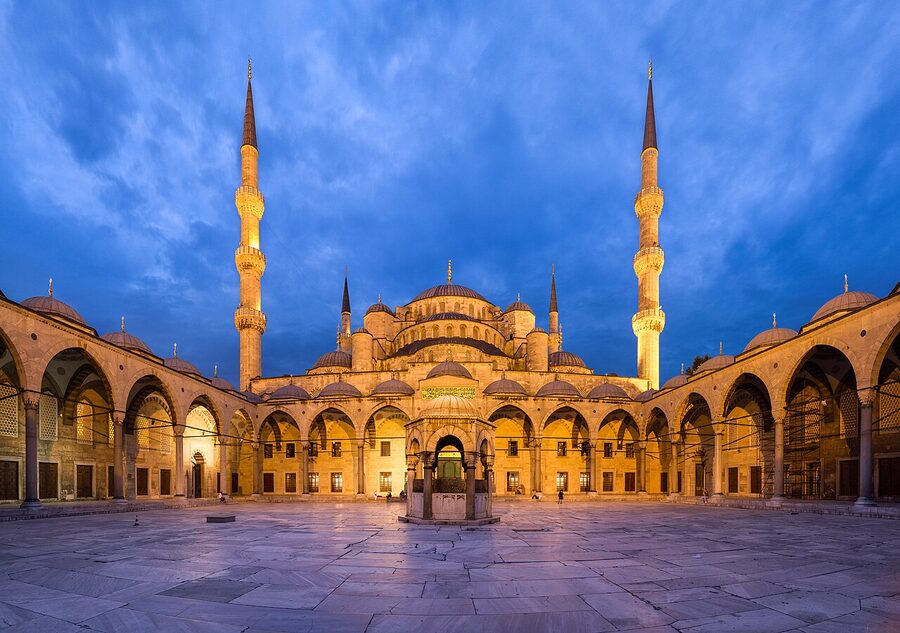
The courtyard (avlu). The outdoor courtyard through which you enter is itself a significant space — 40 domes surrounding a central ablution fountain. Most tourists rush through it in 20 seconds; it’s worth 5 minutes before you go inside.

The Three Tour Options
1. Blue Mosque Guided Tour — from €25
For first-time visitors who want the context. The tile imagery is heavy with symbolism you won’t decode on your own, and the six-minaret controversy is the kind of story that makes the building come alive. 45-60 minutes, small groups, entry is still free so this is essentially paying for the guide. Our full review covers guide quality.
2. Blue Mosque + Hagia Sophia Guided Tour — from €45
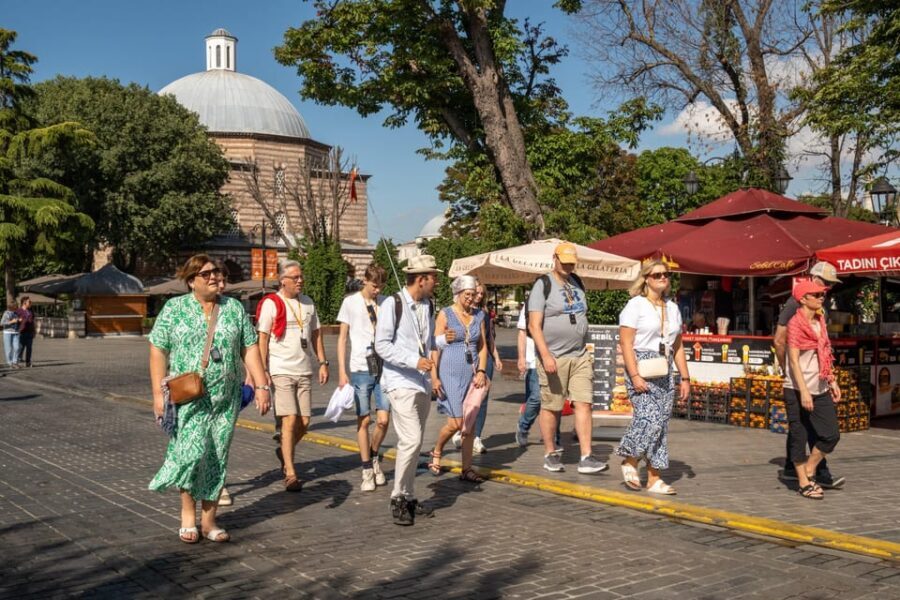
The logical pairing. Hagia Sophia was built in 537 as a Byzantine cathedral; the Blue Mosque was built 1,080 years later as a deliberate Ottoman response to it. Seeing them with a guide who can draw the architectural connection is far more rewarding than two separate visits. Skip-the-line entry at Hagia Sophia included. Our Hagia Sophia guide has the ticket-specific details.
3. Blue Mosque + Hagia Sophia + Basilica Cistern — from €65
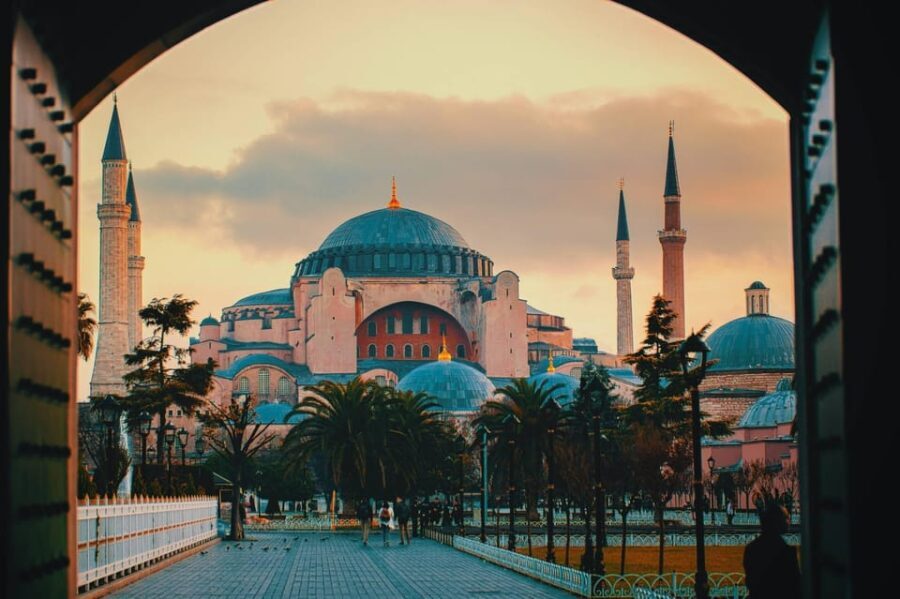
For the efficient first morning. The three sites are within a 10-minute walk of each other and the guided format saves you the queue-and-research time. Adds the Basilica Cistern (our Basilica Cistern guide) — the 6th-century underground Roman water system with the Medusa heads. 3 hours total.
A Short History — Why It Exists
Sultan Ahmed I commissioned the mosque in 1609 at age 19. He was three years into his reign, and the Ottoman Empire was in a difficult spot — recent military defeats against the Safavids and the Habsburgs had damaged the empire’s prestige. An imperial mosque commission was a traditional way for a sultan to restore public standing. The problem: tradition said imperial mosque construction should be funded by spoils of victory in war. Ahmed I had no such victories.
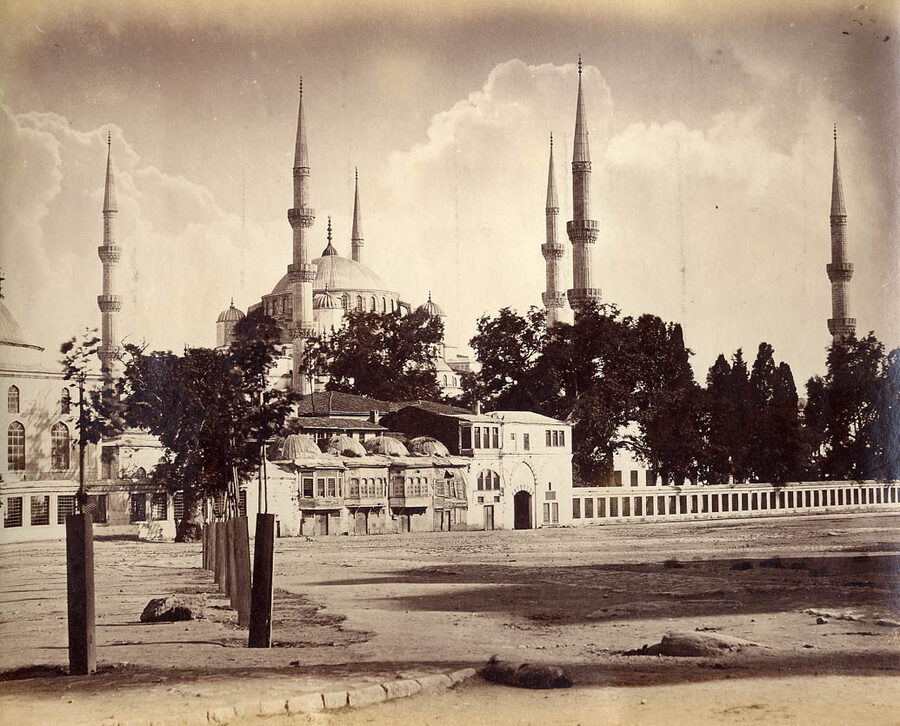

He funded the mosque from the imperial treasury anyway, which drew criticism from Islamic jurists. He persevered. Construction began in 1609, took eight years, and employed thousands of workers. The site he chose — on the former Byzantine Great Palace grounds, directly facing Hagia Sophia across the Hippodrome — was the most politically loaded location in the city. Ahmed was making a statement: the Ottoman mosque would stand face-to-face with the Byzantine cathedral that had defined Istanbul for 1,100 years.
The architect was Sedefkâr Mehmed Ağa, a student of the legendary Mimar Sinan (architect of the Suleymaniye Mosque). Mehmed Ağa had spent 30 years as Sinan’s apprentice and chief architect; the Blue Mosque is widely considered his masterpiece.
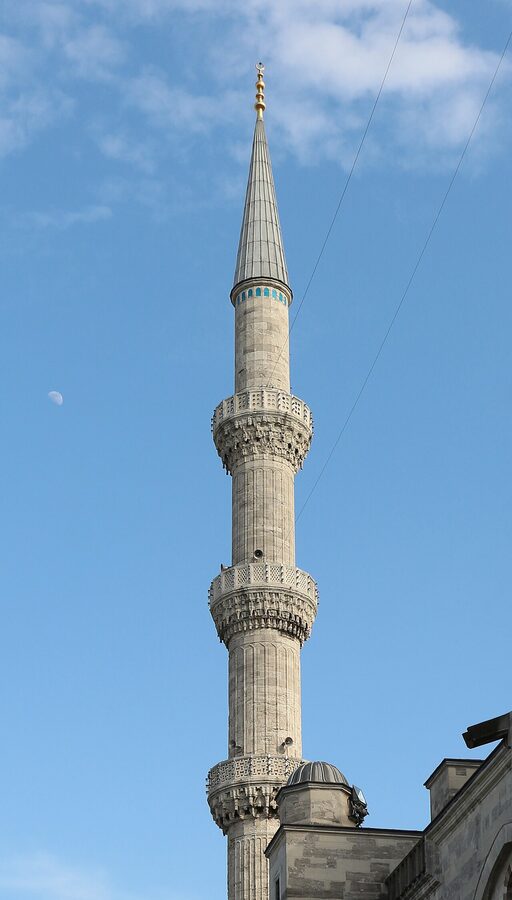
The six-minaret controversy. When designs were finalised, Ahmed specified six minarets. This was unprecedented for an Ottoman mosque. More importantly, it matched the six minarets of the Masjid al-Haram in Mecca — Islam’s holiest site. Religious authorities protested: no mosque should match the Kaaba’s minaret count. Ahmed’s solution was characteristically Ottoman: he funded a seventh minaret at Mecca, restoring the hierarchy while keeping his six.
The mosque opened in 1617. Ahmed I died the same year — he was 27. He’s buried in a small tomb on the mosque grounds, along with three of his sons.

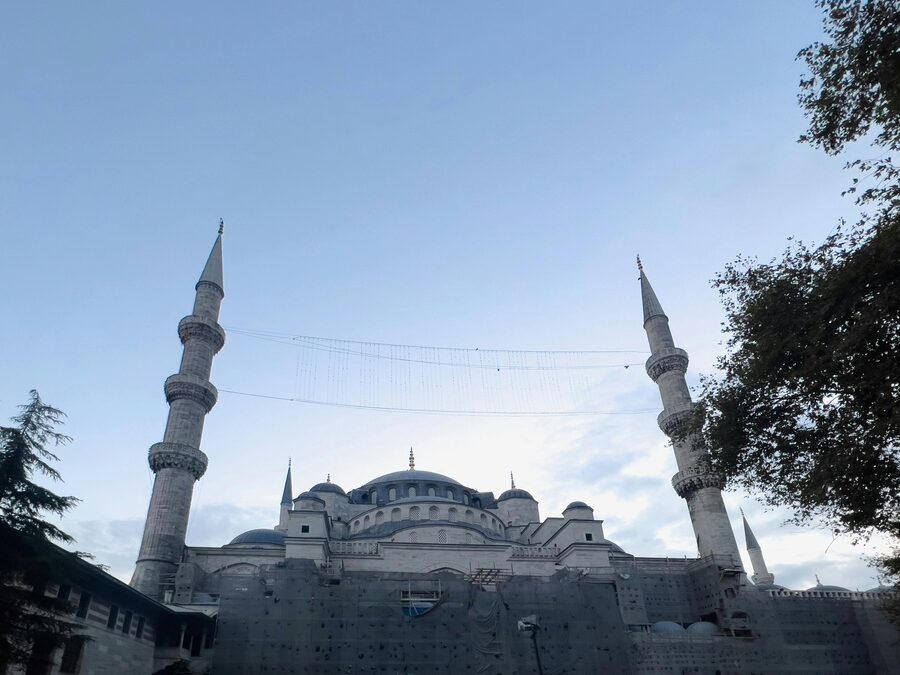
The mosque has been in continuous use since 1617. It survived the Ottoman collapse, the founding of modern Turkey in 1923, decades of earthquake damage, major restorations in the 1970s, and a full interior restoration from 2018 to 2023. The recent restoration was controversial — some heritage experts argued that the cleaning work removed too much historical patina — but the building itself is now structurally sound for another few hundred years.
Prayer Times and When It’s Closed to Tourists
The Blue Mosque is a working mosque. It closes to tourists 90 minutes around each of five daily prayers:
Fajr (dawn) — usually 4:30-6:30am depending on season. Mosque closed to tourists until after morning prayer ends, roughly 7am.
Dhuhr (midday) — around 12:30-1:00pm. Closed for about 90 minutes, reopens around 2:00-2:30pm.
Asr (afternoon) — around 3:30-5:00pm depending on season. Closed for about 90 minutes.
Maghrib (sunset) — just after sunset. Closed for about 45 minutes.
Isha (evening) — about 90 minutes after sunset. Closed for about 45 minutes, then the mosque is closed for the night.
Friday noon prayer (jumu’ah) — the big one. Closed to tourists from about 11:30am to 2:30pm. Avoid Friday mornings for a Blue Mosque visit.
Check exact prayer times for your visit date at namazvakitleri.diyanet.gov.tr (Turkish Presidency of Religious Affairs).
Dress Code and Etiquette
As a working mosque, the Blue Mosque enforces dress code:
Women: head covered, shoulders and knees covered, no tight clothing. The mosque loans headscarves free at the entrance if you don’t have one.
Men: shoulders and knees covered. No shorts, no sleeveless shirts. Robes are loaned if needed.
All visitors: shoes off before entering the main prayer hall. Plastic shoe bags are provided; you carry them with you.
Silence: keep voices low. No talking in the main hall during prayer times (when tourists shouldn’t be there anyway). Normal voice volume outside prayer.
Photography: allowed, no flash. Don’t photograph people praying. Don’t photograph the worshippers’ section (behind a low wooden barrier).
What’s not allowed: eating, drinking, sitting on the carpet with your back to the mihrab, pointing feet at the mihrab when seated.
Where tourists enter: the northwest (Hippodrome-side) gate. There’s a dedicated tourist entrance with the shoe-bag and headscarf stand. Don’t try to enter through the worshippers’ gates — staff will redirect you.
When to Visit
Best time of day: right after a prayer closure ends, when the crowds haven’t built up yet. For morning visits, aim for around 8:30am (30 minutes after Fajr closure ends). For afternoon, aim for 2:00pm (right after Dhuhr reopening).
Worst times: Friday morning (closed 11:30-2:30 for jumu’ah plus pre-prayer prep), Saturday midday in summer (peak cruise ship and tour group window), early evening on weekends.
Best season: April-May or September-October. The mosque itself is fine any season (interior is climate-stable), but Istanbul weather makes pairing with outdoor Sultanahmet walking more pleasant in shoulder season.
Light inside: the stained-glass windows cast coloured light into the main hall. Best colour effects are mid-morning (9-11am) and mid-afternoon (2-4pm) when sun angles are low enough to make the windows glow.
Pairing with Other Sultanahmet Sites
The Blue Mosque sits at the centre of Istanbul’s densest concentration of major attractions. All within 10 minutes’ walk:
Hagia Sophia — directly opposite across the Hippodrome. Our Hagia Sophia guide has ticket details.
Basilica Cistern — 3 minutes’ walk, 6th-century Roman underground water system with the Medusa-head column bases. Our Basilica Cistern guide.
Topkapi Palace — 5 minutes’ walk, the Ottoman sultans’ primary residence from 1465-1853. Our Topkapi Palace guide.
Hippodrome — the Roman/Byzantine chariot-racing track that predates everything. Free, outdoor. 10 minutes walking through.
Grand Bazaar — 10-minute walk north. Not free-entry but tour-accessible. Part of several of the Blue Mosque combo tours.
Turkish Bath — several traditional hamams are within 10 minutes’ walk. See our Turkish bath guide.
Old City walking tour — if you want a guided overview of the whole Sultanahmet district, our Old City walking tour guide covers it.
Bosphorus cruise — best after Sultanahmet sightseeing. Our Bosphorus cruise guide.
Photography Tips
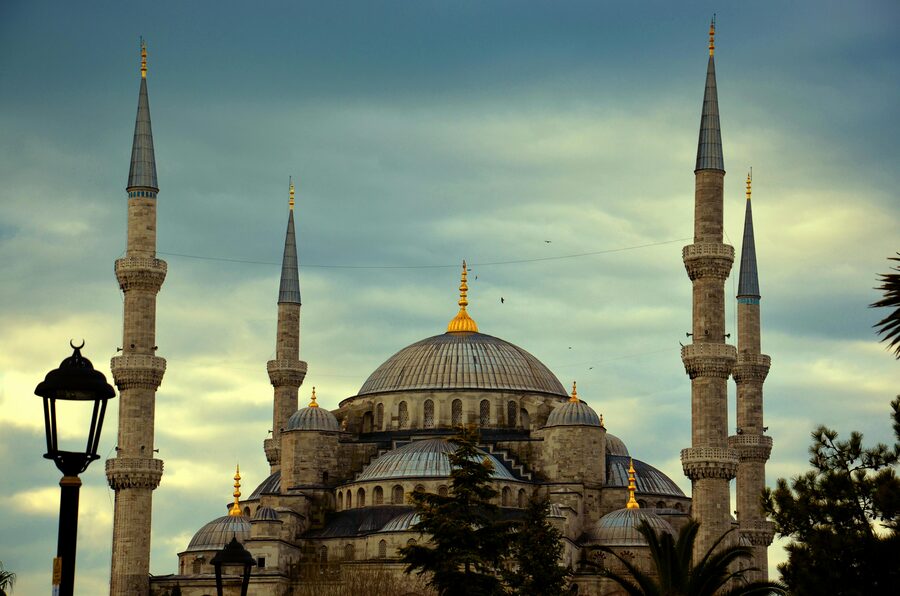
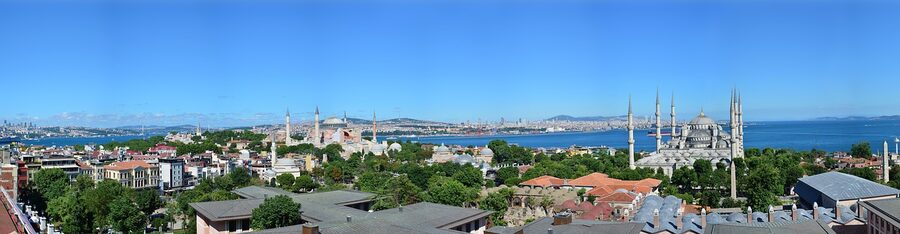
Exterior: the best shot is from the southern end of Sultanahmet Square, where you get all six minarets and the dome cluster in one frame. Morning light (before 10am) hits the facade evenly. Sunset throws a warm glow on the stone — photographers cluster here in the last hour before sunset.
Interior: wide-angle lens essential. The dome only fits in frame if you can get a 14-16mm equivalent (iPhone 0.5x works). Shoot from the centre of the main hall, pointed up.
Tile close-ups: the upper galleries have the best tile work. Shoot upward; don’t use flash (it flattens the tile glazes).
Avoid: photos of people praying, photos of the worshippers’ section, photos that include women’s faces in the gallery. General courtesy and the mosque staff will both reinforce this.
Exterior from above: the Seven Hills Restaurant rooftop (10 minutes’ walk) has the best rooftop view of the Blue Mosque + Hagia Sophia pairing. Worth a coffee and 30 minutes for the shot.
Getting There
From Taksim area: tram T1 to Sultanahmet stop (about 15 minutes). Then 2-minute walk.
From Grand Bazaar: 10 minutes’ walk southeast through Beyazit Square.
From Hagia Sophia: 2 minutes’ walk across Sultanahmet Square.
From the ferry terminals (Eminönü): 10 minutes’ walk uphill, or tram T1.
From Istanbul Airport: Metro M11 + tram, about 1h10m. Or taxi (€20-30, 45 min).
The Blue Mosque sits inside the mostly-pedestrian Sultanahmet zone. Don’t bother with cars.
Accessibility
The Blue Mosque has step-free access at the tourist entrance. The main prayer hall is large and open — easy to navigate with a wheelchair. The carpet surface is slightly uneven but navigable.
Shoe-removal for wheelchairs: wheels are wiped with clean towels provided at entry; you don’t need to remove anything.
Deaf/hard-of-hearing visitors: the visual experience translates well without audio; most tour operators can provide written materials or text-based guides on request.
Visual impairments: the architecture is sound-resonant (especially during the call to prayer) so the acoustic experience is strong even without vision. Some touch-accessibility is permitted for specific marble details — ask staff.
Food and Drink Nearby
Sultanahmet has plenty of restaurants, most tourist-priced but some genuinely good:
Matbah Restaurant: 3 minutes’ walk, Ottoman palace cuisine (recipes from the Topkapi archives). €35-50 per person. Book ahead.
Seven Hills Restaurant: 10 minutes, rooftop terrace with the iconic Blue Mosque + Hagia Sophia view. €25-40. Worth it for the view.
Deraliye Ottoman Palace Cuisine: 5 minutes, authentic Ottoman-era dishes, reservation essential. €25-35.
Sultanahmet Köftecisi: 3 minutes, famous for köfte (Turkish meatballs). €10-15 for a proper meal. Istanbul institution since 1920.
Hafiz Mustafa 1864: classic Turkish sweets and baklava. 5 minutes from the Blue Mosque; multiple locations in Sultanahmet.
Common Mistakes
Arriving during a prayer closure. The most common frustration — arriving at 12:45pm to find it closed until 2:30pm. Check prayer times online before you leave your hotel.
Friday morning visit. It’s closed for jumu’ah from 11:30 to 2:30. If Friday is your only day, come early morning (8:30) or after 3pm.
Dress code surprise. Arriving in beach shorts or a tank top in summer and being asked to cover up. Loaner clothes are available but they’re not stylish. Plan your outfit.
Skipping the courtyard. Most tourists rush into the main hall. The 40-dome courtyard is itself a major architectural space — give it 5 minutes before you go inside.
Confusing it with the Suleymaniye Mosque. They’re both huge Ottoman imperial mosques in Istanbul. Suleymaniye is larger and on a hill; Blue Mosque is smaller and on Sultanahmet Square. Both are worth visiting, but they’re different buildings.
Thinking the Iznik tiles are the whole story. The stained glass, the royal loge, the courtyard’s inscriptions in Arabic over the gates, and the architectural response to Hagia Sophia are all part of why the mosque matters. The tiles are famous but they’re one element among several.
Best Viewing Spots (Without Entering)
If the mosque is closed during your visit, or you want an iconic photo before going in, these spots work:
Sultanahmet Square, south end: all six minarets in one frame, classic postcard shot.
Between the Blue Mosque and Hagia Sophia: look back for the best “two icons” shot.
Seven Hills Restaurant rooftop: rooftop view from above. €8 coffee buys you the access.
Eyüp Sultan hill (25 min by taxi): panoramic view of all Sultanahmet from across the Golden Horn.
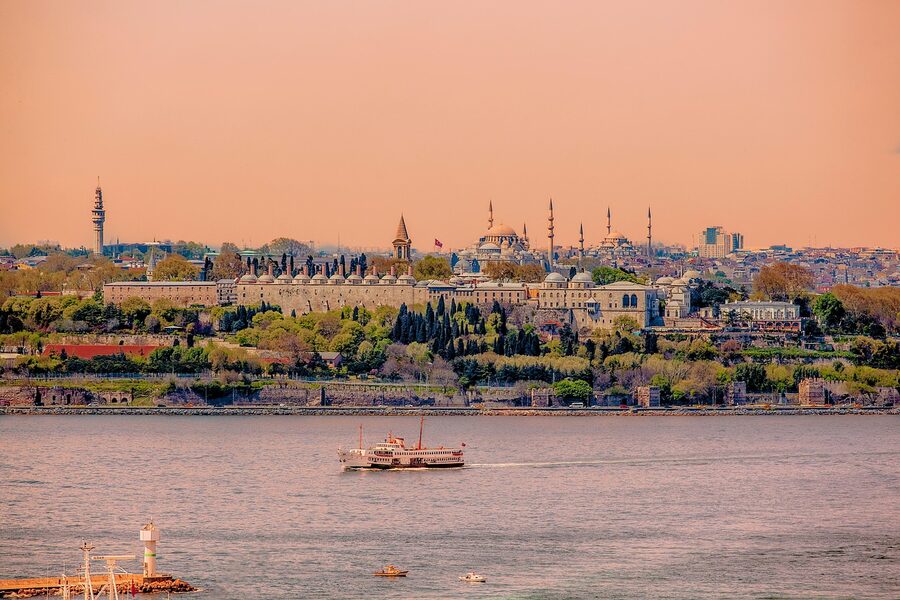
Bosphorus ferry: from the water you see Sultanahmet’s skyline — Blue Mosque, Hagia Sophia, Topkapi — as a dense cluster on the peninsula.
Tips the Official Guides Won’t Tell You
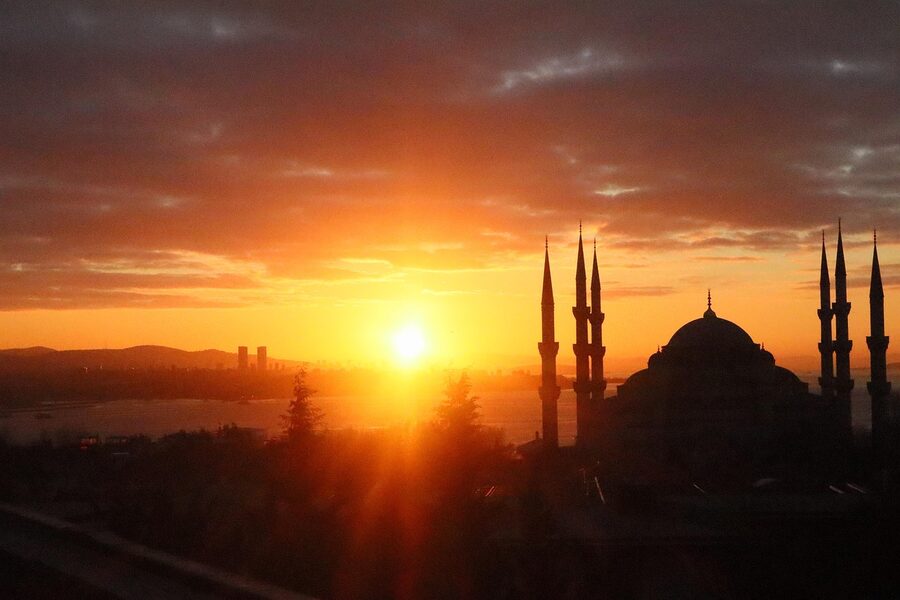
Visit at night for the exterior. The floodlit exterior from 8pm to midnight is one of Istanbul’s best free photo opportunities.
Call to prayer from outside. Standing in Sultanahmet Square during the call to prayer, with the Blue Mosque and Hagia Sophia both echoing, is one of the defining Istanbul experiences. No ticket required. Time it with evening Isha prayer.
The pigeons. Locals feed pigeons in the mosque courtyard; photographers love the motion shots. Bread crusts from street vendors attract them reliably.
Entry queues are fast. Unlike Hagia Sophia, there’s usually no long wait — Blue Mosque has free entry and moves quickly. If you see a 30-minute queue, it’s almost always because you’re arriving near a prayer closure.
Tour groups leave fast. Large tour groups typically stay inside only 10-15 minutes. If you wait 20 minutes after a group clears, the mosque can feel almost empty.
The acoustic effect. Stand in the exact centre of the main hall and speak normally — you’ll hear a specific echo from the dome. Ottoman architects designed for this; the building is acoustically engineered for sermon projection.
The Short Version
Free entry. 20-30 minutes inside, plus 5 minutes in the courtyard. Check prayer times before you arrive — closures last 90 minutes. Dress modestly (loaner scarves and robes available at the door). Pair with Hagia Sophia and the Basilica Cistern for the full Sultanahmet morning.
For context that makes the tile symbolism and the six-minaret controversy make sense, book a €25 guided tour. The mosque itself is free; the guide is what turns a 20-minute walk-through into a proper visit.
Affiliate disclosure: Some links in this article are affiliate links. If you book through them we may earn a small commission at no cost to you. All recommendations are based on my own visit.