
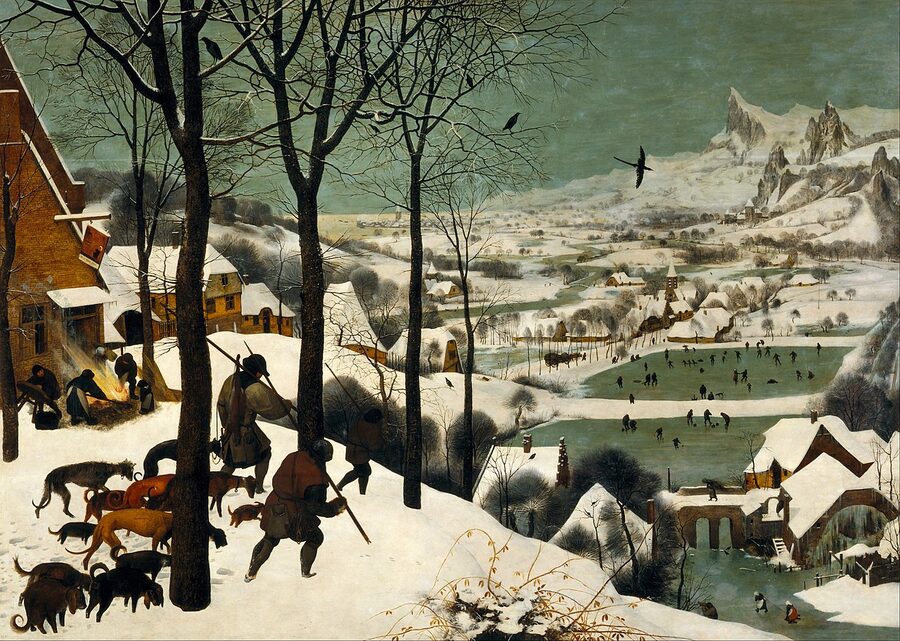
Pieter Bruegel the Elder painted about 45 surviving works in his career. The Kunsthistorisches Museum in Vienna has 12 of them — just over a quarter of Bruegel’s entire output, including Hunters in the Snow, The Tower of Babel, and The Peasant Wedding. One building. Five Bruegel rooms. The largest concentration of the artist anywhere on Earth.
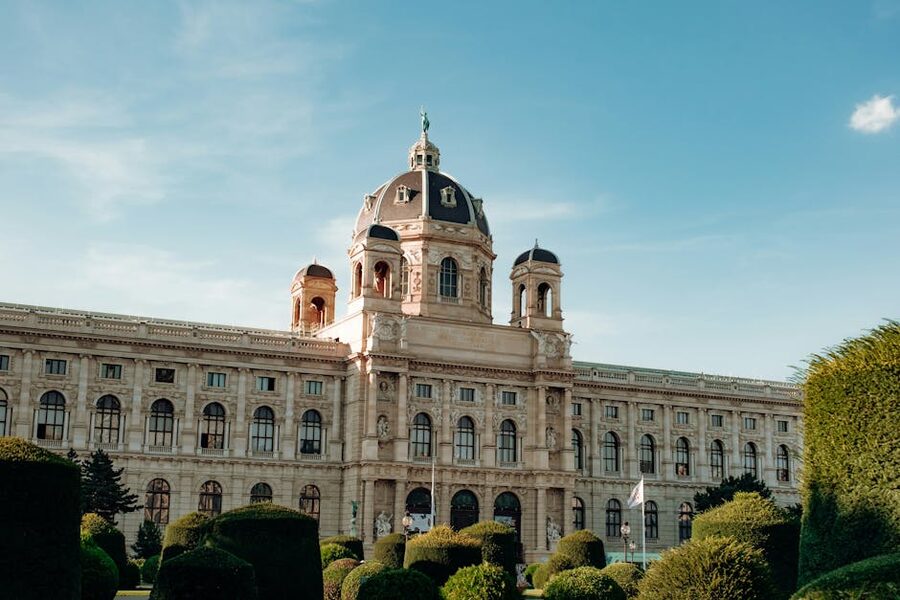
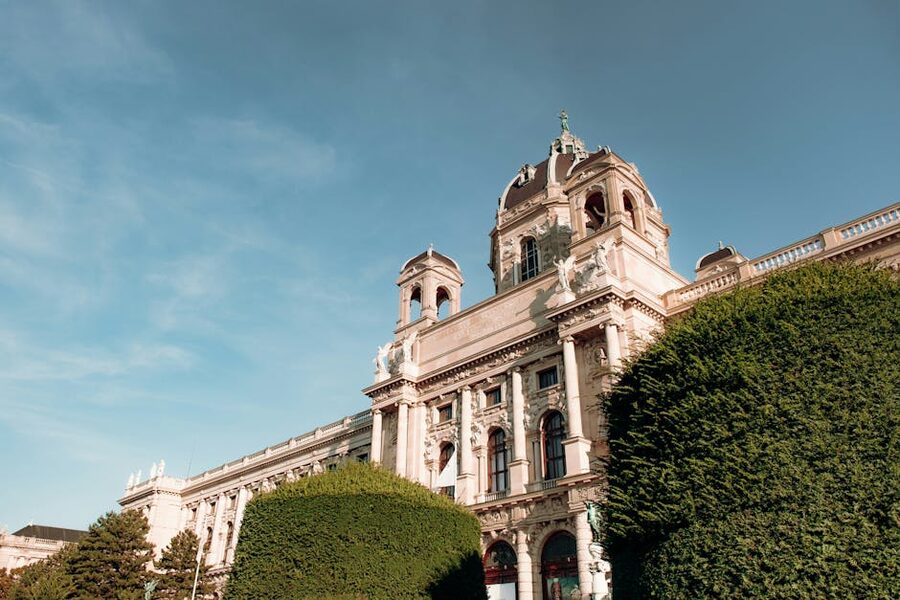
That’s the headline — but the KHM is far more than Bruegel. Vermeer’s The Art of Painting is here (Hitler stole it; Monuments Men recovered it from an Austrian salt mine in 1945). Velázquez’s Infanta portraits line one wall of the Spanish rooms. Caravaggio, Titian, Rubens, Raphael, Holbein, Dürer — the Habsburg emperors bought aggressively for 400 years, and all of it ended up in this building when Emperor Franz Joseph I opened it to the public in 1891.
The day admission is €25. A proper visit takes 3-4 hours; a deep visit takes 6-8. This guide covers which ticket to book, what not to miss, and how to combine the KHM with the neighbouring Imperial Treasury.
In a Hurry? The Three KHM Tickets
- Best overall: Kunsthistorisches Museum Day Admission — $25, valid all day, 3,690+ reviews. The default.
- Best combo: KHM + Imperial Treasury Combo — $37, adds the Habsburg crown jewels at Hofburg, valid 1 year.
- Imperial Treasury only: Imperial Treasury Hofburg — $18, Habsburg regalia including the Crown of the Holy Roman Empire.
- In a Hurry? The Three KHM Tickets
- Which Ticket to Book
- 1. Vienna Kunsthistorisches Museum Day Admission — from
- 2. KHM + Imperial Treasury Combo — from
- 3. Imperial Treasury Only — from
- What You’re Actually Looking At — The Picture Gallery
- Beyond the Picture Gallery — Which Other Collections to See
- A Short History — How Four Centuries of Royal Buying Ended Up Here
- How Long to Plan
- When to Go
- Getting There and What’s Nearby
- Pairing With Your Vienna Day
- Highlights You Should Not Miss
- Common Mistakes
- Practical Details
- The Short Version
Which Ticket to Book
1. Vienna Kunsthistorisches Museum Day Admission — from $25
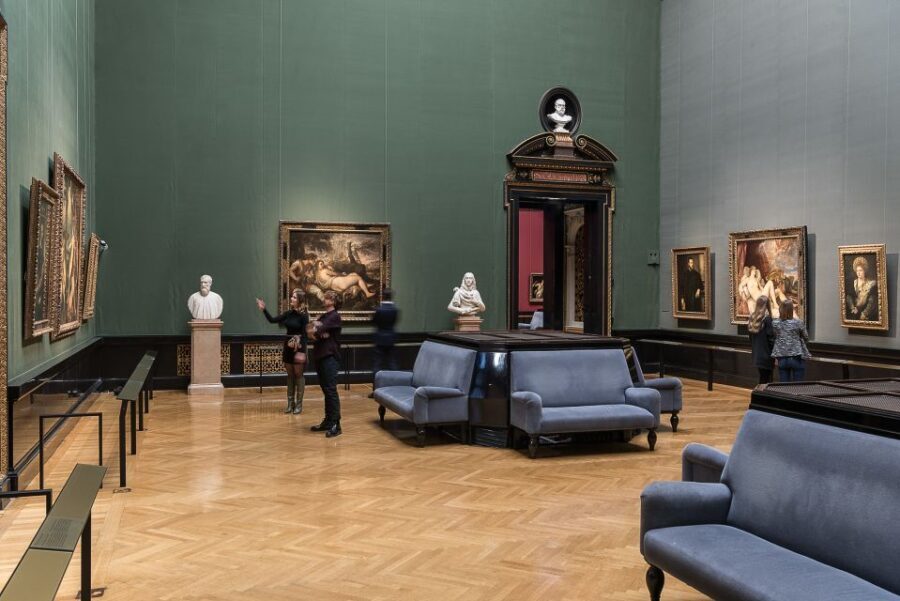
The mainstream choice and almost always the right one. €25 for the whole museum — Picture Gallery (where the Bruegels and Vermeer live), Kunstkammer (the decorative arts collection), Egyptian Collection, Antiquities, and the Coin Cabinet. Valid all day with re-entry; most visitors need a coffee break halfway through. Our full review has the recommended route.
2. KHM + Imperial Treasury Combo — from $37
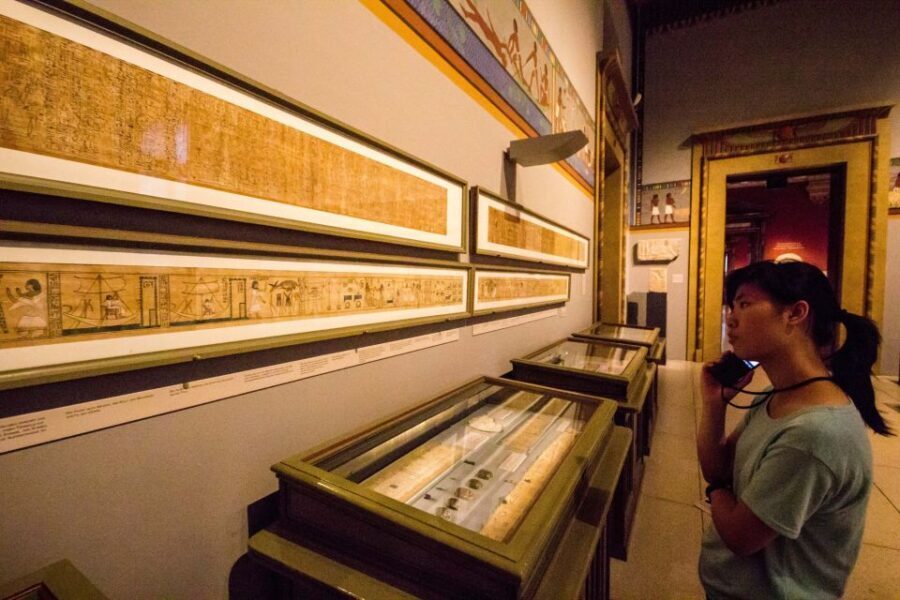
The best value if you’re doing both anyway. €12 cheaper than buying both separately, valid 1 year so you don’t have to do them on the same day. The Imperial Treasury (Schatzkammer) is 5 rooms inside the Hofburg containing the Habsburg regalia — the Crown of the Holy Roman Empire (962 AD, genuinely astonishing), the Austrian Imperial Crown, the Cross of Otto, and gold objects that are medieval-era jaw-droppers. 60-90 minutes on site.
3. Imperial Treasury Only — from $18
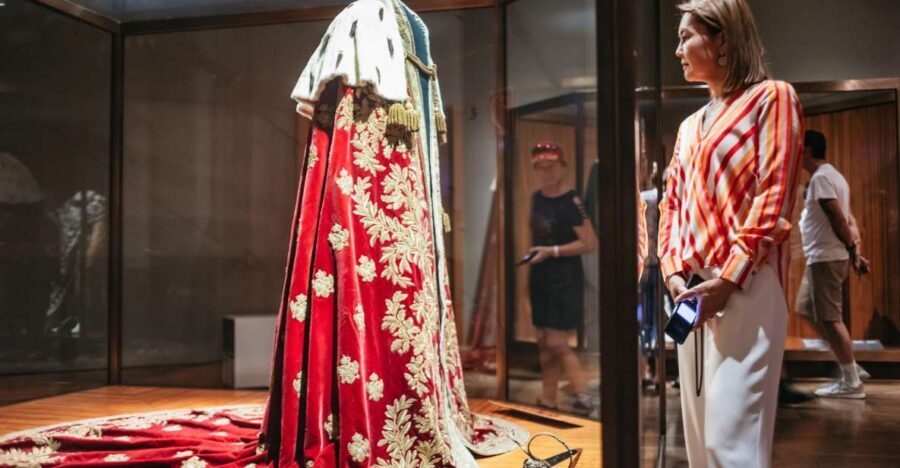
If you’re not a painting person. The Schatzkammer has fewer moving parts than the KHM Picture Gallery but the objects are historically astonishing — the Holy Roman Empire Crown is from 962 AD, the Austrian Imperial Crown from 1602, and the “Unicorn Horn” is actually a narwhal tusk that the Habsburgs believed was from an actual unicorn. 60-90 minutes. Pairs well with a walk through the Hofburg Palace courtyards. Our full review has the room-by-room guide.
What You’re Actually Looking At — The Picture Gallery

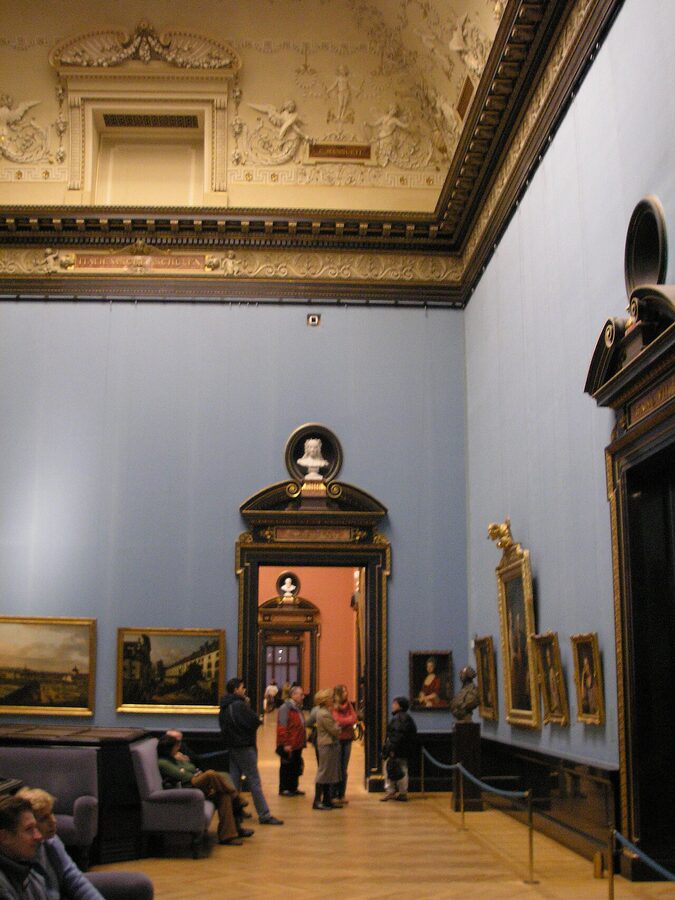
The Picture Gallery is the museum’s main draw and fills the entire first floor. It’s organised by region, roughly:
The Flemish and Dutch rooms (Saal X and surrounding): Bruegel, Rubens, Rembrandt, Van Dyck, Vermeer. The Bruegel rooms are the ones you cannot skip. Hunters in the Snow, The Tower of Babel, The Peasant Wedding, The Gloomy Day, and The Return of the Herd — all in one building. On busy days the Bruegel room has standing-room-only photography crowds around noon; go first thing in the morning when you can actually stand in front of them.
The Italian rooms: Titian, Veronese, Tintoretto, Caravaggio, Raphael. Caravaggio’s Madonna of the Rosary is a stop-and-stare painting — the light on the pilgrims’ shoulders is the whole point of Caravaggio in one canvas.
The German rooms: Dürer, Cranach the Elder, Holbein the Younger. Dürer’s Adoration of the Trinity (1511) is the room’s anchor. His self-portraits here are spread across the collection.
The Spanish rooms: Velázquez’s Infanta portraits (the girl in the enormous hooped skirt that you see on every art-history textbook cover). Painted for Philip IV and sent to Vienna as diplomatic gifts to the Austrian Habsburgs (the same family, different branch). Five Infantas in a row.
Vermeer’s The Art of Painting: one painting, in its own room. This is the Vermeer Hitler stole — it was kept at his mountain retreat Berghof, then hidden in the Altaussee salt mine when Berlin fell. The Monuments Men found it there in May 1945. Look for the burn marks on the frame if you get close enough.

Beyond the Picture Gallery — Which Other Collections to See
The Picture Gallery is 60-70% of most visits, but four other collections are in the same building and included in your €25 ticket.
Kunstkammer (the “Chamber of Art”): the Renaissance-era wonder cabinet. Habsburg curiosities collected 1500-1800 — automata, jewelled goblets, rock-crystal vessels, rhinoceros-horn cups, a salt cellar by Benvenuto Cellini (one of the most valuable small objects in any museum in Europe; stolen in 2003, recovered in 2006). 60-90 minutes well spent. This collection is less crowded than the Picture Gallery and often more interesting.
Egyptian Collection: 17,000 objects across 5 rooms. The mummy room is the standard draw; the blue faience hippo and the 3,500-year-old carvings are less crowded highlights. The columns in these rooms are original Egyptian — shipped to Vienna in the 1880s.
Antiquities: Greek and Roman. Key piece: the Gemma Augustea, a 1st-century Roman cameo the size of a laptop screen, carved from a single piece of sardonyx. One of the most technically impressive objects from antiquity anywhere.
Coin Cabinet: 700,000 coins from Lydian electrum staters (7th century BC) to modern issues. Most non-numismatists skip it; real numismatists spend 3 hours here.

A Short History — How Four Centuries of Royal Buying Ended Up Here
The Habsburgs ruled Austria, Hungary, and enormous chunks of Europe from the 13th century until 1918. Over that time, successive emperors built the collection that now fills this building.
Rudolf II (1576-1612) — the obsessive collector. Moved the imperial court to Prague and bought art on a scale no European royal had before. His agents scoured Italy, Flanders, and Spain for Bruegels, Dürers, and Leonardo drawings. Rudolf’s Kunstkammer in Prague was the most important Renaissance wonder cabinet in Europe. After his death the collection was split, looted, and partially shipped to Vienna — much of what you see today came from Rudolf.
Leopold Wilhelm (mid-1600s) — the Flemish buyer. Habsburg governor of the Spanish Netherlands in the 1650s. Used his position to buy Flemish art at scale — most of the Rubens, Van Dyck, and Bruegel holdings entered the imperial collection under him.
Charles VI (1711-1740) — the last Habsburg of the male line. Systematised the collection, built the first dedicated gallery in the Hofburg, and commissioned the inventory catalogues that still underpin the museum’s provenance research.
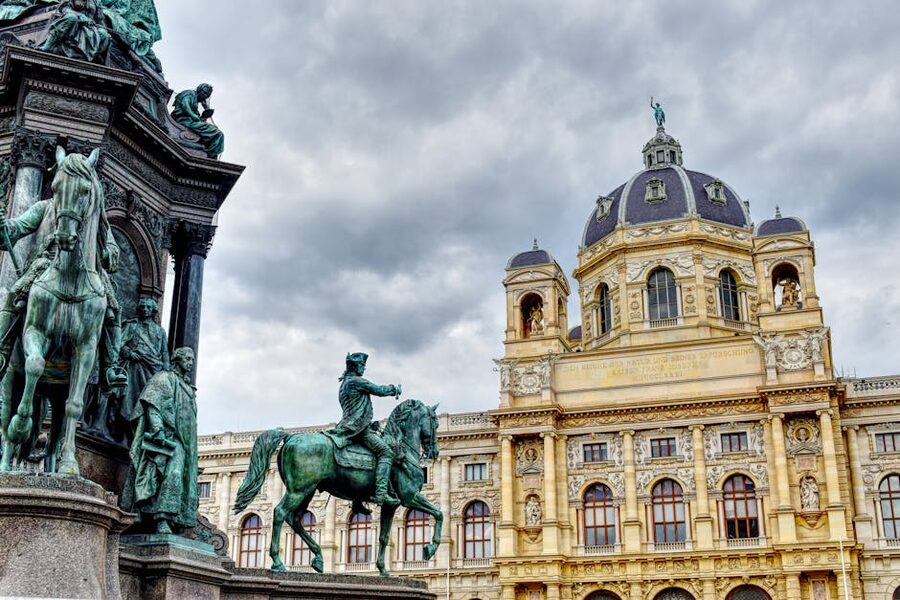
Maria Theresa (1740-1780) — the reformer. Opened the imperial collection partially to the public for the first time, in the Belvedere Palace. Her statue stands in the square directly in front of the KHM. She never saw this building — it opened 111 years after her death.
Franz Joseph I (1848-1916) — the builder. Commissioned the KHM and the matching NHM as part of the Ringstrasse development. Opened 1891. The emperor personally inspected the construction and hung several paintings himself.
Post-1918 Republic. The Habsburg dynasty was exiled after WW1. The collection was nationalised and became Austrian state property. The museum stayed intact.
1938-1945 — the Nazi period. The Anschluss put the KHM under Reich control. Hitler had plans to move the best works to Linz for his planned Führermuseum (never built). During the war, the collection was hidden in the Altaussee salt mine to protect it from Allied bombing. The Monuments Men recovered everything in May 1945 — the Vermeer, the Bruegels, the Caravaggios, all of it. There’s a documentary worth seeing (The Monuments Men, 2014, is the Hollywood version; The Rape of Europa, 2006, is the serious documentary).
1945-present. Collection returned, some disputed works (looted from Jewish collectors) gradually restituted over the past 30 years. The KHM continues to add restitution provenance markers on individual works as the research progresses.
How Long to Plan
The museum officially lists 3-4 hours for a standard visit. Realistic visitor times vary:
Rushed (Bruegel + Vermeer + 2-3 other highlights): 90 minutes. Genuinely not recommended — the crowds in the headline rooms defeat a rushed visit.
Standard visit (most of Picture Gallery + Kunstkammer): 3-4 hours.
Full visit (all collections, café break): 6-8 hours. You can re-enter on the same ticket.
Dedicated art fan (deep in Bruegel and Caravaggio): 2 full days. Many return visitors use the annual ticket (€45).
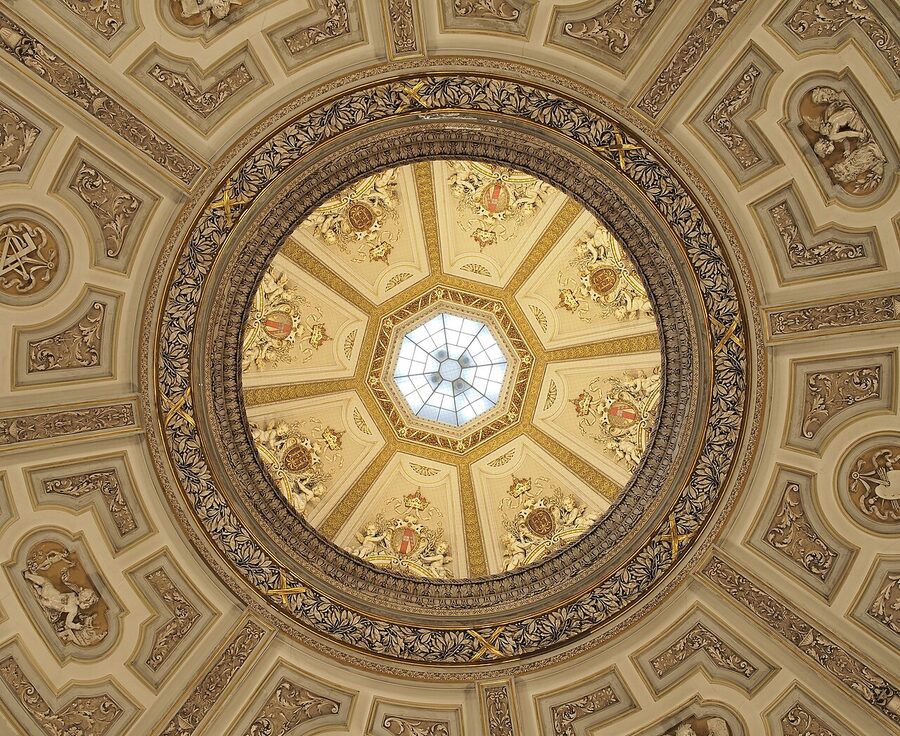
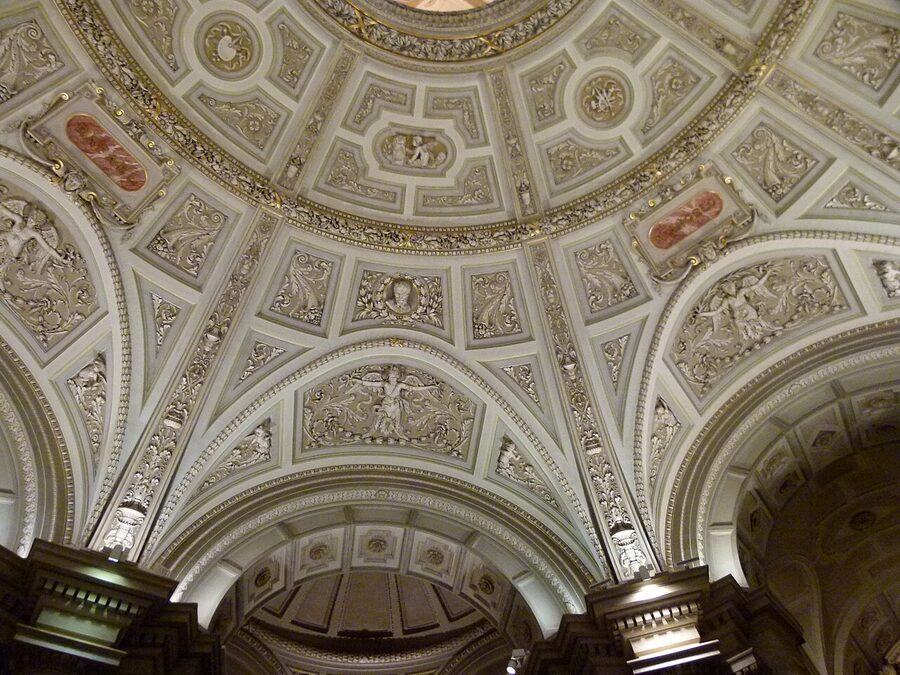
The café break matters. The KHM has its own café under the main dome — the food is ordinary Austrian (Wiener Schnitzel, Sachertorte) but the ceiling alone justifies the stop. An espresso and a slice of Sachertorte under Klimt’s ceiling paintings is €12 well spent.
When to Go
Best time of day: 10am opening or 4pm afternoon. The Bruegel rooms clog up between 11am and 3pm with tour groups. Either bookend of the day avoids the worst of it.
Best day of week: Tuesday, Wednesday, or Thursday. Weekends are visibly busier. Mondays the museum is closed (check the website — they occasionally shift the closed day).
Best month: November-February, except the Christmas market weeks. Tourist numbers drop 40% in winter; you can genuinely stand alone with the Bruegels on a Wednesday in January.
Worst time: July-August weekends, especially 11am-2pm. Summer school holidays + cruise-ship day-trippers + European tourists = 30-minute queues at the entrance and dense crowds in the Picture Gallery.
Evening openings: Thursday evenings until 9pm. These are a local secret — the museum empties out after 6pm and the lighting in the galleries is softer. Best-kept time to visit in Vienna.
Avoid: the first Sunday of the month if you’re paying (it’s free-entry day for residents, which means crowded beyond usefulness).
Getting There and What’s Nearby
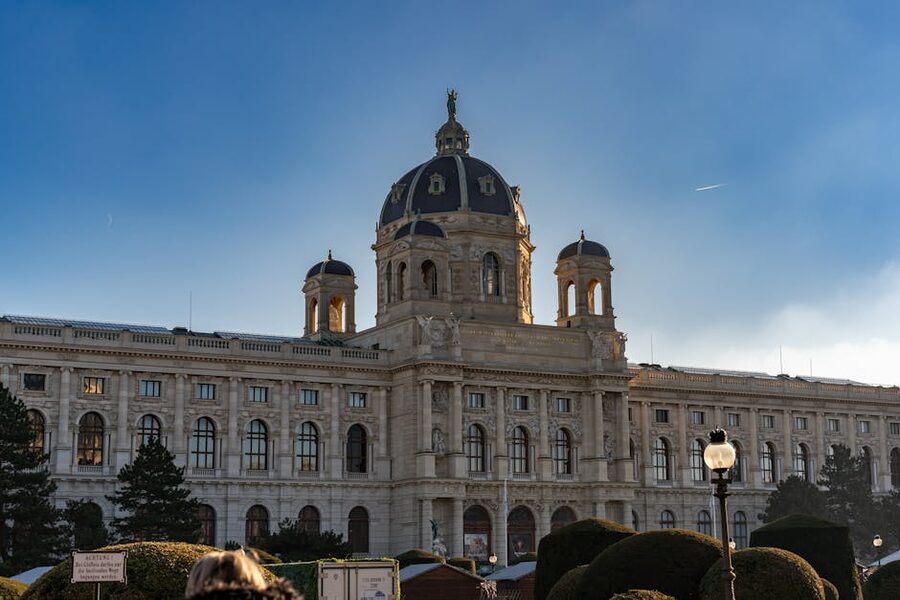
The KHM sits on Maria-Theresien-Platz, between the Hofburg and Vienna’s Ring Road.
U-Bahn: U2 or U3 to Volkstheater, then 3-minute walk. Or U2 to Museumsquartier, also 3-4 minutes on foot.
Tram: tram 1 or tram D along the Ringstrasse. “Burgring” is the closest stop.
On foot from Stephansdom: 15 minutes via Kohlmarkt and Michaelerplatz through the Hofburg. The route is itself a sightseeing walk.
Museumsquartier (MQ): 5 minutes on foot. Hosts the Leopold Museum (Klimt, Schiele), MUMOK (modern art), and the Kunsthalle Wien. If you’re an art person, a 2-day itinerary can cover KHM + MQ.
Hofburg Palace: 7 minutes on foot. Contains the Imperial Treasury (your combo ticket) plus the Sisi Museum, Spanish Riding School, and the Austrian National Library’s State Hall.
Natural History Museum (NHM): across the square. Identical building — same architects, same year. If you have a non-art family member, they can do the Venus of Willendorf and dinosaurs while you do the Bruegels.
Pairing With Your Vienna Day
Art-heavy day: KHM morning (9:30-1), lunch at the KHM café or on Museumsquartier, Leopold Museum (Klimt + Schiele) afternoon. 2 museums, one walking distance apart, full day.
Habsburg-heavy day: KHM morning, walk to Hofburg for the Imperial Treasury, evening classical concert. Tracks the Habsburg cultural empire start-to-finish.
With kids: KHM morning (focus on mummies + Kunstkammer), Natural History afternoon. Same square, two buildings, no kids’ legs falling off.
Rainy-day backup: the KHM works if you’re stuck inside. The whole museum is a single covered building. A €25 ticket keeps you dry for 6 hours.
With the Schönbrunn Palace: KHM morning, lunch downtown, metro to Schönbrunn for afternoon tour. Covers both Habsburg residences — the private (Schönbrunn) and the public-display (the KHM art collection).
Before a walking tour: some Vienna walking tours start at Maria-Theresien-Platz and use the KHM as context for the Ringstrasse architecture. Book a morning KHM visit followed by a 2pm walking tour for a good one-day overview.
Highlights You Should Not Miss
Bruegel Room (Saal X): five Bruegels in one room. The bench in the middle is worth a 30-minute sit-down.
Vermeer’s The Art of Painting: single painting, own room. 10 minutes minimum.
Caravaggio’s Madonna of the Rosary: the light on the pilgrims’ feet is the lesson.
Velázquez Infanta Margarita portraits: the pink dress, the blue dress, the white dress. Painted as the Infanta grew up; shipped to Vienna over 8 years.
Cellini Salt Cellar (Kunstkammer): the jewelled gold salt cellar that was stolen in 2003 and held for ransom until 2006. Recovered in a lead box buried in the woods north of Vienna.
Gemma Augustea (Antiquities): a 1st-century Roman sardonyx cameo. Genuinely mind-bending that anyone could carve this without modern tools.
Klimt’s ceiling paintings (entrance staircase): Gustav Klimt painted these as a young artist before his Symbolist period. Easy to miss because visitors are looking at the floor or the paintings ahead. Look up.
The Egyptian columns: original Egyptian stone columns, shipped to Vienna in the 1880s. The ceiling frescoes around them are Austrian reproductions of Egyptian iconography; the columns themselves are real.
Common Mistakes
Going in July-August midday. The worst possible time. Go 10am or 4pm, any day except Saturday.
Trying to see everything in 2 hours. You’ll rush through the Picture Gallery and miss the Kunstkammer entirely. Plan 4 hours minimum.
Skipping the Kunstkammer. Many visitors do because it’s signposted as “decorative arts” and sounds secondary. It’s not. The Cellini Salt Cellar, the automata, and the Habsburg wonder cabinet objects are arguably more memorable than half the Picture Gallery.
Not taking the café break. The under-dome café is one of the best spaces in Vienna. €12 for a coffee and Sachertorte under Klimt’s ceilings is genuinely worth it.
Missing Vermeer because you went to the Bruegel room first. The Vermeer is at the far end of the Dutch galleries — people run out of time. Check its location on the museum map when you enter and plan your route around it.
Buying the combo ticket when you only want the KHM. The Imperial Treasury is in a separate building 7 minutes away. Some visitors buy the combo and then run out of time. Only buy the combo if you’ve actually blocked off time for the Treasury.
Photography: non-flash photography is allowed. Using a tripod requires a permit. Most people just use phones, which is fine.
Practical Details
Address: Maria-Theresien-Platz, 1010 Vienna.
Hours: Tuesday-Sunday 10am-6pm. Thursday extended to 9pm. Closed Mondays (some holidays open).
Admission: €25 adult, €21 senior (65+), €10 student with ID, children under 19 free. €45 annual ticket if you’re planning 2+ visits.
Audio guide: €7, available in 10+ languages. Genuinely good — written by curators. Worth it for first-time visitors.
Guided tours: 1-hour themed tours (Bruegel, Caravaggio, highlights) run daily in German, with English tours Tuesday-Saturday. €5 on top of your admission.
Wheelchair access: fully accessible. Lifts to all floors. Wheelchair loans at the main entrance (free, ID required).
Cloakroom: free, mandatory for large bags. Lockers for smaller items.
Café: open during museum hours. Kitchen closes 1 hour before museum closing.
Gift shop: surprisingly good. The Bruegel reproductions and art books are research-quality; the museum publishes its own catalogues.
The Short Version
Book the €25 day-admission ticket. Arrive at 10am opening, head directly to the Bruegel room before the tour groups, then work your way through Dutch → Italian → Spanish rooms. Take the café break under the dome. Budget 4 hours minimum.
If you’re doing Habsburg-heavy sightseeing, book the €37 combo ticket and hit the Imperial Treasury on the same or next day — the Crown of the Holy Roman Empire (962 AD) is worth the extra €12 and the 7-minute walk to Hofburg.
Skip the combo if you’re only here for the paintings. Spend the €12 you save on the gift shop’s Bruegel book.
Affiliate disclosure: Some links in this article are affiliate links. If you book through them we may earn a small commission at no cost to you. All recommendations are based on my own visit.