
Traditional Irish music was effectively banned under British Penal Laws from 1691 to 1829. Playing the harp in public could get you transported for three years. The two-hour pub crawl through three Dublin bars is, once you understand that, tracing a lineage of music that survived 138 years underground.
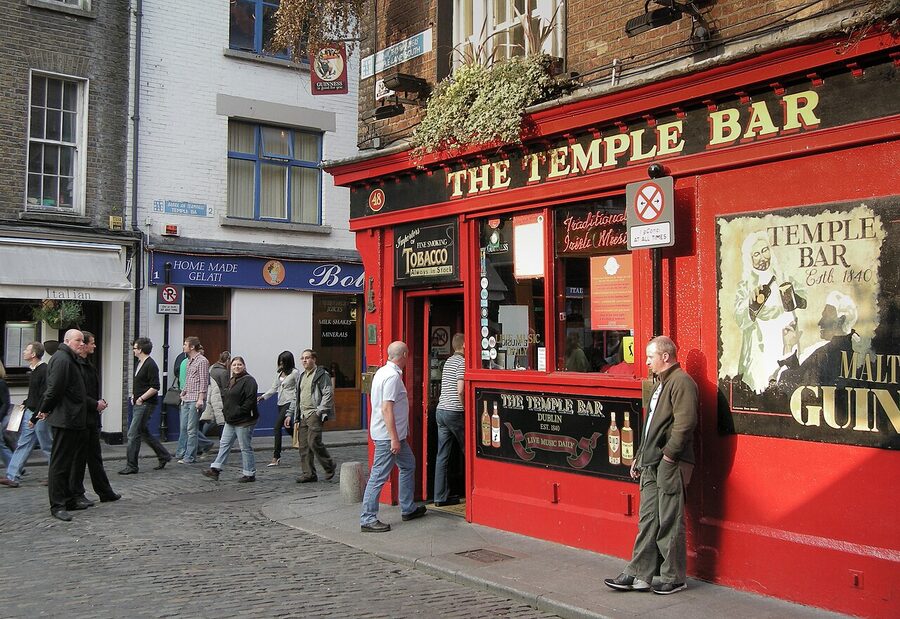

This guide covers the three Dublin musical pub crawls most visitors book: the flagship Traditional Irish Musical Pub Crawl ($31), the Dublin Literary Pub Crawl ($28, actor-led with Joyce/Beckett/Behan readings), and the smaller Dublin Traditional Irish Music Walking Tour ($28, live performance format). All three run in the evenings, all three involve walking between three pubs, and the details differ in ways that matter.

In a Hurry? The Three Dublin Pub Crawl Options
- The classic music one: Traditional Irish Musical Pub Crawl — around $31, 2.25 hours, live musicians lead the group between three pubs playing jigs, reels, and ballads.
- Literary alternative: Dublin Literary Pub Crawl — around $28, 2.25 hours, actors perform Joyce/Beckett/Behan between pub stops.
- More intimate music tour: Dublin Traditional Irish Music Walking Tour — around $28, smaller group, live performance in a private room.

- In a Hurry? The Three Dublin Pub Crawl Options
- What Happens on the Music Pub Crawl
- The Literary Alternative
- The Three Tours Compared
- 1. Traditional Irish Musical Pub Crawl —
- 2. Dublin Literary Pub Crawl —
- 3. Dublin Traditional Irish Music Walking Tour —
- A Brief Primer on Trad Music
- Trad Session Etiquette
- The History They’ll Tell You
- When to Book
- What to Wear / Expect
- Which One to Pick
- Getting There
- Practical Details
- Other Dublin Guides
What Happens on the Music Pub Crawl
The Traditional Irish Musical Pub Crawl has been running since 1996 and is tightly formatted. Two professional musicians — one fiddle, one bodhrán or guitar — lead the group through three pubs over 2.25 hours. At each pub they play 15-20 minutes of music: reels, jigs, a few slow airs, one or two ballads with audience participation on the chorus. Between pubs the musicians explain the history of what you just heard and what’s coming next.
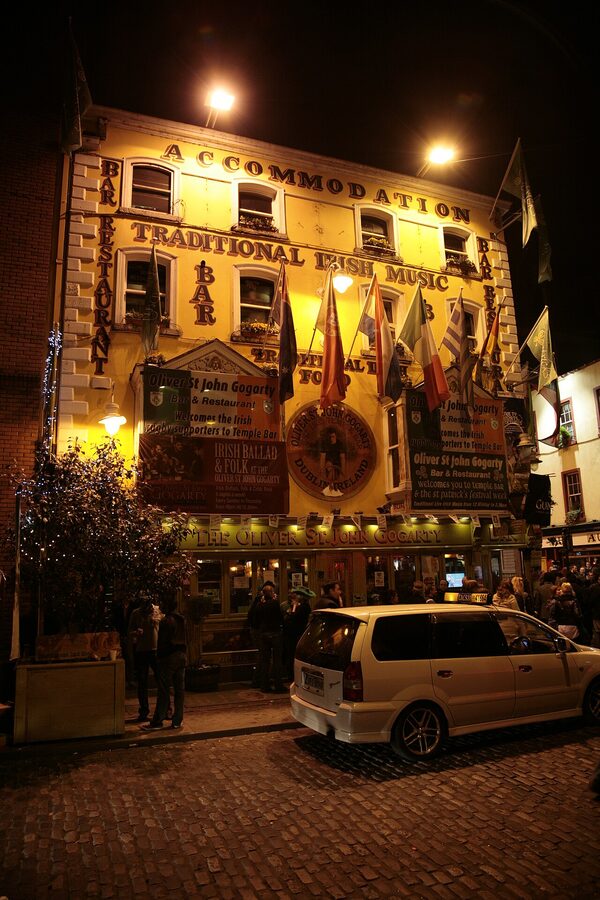

Format detail: you don’t pay for drinks on the tour. The $31 price is the guided music only; each pub serves normal paying customers and you buy your own Guinness. Budget another €5-7 per pub (€15-21 total) for a pint at each stop, or less if you’re drinking a pint across two pubs.
The tour starts at the Gogarty Pub on Fleet Street (a block from Trinity College) at 7:30pm most evenings. It ends at a third pub around 9:45pm, at which point you’re welcome to stay as long as the pub is open. Most of the music-interested visitors stay until 11 or midnight.
The Literary Alternative
The Dublin Literary Pub Crawl is an actor-led tour rather than musician-led. Two working Dublin actors take you through three pubs, performing short dramatic extracts from the city’s four most famous 20th-century writers — James Joyce, Samuel Beckett, Brendan Behan, and Patrick Kavanagh — at the pubs where each writer drank.
The format is: short walk, find a corner of a pub, the actors deliver a 5-10 minute piece (a Joyce dialogue, a Beckett monologue, a Behan ballad), the audience sits and listens, everyone buys their own drinks, move to the next pub. You don’t get full audience engagement the way the music crawl does, but the actors are genuinely good — most are Abbey Theatre veterans doing evening tour work between stage gigs.

The Three Tours Compared
1. Traditional Irish Musical Pub Crawl — $31
The pick for most visitors. Running continuously since 1996, the format is well-polished and the musicians rotate through a stable pool of full-time Dublin session players. Group sizes 25-35, which is large but manageable in a pub setting. The musicians are genuinely good and explain the music with a lightness that doesn’t lecture. Our review covers which musicians are consistently on rotation and which nights are quieter.
2. Dublin Literary Pub Crawl — $28
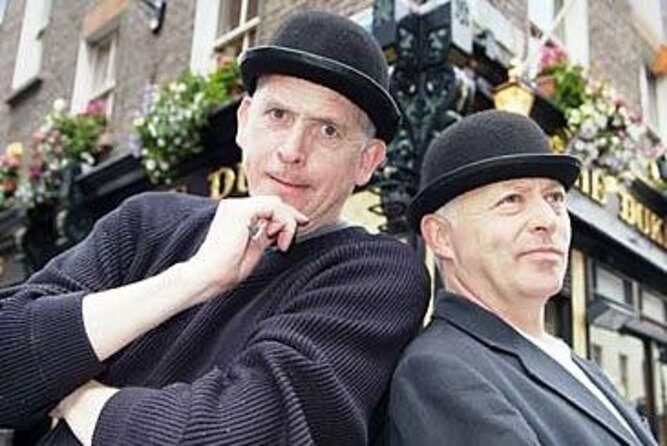
Pick this if you know your Irish literature or want to. The actors are Abbey Theatre-trained and the performance quality is consistently high. The route passes by Davy Byrne’s (Ulysses, the Leopold Bloom lunch scene), The Duke (Behan’s local), and one other literary pub. Thematically more serious than the music tour; requires a bit of prior reading for maximum enjoyment. Our review covers the specific passages performed and which nights draw the best actors.
3. Dublin Traditional Irish Music Walking Tour — $28
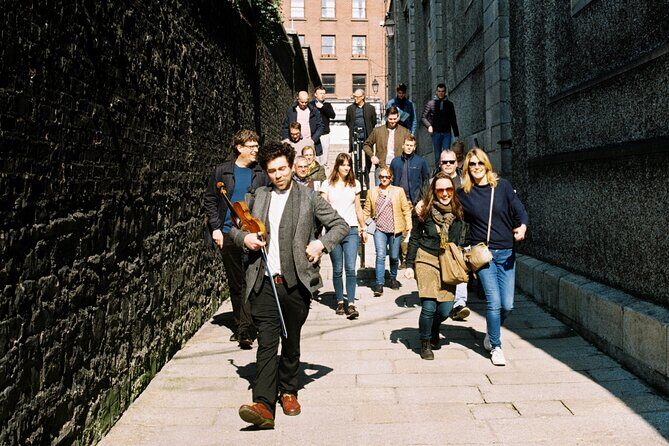
Smaller groups (15-20 max), different format than option 1. Instead of embedding the music into the regular pub session, this tour includes a dedicated live performance in a private pub room. You get more musical depth (sometimes 40-60 minutes of playing from the featured musicians), less broad pub atmosphere. Pick this if you want a quieter, more musically-focused evening. Our review covers the trade-off.
A Brief Primer on Trad Music
The music you’ll hear on these tours is “Irish traditional music” — a specific genre with rules and a centuries-old repertoire. The tunes are organised into families (jigs, reels, hornpipes, slip jigs, polkas, slides, slow airs) distinguished by tempo and time signature. Most are instrumental; the few with lyrics are the old ballads (Danny Boy, The Wild Rover, etc.) that audiences tend to join in on.
Key instruments:
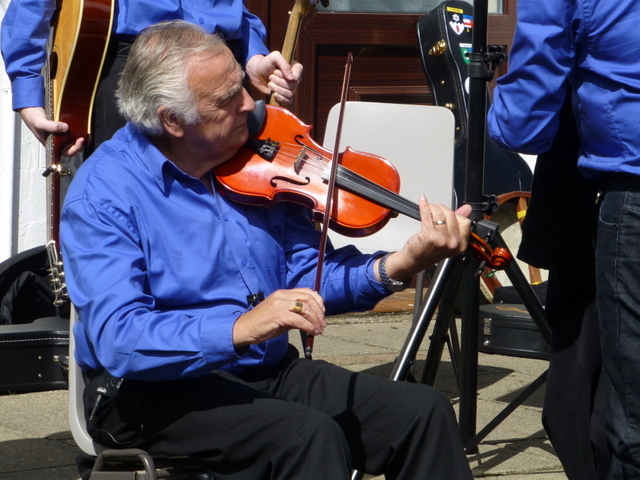
- Fiddle — the dominant lead instrument. The same as a classical violin but played differently.
- Tin whistle — six-hole pocket flute, cheap and ubiquitous.
- Uilleann pipes — the Irish bagpipes, bellows-blown rather than mouth-blown. Quieter and more lyrical than Scottish Highland pipes.
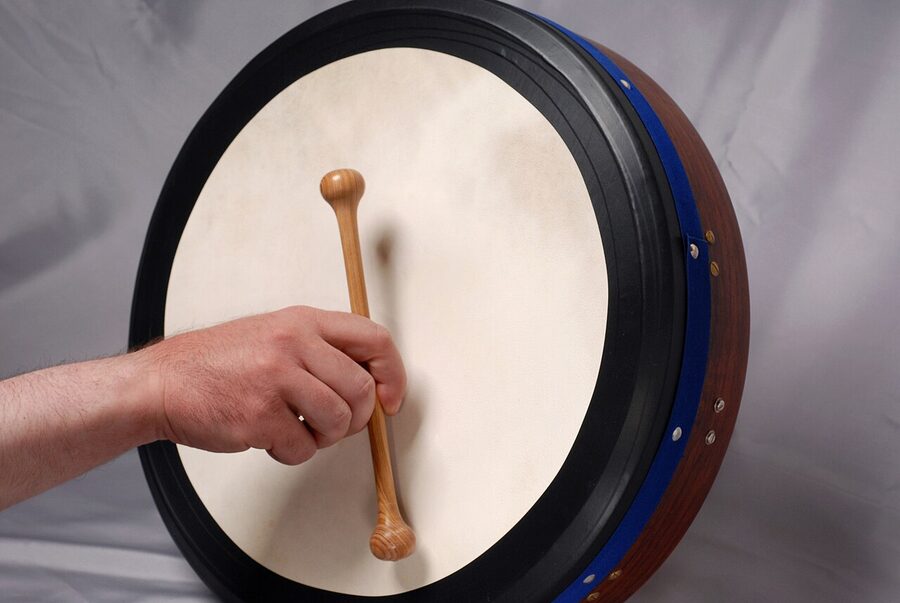
- Bodhrán — the goatskin frame drum.
- Concertina / accordion — small free-reed instruments, particularly strong in Clare and Kerry.
- Guitar / bouzouki — 20th-century additions providing rhythm accompaniment.
The fiddle typically plays lead in trad sessions. If you want to spot the lead player, look for who starts a new tune and whose bowing everyone else is matching.
Trad Session Etiquette
After the tour ends, you’re welcome to find a “real” trad session at other Dublin pubs. The sessions aren’t performances — they’re gatherings where local musicians show up and play together. Watch; don’t clap between tunes (the session rolls from one tune into the next without stopping); don’t request specific songs; buy the musicians an occasional pint if you’ve been listening for a long time.
Best sessions after the tour:
- The Cobblestone (Smithfield) — Dublin’s most-respected trad session. Monday and Wednesday nights are famous.
- O’Donoghue’s (Merrion Row) — the pub where The Dubliners formed in 1962. Session nightly.
- Hughes’ (Chancery Street) — close to the Four Courts, deeply locally-frequented.
None of these three are on the standard pub crawl route. The tour is a primer; the real local sessions come after.
The History They’ll Tell You
The Penal Laws (1691-1829) were a series of British anti-Catholic measures that included restrictions on Irish music, dance, and language. Playing Irish traditional music in public was an offence. Harpers (the most high-status musicians in pre-Reformation Ireland) were specifically targeted — the 1695 act made being a travelling harper a transportation offence. The harp is on Ireland’s national coat of arms today because the instrument became a symbol of cultural survival during exactly this period.
The bodhrán’s ancient origins are debated — some sources trace it to the 17th century, others push it back to the Bronze Age. What’s certain is that it was never grand enough to attract Penal Law attention, so it survived the period when harps and pipes were being destroyed or exported.
The music survived through the mid-19th century in a weakened form, was nearly extinguished by the Famine and its emigration waves, and experienced a major revival starting in the 1950s-60s (The Dubliners, Sean Ó Riada, the Clancy Brothers). The traditional-music scene you experience in a Dublin pub today is the product of that revival layered on top of older regional traditions.
When to Book
Summer (May-September) tours run 7 nights a week and sell out 2-3 days ahead. Winter the schedule reduces to 5 nights a week (typically closed Sundays and Mondays) but availability is easier — you can often book same-day.
Friday and Saturday nights are the busiest. If you prefer smaller groups and more personal contact with the musicians, book Tuesday, Wednesday, or Thursday. The musicians are slightly different depending on which nights they rotate to but the core pool works all three tours across the week.
What to Wear / Expect
- Walking shoes. 3-4 city blocks between pubs, occasionally wet cobblestones.
- Casual smart. Dublin pubs dress casual; don’t arrive in gym wear but you don’t need to dress up either.
- Cash or cards. Both work; cards in the larger pubs, sometimes cash-only at smaller ones.
- Expectation: it will be loud. Particularly the music crawl — conversation between songs is possible but the musical segments cut through the pub noise.
- No kids under 14. Dublin pub licensing rules; some pubs allow children during daytime hours but the evening tours are 18+.
Which One to Pick
Music crawl: First-time visitor, enjoys traditional music, comfortable in loud pubs, wants a broad experience of Dublin pub life.
Literary crawl: You’ve read some Joyce or Beckett, appreciate performance, happy to listen carefully in a slightly quieter room.
Music walking tour: Returning Dublin visitor, specifically wants the music over the pub atmosphere, prefers smaller groups.
If you’re doing only one Dublin evening tour, the music crawl is the default pick. If you have two evenings, pair the music crawl night 1 with the literary crawl night 2 — they’re genuinely complementary and cover different aspects of Dublin’s cultural life.
Getting There
All three tours meet in Temple Bar or Trinity area at 7-7:30pm. Exact meeting point on your booking confirmation. The central Dublin area is walkable from any hotel inside the canals; if you’re staying further out, allow 30 minutes for tram or bus travel.
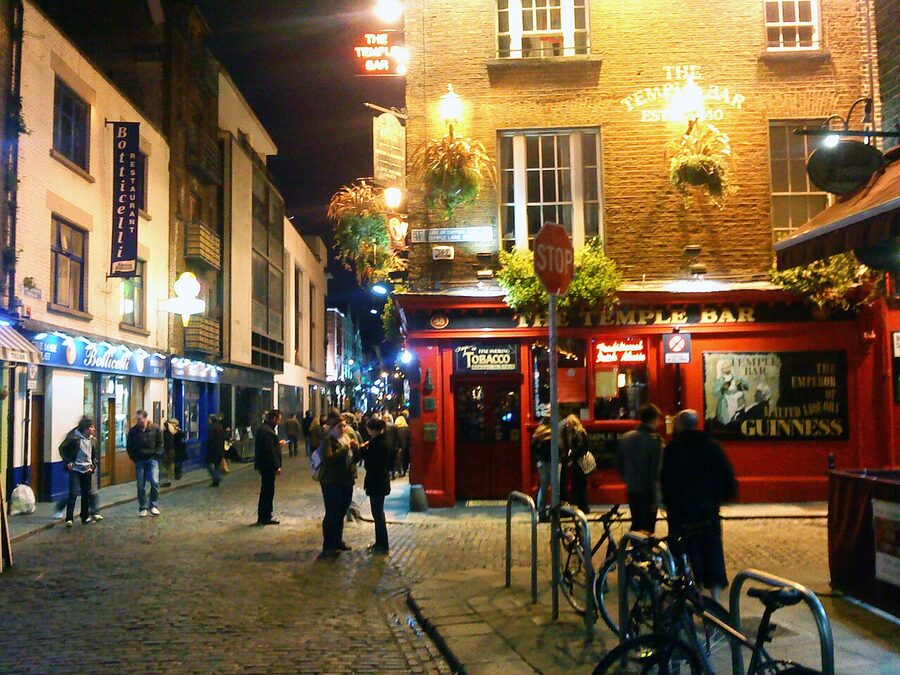
The Temple Bar area at 7pm — just before the tours start — is manageable. By 9 it’s significantly louder; by 11 it’s the Dublin nightlife stereotype at full volume.
Practical Details
Duration. 2.25 hours for all three.
Price. $28-31 for the tour itself. Drinks separate — budget €15-21 for three pints across the evening.
Group size. 25-35 on the music crawl and literary; 15-20 on the Irish music walking tour.
Language. All three tours run in English only.
Accessibility. The pubs are variable — some have step-free entry, some have entrance steps. Contact operator ahead if this matters.
Cancellation. 24-hour free cancellation on all three.
Other Dublin Guides
A pub crawl pairs well with whatever quieter daytime activity you did that day. Good morning companions: the Book of Kells walking tour, the EPIC Museum, or a Jameson or Teeling distillery visit. Save the heavier sites (Giant’s Causeway day trip, Cliffs of Moher) for days you don’t plan a 9pm evening activity.
Disclosure: This site earns a commission on bookings made through the links above, at no extra cost to you. We only recommend tours we’ve researched and would book ourselves.