
My friend Sam went to the Algarve last summer with every intention of swimming into Benagil Cave from the beach next door. That was the plan he’d pinned on Instagram three months earlier. When he arrived, the lifeguard at Praia de Benagil politely told him swimming in was illegal now, boats had to book an entry slot, and the only way to set foot on the sand inside was with a licensed operator. Sam ended up on a two-hour kayak tour out of Carvoeiro, paid around 35 euros, and told me it was the best thing he did in Portugal.
Booking a Benagil kayak tour used to be a toss-up. Now it’s the simplest, cheapest, most hands-on way to actually get inside the cave legally. Here’s how I’d do it.
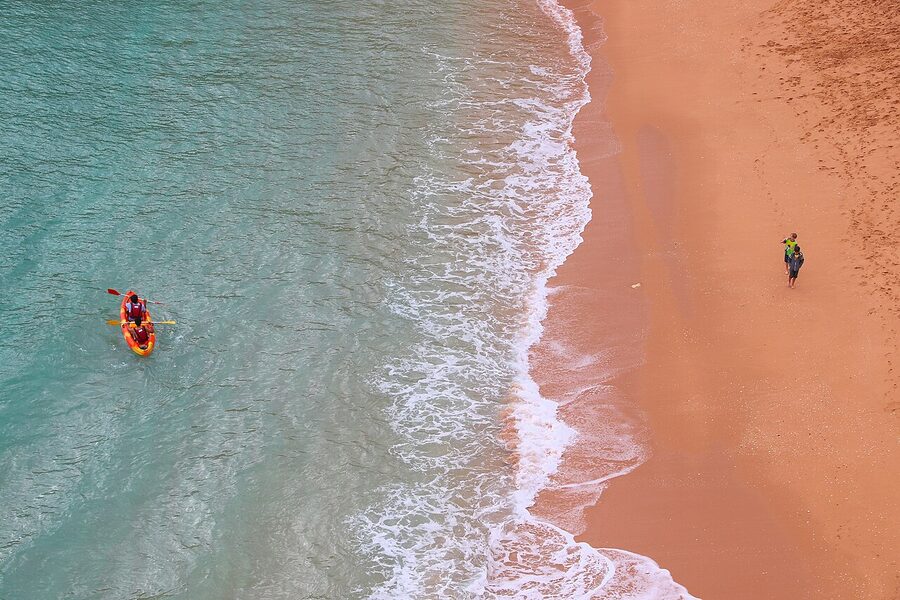
_sea_kayaking_recreational_activity_in_Algarve,_Portugal.jpg)
- Cheapest way in: Benagil Kayaking Tour from Benagil Beach — around $29. Shortest walk to the water, flexible 45-minute or 2-hour options.
- Best small group: Benagil Caves & Secret Spots — about $34. Max 12 paddlers, covers hidden coves the bigger tours skip.
- Half-day version: Hidden Caves Tour from Albufeira — around $53 for three hours, with a guide-led run of the beaches you’d never find alone.
.jpg)

- What actually changed in 2024–2026 (and why it matters)
- Kayak vs boat vs SUP — which one’s right for you?
- The three tours I’d actually book
- 1. Benagil: Kayaking Tour to the Benagil Cave — around
- 2. From Albufeira: Benagil Hidden Caves Tour by Kayak — around
- 3. Benagil: Caves and Secret Spots Guided Kayaking Tour — around
- Where tours launch — the Carvoeiro vs Benagil vs Albufeira question
- When to go — time of day and time of year
- What the tour actually looks like, start to finish
- What to bring (and what not to)
- Is the Benagil kayak tour worth it in 2026?
- A very short history of why this cave exists
- Common mistakes I’d avoid
- Beyond Benagil — what else is worth doing on the same Algarve trip
What actually changed in 2024–2026 (and why it matters)
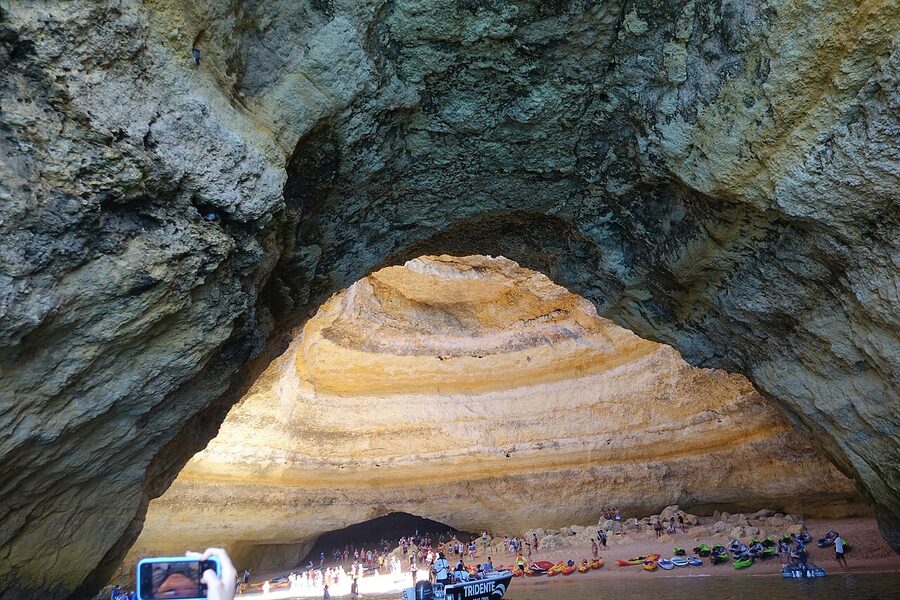
If you read a blog from 2019 or watched a YouTube video from 2022, ignore the part about swimming in from Praia de Benagil or renting your own kayak off the beach. Those days are over. Portugal’s maritime authority shut all of that down after a string of accidents and a few drownings inside the cave.
The rules now, in plain English:
- No self-swimming into the cave. Full stop.
- No self-hiring a kayak or SUP with the plan to paddle in alone — you need a licensed guide.
- Tours get assigned slots. The cave is capped on how many boats and kayaks are inside at once.
- Each tour has a time limit inside — usually five to ten minutes of actual cave time, though you’ll still stop for photos.
- You can’t step off a kayak onto the sand inside. You photograph, you drift, you paddle out.
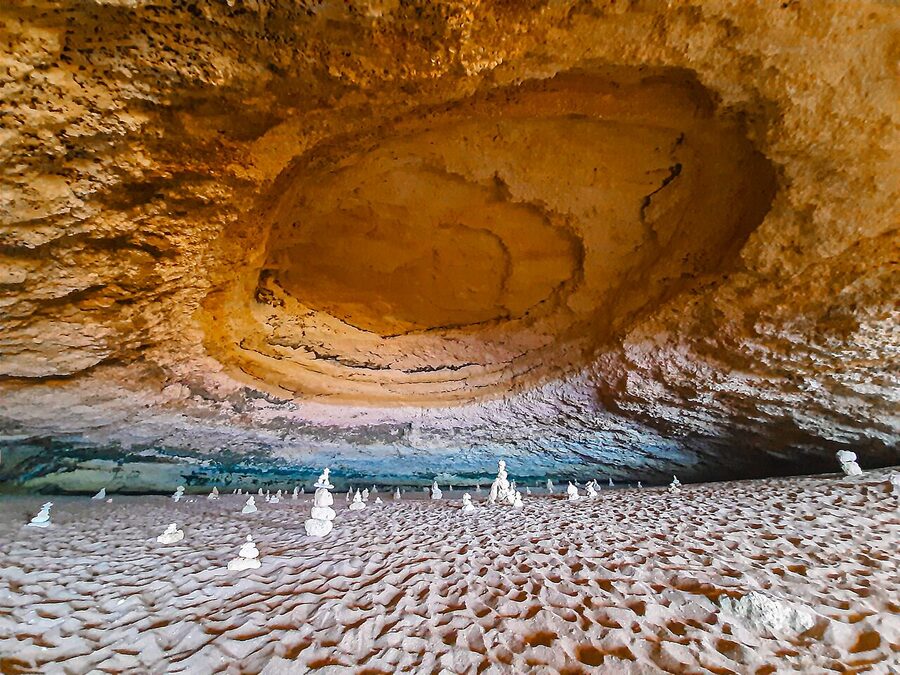
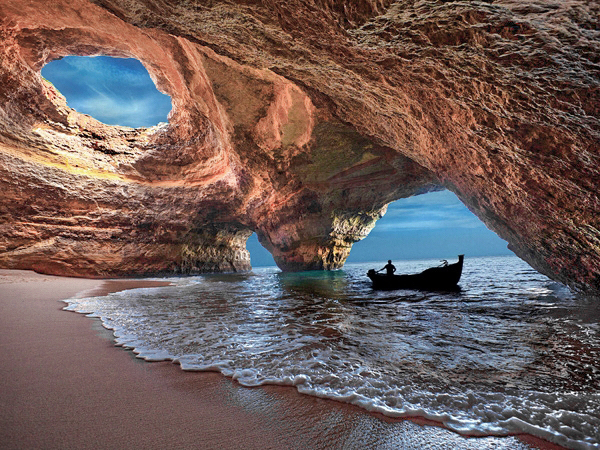
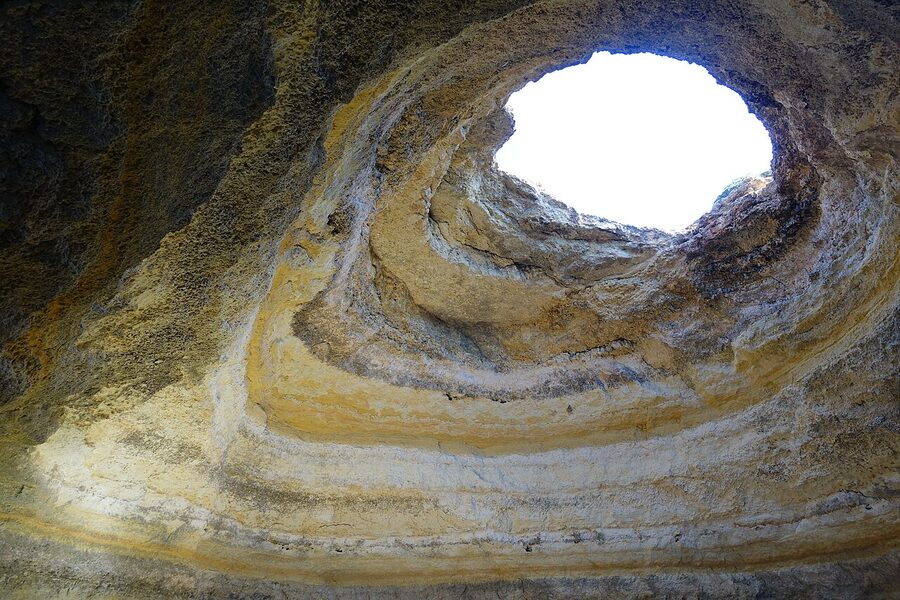
The last one disappoints some people. I get it — the old photos of travellers posing on the cave beach are iconic. But you still go in the cave. You still float under the oculus. The light still does its thing. It’s the experience with slightly less choreography.
.jpg)
Kayak vs boat vs SUP — which one’s right for you?
Short version: kayak wins unless one of the specific reasons below applies to you.
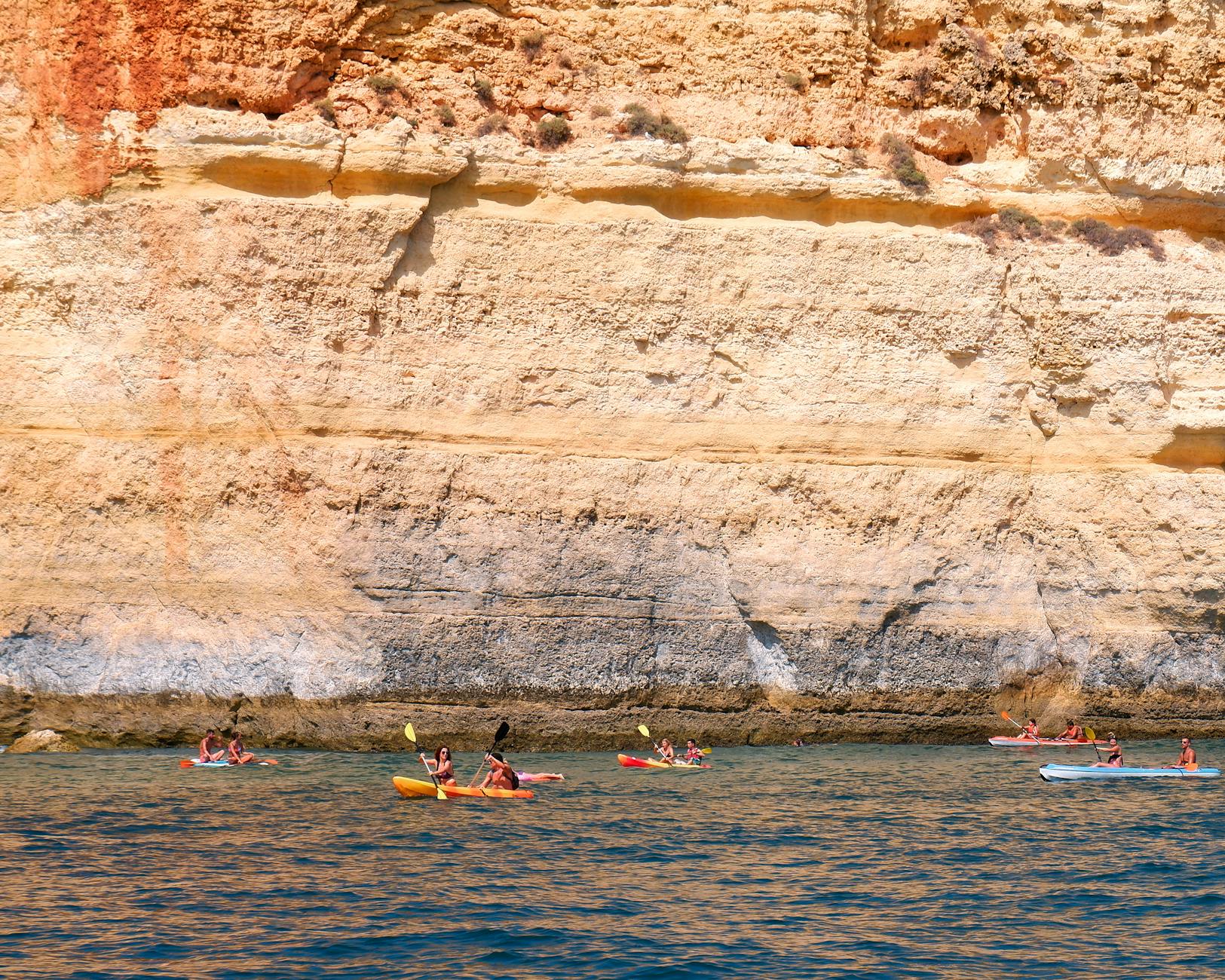
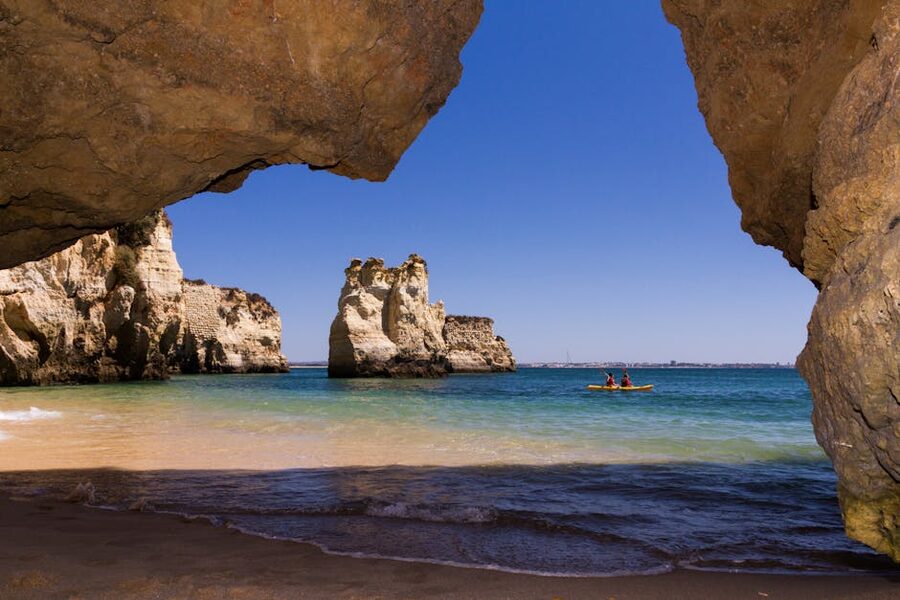
Go kayak if you want the most time on the water, the closest access to small caves the bigger boats can’t enter, and the cheapest price. Guided groups are usually 6 to 15 paddlers. Double kayaks are standard, which is great if you’re with a partner — one of you steers while the other shoots photos. I’d pick this every time unless I had a physical reason not to.
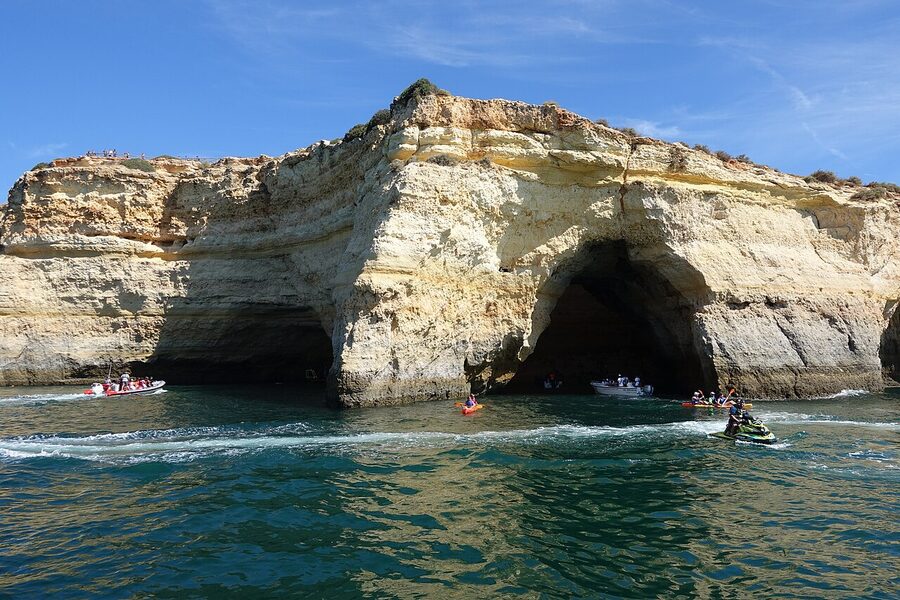
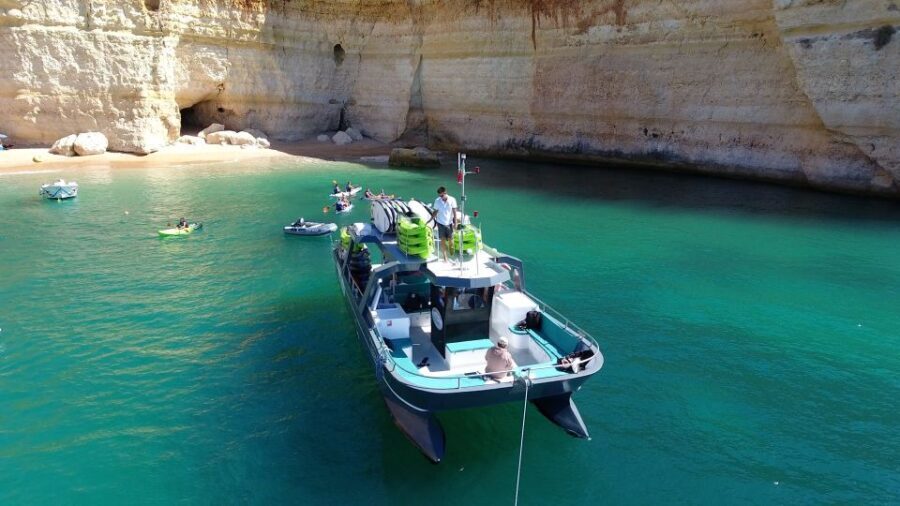
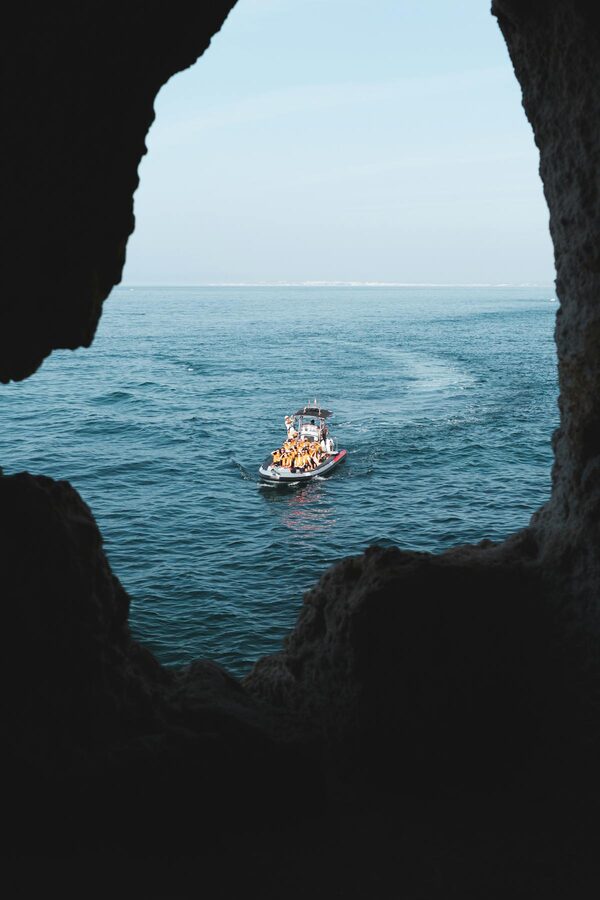
Go boat if you can’t kayak, hate getting wet, or are travelling with small kids. Speedboats and RIBs (those big inflatables) cover more coast in less time. The tradeoff: most don’t actually enter Benagil Cave — they float at the mouth so you can take pictures. If that matters to you, read the itinerary carefully or pick a small boat operator that specifically says “cave entry included.” For a boat-only option, we’ve written up the Portimão speedboat separately.
Go SUP if you’re a confident paddleboarder and the forecast is flat. It’s a harder workout than kayaking and bad weather turns it into a swim pretty fast. I wouldn’t recommend it as a first-time SUP experience.
.jpg)
The three tours I’d actually book
There are maybe 30 operators running kayak tours to the cave. Most are fine. A handful are notably good at one of the things you care about: small groups, free photos, secret coves, or just being close to the launch. Here are the three I’d send a friend to.
1. Benagil: Kayaking Tour to the Benagil Cave — around $29
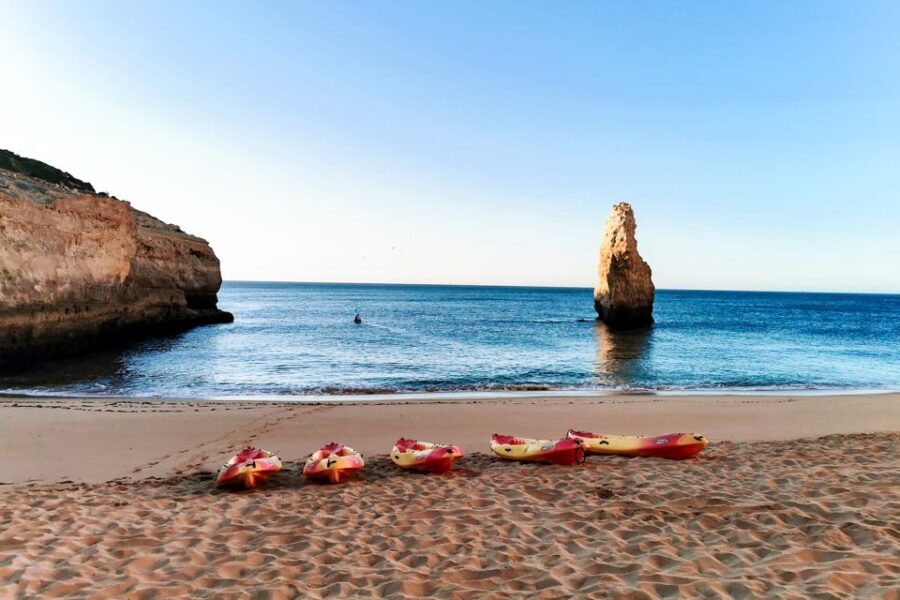
This is the starter pick. You launch directly from Benagil Beach, which means a two-minute walk to the cave itself rather than a forty-minute paddle from further up the coast. Two length options — the quick 45-minute run straight to the cave, or the full 2-hour version that loops past Praia da Marinha and several smaller caves. Our full review covers the shower at the end, which sounds small but is actually great when you’re sandy and have a rental car to get back to.
2. From Albufeira: Benagil Hidden Caves Tour by Kayak — around $53
Longer, fuller, more expensive. Three hours on the water, launching from Albufeira’s coast rather than Benagil itself, so you get a proper coastal paddle before arriving at the main cave. Our review notes the guides tend to find beaches the day-trippers never see. I’d pick this one if my hotel was in Albufeira, or if I specifically wanted the extra coast time — the “just get to the cave” crowd should stick with the $29 option.
3. Benagil: Caves and Secret Spots Guided Kayaking Tour — around $34
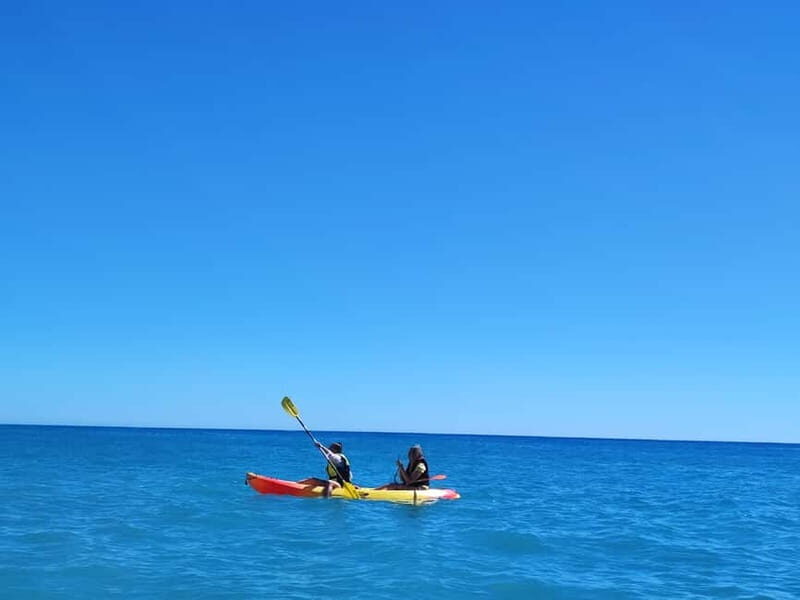
The sweet spot between the two above. Same 2-hour length as the cheap option, but the itinerary intentionally adds smaller, lesser-known caves between the cliffs and Benagil. Group sizes stay smaller. Our review calls it the best balance of price, group size, and sights for most people, and I agree — this is what I’d book if my only priority was “one tour that does everything.”
.jpg)
Where tours launch — the Carvoeiro vs Benagil vs Albufeira question
This is the one most first-timers get wrong, and it changes the whole day.
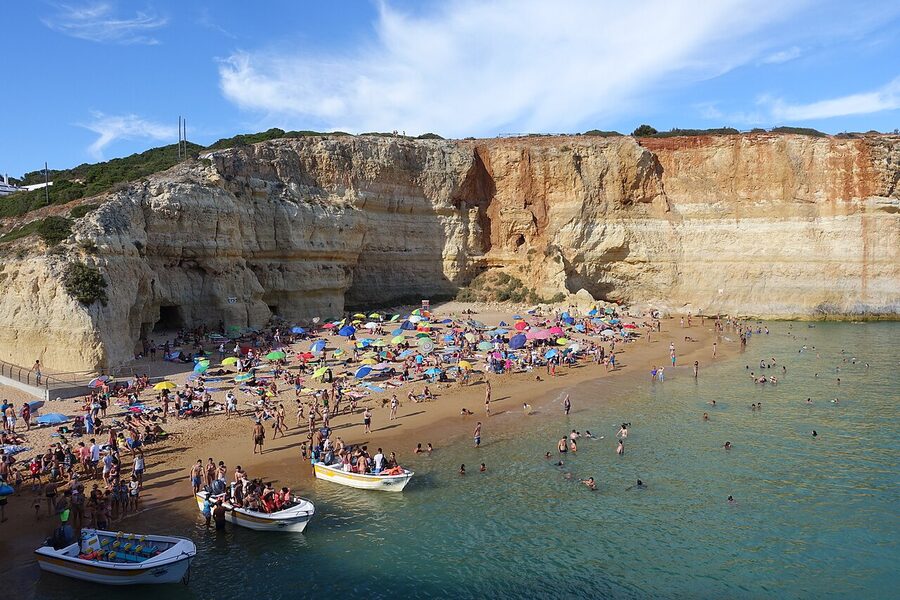
Launching from Benagil Beach itself. Shortest paddle — the cave is 200 metres east. You’re at the sea entrance within five minutes. Downside: parking in Benagil village is miserable in summer. If you can walk in from a nearby stay, great. If you’re driving and arriving after 10am in July, you’ll park 800 metres up a hill.
.jpg)
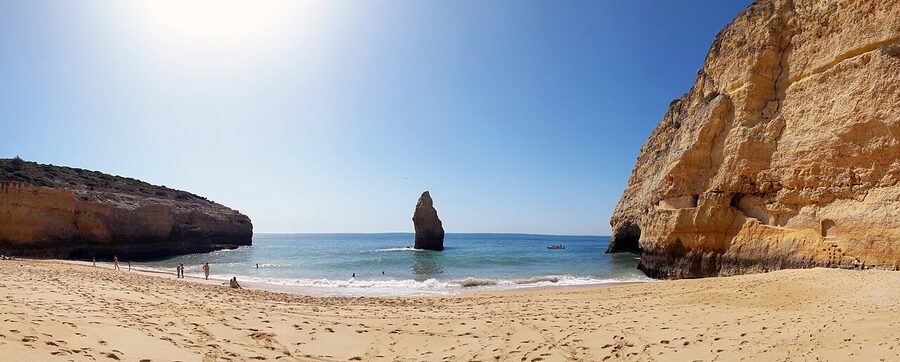
Launching from Carvoeiro or Praia do Carvalho. 20-minute paddle east to the cave. You see a chunk of the coast on the way — Marinha Beach, Corredoura, several tiny sea arches. Carvoeiro town is bigger, parking is easier, and there are cafés around the harbour for before and after. This is what I’d pick if I was renting a car and coming for the day.

Launching from Albufeira or Portimão. 3-hour tours, longer drives if you’re not staying there, and a real open-water paddle — not hard, but you’ll feel it in the shoulders the next day. Best if you’re already based in one of those towns, or if you want the full coastal experience rather than a quick hit.


When to go — time of day and time of year
The cave runs on two different clocks and you need to pick one to optimise for.
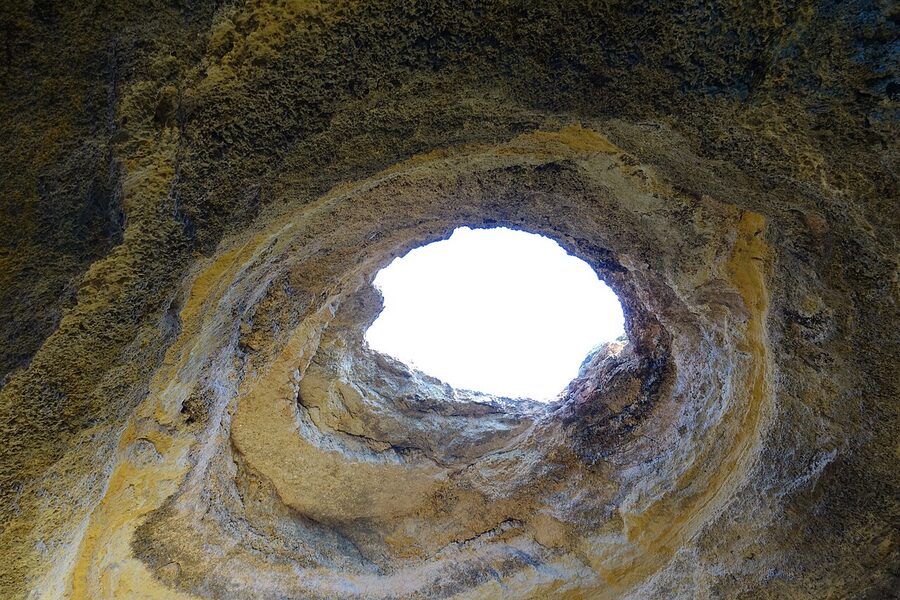
Light clock. The oculus lets sunlight in roughly between 10am and 4pm, and the ray hits the sand most directly between 11 and 2. If you’re there for the Instagram shot, that’s your window.
Crowd clock. First tour of the day leaves around 8 or 8:30am. That’s when you’ll have the quietest cave, the calmest water, and the nicest guides (they’re fresh, not on their fifth group of the day). By 11am, slots are full, parking is a nightmare, and the cave itself gets the conveyor-belt treatment.
.jpg)
I’d pick the 8am slot. Yes, you sacrifice the perfect ray of light on the sand. You get a nearly-empty cave, better photos of the actual space (crowds ruin wide shots), and the water is glassy. The Instagram shot is overrated when there are twelve other kayaks in your frame.
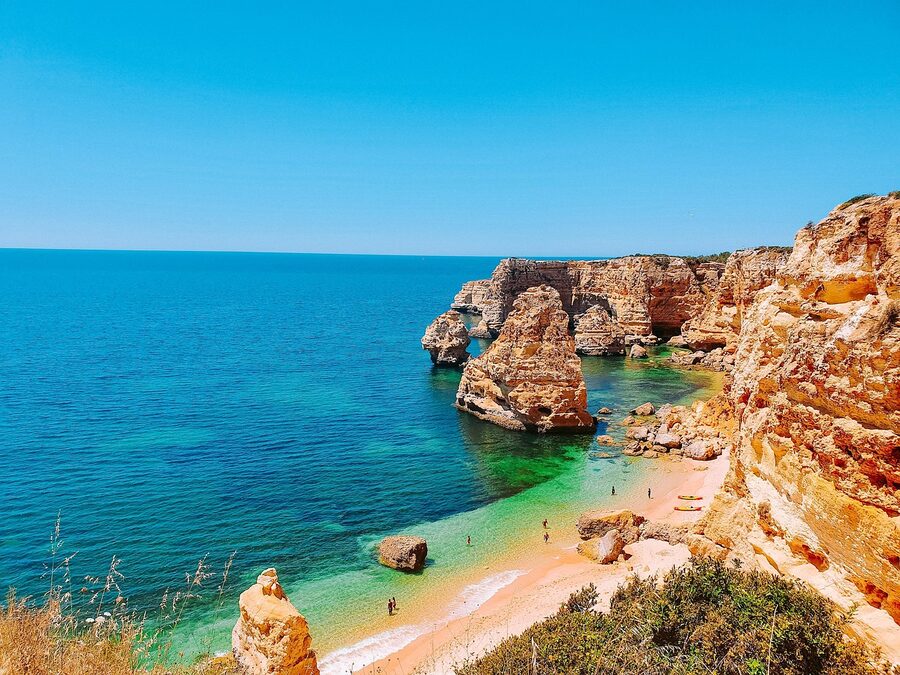
For season: May, June, and September are ideal. July and August work if you book two weeks out and accept the crowds. October can still be beautiful but the sea starts getting choppy — cancellations climb. November through March, most operators shut down or run boats only, not kayaks. You can still see the cave in winter, but weather cancellations are constant and the water is 14–16°C — cold for a kayak flip.
What the tour actually looks like, start to finish
To save you the “wait, what happens next?” anxiety I had on my first one, here’s the actual flow of a typical 2-hour tour.
You arrive 15 to 30 minutes early and check in at the operator’s kiosk on the beach. They’ll hand you a life jacket, a dry bag for your phone, and usually a cheap pair of water shoes if you didn’t bring any. You leave your stuff in a locker or a big plastic crate — nothing super valuable, please; these are beach setups, not bank vaults.
Safety briefing is 5 minutes. How to hold the paddle, what to do if you capsize (you won’t), hand signals if they need to tell you something over the noise of waves. Then you drag your kayak to the water, push off, and paddle out.
The first 10–15 minutes are open coast. Guides tend to drift from cave to cave — some barely bigger than a car, some you can paddle right through. They’ll stop every 5 minutes to shout names and history across the group. By cave four or five you’ll have stopped listening. That’s fine.
Benagil itself is usually the midpoint. You’ll queue briefly outside if another group is coming out — the operators coordinate, so it’s a minute or two, not longer. You paddle in. Guide shouts “look up” even though you’re already looking up. You drift for five to ten minutes, take photos, then paddle back out.


Then a few more caves on the way back. Most tours finish with a swim stop at a quieter beach — five to ten minutes to jump in, cool off, get out. If you can swim, do it. The water is absurdly clear.
Back to the launch beach, pull the kayak up, rinse off, done. The whole thing takes about 2 hours 15 minutes door to door, not two hours on the nose.
What to bring (and what not to)
Short list, because every guide has seen the same mistakes on repeat.
Bring:
- Sunscreen. Reef-safe preferred. Sea water reflects badly — you’ll burn on the bits you forgot.
- A hat you don’t mind losing. I’ve watched three caps go overboard on three separate tours.
- Swimsuit under your clothes — save the changing room hassle.
- Water shoes or old trainers. Flip flops fall off the moment the kayak wobbles.
- Phone in a waterproof pouch with a lanyard. Operators loan dry bags but lanyards are on you.
- Cash in small notes for tips — guides work hard and tips aren’t built into the price.
Skip:
- Anything expensive or breakable. Sunglasses, yes — pricey ones, no.
- Camera that isn’t waterproof. You’ll regret it the first time a wave slaps you.
- A full backpack of stuff. You can’t bring it on the kayak. Lockers are small.
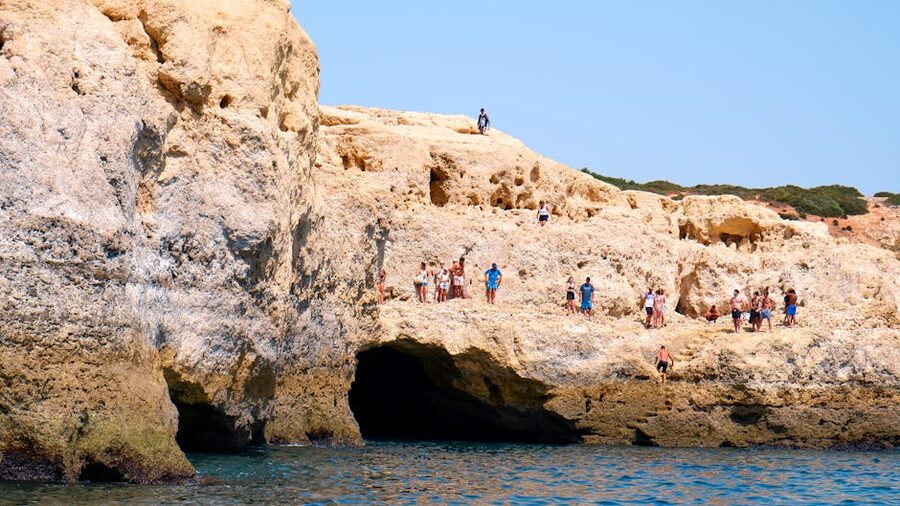
Is the Benagil kayak tour worth it in 2026?
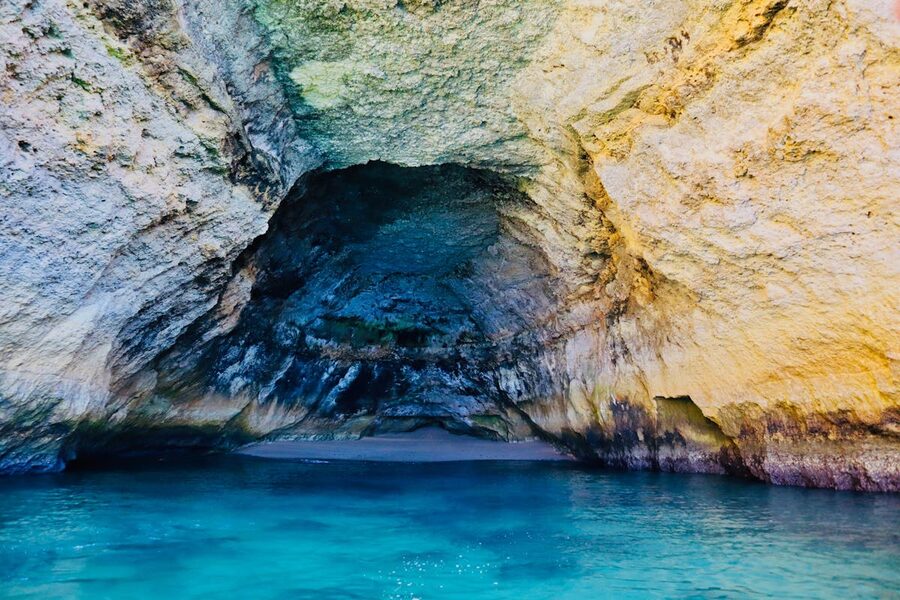
Look — the cave is on every Portugal list for a reason. It’s genuinely striking. Not “life-changing,” not “the eighth wonder of the world,” but distinctly worth two hours and €30.
The kayak tour specifically is worth it because every other option is worse. Boats don’t go inside (mostly). Swimming is now illegal. Hiking to the clifftop gets you a fenced-off glimpse down through the oculus, which feels like looking at a cake through a window. On a kayak you’re in the thing. You feel how cold the water is in the grotto versus outside. You hear the echo. The scale lands.
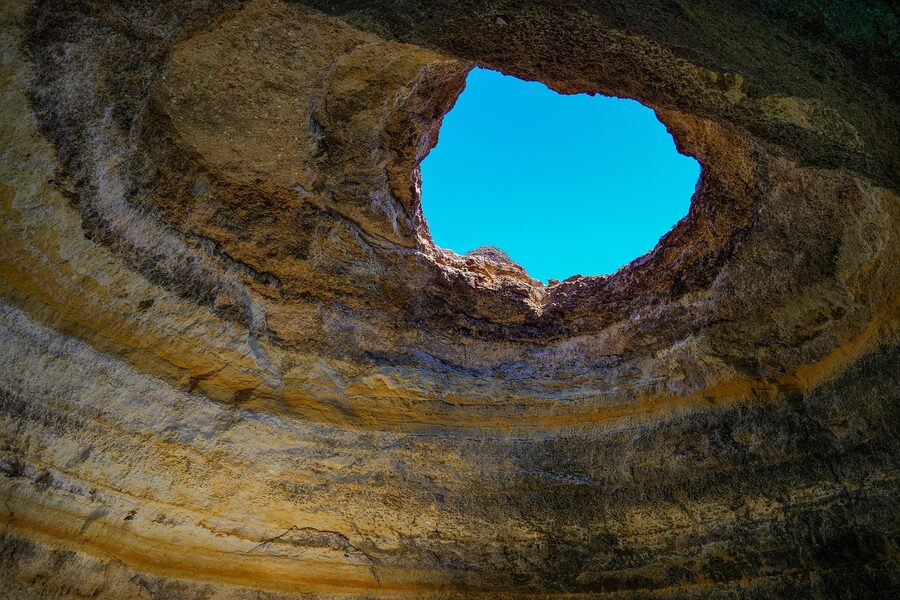
Is it overrated? A bit. Nowhere that famous is still secret. The cave you see in drone shots — sunbeam, crystal sand, empty space — is not the cave you’ll see at 11am in July with fifteen other kayaks. The cave you’ll see at 8am in May with three other boats? That one’s worth the €30.
My one real complaint: the time limit inside is genuinely too short. Five to ten minutes is enough to drift and shoot, not enough to really sit with the place. That’s the rule, not the operator’s choice. Temper your expectations.
A very short history of why this cave exists
The Algarve coast is sandstone — specifically, a band of marine limestone and sandstone laid down about 6 to 15 million years ago when the region was seabed. As the sea level dropped and the Atlantic started hammering the cliffs, soft bits eroded faster than hard bits. Caves form where a vertical joint in the rock lines up with wave action, and the whole thing wears inward.
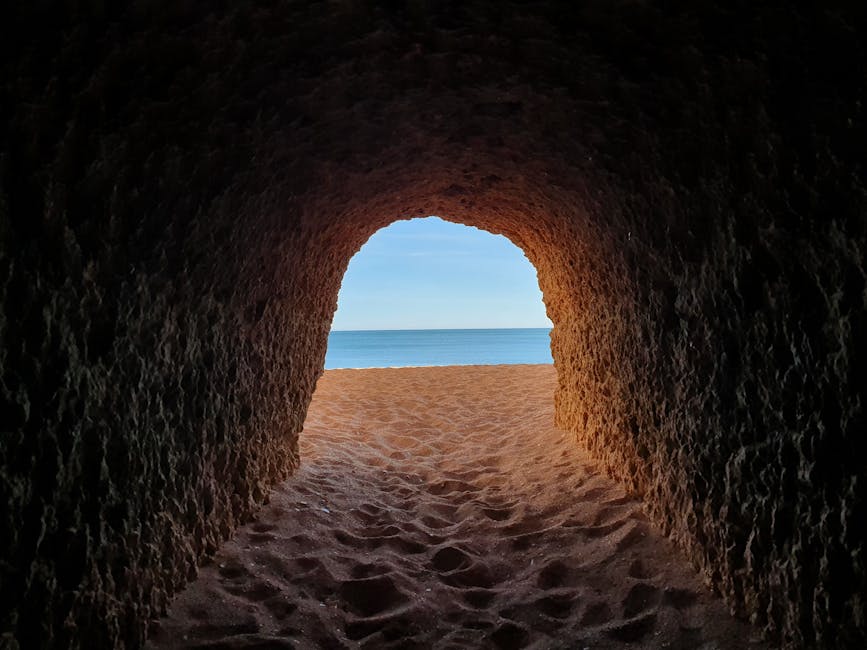
Benagil’s oculus is a collapse, not a sinkhole. Sometime in the last few thousand years — nobody knows exactly when — the roof of the grotto cracked and a section fell into the sea. What was left is a more or less circular hole, a beach below it, and the shape we all pay to photograph. In geological time, the whole cave won’t last. In human time, we’ll be long gone first.
The village of Benagil itself was a fishing hamlet of about 50 people as late as the 1980s. The cave became famous through photography in the 2010s — before Instagram, it was just another nice Algarve grotto. Now it’s on every top-10 list for Portugal, which tells you more about how algorithms work than about the cave.
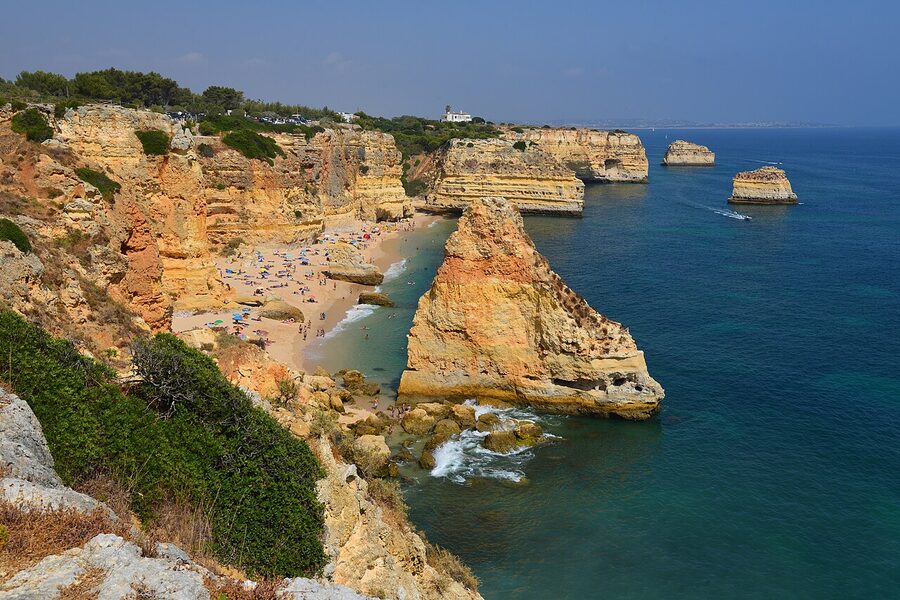

Common mistakes I’d avoid
Five things I’ve either done myself or watched other people do.
- Booking for July/August the day before. Peak slots book out a week out minimum. Plan ahead.
- Booking a boat tour expecting to go inside the cave. Read the listing. Many boat tours only float at the entrance now, even if photos suggest otherwise.
- Wearing flip flops. I know I already said this. Someone will do it anyway.
- Skipping breakfast because the tour is “only two hours.” You paddle, you get hungry. Cafés at the launch beaches open late — eat before you leave.
- Planning around weather apps that predict ocean conditions. Check the operator’s cancellation policy instead. Most will move you to another slot free of charge, but only within a window. Book early in your Algarve trip so you have time to reschedule.
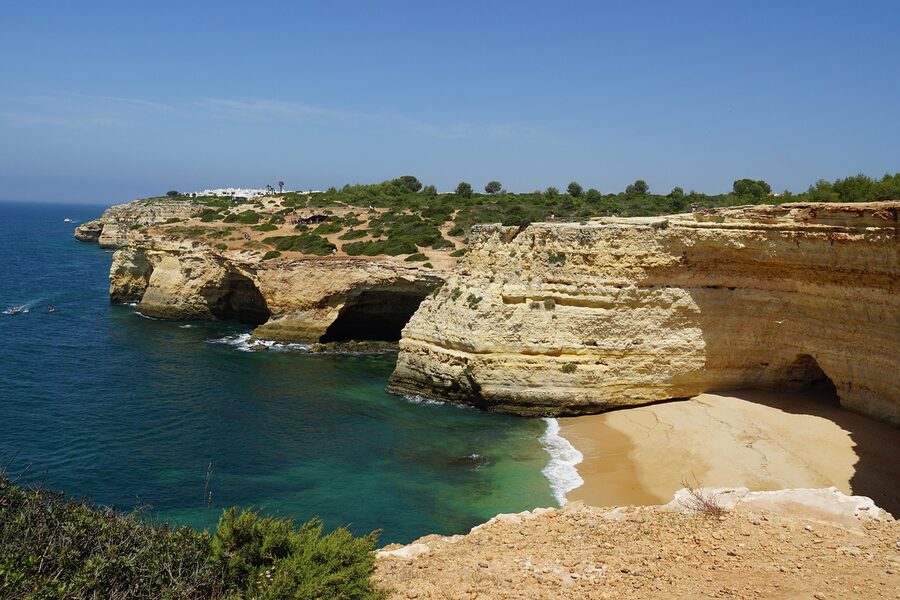
Beyond Benagil — what else is worth doing on the same Algarve trip
If you’re spending more than a day on the south coast, a kayak in Benagil pairs well with a boat tour in Ponta da Piedade over in Lagos — same limestone, different shapes, and the caves there are arguably better for photography (though nowhere near as famous). You can also spend an afternoon at Ria Formosa in the east — completely different terrain, lagoons and barrier islands instead of cliffs, and a good contrast if you’ve had enough of sandstone. For the full Benagil-cave experience without the kayak, the speedboat tour from Portimão covers a wider stretch of coast in less time, and is what I’d pick for anyone who doesn’t want to paddle. And if you still want to see the cave itself from the shore without getting on the water at all, our general Benagil guide has the hiking route and timings.
Further afield in Portugal, if you’re adding Porto or Lisbon, the Slide & Splash water park is the easiest Algarve day out with kids on a wet-weather day, and if you’re heading north, skip straight to a Porto tuk-tuk for a low-effort intro to Portugal’s second city, or catch the Spiritus show in the evening — a Port wine tasting crossed with live Fado, surprisingly good even if neither of those things was on your list.
Affiliate disclosure: links in this guide go to GetYourGuide, which pays us a small commission if you book. It doesn’t change the price. We only recommend tours we’d book ourselves.