The draw here is a winter day in Biei that ends among the lights at the Blue Pond or Ningle Terrace. You get snowy fields, a waterfall fed by underground springs and a long evening drive back to Sapporo, all without arranging several rural connections yourself.
I like the contrast between the ice-blue water at Shirahige Falls and the snow-covered Blue Pond, and the chance to browse Furano crafts at Ningle Terrace. The late start is another plus: departures are around 11:30 from November to January and 12:30 from February to March.
The trade-off is a long, tightly timed day. Weather, traffic and lighting schedules can change the order or remove stops, and the tour promises at least one of the Blue Pond or Ningle Terrace illuminations, not necessarily both.
At a glance
- Two winter lights: The Blue Pond or Ningle Terrace is included as an illuminated stop, depending on the day’s arrangements.
- A working waterfall: Shirahige Falls pours from cracks in the rock face, where underground water meets the Biei River.
- Season changes the visit: Shikisai no Oka is a snow park in winter, not a carpet of summer flowers.
- Late Sapporo departure: The tour leaves around late morning or early afternoon, then returns at about 20:30.
- Guide arrangements vary: Chinese, English and Japanese support is offered, but groups under 12 may travel with a driver only.
- Bring patience for the road: The route covers several rural stops, and holiday traffic can stretch the return.
- What this Sapporo day trip is really for
- Ningle Terrace: small cabins, handmade work
- Shikisai no Oka: snow replaces the flower carpet
- The Lonely Christmas Tree and its backup
- Shirahige Falls: underground water in winter
- Blue Pond after dark: expect light, not summer-blue water
- The long ride from Sapporo
- What the price buys, and what it does not
- Practical details that matter on the day
- Who should book this winter circuit?
- FAQ
- Where does the tour depart from?
- When does the tour return to Sapporo?
- Is the Blue Pond blue in winter?
- Will the tour visit both the Blue Pond and Ningle Terrace illuminations?
- Are the flower fields at Shikisai no Oka in bloom during winter?
- How much does snowmobiling cost?
- Are meals included?
- What languages are available for the guide?
- What happens if traffic or weather changes the route?
- Can children join the tour?
- More Winter Activities in Furano
- More Tours in Furano
- More Tour Reviews in Furano
What this Sapporo day trip is really for
 1 / 8
 2 / 8
 3 / 8
 4 / 8
 5 / 8
 6 / 8
 7 / 8
 8 / 8
This is a broad sampler of Biei and Furano, not a slow visit to any single place. You travel by shared vehicle between scattered sights, with short stops for photos, a little browsing and a first look at the region’s winter character.
The value is practical. Biei’s points of interest are spread out, and this tour bundles transport, tolls, parking and fuel into one outing. You do not have to work out how to connect the Blue Pond, Shirahige Falls, the hill country and Furano by public transport on a winter day.
That convenience comes with a fixed pace. Stops range from 15 to 60 minutes, and the driver-guide may change the route or omit a sight because of weather, traffic, capacity or vehicle-hour rules. Think of this as a scenic circuit with several highlights, not a promise of an unhurried visit at every stop.
Ningle Terrace: small cabins, handmade work
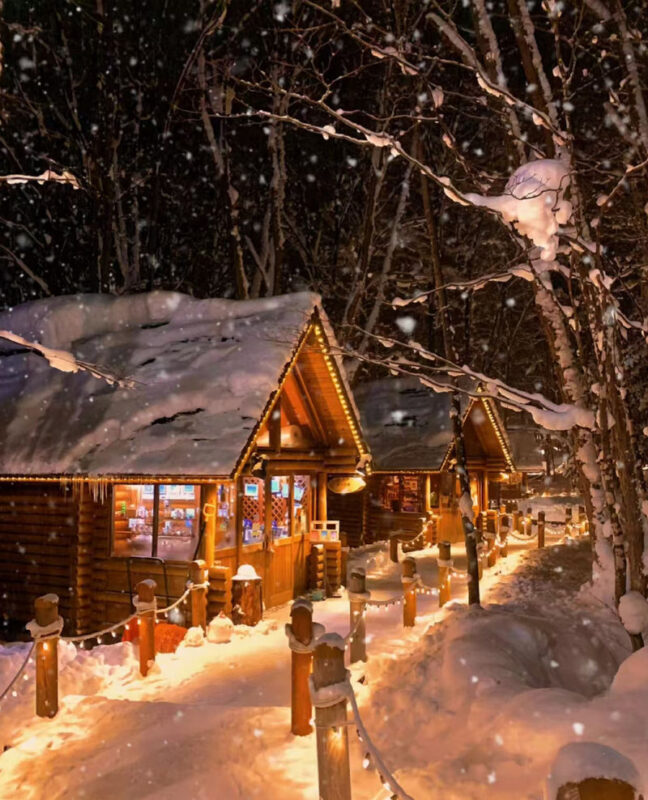
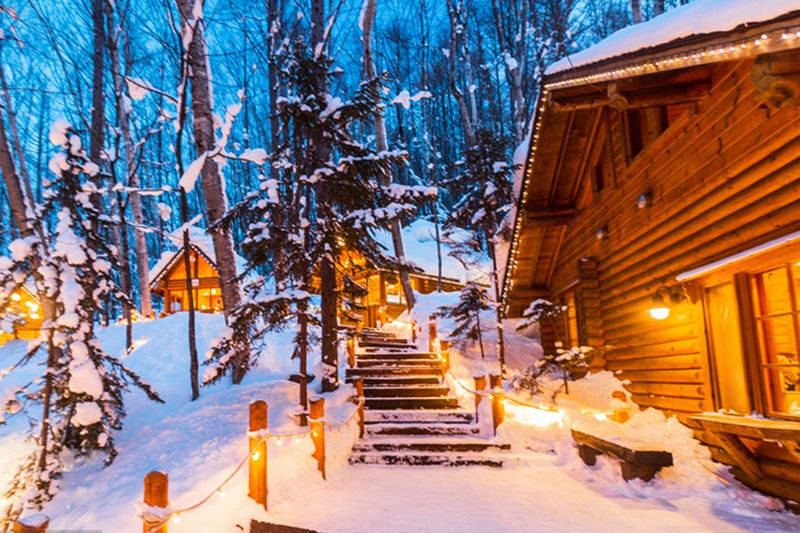
Ningle Terrace is a cluster of small wooden cabins in a forest setting. Each cabin is a shop, with items such as glasswork, paper crafts, paintings and pieces made with dried Furano lavender. The concept draws on a forest elf character from a novel by Japanese writer Sō Kuramoto.
The appeal is the setting as much as the shopping. Little cabins among the trees give the stop a storybook feel, and the handmade goods offer a more local keepsake than a standard souvenir shelf. The shops are small, so expect a compact browse rather than a large market.
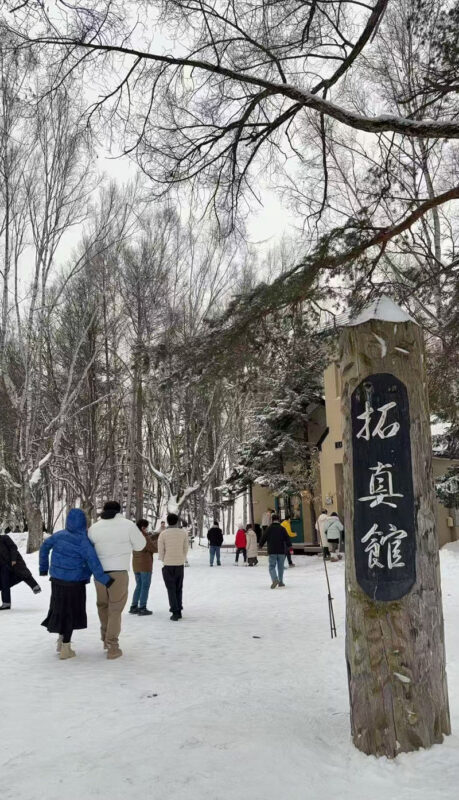
The scheduled visit is about 40 minutes. That is enough to wander and look closely, but not enough to linger over every shop if the terrace is busy. The route may substitute Takushinkan for Ningle Terrace if traffic or access conditions require a change, so keep your expectations flexible.
You can also read our reviews of more tours and experiences in Furano
Shikisai no Oka: snow replaces the flower carpet
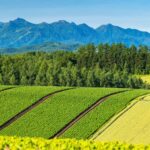
Shikisai no Oka is best known for its broad flower fields, which cover about 15 hectares. From late May to late October, more than 30 kinds of flowers, including tulips, lavender and sunflowers, bloom across the rolling ground. Winter is a different visit entirely.
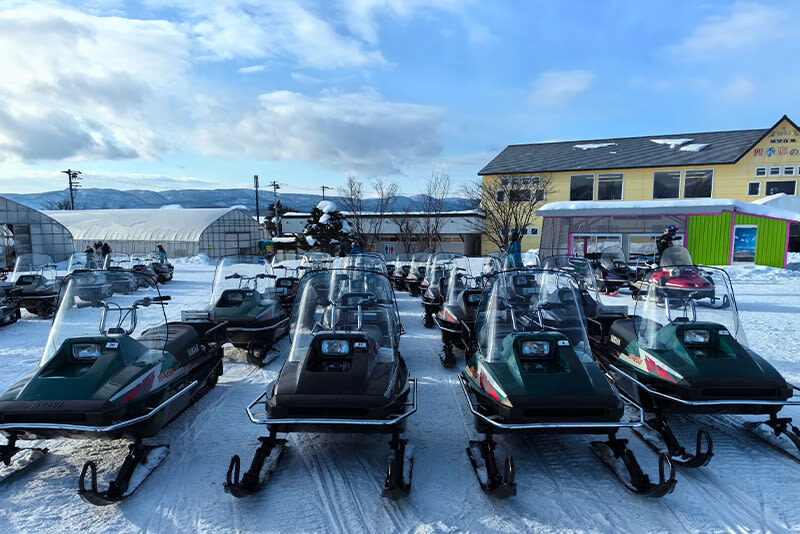
From December to March, snow turns the area into a snow park. You can take in the open, white setting, and snowmobiling is available at extra cost: ¥15,000 for one rider or ¥20,000 for two. Those prices are not part of the tour fare, so decide in advance if the activity matters to you and budget accordingly.
The stop is scheduled for an hour, which gives you more time here than at the waterfall or the tree. Still, don’t book a winter departure expecting the famous rows of flowers. The seasonal shift is the point: this stop offers a snowy outing, not a summer flower-field photo.
The Lonely Christmas Tree and its backup
The Lonely Christmas Tree is a solitary spruce in a field near Biei. Its shape and isolated position have made it a popular photo stop, especially in winter, when the surrounding ground is often covered with snow.
The visit is short, about 15 minutes. That is enough to get a look and take a few pictures, but it is not a place to roam around. The tour may switch to the Ken & Mary Tree if traffic or restrictions affect access. This is one of several reasons to treat the precise route as flexible.
At a photo spot like this, follow the guide’s directions and any local access rules. A famous tree in an open field can look close, but the stop is brief and the schedule has to keep moving.
Shirahige Falls: underground water in winter
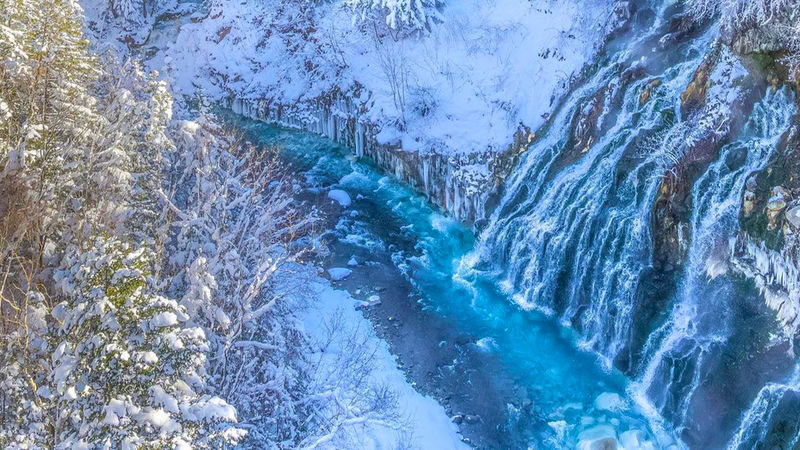
Shirahige means white beard, a name inspired by the water streaming through cracks in the rock face. The water comes from underground, strikes the rocks and falls into the Biei River. In winter, the contrast between the white snow and the waterfall’s blue-tinted water gives this 20-minute stop its particular appeal.
I like that this is more than a seasonal photo backdrop. The water’s source and route make it a distinctive natural feature, and the short visit is enough to see the falls without turning the day into a hike. The tour description calls it a subterranean waterfall, a useful detail to keep in mind as you look down toward the water.
The site changes with the season. Summer brings green mountains and clear water; winter brings snow and ice around the falls. The tour’s timing allows a quick visit, so have your camera and warm layers ready before getting off the vehicle.
Blue Pond after dark: expect light, not summer-blue water
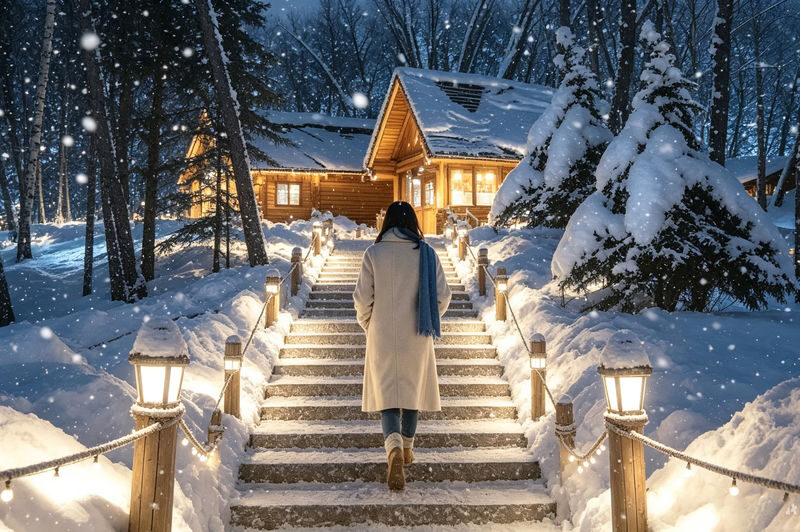
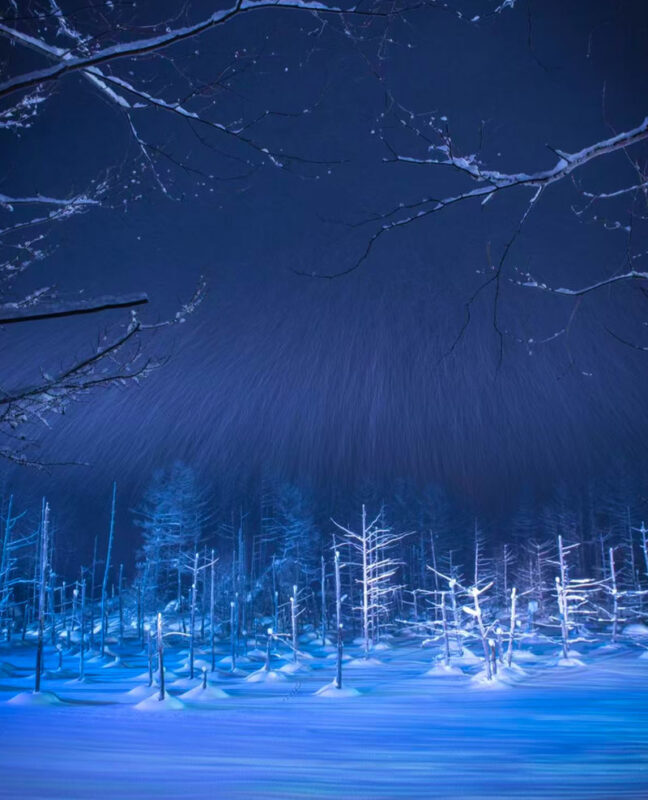
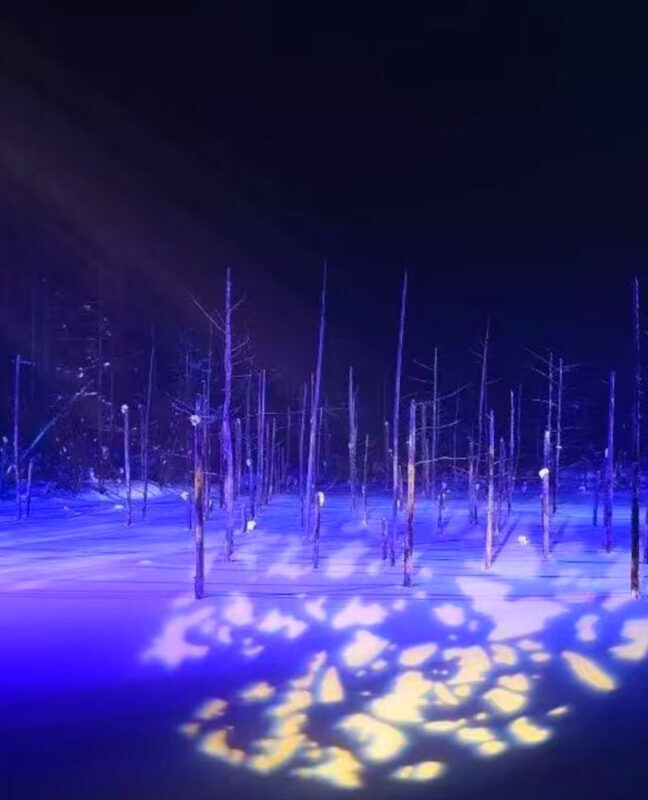
The Blue Pond is famous for the way minerals in the water refract light, creating its characteristic blue appearance in warmer months. In winter, snow and ice can hide that familiar surface. The evening illumination instead plays on the pond’s ice, snow, bare larch trees and dark sky.
That distinction matters. If you are coming for the daytime blue water, winter is not the season to count on seeing it. The nighttime display offers a different scene, with light shaping the frozen pond and trees. It can be an atmospheric finale, but it is not simply the summer view after sunset.
The stop is scheduled for about 30 minutes. The tour’s stated plan is to include the Blue Pond or Ningle Terrace illumination, subject to the day’s arrangements. Monthly lighting schedules, weather and road conditions may affect what you see and when. Keep your evening expectations flexible, especially if one particular light display is the main reason you are booking.

The long ride from Sapporo
The meeting point is Sapporo Station North Exit. From November through January, meet at 11:20 for an 11:30 departure. From February through March, the meeting time shifts to 12:20, with departure at 12:30. The return is scheduled for about 20:30 at Sapporo Station.
The trip back from the final stop is estimated at two and a half hours. The full outing is a long day, but the later departure means you do not have to start at dawn. One person on a recent trip found the chance to sleep during the drive useful; if you are comfortable resting on a bus, bring a small travel pillow or eye mask if you already use one.
Traffic can change the day considerably. Weekends, public holidays and busy periods may add two to five hours, and the operator may shorten stops, change the order or skip attractions. Avoid making a tight evening reservation after the planned return. A flexible dinner plan is the safer choice.
The tour uses shared vehicles. If fewer than 12 people book, the group may travel in a vehicle with fewer than 14 seats and a driver but no separate guide. With more than 12 people, a driver and guide are arranged. Chinese, English and Japanese guide support is offered, but confirm what applies to your departure if having a guide in a particular language is essential.
The tour company says its vehicles have Japanese government-recognized green plates. Round-trip transfers, tolls, parking and fuel are included. Meals, drinks, personal purchases and tips are not.
What the price buys, and what it does not
The advertised starting price is $56.79, while the winter meeting-point package is shown from $81.09. Prices can vary by date and package, so check the exact option before booking rather than assuming the lowest starting figure applies to your winter departure.
The fare makes most sense if you value transport and route planning over time at each stop. Five rural sights plus an evening illumination would be awkward to connect on your own in one day, especially in winter. Having the driving, fuel, tolls and parking bundled removes a lot of practical work.
The price does not include food or snowmobiling. A guide may suggest lunch or local specialties, but purchases are optional. If you want to ride a snowmobile at Shikisai no Oka, add ¥15,000 for one rider or ¥20,000 for two to your budget.
Recent departures have had guides named Lucy and Eric. Lucy was especially appreciated for explaining the sights, helping with photo angles and keeping the group informed; Eric was also described as friendly. Guide assignments vary, and smaller groups may not have a separate guide. What matters most is that the route is compact and that you arrive ready to follow the day’s timing.
Practical details that matter on the day
Check your email the afternoon or evening before departure for the meeting time, vehicle information and guide contact details. Check the spam folder too. If the information has not arrived by 21:00, contact the operator. If the tour uses a LINE group, you may need to open the link in the email and join it yourself.
Arrive 10 minutes early. The vehicle waits no more than five minutes for late arrivals, and missed departures are not refundable. The stops are timed, so keep close to the group and return to the vehicle promptly. The fixed schedule is not the place to wander off for an unscheduled detour.
Dress for standing outside in winter and bring your passport and valuables with you. Sealed snacks or unopened drinks can be carried on the bus, but eating inside is prohibited. Tell the operator in advance if you have large luggage.
There is no travel or personal accident insurance included. The operator also lists medical restrictions, including high blood pressure, heart disease, acrophobia, asthma, epilepsy and pregnancy, and says the tour is not suitable for people with those conditions. Children aged two and older pay the adult rate. Children under two may ride free without their own seat, but the operator asks you to notify them in advance; a seat costs the adult fare. Participants aged 65 or older must be fit for the trip and accompanied by someone aged 22 or older.
Who should book this winter circuit?
Book it if you want a low-effort way to see several well-known Biei and Furano sights from Sapporo, and you are comfortable with a long drive and short stops. It is especially useful if you want the winter version of the region, with snowy fields, frozen water and an evening light display rather than summer flowers.
It is less suitable if you want to control the pace, spend a long time at the Blue Pond, or need certainty that both illuminations will be open and visited. The route is shared, subject to weather and traffic, and the group must keep to the schedule.
My practical verdict: this is a good-value outing for a first look at Biei in winter, provided you treat the itinerary as a plan rather than a guarantee. Book it for the mix of scenery and the convenience of transport, not for a single exact photo or a leisurely day.
(Hokkaido Winter Illumination) Blue Pond Illumination & Ningle Terrace & Shirahige Waterfall & Shikisai no Oka & Biei Christmas Tree One-Day Tour (Departing from Sapporo)
“The tour guide and driver were both excellent. However, the quality of fellow travelers can be a hit or miss. Two Thai women kept talking loudly wh…”
FAQ
Where does the tour depart from?
It meets at the North Exit of Sapporo Station. From November through January, meet at 11:20 and depart at 11:30. From February through March, meet at 12:20 and depart at 12:30.
When does the tour return to Sapporo?
The planned return is about 20:30 at Sapporo Station. Traffic and weather can delay the return, so leave your evening plans flexible.
Is the Blue Pond blue in winter?
The familiar blue surface can be hard to see when the pond is frozen and covered in snow. The winter illumination instead lights the ice, snow, trees and night sky.
Will the tour visit both the Blue Pond and Ningle Terrace illuminations?
Not necessarily. The stated arrangement guarantees at least one of the two illuminated stops, subject to the day’s schedule and conditions.
Are the flower fields at Shikisai no Oka in bloom during winter?
No. From December to March, the area operates as a snow park. The flowers bloom from late May to late October.
How much does snowmobiling cost?
Snowmobiling is an extra expense at Shikisai no Oka. The listed prices are ¥15,000 for one rider and ¥20,000 for two riders.
Are meals included?
No. Meals and drinks are not included. Sealed snacks and unopened drinks may be brought on board, but eating inside the bus is not allowed.
What languages are available for the guide?
Chinese, English and Japanese guide support is offered. For groups under 12, the vehicle may have a driver only, without a separate tour guide.
What happens if traffic or weather changes the route?
The operator may change the order, shorten stops or omit attractions because of traffic, weather, capacity or vehicle-hour limits. The exact scenery and schedule depend on conditions on the day.
Can children join the tour?
Children aged two and older pay the adult rate. Children under two may travel without a seat at no charge, but the operator asks you to inform them in advance. A seat for a child under two costs the adult fare.