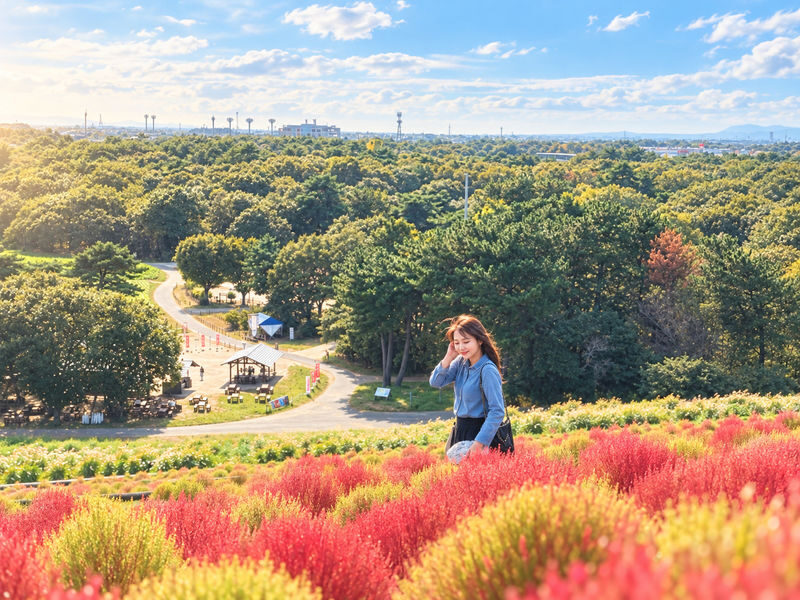
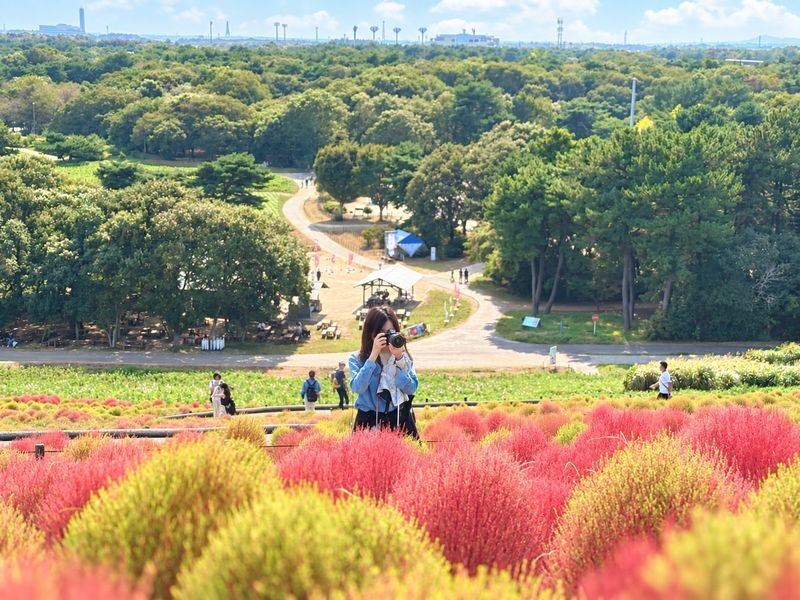
Hitachi Seaside Park’s flower hills are the star here: pale blue nemophila in spring, then round kochia shrubs turning red in autumn. I like that this day trip also reaches Fukuroda Falls and Oarai’s sea-facing torii, three very different sights without asking you to piece together a long public-transport route yourself.
I also like the contrast between the broad flower fields, the waterfall’s four descending tiers and the dramatic coastal setting at Kamiiso Torii. The trade-off is time: the park gets just 1 hour 50 minutes, including your own sightseeing and any meal, so this is a sampler rather than a slow day in the gardens.
- At a glance
- Fukuroda Falls: a powerful first stop
- Hitachi Seaside Park: flowers with a clock running
- Oarai Isosaki Shrine: a torii on the rocks
- Getting there from Tokyo, and what the day feels like
- Price and value: convenience, with extras to budget for
- Who will get the most from this trip
- Should you book this Ibaraki day trip?
- FAQ
- Where does the tour depart from?
- What time does the tour return to Tokyo?
- How much time do you get at each attraction?
- Are admission tickets included?
- Are meals included?
- Which flowers can you see at Hitachi Seaside Park?
- What language support does the tour provide?
- Can infants and toddlers join for free?
- Can you choose your bus seat?
- The Best Of Japan!
- More Tours in Japan
- More Tour Reviews in Japan
At a glance
 1 / 8
 2 / 8
 3 / 8
 4 / 8
 5 / 8
 6 / 8
 7 / 8
 8 / 8
- Three distinct stops: Fukuroda Falls, Hitachi Seaside Park and Oarai Isosaki Shrine make for a varied day out from Tokyo.
- The season shapes the park visit: Nemophila are the spring draw; kochia and cosmos are associated with autumn. Bloom and foliage timing can shift with weather.
- You travel by group vehicle: Transport is arranged from Ginza, but the vehicle depends on group size and seats are assigned on site.
- Bring money for admissions and food: Park admission and the falls tunnel fee are not included. The tunnel costs 500 yen for adults and 300 yen for children under 15.
- Expect a brisk schedule: The falls get an hour, the park 1 hour 50 minutes and the shrine 50 minutes.
- Guide service has limits: A multilingual tour leader accompanies the group and communicates practical details, but attraction introductions in your chosen language are not promised.

👉 See our pick of the 14 Fantastic Tours In Japan
Fukuroda Falls: a powerful first stop
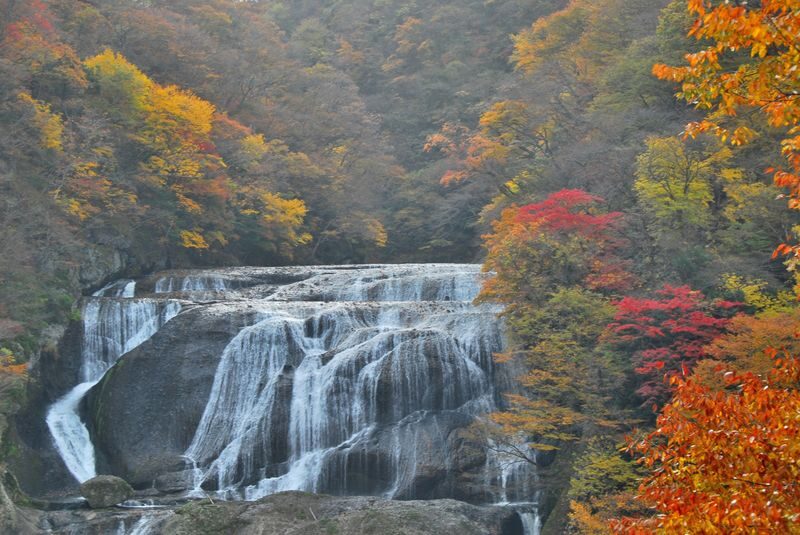
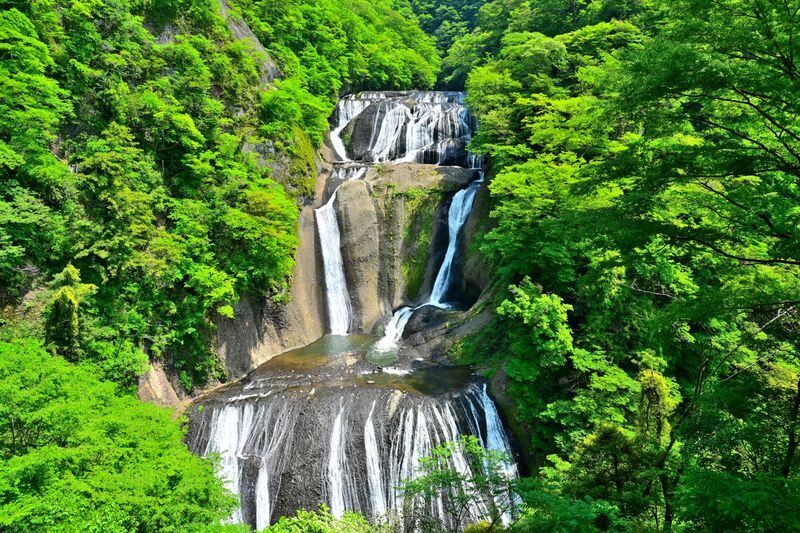
The schedule begins at Fukuroda Falls, a major cascade in Daigo Town, Ibaraki. Water runs down a rock face in four stages, dropping about 120 metres across a width of roughly 73 metres. That stepped shape is what gives the falls their layered look, with several separate curtains of water rather than one narrow plunge.
You have one hour here. The route includes a tunnel, for which you pay an extra 500 yen as an adult or 300 yen if you are under 15. The waterfall admission itself is also excluded, and its price is not specified in the tour details, so allow for that in your budget too.
The short stop is enough to take in the main sight, but it leaves little room to linger. If you enjoy waterfalls, you may wish you had more time, especially if the area is busy or you want to take photographs from different viewpoints. In autumn, foliage can add another reason to stay, though the tour does not promise that the leaves will be at their best on your date.
There is another timing point to weigh: some autumn departures have been described as early-season visits, when the falls’ foliage was not yet showing. The day still includes the waterfall, but don’t book on the assumption that you will see peak colour at every stop.
You can also read our reviews of more tours and experiences in Japan.


Hitachi Seaside Park: flowers with a clock running
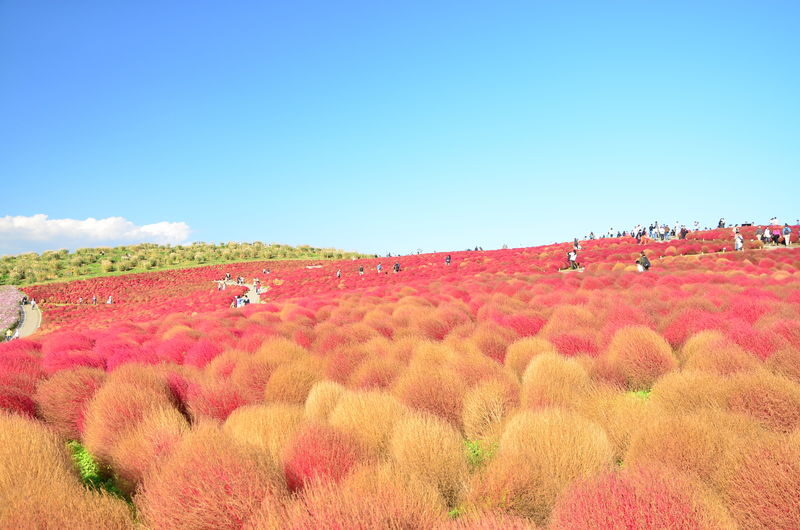
Hitachi Seaside Park covers about 200 hectares and has flower areas, grassland, dunes and an amusement park area. It began as a former military site, became a national park and opened to the public in 1973. The park’s scale is part of its appeal, but it also makes the time limit matter: you cannot expect to cover it all in one visit.
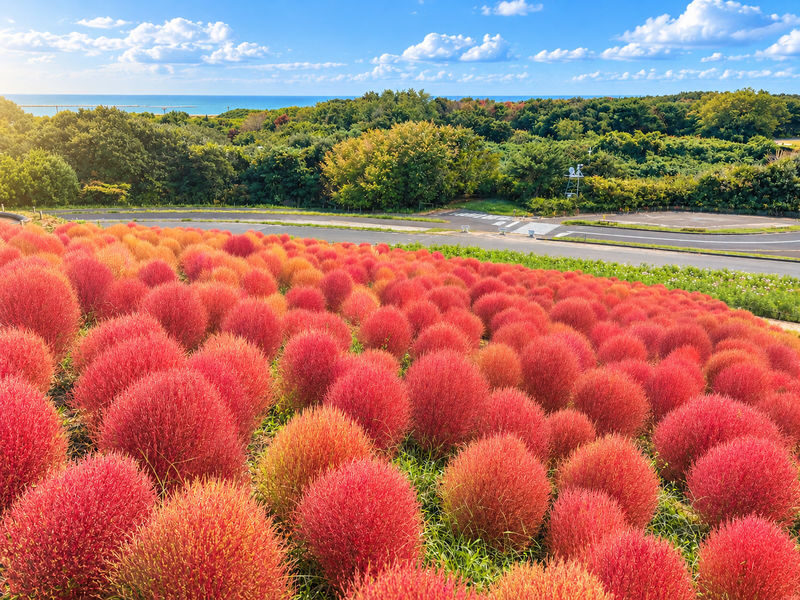
The famous spring scene is the pale blue nemophila, particularly around mid-to-late April. In autumn, kochia turn red, with cosmos also in season. The park changes across the year: daffodils, tulips and rapeseed flowers appear in spring, while summer brings sunflowers and lavender. Winter has plum blossoms and daffodils.
You get 1 hour 50 minutes, and the visit is self-guided. That gives you freedom to choose your route, but you will need to make choices quickly. If the flower hills are your priority, head for them first rather than trying to see every area. Keep in mind that the park’s admission is not included, and you will need to set aside time for food if you plan to eat there.
This stop is the tour’s biggest compromise. The park is large enough to fill a day, and a tight visit can feel shorter still if you are trying to have lunch and see the headline flowers. One autumn visitor found two hours, including lunch, insufficient. That is a fair warning, not a reason to skip the trip: if your aim is a first look at the seasonal display, the included time may be enough. If you want a relaxed garden day, plan a separate visit.
Flower timing is weather-dependent. The tour runs on its scheduled date even if the nemophila or autumn foliage is early or late, so book for the overall route, not a guaranteed peak-bloom scene. A windy spring day is also possible, so a light extra layer is a sensible choice.
Oarai Isosaki Shrine: a torii on the rocks
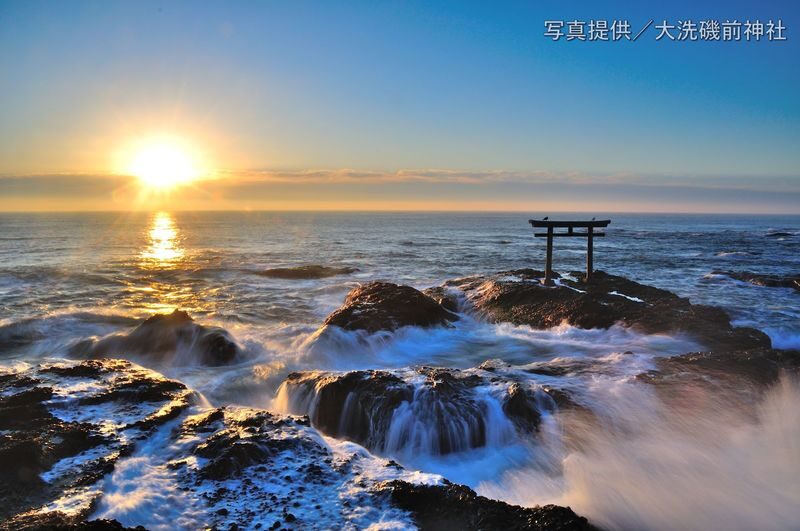
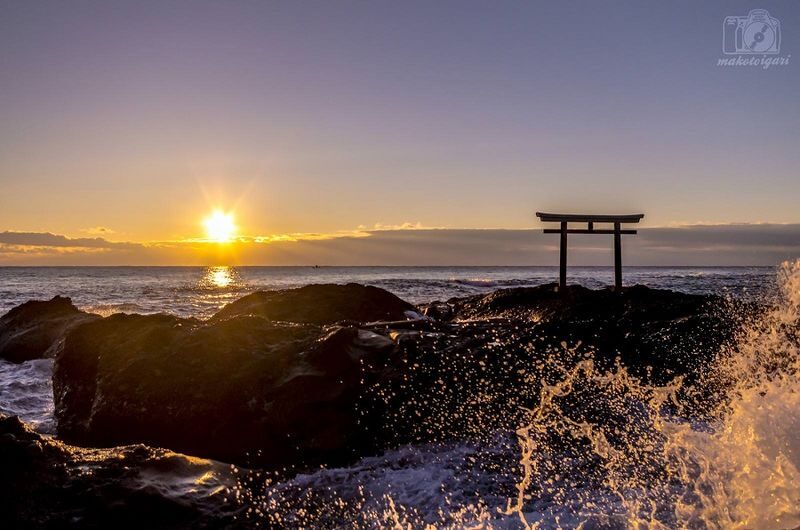
Oarai Isosaki Shrine is known for Kamiiso Torii, a gate standing on a rock at the water’s edge. Local tradition identifies the rock as the place where a god descended. With the coastline behind it and waves breaking around the rocks, the torii is the kind of sight that makes sense in person: simple, exposed and closely tied to the sea.
You have 50 minutes here, and the stop is self-guided. The shrine grounds are relatively small compared with the park, so this is a more manageable visit, though the torii is the main attraction. Sunrise is a particularly striking time to photograph it, but this tour departs Tokyo in the morning and does not promise a sunrise arrival. Treat the visit as a chance to see the coastal setting, not as a sunrise photography trip.
The sea can be rough, and the waves are part of the view. Use care around the shore and keep an eye on your belongings during free time. The tour operator does not accept responsibility for accidents or losses during independent sightseeing.
Getting there from Tokyo, and what the day feels like
Departure is scheduled between 7:50 and 8:00 a.m., with the meeting point described as a one-minute walk from Exit C2 or C3 of Ginza Subway Station. Arrive ten minutes early. The return is scheduled for 5:30 to 6:00 p.m. at Ginza Tokyu Plaza, although traffic, weather or changes to the route can affect the timing.
Do not assume every vehicle will be a private car. The vehicle depends on the number of participants; smaller groups may have a driver who also acts as the attendant, while bus seating is assigned on site and cannot be selected. The practical benefit is that you avoid arranging connections between distant stops. The cost is a shared schedule and less control over how long you stay.
The listed sequence starts at Fukuroda Falls, continues to Hitachi Seaside Park and then goes to Oarai Isosaki Shrine. Road conditions can change that order, and traffic may shorten time at a stop or delay the return. Long-weekend traffic has made the ride tiring for some people, so keep your evening plans flexible rather than booking a tight connection or dinner reservation.
The tour includes insurance and an English-, Chinese- or Japanese-speaking guide or tour leader. The language service is focused on group communication, such as meeting times and locations; introductions at the attractions are not guaranteed in your chosen language. Some guides have offered useful historical context and help along the way. Names mentioned on past trips include Ms Hsieh, Helen, Ana, Carp, Marco and Ms Wei, but guide assignments vary, so don’t book expecting a particular person.
A practical wrinkle is the meeting point wording. One past visitor found that the named Ginza Tokyu Plaza location had changed to GinzaNovo. Since the supplied meeting details still name Ginza Tokyu Plaza, confirm the precise meeting spot with the operator before travel and check any messages carefully. Groups for different tours can meet in the same area, so knowing your tour name and departure details helps avoid confusion.
Price and value: convenience, with extras to budget for
The guaranteed-departure package starts at US$50.45. Other listed options include an autumn early-bird package from US$56.15 and a two-person autumn discount from US$75.69. Package dates and prices can differ, so check the option you select rather than assuming every fare includes the same conditions.
At the lowest quoted price, the main value is transport from Tokyo to three far-flung stops in one day. You also get a tour leader for coordination and operator-provided insurance. For a visitor who would otherwise need to plan the route and manage transfers, that convenience can make the price worthwhile.
But the advertised starting fare is not the full day’s cost. Hitachi Seaside Park admission, Fukuroda Falls admission, the waterfall tunnel fee, meals, drinks and personal expenses are extra. The tunnel fee alone is 500 yen for an adult and 300 yen for a child under 15. Since the park admission price is not given here, check it before you set your budget.
The value depends on what you want. If your goal is to see Ibaraki’s three headline sights without handling transport yourself, the package is an efficient option. If you want a full day at Hitachi Seaside Park, or the freedom to wait for ideal weather and light at the coast, the group schedule will feel restrictive.


Who will get the most from this trip
I would consider this tour if you have one day to spare from Tokyo and want variety: flowers, a waterfall and a coastal shrine rather than three similar stops. It is also a good fit if independent transport planning feels like work you would rather avoid. Families can bring children of any age; children aged zero to two ride free if they do not need a separate seat or meals, but child seats are not available.
It is less suited to anyone who wants unhurried photography, a long park visit or a guaranteed peak-bloom date. The tour runs even if flowers or foliage are not at their best, and traffic or weather can change the schedule. If those uncertainties would spoil the day for you, arrange a more flexible visit on your own.
For the best chance of an easy start, arrive early, verify the exact Ginza meeting point, pack food or plan to eat quickly, and bring extra money for admissions. If you have an elderly companion or anyone who walks more slowly, make sure the group leader knows and keep the group’s return times in view. Past guides such as Ms Wei have been praised for waiting for slower family members and helping with questions, but the schedule still requires everyone to stay aware of the clock.
Should you book this Ibaraki day trip?
Book it if you want a low-planning day trip that links three memorable Ibaraki sights and you are happy with brief visits. The flowers at Hitachi Seaside Park are the main seasonal reason to go, while the falls and sea torii give the day welcome variety.
Skip it if you would rather give the park several hours, need a guaranteed flower display, or dislike a full day that can stretch with traffic. This is a practical sampler, not a leisurely tour. Go in with that expectation, and the mix of hills, falling water and rough sea makes good use of a day beyond Tokyo.
Ibaraki One-Day Tour | Hitachi Seaside Park & Kochia & Oarai Isosaki Shrine & Fukuroda Falls, One of Japan’s Three Great Waterfalls
“Thank you to our attentive tour guide, Ms. Hsieh, for the detailed introductions and explanations along the way. I learned a great deal. Also, than…”
FAQ
Where does the tour depart from?
It departs from a meeting point described as a one-minute walk from Exit C2 or C3 of Ginza Subway Station. Arrive ten minutes before the scheduled departure, between 7:50 and 8:00 a.m. Confirm the exact spot before you go, as the Ginza venue name has caused some confusion.
What time does the tour return to Tokyo?
The scheduled return is between 5:30 and 6:00 p.m. Traffic, weather and route changes can delay arrival, so avoid making tight evening plans.
How much time do you get at each attraction?
The planned stops are one hour at Fukuroda Falls, 1 hour 50 minutes at Hitachi Seaside Park and 50 minutes at Oarai Isosaki Shrine. The sequence and time at each place can change with road conditions and weather.
Are admission tickets included?
No. Admission to Hitachi Seaside Park and Fukuroda Falls is not included. The Fukuroda Falls tunnel fee is 500 yen for adults and 300 yen for children under 15.
Are meals included?
No. Meals and beverages are not included. Allow time and money for food during the visit to Hitachi Seaside Park.
Which flowers can you see at Hitachi Seaside Park?
The park is known for pale blue nemophila in mid-to-late April and red kochia in October. Other seasonal flowers include daffodils, tulips, rapeseed, roses, sunflowers, lavender, cosmos and plum blossoms. Bloom and foliage timing varies with weather.
What language support does the tour provide?
An English-, Chinese- or Japanese-speaking guide or tour leader accompanies the group and communicates practical details such as meeting times and locations. Language service for introductions at the attractions is not provided as a guarantee.
Can infants and toddlers join for free?
Children aged zero to two can participate free if they do not occupy a separate seat and do not require meals. Mention them in the booking remarks. Child seats are not available.
Can you choose your bus seat?
No. Seats are assigned on site and cannot be specified. Vehicle type depends on the number of participants.